







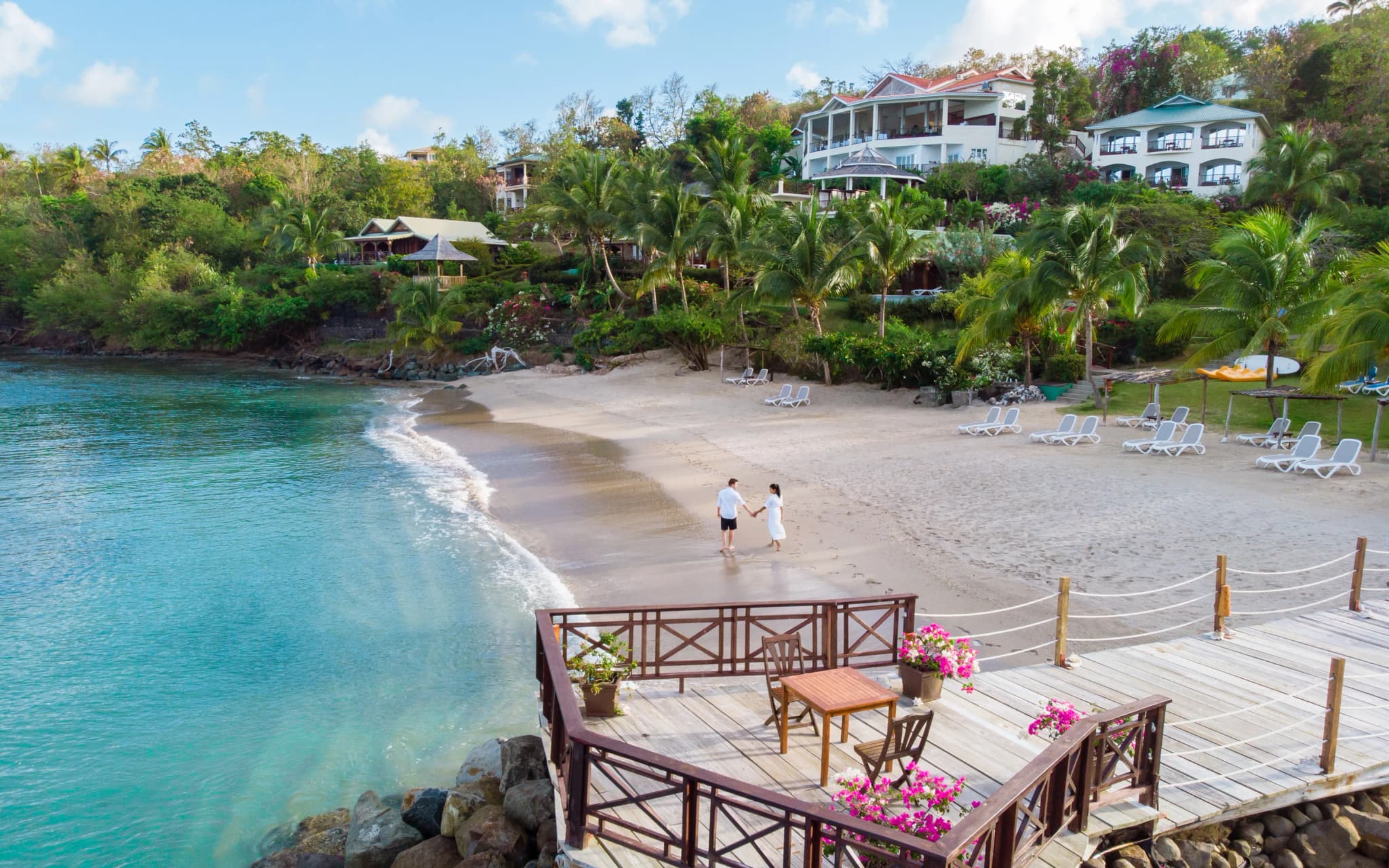

The Caribbean citizenship by investment threshold is only the starting point. Once all fees are included, the total cost for a single applicant can increase by around $15,000 to nearly $90,000, depending on the country and investment route.
Cost alone, however, does not determine the right programme. Family composition, investment structure, capital recovery, mobility priorities, tax considerations, and long-term plans all influence which option offers the strongest fit.
This article compares the costs of all five Caribbean citizenship by investment programmes across different routes and family sizes, alongside the key benefits and risks of each.
What is Caribbean citizenship by investment?
Caribbean citizenship by investment, CBI, is a legal route to nationality through an economic contribution. Unlike naturalisation by residence, applicants are not required to complete language or civic knowledge exams, demonstrate cultural integration, or spend several years establishing residence before applying.
Five Caribbean countries offer CBI programmes: Antigua and Barbuda, Dominica, Grenada, St Kitts and Nevis, and St Lucia. Each operates under its own legislation, while the OECS Memorandum of Agreement aligns minimum investment thresholds and compliance standards across the region[1]Source: OECS Press Room — Caribbean Countries Pressing Forward with the Implementation of the Memorandum of Agreement on Citizenship by Investment Programmes.
All five offer non-refundable fund contributions and approved real estate investment. Some also provide additional routes, such as government bonds in St Lucia or a special option for families of six or more in Antigua and Barbuda. Dominica has the lowest entry threshold of $200,000.
The five programmes hold all top five positions in the CBI Index[2]Source: CBI Index — 2025 Report. St Kitts and Nevis remains the leader for the 5th consecutive year, despite having the highest minimum threshold.

Trusted by 10,000+ investors
Compare Caribbean citizenship by investment programmes
Caribbean citizenship cost at a glance
Since the OECS Memorandum of Agreement came into force, the five Caribbean citizenship by investment programmes have operated with a common minimum investment floor of $200,000. While the agreement establishes this baseline, each country may set a higher threshold. Dominica retains the lowest entry point at $200,000, whereas St Kitts and Nevis requires a minimum investment of $250,000.
The minimum investment amount is only part of the total cost. Applicants also pay government fees, Due Diligence charges, processing fees, passport issuance fees, and additional charges for dependants. The overall cost therefore depends not only on the country but also on the chosen investment option and the family size.
The table below compares the minimum investment thresholds across all five programmes. The following sections break down the full all-in costs for single applicants, couples, and families under each available investment route, making it easier to compare the real cost of obtaining Caribbean citizenship.
Caribbean CBI programmes cost comparison

Non-refundable contribution costs for Caribbean citizenship by investment
The donation route is designed for investors who prioritise simplicity and a faster, more predictable process. There is no property to manage, no resale risk, and no capital tied up during a mandatory holding period. However, the contribution is non-refundable, meaning the invested funds cannot be recovered.
At first glance, Dominica appears to offer the lowest-cost route to Caribbean citizenship by investment. However, the picture changes once family members are added to the application. The most affordable option for a single applicant is not necessarily the cheapest for a family. For example, Grenada and St Lucia become more affordable than Dominica as soon as a spouse is added.
Investors should compare programmes based on their actual family composition rather than the minimum investment threshold alone.
Dominica
In Dominica, contributions to the Economic Diversification Fund support public and private projects in areas such as education, healthcare, sport, and tourism[3]Source: Dominica CBI programme official website.
The minimum contribution is $200,000 for a single applicant or $250,000 for a family of up to four. Larger families pay an additional $25,000 for each child aged 15 to 17 and $40,000 for each dependant aged 18 or over.
Due Diligence is another major expense. The main applicant pays $7,500, while each dependant aged 16 and over adds $4,000. Children under 16 are exempt. Applicants of 16 and over must also attend an interview, charged at $1,000 per person.
Additional government charges include:
- Processing fee — $1,250 for the main applicant and $250 per dependant.
- Passport fee — $300 per person, or $1,200 for accelerated processing.
- Certificate of naturalisation — $500 per person.
Document preparation and processing add around $4,000, regardless of family size.

Antigua and Barbuda
In Antigua and Barbuda, the National Development Fund supports government projects that contribute to the country's economic and social development, including infrastructure, healthcare, education, and climate resilience[4]Source: Antigua and Barbuda CBI programme official website.
The required contribution is $230,000, regardless of family size. A processing fee also applies: $10,000 for a single applicant, $20,000 for a family of up to four, and $10,000 for each additional dependant starting from the 5th family member.
Due Diligence fees are:
- $8,500 for the main applicant, plus a $1,500 interview fee;
- $5,000 for a spouse;
- $4,000 for each additional adult;
- $2,000 for each child aged 12 to 17.
A passport fee of $300 applies to each family member.
Document preparation costs around $4,000 per application, regardless of family size.
Bank charges amount to $600 for the main applicant, $500 per adult dependant, $300 per child aged 12 to 17, and $200 per child under 12.
Grenada
In Grenada, the National Transformation Fund channels investment into projects across key sectors of Grenada’s economy, including tourism, renewable energy, and agriculture[5]Source: Grenada CBI programme official website.
The minimum contribution is $235,000 for a family of up to four. This sum covers the main applicant, spouse, dependent children, and parents over 55. Any additional child and parent over 55 beyond the first four increases the required contribution by $25,000 per person.
Adding a parent under 55 increases the required contribution by $50,000, while each sibling adds $75,000, even if the family consists of less than 4 people.
Due Diligence costs $5,000 per applicant, while the mandatory interview adds $1,000 per person. Children aged 16 or under are exempt from both charges.
Additional fees include:
- Application fee — $1,500 per applicant.
- Processing fee — $1,500 per applicant, or $500 for each child aged 16 or under.
- Passport fee — $350 per applicant, or $250 for each child aged 16 or under.
- Bank fee — $4,500 for the entire family.
Document preparation costs $4,000 for a single investor and $5,000 for a family of up to four. Each additional family member adds $1,000.
St Lucia
St Lucia’s National Economic Fund directs investment towards projects that support the country’s development, including healthcare, tourism, and other priority sectors[6]Source: St Lucia CBI programme official website.
The minimum contribution is $240,000 for a family of up to four. From the 5th family member onwards, the following amounts apply:
- $10,000 for each child under 17 and each sibling;
- $20,000 per adult child and per parent.
Due Diligence costs $7,500 for the main applicant and $5,000 for each dependant, except children under 15. The main applicant also pays a $500 interview fee and a $1,100 bank fee.
Government processing fees amount to $2,000 for the main applicant and $1,000 for each dependant.
A passport fee of $500 applies to every family member.
Document preparation costs around $4,000 per application, regardless of family size.
St Kitts and Nevis
In St Kitts and Nevis, under the Sustainable Island State Contribution Option, investors make a non-refundable payment to the Federal Consolidated Fund[7]Source: St Kitts and Nevis CBI programme official website. The money supports national priorities such as healthcare, education, tourism, culture, and renewable energy.
The minimum contribution is $250,000 for a family of up to four. Each additional child under 18 adds $25,000, while each additional adult adds $50,000.
Due Diligence costs $10,000 for the main applicant and $7,500 for each dependant. Children under 16 are exempt.
Additional fees include:
- Government application forms — $250 per applicant.
- Passport fee — $361 per applicant.
- Bank Due Diligence fee — $500 for the main applicant, $300 for a spouse, $250 for each additional adult, and $150 for each child under 18.
- Biometric fee — $2,500 for the main applicant, $2,000 for each dependant aged 16 or over, and $1,300 for each child under 16.
- Processing fee — $2,500 for a family of up to four and $3,500 for a larger family.
Document preparation and processing cost around $4,000 per application.
Comparison of total non-refundable contribution costs
Real estate route costs for Caribbean citizenship by investment
The real estate route is a popular option for investors who want the opportunity to recover part or all of their capital after the mandatory holding period, while also benefiting from potential rental income.
For families of up to five, Dominica is the most affordable option. Once a 5th family member is added, Antigua and Barbuda becomes the lowest-cost programme, overtaking Dominica.
Dominica
The minimum real estate investment in Dominica is $200,000, regardless of family composition. A substantial government fee applies in addition:
- $75,000 for a single investor;
- $100,000 for a family of up to four;
- $25,000 for each additional dependant under 18;
- $40,000 for each additional dependant over 18.
All other charges under the real estate route are the same as those payable under the Economic Diversification Fund option.
Antigua and Barbuda
Applicants must invest at least $300,000 in approved real estate.
The processing fee, Due Diligence, and the remaining costs mirror those under the National Development Fund route. The only difference is the document processing fee, which is $5,000 rather than $4,000.
Examples of real estate in Antigua and Barbuda
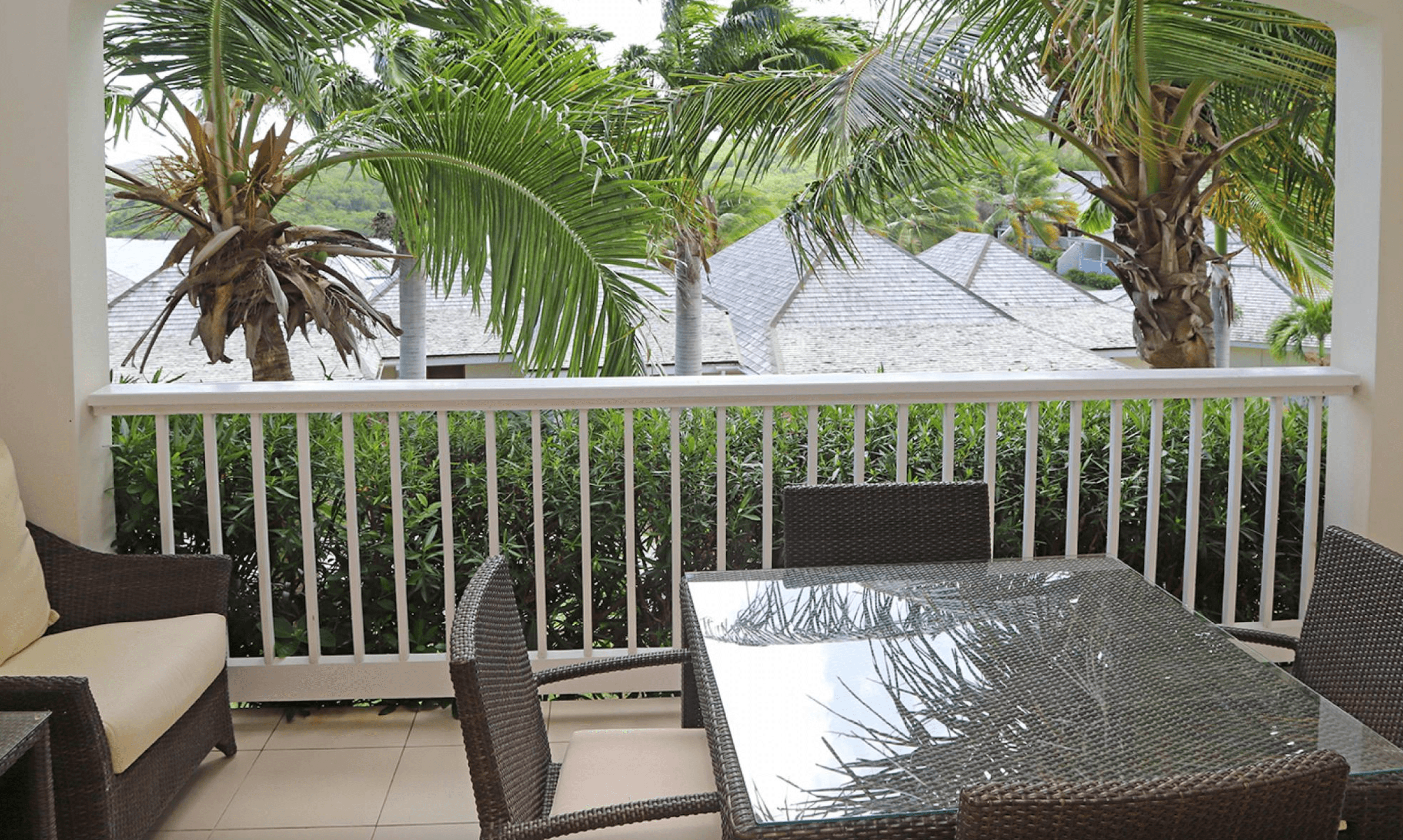

Antigua & Barbuda, Freetown
$325,000+
Stylish apartments, Nonsuch Bay, Freetown
 84 m²
84 m² 1
1  1
1 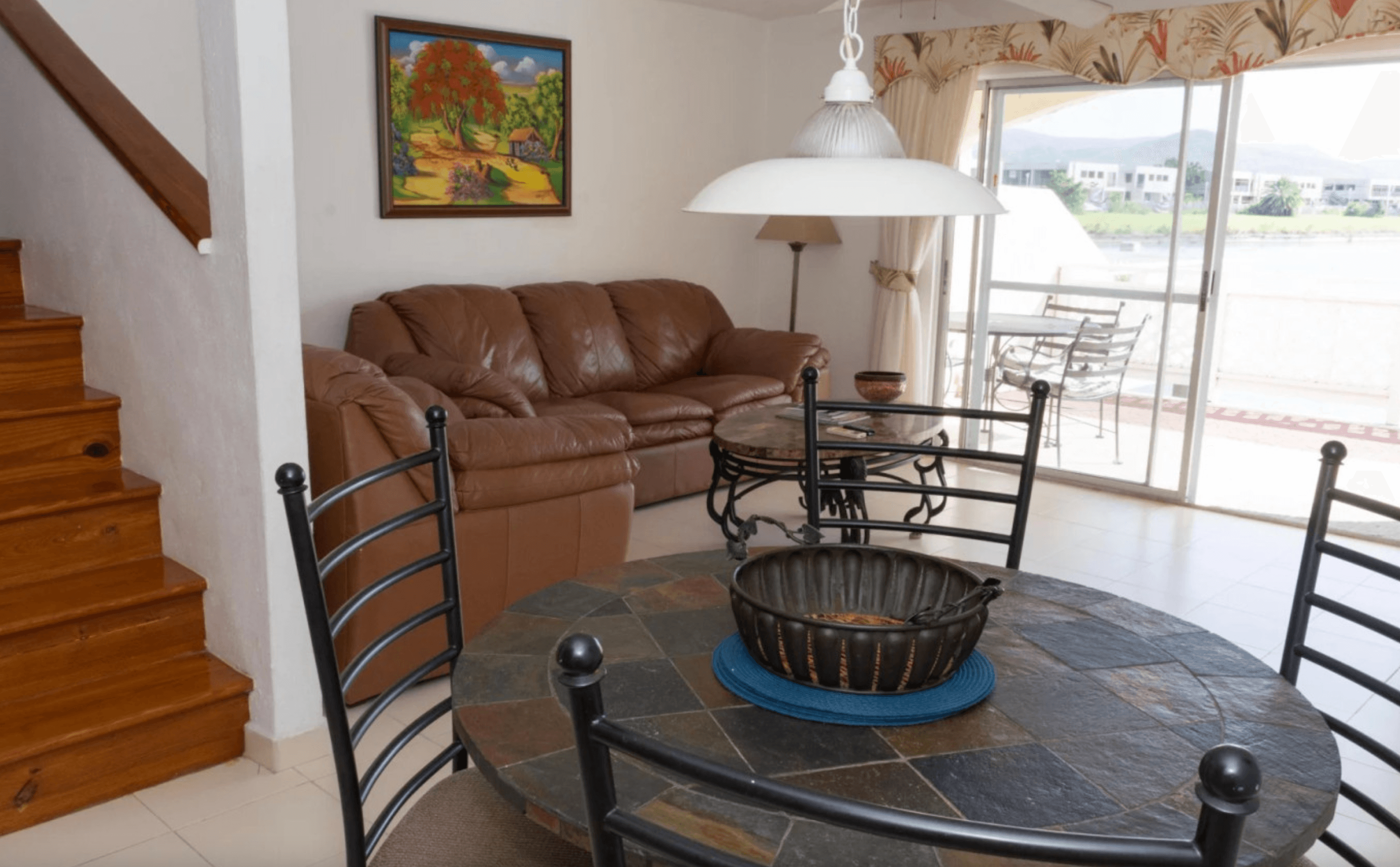
Antigua & Barbuda, Jolly Harbour
$350,000+
Elegant villa, Jolly Harbour
100 m²2 3 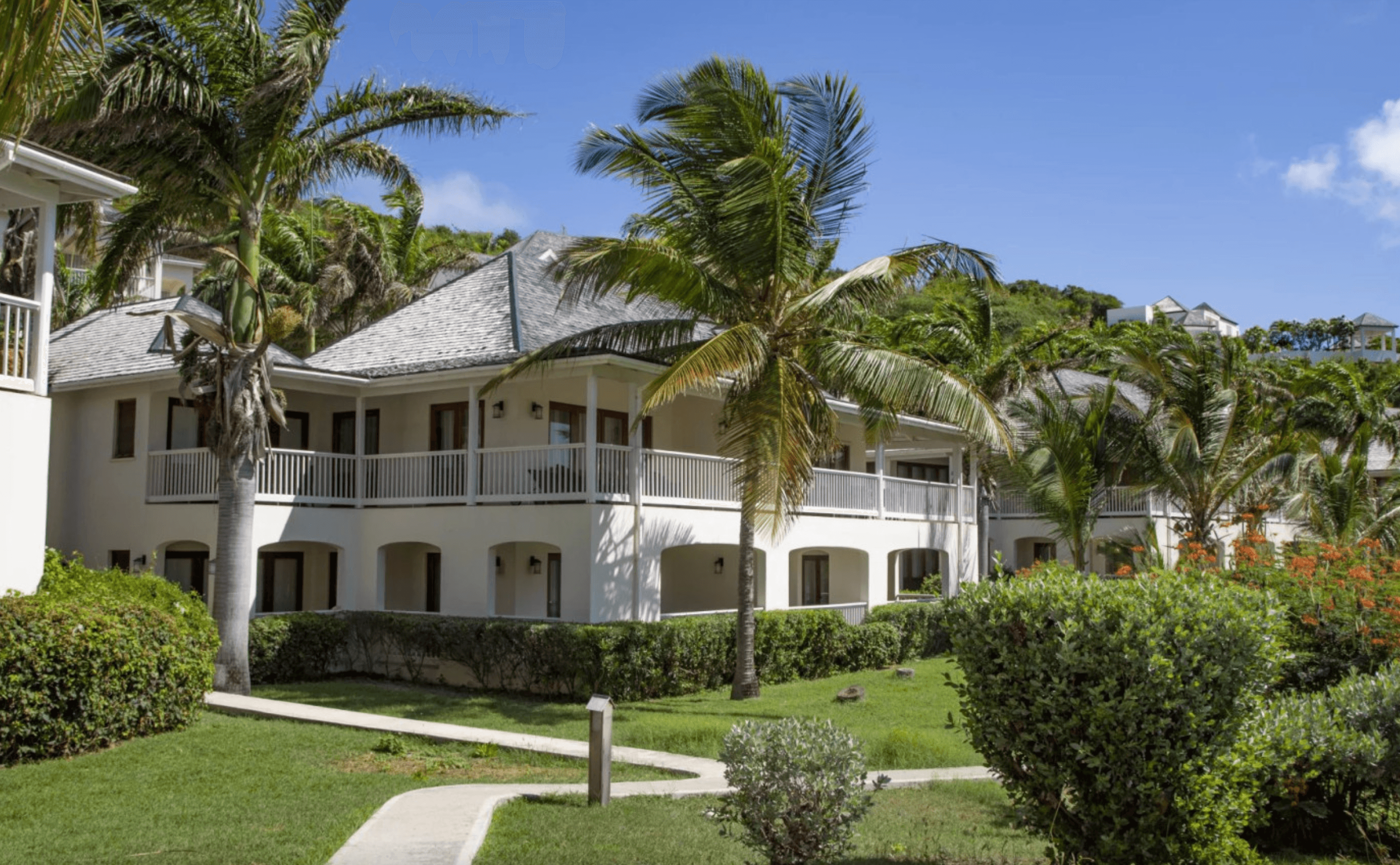
Antigua & Barbuda, Freetown
$395,000+
Stylish and comfortable apartments, Nonsuch Bay, Nonsuch Bay, Freetown
84 m²1 1 Grenada
Grenada offers two real estate investment thresholds. An investor may purchase a share for $270,000 when at least two applicants jointly invest a total of $440,000 or more in a government-approved tourism project. For other properties, the minimum investment is $350,000.
A property share registration fee also applies. The amount depends on the selected development but averages around $11,000.
The state fee is $50,000 for a single applicant or a family of up to four. Larger families pay an additional amount based on the relationship and age of each dependant:
- $75,000 for each sibling;
- $50,000 for each parent under 55;
- $25,000 for each other dependant.
All other expenses remain the same as under the National Transformation Fund option, except for the bank fee, which increases from $4,500 to $6,500.
St Lucia
Under the St Lucia CBI programme, the real estate investment is fixed at $300,000, regardless of family size. An administrative fee is charged separately:
- $30,000 for the main applicant;
- $15,000 for a spouse;
- $10,000 for each dependant over 18;
- $5,000 for each dependant under 18.
All remaining charges are the same as under the National Economic Fund option.
St Kitts and Nevis
St Kitts and Nevis offers two real estate routes. Investors may purchase shares or condominium units from $325,000, or acquire an approved private home from $600,000.
Post-approval application fees also apply:
- $25,000 for the main applicant;
- $15,000 for each adult dependant;
- $10,000 for each child under 18.
Due Diligence and most other charges remain unchanged from the contribution route. Bank Due Diligence fees are slightly different: $550 for the main applicant, $350 for a spouse, $300 for each other adult, $200 for each child aged 16 to 18, and $150 per child under 16.
A certificate of naturalisation fee also applies under the real estate option, at $50 per family member.
Comparison of total real estate route costs
Business route costs for Antigua and Barbuda and St Lucia citizenship by investment
Business investment is not a common route to Caribbean citizenship by investment and is currently offered only by Antigua and Barbuda and St Lucia. The entry threshold in Antigua and Barbuda is substantially lower.
Antigua and Barbuda
Antigua and Barbuda offers two ways to qualify through business investment. An applicant may invest at least $1.5 million as the sole investor in an approved company or join a business project worth $5 million or more, contributing at least $400,000 personally.
Processing, Due Diligence, and other applicable charges are the same as under the contribution and real estate routes. Only the document processing fee increases to $5,000.
St Lucia
In St Lucia, applicants may invest at least $3.5 million in a government-approved business or participate in a joint investment worth $6 million or more, with a minimum personal share of $1 million. Qualifying projects may operate in sectors such as tourism, education, healthcare, and social development.
In addition, investors pay an administrative fee of $50,000. All remaining fees are identical to those charged under the other investment routes, excluding government processing fees.
Comparison of total business route costs
Distinctive Caribbean citizenship by investment routes
Beyond the standard fund contribution and real estate options, several Caribbean programmes offer alternative routes designed around capital preservation, public infrastructure, education, and social development.
St Lucia: bonds and infrastructure investment
In St Lucia, two less conventional investment routes stand out: government bonds and approved infrastructure projects.
Government bonds. Investors place $300,000 in a government bond, with the principal repaid after a 5-year holding period. Unlike real estate, there is no resale-market risk. The capital remains locked for 5 years, but the government-backed repayment makes this the closest option to capital preservation among the five Caribbean programmes.
A single applicant also pays an administrative fee of $50,000. All other application expenses are the same as under the standard routes.
Infrastructure projects. Applicants may invest at least $250,000 in approved developments such as ports, roads, or other public infrastructure.
The administrative fee is $15,000 for the main applicant and $5,000 for each dependant. From the 5th family member onwards, the fee rises to $10,000 per additional relative. Other application costs remain unchanged, excluding government processing fees.
St Kitts and Nevis: public benefit projects
St Kitts and Nevis offers two approved Public Benefit Options with a minimum contribution of $250,000:
- The Basseterre High School project directs investor funds towards redeveloping and modernising one of the country’s historic schools.
- Prime Creative Arts Centre supports a new cultural complex with performance venues, studios, classrooms, exhibition areas, and spaces for creative businesses.
Both projects are designed to channel CBI capital into infrastructure, employment, and skills development with measurable public value. The contribution is non-refundable.
All standard fees are the same as those for the fund contribution. The processing fee applies only to the Basseterre High School option.
Antigua and Barbuda: higher education contribution for families
Antigua and Barbuda offers a distinctive route for larger families. A family of up to six may qualify through a $260,000 contribution to a higher education institution, with government processing fees already included. From the 7th family member onwards, an additional $10,000 is payable per dependant.
The option also includes 1 year of tuition-free study at the University of the West Indies for one family member under 29.
Due Diligence, passport, and other standard application fees remain the same as under the programme’s other investment routes. The document processing fee is $5,000.
Comparison of total unique CBI route costs
Who is eligible for Caribbean citizenship by investment?
Caribbean citizenship by investment programmes are open to adult investors who meet financial, compliance, and health requirements. Eligible family members may be included in the same application, although the conditions vary by country.
Requirements for the main applicant
To qualify for Caribbean citizenship by investment, the investor must:
- be at least 18 years old;
- have a clean criminal record;
- provide evidence of the legal source of funds and source of wealth;
- hold valid health insurance or submit a medical clearance certificate;
- have no record on international sanctions lists;
- meet the programme’s health requirements and have no serious illnesses.
Eligible family members
Spouses. All five Caribbean programmes allow the main applicant to include a spouse. To qualify, the spouse must be of the opposite sex and have no criminal record.
Children. Children under 18 are eligible under every programme. Adult children must remain financially dependent on the main applicant, although Antigua and Barbuda does not impose a dependency requirement.
The age limits and additional conditions vary by country:
- St Kitts and Nevis — up to the age of 25, provided the child is enrolled in full-time education.
- Dominica — up to the age of 30 if studying at a university. An unmarried daughter under 25 may also qualify if she lives with the main applicant.
- Grenada — up to the age of 30.
- St Lucia — up to the age of 30, with financial dependency required only for children over 21.
- Antigua and Barbuda — up to the age of 30, with no age limit for children who are physically or mentally incapacitated and fully supported by the main applicant.
Parents. Parents may also be included, provided they are financially dependent on the investor. The minimum age is 55 in St Kitts and Nevis, St Lucia, and Antigua and Barbuda, and 65 in Dominica. Grenada does not set a minimum age.
Grandparents. Grenada and Antigua and Barbuda also permit grandparents to join the application. Grenada applies no age restriction, while Antigua and Barbuda requires them to be over 55.
In Antigua and Barbuda, neither parents nor grandparents are subject to an age limit if they are physically or mentally incapacitated and fully supported by the main applicant.
Siblings. Siblings can be included under the programmes of Grenada, St Lucia, and Antigua and Barbuda, subject to different conditions:
- Grenada — over 18, unmarried, and without children.
- St Lucia — under 18 and included with the consent of a parent or legal guardian.
- Antigua and Barbuda — of any age and unmarried, with parental or guardian consent required for those under 18.
How long does the Caribbean citizenship by investment process take?
Based on Immigrant Invest’s experience, obtaining Caribbean citizenship by investment takes between 4 and 8 months. The process takes around 4 months in St Kitts and Nevis, about 6 months in Dominica, St Lucia, and Antigua and Barbuda, and at least 8 months in Grenada.
Actual timelines depend on the applicant’s profile, the completeness of the documents, the selected investment option, and the duration of government Due Diligence. Careful preparation at the outset helps reduce delays and keeps the application moving through each stage.
1 day
Preliminary Due Diligence
Before the applicant starts collecting documents or committing investment funds, Immigrant Invest conducts a preliminary Due Diligence review. The purpose is to assess eligibility, identify potential risks, and determine whether any issues should be resolved before the formal application begins.
The internal compliance team checks international sanctions lists, politically exposed person status, adverse media, criminal records, the applicant’s source of funds, and any previous visa or immigration refusals. This early review helps minimise the risk of rejection and allows potential concerns to be addressed in advance.
Before the applicant starts collecting documents or committing investment funds, Immigrant Invest conducts a preliminary Due Diligence review. The purpose is to assess eligibility, identify potential risks, and determine whether any issues should be resolved before the formal application begins.
The internal compliance team checks international sanctions lists, politically exposed person status, adverse media, criminal records, the applicant’s source of funds, and any previous visa or immigration refusals. This early review helps minimise the risk of rejection and allows potential concerns to be addressed in advance.
2—5 weeks
Preparing the documents
Immigrant Invest lawyers prepare the application file in accordance with the requirements of the selected Caribbean citizenship programme.
They assist with collecting the necessary documents and arranging their certification, apostille, and translation where required.
Immigrant Invest lawyers prepare the application file in accordance with the requirements of the selected Caribbean citizenship programme.
They assist with collecting the necessary documents and arranging their certification, apostille, and translation where required.
1—2 weeks
Completing the investment
The applicant fulfils the financial conditions of the chosen programme. This may involve making a contribution to a government fund, purchasing approved real estate, or selecting another available investment option.
Depending on the country and investment route, the funds may need to be transferred either before or after the main Due Diligence stage.
The applicant fulfils the financial conditions of the chosen programme. This may involve making a contribution to a government fund, purchasing approved real estate, or selecting another available investment option.
Depending on the country and investment route, the funds may need to be transferred either before or after the main Due Diligence stage.
Up to 6 months
Submitting application and undergoing Due Diligence
Once the application package is complete, Immigrant Invest submits it to the relevant Citizenship by Investment Unit or other competent authority.
Government Due Diligence is mandatory for adult applicants, although checks begin at an earlier age under some programmes:
- Antigua and Barbuda — from the age of 12;
- Dominica, St Kitts and Nevis, and St Lucia — from the age of 16;
- Grenada — from the age of 17.
The five Caribbean citizenship programmes also require applicants to undergo a Due Diligence interview, which is usually conducted online. During the interview, the applicant may be asked about their personal background, business activities, source of funds, travel history, and reasons for obtaining second citizenship. The authorities use the interview to verify the information provided and assess the applicant’s credibility.
Applicants must also submit biometric data. Under the St Kitts and Nevis programme, biometric collection requires an in-person appointment.
Once the application package is complete, Immigrant Invest submits it to the relevant Citizenship by Investment Unit or other competent authority.
Government Due Diligence is mandatory for adult applicants, although checks begin at an earlier age under some programmes:
- Antigua and Barbuda — from the age of 12;
- Dominica, St Kitts and Nevis, and St Lucia — from the age of 16;
- Grenada — from the age of 17.
The five Caribbean citizenship programmes also require applicants to undergo a Due Diligence interview, which is usually conducted online. During the interview, the applicant may be asked about their personal background, business activities, source of funds, travel history, and reasons for obtaining second citizenship. The authorities use the interview to verify the information provided and assess the applicant’s credibility.
Applicants must also submit biometric data. Under the St Kitts and Nevis programme, biometric collection requires an in-person appointment.
Up to 5 months
Approval, oath, and passport issuance
After the applicant successfully completes all required checks, the competent authority issues an approval letter confirming that the citizenship application has been accepted.
Some programmes require the applicant to take an oath or affirmation of allegiance before citizenship is formally granted. Once all conditions have been fulfilled, the authorities issue a citizenship certificate confirming the applicant’s new nationality.
The passport application is then processed, and the passport is usually issued within several weeks. Caribbean passport validity varies by country and the holder’s age but generally ranges from 5 to 10 years.
Antigua and Barbuda is the only Caribbean CBI jurisdiction that imposes a stay requirement: new citizens must spend at least 5 days in the country within the first 5 calendar years. A recent amendment would increase this requirement to 30 days over the same 5-year period, but it is not yet in force.
After the applicant successfully completes all required checks, the competent authority issues an approval letter confirming that the citizenship application has been accepted.
Some programmes require the applicant to take an oath or affirmation of allegiance before citizenship is formally granted. Once all conditions have been fulfilled, the authorities issue a citizenship certificate confirming the applicant’s new nationality.
The passport application is then processed, and the passport is usually issued within several weeks. Caribbean passport validity varies by country and the holder’s age but generally ranges from 5 to 10 years.
Antigua and Barbuda is the only Caribbean CBI jurisdiction that imposes a stay requirement: new citizens must spend at least 5 days in the country within the first 5 calendar years. A recent amendment would increase this requirement to 30 days over the same 5-year period, but it is not yet in force.
11 key benefits of Caribbean citizenship for investors
The Caribbean 5 rank among the world’s leading CBI options, combining international reach with income-generating real estate, recognised education, a platform for business growth, and a secure home in the tropics.
1. Extended global mobility
A Caribbean passport can significantly extend global mobility. All five CBI countries offer visa-free access to the Schengen Area, Singapore, Hong Kong, Malaysia, and South Korea.
Some passports open even more destinations:
- Grenada and Dominica allow visa-free travel to China;
- Grenada and Antigua and Barbuda also provide visa-free access to the UK.
2. Easier US access
All five Caribbean CBI passports can support easier travel to the US. Citizens may apply for a B-1/B-2 visa for tourism, medical treatment, and short business trips. St Kitts and Nevis, Grenada, and St Lucia qualify for multiple-entry visas valid for up to 10 years.
Grenada offers an extra advantage as the only Caribbean CBI country eligible for the US E-2 Treaty Investor visa[8]Source: US Department of State — E-1/E-2 Treaty Countries. Grenadian citizens may obtain a renewable, multiple-entry visa valid for up to 5 years to launch, acquire, or manage a US business. Spouses may work in the US, and unmarried children under 21 may join the application.
3. Commonwealth membership benefits
Citizens of all five Caribbean countries are part of the Commonwealth, an international network that includes countries such as Canada, Australia, Singapore, and the UK.
In practice, this may open access to selected scholarships, fellowships, professional development programmes, academic exchanges, and international business networks. Investors and their family members may also benefit from education and career opportunities designed specifically for citizens of Commonwealth countries.
4. CARICOM and OECS mobility benefits
Citizenship in any of the five Caribbean countries provides wider regional mobility through CARICOM and the OECS. Investors and their families can enter CARICOM states such as Barbados and Jamaica and stay there for up to 6 months. They may also access business and professional opportunities.
Within the OECS Economic Union, investors may live, work, and establish a business in other Protocol states, such as St Vincent and the Grenadines and Montserrat, without obtaining a separate work permit.
5. Investment returns
Caribbean CBI options allow investors to recover part or all of their capital after the required holding period. Depending on the route, returns may come from rental income, interest, dividends, business profits, or the resale of the asset.
The holding period varies by jurisdiction:
- 3 to 5 years in Dominica;
- 5 years in Antigua and Barbuda, Grenada, and St Lucia;
- 7 years in St Kitts and Nevis.
6. Attractive real estate market
The Caribbean real estate market is good for lifestyle ownership, tourism-driven rentals, luxury or resort property, and investors prepared to hold for 5 to 10 years. Regional tourism remains supportive: visitor arrivals across the Eastern Caribbean Currency Union increased by 5.1% in 2025 and moved above 2019 levels[9]Source: Eastern Caribbean Central Bank — Discussion on Common Policies of Member Countries.
Within the Caribbean 5, each country stands out for a different reason:
- Antigua and Barbuda — strongest all-round market. Prime coastal prices rose by 8—12%, while well-located villas and resort residences may deliver gross rental yields of 5—8%. Established luxury demand, strong air access, and comparatively better resale prospects support the market.
- Grenada — strongest transaction-backed growth. The country recorded 728 property transactions worth EC$273.44 million in 2025[10]Source: Copal Real Estate Inc. — Grenada Real Estate Market Performance for 2025. Land sales rose by 9% in the first half of the year, while the economy expanded by around 4.5%, supported by construction and investment[11]Source: Grenada Real Estate Market Analysis — Latest News.
- St Lucia — established villa and rental market. The economy grew by 4.9% in 2024, while total visitor arrivals reached approximately 1.14 million in 2025, supporting demand for tourism-related accommodation[12]Source: World Bank Group — Saint Lucia Central Statistical Office homepage.
- St Kitts and Nevis — premium luxury market. Demand centres on high-end villas, condominiums, branded residences, and CBI-approved developments. Luxury villas are estimated at around $1—7 million, although the buyer pool is smaller and resale liquidity more limited.
- Dominica — developing market with infrastructure-led potential. Economic growth reached 3.1% in 2025, supported by tourism, the new international airport, geothermal development and luxury hotels. Stayover arrivals rose by 13.7% in the first three quarters of 2025[13]Source: World Bank Group — Dominica.
Examples of real estate in St Kitts and Nevis

St Kitts & Nevis, Basseterre
$350,000+
Apartments in modern style, Basseterre
223 m²3 2 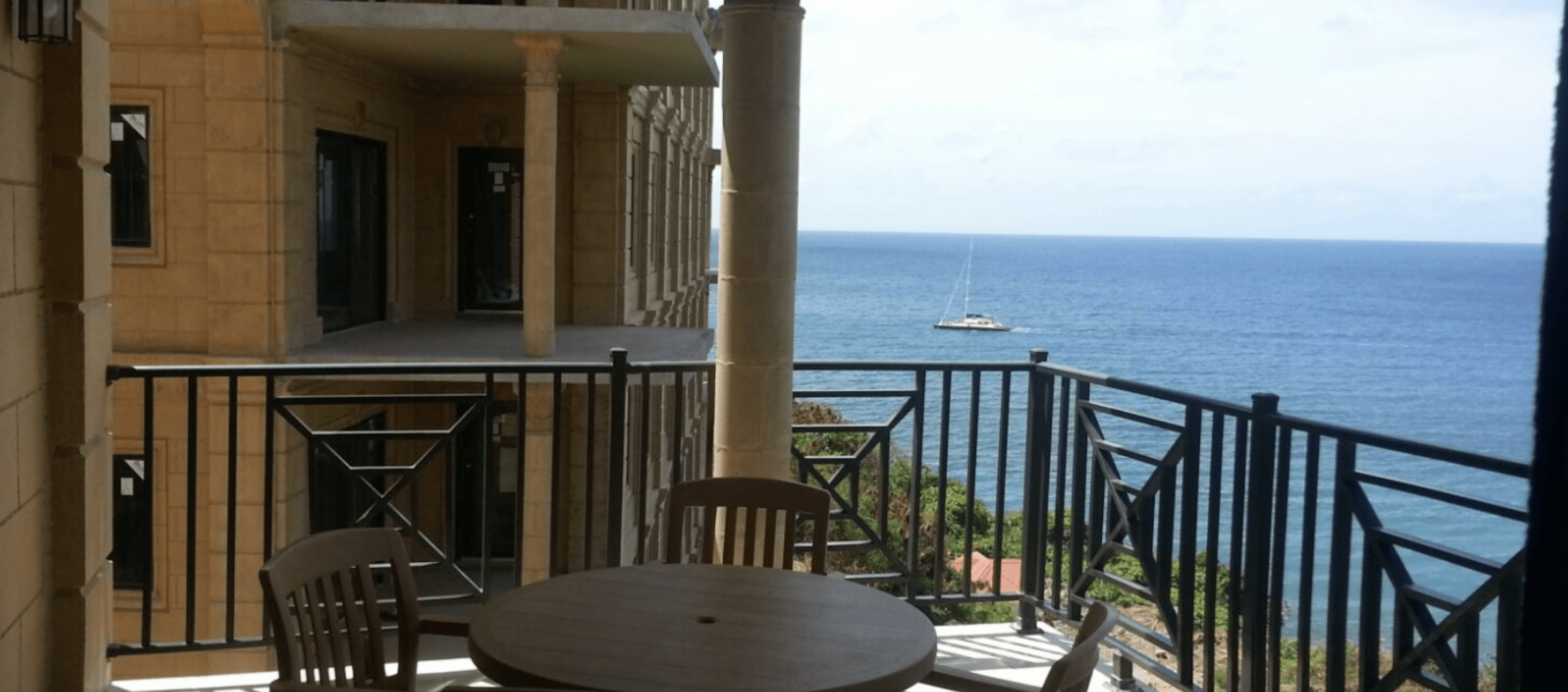
St Kitts & Nevis, Basseterre
$385,000+
Elegant apartments, Basseterre, St Kitts and Nevis
149 m²3 3 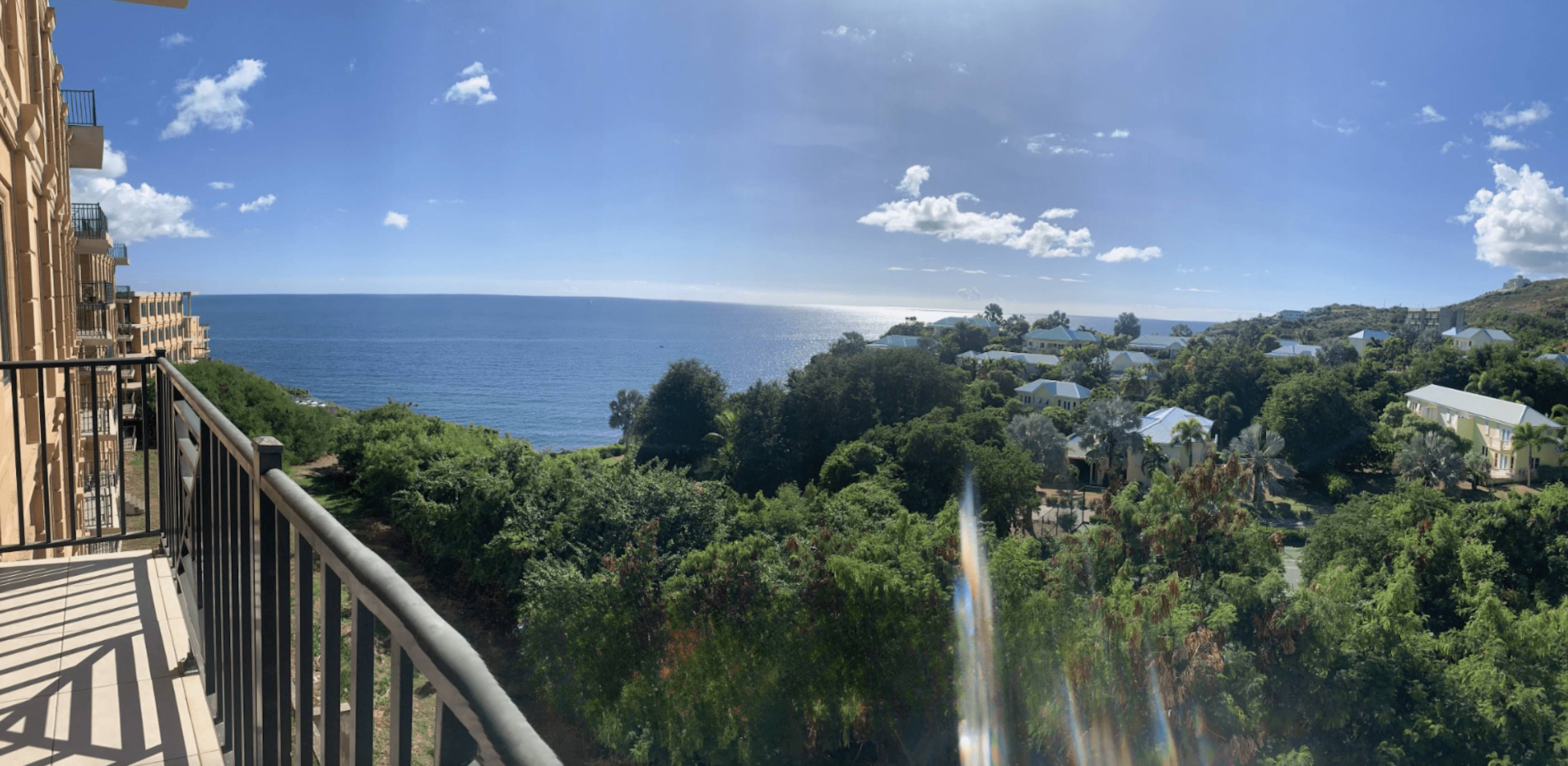
St Kitts & Nevis, Basseterre
$400,000+
Stylish apartments, Basseterre
149 m²3 3 7. Tax optimisation
All five Caribbean CBI countries offer investor-friendly tax systems. None levies inheritance or capital gains tax, while foreign income is exempt or taxed only when sourced locally.
The details vary by country:
- Antigua and Barbuda and St Kitts and Nevis do not tax personal income, while their tax residents are also exempt from tax on dividends, interest, and royalties.
- Grenada exempts partially foreign income, dividends, interest, royalties, and stamp duty.
- Dominica and St Lucia do not tax non-residents on foreign-source income, while Dominica also generally has no wealth or gift tax.
8. Stable banking system
The five Caribbean CBI countries have stable and well-regulated banking systems. Commercial banks are licensed and supervised by the Eastern Caribbean Central Bank, which sets common prudential, capital, and compliance standards across the region.
All five countries also use the Eastern Caribbean dollar, which has been pegged to the US dollar at EC$2.70 to US$1 since 1976[14]Source: Eastern Caribbean Central Bank — History of the EC Currency. This long-standing fixed exchange rate reduces currency volatility and supports predictable cross-border transactions.
The banking system’s reliability and transparency are reinforced by strict account-opening procedures. Banks apply Know Your Customer checks, which verify an applicant’s identity, tax status, and source of funds before an account is approved.
9. Business opportunities
Business expansion is a valuable advantage of Caribbean citizenship, giving investors access to English-speaking markets, regional commercial networks, and a stable currency environment. The Eastern Caribbean economy grew by an estimated 2.5% in 2025, supported by tourism and infrastructure investment[15]Source: Eastern Caribbean Central Bank — Annual Report Detailing Progress Across Key Strategic Initiatives.
The strongest opportunities span tourism-led services, sustainable infrastructure, value-added production, and the digital economy. Each market also offers a distinct edge:
- Antigua and Barbuda in marine services and business-process outsourcing;
- Dominica in geothermal projects and natural wellness products;
- St Lucia in smart manufacturing;
- St Kitts and Nevis in international financial and corporate services;
- Grenada in medical education, health and wellness, and spice-based products.
10. Access to internationally recognised education
Education is one of the key benefits Caribbean citizenship can offer families seeking an English-language, internationally recognised system. Most schools follow qualifications set by the Caribbean Examinations Council, which are widely recognised across the region and abroad.
Among the strongest examples, Antigua and Barbuda is home to the University of the West Indies Five Islands Campus, offering more than 40 academic programmes[16]Source: The University of the West Indies — Find your programme. Grenada hosts St George’s University, a leading medical and veterinary institution that has welcomed students from over 140 countries[17]Source: St George’s University official website. St Lucia offers an international K–12 school accredited by the education authorities of New Brunswick, Canada[18]Source: The International School of Saint Lucia official website.
11. Second home by the ocean
Caribbean citizenship offers numerous lifestyle benefits, including the freedom to spend time in a tropical second home whenever investors choose, with no obligation to live there permanently. The region offers a warm climate year-round, outdoor living, sandy beaches, and a relaxed lifestyle.
Safety across the Caribbean countries is generally at a high level. According to the US Department of State:
- Antigua and Barbuda, Dominica, and St Kitts and Nevis are rated Level 1, placing them among the region’s safer destinations for residents and visitors;
- Grenada and St Lucia carry a Level 2, largely due to concerns in particular areas, while residential and investor-focused locations remain safe.
A second Caribbean passport serves as a reliable Plan B. Citizens may enter and live in their country of citizenship at any time, even if borders are temporarily closed to foreign tourists or travel restrictions are introduced.
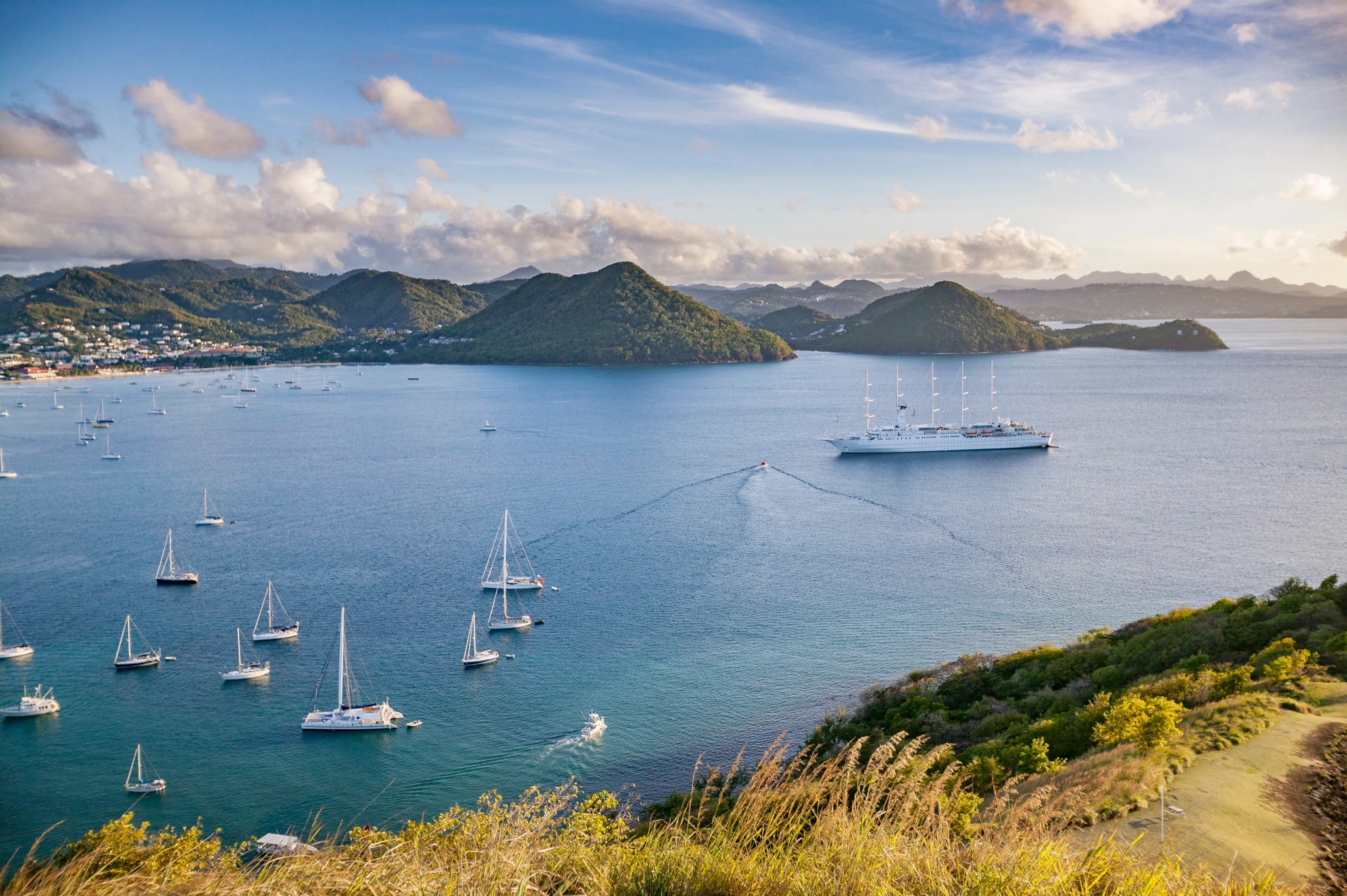
Living in the Caribbean means year-round sunshine, turquoise waters, white- and black-sand beaches, volcanic peaks, lush rainforests, waterfalls, fertile valleys, and secluded lagoons
How Caribbean citizenship by investment affects tax residence
Caribbean citizenship by investment can offer meaningful tax advantages, but citizenship and tax residence are not the same. A second passport does not automatically change where an investor is taxed; that depends on where they live, how much time they spend there, and where their main personal and economic ties are located.
Citizenship vs tax residence
Tax residence depends on where a person lives, spends substantial time, and maintains their main personal and economic ties — not on the passport they hold. Acquiring Caribbean citizenship therefore does not automatically make an investor tax-resident in the issuing country.
In most cases, tax residence arises after spending 183 days or more in a jurisdiction. However, it may also be established through other tests, such as having a permanent home, habitual or ordinary residence, or a centre of vital interests there.
Personal taxation
Antigua and Barbuda and St Kitts and Nevis stand out for having no personal income tax at all.
Dominica taxes its residents on worldwide personal income, including earnings from employment, business, property, and investments.
A personal allowance of US$11,100 applies each year. Income above this amount is taxed progressively:
- up to US$11,100 — 0%;
- US$11,100—18,500 — 15%;
- US$18,500—29,600 — 25%;
- above US$29,600 — 35%[19]Source: Inland Revenue Division, Commonwealth of Dominica — Current Income Tax Rates.
Capital gains, inheritances, gifts, and personal wealth are not taxed. Non-residents are taxed only on Dominican-source income[20]Source: Dominica Citizenship by Investment Unit — Citizenship by Investment Programme Brochure.
St Lucia taxes residents on worldwide personal income. Residents who are not ordinarily resident are taxed on St Lucian-source income and foreign income only if it is remitted to St Lucia.
After personal allowances and deductions, chargeable income is taxed progressively:
- up to US$5,600 — 15%;
- US$5,600—11,100 — 20%;
- over US$11,100 — 30%[21]Source: PwC Worldwide Tax Summaries — St Lucia: Individual Taxes on Personal Income.
Capital gains are exempt from personal income tax. Dividends from St Lucian companies and interest earned from banks in St Lucia are also exempt[22]Source: PwC Worldwide Tax Summaries — St Lucia: Individual Income Determination.
Grenada taxes residents on personal income arising in Grenada. Foreign-source income is not subject to personal income tax unless it is connected with a trade or business carried on in Grenada[23]Source: Parliament of Grenada — Income Tax Act, Chapter 149.
After the personal allowance, chargeable income is taxed progressively:
- up to US$13,300 — 0%;
- US$13,300—22,200 — 15%;
- over US$22,200 — 30%[24]Source: Ministry of Finance, Grenada — All You Need to Know About Personal Income Tax.
Capital gains are outside the personal income tax base.
Special considerations for US persons
US citizens, Green Card holders, and certain other US persons remain subject to US tax and reporting rules regardless of where they live or which passport they hold. Acquiring Caribbean citizenship does not affect these obligations.
Depending on the circumstances, investors may still need to report worldwide income on their US tax return, disclose foreign financial accounts under the FBAR rules, and report specified foreign assets under FATCA[25]Source: Source: IRS — Foreign Account Tax Compliance Act.
Risks and pitfalls of Caribbean citizenship by investment
Caribbean citizenship by investment is a transparent and government-regulated process. Most problems arise not from the programmes themselves, but from unrealistic expectations, poor planning, or choosing the wrong provider. Understanding the following risks before applying can help investors avoid unnecessary costs, delays, and disappointment.
Illegal discounts and financing schemes
Offers below the official minimum investment are not genuine savings. They may involve concealed loans, rebates, deferred payments, or agreements showing a higher investment than the applicant actually paid. Such structures breach programme rules and can lead to refusal, loss of fees, or citizenship revocation even after a passport has been issued.
Enforcement is already active. In March 2025, Grenada rejected 8 applications linked to an unauthorised discount and owner-financing scheme and began revocation proceedings in another case. In April 2025, St Kitts and Nevis revoked the citizenship of 13 investors, together with their dependants, after finding that they had not paid the statutory minimum investment stated in their applications.
Grenada and St Kitts and Nevis tightened enforcement, strengthened Due Diligence, sanctioned non-compliant agents, and advanced regional oversight through ECCIRA, a regional regulator designed to harmonise CBI oversight.
Applicants should pay the full published amount through authorised channels and reject any provider offering cashback, private financing, or a price below the legal threshold.
Headline investment vs actual cost
The minimum investment is only one part of the total budget. Government fees, Due Diligence, processing charges, authorised agent fees, document legalisation, translations, medical examinations, and courier costs all increase the final amount.
For a single applicant, additional expenses may add from 10% to around 45% to the headline investment. For a family of four, the total cost can be over 50% higher, depending on the programme and investment route.
Non-standard family arrangements may increase costs further. Unmarried partners, adult children, parents, siblings, or family members with missing civil records may require additional applications, sponsorship arrangements, affidavits, or legal documents, resulting in higher government fees and professional costs.

Sponsoring an unmarried partner in St Lucia
A couple planned to apply together for St Lucian citizenship but were not legally married. Since the programme did not allow them to file a standard family application, they submitted separate applications, with one partner sponsoring the other's investment.
The case also involved replacing a missing birth certificate and resolving inconsistent names across identity documents through affidavits and official declarations. Despite these complications, both applicants successfully obtained citizenship.
Recoverable capital assumptions
Real estate, business, and bond routes are often presented as alternatives that allow investors to recover their capital. In practice, resale may take longer than expected, buyers may be limited, projects can underperform, and government bonds usually generate below-market returns while tying up capital for several years.
Compare routes using expected returns, holding periods, exit conditions, management costs, and resale prospects rather than the initial investment alone.
Due Diligence and biography risks
All Caribbean CBI programmes examine an applicant’s background, financial history, immigration record, business activity, and source of funds. Previous visa refusals, criminal allegations, court proceedings, gaps in employment, or unexplained periods in a biography may trigger additional checks even when they do not automatically make the applicant ineligible.
An independent pre-application compliance review can identify issues before government fees become non-refundable.

St Kitts and Nevis citizenship approved despite a previous US visa refusal
An investor applying for St Kitts and Nevis citizenship had previously been refused a US B-1/B-2 visa and was involved in a civil court dispute over inherited property. Although neither issue automatically disqualified him, both required a clear explanation during the Due Diligence process.
The legal team confirmed that the visa refusal was unrelated to criminal or security concerns, obtained the relevant court documents, and prepared affidavits explaining both circumstances.
With the supporting evidence in place, the application successfully passed Due Diligence and was approved.
Changing visa-free access
Visa-free access and visa policies depend on international agreements and may change over time. In recent years, several Caribbean CBI countries have seen travel conditions tighten. For example, the US reduced the validity of B-1/B-2 visitor visas for Antigua and Barbuda and Dominica from up to 10 years to single-entry visas valid for 3 months, and then imposed a temporary entry ban for B-1/B-2 visitor visa holders.
Applicants from Antigua and Barbuda, Dominica, and Grenada may also be required to pay a refundable visa bond of between $5,000 and $15,000[26]Source: U.S. Department of State — Countries Subject to Visa Bonds.
Choose a programme for its overall value — legal status, family benefits, regional mobility, tax planning opportunities, and long-term stability — rather than for access to a single destination.
Source of funds failures
Every Caribbean CBI programme requires applicants to demonstrate that their wealth has been obtained lawfully. Bank statements alone are rarely sufficient. Investors may also need to provide tax returns, employment records, company documents, contracts, financial statements, inheritance records, or sale agreements, depending on how their assets were accumulated.
Applications are commonly delayed when the flow of funds cannot be clearly traced or when supporting documents are incomplete or inconsistent.

Citizenship approval without a stable salary or complete family records
Yildiz faced two complications in her St Lucian citizenship application. She had recently left a well-paid finance role to start her own business, which made it harder to demonstrate a stable income. She also could not provide details about several relatives with whom she had lost contact.
The lawyers prepared a clear account of her career history, documented the source of her assets, and submitted notarised affidavits explaining the missing family information. The application was approved without requests for additional documents.
Citizenship revocation
Citizenship obtained through fraud, false declarations, or unofficial payment arrangements may be revoked. Caribbean governments have strengthened post-approval monitoring and cooperation in response to international scrutiny.
Using only licensed, government-authorised agents and following official payment procedures significantly reduces this risk.
Home-country restrictions
Caribbean countries permit dual citizenship, but an applicant's home country may not. Some jurisdictions prohibit second citizenship altogether, while others require mandatory notification or impose restrictions on civil servants, military personnel, judges, or holders of security clearances.
Confirm the legal consequences in your home country before applying.
Provider red flags
When choosing a CBI agent, walk away from any provider that promises guaranteed approval, offers prices below the legal investment minimum, refuses to identify the escrow bank, has no visible compliance team, promotes tax savings without qualified advice, or claims that citizenship automatically changes tax residence. These are clear signs that the provider does not follow standard Caribbean CBI procedures.
Which Caribbean citizenship by investment fits your goal?
The right programme depends on what matters most: the lowest entry cost, stronger family coverage, a returnable investment, business access, education, or travel benefits.
Lowest thresholds
Lowest contribution — Dominica for one applicant, Grenada or St Lucia for a couple. Dominica starts at $214,550 for a single applicant, while Grenada and St Lucia become more competitive once a spouse is included. For large families, Antigua and Barbuda’s expenses are the lowest of all.
Lowest real estate threshold — Dominica. Approved property investment starts at $200,000, with additional expenses adding almost $90,000, which is still the lowest level among the Caribbean 5. Antigua and Barbuda may offer better overall value for larger families because its government fees rise more slowly.
Family benefits
Large-family value — Antigua and Barbuda. The programme is especially affordable for families of 5 or more. Families of 6 or more can also use the $260,000 University of the West Indies route, which includes 1 year of tuition-free study for one family member under 29
Broadest family inclusion — Antigua and Barbuda. Children may be included up to the age of 30 without a financial dependency requirement, a feature unique among the Caribbean CBI programmes. Siblings may also be added without an age limit.
Parents of any age — Grenada. Besides, Antigua and Barbuda also allows parents without an age limit where they are physically or mentally incapacitated and fully supported by the main applicant.
Stronger education options — Grenada, St Lucia, and Antigua and Barbuda. Grenada is known for St George’s University, St Lucia offers an international K–12 school accredited in Canada, and Antigua and Barbuda hosts the University of the West Indies Five Islands Campus, where an investor’s family members may study.
Investment advantages
Programme heritage and stability — St Kitts and Nevis. Operating since 1984, it is the world’s longest-running citizenship by investment programme. Its threshold is higher, but investors often choose it for its established administration, long track record, and mature investment framework.
Shortest route to property resale — Dominica. CBI-approved property may be sold after 3 years, or after 5 years when reselling to another citizenship by investment applicant.
Returnable capital without active management — St Lucia. The government bond route requires a $300,000 investment held for 5 years. The principal is repaid at the end of the term, avoiding property resale exposure and offering the clearest capital-preservation route among the five programmes.
Tax and business benefits
No personal income tax — Antigua and Barbuda or St Kitts and Nevis. Neither country levies personal income tax, making them especially attractive to globally mobile investors. The Caribbean 5 also have no capital gains and inheritance tax.
Business expansion — Antigua and Barbuda. A joint business investment cost starts at $425,900 per applicant. The country is well positioned in marine services, yachting and business-process outsourcing.
Extended global mobility
US E-2 visa access — Grenada. Grenadian citizens may apply for the US E-2 Treaty Investor visa after making a business investment in the US, a benefit not available through the other Caribbean CBI passports.
Visa-free travel to China — Grenada and Dominica. Both passports offer direct access to China without a traditional visa, making them attractive to investors with commercial or family links to Asia.
Easier UK travel — Grenada and Antigua and Barbuda. Their citizens can visit the UK for short stays without applying for a standard visitor visa.
How Immigrant Invest supports Caribbean citizenship by investment applicants
Immigrant Invest is a government-licensed investment migration company with 20 years of experience and more than 10,000 clients worldwide. We hold licences covering all five Caribbean citizenship by investment programmes and guide investors from initial eligibility assessment to passport issuance.
Each engagement begins with a personalised programme comparison and a written, line-by-line calculation of the total cost. The following services provide clarity and control throughout the process:
- Licensed representation. Applications are prepared and submitted through authorised, government-recognised channels.
- Complete cost modelling. Estimates cover the investment, government charges, Due Diligence, interviews, dependants, professional fees, and documents.
- Tailored programme selection. All five programmes are compared against the client’s family profile, budget, and priorities.
- Pre-application checks. Eligibility, background, and potential Due Diligence issues are reviewed before major fees are paid.
- Document preparation. The team coordinates forms, source-of-funds evidence, translations, apostilles, and interviews.
- Investment risk review. Clients receive clear guidance on holding periods, liquidity, project risks, and exit conditions.
- Adviser coordination. Tax advisers, bankers, and family-office teams can be involved where required.
Before recommending a programme, we calculate and compare the full Caribbean citizenship by investment cost for the client’s exact family composition. The final estimate clearly shows where every payment is directed, giving the investor a realistic total with no hidden or obscured costs. A personalised all-in calculation is provided free of charge and without obligation.
Key takeaways: what Caribbean citizenship by investment really costs
- Caribbean citizenship by investment starts at $200,000 in Dominica and reaches $250,000 in St Kitts and Nevis, with total costs increasing based on government fees and family size.
- For donation routes, additional costs add $15,000—20,000 for a single applicant, $30,000—70,000 for a couple, and more for larger families.
- For real estate options, extras add around $90,000 for a single applicant, up to $120,000 for a couple, and higher amounts for families.
- Dominica offers the lowest overall donation route for a single applicant at $214,550, while couples find the lowest thresholds in St Lucia and Grenada, at around $270,000.
- Dominica provides the most affordable real estate pathway, starting from $289,550.
- Despite having the highest entry thresholds, St Kitts and Nevis remains the leading choice among investors, with minimums of $270,111 for contributions and $370,211 for real estate.
- Antigua and Barbuda delivers the best value for families, with contribution options from $273,800, real estate from $344,800, and the University of the West Indies Fund option from $294,400.
Immigrant Invest is a licensed agent for citizenship and residence by investment programs in the EU, the Caribbean, Asia, and the Middle East. Take advantage of our global 15-year expertise — schedule a meeting with our investment programs experts.

 Trusted by 10,000+ investors