







Caribbean real estate attracts investors looking for holiday homes, rental properties, and assets in tourism-driven markets. Foreigners can purchase private villas, apartments, and shares in resort developments.
Purchasing real estate can provide a route to citizenship in several Caribbean countries. Antigua and Barbuda, Dominica, Grenada, St Kitts and Nevis, and St Lucia operate citizenship by investment programmes that include property investment as one of the participation options.
How does Caribbean real estate investment for citizenship work?
Five Caribbean countries offer citizenship by investment programmes and allow real estate purchase as one of the options to participate. The financial threshold that allows obtaining a passport differs by country:
- Dominica — $200,000;
- Grenada — $270,000;
- St Lucia — $300,000;
- Antigua and Barbuda — $300,000;
- St Kitts and Nevis — $325,000.
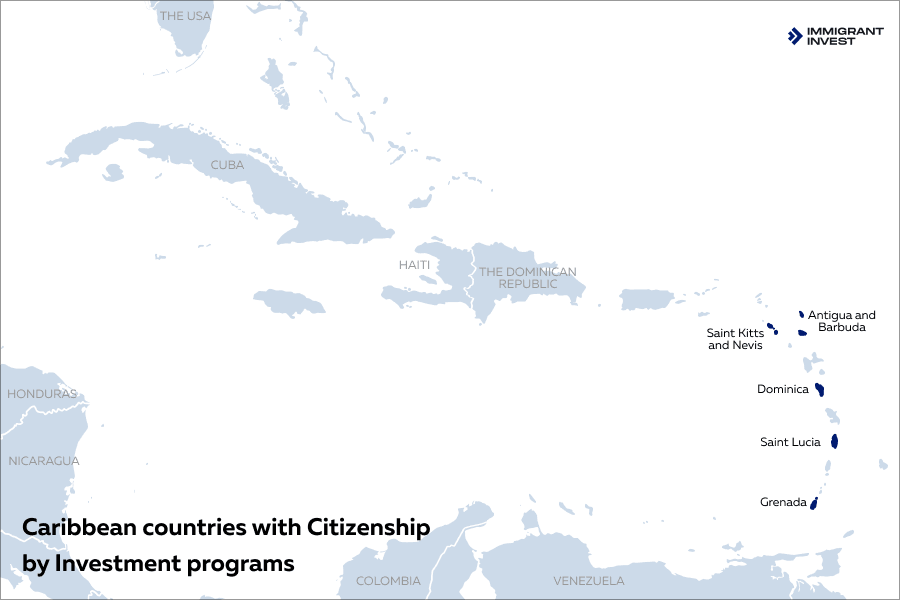
Antigua and Barbuda, Dominica, Grenada, St Kitts and Nevis, and St Lucia are often collectively referred to as the Caribbean Five — for now, these are the only states in the region that operate citizenship by investment programmes
Buying just any property does not qualify an investor for citizenship. Applicants need to invest in government-approved real estate, which may include hotels, resorts, apartments, and residential developments. St Kitts and Nevis additionally allows investors to purchase approved single-family private homes.
Investors can resell Caribbean real estate after the mandatory holding period and retain their citizenship. The required ownership period varies by country, from 3 years in Dominica to 7 years in St Kitts and Nevis.
Trusted by 10,000+ investors
Find the right Caribbean real estate investment for $200k+
Benefits of owning Caribbean real estate
Owning real estate in the Caribbean can combine several practical benefits: a property for personal use, potential rental income, and an asset that may later be resold. Caribbean real estate investment opportunities are especially attractive in destinations that rely heavily on tourism and holiday rentals.
1. Rental income from strong tourism demand
Tourism creates a large potential customer base for holiday rentals. The Caribbean received around 35 million international stay-over visitors in 2025, a 2.5% rise compared to 2024 and 9.6% in comparison with 2019[1]Source: Caribbean Tourism Organization — Caribbean Tourism Shows Resilient Growth Amid Global Headwinds in 2025. International tourist arrivals grew by a further estimated 3.9% in early 2026[2]Source: Caribbean Tourism Organization — March 2026 Tourism Review.
Owners of well-located apartments, villas, and resort units may be able to rent their properties out when they are not using them. According to Immigrant Invest's real estate department, properties purchased under Caribbean citizenship by investment programmes generate an annual rental yield of around 4—5%.
2. Route to second citizenship for the whole family within months
Some Caribbean real estate for foreigners comes with an additional benefit: the opportunity to obtain citizenship by investment.
Investors can apply for citizenship together with family members, including spouses, children, and parents. Some countries also allow siblings and grandparents to be included. The process typically takes at least 6 to 8 months, depending on the country.

Grenada citizenship for a family from Bolivia
Second Caribbean citizenship can offer practical benefits beyond greater travel freedom. For Matías and his family, buying a house in Grenada gave them a second home and opened up an opportunity to eventually obtain long-term US visas.
3. Second home for personal and family use
Buying real estate in the Caribbean can give an investor a permanent base for holidays, longer seasonal stays, or visits with family. Unlike booking accommodation for every trip, owning a property lets the buyer choose a home that suits their preferences and keep it available for repeated use.
For investors who purchase a share or unit in a hotel through a citizenship programme, personal use of the property is typically subject to specific arrangements, as it also forms part of the hotel's rental inventory.

Elena Kozyreva,
Managing Director for Real Estate projects
Some projects include a set number of complimentary nights each year. For example, investors in Dominica's Anichi Resort may stay for nearly 2 weeks annually[3]Source: Dominica Citizenship by Investment Unit — Dominica Real Estate Spotlight: Anichi Resort and Spa and shareowners of Park Hyatt St Kitts receive 7 complimentary nights per calendar year[4]Source: Range Developments — Park Hyatt St Kitts Investor Benefits Terms and Conditions.
The exact allowance, blackout dates, and additional charges depend on an individual project.
4. Flexibility to resell the property in the future
Under the citizenship by investment programme, the investor owns the property as an asset and may be able to resell it after the mandatory holding period. This offers the opportunity to recover some or all of the initial investment, or potentially make a profit, depending on market conditions, property location and condition, and buyer demand.
The mandatory holding periods are:
- 3 or 5 years in Dominica;
- 5 years in Grenada, St Lucia, and Antigua and Barbuda;
- 7 years in St Kitts and Nevis.
Resale value and profit are not guaranteed.
5. Stable currency environment
Antigua and Barbuda, Dominica, Grenada, St Kitts and Nevis, and St Lucia all belong to the Eastern Caribbean Currency Union and use the Eastern Caribbean dollar. The currency has been pegged to the US dollar since 1976[5]Source: Eastern Caribbean Central Bank — About the Eastern Caribbean Currency Union.
For investors whose income or assets are already denominated in US dollars, this fixed exchange rate makes local-currency property expenses more predictable than in a market with a freely floating currency.
Dynamics of the Caribbean real estate market
The Caribbean real estate market has grown since the pandemic, but there is no single regional price trend. Comparable data across the islands remains limited, and most international research focuses on prime residential property.
Residential properties
According to Savills, an international real estate consultancy and research company, prime residential property prices across the Caribbean markets it monitors increased by an average of 27% between 2019 and 2024, but prices and market dynamics varied significantly between islands.
Antigua and Barbuda showed the clearest quantified growth: average prime prices reached around $5,270 per m² in 2024, up more than 17% since 2021, while second-hand prime apartments rose by 43% over the same period. In Grenada, the prime residential market was gaining traction, while property prices in St Lucia were also rising[6]Source: Savills — Caribbean Islands 2024/25.
More recent data suggests that the prime segment continued to perform strongly in 2025. Knight Frank's 2026 Prime International Residential Index places the Caribbean among the strongest-performing regions for luxury residential property in 2025[7]Source: Knight Frank — Prime International Residential Index 2026.
Individual markets illustrate this difference. For instance, in the Bahamas, standalone homes had approximately doubled in value on average between 2020 and late 2024, according to Knight Frank, but higher asking prices subsequently caused some properties to remain on the market for longer and transaction volumes to slow[8]Source: Knight Frank — Caribbean Residential Market Insight 2025. Barbados followed a different trajectory: sales of properties priced at $2 million or more increased by 67% year on year between July and October 2025[9]Source: Knight Frank — Barbados Luxury Market Digest 2025/26.
Hotels and resort residences
Another visible trend is the expansion of branded and resort residences. As of 2024, Savills counted 28 completed branded residential developments with around 1,800 residences across the Caribbean and another 36 projects in the pipeline, expected to add about 4,400 units.
The hospitality segment combines private ownership with hotel-style management, services, and amenities and has become an increasingly important part of Caribbean island real estate[6]Source: Savills — Caribbean Islands 2024/25.
Tourism is one of the factors supporting rental and resort-property demand rather than as direct evidence of rising property values. The Caribbean received around 35 million international stay-over visitors in 2025, 2.5% more than in 2024 and 9.6% above 2019 levels.
Strong visitor numbers can benefit properties in established tourism locations, but rental demand still depends on the island, accessibility, seasonality, property quality, and local supply[10]Source: Caribbean Tourism Organization — Caribbean Tourism Shows Resilient Growth Amid Global Headwinds in 2025.
Natural disaster risks and insurance costs for Caribbean real estate
Natural hazards and insurance costs are among factors shaping Caribbean real estate prices and investment decisions. The International Monetary Fund, IMF, estimates that major natural disasters cost Caribbean economies around 2% of GDP per year on average and close to 4% in the Eastern Caribbean.
Higher global reinsurance costs have also contributed to rising local insurance premiums, making hurricane resilience and insurance expenses important considerations when comparing properties[11]Source: International Monetary Fund — The Caribbean Challenge: Fostering Growth and Resilience Amidst Global Uncertainty.
Caribbean property prices
Caribbean real estate prices vary substantially across the 5 citizenship by investment countries. Entry-level residential property can still be found for around $150,000—300,000 in some markets, while prime beachfront villas and resort homes can cost several million dollars.
Real estate prices in Dominica
Dominica remains one of the more affordable markets of the Caribbean Five. Smaller houses can start at around $150,000, while larger residential properties commonly fall between approximately $200,000 and $800,000. Luxury coastal and hillside homes can exceed $1.5 million, particularly within high-end resort developments[12]Source: 7th Heaven Properties — Dominica Real Estate.
Dominica’s available citizenship by investment properties start at around $216,000—220,000 for shares in approved resort projects, while full-ownership options can reach $3.8 million. Most offers qualifying for the programme are shares or units in hotels and resorts.

Real estate prices in Grenada
Grenada offers a broad range from entry-level apartments to multimillion-dollar waterfront villas. Apartments and condominiums start at around $200,000—270,000, while well-located coastal apartments are commonly marketed at $400,000—750,000.
Three-bedroom homes in sought-after areas may start at roughly $450,000—600,000, while larger waterfront properties in locations such as Lance aux Epines can reach $1.5—5 million or more[13]Source: 7th Heaven Properties — Grenada Real Estate.
Among properties approved for citizenship by investment, prices start at $270,000 for shares in hotels and residential complexes. Full-ownership apartments are available for around $350,000—455,000, and premium beachfront villas in approved resorts can cost $7.5—12 million.
Real estate prices in St Lucia
In St Lucia, condos and apartments start at around $200,000—300,000, while single-family homes and villas commonly begin at about $400,000—500,000.
Waterfront townhouses can cost around $650,000—700,000, while luxury villas commonly start at about $1 million and may exceed $6 million[14]Source: 7th Heaven Properties — St Lucia Real Estate.
Property prices in Antigua and Barbuda
In Antigua and Barbuda, smaller waterfront homes may start at around $300,000 and condominiums or resort suites at approximately $350,000, while luxury homes commonly range from $1 million to $5 million. The most exclusive properties can reach around $12 million[15]Source: 7th Heaven Properties — Antigua and Barbuda Real Estate.
Antigua and Barbuda’s citizenship by investment properties start at $300,000 for shares in approved developments. Full-ownership villas in qualifying projects start at roughly $1.1 million and can reach around $2.85 million for premium beachfront properties.
Real estate prices in St Kitts and Nevis
In St Kitts and Nevis, condominiums in Frigate Bay on St Kitts can start at around $325,000—360,000, while beachfront condominiums on Nevis are commonly priced at roughly $430,000—690,000.
Villas can range from under $500,000 to several million dollars, with prime resort properties approaching $8 million[16]Source: Prentice & Co — Doing Business in St Kitts and Nevis 2026: Real Estate and Tourism.
St Kitts and Nevis citizenship properties start at $325,000 for shares or units. Full-ownership apartments are available from around $425,000—550,000 and villas start from about $795,000 and can reach $4 million or more in resort developments.
Potential income from an investment property in the Caribbean
Rental income is one of the main reasons for investing in Caribbean real estate, particularly in resort areas where properties can be leased to tourists throughout the year. The return depends on the property type, location, occupancy, seasonality, management fees, and whether the property is rented independently or through a hotel operator.
Income from CBI properties
For properties purchased under Caribbean citizenship by investment programmes, annual yields average around 4—5%, according to the experience of our real estate department.
Many qualifying properties are hotel rooms, apartments, villas, or shares in resorts that are professionally managed and rented out on behalf of the owner.
Short-term rentals
Current short-term rental data illustrates how much performance can differ even within the Caribbean Five.
In Saint Mary, Antigua and Barbuda, an active short-term rental earned an average of around $49,200 a year over the 12 months to September 2026, with occupancy of 52% and an average daily rate of $362[17]Source: AirDNA — Saint Mary Short-Term Rental Market Data.
In Dominica, the typical short-term rental generated around $15,000 a year in the 12 months to January 2026. Median occupancy stood at 41%, with an average nightly rate of about $98[18]Source: Airbtics — Dominica Airbnb Data 2026.
In Gros Islet, St Lucia, the average active short-term rental generated around $31,700 over the 12 months to August 2026, with occupancy of 49%. The average daily rate was $202[19]Source: AirDNA — Gros Islet Short-Term Rental Market Data.
In St George's, Grenada, annual revenue averaged about $17,600, with occupancy of 45% and an average daily rate of around $122[20]Source: AirDNA — St George's Short-Term Rental Market Data.
In St Kitts and Nevis, short-term rentals generated an average of around $33,500 a year, with occupancy of 49%. Average daily rent was about $221[21]Source: AirDNA — St Kitts and Nevis Short-Term Rental Market Data.
Long-term rentals
The figures below are based on crowd-sourced data and show indicative monthly rents for three-bedroom apartments in central locations. Samples in small Caribbean countries can be limited, so the figures should be treated as estimates rather than definitive market averages.
The average cost of renting a three-bedroom apartment is:
- Dominica — $815[22]Source: Numbeo — Cost of Living in Dominica;
- St Lucia — $907[23]Source: Numbeo — Cost of Living in St Lucia;
- Grenada — $1,667[24]Source: Numbeo — Cost of Living in Grenada;
- Antigua and Barbuda — $2,509[25]Source: Numbeo — Cost of Living in Antigua and Barbuda;
- St Kitts and Nevis — $4,825[26]Source: Numbeo — Cost of Living in St Kitts and Nevis.
Best Caribbean countries to buy property: comparing the Caribbean Five
There is no single best place to buy real estate in the Caribbean. The right country depends on whether the priority is a lower CBI entry threshold, a private villa for personal use, a professionally managed resort property, rental potential, or access to a more established prime market.
5 Caribbean countries offer citizenship by investment in real estate, but the choice of qualifying property differs considerably.
Government approval confirms that a project is eligible for the relevant CBI programme; it does not guarantee rental income, capital appreciation, or successful resale.
Antigua and Barbuda: for an established prime property market
Antigua and Barbuda stands out for the depth of its international prime market. Foreign buyers dominate the upper segment, with British purchasers accounting for around 60—65% of buyers, followed by buyers from continental Europe and North America[6]Source: Savills — Caribbean Islands 2024/25. For a foreign investor, that established international buyer base can be an advantage when eventually reselling a well-located property.
English Harbour and Jolly Harbour are among Antigua's established residential and yachting areas, where waterfront access, marina infrastructure, and limited prime land attract second-home buyers. The market is particularly suited to buyers seeking a higher-end second home, turnkey villa, or resort residence rather than the lowest possible entry price.
Citizenship is an additional option rather than a prerequisite. Investors who also want citizenship can buy real estate worth at least $300,000[27]Source: Antigua and Barbuda Citizenship by Investment Programme — Real Estate.
Investors must keep the property for at least 5 years. After that, they can sell it to another CBI applicant, who can use the same real estate to qualify for citizenship.
One property can only qualify as an investment for citizenship twice: if the second owner later sells it, a third buyer cannot use it for another CBI application[28]Source: Antigua and Barbuda Government — Citizenship by Investment (Amendment) Regulations 2024.
Examples of CBI properties in Antigua and Barbuda
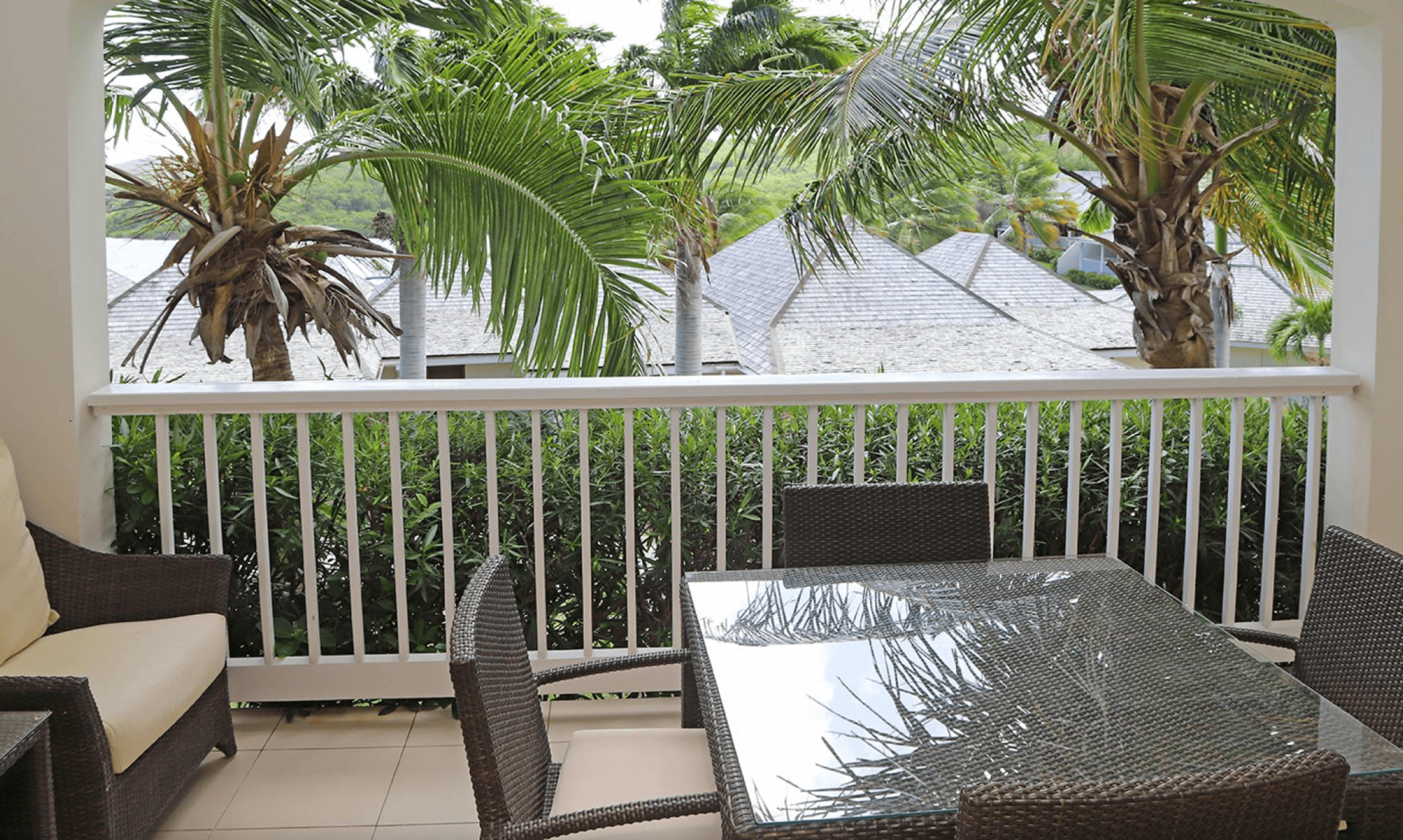

Antigua & Barbuda, Freetown
$325,000+
Stylish apartments, Nonsuch Bay, Freetown
 84 m²
 1
 1
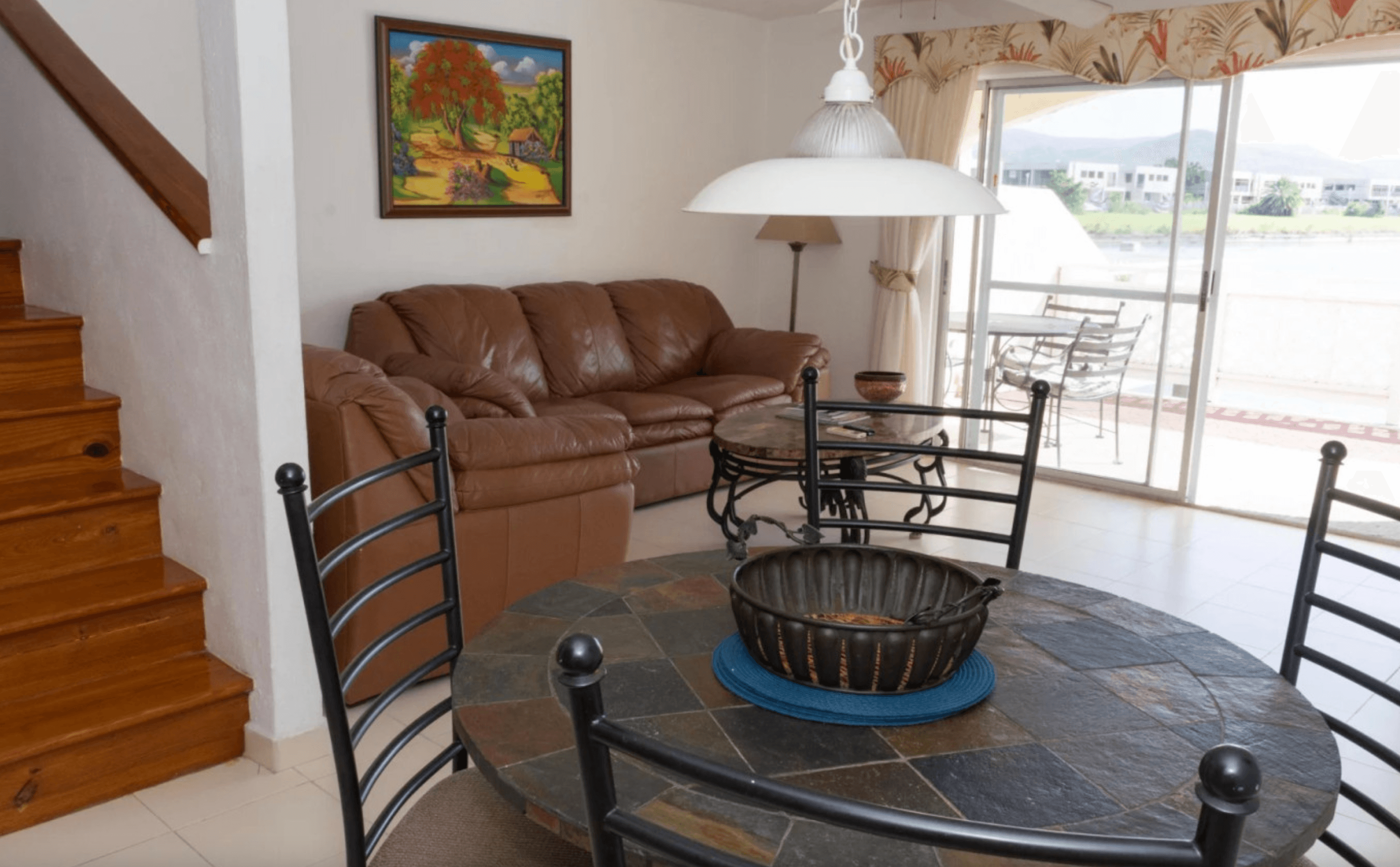
Antigua & Barbuda, Jolly Harbour
$350,000+
Elegant villa, Jolly Harbour
100 m²2 3 
Antigua & Barbuda, Jolly Harbour
$475,000+
Villa in modern style, Jolly Harbour
100 m²2 3 Grenada: for a broad choice of land and residential property
Grenada's open property market is driven mainly by conventional residential property and land rather than resort real estate. Residential transactions accounted for 92% of sales in the first half of 2025, while vacant land alone represented 79% of all transactions.
Main activity concentrates around St George, St David, and St Andrew, with St George accounting for the largest share by both number and value of transactions[29]Source: Terra Caribbean — Grenada Real Estate Market Analysis: Q1 & Q2 2025.
The prime segment attracts international buyers as well, with British buyers forming the largest group, followed by Americans and Canadians. Coastal and hillside homes are especially appealing to those seeking privacy and sea views.
Limited residential supply supports demand, and Grenada also has an established long-term rental market serving expatriates and remote workers[6]Source: Savills — Caribbean Islands 2024/25. For a foreign investor, this creates more choice than a resort-only market: it is possible to consider land, conventional houses, apartments, and premium villas.
Foreign buyers need an Alien Land Holding Licence to purchase property[6]Source: Savills — Caribbean Islands 2024/25. Those who purchase real estate as an investment for citizenship are exempt from obtaining that licence.
Foreigners who buy real estate as an investment for citizenship must keep it for at least 5 years. After that, they can sell the property to another CBI applicant[30]Source: Grenada Parliament — Grenada Citizenship by Investment (Amendment) Act 2019.
Some approved developments also offer a developer buyback after the holding period. In these projects, the developer may repurchase the investment at the original purchase price. This gives the investor a clearer exit but means they do not benefit from any increase in the property's value through that buyback. This is a condition of individual projects, not a general rule of Grenada's CBI programme[31]Source: Silversands Grenada — Private Residences.
Examples of CBI properties in Grenada
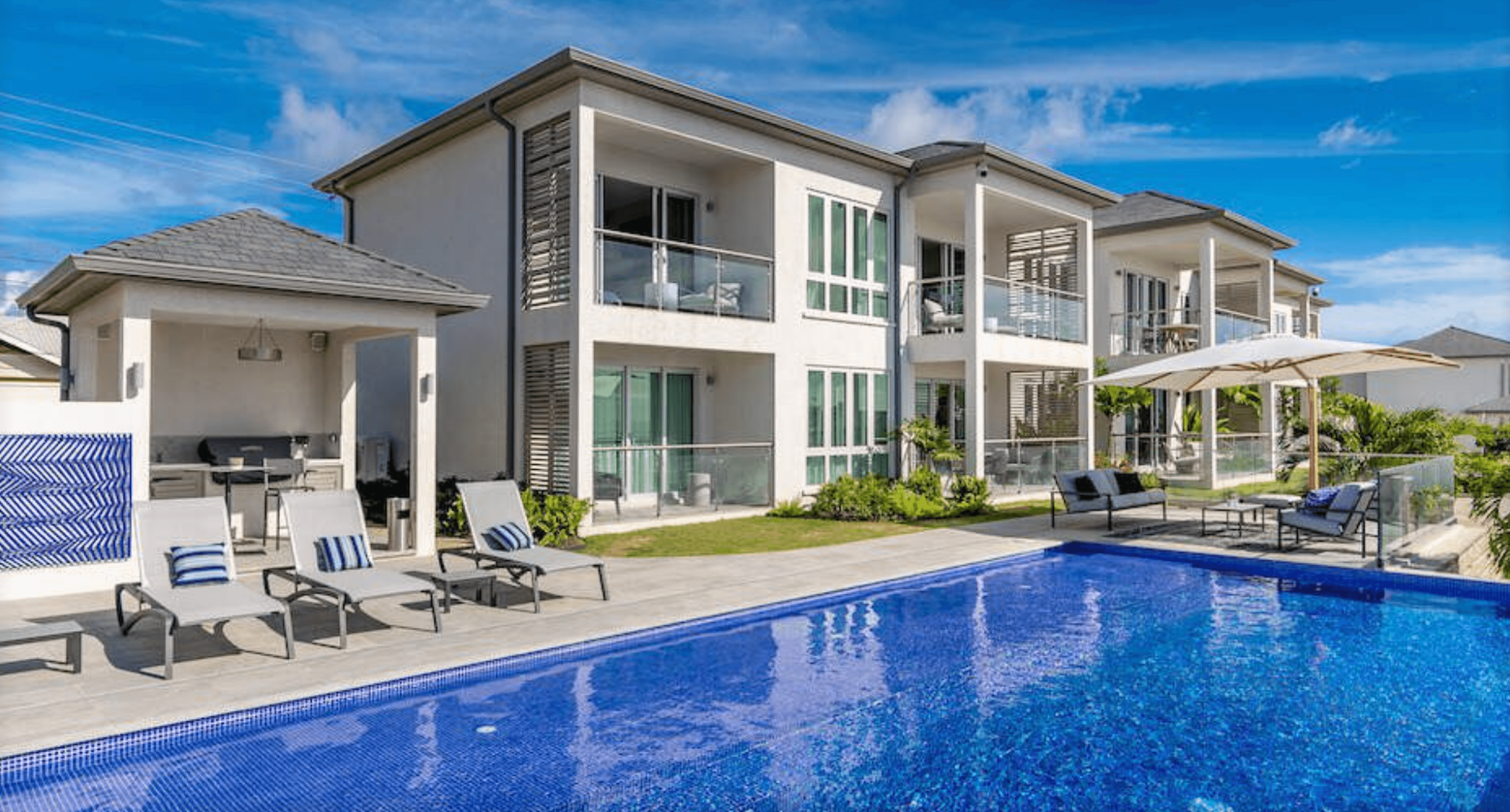
Grenada, St. George's
$197,000+
Apartments with ocean view, St. Georges, Grenada
138 m²2 2 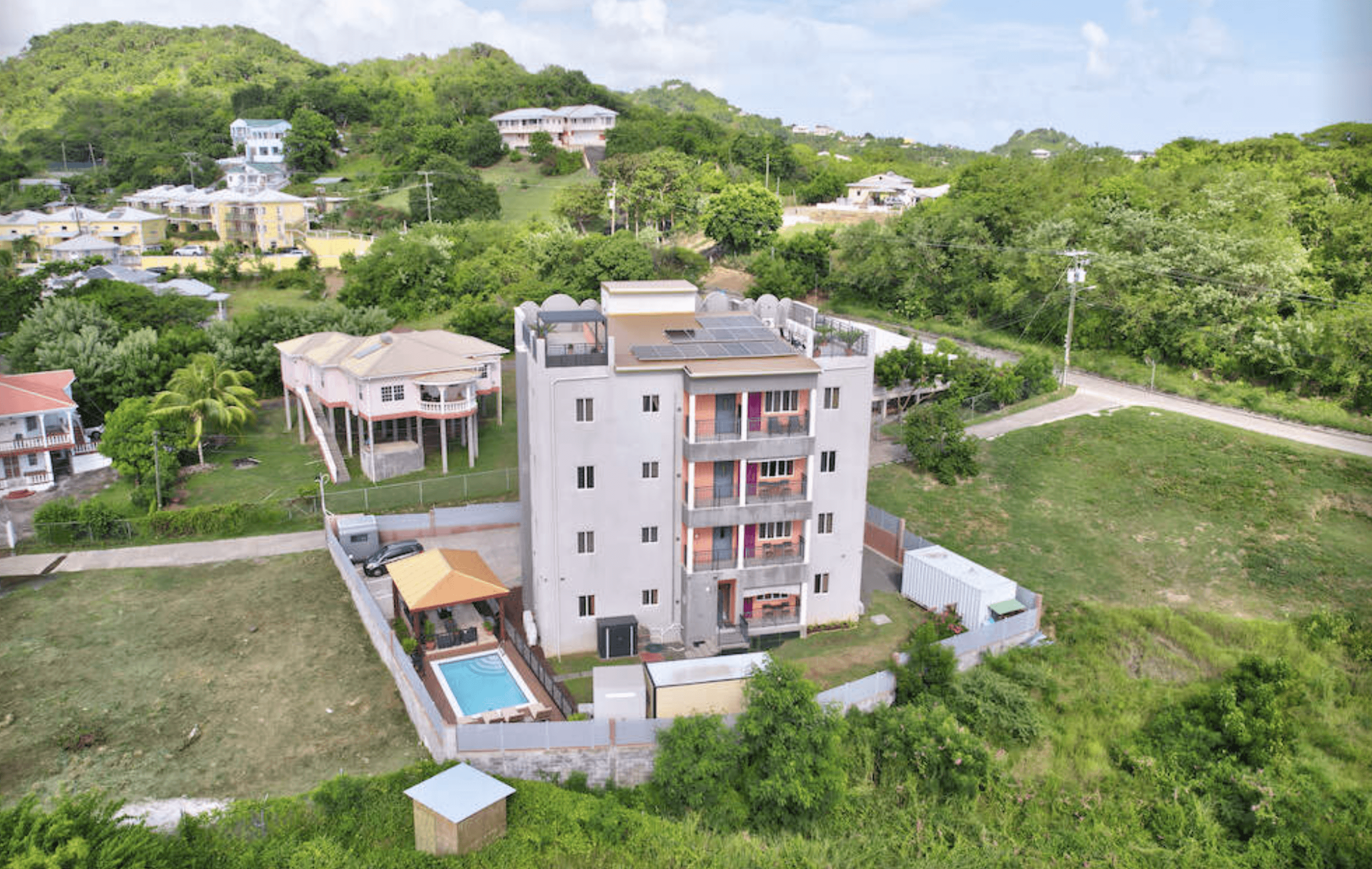
Grenada, St. George's
$250,000 — $375,000
Apartments in modern style, St. Georges, Granada
43 m² — 79 m²1—2 1—2 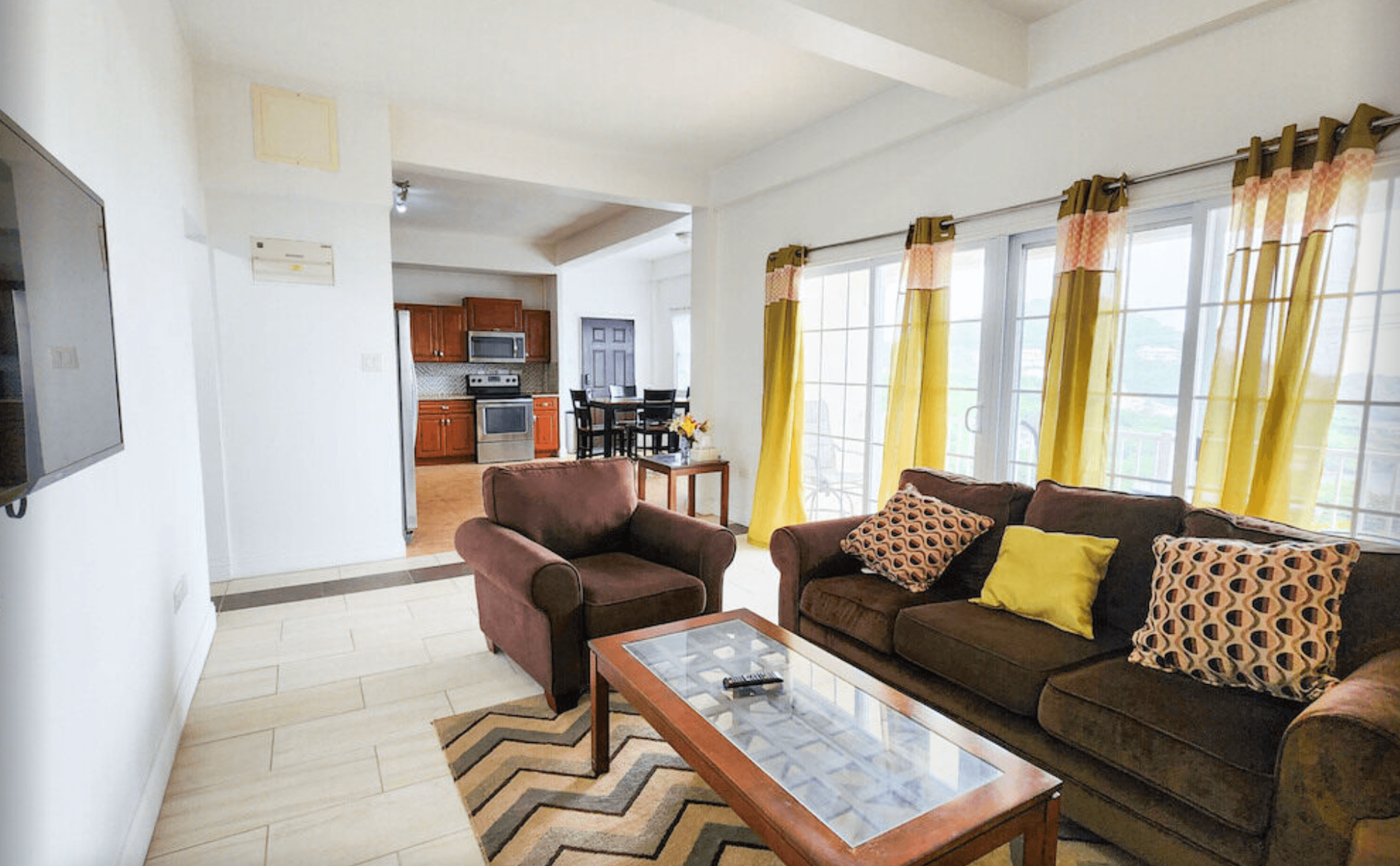
Grenada, St. George's
$395,000+
Elegant apartments with ocean view, St. Georges
118 m²2 2 Dominica: for the lowest CBI real estate threshold
Dominica has a smaller and more specialised property market. Foreigners can buy houses, land, and commercial property. For smaller land purchases, third-country nationals do not need an Alien Landholding Licence, although the alien landholding fee still applies and larger plots require a licence[32]Source: Invest Dominica Authority — Frequently Asked Questions.
For an investor, Dominica stands out less for a large second-home resale market and more for tourism projects built around the island's nature and eco-tourism positioning. Many properties marketed to international investors form part of hotels, resorts, and eco-focused developments rather than large residential communities.
For citizenship by investment in Dominica, government-approved projects include only tourism developments[33]Source: Dominica Citizenship by Investment Unit — Approved Real Estate Projects.
Dominica offers the lowest real estate investment threshold among the Caribbean Five: $200,000. This is also the lowest headline investment available under any of the five Caribbean citizenship by investment programmes.
The country allows for more flexibility at resale than other countries. An investor can sell a property after holding it for at least 3 years if the buyer is not using it as an investment for citizenship. If the next buyer also wants to use the property to obtain citizenship, the original owner must wait 5 years before selling it[34]Source: Dominica Citizenship by Investment Unit — Real Estate Investment.
Examples of CBI properties in Dominica
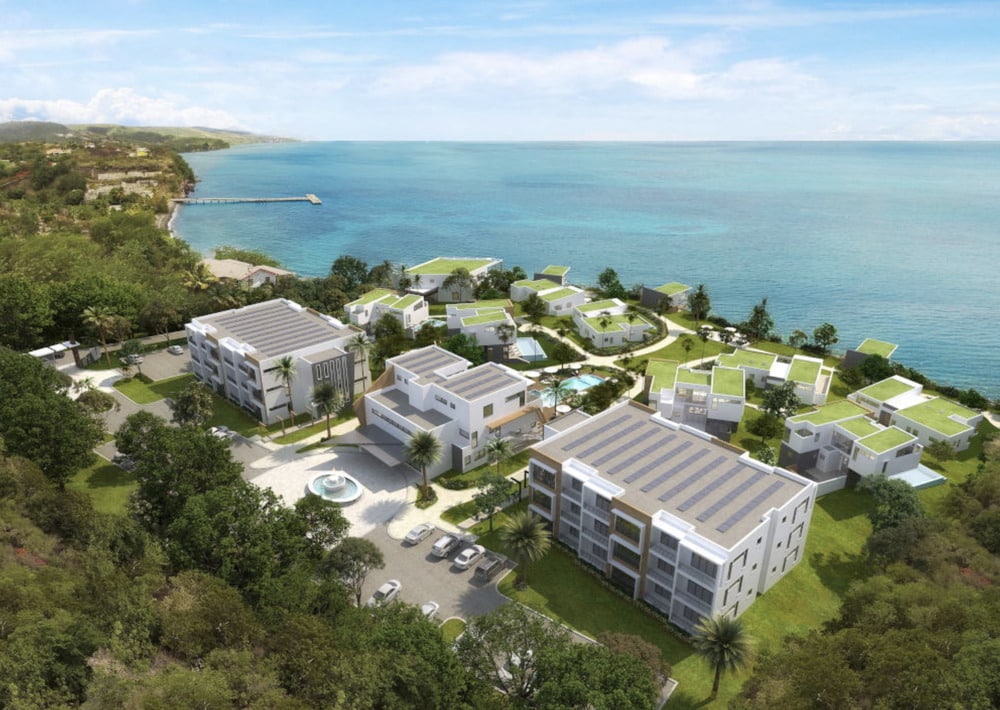
Dominica, Roseau
$220,000+
Share in a resort on the coast of Dominica managed by Hilton
1—3 
Dominica, Portsmouth
$220,000+
Share in a five-star hotel managed by Intercontinental

Dominica, Roseau
$216,000 — $3,800,000
Share and villas in a six-star resort
1—2 1 St Kitts and Nevis: for the widest choice of CBI property
St Kitts and Nevis has an established international second-home market with clearly different property segments. St Kitts has resort condominiums and larger developments, particularly around Frigate Bay, while Nevis has a stronger focus on private villas, resort residences, and lower-density homes.
The market is also becoming less dependent on buyers who purchase property mainly for citizenship. Chambers reports more lifestyle and second-home buyers and fewer purchases made purely for CBI[35]Source: Chambers and Partners — Real Estate 2026: St Kitts & Nevis. The CBI programme has slowed, with the revenue falling from 22.2% of GDP in 2023 to 8.6% in 2024 and 5.3% in 2025[36]Source: IMF — St Kitts and Nevis: 2026 Article IV Consultation.
For a property owner, this shift can be a positive sign: a well-located home may appeal not only to future applicants for citizenship but also to people who genuinely want a second home or plan to spend more time on the islands.
The St Kitts and Nevis citizenship by investment programme gives buyers more choice of property type than most competing programmes. Investors can choose units in approved developments, qualifying condominiums, or designated single-family private homes.
CBI investors must keep qualifying real estate for at least 7 years, the longest holding period among the Caribbean Five[37]Source: St Kitts and Nevis Citizenship Unit — Developer's Real Estate Investment.
Selling the property to another CBI applicant comes with an extra restriction. Private real estate cannot pass to a new citizenship applicant unless the authorities accept that the property has received substantial additional investment through construction, renovation, or similar improvements[38]Source: Government of St Kitts and Nevis — Citizenship by Substantial Investment Regulations 2024.
Examples of CBI properties in St Kitts and Nevis
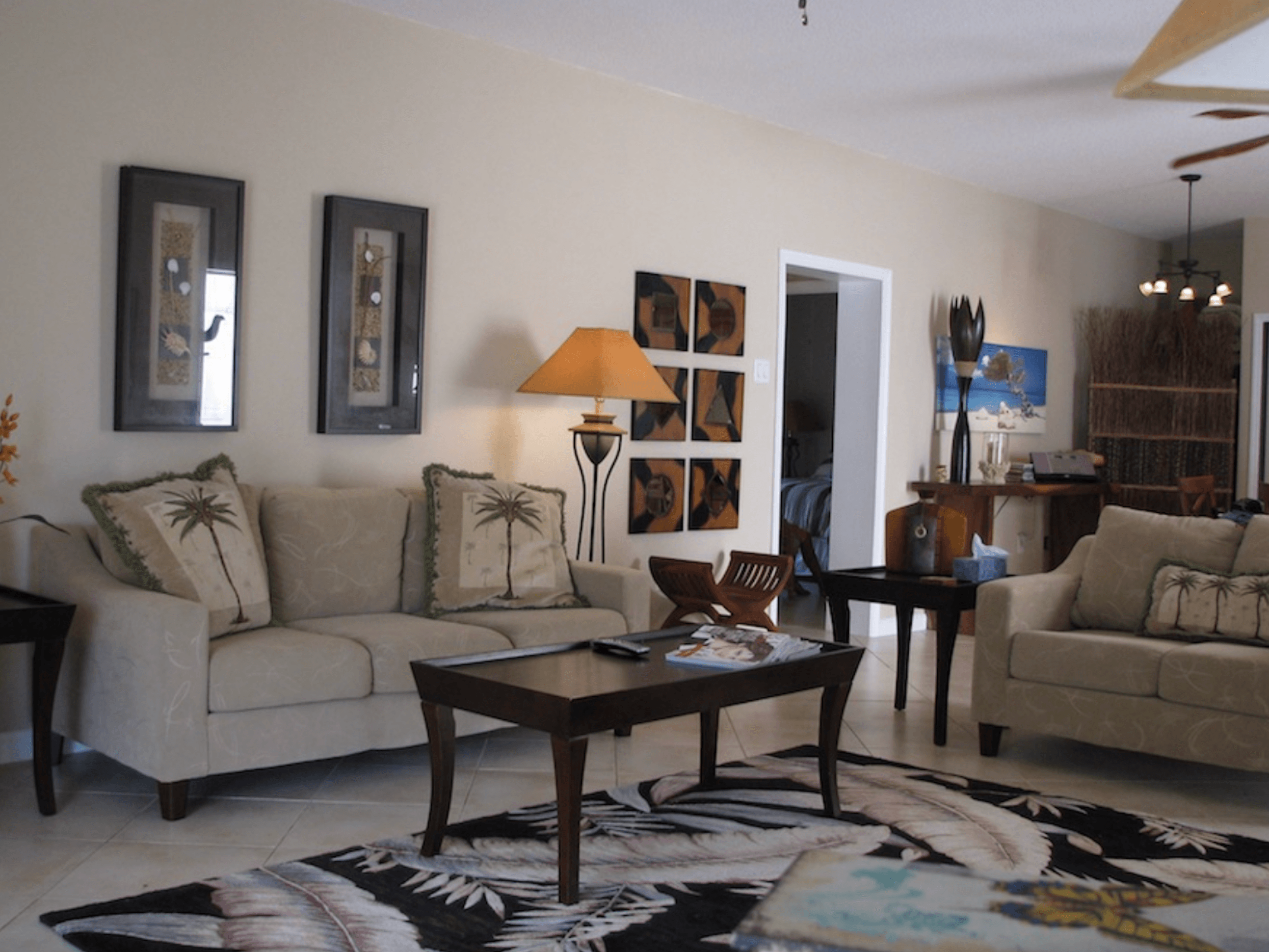
St Kitts & Nevis, Basseterre
$350,000+
Apartments in modern style, Basseterre
223 m²3 2 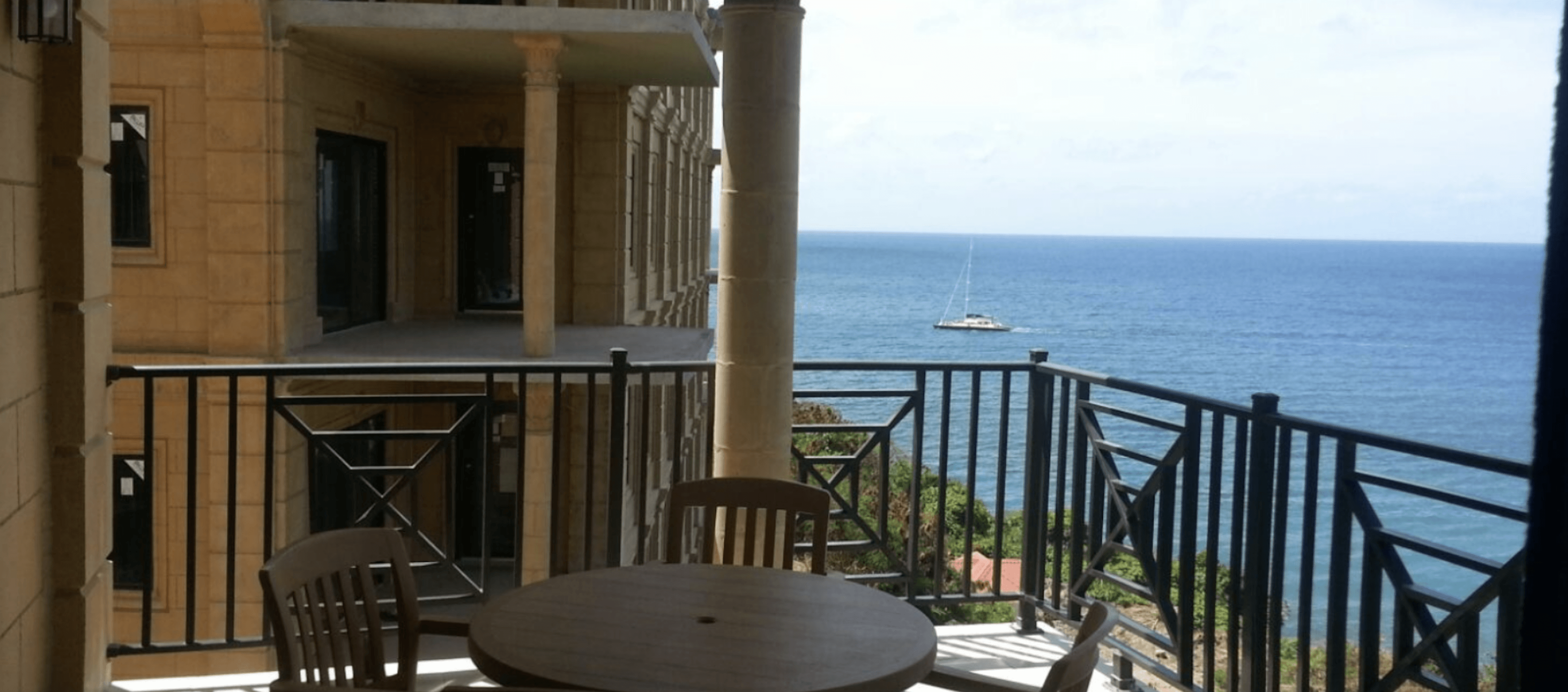
St Kitts & Nevis, Basseterre
$385,000+
Elegant apartments, Basseterre, St Kitts and Nevis
149 m²3 3 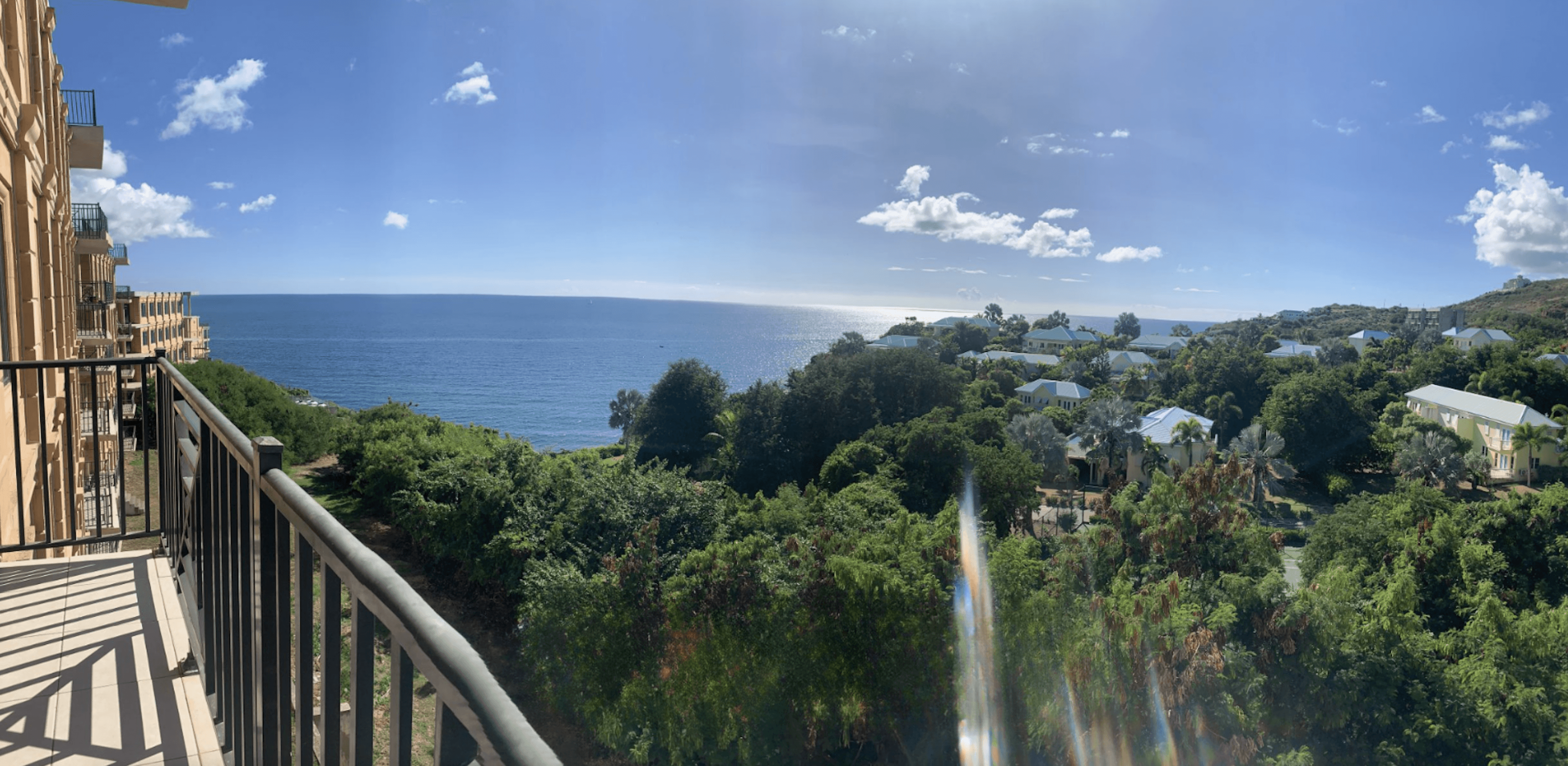
St Kitts & Nevis, Basseterre
$400,000+
Stylish apartments, Basseterre
149 m²3 3 St Lucia: for a varied residential and resort market
St Lucia offers one of the broadest mixes of property types among the five, from conventional houses and apartments to beachfront villas, mountainside homes, and resort residences. North American and European buyers drive much of the international demand, particularly for holiday homes, rental properties, and second residences[6]Source: Savills — Caribbean Islands 2024/25.
New residential and hospitality developments have also expanded the choice of prime property. This makes St Lucia relevant to investors who want more flexibility than a hotel share and would rather choose between a home for personal use, a holiday rental, or a managed resort property.
The citizenship by investment programme focuses on approved high-end hotels, resorts, and boutique properties. Investors must keep CBI real estate for at least 5 years after acquiring citizenship; then, it can be sold[39]Source: Government of St Lucia — Citizenship by Investment Regulations.
Examples of CBI properties in St Lucia
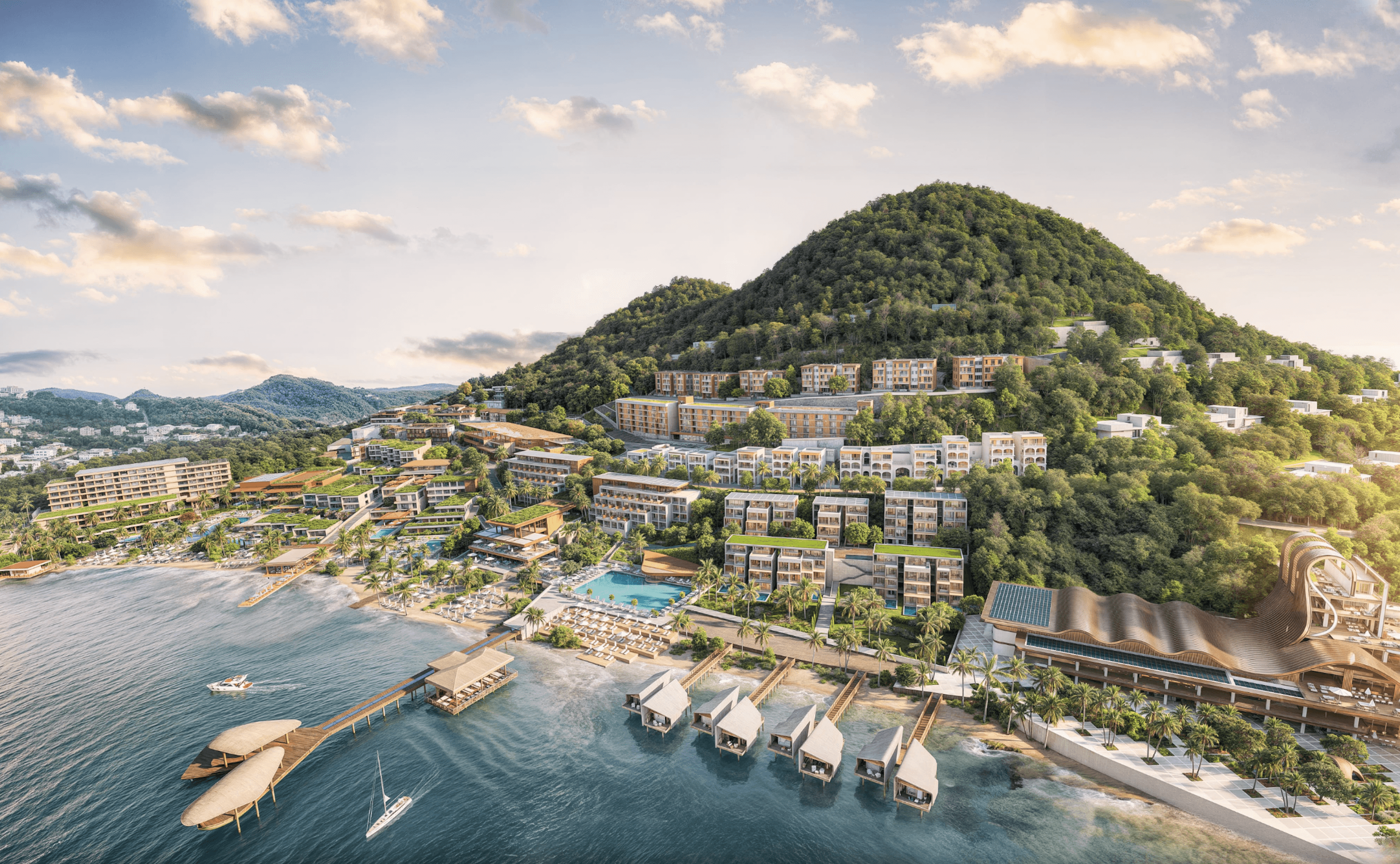
St Lucia, Rodney Bay
$559,000 — $15,000,000
Apartments and villas in luxury resort on the seaside
93 m² — 300 m²1—8 1—8 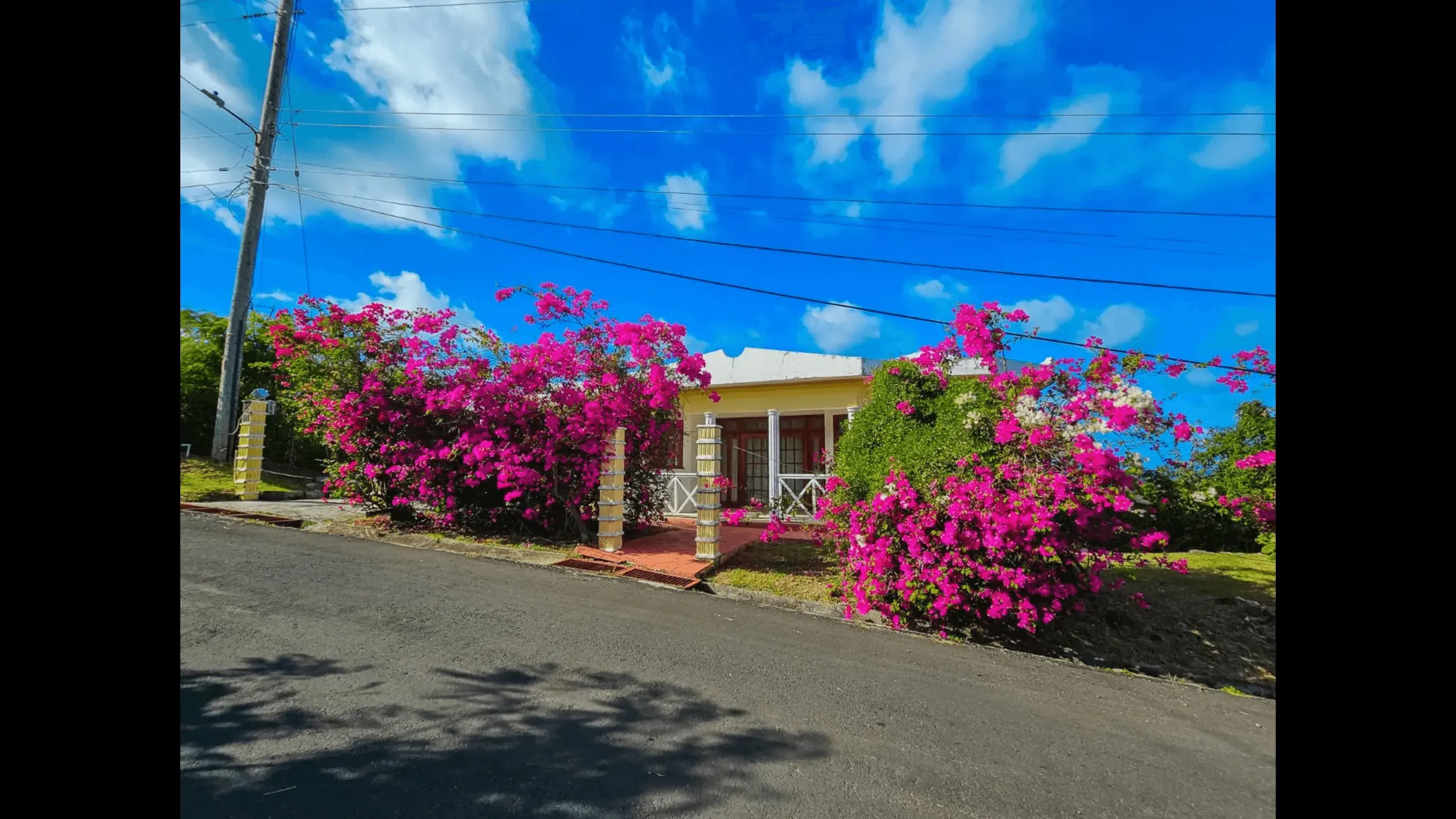
St Lucia, Castri
$290,000+
Charming house with 3 bedrooms and Ocean View, Gros Islet
279 m²3 3 
St Lucia, Micoud
$3,000,000+
Luxurious villa with panoramic ocean and island views
929 m²10 10 Additional costs when buying real estate in the Caribbean
The extra costs of buying property in the Caribbean depend partly on how the investor buys it. Foreigners purchasing on the open market usually pay property-related taxes, licence fees, and registration costs, while investors using real estate to obtain citizenship also pay separate CBI programme fees.
Additional costs for foreign buyers without CBI
Foreign buyers purchasing property outside a citizenship programme may need an Alien Landholding Licence, pay stamp duty or transfer tax, and cover other government charges. The table below shows these main buyer-side costs across the Caribbean Five. Legal, valuation, survey, and other professional costs are not included.
Taxes and fees when buying real estate in the Caribbean as a foreigner

Additional costs for CBI real estate
Buying property through a citizenship by investment programme comes with a separate set of costs. In addition to the qualifying real estate investment, applicants usually pay government or administrative fees, Due Diligence charges, and application-related fees.
The table shows the costs for one main applicant choosing the real estate option. It does not include the property price, legal or conveyancing costs, developer charges, or fees for family members.
Additional costs for buying real estate in the Caribbean under a CBI programme as a single investor
How to purchase real estate in the Caribbean as a foreigner
Foreigners can buy property in all 5 Caribbean countries, but they may need government permission before completing the transaction. The exact requirements depend on the country and the type of property. As a general rule, the process consists of 5 steps.
1. Choose a property and check its legal status. A local lawyer checks the title, ownership history, mortgages, or other claims against the property, and whether the seller has the right to sell it. For land, buyers should also check boundaries, planning restrictions, and permitted use.
2. Reserve the property and agree on the terms. The buyer and seller usually sign a reservation agreement or sale and purchase agreement and agree on a deposit. The contract can make completion conditional on the buyer receiving any government approval required to own the property.
3. Obtain permission to buy, if required. Antigua and Barbuda, Grenada, St Kitts and Nevis, and St Lucia have Alien Landholding rules for foreign buyers. St Lucia first requires a Certificate of Eligibility and then an Alien Landholding Licence[40]Source: Attorney General Chambers of St Lucia — Alien Landholding Licensing Act.
Dominica is more flexible: a foreigner can buy less than 1 acre for residential purposes or less than 3 acres for commercial purposes without obtaining a licence.[41]Source: Invest Dominica Authority — Purchase of Land.
4. Complete the purchase. Once the buyer has received the necessary approvals and the lawyer has completed the checks, the buyer pays the remaining purchase price and applicable taxes and fees. The parties then execute the transfer documents.
5. Register the new owner. The lawyer files the transfer with the country's land registry or equivalent authority. Registration formally records the buyer's ownership.
The exact order of the steps can vary depending on the country and specific circumstances. For example, an investor may sign a conditional sale agreement before receiving an Alien Landholding Licence, while the transaction itself cannot be completed until the required permission is in place.
Real estate purchased independently will not make its buyer an eligible applicant for citizenship by investment, even if its price meets or exceeds the CBI investment threshold. Across the Caribbean Five, the governments create lists of approved investment properties and require that citizenship applications go through licensed or authorised agents.
How to buy Caribbean real estate under a CBI programme
Based on the experience of Immigrant Invest lawyers, obtaining Caribbean citizenship through a real estate investment takes at least 6 months. Investors complete most of the procedure remotely with the support of our legal team.
The process follows the same general sequence in all 5 countries. The main differences concern processing times, interviews, the deadline for completing the property purchase after approval, and how applicants receive their citizenship documents.
1 business day
Preliminary Due Diligence
Immigrant Invest’s Compliance Department checks the investor against international databases before the application starts. A certified Anti-Money Laundering Officer identifies possible rejection risks and recommends how to address them.
If necessary, Immigrant Invest helps the investor select the programme depending on their family composition, circumstances, and budget.
2—5 weeks
Choosing a property and preparing documents
The investor chooses real estate that qualifies under the selected programme and usually reserves it before applying. Paying the full property price is usually not required at this stage.
Immigrant Invest has a curated database of properties that qualify for Caribbean citizenship by investment programmes. We help investors compare and select the property that best fits their goals.
Immigrant Invest lawyers prepare an individual list of documents required for the application. Once the investor collects the documents, the team fills out the application forms, arranges their translations and certification.
3—6+ months
Application and government Due Diligence
The licensed agent submits the application to the country's CBI Unit. The authorities check the applicants’ backgrounds, finances, and source of funds.
The principal applicant must also complete an interview as part of the Due Diligence process. It is usually held online and the default language is English. In Dominica and Grenada, applicants may indicate their preferred language and have the interview with an interpreter. Authorities may also require family members included in the application to attend.
Up to 1—3 months
Approval and property purchase
After the CBI authority approves the application, the investor completes the qualifying property purchase and pays the required programme fees. The deadline varies: for example, Grenada gives investors 30 days after approval, while St Lucia allows up to 90 days.
After the CBI authority approves the application, the investor completes the qualifying property purchase and pays the required programme fees. The deadline varies: for example, Grenada gives investors 30 days after approval, while St Lucia allows up to 90 days.
1 day
Submitting biometrics — only for St Kitts and Nevis passport
After receiving approval, applicants for St Kitts and Nevis citizenship attend a biometric enrolment appointment at an authorised collection centre. Fingerprints, a digital facial image, and a digital signature are collected for the biometric passport. The appointment usually takes 15—30 minutes.
Biometric enrolment is currently available in St Kitts, Dubai, Abu Dhabi, Hong Kong, Istanbul, Ottawa, Toronto, London, the Washington D.C. area, Lagos, Jeddah, Singapore, and Iraq. A separate VIP enrolment service is also available at the Royal Exchange in London.
Up to 1—1.5 months
Citizenship documents and passport
After confirming the investment, the authorities issue the naturalisation or citizenship certificate and passport. Most programmes can deliver the documents without a trip to the country.
St Kitts and Nevis requires the citizenship documents to be collected in person, but a licensed agent can do this on the investor’s behalf.
How much does it cost to maintain Caribbean property?
The cost of owning Caribbean real estate depends heavily on the type of property. Owners of private villas or apartments usually pay property tax, insurance, utilities, repairs, and possibly property-management or condominium fees. Investors who own a share or unit in a managed CBI resort often have a different cost structure.
Maintenance costs for villas and apartments
Property tax is an annual expense, and the rates differ significantly between the islands:
- In Antigua and Barbuda[42]Source: Antigua and Barbuda Inland Revenue Department — Property Tax and Grenada[43]Source: Grenada Inland Revenue Division — Property Tax, residential land is taxed at 0.2% of its taxable value and residential buildings at 0.3%.
- In Dominica, there is no nationwide annual property tax. Roseau, Dominica's capital, instead levies a municipal Land and House Rate, set at 1.25% of the assessed value[44]Source: Government of Dominica — Official Gazette, Roseau City Council Land & House Rates Resolution.
- In St Kitts and Nevis, residential land and buildings are taxed at 0.2%. Nevis applies separate rates of 0.75% to residential land and 0.156% to residential buildings[45]Source: St Kitts and Nevis Inland Revenue Department — Property Tax Rates and Exemptions.
- In St Lucia, residential property tax equals 5% of the property's assessed annual rental value. Commercial property is taxed differently, at 0.25% of open-market value[46]Source: St Lucia Inland Revenue Department — Land and House Tax Act.
Insurance is particularly important for Caribbean property because policies need to cover hurricanes, flooding, earthquakes, and other natural hazards. Insurance for a Caribbean home typically costs around 0.4—1.8% of the insured rebuilding value per year, depending on the island and property.
Ongoing costs. Owners should also budget for electricity, water, internet, repairs, gardening and pool maintenance, where applicable. Condominium owners may pay regular service or homeowners' association fees.
Investors who rent out the property may also pay a management company to handle guests, cleaning, maintenance, and bookings. For short-term rentals, full-service management commonly costs around 20—35% of gross rental income.
Maintenance costs for CBI hotel shares and resort properties
Investors who buy a hotel share, beneficial interest, or similar managed CBI property usually do not maintain the property themselves. The hotel or resort operator handles day-to-day expenses such as utilities, repairs, insurance, housekeeping, staffing, and general maintenance.
Instead, the project's operating and management costs are normally reflected in the investment agreement and rental structure. Depending on the project, the operator may deduct expenses and management fees from rental revenue before distributing the investor's share of income. Some structures may also include reserve-fund, service, or other ongoing charges.
As a general benchmark for hotel-branded residences, owners typically receive 40—60% of rental revenue, while the remaining part covers operating costs, marketing, reservations, housekeeping, maintenance, and operator fees[47]Source: Branded Residences — How Rental Programmes Can Drive Real Value for Owners of Hotel Branded Residences.
Renting out Caribbean property: returns and tax rules
Owners who buy property on the open market can usually choose between long-term and short-term rentals. The return depends on the location, property type, occupancy, management costs, and seasonality. Short-term rentals may generate higher gross revenue, but cleaning, utilities, platform fees, management, and periods without guests reduce the net return.
CBI hotel shares and resort units work differently. Once the resort starts operating, the management company usually handles bookings and places the property in a rental pool. According to our real estate department, CBI properties generally generate around 4—5% per year, although the actual return depends on the project and its revenue-sharing terms.
Rental income may be taxable in the country where the property is located even if the owner lives abroad. A foreign landlord may need to register with the local tax authority or appoint a local agent or property manager to withhold and pay the tax.
The table covers income tax for individual owners. Short-term rentals can trigger additional taxes or registration requirements. For example, St Kitts and Nevis requires operators of short-term accommodation, including properties listed on Airbnb and Booking.com, to comply with VAT and Island Enhancement Fund rules[48]Source: St Kitts and Nevis Inland Revenue Department — Short-Term Rental Compliance.
Tax on rental income for individual property owners
Selling Caribbean real estate
Selling a conventional villa, apartment, or plot on the open market is usually straightforward: the owner finds a buyer, agrees on the price, completes the legal transfer, and pays the applicable seller taxes and professional fees. The owner can normally sell whenever they choose, subject to the terms of the title, mortgage, or development agreement.
CBI property is different. Investors must first complete the programme's mandatory holding period, and some projects restrict how the property can be resold or who can buy it.
Selling property purchased under a CBI programme
The minimum holding periods are:
- Dominica — 3 years for an ordinary resale. If the next buyer also wants to use the property for a citizenship application, the original investor must hold real estate for 5 years.
- Antigua and Barbuda — 5 years. An approved property can be sold to another CBI applicant, but the same property can qualify for citizenship only twice.
- Grenada — 5 years. The investor cannot receive a developer buyback or rebate before the end of this period. After 5 years, the investor can exit the project under the resale or buyback terms agreed with the developer.
- St Lucia — 5 years. The current programme rules do not clearly guarantee that a subsequent purchaser can reuse the same property for another CBI application; this should be checked for the particular project.
- St Kitts and Nevis — 7 years. Approved development property can be resold after that period. For a private property, a new buyer cannot automatically reuse it for citizenship unless the authorities accept that substantial further investment has been made through construction, renovation, or other improvements.
CBI investors should also distinguish between owning a conventional property and owning a hotel share or beneficial interest. Resort investments often have their own resale or developer-buyback terms.
Some projects buy the interest back at the original investment amount, which gives the owner a defined exit but means they do not benefit from property-price appreciation through that route.
Selling property on the open market
For an ordinary property, the seller can set the asking price according to market conditions and benefit from any increase in value. Taxes on the sale vary considerably between the 5 countries.
Taxes paid by the property seller
Risks and common mistakes in Caribbean real estate investment
Caribbean property can generate rental income and serve as a second home or long-term investment, but small island markets come with risks that are easy to underestimate from abroad. The most important ones concern the property itself, insurance, construction, rental assumptions, and eventual resale.
Skipping independent legal and technical checks
A sea view and a clean-looking sales contract are not enough. Before paying a substantial deposit, the buyer should have an independent lawyer verify the title, mortgages and other claims, rights of access, planning permissions, and the seller's authority to transfer the property.
For land, a survey should also confirm the boundaries and access to roads and utilities. Title and registry quality varies across the Caribbean, which can make defects harder and slower to resolve[49]Source: InvestCARICOM — Real Estate.
Underestimating hurricanes and insurance costs
A property can look attractive on projected rental yield but become much less profitable once insurance and storm-related maintenance are included.
The International Monetary Fund found that property insurance premiums across the Eastern Caribbean rose sharply after global reinsurance became more expensive. In Grenada, the average premium per property policy increased by about 16% in 2023, while increases across the Eastern Caribbean Currency Union, ECCU, were estimated at roughly 15—25%[50]Source: IMF — Property Insurance Challenges in the ECCU.
Before buying, investors should obtain an actual insurance quote and check hurricane and flood cover, deductibles, exclusions, and the cost of rebuilding rather than relying on a regional average.
Buying cheap land without budgeting for construction and supervision
A low land price does not necessarily mean a low total investment. Caribbean islands rely heavily on imported building materials and, for some specialist work, imported labour and equipment.
Construction costs increased by 5.69% in St Lucia and 1.68% in Antigua and Barbuda in 2024—2025 alone, before taking account of some specialist imported items[51]Source: BCQS — Caribbean & Latin America Market Trend Report 2025.
Calculating returns from nightly rates instead of realistic occupancy and costs
A villa advertised at $300 per night does not necessarily earn $300 for each of the 365 nights in a year. Depending on the season, occupancy can vary significantly. During the low season in the Caribbean, occupancy can be as low as around 40—50%.
Investors should model revenue after vacancy, management, platform commissions, utilities, cleaning, repairs, insurance, and tax — not from the advertised nightly rate alone.
Buying without a realistic exit plan
Caribbean property markets are relatively small, so finding a buyer can take longer than in large metropolitan markets, particularly for unusual, very expensive, or highly specialised properties. Limited comparable transactions can also make market pricing less transparent[52]Source: InvestCARICOM — Frequently Asked Questions.
Properties bought under citizenship by investment programmes come with additional resale considerations. Mandatory holding periods, limits on resale to another CBI applicant, and project-specific buyback terms can all reduce the pool of potential buyers.
How does Immigrant Invest support Caribbean real estate investors?
Immigrant Invest is a licensed investment migration company with 20 years of experience and more than 10,000 clients worldwide. We are authorised to work with Caribbean citizenship by investment programmes and support applicants throughout the entire process — from preliminary Due Diligence and choosing a property to completing the purchase and obtaining citizenship.
We provide investors with a catalogue of selected CBI-approved hotel shares, apartments, villas, and resort residences. We shortlist properties based on the investor’s budget, expected return, personal-use plans, and exit strategy. Our clients do not need to travel to choose a property: our representative can visit developments and provide additional photos and videos on request.
Our legal team reviews ownership, rental arrangements, holding periods, and resale or buyback terms, coordinates with the developer, prepares the CBI application, and oversees the transaction through completion. Where programme rules allow, our Caribbean representative can act on the client’s behalf, including collecting citizenship documents locally and arranging courier delivery.
Our support continues after citizenship is obtained. The team monitors passport expiry dates and property holding periods, reminds clients about upcoming renewals, helps prepare and submit documents, and assists with property matters, family applications, banking, and other services connected with Caribbean citizenship.
Key takeaways on Caribbean real estate
- Foreigners can buy real estate in Antigua and Barbuda, Dominica, Grenada, St Kitts and Nevis, and St Lucia. Depending on the country, they may need an Alien Landholding Licence and pay additional taxes and government fees.
- All five countries also offer citizenship by real estate investment. Minimum qualifying investments range from $200,000 in Dominica to 325,000 in St Kitts and Nevis.
- Caribbean property prices vary significantly. Conventional apartments and houses can start at around $150,000—300,000 in some markets, while prime beachfront villas can cost several million dollars.
- Rental returns depend strongly on the property and location. CBI properties yield around 4—5% per year.
- Property ownership comes with ongoing costs. Investors should budget for property tax, insurance, utilities, maintenance, and management.
- CBI real estate comes with additional resale restrictions. Mandatory holding periods range from 3 years in Dominica to 7 years in St Kitts and Nevis.
Immigrant Invest is a licensed agent for citizenship and residence by investment programs in the EU, the Caribbean, Asia, and the Middle East. Take advantage of our global 15-year expertise — schedule a meeting with our investment programs experts.


 Trusted by 10,000+ investors