








Since 2024, citizenship by investment programmes have become far more relevant for Germans, who can now acquire another nationality without giving up their German passport.
São Tomé and Príncipe leads on affordability, with citizenship starting at $90,000, while the Caribbean five and Vanuatu can offer strengths in family eligibility, real estate, and capital recovery.
This guide compares the strongest CBI options for Germans, covering costs, timelines, taxes, family rules, and key pitfalls.
Can Germans get second citizenship in the Caribbean?
From June 27th, 2024, Germans can acquire another nationality without automatically losing German citizenship[1]Source: German Federal Ministry of the Interior — Modernisation of Citizenship Law. The former Beibehaltungsgenehmigung requirement has been abolished. Prior approval from German authorities is therefore no longer needed, making second citizenship a more practical option for families seeking a backup passport.
Citizenship by investment is one of the fastest routes. Applicants qualify through investment, Due Diligence, and proof of lawful funds rather than years of residence. The Caribbean remains the best-known market, Vanuatu offers an established Pacific alternative, and São Tomé and Príncipe now stands out for its much lower entry cost.
Entry thresholds vary sharply:
- São Tomé and Príncipe — $90,000+;
- Vanuatu — $130,000+;
- Dominica — $200,000+;
- Antigua and Barbuda — $230,000+;
- Grenada — $235,000+;
- St Lucia — $240,000+;
- St Kitts and Nevis — $250,000+.
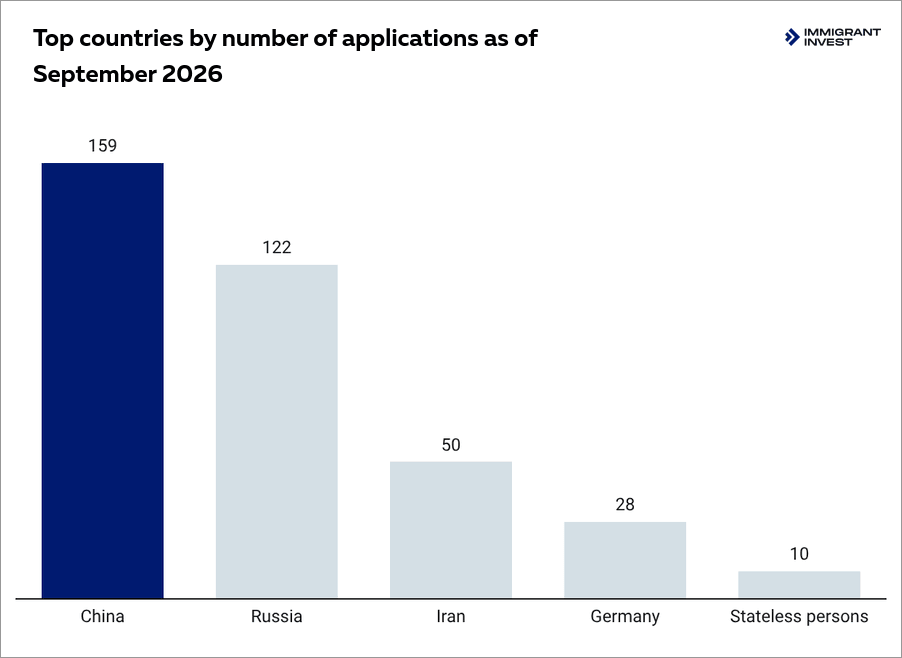
São Tomé and Príncipe offers a relatively new second-citizenship route with an accessible entry threshold, fast processing, family inclusion, and no need to renounce a German passport. Launched in September 2025, the programme received 548 applications in its first year and granted citizenship to 117 applicants and family members. Germans rank 4th by application volume, with 28 applications submitted[2]Source: Linkedin — Official São Tomé and Príncipe CBI Unit post.
Trusted by 10,000+ investors
Check your eligibility for São Tomé and Príncipe citizenship
Why Germans consider a second Caribbean citizenship: 5 key reasons
Dual citizenship for Germans is rarely about travel. A German passport already covers the Schengen Area and most major destinations, so even São Tomé and Príncipe’s lack of Schengen access is hardly a drawback. The appeal is elsewhere: a second legal base, asset diversification, and a plan B beyond the EU.
1. Second home and a family plan B
A second citizenship gives a German family somewhere else to land if circumstances shift: tax rules change, a business relocates, a child studies abroad, or Europe becomes less secure. The family does not need to emigrate today. The legal right to move is already in place before it becomes urgent.
For children and future generations, that can mean another jurisdiction where they can study, settle, work, or build a business without beginning from zero.
2. More freedom to build a career or life outside Europe
A second passport gives Germans a permanent right to live and work in the country of citizenship — whether São Tomé and Príncipe, Vanuatu, or one of the five Caribbean CBI states. In the Caribbean, the benefit extends further: all five CBI countries belong to both the OECS and CARICOM, opening regional mobility and work opportunities beyond a single island.
São Tomé and Príncipe creates a different route through the CPLP. Its citizens can access Brazil’s dedicated 2-year residence pathway with work rights and later qualify for residence of indefinite duration.
3. Business and banking diversification
The same regional access can also be useful on the commercial side. Caribbean citizenship can smooth company formation and local banking across OECS and CARICOM markets, while São Tomé and Príncipe can open a more direct route into CPLP economies. For entrepreneurs, that means more jurisdictions to operate from and bank in.
The currency structure also supports cross-border business and banking. The Eastern Caribbean dollar has been fixed at EC$2.70 to US$1 since 1976, helping limit exchange-rate swings when pricing, holding cash, or operating across the region.

Trusted by 10,000+ investors
Compare Caribbean citizenship by investment programmes
4. Tax residence flexibility
Frustration with bureaucracy and high taxes can make a second citizenship more relevant for Germans considering relocation. It gives them more choice over where to establish a genuine tax base, and the contrast can be significant: for example, St Kitts and Nevis, Antigua and Barbuda, and Vanuatu do not levy personal income tax.
The benefit only works with a real move. To end Germany’s unlimited tax liability, a person needs to give up both a German residence and habitual abode; deregistering alone is not enough. German-source income and certain anti-avoidance rules can still preserve part of the tax connection to Germany.
5. Safeguard against geopolitical and military-service uncertainty
Germany is rebuilding military capacity: 18-year-old men are now required to complete a Bundeswehr questionnaire[3]Source: Financial Times — New German military service targets 40,000 teenagers a year, July 24th, 2025, compulsory medical assessments are set to begin, and the government aims to reach 260,000 active soldiers and 200,000 reservists by 2035[4]Source: Reuters — German parliament backs controversial military service law amid Russian threat, December 5th, 2025. If recruitment falls short or the security situation worsens, the Bundestag can activate needs-based conscription.
A second passport does not cancel German military obligations. Its value appears if the holder genuinely relocates: for Germans living permanently abroad, military registration is suspended and no questionnaire is required while their centre of life remains outside Germany[5]Source: Bundeswehr — Musterung & Assessment zum Wehrdienst.
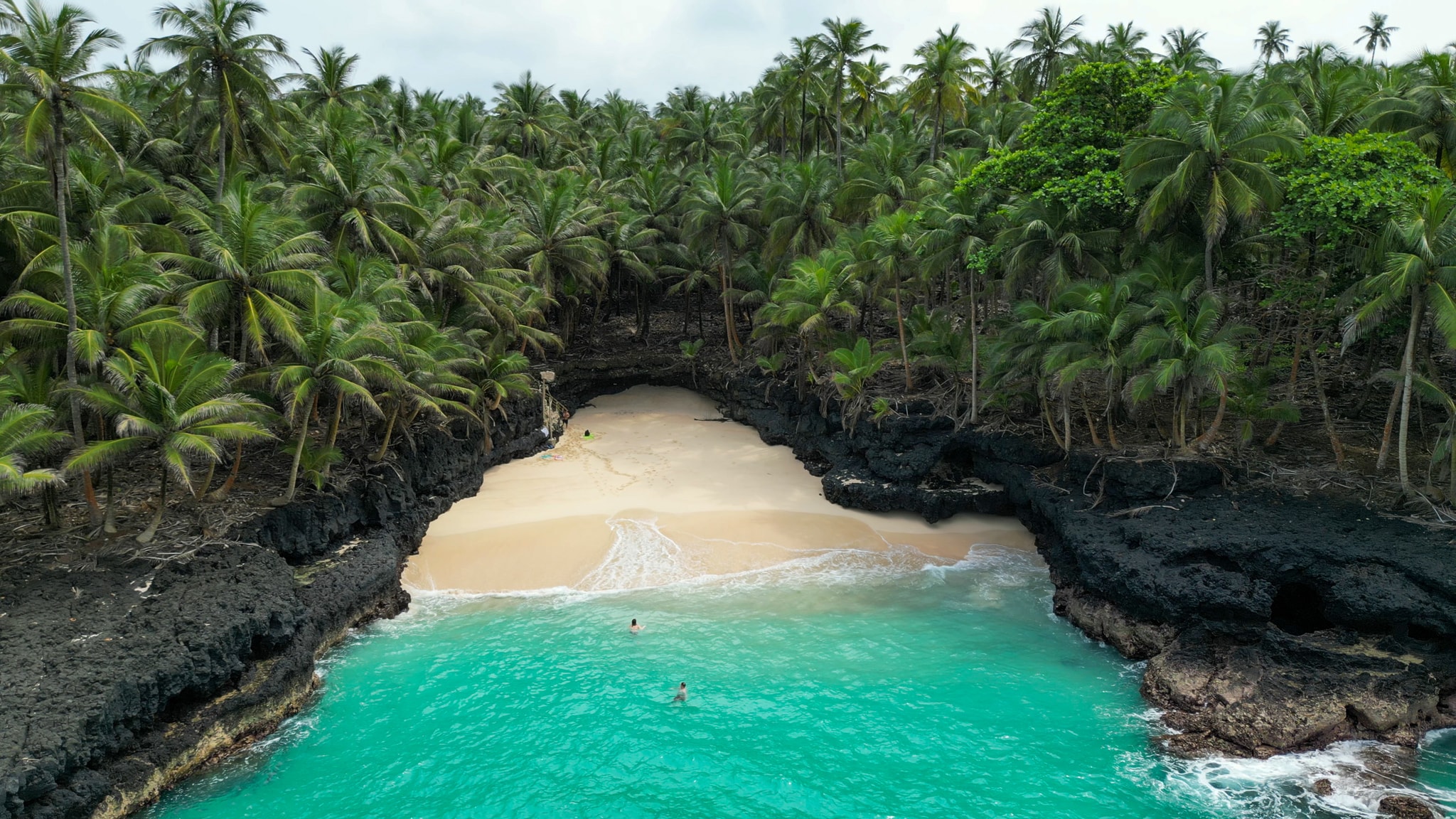
Year-round warmth and turquoise beaches add a strong appeal to second citizenship. São Tomé and Príncipe is also the first country entirely covered by UNESCO biosphere reserves[6]Source: UNESCO — Ilha de São Tomé Biosphere Reserve
Which second citizenship by investment programme is best for Germans?
The five Caribbean CBI programmes now operate under a shared regional framework with a $200,000 minimum floor, tighter Due Diligence[7]Source: OECS — Citizenship by Investment Programmes MoA, and coordinated oversight[8]Source: Eastern Caribbean Citizenship by Investment Regulatory Authority. Vanuatu remains a separate Pacific option with its own legal and investment structure.
São Tomé and Príncipe is the newest alternative in this comparison. Located in the Gulf of Guinea, it sits outside the Caribbean framework and operates under its own CBI rules. Germans are already among the programme’s leading applicant nationalities, behind China, Russia, and Iran.
São Tomé and Príncipe citizenship by investment
Despite launching only in 2025, São Tomé and Príncipe already entered the 2025 CBI Index, ranking 10th among 14 programmes[9]Source: CBI Index — 2025 Report. It received top scores for citizenship timeline, ease of processing, and absence of mandatory residence, giving it a credible place alongside older programmes, even while its track record remains shorter.
The minimum investment starts at $90,000 for a single applicant as a non-refundable contribution to the National Transformation Fund[10]Source: São Tomé and Príncipe CBI programme. It finances projects in renewable energy, education, and infrastructure. For a family of up to four, the contribution rises to $95,000, with $5,000 added for each additional family member from the 5th person onwards.
The full process takes around 4 months. Approval currently comes in about 2 months on average, with the fastest recorded case completed in just 26 days. After payment, issuance of the citizenship documents takes at least 3 months.
To qualify for São Tomé and Príncipe citizenship, applicants may hold no more than two existing citizenships when they apply. There is no interview, language or history test, and no requirement to travel to São Tomé and Príncipe in person.
Vanuatu citizenship by investment
Vanuatu ranks 7th in the 2025 CBI Index, placing it among the strongest citizenship by investment programmes for speed and ease of processing.
The standard route starts at $130,000 as a non-refundable contribution supporting national development and disaster recovery. Alternatively, investors can contribute $165,000 to the Cocoa Sustainable Development Fund. Under this option, investors receive a $50,000 fund unit that can be redeemed after 5 years[11]Source: Vanuatu CBI programme.
Processing takes around 2 months, making Vanuatu one of the fastest CBI options.
Requirements are somewhat stricter than with São Tomé and Príncipe: applicants must show an available bank balance of at least $250,000. Investors must also appear in person in Vanuatu or at an authorised embassy to submit biometrics.
There are no language or history tests and no residence requirement.
Dominica citizenship by investment
Dominica ranks 2nd in the 2025 CBI Index, making it one of the strongest-rated Caribbean citizenship by investment programmes.
The minimum investment starts at $200,000, the lowest entry point among the five Caribbean programmes. Applicants can either make a non-refundable contribution to the Economic Diversification Fund or buy property[12]Source: Dominica CBI programme.
The real estate option comes with a comparatively short holding period: property can be resold after 3 years, the shortest minimum ownership term among the Caribbean CBI programmes. In this case, the buyer cannot participate in the CBI programme with the same property; otherwise, the property can be sold after 5 years.
The full process takes around 6 months and can be completed entirely remotely. Applicants are not required to pass language, history, or other integration tests.
Antigua and Barbuda citizenship by investment
Antigua and Barbuda rounds out the Caribbean five in the CBI Index, with one of the broadest ranges of investment routes and a particularly strong option for larger families.
The minimum investment is $230,000 as a non-refundable contribution to the National Development Fund[13]Source: Antigua and Barbuda CBI programme. Three other routes are available:
- Real estate: $300,000 in property, which can be sold after 5 years.
- Higher education contribution: $260,000 for families of at least six. One family member under 29 can receive 1 year of tuition at the University. The contribution is non-refundable.
- Business investment: $400,000 per investor in a joint project worth at least $5 million, or $1.5 million for an individual investment.
The process takes around 6 months, with no language or history tests.
Antigua and Barbuda imposes a physical-presence requirement: citizens must spend at least 30 days in the country during the first 5 years after naturalisation.
Grenada citizenship by investment
Grenada ranks 3rd in the 2025 CBI Index, scoring particularly well for family inclusion, Due Diligence, and freedom of movement.
The minimum investment is $235,000 as a non-refundable contribution to the National Transformation Fund, which finances projects in tourism, alternative energy, agriculture, and other sectors[14]Source: Grenada CBI programme.
Real estate is the second option. A share starts at $270,000 where at least two investors join a government-approved tourism project with a combined investment. Otherwise, the minimum is $350,000. The property can be resold after 5 years.
Citizenship is obtained in around 8 months. The application can be handled remotely, with no language or history tests required.
St Lucia citizenship by investment
St Lucia ranks 4th in the 2025 CBI Index, with a broad selection of investment routes.
The most accessible option is a $240,000 non-refundable contribution to the National Economic Fund, which finances areas such as healthcare, tourism, and national development[15]Source: St Lucia CBI programme. Four alternatives are available:
- Real estate: $300,000 in a property, which can be sold after 5 years.
- Government bonds: $300,000 in non-interest-bearing bonds, redeemable in full after 5 years.
- Infrastructure projects: $250,000 in developments such as ports, roads, and other strategic infrastructure.
- Business investment: $1 million per investor in a joint project worth at least $6 million, or $3.5 million for a sole investment.
Obtaining citizenship usually takes around 6 months. Applicants do not need to relocate to St Lucia, and there are no language or history exams.
St Kitts and Nevis citizenship by investment
St Kitts and Nevis has ranked 1st in the CBI Index for 5 consecutive years, operating the world’s longest-running citizenship by investment programme since 1984.
The minimum investment is $250,000 through the Sustainable Island State Contribution. The money goes to the Federal Consolidated Fund, supporting healthcare, education, tourism, culture, green energy, and other national priorities[16]Source: St Kitts and Nevis CBI programme.
Real estate starts at $325,000 for shares or condominium units and $600,000 for an approved private home. The property can be sold after 7 years.
The third route is the Public Benefit Option, starting at $250,000. Approved projects include the Prime Creative Arts Centre and Basseterre High School, both designed to support public infrastructure and community development.
Citizenship is obtained in around 4 months under the Public Benefit Option and about 6 months through the other routes. There are no language or history exams and no residence requirement.
St Kitts and Nevis has an in-person requirement. Applicants must attend a designated centre in St Kitts and Nevis or abroad to submit biometrics.
São Tomé and Príncipe vs. Caribbean CBI programmes comparison

Which family members can Germans include in the CBI application?
Family rules vary considerably across CBI programmes, especially for adult children and multi-generational applications. All allow spouses, children, and parents, while some also extend eligibility to grandparents or siblings.
A spouse must be of the opposite sex and pass the same background checks as the main applicant. São Tomé and Príncipe goes further by allowing an unmarried partner to be included, provided the relationship can be documented.
Children under 18 qualify across all programmes. Adult children can remain on the application if they are financially dependent on the main applicant, with additional age or education conditions. Antigua and Barbuda is the most flexible and does not apply the dependency requirement.
Parents and grandparents must be financially dependent on the main applicant or spouse to qualify.
Family eligibility by programme
Total cost of second citizenship for Germans
The headline investment is only part of the total cost of citizenship. German investors seeking a second passport should also budget for Due Diligence, government processing, interviews where required, passport issuance, and other administrative charges. Individual investment routes may also carry their own additional fees.
São Tomé and Príncipe remains the most affordable option, with minimum family costs half those of Vanuatu and almost four times lower than in St Kitts and Nevis.
Route-specific investment additions
Under contribution routes, the minimum amount often covers a family of up to four, while larger families may require additional payments.
For example, São Tomé and Príncipe requires $90,000 for a single applicant or $95,000 for a family of up to four, plus $5,000 per additional dependant. In St Kitts and Nevis, $250,000 covers up to four applicants, with $25,000 added per additional child and $50,000 per additional adult.
Real estate thresholds usually remain unchanged regardless of family size, although government or administrative fees increase the amount significantly. For example, Dominica keeps the investment at $200,000 but adds government fees from $75,000 for a single applicant to $100,000 for a family of up to four. Antigua and Barbuda is an exception, with no extra amount added to its real estate investment threshold.

Due Diligence fee
Due Diligence charges vary by programme and usually depend on the number and age of family members. Interview and banking checks may be billed separately.
São Tomé and Príncipe: there is no separate standard Due Diligence fee. Instead, foreigners pay a $5,000 fee per application.
Vanuatu: $5,500 per application.
Dominica: $7,500 for the main applicant and $4,000 for each dependant aged 16 or over. Children under 16 are exempt. Applicants aged 16+ also attend a mandatory interview, charged at $1,000 per person.
Antigua and Barbuda: $8,500 for the main applicant, plus a $1,500 interview fee per application. Due Diligence for family members costs:
- $5,000 for a spouse;
- $4,000 per additional adult;
- $2,000 per child aged 12—17.
Grenada: $5,000 per applicant, plus $1,000 per person for the mandatory interview. Children aged 16 or under are exempt from both charges.
St Lucia: $7,500 for the main applicant and $5,000 for each eligible dependant, except children under 15. The main applicant also pays a $500 interview fee and a $1,100 bank fee.
St Kitts and Nevis: $10,000 for the main applicant and $7,500 for each dependant, with children under 16 exempt. Standard bank Due Diligence fees add:
- $550 for the main applicant;
- $350 for a spouse;
- $300 per additional adult;
- $200 per child aged 16—18;
- $150 per child under 16.
Additional fees
In addition to the investment and Due Diligence fees, applicants should budget for government processing, passports, biometrics, banking, document preparation, and other administrative costs. For a single applicant, these additional expenses start at:
- São Tomé and Príncipe — $2,750+;
- Vanuatu — $4,000+;
- Dominica — $6,050+;
- Antigua and Barbuda — $4,900+;
- Grenada — $11,850+;
- St Lucia — $6,500+;
- St Kitts and Nevis — $9,611+.
The final amount increases with family size and may also vary depending on the investment route, banking arrangements, biometric location, and document requirements.
All-in cost fund contribution by family size
Documents German applicants need for the CBI application
German applicants need to prepare a comprehensive file covering identity, background, finances, and professional history. Particular care is needed with apostilles, translations, and consistent spelling of names across older German records.
Core documents include:
- Valid passports and, where required, national ID cards.
- Civil status documents, including birth, marriage, and divorce certificates.
- Police clearance certificates, issued in Germany through the Bundesamt für Justiz.
- Bank reference letters confirming account standing, balances, and the length of the banking relationship.
- Source of funds and wealth evidence, such as German tax assessments, employment contracts, dividend statements, business records, or sale agreements.
- Professional references and supporting employment or business documents.
- Curriculum vitae covering education and professional history.
- Proof of address, such as recent utility bills or bank statements.
- Medical certificates issued by a licensed physician.
- Dependant documentation, including birth certificates and evidence of financial dependency for adult children, parents, or grandparents.
- Passport-size photographs.
German documents need to be apostilled by the competent authority and translated into English by a sworn translator. Depending on the document and federal state, apostilles may be handled by a Landgericht, Oberlandesgericht, or another designated authority.
Applicants should also check maiden names, hyphenated surnames, and spelling differences across older records. Even minor inconsistencies can prompt additional Due Diligence questions, so aligning the documentation before filing helps keep the application moving smoothly.
How long it takes to get citizenship by investment: step-by-step procedure for Germans
CBI applications must be submitted through a government-authorised or licensed agent; investors cannot file directly with the citizenship authorities. The overall procedure is similar across the programmes, with country-specific differences such as biometrics and oaths of allegiance. Crucially, the investment is completed after approval in principle, so applicants first pass government Due Diligence before committing the main investment.
Based on Immigrant Invest’s experience, obtaining citizenship takes from around 2 months in Vanuatu to at least 8 months in Grenada. Contribution routes are faster than real estate options, which involve additional conveyancing, escrow, and developer documentation.
1 day
Preliminary Due Diligence
Before documents are collected, Immigrant Invest conducts preliminary KYC and Anti-Money Laundering checks. The compliance team reviews sanctions and PEP exposure, criminal history, adverse media, previous visa or immigration refusals, and the logic behind the applicant’s source of funds.
This early screening helps identify potential issues before a contract is signed and assess the chances of approval.
Before documents are collected, Immigrant Invest conducts preliminary KYC and Anti-Money Laundering checks. The compliance team reviews sanctions and PEP exposure, criminal history, adverse media, previous visa or immigration refusals, and the logic behind the applicant’s source of funds.
This early screening helps identify potential issues before a contract is signed and assess the chances of approval.
2—5 weeks
Preparation of documents
Immigrant Invest lawyers prepare the application file, helping applicants collect, certify, apostille, and translate the required documents.
Immigrant Invest lawyers prepare the application file, helping applicants collect, certify, apostille, and translate the required documents.
2—6 months
Application and government Due Diligence
The completed file is submitted to the relevant Citizenship by Investment Unit. The authorities then conduct their own Due Diligence, checking the applicant’s identity, background, business activity, source of funds and wealth, sanctions exposure, and reputation.
Screening also applies to dependants, with the minimum age varying by programme:
- 17 and over — Grenada;
- 16 and over — São Tomé and Príncipe, Dominica, St Lucia, St Kitts and Nevis;
- 12 and over — Antigua and Barbuda.
Vanuatu conducts Due Diligence on the main applicant and all family members, regardless of age.
Caribbean programmes also require Due Diligence interviews. Dominica starts from age 16, Grenada from 17, while St Kitts and Nevis requires the main applicant and may interview dependants over 16.
Only after the government completes its review does the applicant receive approval or approval in principle.
The completed file is submitted to the relevant Citizenship by Investment Unit. The authorities then conduct their own Due Diligence, checking the applicant’s identity, background, business activity, source of funds and wealth, sanctions exposure, and reputation.
Screening also applies to dependants, with the minimum age varying by programme:
- 17 and over — Grenada;
- 16 and over — São Tomé and Príncipe, Dominica, St Lucia, St Kitts and Nevis;
- 12 and over — Antigua and Barbuda.
Vanuatu conducts Due Diligence on the main applicant and all family members, regardless of age.
Caribbean programmes also require Due Diligence interviews. Dominica starts from age 16, Grenada from 17, while St Kitts and Nevis requires the main applicant and may interview dependants over 16.
Only after the government completes its review does the applicant receive approval or approval in principle.
1—2 weeks
Investment
After approval, the investor fulfils the chosen investment condition: for example, transfers a contribution to a state fund, completes an approved property purchase, or acquires government bonds.
The full investment is made after Due Diligence, although application, Due Diligence, processing, and other administrative fees are paid earlier.
After approval, the investor fulfils the chosen investment condition: for example, transfers a contribution to a state fund, completes an approved property purchase, or acquires government bonds.
The full investment is made after Due Diligence, although application, Due Diligence, processing, and other administrative fees are paid earlier.
Up to 5 months
Approval, oath, and passport issuance
After the investment is confirmed, the authorities finalise the citizenship grant. São Tomé and Príncipe, St Lucia, and Antigua and Barbuda require an oath or affirmation of allegiance.
A citizenship certificate is then issued, followed by the passport application. Caribbean passports are processed within 2—4 weeks and remain valid for 5 to 10 years. In São Tomé and Príncipe, citizenship documents, the national ID, and passport currently take at least 12 weeks after the final post-approval filing.
Vanuatu and St Kitts and Nevis require in-person biometrics. Vanuatu offers enrolment in Vanuatu, Dubai, Hong Kong, and New Caledonia. St Kitts and Nevis has centres in the Federation and abroad, including the UAE, Hong Kong, Türkiye, Canada, the UK, the US, Saudi Arabia, Singapore, and Nigeria.
After the investment is confirmed, the authorities finalise the citizenship grant. São Tomé and Príncipe, St Lucia, and Antigua and Barbuda require an oath or affirmation of allegiance.
A citizenship certificate is then issued, followed by the passport application. Caribbean passports are processed within 2—4 weeks and remain valid for 5 to 10 years. In São Tomé and Príncipe, citizenship documents, the national ID, and passport currently take at least 12 weeks after the final post-approval filing.
Vanuatu and St Kitts and Nevis require in-person biometrics. Vanuatu offers enrolment in Vanuatu, Dubai, Hong Kong, and New Caledonia. St Kitts and Nevis has centres in the Federation and abroad, including the UAE, Hong Kong, Türkiye, Canada, the UK, the US, Saudi Arabia, Singapore, and Nigeria.
Tax implications of second citizenship for Germans
A second passport does not automatically change where a German pays tax. The decisive factors are where the person actually lives, whether they remain tax resident in Germany, and what income or assets they continue to hold there.
German tax residence does not end with a new citizenship
Obtaining another nationality does not change German tax residence. A German remains subject to unlimited German taxation for as long as they retain a residence or habitual abode in Germany, even if they also hold another passport.
Deregistering alone is not enough. Tax residence depends on the actual circumstances, including whether a home in Germany remains available for use, how much time is spent there, and where the person’s personal and economic ties are centred.
Taxation for CBI holders
São Tomé and Príncipe has no wealth or inheritance tax. Personal income is exempt up to $530,000 per year, with progressive rates of up to 25% above that level. Non-residents are not taxed on foreign-source income.
Across the five Caribbean CBI countries, inheritance and capital gains taxes are absent, while personal income tax rules vary by jurisdiction:
- St Kitts and Nevis and Antigua and Barbuda — no personal income tax.
- Dominica — personal income tax of up to 35%; non-residents are taxed only on Dominican-source income[17]Source: Government of the Commonwealth of Dominica — Pay As You Earn.
- Grenada — personal income tax of up to 30%, with a resident allowance of up to EC$60,000; non-residents are taxed only on Grenada-source income[18]Source: Grenada Parliament — Income Tax Act.
- St Lucia — progressive personal income tax of up to 25%, with foreign-source income potentially taxable for residents[19]Source: PwC — Personal income tax in St Lucia.
Vanuatu has the lightest tax regime of the group, with no personal or corporate income tax, capital gains tax, inheritance tax, or wealth tax.
Leaving Germany can trigger exit tax
For entrepreneurs and investors, relocation may create a tax liability before the move is complete.
Under §6 of Germany’s Foreign Tax Act, exit tax can apply when a person ends unlimited German tax liability after having been resident in Germany for at least 7 of the previous 12 years. It applies only where the person also holds investments[20]Source: Exit tax on substantial shareholdings — §6 AStG.
The rules can capture unrealised gains on:
- corporate shareholdings of at least 1% held at any point during the previous 5 years;
- investment fund units where at least 1% of the fund was held during the previous 5 years, or where the acquisition cost exceeded €500,000 per fund.
The tax is calculated as if the assets had been sold, even where no actual sale has taken place.
Foreign accounts remain visible to German authorities
Relocation and second citizenship do not create financial secrecy from Germany. German residents must report certain cross-border payments exceeding €50,000 to the Deutsche Bundesbank under the Foreign Trade and Payments Regulation[21]Source: Deutsche Bundesbank — FAQ on cross-border transactions.
Germany also participates in international exchange-of-information systems, including the Common Reporting Standard and FATCA. Foreign banks can therefore transmit account and ownership information to German tax authorities through the Bundeszentralamt für Steuern[22]Source: Federal Central Tax Office — Country-by-country reporting.
Trusted by 10,000+ investors
Sort out your tax obligations before it becomes a problem
Risks and pitfalls Germans should consider before applying for CBI
Caribbean citizenship by investment carries several risks that applicants should weigh before committing funds. Most arise not from the citizenship itself, but from Due Diligence, document preparation, investment structure, tax consequences, and the use of non-compliant intermediaries. Careful planning at the outset can reduce delays, unexpected costs, and the risk of rejection.
Rejection or later revocation
Government Due Diligence is extensive, and unresolved issues around criminal history, sanctions, source of wealth, business activity, or previous immigration refusals can lead to rejection.
Citizenship can also be reviewed later if it was obtained unlawfully or through material misrepresentation. For example, St Kitts and Nevis has reviewed past CBI approvals under its strengthened governance framework and revoked citizenships that were found to have been obtained unlawfully, particularly through the former opaque investment option[23]Source: IMF — St Kitts and Nevis: 2025 Article IV Consultation.

Zlata Erlach,
Head of the Austrian office
We help applicants check their immigration history, source of wealth, and supporting documents before filing. A previous visa refusal, company sale, inheritance, or large bank transfer is not necessarily a problem, but it should be disclosed and properly documented. We also check that dates, amounts, and explanations are consistent before government Due Diligence begins.
Illegal discounts and unauthorised intermediaries
For the five Caribbean programmes, the regional agreement sets a $200,000 minimum investment floor, while individual countries may require more. Agents are not allowed to undercut official programme thresholds through rebates, hidden discounts, or side agreements.
An offer below the published minimum should therefore be treated as a serious warning sign. It may indicate a non-compliant structure or unauthorised intermediary and can expose the applicant to rejection, loss of money, or later scrutiny of the citizenship grant.
Longer-than-quoted timelines
Published processing periods are estimates, not guarantees. Complex source-of-wealth structures, multiple nationalities or residences, additional security checks, delayed police certificates, biometrics, and government workloads can all extend the procedure.
Locked-up real estate and uncertain resale
CBI real estate comes with a mandatory holding period of 3 to 7 years. Once that period ends, the property may be eligible for resale, but neither the selling price nor the speed of exit is guaranteed.
This is one area where São Tomé and Príncipe stands out. Its fund contribution starts at $90,000, so investors can obtain citizenship without tying substantially more capital to a property and its future resale. The trade-off is that the contribution itself is non-refundable.
Costs beyond the headline investment
The advertised investment threshold is not the final budget. Government processing and Due Diligence fees, passport charges, professional fees, translations, apostilles, banking costs, biometrics, and dependant fees come on top.
Depending on the programme and family composition, these extras can add up to around $100,000, and for larger families potentially $200,000 or more, above the core investment. Comparing programmes by the headline threshold alone can therefore be misleading.
Expiring documents and repeat paperwork
Police clearances, medical reports, bank references, and other supporting documents often have short validity windows, commonly around 3 months.
If an application is delayed by missing information, appointment availability, government backlogs, or additional Due Diligence, documents may expire before submission or approval. Replacing them can mean another round of certification, translation, and apostilles, adding both time and cost.
Zlata Erlach,
Head of the Austrian office
We do not recommend collecting every document at the same time. Police certificates, medical reports, and bank references may expire relatively quickly, so we plan their issuance around the expected filing date. Documents with longer validity can be prepared first, while time-sensitive ones are obtained closer to submission.
Additional banking scrutiny
Second citizenship does not automatically make international banking easier. Banks still examine tax residence, beneficial ownership, source of wealth, business activity, and the purpose of an account.
A newly acquired CBI nationality may also lead to additional KYC questions, particularly where it appears alongside German residence, companies in several jurisdictions, or cross-border investment structures.
How Immigrant Invest can help Germans with CBI application
Immigrant Invest has specialised in investment migration since 2006 and has helped more than 10,000 clients worldwide obtain citizenship or residence by investment. We hold government-issued licences for the programmes we work with and operate an in-house Legal and AML Compliance Department.
Our experts also regularly participate in major industry events, including the Investment Migration Forum, IMI Connect, and Caribbean Investment Summit, keeping close to regulatory and programme developments.
For German applicants, support covers the entire CBI procedure:
- Preliminary Due Diligence. The compliance team checks sanctions and PEP exposure, adverse media, visa refusals, business background, and source-of-funds risks before the contract is signed.
- Programme selection. Experts compare São Tomé and Príncipe, Caribbean programmes, Vanuatu, and other options by budget, family composition, timeline, and goals.
- German document preparation. Lawyers assist with civil records, the Führungszeugnis, tax documents, Handelsregister extracts, apostilles, translations, and name inconsistencies.
- Source of funds and wealth. The team structures evidence for salaries, dividends, businesses, property sales, investments, and other capital sources.
- Application filing. Lawyers complete forms, certify documents, assemble the file, and submit it through the authorised channel.
- Government Due Diligence. Immigrant Invest handles additional requests and prepares applicants for interviews, biometrics, and other programme-specific checks.
- Investment and final documents. After approval, the team coordinates the investment and supports the applicant through citizenship and passport issuance.
Our support continues after citizenship is granted, with assistance on passport renewals, family matters, relocation, and other post-citizenship needs. German clients can complete most of the citizenship process remotely or meet the team at an international office, including Vienna.
Key takeaways: which citizenship suits Germans best?
- São Tomé and Príncipe: the lowest entry threshold of $90,000. The programme also stands out by allowing an eligible unmarried partner to join the application.
- Antigua and Barbuda: best for large families. Its $260,000 higher-education route covers families of 6 or more, while adult children up to 31 require no dependency and siblings face no age cap.
- Grenada: no age limit for parents and grandparents. Siblings over 18 can also qualify.
- St Kitts and Nevis: the most established programme. Operating since 1984, it is the world’s longest-running CBI programme and ranks 1st in the CBI Index, although its minimum investment is also the highest at $250,000.
- Vanuatu: the fastest processing. Citizenship can be obtained in around 2 months, compared with roughly 4 months in São Tomé and Príncipe.
- Dominica: the best real estate exit. Property starts at $200,000 and can be resold after 3 years — the lowest real estate threshold and the shortest holding period among the Caribbean five.
- St Lucia: the widest investment choice. Alongside the fund, real estate, and business routes, it offers $300,000 government bonds and infrastructure investments starting at $250,000.
Immigrant Invest is a licensed agent for citizenship and residence by investment programs in the EU, the Caribbean, Asia, and the Middle East. Take advantage of our global 15-year expertise — schedule a meeting with our investment programs experts.