








St Lucia citizens are exempt from capital gains, dividends, and inheritance taxes. Legal entities do not pay taxes on capital gains, dividends, and sometimes the value-added tax.
This article discusses all the opportunities that St Lucian tax resident status provides.
Who pays taxes in St Lucia?
In St Lucia, taxes are paid by tax residents and non-residents who earn income from sources within the country.
Tax residents of St Lucia are individuals who spend at least 183 days in the country during a year. St Lucia distinguishes between residents and ordinarily resident individuals[1]Source: St Lucia's Income Tax Act — Income Tax Act. Those who have a permanent home in the country and spend some time there during the year are considered ordinarily resident and are taxed on their worldwide income.
Residents who do not meet the conditions pay tax on their St Lucia-sourced income and foreign income received in the country.
Companies may also be treated as tax residents if they are incorporated in St Lucia or managed and controlled from the country. Resident companies are taxed on income sourced in St Lucia, while qualifying foreign-source income is exempt.
Non-residents of St Lucia are individuals who spend less than 183 days a year in the country. They may still be required to pay tax, but usually only on income sourced in St Lucia.
St Lucia citizenship by investment holders are not subject to a minimum stay requirement, so it is up to them whether to become tax residents. This depends on how much time they spend in the country.

Taxes for individuals in St Lucia
The main taxes paid by individuals in St Lucia are personal income tax and social security contributions. Certain types of income, such as interest and royalties, may also be subject to withholding tax. St Lucia does not levy inheritance or capital gains tax.
Income tax
St Lucia income tax is levied on:
- labour activity;
- business income;
- royalty;
- interest;
- rent.
Tax residents of St Lucia are taxed under the progressive personal income tax system. Tax is calculated on chargeable income after applicable allowances and deductions.
As of 2026, St Lucia tax rates are:
- up to EC$15,000, or ≈ $5,550, — 15%;
- EC$15,001—30,000, or ≈ $5,550—11,100, — 20%;
- above EC$30,000, or ≈ $11,100, — 30%[2]Source: Inland Revenue Department — Tax facts calculations.
Non-residents are taxed on income arising in St Lucia at the same progressive rates. Interest paid to non-residents is subject to 15% withholding tax, while royalties are subject to 25%. For CARICOM nationals, the withholding tax on royalties is reduced to 15%[3]Source: Government of St Lucia — St Lucia’s Budget Address.
Social contributions
Employees in St Lucia contribute 5% of their insurable earnings to the National Insurance Corporation. The same rate applies to both residents and non-residents employed in the country[4]Source: St Lucia National Insurance Corporation Act, Cap. 16.01.
Employers deduct the employee’s contribution from their salary and transfer it to the National Insurance Corporation together with the employer’s own contribution. These payments help finance pensions, sickness and maternity benefits, and disability support.
Property taxes in St Lucia
When buying and owning real estate in St Lucia, individuals and legal entities may face several property-related taxes. Buyers pay stamp duty when property is transferred, while owners are also subject to annual property tax[5]Source: PwC — St Lucia: individual — other taxes.
Property transfer tax
St Lucia does not levy a separate property transfer tax. Instead, buyers pay stamp duty of 2% when property ownership is transferred.
The same rate applies to both residents and non-residents.
Stamp duty
Sellers in St Lucia also pay stamp duty when transferring property. The applicable rate depends on whether the seller is a resident or non-resident.
St Lucia tax rates for resident property sellers are progressive and depend on the property value:
- EC$50,000—75,000, or ≈ $18,500—27,750, — 2.5%;
- EC$75,001—150,000, or ≈ $27,750—55,500, — 3.5%;
- over EC$150,000, or ≈ $55,500, — 5%.
For non-resident sellers, stamp duty is charged at a flat rate of 10%.
Annual property tax
The annual property tax is 0.25% of the open market value for residential property and 0.4% for commercial property[6]Source: PwC — St Lucia: corporate — other taxes. The rates do not depend on whether the owner is an individual or a company, or on their tax residence status.
Examples of properties in St Lucia


St Lucia, Rodney Bay
$559,000 — $15,000,000
Apartments and villas in luxury resort on the seaside
 93 m² — 300 m²
 1—8
 1—8
St Lucia, Castri
$290,000+
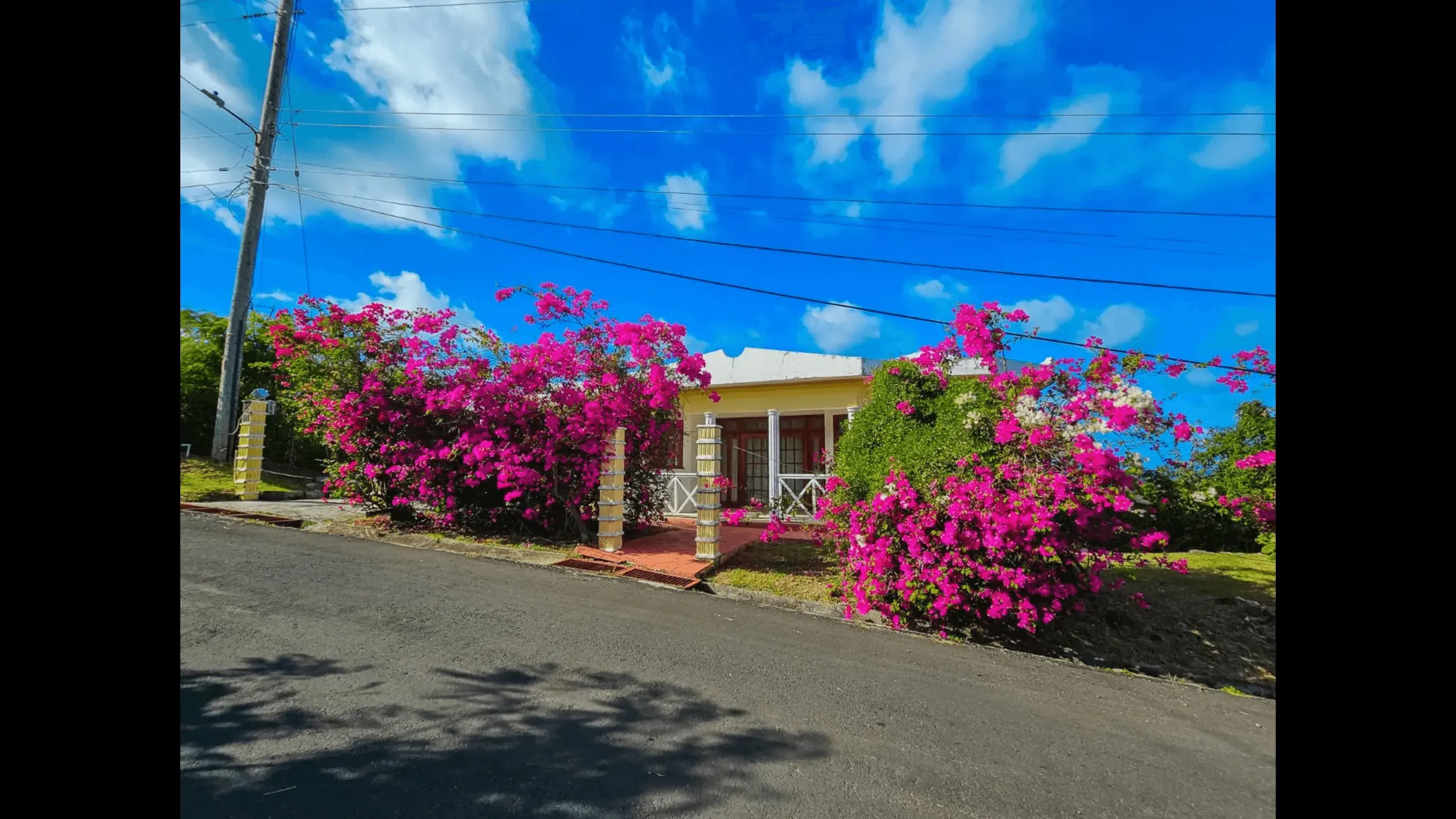
Charming house with 3 bedrooms and Ocean View, Gros Islet
279 m²3 3 
St Lucia, Micoud
$3,000,000+
Luxurious villa with panoramic ocean and island views
929 m²10 10 Taxes for legal entities in St Lucia
A company is considered a tax resident of St Lucia if it is incorporated in the country or managed and controlled from St Lucia. Resident companies are subject to corporate income tax, VAT, and withholding tax, while non-resident companies are taxed only on income arising in St Lucia.
Corporate tax
St Lucia income tax for resident companies is charged at a flat corporate rate of 30% on taxable profits[7]Source: PwC — Taxes on corporate income in St Lucia.
Certain foreign-source income is exempt from corporate income tax in St Lucia under the territorial tax system[8]Source: Government of St Lucia — Income Tax (Amendment) Act 2018. The exemption can apply to:
- profits from a permanent establishment located outside St Lucia;
- income from immovable property located outside St Lucia;
- certain interest arising from sources outside St Lucia;
- income from foreign securities, including shares, mutual funds, and interest-bearing instruments issued by persons outside St Lucia.
Non-resident companies are taxed only on income arising in St Lucia.
VAT
The standard VAT rate is 12.5%. Businesses have to register for VAT once annual turnover reaches EC$400,000, or ≈ $148,000. Reduced or zero rates apply to certain goods and services.
Educational, financial, insurance, medical, and transport services, rental housing, fuel, water, electricity, goods for export, and sale in duty-free shops are not subject to VAT[6]Source: PwC — St Lucia: corporate — other taxes.
Withholding tax
Companies must withhold tax on certain payments[9]Source: PwC — St Lucia: corporate — withholding taxes. For payments to non-resident companies, the main rates include:
- interest — 15%;
- royalties — 25%, or 15% for CARICOM recipients;
- management fees — 25%, or 15% for CARICOM recipients;
- commissions and certain other fees — 25%.
Double taxation agreements between St Lucia and other countries
St Lucia is a party to the CARICOM Double Taxation Agreement, a multilateral treaty designed to avoid double taxation within the Caribbean Community[10]Source: CARICOM — Double Taxation Agreement. Under this agreement, St Lucia has tax treaty coverage with:
- Antigua and Barbuda;
- Barbados;
- Belize;
- Dominica;
- Grenada;
- Guyana;
- Jamaica;
- St Kitts and Nevis;
- St Vincent and the Grenadines;
- Trinidad and Tobago.
The agreement helps prevent the same income from being taxed twice in two CARICOM countries. It sets rules on which country has the right to tax different types of income and limits source-country tax on certain cross-border payments.
For example, interest and royalties may qualify for reduced withholding tax rates when paid between residents of participating CARICOM states.
St Lucia has tax information exchange arrangements covering 106 jurisdictions, including the UK, Canada, Germany, and France. These arrangements allow tax authorities to share financial account information to combat tax evasion, but they do not provide tax reductions or relief from double taxation[11]Source: St Lucia International Tax Cooperation Act.
St Lucia citizenship by investment as a path to tax residence in the country
St Lucia citizenship by investment allows foreign investors to obtain a second passport without relocating to the country. Investors who later decide to move to St Lucia can establish tax residence by meeting the country's residence requirements.
Requirements for investors
Applicants must meet several eligibility requirements to qualify for St Lucia citizenship by investment[12]Source: Official St Lucia Citizenship by Investment Programme website:
- be at least 18 years old;
- have no serious criminal record or other grounds for refusal;
- prove the legal origin of their income and investment capital;
- have sufficient financial resources to make the required investment;
- pass mandatory Due Diligence checks;
- provide accurate personal and financial information.
The main applicant must also attend an interview, which can be conducted remotely.
Investment options
Investors can choose from several government-approved investment options:
- National Economic Fund contribution — $240,000+;
- government bonds — $300,000+, held for at least 5 years;
- approved real estate — $300,000+, held for at least 5 years;
- approved business projects — $1,000,000 per investor in a joint project or $3,500,000 for an individual investment.
Additional government, processing, and Due Diligence fees also apply.
Family eligibility
Investors can include family members in their citizenship applications:
- spouse;
- children up to 21;
- financially dependent children up to 30 years old;
- children of any age with physical or mental disabilities who depend on the investor;
- financially dependent parents over 55;
- unmarried siblings under 18, subject to parental or guardian consent.
The total investment amount and additional fees depend on the family composition.
Benefits of St Lucia citizenship for investors
No mandatory relocation. Investors are not required to live in St Lucia before or after obtaining citizenship. They and their families can visit the island for holidays, stay for as long as they wish, or keep St Lucia as a plan B and relocate at any time if their circumstances change.
International mobility. A St Lucia passport offers visa-free or visa-on-arrival access to destinations across Europe, Asia, Africa, and the Americas, making business and leisure travel easier and more flexible.
Access to long-term US visa. St Lucia citizens can obtain a 10-year, multiple-entry B-1/B-2 visa. It allows them to visit the US repeatedly for tourism, business meetings, and medical treatment without reapplying for a visa each time. Each stay is permitted for up to 6 months[13]Source: US Department of State — Visa Reciprocity for St Lucia.
Hereditary citizenship. Investors can pass St Lucia citizenship on to their children, including those born abroad after the investor becomes a citizen.

How to become a tax resident of St Lucia through citizenship by investment
A person can become a tax resident of St Lucia by meeting the country’s tax residence requirements, including spending at least 183 days a year there. This can be done while holding temporary or permanent residence, or St Lucia citizenship.
Citizenship can be a more convenient status for those planning to become tax residents, as citizens can live in St Lucia without renewing a residence permit. At the same time, citizenship itself does not automatically make a person a tax resident.
Based on Immigrant Invest’s experience, obtaining St Lucia citizenship by investment takes at least 6 months, although the timeline can be longer depending on Due Diligence, document preparation, and application processing.
1 day
Preliminary Due Diligence
Immigrant Invest conducts an initial background check using international databases to identify issues that could affect the application. A certified Anti-Money Laundering Officer reviews the case and, if needed, the lawyers prepare supporting explanations or recommend an alternative programme.
Immigrant Invest conducts an initial background check using international databases to identify issues that could affect the application. A certified Anti-Money Laundering Officer reviews the case and, if needed, the lawyers prepare supporting explanations or recommend an alternative programme.
2 to 5 weeks
Preparation of documents
Immigrant Invest’s lawyers prepare a personalised document list. The investor provides passports, certificates, bank statements, and other personal and financial records. The lawyers arrange notarisation and translation, complete the required forms, and prepare supporting statements or affidavits.
Immigrant Invest’s lawyers prepare a personalised document list. The investor provides passports, certificates, bank statements, and other personal and financial records. The lawyers arrange notarisation and translation, complete the required forms, and prepare supporting statements or affidavits.
12+ months
Due Diligence and application processing
The completed application is submitted to the St Lucia Citizenship by Investment Unit. The authorities conduct mandatory Due Diligence on the investor and included family members aged 16 or over, including checks of reputation, background, and finances.
The main applicant must also attend an interview, either online or in person, in English.
The completed application is submitted to the St Lucia Citizenship by Investment Unit. The authorities conduct mandatory Due Diligence on the investor and included family members aged 16 or over, including checks of reputation, background, and finances.
The main applicant must also attend an interview, either online or in person, in English.
Up to 3 months
Approval and fulfilment of the investment condition
Once the application is approved, the investor completes the chosen investment within 90 days. This may involve a contribution to the state fund, government bonds, real estate, an approved business, or an infrastructure project.
Once the application is approved, the investor completes the chosen investment within 90 days. This may involve a contribution to the state fund, government bonds, real estate, an approved business, or an infrastructure project.
Up to 1.5 months
Naturalisation certificate and passport issuance
After the investment condition is fulfilled, Immigrant Invest’s lawyers prepare the final documents, including the oath of allegiance. The naturalisation certificate is then issued, followed by the passport, which can be delivered to the investor by courier.
After the investment condition is fulfilled, Immigrant Invest’s lawyers prepare the final documents, including the oath of allegiance. The naturalisation certificate is then issued, followed by the passport, which can be delivered to the investor by courier.
After obtaining citizenship
Relocation to St Lucia and establishment of tax residence
St Lucia citizenship does not automatically make the investor a tax resident. Investors who wish to establish tax residence can relocate to the country and spend at least 183 days there during a year. They may also need to demonstrate their residential ties to St Lucia and meet other applicable tax residence requirements.
Once a tax resident, the investor must register with the Inland Revenue Department and obtain a tax identification number to fulfil their tax filing obligations.
St Lucia citizenship does not automatically make the investor a tax resident. Investors who wish to establish tax residence can relocate to the country and spend at least 183 days there during a year. They may also need to demonstrate their residential ties to St Lucia and meet other applicable tax residence requirements.
Once a tax resident, the investor must register with the Inland Revenue Department and obtain a tax identification number to fulfil their tax filing obligations.
How to file tax returns in St Lucia?
Tax filing requirements in St Lucia differ for individuals and companies. Individuals file an annual personal income tax return, while companies and employers have separate corporate and payroll reporting obligations.
Tax returns for individuals
Filing deadline. Individuals file an annual income tax return within 3 months after the end of the income year. For a calendar-year taxpayer, the standard deadline is March 31st[14]Source: PwC — St Lucia: individual tax administration.
Online filing. Returns can be filed online through the IRD e-filing portal. A taxpayer first registers as an e-user and then submits the return through their online account[15]Source: St Lucia Inland Revenue Department — E-Filing Registration Portal.
Supporting documents. Taxpayers should keep documents supporting any deductions claimed. For example, medical bills do not have to be submitted with the return, but they must be retained for up to 6 years in case the IRD requests them for verification.
Tax payment. Any tax due should be paid by the applicable deadline to avoid penalties and interest. Taxpayers who need more time may request an extension. For personal income tax, the request should be made at least 1 week before the original filing deadline.
Tax returns for companies
Filing deadline. A company files its return within 3 months after the end of its financial year. For a company whose financial year ends on December 31st, the deadline is March 31st[16]Source: PwC — St Lucia: corporate tax administration.
Companies with employees have separate payroll reporting obligations. The Employer’s Annual Return and related employee forms are due by January 31st.
Filing requirement. Every company must file a corporate income tax return, even if it made no profit or has been granted a tax exemption. The return is submitted together with the required supporting documentation.
Advance tax payments. Companies may have to make advance corporate income tax payments during the year. These are due in 3 installments on March 25th, June 25th, and September 25th. The remaining estimated tax is payable within 3 months after the end of the financial year.

To operate a company in St Lucia, non-national businesses may need a trade licence. St Lucia citizens are exempt from this requirement
7 benefits of St Lucia tax residence
1. No capital gains tax. St Lucia does not levy capital gains tax, so gains from selling assets, including real estate, are not taxed separately.
2. No inheritance or estate tax. Individuals can transfer assets to heirs without a separate inheritance or estate tax in St Lucia.
3. No wealth tax. St Lucia does not levy a net wealth or net worth tax, so residents are not taxed simply on the value of assets they own.
4. No gift tax. Gifts are not subject to a separate gift tax, which can be useful for transferring assets within a family.
5. Lower stamp duty on property sales. Resident sellers pay progressive stamp duty rates of up to 5%, while non-resident sellers are subject to a flat 10% rate.
6. Tax exemption on certain investment income. For individuals, dividends from companies and interest from banks in St Lucia are exempt from personal income tax[17]Source: PwC — St Lucia: individual income determination.
7. Foreign tax credits. If a St Lucia tax resident pays tax on the same income abroad, they may claim a credit in St Lucia, including where no double taxation agreement applies. The credit is normally limited to the lower of the foreign tax paid or the St Lucia tax due on that income[18]Source: PwC — St Lucia: individual: foreign tax relief and tax treaties.
Trusted by 10,000+ investors
Sort out your tax obligations before it becomes a problem
Risks and pitfalls of St Lucia tax residence
Foreigners planning to become tax residents of St Lucia should first consider how the country’s tax rules may affect their income, property, and business interests.
1. Worldwide income may become taxable
Individuals who are resident and ordinarily resident in St Lucia can be taxed on income from both St Lucia and foreign sources. For residents who are not ordinarily resident, foreign-source income is generally taxed to the extent it is remitted to St Lucia.
2. Tax residence can arise in more than one way
The 183-day rule is not the only test. An individual may also be considered resident if they have a permanent place of abode in St Lucia and spend some time there, or based on residence in the preceding or following year.

Vladlena Baranova,
Head of Legal & AML Compliance Department, CAMS, IMCM
St Lucia citizenship by investment does not automatically make an investor a tax resident. This gives applicants flexibility: they can obtain citizenship first and decide later whether it makes sense to spend enough time in the country to become a tax resident. Before doing so, they should assess how St Lucia’s rules interact with their existing tax residence, foreign income, and reporting obligations.
3. Double taxation is still possible
St Lucia has a double taxation agreement only with certain CARICOM countries. Income taxed elsewhere may qualify for a foreign tax credit, but the credit is limited to the lower of the foreign tax paid or the St Lucia tax due on that income.
4. Tax residence comes with filing obligations
Individuals with taxable income above the applicable threshold must file an annual return by March 31st. Self-employed individuals and partners may also need to make advance payments during the year.
5. Some income is taxed at relatively high rates
Personal income tax is progressive, reaching 30% on chargeable income above EC$30,000, or ≈ $11,100. Royalties and other intellectual property income are also taxable, while payments to non-residents can attract a 25% withholding tax.
How Immigrant Invest can help establish tax residence
Immigrant Invest is a licensed investment migration company that assists clients with citizenship and residence by investment programmes and provides ongoing support after obtaining status. We are not a tax adviser, but can coordinate tax-related matters with specialised partners and local authorities.
Immigrant Invest is officially licensed as a Marketing Agent for the St Lucia Citizenship by Investment Programme, with authority to promote the programme and submit applications.
Our services include:
- preliminary Due Diligence and eligibility assessment;
- selection of a suitable St Lucia citizenship investment option;
- preparation and submission of the citizenship application;
- coordination with government authorities and other parties involved in the process;
- assistance with obtaining a St Lucia tax identification number;
- help with obtaining a social security number and opening a local bank account;
- coordination with tax professionals where individual tax advice is required.
We can therefore support an investor from obtaining St Lucia citizenship through to the administrative steps that may be needed when establishing tax residence, while specialised tax advisers handle individual tax planning and compliance.
Key takeaways about taxes in St Lucia
- St Lucia tax residence starts after 183 days. St Lucia tax residents are subject to the country’s personal income tax rules, while non-residents are taxed only on income arising in St Lucia.
- Personal income tax is progressive. Tax residents pay 15%, 20%, or 30% on chargeable income.
- St Lucia does not levy several common wealth-related taxes. There is no capital gains, inheritance, estate, gift, or net wealth tax.
- Companies pay 30% corporate income tax. Qualifying foreign-source income may be exempt under the territorial system, while the standard VAT rate is 12.5%.
- St Lucia citizenship by investment does not automatically create tax residence, as investors are not required to live in the country. They can later choose to spend enough time in St Lucia to become tax residents.
Immigrant Invest is a licensed agent for citizenship and residence by investment programs in the EU, the Caribbean, Asia, and the Middle East. Take advantage of our global 15-year expertise — schedule a meeting with our investment programs experts.

 Trusted by 10,000+ investors