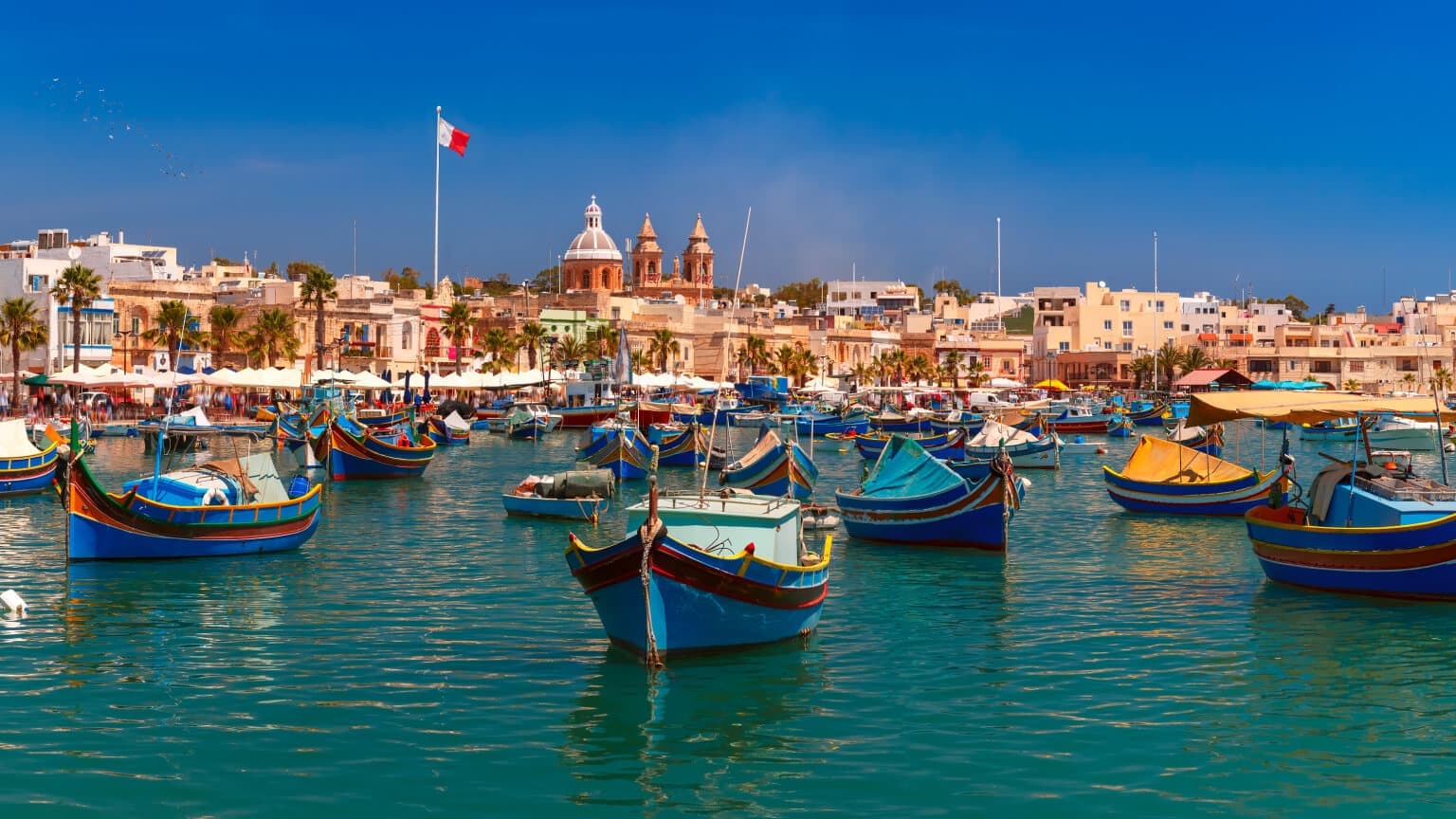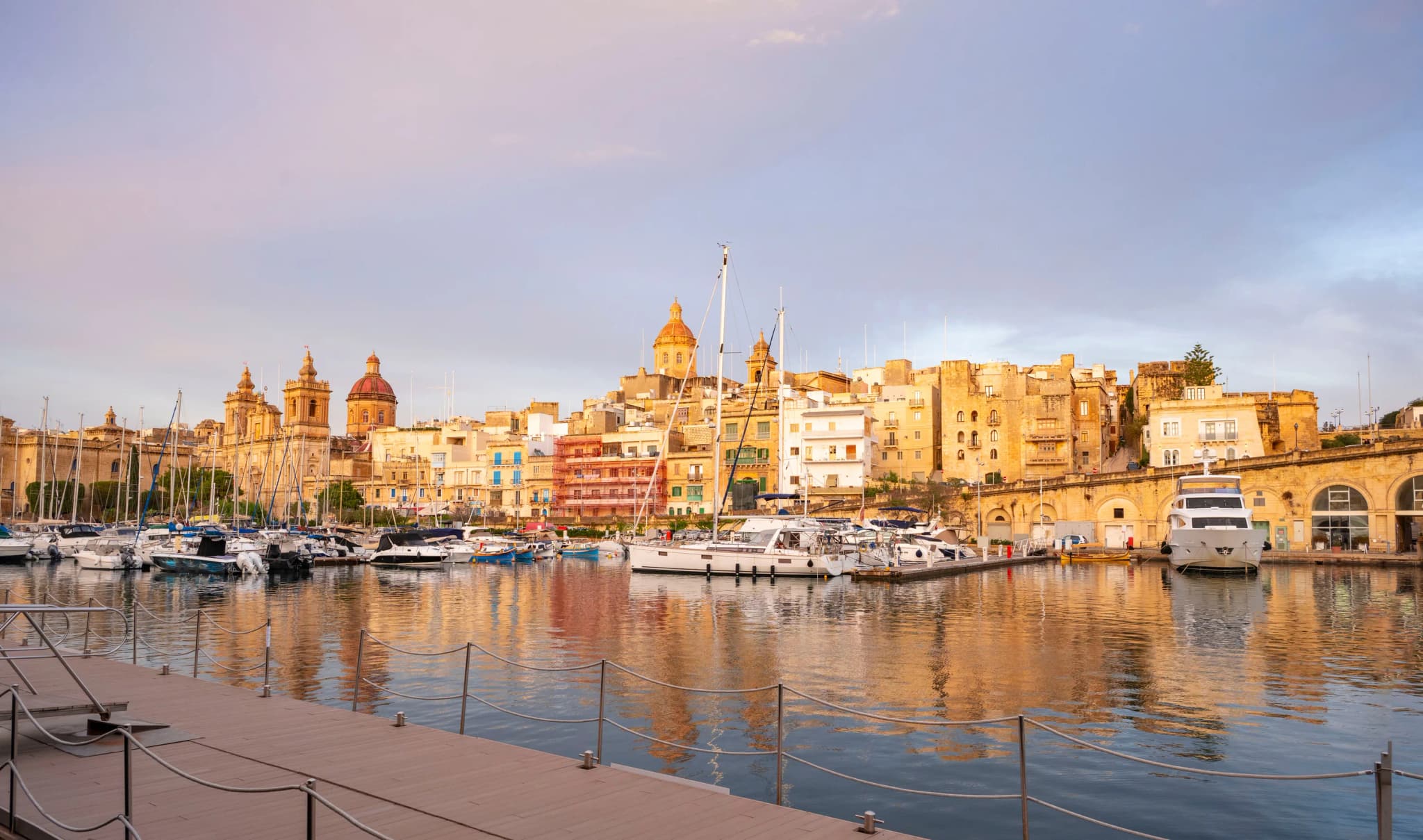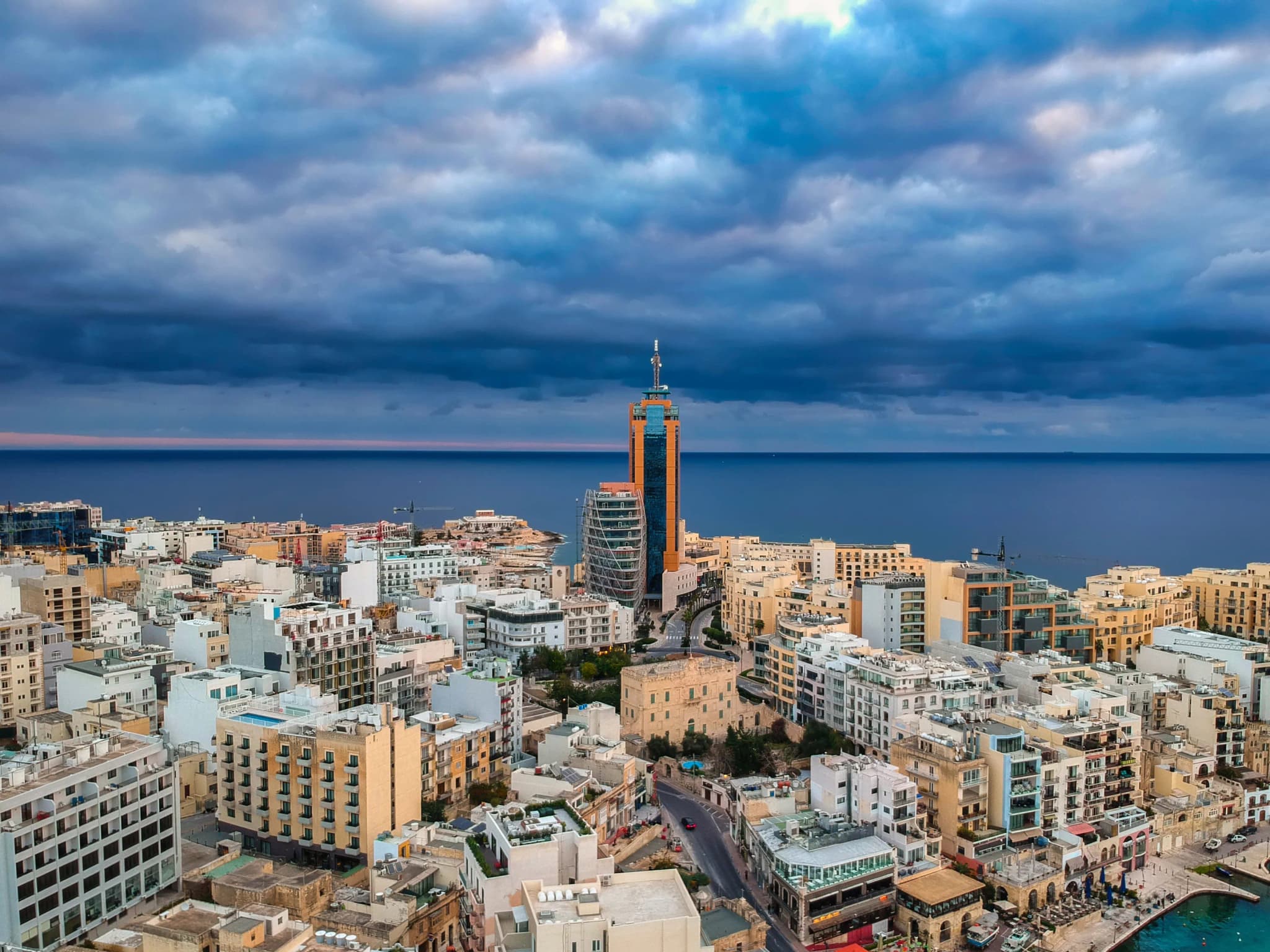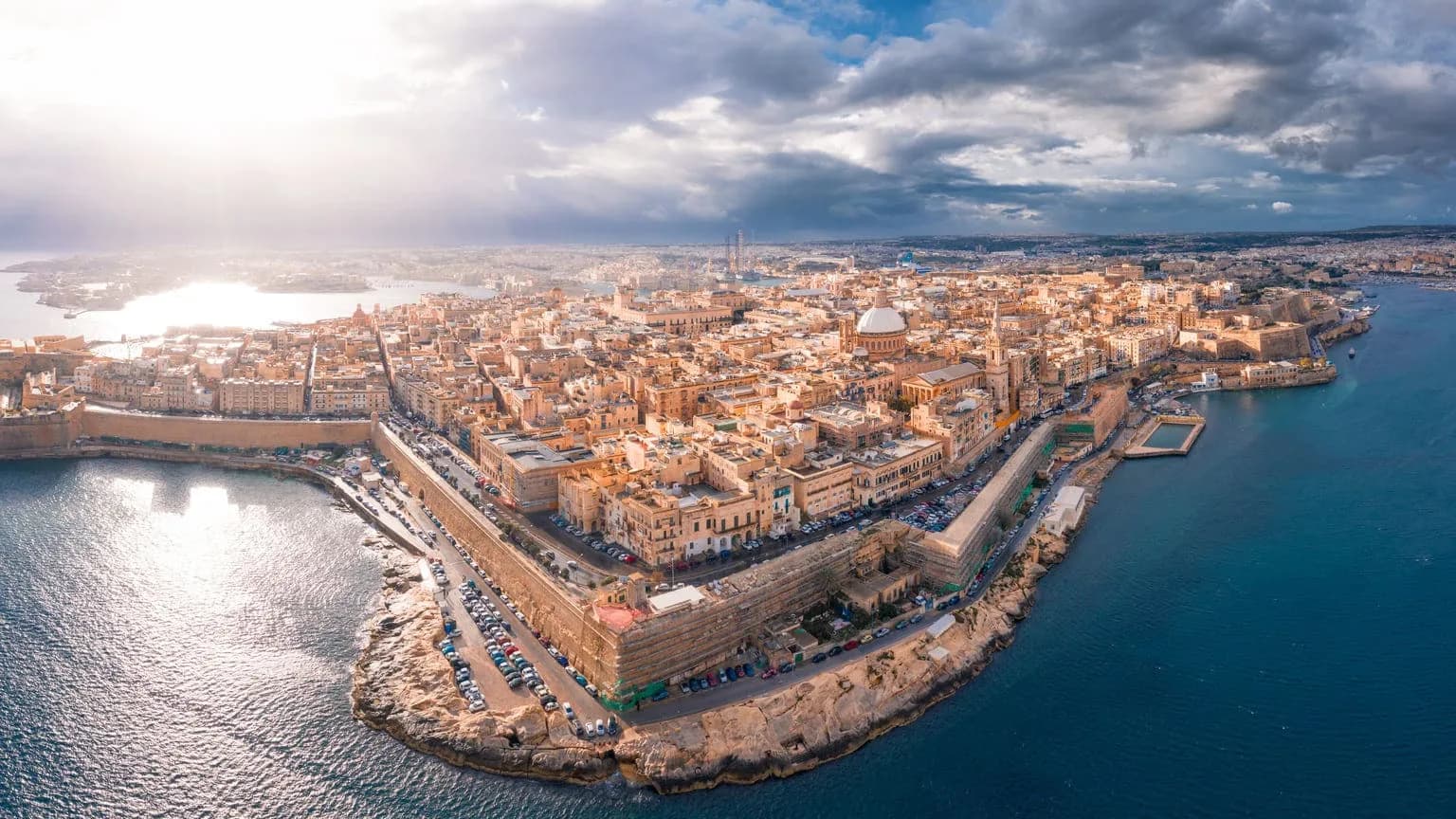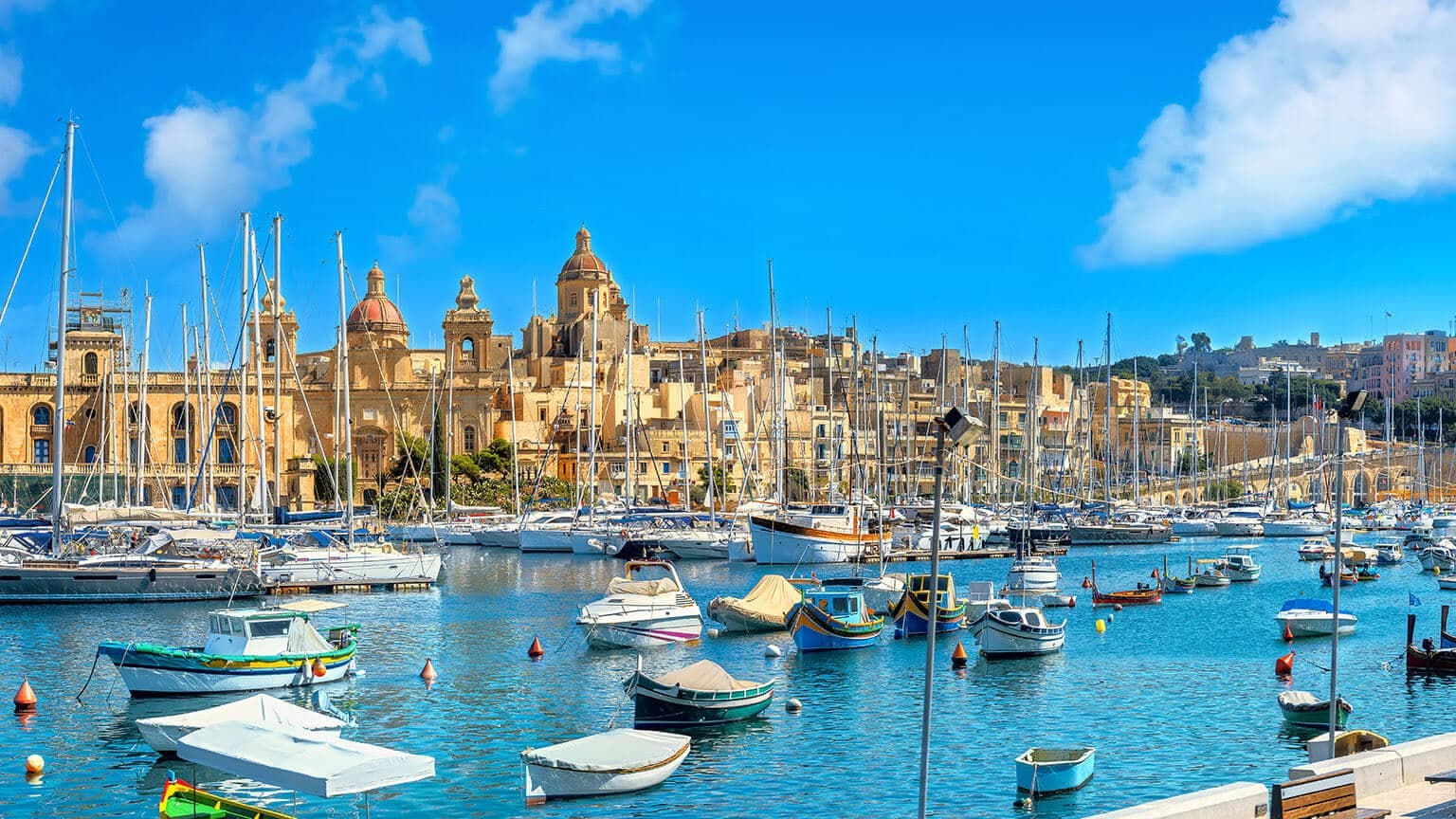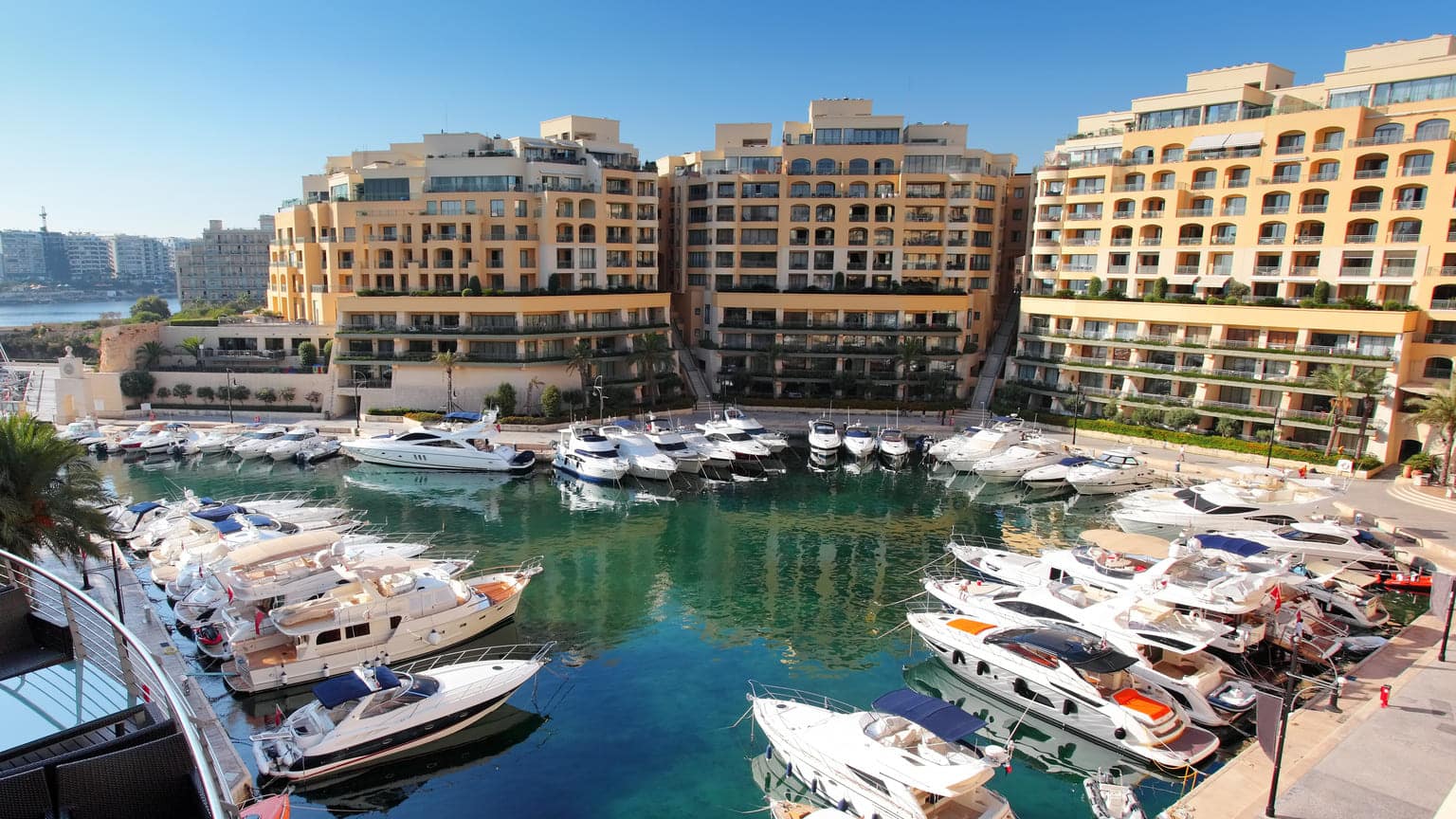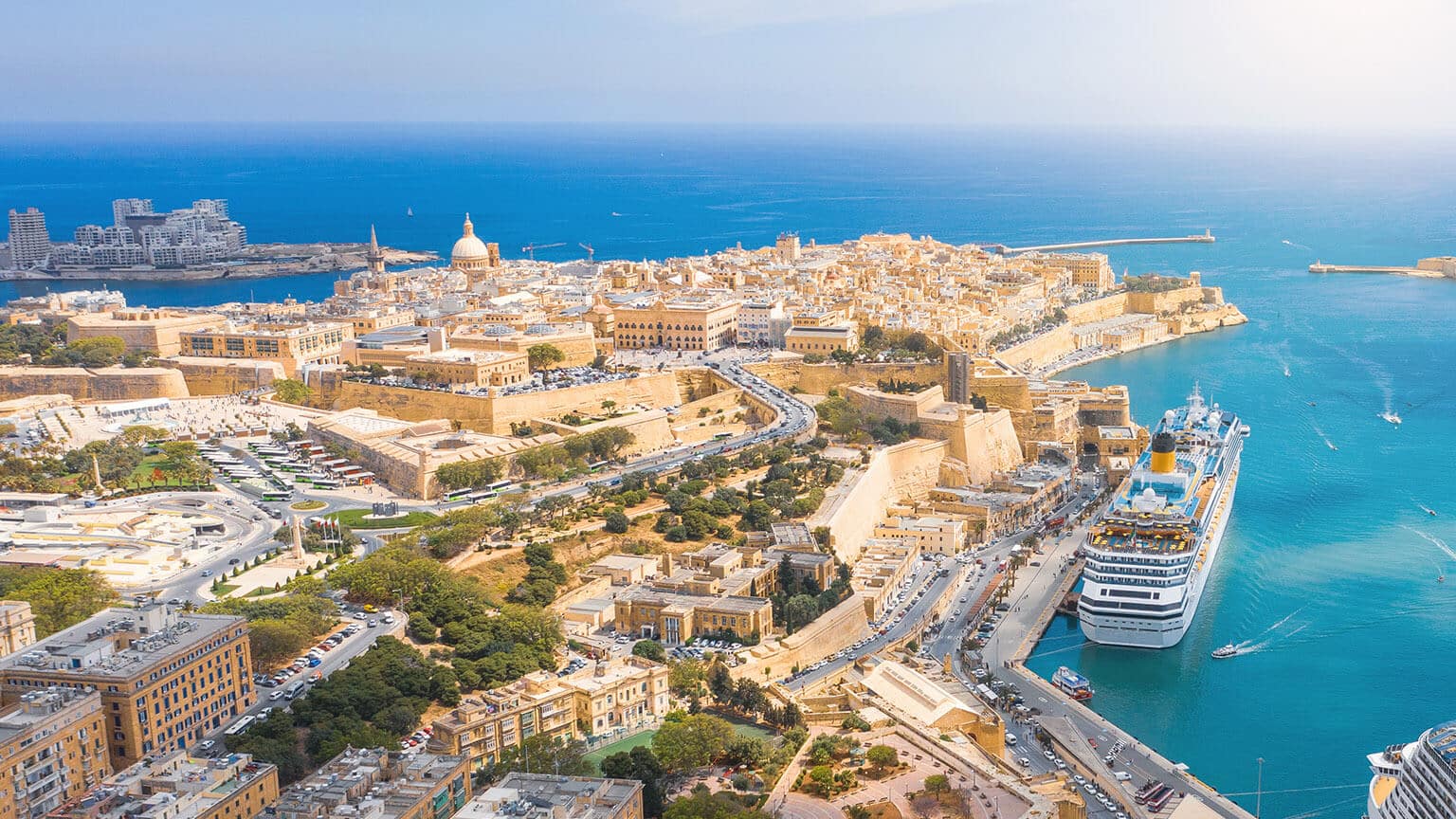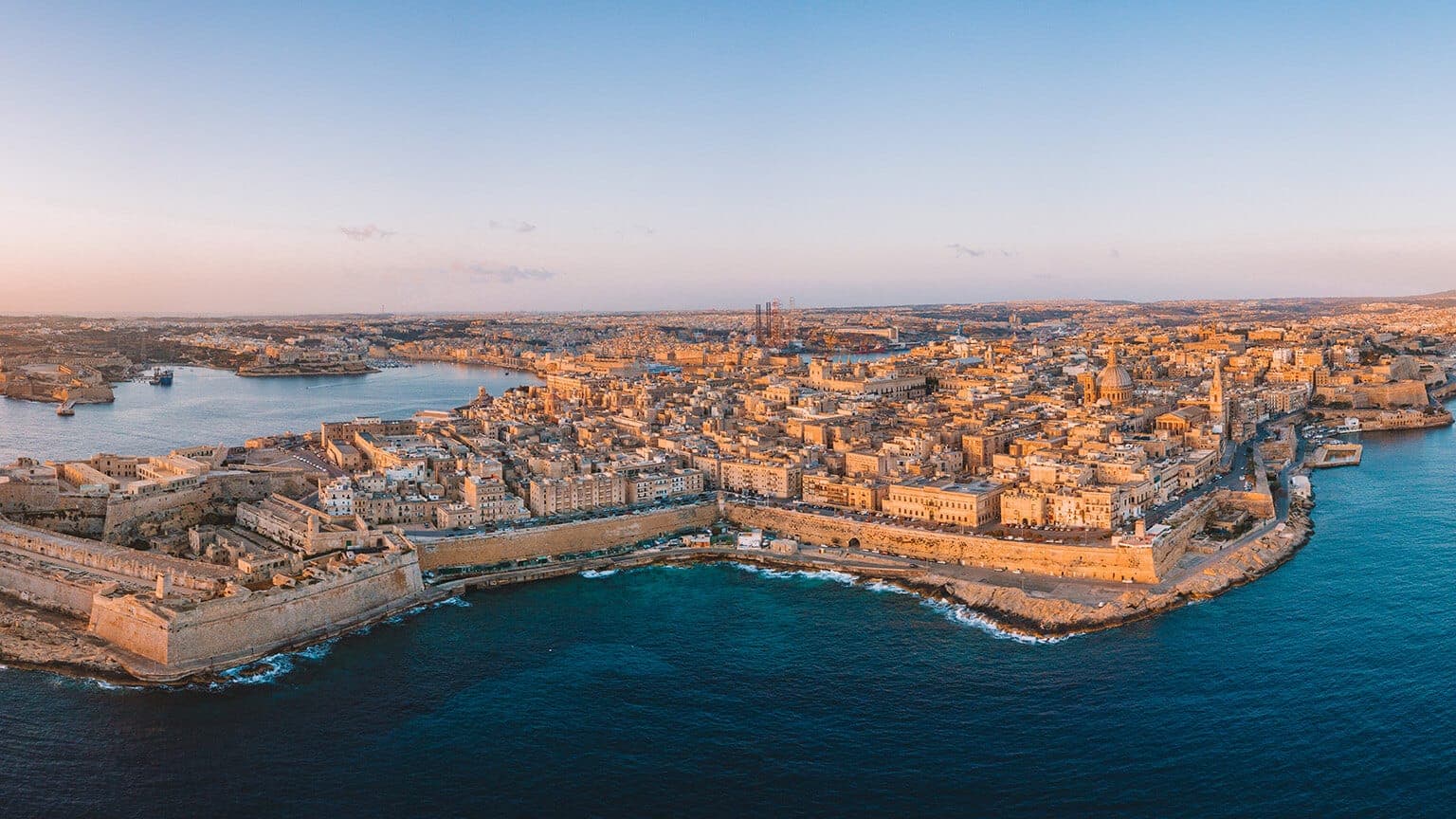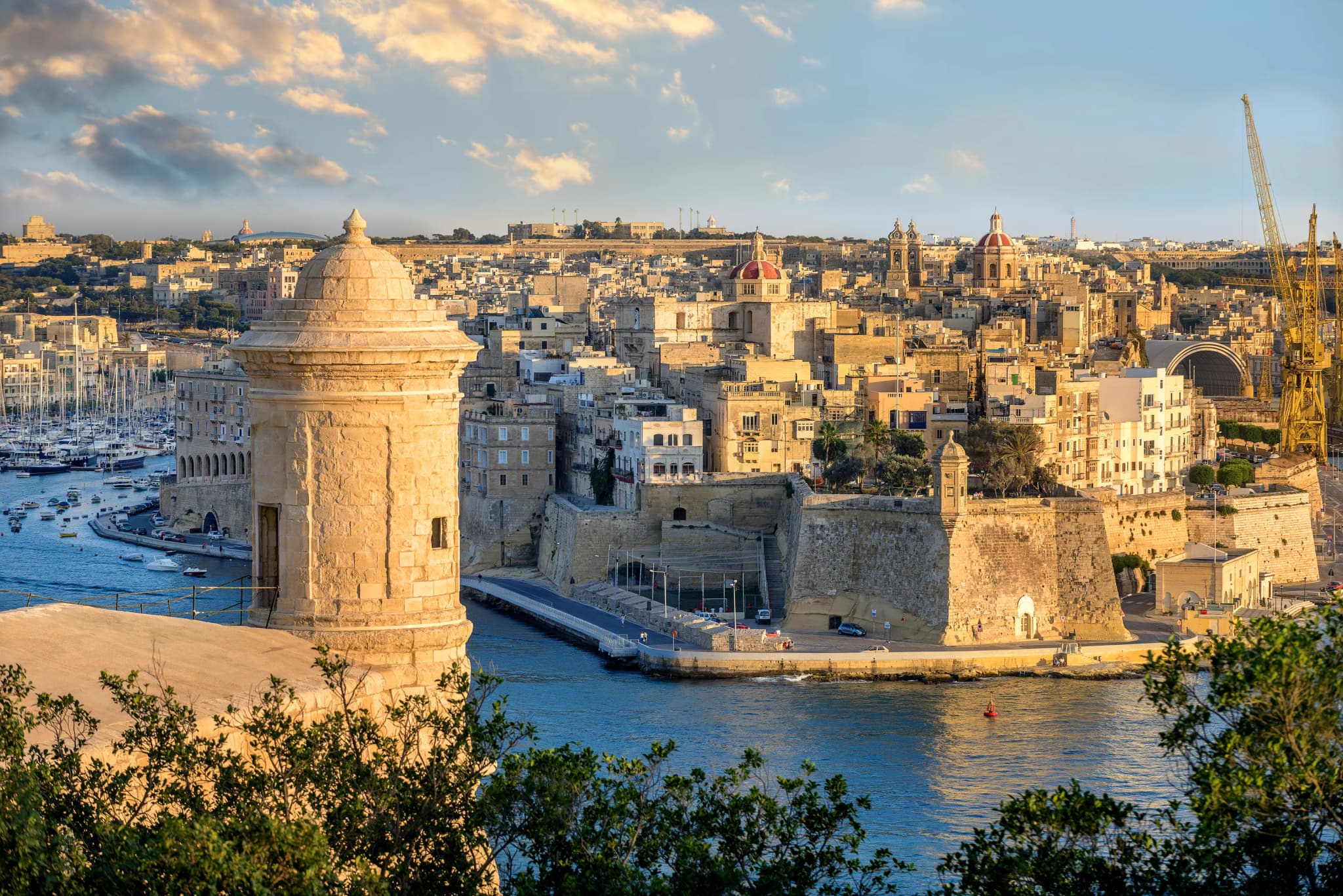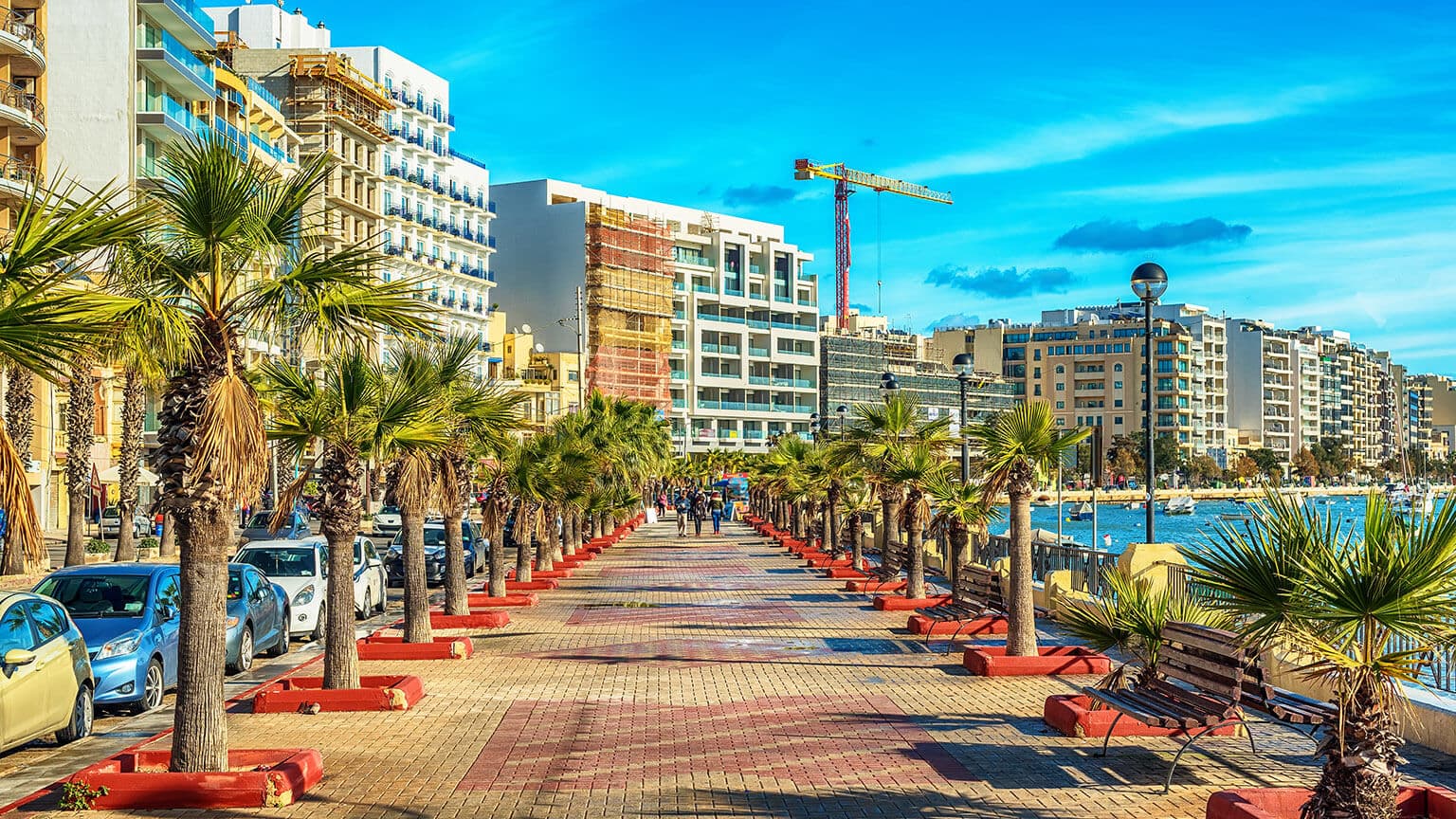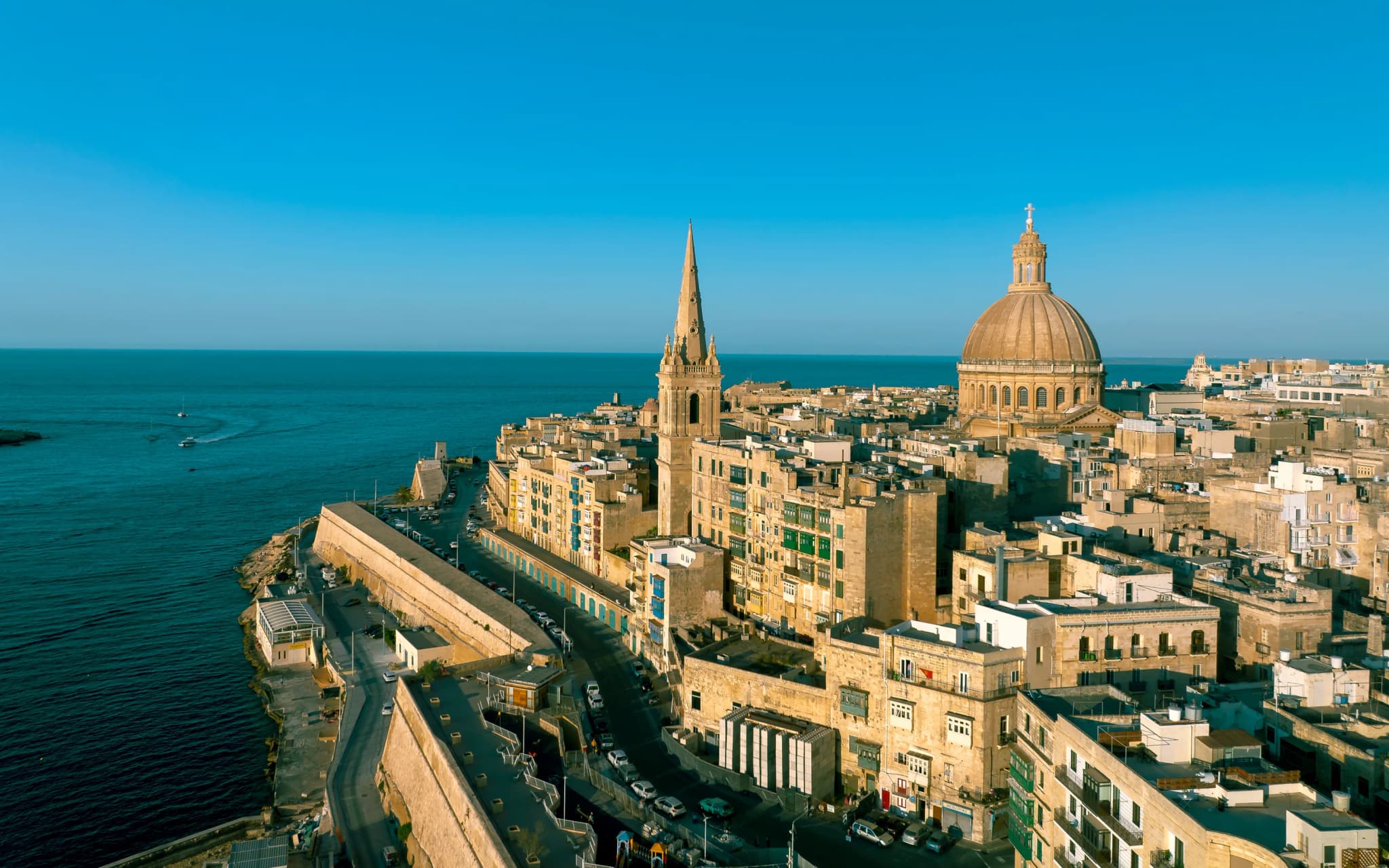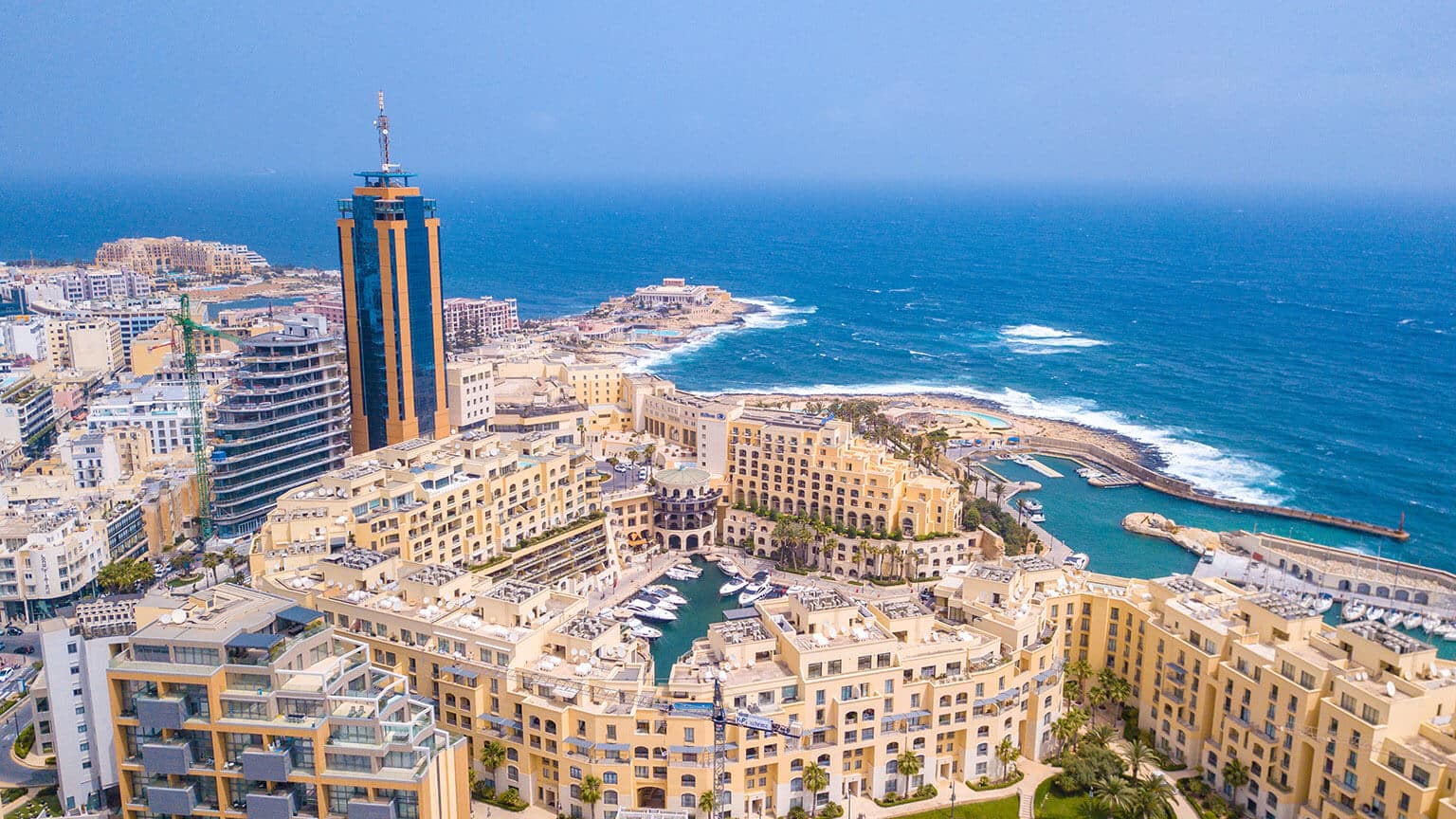





Müşterilerimizin yarısı yurt dışında bir iş kurmak ve kuracakları şirket için uygun bir vergi yargı bölgesi seçmekle ilgilenmektedir. Malta vergi sistemi yatırımcılar için caziptir. Malta’daki girişimciler için koşullar Avrupa’nın en avantajlıları arasında yer almakta ve işletmelere sayısız fayda sağlamaktadır. Bu yazımızda, Malta’da yaşamanın ve iş yapmanın avantajlarını ele alacağız.
Overview of the Maltese economy
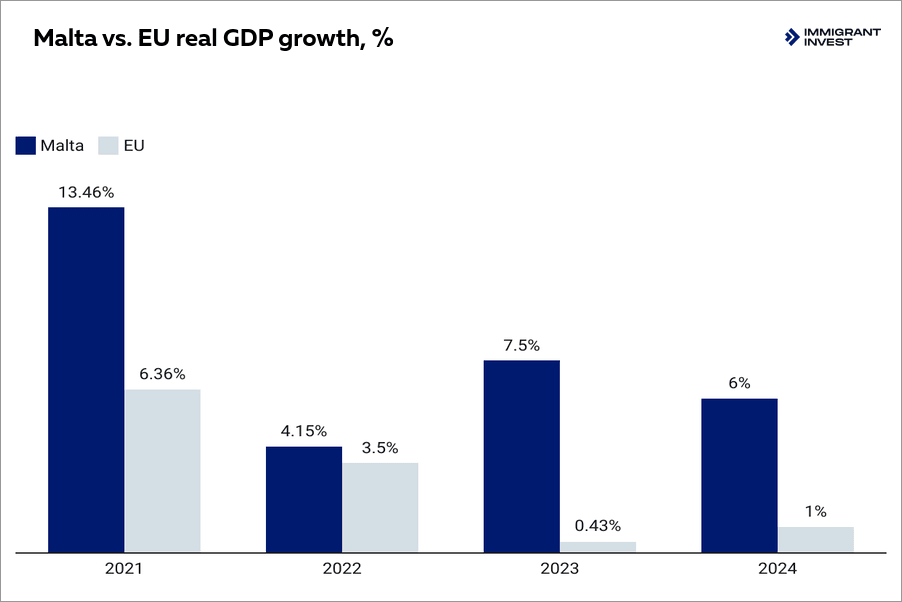
Malta is a small, open economy whose expansion over the past decade has been driven primarily by export-oriented services, particularly tourism, online gaming, professional services, and substantial inflows of foreign workers.
The IMF estimates that real economic growth averaged nearly 7% a year over the past decade, consistently outpacing the EU[1]Source: IMF — Malta 2025 Article IV Consultation.
Malta’s economy at a glance
Malta’s GDP growth is projected to stay strong: 3.8% in 2026, 3.6% in 2027, and 3.8% in 2028 — driven mainly by private consumption[2]Source: Central Bank of Malta — Forecast for 2026—2028. In Q2 of 2026, GDP rose by 4.5% in volume terms[3]Source: Malta National Statistics Office — Gross Domestic Product: Q2/2026.
In 2025, Maltese GDP per capita was 110% of the EU average, comparable to Sweden with 111%[4]Source: Eurostat — GDP per capita, consumption per capita and price level indices.
Malta’s budget deficit is set to narrow from 2.2% of GDP in 2026 to 1.6% by 2028, and the debt-to-GDP ratio to fall from its 2025 peak to 46.1% in 2026 and 44.2% by 2028[2]Source: Central Bank of Malta — Forecast for 2026—2028.
Annual HICP inflation, which is the EU's standardised measure of consumer price growth, is projected to ease to 2.2% in 2026, down from 2.4% in 2025, as food inflation continues to fall[2]Source: Central Bank of Malta — Forecast for 2026—2028.
Malta remains investment-grade across the principal sovereign-rating agencies:
- Fitch affirmed Malta’s A+ rating with a Stable Outlook[5]Source: Malta Independent, 22 August 2026;
- Moody’s — A2 Stable[6]Source: MaltaToday, 9 May 2026;
- S&P — A-/A‑2 Stable[7]Source: S&P Global, 5 December 2025;
- Morningstar DBRS — A (high) Stable[8]Source: Morningstar DBRS, 10 April 2026;
- Scope — A+ Stable[9]Source: Scope Ratings GmbH, 15 May 2026.
Population and labour force
Malta’s population reached 588,254 by the end of 2025. Population growth in 2025 was driven almost entirely by net migration of 13,906 people. More than three-quarters of immigrants were non-EU citizens, accounting for 78.1% of the total net immigrants[10]Source: NSO — World Population Day: 11 July 2026.
The Permanent Residence Programme is one of the ways to immigrate to Malta. However, it does not require a participant to relocate while granting a life-long status; fulfilling financial requirements and complying with them for at least 5 years is enough.
10.000+ yatırımcının tercihi
Malta’da yatırım yoluyla daimi oturma izni mi alacaksınız?
The Maltese labour force accounted for total employment at 339,935 in Q2 of 2026, up 3.4% on the same quarter a year earlier, while unemployment stood at 3.3%[11]Source: Malta National Statistics Office — Labour Force Survey: Q2/2026. The unemployment rate is expected to remain stable at 3.4% of the labour force in 2026—2026[2]Source: Central Bank of Malta — Forecast for 2026—2028.
The average monthly basic salary across all employees is €2,282 in Malta. By sector, financial and insurance activities pay the most, averaging €3,021 a month; by occupation, salaries range from €1,412 for workers in elementary occupations to €3,657 for managers.
Among the employed population, 41.1% hold a tertiary-level qualification[11]Source: Malta National Statistics Office — Labour Force Survey: Q2/2026.
Main economic sectors
Malta’s tourism industry keeps accelerating: July 2026 alone brought 489,494 inbound tourists, up 20.8% on July 2025, of whom 465,182 travelled for holidays and 13,031 for business. Visitors under 44 dominated arrivals, and British, Italian and Polish residents together made up 45.1% of the total[12]Source: NSO — Inbound Tourism: July 2026.
88.4% of tourists rented accommodation, with an average stay of 6.5 nights. The total spending reached €538.4 million, or €168.7 a night. It is 19.1% higher than in 2025, a year earlier[12]Source: NSO — Inbound Tourism: July 2026.
Over the first seven months of 2026, inbound tourists reached 2,621,319, up 18.6% year-on-year, and nights spent rose 11.1% to 14.9 million. Total tourist expenditure grew 15.8% to €2,334.0 million, even as spending per visitor slipped to €890 from €912 a year earlier — growth this year is coming mainly from more tourists, not higher spending per tourist[12]Source: NSO — Inbound Tourism: July 2026.
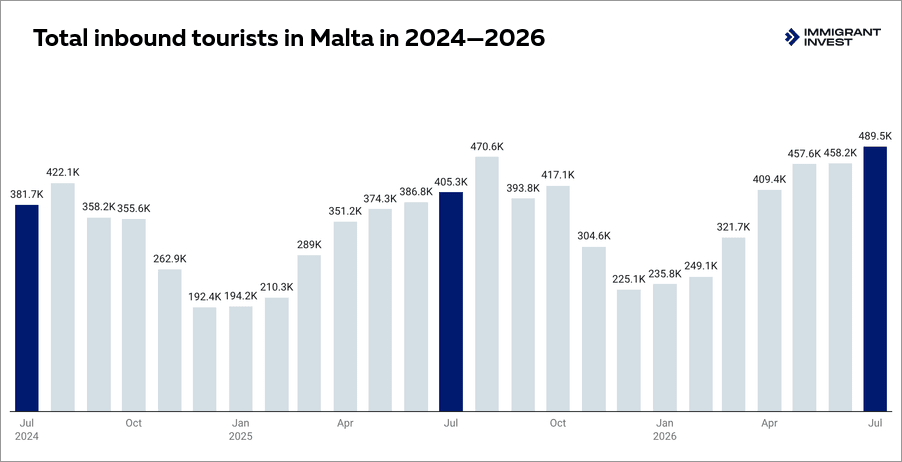
Source: Malta NSO, Inbound Tourism data
Financial services remain an important part of the economy. The Malta Financial Services Authority estimates that the sector generated €1.3 billion and accounted for 7.3% of Malta's real gross value added in 2025, while employing 6.2% of the workforce[13]MFSA — Annual Report 2025. The industry includes 21 licensed banks, with combined assets of about €50.3 billion.
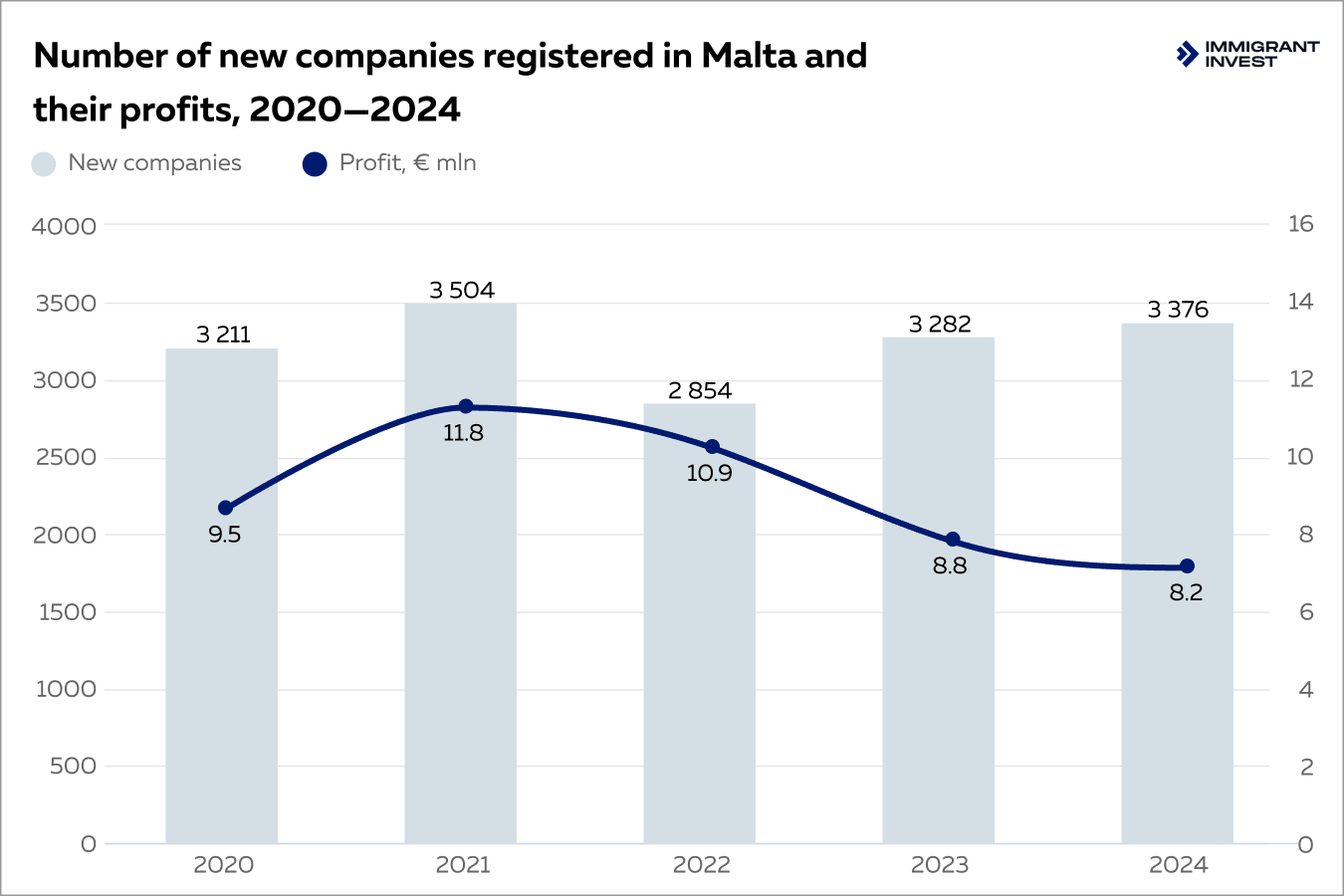
At the end of June 2025, Malta’s foreign direct investment position stood at €485.1 billion, against €459.2 billion in direct investment abroad. In both directions, financial and insurance activities were the main contributor[14]Source: NSO — Direct Investment in Malta and Abroad: January—June 2025. The sector attracted 1,009 new business registrations in 2024[15]Source: Government of Malta — Pre-Budget Consultation Document 2026.
Gaming is driven mainly by gambling and betting. The sector accounted for 8.7% of Malta's gross value added and grew 2.8% in the first quarter of 2025, a marked slowdown from the sector's double-digit growth earlier in the decade. The government reads this as market saturation rather than decline; employment in the sector still rose 4.1% year-on-year in the same quarter, even as value added per worker fell 1.3%[15]Source: Government of Malta — Pre-Budget Consultation Document 2026.
The Malta Gaming Authority estimated that 304 gaming companies held valid active licences at the end of 2024, with a further 151 companies covered by corporate group licences[16]Source: MGA — Annual Report 2024.
Manufacturing. Malta's electronics and software sectors have an established base of international manufacturers:
- STMicroelectronics runs its largest semiconductor packaging and testing plant in the EU at Kirkop, employing about 1,500 people;
- Playmobil has produced all its figures at a Malta factory since 1971;
- Trelleborg manufactures sealing and biopharma components at its Hal Far and Marsa sites.
The wider manufacturing sector contracted 4.7% year-on-year in the first quarter of 2025, with the steepest decline of 51.2% in computer, electronic and optical products specifically, alongside falls in wearing apparel (‑23.9%) and wood and cork products (‑23.0%). Productivity fell 6.7% while compensation per employee rose 3.0%[15]Source: Government of Malta — Pre-Budget Consultation Document 2026.
Nonetheless, Malta’s manufacturing sector has held up better than the EU average, where growth has been slowing since 2021. Pharmaceutical manufacturing was among the sub-sectors adding the most value, alongside printing and machinery repair[15]Source: Government of Malta — Pre-Budget Consultation Document 2026.
Aviation has grown into a parallel hub: as of June 2025, 927 aircraft were on the Maltese register, held by 55 air operator certificate holders, drawn by a regulatory and fiscal environment favourable to leasing.
Malta hosted the Corporate Jet Investor conference for the first time in 2025, an event usually held in Dubai, Miami or London. Malta Air Traffic Services handled a record 148,000 flight movements in 2024, up from 131,000 in 2019[15]Source: Government of Malta — Pre-Budget Consultation Document 2026.
Shipping. Malta's position in the central Mediterranean south of Sicily places it close to the principal maritime route between Gibraltar and the Suez Canal.
The Malta flag was the largest ship register in Europe and the sixth-largest in the world in 2024, with 10,008 vessels and 90.65 million gross tonnes registered — a 9.98% rise in tonnage on the year before[15]Source: Government of Malta — Pre-Budget Consultation Document 2026.
More than 20,000 yachts fly the Malta flag, including over 850 superyachts — about 9% of the global superyacht fleet, the largest share held by any single register[15]Source: Government of Malta — Pre-Budget Consultation Document 2026.
Malta Freeport, opened in 1988 as the Mediterranean’s first transshipment terminal to develop the Port of Marsaxlokk as an international hub port. Now ranks as the region’s third-busiest transshipment hub and the world’s 66th-largest container port, connecting Malta to 135 ports worldwide[17]Source: Malta Freeport — network and transshipment operations.
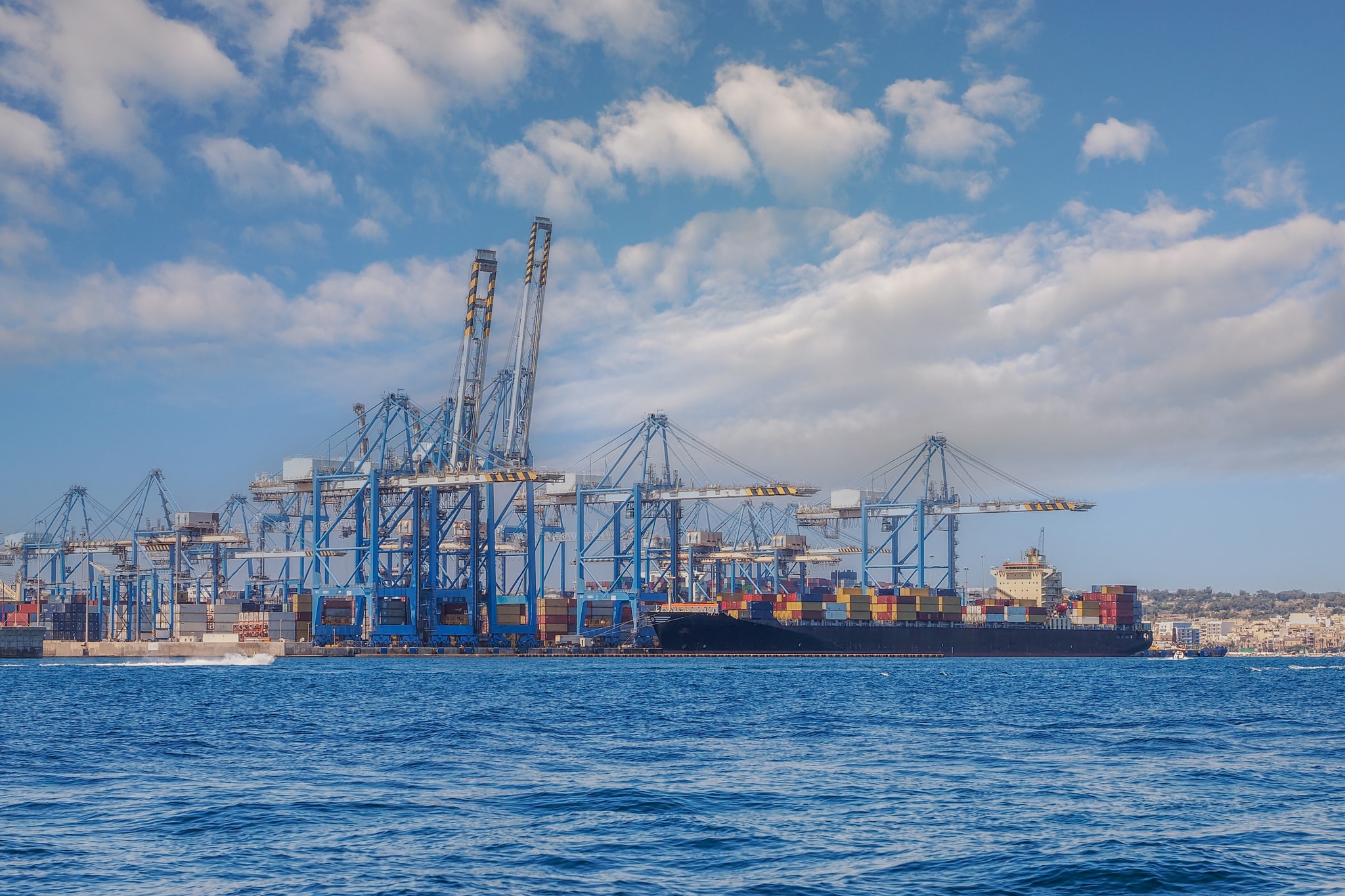
Lloyd's List ranked Marsaxlokk 76th among the world's top 100 container ports in 2026[18]Source: Lloyd's List — One Hundred Ports 2026
Government support for business and financing incentives
Malta Enterprise, the state agency for business development, runs more than a dozen active grant and tax-credit schemes for companies at every stage.
Business Start gives small start-ups a grant of up to €10,000, released in three tranches as milestones are met:
- €3,000 on proof of employment;
- €3,500 on submitting a business plan;
- and €3,500 on plan approval and securing a business address[19]Source: Malta Enterprise — Business Start.
Start-up Finance offers a repayable advance at 2% above the ECB base rate:
- up to €500,000 for a standard small start-up — or €750,000 in assisted areas;
- or up to €1 million for an ‘innovative’ start-up — or €1.5 million in assisted areas[20]Source: Malta Enterprise — Start-up Finance.
Business Development provides a cash grant or tax credit covering 75% of eligible costs, capped at €300,000 over 3 years. The incentive applies to new projects, expansions and business transformation[21]Source: Malta Enterprise — Business Development.
Micro Invest provides a tax credit of up to 65% of eligible expenditure, rising to 85% for businesses operating from Gozo.
Under the 2026—2030 scheme, the standard cap is €65,000 per applicant over 3 years, with an additional €20,000 available to Gozo-based businesses, registered family businesses, female-owned businesses and registered social enterprises. Overall minimum support to a single undertaking may not exceed €300,000 over 3 years[22]Source: Malta Enterprise — Micro Invest.
Innovate funds SME innovation projects with a grant of up to 50% of costs, capped at €250,000[23]Source: Malta Enterprise — Innovate.
Research & Development support covers 25 to 80% of eligible costs, on a sliding scale by company size and research type: from 25% for large companies doing experimental development up to 70% for small companies doing industrial research. Extra bonuses for collaborative or cross-border projects may apply[24]Source: Malta Enterprise — Aid for Research and Development Projects.
SME Enhance, financed under Malta's 2021—2027 EU funding programme, supports productive SME investment with grants of €10,000—128,400. Under the minimum route, aid can cover up to 50% of eligible costs in Malta and 60% in Gozo; qualifying start-ups can receive up to 60% and 70% respectively. Separate Investment Aid applications are subject to lower aid intensities, depending on company size and location[25]Source: SME Enhance Guidance Notes.
The Tax Treatment of Highly Skilled Individuals Rules replaced a number of previous preferential tax regimes, including Qualifying Employment in Innovation & Creativity, from January 1st, 2026.
Eligible individuals can benefit from a 15% tax rate on qualifying employment income, subject to a standard minimum annual employment income of €65,000. The initial qualifying period is 5 years and may be extended twice for a further 5 years each, subject to continued eligibility. The €65,000 threshold is scheduled to increase by €10,000 every 5 years[26]Source: Tax Treatment of Highly Skilled Individuals Rules, 2026.
Where a business needs repayable or debt financing rather than a grant, Malta Enterprise’s Start-up Finance provides repayable advances to qualifying start-ups, while the government-owned Malta Development Bank operates guarantee and co-lending programmes through commercial banks:
- SME Guarantee Scheme provides an 80% portfolio guarantee for eligible loans of up to €1 million and terms of up to 10 years[27]Source: SME Guarantee Scheme;
- Guaranteed Co-Lending Scheme supports loans of €1,000,001 to €10 million through 50:50 co-lending between MDB and the participating commercial bank, with MDB additionally guaranteeing 60% of the commercial bank's share[28]Source: Guaranteed Co-Lending Scheme.
Maltese company taxation
A company incorporated in Malta is regarded as both resident and domiciled in Malta and is generally taxed on its worldwide income and capital gains.
A company incorporated abroad may instead become Malta tax resident where its management and control are exercised in Malta. Such a company is resident but not domiciled in Malta and is generally taxed on Malta-source income and foreign-source income received in Malta; foreign-source capital gains generally remain outside Maltese tax even if remitted[29]Source: PwC’s Tax Summary on Malta.
Malta’s statutory corporate tax rate is a flat 35% — one of the highest headline rates in the EU. What makes the system competitive is not the rate itself, but a refund mechanism built into it.
Corporate tax and a refund system
Malta’s standard corporate tax rate is 35%. Under its full-imputation and shareholder-refund system, a company initially pays tax at the full rate, but an eligible shareholder may claim a refund of part of the Malta tax attributable to profits distributed as a dividend.
For qualifying trading profits, the standard refund is 6/7 of the Malta tax, which can reduce the combined effective Malta tax burden to approximately 5% after distribution and refund[30]Source: Tax & Customs Administration of Malta — Corporate Tax.
Where distributed profits consist of qualifying passive interest or royalties, the refund is generally 5/7 of the Malta tax, producing an effective Malta tax burden of approximately 10%[31]Source: Deloitte — Malta Highlights 2026.
Malta introduced the Final Income Tax Without Imputation regime in September 2025. Eligible entities may elect to have qualifying chargeable income taxed at 15% without access to Malta's normal imputation and shareholder-refund system.
The rules can apply from the year of assessment 2025, corresponding to income derived in the base year 2024, and an election is binding for at least 5 consecutive years.
Tax paid under the regime is final and cannot be credited, set off or refunded. Importantly, the tax payable under the regime cannot be lower than the effective Malta tax that would otherwise have arisen under the standard system after taking applicable shareholder refunds into account. Certain dividend and already-finally-taxed income is excluded[32]Source: Tax & Customs Administration of Malta — Final Income Tax Without Imputation overview.
Participation exemption for holding companies
A Maltese company may benefit from a participation exemption on income and gains from a qualifying participating holding[33]Source: Income Tax Act.
One way of qualifying is to hold directly at least 5% of the equity shares in another company, with entitlement to at least 5% of any two of the voting rights, profits available for distribution and assets available on a winding-up. Maltese law also provides several alternative tests, so a 5% shareholding is not an absolute minimum in every case.
Income and gains from a qualifying participating holding may be fully exempt from Maltese tax. For dividends, additional anti-abuse conditions apply. These are satisfied, among other circumstances, where the subsidiary is resident or incorporated in an EU country, is subject to foreign tax of at least 15%, or derives no more than 50% of its income from passive interest or royalties. Where none of these tests is met, an alternative non-portfolio-investment and 5% foreign-tax test may be available.
Other tax optimisation opportunities
Malta generally does not impose withholding tax on dividends, interest or royalties paid to non-residents. This treatment is available without requiring the recipient to be resident in a treaty jurisdiction, but statutory conditions and limited exceptions apply, particularly where income is connected with a Maltese permanent establishment or where specific ownership and control rules are engaged[34]Source: Deloitte — Malta Highlights 2026.
Non-domicile status. An individual who becomes a tax resident in Malta but remains non-domiciled there may generally be taxed on the remittance basis. Malta-source income is taxable regardless of where it is received, while foreign-source income is generally taxable only when received in Malta[35]Source: Tax & Customs Administration of Malta — Tax Residence.
Foreign-source capital gains are generally not taxable in Malta even when remitted. A €5,000 annual minimum Malta tax may apply to non-domiciled individuals whose foreign income reaches the relevant €35,000 threshold, subject to exceptions[36]Source: Tax & Customs Administration of Malta — The Remittance Basis of Taxation for Individuals under the Income Tax Act.
Ownership of a foreign company does not itself determine an individual’s domicile. Moreover, if an overseas company is effectively managed and controlled from Malta, that company may itself become Malta tax resident despite remaining incorporated overseas.
10.000+ yatırımcının tercihi
Vergi dairesine gitmeden 1—2 hafta içinde Malta vergi kimlik numaranızı alın
5 more benefits of setting up a business in Malta
Malta offers more than a favourable tax rate: investors in Maltese businesses gain EU market access, a stable eurozone currency, a well-capitalised banking sector, an English-speaking legal system, and infrastructure built for international trade.
1. EU and international expansion. A company based in Malta gets direct access to the EU single market, which covers about 450 million consumers, with goods, services, and capital moving freely across borders.
Malta’s reputation as an international business centre is visible on the ground: STMicroelectronics, Playmobil and Trelleborg all run manufacturing operations from Malta, alongside numerous representative offices of global corporations.
2. Hard currency zone. Malta has been a member of the eurozone since 2008, which removes currency-conversion risk on trade and investment with the rest of the euro area. It gives investors and their assets a level of protection a smaller, independent currency could not offer.
3. Reliable banks. Malta's banking sector runs on 21 licensed banks, with combined assets of about €50.3 billion, and strong liquidity and capital buffers that have kept the cost of credit low. In 2025, Malta had the lowest cost of borrowing for house purchases in the EU, at 1.9% against an EU average of 3.3%[15]Source: Government of Malta — Pre-Budget Consultation Document 2026.
4. Developed infrastructure. Malta has a solid transport and logistics infrastructure: its ship register is the largest in Europe and sixth-largest worldwide, its aircraft register has grown into a hub for business aviation, and the government is investing tens of millions of euros in expanding the Port of Valletta and upgrading roads and public transport across the islands[15]Source: Government of Malta — Pre-Budget Consultation Document 2026.
5. English as a language of business. English is one of Malta's two official languages, a legacy of British rule that ended in 1964. Malta's commercial, tax, and company law all follow the English common-law model.
A foreign business can register a company, sign contracts, deal with regulators and go to court entirely in English, without a translation layer between the company and the state.
Company types in Malta
Malta’s Companies Act regulates companies, commercial partnerships, and branches of overseas companies. Entrepreneurs can also operate as sole traders, although a sole trader is a self-employed business form rather than a company or commercial partnership constituted under the Companies Act[38]Source: Malta Companies Act.
Common structures available to foreign entrepreneurs include private and public limited companies, partnerships, and branches of overseas companies.
Private limited company, Ltd
The private limited company is by far the most commonly registered corporate form in Malta. It may have up to 50 members and can have a single shareholder. A private company requires at least one director and a company secretary. Its shares and debentures cannot be offered to the public, and its name must normally end in ‘private limited company, ’ ‘Limited’ or ‘Ltd.’
The minimum authorised share capital is €1,164.69. Where the authorised capital equals this minimum, it must be fully subscribed, and at least 20% of the nominal value of each share taken up must be paid up on incorporation.
Public limited company
A public limited company can offer securities to the public, subject to applicable securities and prospectus rules. It requires at least two shareholders, at least two directors and a company secretary. Its name normally ends in ‘public limited company’ or ‘p.l.c.’
The minimum authorised share capital is €46,587.47. Where the authorised capital equals that minimum it must be fully subscribed, while at least 25% of the nominal value of each share taken up must be paid up when the memorandum is signed.
Partnerships
Malta also recognises two forms of commercial partnership:
- partnership en nom collectif is a general partnership, where all partners share joint and several unlimited liability for its debts;
- partnership en commandite, or limited partnership, has at least one general partner and one limited partner. General partners have unlimited, joint, and several liability and are responsible for the partnership’s administration and representation. A limited partner’s liability is generally limited to the amount, if any, unpaid on their agreed contribution.
Branch
A foreign company can operate in Malta through a branch rather than a local subsidiary. The branch is not a separate legal entity as the parent company registers it with the Malta Business Registry as an ‘overseas company’ and remains fully liable for its Maltese operations.
Sole traders
An individual can operate as a sole trader. The business has no legal personality separate from its proprietor, who is personally responsible for its debts, and there is no minimum capital requirement.
Registration requirements depend on the individual’s circumstances and may involve Jobsplus, tax, VAT, and other registrations[39]Source: Business Startup — Sole Traders.
Comparison of different company types and their terms

How to register a business in Malta
A company is incorporated with the Malta Business Registry, MBR. From March 1st, 2025, company incorporations must be submitted electronically through the MBR’s BAROS portal. Where a submission is complete, legally compliant and accompanied by all required Due Diligence documentation, incorporation can be completed within 24 hours.
Choose a company type
Most foreign entrepreneurs register a private limited company, but there are other options available.
Most foreign entrepreneurs register a private limited company, but there are other options available.
Choose and reserve a company name
The name of the company must be:
- original;
- not contain offensive words;
- reflect the essence of the company correctly.
Certain regulated terms are restricted. For example, use of the word ‘bank’ or its derivatives generally requires the appropriate regulatory status or permission, while the Companies Act restricts terms including ‘fiduciary, ’ ‘nominee, ’ and ‘trustee.’
An MBR company-name reservation costs €10 and remains valid for 3 months.
The name of the company must be:
- original;
- not contain offensive words;
- reflect the essence of the company correctly.
Certain regulated terms are restricted. For example, use of the word ‘bank’ or its derivatives generally requires the appropriate regulatory status or permission, while the Companies Act restricts terms including ‘fiduciary, ’ ‘nominee, ’ and ‘trustee.’
An MBR company-name reservation costs €10 and remains valid for 3 months.
Arrange a registered office in Malta
Every Maltese company must have a registered office in Malta, and the address must be provided as part of the incorporation application. The registered office serves as the company’s official address for statutory correspondence and records.
Every Maltese company must have a registered office in Malta, and the address must be provided as part of the incorporation application. The registered office serves as the company’s official address for statutory correspondence and records.
Prepare the incorporation information and documents
A standard incorporation requires information including:
- proposed company name;
- Memorandum and Articles of Association;
- registered office and email address;
- objects;
- authorised and issued share capital;
- details of shareholders, directors, and the company secretary;
- evidence of paid-up share capital.
Beneficial-ownership and identity documents may also be required depending on the ownership structure.
A standard incorporation requires information including:
- proposed company name;
- Memorandum and Articles of Association;
- registered office and email address;
- objects;
- authorised and issued share capital;
- details of shareholders, directors, and the company secretary;
- evidence of paid-up share capital.
Beneficial-ownership and identity documents may also be required depending on the ownership structure.
Submit the incorporation through BAROS and pay the registration fee
Company incorporations are submitted electronically through the Malta Business Registry’s BAROS portal.
The registration fee depends on authorised share capital. It starts at €100 for authorised capital up to €1,500 and reaches €1,900 where authorised capital exceeds €2.5 million.
Once the Registrar accepts the incorporation, the company is registered and a registration certificate is issued. This does not replace any sector-specific licence or regulatory authorisation the business may require.
Company incorporations are submitted electronically through the Malta Business Registry’s BAROS portal.
The registration fee depends on authorised share capital. It starts at €100 for authorised capital up to €1,500 and reaches €1,900 where authorised capital exceeds €2.5 million.
Once the Registrar accepts the incorporation, the company is registered and a registration certificate is issued. This does not replace any sector-specific licence or regulatory authorisation the business may require.
Check whether the activity requires a licence or permit
There is no universal Maltese trading licence that every company must obtain. A large number of activities have been exempted from general trading-licence requirements, while specified activities still require a Commerce Department licence or permits from other competent authorities. Licence requirements and fees therefore depend on the business activity.
There is no universal Maltese trading licence that every company must obtain. A large number of activities have been exempted from general trading-licence requirements, while specified activities still require a Commerce Department licence or permits from other competent authorities. Licence requirements and fees therefore depend on the business activity.
Complete tax, VAT, and employer registrations
Following incorporation, a Malta company’s tax identification number is normally generated automatically. Companies must also complete the applicable VAT registration with the Malta Tax and Customs Administration. If the company will employ staff, it must obtain a Permission to Employ number.
Malta also provides an integrated Business Startup — Companies service through which VAT, PE, and related registrations can be handled electronically.
Following incorporation, a Malta company’s tax identification number is normally generated automatically. Companies must also complete the applicable VAT registration with the Malta Tax and Customs Administration. If the company will employ staff, it must obtain a Permission to Employ number.
Malta also provides an integrated Business Startup — Companies service through which VAT, PE, and related registrations can be handled electronically.
Register employees with Jobsplus
A company that employs staff must maintain the required Jobsplus employment records.
An Engagement Form must be submitted for each new employee on the first day of employment and no later than 4 working days from the effective date. A Termination Form is likewise required when employment ends, no later than 4 working days from the termination date.
A company that employs staff must maintain the required Jobsplus employment records.
An Engagement Form must be submitted for each new employee on the first day of employment and no later than 4 working days from the effective date. A Termination Form is likewise required when employment ends, no later than 4 working days from the termination date.
Risks of doing business in Malta
Malta’s strong growth record, competitive tax framework, and access to the EU single market come with trade-offs that a foreign entrepreneur should weigh before committing capital.
Rising shipping and logistics costs
Malta’s island geography leaves businesses particularly exposed to changes in maritime transport costs because there is no land-freight alternative for international goods movements.
The EU Emissions Trading System was extended to maritime transport with a phased surrender obligation of 40% of covered emissions for 2024, 70% for 2025, and 100% for 2026. Shipping companies can pass part or all of that cost through to freight customers.
The scale of the potential impact is illustrated by estimates from Malta’s Association of Tractor and Trailer Operators. In December 2025, the association estimated that combined ETS and fuel surcharges could add approximately €16.5 million in annual costs in 2026 across roughly 54,500 trailers using Malta’s principal Ro-Ro connections with Genoa, Livorno, Salerno, and Catania. It calculated a combined ETS and fuel surcharge of €734.40 for a single Genoa—Malta—Genoa trailer round trip[40]Source: ATTO Malta — 2026 ETS and fuel-surcharge estimate.
Future costs will depend on carbon allowance prices, fuel prices, carrier pricing, and fleet efficiency, so a continuous rise cannot be assumed. The ETS nonetheless introduces a structural additional cost exposure for an economy that is unusually dependent on maritime connectivity.
Concentration in a small, open economy
Malta is heavily oriented towards services. The European Commission estimates that services account for around 86% of gross value added and 83% of employment, with tourism, gaming, professional services, ICT, and financial services playing particularly important roles. This has supported strong growth and exports, but it also means that changes in regulation, international demand or competitiveness in a relatively small number of service industries can have an outsized effect on the economy.
Individual sectors can also be volatile. Manufacturing GVA contracted by 4.7% year-on-year in the first quarter of 2025[41]Source: Malta Ministry for Finance — Half-Yearly Report 2025. In gaming, the Maltese government's 2026 pre-budget document noted that growth had moderated after double-digit increases at the outset of the pandemic and described the sector as showing ‘a degree of market saturation’[15]Source: Government of Malta — Pre-Budget Consultation Document 2026.
Malta also remains structurally dependent on overseas supply chains. The government's Strategy for Resilient Food Systems describes the country as having a high reliance on imported food and therefore being particularly vulnerable to external shocks and global disruption[42]Source: Government of Malta — Strategy for Resilient Food Systems 2025—2034.
For businesses dependent on imported food, raw materials or components, that exposure combines with the island’s transport constraints to increase sensitivity to geopolitical events, freight disruption and international price movements.
Tight, ageing labour market
Finding and retaining employees remains one of the clearest operational constraints on Maltese businesses.
In the Malta Chamber of SMEs' Q2 2026 Barometer, a survey of 402 businesses run with MISCO, 38.8% of respondents named worker shortages their biggest challenge, ahead of:
- unfair competition — 19.2%;
- visa processing for third-country nationals — 16.7%;
- skills shortages — 15.9%;
- inflation — 15.4%[43]Source: TVM News.
At the broader economy level, the European Commission reported that 68.5% of Maltese service-sector employers said labour shortages were constraining production in the first quarter of 2025, compared with 24.1% across the EU. The Commission identified particularly acute shortages in ICT, construction, parts of professional services, health and long-term care, teaching, arts, entertainment, and recreation[44]Source: European Commission — 2025 Country Report for Malta.
Migration has allowed Malta to expand its labour supply, but demographic pressures remain significant. The country’s total fertility rate fell to 1.06 children per woman in 2023[45]Source: Malta NSO — fertility and demographic statistics. European Commission ageing projections indicate that people aged 20—64 could fall from 63.2% of the population in 2022 to 51.5% by 2070, while the share aged 65 and over rises substantially[46]Source: European Commission — 2024 Ageing Report, Malta.
How to become a Maltese resident or citizen
Living and running a business in Malta may require a residence permit. Which permit fits depends on what kind of business, if any, the applicant plans to run.
Residence tied to running a business
The Malta Startup Residence Programme, administered through Malta Enterprise and Residency Malta Agency, is designed for non-EU, non-EEA and non-Swiss founders, and co-founders establishing or expanding innovative startups in Malta.
The startup must normally be no more than 7 years old and operate in an eligible innovative activity, including software development, biotechnology, pharmaceuticals, life sciences, manufacturing, and sustainable industries. The startup must place at least €25,000 in tangible investment and/or paid-up share capital.
The residence permit is initially issued for 3 years and, for founders and co-founders, may be renewed for a further 5 years if the startup and applicant continue to meet the programme conditions.
The Nomad Residence Permit is for remote-working entrepreneurs and freelancers who aren't employed by a Maltese company. It is available only to third-country nationals and does not permit the holder to provide services to Malta-based companies or individuals. The permit requires a minimum income of €3,500 a month, or €42,000 a year.
The permit is issued for a year and can be renewed three times for a maximum of 4 years.

Residence without working locally
The Global Residence Programme provides special tax status for non-EU, non-EEA and non-Swiss nationals. Applicants must maintain a qualifying Maltese residence, have stable and regular resources, appropriate health insurance, and satisfy the programme's fit-and-proper requirements. They must not spend more than 183 days in any other single jurisdiction during a calendar year.
If renting, an administration fee of €6,000 applies. The rent must be no lower than:
- €8,750 a year in the south of Malta or the island of Gozo;
- €9,600 a year in other parts of Malta.
Purchasing real estate requires:
- €220,000+ of the property value, plus an administration fee of €5,500 — in the south of Malta or the island of Gozo;
- €275,000+ of the property value, plus an administration fee of €6,000 — in other Maltese regions.
Foreign-source income remitted to Malta is taxed at 15%, subject to a minimum annual tax of €15,000 covering the beneficiary and dependants.
The programme does not itself prohibit employment in Malta, but separate work authorisation may be required.
The Malta Permanent Residence Programme doesn't permit local employment, but does allow the holder to own a company and act as its director.
The programme requires to fulfill five financial requirements:
- Rent a residential property in Malta for €14,000+ a year or purchase real estate for €375,000+.
- Pay a contribution fee of €37,000.
- Pay an administration fee of €60,000, plus €7,500 per family member aged 18+, except for the spouse.
- Donate at least €2,000 to a Maltese NGO.
- Prove holding at least €500,000 of assets, where at least €150,000 are financial. Alternatively, it is possible to show €650,000 of assets, where at least €75,000 are financial.
The benefit of the programme is that the investor obtains life-long permanent residence, which does not require renewals and relocation. Only an ID card must be renewed every 5 years.
Citizenship by naturalisation or merit
Malta has an ordinary naturalisation route based on residence. An adult applicant must have lived in Malta throughout the 12 months immediately preceding the application and for an aggregate of at least 4 years during the previous 6 years. Applicants must be of good character, have adequate knowledge of Maltese or English, and be considered suitable citizens.
Two non-relative sponsors are required. The first must belong to one of several specified professions or public offices, while the second may be another eligible Maltese citizen.
Citizenship remains discretionary even where the statutory conditions are satisfied.
Maltese citizenship may also be granted by naturalisation on the basis of merit. This is not an investment programme and there is no fixed monetary contribution that guarantees citizenship. Decisions are discretionary and made case by case.
The process begins with a detailed proposal to Community Malta Agency describing the applicant's achievements, the exceptional service or contribution made or proposed, and how the applicant intends to continue contributing after naturalisation. The proposal undergoes Due Diligence and assessment by an independent Evaluation Board, which makes a recommendation before the Minister decides whether to grant approval in principle.
Following approval in principle, a formal citizenship application may be submitted once the applicant can demonstrate at least 8 months of residence in Malta, adequate residential property, the relevant exceptional service, contribution or exceptional interest, knowledge of Maltese or English, and the ties established with Malta.
The law expressly contemplates people including scientists, researchers, athletes and sports persons, artists and cultural performers, entrepreneurs, philanthropists, and technologists. There is no fixed monetary threshold and no entitlement to citizenship at any stage.

How Immigrant Invest helps entrepreneurs
Setting up in Malta means moving through several separate processes at once: company registration, tax numbers, a bank account, and, for most non-EU founders, a residence permit.
Immigrant Invest supports entrepreneurs through each of these steps rather than leaving them to coordinate separate providers.
On the company side, the team handles incorporation and registration with the Malta Business Registry, obtains the company's tax number, and prepares the legal compliance documentation the process requires.
For banking, Immigrant Invest opens personal, family or investment accounts with Maltese and European banks and arranges tax identification numbers and tax certificates as needed. Tax advisory itself comes from certified partners, who cover obligations and structuring for the specific business.
Immigrant Invest also manages the residence side of relocating: preparing and filing the permit application that fits the entrepreneur's situation, renewing residence permits and passports as they come up for renewal, filing the annual compliance forms that keep a permit active, and handling apostilles, legalisation and notarisation for supporting documents.
Once a family is settled, the team can add family members to an existing residence or citizenship application, and take care of related records: birth registration, newborn passports, ID cards.
Is it worth starting a business in Malta?
- Malta’s economy has grown faster than the EU average for a decade, and its budget deficit and debt are both falling while every major rating agency keeps it investment-grade.
- Growth concentrates in a handful of sectors like tourism, financial services, gaming, shipping, and aviation, so the market rewards businesses that plug into these strengths rather than compete against them.
- The corporate tax system taxes profits at a headline 35%, but the refund system and participation exemption bring the effective rate down to around 5% for most trading companies, with no withholding tax on dividends paid out.
- Malta Enterprise and the Malta Development Bank between them run more than a dozen grants, tax credits, and loan-guarantee schemes, from a €10,000 seed grant for a first-time founder to €10 million in co-lending for a larger project.
- Registering a company is fast and cheap by EU standards: incorporation runs entirely through one electronic portal and can complete within 24 hours once the paperwork is in order.
- The two clearest costs to plan for are people and freight: Malta’s labour market is the tightest it has been in years, and new EU shipping rules are adding real money to the cost of moving goods to and from the island.
- A foreign founder may need a separate residence permit to live and work in Malta. For example, a life-long status can be obtained through the Malta Permanent Residence Programme.
Immigrant Invest, AB, Karayipler, Asya ve Orta Doğu’daki yatırım yoluyla vatandaşlık ve oturma izni programları kapsamında lisanslı bir temsilcidir. Küresel ölçekte 15 yıllık uzmanlığımızdan faydalanın — yatırım programları uzmanlarımızla bir görüşme planlayın.

 10.000+ yatırımcının tercihi