





![7 Methods of Obtaining a Malta Citizenship in [!year]](/_next/image/?url=https%3A%2F%2Fa.storyblok.com%2Ff%2F176292%2F1536x864%2Fea3e201f24%2Fall-ways-obtain-citizenship-malta-205809006.jpg&w=2048&q=75)

Malta citizenship offers the opportunity to live, work, study, and build a business abroad. Besides, citizenship gives cosmopolitans freedom to travel without visas.
A foreigner can become a Maltese citizen by naturalisation, marriage, descent, or merit.
All paths to become a Maltese citizen
1. Malta citizenship by naturalisation is granted to those who have lived in Malta permanently for a long time and have been able to integrate into the local society. As part of the naturalisation process, a candidate is required to pass exams on English proficiency, Maltese history, and law.
The naturalisation path is only suitable for those who live in Malta and do not intend to leave the country.
2.Malta citizenship by merit. Malta may grant citizenship by naturalisation under the Maltese Citizenship Act and Subsidiary Legislation 188.06 where an individual demonstrates exceptional merit within the meaning of the applicable statutory provisions.
Each application is considered on a case-by-case basis, and the grant of citizenship remains entirely at the discretion of the Maltese authorities.
Maltese citizenship on the basis of merit is a discretionary legal route governed by Subsidiary Legislation 188.06. It is a standalone process and does not constitute a continuation of, or alternative to, any previous framework.
3. Maltese citizenship by marriage is the least expensive way to obtain a Maltese passport. A foreign spouse of a Maltese citizen can apply for citizenship after 5 years of marriage. It is not necessary to live on the island during this time.
Entering into a sham marriage is a bad idea. If this is established, offenders could face up to 2 years of imprisonment.
4. Nationality by descent or birth is only suitable for children and descendants of the Maltese. Birthright citizenship can be obtained entirely remotely. Applying for a residence permit or living permanently in the country is unnecessary. However, applicants will have to prove their origins with documents.
5. Citizenship through family reunification is only suitable for those with close relatives among Maltese citizens living permanently in the country, e.g. parents, siblings, or grandparents.
6. Citizenship for distinguished service to Malta. For special merit to the country, a passport is awarded personally by the President of Malta. Most often, outstanding scientists, athletes, cultural figures, politicians, and people in business are granted citizenship in this way.
It is impossible to plan to obtain citizenship in such a way: there are no clear criteria for whether merit is considered outstanding.
7. Citizenship for refugees is a forced option. 8,000 to 9,000 refugees, mostly from Africa and the Middle East, arrive on the island yearly. If a refugee stays in Malta, they can obtain a passport after 6 years.
Refugees do not take language and integration tests or pay the state fee for registration. To be granted asylum or a refugee status, a person must prove that their life is threatened or they are discriminated against in the country of origin.
Comparison of the main conditions for obtaining Malta citizenship
11 benefits of a Maltese passport for foreigners
1. Increased global mobility . Maltese passport holders can travel visa-free or obtain a visa on arrival to 169 countries, including major destinations such as the Schengen Area, the USA, the UK, Ireland, Canada, Australia, and South Korea.
2. Plan B. After acquiring a Maltese passport, one gets an opportunity to quickly relocate and establish permanent residence in case of an unforeseen situation in the home country.
3. International business development. Citizenship allows the opening of affiliate branches abroad and registering new businesses. Additionally, global income not remitted to Malta is not taxed.
4. Living in any of the Schengen countries. Maltese citizens can move freely between the countries of the region and stay there for extended periods. They don’t need visas or special permissions to reside.
5. High standards of living. Malta features a stable economy, political tranquillity, and advanced educational, medical, and banking systems.
6. Access to banking. Maltese citizens have the right to open accounts and deposits in international banks, register assets, and purchase securities.
7. Education opportunities for children. Maltese citizenship grants children the same rights as other citizens to study at leading universities and to live and work in multiple countries after graduation.
8. Access to high-quality medicine. Malta’s health system ranks in the top 5 by the World Health Organisation. Citizens of Malta have full access to medical care in the country.
9. Dual citizenship. Malta allows individuals to maintain dual or multiple nationalities.
10. Commonwealth advantages. Holders of a Maltese passport enjoy facilitated processes for obtaining residency in Commonwealth countries, including the UK, Australia, New Zealand, Canada, Singapore, and South Africa.
11. Friendly language environment. English is one of the official languages in Malta, along with Maltese, which simplifies communication, education, and adaptation in the country.
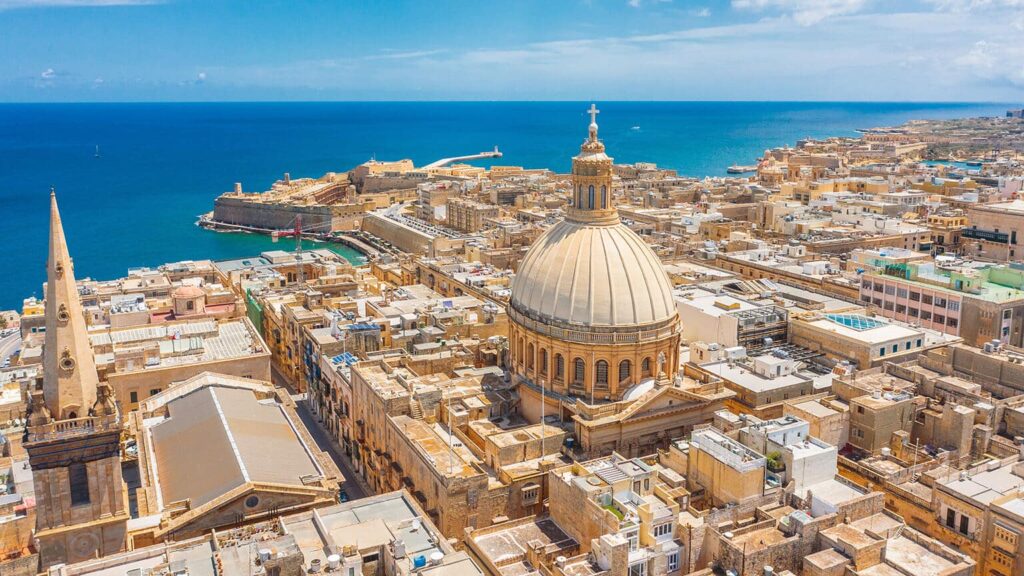
Malta offers a Mediterranean climate with the average annual temperature of around +23°C during the day and +16°C at night, making Malta one of the warmest countries in Europe
Malta citizenship by naturalisation
General naturalisation is typically the longest route to obtain Malta citizenship, taking 5 to 18 years. Therefore, it is only suitable for those who already live in Malta and do not intend to leave it for a long time.
Eligibility requirements for applicants
Foreigners with no family ties to Malta can obtain a passport by naturalisation if they meet the following conditions:
- They have lived in Malta for a cumulative period of 4 years in the last 6 years. During this time, they have not spent more than 6 consecutive months or 10 months in total outside the country.
- They possess a valid residence permit and a permanent residence permit.
- They continuously lived in Malta for a further 12 months immediately prior to their application.
- They have a permanent place of residence, either owned or rented.
- Several Maltese nationals must vouch for the applicants in writing.
- They must demonstrate a regular legal income sufficient to support themselves and their families.
- They have Maltese health insurance.
- They have passed language proficiency, history, and law exams with a minimum score of 75%. Preparation for the exam is taken in a compulsory course of 100 hours.
Application process and guarantors
Applications and all documents must be submitted in person at the Department of Citizenship and Expatriate Affairs. Applications are processed within 3 months.
Applicants must also demonstrate their benefit to the Maltese society and trustworthiness, supported by reference letters from locals detailing their integration into the community.
Two guarantors must sign the citizenship application. Guarantors cannot be the applicant’s family members. Both guarantors confirm that the applicant is a person of integrity and worthy of obtaining a passport to the country. Their signatures must be notarised.
The first guarantor must hold one of the following positions:
- lawyer;
- doctor;
- civil servant of at least a certain rank;
- magistrate;
- notary;
- officer with the status of captain or above;
- police officer of a rank not lower than an inspector;
- prosecutor;
- parish priest;
- judge;
- MP.
The second guarantor is any Maltese citizen over 18 who has not acquired a passport by naturalisation.
Naturalisation timeline
The minimum period for obtaining Malta citizenship by naturalisation is 7 years. But in practice, if a person has lived in Malta for less than 12 years, the application is often rejected without explanation or right of appeal. In rare cases, obtaining citizenship only after 18 years of living in the country is possible.
Expected costs
The overall expenditure associated with residing in Malta while pursuing citizenship by naturalisation can vary significantly, typically ranging between €200,000 and €400,000 over a 12-year period. This estimate depends on factors such as the chosen pathway, legal and professional support, annual residence permit renewals, accommodation, and various administrative expenses.
Malta citizenship through marriage
Legal marriage to a Maltese citizen is another way of obtaining citizenship.Once married, the foreign spouse is eligible to reside in Malta without a visa and work without a work permit. They can also open bank accounts, rent property, and travel visa-free around the Schengen Area.
Conditions for obtaining citizenship
It is only possible to apply for citizenship after 5 years of marriage. The birth of a child does not affect this deadline. It will take another year for the application to be processed. There is no need to live permanently in Malta. Spouses may live in any country in the world.
Divorced and widowed spouses are eligible for citizenship if the marriage lasted more than 5 years, provided the relationship was genuine. Malta citizenship by marriage is retained even in the event of divorce or death of the spouse.
Sham marriage penalties
A sham marriage is a criminal offence in Malta. A special committee evaluates the genuineness of the relationship: it is a compulsory procedure before documents are submitted to the local registry office. Convictions for sham marriages can lead to fines or imprisonment for up to 2 years.
Same-sex marriage
Since 2014, Malta has recognised same-sex marriages, affording the same rights and opportunities for citizenship as opposite-sex marriages. Conditions for obtaining citizenship for such couples are no different from the standard ones.
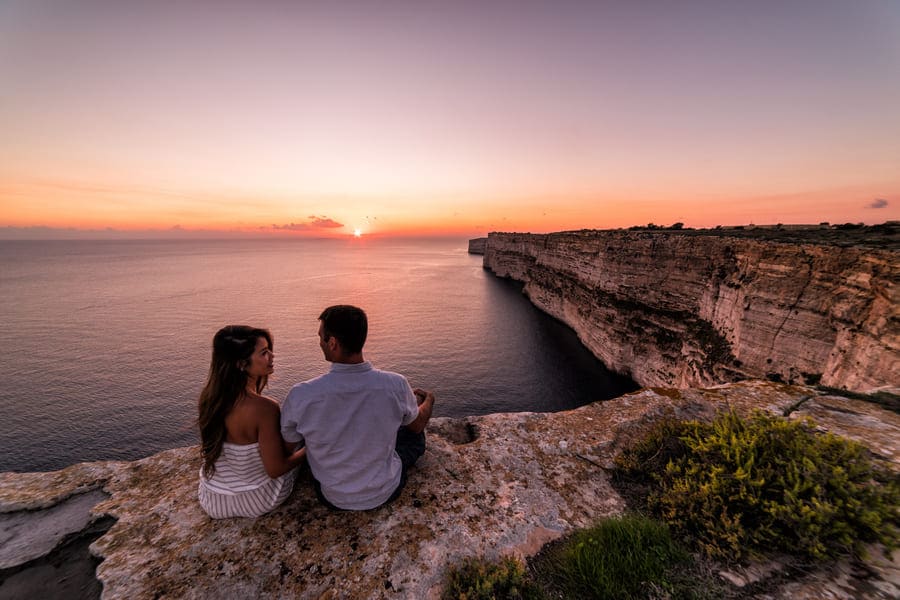
After marrying a Maltese citizen, a foreigner gets a Freedom of Movement status. It is the equivalent of a Permanent Residence Permit. After 5 years of residency, it is possible to obtain a Maltese passport
Malta citizenship by descent and family reunification
This option is only suitable for children and relatives of Maltese or former Maltese citizens. Expenses are low — about €80 of a state fee.
The applicants who can obtain Malta citizenship by descent and family reunification are the following:
- Born in Malta to one or both Maltese parents since 1989.
- Born between September 21st, 1964 and July 31st, 1989, outside Malta, to a Maltese father.
- Born on September 21st, 1964, in Malta, or to Maltese parents, on the day of the country’s independence from the United Kingdom.
- Born in Malta to one or both Maltese parents before September 21st, 1964.
- Former subject of the United Kingdom or its colonies before September 21st, 1964.
- Born abroad to a Maltese father also born abroad, if a grandfather or a great-grandfather was born in Malta.
- Former Maltese national.
- Child from another country, adopted or fostered by Maltese nationals.
- Grandson or granddaughter of a Maltese citizen.
- Sibling of a Maltese citizen.
- Child of foreign parents, one of whom subsequently obtained Malta citizenship.
- Guardians of a minor Maltese national.
These categories of applicants do not need to obtain a residence permit or live permanently in Malta. Citizenship can be acquired without travelling to the country: through an embassy or a consulate.
The fact of paternity or maternity and birth dates must be documented on birth and marriage certificates. In some cases, two Maltese guarantors will also be required.
Required documents for getting Malta’s passport
An applicant for Malta citizenship provides original documents or certified true copies. All documents must be translated into English. Besides, there are several forms the applicant needs to fill out. The type of the form depends on the application status.
A standard pack of documents submitted with all applications, irrespective of the ground for citizenship includes the following:
- passport or an ID;
- passport-size photo;
- filled in state forms;
- receipt confirming payment of a state fee;
- birth and marriage certificates;
- Oath of Allegiance.
Summary: how to get Malta citizenship quickly
- Foreigners can acquire Maltese citizenship by naturalisation, marriage, descent, or family reunification. Additionally, the Maltese Government offers a naturalisation route for refugees.
- The most affordable way is to prove one's Maltese ancestry. But this option is only suitable for those with parents, relatives, or ancestors on the island.
- The longest way is to live permanently in the country and undergo naturalisation.
- Most ways of obtaining a Maltese passport might take many years and require confirming knowledge of the language and culture of the country, as well as attending interviews and providing references. The whole family can't obtain citizenship through these paths: family members can only apply for citizenship after several years.
Immigrant Invest is a licensed agent for citizenship and residence by investment programs in the EU, the Caribbean, Asia, and the Middle East. Take advantage of our global 15-year expertise — schedule a meeting with our investment programs experts.

 Trusted by 10,000+ investors