







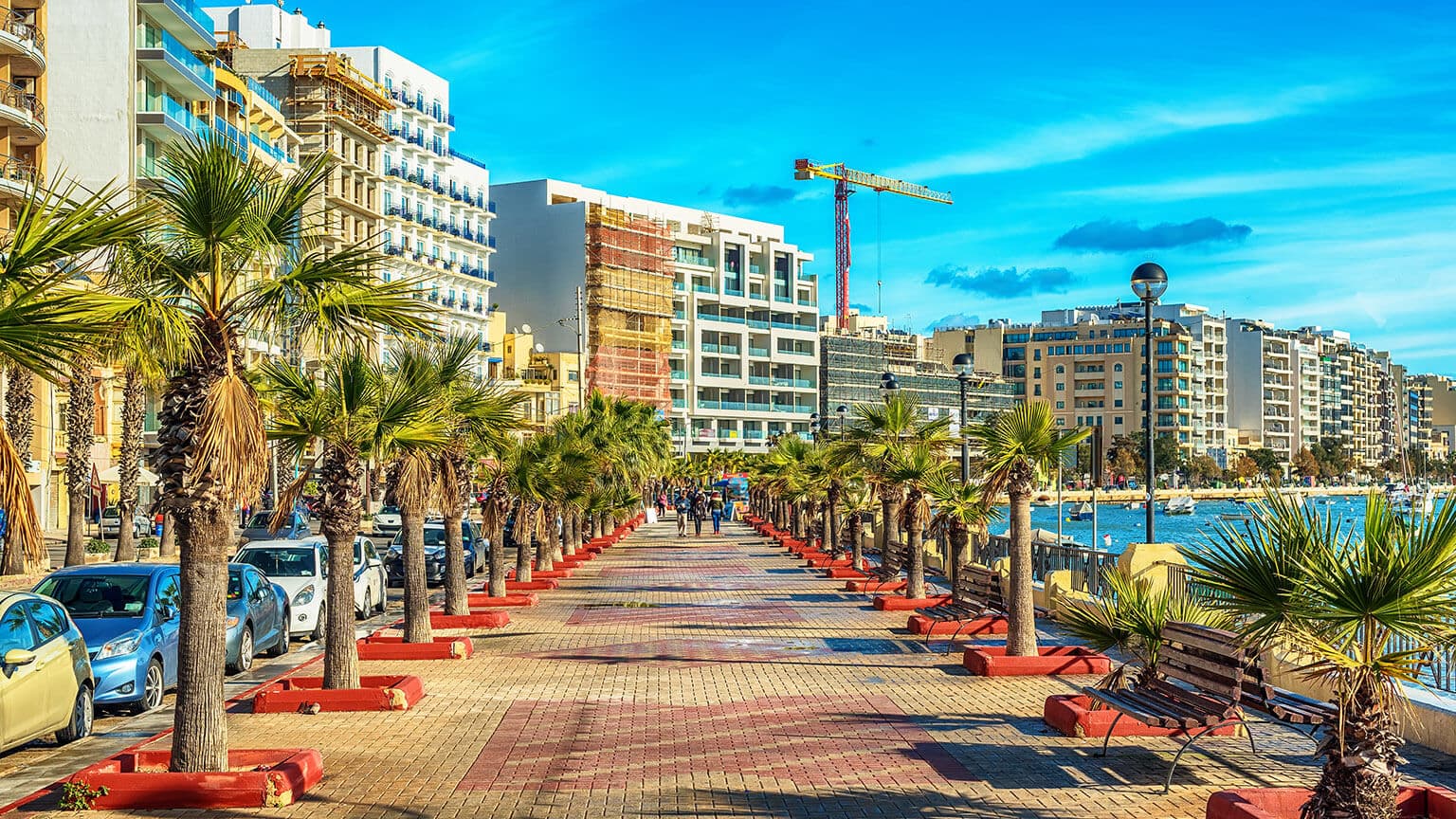

Real estate in Malta might be an excellent investment that allows you to apply for Malta permanent residency: the Malta Permanent Residence Programme requires its applicants to buy or rent a residential property in the country, among other conditions.
But buying or renting real estate is the first step. Let’s see what comes next and how much does it cost to maintain a property in Malta.
3 main reasons to buy real estate in Malta
Foreign buyers are attracted by getting Malta residency, earning rental income, and enjoying a high quality of life in a developed country with a mild and sunny climate.
1. Investment in income earning assets
The real estate market in Malta has been growing steadily. In recent years, residential property prices have increased by around 5—7% annually, supported by strong demand and government incentives. For example, in the Q3 of 2025, the nationwide property price index grew by 6.88% year-on-year[1]Source: The property price index is based on advertised prices and calculated by the Central Bank of Malta..
The average gross rental yield is typically around 4—6% per annum, with higher returns possible in selected locations. The average gross rental yield is 3.92% as of Q1, 2026[2]Source: Gross rental yields are calculated and researched by the Global Property Guide..
Rental prices have also been rising, with recent data showing annual growth of around 5—7%, reflecting stable demand in the rental market[3]Source: In Malta, rents rose by 6.8% year-on-year as of the first half of 2024, which is the latest data provided by the Malta Housing Authority..
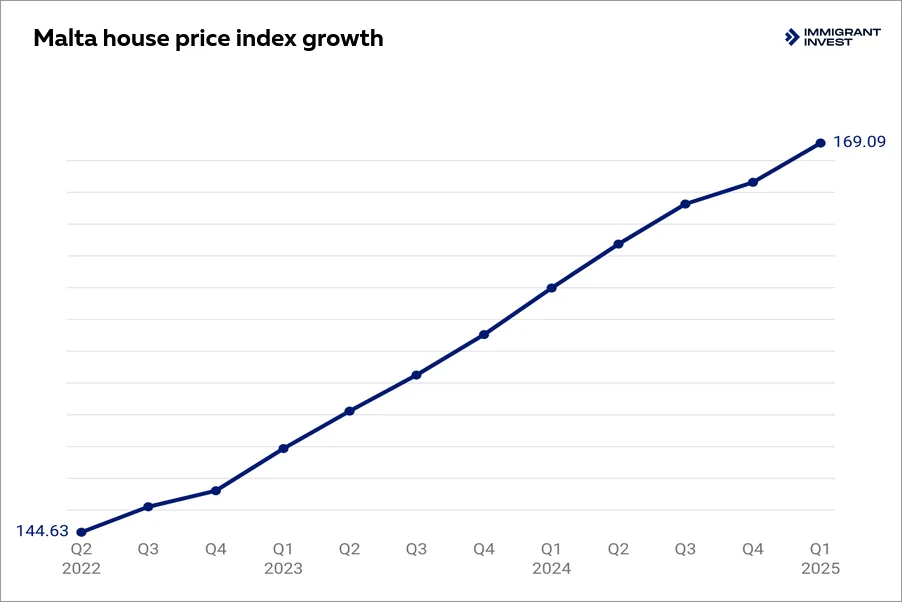
The reference point of 100 for this index is property prices in 2015
2. Low taxes
Malta offers a favourable property tax regime. When purchasing real estate, buyers typically pay a one-time stamp duty of around 5% of the property value, with certain reductions or exemptions available.
Unlike many countries, Malta does not impose an annual property tax, which significantly reduces long-term ownership costs.
However, taxes may apply when selling property or generating rental income.
3. Opportunity to become a Maltese resident
The real estate owner may become eligible for the Malta Permanent Residence Programme.
To qualify for the MPRP, the property price must exceed €375,000. Another option is available if a property is rented for €14,000+ per year. Besides the real estate threshold, investors must also:
- pay an administrative fee of €60,000 for the investor and €7,500 per adult family member included in the permanent residency application;
- pay a contribution fee of €37,000;
- donate at least €2,000 to a Maltese non-governmental organisation;
- prove ownership of assets worth at least €500,000, where €150,000 are financial liquid assets — or €650,000+ with €75,000+ of financial assets.
With permanent residency, which is a life-long status, the investor gets the right to relocate to Malta — though it is not an obligation. Malta has a developed economy, high-quality education, medical and banking systems, a mild Mediterranean climate, and many luxury residential complexes.
Maltese residents can also travel within the Schengen Area visa-free, staying in other countries of the region for 90 days out of 180.

Trusted by 10,000+ investors
Check your eligibility for Malta permanent residence
Restrictions on foreigners buying property
The following limitations may apply to foreigners who decide to purchase real estate in Malta:
- Citizens of other countries, including the European Union, are usually allowed to buy only one property. The only exceptions are EU citizens who have lived in Malta for at least 5 years before the date they purchase the property.
- A foreigner needs to obtain permission, or an AIP permit, to purchase real estate. The Ministry of Finance issues it, and the process usually takes 6—8 weeks.
- Purchased properties cannot be rented out.
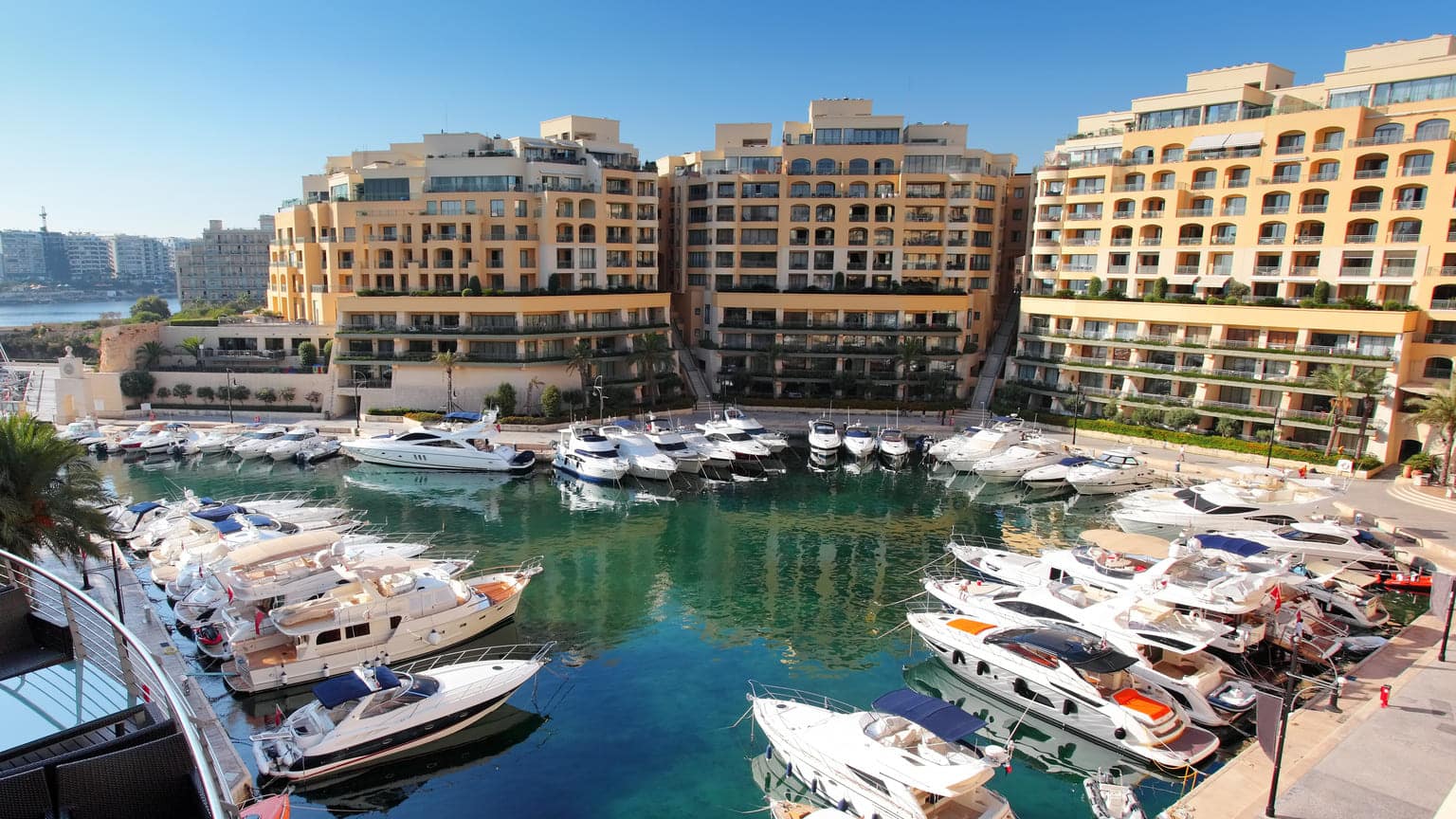
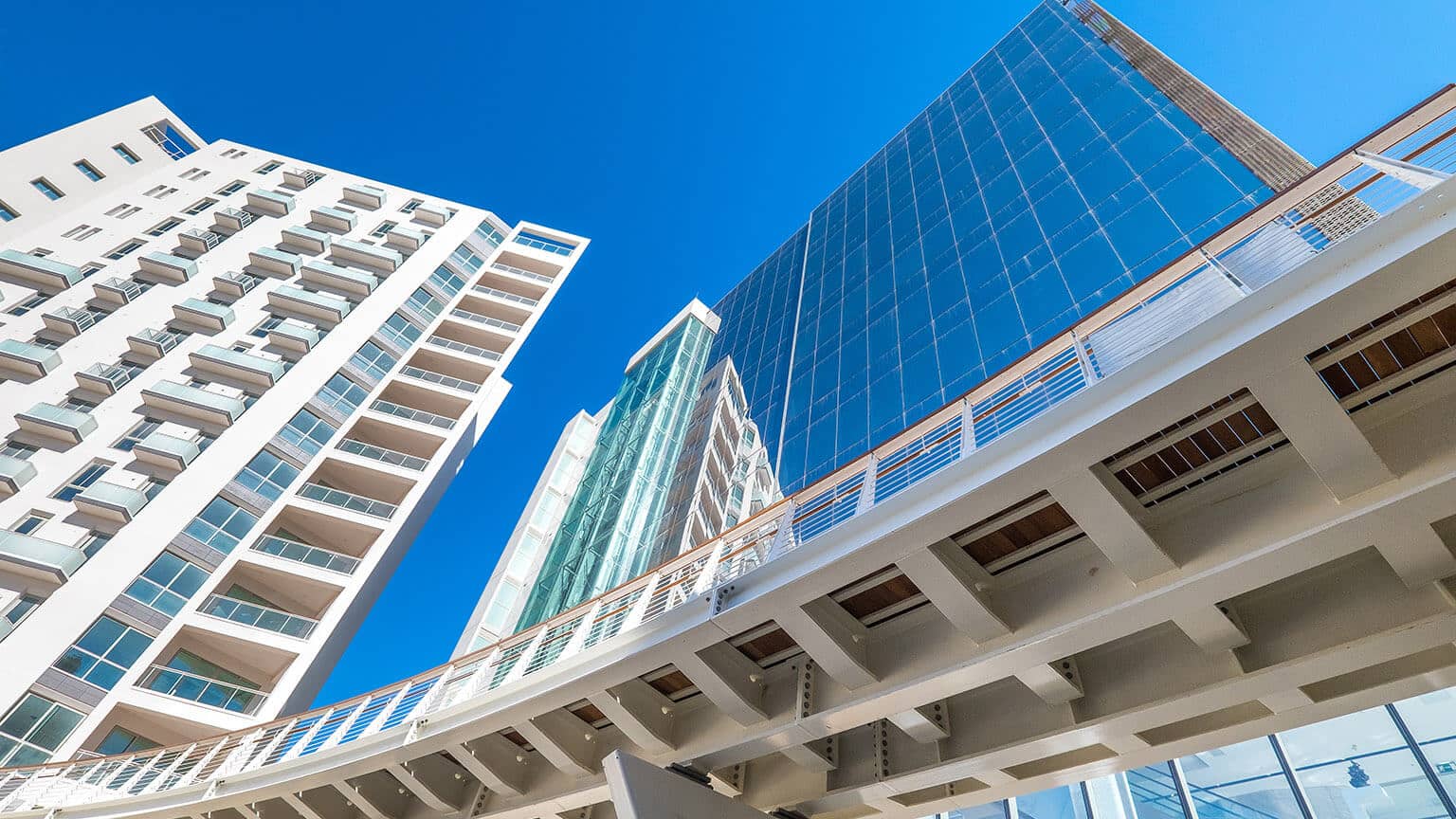
However, these restrictions do not apply to real estate located in Special Designated Areas, SDAs, containing luxury complexes with their own infrastructure. Buildings in SDAs include a closed courtyard, a swimming pool, a gym, security, and sometimes a garden.
Foreign investors often prefer to buy property in SDAs as the process is simpler, faster, and more profitable:
- there are no restrictions on the number of properties bought or rented out;
- AIP permit is not required;
- property can be registered in the name of an individual and in the name of a company, which is challenging to do with properties outside the SDAs.
It is more profitable to buy real estate in an SDA than in other areas. The demand for housing in SDAs is constantly growing, their prices increase even in the construction stage, and the sale-purchase transactions are processed faster, in about 2 months instead of 4—6 months. Moreover, foreign investors are not restricted to one property but can buy any property.
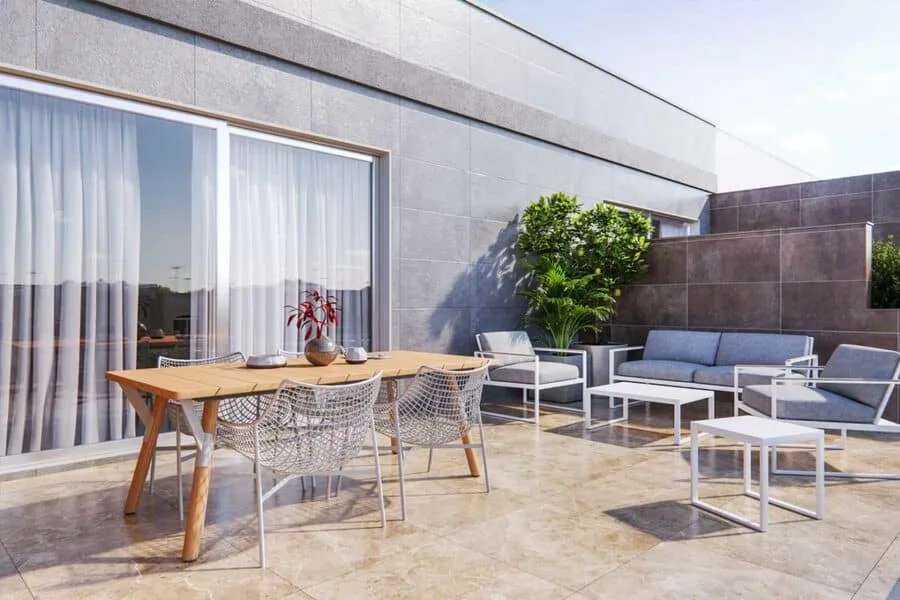
SDAs are luxury complexes offering special conditions to foreigners buying or renting properties. They are built in specially designated areas approved by the state. The quality of such development is usually higher than in non-SDAs
Property maintenance: utility costs in Malta
Maintaining property in Malta involves several regular utility expenses that vary depending on the type and size of the property, as well as the number of residents.
The main utilities include electricity and water, Internet and telecommunications services, gas for cooking, and building maintenance fees covering common areas such as lifts, cleaning, and shared facilities. In addition, households are responsible for organising waste separation, although collection itself is state-funded.
Electricity and water bills
Utility costs in Malta depend on the tariff category and consumption levels. Residential properties used as a primary home benefit from lower rates, while secondary or unregistered properties are charged higher ‘domestic’ tariffs.
Tariffs are structured in progressive bands: the more electricity or water is consumed, the higher the unit cost. For example, residential electricity tariffs start at around €0.11 per kWh for lower consumption and can rise to approximately €0.6 per kWh at higher usage levels[4]Source: Applicable tariffs on electricity are indicated on the official website of the Regulatory for Energy and Water Services of Malta.. Water tariffs have two tiers: those who spend less than 33 m3 per person per year pay €1.4 per m3, those who exceed this amount pay €5.1 per m3 [5]Source: Applicable tariffs on water are indicated on the official website of the Regulatory for Energy and Water Services of Malta..
The service charge also applies: €65—195 per year on electricity and €59 per year on water consumption.
The number of residents registered at an address affects billing, as households with more occupants benefit from larger low-cost consumption bands, reducing the average cost per unit.
Utility bills are based on individual meter readings. Meters are typically located outside apartments, often in shared ground-floor areas, and readings are taken by the utility provider.
On average, electricity and water costs are around €80—150 per month for an apartment and €150—250 or more for a house or villa, depending largely on usage, particularly air conditioning in summer.
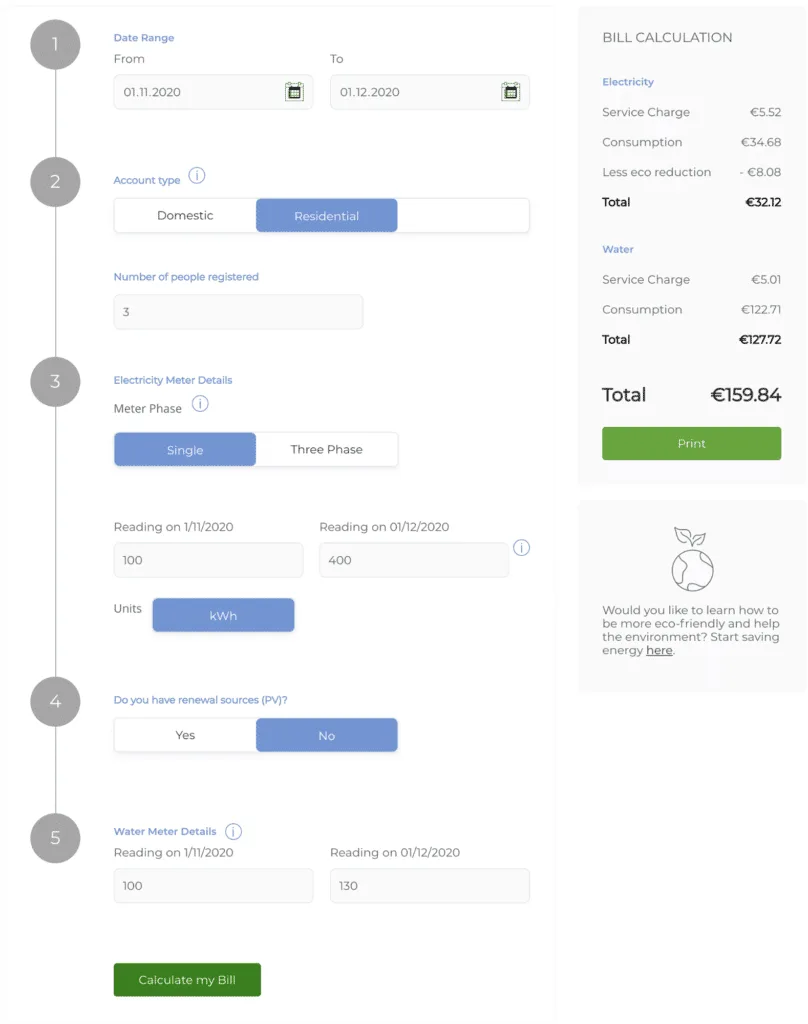
You can calculate the cost of electricity and water using a special calculator
Heating, hot water, and gas
There is no centralised heating system in Malta, so homes are typically heated using air conditioners with heating function or electric heaters.
Hot water is produced individually in each property. Most homes are equipped with electric boilers or solar water heaters. Many buildings also have roof water tanks, which store water from the mains supply before it is distributed into the apartment, where it is then heated.
There is no widespread domestic gas network. Instead, gas is supplied in cylinders and is commonly used for cooking. A 12—15 kg gas cylinder costs around €18—22 and can last approximately 2—3 months for a two-person household, depending on usage.
Both gas and electric cookers are used, although electric and induction stoves are most common.
Maintenance of the property and common area of the building
Maintenance costs for the lift, cleaning, repairs, security and swimming pool are typically paid on a monthly or quarterly basis.
For small buildings, the amount is determined at a general meeting of residents — housing committee, while for large residential complexes, it is set by the management company. The specific amount depends on the region, the type of property and its size, and the presence of a swimming pool and a garden. On average, it is around €150—800 per annum per property, and for premium properties, €1,000—3,000 or more per year.
Garbage collection
Garbage is collected free of cost, as the state pays for the service. All waste must be sorted into categories, including organic waste, mixed waste, and recyclables such as paper, plastic and metal. Items to be recycled must be clean, dry, and free of food debris. The main waste processing company is WasteServ Malta.
Residential waste collection happens several times a week, depending on the type of waste, while glass is typically disposed of in designated public containers rather than collected from households. Bags are left outside the house on scheduled collection days[6]Source: The schedule of residential waste collection can be found on the WasteServ Malta website..
Internet, TV, and phone
Malta's main providers are Melita, GO, and Epic. Melita and GO offer package deals that include Internet, TV, unlimited calls, and mobile data, while Epic primarily provides mobile services.
The cheapest tariffs start from around €20 per month for basic plans, and package offers for the whole family typically cost €60—100 or more, depending on the services included.
Cost calculation examples
For example, utilities for an apartment of 85-150 m² in Sliema or St. Julians is €80-150; for apartments in SDAs, €450+; and for villas or houses, €500-1000.
Utility prices depend on the area, size, and type of property. The difference in the cost of bills for a small apartment in different regions of Malta can amount to several dozen euros, and for a house, it can reach several hundred euros.
For example, utilities for an apartment of 85—150 m² in Sliema or St Julian’s are typically €80—150 per month; for apartments in SDAs, around €150—300 or more depending on usage and services; and for villas or houses, €200—500+, with higher costs possible in large properties with intensive air conditioning use.

How to pay your bills
Automated Revenue Management Services, owned by Enemalta and the Water Services Corporation, carries out utility bill management in Malta.
Most water and electricity metres are read periodically, and bills are usually issued every 2 months. Customers can request an invoice at any time, check their billing history, or pay an invoice on the ARMS website. Water and electricity usage is charged through a single bill.
You can pay bills by credit card, at suppliers’ offices, or at ATMs. Payments are typically due within around 15—20 days from the invoice date. In case of non-payment, additional charges or disconnection fees may apply.
If you do not plan to live in the property you purchased, you can conclude an agreement with a management company to monitor it, pay bills on your behalf, or rent it out.
If you do not plan to live in the property you purchased, you can conclude an agreement with a management company to monitor it, pay bills on your behalf, or rent it out. If a residential property is empty, the owners may inform the utility provider. However, meter readings are still carried out regularly, and bills may still be issued, although costs are typically minimal due to low consumption.
Internet and mobile services are usually paid monthly. Maintenance fees for common areas are most often charged monthly or quarterly, depending on the building or management company.
Enemalta Corporation supplies electricity, the Water Services Corporation supplies water and wastewater services, and companies such as Liquigas and Multigas supply gas in cylinders.
Taxes payable by property owners in Malta
The owner must pay taxes when buying or selling a property. Rental income is also taxed. Malta does not impose an annual property tax.
Purchase taxes
Taxes payable when buying a property:
- stamp duty — 5% of the property value. Reduced rates may apply in certain cases, including specific incentives for Gozo and first-time buyers;
- notary fee — approximately 1 to 3% of the property value, plus 18% VAT;
- agency fee — typically 1 to 5% of the property value, plus 18% VAT. This commission is usually paid to a real estate agent involved in the transaction, most often by the seller, although arrangements may vary;
- Acquisition of Immovable Property, AIP, permit (if needed) — €233.
Certain exemptions or reductions in stamp duty may apply in cases such as inheritance or transfers between close family members, subject to specific conditions.
Temporary reduced stamp duty rates introduced during the COVID-19 pandemic are no longer in force.
Taxes on real estate that is gifted or inherited: there is no inheritance tax, but stamp duty may still apply depending on the circumstances.
Ownership taxes
Annual property tax: not charged in Malta.
Ground rent. In some cases, a property may be subject to ground rent if the land is not owned outright. In such situations, the owner pays an annual ground rent, typically ranging from €40 to €250. In many cases, this ground rent can be redeemed by paying a lump sum, after which the land becomes fully owned.
Tax on rental income. Rental income in Malta can be taxed in two ways. Property owners may opt for a flat tax rate of 15% on the gross rental income, meaning the total rent received without deducting expenses. This option is simple and commonly used, especially for residential lettings.
Alternatively, rental income can be taxed under the standard progressive income tax rates, which range from 0 to 35%, depending on the taxpayer’s total income. In this case, certain expenses related to the property may be deducted before calculating the tax.
Sale taxes
The seller typically pays a final withholding tax of 8% of the transfer value. In certain cases, reduced rates may apply depending on the type of property and conditions of ownership.
There is no tax in the cases given below and in several other specific cases.
- transfer property to your spouse, children or grandchildren;
- donate it to a charitable organisation;
- resell the property to your own company.
Avoidance of double taxation
The Government of Malta has entered into double tax treaties (DTTs) with 80+ other countries[7]Source: The full list of countries with DTTs in force is published on the official website of the Tax and Customs Administration of Malta.. A DTT is created between two countries which defines the tax rules concerning tax residents of both countries.
The provisions of the DTT between Malta and other countries affect the following investors:
- they are tax residents of Malta and receive dividends or interest from foreign companies;
- they are tax residents of another country that has signed a DTT with Malta and owns a Maltese company.

Trusted by 10,000+ investors
Get your Malta TIN in 1—2 weeks without visiting the tax office
Property insurance in Malta
The insurance costs depend on the type and size of the property and the level of coverage. On average, it costs €100—250 per annum for an apartment with several bedrooms and €250—600 or more for a house, depending on the policy.
A property can be insured against theft and various risks, such as fire, flooding, earthquakes, and damage caused by burst water pipes.
Insurance may cover both the structure of the property and its contents. The sum insured should reflect the reinstatement value of the property and the replacement cost of all movable items, rather than the market price. In other words, the insurance can cover the cost of rebuilding the property as well as replacing furniture, appliances, doors, windows, solar heaters, air conditioners, alarms, and other belongings.
Calculation of the maintenance costs for investment property
We calculate the cost of maintaining an apartment in Valletta and a villa on the coast. This calculation assumes that the owner lives on the property.

Energy Performance Certificate
Although it is not a recurring maintenance expense, a property owner may need to obtain an Energy Performance Certificate when renting out or selling real estate in Malta.
An EPC assesses the dwelling’s energy performance and includes recommendations for improvement. The certificate must be issued by an accredited assessor, registered with the Building and Construction Authority, and is valid for 10 years unless major renovation or new construction takes place.
Rental property maintenance in Malta
Most Maltese live in their own apartments or houses. Housing is rented mainly by foreigners, while some younger couples and mobile residents also choose to rent.
Apartments account for 77% rental agreements[8]Source: Data on active rental agreements as of H2 of 2025 is provided by the Malta Housing Authority.. Villas and houses are more often bought than rented, and the rental market for them is concentrated in the premium segment. Renting a villa with several bedrooms can cost from around €2,000 to €5,000 per month, while luxury properties may reach €8,000—14,000 per month. Buying a villa usually costs well above €1 million, depending on the location, size, and standard of the property.
Rental prices and yields per region
Malta is divided into 5 administrative regions: Gozo, North Malta, Central Malta, Southeast and South Malta, and the capital Valletta.
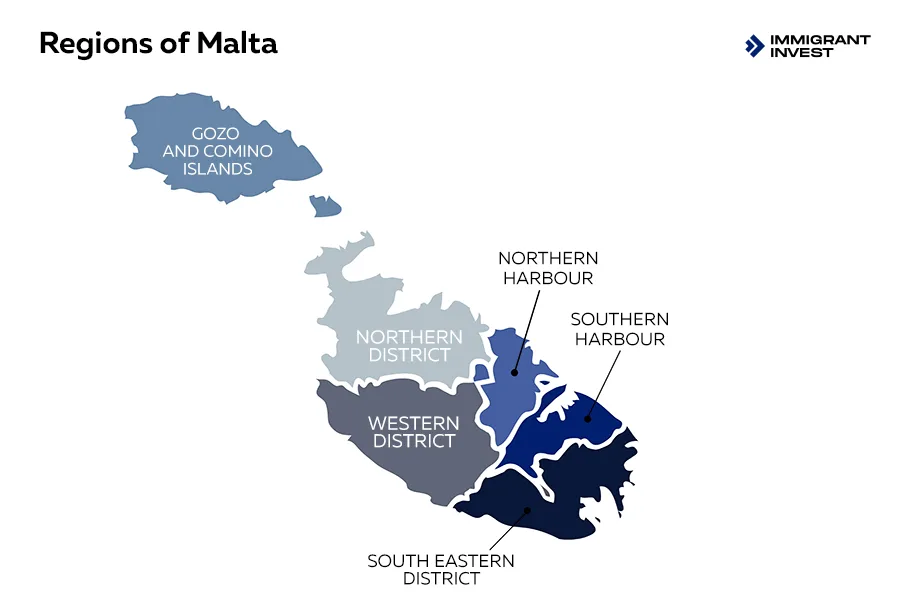
St Julian’s, Sliema, and Msida are the most popular areas for work. Inland, western, and southern Malta offer a quieter lifestyle, while Gozo is especially popular for holidays and retirement
Northern Harbour is the most popular region: as of the second half of 2025, there were 41.35% of all active rental agreements registered in Malta[9]Source: Data on active rental agreements is provided by the Malta Housing Authority.. Cities such as Sliema and St Julian’s and most of the SDA complexes are also located there.
However, real estate prices in Northern Harbour are also the highest in Malta: renting an apartment costs €950—1,500 per month. In cheaper areas, such as St Paul's Bay, Bugibba, Marsaskala, and Birzebbuga, apartments can be found for €700—900[10]Source: The average rental prices per localities are calculated by the Malta Housing Authority..
Average monthly rental prices for apartments in Malta, per city and region
A three-bedroom apartment by the sea in Sliema can generate rental income, but both purchase prices and rents in this area are high, so yields are not always the strongest in Malta.
Apartments in Gzira or St Paul’s Bay may offer gross yields of around 5%, depending on the property and rental demand. Similar yields may also be achieved in San Ġwann. In Marsaskala, apartments can offer yields of around 4%, although this depends on location, condition, and purchase price.
Features of the contract and the rental process
Written rental contracts registered with the Housing Authority are mandatory in Malta.
The tenant usually pays a deposit, often equal to one month’s rent, to cover unforeseen costs and any damage caused to the property through neglect. In some cases, the landlord may also request a separate deposit to cover unpaid utility bills. Deposits are normally returned after the rental contract ends, less any outstanding bills or repair costs attributable to the tenant, in accordance with the terms of the contract.
Costs related to renting a property
There are usually no major additional costs, apart from the rent, related to renting a property, unless provided for in the agreement.
However, you have to pay for agency services if you rent through an agency. Usually, this is half of one month’s rent plus 18% VAT.
The landlord or the tenant can pay utilities in Malta, depending on the agreement. Most often, for short-term rentals, the landlord pays them and their cost is included in the rent. For long-term rental agreements, utilities are usually paid by the tenant.
We also recommend having insurance cover for unforeseen situations, although the property itself is usually insured by the landlord, while the tenant may insure their own belongings separately.
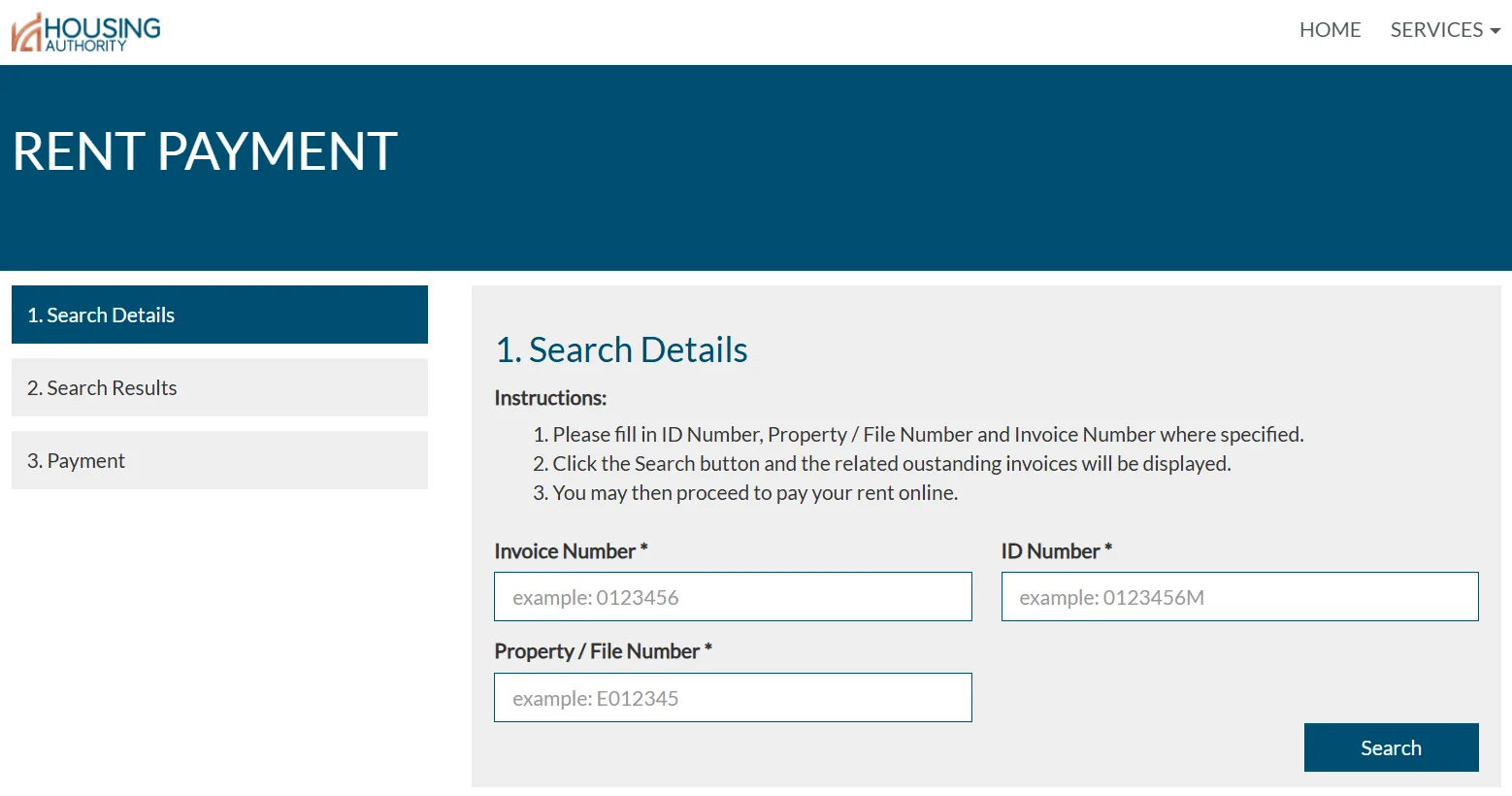
You can pay rent online through an official service developed by the Housing Authority of Malta
Real estate in Malta: profitable investment and comfortable residential property for the whole family
- Malta combines capital growth, rental demand, and personal use in one asset class. Residential prices rising by around 5—7% annually, with gross rental yields typically at 4—6%.
- Real estate in Malta is not only an investment, but also a route to legal status. Buying or renting qualifying property may support eligibility for the Malta Permanent Residence Programme.
- Malta’s tax regime remains one of the strongest arguments for property ownership. There is no annual property tax, while the main purchase cost is stamp duty of around 5%, and rental income may be taxed at a flat 15% on gross income.
- Ownership costs are comparatively predictable and manageable. Electricity and water bills are €80—150 per month for an apartment and €150—250+ for a house or villa, with insurance from €100—250 per year for an apartment and €250—600+ for a house.
Immigrant Invest is a licensed agent for citizenship and residence by investment programs in the EU, the Caribbean, Asia, and the Middle East. Take advantage of our global 15-year expertise — schedule a meeting with our investment programs experts.

 Trusted by 10,000+ investors