






From Maltese ancestry and family ties to exceptional achievements, there are several ways to become a Maltese citizen. Malta recognises dual citizenship, allowing individuals to gain a second nationality without necessarily giving up their original passport.
In this guide, we explore what makes Maltese citizenship worth considering, who qualifies, how much each route costs, and what to expect throughout the application process.
What is Maltese dual citizenship and is it allowed?
Dual citizenship in Malta means holding Maltese citizenship alongside the nationality of another country. Maltese law permits dual and multiple citizenship. This right is expressly recognised under Article 7 of the Maltese Citizenship Act, Cap. 188[1]Source: Legislation Malta — Maltese Citizenship Act, Cap. 188.
Malta introduced significant changes to its citizenship laws in 2025 following a ruling by the European Court of Justice. One of the major reforms was the abolishment of the Citizenship for Exceptional Services by Direct Investment route[2]Source: Community Malta Agency — Amendments to the Maltese Citizenship Act.
Citizenship by merit was further clarified. Community Malta Agency confirmed that this framework is neither a continuation nor a replacement of the former investment route. Each application is assessed on its own merits, and approval remains at the authorities' discretion[3]Source: Community Malta Agency — Malta Citizenship by Merit.
While Malta allows dual citizenship, the requirements for obtaining Maltese nationality depend on the grounds for application.
Explanatory guide
Find out everything you need to know about Malta citizenship by merit
Which routes lead to Maltese citizenship?
Maltese citizenship can be acquired in five ways:
- birth;
- descent;
- marriage;
- naturalisation by residence;
- naturalisation by merit.
Eligibility criteria, applicant requirements, costs, and processing times vary depending on the route. For example, citizenship by descent may take just a few months, while naturalisation can take several years.
Those seeking Maltese dual citizenship should therefore first determine which route they qualify for.
Malta citizenship route comparison table

Malta dual citizenship by birth
Eligibility for Maltese citizenship by birth depends on when and where a person was born, as well as their parents' citizenship and family history[4]Source: Community Malta Agency — Acquisition of Citizenship.
A person can acquire Maltese citizenship automatically at birth in the following circumstances:
- Born in Malta before September 21st, 1964, with at least one parent also born in Malta.
- Born outside Malta before September 21st, 1964, with both their father and paternal grandparent born in Malta, provided they were still a citizen of the UK and Colonies on September 20th, 1964.
- Born in Malta between September 21st, 1964, and July 31st, 1989, to a non-Maltese father who did not have diplomatic immunity.
- Born outside Malta between September 21st, 1964, and July 31st, 1989, to a Maltese father who acquired citizenship by birth, naturalisation, or qualifying registration.
- Born on or after August 1st, 1989, in Malta or abroad, to at least one Maltese parent, subject to the applicable rules on how that parent acquired citizenship.
Citizenship is not automatically passed down in every case. For children born abroad, eligibility may depend on how their Maltese parent acquired nationality. Those who do not qualify automatically may still be able to obtain citizenship through registration.
Malta dual citizenship by descent
Maltese citizenship by descent allows people with Maltese ancestry to obtain nationality through their family ties. Eligibility depends on the applicant's family history, including where and when their parents or ancestors were born.
The following individuals may qualify for citizenship by descent through registration:
- Those born outside Malta before September 21st, 1964, to a mother who became a Maltese citizen upon independence or would have become one had she not died.
- Those born outside Malta between September 21st, 1964, and July 31st, 1989, to a mother who was a Maltese citizen by birth in Malta at the time of their birth.
- Direct descendants of a person born in Malta whose parent was also born in Malta, subject to the rules on citizenship passing through successive generations.
For later generations, the applicant's parents may need to obtain Maltese citizenship first. If an eligible parent or ancestor has died, the family connection may still be recognised under special rules. Amendments introduced in 2025 extended the relevant deadline to August 1st, 2028. Whether descendants qualify can depend on when the parent died and whether they had already applied for citizenship[2]Source: Community Malta Agency — Amendments to the Maltese Citizenship Act.
Malta dual citizenship by marriage
Foreign nationals married to Maltese citizens can apply for citizenship through registration. Marriage alone does not grant Maltese nationality, and applicants must meet certain conditions.
The main requirements are:
- Marriage duration: the couple must have been married and living together for at least 5 years, supported by a joint affidavit.
- Continued cohabitation: the spouses must still be married and living together both when the application is submitted and when citizenship is granted.
- Public interest: the Minister must be satisfied that granting citizenship is in the public interest.
Widows and widowers of Maltese citizens may also qualify if they were married and living together for at least 5 years, or would have reached that period had their Maltese spouse not died.
Malta dual citizenship by naturalisation: key requirements
To obtain Maltese citizenship through ordinary naturalisation, applicants must meet residence and language requirements, demonstrate good character, and provide two eligible sponsors.
Meeting all the conditions does not guarantee approval, as the final decision rests with the Minister. The full application requirements are outlined in Form E, the official application form detailing eligibility and documentation requirements[5]Source: Community Malta Agency — Form E: Application for Naturalisation as a Citizen of Malta.
Residence conditions
Maltese citizenship through ordinary naturalisation is subject to two main residence conditions:
- Continuous residence in Malta for the 12 months immediately before submitting the application.
- At least 4 additional years of residence in Malta during the preceding 6-year period.
Proof of residence must be provided for the entire qualifying period, including current and previous passports.
Language, character, and income conditions
Beyond the residence rules, ordinary naturalisation involves several other conditions:
- Language: have an adequate knowledge of either Maltese or English. The law does not specify a minimum proficiency level or require a particular language certificate.
- Good character: have a clean record and confirm this in the citizenship application.
- Suitability: be considered a suitable candidate for Maltese citizenship by the authorities.
Malta does not set a minimum income threshold or require applicants to pass a formal examination on the country's history or laws.
Sponsor requirements
Ordinary naturalisation also requires two sponsors to confirm the candidate's good character and suitability for Maltese citizenship. Both must be Maltese citizens who acquired their nationality through a route other than naturalisation, have known the candidate for at least 2 years, and are not related to them.
The first sponsor must hold one of the following positions or professions:
- member of Parliament;
- judge;
- magistrate;
- advocate;
- notary public;
- legal procurator;
- medical practitioner;
- public officer;
- police officer;
- officer of the Armed Forces of Malta;
- parish priest.
The second sponsor can be any other eligible Maltese citizen aged 18 or over. Both sponsors must sign the application, and their signatures must be witnessed and countersigned.
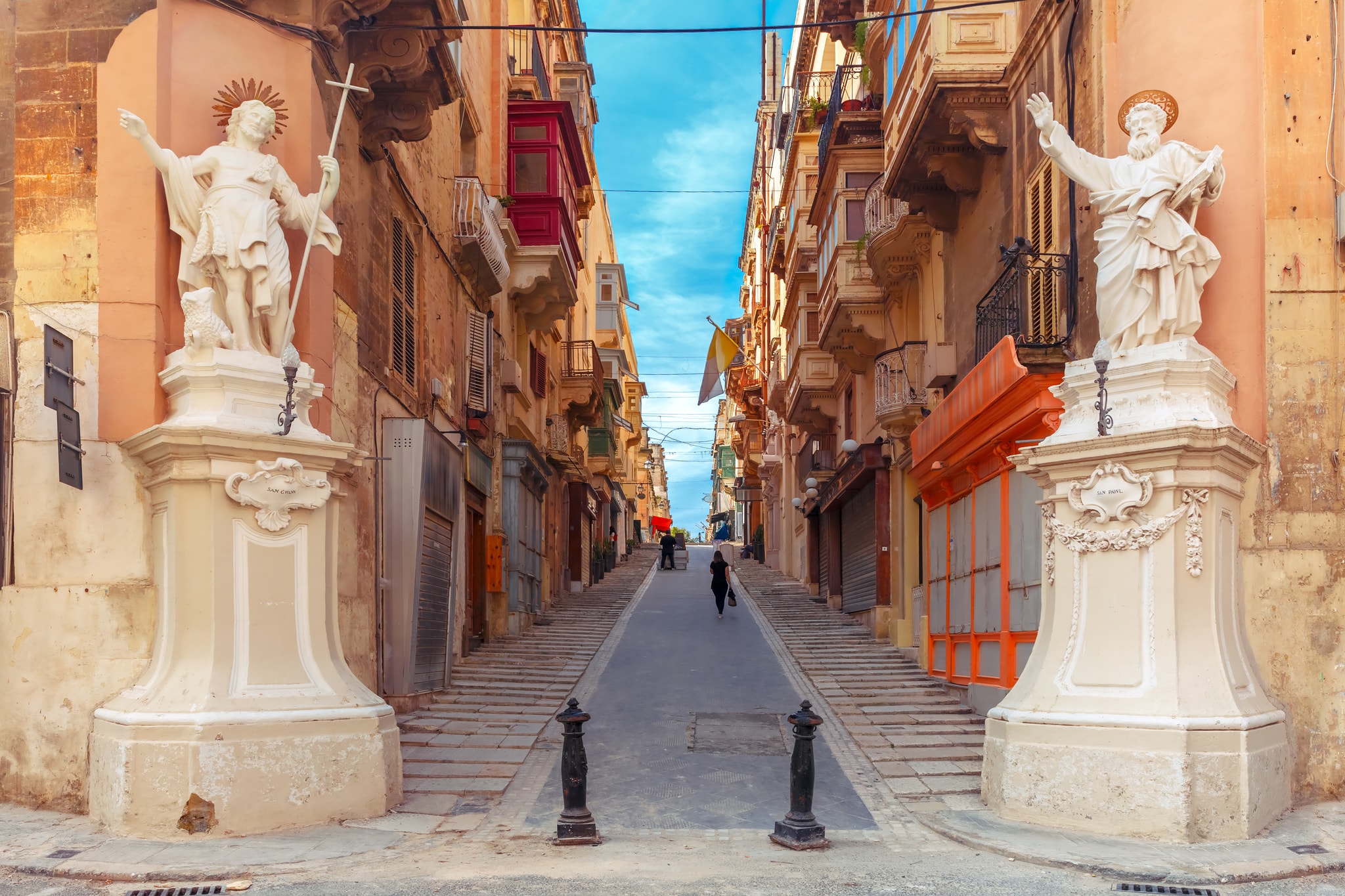
Although the minimum residence requirement is 5 years, naturalisation can take up to 20 years in practice, especially for those without Maltese ancestry[6]Source: Times of Malta — Citizenship law ‘should be updated’ to reflect Malta’s changing social reality and AIDA Malta Country Report — 2024 Update
Malta dual citizenship by merit: key rules
Malta citizenship by merit is a discretionary naturalisation framework for individuals who have provided exceptional services to Malta or humanity, made outstanding contributions, or are of special interest to the country. It is governed by Article 10(9) of the Maltese Citizenship Act and the regulations under S.L. 188.06[7]Source: Maltese Citizenship Act Cap. 188.6.
Exceptional contribution criteria
Community Malta Agency considers exceptional achievements and contributions across a range of fields, including:
- Scientific research and innovation.
- Healthcare and life sciences.
- Education and academic excellence.
- Arts, culture, and creative industries.
- Professional sports and international athletic achievements.
- Entrepreneurship, business leadership, and job creation.
- Technology and digital transformation.
- Philanthropy, humanitarian work, and social inclusion.
- National security and projects supporting Malta's long-term priorities, including Malta Vision 2050[8]Source: Government of Malta — Malta’s Sustainable Development Strategy for 2050.
Each application is assessed on its own merits, taking into account the significance of the candidate's achievements and potential contribution to Malta. Decisions remain discretionary, with no fixed criteria that guarantee approval.
Integration criteria
Maltese citizenship by merit involves several key considerations:
- Residence. At least 8 months of residence in Malta before submitting the formal citizenship application, supported by proof of suitable residential property.
- Language and ties to Malta. Adequate knowledge of Maltese or English, established connections to the country, and evidence of continued commitment to Malta.
- Legal background. Extensive Due Diligence checks covering criminal records, ongoing investigations, international sanctions, and previous visa refusals. Any adverse findings may affect the outcome of the application.
Applicants must also prepare a Proposal Letter that demonstrates a clear, tangible benefit to Malta. It must introduce the applicant and any dependants, outline their professional achievements and exceptional contributions to Malta or humanity, and explain how they intend to continue contributing after naturalisation. Supporting evidence may include awards, patents, publications, or records of completed projects.

Anna Semenyuk,
Acting Client Manager Director
Malta's citizenship by merit framework allows applicants to include their spouse or partner and children under 18. Married couples and registered partners must provide proof of their legal relationship, while unmarried partners must demonstrate that their relationship is genuine and established.
Adult children and parents may also be included if they meet strict financial dependency and integration requirements.
Malta citizenship by merit application process
Obtaining Maltese citizenship by merit involves several stages, from preliminary checks and establishing residence to presenting exceptional achievements and undergoing official assessments. Each stage helps determine whether the candidate meets the requirements for naturalisation.
Applications can be submitted independently or through an authorised representative. Candidates can choose to work with experienced lawyers who help prepare the necessary documents, ensure compliance with legal requirements, and guide them through the process.
Preliminary Due Diligence
Immigrant Invest begins with an in-house preliminary Due Diligence check. A certified Anti-Money Laundering Officer reviews the applicant's documents using international legal, sanctions, and business intelligence databases.
The aim is to identify potential risks before the official process begins. If any concerns arise, our specialists may recommend additional documentation or adjustments to the application structure to address them.
Obtaining Maltese residence
Maltese residence is a mandatory prerequisite for citizenship by naturalisation. At this stage, the applicant establishes a residence in Malta by renting or purchasing property and securing comprehensive health insurance.
The documents collected also help demonstrate genuine ties to Malta during subsequent assessments.
Preparing the Proposal Letter
Immigrant Invest's legal team drafts a personalised Proposal Letter presenting the candidate's professional background, exceptional achievements, and proposed contribution to Malta.
Immigrant Invest's legal team drafts a personalised Proposal Letter presenting the candidate's professional background, exceptional achievements, and proposed contribution to Malta.
Eligibility Assessment
Once the request for assessment is submitted, the Evaluation Board reviews the candidate's achievements, proposed contribution, and alignment with Malta Vision 2050. The outcome determines whether the application can proceed to the next stage.
Once the request for assessment is submitted, the Evaluation Board reviews the candidate's achievements, proposed contribution, and alignment with Malta Vision 2050. The outcome determines whether the application can proceed to the next stage.
Approval in Principle
A successful eligibility assessment may lead to conditional Approval in Principle, while an unsuccessful one results in refusal. This preliminary approval does not grant Maltese citizenship.
Instead, it allows the applicant to continue residing in Malta and begin delivering the proposed exceptional contribution. Community Malta Agency may monitor progress and assess how the commitments are being fulfilled.
Final Assessment
The final stage involves a thorough review by the Evaluation Board. Community Malta Agency checks whether the promised contribution has been delivered and whether the candidate has maintained good character throughout the process.
Unfulfilled commitments or inconsistencies may lead to refusal. The final decision remains at the Minister's discretion. Following a positive outcome, the candidate can proceed with the formal citizenship application.
Documents required for Maltese citizenship: checklist by route
The documents needed for Maltese citizenship depend on how a person qualifies. While most routes require proof of identity and civil status, some involve records of Maltese ancestry, residence history, marriage, or exceptional achievements. Community Malta Agency provides separate application forms and document requirements for each route.
Core documents for all applicants
Most citizenship applications require a core set of personal documents:
- completed application form for the relevant citizenship route;
- recent passport-size photograph;
- full birth certificate showing the applicant's parents' details;
- valid passport or other accepted identity document;
- marriage certificate, if applicable;
- Oath of Allegiance, where required.
Documents issued in languages other than Maltese or English need certified translations. Applicants should prepare original documents and copies where requested.
Additional documents for birth, descent, and marriage
Citizenship by birth involves providing birth certificates and records confirming the parents' Maltese nationality or legal status at the time of birth. For older cases, proof of a parent's or grandparent's birthplace may also be necessary.
Citizenship by descent relies on a documented family history. Birth and marriage certificates must establish a clear link to Maltese ancestors, while later-generation claims may also involve death certificates and citizenship registration records.
Citizenship by marriage calls for a marriage certificate registered in Malta, a joint affidavit confirming at least 5 years of marriage and cohabitation, and identity documents for both spouses. The Maltese spouse's birth certificate, family records, and evidence of previous marriages may also be requested.
Additional documents for naturalisation
Ordinary naturalisation requires evidence of residence in Malta and confirmation of the applicant's good character. The supporting documentation includes:
- Current and expired passports covering the qualifying residence period.
- Residence certificate prepared following verification by Community Malta Agency.
- Completed Form E, including details and signed declarations from two eligible sponsors.
Additional documents for citizenship by merit
Citizenship by merit involves a separate application process, beginning with a detailed Proposal Letter. Supporting documents include:
- Evidence of exceptional achievements or contributions, such as awards, patents, publications, or records of completed projects.
- Plan outlining the applicant's intended contribution to Malta after naturalisation.
- Proof of at least 8 months of residence in Malta and suitable residential property.
- Evidence of knowledge of Maltese or English.
- Documents demonstrating established ties to Malta and the proposed contribution.
- Supporting records for eligible family members included in the application.
Community Malta Agency also conducts Due Diligence checks and may request additional evidence during its assessment.
How much does Maltese dual citizenship cost by route?
The cost of obtaining Maltese dual citizenship varies by application route and includes government fees, passport issuance, and document preparation.
According to Community Malta Agency, the following charges apply:
- Citizenship by descent or marriage: €150 application fee[4]Source: Community Malta Agency — Acquisition of Citizenship.
- Ordinary naturalisation: €450 application fee[5]Source: Community Malta Agency — Form E: Application for Naturalisation as a Citizen of Malta.
- Citizenship certificate: €50, payable upon collection after approval[9]Source: Community Malta Agency — Form I: Application for Registration as a Citizen of Malta.
- Oath of Allegiance: €10 per oath sworn at the Agency[10]Source: Community Malta Agency — Form K: Application for Registration as a Citizen of Malta.
- Maltese passport: €70 for adults aged 16 and over from September to March, or €80 from April to August. Passports for children aged 10—15 cost €40, while urgent adult issuance costs €160[11]Source: Identità — Passport Office: Applicable Fees.
- Foreign marriage registration: €2.60 for registering a marriage performed abroad[12]Source: Identità — Guidelines for Registering a Foreign Act of Marriage.
Additional expenses include obtaining civil records, certified translations, and document legalisation. These costs vary by country and the number of documents involved, while legal and advisory fees depend on the services provided.

Get a personalised quotation for advisory services for Malta citizenship by merit
5 key benefits of Maltese dual citizenship
A Maltese passport gives holders greater independence in where they live and work, more options for their families, and the security of building a future in Malta without immigration restrictions.
1. Increased global mobility
Maltese citizens can travel to 180 destinations without obtaining a visa in advance, including Japan, Singapore, and the UK.
Malta's central Mediterranean location makes international travel convenient. The island's compact size puts Malta International Airport within relatively easy reach of most residential areas, with direct flights to major European cities and connections to destinations across the Americas, Asia, Africa, and the Middle East.
2. Freedom to work and run a business
Maltese citizenship allows holders to work for any employer, change jobs, or start a business without a separate work permit. By contrast, non-EU nationals with residence permits need employment authorisation. Citizenship removes these immigration barriers.
3. Access to education and healthcare
Maltese citizenship gives families access to free state schooling, with both Maltese and English used in the classroom. At university level, Maltese nationals can pursue undergraduate degrees without tuition fees, with most courses at the University of Malta taught in English.
Public healthcare is another advantage, covering consultations at state health centres and treatment in public hospitals without charges for entitled patients. Some expenses remain, particularly for dental care and prescription medicines, although certain medications are provided free to people with chronic conditions or low incomes.
4. Citizenship for future generations
Maltese citizenship is hereditary. Children born in Malta or abroad acquire citizenship automatically if at least one parent is Maltese at the time of their birth. They gain the same rights as other Maltese nationals, including the ability to live, study, and work in Malta.
5. Enjoying a comfortable lifestyle in Malta
Malta's Mediterranean climate, mild winters, and abundant sunshine encourage an active outdoor lifestyle. Combined with access to quality healthcare, these conditions contribute to a life expectancy of 83.8 years.
The country's international character adds to its appeal, with foreign nationals making up 31.1% of the population and forming a diverse expat community[13]Source: National Statistics Office Malta — World Population Day 2026. Strong employment prospects are another advantage, with unemployment at just 3.4%[14]Source: National Statistics Office Malta — Unemployment Rate: August 2026.

Everyday travel is affordable in Malta, with free public buses and selected ferry services for holders of a personalised Tallinja card[15]Source: Malta Public Transport — Personalised Tallinja Card
Maltese dual citizenship and taxes: key things to know
Obtaining Maltese citizenship does not automatically make a person a Maltese tax resident or reduce their tax bill. Tax residence depends on where they live and their personal circumstances.
Spending more than 183 days in Malta during a year establishes tax residence, but those who move there to settle may become residents from their arrival date, even with a shorter stay. Their domicile and tax obligations in other countries also affect how their income is taxed[16]Source: MTCA — Tax Residence.
Taxes in Malta
Malta has a progressive personal income tax system, with rates ranging from 0% to 35%[17]Source: Malta Tax and Customs Administration — Individual Income Tax Rates 2026. In 2026, the following brackets apply to single taxpayers:
- 0% — annual taxable income up to €12,000;
- 15% — from €12,001 to 16,000;
- 25% — from €16,001 to 60,000;
- 35% — income exceeding €60,000.
Married couples and parents may benefit from higher tax-free thresholds.
Other taxes in Malta include:
- Corporate income tax: 35% on company profits[18]Source: Malta Tax and Customs Administration — Corporate Tax.
- Property sales tax: 8% of the transfer value.
- VAT: standard rate of 18%, with reduced rates of 12%, 7%, 5%, and 0%[19]Source: Malta Tax and Customs Administration — VAT Rates.
- Property transfer duty: 5% of the property's value upon purchase.
Malta does not impose an annual net wealth tax or separate inheritance and gift taxes[20]Source: PwC — Malta: Other Taxes.
Malta’s non-dom taxation
Malta offers remittance-basis taxation to individuals who are resident but not domiciled in the country. This treatment can also apply to Maltese citizens, because domicile is determined separately from nationality[21]Source: MTCA — Guidelines on the Remittance Basis of Taxation for Individuals.
Under the remittance basis, Maltese-source income is taxable, while foreign income is taxed only when brought into Malta. Foreign capital gains are not subject to Maltese tax, even if transferred to the country.
A minimum annual tax of €5,000 applies to non-domiciled individuals with foreign income of at least €35,000, subject to exemptions and double taxation relief.
Anna Semenyuk,
Acting Client Manager Director
Maltese citizenship does not automatically qualify holders for non-dom tax treatment. Those who make Malta their permanent home may acquire Maltese domicile and become liable for tax on their worldwide income and capital gains.
Malta dual citizenship for US, UK, and other nationals
Malta, the US, UK, Canada, Australia, and New Zealand all recognise dual citizenship. Nationals of these countries can therefore acquire Maltese citizenship without giving up their original nationality. The main differences concern passport use, taxation, and certain legal obligations that continue after naturalisation.
Considerations for US and UK nationals
US citizens retain their American nationality when naturalising in Malta, unless they voluntarily intend to relinquish it. They must use their US passport to enter and leave the US[22]Source: US Department of State — Dual Nationality.
More importantly, American citizens remain subject to US taxation on worldwide income, even when living abroad. Those with foreign financial accounts worth more than $10,000 in total at any point during the year need to file an FBAR report[23]Source: Internal Revenue Service — US Citizens and Residents Abroad: Filing Requirements.
UK citizens can acquire Maltese nationality without notifying British authorities or applying for permission to retain their citizenship. When returning to the UK, they should use a British or Irish passport or a certificate of entitlement to the right of abode[24]Source: GOV.UK — Dual Citizenship.
Unlike the US, UK income taxation depends on residence rather than nationality. Spending 183 days or more in the UK during a tax year automatically establishes tax residence, but those with strong UK ties may remain tax residents even with fewer days spent there[25]Source: HM Revenue & Customs — Statutory Residence Test Notes.
Considerations for Canadian, Australian, and New Zealand applicants
Canadian citizens need a valid Canadian passport when flying back to Canada, even if they hold a Maltese passport[26]Source: Immigration, Refugees and Citizenship Canada — Dual Canadian Citizens Need a Valid Canadian Passport. An exception applies to Canadian-American dual citizens travelling on a US passport.
Canadian tax residence depends primarily on personal ties, including a home, spouse, or dependants in Canada. Individuals without significant residential ties who spend 183 days or more in the country during a calendar year may also become tax residents, subject to treaty rules[27]Source: Canada Revenue Agency — Deemed Residents of Canada. Moving permanently to Malta may trigger departure tax on certain assets.
Australian citizens should enter and leave Australia using their Australian passport, although they can use their Maltese passport when travelling elsewhere[28]Source: Australian Department of Home Affairs — Travelling as a Dual Citizen.
Australia applies several tax residence tests, including a 183-day test based on time spent in the country during its income year. Spending fewer days in Australia does not automatically end tax residence if a person retains their Australian domicile or other significant connections. Tax residents declare their worldwide income[29]Source: Australian Taxation Office — Your Tax Residency.
New Zealand citizens can hold multiple nationalities and have greater flexibility when travelling: they may enter the country on a New Zealand passport and depart using another passport[30]Source: New Zealand Government — Dual Citizenship.
Those relocating to Malta should also consider New Zealand's tax residence rules. Generally, ending New Zealand tax residence involves spending more than 325 days abroad within a 12-month period and no longer having a permanent place of abode in the country[31]Source: Inland Revenue New Zealand — Tax Residency Status for Individuals.
Trusted by 10,000+ investors
Sort out your tax obligations before it becomes a problem
Risks and pitfalls of obtaining Maltese dual citizenship
The main challenges of obtaining Maltese citizenship include lengthy processing times, strict documentation rules, and the possibility of refusal even when all legal conditions are met. Understanding these risks early can help applicants avoid unnecessary expenses, delays, and unsuccessful applications.
Lengthy and unpredictable naturalisation timelines
Although the minimum residence requirement is 5 years, naturalisation can take considerably longer. There have been reported cases of people waiting nearly 20 years to obtain Maltese citizenship, including long-term residents with established ties to Malta and individuals seeking international protection[6]Source: Times of Malta — Citizenship law ‘should be updated’ to reflect Malta’s changing social reality and AIDA Malta Country Report — 2024 Update. Applicants should therefore avoid planning around the statutory minimum alone.
Choosing the wrong citizenship route
Having Maltese relatives does not always guarantee citizenship by descent, while marriage and naturalisation involve different criteria. Checking the family history and relevant legal provisions before applying helps establish the appropriate route.
Due Diligence and financial background concerns
For citizenship by merit, criminal history, sanctions exposure, undisclosed business interests, or difficulties proving the source of wealth can raise concerns during official checks. Immigrant Invest conducts preliminary AML and KYC screening to identify potential issues before the application proceeds.
Discretionary refusal
Meeting the published criteria does not guarantee citizenship through naturalisation. The Minister retains discretion over the final decision, making well-documented evidence of eligibility, good character, and suitability particularly important.
Unexpected costs and financial commitments
Translations, document legalisation, professional assistance, and residence-related expenses can increase the overall cost. Since some payments may not be recoverable after a refusal, a realistic budget should account for both government fees and additional expenses.
Tax and reporting misconceptions
A Maltese passport does not automatically change tax residence or eliminate liabilities abroad. US citizens, for example, remain subject to taxation on worldwide income, while UK obligations depend primarily on residence and other relevant rules. Reviewing the tax implications before naturalisation can help prevent unexpected liabilities.
How Immigrant Invest can help with Maltese dual citizenship
Immigrant Invest has provided citizenship and residence consulting services since 2006, assisting more than 10,000 clients worldwide. We are a member of the Investment Migration Council and have an in-house Compliance Department, experienced lawyers, and specialists in international immigration law.
Our team assists with Maltese citizenship by merit applications. Each case receives individual attention, including:
- Preliminary Due Diligence. We review the candidate's background against international legal and sanctions databases to identify potential concerns before the application.
- Eligibility assessment. Our lawyers examine the candidate's circumstances, achievements and potential contributions to Malta.
- Document preparation. A dedicated adviser coordinates personal records, supporting evidence, certified translations, and legalisation.
- Proposal Letter preparation. The legal team helps present the candidate's professional achievements, exceptional contributions, and future plans in line with Community Malta Agency's assessment criteria.
- Residence and relocation assistance. Specialists help arrange suitable accommodation in Malta, prepare residence documentation, and coordinate other practical arrangements.
We have an office in St Julian's, Malta, allowing clients to receive local assistance throughout the process. Support can also continue after naturalisation, including guidance on passport applications and other administrative matters.
Citizenship decisions remain entirely at the discretion of the Maltese authorities. Our role is to help candidates present a well-documented case and navigate the applicable legal procedures, not to guarantee approval.
Maltese dual citizenship: key takeaways
- Malta permits multiple nationalities, provided the other countries involved also recognise them.
- Maltese dual citizenship can be acquired by birth, descent, marriage, ordinary naturalisation, or exceptional merit.
- Malta citizenship by merit is a discretionary framework for individuals who have made exceptional contributions to Malta or humanity.
- Maltese nationals can live, work, and run businesses in Malta without immigration restrictions, travel more freely, and pass citizenship to their children.
- Tax obligations remain separate. Acquiring Maltese citizenship does not automatically change tax residence or eliminate liabilities abroad.
Immigrant Invest is a licensed agent for citizenship and residence by investment programs in the EU, the Caribbean, Asia, and the Middle East. Take advantage of our global 15-year expertise — schedule a meeting with our investment programs experts.

 Trusted by 10,000+ investors