








Retirees choosing a new country usually look for more than sunshine. Reliable healthcare, safety, manageable costs, favourable tax treatment, and an easy daily routine often matter more than the weather itself.
Portugal and Malta are both popular retirement destinations in Europe, but they suit different profiles. Both offer routes tailored to retirees relying on pension income, as well as more flexible options for those with substantial savings.
This guide compares retirement in Portugal and Malta, covering benefits, healthcare, cost of living, best places to settle, taxation, and residence options for retirees.
Who can retire in Portugal and Malta?
EU citizens can retire in either Portugal or Malta without applying for a residence permit, as they benefit from the EU right to free movement. Non-EU citizens, however, need to obtain residence that matches their financial situation and retirement plans.
Non-EU retirees comparing Portugal and Malta usually look at four residence routes:
- Portugal D7 Visa;
- Portugal Golden Visa;
- Malta Permanent Residence Programme;
- Malta Retirement Programme.
All four options can support retirement abroad, with access to quality healthcare, Schengen mobility, and a secure living environment. The most suitable route depends on relocation plans, available capital, income type, and family priorities.
Retirees with pension income
Both Portugal and Malta offer residence routes for retirees who rely on pension income. These options require genuine residence, so they are best suited to applicants who plan to make Portugal or Malta their main home.
The Portugal D7 Visa is designed for retirees who live mainly on passive income, such as pensions, rental income, dividends, or investment returns[1]Source: Law No. 23/2007, Article 58 — Residence Visa. In 2026, applicants must prove stable income of at least €920 per month.
The Malta Retirement Programme, MRP, is a special tax-status residence for retirees whose pension forms the main part of their income[2]Source: MTCA — Malta Retirement Programme Guidelines. Qualifying retirees pay a flat 15% tax on foreign-source income remitted to Malta instead of the standard progressive rates of up to 35%. The minimum annual tax is €7,500.
Applicants must also buy or rent property in Malta and pay the applicable government fees. Including the minimum annual tax, the total commitment starts at €18,750.
Retirees with investment capital
Wealthy retirees who want more flexibility may prefer investment-based residence options. These routes usually require more capital, but give applicants greater freedom.
The Malta Permanent Residence Programme, MPRP, stands out because it grants lifelong permanent residence from the outset, with no stay requirement at all[3]Source: Malta Legislation — Malta Permanent Residence Programme Regulations. The minimum investment starts at €169,000.
The Portugal Golden Visa requires an investment of €250,000[4]Source: AIMA — Portugal Golden Visa. The permit is issued for 2 years and can be renewed every 2 years as long as the investment is maintained and the applicant spends at least 7 days per year in Portugal.

Trusted by 10,000+ investors
Check your eligibility for the Portugal Golden Visa
What are the benefits of retiring in Portugal and Malta?
Portugal and Malta have much in common as retirement destinations, but they offer different lifestyles. Portugal gives retirees more variety, while Malta gives them more simplicity. The right choice depends on whether the priority is space, regional choice, and stronger travel links, or a compact English-speaking island where the sea, services, and daily essentials stay close.
1. Pleasant climate
Malta has a classic Mediterranean climate: hot, dry summers, mild winters, and over 300 days of sunshine a year. Summer temperatures often rise above +30°C, while winter temperatures rarely fall below +10°C. As Malta is compact, the weather feels fairly consistent across the islands, and the sea is never far away.
Portugal offers more variety. Much of the mainland has a Mediterranean climate, with average temperatures of +22…28°C in summer and +8…15°C in winter, but daily life feels different by region:
- Lisbon is mild and Atlantic-influenced.
- Algarve is warmer and drier, closer to Malta’s climate, with summer temperatures reaching +30°C.
- Porto has the coolest weather among the main retirement cities: summer temperatures are usually around +20…25°C, and winters are mild but rainier.
- Madeira and the Azores add two more options: subtropical island warmth or greener, cooler landscapes.
2. Widespread English language
Malta has two official languages, Maltese and English, which makes everyday life easier for Anglophone retirees. English is widely used in government administration, banking, healthcare, and courts, so newcomers can usually handle daily tasks and bureaucracy without learning a new language.
Portugal is also comfortable for English speakers, especially in Lisbon, Porto, the Algarve, and other international areas. In the 2025 EF English Proficiency Index, Portugal ranked 6th out of 123 countries and regions[5]Source: English Proficiency Index — Portugal. Still, Portuguese remains the language of formal procedures, public administration, and many local healthcare settings, especially outside major cities.
3. High level of safety
Both Portugal and Malta offer the kind of daily security that matters in retirement: low violent crime, stable public life, and easy access to everyday services. Portugal ranks 7th globally in the 2026 Global Peace Index[6]Source: The Institute for Economics & Peace — Global Peace Index 2026, while Malta stands out in EU crime data: in 2023, it recorded only 2 intentional homicides, the lowest figure in the EU, compared with 338 in Italy and 887 in France[7]Source: Eurostat — EU homicide rates.
4. Tax optimisation
Portugal and Malta both stand out for retirees who want a predictable tax environment in the EU. Neither country levies a net wealth tax or estate duty, which can make long-term asset planning simpler.
Malta can be especially efficient for pensioners who qualify for the Malta Retirement Programme, as foreign pension income remitted to Malta may be taxed at a flat 15% rate.
5. Daily comfort
Daily life is comfortable in both countries, though different. Portugal offers more choice: large supermarkets, local markets, pharmacies, private clinics, shopping centres, and fresh produce are easy to find. Malta has fewer options, but its strength lies in its compact size: most essentials are usually close by.
For connectivity, Malta suits retirees who prefer a small-radius lifestyle: distances are short, and residents with a personalised Tallinja Card can use public transport free of charge. Portugal offers better regional variety and stronger international links. Lisbon Airport is especially useful for transatlantic routes, while Malta International Airport mainly serves European destinations with good frequency.
6. Large expat communities
In Malta, foreign nationals make up almost 30% of the population, and in several localities — including St Paul’s Bay, Pietà, Msida, Gżira, Sliema, and St Julian’s — foreign residents already outnumber Maltese residents[8]Source: Malta Today — The towns where foreigners outnumber Maltese.
Portugal also has a large international community: foreign residents account for around 15% of the population. Most live in the coastal and urban districts, especially Lisbon, Faro, Setúbal, and Porto[9]Source: AIMA — Migration and Asylum Report 2024.
7. Scenic and cultural lifestyle
Natural and cultural scenery is another benefit of both countries. Malta stands out for its compact mix of sea views, limestone cities, historic harbours, medieval streets, and ancient temples, all within short distances. Retirees can walk along waterfront promenades, swim in sheltered bays, take ferries between harbour towns, visit Valletta for museums and concerts, or spend slower weekends in island Gozo.
Portugal offers greater range in both nature and culture. Retirees build their routine around beach walks, golf, sailing, hiking, cycling, vineyard trips, or island escapes in Madeira and the Azores. It suits those who want more regional choice and a wider cultural calendar, with theatres, exhibitions, concerts, festivals, museums, historic towns, and large literary, music, and food events throughout the year.
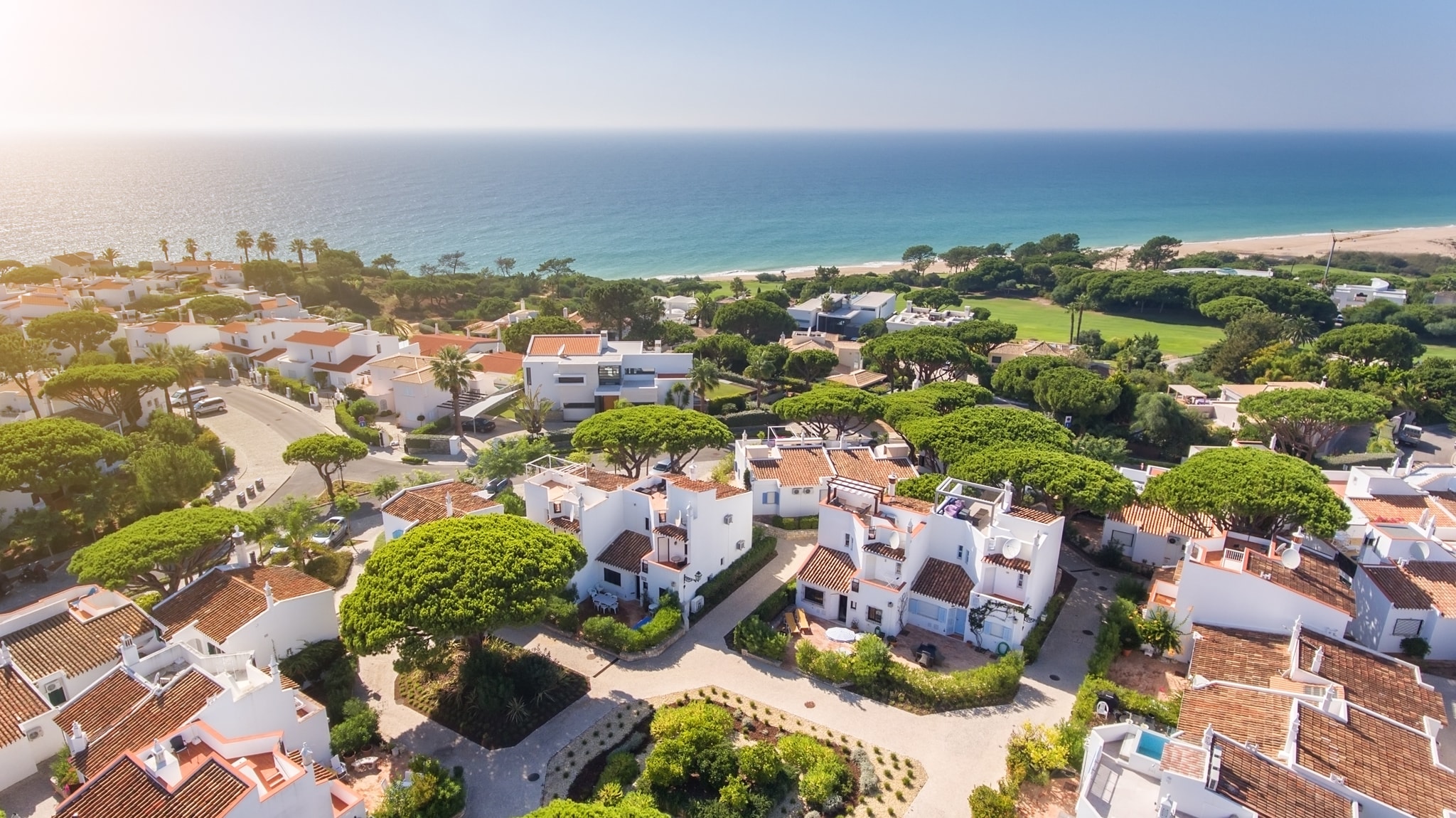
Portugal ranks among the top 5 countries in the Annual Global Retirement Index 2026, with the Algarve remaining its most popular retirement destination[10]Source: International Living — Annual Global Retirement Index 2026
Healthcare in Portugal vs Malta for retirees
Portugal and Malta both offer public and private healthcare, giving retirees a choice between state-funded services and private clinics or hospitals. Public healthcare provides access to essential medical care, while private insurance is commonly used for faster appointments, shorter waiting times, and a wider choice of doctors and specialists.
Quality is strong in both countries. Portugal records preventable mortality of 117 per 100,000, below the OECD average of 145, which suggests solid primary and preventive care[11]Source: OECD — Health at a Glance 2025: Portugal. Malta also performs well: life expectancy is 83.5 years, among the highest in the EU[12]Source: Macrotrends — Life expectancy in Malta.
Portugal healthcare for retirees
The Portuguese public healthcare system is called the Serviço Nacional de Saúde, SNS. D7 and Golden Visa residence permit holders can access it after becoming legal residents. It covers primary care, hospital treatment, emergency care, diagnostic tests, and specialist referrals through the public system.
Retirees register with a local health centre and are assigned a family doctor. For acute issues, primary care should be provided on the same day; for non-acute appointments, the guaranteed maximum response time is 15 working days. Routine appointments are booked through the health centre, by phone, or online, while more complex treatment usually requires a referral from a family doctor.
Most public healthcare services are free. The SNS user fees now mainly apply only to hospital emergency visits if the patient was not referred through SNS and is not admitted afterwards. Before visiting an emergency department, residents are encouraged to contact SNS 24, the national health advice line, where a nurse assesses the situation and directs them to the right service[13]Source: Serviço Nacional de Saúde — End of user charges in the National Health Service.
Prescription medicines are subsidised by the government. Depending on the medicine category, the state usually covers part of the price, commonly in reimbursement tiers of 15%, 37%, 69%, or 90%, so the patient pays the remaining share at the pharmacy[14]Source: Administração Regional de Saúde do Algarve — Medicine reimbursement.
Private health insurance is still required for the residence permit process, with at least €30,000 in medical coverage. Many retirees keep private insurance after registering with the SNS because it gives faster access to private clinics, specialists, diagnostic tests, and English-speaking doctors.
For retirees, private health insurance in Portugal commonly costs around €300—400 per month. Even with insurance, patients may still pay deductibles, co-payments, and expenses for non-covered treatments, dental, optical care, or medicines outside the policy. A GP visit within the insurer’s network may cost around €5—20, while a specialist consultation is usually about €15—40.
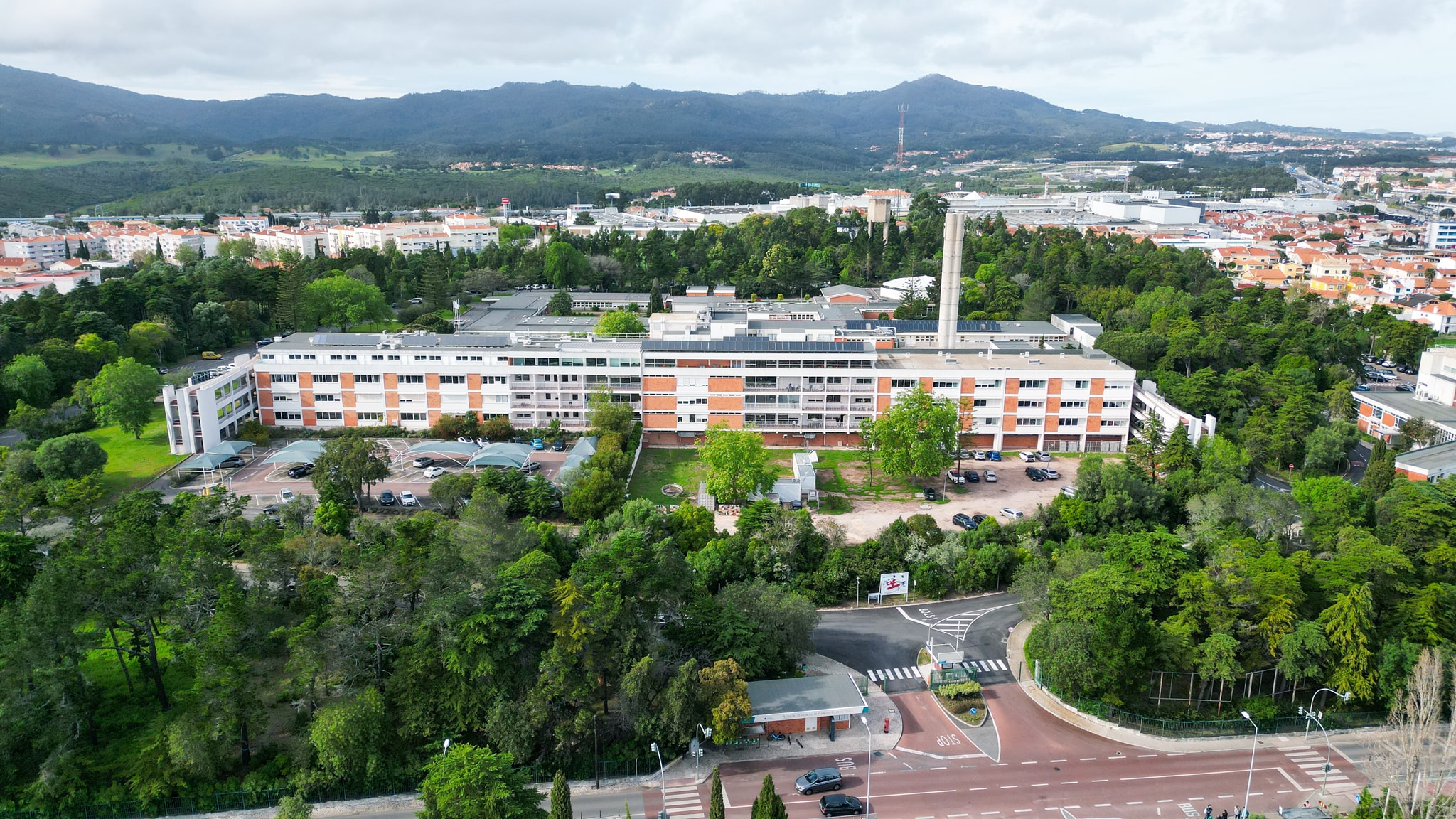
The Alcoitão Rehabilitation Centre near Cascais is Portugal’s leading specialist rehabilitation public hospital, known for neurological, orthopaedic, and spinal recovery[15]Source: Santa Casa da Misericórdia de Lisboa — Centro de Medicina e Reabilitação de Alcoitão
Malta healthcare for retirees
Malta’s public healthcare system is the National Health Service. It is tax-funded and provides state healthcare through health centres, community clinics, and public hospitals, including Mater Dei Hospital. Public care covers GP consultations, emergency care, hospital treatment, specialist referrals, mental health services, and medicines included on the Government Formulary List[16]Source: Directorate for Pharmaceutical Affairs — The Government Formulary List.
GP clinics often work on a walk-in basis. This means patients can come without a booked appointment, take a place in the queue, and wait to see a doctor. Live waiting times are published on the Primary HealthCare Malta website, which makes it easier to choose when and where to go.
Specialist care in the public system usually starts with a GP referral. After that, the patient receives a hospital or specialist appointment. If the appointment is at Mater Dei Hospital, it can often be rescheduled through the hospital’s online eService[17]Source: Servizz.gov — Hospital Appointment Rescheduling Request eForm.
Public healthcare is free for entitled residents. Prescription medicines included in Malta's Government Formulary List are also provided free to eligible patients through government-funded community pharmacies. Medicines not covered by the Formulary List, or for patients without entitlement, are purchased at the patient's own expense.
Private insurance is essential for residence applications, including the Malta Permanent Residence Programme, MPRP, and the Malta Retirement Programme. MPRP applicants need comprehensive health insurance with at least €100,000 coverage per person, valid in Malta and other European countries. In practice, retirees use private clinics and hospitals, where appointments are usually easier to arrange.

Moving to Malta for healthcare and seaside retirement
Tyler, a US retiree and former sales director, wanted a warm, quiet place by the sea where he could slow down after retirement. His main concern was healthcare: after a kidney transplant, he needed daily medication, while insurance in the US was extremely expensive.
Immigrant Invest helped Tyler compare European options and choose the Malta Permanent Residence Programme. It gave him a route to permanent residence in an English-speaking country with affordable private healthcare, while also offering the lifestyle he had hoped for: a mild climate, slower pace, and the sea close by.
Which country is more affordable for retirees: Portugal or Malta?
Cost is one of the factors retirees compare before moving abroad. Overall, Portugal is around 15% less expensive than Malta for everyday expenses and rent combined: a single person spends around €680 per month in Portugal and €780 in Malta, with rent adding about €720 and €860, respectively[18]Source: Numbeo — Cost of living in Malta and Portugal.
Both destinations remain significantly more affordable than the UK and the US. Everyday expenses are about 30% higher in the UK and roughly 50% higher in the US. Compared with Southern Europe, Portugal and Malta are broadly similar to Spain, while Italy is around 10% more expensive.
Portugal vs Malta cost of living comparison

Best places to retire in Malta vs Portugal: choosing by lifestyle
Choosing where to retire is as important as choosing the country. Some retirees want city life with culture, restaurants, and hospitals close by. Others prefer the coast, a warmer winter, or a quieter setting with more space. The best place depends on the rhythm of life a retiree wants after relocation.
Beach and coastal living
Retirees who picture daily walks by the sea, easy access to beaches, marinas, golf courses, and a relaxed pace of life should look at the Algarve in Portugal or Mellieha and Marsaxlokk in Malta.
The Algarve is Portugal's best-known retirement region and the country's most popular destination among foreign retirees. Each city in the region has its own strengths:
- Lagos combines sandy beaches with a lively marina, a walkable historic centre, restaurants, and a well-developed expat community.
- Tavira offers a quieter atmosphere, traditional Portuguese architecture, and easy access to the Ria Formosa Natural Park.
- Albufeira provides year-round amenities, golf courses, and a busy social scene, making it a practical choice for retirees who want both coastal living and everyday convenience.
Mellieha in Malta suits retirees who want a beach lifestyle at a calmer pace. It offers the country's largest sandy beach, hillside residential areas, and coastal walking routes. Another advantage is its proximity to Cirkewwa, where ferries depart every 30 to 45 minutes for Gozo, making regular day trips to the quieter sister island simple. Permanent resident seniors aged 60 and over travel free on the Gozo Channel ferry.
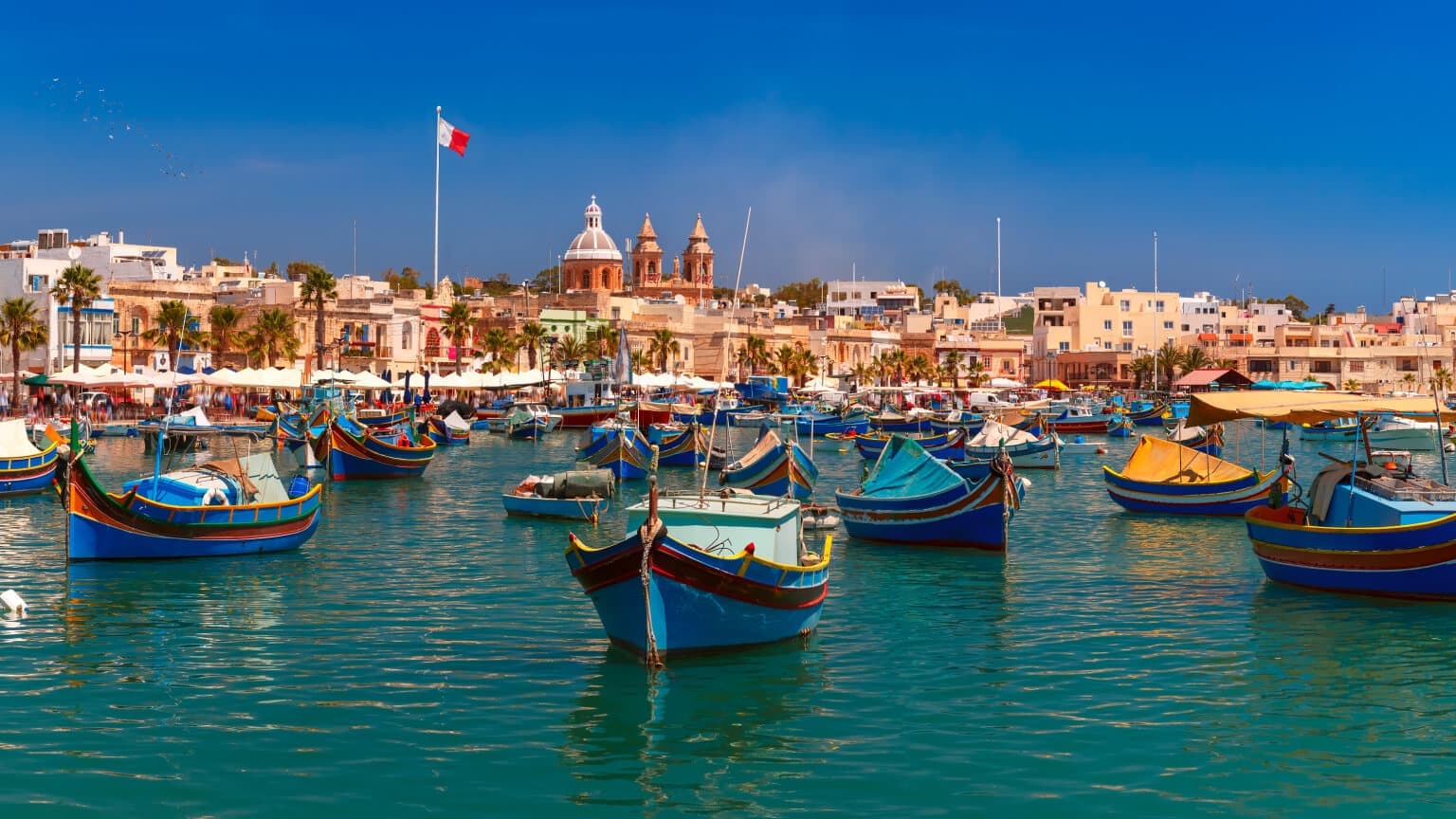
Marsaxlokk, a traditional fishing village, is recognised for its waterfront lined with colourful luzzus, seafood restaurants, and a slower pace centred around the harbour. The village also has easier access to the south coast’s quieter swimming spots, including St Peter’s Pool and nearby rocky coves.
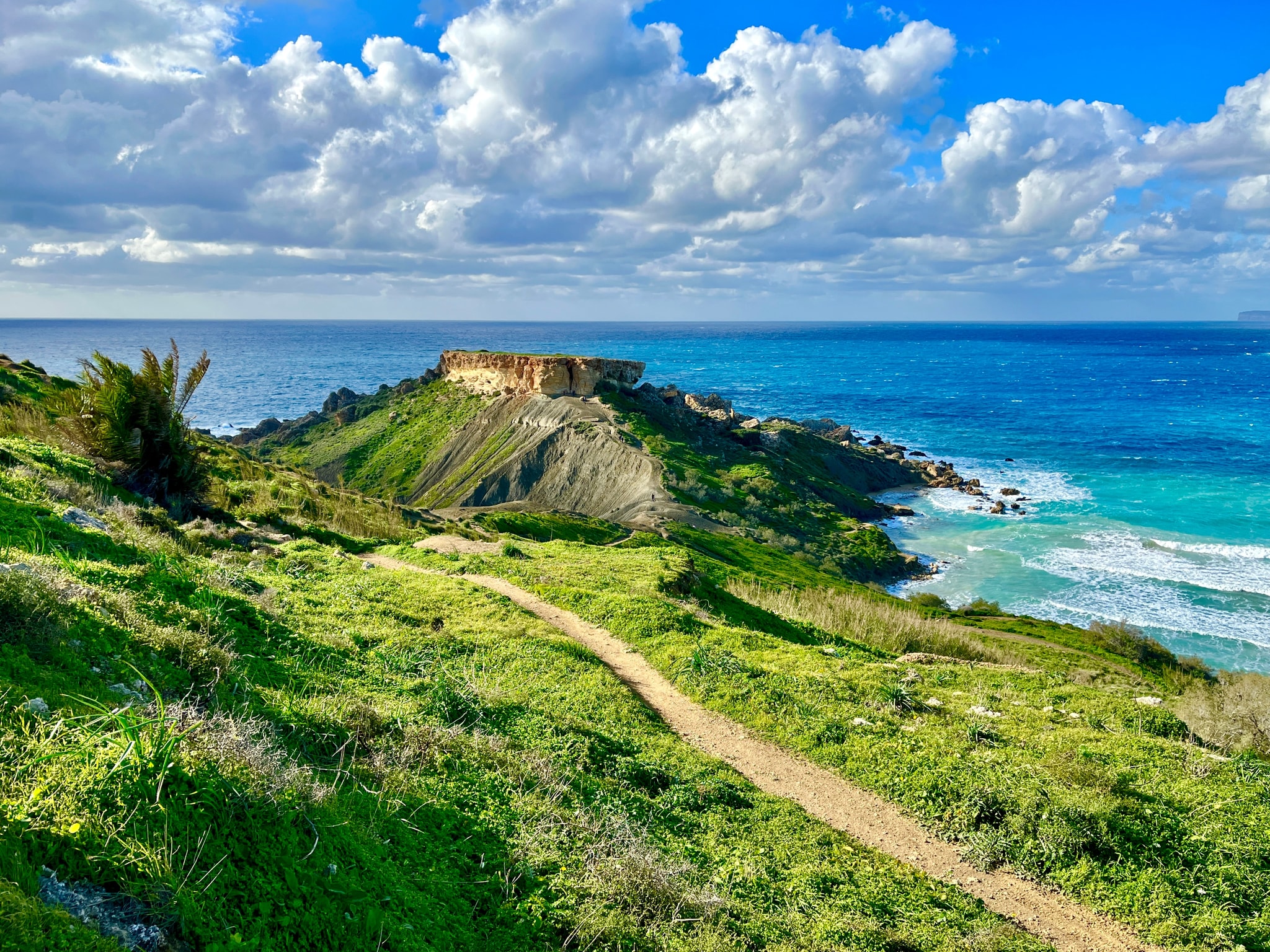
The Mellieha hills offer some of Malta's best coastal walking trails, with panoramic views over Gozo and Comino
Active city lifestyle
Retirees who want everything within easy reach — healthcare, public transport, restaurants, museums, theatres, and an active social life — will feel most comfortable in Lisbon or Porto in Portugal, or Sliema and St Julian's in Malta.
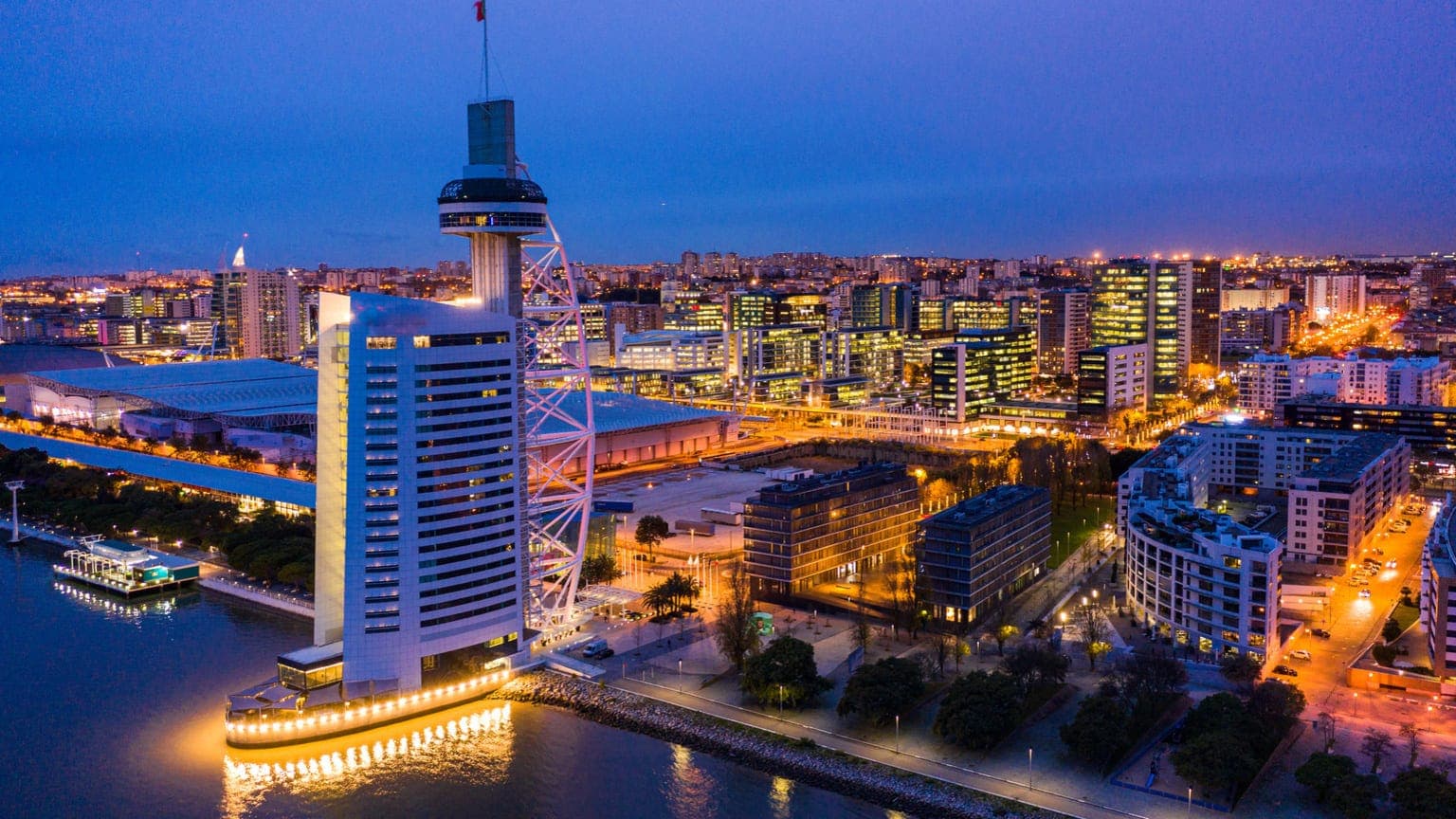
Lisbon is for retirees who like a capital that constantly has something happening. The city is known for its grand riverfront, yellow trams climbing steep streets, tiled façades, and neighbourhoods with distinct personalities. Throughout the year, Lisbon hosts opera, classical music, international film festivals, and open-air events, making it easy to fill the calendar without leaving the city.
Porto feels more intimate and traditional. It is famous for the Douro riverfront, port wine cellars, and one of the world's most beautiful bookshops, Livraria Lello. Life revolves around neighbourhood cafés, local markets, riverside walks, and a cultural calendar. Retirees who enjoy a city with strong local identity often feel more at home here than in Lisbon.
Sliema is Malta's everyday waterfront. Mornings often begin with a walk or swim along the 5-kilometre promenade before cafés fill with regulars. Shopping centres, international restaurants, sailing clubs, gyms, and private clinics are all within a compact area, while Valletta is only a short ferry ride away.
St Julian's is Malta's social centre. Spinola Bay, with its fishing boats and waterfront terraces, remains the heart of the town despite the modern skyline around it. The area is known for fine dining, boutique hotels, rooftop bars, yacht marinas, and a year-round international crowd. Retirees who enjoy meeting people, dining out, and having something happening every evening are likely to feel most at home here.
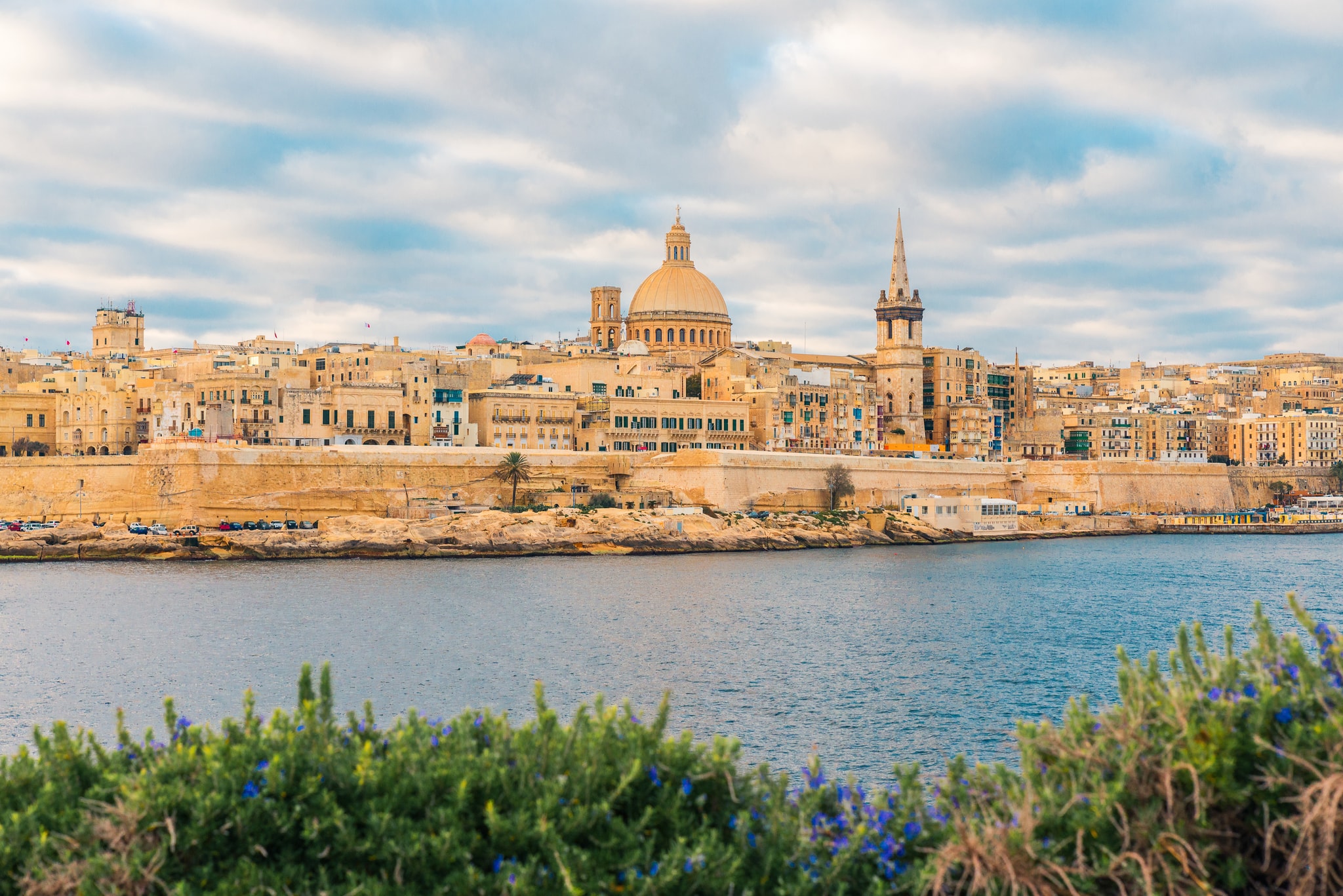
Malta’s continuous seafront promenade runs for around 5 km through Gżira, Sliema, and St Julian’s, offering panoramic views of Valletta’s historic skyline
Culture and history
Retirees who enjoy museums, architecture, theatres, festivals, and UNESCO sites will find the richest cultural settings in Valletta and the Three Cities in Malta. Portugal also has strong choices: Lisbon and Porto fit this profile well, with Coimbra and Évora offering a distinctive rhythm for those who prefer smaller historic cities.
Valletta is both the cultural capital and a UNESCO World Heritage Site. Its appeal lies in baroque palaces, churches, theatres, harbour views, and events such as Notte Bianca — the all-night arts and culture festival — and the Malta International Arts Festival.
The Three Cities across the Grand Harbour — Vittoriosa, Senglea, and Cospicua — offer a quieter version of Malta’s history, with fortified streets, old maritime quarters, yacht marinas, local festas, and some of the island’s most atmospheric waterfronts.
Coimbra is shaped by one of Europe's oldest universities, the Joanina Library, academic ceremonies, student traditions, and student Fado, so daily life feels closely tied to learning, music, and old academic rituals. Throughout the year, the university hosts public lectures, concerts, exhibitions, and cultural events that retirees can easily attend.
Évora is quieter and more architectural: Roman ruins, medieval walls, whitewashed streets, artisan shops, and a UNESCO-listed historic centre make it well suited to retirees who want culture without the pace of a large city. Traditional craft workshops, local food festivals, and nearby wineries add to its relaxed cultural lifestyle.
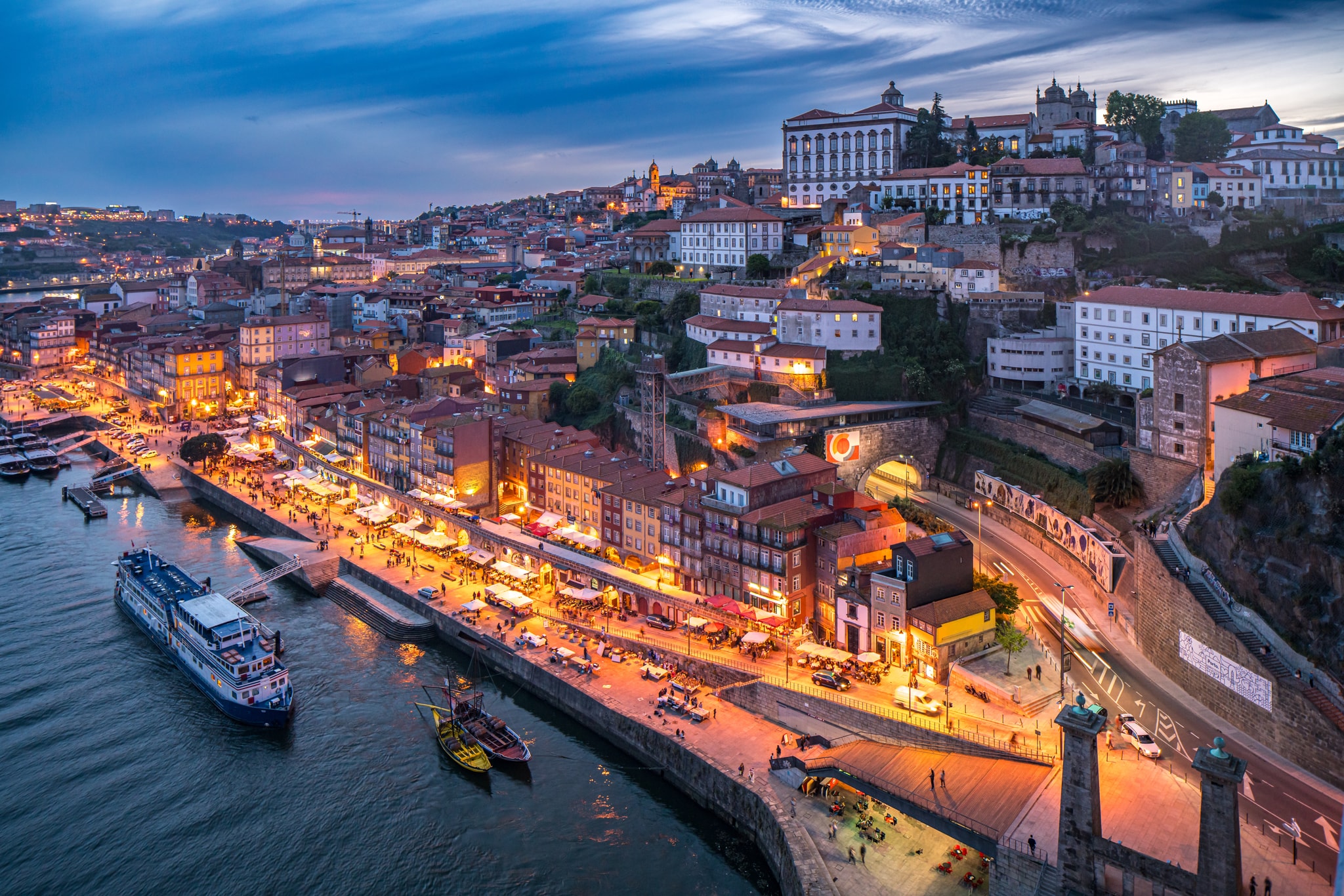
Porto life often centres on Cais da Ribeira, the UNESCO-listed Douro riverfront, with cafés, terraces, and views of the Dom Luís I Bridge
Peace and nature
Retirees who prefer a slower pace, greener surroundings, hiking trails, and fewer crowds should look at the Silver Coast, Madeira, or central Portugal, or choose Gozo in Malta.
Gozo offers Malta’s calmest version of island life. Its appeal lies in rolling countryside, coastal cliffs, traditional villages, walking trails, and a gentler daily rhythm shaped by village squares, local cafés, and small harbours rather than busy waterfronts.
Regular ferries keep Gozo closely connected to Malta, so retirees can reach the main island for specialist healthcare, shopping, or other services when needed.
The Silver Coast offers a quieter Atlantic version of seaside retirement. Life here is less resort-like than in the Algarve: retirees can live near fishing towns, wide beaches, pine-fringed roads, and historic places such as Óbidos, while still staying within reach of Lisbon. Nazaré adds a more dramatic coastal character, known for its giant waves and strong fishing traditions.
Central Portugal suits retirees who want space, nature, and a more local rhythm. Daily life is shaped by small towns, weekly markets, village festivals, vineyards, and river beaches rather than large resorts. It is also one of the best choices for those who want lower living costs and a closer connection with traditional Portuguese life.
Madeira feels unlike anywhere else in Portugal. Its spring-like climate, volcanic mountains, famous levada trails, botanical gardens, and dramatic ocean viewpoints create an outdoor lifestyle throughout the year. Funchal, Madeira’s capital, also adds theatres, markets, concerts, and a lively waterfront, allowing retirees to enjoy nature without feeling isolated.

Madeira also stands out for clean Atlantic air and its UNESCO-listed Laurisilva Forest, a rare surviving laurel forest once widespread across southern Europe
How retirees are taxed in Portugal and Malta: key rules
Taxes can significantly affect the cost of retirement abroad, especially for those relying on foreign pensions or investment income. Portugal and Malta follow different approaches to tax residence and the taxation of foreign income, so the overall tax burden may vary even if the residence status is similar.
Tax residence triggers
Holding a residence permit in Portugal or Malta does not automatically make a retiree a tax resident. Immigration status and tax residence are separate matters. Tax residence usually arises when a retiree:
- spends enough time in the country, typically 183 days or more in a year;
- or establishes a habitual residence there, such as maintaining a permanent home and making the country the centre of their personal and economic interests[19]Source: PwC — Tax residence in Portugal, MTCA — Tax residence in Malta.
Once retirees become tax residents, Portugal taxes their worldwide income, including foreign pensions. Malta applies a different approach for non-domiciled residents: Maltese-source income is taxable, while foreign income is usually taxed only when brought into Malta.
Foreign pension income taxation
In Portugal, foreign pensions are taxed at the standard progressive personal income tax rates of 12.5 to 48%, with the rate rising as income increases:
- up to €8,059 → 12.5%;
- €8,059—12,160 → 15.7%;
- €12,160—17,233 → 21.2%;
- €17,233—22,306 → 24.1%;
- €22,306—28,400 → 31.1%;
- €28,400—41,629 → 34.9%;
- €41,629—44,987 → 43.1%;
- €44,987—83,696 → 44.6%;
- €83,696+ → 48%.
Other local income in Portugal, such as rent, employment income, or business income, is taxed under the same progressive scale[20]Source: Portuguese Tax and Customs Authority — Personal Income Tax Code.
In Malta, foreign pension income brought into the country is taxed at progressive rates of 0 to 35%. For single taxpayers, the rates are:
- 0% up to €12,000;
- 15% on €12,001—16,000;
- 25% on €16,001—60,000;
- 35% above €60,000.
Married couples and parents have different thresholds, which may be beneficial if the retiree qualifies. Local income in Malta, including rent from Maltese property or business income earned in the country, is also taxed at progressive rates of 0 to 35%[21]Source: MTCA — Tax Rates for Individuals.
Retirees who qualify for the Malta Retirement Programme may instead pay a 15% flat tax on foreign income remitted to Malta, subject to the programme’s minimum annual tax requirement.

Mohamed Zakaria,
Senior Investment Migration Expert
Malta has a special non-domiciled tax regime: foreign income, including pensions, dividends, rental income, and business profits, can be taxed only if it is brought into Malta, for example transferred to a Maltese bank account or used for spending in the country. Income kept abroad is not taxed in Malta. Foreign capital gains are exempt even if the proceeds are transferred to Malta[22]Source: MTCA — The Remittance Basis of Taxation for Individuals under the Income Tax Act.
The regime is available to individuals who become Maltese tax residents without acquiring a Maltese domicile, which is the case for most foreign retirees relocating to Malta. As a result, many retirees can receive or keep part of their foreign income outside Malta without Maltese tax.
How do Portugal and Malta retirement residence routes compare?
Portugal and Malta offer four main retirement residence routes, each with a different purpose and level of commitment. The comparison below focuses on the key criteria retirees usually weigh: eligibility, financial requirements, family inclusion, stay rules, permit validity, employment rights, and tax-residence triggers.
Eligibility criteria
General requirements. Portugal and Malta residence routes for retirees have their own focus. Still, they expect applicants to meet a similar basic profile:
- Have a clean criminal record.
- Hold valid health insurance.
- Prove the legal source of income.
- Provide proof of housing — except for the Portugal Golden Visa.
Additional requirements differ by route. For the Portugal Golden Visa, investors must have no debts in Portugal, and the investment funds must come from outside the country.
For the Malta Retirement Programme, applicants must be able to communicate adequately in one of Malta’s official languages, English or Maltese.
Retirees must also not be domiciled in Malta and must not intend to establish domicile there within 5 years of applying. In practice, a retiree may live in Malta, rent or buy property there, and pay tax, while still keeping long-term legal ties to another country — such as family, estate planning, or the intention to return there permanently in the future.
Trusted by 10,000+ investors
Check your eligibility for Malta permanent residence
Family inclusion
Spouses and partners can be included under all four retirement routes in Portugal and Malta. For unmarried partners, the relationship must be a legally recognised stable union, not an informal relationship. Under the Portugal Golden Visa, the partnership must also have lasted for at least 2 years.
Children may qualify under all four residence options. Minor children under 18 are generally eligible.
Adult children must usually be unmarried, financially dependent on the main applicant, and meet programme-specific conditions:
- Portugal Golden Visa — up to 25, live with the investor or study at university.
- Portugal D7 Visa — up to 21.
- Malta MPRP — up to 29.
Disabled children who cannot support themselves typically qualify regardless of age.
Parents can be added under all routes except the Malta Retirement Programme. They usually need to be principally dependent on the main applicant. In Portugal, parents over 65 are exempt from proving financial dependence.
Grandparents can be included under the MPRP, which makes it the best option for multi-generational families.
Household staff are a unique advantage of the Malta Retirement Programme. The employee must have a formal employment relationship with the applicant and provide services required by the household.
Mohamed Zakaria,
Senior Investment Migration Expert
The Malta Permanent Residence Programme can extend family planning further than applicants might expect. Once a retiree obtains the permit and their adult dependent child is approved, that child’s spouse and minor children may also qualify. This means the programme can cover not only children but, post-approval, grandchildren as well. The additional fee is €10,000 per person.
Financial requirements
Financial requirements differ sharply between the four retirement routes. Portugal offers either an income-based option or an investment route, while Malta focuses on investment, property, pension income, and tax commitments.
The Portugal D7 Visa is the most accessible route financially. Applicants must prove passive income from outside Portugal of at least €920 per month, or €11,040 per year, for the main applicant.
The required amount increases by 50% for a spouse or dependent parent and by 30% for each child. Applicants also need savings of at least €11,040.
The Portugal Golden Visa requires an investment in the Portuguese economy. The available options include:
- Artistic production or cultural heritage support — €250,000, or €200,000 for projects in designated low-density areas.
- Investment funds — €500,000.
- Research activities in national scientific and technological institutions — €500,000.
- Commercial company formation or capital reinforcement — at least €500,000, plus creating 5 jobs.
- Job creation — at least 10 jobs, or 8 jobs in low-density areas, with no minimum investment threshold.

The Malta Permanent Residence Programme requires several financial commitments: renting or buying property, paying government fees, and making a charitable donation to a Maltese non-governmental organisation.
The minimum annual rent is €14,000, while the minimum property purchase is €375,000. Property must be rented or owned for at least 5 years. After that, no minimum property threshold applies, but the applicant must still maintain a residential address in Malta.
Additional MPRP costs include:
- Contribution fee — €37,000.
- Administration fee — €60,000 for the main applicant and €7,500 per adult family member, except the spouse.
- Charitable donation — at least €2,000.
In total, retirees need at least €169,000 if they rent property and around €474,000 if they buy one.
Applicants must also prove sufficient assets. The main applicant must show at least €500,000 in total assets, including €150,000 in financial assets, or at least €650,000 in total assets, including €75,000 in financial assets.
Mohamed Zakaria,
Senior Investment Migration Expert
A Golden Visa does not always have to be funded by cash sitting in a bank account. Long-term savings accumulated over a career — including US retirement accounts such as a 401(k) or 403(b) — may form part of the wealth used for a relocation strategy.
The Malta Retirement Programme is built around pension income rather than investment. Applicants must receive a pension that makes up at least 75% of their chargeable income.
There is no fixed minimum pension amount, but Immigrant Invest sees the strongest benefit for retirees with annual pensions above €50,000. At this level, the 15% flat tax on pension income remitted to Malta can start offering real advantages over progressive tax systems in other countries.
Retirees with pensions between €80,000 and 200,000 usually receive the biggest tax benefits under the MRP. For those earning less than €50,000, the mandatory annual tax of €7,500 may outweigh the savings.
The MRP also requires several financial commitments:
- paying an application fee — €2,500;
- paying a minimum annual tax — €7,500 for the main applicants and €500 per dependant;
- renting or buying property.
Real estate requirements vary by option:
- lease agreement — €8,750+ per year in Gozo and southern Malta, or €9,600+ in other regions;
- property purchase — €220,000+ in Gozo and southern Malta, or €275,000+ in other regions.
Thus, the total commitment under the MRP starts from €18,750 if renting property and €230,000 if purchasing one.
Stay requirement
Portugal and Malta residence routes for retirees differ by how much time they must actually spend in the country, allowing them to choose between a flexible residence option and a more settled relocation route.
The Portugal Golden Visa and the MPRP do not require full-time residence. In Portugal, retirees need to spend only 7 days a year in the country, while the MPRP is even more flexible and has no minimum-stay obligation. Therefore, tax residence under these programmes is optional.
However, both statuses require the investment to remain in place. In Malta, the Residency Malta Agency also conducts annual compliance checks during the first 5 years after approval, including whether the property is still rented or owned.
The Portugal D7 Visa requires genuine relocation. Holders cannot be absent from Portugal for more than 6 consecutive months or 8 non-consecutive months during each 2-year permit period, so retirees using this route are expected to become Portuguese tax residents.
The Malta Retirement Programme requires Malta to become the applicant’s real base. Retirees must spend at least 90 days a year in Malta, averaged over any 5-year period, and must not spend more than 183 days in any other single jurisdiction during a calendar year.
Work and business rights
The Portugal Golden Visa offers the most freedom: holders can work in Portugal, run a business, or keep their main professional activity abroad.
The Portugal D7 Visa is different. It is intended for retirees and financially independent applicants who live on passive income from abroad. However, once the residence permit is issued, holders may work, become self-employed, or start a business in Portugal.
The MPRP grants residence first, not automatic work rights. Retirees who want to work or run a business in Malta need separate authorisation.
The Malta retirement visa is the strictest option. Beneficiaries cannot be employed in Malta, although non-executive roles on company boards may be allowed.
Malta vs Portugal retirement residence options at a glance
What documents are required for retirement residence in Portugal and Malta?
Although each retirement residence route in Portugal and Malta has its own requirements, the document package is broadly similar. Additional documents depend on whether residence is based on passive income, pension, or investment.
Documents issued outside the destination country need to be apostilled or otherwise legalised. If they are not in Portuguese, Maltese, or English, a certified translation is also required.
Basic documents
Portugal and Malta retirement residence routes require a core set of documents proving identity, family status, financial standing, and good character. In most cases, applicants need to provide:
- Valid passport and photographs.
- Birth certificate and, where applicable, marriage certificate.
- Police clearance certificate or proof of no criminal record.
- Health insurance.
- Proof of accommodation in the destination country — except for the Portugal Golden Visa.
- Documents confirming the source of income or wealth.
Route-specific documents
Some documents depend on the selected route. For the Portugal D7 Visa and the Malta Retirement Programme, the focus is on income: applicants usually provide pension certificates, bank statements, tax returns or other proof of regular income, and documents confirming that they can support themselves.
For the Portugal Golden Visa and the Malta Permanent Residence Programme, the focus shifts to investment and wealth verification. Applicants submit proof of the investment, source-of-wealth and source-of-funds documents, and evidence that they meet the required asset or capital thresholds.
There are also procedural differences. Portugal applicants usually need a Portuguese tax number and a Portuguese bank account.
Malta vs Portugal retirement residence permit real cost: what you actually spend
Portugal and Malta residence permit budgets include more than headline investment or income requirements. Retirees also need to plan for investment-related expenses, application fees, card issuance, insurance, document preparation, tax numbers, and renewals.
Investment-related fees
Depending on the chosen route, retirees may face investment-related costs, such as fund subscription fees, property purchase taxes, notary fees, or ongoing municipal property taxes.
Malta property purchase. Retirees who choose to buy property under either the Malta Permanent Residence Programme or the Malta Retirement Programme should budget for acquisition costs. Stamp duty, notary fees, and related charges amount to around 7% of the property value.
For MPRP applicants, these costs start at approximately €26,250, and for Malta Retirement Programme participants — at around €16,100.
Portugal Golden Visa funds. Fund investment involves a subscription fee which may reach up to 3% depending on the fund.
Portugal D7 Visa with property purchase. If a retiree buys a home in Portugal, stamp duty is charged at 0.8% of the property value at purchase. Owners also pay annual municipal property tax, generally 0.3—0.8% of the property value.
Application and residence permit fees
The Portugal Golden Visa application fee is paid when the Golden Visa file is submitted to the Agency for Integration, Migration and Asylum, AIMA:
- Application fee — €632.10 per applicant.
- Residence permit fee — €6,314.20 per applicant.
The MPRP does not have a standalone application fee. Instead, residence card fee is €500 per applicant, paid when the card is issued and again on renewal every 5 years.
The MRP application fee is €2,500.
The D7 process includes two stages: first, the applicant applies for a national visa at a Portuguese consulate in their country of residence; then, after entering Portugal, they apply for a residence permit. The main government fees are:
- D7 Visa application fee — €110 per applicant.
- Residence application fee — €99.80 per applicant.
- Residence permit card issuance fee — €85.80 per applicant.
Additional expenses
Retirees should also budget for the practical costs needed to prepare and support the application:
- Health insurance — €300—400 per month per person.
- Translation, notarisation, legalisation, and apostilles — €2,000+ per application.
Both Portugal retirement routes require applicants to obtain a Portuguese tax identification number, NIF, which costs around €280 per applicant.
For the Portugal D7 Visa, applicants should also budget for a Portuguese social security identification number, NISS, at about €280, and travel insurance for the visa stage, starting from €150 per applicant.
Renewal costs
At each renewal, retirees pay government fees for every family member included in the application:
- Portugal Golden Visa permit — €3,157.80.
- Portugal D7 Visa permit — €185.60.
- MPRP residence card — €500.
Which retiree profile fits Portugal or Malta best?
The right route becomes clearer when matched to the household profile: income source, savings, family structure, appetite for relocation, and preferred pace of life. Portugal and Malta both suit retirees, but they answer different needs.
Retirees who value simplicity and an easy daily routine
Malta appeals to those who prefer life to be straightforward. The island is compact, services are close by, English is an official language, and daily errands rarely require long journeys. Healthcare, pharmacies, supermarkets, cafés, and waterfront promenades are often within walking distance.
For retirees who already rely on pension income and want to settle quickly into a familiar English-speaking environment, the Malta Retirement Programme can be particularly attractive.
The first permit is valid for 1 year, so it can work as a comfortable trial period: retirees can experience daily life in Malta and decide whether the country suits them before making a longer commitment, with initial expenses of around €20,000. This is more flexible than the MPRP, where the property must be rented or owned for 5 years from the outset.
International families planning for the long term
For some retirees, the goal is not just relocation, but a stable base for the family. The Malta Permanent Residence Programme is the strongest fit here: it combines permanent residence, broad family inclusion, and no minimum stay requirement.
Adult children up to 29, parents, and even grandparents may qualify under the same application, helping several generations stay connected. After approval, minor grandchildren may also be added.
Retirees looking to optimise taxes
Tax can make a noticeable difference to retirement income, especially for those receiving foreign pensions or investment returns. Malta offers flexibility through two tax options:
- Non-dom regime: foreign income kept outside Malta is not taxed there.
- Malta Retirement Programme: foreign income remitted to Malta is taxed at a flat rate of 15%.
The better option depends on the retiree’s income sources and wider relocation plans.
Retirees living on a modest pension
Retirees who rely mainly on a modest pension can consider the Portugal D7 Visa. With an income requirement of €920 per month, it offers a relatively accessible path to full-time relocation.
Outside Lisbon, Porto, and the Algarve, everyday living costs are lower than in Malta, while housing can be around 40% cheaper, depending on the region. The D7 Visa is therefore especially attractive for retirees who want to settle in Portugal without high relocation costs or a large investment.
Retirees who want variety, space, and choice
Portugal suits retirees who see retirement as a new chapter rather than a slowdown. Life can look very different depending on where they settle: the Algarve for beaches and golf, Lisbon for culture and international connections, Porto for a cooler climate and wine country, or Madeira for island living.
The Portugal D7 Visa is often the natural fit for retirees with stable pension or passive income who are ready for full relocation. The Portugal Golden Visa works better for retirees who value flexibility and have larger savings available for investment. In some cases, these funds may come from long-term retirement accounts, such as a Roth IRA for US applicants.

Calm retirement in Portugal after years abroad
Nayana and Joshua had spent 30 years moving between countries for work. When their contracts in South Korea ended, they wanted to retire somewhere safe, calm, warm, and close to the sea. South Korea did not feel like home, and the US was too expensive for the lifestyle they wanted.
Immigrant Invest helped them choose the Portugal D7 Visa, as the couple had enough passive income from pensions and rentals. Nayana and Joshua received their residence cards in almost 7 months and settled in Porto.
How to obtain retirement residence in Portugal and Malta: step-by-step application process
The application process is relatively straightforward under all four routes, but the timelines vary. Based on Immigrant Invest's experience:
- MPRP and Portugal D7 Visa take about 6 months;
- Portugal Golden Visa is the longest route and often requires 12 months or more.
One key difference is when the financial commitments are made. Under the Portugal residence routes, the main financial steps are completed before the application is submitted. The MPRP and Malta Retirement Programme work differently: requirements are fulfilled after approval.
The MPRP also offers a unique option unavailable under the other routes: applicants may obtain a temporary 1-year residence permit while their permanent residence application is being prepared and processed.
1 day
Preliminary Due Diligence
All routes start with a confidential preliminary Due Diligence check by Immigrant Invest. Certified AML officers screen the applicant through international databases before any documents are prepared, so potential risks can be spotted early.
The check takes 1 business day and helps reduce the risk of refusal to around 1%.
All routes start with a confidential preliminary Due Diligence check by Immigrant Invest. Certified AML officers screen the applicant through international databases before any documents are prepared, so potential risks can be spotted early.
The check takes 1 business day and helps reduce the risk of refusal to around 1%.
2—3 weeks
Preparing documents and local registrations
Immigrant Invest lawyers prepare an individual document checklist, assist with translations, notarisation, and application forms.
For both Portuguese routes, applicants also obtain a Portuguese taxpayer number, NIF. It is required to open a bank account, rent or buy property, and complete various administrative procedures.
Immigrant Invest lawyers prepare an individual document checklist, assist with translations, notarisation, and application forms.
For both Portuguese routes, applicants also obtain a Portuguese taxpayer number, NIF. It is required to open a bank account, rent or buy property, and complete various administrative procedures.
1 week to 2 months
Arranging finances, accommodation, and investments
This stage varies significantly by programme. Portugal Golden Visa applicants obtain a NIF, open a Portuguese bank account, and complete an investment.
Portugal D7 applicants open a Portuguese bank account, transfer sufficient funds to support themselves and their family for 1 year, and rent or purchase accommodation in Portugal.
Malta Retirement Programme applicants prepare to rent or purchase property and demonstrate pension income.
Malta MPRP applicants do not make financial contributions at this stage.
This stage varies significantly by programme. Portugal Golden Visa applicants obtain a NIF, open a Portuguese bank account, and complete an investment.
Portugal D7 applicants open a Portuguese bank account, transfer sufficient funds to support themselves and their family for 1 year, and rent or purchase accommodation in Portugal.
Malta Retirement Programme applicants prepare to rent or purchase property and demonstrate pension income.
Malta MPRP applicants do not make financial contributions at this stage.
1 day to 1 week
Submitting the application
Applications are submitted to the relevant authority:
- Portugal Golden Visa applications are filed electronically with the Agency for Integration, Migration and Asylum, AIMA.
- Portugal D7 applicants apply for a D7 Visa through a Portuguese consulate in their country of residence.
- Malta MPRP applications are submitted to the Residency Malta Agency. The first €15,000 instalment of the administration fee is payable.
- Malta Retirement Programme applications are submitted to the International & Corporate Tax Unit together with a non-refundable €2,500 application fee.
Applications are submitted to the relevant authority:
- Portugal Golden Visa applications are filed electronically with the Agency for Integration, Migration and Asylum, AIMA.
- Portugal D7 applicants apply for a D7 Visa through a Portuguese consulate in their country of residence.
- Malta MPRP applications are submitted to the Residency Malta Agency. The first €15,000 instalment of the administration fee is payable.
- Malta Retirement Programme applications are submitted to the International & Corporate Tax Unit together with a non-refundable €2,500 application fee.
3—6 months
Government review
Authorities review the application and verify eligibility:
- Malta Retirement Programme is usually processed within about 3 months.
- MPRP requires one of the most extensive Due Diligence procedures in the EU and takes 3 to 6 months.
- Portugal D7 Visa application is reviewed by the consulate and can take up to 4 months.
- Portugal Golden Visa application is reviewed by AIMA. The route is usually the longest, as review, biometric scheduling, and card issuance can extend the process to 12+ months.
Additional information or documents may be requested under any programme.
Authorities review the application and verify eligibility:
- Malta Retirement Programme is usually processed within about 3 months.
- MPRP requires one of the most extensive Due Diligence procedures in the EU and takes 3 to 6 months.
- Portugal D7 Visa application is reviewed by the consulate and can take up to 4 months.
- Portugal Golden Visa application is reviewed by AIMA. The route is usually the longest, as review, biometric scheduling, and card issuance can extend the process to 12+ months.
Additional information or documents may be requested under any programme.
Within 8—12 months, depending on the route
Fulfilling programme requirements after approval
After receiving approval, applicants complete the remaining programme conditions.
For the Portugal D7 Visa, approval at the consular stage gives the applicant a national D7 Visa valid for 4 months. During this period, the applicant must enter Portugal and apply for a residence permit at AIMA.
For the Malta MPRP, applicants receive Approval in Principle and then fulfil the programme requirements. The remaining administration fee of €45,000 must be paid within 2 months, while other contributions must be completed within 8 months of approval. Once the conditions are met, the applicant receives a Permanent Residence Certificate.
For the Malta Retirement Programme, the retiree has up to 12 months to rent or purchase property and fulfil tax-payment obligations. After proof is submitted together with the signed Notice of Primary Residence, the Commissioner for Revenue issues the Letter of Confirmation.
After receiving approval, applicants complete the remaining programme conditions.
For the Portugal D7 Visa, approval at the consular stage gives the applicant a national D7 Visa valid for 4 months. During this period, the applicant must enter Portugal and apply for a residence permit at AIMA.
For the Malta MPRP, applicants receive Approval in Principle and then fulfil the programme requirements. The remaining administration fee of €45,000 must be paid within 2 months, while other contributions must be completed within 8 months of approval. Once the conditions are met, the applicant receives a Permanent Residence Certificate.
For the Malta Retirement Programme, the retiree has up to 12 months to rent or purchase property and fulfil tax-payment obligations. After proof is submitted together with the signed Notice of Primary Residence, the Commissioner for Revenue issues the Letter of Confirmation.
1 day
Submitting biometrics
All four retirement residence routes require applicants to submit biometrics in person in Portugal or Malta. At this stage, authorities collect fingerprints and verify original documents before issuing the residence card.
All four retirement residence routes require applicants to submit biometrics in person in Portugal or Malta. At this stage, authorities collect fingerprints and verify original documents before issuing the residence card.
4 weeks to 8 months
Receiving residence cards
The final stage is receiving the residence permit. In Malta, for both the Malta Retirement Programme and the MPRP, residence cards are usually issued within around 4 weeks after biometrics.
Portugal D7 residence cards are issued within 6—8 months after the residence permit application in Portugal.
Portugal Golden Visa cards are generally granted within 6 months after biometrics and approval.
The final stage is receiving the residence permit. In Malta, for both the Malta Retirement Programme and the MPRP, residence cards are usually issued within around 4 weeks after biometrics.
Portugal D7 residence cards are issued within 6—8 months after the residence permit application in Portugal.
Portugal Golden Visa cards are generally granted within 6 months after biometrics and approval.
Risks and pitfalls retirees should consider before choosing Portugal or Malta
Retirement residence is a long-term decision, and the right programme depends on more than eligibility and cost. Before applying for residence permit in Portugal or Malta, retirees should understand the practical risks that can affect timelines, finances, tax obligations, and future flexibility.
Rules can change
Residence programmes are updated over time, and requirements may differ by the time an applicant is ready to file. Portugal removed residential real estate from the Golden Visa investment options in 2023, while Malta revised the MPRP’s fees in 2025.
For the Portugal D7 Visa, the income threshold also changes over time because it is tied to the Portuguese minimum wage, which is reviewed annually. This means the required passive income increases from year to year.
Any long-term plan should allow for possible changes in thresholds, eligible routes, or filing conditions.
Processing can take longer than expected
Government timelines do not always reflect reality. Portugal's Golden Visa process, in particular, has experienced delays due to AIMA backlogs. Retirees planning a move should build flexibility into their timeline and avoid making irreversible decisions based on the fastest published processing estimates.
Real cost is higher than the headline figure
Minimum investment thresholds and government fees are only part of the picture. Professional fees, property costs, health insurance, translations, notarisation, renewals, and travel expenses all add to the overall budget.
Tax residence may arise unexpectedly
One of the most common mistakes is focusing on immigration rules without considering tax consequences. Spending enough time in Portugal or establishing a habitual residence there can trigger Portuguese tax residence and potential taxation on worldwide income.
The same applies to Malta, although the Malta Retirement Programme operates under a special remittance-based tax regime that can be more favourable for many retirees. Professional tax advice before relocation is often more valuable than advice after the move.
Source-of-funds checks are becoming stricter
Both Malta and Portugal require applicants to demonstrate the lawful origin of their funds. Large gifts, complex investment portfolios, old business transactions, or incomplete records can create delays and requests for additional evidence. Preparing documentation early helps avoid problems later in the process.
Investment risk remains with the applicant
This applies primarily to the Portugal Golden Visa fund route. Residence approval does not guarantee investment performance. The funds can underperform, and capital is often tied up for several years. Retirees should evaluate any investment on its own merits rather than viewing it solely as a residence solution.
Ongoing compliance matters
Obtaining residence is not always the end of the process. The MPRP residents must continue meeting programme requirements after approval, while Portuguese residence holders must satisfy renewal conditions and comply with stay requirements. Failing to meet ongoing obligations can put the status at risk.
How Immigrant Invest can help with Portugal and Malta retirement residence
Immigrant Invest has specialised in residence and citizenship by investment since 2006. Over the past 20 years, we have helped more than 10,000 investors and their families obtain residence permits and second citizenships in Europe, the Caribbean, and other jurisdictions.
We handle the practical steps of the application, helping retirees to:
- choose the right route based on income, savings, family plans, tax position, and relocation goals;
- pass preliminary Due Diligence before government fees are paid;
- prepare and legalise documents, including translations, notarisation, and apostilles;
- obtain a Portuguese NIF and open a bank account;
- respond to government requests during review;
- select investments or property options;
- complete biometrics, receive residence cards, renew permits, and meet post-approval compliance rules.
Key takeaways: Malta vs Portugal retirement residence
- Both Portugal and Malta are appealing retirement destinations, with mild climates, high safety levels, widespread English, large expat communities, and rich natural and cultural life.
- Portugal offers more regional, natural, and cultural variety, with lower-cost areas and a wider choice of lifestyles.
- Malta suits retirees who want compact living, English-speaking daily life, and services within short distances.
- Malta may offer more tax flexibility through its non-dom regime and the Malta Retirement Programme.
- Retirees relying on pension income can consider the Portugal D7 Visa or the Malta Retirement Programme, while wealthier pensioners may look at the Portugal Golden Visa or the MPRP.
Immigrant Invest is a licensed agent for citizenship and residence by investment programs in the EU, the Caribbean, Asia, and the Middle East. Take advantage of our global 15-year expertise — schedule a meeting with our investment programs experts.