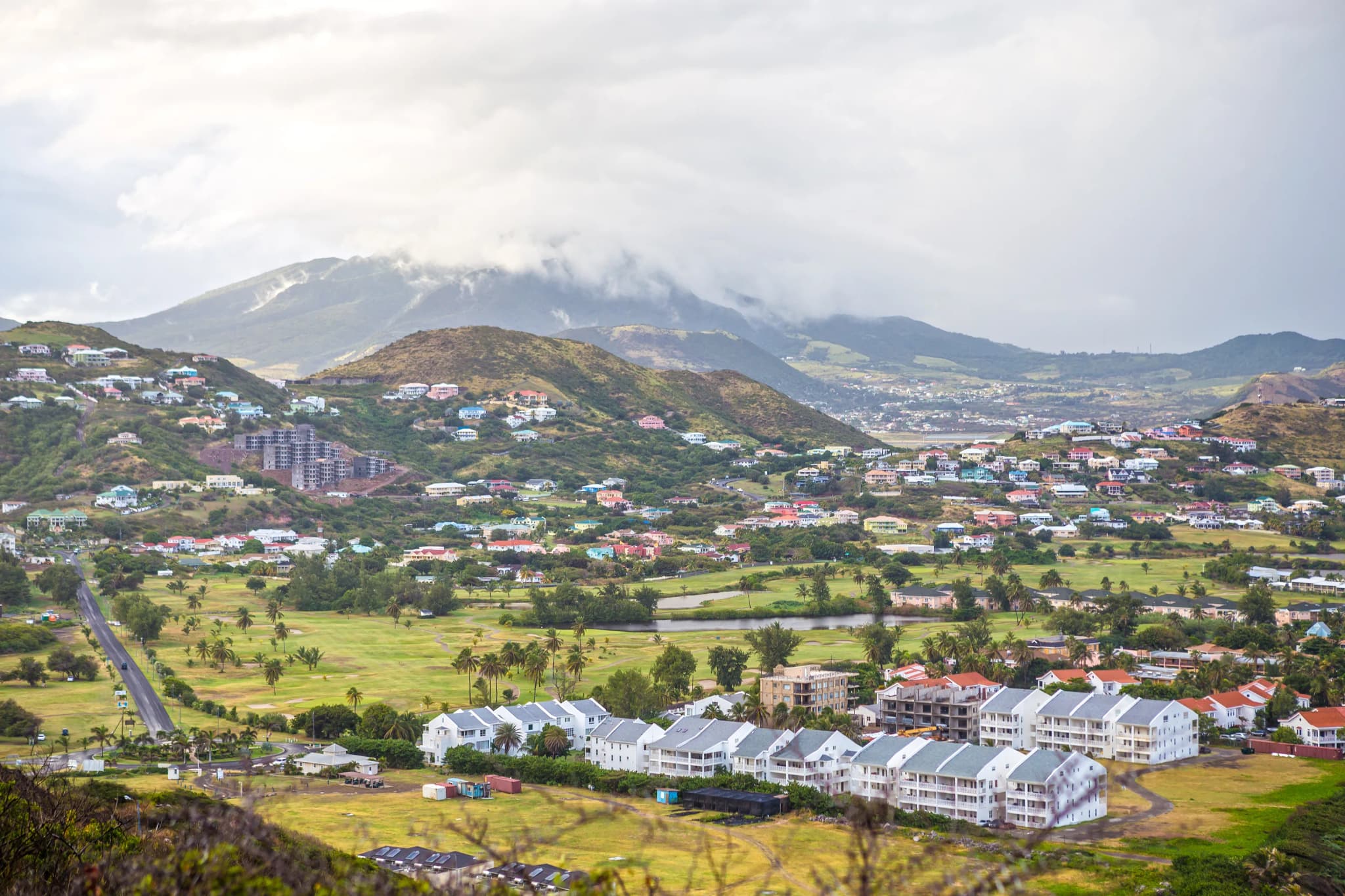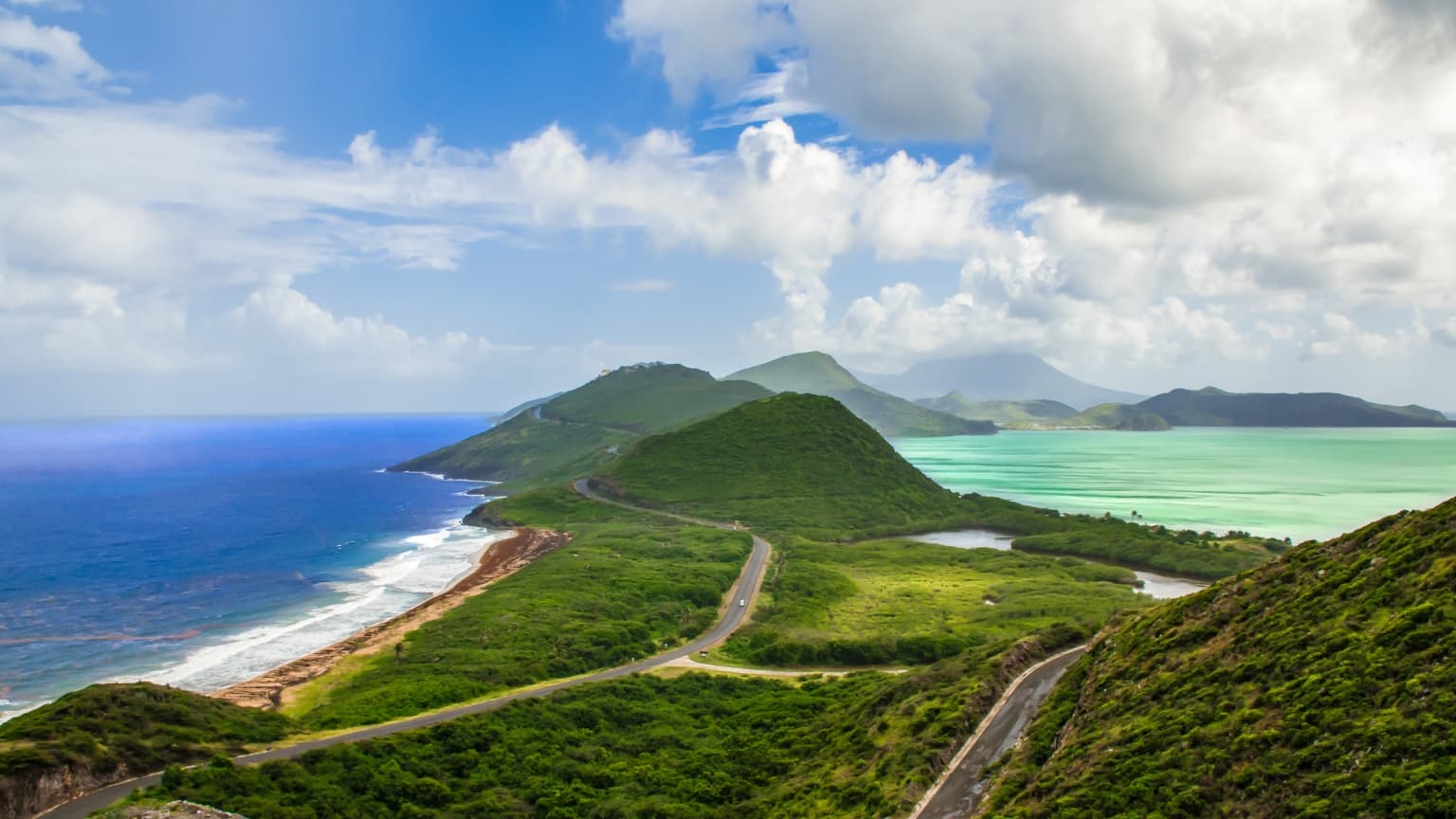








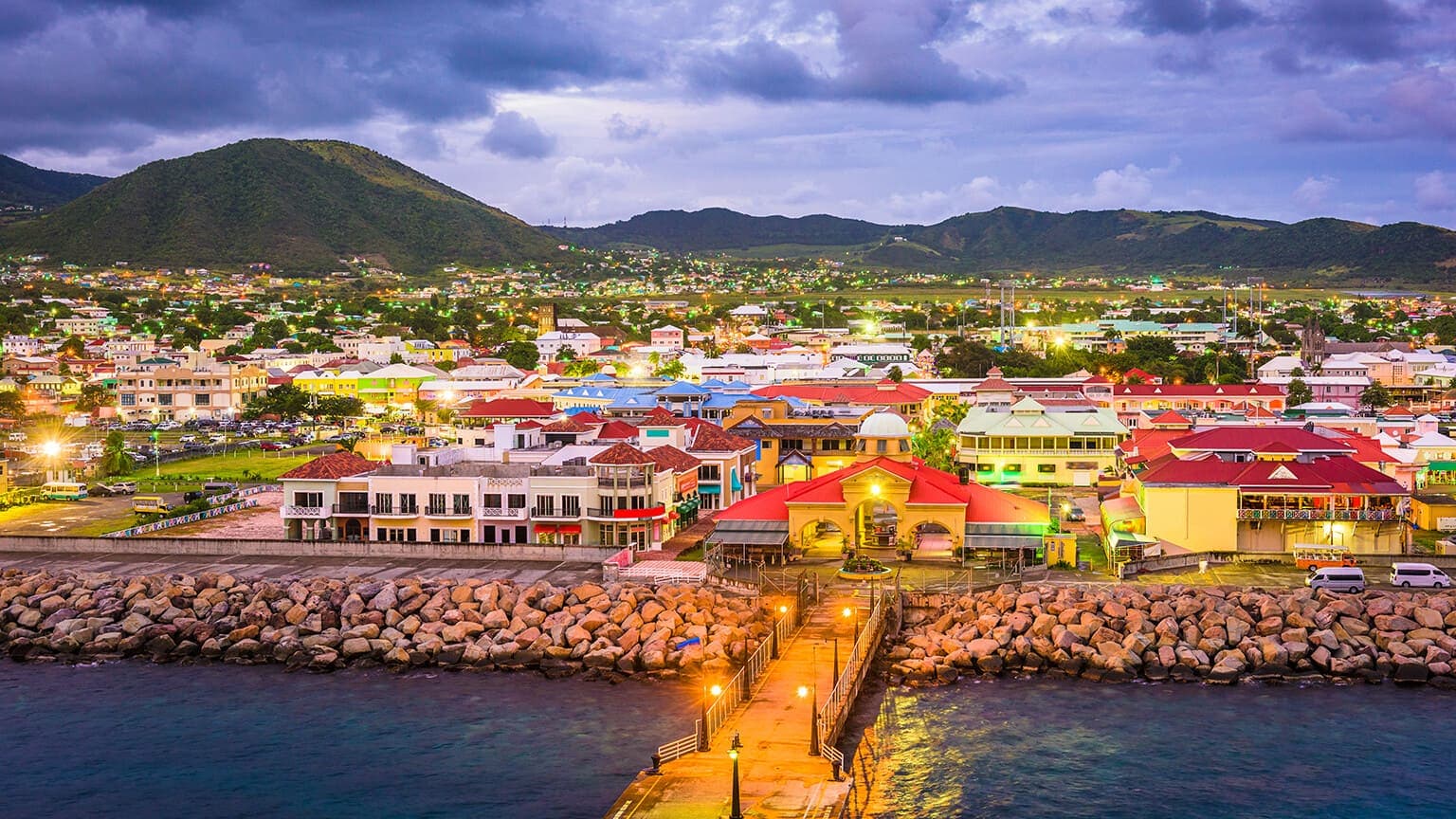

St Kitts and Nevis has one of the most investment-friendly climates in the Caribbean and British Commonwealth, supported by a strong visitor economy. In 2025, travel and tourism contributed 37.5% of the country’s gross national product[1]Source: IMF — St Kitts and Nevis: Basic Data I. Social, Geographic and Demographic Indicators.
Investors can obtain St Kitts and Nevis citizenship by purchasing tourism-oriented real estate, including residential property. The minimum property investment starts at $325,000.
St Kitts and Nevis citizenship by property investment: an overview
Foreigners buying real estate in St Kitts and Nevis can acquire the country’s citizenship through the citizenship by investment programme.
To be eligible, investors must purchase one of the following:
- share in a government-approved real estate project or a condominium unit designated as an Approved Private Home worth at least $325,000;
- single-family private dwelling with a minimum value of $600,000.
Investments under the real estate purchase option are refundable: applicants are allowed to sell the property after 7 years of ownership.
Other options available to investors under the St Kitts and Nevis CBI programme[2]Source: St Kitts and Nevis Citizenship Unit official website include the following:
- Non-refundable contribution — $250,000+. Investors contribute to the Federal Consolidated Fund under the Sustainable Island State Contribution Option.
- Public Benefit Option — $250,000+. Foreigners invest in projects listed as Approved Public Benefit Projects.
Trusted by 10,000+ investors
Check your eligibility for St Kitts and Nevis citizenship
7 benefits of getting St Kitts and Nevis citizenship by purchasing a property
Property investment in St Kitts and Nevis pairs second citizenship with ownership in one of the Caribbean’s established tourism markets. Investors keep the freedom to live elsewhere while the property can serve as a rental asset, a future resale opportunity, and a long-term family holding.
1. No required residency
Investors do not need to live in St Kitts and Nevis or regularly visit the purchased property to maintain citizenship. They can continue living, working, and running businesses abroad while keeping a St Kitts and Nevis passport as a flexible Plan B.
2. No Alien Land Holder Licence
As a rule of thumb, foreigners buying property in St Kitts and Nevis must pay a 10% fee for the right to carry out real estate transactions in the country. Investors purchasing real estate under the CBI programme are exempt from this requirement.
3. Rental income opportunities
Since residing in the country is not required, owners can earn rental income while living elsewhere. Leasing the property provides an annual income of 2—5%, and this income is tax-free in St Kitts and Nevis[3]Source: St Kitts and Nevis Government — No personal income tax.
4. Strong tourism market
The tourism sector accounts for approximately one-third of St Kitts and Nevis’ GDP, with 671,117 visitor arrivals recorded in the first 9 months of 2025, up 13.9% year on year[4]Source: Republic Economic Newsletter — March 2026. This makes renting out property a reliable source of income for investors.
5. Profitable resale options
Real estate values in St Kitts and Nevis rise by an average of 3—5% a year, making resales profitable for investors. Since CBI property must be held for at least 7 years, its resale price can be around 20—30% higher than the original purchase price.
When selling the real estate, no capital gain tax is levied[5]Source: St Kitts and Nevis Income Tax Act — Capital gains rule. However, investors must pay 6—10% of stamp duty[6]Source: St Kitts and Nevis Stamps Act — Stamp duty rates.
6. Citizenship for family members
Investors can include eligible family members in their citizenship application. Citizenship is lifelong and can be passed to future generations. Children born after the investor obtains a St Kitts and Nevis passport can also be added through the post-citizenship process.
7. Convenient biometric submission
Investors and their family members must submit biometric data as part of the St Kitts and Nevis citizenship application. They can do this at a selected biometrics collection centre, not necessarily in St Kitts and Nevis. For example, appointments are available in China, the UAE, and Türkiye.
The procedure is simple and usually takes only 15—30 minutes.
Trusted by 10,000+ investors
Find the right Caribbean real estate investment for $200k+
Conditions for property under the St Kitts and Nevis CBI programme
Property purchased under the St Kitts and Nevis CBI programme must meet specific requirements regarding ownership, holding period, maintenance, and taxation.
Property ownership types
The programme supports joint and full ownership of a property.
With joint ownership, investors buy a share in government-approved or alternative real estate projects and share ownership with other parties. With full ownership, investors purchase the entirety of government-approved or private property.

Elena Kozyreva,
Managing Director for Real Estate projects
Real estate for the St Kitts and Nevis citizenship programme should be assessed not only by its type and the purchase price. Investors should also consider the ownership structure, ongoing property costs, rental potential, and how easy the asset may be to resell after the required holding period. These factors can significantly affect the overall result of the investment.
Holding of real estate
When purchasing real estate under the citizenship by investment programme, applicants must retain it for the next 7 years without reselling. At the same time, investors are not obliged to live in this property.
For non-resident investors, hiring a local property maintenance company is recommended. Such companies represent property owners and handle tasks such as rent collection and land management.
For government-approved project property, maintenance is free of charge.
Taxation
Property taxes include land tax and building tax, with rates ranging from 0% to 0.3%, depending on the property type and the island on which it's located.
Applicants for St Kitts and Nevis citizenship by real estate investment are exempt from taxes on buying property. Upon selling, they must pay a stamp duty of 6—10%.
Property tax rates in St Kitts and Nevis, depending on the island

Real estate that investors can buy in St Kitts and Nevis
St Kitts and Nevis offers a varied property market, from private villas and sea-view townhouses to branded hotel residences. Investors can choose between full ownership and shares in hospitality projects.
Villas and apartment complexes
Villas and apartment complexes are considered residential properties but make a solid source of rental income. At the luxury end, villas can rent for several thousand dollars per night. For example, a Paradise Beach villa in Nevis starts at $4,000 per night, or $28,000 per week, in the low season[7]Source: Villas Caribbean — Paradise Beach, Indigo.
In St Kitts and Nevis, one can purchase a Western-style villa or choose one stylised as a traditional Caribbean bungalow. Prices in St Kitts start at around $235,000 for a villa or small home and $325,000 for a turnkey apartment in a CBI-approved development, while the minimum CBI investment is $325,000 for a condominium unit or share in an approved development.
Townhouses
Townhouses make the perfect type of property for enhanced island views. Unlike villas, townhouses have terraces, making this feature a great marketing point for rental advertising. Current listings start at around $650,000 for full ownership, including beachfront options in Nevis[8]Source: 7th Heaven Properties — Townhouses for Sale in St Kitts and Nevis.
Hotels
Hotels and condominium hotels are the surest way to benefit from the tourism industry in St Kitts and Nevis. As a 5-star hotel owner or shareholder, an investor can expect room rates of around $650—3,700 per night, depending on the season[9]Source: Booking — Four Seasons Resort Nevis. Investing in a hotel or condo share costs a minimum of $325,000.
Property categories under the St Kitts and Nevis CBI programme
Best cities in St Kitts and Nevis to invest in real estate
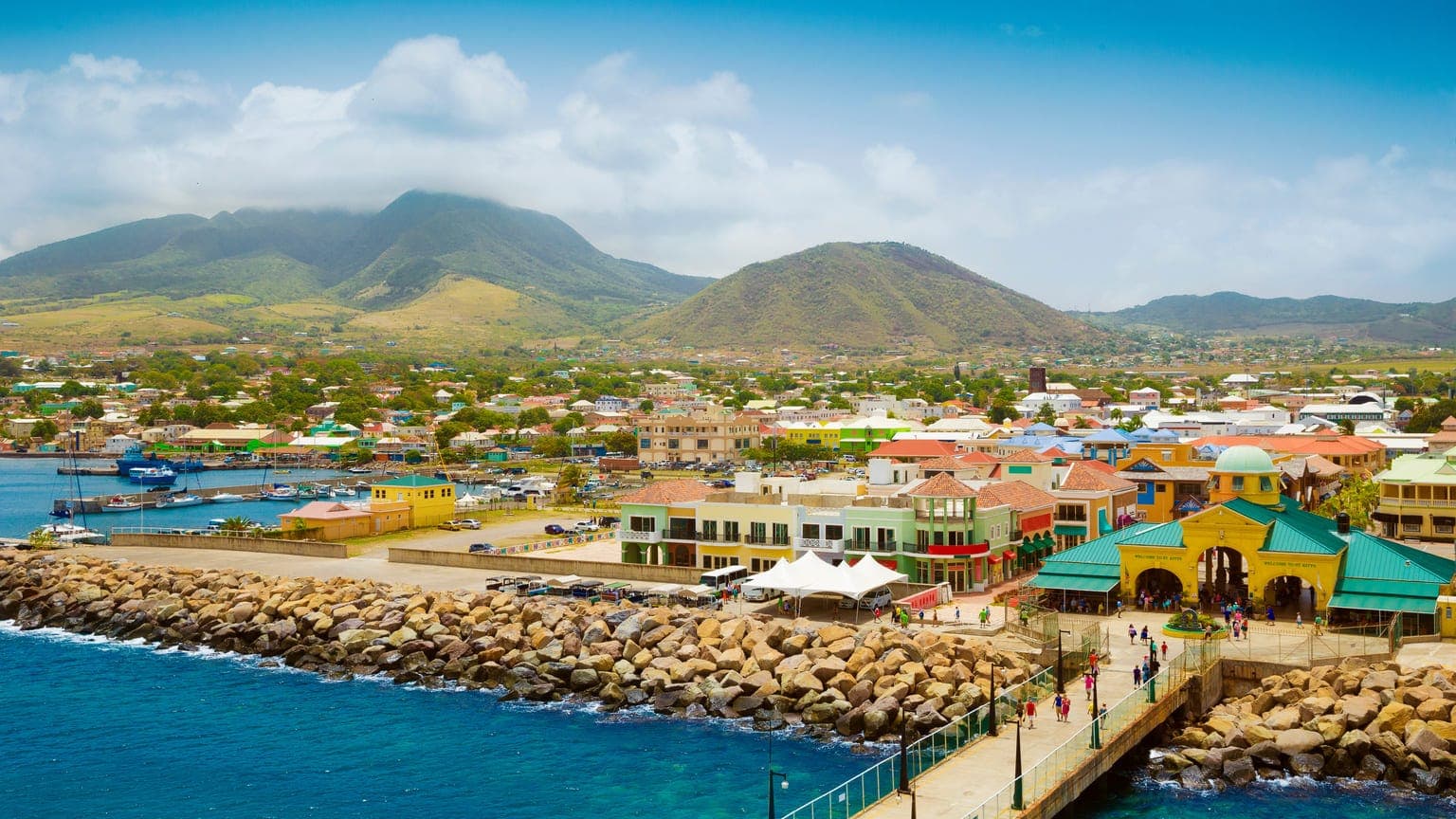
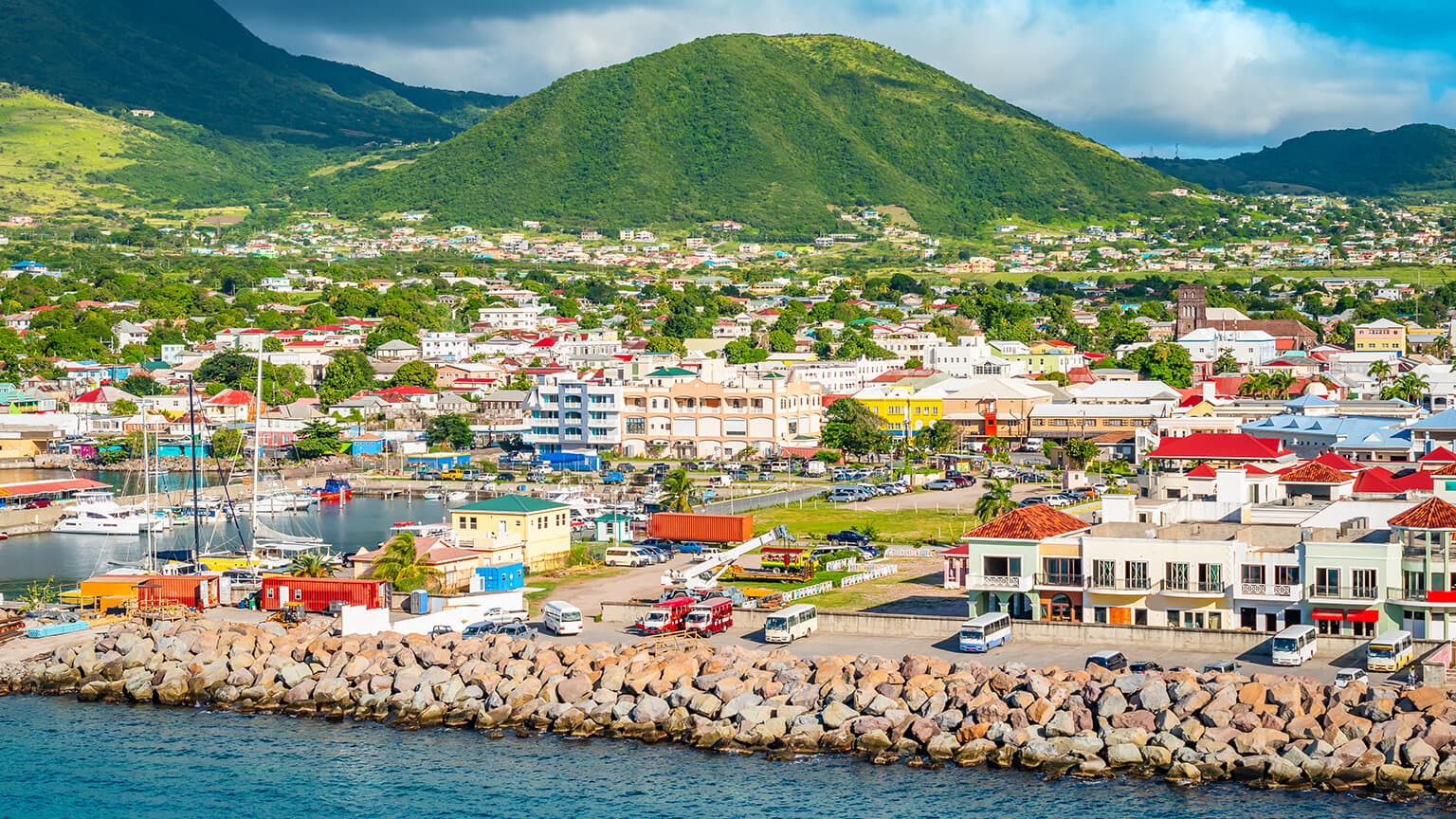
Basseterre is the capital city and the economic and cultural hub of St Kitts. It has a growing real estate market driven by tourism and international business. The city is home to luxury developments, including hotels and resorts, making it a prime area for vacation rentals and commercial properties.
Frigate Bay is a hotspot for expatriates and tourists, and it is known for its high-end residential and vacation properties. It offers proximity to beaches, golf courses, and nightlife.
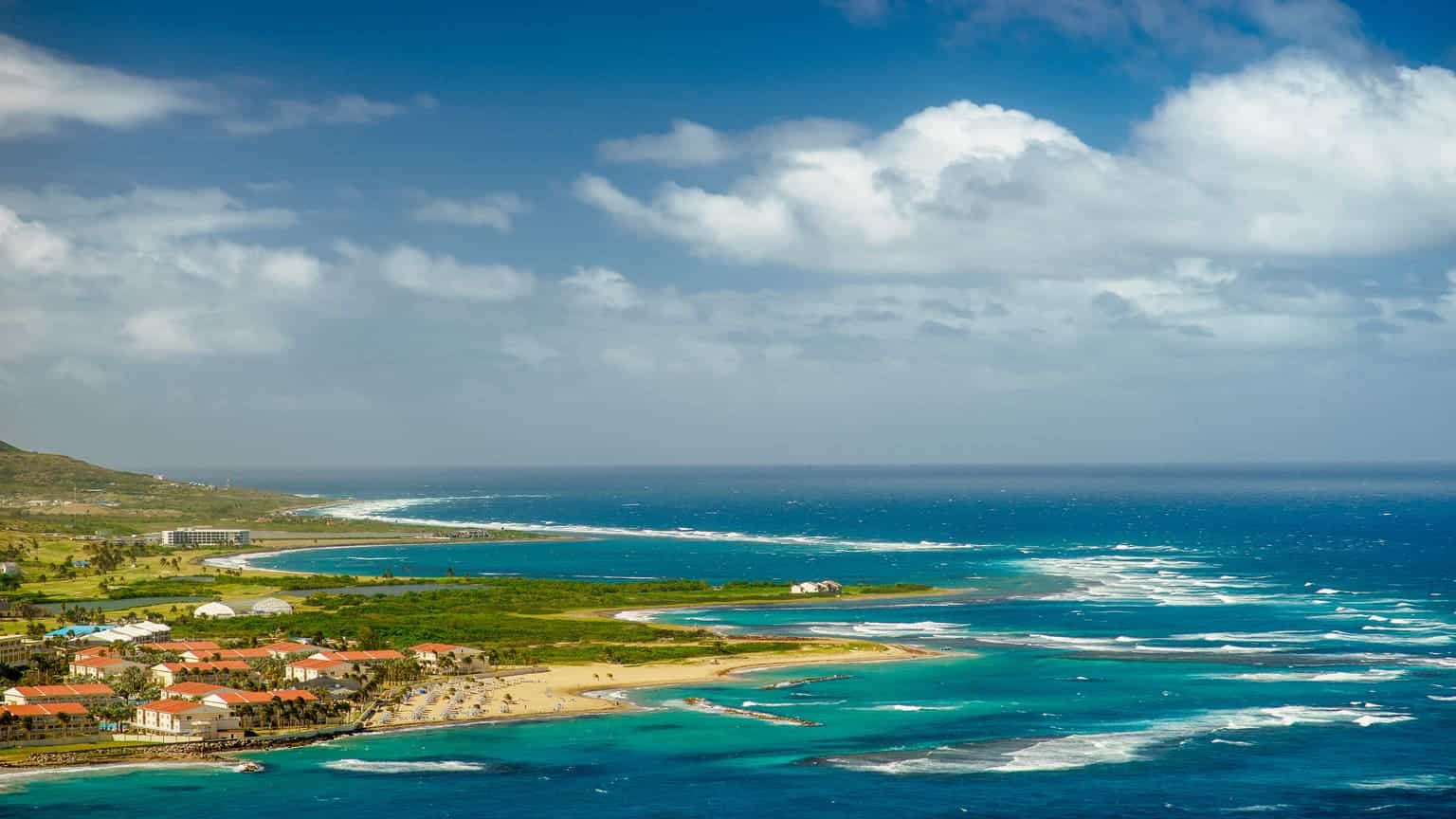
The South East Peninsula is renowned for its pristine beaches and luxury developments like Christophe Harbour. This area attracts high-net-worth individuals and is ideal for those seeking exclusive and upscale investments.
Charlestown is the capital of the smaller island of Nevis. It combines small-town charm with steady growth in tourism and real estate development. It's a gateway to cultural and historical attractions.
Newcastle offers scenic beauty and growing opportunities in residential and vacation properties. The town is also located near the Vance W. Amory International Airport, Pinney’s Beach, and Four Seasons Resort, enhancing its appeal for luxury investments.
Examples of real estate in St Kitts and Nevis, Basseterre
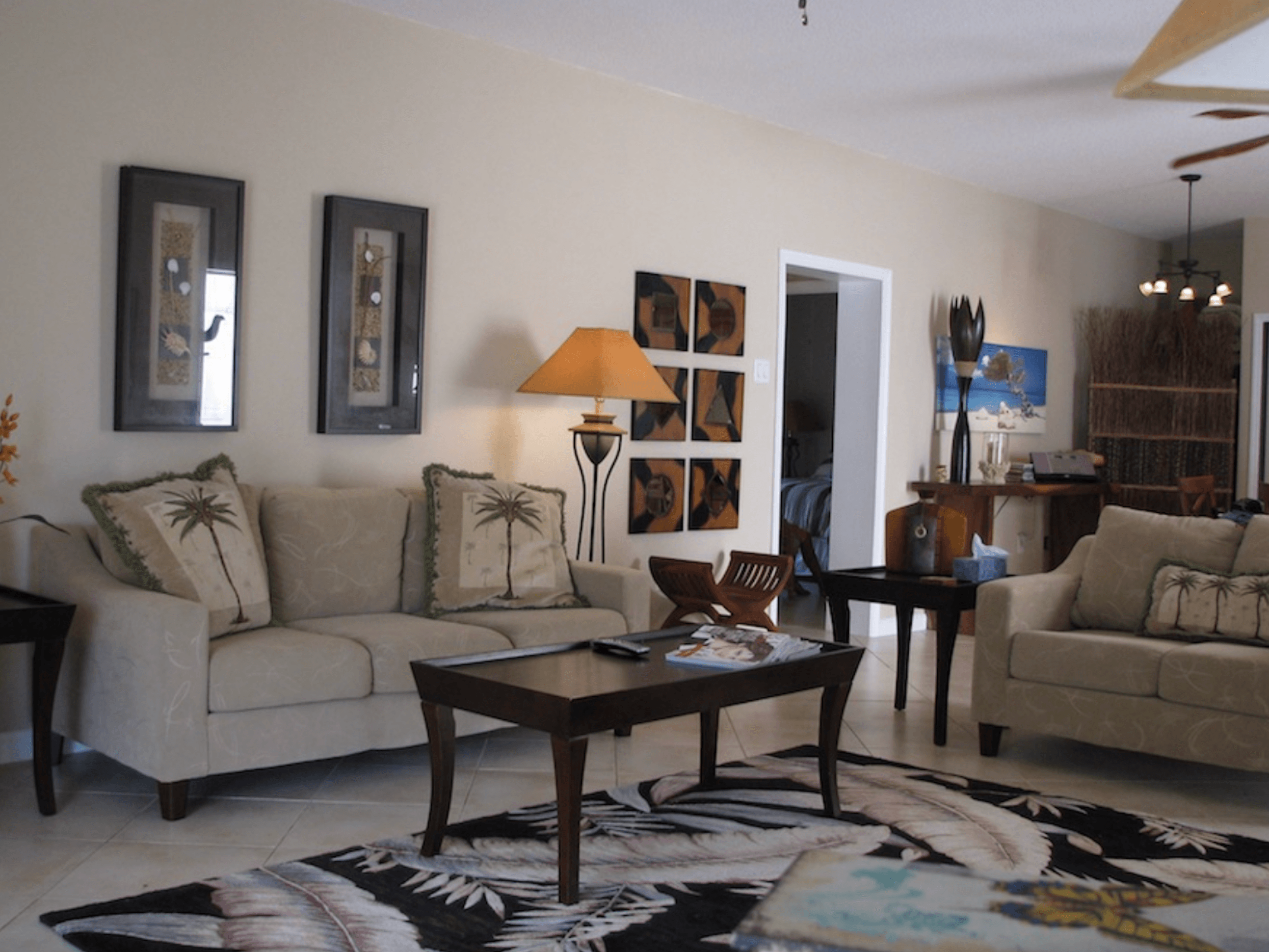

St Kitts & Nevis, Basseterre
$350,000+
Apartments in modern style, Basseterre
 223 m²
 3
 2
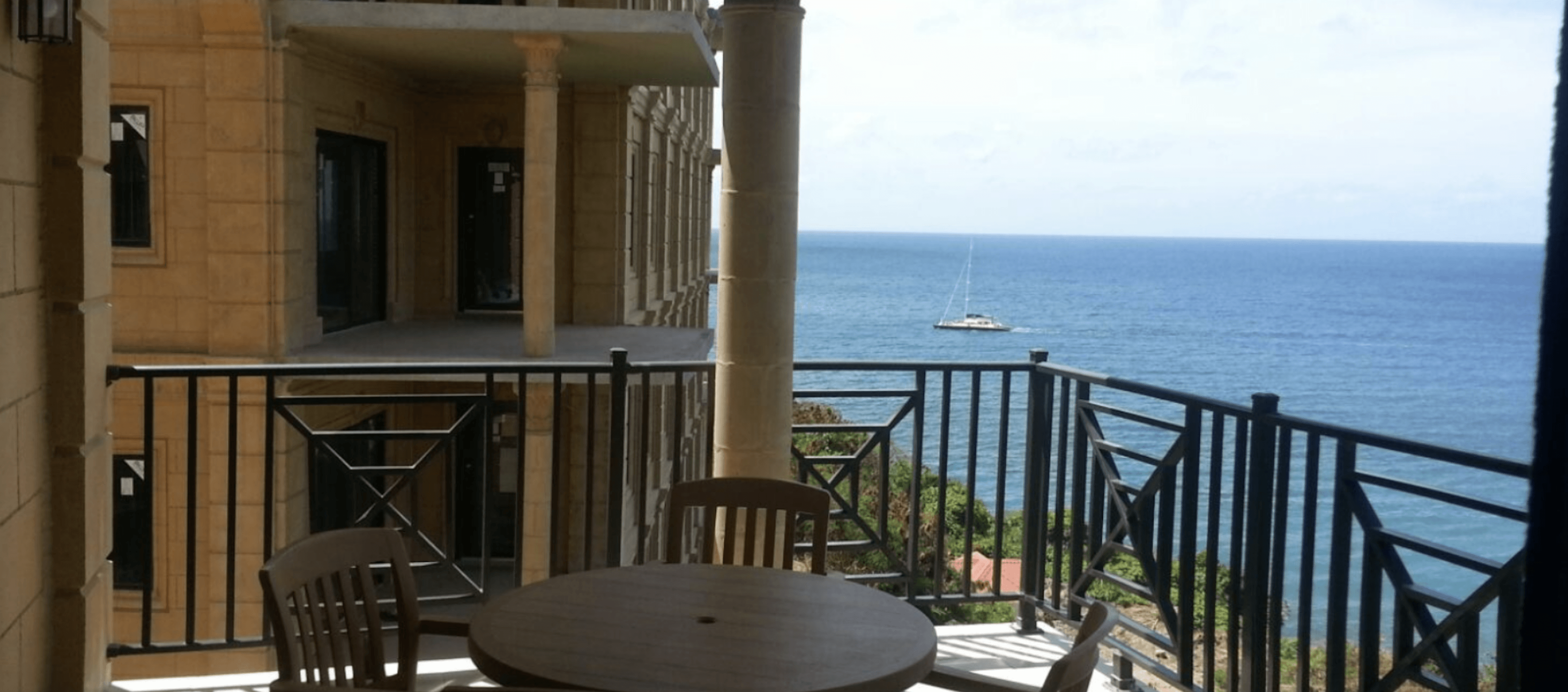
St Kitts & Nevis, Basseterre
$385,000+
Elegant apartments, Basseterre, St Kitts and Nevis
149 m²3 3 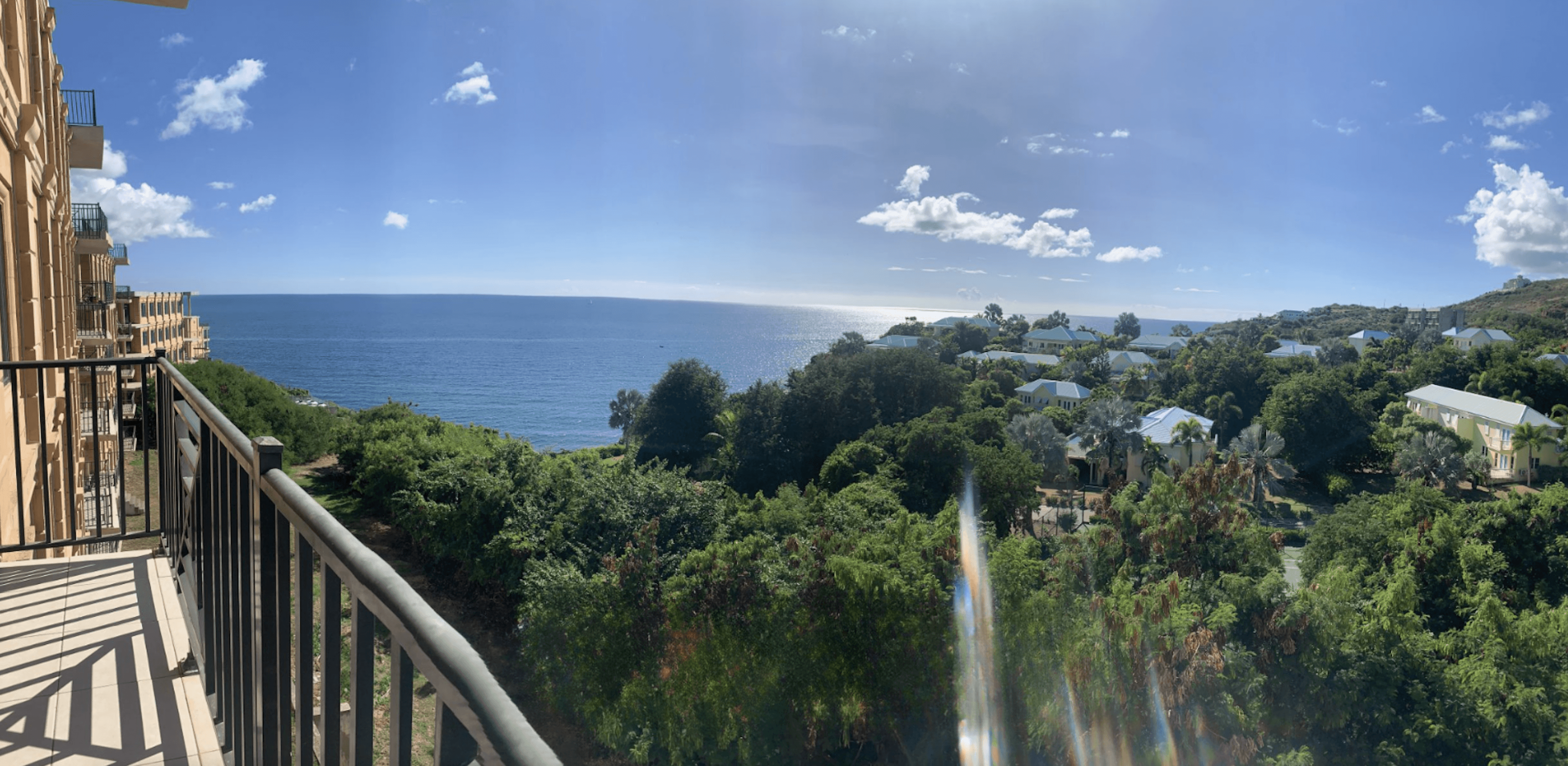
St Kitts & Nevis, Basseterre
$400,000+
Stylish apartments, Basseterre
149 m²3 3 Requirements and costs for property buyers seeking St Kitts and Nevis citizenship
Applicants for St Kitts and Nevis property citizenship must meet the programme’s eligibility requirements and budget not only for the property itself, but also for government, Due Diligence, and transaction-related fees.
Requirements for applicants
To qualify for the St Kitts and Nevis CBI programme, the main applicant must meet the following conditions:
- be over 18 years old;
- provide a clean criminal record;
- prove the absence of serious illnesses;
- have a stable income and confirm its legality.
St Kitts and Nevis citizenship by real estate purchase extends to the investor’s close family. The list of eligible family members includes the following:
- spouse of the opposite sex with no criminal record;
- children under 18;
- children between 18 and 25 attending a recognised secondary or tertiary-level educational institution;
- parents over 55 years old who live with and are fully supported by the main applicant.
Investor’s expenses
Besides the cost of the property, St Kitts and Nevis citizenship applicants must pay a state fee, a Due Diligence fee, and other related expenses.
The total cost depends on the number of relatives the investor includes in the application.
Expenses when getting St Kitts and Nevis citizenship by real estate investment
In addition to the above fees, real estate buyers bear other costs, such as contributions for compulsory insurance funds and conveyance fees.
Investors who purchase an Approved Private Home must hold it for at least 7 years. If they later want to sell it to another CBI applicant, the property can qualify for a subsequent citizenship application only if the Federal Cabinet is satisfied that substantial further investment has been made through construction, renovation, or other improvements[10]Source: St Kitts and Nevis Law Commission — Official 2023 Regulations.

Required documents to obtain St Kitts and Nevis citizenship by real estate investment
Every applicant for St Kitts and Nevis citizenship is required to provide the following documents:
- birth certificate;
- passport and national ID card;
- proof of name change, if applicable;
- certificate of a clean criminal record;
- HIV test results;
- 6 passport photos.
The main applicant must submit some additional documents, including the following:
- proof of funds for the last 12 months;
- professional reference not older than 6 months;
- bank reference not older than 6 months;
- evidence of residential address;
- marriage or divorce certificates, if applicable;
- statement and evidence of the source of funds for investment.
Trusted by 10,000+ investors
Submit biometrics to secure a valid St Kitts and Nevis passport
How to purchase property and obtain citizenship in St Kitts and Nevis
Applying for citizenship by investment in St Kitts and Nevis is only possible through a licensed agent, such as Immigrant Invest.
According to the experience of the Immigrant Invest team, obtaining St Kitts and Nevis citizenship by investing in real estate takes 6+ months.
1 day
Preliminary Due Diligence
Immigrant Invest’s Compliance Anti Money Laundering Officer examines investor’s documents.
The procedure is mandatory, confidential, and takes 1 business day. Our specialists identify potential risks and offer solutions if any issues arise.
Immigrant Invest’s Compliance Anti Money Laundering Officer examines investor’s documents.
The procedure is mandatory, confidential, and takes 1 business day. Our specialists identify potential risks and offer solutions if any issues arise.
5 days
Choosing the property
Immigrant Invest’s real estate experts help the applicant choose a property to invest in. The investor reserves the real estate with a 10% deposit.
Immigrant Invest’s real estate experts help the applicant choose a property to invest in. The investor reserves the real estate with a 10% deposit.
2 to 4 weeks
Preparation of documents
Application documents and forms are prepared and translated into English under the supervision of Immigrant Invest’s lawyers.
Application documents and forms are prepared and translated into English under the supervision of Immigrant Invest’s lawyers.
6+ months
Due Diligence
After the documents are submitted to the St Kitts and Nevis CBI Unit, the latter conducts a thorough Due Diligence check.
The procedure includes a mandatory online interview for all applicants above 16 years old.
After obtaining Approval in Principle, the investor books an appointment for biometrics enrolment.
2+ weeks
Real estate purchase and biometric enrolment
Once the application is approved, the investor can finalise the property purchase and sale deal.
All family members included in the application travel to the chosen biometrics collection centre and undergo biometric enrolment procedure.
Once the application is approved, the investor can finalise the property purchase and sale deal.
All family members included in the application travel to the chosen biometrics collection centre and undergo biometric enrolment procedure.
Up to 2 weeks
Collecting citizenship documents
When the purchase and sale deal is made and biometrics is submitted, St Kitts and Nevis authorities issue certificates of naturalisation which are then used to apply for passport issuance.
The investor and their family must collect their passports either in person or through a licensed agent. As a licensed agent, Immigrant Invest can collect the passports on the investors’ behalf.
5 benefits of St Kitts and Nevis citizenship
St Kitts and Nevis real estate citizenship gives investors several advantages, including dual citizenship, broader travel opportunities, tax benefits, and access to international business opportunities.
The exact conditions depend on the investor’s country of origin, tax residence, and the rules applicable at the time of travel or doing business.
1. Dual citizenship
St Kitts and Nevis allows dual citizenship. Investors are not required to renounce their existing nationality after obtaining a St Kitts and Nevis passport.
Whether the investor can retain their first citizenship depends on the legislation of their country of origin. Some countries restrict or prohibit multiple citizenship.
2. Increased freedom of travel
A St Kitts and Nevis passport can simplify international travel by allowing citizens to visit a range of destinations without obtaining a visa in advance.
Entry conditions, permitted periods of stay, and other requirements depend on the rules in force at the time of travel. Visa policies may change, so travellers should check current requirements before each trip.
3. Long-term visas to the US
St Kitts and Nevis citizens can apply for a multiple-entry B-1/B-2 visa to the United States valid for up to 10 years. The visa can be used for tourism, business trips, and medical treatment.
The visa allows repeated travel during its validity period, while the permitted length of each stay is determined by US border authorities upon entry. Visa approval is subject to the standard application requirements.
4. Tax optimisation
St Kitts and Nevis tax residents do not pay personal taxes on dividends, interest, or royalties. There is also no tax on wages, capital gains, and inheritance.
Citizenship does not automatically make an investor a tax resident of St Kitts and Nevis. Tax obligations depend on the person’s tax residence, income sources, and applicable legislation.
5. Business opportunities
St Kitts and Nevis citizens can register companies in the country and conduct business through locally incorporated entities.
They can also use these companies for international business activities, subject to applicable corporate, licensing, tax, and reporting requirements.
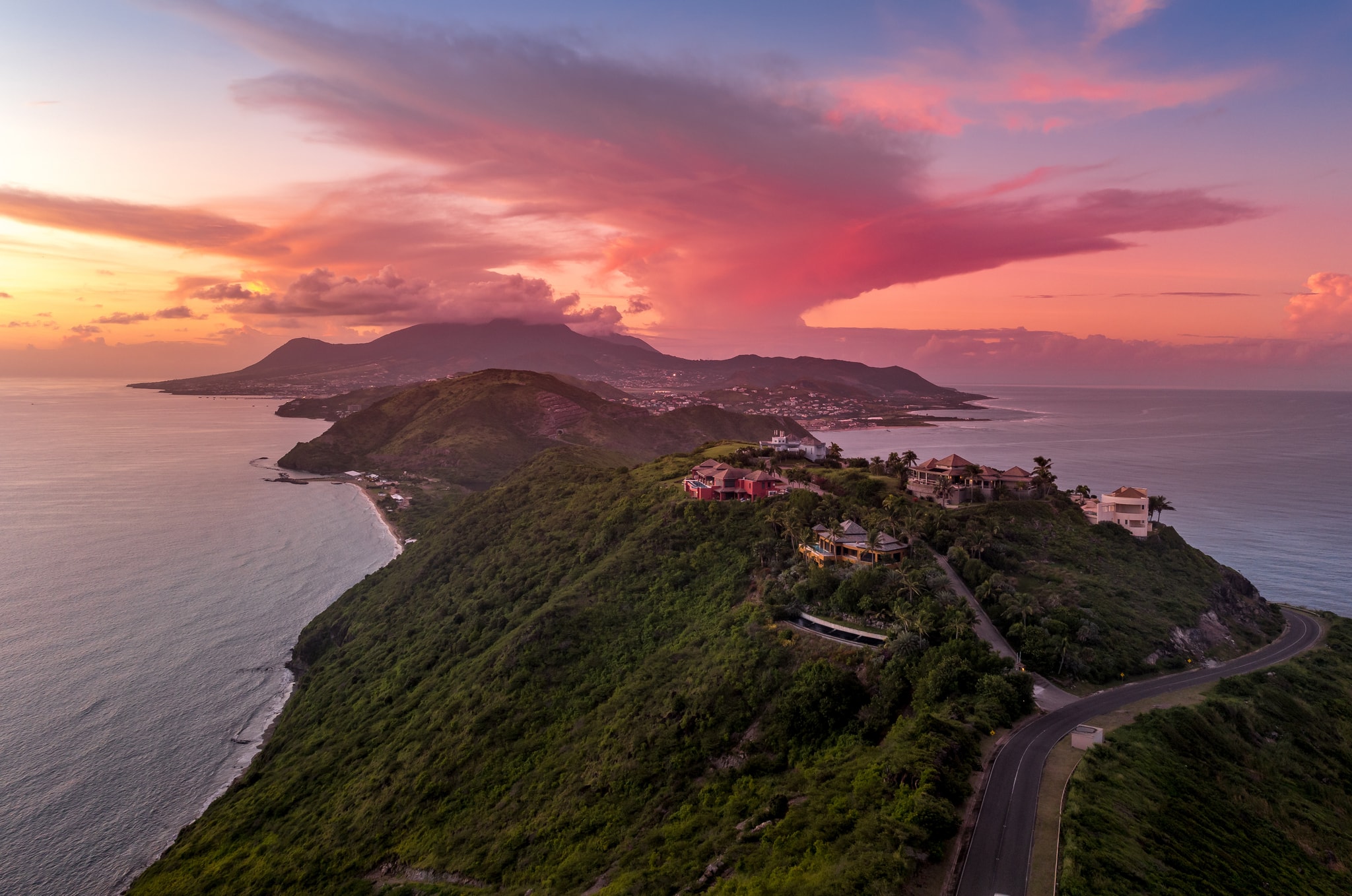
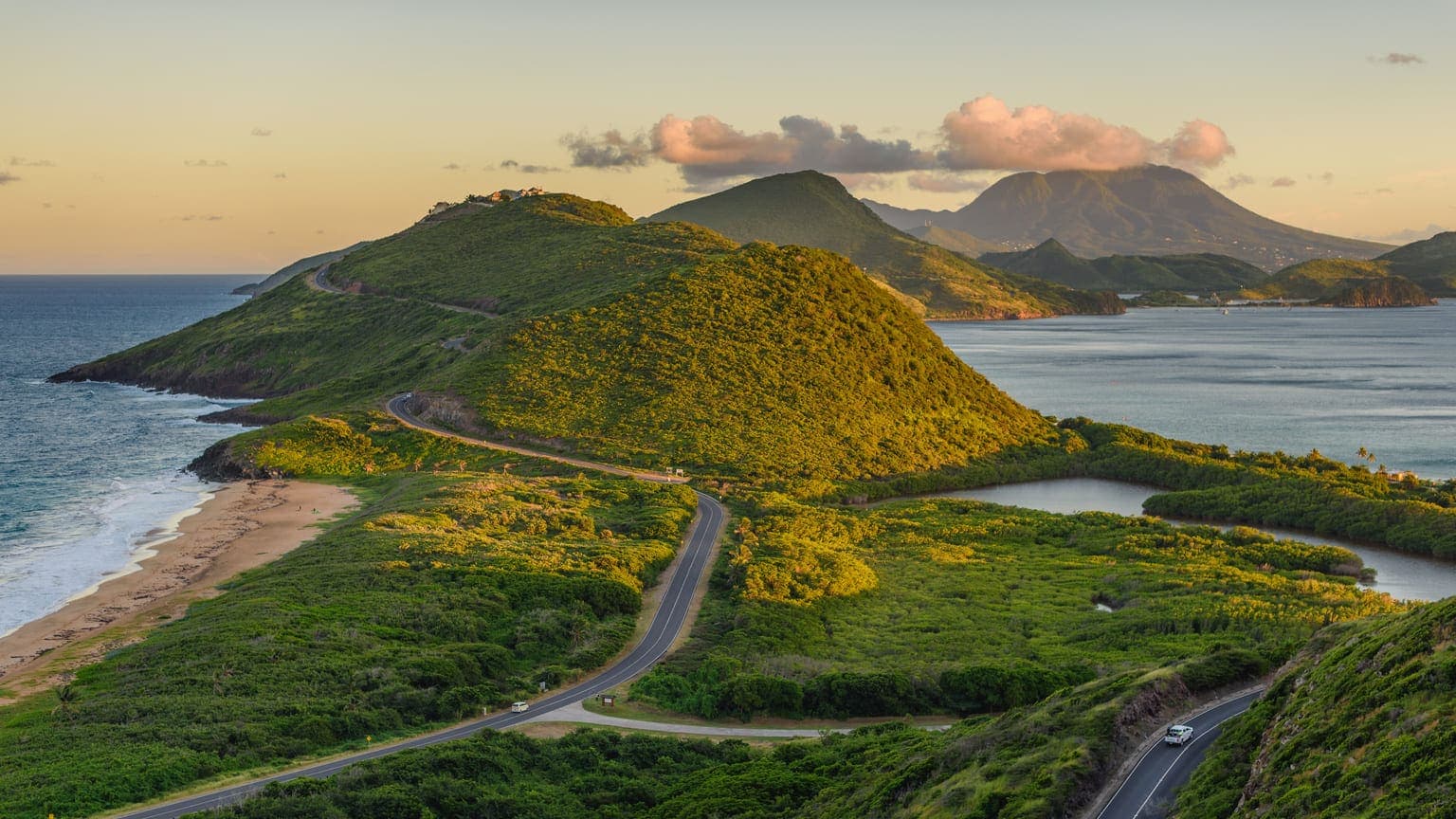
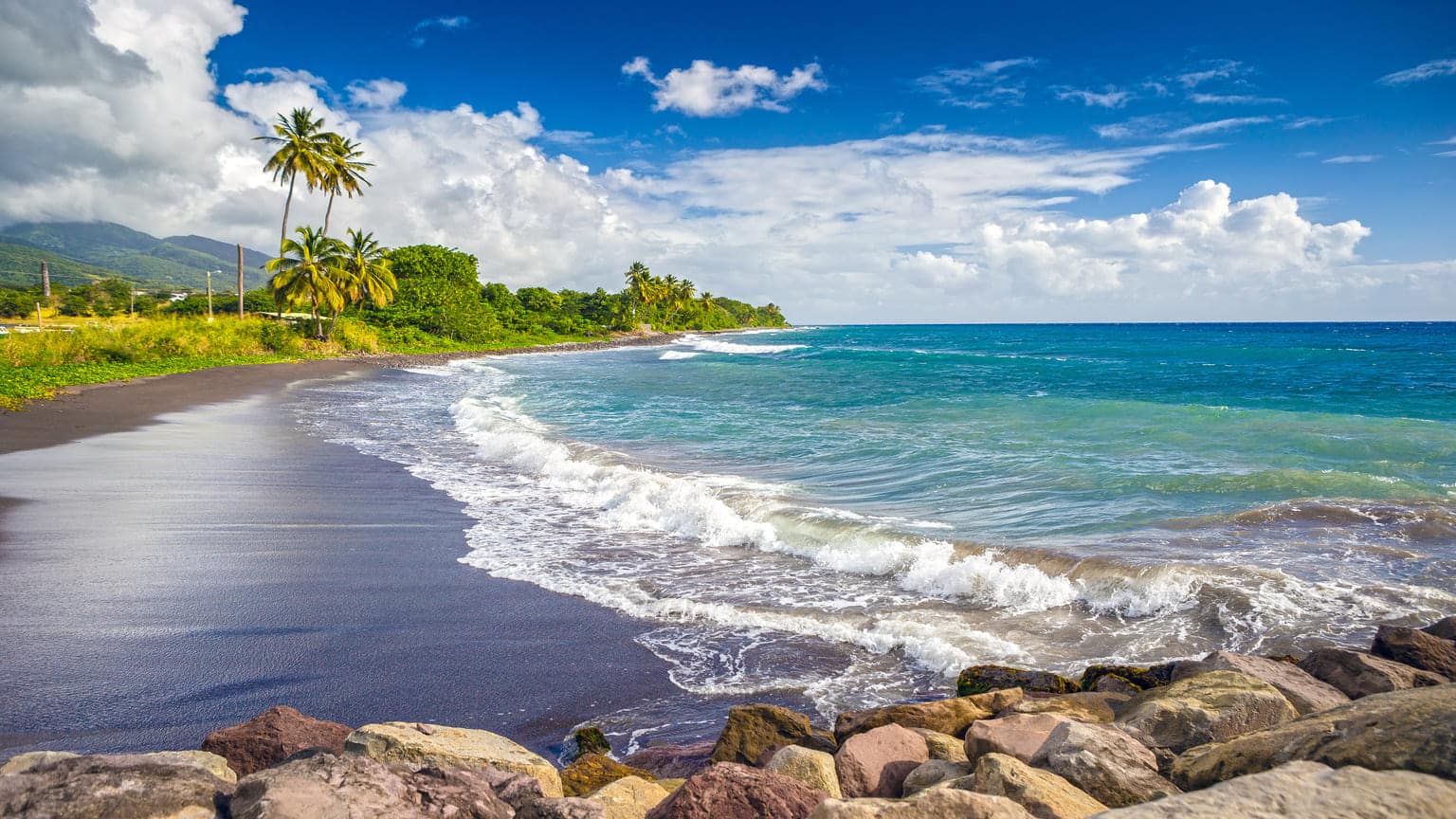
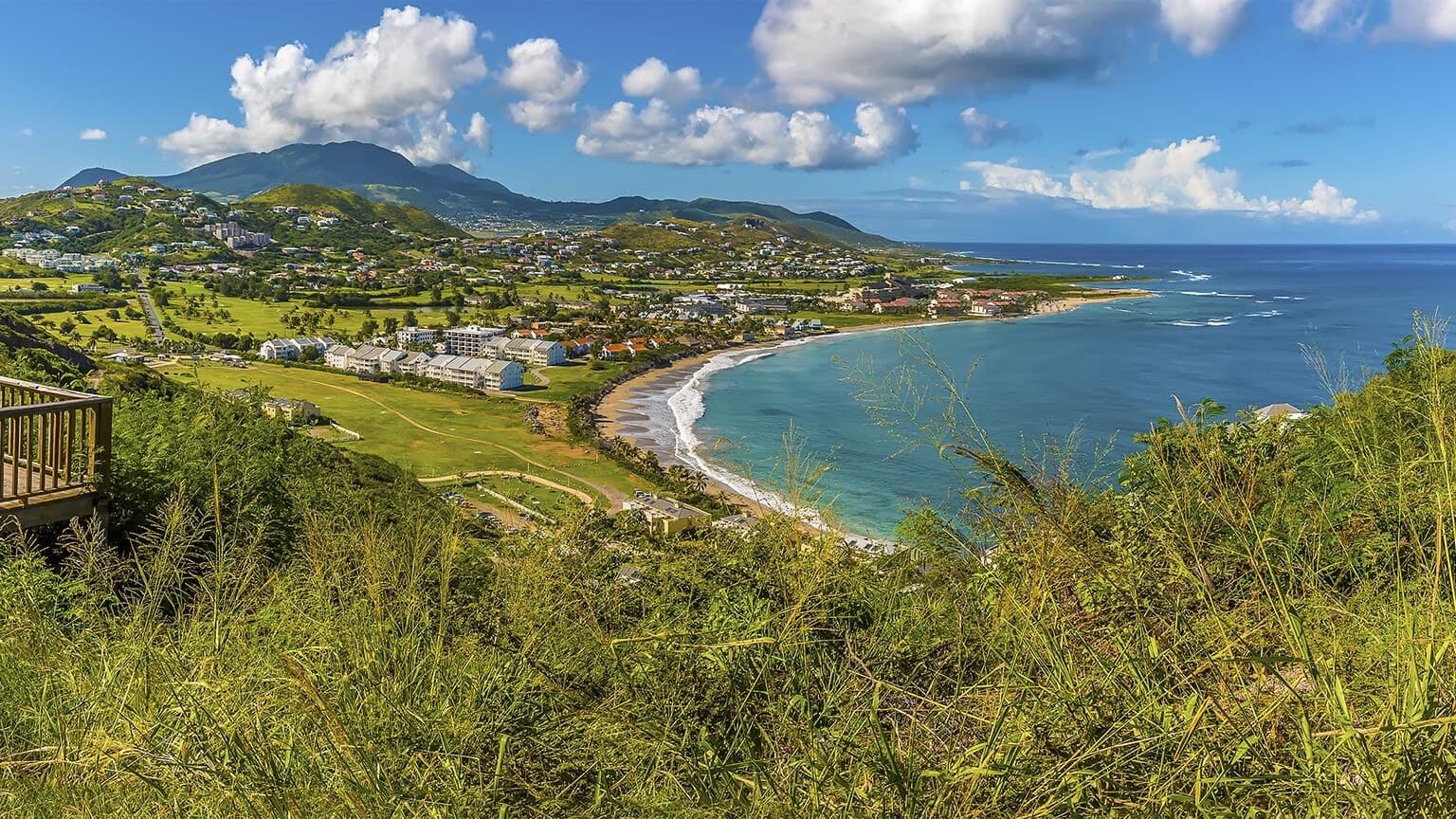
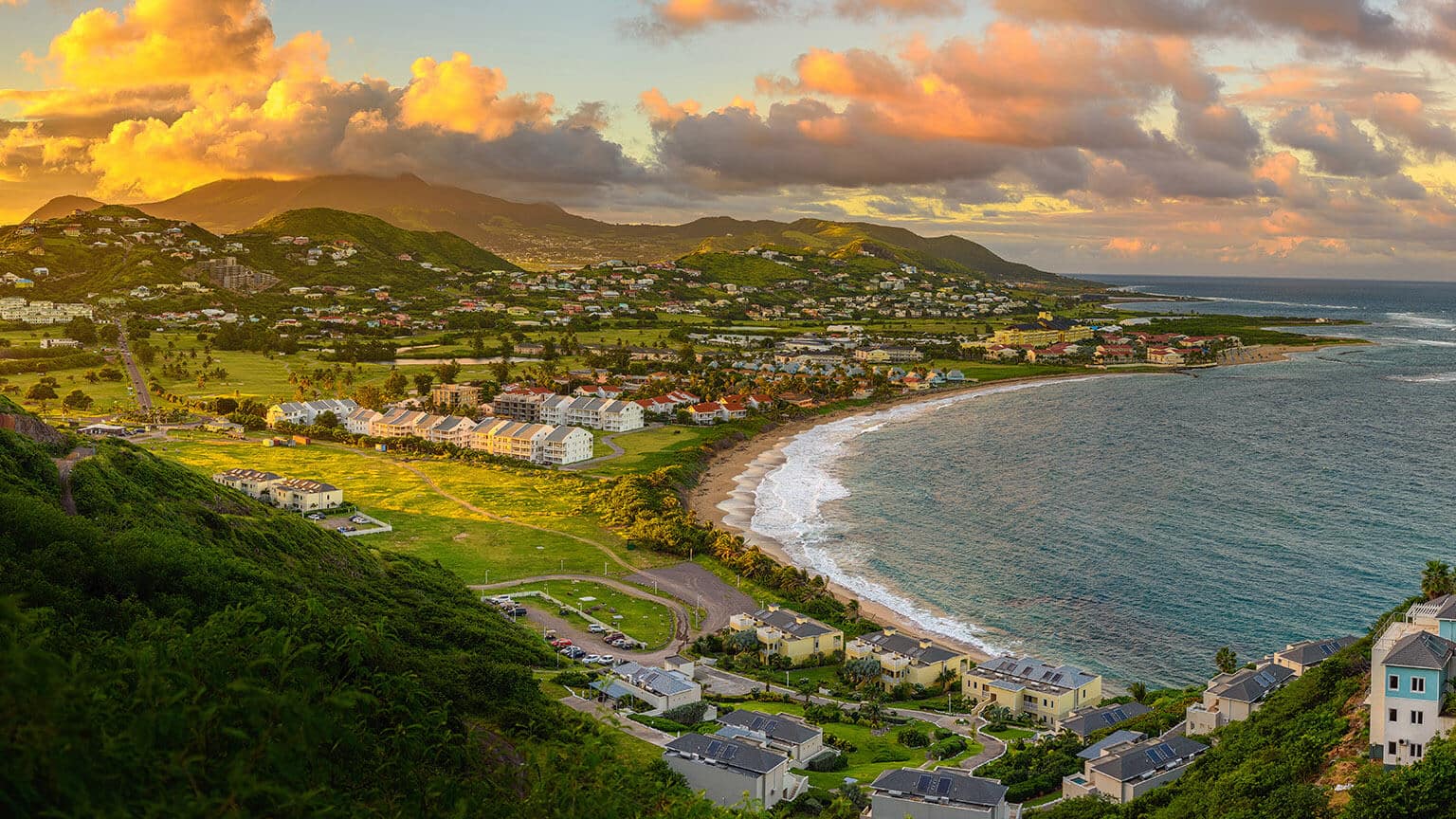
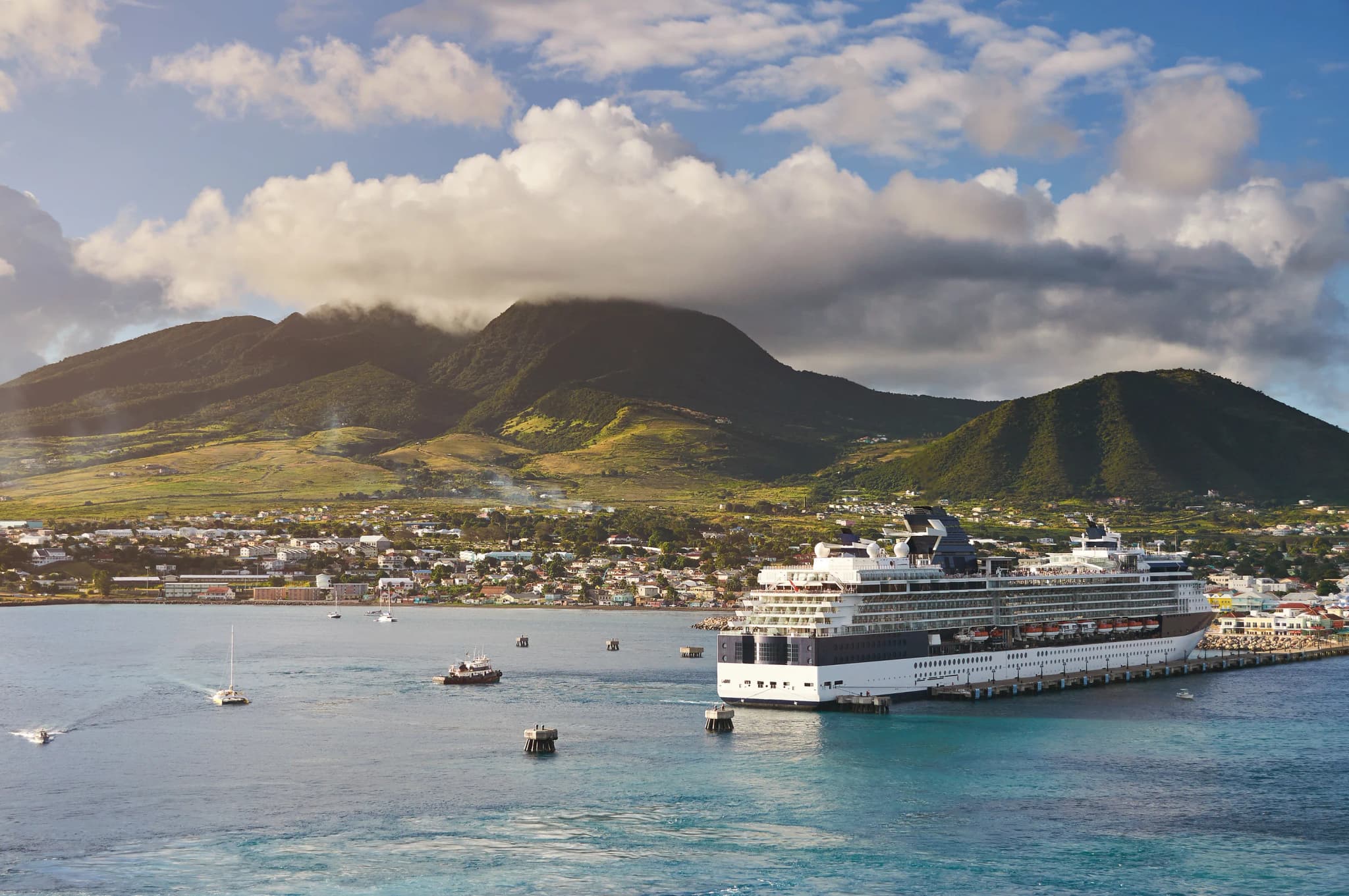
St Kitts and Nevis combines rainforest, volcanic landscapes, and colourful sunsets, making the islands appealing for both living and holidays
Risks and pitfalls of St Kitts and Nevis real estate citizenship
St Kitts and Nevis property citizenship comes with several trade-offs, from a long holding period and restricted property choice to higher transaction costs and compliance requirements.
Long holding period
St Kitts and Nevis has the longest mandatory real estate holding period among the five Caribbean CBI programmes: investors must keep the property for at least 7 years before reselling it.
By comparison, Antigua and Barbuda, Grenada, and St Lucia require 5 years, while Dominica requires only 3 years. This limits liquidity and can make it harder to react quickly to changes in the property market.
Limited choice of properties
Investors cannot buy any property they like and use it for a citizenship application. The property must fall within an Approved Development or qualify as Approved Private Real Estate, which narrows the available market.
Elena Kozyreva,
Managing Director for Real Estate projects
We work with government-approved real estate projects that meet the requirements of the St Kitts and Nevis CBI programme. Our current portfolio includes over 20 available properties, from resort residences and condominiums to private villas, so investors can compare options by budget, rental potential, location, and exit strategy.
Higher costs beyond the property price
The headline investment is only part of the budget of St Kitts and Nevis property citizenship. Real estate applicants also pay Due Diligence and post-approval fees, while property purchases involve conveyance fees and compulsory insurance fund contributions.
Additional fees increase the minimum real estate investment by around 15—30%, depending on the family composition.
Rental and resale uncertainty
Rental yields and future resale gains are not guaranteed. Income depends on occupancy, seasonality, management fees, and the performance of the specific development. Resale value also depends on market conditions and demand when the 7-year holding period ends.
Biometric enrolment logistics
Applicants and eligible family members must complete biometric enrolment in person. Although collection centres are available outside St Kitts and Nevis, investors may still need to travel to a designated location, adding time and travel costs to the application process.
Strict Due Diligence requirements
Buying qualifying property does not automatically secure St Kitts and Nevis citizenship. Applicants still need to pass government Due Diligence and clearly document their identity, business background, source of wealth, and source of funds. Unexplained transfers, previous immigration issues, missing paperwork, or conflicting information can trigger extra checks, slow the application, or result in refusal.
How Immigrant Invest can help with St Kitts and Nevis property citizenship
Immigrant Invest has 20 years of experience in investment migration, having worked with over 10,000 clients worldwide. We are a licensed agent for citizenship by investment programmes, including St Kitts and Nevis, and support investors through both the property purchase and the citizenship process.
We help applicants with:
- Preliminary Due Diligence: checking immigration history, source of wealth, source of funds, and other potential risks before filing.
- Approved property selection: choosing from over 20 available properties in St Kitts and Nevis based on budget, rental potential, location, and resale plans.
- Legal and property checks: reviewing the project, transaction terms, ownership structure, and 7-year holding requirement.
- Application preparation: collecting documents, completing government forms, arranging translations, and submitting the CBI application.
- Due Diligence, interview, and biometrics: preparing applicants for government checks and helping arrange mandatory biometric enrolment.
- Property purchase and passport issuance: coordinating the investment after approval and guiding the applicant through the final citizenship formalities.
We continue supporting clients after citizenship is granted, including with passport renewals, citizenship for newborn children, banking matters, and other post-citizenship services.
Key points about St Kitts and Nevis citizenship by real estate investment
- St Kitts and Nevis citizenship by investment can be obtained by purchasing real estate. The property must be held for at least 7 years before it can be resold.
- The minimum investment in property is $325,000 for a share in a government-approved project or a condominium unit. Investors willing to purchase a private dwelling to apply for citizenship need to spend at least $600,000.
- Investors can add their family members to the applications, including spouses, children, and parents.
- Investors are not required to reside in St Kitts and Nevis to maintain citizenship, so they can rent the property out and benefit from the country’s robust tourism industry.
- Other options to apply for St Kitts and Nevis citizenship by investment are a non-refundable contribution to the Federal Consolidated Fund, and a Public Benefit Option. In both cases, the investment threshold is $250,000.
Immigrant Invest is a licensed agent for citizenship and residence by investment programs in the EU, the Caribbean, Asia, and the Middle East. Take advantage of our global 15-year expertise — schedule a meeting with our investment programs experts.

 Trusted by 10,000+ investors