








Greece is a popular choice among both tourists and expats: foreign residents represent around 9% of the total population of the country[1]Source: Greece’s Ministry of Migration and Asylum reported 945,987 valid residence permits or statuses in April 2026.. And there is a good reason for such popularity.
An affordable cost of living, accessible healthcare, welcoming people, and a perfect climate are just a few advantages of living in Greece. However, there are some drawbacks to moving to the Hellenic Republic as well.
Let’s break down all the pros and cons of residing in Greece as an expat.
15 benefits of living in Greece
Greece appeals to expats for reasons that go well beyond its famous coastline and climate. From accessible residence routes and visa-free travel to affordable living, favourable tax regimes, and a relaxed pace of life, the country offers a combination of practical and lifestyle advantages.
1. Residence is available through a Golden Visa
Foreigners wishing to experience all the benefits of moving to Greece first-hand have several options to obtain residence permits there. For instance, they can get a long-term visa for financially independent individuals or the Golden Visa.
The Greece Golden Visa allows foreign nationals to obtain residence permits in the country after investing in its economy. Different investment options include real estate purchases and acquiring timeshares for 10 years. The minimum investment is €250,000.
However, the €250,000 threshold applies only to specific renovation projects. In high-demand areas like Attica and Thessaloniki, the minimum rises to €800,000.

2. Travel privileges for residents and citizens
Greece is a member of both the Schengen Area and the European Union. This means that residents of Greece can easily travel visa-free to the majority of countries in Europe, including France, Norway, the Netherlands, Germany, and others.
Greek citizens can enter 180 countries around the world visa-free. These include the USA, the UK, and Australia.
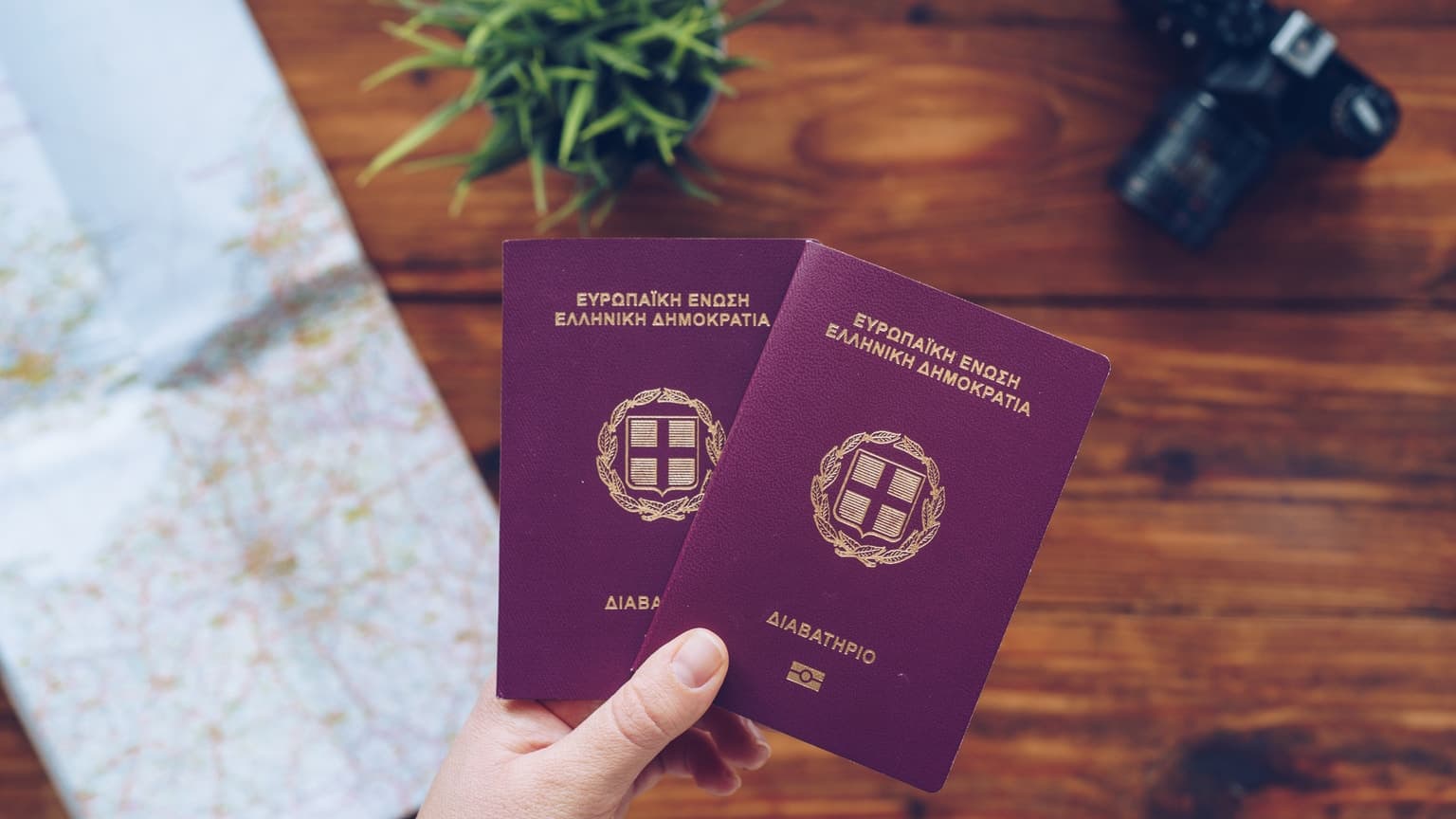
3. Route to an EU passport
Living in Greece is also a path to citizenship. After 7 continuous years of lawful residence, foreigners can apply for naturalisation, provided they pass the language and integration exam and spend at least 183 days a year in the country[2]Source: Naturalisation terms are applicable under Greek Citizenship Code, Law 3284/2004..
A Greek passport carries the unconditional right to live, work, study, and retire across all 27 EU member states, as well as Norway, Iceland, Liechtenstein, and Switzerland. Greece also recognises dual citizenship, so a new passport need not replace the original one.
4. Affordable living
In Greece, the price level index is 12.6% lower than the EU average[3]Source: Eurostat price level indices for 2025..
Greek prices for consumer goods, utility, household appliances, and transport are similar to those in Slovenia, Malta, and Estonia. But living in Greece is more affordable than living in Italy, France, or Austria, while the quality of life is still high.
When comparing the cost of living in Greece to developed countries outside Europe, the difference is even more significant. For instance, prices on rent, public transportation and restaurants are 10—70% lower than in the US[4]Source: According to the data published by Numbeo..
Average prices for essentials in Greece compared to the US

5. Tax incentives for new residents
Expats who move to Greece and become tax residents can claim a preferential tax regime.
Tax incentives are available to three categories of expats:
- foreign employees are exempt from paying taxes on half of their income for 7 years after obtaining residence;
- foreign retirees in Greece can pay a flat rate of 7% on all of their income for 15 years;
- high-net-worth foreigners who obtained residence after investing in real estate in Greece pay a lump tax of €100,000 regardless of their income.
6. Opportunities for profitable investments in real estate
Foreigners investing in real estate in Greece can expect to recoup 2—10% of their initial investment annually. Athens and Crete are the best places to lease an apartment because of the high demand and rental prices.
In Athens, on average, tenants pay €400—900 for a one-bedroom apartment per month and €700—2,000 for a three-bedroom apartment[5]Source: According to the data published by Numbeo..
Even though Greek real estate owners do not need to move to Greece and become tax residents, they are still required to pay taxes on properties located in the country.

Trusted by 10,000+ investors
Your shortcut to Greece residency: top properties from €250k
7. Good weather all year round
The Mediterranean climate is one of the reasons expats from all over the world choose Greece.
The summers are hot and dry, with a mean temperature of +24°C in Athens and southern regions and a few degrees lower in the north.
Winters are mostly mild and wet; only the northern mountainous areas get strong snowfalls and wind.
8. Laid-back lifestyle
Greeks value a relaxed life pace, making it easy for expats to achieve a satisfying work-life balance and forget the hassle culture.
Only nearly 5% of employees in Greece work very long hours, compared with the OECD average of 10%[6]Source: The OECD Better Life Index data for Greece..
9. Affordable healthcare
Citizens and residents of Greece take advantage of an accessible healthcare system, where free public services are funded through the social insurance institute, and paid services are also available.
National healthcare provides free services to citizens of the country and expats who work for local employers. However, many prefer paid healthcare since private clinics and hospitals typically have newer equipment.
Private hospitals and clinics in Greece usually provide faster access to medical services than the public system, while remaining relatively affordable by Western European standards. A private doctor’s consultation typically costs around €50—150, with many appointments falling in the €60—120 range.
10. Accessible, internationally recognised education
Families relocating to Greece benefit from free public education. The constitution guarantees tuition-free schooling for all residents regardless of nationality[7]Source: Greek Constitution, Article 16., with textbooks provided at no cost, and public universities are tuition-free for EU citizens — and for Greek-taught undergraduate programmes, free even to non-EU students[8]Source: Eurydice, Greece — National Student Fees..
The choice has widened in recent years: public universities now offer a growing number of English-taught programmes, and major cities host international schools following the International Baccalaureate, British, and American curricula, whose qualifications are recognised by leading universities across Europe and beyond.
11. English is a common language
An expat does not need to learn the Greek language to live comfortably in Greece.
English is widely spoken in Greece, especially in major cities, tourist areas, and among younger people: 35.1% of the population speaks English, rising to 59.7% among people aged 15—34[9]Source: According to European Commission data published in 2024.. Greece ranks 20th globally in the English Proficiency Index with a score of 592, above the global average of 488, with Athens and Thessaloniki also scoring highly in the index[10]Source: According to EF’s English Proficiency Index 2025..
12. Welcoming people
Hospitality is one of the famous things about Greek people. Whether a tourist or an expat, a guest always gets a warm welcome here.
In 2025, Greece was named the 6th friendliest country in Europe, scoring 92.73 out of 100[11]Source: Condé Nast Traveller, The friendliest countries in Europe: 2025 Readers’ Choice Awards..
13. Healthy diet
Inspired by traditional Greek cuisine, the Mediterranean diet is known as one of the healthiest eating patterns. So it takes little effort to eat healthily when residing in Greece.
The Mediterranean diet implies having plant-based products, such as whole grains, vegetables, legumes, and seeds, as the foundation of the diet. Olive oil is the main added fat, while poultry, fish, seafood and dairy are in moderation. Red meat and sweets are consumed only occasionally.
14. Some of the world's finest beaches
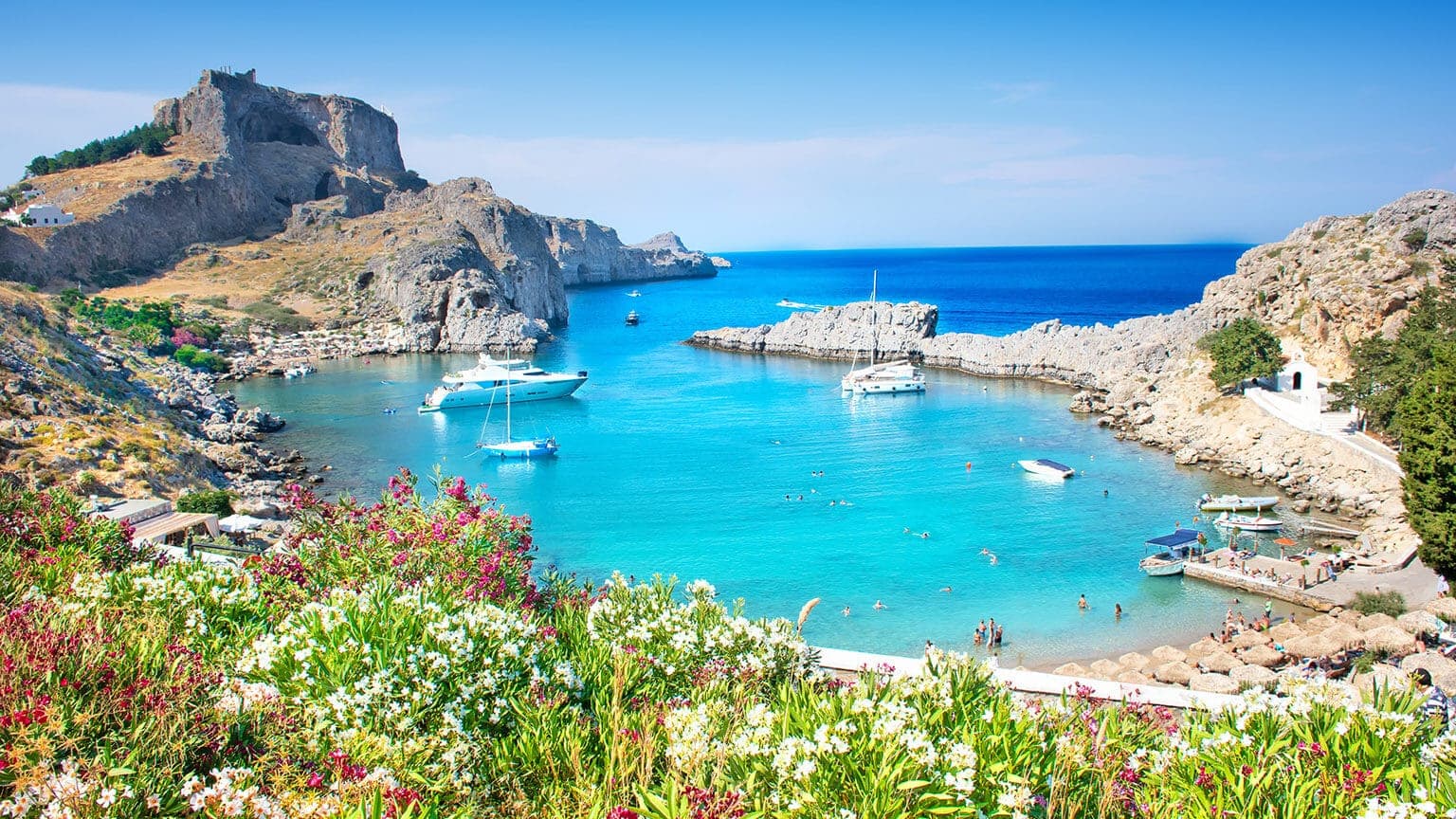
With thousands of kilometres of mainland and island coastline, Greece offers exceptional access to the sea.
The country was awarded 624 Blue Flag beaches, ranking second in the world behind Spain and accounting for around 14% of all Blue Flag beaches globally. The Blue Flag is an international eco-label awarded for high standards in water quality, safety, services, accessibility, and environmental management[12]Source: The Blue Flag official listing per country for the 2026 season..
Crete leads Greece’s regional rankings with 154 Blue Flag beaches, while Halkidiki tops the country’s regional units with 93 awarded beaches[13]Source: The info per Greek region was published by Proto Thema..
15. Rich cultural heritage
Greece is renowned for its rich cultural heritage, which spans thousands of years and encompasses various civilisations.
Greece boasts a notable number of UNESCO World Heritage Sites. The country has 20 sites, including the Acropolis of Athens, Delphi, Olympia, Meteora, Mystras, Zagori Cultural Landscape, and the Minoan Palatial Centres[14]Source: UNESCO’s official Greece page lists the full set of inscribed properties and the current total..
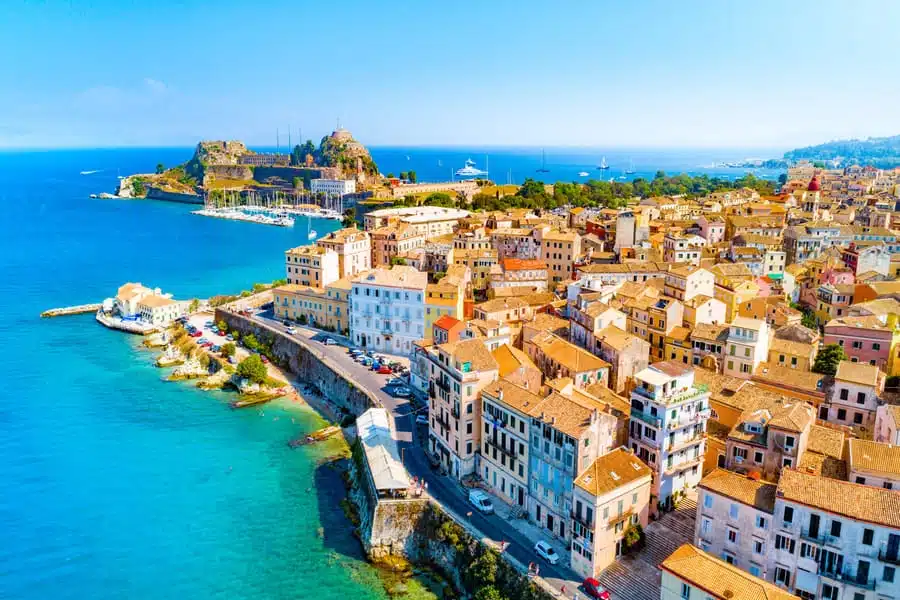
The Old Town of Corfu is one of Greece's 18 UNESCO World Heritage Sites. It represents a blend of Venetian, French, and British influences, reflecting the rich historical past of the region
Drawbacks of living in Greece
Life in Greece could seem like a dream — and, for the most of it, it truly is wonderful. However, there are some drawbacks an expat should consider before making the final decision to move.
Bureaucracy is very common. Navigating administrative processes can be time‑consuming and frustrating. Residents complain that state services are not digitised and that every request to an administration has to be done in person. For instance, an expat looking to apply for a tax incentive cannot do so online and has to file the request in an office.
Business owners in Greece are also unhappy with the bureaucracy, as it can take months to obtain permission or a certificate from a tax office. This can slow down some vital processes for a business, such as getting a loan from a bank.
Finding work is a challenge . Even though the unemployment rates have been declining since 2013, it can still be quite challenging to find work in the country, especially for non-Greek speakers. While employment opportunities are available, competition can be fierce, and proficiency in the Greek language is often required for many job positions.
Expats who want to settle have to learn Greek. While knowing Greek is unnecessary to live comfortably in the country, expats looking to move there permanently will eventually have to learn the language. Basic knowledge of the Greek language is one of the requirements for foreigners obtaining permanent residence and citizenship.
Strikes and demonstrations are common. Greece is known for its culture of strikes and demonstrations, often used to express public grievances and disagreements. While these protests are usually peaceful and do not reach the proportions of those in France, they can occasionally disrupt daily life and public services.
Since the beginning of 2023, Greece has seen repeated large-scale protests and nationwide strikes, several of them drawing tens or even hundreds of thousands of participants.
Major demonstrations followed the 2023 Tempe train crash and continued through 2025 and 2026, while labour strikes have repeatedly disrupted ferries, trains, metro services, and other public transport. For example, during the May 1st, 2026 strike, ships and ferries were suspended for 24 hours, trains and fixed-track transport were halted, and dozens of protest rallies took place across the country[15]Source: The info on the strike was reported by Keep Talking Greece..
Popular sites are crowded and expensive. High tourist demand impacts the local atmosphere and potentially increases prices and commercialisation. This is the case, for example, with the island of Santorini, which is often described as overrated and far too crowded to be enjoyable. For comparison, a dinner for two in a mid-range restaurant in Santorini will cost an average €80[16]Source: According to the data published by Numbeo., which is roughly 45% more expensive than in Thessaloniki[17]Source: According to the data published by Numbeo..
Don’t know where to start?
Download our one-page pathways navigator to compare the options and pick the best one
Pros and cons of living in Greece
While there are some drawbacks to living in Greece, a side-by-side comparison reveals that the advantages of residing there outweigh the challenges.
The conclusion is supported by the Expat Insider 2025 survey by InterNations, where Greece ranks 14th out of 46 destinations in the Ease of Settling In Index, indicating that it remains one of the easier countries for foreigners to adapt to[18]Source: InterNations, ‘Where to Go or Avoid for a Lively Social Circle,’ Expat Insider 2025..
Comparison of advantages and drawbacks of life in Greece
How to move to Greece as an investor in real estate
Foreign nationals can move to Greece with a Golden Visa for investors from non-EU countries. It takes around 6 months to prepare the documents, apply and obtain the permit.
The programme offers different investment options, with property purchases being the most popular. Here’s how the process goes with the help of professional lawyers from Immigrant Invest.
1 day
Preliminary Due Diligence
To spot the potential risks of rejection and eliminate them, a certified Anti Money Laundering Officer from Immigrant Invest conducts a background check on a potential client before signing a contract with them. This allows us to reduce the risk of rejection to 1%.
The Preliminary Due Diligence only requires the investor’s passport copy and takes one day.
To spot the potential risks of rejection and eliminate them, a certified Anti Money Laundering Officer from Immigrant Invest conducts a background check on a potential client before signing a contract with them. This allows us to reduce the risk of rejection to 1%.
The Preliminary Due Diligence only requires the investor’s passport copy and takes one day.
1+ weeks
Choosing a property
Immigrant Invest's real estate experts help you select the right property for your goals and budget. We work directly with trusted Greek developers and provide access to a database of over 300 investment-ready projects.
Immigrant Invest's real estate experts help you select the right property for your goals and budget. We work directly with trusted Greek developers and provide access to a database of over 300 investment-ready projects.
1+ weeks
Preparation of documents
Our lawyers complete the government forms and draw up a list of the required financial and personal documents. The investor gathers them and signs a power of attorney, authorising the lawyer to act on their behalf in Greece.
Our lawyers complete the government forms and draw up a list of the required financial and personal documents. The investor gathers them and signs a power of attorney, authorising the lawyer to act on their behalf in Greece.
Up to 1 week
Getting a tax number
A tax number is essential for major transactions in Greece, including buying property. The lawyer submits the application and supporting documents, and the number is usually issued within 3 to 7 working days.
A tax number is essential for major transactions in Greece, including buying property. The lawyer submits the application and supporting documents, and the number is usually issued within 3 to 7 working days.
1+ months
Property purchase
The investor signs a preliminary purchase agreement and pays a 10% deposit, after which the lawyers prepare the final agreement with a notary. The agreement can be signed by the investor or by a lawyer acting under a power of attorney.
The lawyer then registers it with the Land Registry and the Cadastre and obtains a registration certificate. The buyer receives the full package of property documents, with a certified translation.
The investor signs a preliminary purchase agreement and pays a 10% deposit, after which the lawyers prepare the final agreement with a notary. The agreement can be signed by the investor or by a lawyer acting under a power of attorney.
The lawyer then registers it with the Land Registry and the Cadastre and obtains a registration certificate. The buyer receives the full package of property documents, with a certified translation.
1 day
Applying for a residence permit
The Golden Visa application is submitted once the investment condition is met, such as the completion of a property transaction. Documents are filed online via the official website of the Greek migration service.
A certificate is issued within about a week, allowing the applicant to remain in Greece for 1 year while a decision on the residence permit is made.
The Golden Visa application is submitted once the investment condition is met, such as the completion of a property transaction. Documents are filed online via the official website of the Greek migration service.
A certificate is issued within about a week, allowing the applicant to remain in Greece for 1 year while a decision on the residence permit is made.
Within 6 months, but usually within 1 month of application
Submission of biometrics
All applicants provide biometric data — photographs and fingerprints — which are used to produce the residence permit cards. An appointment can be booked 1—2 weeks after the residence application is submitted. Travel to the country may require a visa.
Biometrics must be completed within 6 months of the application and before the 1-year deadline.
All applicants provide biometric data — photographs and fingerprints — which are used to produce the residence permit cards. An appointment can be booked 1—2 weeks after the residence application is submitted. Travel to the country may require a visa.
Biometrics must be completed within 6 months of the application and before the 1-year deadline.
3+ months
Receiving residence permit cards
The investor can collect the card in person or authorise a lawyer to do so. The card is issued on presentation of the investor's passport, and the application certificate is handed back.
The investor can collect the card in person or authorise a lawyer to do so. The card is issued on presentation of the investor's passport, and the application certificate is handed back.
Summary: is moving to Greece worth it?
- The pros of living in Greece include affordable cost of living, accessible healthcare, a laid-back lifestyle, beautiful scenery, and hospitable people.
- Among the drawbacks of residence in Greece are overwhelming bureaucracy, overcrowded touristic places, and frequent public protests.
- Foreigners looking to move to Greece can choose among several options for residence. For instance, they can invest in property and acquire a 5-year residence permit under the Golden Visa programme.
Immigrant Invest is a licensed agent for citizenship and residence by investment programs in the EU, the Caribbean, Asia, and the Middle East. Take advantage of our global 15-year expertise — schedule a meeting with our investment programs experts.


 Trusted by 10,000+ investors