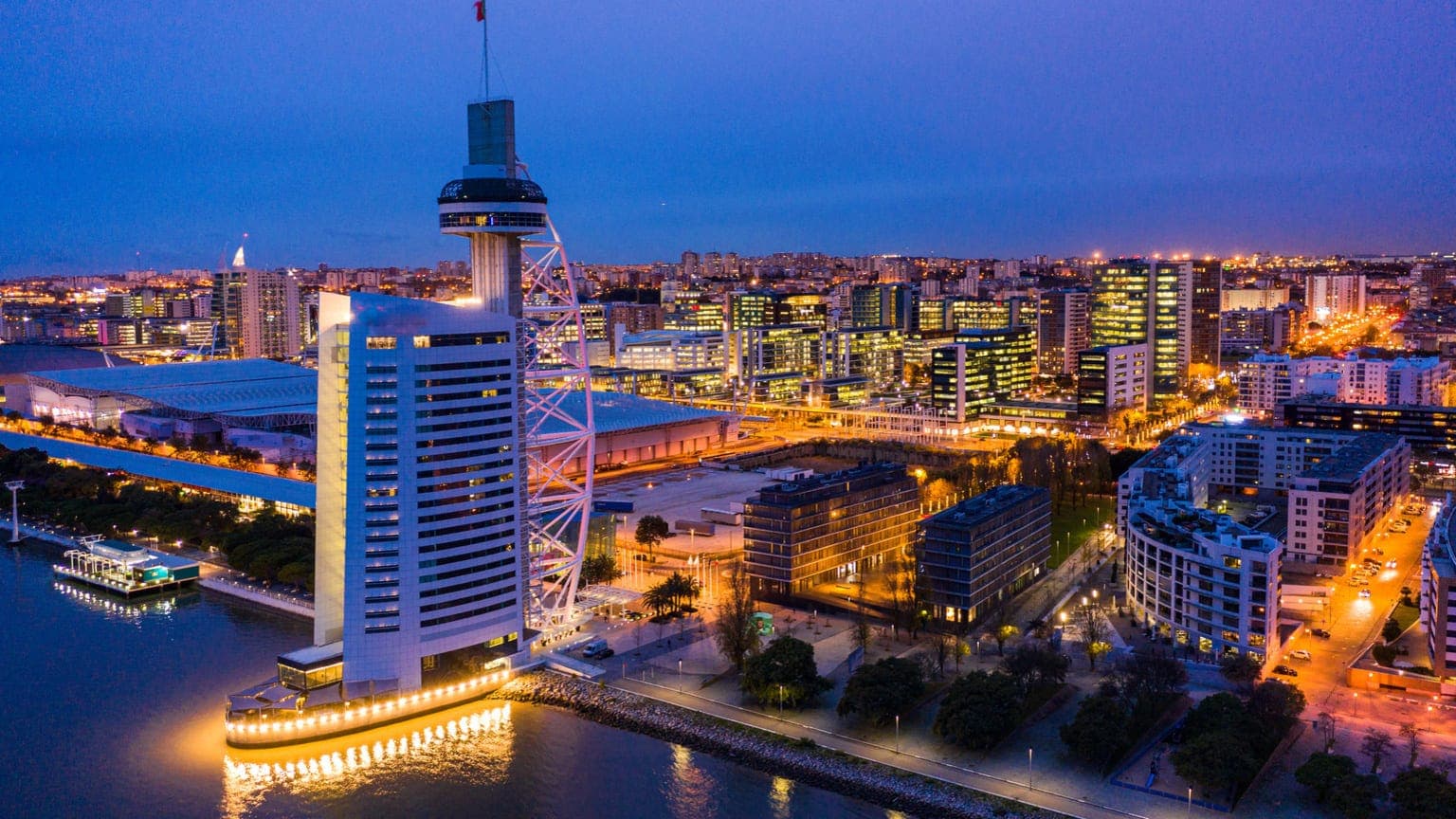








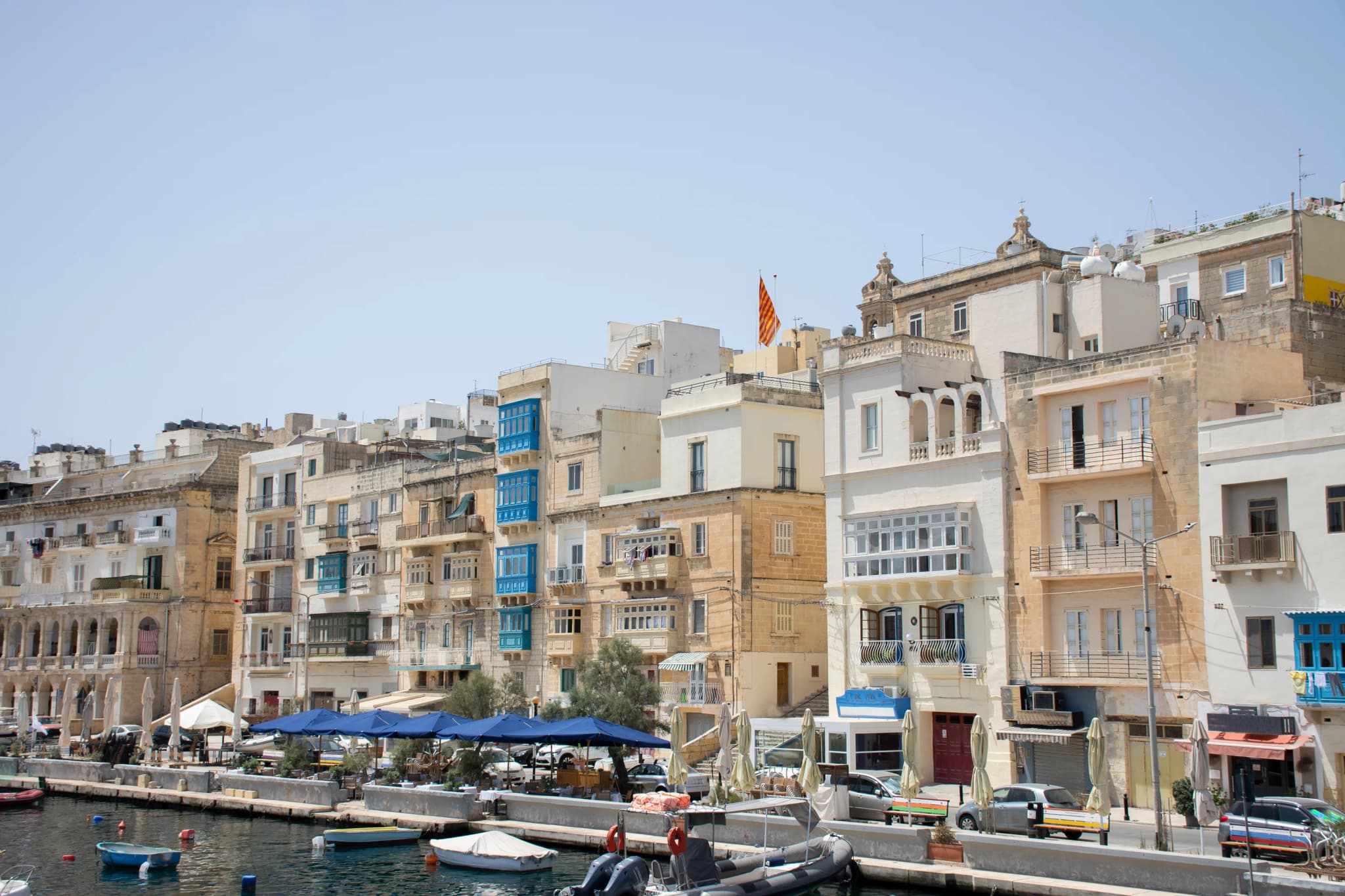

Golden Visas are one the fastest ways for wealthy investors to become residents of a foreign country, and some options are absolute bargains. For example, it is possible to obtain residence in the EU by investing €50,000.
In this article, we name the cheapest options to get a Golden Visa.
What is a Golden Visa?
The term ‘Golden Visa’ is widely used, but it is often confused with citizenship by investment. Before exploring the available programmes, it’s important to understand what a Golden Visa is and how it differs from a Golden Passport.
European Golden Visas
A Golden Visa is a residence by investment programme allowing wealthy individuals to obtain residence in another country. Depending on the terms, an applicant can invest in real estate, government bonds or a state-approved project.
Investors choose Golden Visas for many reasons, including freedom of travel, new business opportunities, tax optimisation, and access to education and healthcare systems. In some cases, it’s also a chance to relocate to a country with a better climate.
Top countries for a golden passport often attract the same audience, as investors who start with residence may later consider citizenship to expand travel freedom, protect their assets, and secure a more flexible future for their families.
Caribbean Golden Visas
Caribbean citizenship by investment programmes are also sometimes referred to as Golden Visas. While this designation is incorrect, Caribbean passports are often mentioned in the same conversation as they provide similar benefits and are great value for money. In such cases, the term “golden passport” is more accurate.
Key difference between Golden Visas and Golden Passports
A Golden Visa grants the right to live in a country. Getting a passport after a Golden Visa usually requires years of residence.
A Golden Passport provides full citizenship and a passport within months, often with no residence requirement.
Both options offer greater mobility and personal security. But only a Golden Passport gives full rights, such as voting, access to all public services, and wider visa-free travel.
7 benefits of the cheapest Golden Visas
Affordable Golden Visas can provide many of the same advantages as more expensive residence by investment options, but with a lower entry threshold. Depending on the country and programme terms, investors may gain a secure residence option, greater international mobility and access to new opportunities for their families.
1. Safe haven
A Golden Visa provides the investor with the legal right to enter and reside in the issuing country while the residence permit remains valid. This can create a valuable alternative place to live during political instability, economic uncertainty or other disruption in the investor’s home country.
Residence may also make relocation simpler because the holder does not need to apply for an ordinary tourist visa before each visit.
However, entry during emergencies is always subject to the country’s current border rules, and investors must continue meeting the programme’s renewal and residence conditions.
2. Freedom of travel
A residence permit issued by a Schengen country generally allows its holder to travel to other Schengen states without obtaining visas. The holder may spend up to 90 days out of 180 in the other Schengen countries, while their stay in the country that issued the permit is governed by that country’s residence rules.
This travel freedom makes it easier to attend business meetings, visit family, take holidays and travel at short notice.
3. Residence permits for the whole family
Most Golden Visas allow family inclusion. Investors can usually add a spouse or partner and dependent children, while some programmes also accept financially dependent parents, adult children or other relatives.
Applicants may need to provide birth and marriage certificates, proof of financial dependency and evidence that they can support every person included in the application.
4. Potential investment return
Some Golden Visa routes are based on recoverable investments, such as purchasing property, acquiring investment fund units or placing capital in an approved business. Once the mandatory holding period has ended, the investor may be able to sell the asset and recover some or all of the original capital.
Returns are never guaranteed. Property and fund values can rise or fall, while taxes, government fees, maintenance expenses, and transaction costs can reduce the final amount recovered. Non-refundable contributions, donations, and administrative fees cannot be recouped.
5. Business opportunities
Residence abroad may provide access to a new commercial market, banking system, and professional network. Depending on local regulations, an investor may be able to establish a company, acquire an existing business, purchase commercial property or move part of their operations to the country.
The right to own a business does not always include the automatic right to work for it. Some Golden Visa permits allow employment or self-employment, while others require an additional authorisation. Investors should therefore review the programme’s employment, tax, and corporate-residence rules before relocating a company.
6. Access to education and healthcare
Golden Visa holders and their families can usually access schools, universities and healthcare services in their country of residence, subject to the same registration and eligibility rules that apply to other legal residents.
Children may attend local schools, while the family can also consider private and international education.
7. Path to citizenship
Some Golden Visas can become the first step towards permanent residence and citizenship. After living legally in the country for the required period, an investor may become eligible to apply for naturalisation.
Naturalisation conditions and timelines differ between countries, and the required period is often calculated according to actual residence rather than simply how long the permit has been held. Besides, applicants may need to demonstrate physical presence, language proficiency, tax compliance, integration, and a clean criminal record.
17 cheapest Golden Visas in the world
To become a resident of a European country, applicants have to invest at least €50,000. Citizenship in the Caribbean is available for those investing $200,000 and more. Besides, there are also affordable options in Africa, Oceania, the Middle East, and Latin America.
Here are the cheapest Golden Visa countries:
- Latvia — €50,000.
- São Tomé and Príncipe — $90,000.
- Naoero — $90,000.
- UAE — no investment threshold for a single property owner or $109,000 for share ownership.
- Vanuatu — $130,000.
- Malta — €169,000.
- Dominica — $200,000.
- Antigua and Barbuda — $230,000.
- Grenada — $235,000.
- St Lucia — $240,000.
- St Kitts and Nevis — $250,000.
- Portugal — €250,000.
- Greece — €250,000.
- Italy — €250,000.
- Hungary — €250,000.
- Panama — $300,000.
- Cyprus — €300,000.
Let’s explore all Golden Visas in detail, starting with the offers in Europe, followed by the options in other regions.
Latvia Golden Visa — €50,000
Latvia offers the most affordable residence by investment programme in the EU, while granting access to the Schengen Area and offers a path to long-term EU residence.
Investment requirements
The minimum investment is €50,000 in the equity of a Latvian company. The company must have up to 50 employees and an annual turnover under €10 million. If the company has more than 50 employees and a turnover above €10 million, the minimum investment is €100,000.
Other investment options have changed. Since September 15th, 2026, the real estate and bank deposit routes have been removed for new applicants. A new fund route requiring at least €150,000 for 5 years has been introduced but is not yet available to applicants.
Family inclusion
Investors can add to the Latvia Golden Visa application:
- spouse;
- children under 18.
Additional costs and conditions
Investors pay a one-time state duty of €10,000 after the residence permit is approved.
To maintain the permit, the company must pay at least €40,000 in corporate taxes each year.

Residence requirements
Investors are not required to reside in Latvia. The permit is valid for 2 years under the business route and 5 years under the fund option, and may be renewed indefinitely while the investment is maintained.
Path to citizenship
The residence permit is valid for 5 years. After that, the investor can apply for a permanent residence permit.
Latvia citizenship is available after 10 years of continuous residence. The applicant must live as a permanent resident for at least 5 years and pass a language and civics test.
Pros of the Latvia Golden Visa
Some of the most attractive advantages include:
- one of the lowest costs for Golden Visa in the EU;
- visa-free travel to the Schengen Area;
- access to European education and healthcare.
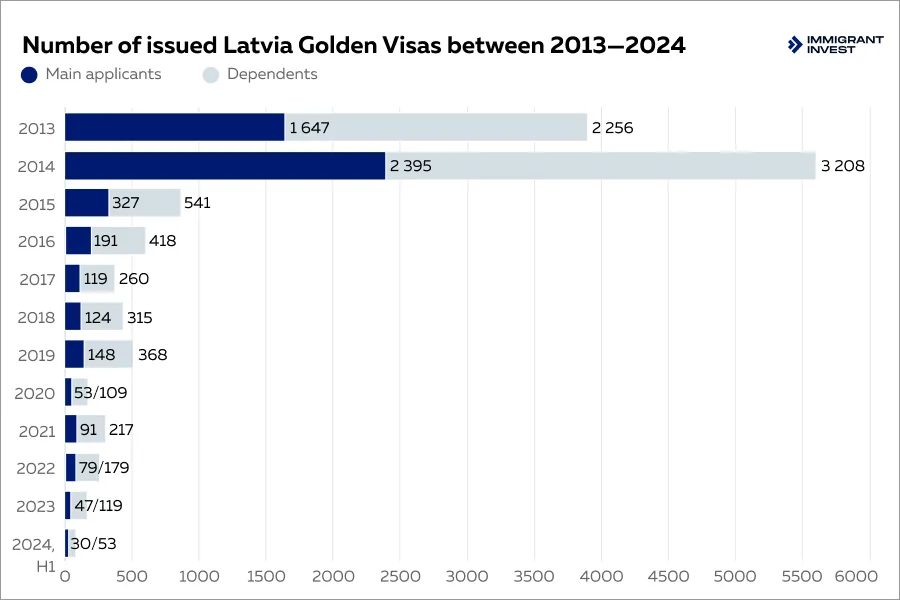
Number of issued Latvia Golden Visas between 2013—2024
Portugal Golden Visa — €250,000
Portugal’s Golden Visa is one of the most established residence by investment programmes in Europe. It offers several investment routes, flexible residence requirements, and a clear pathway to Portuguese citizenship for eligible applicants.
Investment requirements
Portugal offers five investment options to obtain a residence permit. The minimum investment threshold is €250,000 for supporting arts and restoring cultural heritage.
The most popular option is purchasing investment fund units for a minimum of €500,000. The holding period is at least 5 years, but in practice, the money is usually returned in 6—10 years.
Family inclusion
Investors can add to the Portugal Golden Visa application:
- spouse;
- unmarried financially dependent children up to 25;
- financially dependent parents.
Residence requirements
Golden Visa holders must only spend 7 days a year in Portugal to maintain their residence.
Path to citizenship
The residence permit cards must be renewed every 2 years. After 5 years of residence, investors can apply for permanent residence.
After 10 years of residence in total, investors can apply for Portugal citizenship if they are third-country nationals, or after 7 years if they are EU citizens or nationals of Portuguese-speaking countries.
Pros of the Portugal Golden Visa
One of the key reasons investors consider Portugal residence by investment is the range of long-term benefits they offer. Some of the most attractive advantages include:
- visa-free travel to the Schengen Area countries;
- short stay requirement;
- path to EU citizenship in 10 years for most applicants, or 7 years for EU citizens and nationals of Portuguese-speaking countries.
Hungary Golden Visa — €250,000
Hungary formally relaunched the Golden Visa in July 2024, allowing non-EU and non-EEA citizens obtain a 10-year residence permit in the country.
Investment requirements
The cheapest option to apply for a residence permit is purchasing fund units for €250,000.
The investment fund should allocate at least 40% of its assets to residential real estate in Hungary for it to be eligible for the programme. The share certificate must have a 5-year maturity period.
The other investment option is a €1,000,000+ donation to an institution of higher learning.
Family inclusion
Investors can add to the Hungary Golden Visa application:
- spouse or partner;
- children under 18;
- financially dependent parents.
Residence requirements
Investors do not have to live in Hungary. The residence permit can be renewed for another 10-year period if the investment is maintained.
Path to citizenship
After 3 years of living in the country with a residence permit, the investor becomes eligible for permanent residence.
To apply for citizenship, they must live in Hungary for 8 years as a permanent resident.
Pros of the Hungary Golden Visa
Some of the most attractive advantages include:
- visa-free travel across the Schengen Area;
- opportunity to live at the heart of Europe;
- low cost of living by European standards.
Greece Golden Visa — €250,000
The Greece Golden Visa is one of Europe’s most popular residence by investment programmes. It offers several investment routes, including real estate, and grants a renewable 5-year residence permit with a pathway to Greek citizenship for eligible applicants.
Investment requirements
There are multiple options to obtain a 5-year Greece residence permit by investment for a minimum amount of €250,000.
The most popular option is investing in real estate, but the investment threshold depends on the location and type of property:
- €800,000 — for properties in high-demand areas, including Attica, Thessaloniki, Mykonos, Santorini, and other islands with over 3,100 residents;
- €400,000 — for properties in all other regions of Greece;
- €250,000 — for properties purchased for renovation or conversion into residential use.
Other investment options include:
- €350,000+ — buying investment fund units;
- €500,000+ — deposit in a Greek bank.
Family inclusion
Investors can add to the Greece Golden Visa application:
- spouse;
- unmarried children under 21;
- parents.
Path to citizenship
If an investor maintains residence, lives permanently in Greece for 7 years, and passes language and cultural exams, they can apply for citizenship.
Pros of the Greece Golden Visa
Some of the most attractive advantages include:
- visa-free travel to Schengen countries;
- returnable investment;
- 5-year validity;
- benefits for new tax residents;
- path to EU citizenship in 7 years.
Italy Golden Visa — €250,000
The Italy Golden Visa offers non-EU investors a route to residence through investments in startups, companies, government bonds or philanthropic projects. The programme also provides family inclusion, access to the Schengen Area, and a long-term pathway to Italian citizenship.
Investment requirements
For Italy Golden Visa applicants, real estate investment is off the table.
The cheapest option is contributing at least €250,000 to an innovative startup. Other options include:
- €500,000+ — investing in shares of an Italian company;
- €1,000,000+ — donation to a philanthropic organisation;
- €2,000,000+ — purchase of government bonds.
Family inclusion
Investors can add to the Italy Golden Visa application:
- spouse;
- children under 18;
- disabled children of any age;
- financially dependent parents.
Path to citizenship
The residence permit cards are issued for an initial 2-year period and can be extended for 3 years. After 10 years of residing in Italy, investors can apply for citizenship.
Pros of the Italy Golden Visa
Some of the most attractive advantages include:
- visa-free travel to Schengen countries;
- special tax regime for new residents;
- path to citizenship in 10 years.
Cyprus permanent residence — €300,000
Cyprus offers permanent residence to investors, unlike many other EU countries where it is only possible to obtain temporary residence permits first.
Investment requirements
Four investment options are available, each of them worth €300,000:
- purchase of residential property;
- purchase of commercial property;
- purchase of shares of a local company;
- purchase of units of Cypriot investment funds.
Family inclusion
Investors can add to the Cyprus Golden Visa application:
- spouse;
- unmarried financially dependent children under 25;
- disabled children of any age.
Path to citizenship
Permanent residence is granted indefinitely to the investor and eligible family members, provided they continue to meet the programme requirements.
To qualify for Cyprus citizenship, investors must legally reside in the country for 8 years, including 12 consecutive months immediately before applying.
Those who become Cypriot citizens can return their investment.
Pros of the Cyprus permanent residence
Some of the most attractive advantages include:
- lifelong residence in a EU country;
- tax optimisation;
- path to EU citizenship in 8 years.
Malta Permanent Residence Programme as an alternative to EU Golden Visas
The Malta Permanent Residence Programme is available to non-EU, non-EEA, and non-Swiss citizens. This is not a Golden Visa, as it provides immediate permanent residence rather than a renewable temporary residence permit.
Investment requirements
One option for investors to obtain permanent residence in Malta is to rent a property with the following expenses:
- renting real estate for 5 years — €70,000+;
- administrative fee — €60,000, with an extra €7,500 paid for every relative over 18, excluding spouse;
- contribution fee — €37,000;
- charitable donation — €2,000.
The other option is purchasing real estate worth at least €375,000, with the other expenses unchanged.
The total cost for the two Investment options with added fees:
- €169,000+ — renting real estate;
- €474,000+ — buying real estate.
Additional conditions
The investor must also confirm having total assets of at least €500,000, of which €150,000 must be in liquid financial assets. The alternative option is to confirm a minimum of €650,000 in total assets, including €75,000 in liquid financial assets.
Family inclusion
Investors can add to the Malta Permanent Residence application:
- spouse;
- unmarried principally dependent children under 29;
- principally dependent parents and grandparents.
Obtaining period
The application is processed for at least 6 months.
Permanent residence is granted for life, allowing the investor and family members to visit the Schengen Area for 90 days in 180. The permanent residence card must be renewed every 5 years, though.
Pros of the Malta Permanent Residence Programme
Some of the most attractive advantages include:
- residence for life;
- visa-free travel to Schengen countries;
- living, working, and doing business in Malta.
UAE Residence Visa — no investment threshold
Foreigners can obtain residence in the United Arab Emirates by purchasing real estate in Dubai and freehold zones.
Investment requirements
To get a 2-year residence visa, an investor must purchase a property of any value in Dubai or by using a property they already own.
If a property has several owners, each applicant must own a share worth at least AED 400,000, or approximately $109,000. Only property located in Dubai qualifies under this residence route. Mortgaged properties and properties purchased in instalments are also eligible, subject to additional documentation.
Investors may also apply for the 10-year UAE Golden Visa by purchasing residential property worth at least AED 2,000,000, or approximately $545,000, subject to the programme’s requirements.

Do you qualify for the UAE Golden Visa?
Find out under 2 minutes by answering 4 simple questions
Family inclusion
Investors can add to the UAE residence visa application:
- spouse;
- unmarried sons under 25;
- unmarried daughters of any age.
Obtaining period
The application process typically takes around 2 months, during which the applicant must be in the UAE.
Path to citizenship
Foreign nationals may apply for UAE citizenship by naturalisation after 30 years of legal residence in the country, provided they meet all applicable legal requirements.
Pros of UAE Residence Visa
Some of the most attractive advantages include:
- no minimum property value for sole owners applying for the 2-year residence visa;
- opportunity to obtain a renewable 10-year Golden Visa through a property investment;
- fast processing time;
- no requirement to relocate permanently — visiting the UAE once or twice a year is generally sufficient to maintain residence status;
- favourable tax environment with no personal income tax;
- business opportunities in one of the world’s fastest-growing economies.
Vanuatu citizenship by investment — $130,000
Vanuatu offers one of the fastest and most affordable CBI programmes available. Applicants can qualify through a non-refundable contribution to the state development fund or an investment in the country’s cocoa industry, with no minimum residence requirement.
Investment requirements
The cheapest option to become a Vanuatu citizen is to contribute at least $130,000 to the state development fund. The contribution is non-refundable.
The second option is a contribution to the Cocoa Sustainable Development Fund, which supports the growth of Vanuatu’s cocoa industry. The minimum contribution is:
- $165,000 for a single investor or a family of up to four people;
- $25,000 per additional dependant.
After receiving citizenship, the applicant is issued a $50,000 unit in the Cocoa Sustainable Fund. The unit can be redeemed after 5 years, allowing the investor to recover part of the original contribution.
Family inclusion
Investors can add to the Vanuatu citizenship application:
- spouse;
- financially dependent children under 25;
- financially dependent parents over 50.
Obtaining period
Apart from a relatively low cost, the main advantage of the programme is fast processing time. A passport can be issued as fast as 2 months after applying.
Pros of Vanuatu citizenship by investment
Some of the most attractive advantages include:
- visa-free travel to 124 countries;
- fastest processing time;
- no personal income tax;
- no minimum stay requirement.
Dominica citizenship by investment — $200,000
Dominica offers one of the Caribbean's longest-running and most respected CBI programmes. Investors can obtain citizenship through either a government fund contribution or a recoverable investment in approved real estate, with both options providing a pathway to a Dominican passport for the main applicant and eligible family members.
Investment requirements
Dominica is the cheapest Caribbean CBI programme for the non-refundable donation route and for a recoverable real estate investment.
The cheaper option is a non-refundable contribution to the Economic Diversification Fund. The minimum amount is $200,000 for a single investor and $250,000 for a family of up to 4 people.
The other option is purchasing at least $200,000 worth of shares in state-approved real estate projects, like spa resorts and hotels. The investment can be returned in 5 years if the property is resold to another programme participant or in 3 years in other cases.
Family inclusion
Investors can add to the Dominica citizenship application:
- spouse;
- financially dependent children under 30;
- financially dependent parents and grandparents over 65.
Obtaining period
The Dominica passport can be issued after at least 6 months.
Pros of Dominica citizenship by investment
Some of the most attractive advantages include:
- relatively small investment;
- opportunity to return real estate investment;
- visa-free travel to 159 countries.

Dominica is a Caribbean country that offers one of the cheapest citizenship-by-investment programmes
Antigua and Barbuda citizenship by investment — $230,000
Antigua and Barbuda offers a flexible citizenship by investment programme with several investment options to suit different applicants. Investors can choose between a government fund contribution, approved real estate or, for larger families, a contribution to a higher education institution, all leading to citizenship for eligible family members.
Investment requirements
Antigua and Barbuda allows investors to make a non-refundable contribution to the National Development Fund as the cheapest way to obtain citizenship. Starting from August 2024, the minimum investment threshold for this option is $230,000.
Investors who want to receive their money back can purchase shares in state-approved real estate projects for at least $300,000 with the option to resell the property in 5 years.
For families of six or more, there is a possibility of investing $260,000 in a higher education institution. The contribution is non-refundable.
Family inclusion
Investors can add to the Antigua and Barbuda citizenship application:
- spouse;
- children under 31;
- financially dependent parents and grandparents over 55;
- unmarried siblings.
Obtaining period
The processing time for Antigua and Barbuda citizenship by investment application is at least 6 months.
Pros of Antigua and Barbuda citizenship by investment
Some of the most attractive advantages include:
- visa-free travel to 166 countries;
- relatively small investment;
- special offer for big families;
- no personal income tax.
Grenada citizenship by investment — $235,000
Grenada offers a citizenship by investment programme with two routes: a non-refundable contribution to the National Transformation Fund or an investment in government-approved real estate.
Investment requirements
To apply for Grenada citizenship, a single investor has to make a non-refundable contribution of $235,000 to the National Transformation Fund.
The second option is investing in government-approved real estate. An investor can purchase a share for at least $270,000 if two or more applicants invest a combined minimum of $440,000 in an approved tourism project. In all other cases, the minimum real estate investment is $350,000.
The investment can generally be resold after 5 years. A separate share registration fee also applies, and the amount varies depending on the selected property.
Family inclusion
Investors can add to the Grenada citizenship application:
- spouse;
- financially dependent children under 30;
- financially dependent parents and grandparents;
- unmarried siblings over 18.
Obtaining period
Obtaining a Grenada passport takes at least 8 months.
Pros of Grenada citizenship by investment
Some of the most attractive advantages include:
- visa-free travel to 161 countries;
- 10-year B-1/B-2 visa to the USA;
- 5-year E-2 business visa with the right to relocate to the USA;
- fewer major hurricanes compared to other Caribbean countries.
St Lucia citizenship by investment — $240,000
St Lucia offers one of the Caribbean’s most flexible citizenship by investment programmes, with several routes for different investor profiles. Applicants can choose between a government fund contribution, an infrastructure investment or government bonds, while also including eligible family members in the application.
Investment requirements
There are four ways to apply for St Lucia citizenship by investment. Like in other Caribbean states, the cheapest option is a $240,000 non-refundable contribution to the National Economic Fund.
In addition, the ‘Infrastructure Option’ also lets applicants invest in projects that will improve the country’s infrastructure: ports, bridges, roads, and so on. The prices start at $250,000.
Investors can also buy non-interest-bearing government bonds for $300,000. They can be fully redeemed in 5 years as well.
Family inclusion
Investors can add to the St Lucia citizenship application:
- spouse;
- financially dependent children under 30;
- financially dependent parents over 55;
- siblings under 18.
Obtaining period
Obtaining St Lucia citizenship by investment may take at least 6 months.
Pros of St Lucia citizenship by investment
Some of the most attractive advantages include:
- relatively small investment;
- greater global mobility;
- 10-year B-1/B-2 visa to the USA.
St Kitts and Nevis citizenship by investment — $250,000
St Kitts and Nevis operates one of the world’s longest-established CBI programmes. Applicants can qualify through a government contribution, an approved public benefit project or a real estate purchase, with eligible family members included in the same application.
Investment requirements
The minimum investment to obtain citizenship in St Kitts and Nevis amounts to $250,000. Investors contribute to the Federal Consolidated Fund or the Approved Public Benefit Projects.
For real estate investors, there are three options. They can purchase shares in a government-approved real estate project or a condominium unit for at least $325,000 or a single-family private dwelling for $600,000.
The real estate investment can only be returned in 7 years. However, the investor can earn an income of 2 to 5% per year from leasing the property.
Family inclusion
Investors can add to the St Kitts and Nevis citizenship application:
- spouse;
- financially dependent children under 25;
- dependent parents over 55.
Obtaining period
Obtaining St Kitts and Nevis citizenship by investment may take at least 4 months.
Pros of St Kitts and Nevis citizenship by investment
Some of the most attractive advantages include:
- 10-year B-1/B-2 visa to the USA;
- lenient taxation system;
- increase in global mobility;
- free healthcare for children under 18 and adults over 62.

Trusted by 10,000+ investors
Compare Caribbean citizenship by investment programmes
Other countries offering Golden Visas
Investors looking beyond the most popular Golden Visa and citizenship by investment programmes have several additional options. Some countries offer residence permits designed for entrepreneurs and business investors, while others provide direct citizenship through government-approved investment routes.
Panama Golden Visa
Panama’s Qualified Investor Programme grants immediate permanent residence, making it one of the few residence-by-investment programmes without a temporary residence stage. Investors can include eligible family members and are not required to relocate to Panama to maintain their status.
Applicants may qualify by investing at least:
- $300,000 in real estate;
- $500,000 in securities through a licensed Panamanian brokerage;
- $750,000 in a fixed-term bank deposit.
The investment must generally be maintained for at least 5 years.
Other European Golden Visas
Belgium does not operate a formal Golden Visa programme, but foreign entrepreneurs and investors can obtain residence by establishing or investing in a Belgian business. Applicants must demonstrate that their activity provides an economic benefit to the country, such as creating jobs or supporting innovation.
After meeting the residence requirements, they may become eligible for permanent residence and, eventually, Belgian citizenship.
The Dutch Investor Visa allows non-EU nationals to obtain residence by investing at least €1.25 million in the country’s economy. Eligible investments include innovative companies, approved investment funds and venture capital funds. Investors must also meet additional criteria, including proving the investment’s added value to the Dutch economy.
Luxembourg grants residence to third-country nationals who make an investment of at least:
- €500,000 in an existing or newly created Luxembourg company;
- €3 million in an investment or management structure;
- €20 million as a bank deposit.
Applicants must maintain the investment and comply with residence requirements to renew their permit.
EB-5 Visa to the USA
The EB-5 Immigrant Investor Program enables foreign nationals to obtain lawful permanent residence in the United States by making an investment that creates or preserves at least 10 full-time jobs for US workers.
The minimum investment is generally $800,000 for projects located in targeted employment areas or approved infrastructure projects, while other investments require $1,050,000.
Successful applicants receive conditional permanent residence. After meeting the programme requirements and removing the conditions on their residence, they become permanent residents of the United States. Eligible family members, including a spouse and unmarried children under 21, can be included in the application.
Naoero citizenship
Naoero offers citizenship through its Economic and Climate Resilience Citizenship Programme, introduced to raise funds for climate resilience and sustainable development. Applicants obtain citizenship by making a non-refundable contribution to the Naoero Treasury Fund after successfully passing Due Diligence.
The programme’s minimum investment currently starts at $90,000 under a temporary promotional offer.
Family members may also be included in the application, and the process is completed remotely through licensed agents.
São Tomé and Príncipe citizenship
São Tomé and Príncipe launched its citizenship by investment programme in 2025, making it one of the newest and most affordable options available.
Investors obtain full citizenship by making a non-refundable contribution to the National Transformation Fund, which finances infrastructure, education and renewable energy projects. The minimum contribution starts at $90,000 for a single applicant, with family applications starting from $95,000.
The process can take as little as 4 months, and there is no requirement to reside in or visit São Tomé and Príncipe during the application process.
Trusted by 10,000+ investors
Check your eligibility for São Tomé and Príncipe citizenship
Comparing the cheapest Golden Visa options
The two most frequent investment options to obtain a Golden Visa are a non-refundable contribution and a real estate purchase.
The Golden Visas are valid for life or renewable if all the required conditions are still met.

Golden Visa country

Min investment
No threshold
Investment type
Real estate
Status
Residence permit
Validity
2 years, renewable
Golden Visa country

Min investment
€50,000
Investment type
Business
Status
Residence permit
Validity
2 years
Golden Visa country

Min investment
$90,000
Investment type
Non-refundable contribution
Status
Citizenship
Validity
Permanent
Golden Visa country

Min investment
$90,000
Investment type
Non-refundable contribution
Status
Citizenship
Validity
Permanent
Golden Visa country

Min investment
$130,000
Investment type
Non-refundable contribution
Status
Citizenship
Validity
Permanent
Golden Visa country

Min investment
$200,000
Investment type
Non-refundable contribution
Status
Citizenship
Validity
Permanent
Golden Visa country

Min investment
$230,000
Investment type
Non-refundable contribution
Status
Citizenship
Validity
Permanent
Golden Visa country

Min investment
$235,000
Investment type
Non-refundable contribution
Status
Citizenship
Validity
Permanent
Golden Visa country

Min investment
$240,000
Investment type
Non-refundable contribution
Status
Citizenship
Validity
Permanent
Golden Visa country

Min investment
$250,000
Investment type
Non-refundable contribution
Status
Citizenship
Validity
Permanent
Golden Visa country

Min investment
€250,000
Investment type
Investment fund units
Status
Residence permit
Validity
2 years, renewable
Golden Visa country

Min investment
€250,000
Investment type
Real estate
Status
Residence permit
Validity
5 years, renewable
Golden Visa country

Min investment
€250,000
Investment type
Innovative startup
Status
Residence permit
Validity
2 years, renewable
Golden Visa country

Min investment
€250,000
Investment type
Investment fund units
Status
Residence permit
Validity
10 years, renewable
Golden Visa country

Min investment
$300,000
Investment type
Real estate
Status
Permanent residence
Validity
Permanent
Golden Visa country

Min investment
€300,000
Investment type
Real estate
Status
Permanent residence
Validity
Permanent
Golden Visa country | Min investment | Investment type | Status | Validity |
|---|---|---|---|---|
No threshold | Real estate | Residence permit | 2 years, renewable | |
€50,000 | Business | Residence permit | 2 years | |
$90,000 | Non-refundable contribution | Citizenship | Permanent | |
$90,000 | Non-refundable contribution | Citizenship | Permanent | |
$130,000 | Non-refundable contribution | Citizenship | Permanent | |
$200,000 | Non-refundable contribution | Citizenship | Permanent | |
$230,000 | Non-refundable contribution | Citizenship | Permanent | |
$235,000 | Non-refundable contribution | Citizenship | Permanent | |
$240,000 | Non-refundable contribution | Citizenship | Permanent | |
$250,000 | Non-refundable contribution | Citizenship | Permanent | |
€250,000 | Investment fund units | Residence permit | 2 years, renewable | |
€250,000 | Real estate | Residence permit | 5 years, renewable | |
€250,000 | Innovative startup | Residence permit | 2 years, renewable | |
€250,000 | Investment fund units | Residence permit | 10 years, renewable | |
$300,000 | Real estate | Permanent residence | Permanent | |
€300,000 | Real estate | Permanent residence | Permanent |
General requirements for Golden Visa applicants
Golden Visa programmes have different eligibility rules, but most require applicants to demonstrate financial reliability, good character, and compliance with immigration regulations. Both the main investor and accompanying family members are subject to document checks and Due Diligence before residence or citizenship is granted.
Main applicant
Specific requirements can vary between programmes. However, in most cases, the investor must:
- be over 18 years old;
- have sufficient funds and prove the legality of their income;
- have no criminal record;
- have medical insurance and no serious illnesses.
Applicants must also submit a full set of documents, including:
- personal identification;
- financial records such as tax returns and bank statements;
- police clearance certificates;
- proof of relationship to accompanying family members, such as birth and marriage certificates.
These documents often require certified translation, legalisation, or an apostille.
Authorities conduct strict Due Diligence checks to confirm that the applicant poses no financial, reputational, or security risk.
Family members
Family members included in the application must meet similar health and background standards.
Investment options to obtain a Golden Visa
The exact terms of obtaining a Golden Visa vary between countries. Below are the most frequent options for investors.
1. Real estate
Real estate is one of the most common residence-by-investment routes. Depending on the programme, applicants may purchase residential property, commercial premises, hotel accommodation, or shares in an approved development.
The property must satisfy the programme’s rules concerning its value, location, permitted use and ownership period. Investors should also account for taxes, registration fees, maintenance expenses, and restrictions on selling or renting out the property.
2. Government bonds
Some investment migration programmes allow applicants to purchase government bonds or other sovereign securities. Italy, for example, requires an investment of at least €2 million in Italian government bonds under its Investor Visa programme.
Government bonds may provide a more predictable return than certain business or real estate investments, but they are not risk-free. Their value can be affected by interest rates, inflation, currency movements, and the issuing country’s creditworthiness. Applicants must normally retain the bonds for the period specified by the programme.
3. Business investment
Italy along with Greece and Portugal allows investors to establish new companies or invest in existing businesses while creating new jobs. Another variety of this option is a startup investment.
Golden Visa programmes may require the company to operate locally, maintain a physical presence and create a specified number of jobs. Cyprus, for example, accepts a €300,000 investment in a qualifying Cypriot company that operates in the country and employs at least 5 people. Portugal also permits applicants to qualify by creating at least 10 jobs.
4. Bank deposits
Certain programmes grant residence to applicants who place a qualifying sum in a local bank for a prescribed period. Greece, for example, offers an investment route based on a term deposit with a Greek credit institution.
The money usually has to remain deposited for as long as the residence permit depends on the investment. Applicants should consider the bank’s financial stability, deposit protection limits, interest rates, currency risk, and any penalties for early withdrawal. A standard current or savings account is not sufficient unless it meets the programme’s specific conditions.
5. Investment funds
Investment fund routes allow applicants to purchase units in regulated funds that invest in eligible assets, such as local companies, private equity, infrastructure, or real estate. Portugal’s Golden Visa includes a capital transfer into eligible investment or venture capital funds.
Fund investments are managed professionally and may offer greater diversification than purchasing a single property. Nevertheless, capital and returns are not guaranteed. Investors should review the fund’s strategy, fees, risk profile, regulatory status, minimum holding period, and expected exit arrangements before committing their money.
6. Contribution to national development funds
Caribbean citizenship by investment programmes commonly allow applicants to make a non-refundable contribution to a government fund. These funds may support infrastructure, healthcare, education, climate resilience, and wider economic development.
A fund contribution is generally the simplest investment route because applicants do not have to manage or resell an asset. It may also have a lower initial threshold than real estate. However, unlike real estate, bonds, or fund units, a government contribution cannot be recovered.
7. Arts and culture
Portugal allows Golden Visa applicants to transfer at least €250,000 to support artistic production or the recovery and preservation of national cultural heritage. The investment must be made through an eligible public body, foundation, cultural association, or another organisation recognised under the programme.
This is the lowest specified capital-transfer route under the Portugal Golden Visa, but it is generally non-refundable and should be treated as cultural support rather than a conventional investment. The relevant authority must certify that the contribution satisfies the programme’s requirements.

Trusted by 10,000+ investors
Your shortcut to Greece residency: top properties from €250k
Common step-by-step process of obtaining a Golden Visa
Golden Visa and citizenship by investment programmes usually follow a standard process. The timeline may vary by country, but the main steps remain the same — from initial assessment to receiving a residence permit or passport.
1 day
Initial consultation with an expert
The process begins with a consultation. Immigrant Invest specialists assess the investor’s goals, family situation, and preferred countries. After reviewing available options, the investor chooses a suitable programme. Our legal team then evaluates eligibility and potential risks.
The process begins with a consultation. Immigrant Invest specialists assess the investor’s goals, family situation, and preferred countries. After reviewing available options, the investor chooses a suitable programme. Our legal team then evaluates eligibility and potential risks.
1 day
Preliminary Due Diligence
A certified Compliance Anti-Money Laundering Officer checks the investor against international databases. This internal check reduces the refusal risk to 1%.
We do not sign a contract without this step. If risks are identified, we suggest solutions such as submitting extra documents or selecting a different programme.
A certified Compliance Anti-Money Laundering Officer checks the investor against international databases. This internal check reduces the refusal risk to 1%.
We do not sign a contract without this step. If risks are identified, we suggest solutions such as submitting extra documents or selecting a different programme.
2 weeks
Document preparation and collection
Our lawyers provide a personalised list of required documents. The investor collects the documents, including:
- valid passport;
- proof of income and source of funds;
- police clearance certificate;
- medical insurance;
- birth and marriage certificates, if applying with family.
Documents must be translated and legalised as required. Our team handles this to avoid errors.
Our lawyers provide a personalised list of required documents. The investor collects the documents, including:
- valid passport;
- proof of income and source of funds;
- police clearance certificate;
- medical insurance;
- birth and marriage certificates, if applying with family.
Documents must be translated and legalised as required. Our team handles this to avoid errors.
Up to 3 months
Making the investment
The investor transfers funds to complete the investment. This may include buying real estate, subscribing to a fund, or donating to a government fund. Proof of investment is needed to proceed with the application.
The investor transfers funds to complete the investment. This may include buying real estate, subscribing to a fund, or donating to a government fund. Proof of investment is needed to proceed with the application.
1 day
Application submission
After the investment is confirmed and documents are finalised, the complete application is submitted to the relevant government agency. Depending on the country, this can be done remotely or may require physical presence.
After the investment is confirmed and documents are finalised, the complete application is submitted to the relevant government agency. Depending on the country, this can be done remotely or may require physical presence.
2—6 months
Due Diligence and government processing
The government conducts its own Due Diligence checks. This may involve checks through international security databases or, in some countries, in-person interviews.
The government conducts its own Due Diligence checks. This may involve checks through international security databases or, in some countries, in-person interviews.
1—2 weeks
Biometrics and issuance of residence card or passport
In most residence programmes, the applicant must visit the country to submit biometric data, such as fingerprints and photographs. Shortly after, Golden Visa applicants receive a residence certificate and residence card, while Golden Passport applicants receive a naturalisation certificate and passport.
In most residence programmes, the applicant must visit the country to submit biometric data, such as fingerprints and photographs. Shortly after, Golden Visa applicants receive a residence certificate and residence card, while Golden Passport applicants receive a naturalisation certificate and passport.
After 1—10 years
Ongoing compliance and renewal
To maintain the Golden Visa status, the investor may need to:
- spend a minimum number of days in the country;
- renew the residence card every few years;
- maintain the investment for a set period, typically 5 years.
Many programmes allow investors to apply for permanent residence or citizenship after 5—10 years, subject to conditions such as physical presence or language knowledge.
To maintain the Golden Visa status, the investor may need to:
- spend a minimum number of days in the country;
- renew the residence card every few years;
- maintain the investment for a set period, typically 5 years.
Many programmes allow investors to apply for permanent residence or citizenship after 5—10 years, subject to conditions such as physical presence or language knowledge.
Risks and considerations: what every investor must know
Investment migration programmes can offer significant benefits, but they also involve financial, legal, and regulatory risks. Before applying, investors should carefully evaluate the programme's long-term stability, understand all eligibility requirements, and ensure that their investment complies with the applicable rules to minimise the risk of delays or refusal.
Programme changes
Golden Visa programmes can change or close without notice. Governments may raise investment thresholds, change eligibility rules, or remove options. In 2026, Latvia abolished the real estate and bank deposit routes and introduced a new fund option. In 2023, Portugal removed the real estate option from its Golden Visa, and Spain closed its programme entirely in 2025.
These changes show why it is important to act while conditions are favourable. Investors who obtain a residence permit or citizenship before changes take effect usually keep all acquired rights. In most cases, existing permits remain valid and renewable under the original terms.
Political and economic instability
Some Golden Visa countries may face regulatory pressure or geopolitical shifts that affect the programme’s stability or travel benefits.
For instance, Vanuatu lost visa-free access to the Schengen Area due to Due Diligence concerns. Similar scrutiny has been directed at several Caribbean citizenship programmes.
Common mistakes and reasons for visa refusal
Investors can be denied if basic requirements are not met. Frequent mistakes include:
- incomplete or incorrectly prepared documents;
- criminal record or issues in international databases;
- unclear source of funds;
- past visa denials or legal issues;
- investing in a company or property that doesn’t meet programme conditions.

Vladlena Baranova,
Head of Legal & AML Compliance Department, CAMS, IMCM
Immigrant Invest is a licensed agent for leading programmes. Our Compliance Department conducts internal Due Diligence before an application is submitted, allowing us to identify potential issues early and improve the chances of approval.
We check all documents and ensure compliance with current laws. Our legal team works to prevent delays, refusals, or complications.
7 latest updates about Golden Visa programmes
Golden Visa and investment migration programmes continue to evolve, with governments tightening rules, revising investment thresholds, and introducing new compliance requirements. The latest changes affect programmes across Europe, the Caribbean, Vanuatu, and the UAE.
1. Spain Golden Visa officially ends
On April 3rd, 2025, Spain officially closed its Golden Visa program. The decision was linked to housing market concerns in major cities. Existing permit holders retain their rights, but no new applications are accepted.
2. Latvia reshaped its Golden Visa programme
Latvia introduced major Golden Visa changes on September 15th, 2026. The real estate and bank deposit routes were removed for new applicants, leaving investment in a Latvian business as the main active option. The new Immigration Law also introduced a €150,000 investment route through a state-established alternative investment fund manager.
The new fund route is not yet available. The required fund has not been established, so applications cannot currently be submitted under this option.
3. Malta updates fees for Permanent Residence Programme
Though not a Golden Visa, the Malta Permanent Residence Programme remains a popular route to EU residence. In 2025, the Maltese government revised its fee structure:
- administrative fee increased to €60,000 for the main applicant and to €7,500 for family members over 18, except the spouse;
- contribution fee was reduced to €37,000;
- no contribution fee is required for family members;
- minimum total investment now starts at €169,000 for renting and €474,000 for buying property.
4. Caribbean citizenship programmes under review
Governments of Antigua and Barbuda, Dominica, Grenada, St Kitts and Nevis, and St Lucia have aligned their minimum investment thresholds at $200,000+ following the Memorandum of Agreement in 2024.
Further changes are under discussion. Authorities may introduce mandatory residence requirements. If adopted, investors could be required to spend time in the country before or after obtaining citizenship — a significant shift for the Caribbean programmes.
5. Vanuatu and St Kitts and Nevis introduced biometric passport requirement
In 2025, Vanuatu introduced a rule requiring citizenship by investment applicants to travel to the country to submit biometric data before receiving their passports. This change replaces the previous remote process and aims to improve transparency and meet international security standards.
St Kitts and Nevis launched its National Biometric Enrolment and Passport Modernisation Programme on April 14th, 2026. Biometric enrolment is mandatory for all new citizenship programme applications submitted from that date. Applicants can book an appointment after receiving approval in principle and must provide fingerprints, a digital facial image and a digital signature; an iris scan may also be collected where applicable.
The requirement also applies to existing citizens who obtained citizenship through the programme, including dependants and children. They must complete enrolment by July 31st, 2027. Passports issued before April 14th, 2026 remain valid during the transition period, but will no longer be accepted for international travel after the deadline unless the holder enrols and obtains an upgraded biometric passport.
Enrolment is available at authorised centres in St Kitts and several international locations, including Dubai, London, Istanbul, Hong Kong, Toronto and Abu Dhabi.
Trusted by 10,000+ investors
Submit biometrics to secure a valid St Kitts and Nevis passport
6. Dubai removes the minimum property value for a 2-year Residence Visa
In April 2026, Dubai simplified the conditions for obtaining a renewable 2-year Residence Visa through property ownership. A sole owner may now qualify by owning property of any value in Dubai, replacing the previous minimum threshold of AED 750,000.
Where a property has several owners, an applicant must generally hold a share worth at least AED 400,000. Mortgaged properties and properties purchased in instalments may also qualify, provided the applicant submits the required documents from the bank or developer.
7. Portugal extended the path to citizenship
Portugal tightened its citizenship rules on May 19th, 2026. Previously, foreigners could apply for naturalisation after 5 years of legal residence, which made the Portugal Golden Visa particularly attractive to non-EU investors seeking one of the shorter routes to EU citizenship.
Under the new rules, the period has increased to 7 years for EU and Portuguese-speaking-country nationals and 10 years for most other foreigners.
Integration requirements have also become broader. Applicants must now demonstrate sufficient knowledge of Portuguese language and culture, national history and symbols, fundamental rights and duties, and Portugal’s political system.
Key things to know about the cheapest Golden Visas
- A Golden Visa allows foreigners to obtain residence by investment in a country’s economy. It can also serve as an umbrella term for investment programmes, including permanent residence and citizenship by investment.
- Latvia offers the most affordable Golden Visa in the European Union, with the option to invest just €50,000 in a local company.
- Hungary, Greece, Italy, and Portugal also remain among the cheapest EU residence programmes, with minimum investments starting at €250,000.
- Naoero and São Tomé and Príncipe offer the least expensive paths towards obtaining citizenship by investment: passports of these countries can be obtained for $90,000.
- The Malta Permanent Residence Programme is not a Golden Visa, but a separate option that grants lifelong permanent residence. The minimum investment starts at €169,000 with a 5-year property rental.
Immigrant Invest is a licensed agent for citizenship and residence by investment programs in the EU, the Caribbean, Asia, and the Middle East. Take advantage of our global 15-year expertise — schedule a meeting with our investment programs experts.

 Trusted by 10,000+ investors