








Buying property in another country allows investors to secure their funds, have a stable passive income, make a profit, and sometimes even obtain residence or citizenship in the country.
Explore the easiest countries to buy property as a foreigner, where strong economies, growth potential, and a high quality of life offer fantastic opportunities.
7 benefits of purchasing real estate in a foreign country
Buying real estate abroad can offer more than a place to live or spend holidays: it may help obtain residence or citizenship, diversify assets, generate rental income, and protect capital.
1. Get a second passport or residence as part of the deal
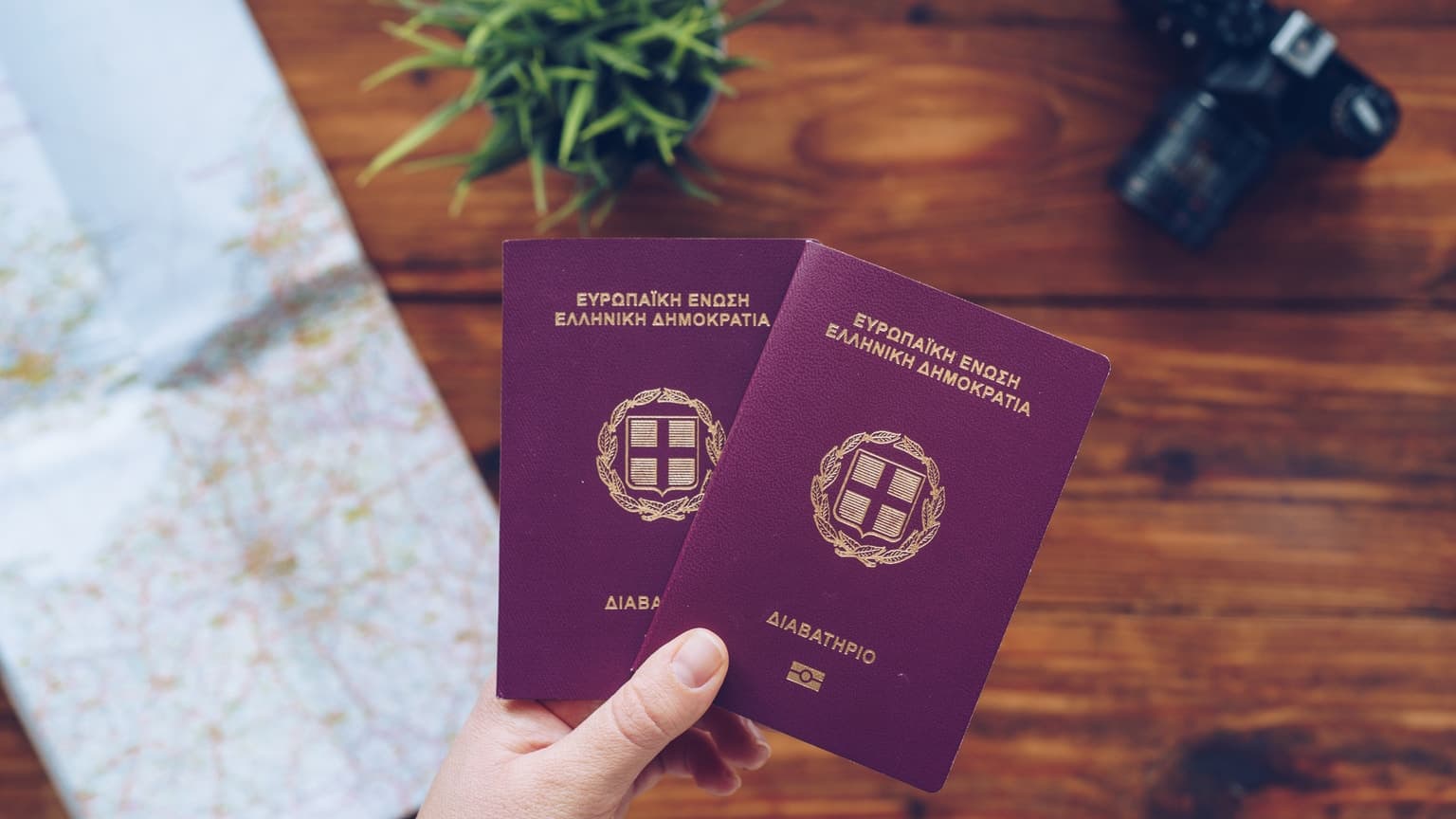
Countries like Greece, Malta, Cyprus, Panama, and the UAE offer the possibility to obtain residence through real estate investment. Also, in some Caribbean countries, Türkiye, and Egypt, real estate investment can provide the opportunity to gain citizenship.

Elena Kozyreva,
Managing Director for Real Estate projects
In Caribbean countries, a foreigner has the right to buy property and obtain citizenship for a minimum cost of $200,000. The property can be rented out, and after 3—7 years of ownership, it can be sold, and the invested money returned.
2. Potentially high returns
Many markets offer a high potential for property value appreciation. Countries undergoing rapid development, urbanisation, or experiencing economic growth often see significant increases in property values.
3. Diversification
Foreign real estate allows the investor to diversify their investment portfolio, reducing risk. By spreading investments across different countries, they can mitigate the impact of economic downturns in any region.
4. Rental income
Foreign real estate can generate substantial rental income, especially in tourist hotspots or cities with high demand for rental properties. This income can provide steady cash flow and increase the overall return on investment.

5. Lifestyle
Owning property abroad provides the opportunity to enjoy a second home for vacations, retirement, or seasonal living. This can enhance the lifestyle and provide a safe haven in a chosen location.
6. Asset protection
Real estate in a stable foreign country can provide protection for assets against political or economic instability in the home country. It can also safeguard your wealth against currency devaluation and capital controls.
7. Tax exemptions
Owning property in certain countries allows investors to benefit from tax exemptions and deductions, helping to reduce their overall tax burden. Some countries offer favorable tax incentives for foreign property owners, enhancing the investment’s profitability.
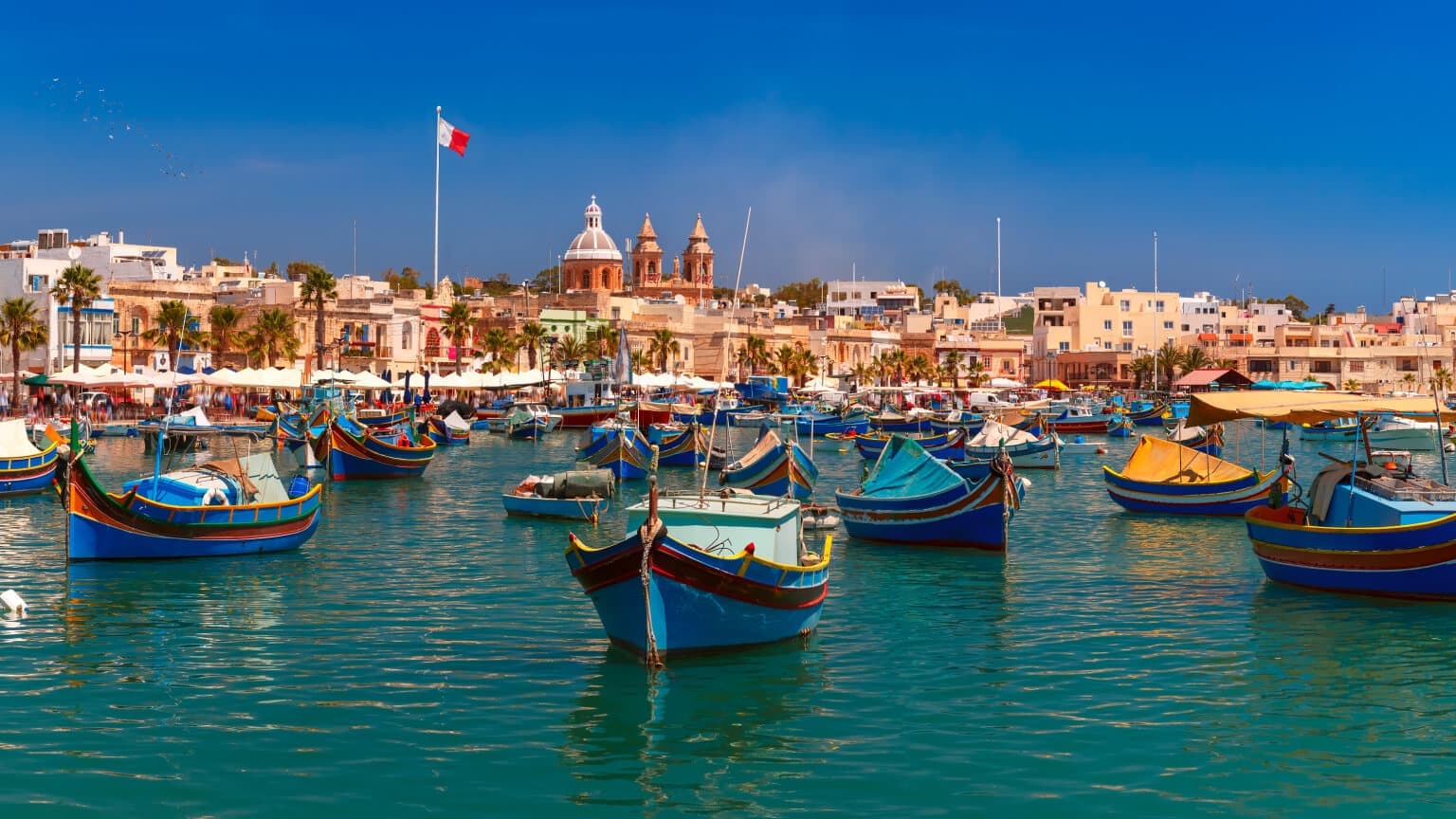
For example, Malta does not impose a general property tax. A fee applies only if the land attached to a villa or apartment building is leased out long-term. In such cases, the tax ranges from €40 to 250 per annum.
25 best countries to invest in real estate: Immigrant Invest experts' rating
№ | Country | Price per m2 | Projected value growth | Citizenship/ residence by investment |
|---|---|---|---|---|
1 | €3,300 | 6% | Permanent residence | |
2 | €2,500 | 8% | Residence | |
3 | €4,400 | 15% | Residence | |
4 | €2,300 | 7% | Permanent residence | |
5 | $900 | 4% | Citizenship | |
6 | $2,500 | 4% | Citizenship | |
7 | $5,200 | 4% | Citizenship | |
8 | $4,500 | 4% | Citizenship | |
9 | $2,000 | 10% | Citizenship | |
10 | $1,500 | 25% | Citizenship | |
11 | $780 | 13% | Citizenship | |
12 | $5,700 | 10% | Residence visa | |
13 | $2,500 | 15% for newly builds | Permanent residence | |
14 |
| $2,100 | 4.3% | Residence |
15 |
| €4,400 | 23% | — |
16 |
| €5,800 | 9% | — |
17 |
| $5,200 | 2% | — |
18 |
| €4,500 | 5.7% | — |
19 |
| €8,300 | 3.8% | — |
20 |
| €9,400 | 1% | — |
21 |
| €10,900 | 4.5% | — |
22 |
| €18,000 | 4.4% | — |
23 |
| $20,000 | 3.4% | — |
24 |
| €5,300 | 3% | — |
25 |
| $5,000 | 6% | — |

 Spain
SpainCountries offering citizenship after real estate purchase
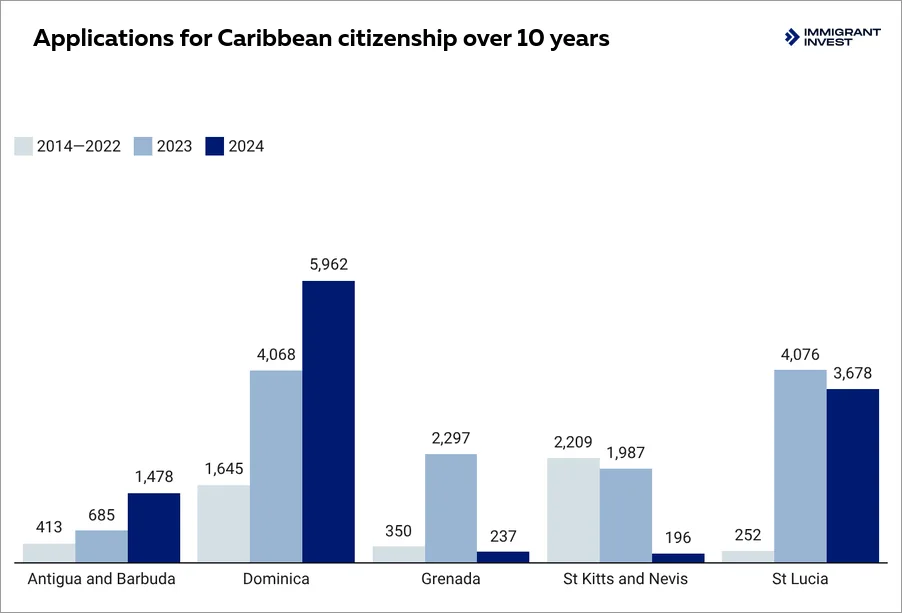
Several countries allow investors to obtain citizenship or long-term residence through real estate purchase, provided the property meets the programme’s minimum threshold and holding-period requirements. Caribbean countries are particularly popular for citizenship by investment, with several programmes allowing investors to qualify through approved real estate purchases.
 Grenada
Grenada is one of five Caribbean countries with a citizenship by investment programme with a real estate option. Investors can either purchase a share in an approved property from $270,000 or acquire an approved property in full ownership from $350,000.
The investment can be returned in 5 years.
Investors are not obliged to live in the country after obtaining citizenship, so they can rent the property out with a rental yield of at least 4% per annum.
 St Lucia
St Lucia has four options to obtain citizenship by investment, including purchasing real estate worth at least $300,000. The investor can return the money 5 years later by selling the property. The rental yield in the country varies from 3 to 5% per year.
 Antigua and Barbuda
Antigua and Barbuda offers a citizenship by investment programme for purchasing approved real estate worth at least $300,000.
The investment property must be maintained for 5 years. Before that, the owner can rent it out with gross rental yields of around 4% per year.
 St Kitts and Nevis
Foreigners can obtain citizenship in St Kitts and Nevis if they purchase property from a list of government-approved real estate projects, including private homes.
The property must have a value of at least $325,000 and be held for at least 7 years after obtaining the passport. It can generate rental income of 2 to 5% per year.
The average real estate property in St Kitts and Nevis has been increasing in value by 4% per year. The prices are quite high, around $5,000 per square metre in the city centre.
 Dominica
In Dominica, the citizenship by investment programme also allows foreigners to purchase property worth at least $200,000 and hold it for a minimum of 3 years to obtain a passport.
The real estate market dynamic is roughly the same as in the other countries in the region, with prices rising by around 4% per year. While owning the property, the investor can receive rental income of at least 4% of its value per year.
 Türkiye
Türkiye grants the investor and their family immediate citizenship for real estate investment. The minimum threshold is $400,000, and the acquired asset must be kept for at least 3 years.
When buying real estate in Türkiye, it is important to account for high inflation. In May 2026, annual inflation stood at 32.61%, down from 75.45% at its peak in May 2024.
Residential property prices continued to rise in nominal terms: in May 2026, they increased by 24.5% year-on-year. However, after adjustment for inflation, real prices fell by 6.1%, meaning inflation still offset nominal market growth.
Compared to other countries on the list, real estate in Türkiye remains affordable: the value of a m2 of an apartment in a city centre is around $1,500 on average.
 Egypt
Egypt
Egypt offers a citizenship by investment programme that includes real estate purchase options. Investors must buy real estate worth at least $300,000. The property can be sold 5 years after obtaining citizenship.
This is one of the most dynamic real estate markets: house prices in Egypt rose by around 13% year-on-year in 2025, although some market segments recorded increases of 20—30% in the first half of the year. Currently, they are extremely affordable, with an apartment in the city centre worth about $680 per m2.
6 countries offering residence by investment in real estate
Now, let us focus on countries where purchasing property grants a residence permit, rather than citizenship. These countries offer an opportunity to secure residence through real estate investment.
 Greece
Greece grants residence permits to non-EU citizens who invest at least €250,000 in real estate for renovation or conversion into residential space. For standard property purchases, the minimum threshold is €400,000 or €800,000, depending on location.
The investor and their family members receive a 5-year residence permit, which is renewable as long as the investment is maintained.
House prices increased by 7.2% in 2025. An average apartment in a city centre would cost around €2,500 per m2.

 Malta
Malta
The Malta Permanent Residence Programme offers investors lifetime residence in Malta with the right to live there and travel across the Schengen Area. The programme does not require relocation or language tests.
To qualify, applicants must meet several mandatory requirements. They must:
- either rent or buy property;
- pay government fees;
- donate to a Maltese non-governmental organisation.
The main choice is between purchasing and renting real estate, with total minimum expenses of €474,000 and €100,200, respectively.
Applicants must also prove sufficient assets: at least €500,000, of which €150,000 must be financial assets, or at least €650,000, of which €75,000 must be financial assets. Applications can only be submitted through a licensed agent such as Immigrant Invest.
House prices in Malta increased by 6.1% in 2025. Apartment prices increased by 6.2%, while maisonette prices grew by 5.3%. The average asking price for apartments reached around €415,000.
An average apartment in Malta costs around €3,300 per m2, with prices in central and prime areas often exceeding €4,500 per m2.
 Cyprus
Cyprus requires a minimum real estate investment of €300,000 to obtain permanent residence.
The country is attractive due to its favourable tax regime, as tax residency is defined by living in the country or having the centre of life interests there, which permanent residence by investment does not require.
Cyprus is a popular country for expats, thus leading to a steady demand for real estate. The prices grew by 7% in 2025. Currently, the average value of an apartment in a city centre stands at €2,300 per m2.

Learn the benefits, conditions and specifics of the Cyprus Permanent Residence by real estate investment
 Panama
Panama is a country with one of the most stable economies in Latin America. Prices for newly built real estate in Panama rose by 15% in 2025. In central Panama City, the capital, an apartment costs less than $2,500 per m2 on average.
If a foreign investor purchases real estate worth at least $300,000, they are eligible for a permanent residence permit.
 UAE
UAE
There are two options to obtain residence by real estate investment in the United Arab Emirates, specifically Dubai. Purchasing property for AED 2,000,000, or about $545,000, can qualify an investor for a 10-year residence visa. For sole owners, there is no property value threshold for a 2-year residence visa.
Residential properties were in unprecedented demand in 2025, resulting in house prices rising by 10% in Dubai. An average apartment in the city centre is valued at $5,700 per m2.
 Brazil
Brazil offers permanent residence to foreigners investing in real estate. The minimum threshold is $135,000 if the real estate is purchased in the North and North Eastern regions of the country, and $193,000 for all the other regions, including the largest cities of Sao Paulo and Rio de Janeiro.
The real estate in Brazil is very affordable, just above $2,000 per m2. The prices grew by 4.3% in 2025.
Best countries with strong economies to invest in real estate
A strong economy is one of the key factors behind a successful real estate investment. Countries with stable growth and resilient housing markets tend to offer better long-term prospects for capital appreciation and rental income. Below are some of the world's strongest economies that continue to attract foreign property investors.
 United States
Even though this is one of the most expensive real estate markets in the world, the United States remains popular among foreign investors. From April 2024 to March 2025, foreign buyers spent $56 billion on US residential real estate, up 33.2% from the previous year.
Some states, such as Florida and Texas, have no income taxes, making them an attractive destination. Others, like California and New York, stand out for higher values and higher returns. Overall, the real estate market grew by 1.8% in 2025.
Currently, a m2 in a city centre is worth around $5,200 on average, although the prices vary significantly across the country.
 Germany
Germany is one of Europe’s major real estate markets. After a sharp correction in 2023, when residential property prices fell by 8.4%, the market started to recover. In 2025, prices rose by 3.2% year-on-year on an annual average basis, marking the first full-year increase since 2022.
More than half of Germans do not own property but rent it instead, and foreign investors can take advantage of that.
The country offers numerous tax benefits for buy-to-let mortgages, with rental income generally higher than interest. The prices are quite high, though: a m2 in a city centre is worth around €5,300 on average.
 United Kingdom
In the UK, residential property prices rose by 3.8% year-on-year in April 2026, reaching an average of £270,000. The ongoing housing shortages and low interest rates result in a surge in demand, driving prices upward and making the United Kingdom an attractive place for foreign investors.
Across the country, a m2 in a city centre would be worth over €8,000 on average. In London, however, the value goes up almost three times, reflecting its status as one of the most expensive cities in the world.

Despite Brexit, London is still viewed as one of the EU’s financial capitals
 France
France's residential property market returned to growth in 2025 after a prolonged downturn: house prices rose by 1.1%. A stable economy and low mortgage interest rates make property ownership in the country an attractive investment option.
The average residential property value across France is above €9,000 per m2.
 Switzerland
Switzerland is a definition of financial stability, but buying property in the country may be tricky for foreigners.
Non-resident foreign buyers generally need authorisation to purchase residential property in Switzerland. In most cases, they may only buy a holiday home in a designated tourist area, subject to cantonal quotas. Such properties are usually limited to 200 m2 of net living space and cannot be used as the buyer’s primary residence.
Real estate is expensive in Switzerland, worth around €18,000 per m2 on average. The prices have grown steadily since 2019 and are continuing to rise at a rate of 4.4% per year.
 Australia
Australia has strict rules on property purchases by foreign buyers. Foreign persons generally need approval before buying residential property and are usually limited to new dwellings or vacant land for development. From April 1st, 2025 to June 30th, 2029, foreign buyers, including temporary residents, are banned from purchasing established homes, with limited exceptions.
The real estate market is rising steadily by 6% per year. A m2 in a city centre is worth around $5,000 on average.
Countries with the biggest real estate market growth
Some countries offer stronger real estate growth prospects than others, driven by demand, economic development, limited supply, and investor interest. Below are markets where property prices are rising or expected to continue growing.
 Singapore
Singapore is one of Asia's leading financial hubs, and its real estate market continues to expand. The market is projected to grow at a compound annual rate of 6.5% from 2025 to 2030. Currently, the average value of a m2 in the city centre is around $20,000.
Without permanent residence, foreigners can only purchase private housing, such as private apartments or condo units in a building of less than six stories. There are fewer restrictions when purchasing commercial property.
 Slovenia
Slovenia is one of the best countries to buy property. In the fourth quarter of 2025, house prices in Slovenia grew by 5.7% year-on-year. While the growth is slowing down from 8% in the previous quarter, it is still one of the most dynamic real estate markets in Europe. A m2 in a city centre is worth around €4,500 on average.
EU citizens can purchase real estate in Slovenia without restrictions. Non-EU citizens can buy property in Slovenia if their home country allows Slovenian citizens to buy property there.
 Portugal
Portugal remains one of the best real estate markets in the world for foreign investors, even though real estate purchases are no longer an option to obtain a residence permit in the country. Due to high demand, average house prices rose by 23% in 2025.
In Portugal, residential property costs around €4,400 per m2 on average. In Lisbon, prices rise to around €7,000 per m2.
 Luxembourg
Luxembourg offers one of Europe’s most expensive residential real estate markets. In the second quarter of 2025, residential property prices rose by 4.5% year-on-year. A m2 in a city centre is worth more than €10,000.
The mortgage rates are among the lowest in Europe, at an average of 3.41%, making purchasing property there an even more attractive proposition.
How to choose a country for real estate investment: 7 key factors
Choosing the right country is just as important as selecting the right property. Before investing, consider the following factors, from market conditions and taxation to political stability and investment migration opportunities.
Stable economy
Countries with strong, diverse economies are less likely to experience drastic market changes, ensuring your investment retains value over time. Indicators such as consistent GDP growth, low unemployment rates, and controlled inflation can help identify robust economies.
The United States is an example of a highly stable economy due to its diversity and the US dollar’s role as the world's reserve currency.
Property market growth
Housing market growth is a key factor for investors looking to make a profit by reselling real estate. Countries experiencing urbanisation, population growth, and infrastructure development typically offer more significant appreciation potential. Such tendencies could be found in developing markets, like Singapore.
Political stability
Countries with stable governments, transparent legal systems, and minimal corruption provide a more secure environment for foreign investors. Political unrest or frequent policy changes can negatively affect property values and rental yields.
Switzerland is the epitome of political stability, which is why it has attracted foreign investors for many years.
Tax rates
Different countries have varying tax rates and structures, including property taxes, capital gains taxes, and rental income taxes.
Foreign investors may find favourable tax conditions in some places. For example, the UAE has no property tax at all, although there is a 4% tax for the buyer and seller of a property.
Climate and environmental risks
It’s important to consider a country’s climate and environmental risks, such as flooding, earthquakes, or hurricanes. Properties in regions prone to natural disasters may require additional insurance and can carry a higher risk.
Choosing regions with lower environmental risks or better disaster mitigation strategies can help protect your investment.
Infrastructure development
Investing in areas with ongoing or planned infrastructure development, such as new transport links, commercial centers, or entertainment hubs, can provide long-term capital appreciation. Infrastructure projects tend to increase property values and attract new residents or tourists, boosting rental income potential.
Investment programme availability
Some countries offer special programmes to obtain residence or citizenship for investing in real estate. For example, the Greece Golden Visa allows for a residence permit in exchange for a real estate investment.
Such programmes not only offer a path to residence but also open doors to the broader EU market, making the investment even more attractive.
Trusted by 10,000+ investors
Citizenship vs residence by investment: compare all options
How to buy real estate and obtain citizenship or residence: step-by-step procedure
The exact procedure varies from one programme to another, but most residence and citizenship by real estate investment applications follow the same general stages: preliminary checks, document preparation, government review, completion of the investment, and issuance of the residence permit or passport.
Below is the typical process of obtaining residence or citizenship by real estate investment with the assistance of Immigrant Invest.
1 day
Preliminary check
The process begins with a confidential preliminary Due Diligence check conducted by Immigrant Invest's compliance team. At this stage, the applicant provides only a passport copy and basic personal details.
The assessment identifies potential risk factors before any official application is submitted.
The process begins with a confidential preliminary Due Diligence check conducted by Immigrant Invest's compliance team. At this stage, the applicant provides only a passport copy and basic personal details.
The assessment identifies potential risk factors before any official application is submitted.
2—6 weeks
Property selection and document preparation
After a successful preliminary check, Immigrant Invest lawyers help select a suitable programme and property from the company's portfolio of government-approved real estate projects.
At the same time, the lawyers prepare the application package, including documents related to the real estate transaction, such as the reservation agreement or sale and purchase contract.
After a successful preliminary check, Immigrant Invest lawyers help select a suitable programme and property from the company's portfolio of government-approved real estate projects.
At the same time, the lawyers prepare the application package, including documents related to the real estate transaction, such as the reservation agreement or sale and purchase contract.
1—6 months
Application submission and Due Diligence
Once the documents are ready, the lawyers submit the application to the relevant government authority. The applicant pays the government processing and Due Diligence fees, after which the official review begins.
Depending on the programme, applicants may also attend an interview, provide biometrics, or submit additional information requested by the authorities.
Once the documents are ready, the lawyers submit the application to the relevant government authority. The applicant pays the government processing and Due Diligence fees, after which the official review begins.
Depending on the programme, applicants may also attend an interview, provide biometrics, or submit additional information requested by the authorities.
Up to 3 months
Property purchase
After receiving approval in principle, or at the stage required by the chosen programme, the investor completes the real estate purchase. Depending on the jurisdiction, this may involve obtaining a permission for purchase, signing the final sale agreement, transferring the investment amount, registering ownership, or completing other legal formalities.
Immigrant Invest coordinates the transaction, liaises with developers and local partners, and ensures that all investment requirements are fulfilled correctly.
After receiving approval in principle, or at the stage required by the chosen programme, the investor completes the real estate purchase. Depending on the jurisdiction, this may involve obtaining a permission for purchase, signing the final sale agreement, transferring the investment amount, registering ownership, or completing other legal formalities.
Immigrant Invest coordinates the transaction, liaises with developers and local partners, and ensures that all investment requirements are fulfilled correctly.
Up to 1 month
Obtaining residence or citizenship
Once the authorities verify that all legal and investment requirements have been met, they issue the residence permit or citizenship documents.
Once the authorities verify that all legal and investment requirements have been met, they issue the residence permit or citizenship documents.
Risks and challenges of investing in foreign real estate
1. Political and economic instability. Changes in government policies can significantly affect real estate values and investor’s confidence. Economic instability, such as inflation, currency devaluation, and recessions, can also impact property values and rental income.
2. Legal challenges. Different countries have varying laws and regulations regarding property ownership, foreign investment, and taxes. Navigating these legal frameworks can be complex and time-consuming, and changes in laws can unexpectedly affect your investment.
3. Currency exchange risks. Fluctuations in exchange rates can affect the value of your investment and returns. If the local currency depreciates against your home currency, the value of your investment and any income generated from it may decrease significantly when converted back to your home currency.
4. Lack of market transparency. In some foreign markets, there may be a lack of transparency and reliable information regarding real estate prices, market trends, and property conditions. This can make it difficult to make informed investment decisions and increase the risk of fraud or overpaying for properties.
5. Cultural barriers. Cultural and language differences can complicate negotiations, property management, and understanding local market conditions. Miscommunications and misunderstandings can lead to costly mistakes.
How Immigrant Invest can help purchase real estate and obtain citizenship or residence permit
Immigrant Invest has been assisting investors with residence and citizenship by investment since 2006. Alongside our legal and compliance teams, we have a dedicated Real Estate Department that specialises in selecting properties eligible for investment migration programmes.
The department works directly with government-approved developers, property owners, and trusted local partners in Europe, the Caribbean, the Middle East, and other jurisdictions. Investors gain access to a curated portfolio of verified properties that meet programme requirements and have been reviewed by Immigrant Invest's specialists.
Our team helps:
- compare projects;
- assess investment potential;
- arrange property viewings;
- coordinate the transaction from reservation to registration of ownership.
Lawyers ensure the purchase complies with the chosen programme's legal requirements, while the Real Estate Department continues to assist after the transaction with resale opportunities, property management, and other post-purchase matters when needed.
Key things to remember about real estate investment in a foreign country
- Investing in real estate abroad presents various opportunities for diversifying portfolios, securing stable passive income, and potentially obtaining residence or citizenship in the host country.
- Investing in foreign real estate can diversify an investment portfolio with an extra income source, such as rental yields or reselling of the property. Alternatively, it can also be a safe haven for the investor and their family.
- Many countries offer investment programmes such as the Golden Visas, allowing investors to obtain residence or even citizenship by purchasing real estate.
- When choosing a country for real estate investment, it’s necessary to consider multiple factors, such as economic and political stability, property market growth, and tax rates.
Immigrant Invest is a licensed agent for citizenship and residence by investment programs in the EU, the Caribbean, Asia, and the Middle East. Take advantage of our global 15-year expertise — schedule a meeting with our investment programs experts.