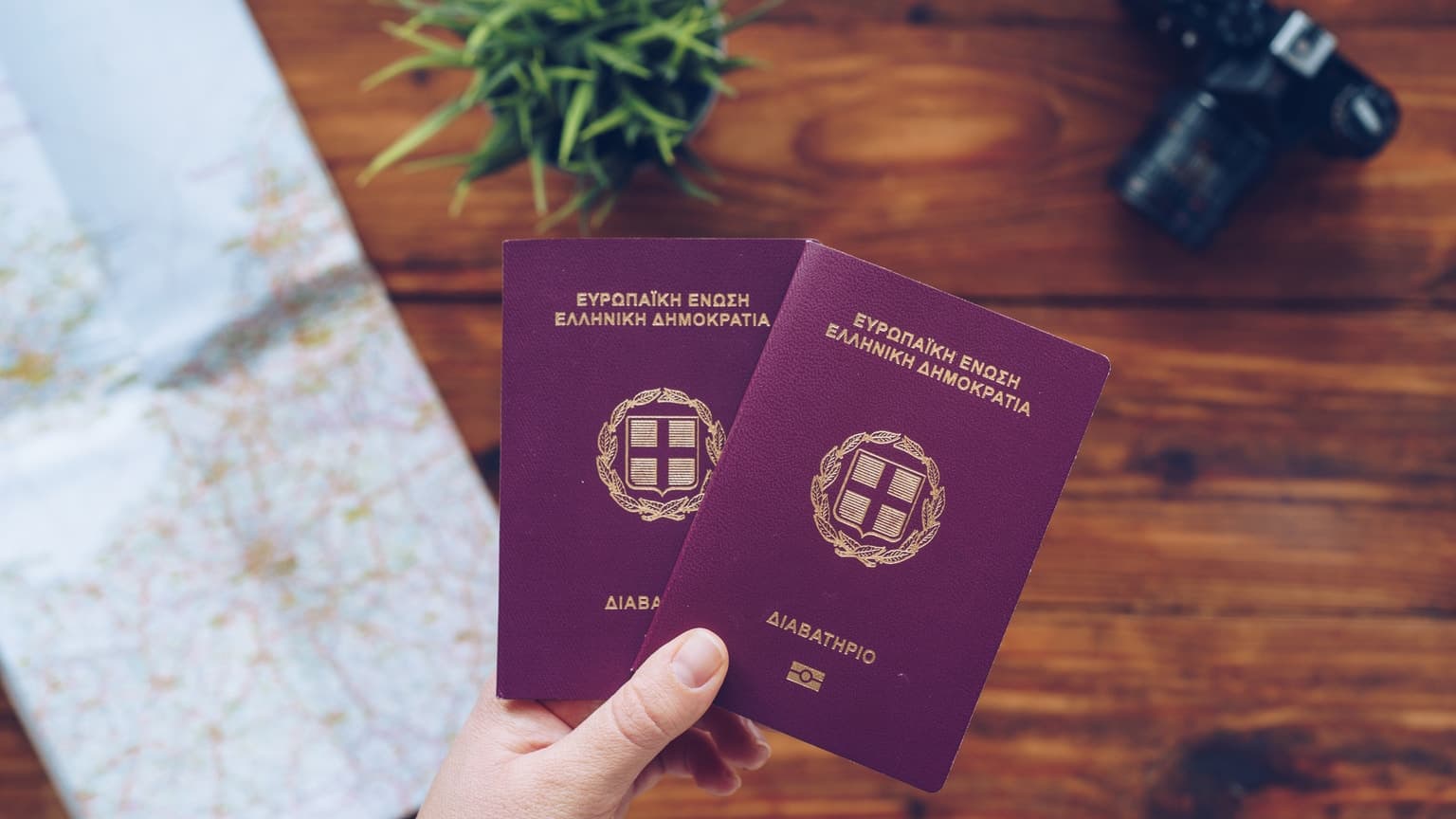






Around 26.5 million foreigners live in EU countries with residence permits, according to Eurostat[1]Source: Eurostat — Residence permit statistics 2025.
For non-EU citizens, European residence enables them to live and work legally within the EU, travel visa-free across the Schengen Area, and have access to medical treatments and education.
Countries like Italy, Portugal, and others offer residence by investment to non-EU wealthy foreigners, providing them with certain benefits in their host country.
9 main ways to obtain a residence permit in the EU
There is no single path to EU residence. Depending on an applicant’s finances, work, family situation, or long-term plans, residence may be obtained through investment, employment, study, business, family ties, or other grounds.
1. Investment
Several EU countries offer residence permits to non-EU citizens who contribute to their economies through investment. While the specifics vary, the main distinctions between these programs generally relate to the required investment amount and terms.
The investment programmes usually provide several options. In most cases, applicants can choose to invest in areas like commercial or residential real estate, investment fund units, or bank deposits.
Purchasing real estate tends to be the most popular due to its potential for profitability and stable returns. In popular tourist destinations, real estate investment can also generate income through rental opportunities.
For example, Malta has two options: permanent residence and a temporary residence permit. For permanent residence, an investment of at least €169,000 is required, with a processing time of 6+ months. For a temporary residence permit, the required investment is at least €30,000, with a processing time of 3+ months.
2. Residence for financially independent people
Such visas are created for individuals who can financially support themselves without any work-related income, whether local or foreign.
Applicants must provide proof of passive income, such as investment returns, pensions, savings, or rental income, which ensures they won’t need to work while in the host country. For example, Portugal, Spain, Greece, and Austria grant residence for financially independent people.
3. Remote work visas
Digital Nomad Visas are designed for remote workers who are employed by foreign companies or run businesses that operate outside the host country.
Applicants must show proof of income from foreign sources, savings, and either purchase or rent real estate in the country. Malta, Hungary, Spain, Italy, and Portugal issue residence permits for digital nomads.

4. Starting a business
Some EU nations, like Hungary and Portugal, offer special residence permits for entrepreneurs and startup founders who wish to establish innovative businesses. Applicants are usually required to register a company, develop a viable business plan, and in some cases, create jobs for local residents.
5. Marriage with an EU citizen
Due to the prevalence of fraudulent marriages, EU countries enforce strict verification processes for residence permits through marriage. Applicants are required to demonstrate that they share a genuine life together, including cohabiting as a couple and having knowledge of each other’s habits and backgrounds.
6. Family reunification
A residence permit in the EU may be granted to individuals whose parents already hold one. However, it is usually necessary to demonstrate financial dependence on the parent or, in some cases, to provide proof of sufficient personal income.
Adopted children may also qualify under these provisions, provided they meet similar requirements.
7. Employment contract
The so-called Blue Card is available to highly skilled specialists whose expertise is in demand within an EU country, such as scientists or researchers. To qualify, applicants generally need to secure employment with a company that values their skills and experience.
8. Visas for education
A residence permit is granted to students for 1 year, with the possibility of annual renewal throughout their studies. After graduation, students have a few months to search for employment, though the specific time frame varies by country.
If graduates secure a job, they can apply for a residence permit based on their employment contract. However, if they do not find employment within the specified time, they are generally required to leave the country.
9. Visas for medical treatment
A residence permit can be obtained for those requiring long-term medical treatment, usually for 1—2 years, at a European hospital. This process requires a formal contract with the medical institution.
Requirements for applicants to get the right of temporary and permanent residence
The requirements for temporary residence in the EU vary depending on the purpose of residence, such as work, study, or investment, and the issuing country. However, there are some general requirements that apply to most temporary residence permits in the EU.
Proof of purpose
Proof of purpose for residence could include a work contract, university enrollment, or documentation showing the intent to invest or engage in other lawful activities in the host country.
Financial stability
Financial stability is also a key requirement: applicants can provide bank statements, proof of income, or a job offer showing sufficient income to cover living expenses in the host country.
Health insurance and certificates
Health certificates may be necessary in some EU countries, which prove good health and the absence of specific diseases, such as HIV or tuberculosis.
Health insurance covering medical expenses in the host country is usually required.
Police clearance certificate
A criminal record check is needed to confirm the applicant has no serious criminal history, with a police clearance certificate from the home country or any recent place of residence.
Proof of accommodation and residence
Proof of accommodation is required, whether through a rental agreement, property ownership documents, or a letter from a host.
When applying for permanent residence, the applicant also must prove they have lived continuously in the host EU country for at least 5 consecutive years with a valid residence permit[2]Source: European Commission — Long-term residents.
During this period, short trips outside the EU are allowed, but usually no single absence should exceed 6—12 consecutive months, and the total time outside the EU should generally not exceed 18—24 months over the 5 years.
Proof of evidence of living in the country can be required, such as utility bills and rental contracts.
Language proficiency
Language proficiency is required in some EU countries, and an integration course or exam, covering topics like local culture, laws, and society. For example, in Italy, most applicants for a residence permit valid for at least 1 year sign an Integration Agreement and have 2 years to demonstrate A2-level spoken Italian and basic knowledge of Italian civic and social life.
7 reasons why people choose the EU for life
Obtaining a residence permit in the EU provides numerous advantages, including the ability to live and work freely in the country where the permit is issued.
1. Visa-free travel across Europe
With a residence permit, one can not only live in the country but travel without visas across 29 states of the Schengen Area. This makes it easier to explore Europe for business, education, or leisure without the hassle of repeated visa applications.
2. Tax optimisation
The amount of taxes varies from country to country, but most have no taxes for foreign capital. Some countries also apply progressive rates, special regimes for new residents, or exemptions on certain types of foreign income.
3. Higher medicine and education standards
European countries are recognised leaders in healthcare and education. Most European countries offer strong educational institutions with programmes in English, along with internationally accredited degrees and advanced research opportunities.
4. Opportunity to work and run business in Europe
An EU residence permit gives the holder the right to work in the country that issued it, depending on the permit type.
For entrepreneurs, the bigger advantage is access to the EU Single Market, with around 450 million consumers[3]Source: European Commission — Schengen Area. A resident can set up a company in their country of residence, open a business account, hire staff, and sell goods or services to customers across the EU, subject to local tax and licensing rules.
5. Possibility to create “safe haven”
European countries constantly rank high in global rankings in terms of safety. For example, Austria, Switzerland, Portugal, and Hungary are in the top-15 safest countries among 163 nations, according to the Global Peace Index 2026[4]Source: Institute for Economics & Peace — Global Peace Index 2026.
6. Beautiful nature
Thanks to Europe’s compact geography and well-developed transport network, residents can easily explore its natural attractions and travel between countries.
The continent offers some of the world’s most striking coastlines, from the calm Mediterranean to the rugged Atlantic. Travellers can cross several countries in one trip, for example by driving along the coasts of Italy, France, and Spain.
7. Cultural and historical heritage
Europe is home to countless historical monumentsand architectural treasures, offering residents the opportunity to experience these cultural wonders firsthand, such as ancient ruins, mediaeval castles and fortresses, gothic, baroque, renaissance, and Roman architecture.
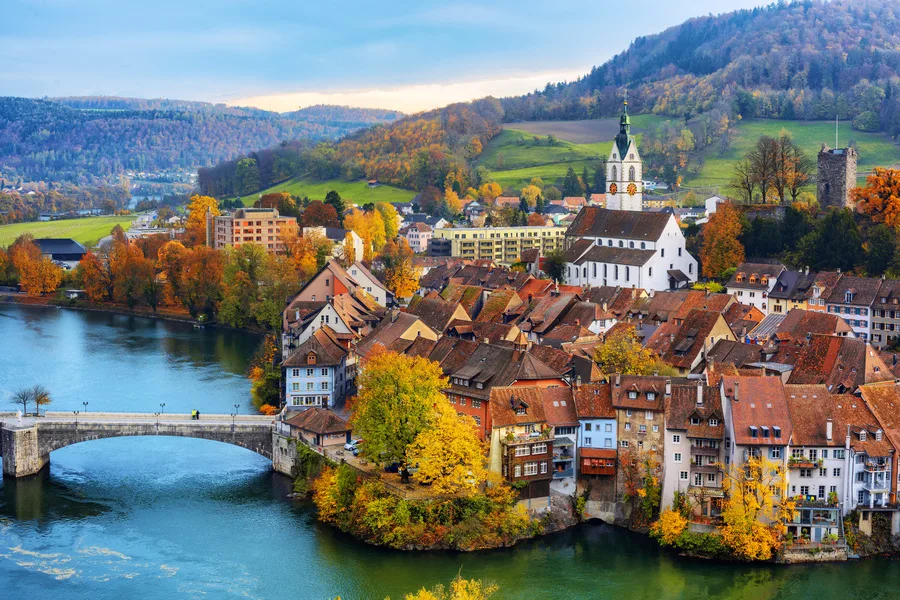
An EU residence permit opens the door to exploring many beautiful European destinations. For instance, Swiss historic old town of Laufenburg on the Rhine River
EU countries to get a residence permit when buying real estate
Several EU countries grant residence permits to investors who buy or rent real estate. Malta, Greece, and Cyprus, are among the main options.
 Malta
Malta
The Malta Global Residence Programme requires either renting or buying real estate and paying an administration to get a residence permit[5]Source: MTCA — Global Residence Programme Guidelines.
The programme requires investors to become tax residents of Malta, while offering preferential tax treatment. Foreign income transferred to Malta is taxed at a flat rate of 15%, with a minimum annual tax liability of €15,000 per family.
The rental cost depends on the housing location. If the property is in the south of Malta or the island of Gozo, the minimum annual rental price is €8,750. It is €9,600 for the north and centre of Malta. The administration fee is €6,000. Thus, minimum expenses to obtain Malta residence through renting real estate is €34,150.
If the investor buys a property in the south of Malta or the island of Gozo, the administration fee is reduced to €5,500. The minimum property value is €220,000.
The minimum cost of a property in the north or centre of Malta is €275,000, and the administration fee is €6,000. Thus, minimum expenses for Malta residence permit through purchasing real estate is €270,200.

The Malta Permanent Residence Programme requires buying or renting real estate, paying government fees, and making donations[6]Source: Residency Malta Agency — Malta Permanent Residence Programme. Investors also confirm either:
- assets worth at least €500,000, including at least €150,000 in liquid financial assets;
- or assets worth at least €650,000, including at least €75,000 in liquid financial assets.
The minimum rental price is €14,000 per year. Investors need to rent property for at least 5 years.
Administrative fee is €60,000. Contribution fee is €37,000. Thus, minimum expenses for Malta permanent residence through renting real estate is €169,000.
The minimum property purchase price is €375,000. Administrative fee is €60,000. The contribution fee is also €37,000. Thus, minimum expenses for Malta permanent residence through purchasing real estate is €474,000.
Investors aren’t required to live in Malta. However, the Global Residence Programme requires investors to avoid spending more than 183 days a year in any other country.
Both programmes offer the opportunity to include family members in the application, such as a spouse, children, parents, and grandparents. The Global Residence Programme allows for siblings.
The obtaining period for the Global Residence Programme is at least 3 months, and for the Permanent Residence Programme is around 6 months.
The key difference is that permanent residence allows investors to spend as much or as little time in Malta as they wish, with no minimum stay requirement. Under the Global Residence Programme, however, investors cannot spend more than 183 days a year in any other country. This makes the programme a better fit for those planning to establish Malta as their primary residence.
 Greece
Under the Greece Golden Visa programme, investors can get a residence permit, permanent residence in 5 years, and citizenship after 2 more years.
The minimum investment amount is €250,000 for purchasing property converted from commercial to residential use or certain listed buildings.
For standard real estate purchases, the threshold is €400,000 in most of Greece and €800,000 in high-demand areas, including Athens, Thessaloniki, Mykonos, and Santorini[7]Source: The Greek Ministry of Migration and Asylum — Golden Visa.
Additional costs include fees, taxes, and translation of the documents.
Trusted by 10,000+ investors
Your shortcut to Greece residency: top properties from €250k
 Cyprus
Investors purchase real estate for €300,000 for permanent residence[8]Source: Migration Department, Republic of Cyprus — Immigration Permits for Investors. 8 years after obtaining the PR, investors can apply for citizenship. Another benefit is the possibility to include family members: a spouse or a partner and children under 25.
The amount of investments depends on the number of applicants and increases due to extra costs.
To obtain Cyprus permanent residence by investment, applicants must prove secure annual income of at least €50,000. The requirement increases by €15,000 for a spouse and €10,000 for each dependent minor child.
EU residence permit for investors
In addition to the option of purchasing real estate, Golden Visa programmes offer some other ways to obtain residence permit in the EU.
 Portugal
Minimum investment amount is €250,000[9]Source: AIMA — Portugal residence permit for investors. The Portugal Golden Visa allows foreign investors to obtain residence, with the possibility of citizenship after 10 years, or after 7 years for EU citizens and nationals of Portuguese-speaking countries[10]Source: Portugal Ministry of Justice — 2026 nationality rules.
Investors choose between 5 options:
- Supporting arts and restoring cultural heritage — €250,000.
- Purchase of investment fund units — €500,000.
- Investments in research activities — €500,000.
- Business investments — €500,000, with the creation of at least 5 jobs.
- Opening a company with the creation of at least 10 jobs.
The Portuguese residence permit can also be issued to the investor’s spouse, children up to 25, and parents.
 Hungary
Minimum investment is €250,000. Investors can choose to buy real estate fund units of at least €250,000, or make a donation to an institution of higher learning from €1,000,000[11]Source: Hungary immigration authority — Guest Investor.
Two real estate fund managers are currently authorised to participate in Hungary’s Guest Investor Programme: Sprint Asset Hungária and Gránit. Both are included in the official register of qualified fund managers maintained by Hungary’s immigration authority.
Hungarian residence permit for investors is valid for 10 years and can be extended once for the same period.
Greece
If investors choose an option other than real estate, the minimum investment under the Greece Golden Visa is €350,000. This threshold applies to the purchase of shares in eligible mutual funds or alternative investment funds.
Investors can also choose between 7 more options:
- 10-year lease of tourist accommodation — €400,000+.
- Timeshare for tourist accommodation — €400,000+
- Receiving real estate as inheritance or a gift — €400,000+.
- Opening a fixed-term deposit — €500,000+.
- Purchase of government bonds — €500,000+.
- Capital investments in Greek companies — €500,000+.
- Purchase of corporate and government bonds listed for trading — €800,000+.
Cyprus
Minimum investment is €300,000. Cyprus grants residence to investors not only for real estate purchase, but also for shares of Cypriot companies and purchase of securities.
The business must have a physical presence in Cyprus and employ at least 5 people. Investment funds are a more passive alternative for those who prefer professionally managed assets. Investors choosing either of these options still need to own or rent a home in Cyprus.
 Italy
Italy
Minimum investment threshold is €250,000[12]Source: Ministry of Enterprises and Made in Italy — What is Investor Visa for Italy?. The Italy Golden Visa allows investors to obtain temporary residence, followed by a permanent residence permit after 5 years, and Italian citizenship after an additional 5 years.
To qualify for the Golden Visa, applicants choose between 4 options:
- Investments in an innovative startup — €250,000+.
- Business investment — €500,000+.
- Donation to a philanthropic organisation — €1,000,000+.
- Purchase of government bonds — €2,000,000+.
Spouses, children under 18, and parents are also eligible for Italian residence permits.
 Latvia
Latvia currently offers a Golden Visa through investment in a local business, starting from €50,000. The programme changed on September 15th, 2026: the real estate and bank deposit routes were removed for new applicants, while the business route remained and a new fund option was introduced.
The fund option requires a minimum investment of €150,000 for 5 years, but it is not yet available to applicants.
The Latvia Golden Visa grants a residence permit valid for 2 years under the business route and 5 years under the fund option. The permit can be renewed indefinitely as long as the investment is maintained. The main applicant may also include family members, such as a spouse and children under 18.
Investors may apply for permanent residence after 5 years of residence. Once it is obtained, they are no longer required to maintain the investment. After a further 5 years, they may become eligible to apply for Latvian citizenship.

EU residence permit for financially independent persons
Several EU countries issue residence permits for financially independent persons, aimed at those who can support themselves without local employment. Key requirements include proof of stable passive income, sometimes savings, and accommodation in the country. Some countries may also require language skills.
Portugal
The Passive Income Visa, or D7, is one of the cheapest ways to live legally in Portugal. Residents are able to travel across the Schengen Area visa-free, get some tax breaks, and apply for citizenship in 10 years.
Under the D7 Visa conditions, applicants need to confirm a stable foreign income of at least €920 per month[13]Source: Portuguese Government — Minimum wage 2026. It is also required to purchase or rent real estate, but there are no limits on its cost.
Spouses, children under 21, and parents of the main applicant are also eligible for Portuguese residence permit through the D7 Visa. Then, the income for a spouse or parent is 50% of the investor’s and 30% for a child.
 Spain
Spain
Spain residence route for financially independent persons is called the Non-Lucrative Visa. The main applicant must show income of at least €2,400 per month, plus €600 per month for each additional family member[14]Source: Spanish Ministry of Foreign Affairs — Non-working residence visa.
An alternative pathway is to secure passive income through our partner fund by investing at least €150,000. The fund pays out interest: €2,778 per month, or €33,336 per year, which is enough to qualify for the Spain Non-Lucrative Visa.
The application can include a spouse and dependent parents. Unmarried children of any age may also qualify if they remain financially dependent on the main applicant and do not maintain a separate household.
Processing usually takes around 4 months. The initial residence permit is valid for 1 year and can then be renewed for 2-year periods. To maintain residence, applicants must spend at least 183 days per year in Spain.
After 5 years of legal residence, applicants may qualify for permanent residence. Citizenship generally becomes available after another 5 years.
Greece
Greece offers financially independent applicants a 3-year residence permit from the outset. The application may include a spouse and children under 18.
The main applicant must prove a monthly income of at least €3,500. This amount increases by 20% for a spouse and by 15% for each child.
As an alternative to regular income, applicants may show savings of at least €126,000, covering the minimum requirement for 3 years. A higher balance is needed when family members are included.
Processing usually takes at least 4 months, and the permit can be renewed for further 3-year periods. Residents must spend at least 183 days per year in Greece.
 Austria
A residence permit in Austria is available for financially independent individuals who do not intend to work within the country[15]Source: Austrian Federal Government migration portal — Other forms of settlement.
To obtain residence in Austria, applicants need to confirm financial independence by providing a bank statement showing a monthly income of €2,616.78. Additionally, they must rent or purchase housing in Austria.
Spouses and children under 18 of the main applicant are also eligible. The required sum rises at €1,511.46 for a spouse and €403.76 per child.
The whole family except children under 14 also need to show proficiency in German at an elementary level A1.
After 5 years of living in Austria, families can apply for permanent residence.
 Switzerland
This residence permit does not allow investors and their families to work in the country. However, they can manage capital or business in another one.
The main requirement for Swiss residence is to pay a lump-sum tax. In 2026, the federal minimum taxable base is CHF 435,000, or around €465,000. A higher amount may apply, as it is calculated individually, based on income, property, worldwide family expenses, and the requirements of the selected canton. The tax is paid annually as long as the residence permit is maintained.
The residence permit is issued for 1 year and may be renewed if the applicant continues to meet the immigration and tax requirements. The investor and their family, including spouse and children under 18, can obtain citizenship after 10 years of permanent living in Switzerland.
EU residence permit for digital nomads
Several EU countries offer dedicated residence permits for digital nomads who work remotely for foreign employers or clients. Income thresholds and family eligibility vary between programmes.
Hungary
The White Card to Hungary allows employees and managers of foreign companies to live in Hungary for 1 year, with the option to extend the permit once for another year[16]Source: Hungary immigration authority — White Card. Family members cannot be included in the application.
To obtain Hungarian resident permit, digital nomads need to confirm a monthly income of at least €3,000 from sources outside the European Union and savings in a non-sanctioned bank. It is also required to purchase or rent a property for the duration of the residence permit.
This type of permit does not lead to permanent residence or citizenship. After the 2-year period ends, the foreigner can submit a new application for the White Card, but only after leaving Hungary.
Spain
The Spain Digital Nomad Visa is issued to employees of foreign companies, sole proprietors, and self-employed individuals, who work remotely[17]Source: Spanish Ministry of Foreign Affairs — Telework visa.
Digital nomads in Spain need to confirm a monthly income of at least €2,849. One more requirement is to have a registered address in Spain.
Spouses, children, parents, grandparents, and siblings also can obtain residence permits. After 5 years of living in Spain, they can apply for a permanent residence permit, and after another 5 years — for citizenship.
Italy
Residence permit for digital nomads in Italy is issued to those working remotely with a monthly income of €2,700[18]Source: Italian Ministry of Foreign Affairs — Digital nomad/remote worker visa.
To obtain an Italy Digital Nomad Visa, applicants also confirm savings of at least €30,000. Additionally, they need to rent or buy property in Italy.
Spouses and children under 18 also can qualify. In 5 years, families become eligible for permanent residence, and after another 5 years they can apply for citizenship.
Malta
Malta Digital Nomad Visa is granted to employees and the management of foreign companies, freelancers, and self-employed[19]Source: MTCA — Nomad tax guidelines.
To qualify for residence permit, digital nomads need to confirm a monthly income of €3,500. Besides, it is required to rent or buy real estate in the country.
Residence permit for digital nomads in Malta is issued for 12 months and can be extended for an additional year three times. It doesn’t lead to permanent residence and citizenship in Malta.
Spouses and children are also eligible for Maltese residence through the Digital Nomad Visa.
Portugal
The Portugal Digital Nomad Visa is issued to foreigners who work remotely, such as freelancers, employees of foreign companies, self-employed, and individual entrepreneurs.
To become a Portuguese resident through Digital Nomad Visa, applicants confirm a monthly income of €3,680[20]Source: Portuguese Government — Digital nomad rules. They also need to prove savings of €11,040 in a Portuguese bank account, and rent or purchase real estate.
Spouses, children under 21, and parents also can qualify. After 10 years of living in Portugal, families become eligible for citizenship.

EU residence permit for business owners
Entrepreneurs looking to establish a business in the EU may be eligible for residence permits through dedicated immigration programmes. Portugal and Hungary offer different routes: Portugal focuses on innovative startups, while Hungary allows applicants to qualify by registering and operating a local company.
Portugal
The Portugal Startup Visa is granted to entrepreneurs launching innovative projects in the country. The main condition is to open a company in collaboration with a business incubator. There’s no obligatory investment threshold.
The Startup Visa to Portugal also requires confirming savings of at least €11,040.
Spouses, children, and parents can obtain residence permits with the main applicant. In 10 years, they become eligible for Portuguese citizenship.
Hungary
Foreigners can obtain a Hungarian residence permit by registering a legal entity in Hungary, an analogue of an LLC or JSC. The status of an individual entrepreneur does not suffice.
To obtain residence in Hungary for opening a company, applicants choose between two legal entities — a limited liability company and a joint stock company, with minimum authorised capital of €7,700 and €12,700 respectively.
Spouses, children under 18, and parents can join the main applicant after 1 year of their residence permit validity.
The residence permit for opening a company is valid for 1 year, with the right to extend it once for 2 years.
EU residence permit for talented professionals
Portugal offers a special residence route for accomplished professionals, entrepreneurs, and innovators, known as the Global Talent Programme. It is aimed at people who can contribute to Portugal’s academic and innovation ecosystem through cooperation with a local university.
Applicants need a bachelor’s degree and 3—5 years of professional experience. They must also show savings of at least €15,000, have health insurance, and rent or own a home in Portugal.
An important part of the programme is cooperation with a Portuguese university. Depending on their background, applicants may mentor students, advise startups, take part in research, give lectures, or join workshops. The university confirms this cooperation with a Letter of Commitment.
The programme fee starts at €170,000 and can cover the main applicant and up to three family members.
Successful applicants receive a residence permit for 2 years, which can be then renewed. The process takes at least 4 months.

Trusted by 10,000+ investors
Check your eligibility for the Portugal Global Talent Programme
Nuances of application for a residence permit in Europe
For those pursuing an investment programme or applying for a residence permit as a financially independent individual with help of Immigrant Invest, the application process begins with a preliminary Due Diligence check. This is a thorough background check to assess the applicant’s financial status, criminal history, and overall suitability for the programme.
Once the preliminary check is complete, applicants receive a customised list of required documents. This list may vary depending on the programme and individual circumstances, but it generally includes:
- proof of income;
- certificate of good conduct;
- health certificate confirming the absence of certain conditions, such as HIV;
- health insurance for each applicant.

Common algorithm for getting an EU residence permit by investing in real estate
One of the most attractive options for participating in the residence permit programme in the EU is investing in real estate. This option offers both profitability and potential returns.
Here are the main steps of obtaining a residence permit through purchasing real estate, based on the experience of Immigrant Invest lawyers.
1 week
Choosing a programme
Investors can contact Immigrant Invest for guidance on choosing the most suitable programme. Our experts compare the available options and explain the requirements, costs, and conditions of each one.
Investors can contact Immigrant Invest for guidance on choosing the most suitable programme. Our experts compare the available options and explain the requirements, costs, and conditions of each one.
1 day
Preliminary Due Diligence
Investors are checked through international databases. This step allows for reducing rejection risk to 1%. It is confidential, and the only passport is needed.
Investors are checked through international databases. This step allows for reducing rejection risk to 1%. It is confidential, and the only passport is needed.
5 days to 3 weeks
Selection of real estate
Immigrant Invest lawyers help choose the right property remotely. We maintain a list of approved real estate projects that meet the programme requirements and help select options that match the investor’s preferences. We also provide detailed photos and videos of the property and its surroundings.
Immigrant Invest lawyers help choose the right property remotely. We maintain a list of approved real estate projects that meet the programme requirements and help select options that match the investor’s preferences. We also provide detailed photos and videos of the property and its surroundings.
2—5 days
Trip to the country
One more check of the property and some bureaucratic nuances: opening a bank account, getting an individual taxpayer number, and drawing up a power of attorney for a lawyer who will represent the investor in the country.
One more check of the property and some bureaucratic nuances: opening a bank account, getting an individual taxpayer number, and drawing up a power of attorney for a lawyer who will represent the investor in the country.
1—2 months
Fulfilment of the programme conditions
A lawyer or investor signs the contract and closes the estate deal, the applicant transfers the money to the seller, and the lawyer receives the certificate of ownership.
A lawyer or investor signs the contract and closes the estate deal, the applicant transfers the money to the seller, and the lawyer receives the certificate of ownership.
1.5—2 months
Preparation of documents and application
With a lawyer, the investor collects documents, with the complete list depending on the country and the programme. The lawyer signs all forms, translates and notarises the documents, and sends them to the relevant authorities.
With a lawyer, the investor collects documents, with the complete list depending on the country and the programme. The lawyer signs all forms, translates and notarises the documents, and sends them to the relevant authorities.
1+ months
Getting the resident permit cards
The investor receives the decision of the relevant authorities, submits fingerprints, and gets their documents.
The investor receives the decision of the relevant authorities, submits fingerprints, and gets their documents.
What rights does the EU residence permit provide?
Depending on the EU residence permit type, it can provide access to healthcare, education, work, tax benefits, Schengen travel, and a future path to permanent residence or citizenship.
Legal residence
Permit holders can legally reside in the EU country that issued the permit, establish a home there, open bank accounts, and access everyday services — with residence granted for the whole family.
Residents can receive discounts for recreational activities and public transportation. For example, in Vienna, Austria, residents can purchase the Wiener Linien annual pass for €467, equating to €1.28 per day, offering unlimited travel on the city's public transport.
Non-residents do not have access to this annual pass and must rely on standard tickets, such as the 24-hour pass costing €9.70.
Access to healthcare
Residents who contribute to social security, including workers and pensioners, have full access to the public healthcare system. Investors, digital nomads, and financially independent persons need to buy private health insurance, which also provides access to the private healthcare system.
Access to education
Children of European residence permit holders have free access to public primary and secondary education. They can attend local schools under the same conditions as citizens, benefiting from high-quality curricula, modern facilities, and in many countries, bilingual or English-language programmes.
Work rights
Many residence permits, such as those based on employment, investment, or family reunification, grant the right to work in the issuing country. However, the rights vary:
- employment-based permits: allow full employment rights in the issuing country;
- investment-based permits: often permit business activity and investment but may restrict certain local employment;
- family reunification permits: may allow employment for family members, depending on national regulations.
Pathway to permanent residence and citizenship
A residence permit often acts as a stepping stone toward long-term residence or citizenship, as time spent on a residence permit may count toward the residence requirement for permanent status or naturalisation.
Tax residence
In many EU countries, spending more than 183 days within a tax year can make a non-EU national a tax resident, regardless of the residence permit they hold. Tax residence may result in taxation of worldwide income rather than only income earned locally.
Some EU states offer preferential arrangements designed to attract digital nomads, investors, and high-net-worth individuals:
- In Malta, holders of the Nomad Residence Permit may benefit from a 12-month tax exemption. After this period, income from remote work is taxed at a flat rate of 10% instead of the standard progressive rates of up to 35%.
- Cyprus offers qualifying tax residents non-domiciled status, which exempts dividend and passive interest income from the Special Defence Contribution[21]Source: Cyprus Tax Department — Special Defence Contribution.
- Greece provides a special tax regime for individuals who transfer their tax residence to the country. Instead of ordinary taxation on foreign-sourced income, participants pay a fixed annual tax of €100,000 for up to 15 years, rather than progressive rates of up to 44%. Qualifying foreign pensioners may instead benefit from a 7% flat tax on foreign-sourced income[22]Source: Independent Authority for Public Revenue — Tax incentives for new tax residents.
- Italy offers a similar regime for new tax residents. Individuals may pay a fixed annual substitute tax of €300,000 on foreign-sourced income instead of rates of up to 43%[23]Source: Agenzia delle Entrate — €300,000 substitute tax for new residents. Pensioners who move to certain municipalities in southern Italy may instead pay a 7% flat tax on foreign income[24]Source: Agenzia delle Entrate — 7% foreign pensioner regime.
Freedom of movement within the Schengen Area
Residence permit holders in most EU countries can travel freely within the Schengen Area for up to 90 days within a 180-day period. This allows them to cross internal borders without the need for additional visas, making both business and leisure trips across the EU more convenient.
Driver’s licence conversion
Many EU countries allow residence permit holders to convert their non-EU driver’s licences to an EU licence without retaking driving tests, depending on agreements between countries.
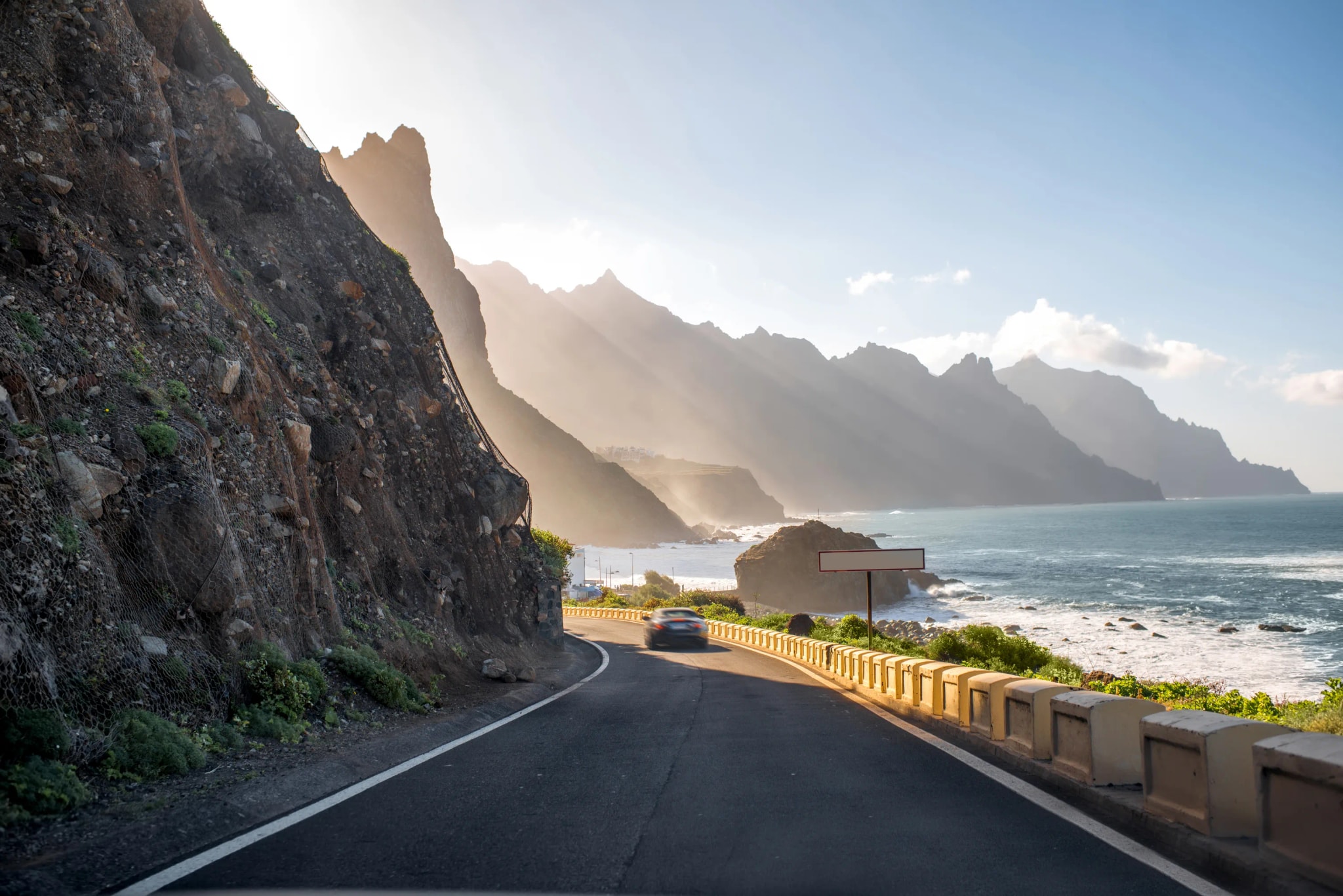
Spain permits the exchange of licences from countries with which it has established agreements, including South Korea, Argentina, Brazil, Chile, and Colombia
How Immigrant Invest can help obtain an EU residence permit
Immigrant Invest is a licensed investment migration company that has helped more than 10,000 clients obtain residence and citizenship since 2006. We assist with Golden Visas, citizenship by investment programmes, Digital Nomad Visas, residence permits for financially independent persons, and selected business residence permits.
Our team includes lawyers, investment programme experts, and certified AML compliance officers. We support clients throughout the whole residence permit process, including:
- choosing a residence programme based on the investor’s goals, family situation, budget, and preferred country;
- conducting preliminary Due Diligence to identify possible risks before the application is filed;
- preparing documents and coordinating certifications and sworn translations;
- selecting an investment, such as real estate or investment fund units;
- submitting the application and communicating with government authorities during the review;
- providing post-approval support, including residence permit renewals and assistance with property, banking, and relocation matters.
Each case starts with an individual assessment. Our specialists compare available EU residence options and develop a strategy based on the client’s circumstances, then support the application through to obtaining the residence card and afterwards.
Instead of a conclusion
- Several EU countries allow non-EU nationals to obtain a residence permit or permanent residence by investment.
- Portugal, Spain, Greece, Austria, and Switzerland offer residence permits for financially independent persons. The Portugal D7 Visa is one of the most accessible options, with a required monthly income of at least €920.
- Italy, Portugal, Spain, Hungary, and Malta offer residence permits for digital nomads. Italy has the lowest financial requirement, starting from €2,700 per month.
- Hungary and Portugal also grant residence permits to foreigners who open a company.
- Portugal also offers the Global Talent Programme for experienced professionals. The programme fee starts at €170,000.
- The programmes differ in both the type of status granted and the requirements. Minimum investment amounts and processing times vary significantly, from around 2 months for the Malta Digital Nomad Visa to at least 12 months for the Portugal Golden Visa.
Immigrant Invest is a licensed agent for citizenship and residence by investment programs in the EU, the Caribbean, Asia, and the Middle East. Take advantage of our global 15-year expertise — schedule a meeting with our investment programs experts.