










Spain offers multiple legal pathways for non-EU nationals wishing to live in the country long-term. For US, UK, Canadian, and Australian citizens — who can enter Spain visa-free under the Schengen Agreement but are limited to 90 days in any 180-day period — a residence permit is required for any longer stay.
This guide explains every current route to residence available and covers the Spain immigration process step by step, the tax implications, and the route to Spanish citizenship.
What is the Spanish residence permit and who can apply?
A Spanish residence permit — autorización de residencia — is the authorisation that allows a non-EU/EEA national to legally reside in Spain for periods exceeding 90 days.
The governing legislation is Ley Orgánica 4/2000, commonly known as the Ley de Extranjería[1]Source: The full text of Ley Orgánica 4/2000 is published on the official government portal.. It is implemented by Real Decreto 557/2011[2]Source: The full text of Real Decreto 557/2011 is published on the official government portal..
Who needs to get a Spain residence permit and what is the process
Any non-EU/EEA national — including citizens of the United States, the United Kingdom, Canada, and Australia — who intends to remain in Spain for more than 90 days in any 180-day Schengen window must hold a valid residence authorisation.

Vladlena Baranova,
Head of Legal & AML Compliance Department, CAMS, IMCM
Visa-free entry under Schengen rules does not confer any right to reside long-term; exceeding the 90-day limit without a permit constitutes an irregular stay under Spanish law. Spain residence for foreigners therefore requires a formal application process regardless of the applicant's nationality.
The process of obtaining residence in Spain usually involves three distinct stages:
- An initial national visa, a long-stay type D visa issued at a Spanish consulate abroad.
- A residence authorisation requested by the consulate on the applicant's behalf from the Spanish immigration authority.
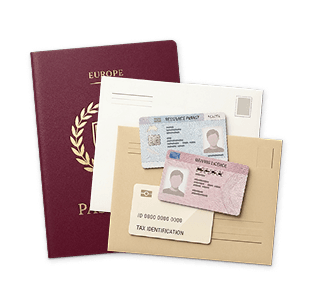
- The TIE — Tarjeta de Identidad de Extranjero, — the physical residence card issued in Spain by the Policía Nacional, which accredits legal residence and is mandatory for stays exceeding 6 months. The Spain TIE card application must be submitted within a month of first entry into Spain.
EU and EEA nationals follow a simplified path: they register via a Certificado de Registro and receive an NIE — Número de Identidad de Extranjero — directly, and are not subject to the standard TIE regime.
Residence types in Spain
Residence is classified as temporary or long-term granted after 5 years of continuous legal residence.
The main available routes to temporary residence for non-EU nationals are:
- passive income or retirement — a Non-Lucrative Visa;
- remote work for a foreign employer or clients — a Digital Nomad Visa;
- hired by a Spanish employer — a work permit;
- founding an innovative company in Spain — an entrepreneur visa under the Startup Act;
- full-time study — a student visa;
- joining a legally resident family member — family reunification.
Overview of the main Spanish permit types

What happened to the Spain Golden Visa?
The investor visa, regulated under Law 14/2013 on support for entrepreneurs and their internationalisation, allowed non-EU nationals to reside in Spain in exchange for qualifying capital investments for over a decade. Organic Law 1/2025, published in the Official State Gazette on January 3rd, 2025, ended that route[3]Source: The full text of the decision to end the Golden Visa was published in the official gazette..
The stated policy rationale included housing-market pressure in major cities, limited linkage between asset-based investment and the productive economy, and alignment with European Commission recommendations on financial transparency[4]Source: The news about the abolition of the Golden Visa with reasoning was published on the official website of the president of the Government of Spain and the Council of Ministers..
Vladlena Baranova,
Head of Legal & AML Compliance Department, CAMS, IMCM
For existing Golden Visa holders, three things matter: renewals follow the regulations in force when your permit was first granted; your original qualifying investment must stay in place for the full term; and although no new investor visa applications can be filed, this doesn't touch permits already issued.
Spain Non-Lucrative Visa and who qualifies
The Non-Lucrative Visa — Residencia Temporal no Lucrativa — is a residence permit for financially independent individuals who do not intend to carry out any gainful employment or professional activity in Spain, including remote online work. It is the primary route for retirees and individuals living off investment income[5]Source: The terms for the Non-Lucrative Visa applicants are described on the official government website..
The permit is initially valid for 1 year and can be renewed for successive 2-year periods. After 5 years of continuous legal residence, holders may apply for permanent residence.
Income requirements
Spain calculates income thresholds using IPREM — the Indicador Público de Renta de Efectos Múltiples, the official public income reference index. For 2026, IPREM remains at €600 per month and €7,200 per year, frozen under the prorogation of the 2023 State Budget[6]Source: The decision on the IPREM amount was published in the official gazette..
The required income levels, which form part of the Spain residence permit requirements, are:
- main applicant — 400% of monthly IPREM, which is €2,400 per month, or €28,800 per year;
- each additional dependent family member — 100% of monthly IPREM, which is €600 per month, or €7,200 per year.
For a couple, the combined annual requirement is €36,000; for a family of three, €43,200.
These amounts must be evidenced consistently throughout the permit period, not merely at the time of initial application.
What counts as passive income for the Non-Lucrative Visa
The income must be derived only from passive sources like savings, dividends, pension payments, or rentals.
Accepted income evidence typically includes:
- state or private pension certificates showing regular monthly payments;
- 12 months of bank statements evidencing sufficient balance or regular income deposits;
- investment portfolio statements showing dividends, interest, or bond coupons;
- rental income documentation, supported by lease agreements and property deeds;
- annuity or royalty statements showing ongoing passive receipts.
Active employment income — including income from remote employment for a foreign employer — is not accepted. An applicant who works remotely must apply through the Digital Nomad Visa instead.
Family eligibility
The main applicant can include close family members in the same application. Eligible relatives are:
- spouse or registered partner — registered and unregistered unions are accepted, though recognition varies by country of origin;
- children under 18;
- adult children aged 18+ — eligible if unmarried, financially dependent, and living as part of the family unit;
- parents and grandparents of the main applicant or spouse, where they are financially dependent.
Every additional applicant must prove economic dependency on the main applicant, and inclusion is assessed case by case rather than guaranteed.
183-day presence rule and tax residency implications
Holding a Non-Lucrative Visa carries a significant compliance obligation: to renew the permit, the holder must have resided in Spain for at least 183 days in the calendar year.
Spending 183 or more days per year in Spain automatically triggers Spanish tax residency under Article 9 of the Ley del IRPF[7]Source: The full text of the law is published on the official government website.. As a Spanish tax resident, the individual becomes subject to personal income tax on their worldwide income, not just income arising in Spain.
Non-Lucrative Visa holders are not eligible for the Special Tax Regime for Impatriates, commonly known as the Beckham Law, because that regime applies only to individuals who move to Spain for employment purposes.
Trusted by 10,000+ investors
Check your eligibility for the Spain Non-Lucrative Visa
Spain Digital Nomad Visa and how it works
The Digital Nomad Visa — Visado para Teletrabajo de Carácter Internacional — allows non-EU nationals who work remotely for foreign companies or clients to reside legally in Spain. It was introduced by Law 28/2022 for the promotion of the emerging company ecosystem[8]Source: The full text of the law is published on the official government website..
The Spain Digital Nomad Visa route is available either as an initial 1-year visa obtained at a Spanish consulate abroad, or as a direct 3-year residence permit for applicants who are already legally residing in Spain and apply through the Unidad de Grandes Empresas[9]Source: The terms for the Digital Nomad Visa applicants are described on the official government website..
Time spent on the Digital Nomad Visa in Spain counts towards the 5-year permanent residence threshold and, ultimately, the 10-year citizenship timeline.
Income threshold
The Digital Nomad Visa income requirement is set at 200% of the Spanish Minimum Interprofessional Wage, SMI. For 2026, the SMI stands at €1,221 per month if the year is calculated as 14 months, following a 3.1% increase under Royal Decree 126/2026, with retroactive effect from 1 January 2026[10]Source: The full text of the Real Decreto 126/2026 is published in the official gazette..
The minimum monthly income for the main applicant is €2,849 per month if SMI is recalculated for 12 months instead of 14. €1,069 must be added for a spouse or an adult relative and €357 — per child.
Eligible remote work terms
Employees of foreign companies, self-employed individuals, and sole proprietors can all apply for the Digital Nomad Visa. Applicants must show they have been working with legal entities based outside Spain for at least 3 months before applying — contracts with individuals are not accepted.
Any employment contract must be with a company that has been operating for more than a year, and the contract itself should run for at least 3 years.
Remote employees of foreign companies qualify only if their employer is registered in a country that has a bilateral social security agreement with Spain. The applicant must also have their employer's permission to work remotely from Spain.
The 80/20 rule applies specifically to self-employed applicants and freelancers: at most 20% of total professional activity may involve Spanish-based clients or companies. Employees who work exclusively for a single foreign employer face no such restriction, provided the employer is incorporated outside Spain.
Family eligibility
The main applicant can bring close family members on the same application. Eligible relatives are:
- spouse or partner;
- minor or incapacitated children;
- adult children aged 18+, provided they are unmarried, not earning an income, and enrolled in higher education;
- parents and grandparents of the main applicant or their spouse;
- siblings.
Every additional applicant must demonstrate economic dependency on the main applicant, and inclusion is assessed case by case rather than guaranteed.
From the initial visa to a 3-year residence permit
The Digital Nomad Visa pathway proceeds in two stages:
- An initial one-year visa applied for at the Spanish consulate in the applicant's country of residence. This visa permits entry into Spain and commencement of remote work.
- On arrival in Spain, the visa holder converts to a 3-year residence permit by applying through UGE. This permit is renewable for a further 2-year period, provided the holder continues to meet income requirements and resides in Spain.
Applicants who are already in Spain legally may apply directly for the 3-year permit without first obtaining the 1-year visa.
Tax benefits for digital nomads
Spain's Digital Nomad Visa is one of the qualifying routes into the Special Tax Regime for Impatriates, informally the Beckham Law. Digital Nomads who become Spanish tax residents for the first time can elect to be taxed as non-residents, which substantially lowers their effective tax burden during the regime period.
The main advantages are:
- flat 24% rate on Spanish-source employment income up to €600,000 a year with 47% on any excess, instead of standard progressive IRPF rates;
- foreign income exemption — only Spanish-source income is taxed, so foreign dividends, rental income, capital gains, and pensions are generally exempt;
- wealth tax on Spanish assets only, not worldwide holdings — a material advantage for those with significant assets abroad.
The benefit runs for the year of arrival plus the 5 following tax years — up to 6 years total. To qualify, the applicant must not have been a Spanish tax resident in the 5 years before moving, and the election must be filed within 6 months of starting work in Spain.
Trusted by 10,000+ investors
Check your eligibility for the Spain Digital Nomad Visa
Spain entrepreneur visa for innovators
Spain's entrepreneur route is a residence authorisation regulated by Law 14/2013 on support for entrepreneurs and their internationalisation, designed to facilitate entry and stay for reasons of economic interest. It grants a 3-year permit to reside and, if you wish, work throughout the national territory[11]Source: The terms for the entrepreneur visa applicants are described on the official website of the National Entrepreneurship Office..
Key requirement: an innovative project
The decisive condition is the nature of the business. To prove the activity is innovative and of special economic interest to Spain, the applicant must obtain a favourable report from Empresa Nacional de Innovación, ENISA, which assesses the project's viability and innovation. ENISA sends this report directly to the Large Companies and Strategic Groups Unit, which uses it to decide the authorisation.
Applicants submit a business plan covering the project description, product or service, market analysis, financing, added value for the Spanish economy, and their professional CV.
Family eligibility
The entrepreneur's spouse or unmarried partner, financially dependent children (including adult children who haven't started their own families), and dependent relatives in the ascending line may apply alongside the main applicant.
Family members may apply jointly with the main applicant or later, and their authorisation allows them to both reside and work — whether self-employed or employed, under the fourth additional provision of Law 14/2013.
Procedure and validity
The processing time is approximately 30 days, and both the initial authorisation and its renewal are valid for 3 years.
A holder who entered on a residence visa may stay for 1 year without processing the Foreigner Identity Card TIE; but those granted a residence authorisation under Law 14/2013 must apply for the TIE in person, following the procedure set out in the grant decision.
Spain work permit and residence, including the EU Blue Card
Spain grants residence to new employees of Spain-based companies, self-employed, and highly qualified professionals.
The employer-sponsored residence permit — Residencia Temporal y Trabajo por Cuenta Ajena — applies when a Spanish employer recruits a non-EU specialist who cannot be replaced by a local or EU candidate. The employer must confirm the vacancy could not be filled from the domestic labour market before sponsoring a foreign worker[12]Source: The terms are published on the official website of the Migration Service..
The residence permit with the right of self-employment — Residencia Temporal y Trabajo por Cuenta Propia — is issued to self-employed professionals when creating a business in Spain. The applicant confirms their professional training and financial independence. The business plan is approved by the union for the self-employed in Spain[13]Source: The terms are published on the official website of the Migration Service..
The EU Blue Card — Tarjeta Azul-UE — gives the right to live and work in Spain to highly qualified specialists and their family members under the single European program. The card is issued by all EU countries.
The minimum gross annual salary for Blue Card applicants in Spain is €39,269.92 — 1.4 times the average gross annual salary in 2026.
The EU Blue Card requires at least a 6-month employment contract, recognised higher qualifications, and a clean criminal record. Family members of Blue Card holders have the right to work or become self-employed in Spain[14]Source: The terms and regulations concerning the EU Blue Card are published on the European Commission website..
Spain family reunification residence
Two distinct family routes exist, each covering a different situation.
The residence as a family member of an EU citizen — Residencia de Familiar de Ciudadano de la UE — applies to the spouse, partner, children, and dependent parents of an EU citizen residing in Spain.
The EU citizen must be employed, studying, or have sufficient means of subsistence[15]Source: The terms for relatives of EU citizens are published on the official website of the Migration Service..
The Spain family reunification residence — Reagrupación Familiar — applies when a non-EU national who already holds a Spanish residence permit wishes to bring family members to join them. Eligible relatives include spouses, minor children, and dependent parents.
The permit holder must demonstrate sufficient income and suitable housing to support the additional family members[16]Source: The terms for relatives of third-country nationals are published on the official website of the Migration Service..
Residence permit for exceptional circumstances
The Residencia por Circunstancias Excepcionales is granted on humanitarian grounds or for social integration to foreigners who have developed strong ties in Spain despite initially not having a legal basis to remain. Typical scenarios include individuals who have lived in Spain without documentation for several years and have since obtained stable employment, started a family, or reported criminal activity to the authorities[17]Source: The terms for humanitarian residence are published on the official website of the Migration Service..
Each case is assessed individually by the competent immigration authorities.
Spain student residence permit and pathway to regular residence
The student or study visa — Estancia por Estudios — is a long-stay visa, not a residence permit, valid for the duration of full-time studies at a Spanish educational institution. Holders may work part-time provided it does not interfere with their studies, but must remain enrolled and financially self-sufficient[18]Source: The terms for foreign students are published on the official website of the Migration Service..
After 3 years of study in Spain, graduates may apply to convert to a regular residence permit, providing a structured pathway from student entry to mid-term residency. Time on a student visa does not count towards the 5-year permanent residence calculation.

The University of Salamanca is the oldest working university in the country
How much does a Spanish residence permit cost?
Knowing the Spain residence permit fees in advance allows applicants to plan the full cost of relocation rather than being surprised by expenses that arise at each stage.
Official fees are set by the Spanish government. They vary slightly by permit category and are adjusted periodically.
For example, digital nomads bear the following costs:
- €80 — a consular visa fee;
- €700 — social security registration;
- €9.84 — a fee for obtaining a social security number, NIE;
- €16.08 — a residence application fee;
- €73.26 — a residence card fee.
Professional assistance — which significantly reduces the risk of rejection due to documentation errors — is a separate cost that varies by application complexity.
Health insurance is one of the most common hidden costs that applicants underestimate: annual premiums for a couple can reach €2,000—5,000 depending on age, and policies that include copays or deductibles are rejected outright by consulates.
Rent or purchase of residential real estate is another expense item, as having a residential address is a common requirement for getting a residence permit.
The average rent price for a 1-bedroom apartment is €800 per month, while a 3-bedroom apartment is €1,250[19]Source: Average prices according to Numbeo.. However, it all depends on the city: for example, in Barcelona, the average prices are €1,300 for a 1-bedroom apartment and €1,950 for a 3-bedroom apartment[20]Source: Average prices according to Numbeo..

Documents required for a Spanish residence permit
Understanding what documents are required for a Spain residence permit before beginning preparation avoids delays. However, the precise document list varies by permit type, but all applications share a common core set.
Every application must include:
- completed national visa application form, signed by the applicant; minors require parental or guardian signature;
- one recent passport-size colour photograph against a white background;
- valid original passport and full colour copy of all biographical pages; passport must have been issued within the last 10 years;
- good conduct certificate from each country of residence during the past 5 years, apostilled and translated into Spanish; certificates must generally be no more than 3 months old at the time of submission;
- proof of private health insurance providing comprehensive coverage in Spain with no copayment obligations;
- proof of residence in the consular district where the application is submitted;
- completed Form EX-01 or the specific form applicable to the permit type;
- Form 790-052, selecting the applicable category.
Additional documents depend on the residence type and may include a marriage certificate, proof of passive income, employment certificate, a letter of acceptance from a university or contacts with foreign employers or clients.
How to get a Spanish residence permit: step-by-step process
Obtaining a residence permit in Spain takes at least 4 months from the first decision through to collecting the TIE card. Below is an overview of the process, which is typical for most residence types.
Choose the right permit type for your situation
Choosing the wrong category leads to automatic refusal and wasted consular appointment time. Therefore, before preparing any documents, identify which route matches your circumstances:
- passive income only, no intention to work — a Non-Lucrative Visa;
- remote employment or freelance for non-Spanish clients — a Digital Nomad Visa;
- launching an innovative business — an entrepreneur visa;
- employment offer from a Spanish company — a work permit or EU Blue Card;
- family member of a Spanish or EU citizen — applicable family route.
Choosing the wrong category leads to automatic refusal and wasted consular appointment time. Therefore, before preparing any documents, identify which route matches your circumstances:
- passive income only, no intention to work — a Non-Lucrative Visa;
- remote employment or freelance for non-Spanish clients — a Digital Nomad Visa;
- launching an innovative business — an entrepreneur visa;
- employment offer from a Spanish company — a work permit or EU Blue Card;
- family member of a Spanish or EU citizen — applicable family route.
1+ months
Gather and apostille your documents
Allow a minimum of 4—6 weeks for document preparation. Criminal record certificates from authorities such as the US FBI or UK ACRO typically require 4—8 weeks to issue. Once issued, they remain valid for only 3 months from the date of issue at the time of consulate submission.
All foreign-language documents must be translated by an officially accredited Spanish sworn translator. Apostille stamps must be obtained from the competent domestic authority before submitting the document to the Spanish consulate.
Private health insurance should be sourced from an insurer authorised in Spain and must confirm full coverage from the intended date of arrival.
Allow a minimum of 4—6 weeks for document preparation. Criminal record certificates from authorities such as the US FBI or UK ACRO typically require 4—8 weeks to issue. Once issued, they remain valid for only 3 months from the date of issue at the time of consulate submission.
All foreign-language documents must be translated by an officially accredited Spanish sworn translator. Apostille stamps must be obtained from the competent domestic authority before submitting the document to the Spanish consulate.
Private health insurance should be sourced from an insurer authorised in Spain and must confirm full coverage from the intended date of arrival.
Up to 3 months
Apply at the Spanish consulate in your home country
All initial visa applications must be submitted in person by appointment at the Spanish consulate or authorised visa application centre in the applicant's country of legal residence.
At the appointment, the applicant submits the complete document package, pays the applicable consular fee, and provides biometric data — fingerprints and photograph.
The consulate then assesses the application. Applicants should allow 30—90 days for the decision, though some consulates process applications faster.
All initial visa applications must be submitted in person by appointment at the Spanish consulate or authorised visa application centre in the applicant's country of legal residence.
At the appointment, the applicant submits the complete document package, pays the applicable consular fee, and provides biometric data — fingerprints and photograph.
The consulate then assesses the application. Applicants should allow 30—90 days for the decision, though some consulates process applications faster.
Within 3 months
Enter Spain with a D visa
Once the visa is issued, the applicant must enter Spain within the validity period stated on the visa, typically 90 days from the issue date.
Once the visa is issued, the applicant must enter Spain within the validity period stated on the visa, typically 90 days from the issue date.
Within 1 month
Register locally
On entering Spain, the new resident must complete several registrations within the first 30 days:
- NIE — Número de Identidad de Extranjero — is a foreigner identification number required for all legal and financial transactions in Spain. This can be applied for in person at the nearest national police station or, in some cases, obtained at the consulate stage;
- empadronamiento is municipal census registration at the local town hall in the area of residence. This is required for accessing local services, enrolling children in schools, and building the residency record for future permanent residence and citizenship applications;
- Digital Nomad Visa holders and entrepreneurs must also register with the Agencia Tributaria before commencing professional activity.
Applicants must also book an appointment at the national police station to apply for the TIE — Tarjeta de Identidad de Extranjero — the physical residence card. The TIE serves as the official proof of residency and is required for opening bank accounts, signing rental contracts, and proving legal status in Spain.
On entering Spain, the new resident must complete several registrations within the first 30 days:
- NIE — Número de Identidad de Extranjero — is a foreigner identification number required for all legal and financial transactions in Spain. This can be applied for in person at the nearest national police station or, in some cases, obtained at the consulate stage;
- empadronamiento is municipal census registration at the local town hall in the area of residence. This is required for accessing local services, enrolling children in schools, and building the residency record for future permanent residence and citizenship applications;
- Digital Nomad Visa holders and entrepreneurs must also register with the Agencia Tributaria before commencing professional activity.
Applicants must also book an appointment at the national police station to apply for the TIE — Tarjeta de Identidad de Extranjero — the physical residence card. The TIE serves as the official proof of residency and is required for opening bank accounts, signing rental contracts, and proving legal status in Spain.
Within 20 business days
Get a Spain TIE card
The Spain TIE card application requires a completed EX-17 form, the original visa, passport, empadronamiento certificate, passport photograph, and proof of payment of the applicable fee.
The card is typically ready for collection within 20 working days of the appointment.
The Spain TIE card application requires a completed EX-17 form, the original visa, passport, empadronamiento certificate, passport photograph, and proof of payment of the applicable fee.
The card is typically ready for collection within 20 working days of the appointment.
Risks and common mistakes when applying for Spanish residence
Knowing how long a Spain residence permit takes to get and how much it costs is important, but the factors that cause delays or outright refusals deserve equal attention. The risks below reflect the most frequent failure points observed across permit types.
Choosing the wrong permit type
Foreigners frequently approach Spain's permit system with a general goal without fully mapping which permit matches their actual income structure, work plans, and presence intentions.
Selecting the Non-Lucrative Visa while intending to continue freelance or business activity, or applying for the Digital Nomad Visa while having a significant share of income from Spanish clients, are among the most common mismatches — each resulting in denial or forced restructuring after costs have already been incurred.
The divergence between permit categories is sharp: work rights, income-source constraints, and renewal obligations differ materially between routes. Understanding which conditions apply to which permit before committing documents and fees is where most category-selection errors are caught.

Choosing the right Spain residence path for a US entrepreneur
Camila wanted to start a new life in Europe and relocate there with her son. Initially, she assumed the Digital Nomad Visa was her natural pathway to settling in Spain, as she owned an online business.
However, a meeting with Immigrant Invest lawyers saved her from future rejection of her Digital Nomad Visa application. It turned out that Camila’s income, based entirely on dividends, did not meet Digital Nomad Visa criteria. But it met Non-Lucrative Visa terms.
Terms and thresholds changing mid-process
Starting to plan based on information that was accurate at the time of research but has since changed is a common pitfall. At least one route — Spain's Investor Visa — ended entirely in April 2025, yet there may be a lot of articles on the Internet advertising it as an available route.
Starting a process on the basis of outdated availability leads to sunk preparation costs and wasted documentation. Confirming current status and threshold figures directly before beginning any document preparation reduces exposure to this risk.
Income threshold — not just the amount, but how it is evidenced
Meeting the minimum monthly income figure does not, by itself, satisfy the requirement. Applicants who clear the threshold on paper have had applications complicated by:
- income landing in a corporate or joint account rather than a personal one;
- using the wrong statement format;
- bank statements not covering the required months;
- or the income period not aligning with what the consulate expects.
Understanding the exact evidence format — type of account, number of months, document stamp requirements — matters as much as the income level itself.
Document legalisation — timing and validity windows
Many applicants hold documents from two or more countries. Each may require apostille or legalisation in the country of origin, followed by a sworn translation into Spanish.
Criminal record certificates and other time-sensitive documents typically have validity windows of 3 to 6 months. A document obtained early in the process may expire before a consulate appointment becomes available, requiring a second round of legalisation.
Building the document timeline around the shortest validity window — not the longest — and accounting for consulate appointment delays reduces the risk of having to restart legalisation.
Health policy that appears compliant but fail on the specific checklist
Residence usually requires private health insurance valid in Spain without co-payments, providing full coverage for the duration of the visa.
An insurance policy that passes a general review may still trigger a rejection if the authority reviewing the application applies the route-specific evidentiary standard. For example, for the Digital Nomad Visa, insurance must also cover emergency care and repatriation — a requirement that some standard international policies do not explicitly include in their policy.
Validating insurance against the specific route being filed, and against the documented requirements of the specific consulate, reduces the risk of last-minute policy replacement.
Consulate appointment availability as an independent timeline risk
Application timelines are often presented as a function of document preparation and authority processing times alone. In practice, consulate appointment availability in several jurisdictions creates a bottleneck entirely outside the applicant's control. Documents with validity windows — police certificates, financial statements, certain civil documents — may expire during the wait and require re-issuance.
Building consulate-specific appointment realities into the projected timeline, and sequencing document preparation to account for expiry windows, reduces this risk.
Assuming all consulates apply requirements identically
Consulate-specific interpretations vary in practice. For example, the Los Angeles consulate applies a restriction on outstanding loans or mortgages held by the applicant at the time of application — a requirement not universally stated by all consulates.
Always verify the specific checklist published by the competent consulate, not a generic requirements summary.
Missing the 30-day TIE application window on arrival
After entering Spain on a residence visa, the applicant must apply for the TIE at the Policía Nacional within one month. Failure to do so creates a gap in lawful status.
Tax residence in Spain: what happens when you arrive
Spending more than 183 days in any calendar year in Spain triggers Spanish tax residency, regardless of the visa type held.
Immigrant Invest lawyers recommend engaging a qualified cross-border tax advisor as soon as the permit application is approved — before completing the first full calendar year of residence in Spain.
Tax residents are required to declare worldwide income via Modelo 100, and Spanish progressive IRPF rates apply up to approximately 47% on the highest income brackets, combining state and regional rates.
Modelo 720 is an informative declaration of overseas assets held at year-end or at the average of the fourth quarter, where the total per asset category exceeds €50,000 in accounts, securities, or real estate held abroad[21]Source: The info about Modelo 720 can be found on the Tax Service website..
Digital nomads with Beckham Law access pay a 24% flat rate on Spanish-source income up to €600,000 for up to 6 years. The Modelo 149 application must be filed within 6 months of Social Security registration — missing this deadline forfeits eligibility permanently.
Treaty relief is available depending on nationality. For example, under the Spain—US Double Taxation Convention, certain pension income may remain taxable in the US, reducing but not eliminating Spanish tax exposure[22]Source: The full text of the convention and its terms are published on Spain’s government website.. Similar treaty analysis applies under the Spain—UK Double Taxation Agreement[23]Source: The full text of the treaty and its terms are published on Spain’s government website. and under the Spain—Australia Double Taxation Agreement[24]Source: The full text of the agreement and its terms are published on Spain’s government website..
US citizens face an additional layer of complexity: FinCEN 114 obligations require US persons with foreign financial accounts exceeding $10,000 in aggregate to file annually with FinCEN, irrespective of Spanish tax treatment. The Spain—US Double Taxation Convention does not eliminate US worldwide taxation obligations.
Trusted by 10,000+ investors
Sort out your tax obligations before it becomes a problem
Renewing your permit and the pathway to citizenship
Foreigners should apply for the permit renewal at least 60 days before the TIE expiry date, using Form EX-01 plus updated compliance proof, an updated private health insurance certificate, and a new criminal record certificate issued within the applicable validity window.
To maintain the continuity of residence required for long-term residence and naturalisation, holders must not be absent from Spain for more than 6 months per calendar year. Exceeding this threshold risks resetting the permanent residence clock.
Permanent residence — Autorización de Residencia de Larga Duración — is granted after 5 years of continuous legal residence and confers the right to reside and work in Spain under the same conditions as Spanish nationals[25]Source: Requirements for permanent residence applicants are available on the Migration Service’s website..
Spanish citizenship by naturalisation requires 10 years of continuous legal residence for most non-EU nationals. The period is reduced to 2 years for nationals of Ibero-American countries, the Philippines, Equatorial Guinea, Portugal, Andorra, and Sephardic Jews[26]Source: Requirements for citizenship applicants are available on the Migration Service’s website..
Spain maintains bilateral dual nationality agreements with the countries listed in the accelerated route above: Ibero-American nations, the Philippines, Equatorial Guinea, Andorra, and Portugal. Nationals of those countries may retain their original citizenship upon acquiring a Spanish passport.
For nationals of all other countries — including the United Kingdom, the United States, Canada, and Australia — Spanish law requires renunciation of the original nationality upon naturalisation.
How Immigrant Invest can help with Spain residence
Immigrant Invest provides end-to-end support for Non-Lucrative and Digital Nomad Visa applicants. Our lawyers focus on reducing legal and procedural risk, but all decisions rest with the Spanish immigration authorities.
The specific services provided include the following:
- preliminary assessment confirming which route is legally appropriate given the client's income profile, activity level, and employment arrangements — including a clear position on grey-area income sources such as consulting retainers or board advisory fees;
- document preparation and authentication coordination — apostille logistics management, sworn translation commissioning through certified translators, and validity-window tracking;
- consulate-specific checklist alignment — guidance calibrated to the applicant's competent consulate, including known local interpretation differences, so the file is built to the standards that will actually be applied;
- health insurance sourcing — identification of compliant insurance products from providers whose policies are accepted at the relevant consulate, including options suitable for applicants with pre-existing conditions;
- tax coordination — organisation of a meeting with a qualified advisor to figure out your tax residency exposure and its implications and Beckham Law eligibility;
- bank account opening in Spain;
- support with property rent and purchase and property management;
- renewal and long-term planning — a proactive renewal calendar and a roadmap to naturalisation for clients with long-term EU foothold objectives.
Immigrant Invest operates an in-house legal and AML Compliance Department, and a compliance review is conducted before any application is submitted to an authority.
Conclusions: which Spanish residence permit is right for you?
- The Non-Lucrative Visa suits retirees and financially independent individuals with stable passive income of at least €28,800 per year who plan to make Spain their permanent home and accept the 183-day presence obligation and its worldwide tax residency consequence.
- The Digital Nomad Visa suits remote workers and freelancers earning at least €2,849 per month, with at least 80% of income from non-Spanish sources, gaining access to the Beckham Law flat 24% rate.
- The entrepreneur visa suits those launching an innovative company of public interest in Spain.
- The work permit and EU Blue Card suit applicants with a firm employment offer from a Spanish company or qualifying salary of at least €39,270 per year as a highly skilled specialist.
- All routes lead to the same 5-year permanent residence and 10-year citizenship timeline.
Immigrant Invest is a licensed agent for citizenship and residence by investment programs in the EU, the Caribbean, Asia, and the Middle East. Take advantage of our global 15-year expertise — schedule a meeting with our investment programs experts.

 Trusted by 10,000+ investors