









The Portugal D7 Visa allows financially independent Turkish citizens to obtain residence in Portugal by proving stable passive income of €920 per month[1]Source: Subsistence rules — Decreto-Lei n.º 139/2025, de 29 de dezembro — Diário da República.
Qualifying income includes pensions, long-term rent, dividends, royalties, and fixed-rate interest originating from Türkiye or another country other than Portugal. Applicants also need to buy or rent housing in Portugal and submit documents at a Portuguese consulate in their country of residence.
Why Turkish citizens consider the Portugal D7 Visa
Turkish nationals have faced economic volatility in recent years. The Turkish lira has weakened sharply against the euro since 2018, and annual inflation exceeded 60% for several months in 2024[2]Source: Foreign exchange reference rates — European Central Bank.
As a result, more applicants from Türkiye are considering relocation options that offer residence in the EU, access to the eurozone, and a more predictable environment for families and savings.
The Portugal D7 Visa has become one of the practical routes for financially independent applicants from Türkiye. Unlike investment programmes that require a large capital commitment, the D7 Visa Portugal from Türkiye is based on stable passive income.
What is the Portugal D7 Visa for Turkish citizens?
The Portugal D7 Visa is a national residence visa for non-EU and non-EEA nationals with stable passive income. Under Article 58 of Law No. 23/2007[1]Source: Subsistence rules — Decreto-Lei n.º 139/2025, de 29 de dezembro — Diário da República, it allows applicants to enter Portugal and apply for a residence permit without making a large investment; the visa is valid for 2 entries and 4 months.
The visa is also known as a residence visa for retirees and people living on their own income. The main applicant must prove at least €920 a month from sources outside Portugal, such as:
- pensions;
- long-term rent;
- dividends;
- royalties;
- fixed-rate interest.
Salaries, freelance income, and active business profits do not qualify.
After obtaining a residence permit based on the D7 Visa, Turkish citizens may live in Portugal, work or run a business there, and travel visa-free within the Schengen Area for up to 90 days in any 180-day period. The first residence permit is issued for 2 years and may be renewed for 3 years.
Turkish citizens who obtain the D7 Visa and plan to secure a longer-term status in Portugal may apply for permanent residence after 5 years of legal residence.
7 benefits of the Portugal D7 Visa for Turkish nationals
The D7 Visa to Portugal is not a low-presence residence option. It works best for retirees, families, and passive income earners who are ready to make Portugal their main place of residence.
1. Visa-free travel across the Schengen Area
Portuguese residence permit holders may travel within the Schengen Area for up to 90 days in any 180-day period[3]Source: Schengen travel rules, European Commission. This allows residents to visit other Schengen countries for tourism, business meetings, family visits, or short educational trips without applying for a separate visa.
2. Family reunification
The D7 Visa does not only allow a financially independent person to move to the EU but also supports family unity. The main applicant may add close relatives to the application, including a spouse or partner, children, and parents.
3. Work and business rights
The D7 Visa application is based on passive income, but the residence permit obtained after entering the country gives the holder the right to work in Portugal[4]Source: Residence rights — Decreto-Lei n.º 23/2007, de 4 de julho — Diário da República. Residents may take employment, register as self-employed, or run a business.
Active income does not replace the passive income requirement at the application stage, but it may become an additional source of income after residence is granted.
4. Permanent residence after 5 years
A D7 Visa holder may apply for permanent residence after at least 5 years of legal residence in Portugal[5]Source: Permanent residence — Portugal government. The applicant must meet the requirements on means of subsistence, housing, tax and social security compliance, and basic Portuguese language knowledge.
Permanent residence gives a more stable status and reduces the need for frequent renewals.
5. Path to dual citizenship
Portugal residence permit holders may apply for citizenship after 10 years of living in Portugal, provided they meet the requirements in force at the time of application.
Türkiye allows its citizens to hold another nationality, so eligible applicants may keep Turkish citizenship after obtaining Portuguese one.
6. Residence in a stable EU country
Portugal is an EU and eurozone country. For Turkish applicants who receive income or hold savings in Turkish lira, residence in Portugal may help reduce exposure to currency volatility. This benefit depends on the applicant’s income structure, tax position, and long-term plans.
7. Improved quality of life
Compared with large cities in Türkiye, Portugal may offer a calmer everyday environment, lower exposure to currency volatility, and easier access to the Atlantic coast. Families and retirees often value Portugal for its safety, public healthcare, schools, and predictable EU legal framework.
Living costs vary by region. Lisbon, Cascais, Porto, and the Algarve are usually more expensive than smaller cities and inland areas, but they also offer better access to international schools, private clinics, airports, and expat communities.
Portugal ranks 7th in the 2025 Global Peace Index, while Türkiye ranks 146th; the index measures safety and security, ongoing conflict, and militarisation[6]Source: Global Peace Index — Vision of Humanity
Portugal D7 Visa requirements for Turkish citizens
Turkish applicants must satisfy the following mandatory criteria to qualify for the Portugal D7 Visa Türkiye requirements.
Eligibility
Main applicant. The applicant must be over 18, have no criminal record, and hold citizenship outside the EU and EEA. The Portugal D7 Visa for Turkish citizens is available to applicants who prove stable passive income and intend to live in Portugal.
Family members. The main applicant may include a spouse or partner, children under 18, unmarried children aged 18 to 21 who are financially dependent on the applicant, and dependent parents.
Financial requirements
Income. In 2026, the main applicant for the Portugal D7 Visa must prove passive income of at least €920 a month. This amount equals Portugal’s minimum monthly wage, which is reviewed and adjusted annually.
Savings. The applicant also confirms savings that cover 12 months of living in Portugal. For a single applicant, the minimum savings are €11,040, calculated as €920 × 12 months.
For family applications, the income and savings requirements increase:
- main applicant confirms 100% of the minimum wage, or €920 a month, for themself;
- spouse, partner, or dependent parent adds 50%, or €460, a month;
- each child adds 30%, or €276, a month.

Pedro Barata,
Head of Portuguese office
A couple from Türkiye applying for a Portugal D7 Visa needs to prove €1,380 a month and savings of €16,560. If applying with a spouse and 2 children, the main applicant proves income of €1,932 a month and savings of €23,184.
Other expenses. Besides proving passive income and savings, applicants pay government fees and cover related expenses. The final amount depends on the number of family members, document preparation costs, insurance, and whether the applicant rents or buys housing in Portugal.
For one applicant, additional expenses usually start at €3,400+, excluding rent or property purchase. They may include:
- translation and certification of documents — €2,000+;
- travel insurance for the D visa stage — €150+;
- visa application and consular fees — €110+;
- NIF tax number — €280;
- NISS social security number — €280;
- health insurance for the residence stage — €400+;
- residence application fee — €99.80;
- residence card issuance fee — €85.80.

Accommodation and residing requirements
The Portugal D7 Visa Türkiye requirements also include accommodation in Portugal. Applicants buy or rent housing for at least 1 year. There is no minimum property value requirement, so buying real estate is optional.
To maintain residency, the holder must live in Portugal for most of the year. Absence for more than 6 months in 1 year or 8 months in 2 years may put the residence permit at risk.
Document requirements
Applicants prepare a document package for the Portuguese consulate and later use part of the same documents when applying for a residence permit in Portugal. Each family member included in the application provides a separate set of personal documents.
The standard document package includes:
- completed and signed national visa application form;
- valid passport;
- Portuguese NIF certificate;
- Portuguese bank account statement;
- proof of savings, starting at €11,040 for a single applicant in 2026;
- proof of passive income;
- proof of accommodation in Portugal, such as a rental agreement for at least 1 year or a property purchase deed;
- travel insurance for the D visa stage;
- health insurance for the residence permit stage;
- Turkish criminal record certificate, Adli Sicil Kaydı;
- birth certificate;
- marriage certificate, if applicable;
- children’s birth certificates, if children are included.
Turkish civil documents, such as birth and marriage certificates, need an apostille and translation into Portuguese. The e-Apostille system in Türkiye allows applicants to request apostilles online through e-Devlet, which helps avoid extra visits to public offices[7]Source: e-Apostille service — Turkish government.
Criminal record certificates may be issued directly in Portuguese, eliminating the need for separate translation.
How Turkish citizens can prove passive income for the D7 Visa
Passive income is money received without active work or daily business management. For the D7 Visa Portugal from Türkiye, applicants usually rely on pensions, long-term rent, dividends, fixed-rate interest, royalties, or other regular income from assets.
Accepted passive income
Accepted passive income sources for Portugal D7 Visa include pensions, rent, dividends, interest, and royalties[8]Source: Subsistence means — AIMA.
State and private pensions qualify if the applicant receives regular pension payments. Turkish applicants may use pensions from SGK or private pension schemes. They provide a pension certificate or a letter from the paying institution.
Long-term rental income qualifies if it comes from immovable property leased to third-party tenants. For example, the applicant may receive rent from an apartment in Istanbul or another city in Türkiye. They provide a rental agreement and bank statements showing regular tenant payments.
Dividends from shares, mutual funds, or other financial securities may also qualify. Applicants provide brokerage statements or dividend certificates from a financial institution.
Interest from savings, deposits, bonds, or other fixed-income investments qualifies if it is regular and documented. Bank statements or certificates of deposit are used as proof.
Royalties from intellectual property may qualify if the applicant receives them without active commercial management. Examples include payments for patents, copyrights, or licensing agreements.
Non-qualifying income
Active income does not qualify for the Portugal D7 Visa. Applicants should not use employment contracts, salary payments, freelance invoices, consulting fees, or active business profits as their main proof of income.
Short-term rental income may also create risks. Income from Airbnb, holiday lets, or similar arrangements is often irregular and may depend on season, occupancy, and active management. It may be treated as active income if the applicant manages guests, bookings, cleaning, or daily operations.
Currency and stability considerations for Turkish Lira earners
Turkish lira income requires extra planning. If passive income is paid in Turkish lira, the applicant converts it into euros to show that it meets the €920 monthly threshold. Exchange rate changes may affect eligibility during document preparation and consular review.
Turkish applicants often reduce this risk by showing income above the minimum. A practical buffer is 20—30% above the threshold. They may also convert Turkish lira income into euros after receipt and keep the funds in a Portuguese bank account.
Qualifying vs non-qualifying income sources: quick reference

Step-by-step application process for a Portugal D7 Visa from Türkiye
The D7 Visa application from Türkiye involves 8 steps from preparation to obtaining the Portuguese residence permit. According to Immigrant Invest experience, the total timeline takes at least 6 months depending on consular processing times, AIMA appointment availability, and the applicant's preparedness.
1 day
Passing a Preliminary Due Diligence
Immigrant Invest conducts a preliminary Due Diligence check to identify potential risks. After a successful check, Immigrant Invest prepares a contract to provide support. The process is fully confidential.
Immigrant Invest conducts a preliminary Due Diligence check to identify potential risks. After a successful check, Immigrant Invest prepares a contract to provide support. The process is fully confidential.
2 to 4 weeks remotely, or the same day in Portugal
Obtaining a Portuguese NIF
Applicants from Türkiye usually get a Portuguese NIF remotely through a lawyer or tax representative. They can also apply in person at a Finanças office, but this requires travelling to Portugal before visa approval.
Applicants from Türkiye usually get a Portuguese NIF remotely through a lawyer or tax representative. They can also apply in person at a Finanças office, but this requires travelling to Portugal before visa approval.
2 to 4 weeks
Opening a Portuguese bank account
A Portuguese bank account is opened and funded before the D7 Visa application. Remote account opening may be available through banks such as Millennium BCP, Novo Banco, or ActivoBank.
Applicants can transfer money from Türkiye by SWIFT or online services; timing and fees depend on the method.
A Portuguese bank account is opened and funded before the D7 Visa application. Remote account opening may be available through banks such as Millennium BCP, Novo Banco, or ActivoBank.
Applicants can transfer money from Türkiye by SWIFT or online services; timing and fees depend on the method.
Several days to 2 months
Securing housing in Portugal
Applicants prove that they have housing in Portugal for at least 1 year. Applicants may rent housing remotely through a real estate agent or relocation service. Short-term bookings, hotel reservations, and Airbnb stays do not qualify.
Buying property is also acceptable, but is not mandatory. Buying takes longer than renting and usually requires up to 2 months.
Applicants prove that they have housing in Portugal for at least 1 year. Applicants may rent housing remotely through a real estate agent or relocation service. Short-term bookings, hotel reservations, and Airbnb stays do not qualify.
Buying property is also acceptable, but is not mandatory. Buying takes longer than renting and usually requires up to 2 months.
1 to 2 weeks for e-Apostille, plus translation time
Preparing documents
Turkish civil documents are prepared before submission to the Portuguese consulate. Criminal records and judicial documents are handled by the Ministry of Justice. Civil documents are usually handled by governorships, or kaymakamlıks.
The applicant also purchases insurance: travel insurance for the D visa stage and a comprehensive policy for the residence stage.
Turkish civil documents are prepared before submission to the Portuguese consulate. Criminal records and judicial documents are handled by the Ministry of Justice. Civil documents are usually handled by governorships, or kaymakamlıks.
The applicant also purchases insurance: travel insurance for the D visa stage and a comprehensive policy for the residence stage.
Appointment wait: 2 to 6 weeks
Submit a D7 Visa application at the Portuguese Consulate in Ankara
Applicants submit the D7 Visa application and full document package in person at the Portuguese Consulate in Ankara. At the appointment, they provide fingerprints and a digital photograph.
The consulate may also hold a short interview to check the applicant’s passive income, plans in Portugal, ties to Türkiye, and ability to support themselves.
Applicants submit the D7 Visa application and full document package in person at the Portuguese Consulate in Ankara. At the appointment, they provide fingerprints and a digital photograph.
The consulate may also hold a short interview to check the applicant’s passive income, plans in Portugal, ties to Türkiye, and ability to support themselves.
Up to 4 months after submission
Receive a D7 Visa
After approval, the D7 Visa is placed in the passport. The passport can be returned by courier or collected at the consulate, depending on the arrangement made at the appointment.
The visa is valid for 120 days and allows 2 entries into Portugal to apply for a residence permit, rather than granting residence by itself.
After approval, the D7 Visa is placed in the passport. The passport can be returned by courier or collected at the consulate, depending on the arrangement made at the appointment.
The visa is valid for 120 days and allows 2 entries into Portugal to apply for a residence permit, rather than granting residence by itself.
6—8 months
Travelling to Portugal and obtaining a residence permit
The applicant enters Portugal before the D7 Visa expires and completes the residence permit process. After arrival, they register their address, update the NIF address to Portugal, activate the bank account if needed, and visit AIMA to submit original documents and biometrics.
After approval, the residence card is sent to the applicant’s address in Portugal. The first permit is valid for 2 years and can be renewed for 3-year periods if the applicant still meets the income and stay requirements.
The applicant enters Portugal before the D7 Visa expires and completes the residence permit process. After arrival, they register their address, update the NIF address to Portugal, activate the bank account if needed, and visit AIMA to submit original documents and biometrics.
After approval, the residence card is sent to the applicant’s address in Portugal. The first permit is valid for 2 years and can be renewed for 3-year periods if the applicant still meets the income and stay requirements.
Typical risks and rejection reasons for the Portugal D7 Visa from Türkiye
The D7 Visa Portugal from Türkiye requires careful preparation. Most risks are linked to income proof, documents, housing, and compliance with residence rules. Applicants reduce the risk of refusal when they check eligibility before paying for housing, opening accounts, or submitting documents to the consulate.
Showing active income instead of passive income
The D7 Visa is based on passive income. Salaries, freelance fees, consulting income, remote work payments, and active business profits do not qualify as the main income source.
Applicants should use documents that prove pensions, long-term rent, dividends, royalties, or fixed-rate interest.
Insufficient or unstable income
In 2026, the main applicant for a D7 Visa must prove at least €920 a month in passive income. The amount increases if adding family members. If income is irregular or paid in Turkish lira, exchange rate changes may create a risk during consular review or at renewal.
Applicants usually strengthen the file by showing income above the minimum. A 20—30% buffer helps absorb currency changes. If income comes from rent or dividends, bank statements should show a clear and regular payment history.
When proving savings, the entire required balance should remain in the account during processing. Large withdrawals may raise questions, especially if the balance falls below the required amount.
Incorrect apostille or translation
Turkish civil documents must be apostilled and translated into Portuguese. Mistakes with apostille authorities, expired documents, or uncertified translations may delay the application.
Applicants should prepare civil documents through the correct Turkish authorities and arrange translations only through certified translators.
Criminal record issues
Turkish applicants provide an Adli Sicil Kaydı. If the record contains offences, even minor ones, the applicant should assess the risk before applying. A legal advisor may help decide whether additional explanations or supporting documents are needed.
Accommodation proof errors
Applicants must prove housing in Portugal for at least 1 year. A 12-month rental agreement or property purchase deed is accepted. Short-term bookings, hotel reservations, and Airbnb stays do not satisfy the requirement.
Remote leases also require caution. The applicant should check the landlord details, lease duration, signatures, and payment terms before transferring deposits.
Health insurance errors
Insurance must be valid in Portugal and cover the applicant and each family member. The policy should clearly state medical coverage, emergency treatment, and repatriation if required for the visa stage.
Applicants should request the insurance certificate in English or Portuguese and check the validity period before the consular appointment.
Time-sensitive documents
Criminal records, medical certificates, and some translations may have limited validity. Applicants should not collect every document too early.
A safer order is to obtain long-lead items first, such as NIF, bank account, and housing. Short-validity documents should be prepared closer to the consular appointment.
Missed interview or delayed response
The consulate may invite the applicant for an interview or request extra documents. Common requests concern income sustainability, accommodation, bank statements, or document validity.
Applicants should monitor email and phone during processing. Delayed responses may slow down the application or lead to refusal.
Passport retention during processing
Some consulates keep the applicant’s passport while the application is reviewed. This may affect travel plans for business, family, or emergencies.
Applicants who need to travel often should confirm the passport policy before submission and choose an application period with fewer travel obligations.
How Immigrant Invest can help with obtaining a D7 Visa
Immigrant Invest has an office in Türkiye, so applicants can discuss the Portugal D7 Visa process with the team locally before starting the obtaining process.
Before accepting a case, our compliance department conducts a preliminary Due Diligence check, including background and eligibility screening. This helps identify possible risks before the applicant pays for documents, housing, or government fees.
The Immigrant Invest team reviews the applicant’s passive income, savings, family composition, and documents. For Turkish applicants, this includes checking whether income qualifies as passive, whether Turkish lira income needs a buffer, and how to prepare apostilles, translations, bank statements, and accommodation proof without missing validity periods.
Each client works with a dedicated case manager who coordinates the process from NIF registration and bank account opening to consular submission and residence permit procedures in Portugal.
Tax implications for Turkish D7 Visa holders
Tax residency and immigration residency are different. The Portugal D7 Visa gives the right to live in Portugal, but tax obligations depend on how much time the resident spends in the country, where their home is, and where their income comes from.
Tax residency rules and Portugal — Türkiye double taxation
An individual becomes a Portuguese tax resident and gains the obligation to declare their worldwide income if they spend more than 183 days in Portugal within a 12-month period[9]Source: Tax residency — Tax and Customs Authority. A person may also become a tax resident with a shorter stay if they have housing in Portugal that suggests an intention to use it as a habitual residence.
As the D7 Visa requires the holder to live in Portugal for most of the year, D7 residents become Portuguese tax residents and must plan their tax obligations in advance.
Portugal and Türkiye have a treaty to avoid double taxation on income[10]Source: Tax treaty — Tax and Customs Authority. According to the treaty:
- income from real estate is taxed in the country where the property is located;
- dividends, interest, and royalties may be taxed in both countries, but the source country applies reduced withholding limits;
- private pensions are generally taxed in the country of tax residence, while government pensions may be taxed by the country that pays them.
If the same income is taxable in both countries, Portugal usually eliminates double taxation through a tax credit for tax paid abroad.
Income tax for D7 Visa holders
D7 Visa holders who become Portuguese tax residents may need to declare pensions, rental income, dividends, interest, capital gains, and other income received in Türkiye or other countries[11]Source: IRS code — Tax and Customs Authority.
Tax already paid abroad may be credited or treated under a double taxation treaty, depending on the income type and the applicant’s situation.
If an individual works in Portugal, their income is taxed with progressive rates of 12.5% to 48%[12]Source: Income tax — PwC Portugal.
IFICI tax regime
Portugal offers a special tax regime for qualified foreigners, the Tax Incentive for Scientific Research and Innovation, IFICI[13]Source: IFICI regime — Tax and Customs Authority. This regime is not automatic for D7 Visa holders. It applies only to eligible professionals and activities, such as certain scientific, research, innovation, or highly qualified roles.
For eligible applicants, IFICI provides a 20% tax rate on qualifying Portuguese employment or self-employment income for 10 years. Some foreign-source income may benefit from exemption under the regime, subject to conditions.
Reporting obligations
Portuguese tax residents file an annual personal income tax return, Modelo 3, and declare foreign income and foreign bank accounts. Turkish-source income may still create filing or payment obligations in Türkiye, especially if the applicant keeps rental property, business interests, or investments there.
Turkish D7 Visa holders should consult tax specialists in Portugal and Türkiye before moving, selling property, receiving large pension payments, or changing tax residence. This helps avoid double taxation, late filings, and incorrect treaty interpretation.
Life in Portugal for Turks with a residence permit
Turkish citizens holding a Portugal residence permit may live in Portugal with their family, use public services, rent or buy housing, and gradually integrate into local life. For Turkish families, the main practical questions usually concern healthcare, schools, housing, community, and day-to-day costs.
Healthcare in Portugal
Legal residents of Portugal may obtain a National Health Service number, known as the SNS number[14]Source: Public healthcare — Portugal government. It gives access to medical assistance in public health units. To register, residents provide an identity document, NIF, Portuguese address, and valid residence permit.
Public healthcare covers primary care, hospital care, preventive healthcare, maternity services, and emergency assistance. Residents normally register at a local health centre and may be assigned a family doctor, depending on local availability.
Many foreign residents also keep private health insurance. It helps access private clinics, English-speaking doctors, and specialists faster. Annual costs depend on age, coverage, and deductible.
Education for children
Children of residents may study in Portugal[15]Source: Education system — Portugal government. Basic and secondary education is compulsory for children and teenagers.
Public schools teach mainly in Portuguese. Turkish children often need time to adapt to the language environment, especially during the first school year. Schools may provide support for migrant students, including Portuguese language assistance.
Families who prefer English or another curriculum may choose international schools. Lisbon, Porto, Cascais, and the Algarve have schools with British, American, French, German, or International Baccalaureate programmes. Tuition varies by school, location, and year group.
Housing in Portugal
Lisbon, Cascais, Porto, and the Algarve are usually the most expensive areas. Smaller cities, such as Coimbra, Braga, and Évora, are more affordable and may suit families who do not need to live near international schools or large business centres.
Renting price per month for a 2-bedroom apartment in central areas is as follows:
- Lisbon — €1,500 to 3,000;
- Porto — €1,200 to 2,200;
- Algarve — €1,000 to 2,000;
- Coimbra, Braga, Évora — €600 to 1,000.
Purchase prices also vary by region. In Lisbon, apartments may cost around €4,000—7,000 per m², while in Porto prices are often around €2,500—4,500 per m². In the Algarve, buyers may expect €3,000—5,000 per m², depending on proximity to the coast. In inland regions, prices may start at €800—1,500 per m².
Foreigners, including Turkish citizens, may buy real estate in Portugal without a special permit. Buyers pay notary fees, legal fees, stamp duty, and property transfer tax. If the applicant plans to rent first, they should also budget for a deposit, which often equals 1 to 2 months of rent.
Real estate in Portugal for sale
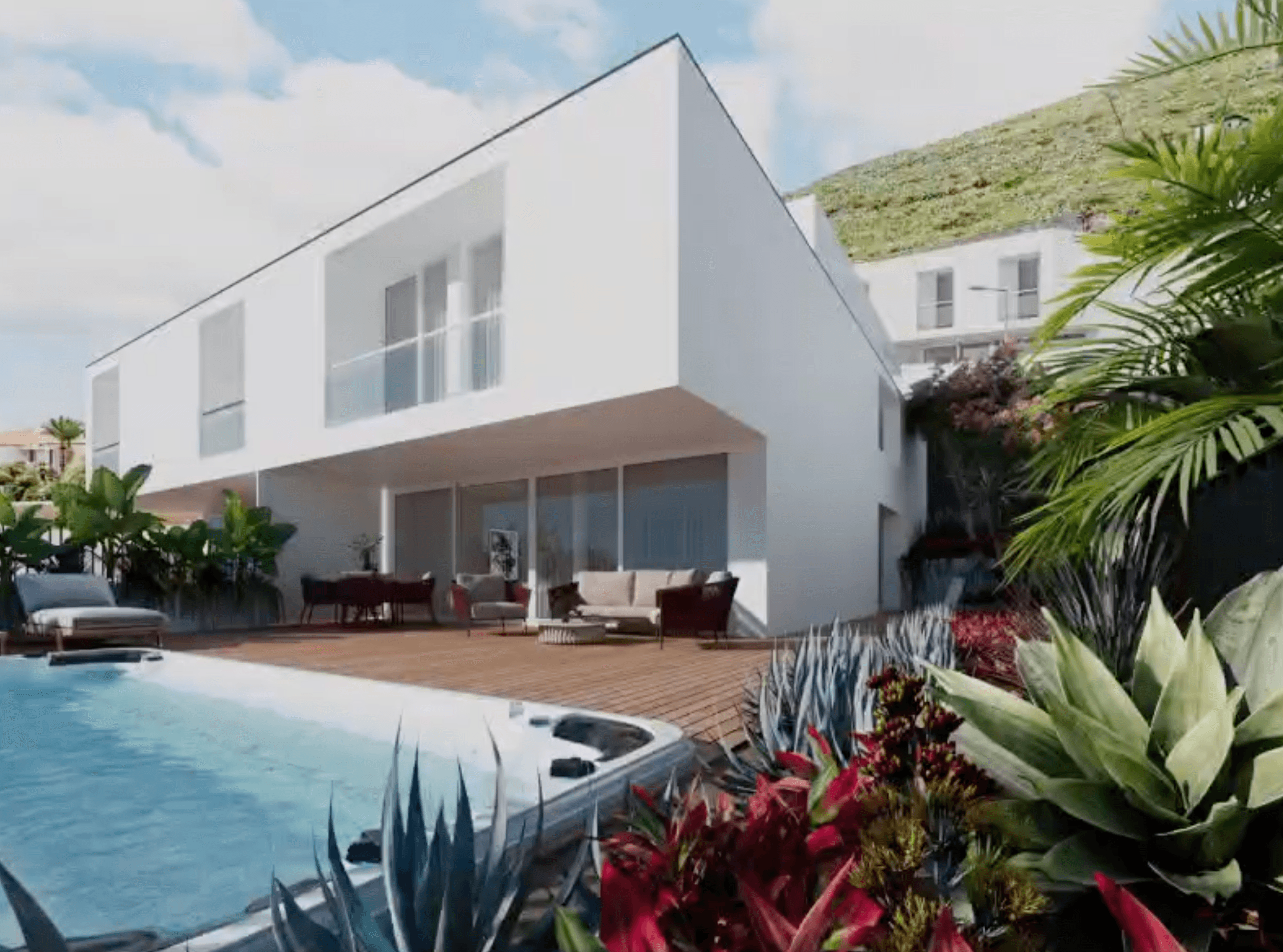

Portugal, Funchal
€1,230,000 — €1,500,000
Elegant House with sea view, Funchal
 273 m² — 313 m²
 3
3  3
3 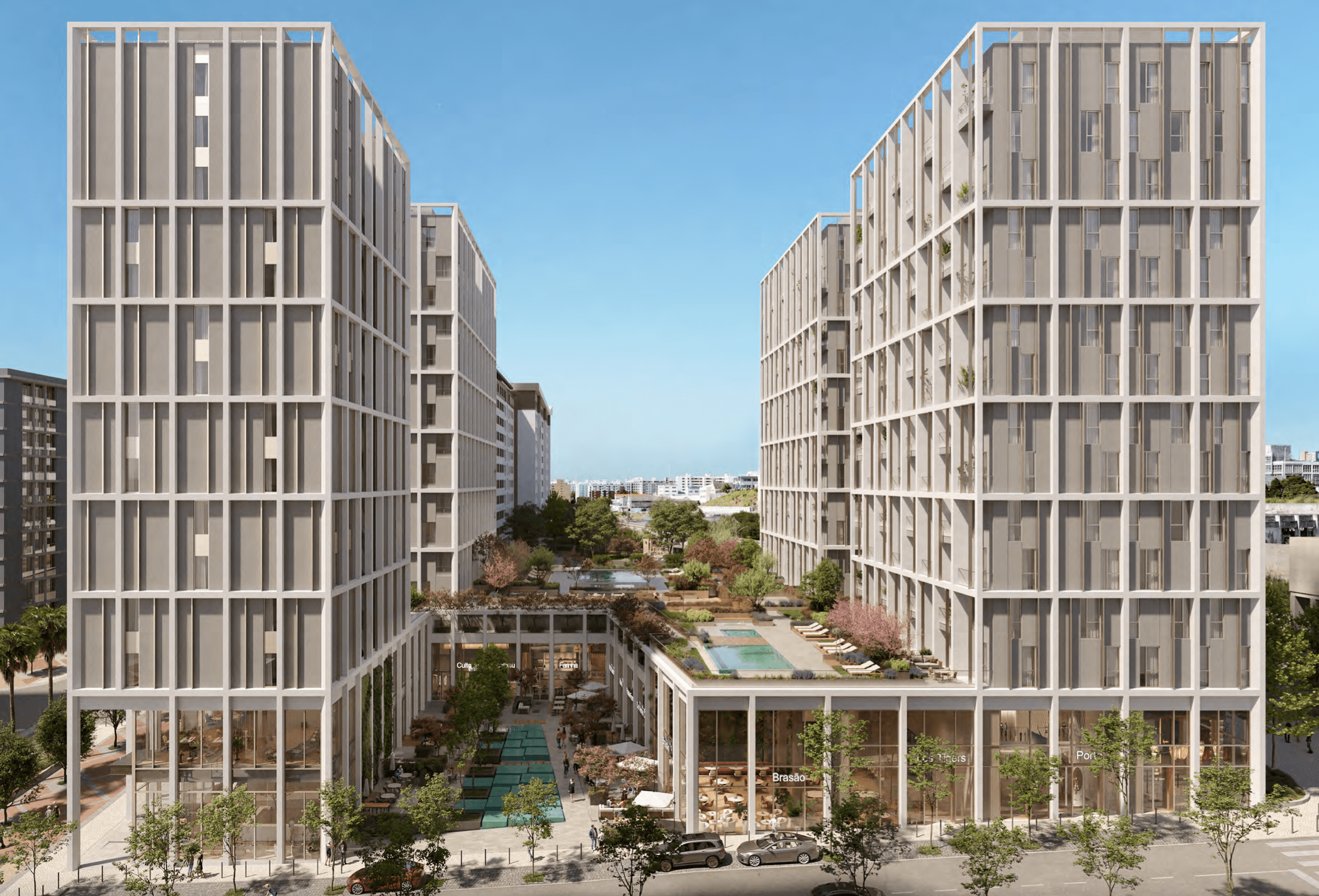
Portugal, Lisbon
€405,000 — €645,000
Serviced apartments, Park of the Nations, Lisbon
40 m² — 76 m²1—2 1—2 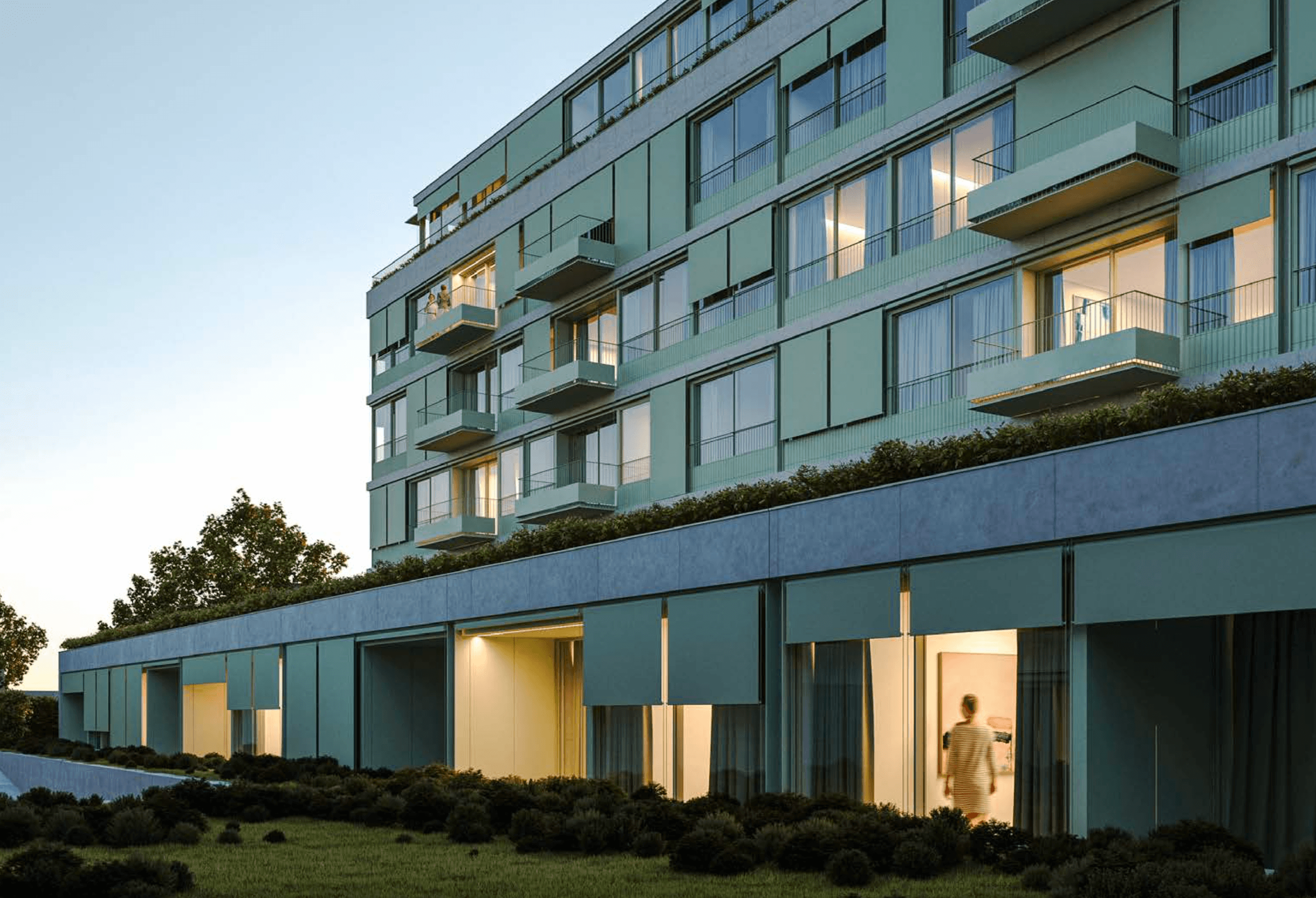
Portugal, Porto
€400,000 — €1,215,000
Apartments in modern style, central district, Porto
59 m² — 223 m²1—2 1—2 Popular areas for Turkish families
Larger cities are more convenient for work, education, and international services, while smaller cities are often quieter and more affordable.
Lisbon and Cascais suit families who want international schools, business infrastructure, and proximity to the airport. These areas are convenient but usually more expensive.
Porto offers a large city environment with universities, culture, and lower rental prices than Lisbon in many neighbourhoods. The Algarve is popular among retirees and families who prefer a warmer climate and coastal lifestyle.
Coimbra, Braga, Évora, and other smaller cities may suit applicants who want lower living costs and a quieter pace of life. These cities may also be easier for long-term integration.
Turkish community and consular support
Türkiye nationals in Portugal mostly settle in Lisbon, Cascais, Porto, and the Algarve. The community is smaller than in Germany, the Netherlands, or France, but Turkish residents may find restaurants, cultural groups, and expat communities in larger cities.
The Turkish Embassy in Lisbon provides consular services, including passport, notarial, and civil registration support.
Key points about the Portugal D7 Visa for Turkish citizens
- The Portugal D7 Visa for Turkish citizens is suitable for financially independent applicants who receive stable passive income of at least €920 a month and have savings of €11,040, which covers 12 months of living in Portugal.
- The D7 Visa Portugal from Türkiye works best for retirees, long-term rental income recipients, dividend earners, and families who plan to live in Portugal for most of the year.
- The applicant for D7 Visa needs housing in Portugal for at least 1 year and must follow residence rules after receiving the permit: not be absent for more than 6 months in a year or 8 months during the residence permit validity period.
- D7 Visa holders may live, work, and study in Portugal, use public services, and travel within the Schengen Area for up to 90 days in any 180-day period.
- D7 Visa holders may apply for permanent residence after 5 years and citizenship after 10 years of legal residence in Portugal.
Immigrant Invest is a licensed agent for citizenship and residence by investment programs in the EU, the Caribbean, Asia, and the Middle East. Take advantage of our global 15-year expertise — schedule a meeting with our investment programs experts.

 Trusted by 10,000+ investors