







![Top 7 Countries in Europe Offering Residence by Investment: Updated Guide for [!year]](/_next/image/?url=https%3A%2F%2Fa.storyblok.com%2Ff%2F176292%2F1536x864%2F949fffb803%2Fchanges-in-immigration-legislation-232027515.jpeg&w=2048&q=75)

Over the past decade, EU countries have collectively garnered approximately 25 billion euros in foreign direct investment through residence-by-investment programmes.
With an EU residence permit, investors are able to travel to the Schengen countries visa-free, establish a business, and, in some cases, receive tax benefits.
Let’s discuss how investors can move abroad and the best places to do so.
What is residence by investment?
A residence permit by investment is often called a “Golden Visa.” This refers to residence granted to foreign investors contributing to a country’s economy.
Golden Visa eligibility involves investment options such as purchasing real estate, acquiring government bonds, and opening bank deposits and businesses, but conditions are different in each country.
While EU nations continue to grant residence permits by investment, they are progressively adjusting the terms for investors.
Portugal has banned obtaining a residence permit for purchasing real estate, and Greece has raised the threshold for investment in real estate from €250,000 to €400,000—800,000 in the country’s most popular regions.
One key advantage of the Golden Visa is that investors aren’t required to continuously reside in the country to maintain their residence permit.
Investors can usually apply for permanent residence or citizenship after fulfilling residence requirements, such as maintaining legal residence for several years, spending the required time in the country, and meeting integration conditions.
7 benefits of a European residence permit
A European residence permit offers more than the right to live in another country. Depending on the programme, it can provide greater mobility, business opportunities, access to public services, and a long-term safety net for individuals and their families.
1. Visa-free travel
Some EU residence permits allow visa-free travel within the Schengen Area, which currently includes 29 countries after Bulgaria and Romania joined in January 2025. However, this does not apply to all EU residence permits: for example, a Cyprus residence permit does not grant visa-free access to the Schengen Area.
2. Business opportunities
Foreigners can establish businesses within the European Union, facilitating entrepreneurial ventures and economic opportunities.
Portugal is in the top 10 of the most innovative startup hubs in Europe, according to Financial Times. Hungary is ranked 1st among the best places to launch a startup by Business Name Generator.
3. Tax benefits
In some cases, residence permits offer tax advantages, potentially reducing tax burdens for individuals and businesses. For example, new residents enjoy preferential tax treatment in Italy, paying a flat income tax of €300,000 per year instead of progressive rates ranging from 23 to 43%.
Greece Golden Visa holders can benefit from a similar tax benefit: qualifying new residents can pay a flat annual tax of €100,000 on foreign-source income instead of being taxed under standard progressive rates.
4. Access to the EU services
Residence permit holders typically have access to quality healthcare services and education within the EU. Children of the region’s legal residents might be enrolled in local schools and universities for free or with significant discounts.
5. Right to relocate at any time
Investors often consider a residence permit as a safety net, even if they have no plans to relocate right away. If conditions deteriorate at home, they can activate that option and move to the country of residence together with family members.
6. Retirement planning
European residence can be an attractive option for retirees, offering a high standard of living, safety, and access to amenities and recreational activities.
Portugal and Malta are popular choices for retirees thanks to their warm climate, affordable living, quality healthcare, and diverse leisure options.
7. Cultural enrichment
Living in Europe exposes residents to diverse cultures, languages, and experiences, fostering personal growth and intercultural understanding.
According to the study by Eurobarometer, 33% of the EU population speaks English; the other most spoken languages are German, French, Italian, and Spanish.
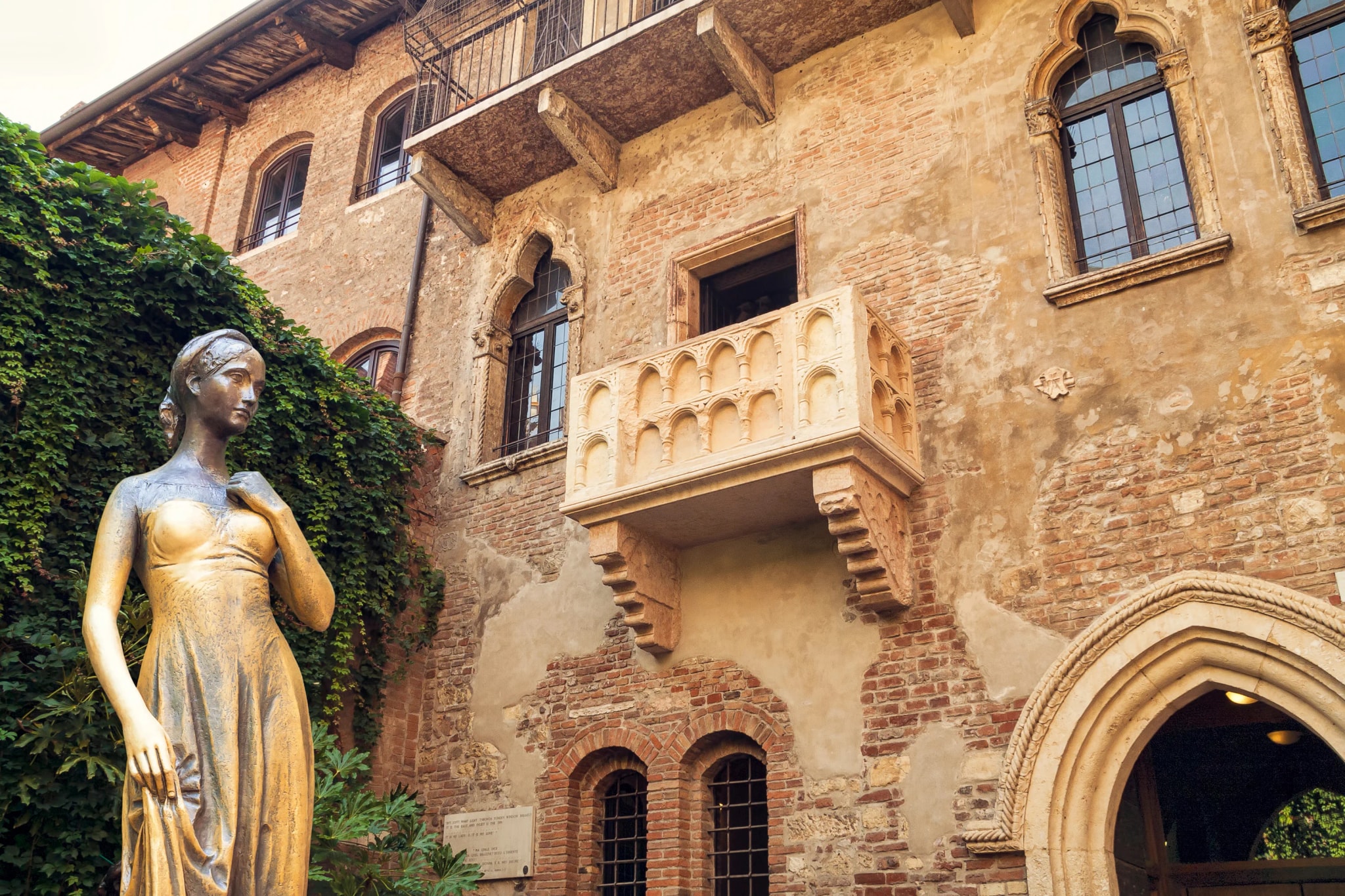
Foreigners who obtain Italian residency by investment can move to the homeland of Romeo and Juliet and visit the famous Casa di Giulietta in Verona
Residence permit by investment in Portugal
Since 2012, Portugal has been granting residence permits by investment, welcoming approximately 13,000 investors and extending this privilege to around 20,000 of their family members.
Significant changes have been made to the Portugal Golden Visa programme, diverging from its 2012 iteration in terms of both requirements and costs. In October 2023, the Portuguese Parliament prohibited foreigners from obtaining residence permits solely by real estate purchasing.
Investment options
Presently, investors have five options to get a Golden Visa:
- Contribute €250,000 towards preserving Portugal's national heritage, art, and culture, or €200,000 if the project is located in a low-density area.
- Invest €500,000 in public or private research institutions.
- Invest €500,000 in the Portuguese funds.
- Establish or expand a business with a minimum investment of €500,000, creating at least 5 jobs for Portuguese citizens within 3 years.
- Generate a minimum of 10 new full-time positions for Portuguese citizens or a minimum of 8 jobs in sparsely populated areas.
Investing in funds remains the preferred option among investors, offering the potential for returns within 6 to 12 years, with an annual yield of 2—20%.
Eligibility criteria
Eligibility for a residence permit in Portugal extends to:
- investor, a non-Portuguese adult with a verifiable source of income outside Portugal;
- investor's spouse;
- children under 25, financially dependent on the investor and unmarried;
- investor's and spouse's parents.

Greece residence permit by investment
The Greek Golden Visa stands out as one of Europe’s most accessible options. Prospective residents can acquire a seaside residence permit by investing in real estate valued at €250,000 or more.
Greece has raised the minimum investment requirement for real estate to €800,000 in the country’s most sought-after regions. However, investors can apply under the €250,000 threshold if they purchase a property for renovation or conversion into residential space.
Investment options
Greece offers several pathways to obtain a residence permit by investment:
- Purchase real estate worth at least €400,000. In high-demand locations, including Attica, Thessaloniki, Mykonos, Santorini and Greek islands with more than 3,100 residents, the minimum investment is €800,000.
- Invest at least €250,000 in the conversion of commercial property into residential property, or in the restoration of a listed building.
- Lease a hotel or furnished tourist residence for at least 10 years, with a minimum investment of €400,000.
- Invest at least €400,000 in a timeshare agreement.
- Make a direct investment of at least €500,000 in the Greek economy, for example through a company registered in Greece.
- Purchase units in mutual or alternative investment funds for at least €350,000.
- Invest in eligible financial instruments, such as government or corporate bonds, with thresholds depending on the asset type.
Despite stricter rules, demand for the Greece Golden Visa remains strong. In 2025, Greece received 6,978 new investor applications and issued 12,305 approvals, the highest annual total on record.
By the end of 2025, there were 79,056 valid Golden Visa residence permits in force, including 27,786 permits for main investors and 51,270 for their family members.
Who can apply
Eligibility for a residence permit in Greece extends to:
- investor, a non-Greek adult with a verifiable source of income and a clean criminal record;
- investor's spouse;
- unmarried children under 21;
- investor's and spouse's parents.
Hungary Golden Visa
Hungary started issuing residence permits to investors in the summer of 2024. It is a 10-year residence permit in one go, contingent upon the foreign investor’s contribution to the country’s economy by the following options:
- €250,000+ — purchasing shares in Hungarian investment funds.
- €1,000,000+ — a donation to the public funds supporting colleges and higher education institutions in Hungary.
Along with the main applicant, residence can be obtained by their spouse, children under 18, and parents.
Permanent residence by investment in Malta
The Malta Permanent Residence Programme, MPRP, offers a unique opportunity for non-EU, non-EEA, and non-Swiss citizens to establish roots in the heart of the Mediterranean.
Under this programme, investors can secure permanent residence for life by purchasing or renting real estate, paying state fees, and making charitable donations to non-governmental organisations. They also confirm that they have a capital of at least:
- €500,000, where at least €150,000 are liquid financial assets, such as money on bank accounts, deposits, securities;
- or €650,000, where at least €75,000 are liquid financial assets.
Expenses on Malta’s PR by investment
Upon purchasing real estate, the principal investor must retain ownership for a period of 5 years from the date permanent residence is granted. Following this timeframe, the property can be sold, allowing for a portion of the initial investment to be returned.
An investor can add to the application the family members:
- spouse or partner, including same-sex unions;
- children under 18;
- children aged 18 to 29, unmarried and principally dependent on the main applicant;
- principally dependent parents or grandparents of either applicant or spouse.
Cyprus permanent residence
Cyprus stands out as one of the select EU nations offering immediate issuance of permanent residence permits by investment. Within 9 months, applicants can secure lifelong permanent resident status.
Here are three pathways to obtain a Golden Visa in Cyprus by investment totalling €300,000 or more:
- Purchasing one or more residential or commercial properties. Residential properties must be acquired directly from the developer.
- Acquiring shares in Cypriot companies.
- Investing in securities issued by the Cyprus Investment Fund Association.
Along with the main applicant, permanent residence is obtained by their spouse, financially dependent children under 25, and disabled children of any age.
Italy Golden Visa
Italy’s Investor Visa programme was once deemed one of Europe’s most expensive investment pathways. However, since 2020, acquiring an Italian residence permit has become more accessible, starting at €250,000.
Investment options
Here are four options to obtain a residence permit in Italy by investment:
- Invest €250,000 in an Italian startup listed as the official innovative project.
- Purchase shares of existing Italian companies for €500,000.
- Invest €1,000,000 in any Italian cultural, educational, immigration, or scientific project of public interest.
- Buy government bonds with a maturity of at least 2 years for €2,000,000.
Even though Italy does not grant residence for purchasing real estate, the country still requires that investors buy or rent residential property when applying for a Golden Visa.
According to the Idealista website, Verbano-Cusio-Ossola, Syracuse, Venice, and Como are the primary destinations for foreign property buyers, sometimes receiving more visits from abroad than from within the country itself.
Who can apply
Here’s who gets Italian residence along with the main applicant:
- investor's spouse;
- children under 18 and adult children with disabilities;
- investor's and their spouse's financially dependent parents.
Parents can be included if they are financially dependent on the investor and have no other children in their country of origin or residence. Parents over 65 may also qualify if their other children are unable to support them due to documented serious health reasons.
Residence permit by investment in Malta
The Malta Global Residence Programme grants a permit for 1 year in 3+ months.
An investor is able to include family members, such as a spouse, principally dependent children under 25, and siblings, as well as service personnel.
Investment requirements
To participate in the programme, a foreigner buys or rents a property in Malta. The minimum rental price is €9,600 per year, for purchases — €275,000.
In the south of Malta and on the island of Gozo, the minimum investment is lower — at €8,750 for rental per year and €220,000 for the property purchase.
Additional expenses
There are additional costs to consider when applying for a Maltese residence permit by investment:
- administration fee — €5,500—6,000;
- health insurance at approximately €500 per year;
- income tax — at least €15,000 per year.

Saint John's Co-Cathedral in Malta’s capital, Valletta, is home to Caravaggio's notable works of art
Latvia Golden Visa
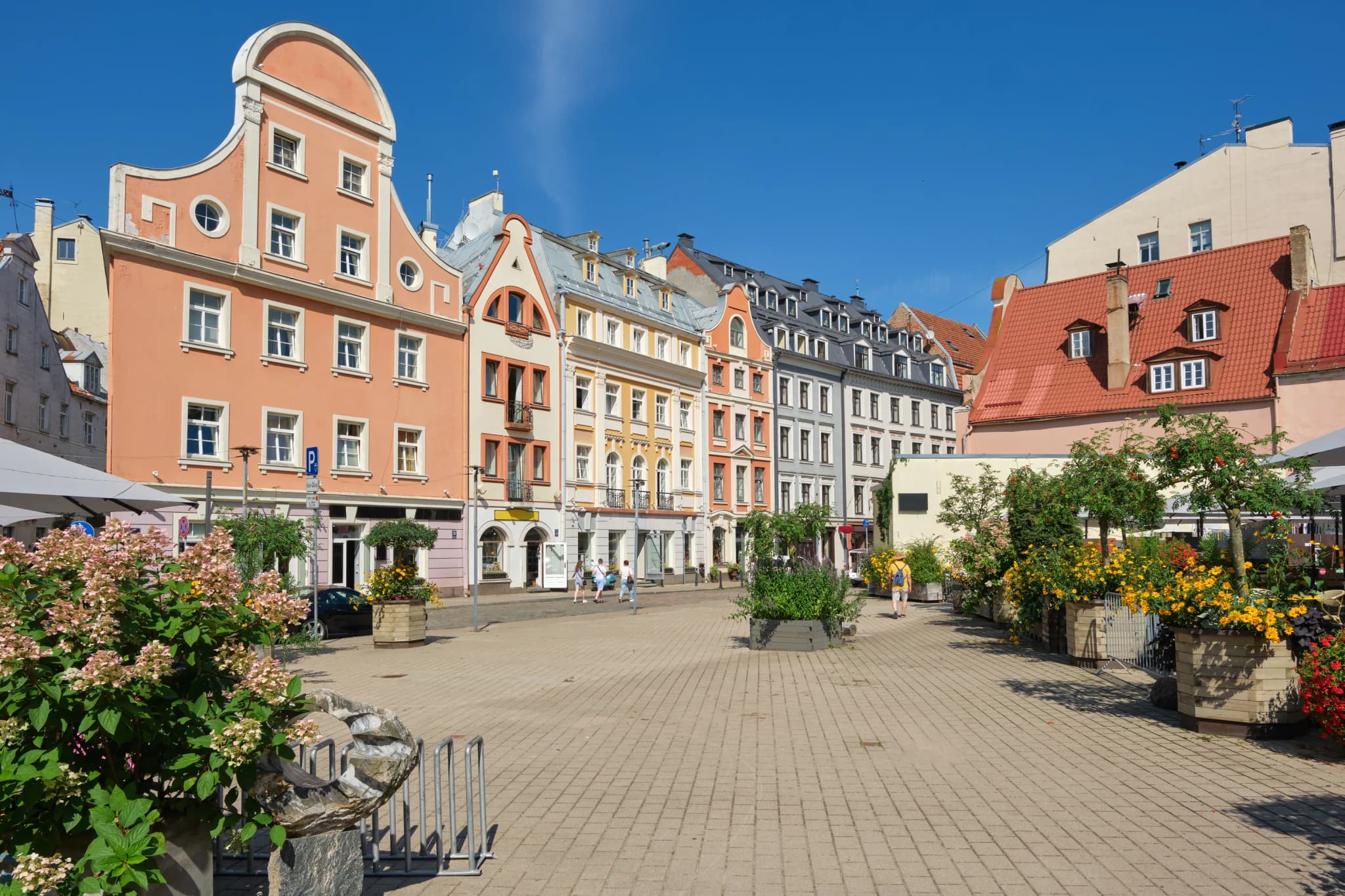
The Latvia Golden Visa offers one of the lowest investment thresholds for obtaining residence in the EU. Investors can receive a residence permit in around 3 months. Permits are issued for 2 years under the business route and 5 years under the fund option and can be renewed indefinitely as long as the investment is maintained.
Investment options
Since September 15th, 2026, the Latvia Golden Visa has had a new investment structure. Real estate and bank deposit options are no longer available to new applicants, so business investment is now the main active route.
Business investment starts at €50,000 for a Latvian company with up to 50 employees and annual turnover or a balance-sheet total of no more than €10 million. For larger companies, the minimum investment is €100,000. Investors also pay €10,000 to the state budget.
A new €150,000 fund investment route has also been introduced. The investment must be held for at least 5 years, with an additional €10,000 state payment. The route is not yet open for applications because the state-established fund has not yet been set up and the application procedure still needs to be defined in implementing regulations.
Who can apply
A Latvia Golden Visa application may include the investor's legally married spouse and unmarried children under 18 who are financially dependent on the main applicant.
Panama Golden Visa — alternative to European residence
The Panama Golden Visa gives investors a non-European route to permanent residence by investment. Unlike many residence programmes that begin with temporary status, Panama grants permanent status from the outset, with processing taking around 3 months.
The programme can be attractive to investors because of Panama's territorial tax system: foreign-source income is not taxed in the country. Besides, investing in Panama means entering one of the region’s most stable economies, supported by the Panama Canal, the use of the US dollar, and the country’s role as a major logistics and financial hub.
To maintain permanent residence, investors must keep the investment and visit Panama at least once every 2 years. The residence status is lifelong, while the residence card is renewed every 10 years.
Investment options
The Panama Golden Visa offers three investment routes:
- Purchasing residential or commercial property worth at least $300,000.
- Acquiring securities of at least $500,000.
- Placing a deposit of at least $750,000 in a Panamanian bank.
The investment must be maintained for 5 years. Real estate may generate rental income and potential capital appreciation during this period. After 5 years, the asset can be sold or reinvested.
Who can apply
A Panama Golden Visa application may include the investor's spouse, children under 18, unmarried adult children who are full-time students and financially dependent on the investor, and financially dependent parents.
Residence routes beyond classic Golden Visas
Some European countries do not offer classic Golden Visa programmes but remain attractive to wealthy applicants who can prove financial independence or make an investment. Spain, Austria, Switzerland, and Andorra fall into this category.
Spain
The Spain Non-Lucrative Visa is a residence route for financially independent applicants who do not plan to work in the country.
To qualify, the applicant must prove passive income of at least €28,800 per year. This may include pensions, dividends, rental income, interest, or other regular income earned without employment. The applicant must also rent or purchase residential property in Spain.
An alternative pathway is to invest at least €150,000 in our partner’s fund and receive passive income in the form of interest — €2,778 per month, or €33,336 per year, which is enough to qualify for the Spain Non-Lucrative Visa.
The main applicant can include a spouse, financially dependent unmarried children, and financially dependent parents. An additional €7,200 in annual passive income must be demonstrated for each dependant.
The process takes around 4 months. The first residence permit is issued for 1 year and can then be renewed for 2-year periods. After 5 years, residents may apply for permanent residence, and after 10 years, for citizenship.
Austria
Austria does not offer traditional investment programmes. Instead, the EU state provides residence permits exclusively for financially independent individuals.
The process for obtaining residence in Austria typically takes 3 to 6 months and requires applicants to fulfil several criteria:
- Demonstrate sufficient monthly income to cover family expenses, housing, and transportation.
- Purchase or rent property in Austria.
- Obtain medical insurance.
- Have basic proficiency in German at the A1 level.
- Reside in Austria for a minimum of 183 days per year.
Initially, a residence permit is issued for 1 year and can be renewed annually for another year, then subsequently for 3-year intervals, with income confirmation required each time.
Residence extends to the investor, their spouse, and children under 18.
After 5 years of residence, individuals can apply for permanent residence. Citizenship is acquired after 6 to 10 years, which can be passed on to future generations.
Austria is an attractive destination for investors due to its robust economic and political stability, offering the perks of visa-free travel to Schengen countries, esteemed education, high-quality healthcare, and the potential for EU citizenship.
Additionally, Vienna, the capital, has consistently topped the Mercer World Quality of Life Ranking for 8 consecutive years.
Switzerland
Obtaining a residence permit in Switzerland is also tailored for financially independent individuals. While no investment is required, applicants must demonstrate the ability to support themselves and their families without working in Switzerland. Income must be sourced from outside the country.
Instead of making an investment, applicants pay an annual lump-sum tax, which is calculated based on factors such as income, assets, worldwide living expenses, and the requirements of the chosen canton.
For non-EU citizens, the annual tax ranges from CHF 450,000 to 1,000,000, or €480,000 to 1,070,000, while EU and EFTA citizens pay lower amounts. The tax must be paid each year for as long as the residence permit is maintained.
Andorra
Investors seeking an Andorra residence permit can do so by making a minimum investment of at least €1,000,000 in the country’s economy.
Andorran residents benefit from advantageous tax policies, including exemption from capital gains and dividends taxes, as well as savings on income and corporate taxes. They can also travel visa-free to neighbouring Spain and France.
Europe PR and residence permit: a comparison



Country

Financial contribution
₣450,000 per year
RP validity
1 year
Time to citizenship
10 years

Country | Financial contribution | RP validity | Time to citizenship |
|---|---|---|---|
€250,000 | 2 years | 10 years | |
€250,000 | 5 years | 7 years | |
€250,000 | 10 years | 11 years | |
€250,000 | 2 years | 10 years | |
€50,000 | 2 or 5 years | 10 years | |
€300,000 | For life | 8 years | |
€30,000 | 1 year | — | |
€169,000 | For life | — | |
€28,800 | 1 year | 10 years | |
€100,000 | 1 year | 6—10 years | |
₣450,000 per year | 1 year | 10 years | |
€1,000,000 | 2 years | 20 years |
How to obtain EU residence by investment
Obtaining a residence permit in the EU takes several months, typically 3 to 12.
As an example, here’s a step-by-step procedure for applying for a Greece Golden Visa by purchasing a property.
1 day
Preliminary Due Diligence
A certified Anti Money Laundering Officer conducts a preliminary Due Diligence check. It reduces the rejection risk to 1%.
If there are any risks, Immigrant Invest offers an alternative solution, such as another programme.
A certified Anti Money Laundering Officer conducts a preliminary Due Diligence check. It reduces the rejection risk to 1%.
If there are any risks, Immigrant Invest offers an alternative solution, such as another programme.
1+ week
Preparation of documents
Lawyers fill out government forms and present a list of financial and personal documents needed for the application.
The investor collects the documents and signs a power of attorney authorising the lawyer to act on their behalf in Greece.
Lawyers fill out government forms and present a list of financial and personal documents needed for the application.
The investor collects the documents and signs a power of attorney authorising the lawyer to act on their behalf in Greece.
Up to 1 week
Getting a tax number in Greece
The lawyer submits an application and documents for the tax number registration. Typically, the number is issued within 3 to 7 working days. This step cannot be skipped since a tax number is needed for most financial operations in Greece.
The lawyer submits an application and documents for the tax number registration. Typically, the number is issued within 3 to 7 working days. This step cannot be skipped since a tax number is needed for most financial operations in Greece.
1+ months
Property purchase
Immigrant Invest real estate experts help investors select property for purchase.
The investor signs a preliminary purchase agreement and deposits 10% of the property cost.
The investor or a lawyer can sign the purchase agreement. The lawyer submits the agreement for registration in the Land Registry and the Cadastre, obtaining a registration certificate.
Immigrant Invest real estate experts help investors select property for purchase.
The investor signs a preliminary purchase agreement and deposits 10% of the property cost.
The investor or a lawyer can sign the purchase agreement. The lawyer submits the agreement for registration in the Land Registry and the Cadastre, obtaining a registration certificate.
1 day
Applying for a residence permit
The application for the Golden Visa is submitted after the deal is closed. The investor should complete the purchase by this time.
Documents are submitted online via the official website of the Greek migration service. While waiting for the decision, the investor can stay in the country for 1 year.
The application for the Golden Visa is submitted after the deal is closed. The investor should complete the purchase by this time.
Documents are submitted online via the official website of the Greek migration service. While waiting for the decision, the investor can stay in the country for 1 year.
Within 6 month, but usually within 1 month after application
Submission of biometrics
All applicants submit their biometric data, such as photographs and fingerprints, in Greece.
Scheduling a biometric appointment is possible 1—2 weeks after applying. The procedure must be completed within 6 months from the date of the residence application and before the expiry of 1 year.
All applicants submit their biometric data, such as photographs and fingerprints, in Greece.
Scheduling a biometric appointment is possible 1—2 weeks after applying. The procedure must be completed within 6 months from the date of the residence application and before the expiry of 1 year.
3+ months
Receiving residence permit cards
The application for a residence permit in Greece is processed within 3 months. The investor can collect the residence permit card personally or by a lawyer.
The application for a residence permit in Greece is processed within 3 months. The investor can collect the residence permit card personally or by a lawyer.
Every 5 years
Residence permit renewal
Residence permits are valid for 5 years and can be renewed. To do so, applications submit documents within 2 months before the expiry of the current permit and prove the ownership of the property or that other investment assets are being maintained.
Residence permits are valid for 5 years and can be renewed. To do so, applications submit documents within 2 months before the expiry of the current permit and prove the ownership of the property or that other investment assets are being maintained.
How Immigrant Invest can help with residence by investment
Immigrant Invest has specialised in residence and citizenship by investment since 2006, helping more than 10,000 investors and their families choose and obtain the right immigration solution. We work only with official government programmes and licensed partners.
Immigrant Invest provides end-to-end support, including:
- selecting the most suitable residence programme;
- conducting a preliminary Due Diligence check to reduce the risk of refusal;
- preparing and reviewing application documents;
- arranging investments, including real estate purchases;
- liaising with government authorities throughout the application process;
- assisting after approval with permit renewals, permanent residence, and citizenship applications where applicable.
We have European offices in Malta, Portugal, Hungary, Greece, and Austria, allowing investors to receive local support throughout the application process.
Things to know about best European residence by investment programmes
- A “Golden Visa” is a common term for a residence permit obtained by investment. It denotes a special type of residence granted to foreign investors who contribute to a country’s economy.
- Several countries in the EU grant residence by investment. Among them are Portugal, Hungary, Greece, Latvia, and Italy.
- European residence permits offer visa-free travel, business establishment opportunities, and access to quality services such as healthcare and education.
- Greece and Malta grant a residence permit for purchasing real estate.
- Outside the EU, Panama offers permanent residence, with a real estate investment option and attractive tax benefit: foreign-source income is not taxed in the country.
Immigrant Invest is a licensed agent for citizenship and residence by investment programs in the EU, the Caribbean, Asia, and the Middle East. Take advantage of our global 15-year expertise — schedule a meeting with our investment programs experts.

 Trusted by 10,000+ investors