









With 5.5 million US citizens already living abroad[1]Source: According to the Association of Americans Resident Overseas, an increasing number of Americans are choosing to relocate overseas.
Whether it’s the allure of a lower cost of living, better career opportunities, or simply a change of scenery, the options for American expats are vast. But choosing the right destination can be daunting.
In this guide, we explore the easiest countries for Americans to move to, highlighting key factors like visa requirements, language, and ease of settling.
7 reasons why Americans move from the USA
Rising costs, political divisions, and quality-of-life considerations are pushing many Americans to seek new opportunities abroad in countries that offer greater stability, safety, and affordability.
1. Cost of living
Many Americans choose countries where living costs are lower than in the US. In Mexico, Portugal, Spain, or Greece, daily expenses for housing, food, and transport are much lower compared to major US cities.
In the US, monthly living costs range from $2,000 to 5,000, depending on the location. In Greece, Mexico, Spain, and Portugal, living expenses in smaller cities start at $700, while in capitals, they can reach $1,800.
2. Political environment
The US political climate often drives citizens to seek stability elsewhere. Polarization and unpredictability during elections or political upheavals are common concerns. Countries like Canada, Germany, and Australia, known for their political stability, are attractive alternatives.
3. Safety
Safety is a significant factor for Americans moving abroad. Concerns over gun violence and crime rates often lead individuals to countries with lower crime rates and a stronger sense of security.
The Global Peace Index 2026 ranks the US 134th among 163 countries, while Portugal, New Zealand, and Canada are in the top 15[2]Source: Institute of Economics and Peace — Global Peace Index 2026. The US violent crime rate is 400—500 per 100,000 people, while Greece has 200—300 and Malta has 100—200.
4. Taxes
High US taxes, particularly for high-income earners, are another reason for relocation. The US personal income tax rate reaches 37%, while Costa Rica and Panama offer rates up to 25%.
Some countries provide tax incentives for non-EU investors. In Greece, for instance, non-EU residents can pay a flat €100,000 tax on global income. Without this exemption, Greece taxes global income on a progressive scale of up to 44%.
5. Healthcare
While the US boasts cutting-edge medical technology, many Americans feel burdened by the lack of a government-funded system and the high cost of healthcare and insurance.
In the US, private insurance premiums range from $400 to 1,200 per month for an individual, depending on coverage and location. In European countries like Portugal, Spain, and Greece, similar premiums cost between €50 and 150 per month.
Countries with the best healthcare systems include Asian nations, Scandinavian countries, Germany, Australia, and Canada ranking in the top 10 among 110 countries[3]Source: According to the 2025 CEOWORLD Health Care Index.
6. Business opportunities
For entrepreneurs and business professionals, the US can be both a land of opportunity and intense competition. Many look abroad for more favorable conditions to start a business, where taxes are lower, regulations are more relaxed, or the market is less saturated.
Entrepreneurs moving to Europe can expand their business to a unified European Union market, which has approximately 450 million consumers.
Several countries provide residence permits for international entrepreneurs. For instance, the Portugal Startup Visa grants residence for establishing a business. Similarly, Italy and Greece allow foreign investors to obtain residence through business ventures.
7. Climate and pace of life
Climate and lifestyle significantly impact well-being and satisfaction. Countries like Spain and Greece offer mild, warm weather year-round, unlike the extremes often seen in the US.
Portugal is particularly praised by Americans for its ‘excellent beaches, beautiful scenery, and fantastic weather,’ according to the Expat Insider Survey[4]Source: Internations — Portugal.
European and Latin American countries often feature a slower, family-focused pace of life. This contrasts with the US culture, which emphasises long working hours and productivity.
Trusted by 10,000+ investors
Thinking of leaving the USA? Discover your options
How we selected the easiest countries for US expats
Portugal, Spain, Malta, Germany, Australia, New Zealand, Greece, Mexico, Panama, Canada, and Costa Rica are among the easiest destinations for Americans to settle abroad. Several factors make these countries appealing.
1. The presence of American expat communities plays a significant role, as these networks provide a sense of familiarity and support for newcomers.
2. Countries with accessible residence options are prioritized, offering straightforward legal pathways for individuals seeking to settle abroad.
3. Proximity to the US is also an important consideration, focusing on destinations with short travel times and direct flight options.
4. Countries where English is widely spoken or an official language were highlighted, as this greatly simplifies communication and daily navigation.
5. Rankings from the Expat Insider Survey were used to highlight countries where settling in is made easier due to welcoming cultures, reliable services, and community integration opportunities.
6. US driving licenses exchange is another essential factor, simplifying the transition to everyday life.
1. Portugal — safety and affordable cost of living
Portugal consistently ranks among the top EU destinations for American expats, combining accessible residence pathways, political stability, and Mediterranean lifestyle at a significantly lower cost than the US.
US expats
At the end of 2024, there were 19,258 US citizens residing in Portugal out of a total foreign-resident population of around 1.5 million[5]Source: According to the report by AIMA, the Agency for Integration, Migration and Asylum in Portugal. In InterNations’ Expat Insider 2026 survey, Portugal ranked 8th overall and 7th for Ease of Settling In. Expats rated the country highly for local friendliness, with 76% saying they felt welcome and 73% finding it easy to adapt to Portuguese culture[4]Source: Internations — Portugal.
Numerous expat groups cater to Americans, such as Expats in Lisbon and Americans in Portugal. The American Club of Portugal offers networking events and support for US citizens.
Location
Portugal is in southwestern Europe, bordered by Spain and the Atlantic Ocean. A direct flight from the US to Lisbon takes 7—9 hours, with seasonal flights to Porto. Ticket prices for one-way direct flight start at around $700.
Cost of living
Portugal is one of the EU’s most affordable countries. A single person needs at least $700 per month for living expenses, with rent ranging from $800 to 1,700 depending on the property size and location.
Living costs are highest in Lisbon, Porto, and popular coastal areas such as the Algarve, particularly in tourist hotspots. More affordable options can be found in smaller cities and inland regions, including Braga, Coimbra, Évora, and parts of central and northern Portugal.
Visa-free stay and residence options
Visa requirements. US citizens can stay in Portugal and the wider Schengen area for up to 90 days within a 180-day period without a visa.
Residence options. What makes Portugal one of the easiest countries for Americans to immigrate to is its residence options for investors, digital nomads, financially independent people, and entrepreneurs. All of these routes allow Americans to move with their families.
Foreigners with passive income, such as pensioners, can obtain the Portugal D7 Visa for financially independent people.
Applicants must prove a monthly income of at least €920, equal to the minimum wage in Portugal. For additional family members, the income requirement rises by 50% for an adult and 30% for a child. Eligible dependents include a spouse, children under 21, and parents.

Entrepreneurs can obtain the Portugal Startup Visa to open a company without mandatory investments. Applicants are required to provide a business plan and open a startup in collaboration with a Portuguese business incubator. They must also secure housing by purchasing or renting property and confirm savings equal to 12 minimum wages, which amounts to €11,040 in 2026.
Americans working remotely can take advantage of the Portugal Digital Nomad Visa. It is tailored for freelancers, employees of foreign companies, self-employed individuals, and entrepreneurs. Family members can also qualify, including a spouse, children under 21, and parents.
In 2026, applicants must demonstrate a monthly income of €3,680+ and savings of €11,040+, which depend on the minimum wage and change every year. Additional savings of 50% per spouse or parent and 30% per child are required. Digital nomads must also secure housing in Portugal.
Portugal ranks among the top 10 countries for digital nomads[6]Source: According to the Digital Nomad Index by VisaGuide. Lisbon is particularly popular, earning recognition as one of the best cities for remote workers by the International Workplace Group. The city offers modern high-speed internet and reliable Wi-Fi access and numerous coworking spaces, ideal for professionals working remotely.
Investors contributing to the Portuguese economy can obtain temporary residence under the Portugal Golden Visa. The minimum investment starts at €250,000 for arts and cultural heritage restoration. The most popular option is investing €500,000 in fund units.
The Portugal Golden Visa is sought after by US investors, with 406 approved applications in 2024[5]Source: According to the report by AIMA, the Agency for Integration, Migration and Asylum in Portugal. Visa holders can work and run businesses in Portugal and enjoy free access to public healthcare and education. Spouses, children under 25, and parents can obtain residence with the investor.
American talent in innovation and business can access the Portugal Global Talent Programme, contributing directly to Portugal’s academic, entrepreneurial, and innovation ecosystem. Applications are processed within 4—6 months.
The €170,000 fee applies and covers the main applicant and up to three dependants, with an additional amount required for larger families. A spouse and children under 26 can be included in the application.
Driving license
Americans may exchange their US driving license for a Portuguese one within 60 days of establishing residence. The process requires proof of residence, a vision test, and submission of the original US license to the relevant authority. No driving examination is required for most US citizens.
Long-term prospects
Portuguese citizenship is available after 7 years of legal residence for EU citizens and nationals of Portuguese-speaking countries, and after 10 years for other nationals, including Americans. Under Organic Law No. 1/2026, applicants must also meet integration requirements, including knowledge of Portuguese culture, history, civic rights and duties, and the political system.
Portugal permits dual citizenship, meaning Americans do not need to renounce their US passport. Children born in Portugal to parents who have held a residence permit for at least 1 year prior to birth acquire Portuguese citizenship at birth.
Remarkable benefits
Portugal is one of the world’s safest countries, ranking 7th out of 163[2]Source: Institute of Economics and Peace — Global Peace Index 2026. Its low crime rates, political stability, and sense of unity contribute to its peaceful reputation.
Legal residents of Portugal are entitled to access the National Health Service, SNS, on the same terms as Portuguese nationals. Private health insurance premiums are a fraction of US equivalents, typically €50—150 per month for comprehensive individual cover.
2. Mexico — home to the largest US expat community
When considering what countries are easiest to move to from the US, Mexico consistently tops the list. It combines physical proximity, cultural familiarity, a generous tourist stay, and an accessible residence pathway for financially independent individuals.
US expats
Mexico hosts the largest American expat population globally. Roughly 70% of all foreign-born residents in the country were born in the United States, based on the ENADID, Mexican National Survey of Demographic Dynamics, 2023 survey[7]Source: Full text of the ENADID report.
According to the InterNations Expat Insider 2026 survey, Mexico ranks 1st out of 31 countries for ease of settling in[8]Source: Internations — Mexico. Expats highlight the friendliness of locals, ease of building social connections, and a strong sense of belonging.
Location
Mexico’s proximity to the US, along with direct flights and short travel times, makes it one of the easiest countries for Americans to move to. A flight from Los Angeles to Mexico City takes about 4 hours, while traveling from Miami to Cancun takes approximately 1.5 to 2 hours. Ticket prices typically range from $100 to 400.
Cost of living
Mexico is much more affordable than the US, with housing, food, healthcare, and services being generally much less expensive than in the United States, allowing for a comfortable lifestyle at a lower cost. For everyday expenses, one person needs around $600 per month. Apartment rent costs $400 to $1,100 per month, depending on the size and location of the property.
Living costs are highest in major cities and popular expat destinations such as Mexico City, Playa del Carmen, Tulum, and Los Cabos. More affordable options can be found in inland and smaller cities, including Mérida, Oaxaca, Guanajuato, and Querétaro.
Visa-free stay and residence options
Visa requirements. US citizens can stay in Mexico for up to 180 days without a visa.
Residence option. Americans who wish to live in Mexico can apply for a Temporary Resident Visa, most commonly based on financial solvency. Financial requirements vary by consulate, but recent published thresholds include approximately $4,630 in monthly income or around $78,025 in savings[9]Source: Official guidelines by the Consulate of Mexico in Las Vegas.
Driving license
US citizens can drive in Mexico with a valid US driving licence when visiting. After establishing residence, they need to obtain a Mexican licence under the rules of the state where they live. Requirements vary: for example, Mexico City allows legal residents to apply for a local licence, while states such as Jalisco may require road-safety training and driving tests for new applicants.
Long-term prospects
In Mexico, citizenship can be obtained after 5 years of living in the country. Applicants first hold temporary residence for up to 4 years, after which they transition to permanent residence.
To be eligible for citizenship, foreigners must demonstrate basic knowledge of the Spanish language, as well as an understanding of Mexican history and culture. They must also show proof of legal residence and have no serious criminal record.
Mexico allows dual citizenship, so US nationals are not required to renounce their original nationality.
Remarkable benefit
Foreigners are allowed to purchase property in Mexico. In most parts of the country, ownership is direct.
In the restricted zone, which extends 50 kilometres from the coast and 100 kilometres from international borders, property is typically acquired through a bank trust. This allows foreigners to hold, use, sell, and transfer property rights.
The process of buying property typically takes 30 to 60 days.
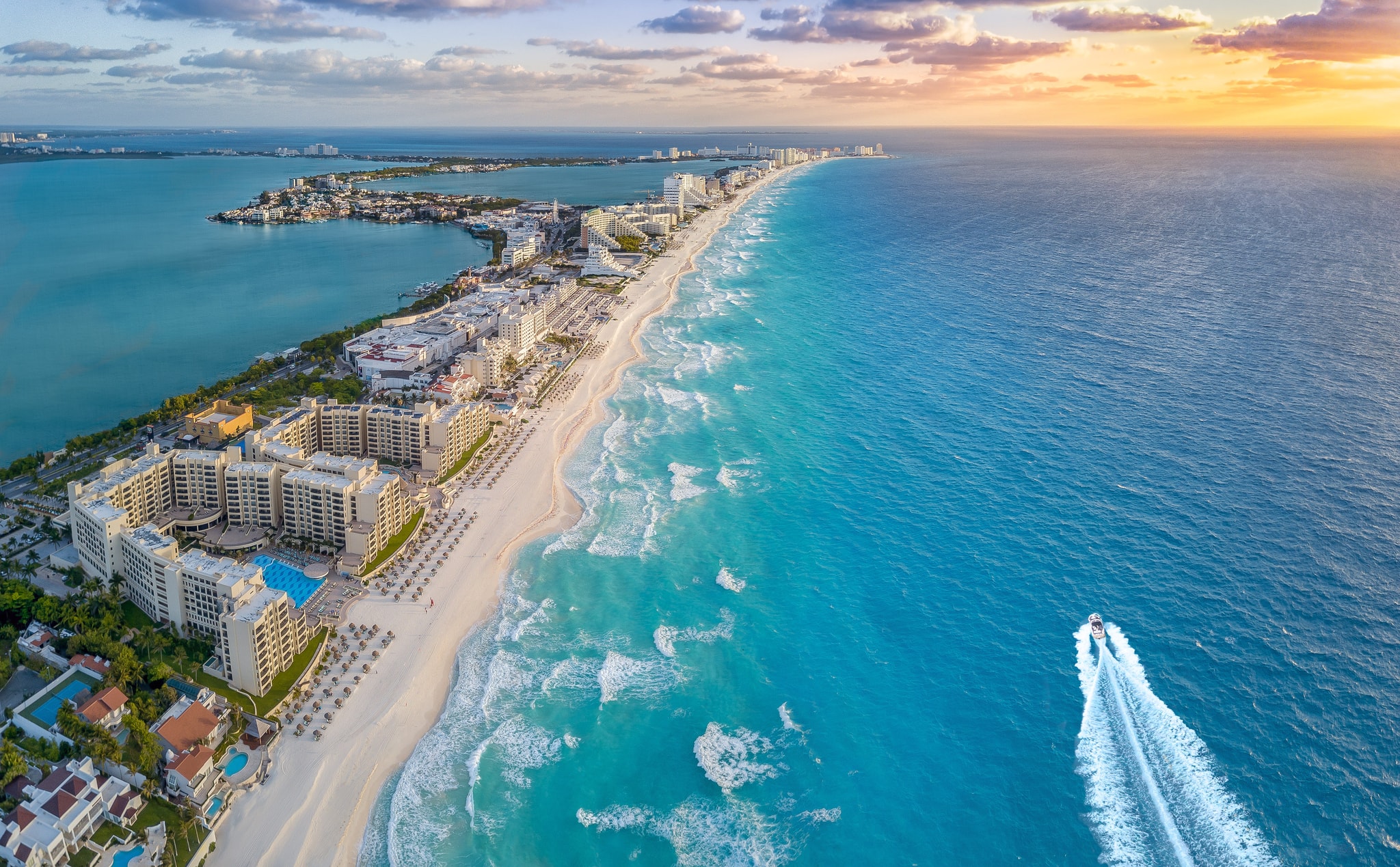
In Cancun, 1-bedroom apartments at the beachfront or hotel zone cost $200,000—500,000
3. Malta — English-speaking environment with direct permanent residence
Malta attracts expats with English as an official language, a Mediterranean lifestyle, and a direct permanent residence programme. At the end of 2025, around 183,000 non-Maltese citizens lived in the country, representing 31.1% of all residents[10]Source: NSO — World Population Day: 11 July 2026.
US expats
Malta hosts a small but active community of US expats. Social groups like the Facebook community ‘Americans in Malta’ provide a platform for expats to share information, advice, and experiences about living in the country.
Location
Malta is a small island nation situated in the central Mediterranean Sea, south of Italy, east of Tunisia, and north of Libya.
Flights from major US cities to Malta take 9 to 12 hours, with no direct options. Most flights include at least one stopover, typically in Europe. Ticket prices for one-way flights range from $400 to 1,000, depending on the departure city, airline, and booking time. Prices are higher during peak travel seasons.
Cost of living
Malta is slightly cheaper than the US, though housing costs can be relatively high due to limited supply and strong expat demand. A single person typically spends $950—1,150 per month, while a family of four needs about $3,100—3,600 excluding rent.
Rent averages $1,000—1,300 for a 1-bedroom apartment and $1,600—2,500 for a 3-bedroom apartment, particularly in Sliema, St Julian’s, and Valletta. More affordable housing can be found in southern Malta and on the island of Gozo.
While services and healthcare are reasonably priced, imported goods and utilities can increase overall living expenses.
Visa-free stay and residence options
Visa requirement. Under Schengen Area rules, US citizens can stay in Malta for up to 90 days within a 180-day period without a visa. For longer stays, a residence permit is required.
Residence option. Foreigners can obtain lifelong residence in Malta in exchange for investment under the Malta Permanent Residence Programme, MPRP.
Applicants must meet several requirements, including rent or purchase of real estate, payment of government fees, and donations.
In case of renting real estate, investors need to sign a lease agreement for at least 5 years. Minimum rental cost is €14,000 per annum. If applicants choose to purchase a property, it must cost at least €375,000.
Other fees for both options include:
- contribution fee — €37,000;
- administrative fee — €60,000, plus €7,500 per adult family member, except for the spouse;
- charitable donation — €2,000.
In total, the minimum required amount is €169,000 for the rental option and €474,000 for the property purchase option.
Investors must confirm assets of at least €500,000, including €150,000 in liquid financial assets. Alternatively, they can confirm €650,000 in total assets, with €75,000 in liquid financial assets.
Family members, including a spouse, children under 29, parents, and grandparents, can also qualify for permanent residence.
Long-term prospects
Under the MPRP, investors are granted permanent residence from the outset, without a temporary permit stage. With permanent residence, they can live in Malta indefinitely, open bank accounts, access healthcare, study at local universities, and run businesses in the country. Working requires a separate work permit.
Driving license
Americans can drive in Malta using a valid US driving license for up to 12 months from the date of their entry into the country. After 12 months, drivers are required to obtain a Maltese one. The US is not among the countries whose licenses can be directly exchanged, so applicants should be prepared to follow the standard licensing procedure, which may include both theory and practical tests.
Remarkable benefits
English being one of the official languages simplifies life for US expats. It makes navigating bureaucracy, understanding legal and governmental processes, and communicating with locals much easier.
Malta is also known for its safety, ranking 31st out of 143 countries[11]Source: World Justice Project — Rule of Law Index. The country is politically stable, has low crime rates, and is free from natural disasters due to its geographical location.

How an American retiree moved to Malta
Tyler, a shareholder in a US real estate development company, wanted to enjoy a slower pace of life upon retirement. Additionally, due to health concerns, he was looking for a country with affordable healthcare.
He approached Immigrant Invest to help him find the ideal option, where he could purchase real estate and secure residence. Within 10 months, Tyler became a permanent resident of Malta.
4. Spain — European hub for digital nomads with a flat 24% tax rate
Spain is especially attractive for remote workers, as it offers the Digital Nomad Visa and a favourable flat-tax regime. It is also attractive for its lower cost of living and high quality of life.
US expats
Spain is home to approximately 57,000 US citizens[12]Source: According to the Spain’s National Statistics Institute and ranks 6th among the easiest countries to settle in and 1st for quality of life, according to the Expat Insider Survey 2026[13]Source: Internations — Spain. Foreigners particularly appreciate the leisure, recreational activities, travel options, and affordable healthcare.
Location
Spain is in southwestern Europe, occupying most of the Iberian Peninsula. It is bordered by Portugal to the west, France and Andorra to the northeast, and the Mediterranean Sea to the south and east.
Flight times from the US vary, with New York to Madrid taking about 7 hours and Los Angeles to Madrid around 10 hours. One-way tickets range from $400 to 1,000, depending on booking time and season.
Cost of living
Spain is approximately 25% cheaper than the US. A single person spends around $800—950 per month, while a family of four requires $2,900—3,200 excluding rent.
Depending on location, rent ranges from $800—1,050 for a 1-bedroom apartment and $1,200—1,700 for a 3-bedroom apartment. Madrid, Barcelona, and the Balearic Islands are the most expensive areas, while Valencia, Seville, and Granada provide significantly lower living costs.
Spain benefits from relatively low grocery prices, affordable public transport, and reasonably priced healthcare, especially outside major urban centres.
Visa-free stays and residence options
Visa requirement. Under the Schengen Area rules, US citizens can stay in Spain for up to 90 days within a 180-day period without a visa.
Residence options. US expats working remotely for foreign companies, as sole proprietors, or as self-employed professionals can apply for the Digital Nomad Visa.
The main requirement is earning at least €2,849 per month while working remotely. Applicants must be graduates of a recognised university or professional school, or demonstrate at least 3 years of relevant professional experience. Securing rented or bought real estate in Spain is also required.
Alternatively, US citizens can apply for the Non-Lucrative Visa if they have sufficient passive income or savings to support themselves without employment in Spain. Applicants must demonstrate stable financial means of at least €28,800 per year, along with private health insurance and proof of accommodation in the country.
Both residence options are issued in around 4 months and allow inclusion of family members.
Long-term prospects
Applying for Spanish citizenship is generally available after 10 years of legal residence. Applicants must pass Spanish language, DELE A2, and cultural knowledge, CCSE, exams.
Spain does not allow dual citizenship with the US, which means Americans are required to renounce their original nationality upon naturalisation.
Driving license
US citizens residing in Spain can use their US driving license for the first 6 months after becoming resident. Once the 6-month period ends, drivers are expected to obtain a Spanish one.
As the United States is not on the list of countries with license exchange agreements, a direct swap is generally not possible. In most cases, applicants will need to go through the standard licensing process, which can include both theoretical and practical exams.
Remarkable benefits
Spain provides excellent living conditions, ranking 16th out of 89 countries in the Quality of Life Index 2025[14]Source: Numbeo database: Quality of Life Index by Country 2026. It is positioned higher than, for instance, Japan, the UK, and Canada. With reliable infrastructure, accessible basic services, and diverse housing options, Spain ensures a comfortable and secure lifestyle for its residents.
Digital nomads might benefit from a fixed income tax rate of 24% for annual incomes up to €600,000. Income above this amount is taxed at 45%. The Spain Digital Nomad Visa is one of the few that allows remote professionals to work in Spain, provided that the income from Spanish sources does not exceed 20% of their total earnings.
5. Panama — US dollar economy and a territorial tax system
US citizens moving to Panama may find the country especially attractive thanks to its US dollar-denominated economy and territorial tax system, which exempts foreign-source income. It is also considered one of the easiest countries for Americans to move to for retirement.
US expats
Most Americans reside in Panama City, coastal areas like Coronado and Gorgona, and the mountain town of Boquete. In the Expat Insider 2026 survey, Panama ranks 1st overall, as well as 2nd for ease of settling in and 2nd for finding friends[15]Source: Internations — Panama.
Location
Panama is geographically close to the US, with direct flights connecting cities like Miami, New York, and Los Angeles to Panama City. Flight times range from 3.5 to 5 hours, with ticket prices between $75 and 350, depending on the departure and arrival cities.
Visa-free stay and residence options
Visa requirement. US citizens can stay in Panama as tourists for up to 180 days without a visa.
Residence options. Pensionado Visa is a residence program designed for retirees, allowing them to live in Panama indefinitely. Applicants must provide proof of a monthly income of at least $1,000 from a government program or private corporation.
The Pensionado programme provides visa holders with discounts on services like medical care, transport, and entertainment, such as:
- 50% off admission to cinemas, theatres, sporting events and other entertainment;
- 50% off hotels from Monday to Thursday and 30% from Friday to Sunday;
- 25% off airline tickets;
- discounts on certain utility services;
- 15% off dental and optometry services.
For high-net-worth individuals, Panama offers the Qualified Investor Visa.
Applicants can qualify by making one of the following investments:
- $300,000 in real estate;
- $500,000 in securities through a licensed brokerage;
- $750,000 fixed-term bank deposit for 5 years.
The Qualified Investor Visa grants permanent residence immediately, without a provisional period, which makes it one of the fastest residence pathways in Latin America. Applicants can include family members and are not required to reside in Panama full-time.
Cost of living
Panama is about 20—25% cheaper than the US. A single person spends around $800—950 per month, while a family of four needs approximately $2,700—3,100 excluding rent.
Rent ranges from $800—1,300 for a 1-bedroom apartment and $1,300—2,100 for a 3-bedroom apartment, with Panama City being the most expensive area. More affordable living can be found in David, Boquete, and smaller inland towns.
While services and healthcare are reasonably priced, imported goods and electricity costs can be relatively high.
Long-term prospects
Citizenship in Panama is generally available after 5 years of permanent residence. Applicants must show basic Spanish proficiency and knowledge of Panamanian history and civics.
Panama allows dual citizenship in practice, although it is not always explicitly recognised in law, so Americans usually retain their US citizenship.
Driving license
US citizens can drive in Panama with a valid US driving license for up to 90 days after entering the country.
After 90 days, residents can apply for a Panamanian driving licence through the foreign-licence homologation procedure. A valid US licence can be homologated without taking the theory or practical driving tests. Applicants must provide their immigration and identity documents, present and certify the foreign licence, complete the required visual and hearing checks, and pay the applicable licence fee.
Remarkable benefits
Panama’s use of the US dollar as its official currency eliminates the need for currency exchange, simplifying financial management for Americans.
The country’s territorial tax system ensures that income earned outside Panama is not taxed. Personal income tax rates range from 0 to 25%[16]Source: Worldwide Tax Summaries: Taxes on personal income in Panama, making Panama an attractive destination for those seeking to reduce their global tax burden.
By comparison, US federal income tax rates range from 10 to 37%[17]Source: Internal Revenue Service: Federal income tax rates and brackets. Additionally, some US states impose their own tax rates, which range from 0 to about 13%. On top of that, certain cities levy local taxes of up to 4%.
The International Living 2026 ranked Panama as the 2nd best retirement destination, only topped by Greece[18]Source: International Living: Annual Global Retirement Index.
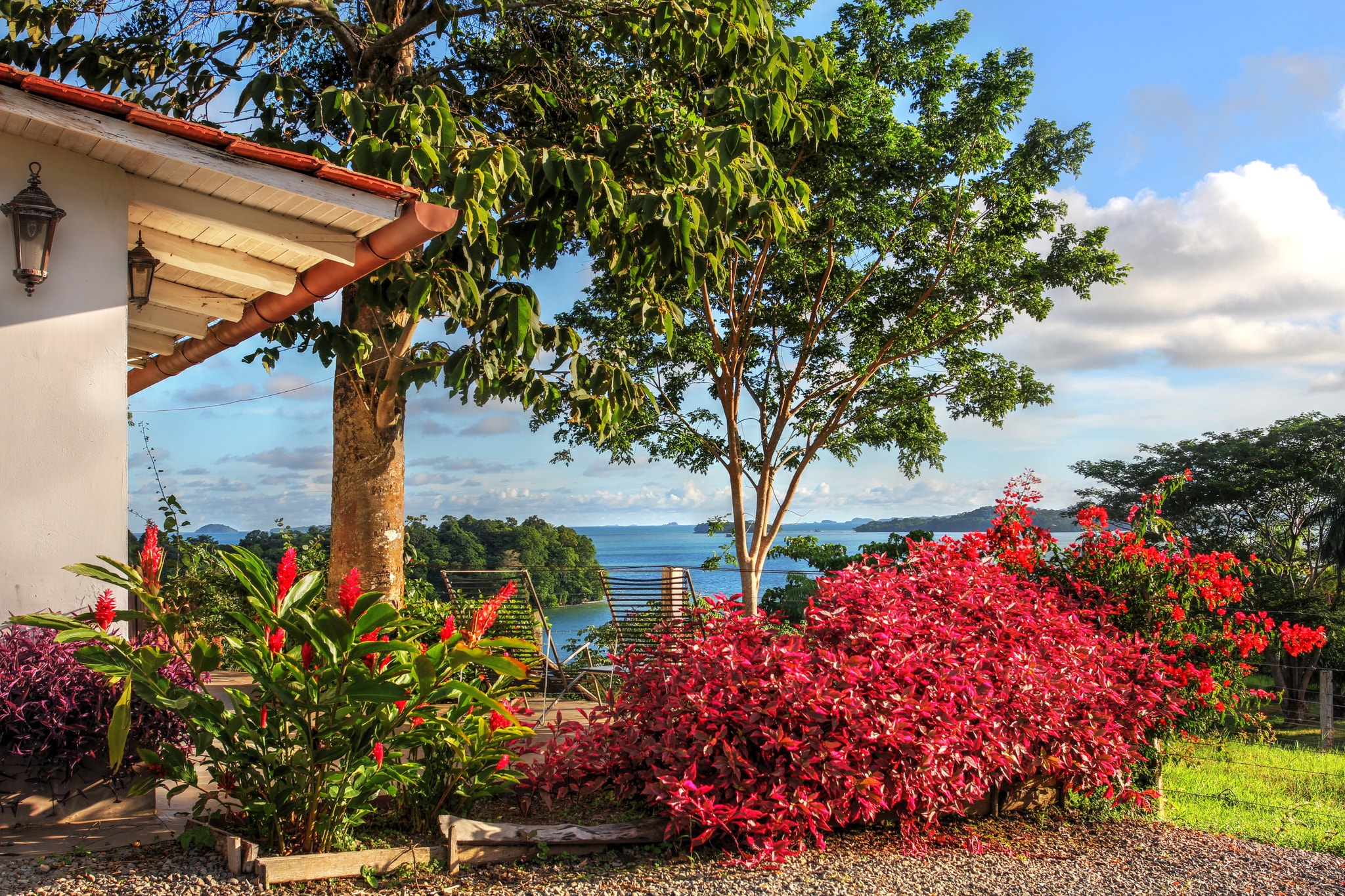
3-bedroom houses outside Panama City cost $100,000—250,000, while in the capital, prices start at $300,000 and can exceed $1 million
6. Greece — path to residence through property purchase
Greece offers a well-established Golden Visa program, a favourable flat tax regime for high-net-worth residents, and a cost of living well below most Western European comparators. All of these combined makes the country a strong choice for American investors and retirees.
US expats
Greece is home to a small but growing American expat community, with many US citizens living in Athens, Thessaloniki, and popular islands such as Crete and Corfu.
Active communities such as Americans in Greece and Digital Nomads & Expats in Athens provide networking opportunities, local advice, and support for newcomers, making integration easier.
Location
Greece is in southeastern Europe, bordered by Albania, North Macedonia, Bulgaria, and Türkiye. Direct flights from the US to Greece take between 9 and 11 hours, depending on the departure city and flight path. One-way ticket prices start at approximately $600—700, depending on the season.
Cost of living
Greece is one of the most affordable destinations in the EU, being around 1.5 cheaper than the US. A single person typically spends $700—850 per month, and a family of four needs around $2,400—2,700 excluding rent.
Rent is relatively low, averaging $450—650 for a 1-bedroom apartment and $750—1,050 for a 3-bedroom apartment. Athens and popular islands such as Mykonos and Santorini are significantly more expensive, especially during peak tourist seasons, while Thessaloniki and mainland areas offer much lower costs.
Visa-free stay and residence options
Visa requirement. US citizens can stay in Greece for up to 90 days within a 180-day period without a visa for tourism or business purposes. This is permitted under the Schengen Area agreement, to which Greece belongs.
Residence options. Investors can obtain temporary residence in Greece by contributing at least €250,000 to the country’s economy under the Greece Golden Visa.
The most popular investment options include:
- purchase of real estate for €250,000+;
- purchase of fund units for €350,000+;
- bank deposit of €500,000+.
Residence permits are issued within at least 4 months. Investor’s family members, including a spouse, children under 21, and parents, can also qualify for residence permits.
Demand for the Greece Golden Visa from US investors has been rising rapidly in recent years. Interest among Americans increased by over 50% in late 2024[19]Source: According to Schengen.News, while US investment in Greek real estate through the investment route rose by 30% year-on-year in the fourth quarter of 2025[20]Source: According to Kathimerini, Greek daily newspaper.
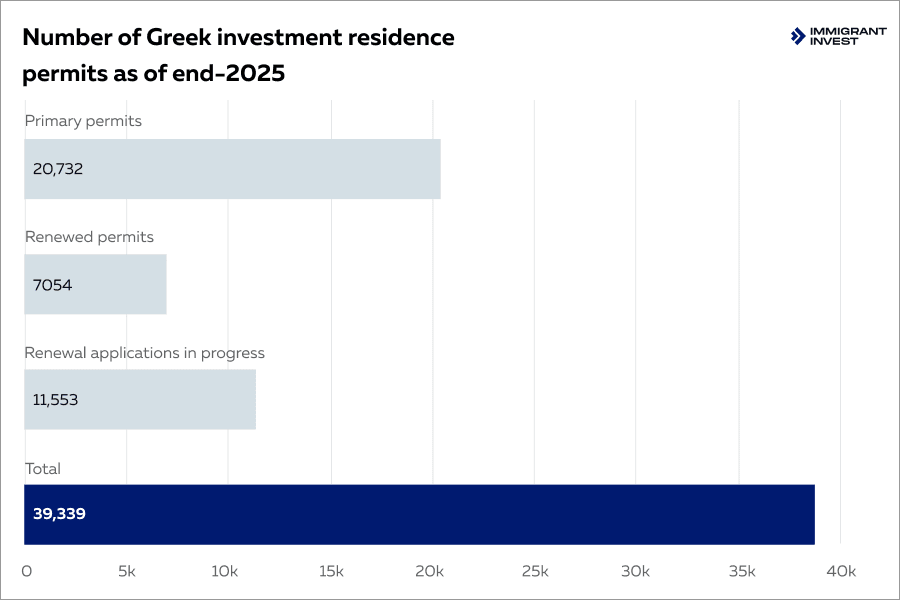
The graph shows the number of initial and renewed residence permits issued since the launch of the Greece Golden Visa in 2013
An alternative to the Greece Golden Visa is the residence route for financially independent persons who rely on passive income. The residence permit is issued for 3 years and can be renewed, while processing takes 4 months or more.
Applicants for the Greece financially independent visa must demonstrate a monthly income of at least €3,500, with the requirement increasing by 20% for a spouse and by 15% for each child. A spouse and children under 18 can be included in the application.
Instead of proving monthly income, applicants may demonstrate savings of at least €126,000, equivalent to 3 years of the minimum income requirement. A higher amount is required when family members are included.
Driving license
Americans who establish residence in Greece can convert a valid US driving licence into a Greek one after having normal residence in the country for at least 185 days.
The process requires confirmation from the US issuing authority that the licence is valid and has not been suspended or withheld, with the document transmitted through Greek consular channels. A theory or practical driving test is generally not required for the conversion.
Long-term prospects
Americans can apply for Greek citizenship after 7 years of legal residence in the country. They must pass exams proving Greek language proficiency at B1 level, as well as knowledge of Greek history and culture.
Greece allows dual citizenship, so US nationals can keep both passports.
Remarkable benefits
Investors who become tax residents in Greece can benefit from a flat tax of €100,000 on their global income. Without this exemption, the standard income tax rate of up to 44% applies.
According to the International Living 2026[18]Source: International Living: Annual Global Retirement Index, Greece is considered the best country for retirement. Retirees who obtain a residence permit for financially independent persons may qualify for a 7% flat tax on foreign-sourced income. The regime can apply for up to 15 tax years[21]Source: Independent Authority for Public Revenue — Tax Incentives in Order to Attract New Tax Residents.
7. Canada — closest cultural and geographical match to the US
Canada is one of the most natural choices for Americans who want cultural continuity alongside a clear residence pathway, sharing a language, a land border, and many institutional similarities with the US.
US expats
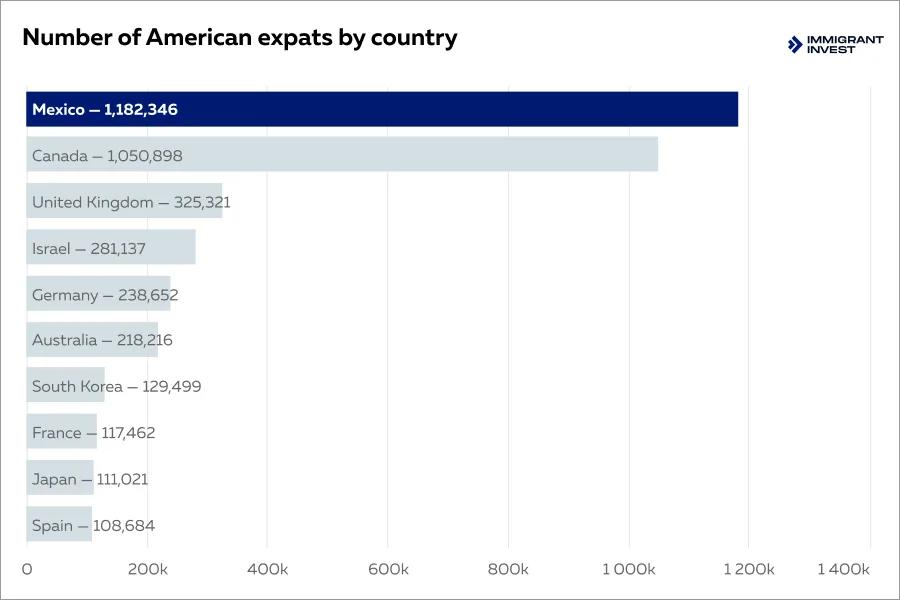
Canada hosts one of the largest American expat communities globally, with only Mexico having a larger US population. Social groups like Americans Living in Canada focus on expatriate issues, including taxes and voting rights. The American Women’s Club of Toronto connects American women through events, social activities, and philanthropic efforts.
Location
Canada’s close proximity to the US ensures shorter travel times, making it easier to visit family and friends or maintain business ties. The cultural, linguistic, and time zone similarities between the two countries further ease the transition, minimizing the challenges of adjusting to a new environment.
Visa-free stay and residence options
Visa requirement. Americans can stay in Canada for up to 6 months without a visa for tourism, business, or leisure purposes. For longer stays, various residence options are available.
Residence options. Canada offers several residence routes to Americans wishing to move there:
- Canada’s Express Entry offers permanent residence to skilled workers through a points-based system. Eligibility is based on age, education, and work experience. US citizens in tech, healthcare, engineering, and trades often have a competitive advantage.
- Family Class Sponsorship program secures permanent residence to US citizens with close relatives who are Canadian citizens or permanent residents willing to act as sponsors.
Under the United States-Mexico-Canada Agreement, USMCA, US citizens with job offers in sectors like technology, healthcare, and engineering can more easily apply for work visas in Canada. The agreement simplifies the application process, reducing bureaucratic delays and enabling faster access to the Canadian workforce.
Foreigners applying under the agreement, receive temporary work permits that do not directly lead to permanent residence. However, this permit can be converted to another residence type, such as Express Entry, to access a pathway to permanent residence.
Cost of living
Canada’s cost of living can be slightly higher than the US, particularly when housing is included.
A single person spends around $1,100—1,300 per month, while a family of four needs $3,700—4,200 excluding rent.
Rent averages $1,500—2,100 for a 1-bedroom apartment and $2,400—3,400 for a 3-bedroom apartment, especially in Toronto and Vancouver, which are among the most expensive cities in North America. More affordable destinations include Calgary, Edmonton, and smaller cities.
Groceries and services can be expensive, but high salaries and strong public infrastructure help offset costs.
Long-term prospects
Canadian citizenship can be obtained after 3 years of physical presence within a 5-year period. Applicants aged 18 to 54 must demonstrate English or French proficiency and pass a citizenship test on knowledge of history and constitution. Canada allows dual citizenship, so Americans can keep both nationalities.
US citizens are not automatically exempt from the language requirement, although many can satisfy it with accepted education or immigration documents without taking a new language test.
Driving license
Canada has reciprocal agreements with certain US states, enabling US citizens to exchange their driver’s license for a Canadian one without the need for written or road tests. However, some provinces, such as Quebec and Nova Scotia, may require applicants to pass a written or road test to complete the exchange process.
Remarkable benefits
One major advantage for US expats is that English is one of Canada’s official languages. This facilitates easy communication, seamless work integration, and smoother daily interactions without the need to learn a new language.
Canada also offers a safe environment, ranking 14th out of 163 countries in the Global Peace Index 2026[2]Source: Institute of Economics and Peace — Global Peace Index 2026. Additionally, Toronto, the largest Canadian city, is listed among the top 10 best cities to live in worldwide, according to the Global Liveability Index[22]Source: Economist Intelligence Unit: Global Liveability Index 2025.

In Ontario, Canada's largest province, with Toronto as the provincial capital, detached houses on Ancaster Street start at $570,000
8. New Zealand — global leader in peace and civil liberties
New Zealand offers a peaceful, English-speaking environment along with practical residence pathways for skilled workers and entrepreneurs. This makes it a distinctive option for Americans who prioritise safety and natural surroundings over proximity to the US.
US expats
New Zealand is home to a small but established expat community. In Auckland, the country’s largest city, neighbourhoods such as Ponsonby, Grey Lynn, and Herne Bay are popular among expats, including Americans. Social groups like the American Club — Auckland NZ provide opportunities for networking and community engagement.
Location
New Zealand is an island nation in the southwestern Pacific Ocean, southeast of Australia. It comprises two main islands and numerous smaller ones.
Flights from the US to New Zealand take 12 to 16 hours, depending on the departure city. One-way economy tickets range from $600 to 1,200, with prices varying by season and booking time.
Visa-free stay and residence options
Visa requirement. Americans can stay in New Zealand for up to 90 days for tourism or business purposes without a visa.
Residence options. For stays exceeding 90 days, foreigners can explore several pathways to residence:
- Skilled Migrant Visa. To be eligible, applicants must meet a points-based system that considers factors such as age, work experience, and qualifications. A job offer in New Zealand is required to earn points[23]Source: Immigration New Zealand — Skilled Migrant Category Resident Visa.
- Business Investor Visa. Applicants must invest at least NZD 1 million, or about $587,000, in an established New Zealand business, or NZD 2 million, which is around $1.17 million, for the fast-track pathway, and have NZD 500,000, or about $294,000, in reserve funds[24]Source: Immigration New Zealand — Business Investor Visa.
- Parent Resident Visa. It is available to parents whose adult child is a New Zealand citizen or resident and meets the applicable sponsorship and income requirements[25]Source: Immigration New Zealand — Parent Resident Visa.
The Skilled Migrant Category and Parent Resident visas grant residence directly. Skilled migrants can apply for permanent residence after 2 years, while Parent Resident Visa holders usually need 10 years. The Business Investor route begins with a work visa and can lead to residence after 1 to 3 years.
Cost of living
New Zealand is only slightly cheaper than the US overall, though housing costs remain relatively high. A single person spends about $1,100—1,300 per month, and a family of four needs around $3,700—4,100.
Rent ranges from $1,400—1,900 for a 1-bedroom apartment and $2,300—3,200 for a 3-bedroom apartment. Auckland and Wellington are the most expensive cities in New Zealand. Smaller towns and rural areas offer more affordable living.
Groceries and imported goods tend to be expensive due to geographic isolation.
Long-term prospects
Citizenship in New Zealand may be granted after 5 years of residence in the country. During this period, they must spend a minimum of 240 days per year in the country. Applicants must show basic English proficiency and be of good character. For Americans, proof of English is generally not required through formal testing.
New Zealand allows dual citizenship, so US nationals can retain their passports.
Driving license
US citizens can currently drive in New Zealand with a valid US driving licence for up to 18 months after arriving in the country. This applies to car licences until October 31st, 2026. After the permitted period, drivers must obtain a New Zealand licence.
US licences are eligible for the simplified overseas-licence conversion process. Holders of a full US car licence who have held it for at least 2 years do not need to take theory or practical driving tests; those with less than 2 years of driving experience are normally required to pass a practical test.
Remarkable benefits
English, one of New Zealand’s official languages alongside Māori and New Zealand Sign Language, is the primary language used in government, business, and education. It is widely spoken across the country, making daily life easier for US expats.
New Zealand performs strongly across multiple global rankings, reflecting its high quality of life, safety, and institutional strength:
- 2nd in the Global Peace Index 2026[2]Source: Institute of Economics and Peace — Global Peace Index 2026, making it one of the safest countries in the world.
- 99/100 score for political rights and civil liberties, among the highest globally[26]Source: Freedom in the World 2025 report by Freedom House: New Zealand’s overview.
- Among the top 15 countries for quality of life, with strong performance in income, health, environmental quality, and life satisfaction[14]Source: Numbeo database: Quality of Life Index by Country 2026.
- 4th globally in the Corruption Perceptions Index 2024, highlighting very low levels of corruption[27]Source: Transparency International: Corruption Perceptions Index 2024.
Auckland, consistently listed among the top 10 best cities worldwide[28]Source: Mercer: Quality of Living City Ranking 2024, is noted for its stunning natural surroundings, excellent infrastructure, and vibrant cultural scene.

In Auckland, a 3- or 4-bedroom home at the Shoreline of the Firth of Thames costs around $590,000
9. Costa Rica — Central American haven for US retirees
Costa Rica’s established US expat community and accessible programs for pensioners and individuals with passive income make it a popular choice for American retirees and lifestyle-driven emigrants. It is one of the easiest countries to move to from the US, especially for those seeking warm weather and a welcoming community.
US expats
120,000 US citizens live in Costa Rica. Many Americans live in San José, the Central Valley, and coastal regions such as Guanacaste, attracted by the country’s climate, lifestyle, and established expat networks.
The country ranked 7th as one of the easiest places to settle and make friends in 2024.
Location
Costa Rica is a Central American country bordered by Nicaragua to the north, Panama to the south, the Pacific Ocean to the west, and the Caribbean Sea to the east.
Flights from major US cities to Costa Rica take approximately 3.5 to 5 hours. One-way ticket prices range from $100 to 350.
Visa-free stay and residence options
Visa requirement. US citizens can stay in the country for up to 90 days without a visa.
Residence options. For stays longer than 90 days, Costa Rica provides residence routes like the Pensionado Program for retirees and the Rentista Program for those with stable passive incomes.
Under the Pensionado Program, applicants must show a minimum monthly income of $1,000 from government-approved sources such as pensions or social security. This permit allows retirees to live indefinitely in Costa Rica and import household goods and one vehicle tax-free.
The Rentista Program requires proof of a stable monthly income of $2,500 from sources like self-employment or business income. Alternatively, applicants can deposit $60,000 into a Costa Rican bank as evidence of financial stability. Participants can also import household goods and a car tax-free.
After holding residence for at least 7 years under either program, expats are eligible to apply for Costa Rican citizenship.
Cost of living
Costa Rica is approximately 15—20% cheaper than the US, though living costs vary significantly by region and lifestyle. A single person typically spends $1,000 per month, while a family of four needs about $3,000—3,400.
Rent averages $700—1,200 for a 1-bedroom apartment and $1,300—2,200 for a 3-bedroom apartment, with higher prices in coastal and tourist areas such as Guanacaste. San José is also relatively expensive. Inland areas such as Braga, Coimbra, Viseu, and Évora, offer significantly better value.
Long-term prospects
In Costa Rica, citizenship is available after 7 years of legal residence. Applicants must pass a test demonstrating Spanish language ability and knowledge of Costa Rican history and values.
Costa Rica allows dual citizenship, so US citizens can retain their original nationality.
Driving license
US citizens can drive in Costa Rica with a valid US driving license for the duration of their legal stay in the country, which may be up to 180 days for US tourists. If they obtain legal status in Costa Rica or apply for it, they may exchange their foreign license for an equivalent Costa Rican one.
The law exempts applicants from the basic road safety course and the practical driving test, although document checks and other official requirements still apply. The process requires proof of legal status, a valid foreign license, a passport, and a local medical certificate, as well as payment of applicable fees.
Remarkable benefit
Costa Rica places a strong emphasis on personal freedom, ranking 19th out of 167 countries worldwide in this category in the Legatum Prosperity Index[29]Source: Legatum Prosperity Index: Costa Rica’s profile. It stands out as one of the most stable democracies in Latin America, with strong civil liberties and political rights[30]Source: Freedom in the World 2025 report by Freedom House: Costa Rica’s overview.
The country’s long-standing political stability and its decision to abolish the military further reinforce its commitment to democratic governance and individual freedoms.
10. Australia — high quality of life and no language barrier
Australia’s English-speaking environment, stable institutions, and multiple skilled-worker visa pathways make it a strong destination for Americans seeking high quality of life. Despite its distance from the US, it remains an attractive option for relocation.
US expats
Australia hosts a well-established American expat community of around 100,000—110,000 residents. Social groups like Americans in Sydney provide regular meet-ups, cultural events, and networking opportunities for US expats.
Location
Australia is a vast island nation and continent located in the Southern Hemisphere, bordered by the Indian Ocean to the west, the Pacific Ocean to the east, and situated southeast of Asia.
Direct flights connect major US cities like Los Angeles, San Francisco, and New York to Australian cities such as Sydney and Melbourne. Flight times range from 14 to 16 hours, with ticket prices varying from $300 to 750, depending on the season.
Visa-free stay and residence options
Visa requirement. US citizens can stay in Australia for up to 90 days without a visa.
Residence options. Australia provides several residence pathways. The Skilled Migration Visa is tailored for workers in high-demand sectors such as software engineering, nursing, construction project management, and electrical work. Applicants must be under 45 years old and meet a points-based threshold, which considers age, education, work experience, and language proficiency.
Employer-Sponsored Visas are another option for US citizens with job offers from Australian employers in fields facing skill shortages, such as healthcare, finance, or engineering. Employers must demonstrate that no local worker can fill the position.
Both visa options allow expats to gain temporary or permanent residence.
Cost of living
In terms of cost of living, Australia is similar to the US. However, in major metropolitan areas, Sydney, Melbourne, and Canberra, where housing costs are highest, it can be more expensive. Brisbane, Perth, and Adelaide offer relatively lower costs.
For a month, a single person typically spends $1,300—1,500, while a family of four needs around $4,100—4,700. Rent averages $1,800—2,400 for a 1-bedroom apartment and $3,000—4,000 for a 3-bedroom apartment, depending on the location.
Long-term prospects
Australian citizenship is generally available after 4 years of residence, including at least 1 year as a permanent resident. Applicants must demonstrate basic English proficiency and pass a citizenship test on Australian values and history. In practice, US citizens are usually not required to take a separate English test.
Australia allows dual citizenship, so Americans can keep both passports.
Driving license
US citizens can drive in Australia on their US license for up to 6 months. After this period, they must apply for a local license, a process that typically does not require retaking driving tests, although a vision test may be needed.
Remarkable benefits
As English is Australia’s official language, US expats can easily integrate into daily life without the need to learn a new language. This simplifies communication when dealing with bureaucracy, healthcare, and employment.
Australia offers an exceptional quality of life, with several cities ranked among the most liveable globally in the Economist Global Liveability Index 2025[22]Source: Economist Intelligence Unit: Global Liveability Index 2025.
Melbourne, Sydney, and Adelaide all place in the top 10 worldwide, reflecting strong performance in healthcare, education, infrastructure, and stability. These cities also offer rich cultural experiences and outdoor recreational opportunities, making Australia an attractive destination for US expats.

In Brisbane, prices for apartments overlooking the Brisbane river start at $1.3 million
11. Germany — Europe's largest economy with strong job market
Germany provides American professionals with access to Central Europe’s largest economy, a strong Freelance Visa pathway, and a high quality of life with lower expenses than in the US.
US expats
Germany is home to around 120,000 US citizens[31]Source: Federal Statistical Office of Germany — Foreign population by place of birth. The American community is largely composed of highly skilled professionals in sectors such as technology, engineering, and research, drawn by Germany’s strong economy and demand for qualified talent.
Many American expats participate in local social groups such as the American Women’s Club of Berlin and the Americans in Germany, fostering community and networking opportunities.
Location
Germany is located in central Europe, bordered by Denmark to the north, Poland and the Czech Republic to the east, Austria and Switzerland to the south, and France, Luxembourg, Belgium, and the Netherlands to the west.
Direct flights from the US to Germany take 7 to 9 hours, with flights from the West Coast taking around 10 to 11 hours. One-way ticket prices range from $400 to 800.
Visa-free stay and residence options
Visa requirement. US nationals can stay in Germany for up to 90 days within a 180-day period for tourism, business, or short-term visits.
Residence option. US citizens can enter Germany without obtaining a national visa in advance and apply for the appropriate residence permit after arrival. For long-term stays, several residence pathways are available, including permits for employment, the EU Blue Card for highly skilled professionals, self-employment, study, and family reunification.
One option is the Freelance Visa, available to freelancers and self-employed professionals, including those working in tech and creative industries. Applicants must demonstrate sufficient funds to support themselves and provide evidence of viable freelance work, such as contracts or letters of intent from prospective clients.
Cost of living
The cost of living in Germany is about 15% lower than the US. A single person usually needs $900—1,050 per month, and a family of four spends about $3,100—3,500.
Rent averages $900—1,300 for a 1-bedroom apartment and $1,600—2,400 for a 3-bedroom apartment, with Munich, Frankfurt, and Hamburg being the most expensive cities. More affordable alternatives include Leipzig, Dresden, and smaller regional centres.
Public transport, healthcare, and utilities are relatively well-priced compared to other Western European countries.
Long-term prospects
Germany grants citizenship after 5 years of legal residence in the country. Applicants must demonstrate German language proficiency at B1 level, pass a naturalisation test, and show integration into German society.
Following 2024 reforms, Germany allows dual citizenship, which means Americans are no longer required to renounce their US nationality. The reform also reduced the standard residence requirement from 8 to 5 years. These changes have made the pathway to German citizenship faster and more accessible for long-term residents.
Driving license
To exchange a US driving license for a German one, applicants generally need to submit their valid US license, proof of residence in Germany, and complete a vision test. Whether additional theory or practical exams are required depends primarily on the US state that issued the document.
Remarkable benefits
Germany offers a high quality of life, ranking among the top countries worldwide[14]Source: Numbeo database: Quality of Life Index by Country 2026 with strong performance in safety, infrastructure, and purchasing power. Munich, the 3rd largest city in the country, ranks 11th out of 401 cities globally for safety[32]Source: Numbeo database: Safety Index by City. Frankfurt is listed among the top 20 best cities to live in.
The German healthcare system is among the best globally, with universal coverage and high accessibility, ranking 3rd in the 2024 World Index of Healthcare Innovation[33]Source: FREOPP World Index of Healthcare Innovation: Germany’s overview.
The country also provides a favourable environment for running a business and high levels of political rights and civil liberties[34]Source: Freedom in the World 2025 report by Freedom House: Germany’s overview.

How to choose a suitable country for relocation as an American
Choosing the right country for relocation involves more than just comparing destinations. It requires considering practical factors like residence options, language, and financial stability to ensure a smooth transition and long-term security.
Residence options
Countries like Portugal, Malta, Greece, Spain, and Panama are among the easiest for Americans to immigrate to, thanks to residence options for investors, financially independent people, and digital nomads.
Immigrant Invest assists US citizens in applying for Portuguese, Maltese, Spanish, Greek, and Panamanian residence permits. The team guides applicants through all requirements and procedures, from gathering the necessary documents to issuing residence cards.
Ease of settling
Factors such as local culture, friendliness, opportunities to make friends, and the welcoming attitude of the host country play a crucial role in how easily one can settle in a new location.
Pathway to citizenship
All the countries listed allow residents to apply for citizenship after holding residence for a qualifying period. The waiting times vary, with Canada offering the fastest route at 3 years, followed by Australia at 4 years. Portugal requires 10 years, while Germany, Mexico, Panama and New Zealand require 5 years.
English proficiency
English is widely spoken in all the listed countries, facilitating adaptation for Americans. In Portugal and Spain, English is commonly used in daily life and business. In Malta, Canada, and New Zealand, English is an official language, which simplifies communication and bureaucratic processes.
Currency
Understanding local currencies and exchange rates is essential for financial planning. Countries with stable currencies, such as EU nations using the Euro or Panama with the US Dollar, provide more predictability for long-term financial management.
The Australian Dollar and New Zealand Dollar are relatively stable but may fluctuate due to commodity exports and global trade dynamics. In contrast, the Mexican Peso tends to be more volatile, influenced by inflation and political factors.
Costa Rica’s currency, while less prominent in global trade, remains stable within the local economy, making it reliable for domestic transactions. However, international dealings may experience occasional exchange rate variations.
Comparison of top easiest destinations for American expats

Country
Stay without visa
90 days
Residence for investors, FIPs, and digital nomads
Yes
English
Widely spoken
Monthly cost of living
$880
Rent of 1-bedroom flat
$800—1,000
Path to citizenship
5 years
Country
Stay without visa
180 days
Residence for investors, FIPs, and digital nomads
No
English
Widely spoken
Monthly cost of living
$700
Rent of 1-bedroom flat
$500—800
Path to citizenship
5 years
Country
Stay without visa
90 days
Residence for investors, FIPs, and digital nomads
Yes
English
Official
Monthly cost of living
$900
Rent of 1-bedroom flat
$1,000—1,200
Path to citizenship
5 years
Country
Stay without visa
90 days
Residence for investors, FIPs, and digital nomads
Yes
English
Widely spoken
Monthly cost of living
$830
Rent of 1-bedroom flat
$800—1,000
Path to citizenship
10 years
Country
Stay without visa
180 days
Residence for investors, FIPs, and digital nomads
Yes
English
Widely spoken
Monthly cost of living
$790
Rent of 1-bedroom flat
$790—1,000
Path to citizenship
5 years
Country
Stay without visa
90 days
Residence for investors, FIPs, and digital nomads
Yes
English
Widely spoken
Monthly cost of living
$900
Rent of 1-bedroom flat
$450—550
Path to citizenship
7 years
Country
Stay without visa
6 months
Residence for investors, FIPs, and digital nomads
No
English
Official
Monthly cost of living
$1,000
Rent of 1-bedroom flat
$1,150—1,300
Path to citizenship
3 years in 5-year window
Country
Stay without visa
90 days
Residence for investors, FIPs, and digital nomads
No
English
Official
Monthly cost of living
$1,000
Rent of 1-bedroom flat
$980—1,150
Path to citizenship
5 years
Country
Stay without visa
90 days
Residence for investors, FIPs, and digital nomads
No
English
Widely spoken
Monthly cost of living
$940
Rent of 1-bedroom flat
$650—900
Path to citizenship
7 years
Country
Stay without visa
90 days
Residence for investors, FIPs, and digital nomads
No
English
National
Monthly cost of living
$1,100
Rent of 1-bedroom flat
$1,200—1,500
Path to citizenship
4 years
Country
Stay without visa
90 days
Residence for investors, FIPs, and digital nomads
No
English
Widely spoken
Monthly cost of living
$1,150
Rent of 1-bedroom flat
$750—950
Path to citizenship
5 years
Country | Stay without visa | Residence for investors, FIPs, and digital nomads | English | Monthly cost of living | Rent of 1-bedroom flat | Path to citizenship |
|---|---|---|---|---|---|---|
90 days | Yes | Widely spoken | $880 | $800—1,000 | 5 years | |
180 days | No | Widely spoken | $700 | $500—800 | 5 years | |
90 days | Yes | Official | $900 | $1,000—1,200 | 5 years | |
90 days | Yes | Widely spoken | $830 | $800—1,000 | 10 years | |
180 days | Yes | Widely spoken | $790 | $790—1,000 | 5 years | |
90 days | Yes | Widely spoken | $900 | $450—550 | 7 years | |
6 months | No | Official | $1,000 | $1,150—1,300 | 3 years in 5-year window | |
90 days | No | Official | $1,000 | $980—1,150 | 5 years | |
90 days | No | Widely spoken | $940 | $650—900 | 7 years | |
90 days | No | National | $1,100 | $1,200—1,500 | 4 years | |
90 days | No | Widely spoken | $1,150 | $750—950 | 5 years |
What US tax obligations follow Americans abroad?
Relocating does not remove US tax obligations, and the United States taxes its citizens on worldwide income regardless of where they reside[35]Source: Internal Revenue Service: Guidelines for US citizens and resident aliens abroad.
Before moving, Americans should take practical steps to remain compliant with both US and local tax rules. This includes the following:
- filing any outstanding US tax returns;
- notifying the IRS of a foreign address using Form 8822;
- preparing for foreign account reporting;
- informing US banks of the move;
- reviewing any ongoing state-level tax exposure.
FBAR reporting requirements
The Report of Foreign Bank and Financial Accounts, FBAR, is filed annually on FinCEN Form 114 and is required for any US person with a financial interest in, or signature authority over, foreign financial accounts whose aggregate value exceeded $10,000 at any point during the calendar year[36]Source: Internal Revenue Service: Report of Foreign Bank and Financial Accounts.
The FBAR is due by April 15th, with an automatic extension to October 15th. Failure to file can result in civil penalties of up to $10,000 per violation for non-wilful failures.
FATCA reporting
The Foreign Account Tax Compliance Act, FATCA, requires US persons to report specified foreign financial assets on Form 8938, attached to their annual tax return[37]Source: Internal Revenue Service: Comparison of Form 8938 and FBAR requirements.
For Americans living outside the US, the FATCA reporting threshold is $200,000 in foreign assets at year-end, or $300,000 at any point during the year, for unmarried filers. Married couples filing jointly face higher combined thresholds of $400,000 at year-end or $600,000 at any time during the year.
Foreign Earned Income Exclusion
The Foreign Earned Income Exclusion, FEIE[38]Source: Internal Revenue Service: Guidelines on foreign earned income exclusion, allows Americans abroad to exclude a portion of their earned income from US taxation. To qualify, applicants must meet either the Physical Presence Test, at least 330 full days in a foreign country during any 12-month period, or the Bona Fide Residence Test.
The FEIE covers only earned income: wages, salaries, and self-employment income. Passive income such as dividends, rental income, and capital gains does not qualify. For 2026, the maximum exclusion amount is $132,900 per person. This limit is adjusted annually for inflation, meaning it is indexed and increases each year.
Double-tax treaties
Double-tax treaties reduce the risk of being taxed on the same income by both the US and the destination country. The US maintains tax treaties with Portugal, Spain, Malta, Germany, Canada, Australia, New Zealand, Mexico, and Greece, among others[39]Source: Internal Revenue Service: List of US Tax Treaties. These treaties allocate taxing rights between the 2 countries and provide credits or exemptions that prevent full double taxation.
The Foreign Tax Credit allows Americans to credit taxes already paid to a foreign government against their US liability on the same income[40]Source: Internal Revenue Service: Guidelines on the foreign tax credit.
Key tax features per destination
Country
 Portugal
Income tax rate
12.5—48%
Special regime for newcomers
IFICI regime for highly qualified professionals
Tax treaty with the US
Yes
Country
 Spain
Spain
Income tax rate
19—47%
Special regime for newcomers
24% flat rate for nomad and inbound workers on income up to €600,000
Tax treaty with the US
Yes
Country
 Malta
Malta
Income tax rate
0—35%
Special regime for newcomers
Flat rate schemes for certain resident categories
Tax treaty with the US
Yes
Country
 Greece
Income tax rate
9—44%
Special regime for newcomers
€100,000 flat annual tax on foreign income for up to 15 years
7% flat rate for retirees
Tax treaty with the US
Yes
Country
 Mexico
Income tax rate
1.92—35%
Special regime for newcomers
No special regime
Tax treaty with the US
Yes
Country
 Panama
Income tax rate
0—25%
Special regime for newcomers
Discounts for retirees
Tax treaty with the US
Yes
Country
 Canada
Income tax rate
15—33%, plus provincial or territorial tax
Special regime for newcomers
No special regime
Tax treaty with the US
Yes
Country
 Costa Rica
Income tax rate
0—25%
Special regime for newcomers
No special regime
Tax treaty with the US
No
Country
 Australia
Income tax rate
0—45%
Special regime for newcomers
No special regime
Tax treaty with the US
Yes
Country
 New Zealand
Income tax rate
10.5—39%
Special regime for newcomers
Transitional resident exemption on foreign income for 4 years
Tax treaty with the US
Yes
Country
 Germany
Income tax rate
0—45%
Special regime for newcomers
No special regime
Tax treaty with the US
Yes
Country | Income tax rate | Special regime for newcomers | Tax treaty with the US |
|---|---|---|---|
| 12.5—48% | IFICI regime for highly qualified professionals | Yes |
| 19—47% | 24% flat rate for nomad and inbound workers on income up to €600,000 | Yes |
| 0—35% | Flat rate schemes for certain resident categories | Yes |
| 9—44% | €100,000 flat annual tax on foreign income for up to 15 years | Yes |
| 1.92—35% | No special regime | Yes |
| 0—25% | Discounts for retirees | Yes |
| 15—33%, plus provincial or territorial tax | No special regime | Yes |
| 0—25% | No special regime | No |
| 0—45% | No special regime | Yes |
| 10.5—39% | Transitional resident exemption on foreign income for 4 years | Yes |
| 0—45% | No special regime | Yes |
How Immigrant Invest can help Americans obtain residence in another country
Immigrant Invest is a consulting company with over 20 years of experience in investment migration. We help US nationals make their first step to relocation by obtaining temporary or permanent residence in Europe and beyond.
Our clients receive an initial consultation covering eligibility, timelines, costs, and US tax considerations, along with ongoing support from a dedicated migration expert and document management team throughout the process.
Before taking on a case, our in-house Compliance Department conducts compliance and KYC checks on the client to make sure all potential issues are identified early.
We hold government-issued licences to advise on EU residence and citizenship programs and are accountable under EU AML regulations which guarantee your peace of mind.
To sum up: what are the easiest countries to move from the US?
- Portugal, Greece, Malta, Germany, and Spain are among the easiest EU countries for Americans to immigrate to. In Portugal, Malta, and Greece, investors can obtain residence by investment.
- Malta, Portugal, and Spain also offer residence options for digital nomads.
- Financially independent individuals can apply for the relevant visas in Portugal, Spain, and Greece.
- Mexico is considered the easiest country to settle in.
- Panama and Costa Rica attract US retirees through their Pensionado Programmes. Panama also offers the Qualified Investor Visa which opens investors a fast-track path to permanent residence by investment.
- Australia and New Zealand host a significant number of American expats, offering various residence visas for skilled workers.
- When choosing a destination, Americans should evaluate factors such as residence options, English proficiency, currency stability, ease of settling, cost of living, family relocation possibilities, and future pathways to citizenship.
Immigrant Invest is a licensed agent for citizenship and residence by investment programs in the EU, the Caribbean, Asia, and the Middle East. Take advantage of our global 15-year expertise — schedule a meeting with our investment programs experts.

 Trusted by 10,000+ investors