Summary
A Malta residence permit may be granted on various grounds, the most common being employment, studies, family reunification, and investment of €30,000. The requirements and procedures depend on the type of permit.
A residence permit holder has the right to relocate to Malta and travel visa-free within the Schengen Area.
Investors may also obtain Maltese permanent residence. This is a lifelong status, although the residence card must be renewed every five years.
What are the reasons for and benefits of obtaining residence in Malta?
Malta is a small island country in the central Mediterranean and a member of the European Union and the Schengen Area. English is one of its official languages, and the country follows a legal and administrative system influenced by British law.
Reasons
Malta is widely regarded as a safe place to live, with stable public order and a comparatively low level of crime. Many wealthy non-Europeans seek to become residents in Malta for various reasons:
- starting an international business;
- travelling freely within the Schengen Area;
- relocating the entire family to a developed European country;
- having the option to leave their country of residence quickly in the event of political or economic turmoil.
Obtaining a residence permit in Europe helps to achieve these goals.
Benefits
Visa-free travel to Schengen states. A Maltese residence permit allows the holder to visit other Schengen Area countries for up to 90 days within any 180-day period.
Tax optimisation. Under the Malta Global Residence Programme, investors are taxed at a flat rate of 15% on foreign income remitted to Malta, instead of progressive personal income tax rates that can reach up to 35%. No surcharges apply for the main applicant’s spouse, children, or other dependants included in the application. Malta also imposes no inheritance, gift, or property taxes.
Access to international banking. Malta offers a stable, well-regulated financial system with access to reputable international banks and a high level of asset security.
High-quality healthcare. In terms of healthcare quality, Malta ranks among the top 20 worldwide. The country’s healthcare system includes both state and private facilities, with approximately 80% of residents using state services.
World-class education. Malta offers a strong, English-speaking education system that combines British and international standards. The country hosts several British and American private schools, as well as local institutions offering the International Baccalaureate and internationally recognised university degrees.
Living in a warm climate. The average daytime temperature is around +23°C throughout the year. January is the coldest month, with daytime temperatures ranging from +12…20°C.
Investment paths to a Maltese residence permit
There are two government-approved investment paths in Malta:
- Global Residence Programme — a temporary residence permit and special tax status.
- Permanent Residence Programme — lifelong residence.
The fastest route to a residence permit is the Global Residence Programme. Malta requires a minimum contribution of €30,000, including an annual tax of €15,000. The processing time is around 3 months, whereas in Cyprus it can take up to 9 months and in Portugal up to 12 months.
Temporary residency in Malta for investors
To apply for a residence permit for the entire family, wealthy third-country nationals may participate in the Malta Global Residence Programme, MGRP.
Spouses, children under the age of 25, siblings, parents, and grandparents of MGRP participants may also obtain residence permits. The main requirement is that all family members included in the application, except the spouse, must be financially dependent on the principal applicant.
To qualify for residence under the Malta Global Residence Programme, an investor must meet several core conditions.
Property requirements
Applicants must secure qualifying residential real estate in Malta by choosing one of the following options: [1]:
- renting property in Malta for €8,750–9,600 per year. The minimum rental amount depends on the region, with lower thresholds applying on the island of Gozo and in the south of Malta;
- buying a property worth at least €220,000 on the island of Gozo and in the south of Malta, or €275,000+ in other regions.
Renting property slightly outside the city centre is often a practical option in Malta. Due to the country’s compact size, residential areas in towns and suburbs surrounding major centres such as Sliema, St Julian’s, Valletta, and Msida are typically within a 10—15 minute drive. This keeps everyday travel to offices, schools, and essential services convenient.
For around €1,600 per month, it is possible to rent a spacious three-bedroom apartment or house.

Julia Loko,
Investment programs expert
Residential property acquired to meet the requirements of the Malta Global Residence Programme cannot be rented out or used as an income-generating asset.
However, investors are not limited to programme-qualifying property. They may purchase additional real estate in Malta outside the scope of the residence programme specifically for investment purposes.
According to independent research published by Global Property Guide, the average gross rental yield on such investment property in Malta is around 4%, with variations depending on location and property type[2].
Administrative fee
Applicants must pay a non-refundable administrative fee, the amount of which depends on the property’s location and whether it is rented or purchased:
- €5,500 when purchasing property in Gozo or southern Malta;
- €6,000 in all other cases.
Tax conditions
Under the Malta Global Residence Programme, participants are subject to a specific tax regime. They pay an annual income tax of 15% on income earned outside Malta and remitted to Malta, or a minimum annual tax of €15,000. Participants must file an annual tax return.
Physical presence requirement
A residence permit holder may not spend more than 183 days per year in any country other than Malta. However, there is no requirement to reside permanently in Malta, and they may live in different countries throughout the year.
Required documents for the Malta Global Residence Programme
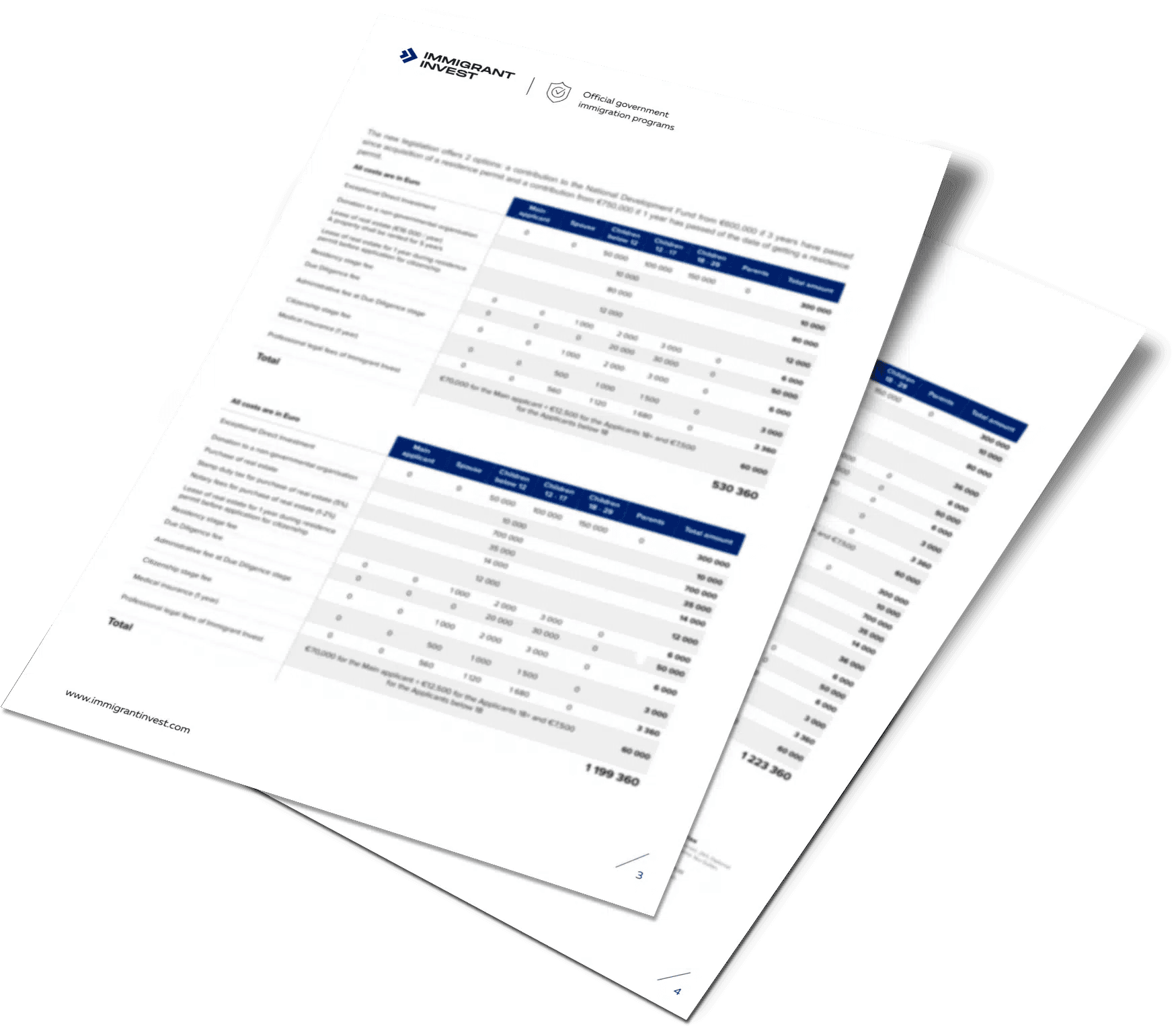
Immigrant Invest lawyers compile a list of documents tailored to each investor and their family composition. The exact set may vary depending on the applicant’s country of residence, source of income, and chosen property option. In most cases, the application file includes the following documents:
- copies of valid passports;
- birth certificates and marriage certificate, where applicable;
- national identity cards, where available;
- bank statements covering the last 6—12 months;
- proof of assets, such as property ownership certificates, investment portfolios, or business shares;
- source of wealth declaration with supporting evidence confirming the lawful origin of funds;
- police conduct certificates from all countries of residence;
- declaration confirming absence of ongoing criminal investigations;
- health insurance covering Malta and the Schengen Area;
- purchase or lease agreement meeting the Malta Global Residence Programme property requirements;
- additional documents confirming investments or income, if required;
- passport-size photographs meeting Maltese authority standards.
All documents issued in languages other than English must be translated by a certified translator and apostilled or legalised, depending on the country of origin. The lawyers coordinate document verification and ensure compliance with the requirements of the Inland Revenue Department of Malta.
How to get a Malta residence permit by investment?
In Immigrant Invest’s experience, obtaining a residence permit in Malta usually takes at least 3 months. However, the exact timeframe for the entire process depends on the individual case.
If you decide to obtain Maltese residence by investment, contact Immigrant Invest lawyers. They will carefully assess your circumstances and objectives, and support you throughout the entire residence permit process.
2 days
Preliminary Due Diligence and agreement conclusion
Immigrant Invest conducts a preliminary Due Diligence check to identify any circumstances preventing the applicant from participation in the programme.
Upon successful completion of the check, Immigrant Invest prepares a service agreement to provide further support.
Immigrant Invest conducts a preliminary Due Diligence check to identify any circumstances preventing the applicant from participation in the programme.
Upon successful completion of the check, Immigrant Invest prepares a service agreement to provide further support.
4—5 weeks
Collecting documents and submitting an application to the tax office
Immigrant Invest lawyers guide the applicant through collecting and certifying documents and arranging their translation, which is usually carried out in Malta to ensure compliance with regulatory standards.
If the investor chooses to prepare translations in their country of residence, the documents must be apostilled or legalised. The application is then submitted to the Maltese tax authorities or the Inland Revenue Department.
Immigrant Invest lawyers guide the applicant through collecting and certifying documents and arranging their translation, which is usually carried out in Malta to ensure compliance with regulatory standards.
If the investor chooses to prepare translations in their country of residence, the documents must be apostilled or legalised. The application is then submitted to the Maltese tax authorities or the Inland Revenue Department.
2—4 months
Due Diligence
The Inland Revenue Department examines the documents of the investor and their family members included in the application.
During the check, the Department may request additional information. Immigrant Invest’s lawyers reply to such requests after consultation with the applicant.
The Inland Revenue Department examines the documents of the investor and their family members included in the application.
During the check, the Department may request additional information. Immigrant Invest’s lawyers reply to such requests after consultation with the applicant.
At least 2 weeks
Remote interview and obtaining a special tax status
The investor attends an online interview conducted by the Director of the Inland Revenue Department. In case of the application approval, the Director issues a Letter of Intent confirming the investor’s participation in the programme. The investor pays the minimum tax and prepares accommodation documentation.
Special tax status is granted once the applicant meets all investment requirements, including providing proof of accommodation. Tax clearance is typically issued within 2 to 4 weeks.
The investor attends an online interview conducted by the Director of the Inland Revenue Department. In case of the application approval, the Director issues a Letter of Intent confirming the investor’s participation in the programme. The investor pays the minimum tax and prepares accommodation documentation.
Special tax status is granted once the applicant meets all investment requirements, including providing proof of accommodation. Tax clearance is typically issued within 2 to 4 weeks.
At least 2 weeks
Applying for residency and submitting biometrics
The residence application is prepared remotely and submitted via the government’s online system. Provided no additional documentation is required, the Agency generally issues an invitation to submit biometrics within 2 to 4 weeks of application submission. If additional requests are made, this timeline may be extended.
Once the invitation is received, the investor may schedule their biometrics appointment in Malta at their earliest convenience.
The residence application is prepared remotely and submitted via the government’s online system. Provided no additional documentation is required, the Agency generally issues an invitation to submit biometrics within 2 to 4 weeks of application submission. If additional requests are made, this timeline may be extended.
Once the invitation is received, the investor may schedule their biometrics appointment in Malta at their earliest convenience.
4—6 weeks
Receiving residence cards
Upon successful verification of the documents, the Agency issues a notice confirming the residence permit cards are ready. This notification is sent by mail to the investor’s address in Malta.
The investor and their family must travel to Malta in person to collect their residence permit cards.
Upon successful verification of the documents, the Agency issues a notice confirming the residence permit cards are ready. This notification is sent by mail to the investor’s address in Malta.
The investor and their family must travel to Malta in person to collect their residence permit cards.
Residence permit in Malta for employment
There are two types of permits for those who come to work in Malta: the regular work permit and the EU Blue Card. It must be renewed annually, and its validity ends when the employment contract expires.
Regular work permit
The regular work permit applies to foreign nationals who have secured a job with a Maltese company but do not qualify for the EU Blue Card. To obtain it, the applicant must have a valid job offer and an employment contract approved by the Maltese authorities. The hiring company initiates the application process and must demonstrate that the position cannot be filled by a Maltese or EU national.
The residence permit issued under a regular work permit is usually valid for one year and may be renewed as long as the employment relationship continues. The permit is employer-specific, meaning that changing jobs requires submitting a new application.
Salary levels must comply with Maltese labour law and meet the applicable minimum wage or sectoral standards. As of 2026, the national minimum wage for employees aged 18 and over is €229.44 per week, which corresponds to €5.74 per hour based on a 40-hour working week[3].
EU Blue Card
The EU Blue Card is issued to highly qualified specialists whose salary is at least 50% higher than the industry average.
To qualify, the applicant must meet the following requirements:
- hold a valid employment contract for a minimum of one year;
- for regulated professions, submit documents confirming compliance with national legal requirements;
- for unregulated professions, provide evidence of relevant higher professional qualifications or skills;
- hold a national or Schengen visa or a valid residence permit;
- have a valid medical insurance certificate.
The Malta EU Blue Card is issued for a minimum period of one year. When extending the Blue Card, if the remaining term of the employment contract is less than one year, the permit is issued for the duration of the contract plus an additional three months.
After 12 months of legal residence in Malta under a Blue Card, the holder may move to another participating EU country and apply for a new Blue Card there under simplified conditions. Employment in another EU country is not automatic and always requires meeting the host country’s requirements and obtaining approval from its authorities.
Highly qualified specialists in IT, pharmaceuticals, and financial services are generally in high demand. It is easier for professionals in these fields to find an employer in Malta willing to offer a long-term contract.
Many leading international companies are based in Malta, including HSBC Bank, Medavia, and Vodafone.
Residence permit to run a business in Malta
Entrepreneurs may obtain a Maltese residence permit if they establish a company in Malta and can demonstrate that the business is genuine and financially viable. This route usually involves registering a company and appointing directors and shareholders. Applicants must also provide evidence that they have sufficient resources to operate the business and support themselves in Malta.
Businesses registered in Malta must meet relatively high capital requirements:
- Minimum share capital for a Maltese public limited company is €46,588, of which at least 25% must be paid upon incorporation;
- Minimum share capital for a Maltese private limited company is €1,165, of which at least 20% must be paid upon incorporation[4].
The standard corporate tax rate in Malta is 35%.
Value-added tax VAT in Malta is 18%, which is among the lowest VAT rates in Europe. The Maltese tax system attracts businesspeople from around the world to register companies and obtain residence permits.

Residence permit in Malta for family reunification
Foreign nationals who legally reside in Malta may apply for long-term residence permits for their close family members under the family reunification rules.
Unlike residence permits issued for employment or education, a family reunification permit is not tied to an employment contract or study period. It is usually granted for the same duration as the sponsor’s residence permit and may be renewed repeatedly, provided that family ties and residence conditions are maintained.
After five years of continuous legal residence in Malta under family reunification, family members may become eligible to apply for Maltese citizenship by naturalisation.
Foreign spouses of Maltese citizens can also get a residence permit.
Residence permit in Malta for education
Students enrolled in schools and universities in Malta are issued a residence permit for one year, with the right to extend it for the duration of their studies.
To obtain a residence permit in Malta, a student must provide a letter of admission from a higher education institution. The letter must include:
- institution’s details;
- details of the course;
- information on course-related fees;
- details of accommodation provided by the institution, if applicable;
- confirmation that the applicant has sufficient knowledge of the language of instruction.
After graduation, students must find employment in Malta to renew their residence permits. The new permit will then be linked to their employment contract.

Malta residence permit for living, working, and studying in the country
In December 2020, Amir, his wife Amina, and their son Nursultan were granted a Maltese residence permit. The family moved to Malta. At the end of 2021, Immigrant Invest lawyers helped them extend their residency.
In the first year, Amina was retrained in her speciality, and now she will lecture at the University of Malta. Nursultan will start studying at a school which is part of a British college.
What are the other types of residence permits in Malta?
Alongside investment, employment, business, study, and family reunification, a Malta residence permit may also be issued on other grounds[5].
1. Malta Retirement Programme, MRP, applies to individuals who are not in an employment relationship and receive a pension as their regular source of income. The pension must account for at least 75% of the applicant’s chargeable income and be fully remitted to Malta. Lump-sum pension payments do not qualify.
Beneficiaries may hold a non-executive position on the board of a Malta-registered company but are not permitted to be employed by that company.
Under the programme’s tax rules, qualified retirees are taxed at a flat rate of 15% on foreign pension income remitted to Malta. The minimum annual tax is €7,500 for the main applicant, plus €500 for each dependent, regardless of the total pension amount.
2. United Nations Pensions Programme is open to individuals receiving a UN pension or a widow’s or widower’s benefit, of which at least 40% must be received in Malta. To qualify, an applicant must not be a permanent or long-term resident of Malta. The programme grants special tax status to eligible individuals.
3. Residence permit for volunteers is available to non-EU citizens who participate in the Mobility Project for Young People Voluntary Projects scheme and have an agreement with an approved host organisation in Malta.
Volunteer activities must be unpaid, except for the reimbursement of expenses and, where applicable, the payment of pocket money.
4. Malta residence permit for training and internship is available to individuals participating in vocational traineeships, internships, or practical training in Malta. Applicants must sign an agreement with a Malta-based entity or institution that supervises their programme of theoretical and practical training.
5. Malta residence permit for a self-sufficient person is issued as a temporary permit on the basis of economic self-sufficiency and is processed by Identità through the Expatriates Unit.
For third-country nationals, the applicant must already hold a valid authorisation to reside in Malta, such as a visa or an existing residence permit. The application is submitted online through the Expatriates Unit Portal.
6. Malta Nomad Residence Permit is granted to foreign remote workers who earn a minimum monthly income of €3,500 from sources outside Malta.
Residence permit by investment vs. Nomad Residence Permit
Short-term stay in Malta without a residence permit
If a person does not plan to apply for a Maltese residence permit, they may stay in Malta for up to 90 days based on a short-stay Schengen visa or visa-free entry, depending on their nationality. Some travellers may enter Malta with a national ID card, while others must present a passport and, where required, a visa.
If a visa is required
Nationals of around 150 countries must apply for a visa to enter Malta. They are issued a Schengen C visa, which allows them to stay in Malta or other Schengen countries for up to 90 days within any 180-day period.
To obtain a Malta visa, an individual must apply through a visa application centre or an embassy. The process includes the following steps:
- Completing and printing the application form.
- Submitting the application and supporting documents to a visa application centre or embassy.
- Paying the applicable fee.
If a visa is not required
Nationals of around 90 countries may enter Malta visa-free. This group includes citizens of Schengen and EU countries, as well as the United States, Canada, and others. The permitted length of stay depends on the traveller’s nationality or country of residence.
Citizens of Schengen countries may enter Malta using a national identity card. All other visitors must present a passport.
In October 2025, the European Union launched the Entry/Exit System, EES, for all non-EU travellers. The new system replaced passport stamps with biometric registration at borders. The ETIAS electronic travel authorisation will become mandatory for visa-free nationals in 2027[6].
The authorisation will be valid for 3 years and will allow multiple entries into Malta and other Schengen countries.
The passport used for registration must remain valid for at least 3 months after the planned trip.
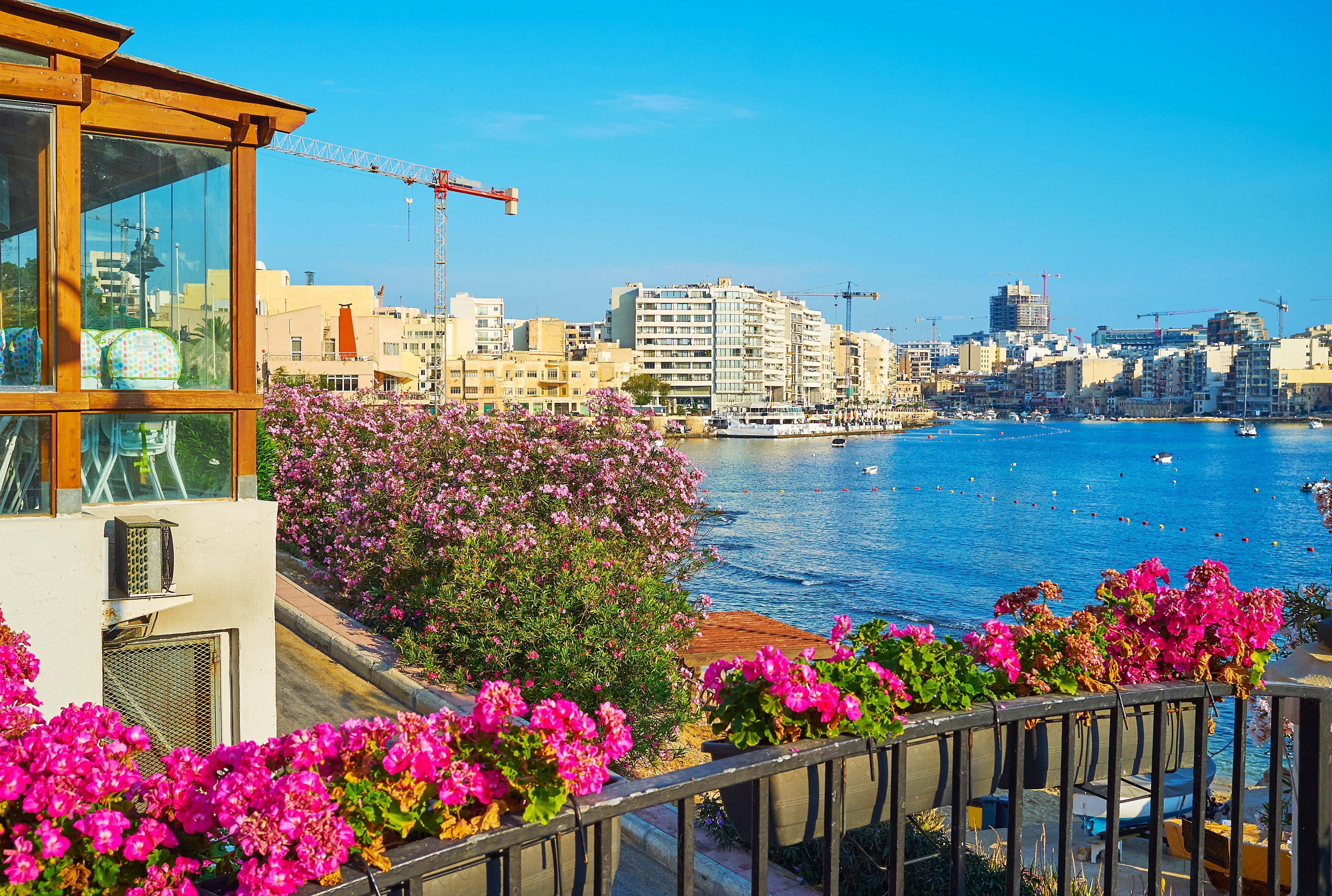
Sliema is a town in northeast Malta. It is a major commercial area and a popular resort with shops, restaurants, and hotels
What are the grounds for residence permit refusal?
Applications for a Maltese residence permit, whether for work, study, family reunification, or investment, may be refused or revoked if an applicant fails to meet the legal, financial, or reputational requirements set by the Maltese authorities.
Most common grounds
Criminal background or ongoing investigation. Applicants with convictions or pending charges for serious crimes, such as money laundering, corruption, terrorism, or tax evasion, are automatically disqualified.
False or incomplete information. Any attempt to misrepresent identity, financial information, or family composition may result in immediate refusal and a possible entry ban.
Unclear or unverifiable source of funds. Applicants must prove that all declared assets and investments originate from lawful, traceable sources. Unexplained wealth or funds from high-risk jurisdictions may lead to rejection.
Security or reputational risks. Links to sanctioned entities, politically exposed persons with corruption records, or activities that could harm Malta’s or the EU’s reputation may result in refusal.
Failure to meet programme or financial conditions. Missing required investments, insufficient assets, unpaid fees, or the absence of valid health insurance are common administrative reasons for rejection.
Post-approval breaches. Residence status may be revoked if the permit holder later violates programme conditions, sells property prematurely, fails to renew insurance, or becomes a reputational risk.
Role of Due Diligence
In Malta’s investment-based residence programmes, such as the Global Residence Programme, Due Diligence is one of the core stages leading to approval.
Each application undergoes several layers of verification to confirm the applicant’s integrity, financial reliability, and compliance with Anti-Money Laundering standards. The process includes independent background checks conducted by the Residency Malta Agency, financial screening through international databases such as Interpol and Europol, and, where relevant, review by the Financial Intelligence Analysis Unit.
This system not only protects Malta’s reputation but also benefits investors. Successfully passing Due Diligence demonstrates financial transparency and good standing, which strengthens credibility when opening bank accounts, making investments, or relocating within the European Union.
How to obtain Malta permanent residence by investment?
To obtain the Malta permanent residence by investment, an applicant must apply through a licensed agent, such as Immigrant Invest. The Residency Malta Agency does not accept applications submitted directly by individual investors.
Eligibility
To qualify for Maltese permanent residence, an investor must meet the following requirements:
- be at least 18;
- have no criminal record or ongoing criminal proceedings;
- have no previous visa refusals to countries that have a visa waiver agreement with Malta;
- be able to confirm the lawful origin of the invested funds.
Permanent residencу in Malta allows investors to live in the country for an unlimited period. At the same time, it does not require them to relocate permanently or reside in Malta on a full-time basis, provided that they continue to meet the programme’s conditions.
Financial requirements
To participate in the Malta Permanent Residence Programme, an investor must meet the following conditions:
- Rent residential property in Malta for at least €14,000 per year, or purchase property worth at least €375,000.
- Pay an administration fee of €60,000, plus €7,500 for each family member over the age of 18, excluding the spouse.
- Pay a government contribution of €37,000[7].
- Make a donation of €2,000 to a non-governmental organisation.
- Demonstrate ownership of capital of at least €500,000, of which €150,000 or more must be financial assets, or €650,000, with at least €75,000 in liquid financial assets.
An investor must maintain a registered residential address in Malta for as long as permanent residence status is held. During the first 5 years, the property must meet the programme’s minimum purchase or rental thresholds.
After 5 years of permanent residence, these minimum property requirements are lifted. The investor may then rent or purchase any residential property in Malta without value restrictions, provided that a registered address in Malta is maintained.
Required documents
Lawyers compile a list of documents tailored to each specific investor. It generally includes the following papers:
- passport copies;
- birth and marriage certificates;
- national ID cards, if applicable;
- bank statements for the last 6—12 months;
- proof of assets;
- source of wealth declaration and supporting evidence;
- police conduct certificates;
- declaration of no criminal investigations;
- health insurance;
- purchase or lease agreement meeting MPRP thresholds;
- other investment proofs;
- passport-size photos.
Application process
The entire procedure takes at least 6 months on average. Investors go through the following five main steps:
- Preliminary Due Diligence. Immigrant Invest conducts an initial Due Diligence check to identify any circumstances that could prevent the applicant from participating in the programme. Upon successful completion, Immigrant Invest prepares a service agreement to provide further support.
- Preparing documents. Immigrant Invest lawyers assist the applicant with collecting, certifying, and translating the required documents.
- Submitting the application for Due Diligence. This step must be completed within six months of obtaining residency. The application is submitted to the Residency Malta Agency, which reviews it within 90—180 days. Once the Agency completes its checks, a Letter of Approval in Principle is issued.
- Fulfilling investment conditions. After receiving the Letter of Approval in Principle, the applicant must meet the investment requirements within eight months. The Residency Malta Agency then issues a certificate of permanent residence.
- Submitting biometrics and receiving permanent residence cards. The applicant and all dependants must travel to Malta and visit the Residency Malta Agency to submit biometrics. Only children under the age of two are exempt. After biometrics are submitted, the application is forwarded to the residence department for card printing, which takes at least four weeks.
MGRP vs. MPRP: comparison of investment requirements
Personal income tax for Malta residence permit holders
Malta’s tax system distinguishes between tax residence and legal residence. Holding a residence permit, except for a permit granted under the Global Residence Programme, does not automatically make an individual a tax resident. Tax obligations depend on the type of residence, length of stay, and whether the person is domiciled in Malta[8].
Taxes for ordinary residence permit holders
Foreign nationals who live in Malta for more than 183 days per year are considered tax residents. They are taxed on income earned in Malta and on foreign income remitted to Malta. Foreign income that remains abroad is not taxed.
The tax rate is progressive and depends on the annual income:
- up to €9,100 — 0%;
- €9,101 to 14,500 — 15%;
- €14,501 to 60,000 — 25%;
- over €60,000 — 35%.
Residence permit holders who spend fewer than 183 days per year in Malta are not considered tax residents. They are taxed only on Malta-sourced income, such as local employment income or rental income, if any.
Holders of investment-based residence
Both investment routes allow applicants to live in Malta without the need to work locally, but they differ in tax treatment.
The Malta Permanent Residence Programme provides permanent residence but does not automatically confer tax residency. Holders may become tax residents if they spend more than 183 days per year in Malta or establish their centre of vital interests there. In this case, they are taxed on income earned in Malta and on foreign income remitted to Malta at progressive rates of up to 35%.
Foreign income that is not remitted to Malta remains exempt from taxation, even if transferred to Malta.
The Malta Global Residence Programme is designed for individuals seeking a tax-optimised residence status.
The programme’s participants are taxed at a flat rate of 15% on foreign income remitted to Malta, subject to a minimum annual tax of €15,000, which covers both the main applicant and dependants. Income earned in Malta is taxed separately at standard rates of up to 35%.

Malta residence permit for tax optimisation
A sportsman from Thailand initially considered obtaining residence in Spain but faced stricter physical presence requirements and less favourable tax conditions. As an alternative, the applicant chose the Malta Global Residence Programme, which offers a flat 15% tax on foreign income remitted to Malta and does not require permanent residence in the country.
With the support of Immigrant Invest, the applicant rented a property in Gozo and completed the application process, including an interview with the Inland Revenue Department of Malta.
Non-personal-income taxes
The corporate income tax rate in Malta is 35%. However, under the shareholder refund system, the effective tax burden is typically reduced to around 5—10%. Refunds are paid to shareholders after the distribution of profits, depending on the type of income.
Withholding tax. Shareholders may receive dividends without double taxation, as Malta does not levy withholding tax on dividends, interest, or royalties paid to non-residents.
Value-added tax applies to most goods and services purchased or consumed in Malta. It therefore affects residents, non-residents, tourists, and companies alike.
The standard VAT rate in Malta is 18%, which is among the lowest in the European Union. Reduced rates apply to specific goods and services:
- 7% for accommodation;
- 5% for utilities, books, and cultural services;
- 0% for exports and intra-EU supplies.
Malta does not impose wealth, inheritance, or gift taxes, regardless of a person’s residence status.
Stamp duty is charged at 5% on real estate transfers and 2% on transfers of shares in Maltese companies under the Duty on Documents and Transfers Act. The rate may increase to 5% if a company’s principal assets consist of immovable property in Malta. Reduced or exempt rates may apply to family business transfers or intra-group reorganisations.
Risks and difficulties for investors when obtaining residence in Malta
Both temporary and permanent residence involve legal, financial, and compliance requirements that applicants must meet at the application stage and on an ongoing basis. Understanding the potential risks and practical difficulties in advance helps investors assess suitability and avoid delays or refusals.
Due Diligence and eligibility checks
Both investment routes are designed for fit-and-proper applicants and involve comprehensive background screening. Applications may fail if an applicant cannot meet integrity requirements or provide satisfactory supporting evidence.
Proof of funds and source of wealth documentation
A common practical difficulty is preparing a clear paper trail for wealth and income, especially when funds originate from multiple sources, business ownership, or cross-border structures. Insufficient or inconsistent documentation can delay the process or lead to a negative decision.
Property compliance and ongoing obligations
Under the Global Residence Programme, maintaining a qualifying property is required to retain the programme’s special tax status, and non-compliance may lead to its termination.
Under the Malta Permanent Residence Programme, beneficiaries must meet the qualifying property conditions for the first 5 years and must continue to hold a residential property in Malta or Gozo to retain the residence permit.
Reliance on licensed intermediaries and process formalities
The Malta Permanent Residence Programme is administered through licensed agents, and applications must follow formal procedures, prescribed forms, and statutory timelines. While this ensures regulatory oversight, it also requires applicants to strictly comply with procedural requirements.
How can Immigrant Invest help with obtaining a residence permit in Malta?
Immigrant Invest is an official representative of the Malta Global Residence Programme and Malta Permanent Residence Programme and provides end-to-end support from selecting investment options to obtaining residence permit cards in Malta.
Immigrant Invest has been operating since 2006 and has assisted more than 3,000 investors and their family members in obtaining residency. The company applies an individual approach to each case and conducts preliminary Due Diligence before submission, reducing the risk of refusal.
As a result, 99% of applications prepared by Immigrant Invest receive approval, reflecting a consistently high success rate across investment programmes.
To sum up: how to get a residence permit in Malta?
- There are at least 10 ways to obtain a Malta residence permit. The most streamlined option is participating in the Malta Global Residence Programme.
- Under the MGRP, investors must either rent residential property in Malta for at least €8,750 per year or purchase property for €220,000+, with the thresholds depending on the property’s location.
- Under the Malta Permanent Residence Programme, investors must rent property from €14,000 per year or purchase property worth at least €375,000, pay a €60,000 administrative fee, a €37,000 government contribution, and a €2,000 donation, and prove capital of at least €500,000.
- Malta grants residence permits to foreign specialists, students, entrepreneurs, and family members of residents.
- Non-European investors often choose Malta for its fast residence process. Temporary residence permits are issued within 3 months, while permanent residence may be granted within 6 months.
- A Malta residence permit allows visa-free travel within the Schengen Area, offers tax optimisation and family relocation options, and provides stability during political or economic uncertainty in the applicant’s home country.
Immigrant Invest is a licensed agent for citizenship and residence by investment programs in the EU, the Caribbean, Asia, and the Middle East. Take advantage of our global 15-year expertise — schedule a meeting with our investment programs experts.
 Trusted by 10,000+ investors