







![19 Easiest Countries to Get a Residence Permit: Updated List for [!year]](/_next/image/?url=https%3A%2F%2Fa.storyblok.com%2Ff%2F176292%2F1536x864%2F4355edc7fa%2Feasy-residency-countries291062713.jpeg&w=2048&q=75)

Many countries allow foreigners to obtain residence permits; however, some ways are more challenging than others.
With a residence permit, you can live in another country for the long haul typically anywhere from 1 to 5 years. You can qualify for one in several ways: by proving your financial stability, owning property, or making an investment.
Investment is one of the easiest ways to become a resident of a certain state. Many European countries have special programmes designed for wealthy people who would like to become residents.
Learn more about the easiest countries for getting a residence permit.
Residence permit: what is it, and how can you get one?
A residence permit lets you live in a foreign country for an extended time, often up to 5 years. Residence permit options often come up in discussions about the easiest countries to immigrate to, as shorter and simpler procedures generally make the process more accessible.
To keep your resident status, you’ll need to renew your permit regularly — and in many cases, actually spend certain time in the country.
As a resident, you can usually re-enter the country anytime, even when the borders are shut to tourists. Plus, you often get access to healthcare and the opportunity to purchase property.
Depending on the issuing country and type of residence permit, residents may also benefit from visa-free travel to certain other countries. For example, a valid residence permit issued by a Schengen Area country allows its holder to travel to other Schengen countries for up to 90 days in any 180-day period.
Trusted by 10,000+ investors
Check your eligibility for the Greece Golden Visa
What makes some residence permit options more accessible than others?
To obtain a residence permit, you need to fulfil some conditions: starting a business, entering a university, or marrying a citizen of the country. Some countries also offer the opportunity to obtain residence permits by investment.
Here’s what can make your journey to residence a whole lot smoother.
1. No requirement to work or study
The most common way to obtain a residence permit in almost every country is through work and study, but this does not suit all potential applicants. You don’t have to go that route. Passive income visas open the door to residence without the need to find a job or enroll in school.
2. No requirement to live in the new country
Residence does not always require relocation. Some residence programmes allow applicants to maintain their status without spending most of the year in the country. This makes them suitable for those who want the benefits of residence while keeping their primary home elsewhere, as is often the case with Golden Visa programmes.
3. No significant costs
While investment programmes can be pricey, plenty of countries offer budget-friendly options, like permits for financially independent individuals or Digital Nomad Visas.
These routes require applicants to demonstrate sufficient income rather than make a substantial investment.
4. No fuss
Becoming a resident of a new country can be a lengthy and tiresome process. If you’re applying as an investor or digital nomad, expert help is often available to walk you through every step.
Top 6 countries for residence in Europe
Europe offers several ways to turn a move into a long-term plan — from investment and passive-income routes to digital nomad and business permits. The best option depends on how you earn, how much you are ready to invest, and how much time you plan to spend in the country.
Here are six European countries with some of the most flexible residence options for non-EU applicants.
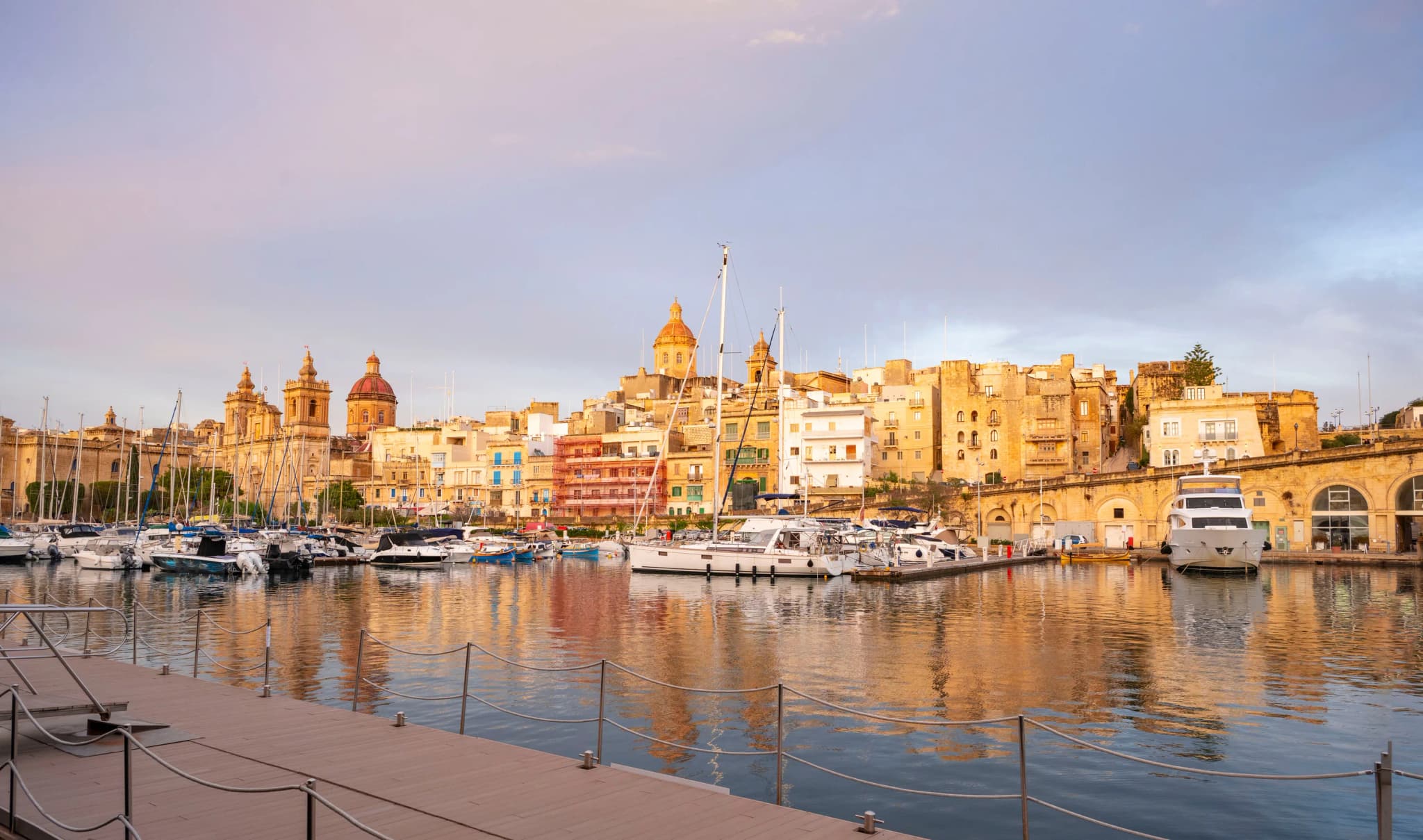
 Malta
Malta
Malta gives permanent residence by investment[1]Source: Subsidiary Legislation 217.26 — Malta Permanent Residence Programme. You’ll get permanent residence and you can choose between two housing options to suit your lifestyle.
Applicants can rent a property for at least €14,000 per year and must maintain the lease for at least 5 years.
Alternatively, they can purchase property worth at least €375,000. In this case, additional fees amount to roughly 7% of the property value.
In both cases, applicants must also pay a €60,000 administrative fee, make a €37,000 contribution, and donate €2,000 to charity.
Malta permanent residence is a life-long status, but a residence card is subject to renewal once in 5 years.
As a Maltese permanent resident, you’re free to live, work, study, or run a business in Malta. Plus, you can explore all 29 Schengen countries without ever needing a visa.

 Portugal
Portugal offers a variety of visas to help you make the country your new home, whether you’re a remote worker, entrepreneur, retiree, or investor.
The D7 Visa for financially independent persons is given to those who have passive income. If you earn passive income above Portugal’s minimum wage of €920 a month, you might qualify for the D7 Visa. It’s designed for financially independent individuals who want to settle down in Portugal.
To keep your D7 status, you’ll need to rent or buy a home in Portugal and spend at least 183 days a year in the country. There’s no minimum property price.
You can work remotely from Portugal with the Digital Nomad Visa. There’s no requirement to invest, but you’ll need to show a monthly income of at least €3,680 and prove you’ve secured long-term accommodation.
Living in Portugal as a digital nomad comes with plenty of perks, but to qualify, you’ll need to:
- be a non-EU/EEA citizen over 18 years old;
- prove remote employment or self-employment income of at least €3,680 per month;
- show savings of at least €11,040 in your bank account;
- rent or own a home in Portugal for a minimum of 12 months;
- have no criminal record and valid health insurance.
Wealthy people often choose the Portugal Golden Visa, which allows a person to obtain a residence permit by investment. Here are your five paths:
- purchase of investment fund units — €500,000+;
- supporting arts and restoring cultural heritage — €250,000+;
- investment in research activities — €500,000+;
- business investment with the creation of 5 jobs — €500,000+;
- opening a company with the creation of at least 10 jobs.
With the Golden Visa, you only need to spend 7 days a year in Portugal and you can renew your residence every 2 years[2]Source: AIMA — Portugal Golden Visa.
The Global Talent Programme offers experienced professionals, entrepreneurs, and innovators a route to residence through participation in projects developed with a Portuguese university. Applicants need a bachelor’s degree or higher and 3—5 years of professional experience.
The participation fee is €170,000 and covers a family of four, including a spouse and children under 26.
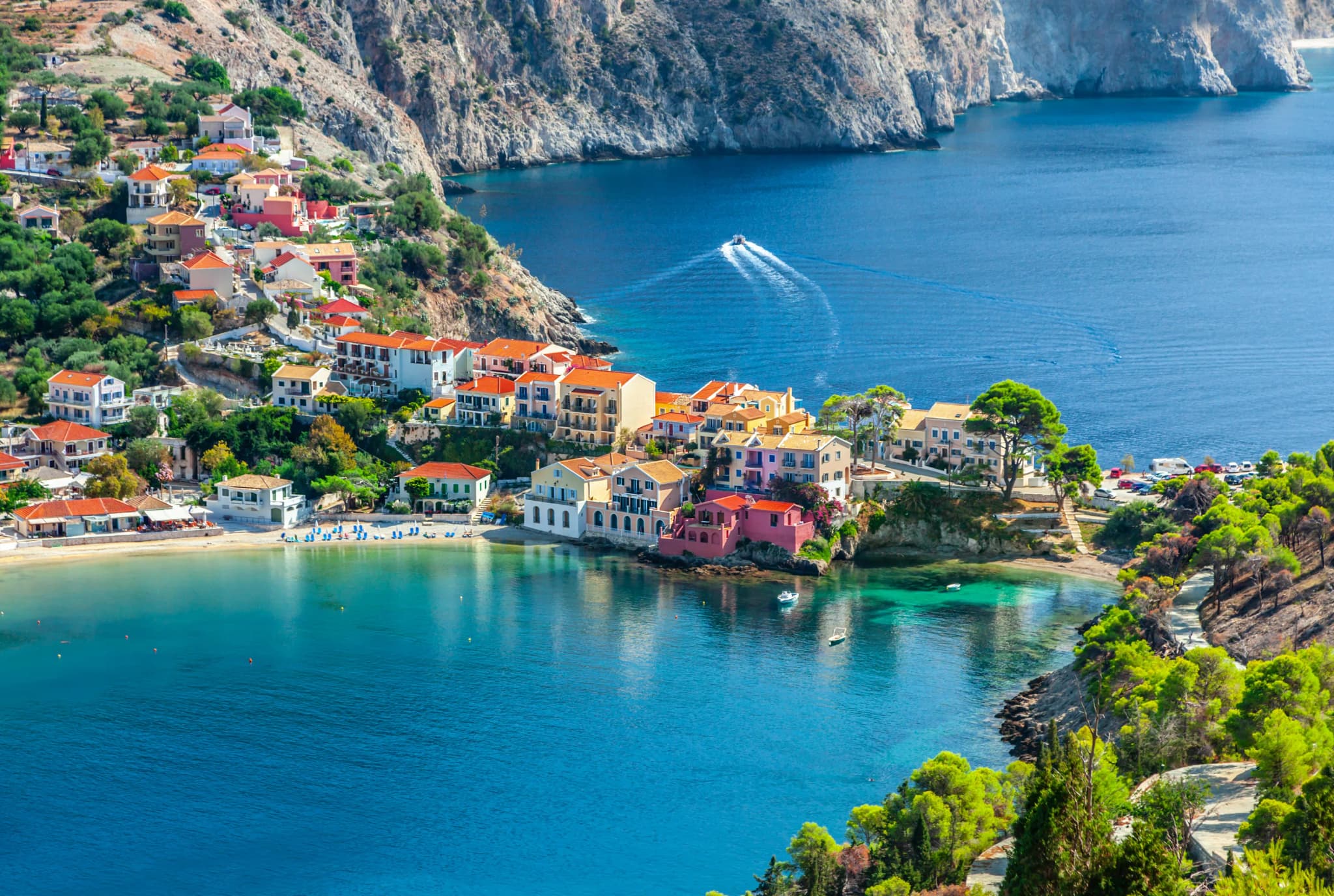
 Greece
Greece offers one of the most beneficial ways to obtain the country’s residence by investment.
Investors usually choose the purchase of a property. Greece set an investment threshold of €800,000 for purchasing real estate in Attica and Thessaloniki, as well as on Mykonos, Santorini, and other islands with populations exceeding 3,100 residents. The investment requirement is €400,000 for properties in less popular regions.
Two specific categories of properties have a lower minimum investment of €250,000, regardless of the location:
- Architectural monuments needing restoration, which must be completed within 5 years.
- Properties being converted into residential units, with the renovation completed before the submission of a Golden Visa application.
To qualify for a residence permit through the purchase of newly built property, investors can buy only one property, and it must have a minimum area of 120 square metres. Studio flats and smaller homes therefore do not qualify under this route. The 120-square-metre requirement does not apply to restored or converted properties.
There are also other options, such as:
- investment in a Greek startup registered in the National Startup Registry — €250,000+;
- purchase of units in qualifying mutual funds or alternative investment funds — €350,000+;
- investment in venture capital companies or venture capital funds — €500,000+;
- capital contribution to a Greek company or a Greek real estate investment company — €500,000+;
- fixed-term deposit with a Greek bank or investment in Greek government bonds — €500,000+;
- purchase of listed shares, corporate bonds, or Greek government bonds traded on regulated Greek markets — €800,000+.
The residence permit is issued for 5 years and can be renewed[3]Source: Greek Ministry of Migration — Golden Visa.
Financially independent individuals can use the Greece FIP Visa as an alternative to the Golden Visa if they have passive income and want to avoid a large investment. Applicants must prove income from sources such as pensions, rental income, dividends, or investments[4]Source: Greek Ministry of Migration — Residence-document requirements, FEK B 1807/2024.
The minimum required income is €3,500 per month. It increases by 20% for a spouse and 15% for each child. Spouses and children under 18 can be included in the application.
Alternatively, applicants can show savings of at least €126,000, equal to 3 years of the minimum income requirement. The required amount increases for each accompanying family member.
Processing takes at least 4 months. The residence permit is issued for 3 years and can be renewed. Unlike Golden Visa holders, FIP residents are expected to spend at least 183 days per year in Greece.
 Spain
Spain
The Spain Non-Lucrative Visa is designed for financially independent applicants who can support themselves without working in Spain. Eligible income can come from sources such as pensions, rental income, dividends, investments, or other passive income[5]Source: Spanish Ministry of Foreign Affairs — Non-lucrative residence.
The main applicant must show at least €2,400 per month for themself, plus €600 per month for each additional family member.
A spouse and parents can be included in the application. Unmarried children of any age may also qualify if they are financially dependent on the main applicant and do not maintain a separate household. This is a notable advantage, as many other residence programmes impose stricter age limits on dependent children and parents.
The first residence permit is valid for 1 year and can then be renewed with 2-year residence cards. Processing takes 4 months or more, and residents are expected to spend at least 183 days per year in Spain.
 Hungary
Whether you’re an investor, an entrepreneur, or a digital nomad, there’s a path to living in Hungary legally and long-term. From making investments to launching a business or working remotely, you can choose the route that best fits your lifestyle and goals.
The Hungary Golden Visa allows you to obtain residence in Hungary by contributing to the country’s development. Applicants must meet one of the following investment conditions:
- Invest at least €250,000 in a government-approved real estate fund.
- Donate €1,000,000 to a public-interest trust supporting culture or education.
The process takes at least 5 months. The residence permit is valid for 10 years and can be extended for another 10 years[6]Source: Hungarian immigration authority — Residence permit for guest investor.
Business residence. You can apply for a residence permit by starting a company in Hungary — a Kft. Key conditions include minimum authorised capital of €7,700.
The residence permit is issued within at least 6 months. The initial permit is valid for 1 year and can be extended for another 2 years[7]Source: Hungary’s National Directorate-General for Aliens Policing — Residence permit for guest self-employment.
Hungary may be attractive from a tax perspective. The corporate income tax rate is 9%, one of the lowest in the EU, and Hungary has an extensive network of double taxation treaties that may reduce or eliminate withholding taxes on certain cross-border payments, including dividends.
The Digital Nomad Visa, or White Card, gives you residence in Hungary without needing to start a business. To qualify, you must:
- work remotely or run a non-Hungarian company;
- earn at least €3,000 a month;
- have accommodation, insurance, and a clean record.
The process takes around 3 months. The residence permit issued under the Digital Nomad Visa is valid for 1 year and can be extended once for another year. After this period, digital nomads must leave Hungary but may subsequently reapply for the permit[8]Source: Hungary’s National Directorate-General for Aliens Policing — White Card for digital nomads.
 Cyprus
Cyprus is one of the most flexible countries for residence with over 15 different routes. Whether you’re a digital nomad, a retiree, a volunteer, or a startup founder, there’s likely a programme for you.
The easiest way is an Autonomous visitor permit. If you’re a non-EU citizen with a stable income of at least €2,000 a month from outside Cyprus, you’re good to go.
If you’re a remote worker from outside the EU/EEA, Cyprus has you covered. You can apply as a digital nomad as long as you work for a company based abroad and earn at least €3,500 a month after taxes[9]Source: Cyprus Migration Department — Digital nomads and family members.
One more way to obtain a Cyprus residence permit is to invest in local real estate or business[10]Source: Cyprus Migration Department — Immigration Permits for Investors. You can get a residence permit by putting €300,000 or more into local real estate or a Cypriot business.
6 countries for you to get a residence permit in the Americas
From investment and tax residence to retirement and remote-work programmes, the Americas offer several ways to secure long-term residence. These six countries stand out for relatively accessible routes, flexible requirements, or alternatives to traditional work-based immigration.
 Panama
Panama offers a route to permanent residence from the outset, with no minimum stay requirement. Investors can obtain the status by investing at least $300,000 and may become eligible for citizenship after 5 years.
There are three investment options:
- real estate — $300,000+;
- securities — $500,000+;
- bank deposit — $750,000+.
The residence permit is issued within at least 3 months. The investor can include a spouse, children of any age, and parents in the application[11]Source: Official MICI — Qualified Investor Programme.
Panama stands out for its territorial tax system: residents are taxed only on income earned from sources within Panama, while most foreign-sourced income is not subject to Panamanian income tax.
 Mexico
Mexico gives residence permits under the economic solvency ground. To be eligible, you need to:
- provide documents proving monthly income of around $4,500 for the last 6 months;
- or provide bank or investment statements showing a balance of around $76,000 for the last 12 months[12]Source: Official Mexico Temporary Resident Visa — Economic solvency.
Mexico also allows applicants to qualify for temporary residence through property ownership. If your property is worth more than $600,500, you may be eligible for a temporary residence permit. You can also obtain residence by investing in a Mexican company[13]Source: Official Mexico Temporary Residence Visa requirements — Property and solvency.
 Antigua and Barbuda
Antigua and Barbuda offers one main residence route: the Tax Residence Program. Applicants can obtain permanent residence and live in the country indefinitely[14]Source: Antigua and Barbuda Tax Residency Program. The main requirements are:
- buy or rent real estate;
- spend at least 30 days a year in the country;
- pay a tax of $20,000 per annum;
- have an annual income of at least $100,000.
Many wealthy applicants go straight for citizenship. It opens the door to visa-free travel to 166 countries and tax residence perks. Four investment options are available:
- non-refundable contribution of $230,000+;
- real estate purchase for $300,000+;
- contribution to a university of $260,000+;
- business investment of $400,000+.
 Belize
Belize’s residence program is designed for retirees and people over 45 years old[15]Source: Belize Tourism Board — Qualified Retirement Program. If you’re receiving at least $2,000 a month in guaranteed income, Belize welcomes you under its QRP residence visa. It is perfect for retirees who want to enjoy the tropics stress-free.
 Nicaragua
Nicaragua grants permanent, not temporary, residence right away. Invest $30,000 in the local economy, and you’ll be eligible for a 5-year residence, with a clear path to citizenship afterward[16]Source: Nicaragua — General Migration and Immigration Law.
Alternatively, applicants may choose a temporary residence route, which requires spending at least 180 days per year in Nicaragua.
 Argentina
Argentina makes it incredibly simple to obtain residence, especially if you’re connected by birth or family. Any foreign person that was born on its territory becomes an Argentinian citizen. Thus, their parents can get residence permits by family reunification.
Other ways to obtain Argentina residence include the following paths:
- MERCOSUR nationality — for citizens of Member and Associate States;
- religious activity — for members of recognised religious organisations;
- investment — for foreigners making investments in Argentina;
- financial independence — for pensioners and rentistas who can support themselves with income or resources from abroad.
Trusted by 10,000+ investors
Citizenship vs residence by investment: compare all options
3 easiest Asian states for residence
Asia offers several straightforward ways to secure long-term residence without following a traditional work or family route. Malaysia, Thailand, and Cambodia stand out for programmes based on investment, paid membership, or renewable long-stay visas.
 Malaysia
Malaysia offers The Malaysia My Second Home, MM2H, programme[17]Source: Ministry of Tourism, Arts and Culture — MM2H Category & Requirements. If you’re dreaming of a long-term stay in Malaysia, the programme might be your ticket in. It offers several residence options depending on the applicant’s budget and preferred length of stay:
- Silver — fixed deposit of $150,000 and property purchase of at least RM600,000, around $142,000. The residence pass is valid for 5 years and renewable.
- Gold — fixed deposit of $500,000 and property purchase of at least RM1 million, around $237,000. The pass is valid for 15 years and renewable.
- Platinum — fixed deposit of $1 million and property purchase of at least RM2 million, around $474,000. The pass is valid for 20 years and renewable.
- SEZ/SFZ — for applicants buying property in designated economic or financial zones. The fixed deposit is $65,000 for applicants aged 21—49 or $32,000 for those aged 50+. The pass is valid for 10 years and renewable.
The minimum age to qualify is 25 years for the Silver, Gold, and Platinum categories. For the SEZ/SFZ option, applicants can qualify from age 21.
 Thailand
Thailand offers the Thailand Privilege Card, a long-term visa programme with membership options lasting from 5 to 20 years.
There are five main options:
- Bronze Membership: 5 years for THB 650,000, or about $19,700.
- Gold Membership: 5 years for THB 900,000, or around $27,300. Family members cannot be added under this tier.
- Platinum Membership: 10 years for THB 1,500,000, or about $45,500.
- Diamond Membership: 15 years for THB 2,500,000, or at least $75,800.
- Reserve Membership: an invitation-only option valid for 20 years, costing THB 5,000,000, or about $151,500.
Family members can be added to Platinum, Diamond and Reserve memberships for THB 500,000, or around $15,200, per person[18]Source: Thailand Privilege — Official membership packages.
 Cambodia
Foreigners who want to stay in Cambodia long term can enter on an Ordinary E-class visa and apply for an extension after arrival[19]Source: Cambodia General Department of Immigration.
Depending on the purpose of stay, the visa can be extended for up to 12 months. A 12-month extension allows multiple entries, while eligibility and document requirements depend on the visa category.
The cost of a 12-month extension is typically around $285—300, including service fees.
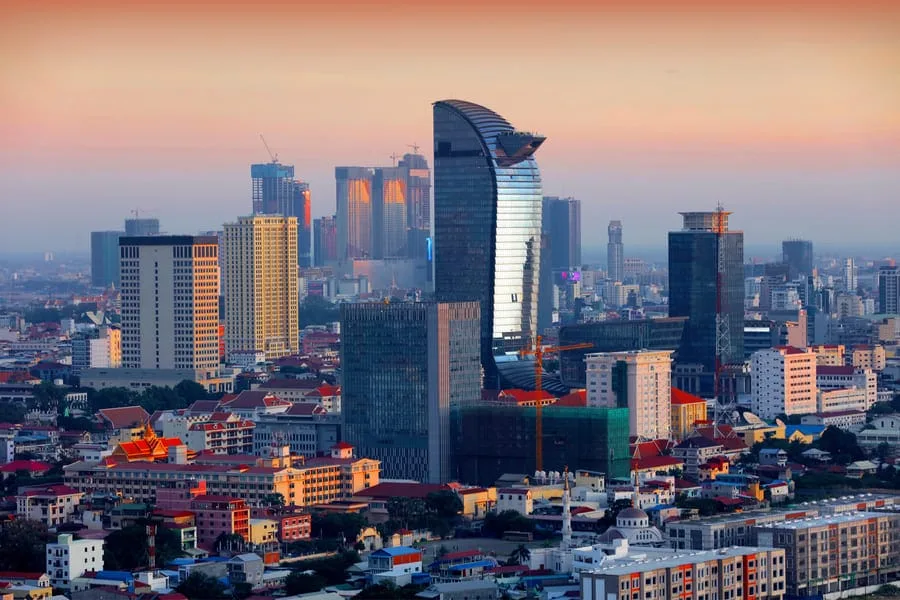
Phnom Penh is the capital of Cambodia, where the national currency is the riel, although the US dollar is also widely used
Where to reside in the Middle East and Near East
The Middle East offers a mix of flexible residence options, from property investment and entrepreneurship to remote work and long-term premium residence programmes.
 Türkiye
In Türkiye, obtaining a tourist residence permit for a year is possible. To be considered, you must provide proof of your travel plans, for example, plane tickets, hotel reservations, etc.
Another way to get a residence is to invest in real estate. The minimum property value is $200,000. The property must be used as the applicant’s home and located in an area where residence registration for foreigners is permitted[20]Source: Official Türkiye residence permit requirements for property owners.
The residence permit by investment is given for 1 year and can be extended.
Some people decide to obtain Turkish citizenship. It allows one to enter 136 countries without visas and get an E-2 business visa to the USA.
There are 5 options for getting a Turkish passport by investment[21]Source: Invest in Türkiye government portal — Acquiring Property and Citizenship:
- purchase of real estate for $400,000+;
- business investment of $500,000+;
- bank deposit of $500,000+;
- purchase of government bonds for $500,000+;
- purchase of units in an investment fund for $500,000+.
 The United Arab Emirates
Whether you’re a property investor, entrepreneur, or remote worker, there’s a path to UAE residence that fits your lifestyle.
UAE grants residence permits by investment in real estate[22]Source: UAE Government portal — Golden Visa for property investors. Depending on the sum of investment, it can be obtained for either 2 or 10 years:
- The 10-year Golden Visa requires AED 2,000,000+, or $545,000.
- The 2-year visa costs AED 750,000+, or $204,000.
Real estate can only be bought in the UAE freehold zones.
Investors and business partners in the UAE may qualify for a 5-year Green Residence if they hold an eligible stake in a UAE company and meet the applicable licensing and approval requirements. This route is designed for entrepreneurs, founders, and business owners seeking longer-term residence in the country[23]Source: Official UAE Green Residence — Investors and business partners.
The UAE also gives residence permits to freelancers and remote workers. Freelancers need a special permit and must prove annual income of at least AED 360,000, or around $98,000[23]Source: Official UAE Green Residence — Investors and business partners, while remote workers need to prove monthly income of at least $3,500[24]Source: UAE Government portal — GDRFA Dubai — Virtual Work Residence Permit.

Do you qualify for the UAE Golden Visa?
Find out under 2 minutes by answering 4 simple questions
 Saudi Arabia
The Kingdom offers Premium Residence[25]Source: Premium Residency Center — Implementing Regulations, also known as the Saudi Golden Visa for investors, entrepreneurs, talented professionals, and families.
Each option has clear thresholds, government fees and conditions, allowing applicants to choose the path that matches their resources and goals.
Some tracks grant fixed-term status with the option to renew or upgrade, while others provide direct permanent residence from the outset. The main options are:
- Real estate route: owning residential property worth at least SAR 4,000,000, or $1,065,000. Residence remains valid as long as the property is held.
- Investor route: investing SAR 7,000,000, or $1,865,000, and creating 10 jobs within 2 years.
- Entrepreneur route 1st Category: funding of SAR 400,000, or $106,500, from an accredited entity and hold at least 20% ownership to qualify for a 5-year residence.
- Entrepreneur route 2nd Category: funding of SAR 15,000,000, or $3,997,000, from an accredited entity, hold at least 10% ownership and create 20 jobs within 2 years to qualify for direct permanent residence.
- Special Talent Residence is available to researchers, healthcare and scientific professionals, and executives. Minimum monthly salaries start at SAR 14,000, or about $3,730, for researchers, SAR 35,000, or $9,330, for healthcare and science professionals, and SAR 80,000, or $21,330, for executives.
- Gifted residence open to artists, athletes and cultural figures who have received notable recognition and endorsements from Saudi ministries.
- Limited duration residence: contributing SAR 100,000, or $26,650, annually for up to 5 years.
- Unlimited duration residence: contributing SAR 800,000, or $213,200, once for permanent residence.
All Premium Residence holders benefit from family inclusion, exemption from expatriate fees, the right to work in the private sector, business ownership under the Investment Law, property ownership and freedom of travel without exit or re-entry visas.
Vanuatu: the easiest country to get PR in Oceania
Vanuatu might be your ideal destination, offering both permanent residence and citizenship, often in just a matter of days.
Permanent residence
Vanuatu offers a Direct Investor Visa to foreign investors[26]Source: Official Vanuatu Direct Investor Visa requirements. Applicants must demonstrate assets in Vanuatu worth more than VT20 million, or about $166,000. The visa can be issued for up to 8 years, allowing the holder to live in the country for an extended period.
Citizenship
Vanuatu citizenship is available right away. To get it, you need to make a non-refundable contribution of $130,000+.
As a Vanuatu citizen, you get all the benefits of permanent residence, including:
- Visa-free travel to 124 countries, including Singapore and Hong Kong.
- Streamlined path to tax efficiency and global mobility.
Vanuatu is often described as a zero-tax jurisdiction. It currently levies no personal or corporate income tax, capital gains tax, withholding tax, or gift tax.
Compare popular residence by investment options to choose your best-suited one
Participating in an investment programme is one of the easiest ways to become a resident in a foreign country. Among the most popular programmes are those of European countries and the UAE.
We have compared residence investment programmes by the two most important parameters: required investments and how fast a programme participant can get a residence permit.
Residence by investment programmes in Europe, the Americas, and the Middle East


The UAE offers the fastest residence visa. Among EU countries, Greece and Italy issue Golden Visa fastest; however, a bit longer of a wait in Malta or Cyprus can offer not temporary but long-term residence.
Portugal may require the longest waiting time due to the current application backlog in the migration service AIMA.
How Immigrant Invest can help with residence and citizenship by investment
Immigrant Invest is a licensed investment migration company that has helped more than 10,000 investors and their families obtain residence and citizenship since 2006.
Our experts advise on programmes across Europe, the Caribbean, Africa, and other regions, while local teams and offices provide on-the-ground support in countries including Portugal, Malta, Greece, Hungary, Cyprus, Austria, St Kitts and Nevis, and Grenada.
We provide support throughout the entire application process:
- Selecting a country and programme. Experts assess the applicant’s goals, family composition, preferred investment, timeline, and other circumstances to identify suitable residence or citizenship options.
- Preliminary Due Diligence. The in-house Compliance Department conducts a pre-check before an application is submitted, identifying potential risks and preparing an individual document checklist.
- Preparing documents. Lawyers prepare the list of required documents, check them for correctness, prepare the source-of-funds evidence, and coordinate certifications and sworn translations.
- Selecting and making an investment. Our team can assist with choosing real estate or investment funds and completing the investment.
- Submitting the application. Immigrant Invest prepares and files applications and communicates with the relevant authorities throughout the processing period.
- Supporting the family. Where programme rules allow, experts help add spouses, children, parents, and other eligible relatives to the application.
Assistance continues after residence or citizenship is granted and can include renewing or replacing residence cards and passports, opening bank accounts, and handling property and relocation matters.
In brief: easiest country to get a residence permit in each region
- The easiest country for obtaining a residence permit in Europe is Portugal. Whether you’re retired, financially independent, starting a business, or looking to invest, there’s a visa for you: a D7 visa for financially independent persons, a Digital Nomad Visa, and the Golden Visa for investors.
- Panama offers one of the most accessible residence routes in the Americas. Investors can obtain permanent residence from the outset by investing at least $300,000 in real estate. The process takes 3+ months.
- Cambodia’s residence permit is the easiest one to be obtained in Asia. The two things you need to do are get a visa upon arrival and then go to the travel agency to extend it. The fee is $285—300 for a 12-month stay.
- To obtain residence in the Middle or Near East, consider the UAE. It grants residence to real estate owners.
- Vanuatu is the easiest country to get citizenship, with passports typically issued within 2 months. Applicants must invest at least $130,000 and prove assets of $250,000.
Immigrant Invest is a licensed agent for citizenship and residence by investment programs in the EU, the Caribbean, Asia, and the Middle East. Take advantage of our global 15-year expertise — schedule a meeting with our investment programs experts.