









Portugal is a very attractive country for relocation, with a lot of options to obtain a residence permit. Among them are the D7 Passive Income Visa and the Portugal Golden Visa.
A key distinction between the two visas is the holders’ tax residency status. The D7 visa holders have to live in Portugal; thus, they become tax residents. Meanwhile, the Golden Visa does not require its holders to reside in the country.
In this article, we explain the differences between the programmes and how they can help you become a resident and potentially a citizen of Portugal.
What are the Portugal D7 and Golden Visa?
The D7 visa is also known as the Passive Income Visa. It is issued to financially independent foreigners who can prove a monthly passive income of at least €920 a month from sources outside Portugal[1]Source: Public Services Portal of the Portuguese Republic — Residence visa for retirees and people living on their own income (D7).
This programme is not suitable for digital nomads, as their income is not considered passive. For them, Portugal launched a Digital Nomad Visa[2]Source: AIMA — residence permit for remote work, “Digital Nomads”.
The Portugal Golden Visa is an opportunity to obtain a residence permit in the country by investment. The minimum investment is €250,000 for a donation to restore cultural heritage and support the arts. Alternatively, one can invest at least €500,000 in investment fund units, research activities, or business. The fund option allows applicants to return their money in 6—10 years[3]Source: AIMA — requirements for the investment-fund Golden Visa route.

Trusted by 10,000+ investors
Check your eligibility for the Portugal Golden Visa
5 main differences between D7 and Golden Visa
When comparing Portuguese Golden Visa to the D7 visa, the main differences come down to the application process, residence requirements, financial conditions, taxes, and costs.
The D7 Visa is generally more affordable but requires applicants to spend most of their time in Portugal. The Golden Visa requires a substantial investment but offers much greater flexibility for those who do not plan to relocate permanently.
1. Application procedure
Applying for a Passive Income Visa is a more complicated process. Even before applying at the Portuguese Consulate in your home country, you will need to obtain your Portuguese taxpayer number, bank account, and accommodation in Portugal. After receiving a visa for an initial four-month term, the applicant needs to travel to Portugal to apply for a residence permit.
The process of obtaining the Golden Visa is a bit simpler, as there’s no need for investors to provide proof of accommodation. The application could be submitted after making the required investment. The procedure can be done remotely, except for a short trip to Portugal to open a bank account at a local bank. However, due to longer processing times, it takes at least 12 months to obtain a Golden Visa, while the estimated timing for a D7 visa starts at 6 months.
2. Stay requirement
The D7 visa holders get residence permits valid for 2 years and are required to reside in Portugal for at least 1.5 years in a row or 16 months in total within these 2 years to be eligible for residence permit renewal.
The rules are not so stringent for Golden Visa holders. They only need to spend 7 days a year in Portugal to maintain residence and become eligible for permanent residence.
Both these residence permits open up a path to permanent residence in 5 years and citizenship in 10 years.

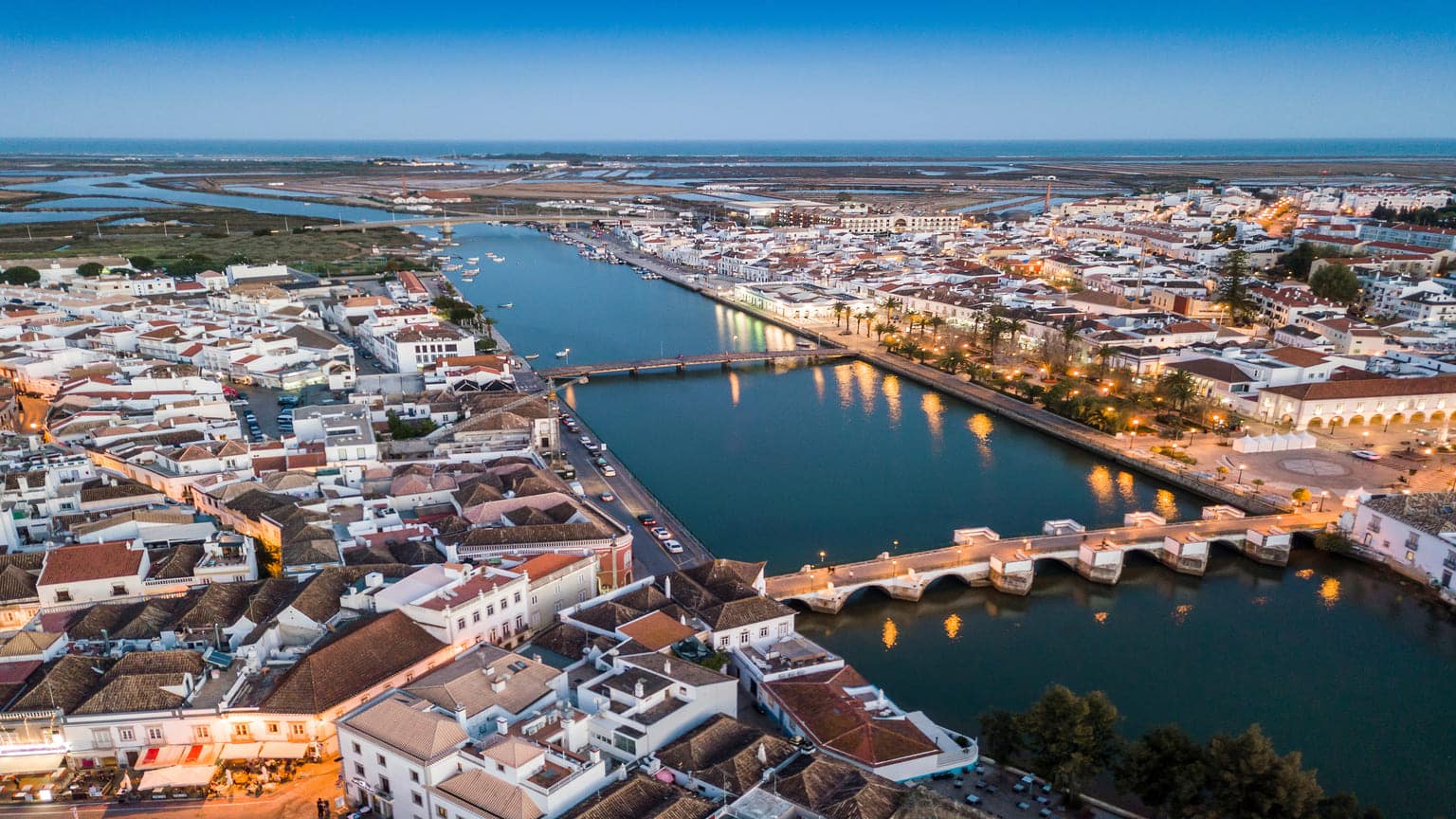
Lisbon has been one of the most popular expat destinations in Europe for years now. Foreigners looking to move to Portugal often choose the capital as their first base in the conutry
3.Financial eligibility
As mentioned above, D7 visa applicants need to prove a legal regular passive income of at least €920 per month. Passive income can be of any nature, including intellectual property income, dividends, interest, property rental, or pension.
At the same time, applicants are not required to make any investment in the Portuguese economy, apart from buying or renting residential property. That’s not the case for Golden Visa applicants, who need to invest at least €250,000 but aren’t required to provide any proof of income.
The D7 visa is especially popular among Americans due to its affordability and the absence of investment requirements, making it an attractive option for retirees seeking residence in Portugal.
4.Tax requirements
D7 visa holders are required to reside mainly in Portugal to maintain their status and, as a result, they become tax residents in the country.
The holders of the Portugal Golden Visa aren’t required to move to Portugal immediately. In that case, they would only need to pay taxes on local income.
5.Fees
The cost of D7 visa issuance is significantly lower. The applicants only need to pay €110 for the visa application per family member and €185.6 for the residence permit card application and issuance. For the Golden Visa applicants, the fees are €632.1 and €6,314.2, respectively.
Differences between D7 and Golsen visas: a summary
How to get a Portugal D7 visa and turn it into a residence permit
Receiving a D7 visa can be a completely remote procedure. After that, the applicant will need to travel to Portugal for a residence permit:
1.Preliminary Due Diligence — 1 day. Immigrant Invest’s Compliance Department checks the client against international legal and criminal databases to establish that the applicant will be eligible for the visa. The confidential procedure reduces the risk of rejection to 1%.
2.Getting a Portuguese Taxpayer Number — up to 5 days. The taxpayer number (NIF) is necessary to open a bank account and purchase or rent housing in Portugal. The procedure is remote for the applicant.
3.Opening a bank account in Portugal — 2+ weeks. The applicant provides the taxpayer number, the passport, and proof of the legal origin of the funds. This procedure is also remote.
4.Buying or renting housing — up to 2 months. The applicant chooses the property options provided by the real estate experts. This process can be remote as well, but the client can also travel to Portugal to see the property in person.
5.Applying for a D7 visa — up to 4 months. Immigrant Invest lawyers help the client collect all the necessary documents for the application, including:
- an international passport;
- a medical insurance policy;
- two colour photos;
- a police clearance certificate;
- proof of accommodation;
- marriage or birth certificates for family members;
- a Portuguese bank statement;
- a NIF registration certificate.
6.Visiting Portugal with the D7 visa — 1 day. The visa is issued within 60 days of the application date. It is valid for 4 months, during which the applicant must travel to Portugal to apply for a residence permit at an immigration office.
7.Applying for a residence permit — 1 day. Immigrant Invest books an appointment for their client, with our representative accompanying them to the immigration office.
8.Receiving a residence permit card — 2+ weeks. The card is sent to the applicant’s registered address in Portugal. It is valid for two years and can be renewed for three years if the applicant remains in compliance with the terms of the programme.
The process of obtaining the Portugal D7 Visa and converting it into a residence permit is similar for people of all nationalities, including nationals of the USA, Australia, and the UK.
Turning Portugal D7 visa into a Golden Visa
A D7 residence permit is intended for people who actually live in Portugal, so holders must comply with the residence rules that apply to ordinary temporary residence permits. If a D7 holder can no longer meet these requirements or doesn’t get passive income anymore, they may consider switching to a residence permit for investment activity.
Moving from the D7 route to the Golden Visa is not an automatic conversion of the existing residence permit. The applicant must meet the Golden Visa requirements and submit an application under the investment residence regime.
Current qualifying Golden Visa options include:
- investing at least €500,000 in investment fund units;
- contributing at least €500,000 to scientific research;
- investing at least €250,000 in arts or cultural heritage projects;
- creating at least 10 jobs;
- investing at least €500,000 in a Portuguese company, combined with the creation of at least 5 jobs.
The Golden Visa can become a practical alternative for people who want to retain Portuguese residence but cannot spend most of the year in the country.

Obtaining the Portugal Golden Visa: a step-by-step guide
Unlike the D7 visa application process, investors need to make two short trips to Portugal during the obtainment of the Golden Visa. Apart from that, however, the procedure is remote and takes around 12 months.
The overall processing time may vary depending on the city where the applicant submits their documents and AIMA’s overall workload. The quality and completeness of the document package also play a significant role. If the authorities request additional documents, the process may take several months longer.
1 day
Preliminary Due Diligence
A certified Anti Money Laundering Officer conducts a mandatory and confidential check of the client against international databases. The procedure helps reduce the risk of rejection to 1%.
A certified Anti Money Laundering Officer conducts a mandatory and confidential check of the client against international databases. The procedure helps reduce the risk of rejection to 1%.
2 weeks
Preparing documents
Immigrant Invest provides the investor with an individual list of documents they are required to present to the Portuguese authorities. The lawyers also assist in filling out the government forms and help translate and notarise the documents.
Immigrant Invest provides the investor with an individual list of documents they are required to present to the Portuguese authorities. The lawyers also assist in filling out the government forms and help translate and notarise the documents.
2 to 5 days
Travelling to Portugal and obtaining NIF
The investor visits Portugal to receive a taxpayer number, NIF, and open an account at a local bank. Immigrant Invest representatives will accompany the client for any help with documents and translation.
The investor visits Portugal to receive a taxpayer number, NIF, and open an account at a local bank. Immigrant Invest representatives will accompany the client for any help with documents and translation.
1 to 2 months
Fulfilling investment condition
After opening a local bank account, the applicant transfers the money to it and then redirects it to complete the investment.
After opening a local bank account, the applicant transfers the money to it and then redirects it to complete the investment.
5 to 6 months
Submitting the application
E-copies of investor’s documents are sent to the Agency for Integration, Migrations and Asylum of Portugal, AIMA. The Agency takes at least 5 months to process an application.
E-copies of investor’s documents are sent to the Agency for Integration, Migrations and Asylum of Portugal, AIMA. The Agency takes at least 5 months to process an application.
1 day
Attending the AIMA office
An appointment with the AIMA office is booked beforehand. The investor and the family members included in the application need to travel to Portugal to submit the original documents and fingerprints for resident permit cards.
An appointment with the AIMA office is booked beforehand. The investor and the family members included in the application need to travel to Portugal to submit the original documents and fingerprints for resident permit cards.
Up to 6 months
Approval and receiving the residence permit cards
After AIMA completes the check of the investor’s documents and approves the application, the resident permit card fee is paid. The cards are prepared within two weeks and are issued directly to the investor or to their representative, who then sends them to the applicant.
After AIMA completes the check of the investor’s documents and approves the application, the resident permit card fee is paid. The cards are prepared within two weeks and are issued directly to the investor or to their representative, who then sends them to the applicant.
Obtaining Portuguese citizenship after D7 or Golden Visa
Both the Passive Income Visa and the Golden Visa offer a path towards Portuguese citizenship in 10 years for most applicants and in 7 years for nationals of Portuguese-speaking and EU countries.
In both cases, it starts with an initial residence permit for two years. The D7 visa holders will be eligible to renew it for three years if they reside in Portugal for 1.5 years in a row or 16 months in total under the previous 2-year permit.
Obtaining permanent residence after a three-year residence permit requires to spend in Portugal 2.5 years in a row or 28 months in total within 3 years.
The Golden Visa can be renewed for two years, meaning that its holders need to update it twice. They don’t need to permanently reside in Portugal throughout this period, with the minimum stay requirement set at just 7 days a year.
Citizenship application becomes possible after 5 years of holding a permanent residence permit, meaning that the total minimum timeframe to a Portuguese passport is 10 years.
Applicants from Portuguese speaking countries can apply for citizenship 2 years after they obtained their permanent residence. For them, the total timeframe of obtaining a Portuguese passport is 7 years.
Risks when obtaining residence in Portugal with a Golden Visa or a D7 visa
Both the Golden Visa and the D7 visa can provide a pathway to Portuguese residence, but they also involve risks that applicants should consider before proceeding. These may relate to physical presence requirements, tax residency, investment performance, processing times, and reporting obligations in other jurisdictions.
Losing a D7 residence permit due to long absences
The D7 visa is designed for people who intend to live in Portugal, so it is not suitable for applicants who only want to visit the country occasionally. A temporary residence permit may be cancelled if its holder is absent from Portugal for more than 6 consecutive months or 8 non-consecutive months during its validity, unless the absence can be properly justified.
The same risk applies to the D8 residence permit for digital nomads and some types of residence permits issued for work in Portugal.
Becoming a Portuguese tax resident
Moving to Portugal under the D7 visa may also affect an applicant’s tax position. As the D7 is intended for people who plan to reside in Portugal, meeting its residence expectations may result in Portuguese tax residency. This generally arises after spending more than 183 days in the country within a 12-month period, or sooner if the applicant maintains a home there as their habitual residence.
Portuguese tax residents are generally taxed on worldwide income, so the tax implications should be assessed before relocation.
Investment risks under the Golden Visa
A Golden Visa does not guarantee that the invested capital will be recovered. The €250,000 cultural route involves a contribution rather than a recoverable investment, while the €500,000 fund route exposes investors to the performance and liquidity of the selected fund. Qualifying funds must have a maturity of at least five years, but neither the return nor the preservation of the original capital is guaranteed.
A longer-than-expected application process
Applicants should be prepared for the residence process to take longer than initially anticipated. Processing depends on document verification, appointment availability and AIMA’s operational capacity.
For Golden Visa applications, the appointments are scheduled according to the progress of the case and its operational availability, and applications may remain under assessment while documents are validated or an appointment is pending.
Reporting obligations in the applicant’s country of citizenship or tax residence
Obtaining Portuguese residence or investing abroad may create additional reporting requirements outside Portugal. Some countries require their citizens or tax residents to disclose foreign bank accounts, investments, or other overseas assets even if they live abroad.
For example, US citizens generally remain subject to US tax reporting on worldwide income while living overseas. They may also have to report foreign financial accounts under the FBAR rules if their aggregate value exceeds $10,000 at any point during the year.
How Immigrant Invest helps investors and passive income earners obtain residence in Portugal
Immigrant Invest supports applicants throughout the process of obtaining residence in Portugal, whether they choose the D7 Visa or the Golden Visa. The process starts with an individual consultation: experts analyse the applicant’s goals, family situation and finances to determine which residence route is more suitable.

Pedro Barata,
Head of Portuguese office
One of the most important steps in our work is helping clients choose the residence route that best suits them and their families. We carefully assess each client’s circumstances, priorities, and long-term goals before recommending suitable options in Portugal and other countries. Once the route is selected, we help prepare a complete application package and support the client throughout the entire process.
Support continues after the residence permit is issued. We assist with residence permit renewals, applications for family members, banking matters, and other practical issues in Portugal. The team can also help residents prepare for permanent residence or citizenship when they become eligible.
Immigrant Invest has its own office in Portugal, with local experts who understand the country’s legal requirements and closely follow regulatory change. The team assists with practical matters that require an on-the-ground presence, coordinates with Portuguese authorities and service providers, and helps clients navigate local procedures more efficiently.
Key things to remember about D7 and Golden Visa in Portugal
- The D7 visa, or Passive Income Visa, requires proof of accommodation and a legal passive income of at least €920 per month, as well as a permanent residence in Portugal for 1.5 years in a row or 16 months in total within two years if the applicant wants to renew the residence permit. After receiving the D7 visa in their home country, the applicants travel to Portugal to apply for a residence permit there.
- The Portugal Golden Visa can be obtained through a minimum investment of €250,000. The whole procedure is remote, except for a short trip to open a local bank account. They are not required to be present in the country for more than seven days a year to retain their residence permit.
- The D7 visa holders become tax residents in Portugal if they maintain their stay requirements. Investors who receive the Golden Visa, however, are not obliged to be tax residents in the country.
- Both programmes offer a path towards obtaining Portuguese citizenship ten years after obtaining the initial residence permit.
Immigrant Invest is a licensed agent for citizenship and residence by investment programs in the EU, the Caribbean, Asia, and the Middle East. Take advantage of our global 15-year expertise — schedule a meeting with our investment programs experts.

 Trusted by 10,000+ investors