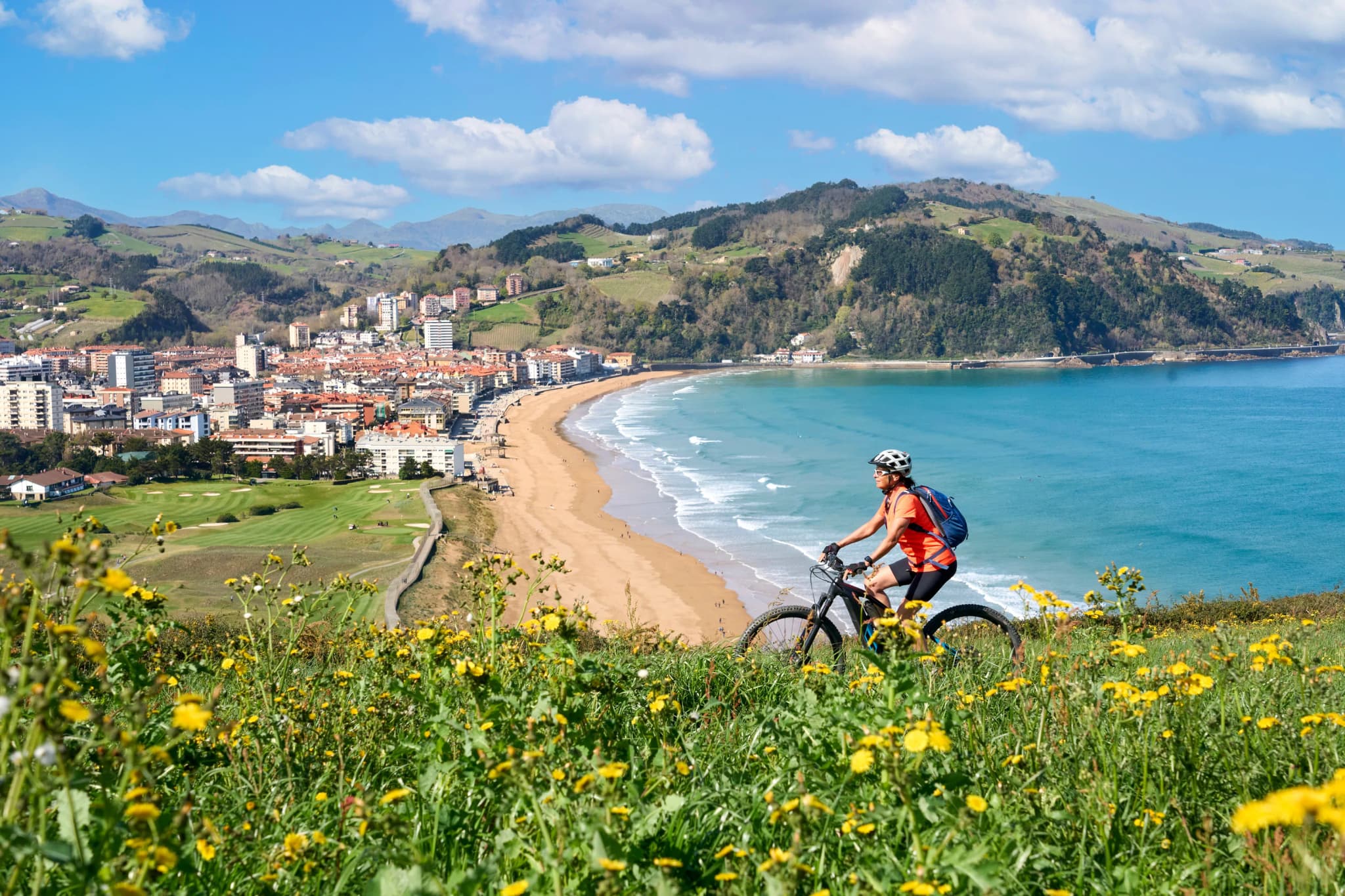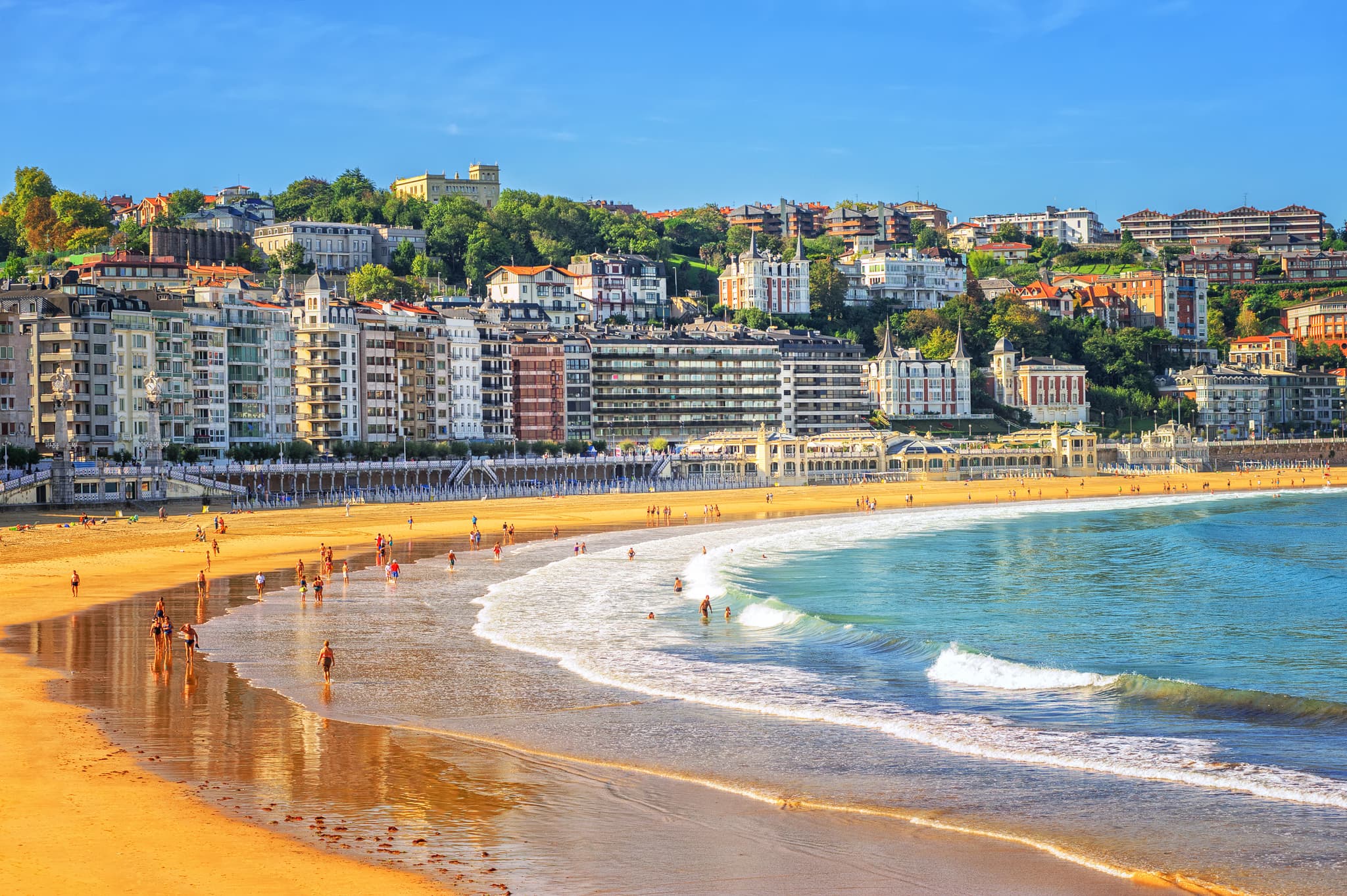










Spain is one of Europe's most established retirement destinations for Brits. Around 109,000 UK-born residents aged 65 or over were living in Spain in January 2025[1]Source: UK Office for National Statistics: UK Emigration Explained: What We Know About Brits Moving Abroad. Warmer winters, lower living costs, and established expat communities make the country particularly attractive for retirement.
Since Brexit, British citizens need a residence permit to settle in Spain long-term. The most straightforward route for retirees living on pensions or savings is the Non-Lucrative Visa, which requires at least €28,800 of yearly income.
This guide explains how to retire to Spain from the UK, including residence requirements, living costs, taxes, healthcare arrangements, and the best places to settle.
Can UK citizens retire in Spain?
UK citizens can retire to Spain if they obtain a residence permit. Since Brexit, British nationals no longer have an automatic right to live in Spain. They can enter the country visa-free for up to 90 days in any 180-day period, while longer stays require a residence permit or another legal basis to remain[2]Source: UK Government: Living in Spain.
Spain Non-Lucrative Visa is the most straightforward route for British retirees planning to live in the country long-term. It allows financially independent individuals to reside in the country without working, while using pension income, savings, or other financial resources to support themselves.
Trusted by 10,000+ investors
Check your eligibility for the Spain Non-Lucrative Visa
Alternatively, retirees with close family members legally residing in Spain may obtain family-based residence. The Digital Nomad Visa is another option for those who are semi-retired and continue working remotely for companies or clients outside Spain.
British retirees who also hold Irish or other EU citizenship can live in Spain without a residence visa, as they benefit from EU freedom of movement rights. To establish their residence, they will need to register with the Spanish authorities and provide a local residential address.
Comparison of Spanish residence options for UK retirees

7 benefits of retiring in Spain for UK citizens
Retiring in Spain offers UK citizens several advantages, from lower living costs and access to healthcare to favourable pension arrangements and a more active lifestyle. British retirees can enjoy these benefits while continuing to receive their UK State Pension and maintaining financial ties with the UK.
1. Continued UK State Pension payments and increases
British retirees can continue receiving their UK State Pension after moving to Spain, with payments transferred directly to a Spanish bank account every 4 or 13 weeks. There is no need to maintain a UK bank account, although currency conversion charges and exchange-rate fluctuations may affect the amount received[3]Source: UK Government: Countries Where We Pay Annual State Pension Increases.
Under UK–EU social security arrangements, British pensioners living in Spain also continue receiving annual increases to their UK State Pension, helping protect their retirement income against inflation[4]Source: UK Government: Claim State Pension Abroad.
2. Simplified taxation and driving licence exchange
Agreements between Spain and the UK simplify several administrative aspects of retirement abroad. The UK–Spain Double Taxation Convention establishes which country can tax different types of pension income and provides relief from double taxation. This helps retirees avoid paying tax twice on the same income[5]Source: UK Government: UK–Spain Double Taxation Convention.
A separate agreement allows British residents to exchange valid UK car and motorcycle driving licences for Spanish ones. They can do so without taking new driving tests, provided they meet the exchange requirements. This saves retirees the time and expense of obtaining a new licence from scratch[6]Source: Spanish Directorate-General for Traffic: Agreement on Driving Licence Exchange Between Spain and the UK.
3. Better healthcare
Spain performs better than the UK on several healthcare indicators measured by the OECD. According to its Health at a Glance 2025 report, Spain recorded 50 deaths from treatable causes per 100,000 people[7]Source: OECD: Health at a Glance 2025 — Spain, compared with 71 in the UK[8]Source: OECD: Health at a Glance 2025 — United Kingdom.
Only 1.7% of people in Spain reported unmet healthcare needs, versus 4.5% in the UK.
4. Access to public healthcare with UK covering the costs
British retirees receiving a UK State Pension may be eligible for an S1 certificate, which allows them to access Spain's public healthcare system, with the UK covering the costs. To use this benefit, pensioners must register their S1 certificate with Spain's National Social Security Institute[9]Source: UK Government: Healthcare for UK Nationals Living in Spain.
Once registered, retirees can receive medical care on the same basis as Spanish residents, including GP appointments, and hospital treatment. Some services, such as prescription medicines, may involve additional charges.
5. Lower living costs
Housing and everyday expenses in Spain are generally lower than in the UK. According to Numbeo, renting a one-bedroom flat outside the city centre costs approximately 25% less in Spain, while basic household utilities are 53% cheaper. Restaurant meals and groceries are also more affordable[10]Source: Numbeo: Cost of Living Comparison Between Spain and the UK.
For retirees living on a fixed pension, these savings can leave more money available for travel, hobbies, and other personal expenses. The difference is particularly noticeable outside major cities and expensive coastal resorts.
6. Cheaper rail travel for retirees over 60
British retirees aged 60 or older can obtain Spain's Tarjeta Dorada railway discount card for just €6, or ≈ £5, per year. It provides 25% off AVE high-speed and long-distance trains and discounts of up to 40% on selected regional services[11]Source: Renfe: Tarjeta Dorada — Discounts for Passengers Over 60.
In comparison, the UK's Senior Railcard costs £35 annually and offers one-third off eligible fares[12]Source: National Rail: UK Senior Railcard. Although the Spanish card does not always provide a larger discount, its lower purchase price makes it an affordable option for exploring different regions without driving.
7. More opportunities for an active coastal lifestyle
Spain has the highest number of Blue Flag beaches in the world, with 677 beaches receiving the distinction in 2026[13]Source: Spanish Blue Flag Association, ADEAC: Blue Flag Results for Spain, 2026. The international award recognises standards relating to water quality, environmental management, safety, and visitor services[14]Source: Foundation for Environmental Education: Blue Flag Standards.
For retirees settling on the Costa Blanca, Costa del Sol, or Spanish islands, beaches can become part of everyday life rather than an occasional holiday destination. Coastal promenades, swimming areas, and seaside walking routes offer opportunities to stay active and socialise.
Retirees with limited mobility can also look for beaches with designated accessible facilities, such as Levante Beach in Benidorm, which provides wheelchair-accessible ramps, amphibious chairs, and assisted bathing services.

Benidorm, in Spain's Alicante province, has two accessible beaches, Levante and Poniente, with three bathing assistance points for people with reduced mobility
Spain Non-Lucrative Visa requirements for UK retirees
The Spain Non-Lucrative Visa allows British citizens to live in Spain without working, provided they have sufficient passive income or savings to support themselves. The visa is also available to people who have retired early or live on investment income.
Main applicant
To obtain the visa, UK retirees must meet the following requirements:
- Financial independence. Applicants must demonstrate at least €2,400, or ≈ £2,015, per month or €28,800, which is ≈ £24,140, a year. They can use pension payments, rental income, investment income, or savings to prove financial stability.
- Health insurance. Applicants must have public or private health insurance covering the same medical services as Spain's public healthcare system. Private insurance must be issued by a company authorised to operate in Spain. Retirees with a registered UK S1 certificate can use it as proof of healthcare coverage.
- Clean criminal record. Applicants must have no criminal convictions in Spain or the countries where they have lived during the previous 5 years. UK applicants must provide an ACRO Police Certificate.
- Good health. Applicants must provide a medical certificate confirming that they do not have any disease that could pose a serious public health risk under the International Health Regulations of 2005.
- No employment. Visa holders cannot undertake paid employment, self-employment, or remote work while residing in Spain. This restriction also applies to working remotely for UK-based employers or clients[15]Source: Consulate General of Spain in London: Non-working Residence Visa.

Eymi Castro,
Investment Migration Expert
For retirees whose pension income falls below Spain's Non-Lucrative Visa threshold, investing in a fund can provide an alternative source of passive income.
Our partner fund offers monthly interest payments of €2,778 on an investment of at least €150,000, generating €33,336 annually — above the minimum visa requirement. Under the fund's terms, the investment is fully refunded if the visa is refused. If approved, the capital is repaid over 4 years alongside interest.
Family members
Retirees applying for Spain's Non-Lucrative Visa can also include the following family members:
- spouse or registered partner;
- children of any age, if they are unmarried and financially dependent on the main applicant;
- parents of any age, if they are financially dependent on the main applicant.
The minimum financial requirement for Spain's Non-Lucrative Visa increases with each accompanying family member. It is calculated using the Public Multiple Effects Income Indicator, IPREM, with the main applicant required to demonstrate 400% of IPREM and an additional 100% for each family member.
In 2026, IPREM stands at €600 per month[16]Source: Spanish State Public Employment Service: Annual Amounts — IPREM, meaning applicants must show at least €2,400 per month for themselves and a further €600 per month for each accompanying family member.
Financial requirements depending on family composition
Documents UK applicants need for Spain Non-Lucrative Visa
British retirees must prepare their documents before applying for Spain's Non-Lucrative Visa. Applications are submitted through the Spanish consular authorities in the UK, with supporting documents translated into Spanish and legalised where required.
The document checklist includes:
- Valid UK passport, issued within the past 10 years, valid for at least 1 year and containing at least 2 blank pages.
- National visa application form.
- Residence authorisation form EX-01.
- Passport-sized photograph.
- Proof of financial resources: bank statements, pension statements, or investment income certificates demonstrating yearly income of at least €28,800 and €7,200 per accompanying family member.
- Proof of retirement, pension certificate, and HMRC employment history.
- Health insurance certificate: evidence of comprehensive private health insurance valid in Spain or confirmation of registration of a UK S1 certificate.
- ACRO Police Certificate, issued within the previous 6 months, with a Hague Apostille and sworn Spanish translation.
- Medical certificate, issued by a registered doctor within the previous 3 months, confirming compliance with the International Health Regulations of 2005. UK-issued certificates require an apostille and sworn Spanish translation.
- Proof of UK residence: recent utility bill, bank statement, or other document confirming the applicant's address within the relevant Spanish consular district.
- Fee payment documents: completed Form 790-052 and payment of the applicable visa and residence authorisation fees.
- Family relationship documents, if applicable: marriage or birth certificates or proof of a registered or stable partnership, with apostilles and sworn Spanish translations where required[17]Source: Consulate General of Spain in London: Non-working Residence Visa — Required Documents.
Applicants provide originals and copies of supporting documents. Individual consulates may request additional paperwork, so retirees should check the instructions for their consular district before applying.

How UK retirees can apply for Spain Non-Lucrative Visa step by step
Obtaining Spanish residence through the Non-Lucrative Visa typically takes at least 4 months, according to Immigrant Invest's experience. British retirees apply from the UK, obtain approval from the Spanish consulate, and complete their residence card registration after arriving in Spain.
In the UK, applications for Spain’s Non-Lucrative Visa are submitted through BLS International, the authorised visa application provider. Applicants must submit their documents in person at one of three BLS visa centres — in London, Manchester, or Edinburgh — depending on their consular district.
1 day
Preliminary Due Diligence
Immigrant Invest's lawyers conduct a preliminary background check to identify potential reasons for visa refusal. They assess the applicant's financial circumstances, sources of income, immigration history, and compliance with the Non-Lucrative Visa requirements.
Immigrant Invest's lawyers conduct a preliminary background check to identify potential reasons for visa refusal. They assess the applicant's financial circumstances, sources of income, immigration history, and compliance with the Non-Lucrative Visa requirements.
Up to 1 month
Prepare the documents
Immigrant Invest provides the applicants with an individual list of documents that are necessary to prepare before application.
The applicant gathers their passport, financial records, health insurance confirmation, ACRO Police Certificate, and medical certificate. The documents requiring legalisation receive a Hague Apostille and sworn Spanish translation.
Immigrant Invest's lawyers help complete the national visa application form and Form EX-01, check the supporting documents, and prepare the application for submission.
Up to 3 months
Apply for a national visa in the UK
Retirees in the UK book an appointment at the BLS Spain Visa Application Centre. The application must be submitted in person, together with the required documents and visa and residence authorisation fees.
The Spanish consulate processes the initial residence authorisation alongside the visa application. According to the Consulate General in London, the legal decision period is 2 months, although additional document requests or interviews may extend processing[18]Source: Consulate General of Spain in London: Non-working Residence Visa — Application Procedure.
1—2 months
Receive the visa and arrange accommodation
Once the application is approved, the retiree must collect their visa within 1 month of receiving the favourable decision. Spanish consulates in the UK issue Non-Lucrative Visas valid for 3 months.
The applicant can then finalise their relocation plans and arrange accommodation in Spain. They are required to rent or purchase a property, with no minimum property value required under the visa programme. Immigrant Invest's real estate specialists can help find suitable housing and review rental or purchase agreements.
Within 1 month of arrival
Move to Spain and obtain a residence card
After entering Spain, the retiree must apply for a Foreigner Identity Card — Tarjeta de Identidad de Extranjero, or TIE, within 1 month. The application is submitted at the local Foreign Nationals' Office or designated police station.
The applicant completes Form EX-17, pays the TIE issuance fee, and attends an appointment to provide fingerprints and a photograph. Once the card is ready, it must be collected in person.
The initial residence authorisation is valid for 1 year, with subsequent renewals granted for 2 years.
Spain as a retirement base for Brits
Spain offers British retirees lower everyday expenses, access to public and private healthcare, and a choice of climates and lifestyles. Before relocating, retirees should consider how Spanish tax residence affects their UK pensions and whether they can access state-funded healthcare.
Cost of living in Spain vs the UK
Living in Spain is generally cheaper than in the UK, particularly when it comes to housing, utilities, and eating out.
On average, a single person needs about €720 for monthly moderate expenses excluding rent. A family of four on average spends €2,600 per month[19]Source: Numbeo: Cost of Living in Spain. Meanwhile, in the UK, a similar lifestyle would cost €1,000 a month for a single person and €3,450 for a family[20]Source: Numbeo: Cost of Living in the United Kingdom.
Actual expenses depend on the location. Madrid, Barcelona, and popular coastal resorts can be considerably more expensive than smaller inland towns. For example, renting a one-bedroom flat outside the city centre costs around €1,020 per month in Madrid and €1,100 in Barcelona — these are some of the highest prices in Spain, which are still significantly lower compared to €1,970 in London[21]Source: Numbeo: Cost of Living Comparison Between London and Madrid.
Everyday expenses in Spain compared to the UK
An average grocery shopping basket includes: one liter of milk, a pack of 12 eggs, 1 kg each of apples, potatoes, local cheese, and prime-cut beef, as well as a loaf of fresh white bread and a bottle of mid-range wine.
Taxation in Spain
British retirees who become Spanish tax residents pay income tax in Spain on their worldwide income, including foreign pensions, rental income, and investments.
Tax residence. Individuals are usually considered Spanish tax residents if they spend more than 183 days in Spain during a calendar year or have their main centre of economic interests there[22]Source: Spanish Tax Agency: Tax Residents in Spain with Income from the United Kingdom.
Income tax. Spain levies personal income tax at progressive rates ranging from 19% to 47%. Savings income, including interest and dividends, is taxed separately at rates from 19% to 30%[23]Source: PwC: Spain — Individual Taxes on Personal Income.
A personal tax-free allowance reduces the amount of income tax payable in Spain. The standard allowance is €5,550 per year, rising to €6,700 for taxpayers over 65 and €8,100 for those over 75. This portion of income is effectively taxed at 0%[24]Source: Spanish Tax Agency: Personal and Family Tax-Free Threshold.
Tax treaty. For British retirees, the UK–Spain Double Taxation Convention determines where different pensions are taxed:
- UK State Pensions and most private or workplace pensions are taxed in Spain once the recipient becomes a Spanish tax resident;
- UK government-service pensions, including certain civil service pensions, are taxed only in the UK;
- UK rental income may be taxed in both countries, with relief available to prevent double taxation[25]Source: UK Government: UK–Spain Double Taxation Convention, Articles 17 and 18.
For comparison, UK residents can receive up to £12,570 in income without paying Income Tax. In England, Wales, and Northern Ireland, taxable income above the allowance is taxed at 20%, 40%, or 45%, depending on the amount[26]Source: HM Revenue & Customs: Income Tax Rates and Allowances.
Healthcare in Spain for British retirees
British retirees can access Spain's public healthcare system if they have the appropriate entitlement and register with the Spanish authorities. Those who do not qualify must arrange alternative coverage, usually private health insurance.
Retirees who receive a UK State Pension and legally reside in Spain may be eligible for an S1 certificate[27]Source: NHS Business Services Authority: Applying for Healthcare Cover for Living Abroad. It allows access to Spanish state healthcare funded by the UK. After obtaining the certificate, they must register it with Spain's National Social Security Institute.
The Spanish public system covers most essential medical services, including GP appointments and hospital treatment. Patients may still pay part of the cost of prescription medicines, while much dental treatment is provided privately[9]Source: UK Government: Healthcare for UK Nationals Living in Spain.
Retirees applying for a Non-Lucrative Visa must demonstrate comprehensive healthcare coverage. The Spanish Consulate in London accepts insurance issued by a provider authorised to operate in Spain or proof of registration of an S1 certificate.
Those without S1 entitlement can usually apply to Spain's voluntary public healthcare scheme, Convenio Especial, after at least 1 year of residence and registration on the municipal register. Until they qualify for public coverage, they need private insurance[15]Source: Consulate General of Spain in London: Non-working Residence Visa.
Culture, climate and everyday life in Spain
Spain appeals to retirees seeking a warmer climate and an outdoor-oriented lifestyle. The Mediterranean coast has hot summers and mild winters, while northern regions such as Galicia and Asturias are cooler and wetter. The Canary Islands offer relatively mild temperatures throughout the year[28]Source: Spain's Official Tourism Portal: The Climate in Spain.
Daily life offers opportunities for walking, outdoor dining, visiting local markets, and attending community festivals. Spanish culture places considerable importance on family, socialising, and regional traditions, with local celebrations throughout the year[29]Source: Spain's Official Tourism Portal: Information About Spain.
For British retirees, coastal towns such as Torrevieja and Jávea on the Costa Blanca, and Mijas, and Fuengirola on the Costa del Sol, offer established British communities. Learning Spanish can make it easier to deal with public services, healthcare providers, and everyday administration.
Best places to retire in Spain from the UK
The best places for British retirees in Spain include Mijas, Torrevieja, Valencia, Las Palmas de Gran Canaria, and Palma de Mallorca. These destinations offer different combinations of living costs, climate, healthcare facilities, and international communities.
Mijas: for established British communities and coastal living
Mijas is a popular retirement destination on the Costa del Sol, particularly for Brits who want to live near other English-speaking residents.
Mijas includes three distinct areas: the traditional hillside village of Mijas Pueblo, the residential district of Las Lagunas, and the coastal settlements around La Cala de Mijas. The latter offer beaches, golf courses, and restaurants, while Mijas Pueblo is known for its whitewashed streets and mountain views[30]Source: Andalusian Institute of Statistics and Cartography: Mijas Municipal Statistics, 2025.
Living costs in Mijas can be estimated using data for the larger neighbouring town of Fuengirola. Renting a one-bedroom flat outside the town centre costs approximately €725 per month and €940 in the centre. Basic utilities for an 85 m² flat are, on average, €140 monthly, while dinner for two at a mid-range restaurant costs around €60[31]Source: Numbeo: Cost of Living in Fuengirola.
Healthcare facilities include the Mijas High Resolution Centre, which forms part of the public Hospital Universitario Costa del Sol network. The municipality also has bus connections to Fuengirola, Marbella, and Málaga[32]Source: Andalusian Health Service: Mijas High Resolution Centre. Málaga Airport provides international connections, including flights to the UK, although residents of more isolated developments may need a car for everyday errands[33]Source: Mijas Town Council: Local Bus Transport.
The main trade-offs are summer tourism, rising housing costs, and limited walkability in hillside developments. Retirees with reduced mobility may prefer La Cala or Las Lagunas to the steep streets of Mijas Pueblo. Those seeking an established British community, meanwhile, can find English-speaking social groups and services throughout the area.

Mijas on the Costa del Sol has one of the largest British expat communities among Spain's coastal municipalities, with over 7,500 Brits residing there and making 8% of the total population
Torrevieja: for relatively affordable Mediterranean retirement
Torrevieja on the southern Costa Blanca appeals to retirees looking for coastal living at a lower housing cost. The town offers sandy beaches, a marina, seaside promenades, and access to the La Mata and Torrevieja salt lagoons. It is also highly international: according to the local council, almost 4,700 UK nationals are registered there, alongside substantial communities from Ukraine, Colombia, and other European countries[34]Source: Torrevieja City Council: Population Statistics, May 2026.
Torrevieja is one of the most affordable destinations on this list. Renting a one-bedroom flat costs approximately €575 per month outside the centre or €630 in the centre. Basic utilities for an 85 m² flat average €100 monthly, while a three-course meal for two at a mid-range restaurant costs around €40[35]Source: Numbeo: Cost of Living in Torrevieja.
Torrevieja has a public university hospital, private medical centres, and pharmacies[36]Source: Valencian Regional Government: Torrevieja Health Department. The town is connected to Alicante Airport by road and bus services. Unlike larger Spanish cities, Torrevieja has no railway station, making a car more convenient for residents of suburban developments. Its flat waterfront areas are more suitable for walking than some outlying neighbourhoods.
Retirees should consider how seasonal tourism affects neighbourhoods. Central Torrevieja has shops and restaurants operating throughout the year, while some holiday-oriented developments close in winter. The town is particularly suitable for people prioritising affordable housing, proximity to the sea, and a sizeable international community over extensive cultural institutions.

Torrevieja borders a 3,700-hectare nature park with two salt lagoons, one of which turns bright pink in warmer months and attracts flamingos
Valencia: for healthcare, culture, and city infrastructure
Valencia is suitable for retirees who want the facilities of a major city alongside Mediterranean beaches. Spain's 3rd largest city combines historic architecture, museums, markets, and a varied restaurant scene with extensive green spaces. The Turia Gardens run through the former riverbed and provide walking and cycling routes, while Malvarrosa Beach offers seaside recreation. Valencia has a Mediterranean climate, with hot summers and mild winters[37]Source: Spain's Official Tourism Portal: Valencia.
Valencia offers moderate everyday expenses, although rental housing can be relatively costly. A one-bedroom flat costs approximately €900 per month outside the centre and €1,220 in the centre. Basic utilities for an 85 m² flat average €140 per month[38]Source: Numbeo: Cost of Living in Valencia.
Valencia provides access to specialised medical care at major hospitals, including Hospital Universitari i Politècnic La Fe[39]Source: Valencian Regional Government: Hospital La Fe. Its metro, tram, and bus networks allow residents to manage many daily activities without a car. Valencia Airport is 8 kilometres from the city and is connected to the centre by metro lines 3 and 5. This makes the city practical for retirees who expect regular visits from family in the UK[40]Source: Visit Valencia: Airport Transport.
Valencia has a more urban and Spanish-speaking environment than retirement-focused coastal towns. Both Spanish and Valencian are official languages, which may affect local administration and communication. Summer temperatures can be uncomfortable, particularly in densely built-up neighbourhoods. Retirees considering ground-floor properties should also check local flood-risk maps before buying or signing a long-term lease.
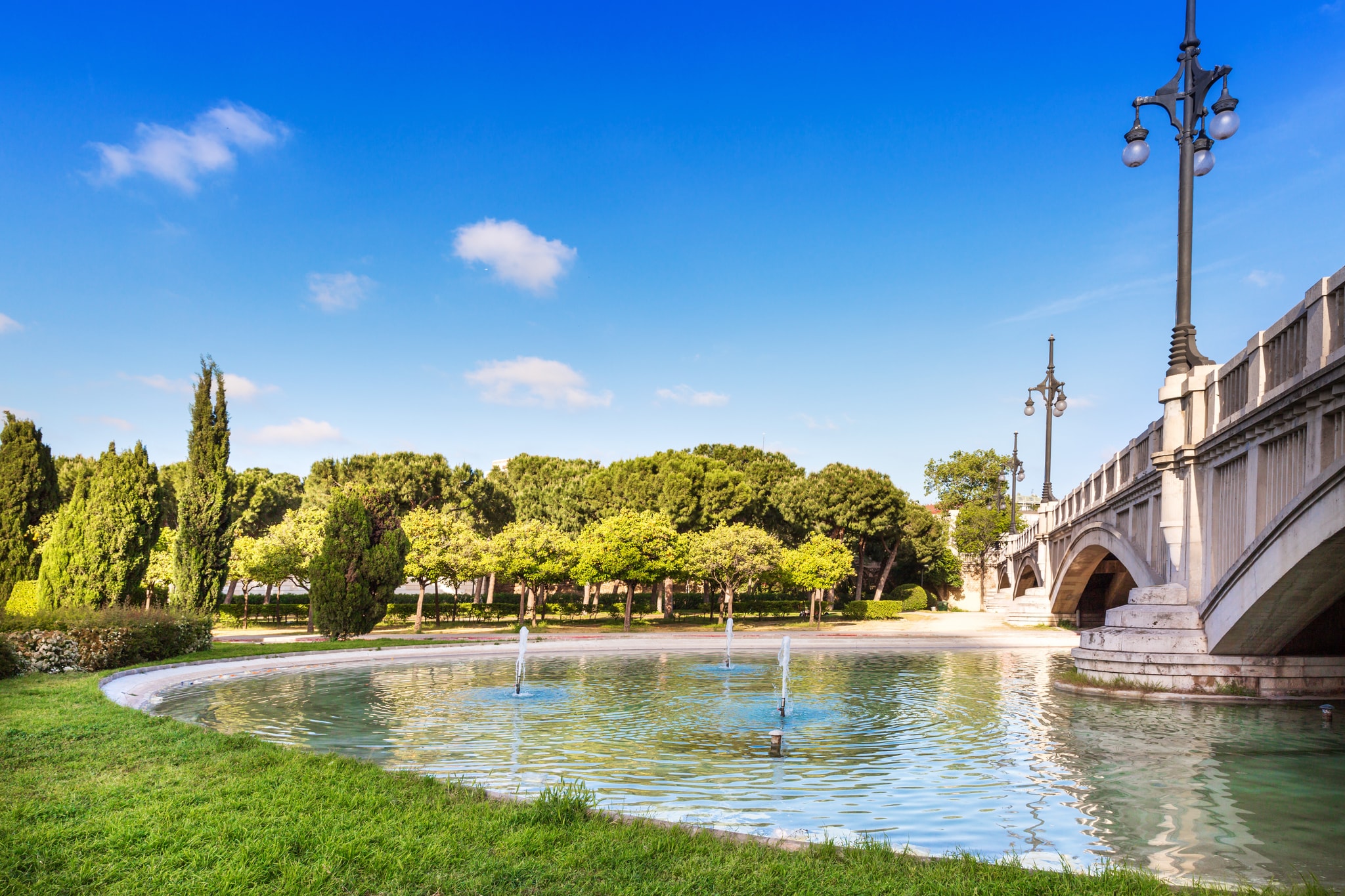
Valencia's Turia Gardens stretch 9 kilometres through a former riverbed, providing walking and cycling routes beneath 18 historic bridges in the heart of the city
Las Palmas de Gran Canaria: for a mild climate throughout the year
Las Palmas de Gran Canaria is an option for British retirees who want to avoid both cold winters and extreme mainland summer heat. Located in the Canary Islands, the city enjoys mild temperatures throughout the year. Its main attraction is Las Canteras, an urban beach stretching for more than three kilometres, with a promenade, restaurants, and swimming areas. Historic neighbourhoods such as Vegueta and Triana offer museums, markets, and traditional Canarian architecture[41]Source: Spain's Official Tourism Portal: Las Palmas de Gran Canaria.
Las Palmas offers relatively affordable housing and utility costs. A one-bedroom flat costs around €700 per month outside the centre and €880 in the centre. Basic utilities for an 85 m² flat average €100, while a mid-range dinner for two costs about €65[42]Source: Numbeo: Cost of Living in Las Palmas de Gran Canaria.
The city has an established public healthcare network, including Hospital Universitario de Gran Canaria Dr Negrín, which provides specialised medical care[43]Source: Canary Islands Health Service: Hospital Universitario de Gran Canaria Dr Negrín. Public buses connect residential districts and nearby towns, while Gran Canaria Airport links the island with mainland Spain and international destinations. Retirees living near the city centre or Las Canteras can manage many everyday tasks on foot or by public transport.
The main consideration is the distance from mainland Europe. Regular flights make visiting the UK possible, but spontaneous travel is less convenient than from mainland Spain. The city also has a predominantly Spanish-speaking environment, unlike some British-oriented resorts in southern Gran Canaria. Retirees should consider whether they prefer an active urban setting or a quieter resort community before choosing the island.

Las Palmas de Gran Canaria has a beachfront promenade over 3 kilometres long, and a natural reef about 200 metres offshore shelters parts of the beach from ocean waves
Palma de Mallorca: for island living and developed infrastructure
Palma, the capital of Mallorca, combines Mediterranean island living with the facilities of a regional capital. It has an extensive historic centre, a cathedral, art galleries, restaurants, and a waterfront promenade. The surrounding island offers beaches, small villages, walking routes, and the Serra de Tramuntana mountains. Palma is particularly attractive to retirees who want cultural activities and convenient access to everyday services rather than a small resort town[44]Source: Spain's Official Tourism Portal: Palma de Mallorca.
Palma has relatively high housing and utility costs compared with the other destinations. A one-bedroom flat costs around €950 per month outside the centre and €1,330 in the centre. Basic utilities for an 85 m² flat average €220 monthly. A three-course dinner for two at a mid-range restaurant costs around €60, while a monthly public transport pass is €37[45]Source: Numbeo: Cost of Living in Palma de Mallorca.
Healthcare infrastructure includes Hospital Universitari Son Espases, the Balearic Islands' main referral hospital, alongside private hospitals and clinics[46]Source: Hospital Universitari Son Espases: Hospital Information. Palma has urban bus services and connections to other parts of Mallorca. Its international airport is connected to the centre by bus route A1, making travel to the UK relatively convenient[47]Source: Aena: Transport to Palma de Mallorca Airport.
Retirees should be prepared for high housing costs, busy summer tourist periods, and competition for long-term rentals. Spanish and Catalan are the Balearic Islands' official languages. Palma is best suited to people with a larger retirement budget who value island scenery, cultural life, and access to medical services in a well-connected city.

Palma de Mallorca offers Mediterranean beaches, modern healthcare, and cultural landmarks, including its Gothic cathedral with the world’s largest 11-metre rose window
Risks and pitfalls for UK citizens retiring in Spain
Moving to Spain requires more than obtaining a residence permit. British retirees should plan for tax obligations, residence renewals, and healthcare expenses that could otherwise lead to unexpected costs or administrative delays.
Unexpected taxes on UK pensions and assets
Becoming a Spanish tax resident can significantly change how retirement income is taxed. British retirees who spend more than 183 days in Spain during a calendar year become Spanish tax residents and must declare their worldwide income. This includes most UK pensions and investment earnings, even if the money remains in a British bank account[22]Source: Spanish Tax Agency: Tax Residents in Spain with Income from the United Kingdom.
At the same time, moving to Spain does not automatically end UK tax residence. HMRC's Statutory Residence Test considers time spent in Britain, family ties, and property ownership. Those who were UK tax residents in any of the previous 3 tax years are non-resident if they spend fewer than 16 days in the UK.
Retirees moving partway through the UK tax year — April 6th to April 5th — may qualify for split-year treatment, making them UK residents for only part of that year. One route requires giving up all UK homes, spending fewer than 16 days in Britain for the rest of the tax year, and establishing a connection to Spain within 6 months[48]Source: HMRC: Statutory Residence Test.
Even after becoming UK non-residents, retirees may still owe UK tax on income such as British rental earnings or government-service pensions.
Spanish tax residents retaining UK assets may also have reporting obligations. Form 720 requires disclosure of foreign bank accounts, investments, and property when the total value in any reporting category exceeds €50,000. Late or incorrect filings can result in penalties.
Failure to meet residence renewal requirements
Non-Lucrative Visa holders must meet financial and physical residence requirements to renew their permits. Applicants must have lived in Spain for more than 183 days during the calendar year and demonstrate sufficient financial resources for the 2-year renewal period.
Renewal applications should be submitted within the 2 months before the permit expires. Applications are also accepted up to 3 months after expiry, but late filing can lead to administrative penalties[49]Source: Spanish Ministry of Inclusion, Social Security and Migration: Renewal of Non-Lucrative Residence.
Unexpected healthcare and long-term care expenses
Access to Spanish public healthcare does not guarantee free long-term care or residential nursing services. Retirees without an S1 certificate or another entitlement to public healthcare may need private insurance. Insurance premiums and exclusions can vary according to age and pre-existing medical conditions.
State-funded long-term care is subject to separate requirements. Applicants must have been registered as residents in Spain for at least 5 years, including the 2 years immediately before applying. The assessment process can take up to 2 years, and financial circumstances affect the support available. Retirees who need assistance sooner may have to pay privately for home care or residential accommodation[50]Source: UK Government: Planning for Later Life as a British Person in Spain.
How Immigrant Invest helps UK retirees obtain residence in Spain
Immigrant Invest is a consulting company specialising in residence and citizenship programmes, with experience in investment migration since 2006. We help investors, digital nomads, and financially independent people obtain second residence and citizenship in the EU and beyond.
With Immigrant Invest, British retirees can obtain Spain’s Non-Lucrative Visa, and our team will support them on every step of the way — from checking eligibility to receiving residence cards. Before signing a service agreement, Immigrant Invest’s lawyers conduct a preliminary Due Diligence check to identify potential reasons for visa refusal and assess the applicant’s financial circumstances.
Our legal team prepares a personalised document checklist and helps applicants demonstrate sufficient financial resources through pensions, savings, or other income. We handle government forms, translations, and legalisation, coordinate appointments with Spanish consular authorities in the UK, and support family members applying together.
Our assistance extends to relocation and settling in Spain. Real estate specialists help retirees find accommodation to rent or buy, even remotely. Once the visa is approved, our lawyers guide clients through obtaining their Foreigner Identity Cards, opening Spanish bank accounts, and preparing for residence permit renewals.
Key takeaways on retiring in Spain as a UK citizen
- UK citizens can retire to Spain with a residence permit. The Non-Lucrative Visa is one of the most convenient options, taking 4 months to obtain and requiring pension income or savings of at least €28,800 per year.
- The Non-Lucrative Visa does not permit employment or remote work. The initial residence permit is valid for 1 year and can be renewed for 2 years, provided the retiree continues to meet the financial, healthcare, and residence requirements.
- Living in Spain is, on average, 26% more affordable than in the UK. Rent for a one-bedroom flat outside the city centre averages 25% less, while basic utilities are 53% cheaper.
- British retirees can retain important pension and healthcare benefits. UK State Pension payments continue to receive annual increases, while retirees entitled to an S1 certificate can access Spain's public healthcare system at the UK's expense.
- Moving to Spain can change tax obligations. British retirees who become Spanish tax residents pay Spanish income tax on their worldwide income, including most UK pensions. The UK–Spain Double Taxation Convention determines how different income sources are taxed.
Immigrant Invest is a licensed agent for citizenship and residence by investment programs in the EU, the Caribbean, Asia, and the Middle East. Take advantage of our global 15-year expertise — schedule a meeting with our investment programs experts.

 Trusted by 10,000+ investors