







Spain offers two clear residence routes for non-EU nationals who want to settle without taking a conventional local job: the Digital Nomad Visa for remote workers and the Non-Lucrative Visa for people living on passive income or savings.
Both visas open the door to life in Spain, Schengen travel, family residence, and a longer-term route to permanent status and citizenship.
The difference starts with how income is earned, then shapes everything else — work rights, tax treatment, family eligibility, permit length, and renewal rules.
What are the Spain Digital Nomad and Non-Lucrative Visas and which one fits your income?
Both the Digital Nomad Visa and Non-Lucrative Visa to Spain give non-EU nationals a route to residence, but they are aimed at very different lifestyles: one is built for people who keep earning through remote work, the other is for those who can live in Spain without working.
The Spain Non-Lucrative Visa is a better fit for people living on pensions, investments, rental income, or savings[1]Source: Spanish Ministry of Foreign Affairs — Non-Lucrative Residence Visa guidance. Its logic is deliberately simple: the applicant must be financially self-sufficient without relying on employment or freelance activity, including remote work for foreign clients. The category is governed by Organic Law 4/2000 and Royal Decree 557/2011[2]Source: Royal Decree 557/2011 — Immigration Regulation.
Trusted by 10,000+ investors
Check your eligibility for the Spain Non-Lucrative Visa
The Spain Digital Nomad Visa suits remote employees, freelancers, and some founders whose work remains tied to employers or clients abroad. Applicants need to document the overseas professional relationship and hold either a higher education degree or at least 3 years of relevant professional experience. The framework comes from Law 14/2013, as amended by Law 28/2022, the Startup Law[3]Source: Law 28/2022 — Startup Law.
The clearest way to choose is to follow the money. Salary, consulting fees, or freelance income usually point to the Digital Nomad Visa. Pensions, investments, and savings point to the Non-Lucrative Visa. If one spouse works remotely and the other does not, the working spouse would normally apply under the Digital Nomad route and include the other as a dependant.
Spain Digital Nomad Visa vs. Non-Lucrative Visa at a glance

5 common benefits of the Spain Digital Nomad and Non-Lucrative Visas
The Spain Digital Nomad Visa and Non-Lucrative Visa make settling in Spain feel refreshingly straightforward, with Mediterranean living, easy Schengen travel, strong public services, and a clear long-term residency path.
1. Living in Spain
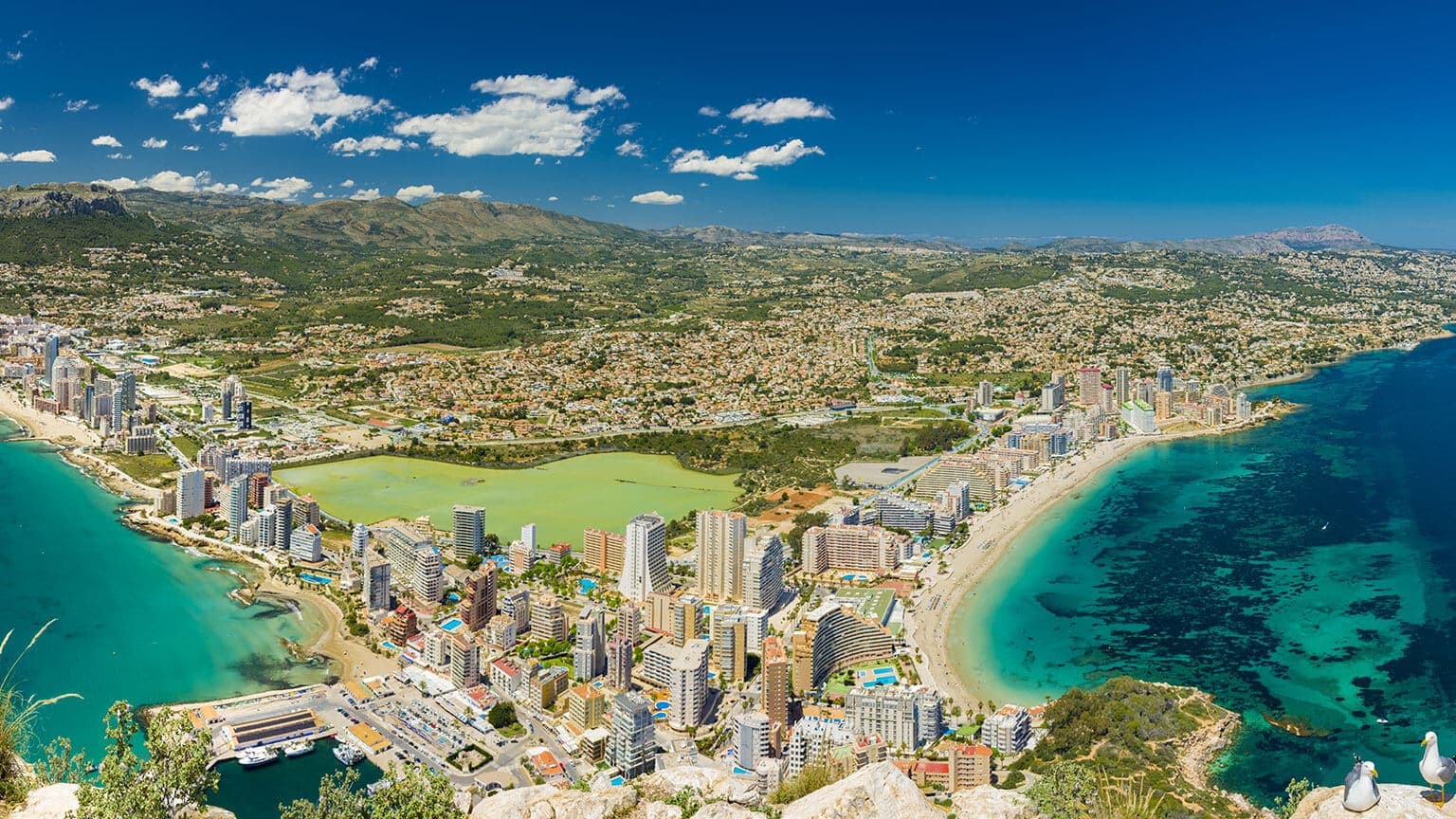
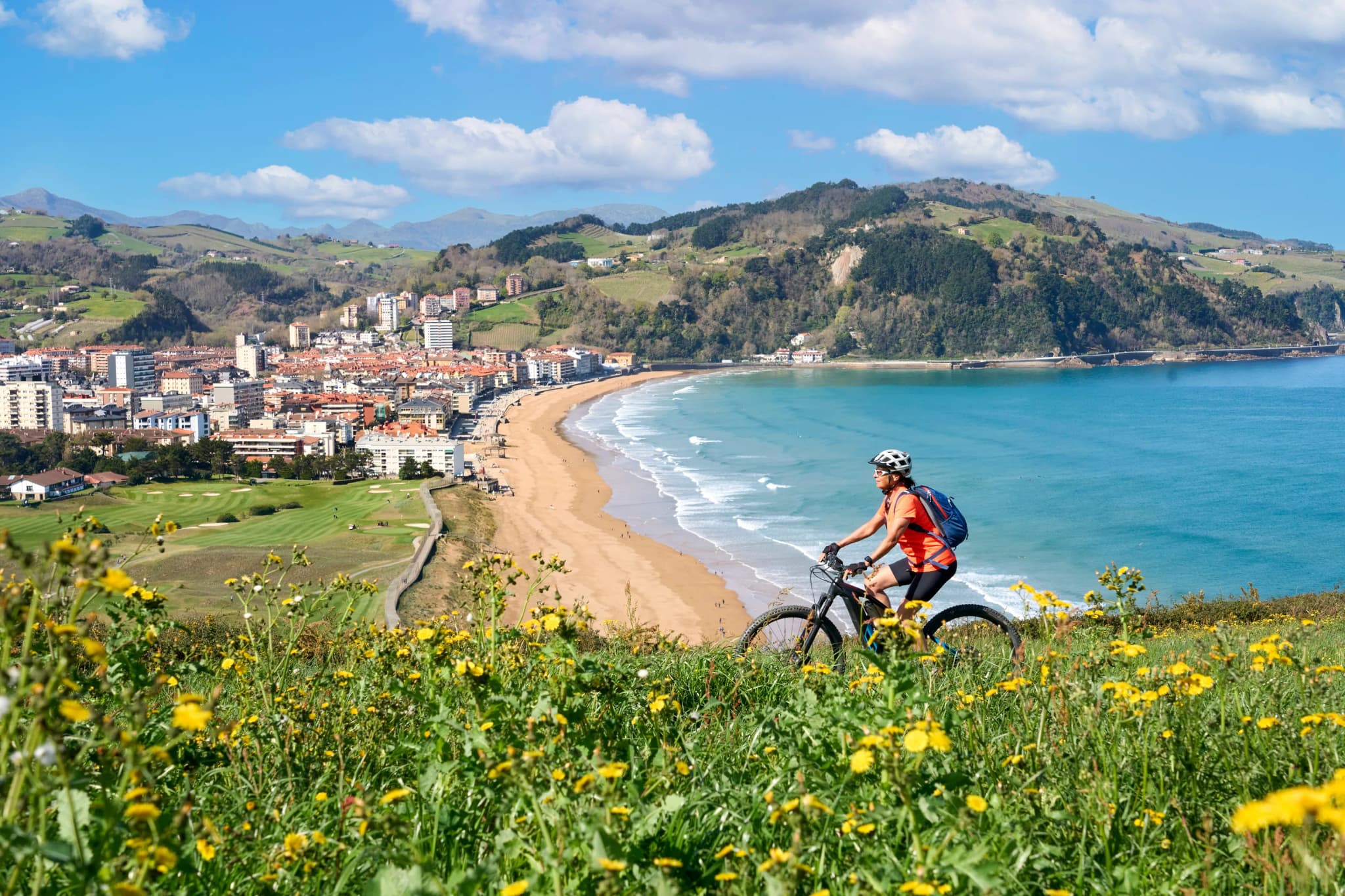
Spain’s appeal is rooted in everyday quality of life: a warm climate, long outdoor seasons, and easy access to beaches, mountains, parks, and sports such as hiking, cycling, swimming, and sailing. Life naturally extends beyond the working day, making it easier to build a healthier work-life balance around exercise, socialising, and time outdoors.
The Mediterranean lifestyle is reflected in the Expat Insider 2025 survey, where Spain ranked 1st for Quality of Life for the 4th consecutive year[4]Source: Internations — Expat Insider Survey 2025. Expats particularly praise the weather, culture and nightlife, recreational sports and healthcare: 84% say they are happy with life in Spain.
2. Visa-free travel across the Schengen Area
Spanish residence turns the rest of the Schengen Area into an easy extension of home. Holders of a valid Spanish residence permit can visit other Schengen Area countries without obtaining separate visas for up to 90 days in any 180-day period — enough for weekends in Paris, a month in Italy, or a longer summer trip across several countries.
Travelling is unusually easy. Aena’s Spanish network alone includes 46 airports and two heliports, with thousands of domestic and international routes each year. For slower travel, Spain is connected to France by international rail services, while driving opens up Portugal and France — and from there, much of continental Europe.
3. Fast obtainment time
Both visas can be obtained in around 4 months. A key advantage of the Digital Nomad Visa is flexibility: applicants can apply not only through a Spanish consulate abroad, but also directly from Spain if they are legally in the country.
4. Access to healthcare and education
Spain pairs strong healthcare with broad access: it ranks 10th worldwide in Numbeo’s Health Care Index, reflecting the quality of medical staff, facilities, equipment, and overall patient experience[5]Source: Numbeo — Healthcare Index. Residents are covered by Spanish Social Security and can use the public system. Visa applicants must also show adequate health coverage, giving foreign residents access to both public and private care.
For families, public primary and secondary schools are free, with teaching mainly in Spanish and, in some regions, a co-official language. International and bilingual schools offer an English-language or international-curriculum alternative at €6,500—12,000 a year.
5. Citizenship prospect and benefit for newborns
For most applicants, 5 years of legal residence can lead to permanent residence, while citizenship comes after 10 years in Spain. Citizens of most Latin American countries benefit from a much shorter route and may apply after just 2 years.
Families with children born in Spain get an extra advantage: a child born in the country can apply for citizenship after just 1 year of legal residence.
A Spanish passport brings full EU rights and visa-free or visa-on-arrival access to 185 destinations worldwide.

Spain leads the world with 677 Blue Flag beaches, giving residents an exceptional choice of clean, well-equipped coastline for swimming, watersports, and easy weekends by the sea[6]Source: Official ADEAC 2026 Blue Flag press release
Income rules for Spain’s Non-Lucrative and Digital Nomad Visas
Spain calculates the two visas differently. The Digital Nomad Visa is tied to the national minimum wage, while the Non-Lucrative Visa uses the IPREM public-income benchmark. Just as important as the amount is where the money comes from: the first is built around active earnings, while the second is for people who do not work.
Spain Non-Lucrative Visa: €2,400+ per month
Income threshold. The Non-Lucrative Visa uses the IPREM, Spain’s reference index for public benefits. In 2026, the monthly IPREM is €600[7]Source: BOE — Law 31/2022, and the main applicant must show 400% of that amount: €2,400 per month or €28,800 per year. Each dependant adds another €600 per month, or €7,200 annually.
Annual requirement. Applicants must show sufficient means for the first year of residence — either the full amount in savings or reliable recurring passive income.
The Spain Non-Lucrative Visa annual income requirement by family size is as follows:
- single applicant — €28,800+;
- couple — €36,000+;
- family of four — €50,400+.
Income source. Income for the Non-Lucrative Visa should come from pensions, investments, dividends, rental income, or savings, not employment or freelance work.
Work rights. Non-Lucrative Visa holders may own shares and receive passive income from a business, including a Spanish company, but cannot take an active role in its management or operations. Remote work for a foreign employer or client is also not permitted.

Eymi Castro,
Investment Migration Expert
An alternative way to meet the passive income requirement is to invest at least €150,000 in our partner’s fund. The investment generates €2,778 per month, or €33,336 per year, in interest income — enough to meet the Spain Non-Lucrative Visa threshold.
If the visa application is refused, the investment is fully refunded. If approved, the capital is returned over 4 years, together with the accrued interest.
Spain Digital Nomad Visa: €2,849+ per month
Income threshold. The Digital Nomad Visa requires the main applicant to show 200% of Spain’s 2026 minimum wage, the SMI. With the annual SMI equivalent to €1,424.50 per month[8]Source: BOE — Real Decreto 126/2026 on a 12-month basis, the threshold is €2,849 per month, or €34,188 per year.
An adult dependant adds 75% of the SMI, while each child adds 25% — €1,069 and €357 per month, respectively.
Annual requirement. For a family, the Spain Digital Nomad Visa annual income requirement is the following:
- single applicant — €34,188+;
- couple — €47,016+;
- family of four — €55,584+.
Applicants do not need to hold the full annual amount in savings. Instead, they prove the required monthly income through contracts, company documents, and supporting financial records.
Income source. Income for the Digital Nomad Visa should come from active remote work, such as salary, freelance fees, consulting income, or business earnings.
Work rights. Employees can work for foreign companies, while self-employed professionals can serve overseas clients. Spanish-sourced professional activity is also allowed, but cannot exceed 20% of total professional income.
Trusted by 10,000+ investors
Check your eligibility for the Spain Digital Nomad Visa
Who qualifies for Spain’s Digital Nomad and Non-Lucrative Visas
The Spain Digital Nomad Visa and Spain Non-Lucrative Visa share the same core eligibility rules, but differ in professional criteria and family coverage.
Main applicant
Applicants for both the Spain Digital Nomad Visa and Spain Non-Lucrative Visa must:
- be over 18;
- be a non-EU and non-EEA citizen;
- have no criminal record;
- have residential accommodation in Spain, either rented or purchased;
- hold adequate health insurance.
For the Digital Nomad Visa, the applicant must also have a higher education degree or at least 3 years of relevant professional experience.

Family members
Both visas can cover close family members, although the rules differ slightly between the two routes.
Spouse or partner can be included under both visas. The Digital Nomad Visa requires the relationship to be officially registered, while the Non-Lucrative Visa also accepts a proven unregistered partnership.
Children of any age are eligible if they are unmarried and financially dependent on the main applicant. For the Digital Nomad Visa, adult children must also be studying at university.
Parents can join the application if they are financially dependent on the main applicant.
Grandparents and siblings are accepted only under the Digital Nomad Visa, provided financial dependence can be demonstrated.
Eymi Castro,
Investment Migration Expert
Family work rights are one of the clearest differences between the two routes: dependants of Digital Nomad Visa holders may work in Spain, while family members under the Non-Lucrative Visa may not.
For mixed-income couples, that often makes the Digital Nomad Visa the more practical choice. The working spouse applies as the main applicant and proves the required foreign employment or freelance income, while the other spouse joins as a dependant.
Extra costs of Spain’s Non-Lucrative and Digital Nomad Visas
Beyond the income threshold, applicants for the Spain Non-Lucrative Visa and Spain Digital Nomad Visa should also budget for additional expenses such as health insurance, accommodation, and document translation.
Common expenses
Both routes typically involve:
- Document translation and notarisation: €1,000+.
- Housing: €700+ per month for a 1-bedroom and €1,000+ for a 3-bedroom apartment[9]Source: Numbeo — Cost of living in Spain.
- Health insurance: €600—1,000 per person per year.
- Residence permit card: €75 per person for the Non-Lucrative Visa and €79.26 per person for the Digital Nomad Visa.
Accommodation does not necessarily have to be rented: applicants can also buy property. The key requirement is simply to have a valid place to live in Spain.
Route-specific costs
The Spain Digital Nomad Visa also comes with a consular fee of around €80 per person and a €9.84 fee for obtaining the NIE, Spain’s foreigner identification number.
For the Spain Non-Lucrative Visa, the main additional charge is an administrative fee of around €150 per person. Applicants using the fund-based route should allow for a few further setup costs:
- Administrative and state fees: €5,000.
- Opening a Spanish bank account: €3,000.
- Power of attorney for a lawyer: €1,000.
Minimum expenses by family size
Documents required for the Spain Digital Nomad and Non-Lucrative Visas
Applicants for both the Spain Digital Nomad Visa and Spain Non-Lucrative Visa need a core set of personal, financial, and compliance documents. Foreign public documents usually need to be apostilled or legalised, and documents not issued in Spanish require an official Spanish translation.
Shared application documents
Common documents include:
- valid passport;
- completed application forms;
- recent passport-sized photograph;
- criminal record certificates;
- proof of sufficient financial means;
- health insurance;
- proof of payment of the relevant government fees;
- marriage, partnership, and birth certificates for accompanying family members, where applicable;
- apostille or legalisation and certified Spanish translations for foreign public documents, where required.
The Spain Non-Lucrative Visa requires comprehensive private health insurance that matches the scope of the public healthcare system. Digital nomads also need private cover when applying for the 1-year D visa. After moving to Spain and registering with Spanish Social Security, they can rely on public coverage instead of maintaining a separate private policy.
Visa-specific supporting documents
For the Digital Nomad Visa, applicants also need documents proving the professional basis of the application: employment or client contracts, evidence of the foreign company’s activity, authorisation to work remotely from Spain, proof of qualifications or at least 3 years of relevant experience, a CV, and Social Security documentation.
For the Non-Lucrative Visa, the distinctive documents are those proving a non-working lifestyle: evidence of passive income or savings sufficient for the first year of residence. Applicants must also provide proof of legal residence in the consular district where the application is filed.
Application route and timing for the Spain Digital Nomad and Non-Lucrative Visas
The Non-Lucrative Visa follows a consulate-first process and must be applied for from the applicant’s country of legal residence. The Digital Nomad Visa can be filed either through a Spanish consulate abroad or directly in Spain, with the application path affecting both timing and initial permit length.
Based on Immigrant Invest’s experience, both routes usually take at least 4 months from preparation to residence.
1 day
Preliminary Due Diligence
Before signing the Services Agreement, Immigrant Invest conducts a confidential preliminary check of the applicant using international legal and business databases. The review is carried out by a certified Compliance Anti-Money Laundering Officer, helping identify potential risks early and reduce the chance of refusal.
Before signing the Services Agreement, Immigrant Invest conducts a confidential preliminary check of the applicant using international legal and business databases. The review is carried out by a certified Compliance Anti-Money Laundering Officer, helping identify potential risks early and reduce the chance of refusal.
1+ months
Prepare documents
Immigrant Invest lawyers prepare a personalised document list, complete the application and government forms, and guide the applicant through the supporting paperwork.
For the Digital Nomad Visa, the team assists with obtaining the NIE, Spain’s foreigner identification number, which can be issued at a Spanish consulate or police station.
Immigrant Invest lawyers prepare a personalised document list, complete the application and government forms, and guide the applicant through the supporting paperwork.
For the Digital Nomad Visa, the team assists with obtaining the NIE, Spain’s foreigner identification number, which can be issued at a Spanish consulate or police station.
Up to 3 months — for the Non-Lucrative Visa; 2+ weeks — for the Digital Nomad Visa
Obtain the visa
For the Non-Lucrative Visa, the application is filed at the Spanish consulate in the applicant’s country of citizenship or legal residence. The consulate normally makes a decision within 3 months, although additional document requests or an interview can extend the timeline.
For the Digital Nomad Visa, documents can be filed through a Spanish consulate or visa centre abroad, where processing may take up to 2 months. Applicants legally present in Spain can apply from within the country, with a decision taking around 2 weeks.
For the Non-Lucrative Visa, the application is filed at the Spanish consulate in the applicant’s country of citizenship or legal residence. The consulate normally makes a decision within 3 months, although additional document requests or an interview can extend the timeline.
For the Digital Nomad Visa, documents can be filed through a Spanish consulate or visa centre abroad, where processing may take up to 2 months. Applicants legally present in Spain can apply from within the country, with a decision taking around 2 weeks.
1+ months
Purchase or rent housing in Spain
Immigrant Invest real estate experts help find suitable accommodation and arrange a rental or purchase. In both cases, the property can be selected remotely.
Immigrant Invest real estate experts help find suitable accommodation and arrange a rental or purchase. In both cases, the property can be selected remotely.
Up to 1.5 months
Enter Spain and obtain residence
After entering Spain, applicants complete the residence formalities and collect their residence permit cards. For the Non-Lucrative Visa, the application is submitted at the foreigners’ office or police station. For the Digital Nomad Visa, Immigrant Invest lawyers can file it online while the applicant is physically present in Spain.
Once approved, applicants and family members attend the police station to collect their cards. The Non-Lucrative Visa residence card is initially valid for 1 year, while the Digital Nomad Visa can grant residence for up to 3 years.
After entering Spain, applicants complete the residence formalities and collect their residence permit cards. For the Non-Lucrative Visa, the application is submitted at the foreigners’ office or police station. For the Digital Nomad Visa, Immigrant Invest lawyers can file it online while the applicant is physically present in Spain.
Once approved, applicants and family members attend the police station to collect their cards. The Non-Lucrative Visa residence card is initially valid for 1 year, while the Digital Nomad Visa can grant residence for up to 3 years.
After 1 year — for the Non-Lucrative Visa; after 3 years — for the Digital Nomad Visa
Renew the residence permit
To renew either visa, the foreigner must keep meeting the original residence conditions and apply around 60 days before expiry or within 90 days after.
The Digital Nomad Visa also requires the remote-work arrangement and income threshold to continue, with Spanish-sourced activity capped at 20% for self-employed applicants. The Non-Lucrative Visa requires sufficient funds for the full 2-year renewal period, no employment or freelance work, and valid health insurance.
The stay requirement applies only to financially independent persons, who must prove they spend more than 183 days a year in Spain. Digital nomads are not subject to this minimum stay rule.
To renew either visa, the foreigner must keep meeting the original residence conditions and apply around 60 days before expiry or within 90 days after.
The Digital Nomad Visa also requires the remote-work arrangement and income threshold to continue, with Spanish-sourced activity capped at 20% for self-employed applicants. The Non-Lucrative Visa requires sufficient funds for the full 2-year renewal period, no employment or freelance work, and valid health insurance.
The stay requirement applies only to financially independent persons, who must prove they spend more than 183 days a year in Spain. Digital nomads are not subject to this minimum stay rule.
Permanent residence and citizenship for digital nomads and financially independent persons
Both the Spain Digital Nomad Visa and Spain Non-Lucrative Visa can lead beyond temporary residence. With enough time in Spain, each can open the way to long-term residence first, and eventually to Spanish citizenship.
Permanent residence requirements
After 5 years of continuous residence, holders of either visa can apply for Spain’s long-term residence status[10]Source: BOE — Royal Decree 1155/2024, Articles 183. Absences cannot exceed 6 consecutive months or 10 months in total over the 5 years. No language test is required.
Long-term residence is indefinite and gives the right to live and work in Spain on broadly the same terms as Spanish nationals, although the physical residence card itself still needs periodic renewal — every 5 years until age 30 and every 10 years thereafter.
Citizenship requirements
Spanish citizenship is available after 10 years of continuous residence[11]Source: BOE — Spanish Civil Code, Article 22. The period drops to 2 years for citizens of most Latin American countries, as well as Andorra, the Philippines, Equatorial Guinea, and Portugal, and to 1 year in certain cases, including for people born in Spain.
Applicants need to pass the DELE A2 Spanish-language test and the CCSE test on Spanish culture and constitutional knowledge. Citizenship brings full EU rights and a Spanish passport, with no residence permit to renew afterwards.
Most applicants must also formally renounce their previous nationality when acquiring Spanish citizenship. This requirement does not apply to nationals of Ibero-American countries, Andorra, the Philippines, Equatorial Guinea, Portugal, or Sephardic Jews of Spanish origin.
Eymi Castro,
Investment Migration Expert
Once holders of the Spain Digital Nomad Visa or Spain Non-Lucrative Visa obtain long-term residence or Spanish citizenship, they are no longer tied to the original income source or work restrictions of those visas. They can take employment in Spain, change jobs, or become self-employed under the broader rights attached to their new status.
Tax considerations for Spain’s Non-Lucrative and Digital Nomad Visa holders
A Spanish residence permit does not automatically determine tax status. The decisive factors are time spent in Spain, the location of economic interests, and whether the holder qualifies for a special regime.
Tax residence triggers
A person becomes a Spanish tax resident after spending more than 183 days in Spain during a calendar year. Tax residence may also arise where the main centre of economic activities or interests is located in Spain[12]Source: PwC — Spain individual tax residence.
Once a tax resident, Spanish Personal Income Tax applies to worldwide income. The tax is calculated through two layers: a state scale, which applies nationwide, and a regional scale, which varies by autonomous community.
The state scale is:
- up to €12,450 — 9.5%;
- €12,451—20,200 — 12%;
- €20,201—35,200 — 15%;
- €35,201—60,000 — 18.5%;
- €60,001—300,000 — 22.5%;
- over €300,000 — 24.5%[13]Source: Official State Gazette — Law 35/2006, Article 63: State tax liability.
The regional component varies by autonomous community. Lower bands start at 8—9.5%, while top regional rates range from 20.5% to 29.5%. Madrid is among the most favourable regions, with rates from 8.5% to 20.5%[14]Source: Spanish Tax Agency — Personal Income Tax: Regional Tax Scales.
Eymi Castro,
Investment Migration Expert
Digital nomads are not required to spend 183 days a year in Spain, so they do not automatically become Spanish tax residents. Non-Lucrative Visa holders, by contrast, must meet this stay requirement and will therefore usually fall within Spain’s tax-residence rules.
Special tax regime for digital nomads
The Digital Nomad Visa can come with a valuable tax break through Spain’s special impatriate regime, better known as the Beckham Law. Eligible digital nomads who become Spanish tax residents may use the regime for the year they acquire tax residence and the following 5 tax years[15]Source: BOE — Law 35/2006, Article 93.
Under the regime, employment income is taxed at 24% up to €600,000, with the excess taxed at 47%. In practice, that means:
- €40,000 a year — €9,600 tax;
- €60,000 a year — €14,400 tax;
- €100,000 a year — €24,000 tax;
- €150,000 a year — €36,000 tax.
Key conditions include not having been a Spanish tax resident during the previous 5 tax years and moving to Spain to work remotely for a foreign employer or carry out another activity specifically covered by the regime.
Tax outcome for financially independent persons
The Non-Lucrative Visa does not come with a preferential tax regime. Once holders become Spanish tax residents, they fall under the standard Personal Income Tax system, which can apply to pensions, dividends, interest, rental income, and investment gains.
Savings income. Dividends, bank interest, and capital gains are taxed under Spain’s separate savings-income scale. The combined state and regional rates are:
- up to €6,000 — 19%;
- €6,001—50,000 — 21%;
- €50,001—200,000 — 23%;
- €200,001—300,000 — 27%;
- over €300,000 — 30%[16]Source: Spanish Tax Agency — Taxation of the savings taxable base: state and regional.
Other passive income. Rental income from overseas property and most foreign pensions are taxed as ordinary income.
Eymi Castro,
Investment Migration Expert
Spain has signed 103 double-tax treaties, with 99 currently in force. They commonly cover pensions, employment income, rental property, dividends, interest, royalties, business profits, and capital gains.
The benefit varies by treaty: one country may receive exclusive taxing rights, withholding tax may be capped, or Spain may credit tax already paid abroad.
Key risks for Spain’s Digital Nomad and Non-Lucrative Visas
Most issues with the Spain Digital Nomad Visa and Spain Non-Lucrative Visa come from choosing the wrong route, weak documentation, or missing a procedural deadline. Income alone is rarely the whole story, and the final decision always rests with the competent Spanish authority.
Work-related eligibility risks
Work rules differ sharply between the two routes. The Non-Lucrative Visa does not allow employment or freelance activity, including remote work for foreign companies, so any active earnings can create a refusal or renewal risk.
The Digital Nomad Visa is built around remote work, but the employment or client relationship must meet programme rules. Employees may need cooperation from their foreign employer, while self-employed applicants must keep Spanish-sourced activity within the 20% limit.
The same distinction extends to family members. Dependants under the Digital Nomad Visa may work in Spain as employees or self-employed, while family members included under the Non-Lucrative Visa are not authorised to work under that status.
Outdated income thresholds
Both visas rely on official benchmarks that can change: IPREM for the Non-Lucrative Visa and SMI for the Digital Nomad Visa. Using figures from a previous year can leave an otherwise strong application below the required threshold, especially when dependants are included.
Incomplete or improperly prepared documents
Expired criminal-record certificates, missing apostilles or legalisation, incomplete translations, and inconsistent financial evidence are common sources of delay. Foreign public documents should be checked against the requirements of the specific consulate before filing.
Tax residence exposure and special regime deadline
Non-Lucrative Visa holders are expected to spend at least 183 days a year in Spain, which makes them Spanish tax residents subject to the ordinary tax system.
Digital Nomad Visa holders are not required to meet that stay threshold to keep their permit. If they do become Spanish tax residents, eligible applicants may opt for the Beckham Law regime. Form 149 must be filed within the applicable 6-month window. Missing the deadline can mean losing access to the special regime.
Filing and timing risks
The Non-Lucrative Visa must be filed through the Spanish consulate serving the applicant’s place of legal residence, before moving to Spain. The Digital Nomad Visa can be filed either at a consulate abroad or, if the applicant is legally in Spain, through the Unidad de Grandes Empresas y Colectivos Estratégicos, the specialist immigration unit handling international teleworker residence applications.
Choosing the wrong filing route, letting legal stay expire before an in-country application, or missing renewal windows can delay the case or put residence status at risk.
How Immigrant Invest can help with Spain Digital Nomad and Non-Lucrative Visas
Immigrant Invest has worked in residence and citizenship planning since 2006 and has assisted more than 10,000 clients worldwide. We combine legal, compliance, and relocation expertise, with each case handled by a dedicated team from the first assessment through filing.
For the Spain Digital Nomad Visa and Spain Non-Lucrative Visa, support covers the key stages of the process:
- Route assessment: analysing income sources, work arrangements, and family structure to choose a suitable visa.
- Preliminary Due Diligence: identifying potential compliance issues before the application begins.
- Document preparation: preparing forms, apostilles or legalisation, sworn translations, and supporting evidence, as well as arranging healthcare coverage that meets Spanish immigration requirements.
- Application filing: coordinating the consular process for the Non-Lucrative Visa and either a consular or in-Spain application for the Digital Nomad Visa.
- Tax guidance: assessing Spanish tax residence, Beckham Law eligibility for digital nomads, and cross-border tax considerations.
- Residence formalities: assisting with NIE, residence cards, and other steps after arrival.
Our support continues after the residence permit is issued, including renewals, tax and banking matters, family changes, and future residence or citizenship planning.
Key takeaways: who should choose which visa?
- Remote employees and freelancers: the Digital Nomad Visa fits best, with required income of €2,849 per month, up to 20% Spanish-sourced professional income for self-employed applicants, and access to the Beckham Law.
- Startup founders with foreign-company salaries: the Digital Nomad Visa, provided the income and company relationship are well documented.
- Retirees and financially independent applicants: the Non-Lucrative Visa, if income comes from pensions, investments, rent, or savings, and no work is planned. Minimum threshold is €28,000 per year.
- Mixed-income couples: usually the Digital Nomad Visa, with the working spouse as main applicant and the other as a dependant.
- Large families: the Digital Nomad Visa allows to include dependent grandparents and siblings, while the Non-Lucrative Visa is more flexible for couples by allowing an unregistered partner to qualify.
- Applicants wanting a longer first permit: residence for digital nomads is granted for 3 years, versus 1 year for financially independent persons.
- Mobile applicants: the Digital Nomad Visa has no 183-day minimum stay, unlike the Non-Lucrative Visa.
Immigrant Invest is a licensed agent for citizenship and residence by investment programs in the EU, the Caribbean, Asia, and the Middle East. Take advantage of our global 15-year expertise — schedule a meeting with our investment programs experts.