








Turkish citizens who work remotely can apply for Spain’s Digital Nomad Visa to live in Spain and travel within the Schengen Area. The visa allows them to reside in Spain while maintaining employment or business activity outside the country.
To qualify, applicants must demonstrate a stable monthly income of about €2,849, or roughly €34,188 per year, for a single applicant.
After 5 years of continuous legal residence, Digital Nomad Visa holders may become eligible for permanent residency.
What is the Spain Digital Nomad Visa for Turks?
Spain's Digital Nomad Visa is formally designated as the residence visa for international workers, under Article 72 of Law 28/2022, which reformed Spain's Law 14/2013 on support for entrepreneurs and their internationalisation[1]Source: Startup Law, BOE. Turkish citizens, as nationals of a non-EU/EEA country, are explicitly eligible to apply under this framework[2]Source: visa requirements, Ministry of Foreign Affairs.
The programme is designed to attract remote workers, freelancers, and self-employed professionals whose economic activities remain primarily outside Spanish territory, allowing them to reside legally in Spain while maintaining employment or client relationships abroad.
There are two application routes Turkish citizens can pursue the Spain Digital Nomad Visa.
The consulate route is for applicants applying from Türkiye. After approval, they receive a 1-year national visa, enter Spain, and apply for a TIE residence card within 90 days, which can later be renewed for 3 years[3]Source: application procedure, BLS Spain Visa Application Centre.
The in-Spain route is for those already in Spain legally. Applicants can obtain a 2-year residence permit directly, followed by a 3-year renewal, reaching the 5-year period required for permanent residency.
Both pathways ultimately lead to the same outcome:
- long-term legal residence in Spain with full Schengen mobility and permission to bring family members;
- eligibility for permanent residence, residencia de larga duración, after 5 continuous years of legal residence[4]Source: residence rights, Ministry of Foreign Affairs.
Trusted by 10,000+ investors
Check your eligibility for the Spain Digital Nomad Visa
Why are Turkish citizens choosing Spain's Digital Nomad Visa?
Spain’s Digital Nomad Visa has become an increasingly popular option for Turkish professionals who work remotely for international companies or clients. The programme offers a legal pathway to live in Spain while maintaining employment abroad, combining access to the European Union with relatively moderate financial requirements.
1. Freedom to travel across the Schengen Area
Residence in Spain provides access to the Schengen Area, enabling travel across 29 European countries without the need to apply repeatedly for short-stay visas. For Turkish citizens, this mobility can significantly simplify both professional travel and personal trips within the region.
2. Access to a stable euro-denominated environment
Economic volatility in Türkiye has encouraged many professionals to diversify their income and residency options. The Turkish lira lost around 35% of its value against the euro between 2023 and 2025, increasing interest in living and earning within euro-denominated economies.
Spain’s Digital Nomad Visa allows Turkish remote workers to relocate without making a large capital investment, offering a practical way to maintain income stability while continuing to work for foreign employers or clients.
Spain offers strong infrastructure for remote work, including high-speed fibre internet and numerous coworking spaces in cities such as Madrid, Barcelona, and Valencia.
4. Extended expat community
Since the programme launched in 2023, Spain has become one of Europe’s most visible digital nomad hubs. Spanish consulates have issued thousands of Digital Nomad Visas worldwide, and Turkish professionals are among the active applicant groups from non-EU countries.
For Turkish applicants, this means access to a well-developed international community, strong infrastructure, and a proven relocation pathway, making integration and remote work significantly easier.
5. Opportunity to relocate with an extended family
The programme allows spouses, partners, parents, grandparents, dependent children, and siblings to join the main applicant. Family members receive residence permits linked to the principal applicant and may work or study in Spain.
6. Pathway to permanent residency in Spain
Time spent living in Spain under the Digital Nomad Visa counts toward the five-year residence requirement for permanent residency. For Turkish citizens interested in long-term settlement in the European Union, the visa offers a structured route from temporary residence to a more stable immigration status.
7. Accessible alternative to EU investment migration programmes
Compared with investor residence programmes available in other EU countries, the Spain Digital Nomad Visa has a relatively accessible entry threshold. Programmes such as Greece or Portugal Golden Visa require investments starting at €250,000, while the Spanish digital nomad route does not require capital investment.
Applicants must instead demonstrate stable remote income and professional activity, which many internationally employed Turkish professionals already meet.
8. Access to education
Dependent children can enrol in Spanish public schools, where tuition is free, or attend private and international schools. Many Turkish families prefer international schools offering English or multilingual curricula. Annual tuition typically ranges from €5,000 to 20,000, depending on the city and institution.
Public schools teach mainly in Spanish or regional languages, such as Catalan, Basque, or Galician, depending on the autonomous community.
9. Access to healthcare services
Family members included in the application are covered by the private health insurance required for the Digital Nomad Visa, allowing access to private medical services in Spain. Once residents become Spanish tax residents and contribute to the social security system, they may also gain access to the country’s public healthcare system, the Sistema Nacional de Salud.
10. Cultural and language support for families
Turkish families living in Spain can maintain cultural and linguistic ties through programmes organised by the Embassy of Türkiye in Madrid and the Consulate-General in Barcelona. These institutions offer weekend Turkish language and culture classes for children, helping families integrate into Spanish society while preserving their cultural identity.

Spanish Digital Nomad Visa eligibility requirements for Turkish citizens: complete checklist
Turkish nationals must satisfy multiple criteria to qualify for Spain's Digital Nomad Visa. The Spanish Ministry of Foreign Affairs and BLS Spain Visa Application Centres in Türkiye specify the following mandatory conditions.
Nationality and age
Applicants must be at least 18 years of age and must not be citizens of the EU, EEA, or Switzerland, as these nationals do not require a visa. Turkish citizens meet this requirement, since Türkiye is not part of the EU or EEA.
Remote work status
Applicants must be actively engaged in remote work as either an employee of a company or organisation located outside Spain, working under a contract that explicitly permits teleworking from Spain, or as a freelancer or self-employed professional providing services to clients primarily based outside Spain.
Minimum 3-month remote work history
At the time of application, the applicant must have been working remotely for their current employer or client base for a continuous period of at least 3 months. Turkish applicants must provide payslips, bank statements, or client invoices covering this 3-month window to demonstrate continuity.
Professional qualification requirement
Applicants must hold one of the following:
- University degree, bachelor's or higher, from a recognised institution.
- Three or more years of documented professional experience in their field, evidenced through employment contracts, client references, tax filings, or professional certifications.
Employer or client company operational history
The applicant's employer or their own company, if self-employed, must have been legally registered and operating for at least 1 year at the time of application. Turkish freelancers must submit company registration certificates, tax returns, and proof of ongoing business activity spanning 12 months or more.
Client base restriction for freelancers
Self-employed Turkish applicants may earn up to 20% of their total income from Spanish clients or companies. The remaining 80% or more must derive from clients or contracts based outside Spain. This ensures the economic activity remains international in character.
Criminal record
Applicants must not have been convicted of crimes punishable in Spain within the 5 years preceding the application. A criminal record certificate, Adli Sicil Kaydı, issued by Turkish authorities and apostilled is mandatory.

Eymi Castro,
Investment Migration Expert
Turkish citizens must prepare comprehensive documentation to substantiate each of these conditions during the application process. Failure to meet any single criterion may result in application refusal.
Applicants must not have a history of illegal residence in Spain at the time of application.
Requirements for relatives under Spain’s Digital Nomad Visa
Spain allows digital nomads to relocate with close family members, provided they meet the programme’s eligibility criteria. The main applicant may include several types of relatives in the same application.
Eligible dependants include:
- Spouse or registered partner — in an officially registered relationship.
- Children under 18.
- Adult children — if unmarried, studying at a university, and financially dependent on the main applicant.
- Parents or grandparents — if financially dependent on the main applicant.
- Siblings — if financially dependent on the main applicant.
Income requirements to obtain Spanish Digital Nomad Visa from Türkiye
The financial threshold for a Spain Digital Nomad Visa for a single applicant in 2026 is set at €2,849 per month, equivalent to €34,188 annually. This threshold is calculated as 200% of Spain's monthly national minimum wage and is indexed annually to Spain's minimum wage adjustments, meaning applicants must verify the current figure each year.
When Turkish applicants include family members, the income requirement increases accordingly:
- Any adult dependant adds €1,069 per month, or €12,821 per year.
- A dependent child adds €357 per month, or €4,274 per year for each child.
For example, an applicant relocating with a spouse and two children must demonstrate a minimum monthly income of €4,632.

Required documents for Turkish citizens applying for a Spain Digital Nomad Visa
Turkish applicants must prepare a full set of documents, all up to date, apostilled where required, and translated into Spanish by a sworn translator. The key documents include:
- valid passport and completed Type D visa application form;
- biometric photos;
- criminal record certificate with apostille;
- employment contract or freelance agreements confirming remote work;
- payslips, bank statements, and proof of income;
- employer letter or supporting documents for remote work;
- company registration and tax documents for freelancers;
- proof of qualification, university degree, or 3+ years of experience;
- private health insurance valid in Spain;
- family documents, marriage and birth certificates, if dependants are included.
Turkish Criminal Record must be issued by the Turkish General Directorate of Security, Emniyet Genel Müdürlüğü, or local police headquarters. Turkish criminal records must be apostilled via the Turkish Ministry of Foreign Affairs e-Apostil system. The e-Apostil service can be requested online via the e-Devlet portal[6]Source: e-Apostil service, e-Devlet, is free of charge, and is completed within 1—5 business days[7]Source: apostille process, Ministry of Justice.
The apostilled criminal record must be translated into Spanish by a sworn translator, traductor jurado, and certified in Spain or Türkiye. Translation fees range from €30—50 per page.
Türkiye is a signatory to the Hague Apostille Convention. The e-Apostil issued by the Turkish Ministry of Justice is sufficient for Spain; no additional consular legalisation is required[8]Source: apostille countries, Ministry of Interior. Turkish applicants should verify that the apostille stamp is clearly visible on the criminal record certificate before submission.
How Turkish citizens can obtain a Spain Digital Nomad Visa step-by-step
According to Immigrant Invest experience, obtaining a Spain Digital Nomad Visa usually takes about 4 months, depending on where the application is submitted. Applicants can apply either at a Spanish consulate abroad or directly in Spain if they are already in the country legally.
1 day
Pass Preliminary Due Diligence
A certified Compliance Anti Money Laundering Officer verifies the applicant’s information in international databases. This allows potential risks to be identified on time and increases the chances of the application being approved.
The check is completely confidential and takes 1 business day.
A certified Compliance Anti Money Laundering Officer verifies the applicant’s information in international databases. This allows potential risks to be identified on time and increases the chances of the application being approved.
The check is completely confidential and takes 1 business day.
4+ weeks
Prepare the documents
Immigrant Invest lawyers assist with preparing the full document package, completing the visa application, and handling the necessary government forms. They also support clients in obtaining a Foreigner Identity Number, NIE, which can be issued at a Spanish consulate or a local police station in Spain.
Immigrant Invest lawyers assist with preparing the full document package, completing the visa application, and handling the necessary government forms. They also support clients in obtaining a Foreigner Identity Number, NIE, which can be issued at a Spanish consulate or a local police station in Spain.
2+ weeks
Submit the application
Applicants may file the application:
- at a Spanish consulate abroad, receiving a national visa valid for one year;
- directly in Spain, submitting documents to the immigration authorities while legally staying in the country[9]Source: visa centre, BLS Spain Visa Application Centre.
Applicants may file the application:
- at a Spanish consulate abroad, receiving a national visa valid for one year;
- directly in Spain, submitting documents to the immigration authorities while legally staying in the country[9]Source: visa centre, BLS Spain Visa Application Centre.
3+ weeks
Purchase or rent housing in Spain
Immigrant Invest real estate experts help find a suitable apartment and conclude an agreement. The digital nomad can choose a property and complete the transaction remotely through an Immigrant Invest attorney.
Immigrant Invest real estate experts help find a suitable apartment and conclude an agreement. The digital nomad can choose a property and complete the transaction remotely through an Immigrant Invest attorney.
1 day
Apply for a residence permit
With the Digital Nomad Visa, the applicant travels to Spain and then applies for a residence permit.
The application can be submitted online with the support of Immigrant Invest lawyers, but the applicant must remain physically present in Spain during the process.
With the Digital Nomad Visa, the applicant travels to Spain and then applies for a residence permit.
The application can be submitted online with the support of Immigrant Invest lawyers, but the applicant must remain physically present in Spain during the process.
3+ weeks
Wait for the decision
The decision is typically issued within 20 business days.
The decision is typically issued within 20 business days.
45+ days
Obtain the residence permit
After approval, applicants receive a residence permit valid for three years, which can later be extended for another two years. After five years of residence in Spain, holders may apply for permanent residency.
After approval, applicants receive a residence permit valid for three years, which can later be extended for another two years. After five years of residence in Spain, holders may apply for permanent residency.
How to renew Spain’s Digital Nomad Visa?
Spain’s Digital Nomad Visa provides a clear renewal structure that allows Turkish citizens to extend their stay and maintain legal residence in the country.
Applicants who apply through a Spanish consulate in Türkiye first receive a 1-year national visa. After arriving in Spain, they may apply for a TIE residence card, which formalises their residence status. Before the initial visa expires, they can apply for a residence permit for up to 3 years, which then can be extended for 2 years.
Applicants who submit their application directly from within Spain receive a 3-year residence permit. After this period, they may apply for a 2-year renewal.
To renew the permit, applicants must demonstrate continued compliance with the programme requirements. This usually includes:
- proof of sufficient income from remote work;
- valid health insurance;
- confirmation of employment or freelance activity;
- proof of residence in Spain.
Holders must also maintain legal residence and spend at least 183 days per year in Spain to preserve residency continuity.
Tax implications for Turkish citizens holding a Spain Digital Nomad Visa
Spain's tax residency framework is among the most significant legal and financial considerations for Turkish Digital Nomad Visa holders. Tax residency status determines whether an individual is subject to taxation on worldwide income or only on Spanish-sourced income, and the consequences of crossing the tax residency threshold can be profound.
The 183-Day rule
Under Article 9 of Spain's Personal Income Tax Law, Ley del Impuesto sobre la Renta de las Personas Físicas, LIRPF, an individual is deemed a Spanish tax resident if any of the following conditions are met during a calendar year[10]Source: foreign income, Spanish Tax Agency.
Physical presence test. The individual spends more than 183 days in Spain during the calendar year. Sporadic absences are included in the day count unless the individual can prove tax residency in another country.
Economic base test. The individual's main centre of economic activities or interests is located in Spain.
Family presumption test. The individual's spouse, not legally separated, and minor children habitually reside in Spain. This creates a rebuttable presumption of Spanish tax residency.
For Turkish Digital Nomad Visa holders, the 183-day rule is the most commonly triggered criterion. Spending 183 or more days, approximately 6 months, in Spain during a calendar year automatically establishes Spanish tax residency, subjecting the individual to Spain's progressive personal income tax, IRPF, on worldwide income.
Worldwide income taxation for Spanish tax residents
Spanish tax residents are subject to IRPF at progressive rates ranging from 19 to 47%, depending on the autonomous community, Comunidad Autónoma, of residence, and the taxpayer's total income.
Income is classified into several categories: employment income, self-employment income, capital income, and capital gains. Each category is taxed according to its own scale, with employment and self-employment income generally subject to the highest marginal rates.
For example, a Turkish digital nomad earning €60,000 annually in remote employment income and residing in Madrid for 183+ days per year would be taxed in Spain on the full €60,000 at progressive rates, approximately 35—40% effective tax rate after deductions and allowances. If the individual also earns rental income from property in Türkiye, that rental income is taxable in Spain as well.
Spain-Türkiye double taxation agreement
To prevent individuals from being taxed twice on the same income, Spain and Türkiye maintain a bilateral Double Taxation Agreement, Convention for the Avoidance of Double Taxation and the Prevention of Fiscal Evasion with respect to Taxes on Income, signed in 2002 and in force since 2004[11]Source: tax treaty, Spanish Tax Agency.
The DTA establishes a tax credit method: if income is taxed in Türkiye such as Turkish rental income or Turkish employment income, Spain grants a tax credit for the Turkish tax paid, reducing the Spanish tax liability on that same income.
For most Turkish Digital Nomad Visa holders, the DTA prevents double taxation but does not eliminate Spanish tax liability once the 183-day threshold is crossed.
Beckham Law: special tax regime for digital nomads in Spain
Spain offers a highly attractive tax regime for certain foreigners relocating to Spain: the Special Tax Regime for Impatriates, commonly known as the Beckham Law.
The regime allows employees to be taxed as non-residents for Spanish tax purposes for up to 6 consecutive tax years, the year of arrival plus the following 5 years, despite physically residing in Spain for 183+ days annually. Turkish freelancers working remotely for non-Spanish clients are generally not eligible for this regime.
Under the Beckham Law, employment income in Spain is taxed at a flat rate of 24%, while foreign-sourced income and assets are not subject to taxation in Spain.
To qualify for the Beckham Law, an individual must meet the following criteria:
- not be a Spanish tax resident in the 10 years immediately prior to relocation to Spain;
- relocate to Spain due to an employment relationship or as a business administrator, administrador of a Spanish company;
- file the application within 6 months of starting work in Spain or obtaining a residence permit.
Social Security contributions
Turkish Digital Nomad Visa holders working as freelancers may be obligated to register in the Spanish Social Security System and pay social security contributions if they perform work activity in Spain, even if for non-Spanish clients. The mandatory monthly social security contribution starts at approximately €294 per month, which is the base contribution for 2025, and scales upward based on income.
Türkiye and Spain do not have a dedicated bilateral agreement on social security contributions but are covered by the European Social Security Convention for certain temporary assignments[12]Source: social security, Turkish Labour Law.
In practice, the country where social security contributions are due depends on the worker’s status, the structure of the assignment, and the applicable certificate. Turkish freelancers and remote workers should confirm their position individually, as the rules may not apply in the same way as they do to standard employer secondments.
Path to permanent residency and citizenship in Spain after a Digital Nomad Visa
Turkish citizens who live in Spain under the Digital Nomad Visa may apply for permanent residency after five years of continuous living in the country with a residence permit. Long absences or extended time spent outside Spain may interrupt residence continuity and reset the five-year period required for permanent residency.
Permanent residency offers several advantages compared with temporary residence permits. Holders may live in Spain indefinitely without needing to renew their immigration status based on employment or income requirements. They can work in any sector, run a business, or continue remote work without restrictions. Permanent residents also gain more favourable conditions for family reunification and broader social rights within Spain.
After 10 years of continuous legal residence in Spain, Turkish nationals may apply for Spanish citizenship by naturalisation. The residence period includes time spent under temporary permits such as the Digital Nomad Visa as well as permanent residency.
Applicants must meet several conditions to qualify for Spanish citizenship by naturalisation:
- Pass the DELE A2 Spanish language exam, administered by Instituto Cervantes, confirming basic conversational Spanish skills[13]Source: citizenship exams, Instituto Cervantes.
- Pass the CCSE exam, which tests knowledge of Spain’s constitution, history, culture, and social institutions.
- Maintain a clean criminal record, both in Spain and in the country of origin.
- Demonstrate continuous legal residence in Spain throughout the required period.
- Show evidence of integration into Spanish society, such as employment history, tax records, or participation in social and economic life.
Spanish law generally allows dual citizenship only for citizens of certain countries, mainly Ibero-American states, Portugal, Andorra, the Philippines, and Equatorial Guinea[14]Source: dual citizenship, Ministry of Justice. As a result, Turkish nationals are required to renounce their Turkish citizenship when acquiring Spanish one.
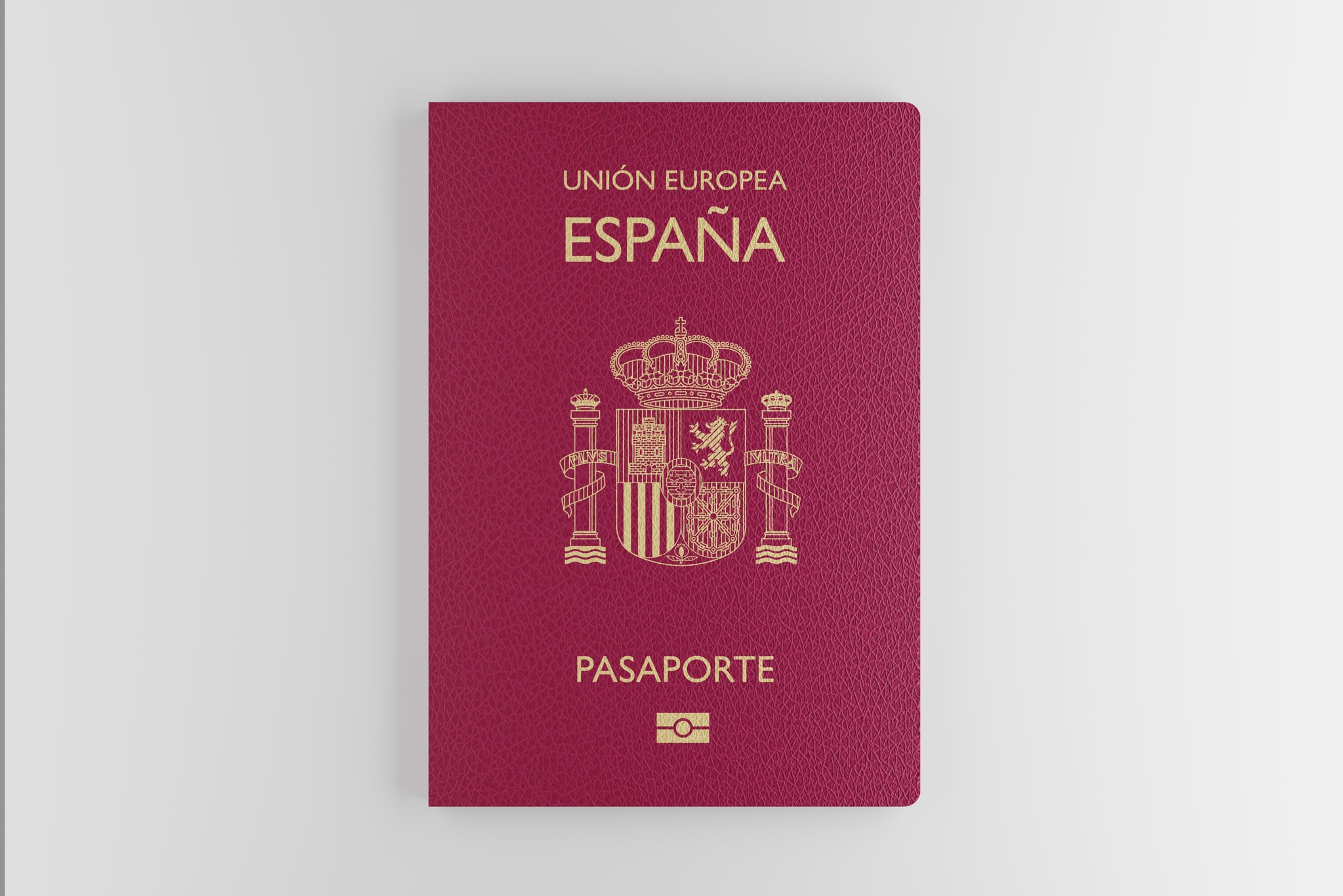
The Spanish passport allows visa-free or visa-on-arrival travel to about 170 countries. Popular destinations include the US, Canada, the UK, Japan, Singapore, the UAE and Australia [15]
What are the common reasons for Spain Digital Nomad Visa rejection for Turkish applicants?
Spain does not publish official rejection statistics for the Digital Nomad Visa, but Turkish applicants may face several common issues related to documentation and income verification.
Insufficient proof of income
Applications may be rejected if income is unclear or falls below the required threshold. To avoid this, applicants should provide bank statements, payslips, employer letters, and tax records covering several months to demonstrate stable earnings.
Incorrect apostille on documents
Criminal record certificates must be properly apostilled and translated into Spanish. Documents without a valid apostille or issued by an unauthorised authority are typically rejected.
Improper translations
All Turkish documents must be translated into Spanish by a sworn translator recognised by Spanish authorities. Translations into English or uncertified translations may not be accepted.
Non-compliance with remote work requirements
Applications may be rejected if the applicant does not meet key work-related criteria. This includes:
- unclear or conditional remote work authorisation in the employment contract;
- insufficient proof of at least 3 months of remote work history;
- failure to show that the employer or client company has been operating for at least 12 months.
Non-compliant health insurance
Insurance must provide comprehensive private coverage in Spain without significant exclusions or waiting periods. Travel insurance policies usually do not meet the visa requirements.
Outdated criminal record certificate
Criminal record certificates must be recent. Documents issued more than six months before submission may be considered invalid.
Living in Spain as a Turkish digital nomad: practical guide after approval
Receiving a Spain Digital Nomad Visa is only the first step. After arrival, Turkish residents need to complete several administrative procedures, organise daily life, and integrate into the local community. The following overview explains the main practical aspects of living in Spain after obtaining the visa.
Turkish communities and consular services
Spain hosts an estimated 10,000–15,000 Turkish citizens, mainly living in Madrid, Barcelona, and Valencia. Turkish communities maintain cultural associations, social networks, and businesses such as grocery stores that sell familiar products including Turkish tea, spices, and traditional desserts.
Turkish citizens can receive assistance from official consular institutions:
- Embassy of Türkiye in Madrid provides passport renewal, notarial services, civil registration, and consular protection.
- Consulate-General of Türkiye in Barcelona offers similar services for residents in Catalonia, Valencia, and the Balearic Islands.
After arriving in Spain, Turkish citizens are advised to register with their consulate, which ensures access to consular support and allows participation in Turkish elections abroad.
Both consulates also organise weekend Turkish language and culture classes for children, helping families maintain cultural ties while integrating into Spanish society.
Cost of living in Spain compared with Türkiye
Living costs in Spain are generally higher than in Türkiye, especially in major cities. In Madrid and Barcelona, the cost of living is usually 30—50% higher than in cities such as Istanbul or Ankara. Monthly rent for a one-bedroom apartment in the city centre typically ranges from €900 to €1,400, while groceries for one person may cost €250—350 per month.
Regional cities such as Valencia, Seville, Málaga, or Bilbao are more affordable. Rent for a similar apartment usually ranges from €600 to 900 per month, making these cities attractive for families seeking lower living costs while benefiting from EU residence.
Although expenses are higher, many Turkish residents value the stability of the euro, which protects income and savings from currency volatility.
Essential administrative steps after moving to Spain
All foreigners relocating to Spain need a NIE, Número de Identidad de Extranjero. It is required for many everyday activities, including opening a bank account, signing a rental contract, paying taxes, registering utilities, or enrolling children in school.
Digital Nomad Visa holders usually receive a NIE automatically during the residence card process. In some cases, it can also be obtained at a local police immigration office.
Turkish digital nomads in Spain must register their address with the local town hall through the padrón municipal system. The registration certificate confirms residence at a specific address and is required for many procedures, including:
- residence permit applications or renewals;
- school enrolment for children;
- access to public services and healthcare.
Registration is free and typically completed within a few days.
Opening a bank account in Spain
A Spanish bank account is often necessary to manage daily expenses and administrative procedures. It allows residents to pay rent, utilities, and taxes by direct debit, receive salary payments, and demonstrate financial stability during residence permit renewals.
Banks commonly used by expatriates include BBVA, Santander, CaixaBank, and Sabadell, which offer broad branch networks and international services. Digital banks such as N26 or Revolut may provide faster account opening but sometimes require Spanish tax residency for full functionality.
Opening a traditional bank account usually takes one to two weeks, while online banks may complete the process within several days.
Language and integration
Spanish is essential for administrative procedures and everyday communication. While English is widely used in major cities and international business environments, knowledge of Spanish greatly facilitates integration.
Several resources help newcomers learn the language:
- courses at Instituto Cervantes, Spain’s official language institution;
- private language schools offering group or individual lessons;
- online learning platforms and municipal language programmes for immigrants.
In some regions, residents may also encounter regional languages, such as Catalan or Basque, particularly in schools and official documents.
Maintaining ties with Türkiye
Digital Nomad Visa holders can travel freely between Spain and Türkiye, provided they meet residence requirements in Spain. Many professionals continue working with Turkish companies or clients remotely.
Turkish citizens living in Spain can also participate in Turkish elections abroad, voting at polling stations organised by Turkish consulates.
Spain Digital Nomad Visa vs other European options for Turkish citizens
Turkish citizens considering relocation to Europe can choose between several residence programmes for remote workers. Spain’s Digital Nomad Visa is often compared with similar options in Portugal, Malta, Hungary, and Italy. The choice usually depends on income level, investment capacity, tax planning, and long-term immigration goals.
Portugal Digital Nomad Visa requires a higher income threshold, making it less accessible for many mid-income remote professionals. Portugal also applies progressive taxation on worldwide income for tax residents.
Hungary White Card is designed for temporary stays and does not lead to permanent residency. The visa is limited in long-term benefits and is better suited for short-term relocation within the EU.
Malta provides a Nomad Residence Permit with an income requirement similar to Spain’s programme, but the permit is typically issued for one year at a time and does not provide a clear pathway to permanent residency.
Italy Digital Nomad Visa. Italy introduced its digital nomad visa more recently, with stricter requirements and higher scrutiny of applicants. While it offers potential for long-term residence, the process can be more complex, and eligibility criteria may be harder to meet compared to Spain’s more accessible framework.
Comparison of European residence options for Turkish citizens

Why trust Immigrant Invest for obtaining a Spain Digital Nomad Visa
Immigrant Invest begins each case with a structured eligibility assessment before the client commits time or financial resources. During the initial consultation, we review key criteria such as income level, bank statement history, employer stability, and remote work conditions.
This early screening helps identify potential issues in advance and reduces the risk of avoidable application refusals.
In addition to preparing the application, we provide legal guidance and operational support throughout the process. Lawyers review complex situations, coordinate document preparation and translations, and help manage deadlines for certificates and apostilles.
After obtaining residency, Turkish digital nomads may also receive assistance in post-approval tasks, including:
- address registration;
- obtaining identification numbers;
- residence permit renewal and replacement;
- opening bank accounts;
- selection of real estate;
- planning tax residency.
Final thoughts on obtaining Spain Digital Nomad Visa for Turkish citizens
- Spain’s Digital Nomad Visa lets Turkish citizens live in Spain while working remotely for non-Spanish employers or clients, and travel across the Schengen Area.
- The minimum income threshold for 2026 is €2,849 per month, or roughly €34,188 per year for a single applicant. If family members are included, the required income increases by €1,069 per month for a spouse or adult dependant and by €357 per month for each child.
- Applicants must prove at least 3 months of remote work history, hold a university degree or document 3 years of professional experience, and show that the employer or the applicant’s business has been operating for at least 12 months.
- Permanent residency becomes possible after 5 years of continuous legal residence, and citizenship is typically available after 10 years, subject to requirements including the DELE A2 and CCSE exams.
Immigrant Invest is a licensed agent for citizenship and residence by investment programs in the EU, the Caribbean, Asia, and the Middle East. Take advantage of our global 15-year expertise — schedule a meeting with our investment programs experts.

 Trusted by 10,000+ investors