










Portugal is attracting a growing number of Indians each year. In 2025 alone, over 25,000 Indian citizens received Portuguese residence permits[1]Source: AIMA — Migration and Asylum Report 2025, while 170 Indian investors were granted Golden Visas[2]Source: ECO — Golden Visas hit a record in 2025.
The Portugal Golden Visa programme offers residence for €250,000+, with the right to relocate to Portugal and travel within the Schengen Area, and may eventually provide a path to Portuguese citizenship.
This article explains how the Portugal Golden Visa works for Indians, including the available investment routes, eligibility requirements, application process, costs, and the impact of India’s LRS rules on transferring funds abroad.
What is the Portugal Golden Visa?
The Portugal Golden Visa, formally the Autorização de Residência para Investimento, ARI[3]Source: AIMA — Residence Permit for Investment, is a residence permit granted to third-country nationals who make an investment of €250,000+ in Portugal. Its legal basis is Article 90-A of Lei n.º 23/2007[4]Source: Diário da República — Lei n.º 23/2007 de 4 de julho.
Investment routes include the following:
- €500,000+ — purchase of investment fund units;
- €500,000+ — contribution to scientific research activities;
- €250,000+ — support of cultural heritage or artistic production;
- €500,000+ — investment in a business, combined with creation of maintenance of at least 5 jobs;
- job creation of at least 10 permanent positions, maintained for at least 5 years, with no minimum investment requirement.
The real estate option was removed in October 2023[5]Source: Diário da República — Lei n.º 56/2023, de 6 de outubro, which means Indians cannot qualify for Portuguese residence through property purchase.
Under the Portugal Golden Visa, the residence permit is granted for 2 years to the investor and eligible family members. To maintain and renew the status, the applicant must keep the investment and spend at least 7 days per year in Portugal.

Trusted by 10,000+ investors
Check your eligibility for the Portugal Golden Visa
7 benefits of the Portugal Golden Visa for Indians
The Portugal Golden Visa offers many practical benefits, including an increased freedom of travel, relocation rights, access to European healthcare and education, and potential path to Portuguese citizenship.
1. Visa-free travel within the Schengen Area
While Indian passport holders need a visa to enter the Schengen Area, a valid Portuguese residence permit allows them to visit all 29 member states freely.
Golden Visa holders can spend up to 90 days within any 180-day period in Schengen countries. However, this limit applies collectively, rather than separately to each destination. Time spent in Portugal does not count towards the permitted duration.
2. Opportunity to move to a safe and peaceful European country
Portugal ranks 7th out of 163 countries and territories in the 2026 Global Peace Index[6]Source: Institute for Economics & Peace — Global Peace Index 2026, ahead of the United Kingdom in 39th place and the United Arab Emirates in 73rd. The index assesses public safety, involvement in conflicts, and militarisation, highlighting Portugal's stability and low levels of violence.
This sense of safety is also reflected in everyday life. According to the latest available Eurostat data, 93% of Portuguese residents reported no crime, violence, or vandalism in their neighbourhoods, compared to 90% across the EU in 2023[7]Source: Eurostat — Neighbourhood crime, violence, or vandalism in 2023.
The country also offers a mild climate, well-developed infrastructure, and a wide range of lifestyle options to suit different preferences, from vibrant city living to a relaxed coastal lifestyle.
Golden Visa holders can relocate to Portugal whenever they wish, but moving permanently is not mandatory.
3. Right to work and run business in Portugal
The Portugal Golden Visa allows Indian investors to work, establish companies, and conduct business activities in Portugal without obtaining a separate work permit.
Investors can seek employment with Portuguese companies, launch their own businesses, or expand existing operations into the European market. Portugal's membership in the European Union also makes it an attractive base for entrepreneurs looking to develop international business connections.
Importantly, Golden Visa holders are not required to work or operate a business to maintain their residence status. They can continue managing their businesses or pursuing professional opportunities in India while retaining the option to work in Portugal.
4. Access to high-quality education and healthcare
Indian families who relocate to Portugal can benefit from public and private education. Children can attend state schools free of charge from ages 6 to 18 or enrol in international institutions offering English-language instruction.
Older students can pursue higher education at internationally recognised institutions, with 5 Portuguese universities ranking among the world's top 500[8]Source: QS TopUniversitites — QS World University Rankings 2027. Children of foreign residents may qualify for the same university admission procedures and tuition fees as Portuguese students, provided they meet the applicable requirements.
Legal residents can access the public healthcare system, the Serviço Nacional de Saúde, SNS. Portugal performs well on key health indicators. For instance, according to the OECD's 2025 report, life expectancy in Portugal stands at 82.5 years, exceeding the organisation's average by 1.4 years. Mortality from treatable conditions is also lower, at 63 deaths per 100,000 people compared to the average of 77[9]Source: OECD — Health at a Glance 2025: Portugal.
Private healthcare is also available for those who prefer additional flexibility, shorter waiting times, or English-speaking specialists.
5. Potential investment returns
The fund investment route offers an opportunity to recover the capital and earn a profit after at least 5 years. Depending on the fund's strategy and performance, potential annual returns may range from 2 to 15%.
However, neither capital repayment nor investment returns are guaranteed. Risks include market fluctuations, limited liquidity, and potential capital losses.
6. Residence rights for the entire family
Indian investors can add their eligible family members to the Portugal Golden Visa applications, including spouse or legally recognised partner, children under 26, and parents of the investor or their spouse.
Each family member obtains a separate Portuguese residence permit and enjoys associated benefits, including the right to live in Portugal and travel within the Schengen Area.
7. Path to Portuguese permanent residence and citizenship
The Portugal Golden Visa provides a pathway to permanent residence and eventually Portuguese citizenship.
Investors may become eligible to apply for permanent residence after 5 years of legal residence. The status offers greater long-term stability and reduces the need to renew temporary residence permits.
Golden Visa holders can apply for Portuguese citizenship by naturalisation. Under the nationality legislation introduced in May 2026[10]Source: Diário da República — Amendment to Law No. 37/81, of October 3rd, Indian nationals must reside in Portugal for at least 10 years to be eligible. They must also satisfy additional requirements, including knowledge of the Portuguese language and culture.
Portuguese citizenship gives its holders the right to live, work, and study across the European Union, as well as travel without visas or on a simplified terms to 180 destinations worldwide.
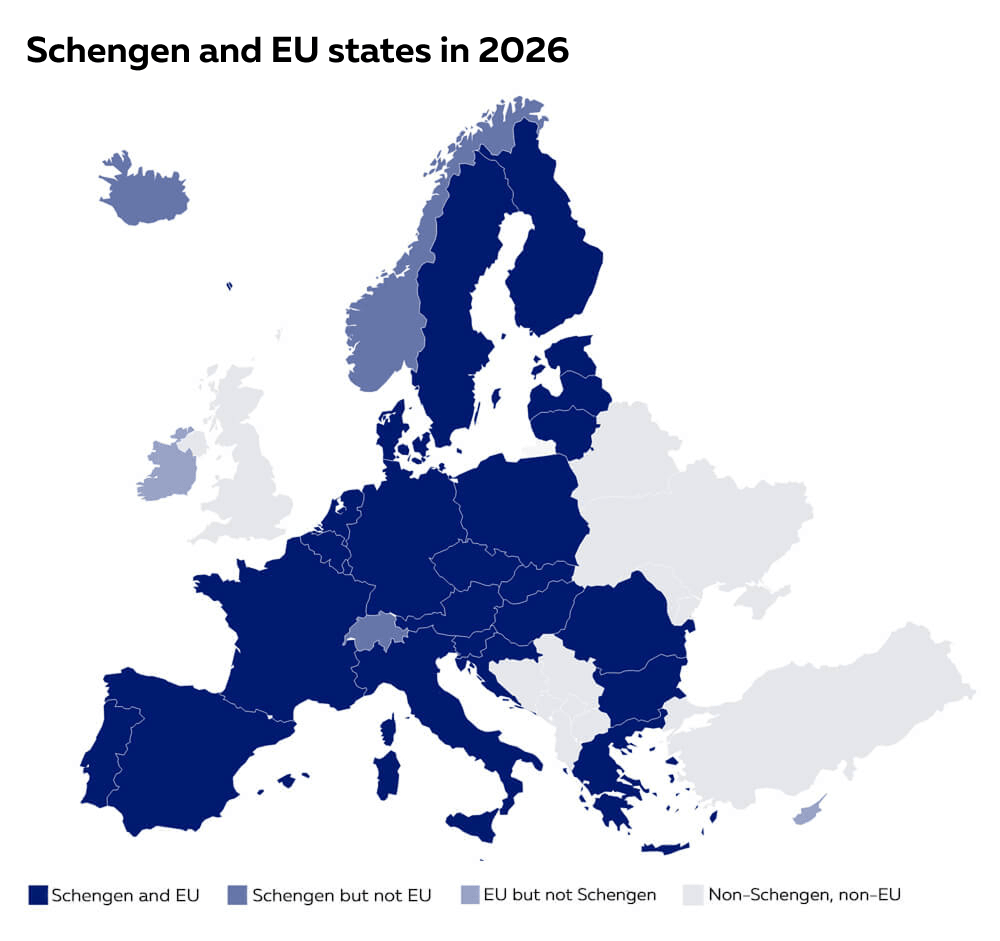
Who can apply for the Portugal Golden Visa
The Portugal Golden Visa is available to non-EU nationals who make an investment and meet the programme’s legal and compliance requirements. For Indian applicants, eligibility depends mainly on citizenship, criminal and financial background, and the source of investment funds.
Indian nationals
Indian citizens qualify as nationals of a third state, the core eligibility condition under the Portugal Golden Visa framework. They must also meet the following requirements:
- have a clean criminal record;
- earn money for investment outside Portugal;
- have no debts in Portugal;
- confirm the legality of their income.
Family members who can be included on the same application are:
- spouse or partner;
- children under 18;
- children aged 18 to 25 — unmarried, financially dependent on the investor, and are studying;
- parents of any age — if under 65, must be financially dependent.
Overseas citizens of India
Whether overseas citizens of India are eligible depends on their citizenship. Nationals of EU and EEA countries and Switzerland cannot apply for the Portugal Golden Visa. The programme also do not accept applications from citizens of the following countries:
- Afghanistan,
- Belarus,
- Cuba,
- Democratic Republic of Congo,
- Ghana,
- Iran,
- Iraq,
- Lebanon,
- Libya,
- Myanmar,
- North Korea,
- Russia,
- Somalia,
- Sudan,
- Syria,
- Venezuela.
Overseas citizens of India can apply for the Portugal Golden Visa if they hold a passport of the country not mentioned above. For example, if they are nationals of the US or the UK.
Portugal Golden Visa investment routes for Indian applicants
The Portugal Golden Visa offers five investment options, each with its own requirements and minimum thresholds. Indian applicants can choose between investment funds, cultural projects, scientific research, business development, and job creation. Real estate purchases no longer qualify under the current programme.
Support of cultural heritage or artistic production — €250,000+
Applicants can contribute at least €250,000 towards preserving Portugal's cultural heritage or supporting artistic production. The minimum amount is reduced by 20% to €200,000 for projects in low-density areas. These are the regions with fewer than 100 inhabitants per square kilometre or GDP per capita below 75% of the national average[11]Source: AIMA — Cultural donation route. The cultural donation route is non-refundable.
Qualifying projects may involve restoring historical monuments, maintaining cultural landmarks, or financing artistic initiatives. Contributions must be made through eligible public institutions, foundations, or other organisations authorised under the programme. The receiving organisation must provide official confirmation that the funds support an approved cultural activity.

Lyle Julien,
Investment programmes expert
Investors should not assume that the reduced €200,000 threshold is always available. It applies only when a qualifying cultural or heritage project in a designated low-density area is open to investor contributions.
Places in such projects are limited. Once the available slots are filled, investors must wait for another eligible project to become available or use the standard €250,000 cultural investment route.
Purchase of fund units — €500,000+
Indians can obtain the Golden Visa by purchasing units in investment funds for at least €500,000. These funds may invest in Portuguese businesses across various sectors, offering the potential to generate income or capital appreciation.
To qualify for the programme, a fund must meet several requirements:
- be established under Portuguese law;
- not invest directly or indirectly in real estate;
- have a minimum maturity of 5 years at the time of investment;
- allocate at least 60% of its investments to companies headquartered in Portugal[12]Source: AIMA — Investment fund route.
Investors can distribute the required €500,000 across several eligible funds rather than committing the entire amount to one. Capital may be returned when the investment matures or is liquidated, depending on the fund's terms and performance. The minimum holding period under the programme is 5 years. However, funds usually have a longer maturity term — 6 to 11 years.
Trusted by 10,000+ investors
Quick guide to Portugal Golden Visa investment funds
Contribution to scientific research activities — €500,000+
Investors qualify by contributing at least €500,000 to scientific research conducted by public or private institutions within Portugal's national scientific and technological system. Eligible activities cover fields such as medicine, engineering, technology, and environmental science. The minimum contribution can be reduced to €400,000 in designated low-density areas[13]Source: AIMA — Scientific support route.
Like cultural contributions, this route is not designed to generate financial returns.
Investment in a business — €500,000+
Entrepreneurs can qualify for the Portugal Golden Visa by investing at least €500,000 in a Portuguese company. They can either establish a new business or increase the share capital of an existing one.
The investment must meet specific employment requirements:
- For a new company: create at least 5 permanent jobs.
- For an existing company: create at least 5 permanent positions or maintain at least 10 jobs, including 5 permanent ones, for a minimum of 3 years[14]Source: AIMA — Business investment route.
A business investment may generate profits, although financial returns depend on the company's performance.
Job creation
Indian applicants can qualify for the Golden Visa by creating at least 10 jobs in Portugal. In this case, no fixed minimum capital contribution is required. The threshold is reduced to 8 jobs if the investment is made in a designated low-density area[15]Source: AIMA — Creation of at least 10 jobs.
Investors must demonstrate that the positions have been created and provide supporting employment contracts and other required documentation.

All-in Portugal Golden Visa costs: what to budget beyond the headline investment
The investment amount is only one part of the cost. Portuguese authorities charge separate fees for application review and residence permit issuance.
Beyond government fees, budgets should also include legal fees for filing and compliance, translation, apostille, and legalisation of Indian documents, and purchase of health insurance for all family members.
Below is an example of the costs associated with a fund investment. While the upfront expenses are higher than those of the cultural option, the applicant can recover the invested capital in the future.
Cost breakdown for the Portugal Golden Visa under the fund option

How India’s RBI Liberalised Remittance Scheme affects the Portugal Golden Visa investment
The RBI’s Liberalised Remittance Scheme, LRS, allows resident individuals to remit up to $250,000 abroad per Indian financial year, or roughly €223,000. The financial year runs from April 1st to March 31st. The limit applies to all permitted LRS transfers combined, so previous remittances reduce the amount still available[16]Source: Reserve Bank of India — Master Direction, Liberalised Remittance Scheme.
Possible scenarios
The investor lives in India and holds money in India. As a general rule, the LRS applies to resident individuals remitting money directly from India. This creates a challenge for the Portugal Golden Visa because most of the investment thresholds exceed the annual limit. Portugal, meanwhile, requires the investment to be fully completed before the Golden Visa application is submitted.
In this case, some Indian investors choose to spread the funding across 2 financial years. For example, they remit part of a €250,000 cultural contribution in March, and the balance after a new LRS allowance becomes available on April 1st. The full contribution is then completed once the required amount is available.
If the reduced cultural contribution threshold applies, the required investment may fall within a single annual LRS limit, depending on the exchange rate and the investor’s remaining allowance for that financial year.
The investor lives in India but holds money abroad. Money and other assets may stay outside India if they were acquired while the investor was a non-resident under the Foreign Exchange Management Act, FEMA[17]Source Government of India — Foreign Exchange Management Act, 1999. This can include money in foreign bank accounts, investments, and overseas property. The same can apply to assets inherited from a person who was a non-resident under FEMA.
If FEMA allows the investor to keep funds abroad, they can be used for the Portugal Golden Visa investment without first transferring to India. In this case, the $250,000 LRS limit does not apply. If only part of the investment is held abroad, any additional amount sent from India is still subject to LRS and other FEMA rules.
The investor is a non-resident in India. The $250,000 LRS limit applies to resident individuals in India, not simply to everyone who holds Indian citizenship or OCI status.
An Indian citizen who lives abroad is treated as a non-resident under FEMA and can generally use funds already held outside India without the LRS limit. The same rule covers an OCI holder living abroad.
If the investor lives outside India but holds funds in India, the $250,000 limit does not apply, and the rules depend mainly on the type of Indian bank account where the money is held. Funds in an NRE, Non-Resident External, account and an FCNR, Foreign Currency Non-Resident, account are usually freely repatriable abroad[18]Source: Reserve Bank of India — Accounts in India by Non-residents.
Funds in an NRO, Non-Resident Ordinary, account follow different rules and eligible amounts can be transferred abroad up to $1 million per Indian financial year, subject to tax and banking requirements[18]Source: Reserve Bank of India — Accounts in India by Non-residents.
To sum up:
- Residents in India holding funds in India are subject to the $250,000 annual LRS limit.
- Residents in India holding funds abroad can use those funds without the limit. Any additional money sent from India falls under LRS.
- Non-residents holding funds abroad are not subject to the $250,000 LRS limit for money already held outside India.
- Non-residents holding funds in India follow repatriation rules instead of LRS. NRE and FCNR funds are usually freely repatriable, while eligible NRO funds can be transferred abroad up to $1 million per Indian financial year.
What investors usually cannot do
1. Combine family members’ LRS limits. Each family member has their own LRS allowance, but if they use it to fund the Golden Visa, they would usually need to acquire a share of the investment themselves, for example fund units. This may not work for a Golden Visa, because the qualifying investment must belong to the main applicant.
2. Transfer more than $250,000 because the Golden Visa requires it. A higher Portuguese investment threshold does not override the RBI’s $250,000 annual LRS limit.
3. Fund a Golden Visa application with an Indian company’s capital. An Indian company may invest abroad, but the resulting asset belongs to the company rather than to the shareholder personally. Since the Golden Visa is granted to an individual, the investment must be attributable to that individual.
4. Accumulate funds in a Portuguese bank account for several years. Under FEMA, unused foreign exchange usually has to be returned to India within 180 days[16]Source: Reserve Bank of India — Master Direction, Liberalised Remittance Scheme. This makes it difficult to save up several years of LRS allowances in Portugal before making the Golden Visa investment.
Lyle Julien,
Investment programmes expert
Before making the first transfer, the investor should confirm the structure with their Indian Authorised Dealer bank. The bank verifies that the remittance comes from funds belonging to the investor, checks the source of funds where required, and collects Form A2 stating the purpose and details of the overseas remittance.
On the Portuguese side, the bank and investment provider conduct their own KYC and source-of-funds checks before accepting the capital transfer. Documentation prepared for the Indian bank does not automatically satisfy Portuguese banking compliance.
Documents required from Indians for the Portugal Golden Visa
Immigrant Invest lawyers help investors in the collection and preparation of all papers including translation and apostille and filling out and submitting applications.
The exact set of documents depends on each investor’s background and circumstances.
Necessary documents checklist
Application completeness
0/11
Early stage. Key documents are still missing; the application cannot be submitted until the file is complete.
From India and, where applicable, from any country where the applicant has lived for more than 1 year. Applicable to the main applicant, spouse, parents, and children aged 16 or over
E.g. bank confirmation of the capital transfer, certificate of ownership of investment fund units, company registration and corporate documents
E.g. bank statements, asset-sale records, or business income documentation
E.g. birth certificates for children or a marriage certificate for a spouse
Get an individual document list compiled for your specific situation, so nothing gets missed before application submission
How to apply for the Portugal Golden Visa from India: step-by-step process
The process of obtaining the Portugal Golden Visa takes at least 12 months. However, delays are possible due to the backlog at AIMA, Agency for Integration, Migration and Asylum, responsible for the residence permits issuance under the programme.
Immigrant Invest accompanies the investor at each step of the process. It is conducted mostly remotely; applicants must travel to Portugal only to submit their biometrics.
1 day
Preliminary Due Diligence
Immigrant Invest first conducts a Due Diligence check to identify any circumstances that could affect the applicant’s eligibility for the programme. If the applicant passes the review, we sign a service agreement, and the preparation process begins.
Immigrant Invest first conducts a Due Diligence check to identify any circumstances that could affect the applicant’s eligibility for the programme. If the applicant passes the review, we sign a service agreement, and the preparation process begins.
2+ weeks
Document preparation
A dedicated lawyer provides the investor with a list of required documents, and then helps arrange certification and translation.
A dedicated lawyer provides the investor with a list of required documents, and then helps arrange certification and translation.
1+ weeks
Obtaining a Portuguese tax number
Immigrant Invest assists the applicant with obtaining a nine-digit Número de Identificação Fiscal, or NIF. It is required to open a Portuguese bank account and is also used for activities such as registering a business, buying or renting property, and dealing with the Portuguese tax system.
Immigrant Invest assists the applicant with obtaining a nine-digit Número de Identificação Fiscal, or NIF. It is required to open a Portuguese bank account and is also used for activities such as registering a business, buying or renting property, and dealing with the Portuguese tax system.
1+ months
Opening a Portuguese bank account
Golden Visa investments must generally be transferred from an account held in the investor’s own name at a Portuguese bank, and the bank provides confirmation of the capital transfer for the application. Immigrant Invest coordinates the account-opening process and activation.
Golden Visa investments must generally be transferred from an account held in the investor’s own name at a Portuguese bank, and the bank provides confirmation of the capital transfer for the application. Immigrant Invest coordinates the account-opening process and activation.
Up to 2 months
Investment
Immigrant Invest helps the applicant choose a suitable option, after which the applicant transfers the required funds. The relevant organisation confirms the investment and provides the documentation needed for the Golden Visa application.
Immigrant Invest helps the applicant choose a suitable option, after which the applicant transfers the required funds. The relevant organisation confirms the investment and provides the documentation needed for the Golden Visa application.
5—6 months
Application processing
Immigrant Invest submits residence application electronically to AIMA. The investor and included family members are then scheduled for a biometric appointment in Portugal.
Immigrant Invest submits residence application electronically to AIMA. The investor and included family members are then scheduled for a biometric appointment in Portugal.
1+ days
Biometrics
All applicants travel to Portugal to provide biometrics and submit original documents. The appointment must be scheduled in advance.
All applicants travel to Portugal to provide biometrics and submit original documents. The appointment must be scheduled in advance.
Within about 6 months after biometrics
Residence cards issuance
AIMA reviews the documents submitted by the investor and family members. Once the application is approved and the relevant government fee is paid, residence cards are issued. They can be collected personally by the investor or by an authorised lawyer.
AIMA reviews the documents submitted by the investor and family members. Once the application is approved and the relevant government fee is paid, residence cards are issued. They can be collected personally by the investor or by an authorised lawyer.
Every 2 years
Residence permit renewal
Residence permits are valid for 2 years and can be renewed for further 2-year periods.
Before each renewal, the investor needs to confirm that they maintain the investment and have spent at least 7 days, consecutive or not, in the first year, and at least 14 days in each subsequent two-year period in Portugal.
Updated supporting documents and AIMA renewal fees may also be required. Immigrant Invest assists with preparing the renewal file and coordinating the procedure.
How to obtain permanent residence and citizenship in Portugal after the Golden Visa
The Portugal Golden Visa can lead to both permanent residence and citizenship, but these are now 2 separate timelines. Permanent residence is available after 5 years of holding temporary residence; Portuguese citizenship requires 10 years of living in the country.
Permanent residence
Golden Visa holders can apply for permanent residence after 5 years of temporary residence in Portugal. During this period, they are not required to live in the country continuously. However, they must maintain the investment and spend at least 7 days during the 1st year and 14 days during each subsequent 2-year period in Portugal. Additionally, they must meet the following requirements:
- prove sufficient means of subsistence;
- have suitable accommodation;
- confirm knowledge of Portuguese at a basic level;
- comply with tax, social security, and criminal-record requirements[19]Diário da República — Granting and renewing of permanent residence permit.
Once permanent residence is granted, the investor is no longer dependent on the Golden Visa investment and can exit it. The status is granted for life and has no fixed expiry date, although the residence card must be renewed every 5 years.
Citizenship
In May 2026, Portugal reformed its nationality law and extended the standard naturalisation period. For Indian citizens, the required period is now 10 years of legal residence, up from 5 years under the previous rules. Citizenship applicants must also meet the following conditions:
- demonstrate sufficient knowledge of Portuguese;
- show basic knowledge of Portuguese culture, history, and civic rights and duties;
- have sufficient means of subsistence;
- pass criminal-record and security checks[20]Source: Diário da República — Law of Nationality, Chapter II.
Permanent residence is not required before applying for citizenship. An investor can obtain permanent residence after 5 years and apply for citizenship later, or continue renewing the Golden Visa until reaching the 10-year threshold.

Visa Requirements for the Portugal Passport
19th
place Travel Freedom Index
19th place Travel Freedom Index
| Country | Visa requirement |
|---|---|
 AfghanistaneTA | eTA |
 AlbaniaVisa-free | Visa-free |
 AlgeriaVisa is required | Visa is required |
 AndorraVisa-free | Visa-free |
 AngolaVisa-free for 30 days | Visa-free for 30 days |
 Antigua & BarbudaVisa-free | Visa-free |
 ArgentinaVisa-free | Visa-free |
 ArmeniaVisa-free | Visa-free |
 AustraliaeTA | eTA |

















































































































































































Overseas Citizen of India status after Portuguese naturalisation
India does not permit dual citizenship, so Indian nationals who acquire Portuguese citizenship must give up their Indian passport. They may, however, apply for Overseas Citizen of India, OCI, status[21]Source: Government of India, Ministry of Home Affairs — Online OCI Service. OCI is not a form of citizenship, but a special status available to eligible foreign nationals of Indian origin, including former Indian nationals.
OCI holders receive extensive rights in India. In particular, they can:
- enter India multiple times without applying for a regular visa;
- stay in India for an indefinite period without obtaining a residence permit;
- live, work, and study in India;
- open accounts in Indian banks and carry out financial transactions;
- buy most types of residential and commercial property.
The Overseas Citizen of India status does not restore full Indian citizenship. OCI holders cannot vote in Indian elections, occupy certain constitutional or public offices, or purchase agricultural land, farmhouses, or plantation property.
Obtaining the OCI status is based on proof of previous Indian citizenship rather than on ancestry alone. The process usually involves the following steps:
- Formally surrendering the Indian passport. The former Indian citizen submits the Indian passport for cancellation through the Indian embassy, consulate, or an authorised service centre in Portugal. The authorities issue a Surrender Certificate confirming that Indian citizenship has been cancelled.
- Submitting the OCI application. The person applies online through the official OCI portal, then attends an appointment at the Embassy of India to provide documents and pay the fee. Typical documents include the Portuguese passport, former Indian passport, Surrender Certificate, and proof of address.
- Undergoing background checks. The Indian authorities review the applicant’s identity, previous citizenship records, and supporting documents and approve the application.
- Receive the OCI card. Once the application is approved, the OCI card is issued through the same Indian diplomatic mission that processed the application. The holder then uses it together with the Portuguese passport when travelling to India[22]Source: Embassy of India, Portugal — Citizenship matters.
Taxation system in Portugal: overview
Portugal taxes individuals differently depending on whether they are tax residents or non-residents. Holding a Golden Visa does not by itself create Portuguese tax residency.
Tax residence rules
A person becomes a Portuguese tax resident if they spend more than 183 days in Portugal within any 12-month period. Tax residency can also arise after a shorter stay if the person has a home in Portugal that they intend to use as their main residence[23]Source: Portuguese Tax and Customs Authority — Tax residency rules.
As Golden Visa holders are subject to only 7 days per year presence requirements, they usually remain Portuguese non-residents for tax purposes.
Portuguese tax residents are taxed on worldwide income, while non-residents are taxed only on Portuguese-source income.
Key taxes in Portugal
Reporting obligations
Indian taxpayers who are resident and ordinarily resident must report foreign assets and foreign income in their Indian income tax return. This can apply even if the Portuguese asset has not generated any income during the year. For a Portugal Golden Visa investor, the main reporting schedules are:
- Schedule FA covers foreign assets and accounts. This can include a Portuguese bank account, investment fund units, shares in a Portuguese company, financial interests in foreign entities and Portuguese property.
- Schedule FSI covers income arising outside India, such as dividends, interest, rental income, capital gains, or distributions from a Portuguese investment. The same income must also be included under the relevant income category in the tax return[24]Source: Government of India, Income Tax Department — ITR-2 User Manual.
It is useful to keep Portuguese bank statements, fund subscription documents, acquisition values, distribution statements, as these records may be needed to complete the Indian return.
India—Portugal double tax treaty
India and Portugal have a Double Taxation Avoidance Agreement, signed in 1998[25]Source: Government of India, Income Tax Department — India–Portugal DTAA. It determines which country may tax different types of income and provides relief when the same income is taxable in both countries.
The treaty covers income such as dividends, interest, capital gains, employment income, business profits and income from property.
How tax is allocated between India and Portugal. Each country first applies its own tax-residence rules. If the investor is a tax resident in only one country, that country will usually tax their worldwide income. The other country may still tax income that arises there.
For example, an Indian tax resident who receives dividends from Portugal may pay Portuguese tax because the income arises in Portugal. India may also tax the dividend as part of the investor’s worldwide income.
If the investor qualifies as a tax resident of both India and Portugal under their domestic laws, the treaty uses a series of tie-breaker tests to determine treaty residence. It considers:
- where the person has a permanent home;
- where personal and economic ties are stronger;
- where the person usually live;
- person’s nationality.
If these tests do not resolve the issue, the Indian and Portuguese tax authorities can determine treaty residence by mutual agreement.
How foreign tax credit works. When an Indian tax resident pays tax in Portugal on income that is also taxable in India, India allows a foreign tax credit to prevent double taxation. The credit is calculated separately for each source of foreign income and is limited to the lower of 2 amounts. If Portugal charges more tax than India, the excess does not normally create an additional credit in India.
For example, an Indian tax resident receives €10,000 in dividends from Portugal. If Portugal withholds €1,500 and India calculates €2,200 of tax on the same income, the investor can claim a €1,500 credit and pay the remaining €700 in India. If the Indian tax is only €1,200, the credit is limited to €1,200. The remaining €300 of Portuguese tax does not reduce Indian tax on unrelated income.
To claim the foreign tax credit, one reports it in Schedule TR of the Indian tax return and submits Form 67 electronically. Form 67 includes details of the foreign income and Portuguese tax paid, supported by evidence such as a tax certificate, withholding statement, or proof of payment[26]Source: Government of India, Income Tax Department — Form 67 User Manual.
IFICI: special tax regime
IFICI, Incentivo Fiscal à Investigação Científica e Inovação[27]Source: Portuguese Tax and Customs Authority — Tax Incentive for Scientific Research and Innovation, succeeded the former NHR regime for new entrants since January 1st, 2024. It is targeted at professionals and researchers who relocate to Portugal to perform scientific research or innovation work.
Beneficiaries of the regime pay a tax at a 20% flat rate on Portuguese-source income from qualifying activities, including:
- scientific research and higher education;
- highly qualified work in innovation and technology;
- employment with certified startups;
- research and development activities;
- selected professions and activities approved under regional rules in Madeira and the Azores.
The IFICI regime applies for up to 10 years, provided the individual becomes a Portuguese tax resident and continues to meet the eligibility conditions.
Best places to live in Portugal
Portugal offers very different lifestyles depending on the region, from major cities with international business communities to quiet coastal areas popular with families and retirees.
Lisbon region
Greater Lisbon is the most convenient choice for internationally mobile families and business owners.
Lisbon has the country’s largest concentration of international schools, private hospitals, professional services, and multinational companies, as well as Portugal’s main international airport. The city also has Portugal’s largest Indian community, making it easier to find Indian restaurants, grocery stores, cultural associations, and religious communities.
Cascais, Estoril, and Oeiras offer a more residential lifestyle while remaining close to the capital.
The main disadvantage is cost, as Lisbon and Cascais are among Portugal’s most expensive housing markets.
Porto and Northern Portugal
Porto suits professionals, entrepreneurs, and families who want a major city with a more relaxed pace than Lisbon. It has an international airport, universities, private healthcare, and a growing technology sector.
Nearby Matosinhos and Vila Nova de Gaia offer more residential options, while Braga appeals to families and younger professionals seeking lower housing costs. The region is generally more affordable than Greater Lisbon, but also cooler and wetter.
Algarve
The Algarve is well suited to families, retirees, and investors whose income does not depend on the local job market. It offers a warm climate, beaches, golf resorts, and a large international community, with English widely spoken in many coastal areas.
Faro provides the strongest year-round infrastructure, while Lagos attracts remote workers and international residents. Vilamoura, Quinta do Lago, and parts of Loulé are more suitable for affluent residents looking for premium housing and services. The main drawbacks are high prices in prime areas and a seasonal economy.
Central Portugal and the Silver Coast
Central Portugal appeals to families and remote workers who want more space and lower housing costs. Coimbra offers major hospitals and a leading university, while Aveiro combines a smaller-city lifestyle with good access to Porto.
The Silver Coast, including Óbidos, Caldas da Rainha, Nazaré, and Peniche, offers coastal living at lower prices than Lisbon or the Algarve. These areas are quieter and less international, with more limited access to international schools and specialist services.
Madeira
Madeira is a strong option for remote entrepreneurs, financially independent residents, and retirees. Funchal offers private healthcare, international schools, modern services, and an airport with connections to mainland Portugal and Europe.
The island is especially attractive for its mild climate, nature, and international community. Its main limitation is geographic isolation, as most travel requires flying.

The Indian community is concentrated mainly in Greater Lisbon, the Algarve, and Porto. In Lisbon, it is especially visible around Martim Moniz and Mouraria, where many Indian shops and restaurants are located
Portugal Golden Visa vs. other residence by investment programmes: which route fits Indian families better?
Portugal is not the only country offering residence by investment. The UAE Golden Visa is a particularly popular option among Indian families.
In Europe, Malta and Latvia offer investment routes with minimum thresholds that fall within the RBI Liberalised Remittance Scheme limit. Other programmes require investment levels similar to Portugal’s or higher.
The table below compares some of the most popular residence by investment programmes across their key features.
Portugal vs. other residence by investment options
Condition
Investment
 Portugal
€250,000+
 UAE
No threshold for a 2-year permit
AED 2+ million for a 10-year permit
 Malta
€100,200+
 Latvia
€50,000+
 Greece
€250,000+
 Italy
€250,000+
 Hungary
€250,000+
 Cyprus
€300,000+
Condition
Processing time
Portugal
12+ months
UAE
2+ months
Malta
6+ months
Latvia
3+ months
Greece
4+ months
Italy
4+ months
Hungary
5+ months
Cyprus
9+ months
Condition
Validity
Portugal
2 years, renewable
UAE
2 or 10 years, renewable
Malta
Indefinite
Latvia
2 or 5 years, renewable
Greece
5 years, renewable
Italy
2 years, renewable
Hungary
10 years, renewable once
Cyprus
Indefinite
Condition
Stay requirement
Portugal
7+ day per year
UAE
None
Malta
None
Latvia
Once every year
Greece
None
Italy
None
Hungary
None
Cyprus
Once every 2 years
Condition
Path to citizenship
Portugal
10 years
UAE
Not applicable
Malta
Not applicable
Latvia
10 years
Greece
7 years
Italy
10 years
Hungary
11 years
Cyprus
8 years
Condition |
|
|
|
|
|
|
|
|
|---|---|---|---|---|---|---|---|---|
Investment | €250,000+ | No threshold for a 2-year permit AED 2+ million for a 10-year permit | €100,200+ | €50,000+ | €250,000+ | €250,000+ | €250,000+ | €300,000+ |
Processing time | 12+ months | 2+ months | 6+ months | 3+ months | 4+ months | 4+ months | 5+ months | 9+ months |
Validity | 2 years, renewable | 2 or 10 years, renewable | Indefinite | 2 or 5 years, renewable | 5 years, renewable | 2 years, renewable | 10 years, renewable once | Indefinite |
Stay requirement | 7+ day per year | None | None | Once every year | None | None | None | Once every 2 years |
Path to citizenship | 10 years | Not applicable | Not applicable | 10 years | 7 years | 10 years | 11 years | 8 years |
Main risks and common mistakes for Indians applying for the Portugal Golden Visa
The main concerns involve outdated route information, investment illiquidity, India-Portugal compliance issues, processing delays, and changes in immigration or nationality rules.
Longer fund holding periods
Although the Golden Visa generally requires the investment to be maintained for at least 5 years, investment funds usually have longer lifecycles. Many funds are structured for around 6—11 years before investors can fully exit and receive their capital back.
LRS limits
Indian residents funding the investment from India are subject to the RBI Liberalised Remittance Scheme limit of $250,000 per financial year. This can make it difficult to fund higher-value Golden Visa routes in a single year.
Documentation and certification issues
Indian documents may need translation, certification, or apostille before they are accepted in Portugal. Problems often arise with criminal record certificates, marriage certificates, birth certificates, and other family documents if they are submitted in the wrong form or are no longer within the required validity period.
Limited capital recovery
Cultural heritage and research routes are non-refundable. Other options, such as investment funds or business investment, may offer a potential return of capital, but this is not guaranteed. The amount ultimately recovered depends on the performance of the fund or company, exit conditions, fees, market conditions, and the ability to sell or redeem the investment.
Processing delays
AIMA has faced significant application backlogs, so processing times and biometric appointments can take longer than expected. Delays may also arise if documents are incomplete, incorrectly prepared or expired, or if the authorities request additional information or evidence. Published timelines should therefore be treated as estimates rather than fixed deadlines.
Changes to immigration and citizenship rules
Portugal has changed both its Golden Visa framework and nationality rules in recent years. The investment routes were materially revised in 2023, and nationality rules changed in 2026. Investors should therefore avoid planning on the assumption that today's immigration or citizenship rules will remain unchanged throughout the entire residence period.
No guaranteed approval of an application
Neither a fund manager, adviser nor immigration company can guarantee Golden Visa approval. These decisions are made by the Portuguese authorities. Immigrant Invest conducts preliminary Due Diligence before the application is submitted, which helps identify potential issues in advance and reduce the risk of delays or refusal.
How Immigrant Invest helps Indians with a Portugal Golden Visa application?
Immigrant Invest is a licensed investment migration company that helps investors and their families obtain Golden Visas in Europe since 2006.
We support Indian investors throughout the Golden Visa process. Our Anti-Money Laundering Officers begin with a preliminary assessment of the applicant’s profile and source of funds. This check helps us keep the rejection rate at 1%. We then coordinate the key stages, including obtaining a Portuguese NIF, opening a bank account, completing the investment, preparing documents, and arranging biometrics.
Our office in Portugal provides clients with dedicated local support throughout the Golden Visa process. We work directly with Portuguese lawyers, tax advisers, banks, and other local partners, ensuring smooth communication and efficient coordination at every stage.
Our support also continues after approval. The same team can assist with residence permit renewals, replacement documents, and other formalities required to maintain Portuguese residence.
Immigrant Invest is also a member of the Investment Migration Council. This membership reflects our commitment to professional standards, ethical practice, and continuous development across investment migration programmes and jurisdictions.
Key takeaways on the Portugal Golden Visa for Indian investors
- Indians can apply for the Portugal Golden Visa as third-country nationals, provided they make a qualifying investment and meet the programme requirements.
- The Portugal Golden Visa offers 5 investment options, with the cultural donation being the most affordable at €250,000+. Other options include purchasing fund units, contributing to scientific research, and investing in a business alongside job creation.
- Indian remittance rules shape the investment structure. Resident investors sending money from India face the LRS limit, which restricts overseas transfers to $250,000, or roughly €223,000, per financial year.
- The Golden Visa does not automatically create tax residency, so Indian investors do not become Portuguese tax residents unless they relocate to Portugal.
- The Portugal Golden Visa offers several advantages to Indian investors, including visa-free travel within the Schengen Area, access to Portuguese healthcare and education, and a potential path to citizenship after 10 years.
Immigrant Invest is a licensed agent for citizenship and residence by investment programs in the EU, the Caribbean, Asia, and the Middle East. Take advantage of our global 15-year expertise — schedule a meeting with our investment programs experts.

 Trusted by 10,000+ investors