







São Tomé and Príncipe is a small Atlantic island nation off West Africa, known for safety, rich nature, and a calm pace of life. Daily life can be affordable, although imported goods and limited infrastructure may create practical inconveniences.
São Tomé and Príncipe may appeal to investors seeking a Plan B, as it offers citizenship by investment with a fast process and no need for permanent relocation.
This guide covers life in São Tomé and Príncipe, including the cost of living, healthcare, schooling, and residency rules.
What is it like to live in São Tomé and Príncipe?
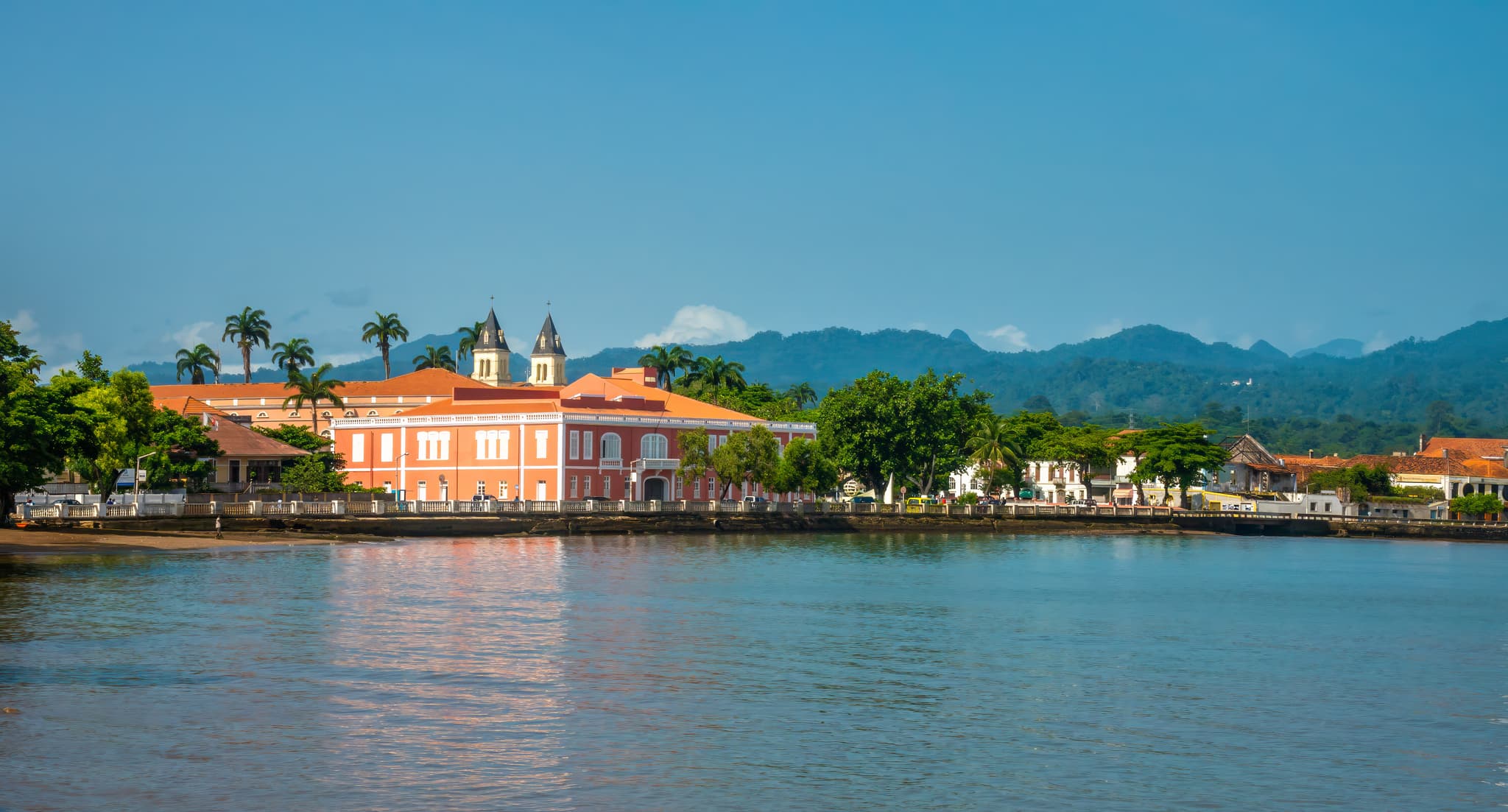
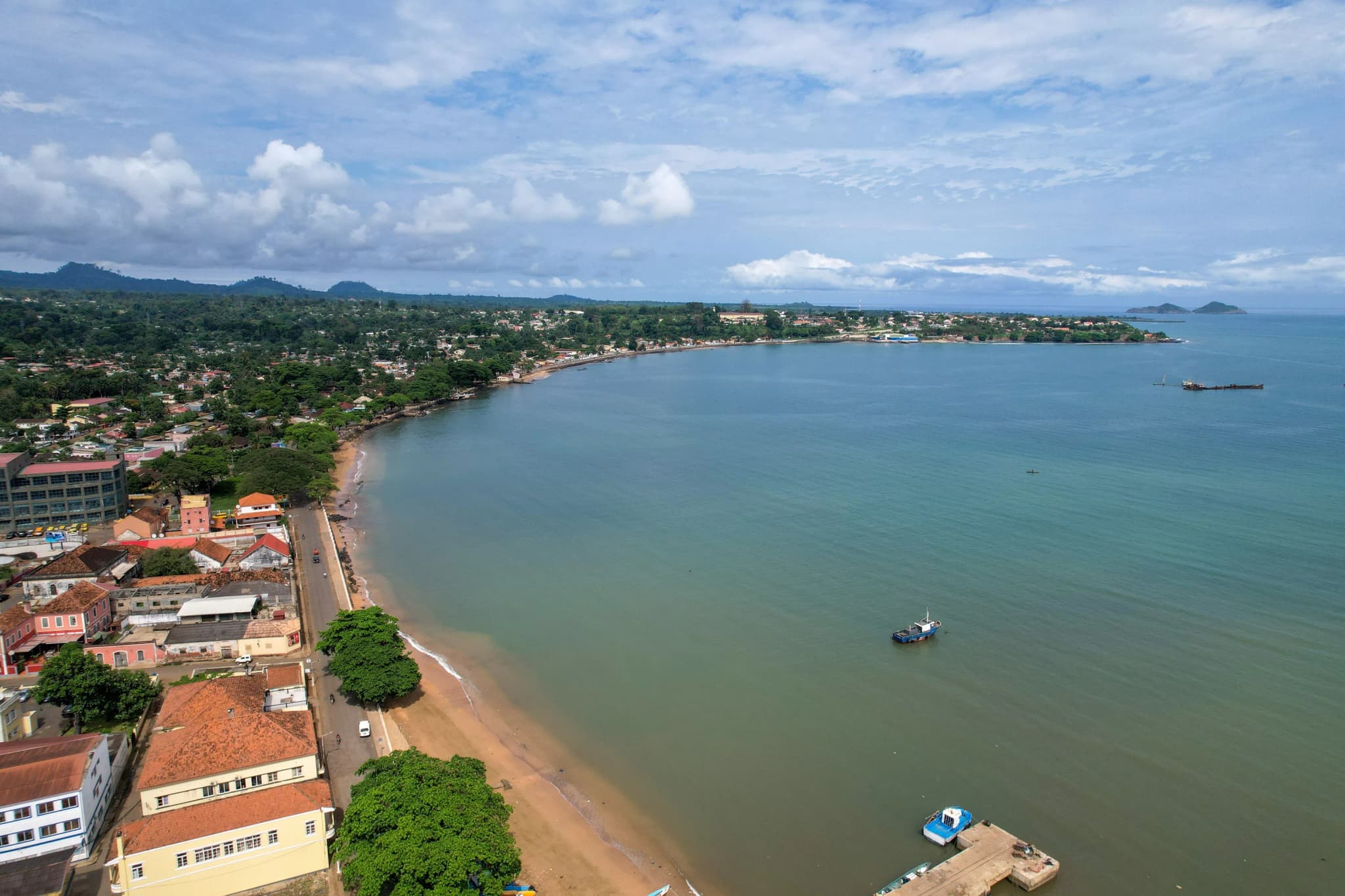
São Tomé and Príncipe is located in the Gulf of Guinea, off the west coast of Africa. It has a population of about 240,000, and its capital is São Tomé[1]Source: World Bank Group — São Tomé and Príncipe. The country is a democratic republic with a stable political system. Its culture blends African and Portuguese traditions, and most of the population is Catholic.
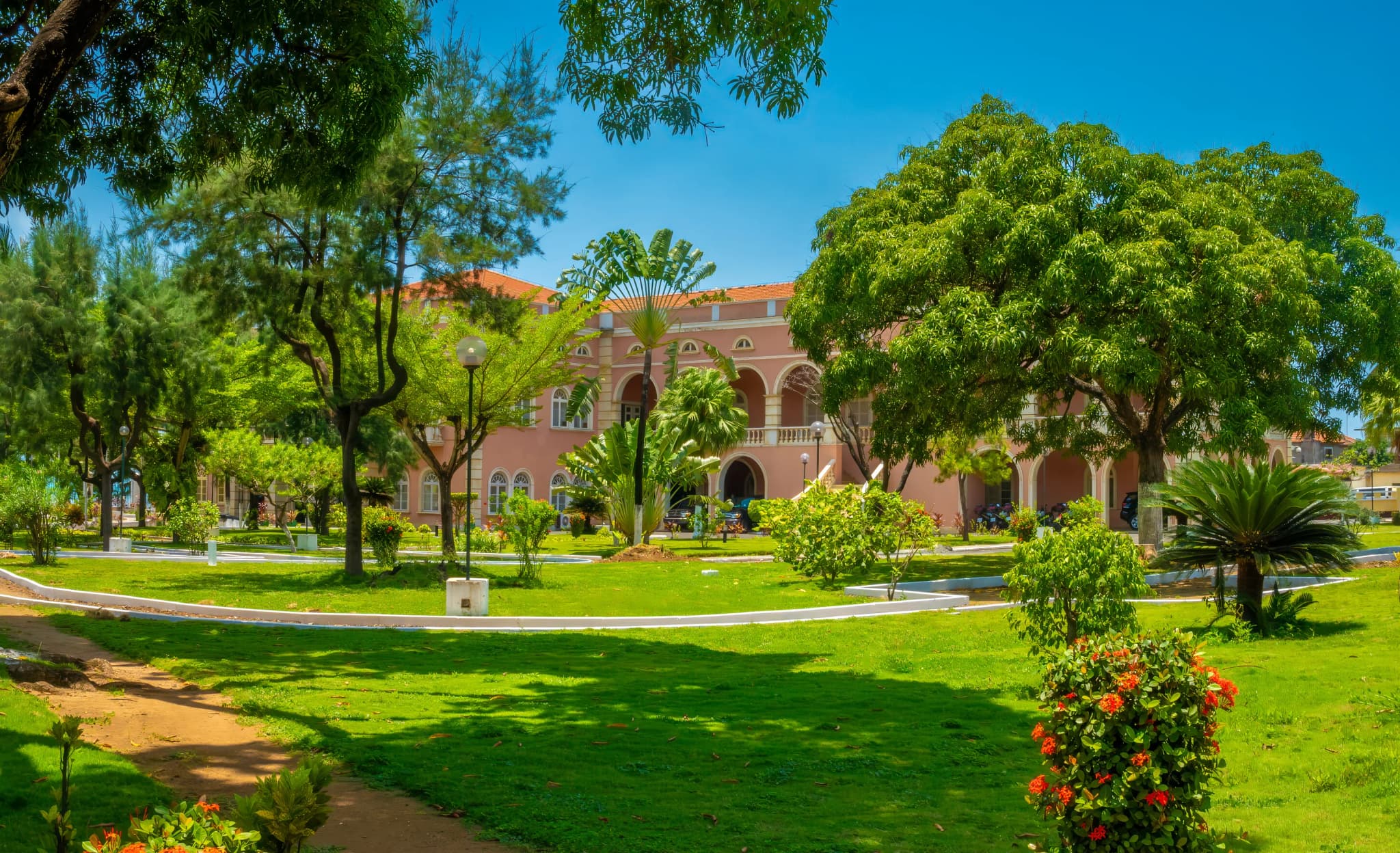
The country is calm, scenic, and closely tied to nature. It has an equatorial climate, mountainous terrain, and dense tropical forests. Príncipe became a UNESCO Biosphere Reserve in 2012, followed by São Tomé island in 2025[2]Source: UNESCO — Ilha de São Tomé. Rainforests, volcanic peaks, quiet beaches, cocoa farms, and historic roças — former Portuguese plantation estates now often used as eco-lodges or farms — give the country a distinctive character.
Daily life may require patience. Power cuts remain common: in August 2025, outages reached up to 12 hours a day after a private power producer stopped generation[3]Source: International Monetary Fund — Democratic Republic of São Tomé and Príncipe. Water supply can be unreliable outside the capital, and many packaged goods, electronics, and appliances arrive by ship, which affects both prices and availability.
São Tomé and Príncipe is less practical for families needing international schools, professionals dependent on fast internet, people relying on local jobs, or anyone with complex healthcare needs. The island works best for retirees with income from abroad, remote workers with stable offshore earnings, slow-travel couples, and citizenship holders using the islands as an occasional base.
Trusted by 10,000+ investors
Check your eligibility for São Tomé and Príncipe citizenship
What does the cost of living in São Tomé and Príncipe look like for expats in 2026?
The cost of living in São Tomé and Príncipe is low, especially for rent, local food, and basic services. For expats with a moderate lifestyle, monthly costs can be up to 70% lower than in the US or the UK, with rent often offering even higher savings.
After-arrival costs
Expats moving to São Tomé and Príncipe should budget not only for monthly living costs but also for several one-off expenses after arrival. These can be significant, especially because many homes are rented unfurnished or partly furnished, and imported household goods are expensive.
The main arrival costs include:
- Security deposit: usually 1 to 3 months’ rent, often paid upfront in cash.
- Household setup: around $2,000 to 5,000 if the rental does not include essential furniture, appliances, kitchenware, bedding, fans, or air-conditioning units.
- Arrival cash buffer: around $2,000 to 3,000 for the first month, before local banking access, card payments, and regular cash withdrawals become reliable.
- Backup power: around $500 to 1,500 for a generator, or less for a basic uninterruptible power supply. This is especially important for remote workers, as electricity cuts remain common and cooling needs rise during the dry season.
- Medication reserve: $100 to 500 or more, depending on the prescription. Expats who take regular medicine should bring a 3- to 6-month supply, as local pharmacy stock can be limited.
Cost of living overview
The national currency of São Tomé and Príncipe is the Dobra, STN. Since 2010, it has been pegged to the Euro at around €1 = STN 24.5[4]Source: Banco Central de S.Tomé e Príncipe. This makes budgeting easier for euro-zone expats. Cash is still essential, as card payments are limited and ATMs may be offline or empty.
A single person can live on around $700—900 per month by shopping at local markets, using moto-taxis, and limiting imported packaged goods. Costs rise quickly at a Western comfort standard. Imported groceries, electronics, appliances, private transport, backup power, and international health insurance can make spending much higher than local averages suggest.
In São Tomé and Príncipe, a 1-bedroom apartment in the city centre averages around $200 per month, while a 3-bedroom unit is about $590[5]Source: Numbeo — Cost of living in Sao Tome And Principe. This is 75—85% lower than in Portugal, the US, and the UK.
Overall, a comfortable lifestyle in São Tomé and Príncipe can cost around 50—70% less than in Portugal, the UK, or the US. The largest savings usually come from housing, schooling, and everyday leisure.
Daily costs in São Tomé and Príncipe depend heavily on lifestyle: local food and basic services are affordable, but imported groceries, private transport, health insurance, electricity, and backup systems can raise the monthly budget quickly.
Comfortable lifestyle monthly budget: São Tomé vs. Portugal, the US, and the UK

Housing and rentals in São Tomé and Príncipe for expats
Renting in São Tomé and Príncipe is less about browsing polished property portals and more about local contacts, patience, and careful checks. The market can work well for expats, but only when they inspect homes in person and confirm practical details before signing.
Rentals are found through local networks
The rental market in São Tomé is informal. Most homes are found through word of mouth, local contacts, Facebook expat groups, or recommendations, rather than professional agencies or property portals. Written contracts exist, but in practice, trust, personal relationships, and clear communication often matter as much as formal legal enforcement.
Upfront payments should be agreed early
Landlords usually ask for 1 to 3 months’ rent as a deposit, often paid in cash. The amount, payment schedule, lease length, included bills, and repair responsibilities should be discussed before signing. Even if the market is informal, it is safer to confirm every key term in writing.
Every property needs an in-person check
The safest approach is to arrive with 2 to 4 weeks of accommodation booked in a guesthouse or short-let. Photos can hide practical problems such as weak water pressure, no backup power, poor airflow, or internet that is available in theory but unusable in daily life.
Before committing, test the water pressure and ask whether the home has a storage tank, as supply can be intermittent. Check if there is a generator or inverter for power cuts, and confirm who pays for fuel or maintenance. Ventilation is also important, especially in apartments, because relying on air conditioning can raise electricity costs significantly.

A house with a pool in or near São Tomé city can rent for $1,300 per month, while luxury villas with 5 bedrooms may reach $6,000 per month. Purchase prices may start at around $300,000
What is the healthcare situation for expats in São Tomé and Príncipe?
Healthcare in São Tomé and Príncipe is manageable for everyday issues, but expats need a clear plan for anything serious. Local care, insurance, evacuation options, and medicine supply should be arranged before moving, not after arrival.
Vaccines and pre-travel health checks are important
Expats moving to São Tomé and Príncipe should treat vaccinations as part of the relocation plan, not as a last-minute travel formality. It is best to speak to a travel-health doctor at least 1 month before departure.
The US Centers for Disease Control and Prevention recommends being up to date on routine vaccines and checking which destination-specific vaccines or medicines may be needed for São Tomé and Príncipe. Depending on the traveller’s age, health, length of stay, and planned activities, a doctor may recommend hepatitis A, hepatitis B, typhoid, rabies, and routine boosters[6]Source: U.S. Department of Health & Human Services — São Tomé and Príncipe.
Yellow fever is not a major local risk in São Tomé and Príncipe, but proof of vaccination may be required for travellers arriving from, or transiting through, countries with yellow fever transmission risk.
Basic care is available, but specialist treatment is limited
São Tomé and Príncipe can cover minor illnesses, basic injuries, and routine emergencies. The main public hospital is Hospital Ayres de Menezes in São Tomé city. However, the country has limited capacity for complex surgery, cardiac care, cancer treatment, high-risk pregnancy, and other specialist cases.
For serious conditions, evacuation is usually necessary. Lisbon is the main destination, with direct flights from São Tomé taking about 7 hours. Angola may be used as a secondary option if evacuation to Portugal is not practical.
Prescription medicine needs advance planning. Pharmacy stock can be unreliable, so expats who take regular medication should bring a 3- to 6-month supply. Longer-term resupply is best arranged through Portugal or a reputable international online pharmacy.
International health insurance is essential
Expats coming to São Tomé and Príncipe should arrange insurance before arrival, not after. A policy should include at least $500,000 in coverage, ideally $1 million, and clearly cover São Tomé and Príncipe, medical evacuation, and direct payment to hospitals.
Malaria remains a year-round risk
In the first quarter of 2025, São Tomé recorded 1,293 malaria cases and no deaths, while Príncipe reported only 3 cases due to active elimination work[7]Source: World Health Organization — São Tomé and Príncipe committed to eliminate malaria. The government is working to eliminate malaria nationwide, with Príncipe already showing strong results thanks to active control measures. The national malaria elimination target has now been moved to 2027.
Medical advice on prevention, mosquito repellent, bed nets, and protective clothing help reduce the risk of mosquito-borne diseases.
What should expat families know about education in São Tomé and Príncipe?
Schooling is one of the main limits for expat families in São Tomé and Príncipe. The country can work for younger children, but it is much harder for families who need an international curriculum or smooth academic continuity.
International curriculum is not available locally
São Tomé and Príncipe does not have international schools in the usual expat sense. There are no IB Diploma schools, British-curriculum schools, or American-curriculum schools. Private schools in São Tomé city generally follow the national curriculum in Portuguese[8]Source: Global Education Monitoring Report — Sao Tome and Principe: non-state actors in education.
The main options for expat families include Escola Portuguesa de São Tomé e Príncipe and Escola Internacional de São Tomé e Príncipe[9]Source: Expat-Quotes — International schools in Sao Tome and Principe. Annual fees are not usually published online, so families need to contact the schools directly before relocating.
For tertiary education, Universidade de São Tomé e Príncipe is the country’s main public university. It was established in 2014 after several predecessor institutions were merged, and now serves as the main centre for higher education and research[10]Source: Universidade de São Tomé e Príncipe — USTP official website.
Portuguese is the main barrier
The language barrier depends heavily on the child’s age. Children under around 8 often adapt to Portuguese immersion within 6 to 12 months. Older children, especially secondary-school students with no Portuguese background, may struggle more because the language gap can affect academic progress.
Families can use accredited UK or US online schools or distance-learning programmes to keep children aligned with a home-country curriculum. This is often the safest option for children who may later return to that education system.
Working in São Tomé and Príncipe as an expat: key nuances
Remote income is the most realistic financial model for expats in São Tomé and Príncipe. Local jobs exist, but salaries are low by Western standards, and most comfortable foreign residents rely on overseas employers, freelance clients, pensions, investments, or employer-backed expat assignments.
Local employment rarely supports an expat lifestyle
Local wages do not match the cost expectations of most expats. Average formal-sector net wages are around $460 per month, and even senior local roles rarely reach $1,000 per month[5]Source: Numbeo — Cost of living in Sao Tome And Principe. For someone trying to maintain a Western comfort standard, relying only on local employment income is usually not realistic.
Foreign nationals may find opportunities in tourism and hospitality, renewable energy, infrastructure, telecoms, NGOs, development organisations, and the cocoa and coffee export sector. However, these roles are usually linked to international organisations, donor-funded projects, or employer-backed expat packages rather than open local hiring.
Remote work is possible, but needs backup
Most financially comfortable expats in São Tomé and Príncipe rely on income from abroad, such as overseas employment, freelance work, consulting, pensions, investments, or expat assignments. Príncipe is less suitable for full-time remote work, as infrastructure is more limited.
4G coverage reaches around 90% of the country, but internet quality still depends on the exact address[11]Source: SAMENA Telecommunications Council — CST launches 4G, covers 90% of Sao Tome and Principe. The actual speed should be tested inside the property before signing a lease, and a backup mobile data plan is strongly recommended.

The island can suit focused work. The calm setting, limited nightlife, and nature nearby can be good for writers, consultants, founders, and freelancers
Culture, language, food, and daily life in São Tomé and Príncipe
Life in São Tomé and Príncipe is calm, informal, and closely tied to nature. The local leve-leve ethos, meaning “take it easy”, shapes the pace of daily life: services may be slow, business hours can feel flexible, and social interaction is relaxed.
For some expats, the unhurried rhythm is the main appeal. For others, it requires patience, as infrastructure is less developed than in major expat hubs and many services remain limited.
Language
Portuguese is the official and the main language for administration, schooling, business, and everyday errands. Around 98% of the population speaks it, so expats can manage most practical tasks with basic to intermediate Portuguese. English is not widely spoken, although it may be used in hotels and tourist areas.
Local creole languages are also part of the country’s identity. Forro is spoken on São Tomé, Angolar mainly on the southwest coast, and Principense on Príncipe. Expats do not usually need these languages for daily life, but learning a few local words can help with social integration.
Food
Food culture centres on fish, seafood, plantain, breadfruit, beans, maize, palm oil, tropical fruit, cocoa, and coffee. Grilled tuna, barracuda, crab, and other fresh seafood are common, while Portuguese influence is visible in many restaurants and home-style dishes.
São Tomé city has a small but improving restaurant scene. It is not a place for a wide international dining variety, but it works well for people who enjoy fresh local ingredients, seafood, Portuguese-style meals, and quiet informal cafés.
Safety
São Tomé and Príncipe is considered one of the safest countries in the region. The Overseas Security Advisory Council, a US Department of State security partnership, rates both crime and terrorism threats as low, and violent crime is rare[12]Source: The Overseas Security Advisory Council — Sao Tome & Principe Country Security Report. The country also ranks among Africa’s lowest for criminality, with a score of 1.70 out of 10 in the Organised Crime Index[13]Source: Africa Organised Crime Index — São Tomé and Príncipe.
The social atmosphere is one of the country’s strongest advantages. Communities are small, people are approachable, and the lack of mass tourism helps preserve a more authentic local rhythm.
Nature and leisure
The best parts of daily life in São Tomé and Príncipe are outdoors: beaches, rainforest hikes, diving, birdwatching, whale watching, cocoa plantations, and visits to historic roças — former plantation estates which are now part of the country’s cultural and agricultural identity.
The climate is tropical and humid, with warm temperatures year-round. Average daytime temperatures usually stay around +25…30°C, with a wetter season and a drier season rather than a sharp winter-summer contrast.
São Tomé city has some bars, restaurants, and occasional cultural events, but nightlife is limited. The islands are not comparable to Bali, Tenerife, or other tourism-heavy destinations. Co-working spaces, international restaurant chains, mass tourism infrastructure, and consistently fast broadband are still limited.

Pico Cão Grande, a steep volcanic rock tower rising above the rainforest, is one of São Tomé and Príncipe’s most famous natural landmarks
Internet
SIM cards are available on arrival, and CST, the main telecom operator in São Tomé and Príncipe, provides 4G coverage reaching around 90% of the population across all districts, with theoretical speeds of up to 150 Mbps. In practice, quality depends heavily on location, building, weather, and network load.
Fixed broadband and fibre are available in parts of São Tomé city, but coverage is inconsistent outside the capital. Príncipe is much more limited, so it is less suitable for people who need reliable full-time remote work.
Banking
Banking in São Tomé and Príncipe is fairly basic, so expats should not expect the same speed or convenience as in larger markets. The main commercial banks include Banco Internacional de São Tomé e Príncipe, BISTP, and the sector is supervised by the Banco Central de São Tomé e Príncipe.
Opening a local bank account usually requires an in-person visit. Expats should be ready to provide a valid passport, proof of address, and, in many cases, proof of employment, pension income, or another source of funds.
International transfers can take time, so it is practical to keep access to an overseas bank account and card. ATMs are available in São Tomé city, but they may be offline or run out of cash. New arrivals should bring €500 to 1,000 in cash to cover the first days or weeks.
What are the best places for expats to live in São Tomé and Príncipe?
The best place to live in São Tomé and Príncipe depends on how much infrastructure an expat needs. The real choice is not between many equal towns, but between the capital, quieter parts of São Tomé island, and the much more remote Príncipe Island.
São Tomé city and Água Grande
São Tomé city and the surrounding Água Grande district are the most practical long-term base for expats. The capital has a population of about 80,000 and concentrates most of the country’s urban life, services, and infrastructure[14]Source: City Population — São Tomé and Príncipe: cities and urban localities. This is where daily life is easiest: the main hospital, private schools, banks, government offices, supermarkets, restaurants, cafés, better internet, and the airport are all located here.
The capital still feels small and slow by international standards. There are no large malls or big-city entertainment districts, but there are local shops, markets, bars, occasional cultural events, and the country’s widest choice of services.
Other areas of São Tomé island
Areas outside the capital, including Mé-Zóchi, Neves, Lembá, and Caué, offer more space, lower costs, quieter surroundings, and easier access to beaches, rainforest, plantations, and village life.
The difference is mostly distance from the capital. Mé-Zóchi is the most practical of these areas because it is closer to São Tomé city and can work for people who want greenery without full isolation. Neves and Lembá suit those who prefer a slower coastal lifestyle. Caué is more remote and better for retreats, weekend stays, or people who deliberately want to live close to nature.
The trade-off is infrastructure. Shops are smaller, restaurants are fewer, internet quality varies, and residents usually travel to São Tomé city for healthcare, banking, paperwork, imported goods, and better connectivity.
Príncipe Island
Príncipe is a separate relocation experience, not just another quiet district. It is more remote, greener, and more pristine, with protected landscapes, beaches, rainforest, eco-lodges, and UNESCO Biosphere Reserve status. It suits people who want isolation, nature, and a very slow pace[15]Source: UNESCO — Island of Principe.
For long-term living, however, Príncipe is the least practical option. Healthcare is basic, schooling options are very limited, shops are simple, internet is weaker, and access to São Tomé city depends on flights or sea connections. It can work for short stays, eco-tourism, retreat-style living, or very independent couples, but it is not ideal for families, full-time remote workers, or anyone who needs reliable services every day.

Football is the main everyday sport in São Tomé, played on local pitches, beaches, and open spaces
Ways to move to São Tomé and Príncipe: residence and citizenship requirements
São Tomé and Príncipe offers three long-term routes for foreigners: temporary residence, permanent residence, and citizenship. Residence is handled by the Serviço de Migração e Fronteiras, SMF, under Law 5/2008 and Decree-Law 11/2009[16]Source: Migration and Borders Service — Legal regime for foreign citizens.
Citizenship by investment is a newer route: São Tomé and Príncipe launched its formal CBI programme in 2025, governed by Decree-Law 07/2025 and administered by a Citizenship Investment Unit headquartered in Dubai, UAE.
Citizenship by investment requirements
The Democratic Republic of São Tomé and Príncipe offers citizenship in as little as 2 months. The programme offers a fully remote route to citizenship with no interview, language, or history tests[17]Source: São Tomé and Príncipe Citizenship by Investment Unit — Official CBI programme website.
Investment requirement. The programme offers only one investment option: a non-refundable contribution to the National Transformation Fund, which supports projects in renewable energy, education, and infrastructure. The minimum investment is $90,000 for a single applicant.
For a family of up to 4 people, the minimum contribution increases to $95,000. Each additional family member adds $5,000.
Family inclusion. An investor can obtain citizenship together with the following family members:
- Spouse — an opposite-sex spouse officially married to the investor, or a de facto partner if the relationship can be proven with documents.
- Children under 18 — biological or legally adopted children.
- Parents and grandparents over 55 — financially dependent on the main applicant.
Eligibility requirement. Applicants need a clean criminal record, a lawful source of funds, medical clearance, and full compliance with AML and KYC checks. Those who hold three or more foreign passports cannot participate in the programme.

Temporary residence requirements
For those who are not ready to commit to citizenship by investment, São Tomé and Príncipe also offers residence options.
Validity. Foreigners who want to live in São Tomé and Príncipe usually start with a residence visa. This visa allows the holder to enter the country and apply for a residence certificate. It is valid for 2 entries and allows a stay of 2 months.
A temporary residence certificate is valid for 1 year from the date of issue and can be renewed for further 1-year periods.
Permit types. A residence visa may be granted for several purposes:
- dependent employment;
- self-employment;
- family reunification;
- study;
- volunteering;
- professional training;
- research activity;
- highly qualified professional activity.
Application process and general documents. The residence certificate is issued by the Serviço de Migração e Fronteiras, SMF, and applications are submitted through the official e-Cidadão portal. To qualify, applicants must hold a valid residence visa, be present in São Tomé and Príncipe, have adequate accommodation, and have no criminal, migration, or entry-ban issues.
Applicants must also prove sufficient means of subsistence for their stay. The required amount is set by the authorities per person and per day, although this requirement may be waived if the applicant proves that food and accommodation are already secured.
Stay requirement. A temporary residence certificate may be affected if the holder is absent from São Tomé and Príncipe for 6 consecutive months or 8 non-consecutive months during the certificate’s validity period, without acceptable reasons.
Permanent residence requirements
Eligibility. To qualify for a permanent residence certificate in São Tomé and Príncipe, the applicant must meet all of the following conditions:
- hold temporary residence for at least 5 consecutive years;
- not have been convicted during the last 5 years of residence in São Tomé and Príncipe of one or more sentences that exceed 1 year of imprisonment, individually or together;
- prove knowledge of Portuguese.
Validity. A permanent residence certificate has no validity limit. However, the residence permit document itself must be renewed every 5 years.
Stay requirement. A permanent residence certificate may be affected if the holder is absent for 24 consecutive months or 30 non-consecutive months within 3 years, without acceptable reasons.
How to move to São Tomé and Príncipe through citizenship by investment step by step
The São Tomé and Príncipe citizenship process usually takes about 2 months, based on Immigrant Invest’s legal practice. The timeline may vary depending on the applicant’s background, the completeness of the documents, Due Diligence results, and the speed of communication with the Citizenship Investment Unit, CIU.
The application is handled remotely through an authorised representative. Immigrant Invest supports the applicant at every stage: checks the case before submission, helps prepare the documents, communicates with the CIU, and coordinates the final delivery of citizenship documents.
1 day
Preliminary Due Diligence
Immigrant Invest runs a confidential preliminary Due Diligence check before the application begins. This step helps identify any issues that could prevent the applicant from qualifying for the selected programme.
Immigrant Invest runs a confidential preliminary Due Diligence check before the application begins. This step helps identify any issues that could prevent the applicant from qualifying for the selected programme.
2+ weeks
Collecting documents and applying for citizenship
An assigned Immigrant Invest lawyer helps the applicant collect the required documents and prepare the citizenship application.
Once the application package is complete, it is sent to the CIU by email. They review the documents and issue an Application Invoice, which the client must pay to proceed.
An assigned Immigrant Invest lawyer helps the applicant collect the required documents and prepare the citizenship application.
Once the application package is complete, it is sent to the CIU by email. They review the documents and issue an Application Invoice, which the client must pay to proceed.
Up to 2 months
Due Diligence
The applicant then undergoes a full Due Diligence check. The authorities verify the applicant’s background, source of funds, and eligibility for the programme.
Based on the Due Diligence results, a recommendation is prepared and submitted to the Ministry and the Cabinet for review. The Cabinet makes the final decision on the application and informs the CIU of the outcome.
After the Cabinet’s review, the CIU sends either an Approval Letter or a Rejection Letter to the authorised representative. The representative then informs the applicant of the decision.
The applicant then undergoes a full Due Diligence check. The authorities verify the applicant’s background, source of funds, and eligibility for the programme.
Based on the Due Diligence results, a recommendation is prepared and submitted to the Ministry and the Cabinet for review. The Cabinet makes the final decision on the application and informs the CIU of the outcome.
After the Cabinet’s review, the CIU sends either an Approval Letter or a Rejection Letter to the authorised representative. The representative then informs the applicant of the decision.
Up to 90 days
Investing
After approval, the applicant makes the required investment and pays the fees for passport issuance and other citizenship documents. These payments must be completed within 90 days.
Once the payment is made, the client sends the CIU proof of payment, together with the Oath of Allegiance forms and passport application forms.
The CIU then starts issuing the Certificate of Registration and applies for the São Tomé and Príncipe national ID card and passport.
After approval, the applicant makes the required investment and pays the fees for passport issuance and other citizenship documents. These payments must be completed within 90 days.
Once the payment is made, the client sends the CIU proof of payment, together with the Oath of Allegiance forms and passport application forms.
The CIU then starts issuing the Certificate of Registration and applies for the São Tomé and Príncipe national ID card and passport.
1+ weeks
Obtaining citizenship
After all formalities are completed, the citizenship documents are delivered to the authorised representative. These documents include the Certificate of Registration, national ID card, and passport. The authorised representative then transfers them to the applicant.
After all formalities are completed, the citizenship documents are delivered to the authorised representative. These documents include the Certificate of Registration, national ID card, and passport. The authorised representative then transfers them to the applicant.
Risks and pitfalls of the São Tomé and Príncipe citizenship by investment programme
The São Tomé and Príncipe citizenship by investment programme offers a fast and remote route to a second passport. However, the programme is still new, and its rules are developing. Before applying, investors should look beyond the headline contribution and assess the full cost, eligibility limits, Due Diligence requirements, and real value of the passport for their goals.
Total cost beyond contribution
The minimum contribution of $90,000—95,000 is not the full São Tomé and Príncipe citizenship by investment programme cost. Applicants also need to cover government and document-related fees.
The additional costs include:
- Application fee — $5,000 per application.
- Passport fee — $350 per applicant.
- Certificate of Registration fee — $250 per applicant.
- National ID card fee — $150 per applicant.
- Document translation and notarisation — $2,000+.
At Immigrant Invest, we calculate the cost of participation individually, based on the number of family members included in the application and the payments required for each applicant.
Changing rules
The São Tomé and Príncipe citizenship by investment programme was launched in 2025 and has already seen material changes. Programme summaries published even a few months ago may already be outdated.
For example, the CIU memorandum of April 2026 paused new applications from people who already hold three or more foreign citizenships. Passport issuance for children over 18 is also temporarily suspended until the new law is formally issued.
Eligibility should be checked against the current CIU position at the time of application. This is especially important when planning family inclusion, document preparation, or payment timing.

Lyle Julien,
Investment programmes expert
The Immigrant Invest team closely monitors every change in the São Tomé and Príncipe citizenship by investment programme. As soon as the CIU updates its rules or procedures, we verify the information and quickly reflect it in client cases. This helps applicants avoid outdated requirements and make decisions based on the current programme conditions.
Source of funds scrutiny
Due Diligence is not a formality. Applicants must prove that their funds come from lawful and documentable sources.
Extra attention is needed if the money comes from several sources, family gifts, cash-heavy businesses, or complex ownership structures. In such cases, the applicant may fail Due Diligence even after paying submission fees. A pre-application compliance review helps assess whether the source of funds can be properly documented.
Processing delays
The São Tomé and Príncipe programme can be fast, but processing times are not guaranteed. Applicants who depend on the passport for visa renewals, business travel, academic deadlines, or other fixed plans may face timing issues if Due Diligence takes longer than expected. Before making any downstream commitments, applicants should build in extra time for possible delays.
How Immigrant Invest can help with São Tomé and Príncipe citizenship
Immigrant Invest is a government-licensed investment migration company with 20 years of experience, 11 offices worldwide, and over 10,000 clients. We help investors and their families obtain residence and citizenship by investment through legal support, compliance checks, and personalised case strategy.
Immigrant Invest holds a licence to work with the São Tomé and Príncipe citizenship by investment programme and guides applicants through the process with the following services:
- Preliminary Due Diligence. A confidential compliance check helps identify possible issues before submission and reduces the risk of rejection after fees are paid.
- Document preparation. Lawyers help collect, check, translate, notarise, and prepare the application package for the CIU.
- Source of funds review. Compliance specialists check whether the client’s funds can be clearly documented, especially in complex cases.
- Application submission. Immigrant Invest prepares and submits the application to the CIU through the official procedure.
- CIU communication. The team handles correspondence with the authorities, tracks updates, and informs the client of any requests or changes.
- Passport and document support. After approval, the team coordinates the issuance and delivery of the Certificate of Registration, national ID card, and passport.
- Post-approval support. Specialists assist with document delivery, future family additions, and related migration planning.
The São Tomé and Príncipe citizenship programme is fast but still relatively new. We help applicants check eligibility early, avoid unofficial offers, understand the full cost, prepare a compliant file, and move through the process with one team responsible for the case.
Key takeaways about living in São Tomé and Príncipe
- Life in São Tomé and Príncipe is calm, informal, and shaped by the local take-it-easy pace.
- The cost of living is over 50—70% lower than in the EU, US, and UK. A realistic monthly budget is $700—1,000 for a solo expat and $2,500—3,500 for a family of four.
- São Tomé and Príncipe is one of Africa’s safest countries, but power supply, healthcare, and general infrastructure remain limited.
- Families who need non-Portuguese secondary education, remote workers who rely on a stable internet, and people with complex health needs may find the country better as a part-time base.
- Portuguese is the official language, so basic Portuguese makes daily life, paperwork, schools, and local services much easier.
- São Tomé and Príncipe offers citizenship by investment starting at $90,000 for a single applicant. The programme provides a fast route to a second passport without residence, language, or integration requirements.
Immigrant Invest is a licensed agent for citizenship and residence by investment programs in the EU, the Caribbean, Asia, and the Middle East. Take advantage of our global 15-year expertise — schedule a meeting with our investment programs experts.

 Trusted by 10,000+ investors