








Portugal offers comparatively affordable higher education while performing well in international rankings with five Portuguese institutions being among the world’s top 500[1]Source: QS World University Rankings 2027.
This guide explains how Portugal’s higher education system operates and presents the country’s leading universities and some of its most popular fields of study.
How the higher education system works in Portugal
Portugal is a member of the European Higher Education Area[2]Source: European Higher Education Area website and follows the Bologna Process[3]Source: European Commission on the Bologna Process.
Degrees
Higher education in Portugal is divided into university and polytechnic education. Both types of institution can award bachelor’s and master’s degrees, while doctorates are awarded by universities. Polytechnic programmes are generally more practical and career-focused; universities place greater emphasis on academic study and research[4]Source: Directorate General for Higher Education.
A bachelor’s degree, or licenciado, normally takes 3—4 years and requires 180—240 ECTS credits. Some regulated professions follow different structures: law is usually a 4-year bachelor’s degree, while medicine is generally a 6-year integrated master’s programme[5]Source: Directorate General for Higher Education.
A master’s degree usually takes 18 months to 2 years or 90—120 ECTS credits and may conclude with a dissertation, project or internship report[6]Source: Directorate General for Higher Education. Integrated master’s programmes in certain fields last 5—6 years in total and require 300—360 ECTS credits[7]Source: Directorate General for Higher Education.
A doctorate usually takes 3—4 years and requires 180—240 ECTS credits and an original research and the public defence of a thesis. Doctoral scholarships are not automatic: students must apply for competitive funding from FCT, universities or research projects[8]Source: Directorate General for Higher Education.
Diploma recognition
The Portuguese higher education system uses the bachelor’s, master’s and doctoral degree structure and the European Credit Transfer and Accumulation System, making Portuguese qualifications easier to compare with those awarded elsewhere in Europe.
Nevertheless, Portuguese academic diplomas are not automatically recognised in every European country[9]Source: Your Europe — Recognition of academic diplomas. Depending on the intended use of the qualification, graduates may need to complete the destination country’s recognition procedure, particularly when entering a regulated profession.
Additional opportunities for students
Some Portuguese universities offer joint and double-degree programmes with overseas partner institutions. Students on these programmes may complete parts of their studies at two universities and receive a qualification from each institution. For example, such an opportunity is provided at Técnico Lisboa[10]Source: Técnico Lisboa — Double Degree.
Many institutions also offer curricular internships, industry projects, career services and opportunities for Erasmus+ traineeships abroad.
Admission
For Portuguese citizens, applications for undergraduate study at public institutions are usually accepted through Portugal’s national admissions competition. At private institutions, applications are made through institution-specific admission procedures.
Portuguese citizenship does not automatically entitle a student to free higher education: public institutions generally charge tuition fees, although eligible students may receive scholarships or other financial support.
EU and EEA nationals, as well as qualifying family members of Portuguese, EU or EEA citizens, are generally not classified as international students. They usually have access to the same general admissions routes and standard public-university tuition arrangements as Portuguese applicants, subject to the applicable academic and entrance requirements.
Non-EU citizens can also apply to Portuguese higher education institutions. Their admission route and tuition fees depend on their nationality, family status, residence history, academic qualifications and the rules of the individual institution.
Legal residence in Portugal does not by itself guarantee access to the domestic admissions regime. However, non-EU nationals who, by January 1st of the application year, have legally and continuously resided in Portugal for more than 2 years are generally excluded from the international-student category. Their children may also qualify when they legally reside with them[11]Source: Directorate General for Higher Education — rules for international students. This rule applies to holders of qualifying Portuguese residence permits, including residence permits obtained by investment.
Other non-EU residents who do not meet these residency conditions normally apply through the special international-student competition and may be charged the tuition fees set by the individual university or polytechnic.

Trusted by 10,000+ investors
Check your eligibility for the Portugal Golden Visa
Cost of higher education in Portugal
Higher education in Portugal combines relatively affordable tuition fees with moderate living costs and a range of scholarship opportunities. The total cost depends on the student’s nationality, chosen university and programme, as well as accommodation and everyday expenses.
Tuition fees
€697 is the statutory maximum annual tuition for public CTeSP programmes, bachelor’s degrees and integrated master’s degrees[12]Sources: Directorate General for Higher Education and University of Lisbon. Other master’s and doctoral tuition is set by the institution.
This tuition applies to Portuguese, EU and EEA citizens, as well as to family members of Portuguese, EU or EEA citizens and Portuguese residents who have lived in the country for at least 2 years.
€3,500—16,500 is the tuition fee for international students, depending on the chosen faculty and programme[13]Source: Data for the University of Porto. However, English-language teaching does not automatically make a programme more expensive.
The cost of higher education in Portugal is considered the least expensive in Europe. For example, the cost of annual tuition at universities in the UK varies from €17,000 to €36,000.
Scholarships
Scholarships based on academic merit are available at several Portuguese universities, although eligibility and award amounts vary. For example, the University of Aveiro reduces undergraduate tuition to €1,000 for eligible international students admitted with a grade of at least 16 out of 20[14]Source: University of Aveiro — International scholarships.
Additional scholarships may be granted to nationals of Community of Portuguese-speaking Countries — Angola, Brazil, Cape Verde, Guinea-Bissau, Equatorial Guinea, Mozambique, East Timor, and São Tomé and Príncipe. Nationals of these states may benefit from a fee reduction of up to 45% of the annual rate or tuition fee[13]Source: Data for the University of Porto.
Trusted by 10,000+ investors
Check your eligibility for São Tomé and Príncipe citizenship
Living expenses
Portuguese university students have the added advantage of being able to save on living expenses while studying, as the cost of living in Portugal is 30—55% lower than in Germany[15]Source: Numbeo — Portugal vs. Germany , France[16]Source: Numbeo — Portugal vs. France, Switzerland[17]Source: Numbeo — Portugal vs. Switzerland, or the UK[18]Source: Numbeo — Portugal vs. UK.
University housing costs €75 per month for scholarship holders and €140—160 per month for other students. A meal at the campus cafeteria is around €2,50—6 per meal[19]Source: Approximate costs for University of Lisbon medical students. Furthermore, students receive discounts on public transport, museums, cinemas, and theatres.

How to prepare for admission to a Portuguese university
Applicants need a secondary-school qualification that gives access to higher education in the country where it was awarded. This may include A-levels, the International Baccalaureate or another recognised national diploma[11]Source: Directorate General for Higher Education — rules for international students.
Universities may also require specific subjects, entrance examinations, and document equivalence.
Institutions may require Portuguese or English proficiency, commonly at B1 or B2 level. For example, the Faculty of Sciences at the University of Lisbon requires B1 Portuguese and may accept applicants who agree to attend a language course[20]University of Lisbon — International Student Applications for 2026/2027.
Some institutions offer preparatory programmes for applicants who need additional academic or language training. For example, NOVA University Lisbon’s SUPERNOVA programme helps students prepare for future bachelor’s or integrated master’s applications[21]Source: SUPERNOVA Official Website.
Enrollment process at a Portuguese university step by step
Admission is competitive and based on academic results, entrance requirements, and available places.
Application periods vary by institution and may be divided into several rounds. After receiving an offer, non-EU students who require a visa must apply for it before travelling to Portugal.
Choose a programme and institution
Check whether the course is accredited, its teaching language, tuition fees, entry requirements and application deadlines.
Check whether the course is accredited, its teaching language, tuition fees, entry requirements and application deadlines.
Identify the correct admission route
Portuguese and EU/EEA applicants usually apply through the national admissions system for public undergraduate programmes. Most non-EU applicants apply directly to the university through its international-student competition.
Portuguese and EU/EEA applicants usually apply through the national admissions system for public undergraduate programmes. Most non-EU applicants apply directly to the university through its international-student competition.
Confirm that your qualification is accepted
You normally need a secondary-school diploma that gives access to higher education in the country where it was awarded. Applicants using the national system may also need Portuguese equivalence for their school qualification and final grade.
The institution may also require particular school subjects, recognised entrance examinations, and proof of Portuguese or English proficiency.
You normally need a secondary-school diploma that gives access to higher education in the country where it was awarded. Applicants using the national system may also need Portuguese equivalence for their school qualification and final grade.
The institution may also require particular school subjects, recognised entrance examinations, and proof of Portuguese or English proficiency.
Prepare the documents
These usually include a passport or identity card, school diploma, transcripts, entrance-exam results, and language certificate. Foreign documents may require legalisation, an apostille, and a certified translation.
These usually include a passport or identity card, school diploma, transcripts, entrance-exam results, and language certificate. Foreign documents may require legalisation, an apostille, and a certified translation.
Submit the application
Apply through the DGES portal if using the national admissions competition, or through the institution’s application portal if applying as an international student. Procedures and deadlines vary by university and programme.
Apply through the DGES portal if using the national admissions competition, or through the institution’s application portal if applying as an international student. Procedures and deadlines vary by university and programme.
Receive and accept the offer
Successful applicants must accept their place within the stated deadline and may need to pay an enrolment fee or tuition deposit.
Successful applicants must accept their place within the stated deadline and may need to pay an enrolment fee or tuition deposit.
Apply for a study visa, if required
Non-EU/EEA/Swiss students normally apply for a Portuguese residence visa after receiving proof of admission. The official processing target is 60 working days, so applications should be submitted early.
Non-EU/EEA/Swiss students normally apply for a Portuguese residence visa after receiving proof of admission. The official processing target is 60 working days, so applications should be submitted early.
Complete enrolment at the university
Submit any final documents, pay the required fees, and register for classes.
Submit any final documents, pay the required fees, and register for classes.
Arrange residence formalities
After arriving, students who require a Portuguese residence permit must complete the relevant procedure with AIMA.
After arriving, students who require a Portuguese residence permit must complete the relevant procedure with AIMA.
Documents required to apply to a Portuguese university
Students usually apply through the institution’s online portal and pay a non-refundable application fee. The amount varies by faculty, programme and admission route. For example, the University of Lisbon charges €60 for a bachelor’s or master’s application[22]Source: University of Lisbon — Terms for Bachelor's Degrees and Terms for Master's Degrees.
Required documents commonly include:
- online application form;
- passport or identity document;
- secondary-school certificate for bachelor’s study, or a degree certificate and academic transcript for postgraduate study;
- evidence of entrance qualifications;
- proof of Portuguese or English proficiency, if required by the programme.
The university may also request a CV, motivation letter, recommendations or an online interview.
Foreign documents may need an apostille or consular legalisation. A certified translation is normally required when the institution does not accept the document’s original language.
Top 5 universities in Portugal
Portugal is home to several internationally recognised universities known for strong teaching, research and global partnerships. The five institutions below stand out for their academic reputation, broad range of programmes and international student communities.
University of Lisbon
The University of Lisbon is Portugal’s largest university and offers programmes across 19 faculties and institutes, including architecture, engineering, law, medicine, sciences, arts, psychology, economics, and social sciences. It has 20 university residences, libraries, and extensive sports facilities.
Research is conducted through 70 FCT-funded research units in fields including robotics, plasma physics, nanotechnology, telecommunications, and molecular medicine.
More than 9,000 international students from over 100 countries study at the university.
University of Porto
The University of Porto was established in 1911 and has roots in educational institutions dating back to the 18th century. It is a comprehensive university offering programmes in architecture, engineering, sciences, medicine, law, business, arts, psychology, and other fields.
The university has three main campuses in Porto and another centre in Vairão. It comprises 14 faculties and a business school, offering 315 degree programmes, and more than 600 courses in total. Its facilities include 45 research units, 18 libraries, 10 halls of residence, and 4 sports centres.
More than 5,100 international students study on degree programmes. Career services, placements and cooperation with employers are available, although practical training depends on the individual course.
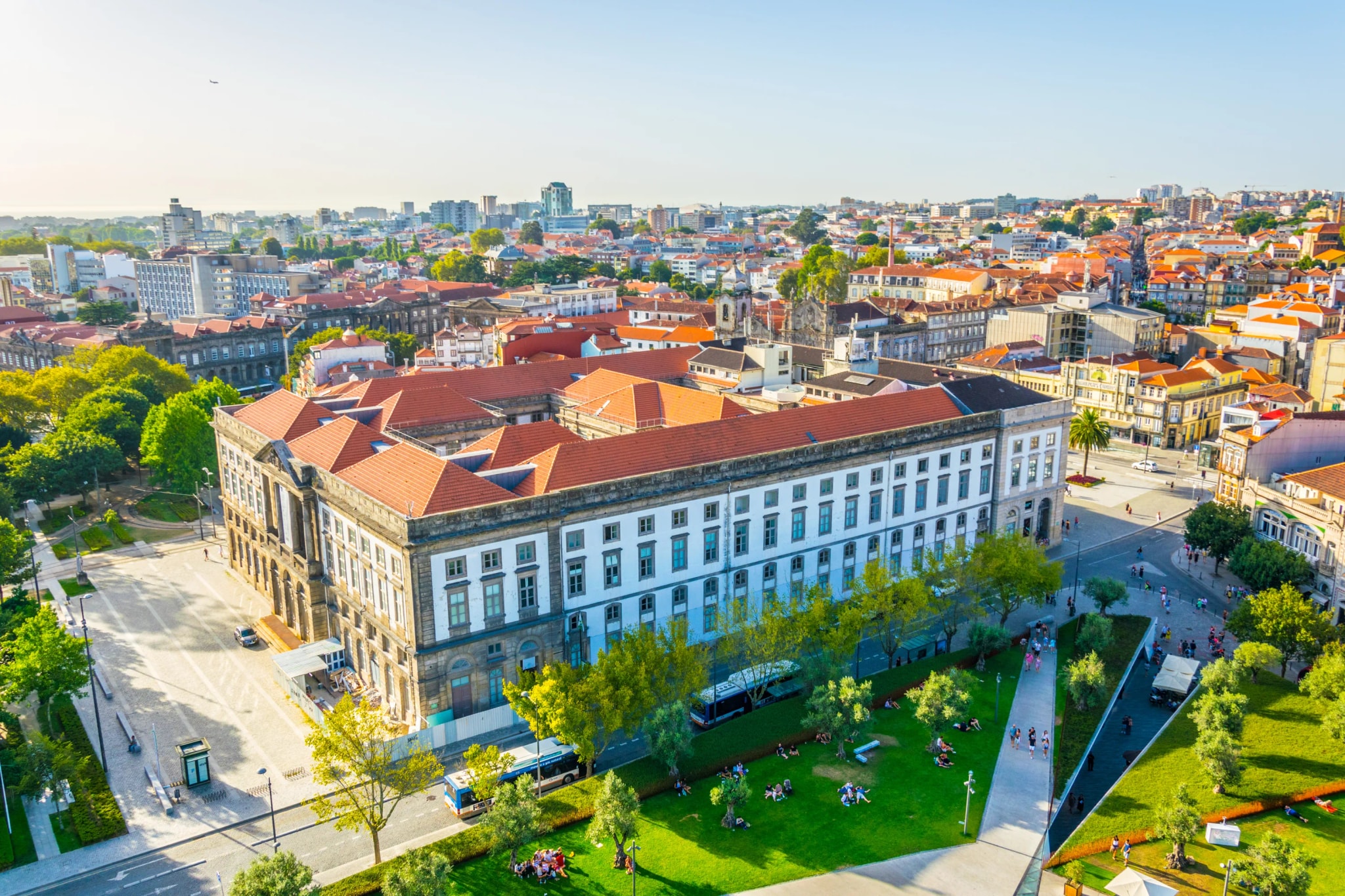
University of Porto cooperates with 500 universities in Europe. Its programs are focused on the rapid adaptation of students in a professional environment
Universidade Nova de Lisboa
NOVA University Lisbon was founded in 1973 and is the youngest of Lisbon’s three public universities. It has 9 schools and offers programmes in science and technology, medicine, public health, law, business, information management, social sciences, humanities and tropical medicine.
In 2024/25, NOVA had approximately 25,300 students, including 5,620 international students from 125 nationalities — around 22% of its student body. The university also maintains more than 1,000 international mobility partnerships.
Major study areas include engineering, computer science, biomedical sciences, economics, business, law, psychology, communication, languages, environmental sciences, anthropology, and political science.
University of Coimbra
The University of Coimbra is one of Europe’s oldest universities. Its historic Alta and Sofia areas are recognised as a UNESCO World Heritage Site, and its Botanical Garden forms part of the university’s heritage.
The university has eight faculties covering law, medicine, humanities, science and technology, pharmacy, economics, psychology and education, and sports science. International students account for about 18% of enrolment.
Major study areas include law, medicine, engineering, economics, psychology, journalism, biochemistry, languages, environmental sciences, geography, design and archaeology.
The university has 4 campuses, 22 libraries, 13 residences, 2 museums, 2 stadiums, a theatre and a botanical garden.

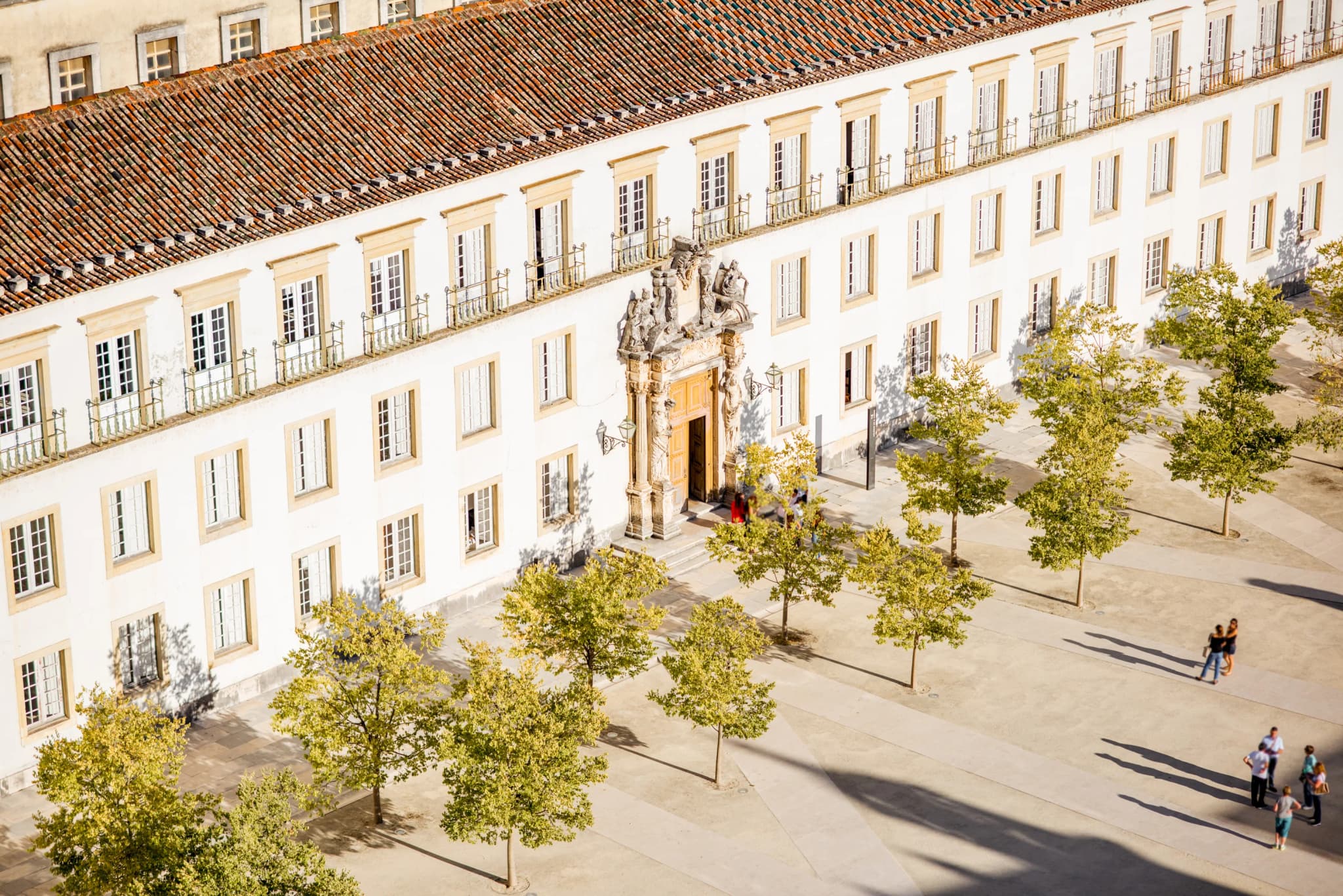
The University of Coimbra is one of the oldest universities in Europe. The main building is located in the former royal palace, a monument of medieval architecture
University of Aveiro
The University of Aveiro is known for interdisciplinary teaching and applied research in science, engineering, health, business, arts and social sciences. Its major study areas include marine sciences, environmental engineering, biomedicine, psychology, economics, industrial design, computer science and languages.
Ocean and environmental research is conducted through programmes and research units such as the Centre for Environmental and Marine Studies. The Marine Sciences degree covers oceanography, marine ecosystems, pollution, renewable energy and coastal-resource management.
The university has around 17,000 students, approximately 12% of whom are international. Its facilities include libraries, 16 residences, sports facilities, canteens, health services, and study spaces.
Leading Portuguese universities: tuition, rankings, and study options

Best universities in Lisbon and Porto
Lisbon and Porto are Portugal’s largest metropolitan areas and its main centres of higher education. Leading institutions include the University of Lisbon and NOVA University Lisbon in the capital, and the University of Porto in the north.
Lisbon is Portugal’s capital and principal financial, commercial, cultural and administrative centre. Porto is the economic centre of northern Portugal, known for its universities, industry, port activity and UNESCO-listed historic centre.
Top universities of Lisbon and Porto: tuition, rankings, and study options
Top university in the Algarve
The Algarve is Portugal’s southernmost region, known for its Atlantic beaches, cliffs, mild climate, and tourism industry. Faro, the regional capital, has an international airport and road connections to Lisbon and Spain.
The University of Algarve is the region’s main public university, with around 10,000 students. It offers programmes in engineering, health, sciences, business, tourism, arts, and social sciences and is a member of the European University of the Seas alliance.
Tuition for international undergraduate students ranges from approximately €1,750 to €4,500 per year, depending on the programme.
Top university in Madeira
Madeira is an autonomous Portuguese archipelago in the Atlantic Ocean. Its economy is strongly based on tourism and services, with additional activity in construction, agriculture, food production, and healthcare.
The University of Madeira is the region’s principal public university. It has six faculties and schools and offers more than 58 programmes in engineering, science, life sciences, health, business, tourism, arts, humanities, and social sciences.
Most undergraduate programmes are taught in Portuguese, although language arrangements vary by course. The tuition fee for international undergraduate students is €2,000 per year.
Top universities in other regions of Portugal
Northern Portugal is an important industrial and educational centre. It has a cooler climate than southern Portugal and is home to universities such as the University of Minho and the University of Trás-os-Montes and Alto Douro.
Central Portugal combines historic cities, mountains and an Atlantic coastline known for surfing. Its leading institutions include the University of Coimbra, the University of Aveiro, and the University of Beira Interior.
Alentejo is known for agriculture, cork production and winemaking. Its principal public university is the University of Évora, which offers programmes across the sciences, humanities, health, and technology.
The Azores are a sparsely populated autonomous archipelago with a mild but changeable Atlantic climate. The University of the Azores has three campuses and offers bachelor’s, master’s and doctoral programmes.
Top Portuguese regional universities: tuition, rankings, and study options
How to get a residence permit to study in Portugal
EU, EEA, and Swiss citizens do not need a student visa. Those remaining in Portugal for more than 3 months must normally obtain an EU registration certificate from the municipality where they live.
Non-EU, EEA, and Swiss nationals can study in Portugal under several residence routes. The best option depends on whether the applicant’s main purpose is education, investment, passive income, remote work or professional activity.
Student residence visa
The residence visa for study, commonly called the D4 visa, is the most direct route for students admitted to a recognised Portuguese university or polytechnic institution.
Applicants generally need to provide:
- confirmation of admission or enrolment;
- proof of accommodation;
- evidence of sufficient financial means;
- valid passport;
- travel or health insurance;
- criminal-record certificate.
After entering Portugal, the student applies to AIMA for a higher-education residence permit. It is generally valid for 3 years and renewable for equal periods; when the programme is shorter, the permit may be issued for its duration.
D7 Passive Income Visa
The D7 visa is intended for financially independent applicants receiving regular income from sources such as pensions, rent, dividends or royalties. The threshold income is:
- €920 per month for the main applicant;
- additional 50%, or €460, for a spouse or dependent adult;
- additional 30%, or €276, for each dependent child.
Applicants are commonly expected to demonstrate funds covering approximately 12 months: €11,040 for one applicant, increased according to the number of dependants.
A D7 resident may enrol at a Portuguese university without changing to a student residence permit because their right of residence is based on independent income.
Digital Nomad Visa
Remote employees, freelancers, and independent professionals whose work is performed for employers or clients outside Portugal can apply through the digital-nomad route. They may study at a Portuguese university while continuing their remote work, although employment remains the main basis for residence.
Applicants generally need to prove average monthly income equal to at least four Portuguese minimum wages. In 2026, this corresponds to approximately €3,680 per month. They must also present evidence of their employment or professional activity, accommodation and sufficient financial resources.
Savings equal to about 12 months of basic living costs may also be requested — €11,040 for one applicant, with additional amounts for accompanying family members.
Golden Visa
Portugal’s Golden Visa, officially the Residence Permit for Investment Activity, allows qualifying non-EU investors and eligible family members to obtain residence. Holders and their dependants may study in Portugal, but they must still meet the university’s admission requirements and pay the applicable tuition fees.
Current qualifying investments include:
- €250,000+ for eligible cultural or artistic projects, subject to possible reductions in certain low-density areas;
- €500,000+ in qualifying non-real-estate investment funds;
- €500,000+ for eligible scientific research;
- establishing a company and creating 10 jobs;
- investing in an existing company while creating or maintaining employment.
Family reunification may cover a spouse or recognised partner, children under 26, and dependent parents.
Key conclusions on studying in Portugal
- Portuguese universities and polytechnics follow the Bologna system, with bachelor’s, master’s and doctoral qualifications based on ECTS credits. Diploma recognition may still require a separate procedure in another country, especially for regulated professions.
- Standard public-university fees generally apply to Portuguese and EU/EEA applicants and some long-term residents, whereas international students may pay €3,500—18,000 or more depending on the programme.
- Admission routes are not uniform. Nationality, family status, residence history and academic qualifications determine whether an applicant uses the national system or an institution’s international-student competition.
- Applicants may need recognised school qualifications, specified subjects, entrance examinations, language proficiency and legalised or translated documents.
- Lisbon and Porto offer the broadest selection of major universities, while regional institutions provide specialised programmes and, in some cases, lower international tuition.
- EU, EEA and Swiss citizens follow registration rules, while other students normally need an appropriate visa and residence permit before or after admission.
Immigrant Invest is a licensed agent for citizenship and residence by investment programs in the EU, the Caribbean, Asia, and the Middle East. Take advantage of our global 15-year expertise — schedule a meeting with our investment programs experts.

 Trusted by 10,000+ investors