







Political uncertainty in the US is now one of the main reasons Americans seek residency abroad. For many, it has become a stronger motive than travel freedom.
Panama has emerged as one of the leading destinations in the Americas. It uses the US dollar, is only a few hours’ flight from major US cities, does not tax foreign-sourced income, and offers accessible residency options such as the Qualified Investor Programme.
This guide outlines the main ways US citizens can settle in Panama and covers the practical issues that shape the move, including cities and regions, schools, healthcare, taxes, banking, pets, and business relocation.
10 reasons why Americans are moving to Panama in 2026
American interest in overseas residency has clearly grown, and North America is now the largest client source market for 40% of investment migration firms worldwide. Panama offers Americans an attractive and accessible second-home option. Below are 10 main reasons why.
1. Top place for expats
Panama ranks 1st in the Expat Insider Survey 2025: a striking 94% of expats say they are happy with their life in Panama. The country held the top spot for the second year in a row, with all five main indices finishing in the top three. Panama stands out for how easy it is to settle in, as well as for housing, work-life balance, personal finances, safety, climate, and overall quality of life[1]Source: Internations — Expat Insider Survey 2025.
2. Dollarised economy
Panama makes everyday finances especially simple for US citizens. The balboa is pegged to the US dollar at a 1:1 rate, and US dollar banknotes are legal tender across the country, so there is no need to deal with exchange-rate swings or routine currency conversion.
Panama also stays on Eastern Standard Time all year, without daylight saving changes, which makes it easier to keep in step with the US East Coast for work and daily communication.
3. US proximity
Tocumen International Airport links Panama to more than 80 cities in the Americas and Europe, and direct flights to the US are frequent. Miami is just over 3 hours away, while New York can be reached in a little over 5 hours.
Return tickets can often be found from roughly $250 to Miami and about $300 to New York, which makes regular travel much easier for people with family, business, or investments in the US.
4. No tax on foreign-source income
Panama operates a territorial tax system, which means only income earned within the country is taxed. Foreign-source income is not subject to Panamanian tax, making it an attractive option for US citizens with international investments, remote income, or business activity abroad.
5. Fast-track pathway to permanent residence
Panama offers a relatively quick route to permanent residence through the Qualified Investor Programme. With a minimum investment of $300,000, applicants can secure permanent residency in as little as 3 months. The programme also allows the inclusion of family members.

Trusted by 10,000+ investors
Check your eligibility for the Panama Golden Visa
6. Widespread English
English is widely used across Panama’s business and service sectors, especially in Panama City and in areas popular with expats. Strong economic ties with the US, along with the lasting influence of the Panama Canal, have made English a common working language in banking, real estate, tourism, and other international industries.
7. Rising expat community
Panama has seen a clear rise in its foreign-born population in recent years. According to the country’s official census data, the number of residents born abroad grew from 140,200 people, or 4.1% of the population, in 2010 to 249,500, or 6.1%, in 2023[2]Source: Panama National Institute of Statistics and Census — Population in the Republic and Foreign-Born Population.
Most foreigners living in Panama come from Colombia, Venezuela, and Nicaragua, with additional sizeable communities from the Dominican Republic, the US, and Costa Rica[3]Source: Panama National Institute of Statistics and Census — Foreign-Born Population in the Republic, by Age Group, Sex, and Country of Birth.
8. Economic strength
Panama has one of the strongest and most stable economies in Latin America, supported by a large services sector, ongoing infrastructure investment, and the Panama Canal, one of the country’s key economic engines.
That strength is reflected in both price stability and income levels. Inflation was just 0.7% in 2024, compared with a regional average of 3.5%[4]Source: World Bank Group — Inflation, consumer prices: Latin America & Caribbean. Additionally, Panama’s GDP per capita reached $19,161 in 2024, well above the regional average of $10,738 and ahead of countries such as Mexico, the Dominican Republic, and Colombia[5]Source: World Bank Group — GDP per capita: Latin America & Caribbean.
9. Sense of security
Panama stands out for its strong safety profile in one key respect: climate risk. The country lies outside the main Atlantic hurricane belt, and NOAA’s historical records show no recorded hurricane landfall in Panama. That gives residents a level of structural security that many parts of the Caribbean, Central America, and the US Gulf Coast cannot offer.
Expats also view life there positively: 90% say they feel safe, compared to a global average of 80%.
10. Tropical climate and year-round outdoor living
Panama offers a stable tropical climate that makes outdoor living possible year-round. Temperatures usually range between +24…30°C, with two clear seasons: a dry period from December to April and a rainy season from May to November. Rainfall during the wet season is short and predictable, often falling in the afternoon rather than throughout the day.
Panama’s location between the Pacific Ocean and the Caribbean Sea creates a rare mix of coastal settings: surf-friendly beaches on the Pacific side and calm, clear Caribbean waters with coral reefs and marine life. From Panama City, Pacific beaches are about 1 to 1.5 hours away by car, while the Caribbean coast can be reached in around 2 hours by car.
The country’s more than 1,400 islands add even more variety. Bocas del Toro and San Blas offer hotels and opportunities to buy villas or beachfront homes. Activities such as snorkelling, sailing, fishing, and diving are part of everyday life.
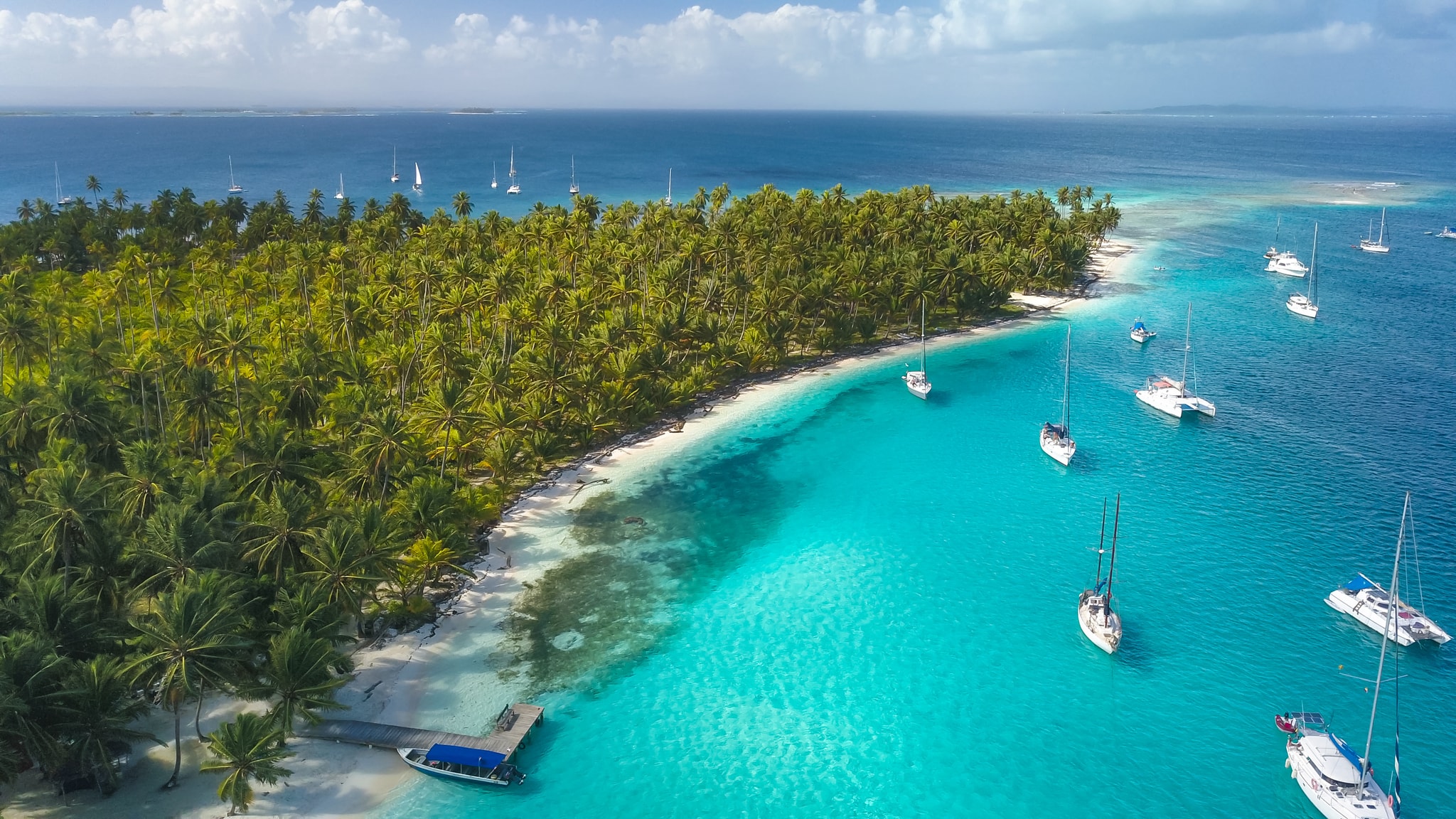
San Blas is a quick escape from fast-paced Panama City, about 1 hour away by plane, known for digital detox, the absence of large hotels, and a focus on simple eco-lodges
What are the ways to move to Panama from the US: residency options
Americans have a wide range of residency options in Panama, spanning standard routes such as education and employment, as well as financially based options like the retirement visa and the Qualified Investor Programme.
Qualified Investor Programme
High-net-worth Americans can move to Panama through a premium route that grants permanent residence from the outset: the Panama Qualified Investor Programme.
The route offers three investment options:
- Real estate — $300,000+.
- Securities — $500,000+.
- Bank deposit — $750,000+.
The chosen asset must be held for at least 5 years. In the case of real estate, the property may also generate rental income and potential capital growth during that period.
Family members may be added to the application. Eligible dependants include a spouse, children under 18, children over 18 who are financially dependent and in full-time education, and financially dependent parents[6]Source: Official Gazette of Panama — Executive Decree No. 193 of October 15th, 2024.

Remote Worker Visa
For remote professionals, Panama offers an easy way to change scenery for a short period without interrupting an international career.
The Short-Stay Remote Worker Visa is available to foreigners who:
- work remotely for a foreign company or on a self-employed basis;
- carry out work whose effects take place outside Panama;
- earn at least $36,000 a year from foreign sources.
The visa is granted for 9 months and may be renewed once for the same period[7]Source: Panama National Migration Service — Requirements for the Short-Stay Visa for Remote Workers.
Pensionado Visa
Panama offers a particularly attractive option for retirees through the Pensionado programme. Applicants receive a permanent permit immediately upon approval[8]Source: Panama National Migration Service — Pensionado Visa.
To qualify, retirees must prove they have a lifetime pension of at least $1,000 per month from a government body, international organisation, or private company. Additional proof of $250 per month is required for each dependent.
Family members can also be included: spouses and children up to 25 years old. Spouses may combine their pensions to meet the minimum requirement of $1,000, while dependent children under 25 may qualify if they are enrolled in full-time studies. However, children are granted only a temporary permit.
Pensioners in Panama enjoy a wide range of discounts, including:
- 50% off entertainment and hotel stays Monday to Thursday, and 30% off Friday to Sunday;
- 25% off airfare;
- 20% off medicines, as well as general and specialist medical consultations;
- 15% off services at private hospitals and clinics[9]Source: Official Gazette of Panama — Decree Law No. 3 of 2008 on Migration.
Friendly Nations Visa
The Friendly Nations Visa is open to citizens of specific countries, including the US, whose states maintain friendly, professional, economic, or investment ties with Panama[10]Source: Panama National Migration Service — Friendly Nations. It offers first a provisional residence permit valid for 2 years. This is a temporary status issued for a fixed period, after which the applicant becomes eligible for permanent residence.
Three routes are available under the Friendly Nations Visa framework:
- Employment. Applicants must provide an employment letter on company letterhead, confirming the position, salary, and repatriation commitment, a Public Registry certificate for the employer company, and the copy of the company’s business licence, or a justification if one is not required.
- Real estate investment. This route is available to applicants who own real estate in Panama worth at least $200,000.
- Fixed-term deposit. Applicants may qualify through a fixed-term deposit of at least $200,000 with a licensed Panamanian bank. The deposit must be free of liens and maintained for at least 3 years.
Family members may also obtain permits. Eligible dependants include a spouse and children aged 18 to 25, provided they are unmarried and enrolled in full-time studies.
Panama financially based residency options compared

Temporary employment
Panama has two residence routes through employment: temporary and permanent. For a temporary employment permit, the main requirements depend on the subcategory:
- Foreigners hired by the national government or autonomous or semi-autonomous entities need proof of a government employment relationship and an employment contract[11]Source: Panama National Migration Service — Requirements for Foreign Personnel Employed by the National Government or Autonomous or Semi-Autonomous Entities.
- Those hired by companies under contract with the government need proof that the employer has an active contract with the state, a work letter stating the position and salary, and proof that the company is duly registered in Panama[12]Source: Panama National Migration Service — Requirements for Foreign Personnel Employed by Companies Under Contract with the Government.
The validity is up to 6 years for the second subcategory. For the first, the official rules only state that the permit is renewable, without specifying a maximum duration.
Permanent employment
For a permanent employment permit, the route begins with a 2-year provisional residency. The rules then depend on the type of employer and role.
Most private-sector employees in Panama fall under labour quotas, which limit the share of foreign staff a company may employ. To qualify, applicants need an approved employment contract and a salary of at least $850 per month[13]Source: Panama National Migration Service — Requirements for Foreign Personnel Hired Within the 10% Ordinary Workforce Quota and the 15% Ordinary Workforce Quota. The provisional permit is granted for 2 years, after which the applicant may apply for permanent residence.
Employees of aviation companies are treated separately and do not fall under the quotas. Applicants need an approved employment contract, a salary of at least $1,000 per month, and a civil aviation licence proving qualification for the role. Their provisional permit is valid for 6 years, after which they may apply for permanent residence[14]Source: Panama National Migration Service — Requirements for Employees of Aviation Companies.
Education
Education in Panama is also available through both temporary and permanent residence routes.
The temporary student residence permit is granted to foreigners enrolled in full-time studies at public or private institutions recognised by the Ministry of Education. The main requirements include proof of enrollment and of sufficient funds to cover study and living costs[15]Source: Panama National Migration Service — Requirements for Temporary Residence for Educational Purposes.
The permit is granted for 1 year and can be renewed for up to 6 years. For renewal, the student must show academic progress. Residency is issued strictly for study purposes, meaning the holder cannot work, except where internships or professional practice are part of the academic programme.
The permanent student residence permit is available to students who have studied in Panama for more than 6 years while holding a student permit. To apply, they must provide a certificate from an educational institution confirming this period of study, proof that they held a student permit for the same period, and proof of domicile in Panama.
The route starts with a provisional permit valid for 2 years, after which the applicant may apply for permanent residence[16]Source: Official Gazette of Panama — Executive Decree No. 3 of February 6th, 2026.
Family reunification
Panama allows foreign nationals to obtain residence on the basis of close family ties through temporary and permanent pathways. In both cases, the eligible family members are the same:
- spouse;
- minor children;
- children aged 18 to 25 if they study full time and remain financially dependent;
- dependent parents.
The temporary family reunification route applies to family members of a temporary resident. The main requirements are proof of the family relationship and proof that the sponsor has sufficient financial means of at least $850 per month. The permit is granted for 1 year and may be renewed annually for up to 6 years[17]Source: Panama National Migration Service — Temporary Residence Permit for Family Reunification.
The permanent family-based route applies where the sponsoring family member holds a 2-year provisional permit, permanent residence, or Panamanian citizenship.
The main requirements vary by subcategory, but generally include:
- proof of the family relationship;
- proof of domicile;
- proof that the sponsor has sufficient income of at least $1,000 per month plus $100 for each additional dependant[18]Source: Panama National Migration Service — Requirements for Dependents of Permanent Residents.
Panama also has a separate permanent family-based category: a foreign national may apply if they have one or more Panamanian children aged at least 5[19]Source: Panama National Migration Service — Requirements for Foreign Nationals with Panamanian Children.
The permanent residency route starts with a 2-year provisional permit and then leads to permanent residence.
What are the best cities and regions for Americans to live in Panama?
Panama City is the best and most comfortable option for Americans, offering the highest level of infrastructure, healthcare, schools, and international lifestyle. Several alternative regions also provide attractive living conditions depending on preferences.
Panama City
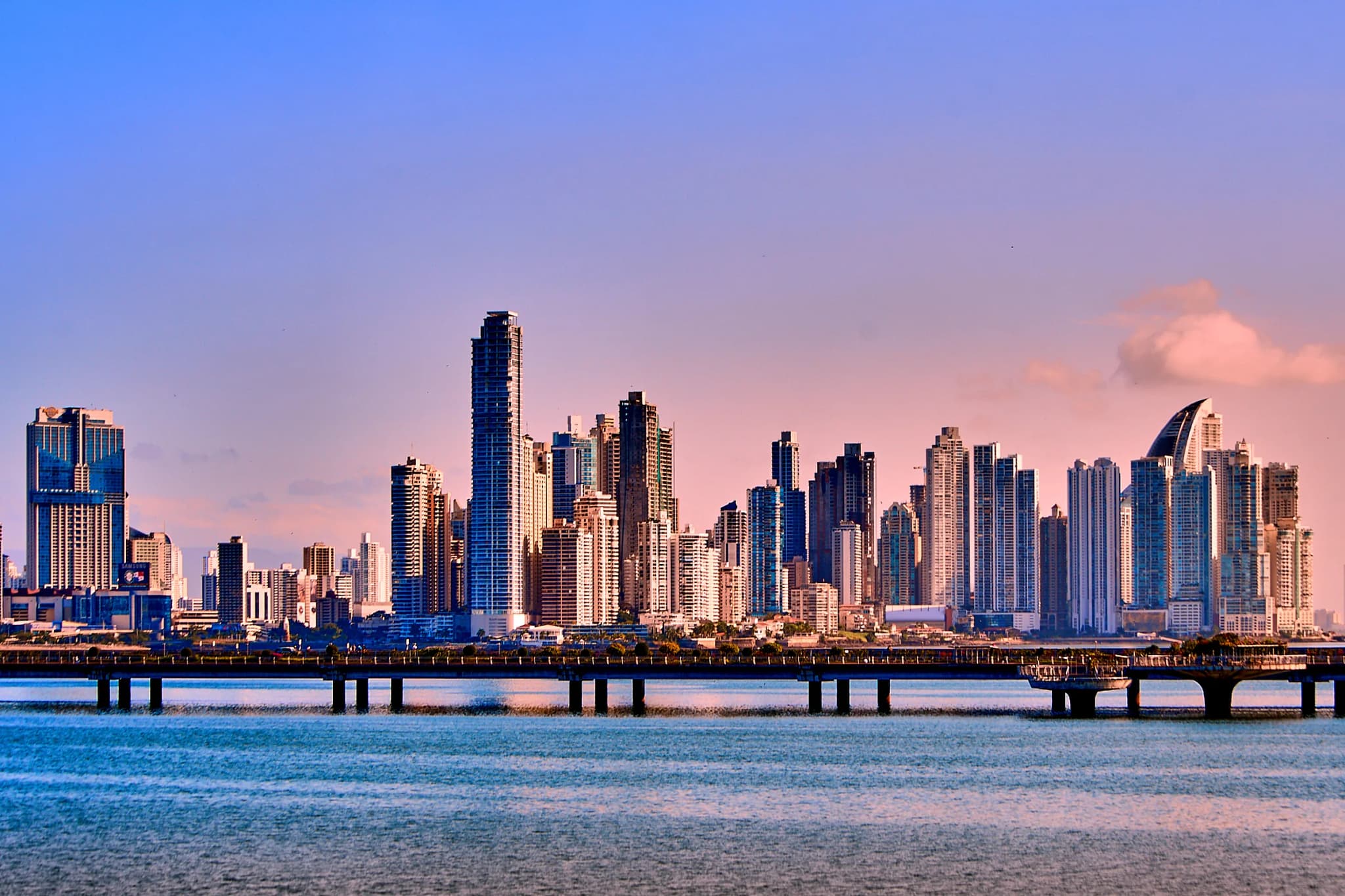
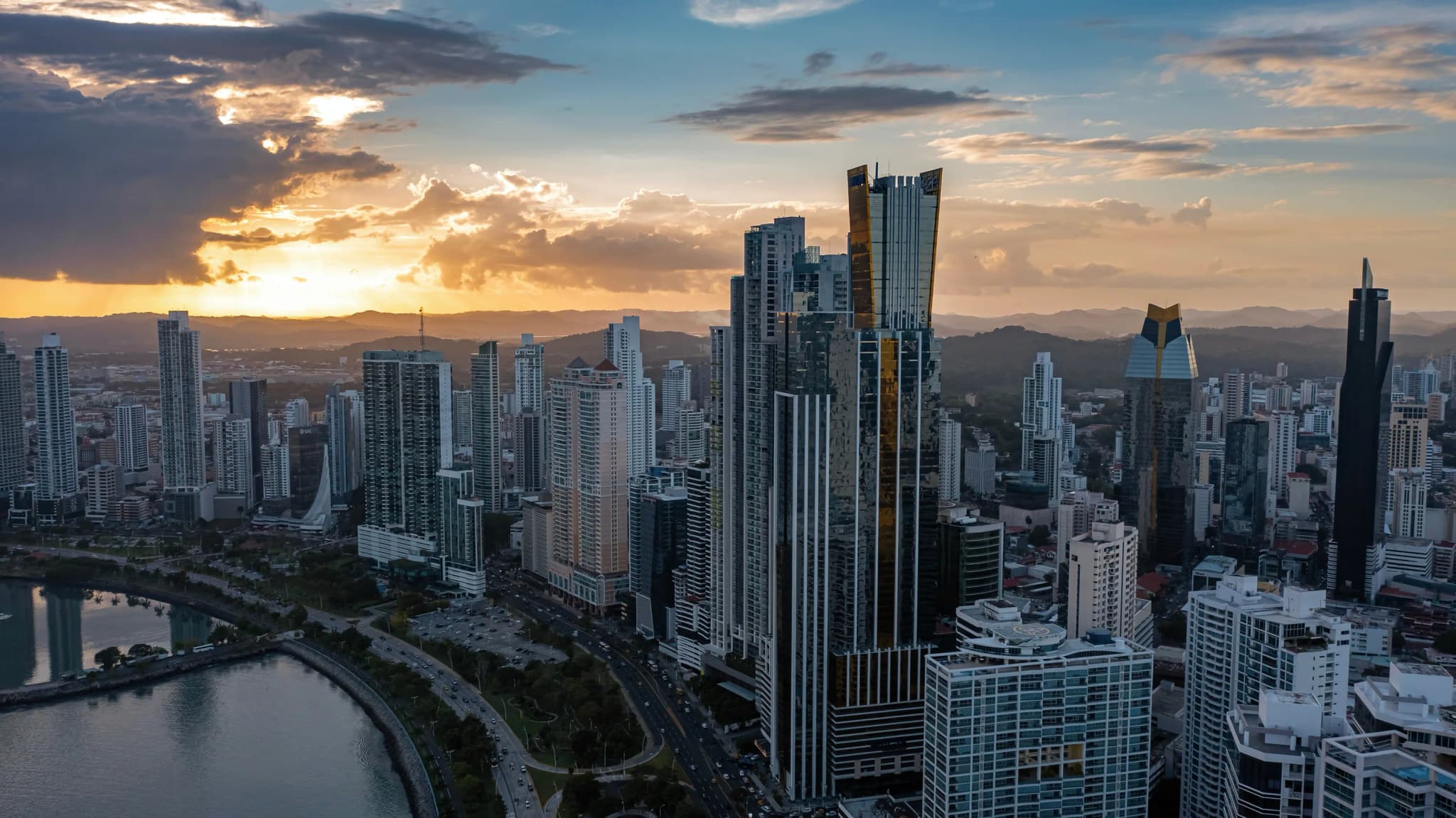
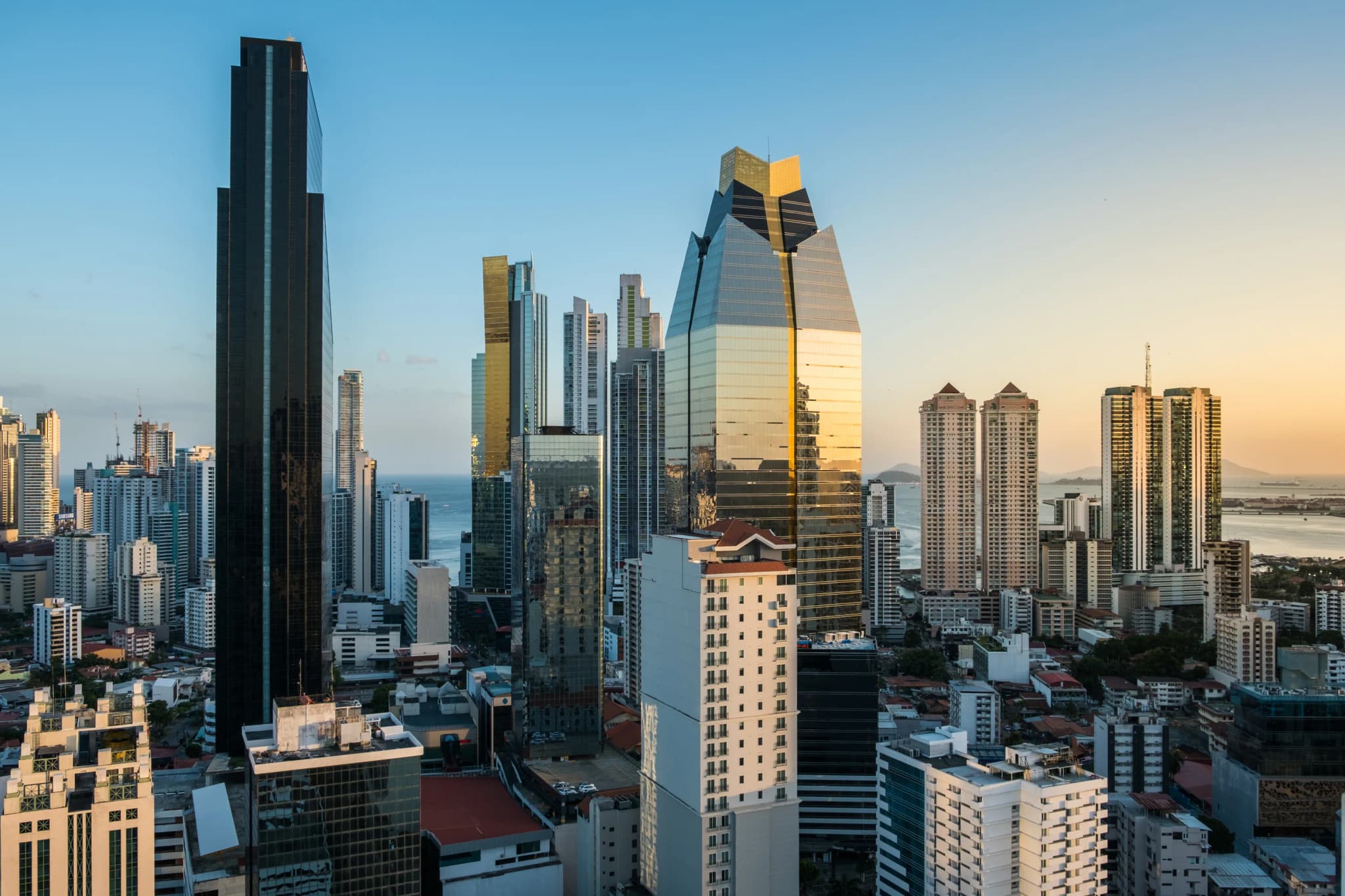
Panama City feels familiar to Americans at first glance. It is a modern, high-rise city built along the Pacific, with a skyline that often gets compared to Miami, yet daily life tends to move at a more relaxed, flexible pace.
The city revolves around a mix of work, outdoor living, and socialising. Business activity is concentrated in areas like Punta Paitilla, Costa del Este, and Obarrio, where many international companies operate. At the same time, life is not defined by work alone. Because of the climate, people spend a lot of time outdoors, walking along the Cinta Costera, meeting for coffee, or heading to the gym or the coast.
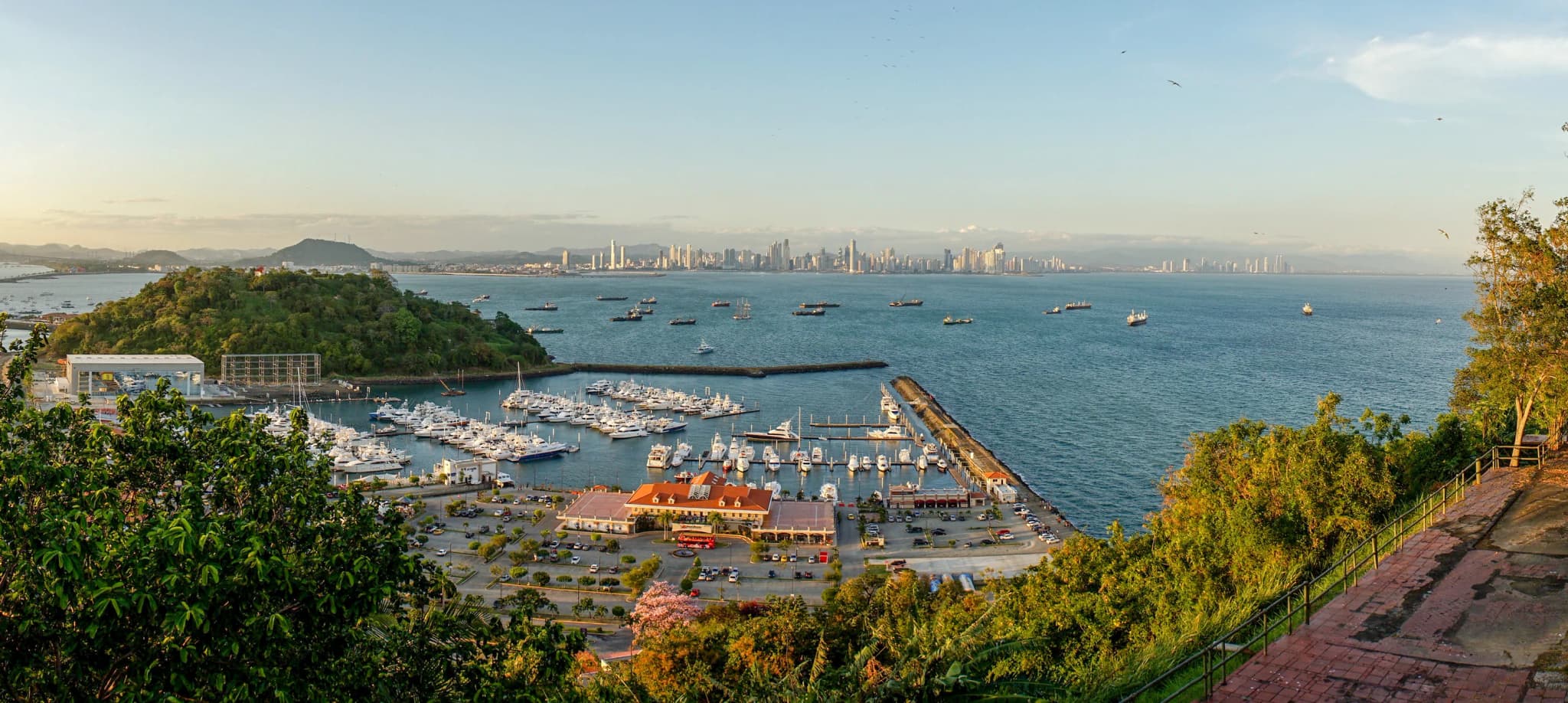
Evenings usually revolve around dining out, rooftop bars, or casual meetups, especially in areas like Casco Viejo, which blends colonial architecture with restaurants, bars, and cultural venues. Weekends often shift away from the city itself: many residents leave for beaches, islands, or mountain areas within 1 to 2 hours.
Neighbourhood choice shapes the experience significantly:
- Punta Pacifica and Paitilla — modern high-rise living, popular with expats.
- Costa del Este — suburban feel with international schools and offices.
- San Francisco — more local, mixed residential and social scene.
- Casco Viejo — historic, walkable, more lifestyle-driven, but less practical for everyday living.
- Clayton — greener, quieter, closer to nature and former Canal Zone areas.
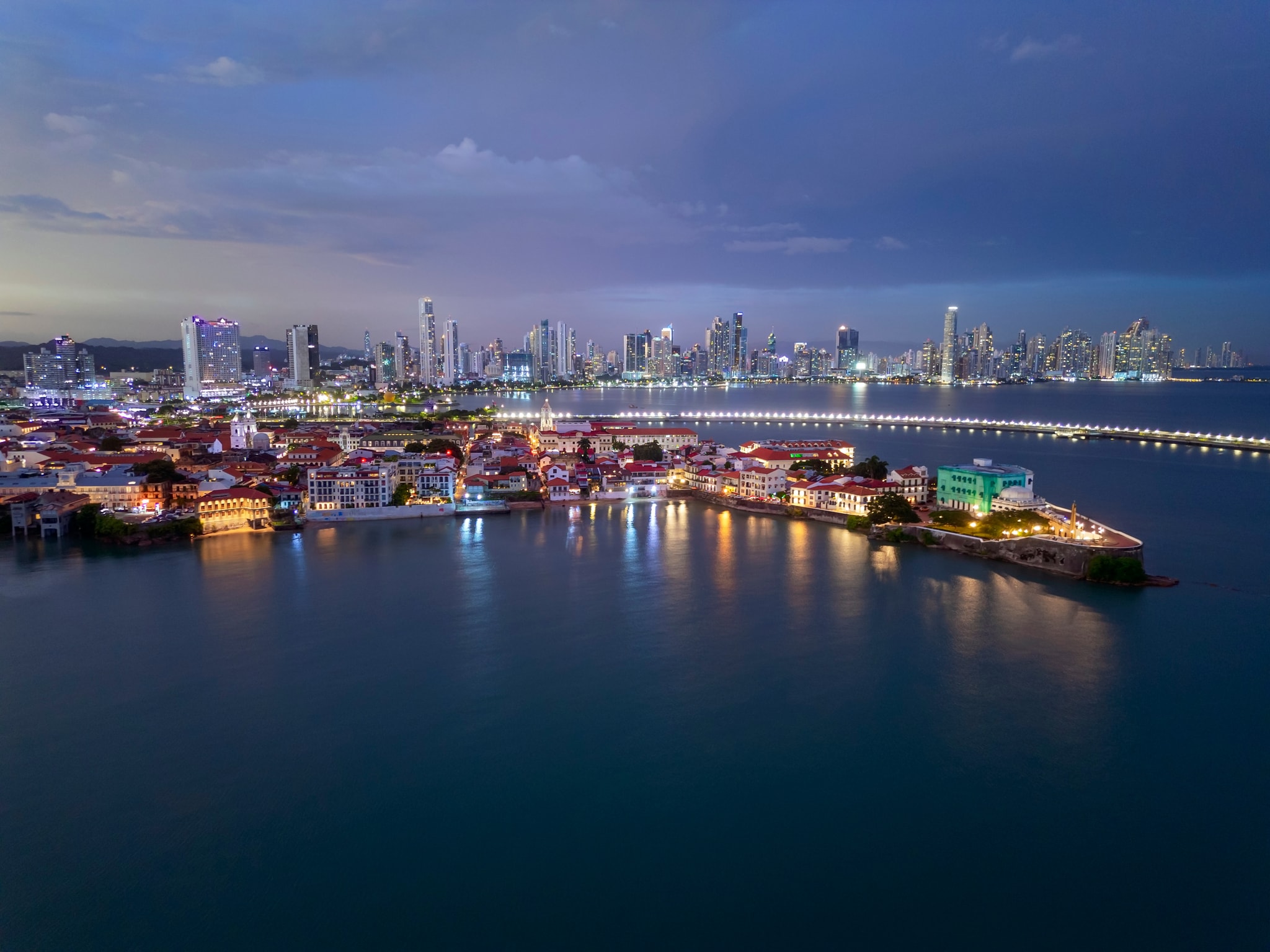
Panama City has two sides: the historic Casco Viejo and the modern city, giving US expats two worlds — modern living and a charming setting shaped by culture
Boquete
Boquete is not a city in the usual sense, but a small mountain town in the province of Chiriquí. It is located near the border with Costa Rica, with a population of around 25,000. Set at about 1,200 metres above sea level, it enjoys a mild climate year-round, with temperatures ranging from +16…24°C.
Boquete hosts one of the largest English-speaking expat communities in Panama relative to its size. The US Embassy conducts consular outreach visits several times a year, providing services such as passport renewals, notarisation, and general assistance to US citizens[20]Source: U.S. Embassy in Panama — U.S. Citizen Consular Services in Boquete.
For families, Academia Internacional Boquete offers English-language education, while the town also has private and public clinics. More advanced services are available in David, about 35 minutes away, or in Panama City, around 5 hours by road or a short flight.
Life in Boquete centres around coffee, farming, and a close-knit social routine. Locals commonly work in agriculture, tourism, and small local businesses, while daily life moves at a slower pace, shaped by cafés, markets, and the outdoors. Popular activities include hiking to Volcán Barú, visiting waterfalls, horse riding, rafting, and spending time in the town’s small but high-quality wellness spots.
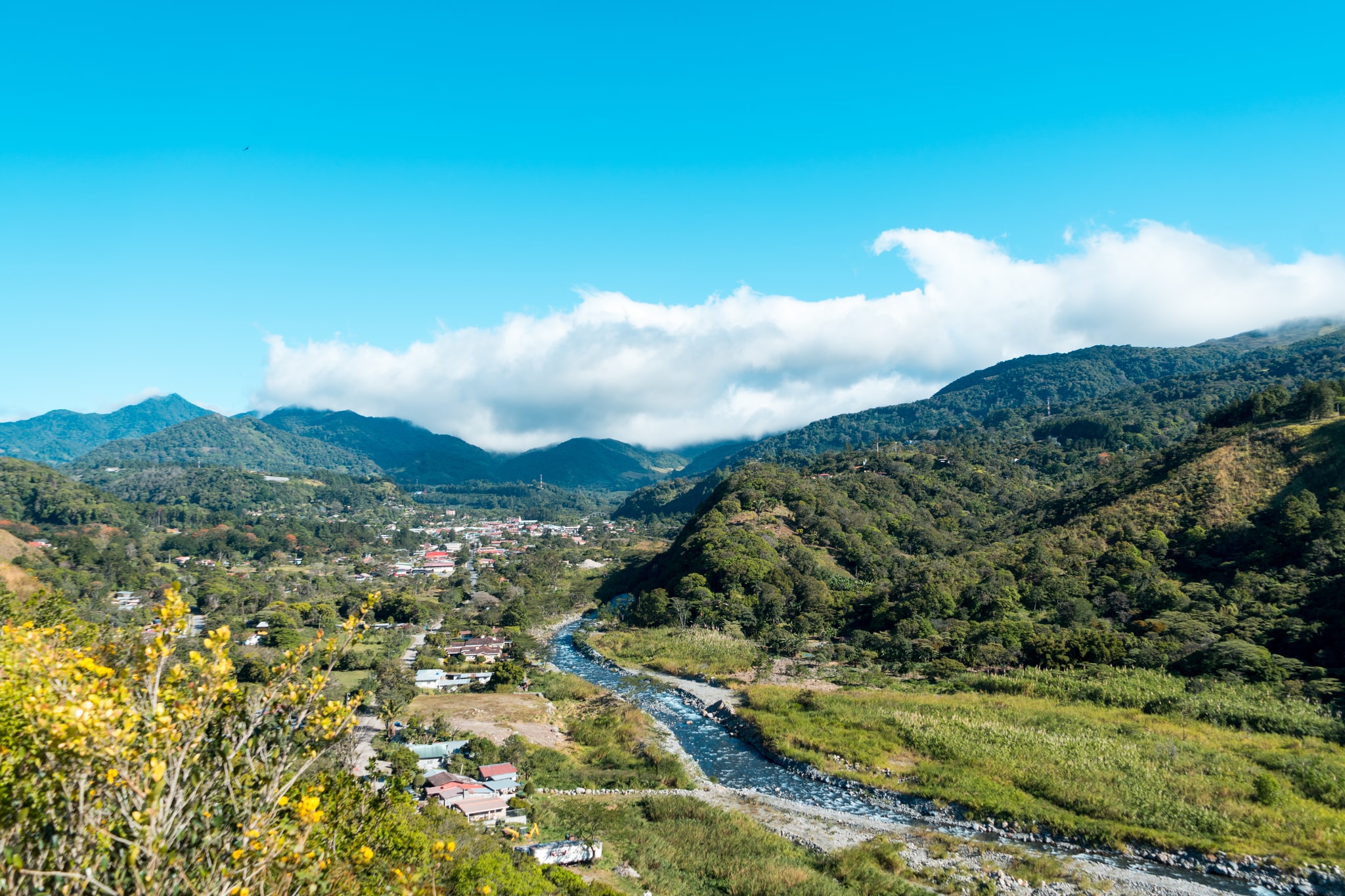
Every January, Boquete hosts a 10-day Flower and Coffee Festival featuring flower displays, coffee experiences, live music, and markets, attracting visitors from across Panama
David
David is the main regional city of western Panama and the commercial and service hub of Chiriquí Province, with a population of around 150,000. More practical than atmospheric, it serves as the region’s main centre for hospitals, shopping, schools, and everyday services, making it the place nearby Boquete residents usually go to get things done.
Life in David revolves around commerce, services, and daily convenience. Locals commonly work in retail, healthcare, education, logistics, and agriculture-related industries. The pace is busier than in Boquete, yet still more relaxed than in Panama City, while evenings and weekends are usually spent in shopping centres, restaurants, and family settings.
Coronado and Nueva Gorgona
Coronado and Nueva Gorgona are neighbouring coastal communities on Panama’s Pacific side, west of Panama City and a little over an hour away by car. Unlike more remote beach towns, they work as full-time residential areas, where life follows an easy coastal routine of morning walks by the ocean, supermarket runs, coffee meetups, and relaxed evenings in casual restaurants or at home.
Coronado is the area’s main hub, with private healthcare at San Fernando Coronado Clinic and nearby schooling options such as Coronado International School and Panama Coast International School. Daily life is shaped by golf courses, beach clubs, fitness, and everyday convenience.
Nueva Gorgona, just next door, feels quieter, more local, and more directly tied to the shoreline, with beachfront apartments, houses, and a slower rhythm centred on the sea.
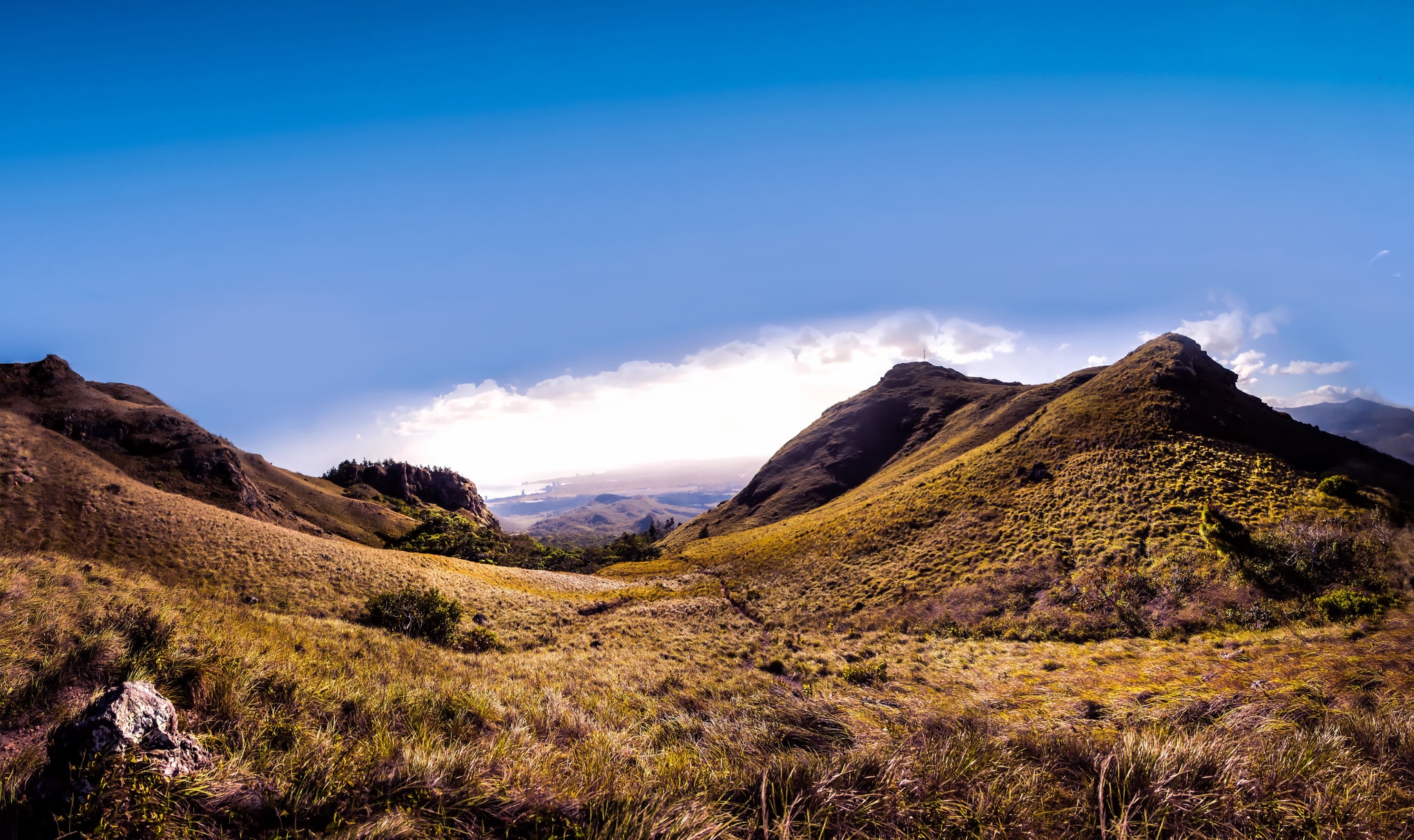
Cerro Chame, a popular hiking spot, can be reached from Coronado and Nueva Gorgona in about 20 to 30 minutes by car
Pedasí and Playa Venao
Pedasí and Playa Venao are located on the Azuero Peninsula, around 5 hours by car from Panama City. Both areas have basic healthcare and schooling, but options are limited. More advanced hospitals and a wider choice of education require travel to larger cities such as Las Tablas or Panama City.
Pedasí is a small coastal town where life follows simple, local routines: mornings at cafés or bakeries, errands around the town centre, fishing, or time by the sea. The expat presence is growing but not dominant, so the atmosphere remains authentically Panamanian, with a relaxed and community-driven feel.
Playa Venao, about 30—40 minutes away, has a more international and lifestyle-oriented character. Daily life revolves around surfing, fitness, beach clubs, cafés, and social gatherings, with a younger and more transient crowd. It is also more boutique in feel: the area is shaped by smaller-scale hotels, cafés, and wellness spaces rather than large resorts or mass tourism.
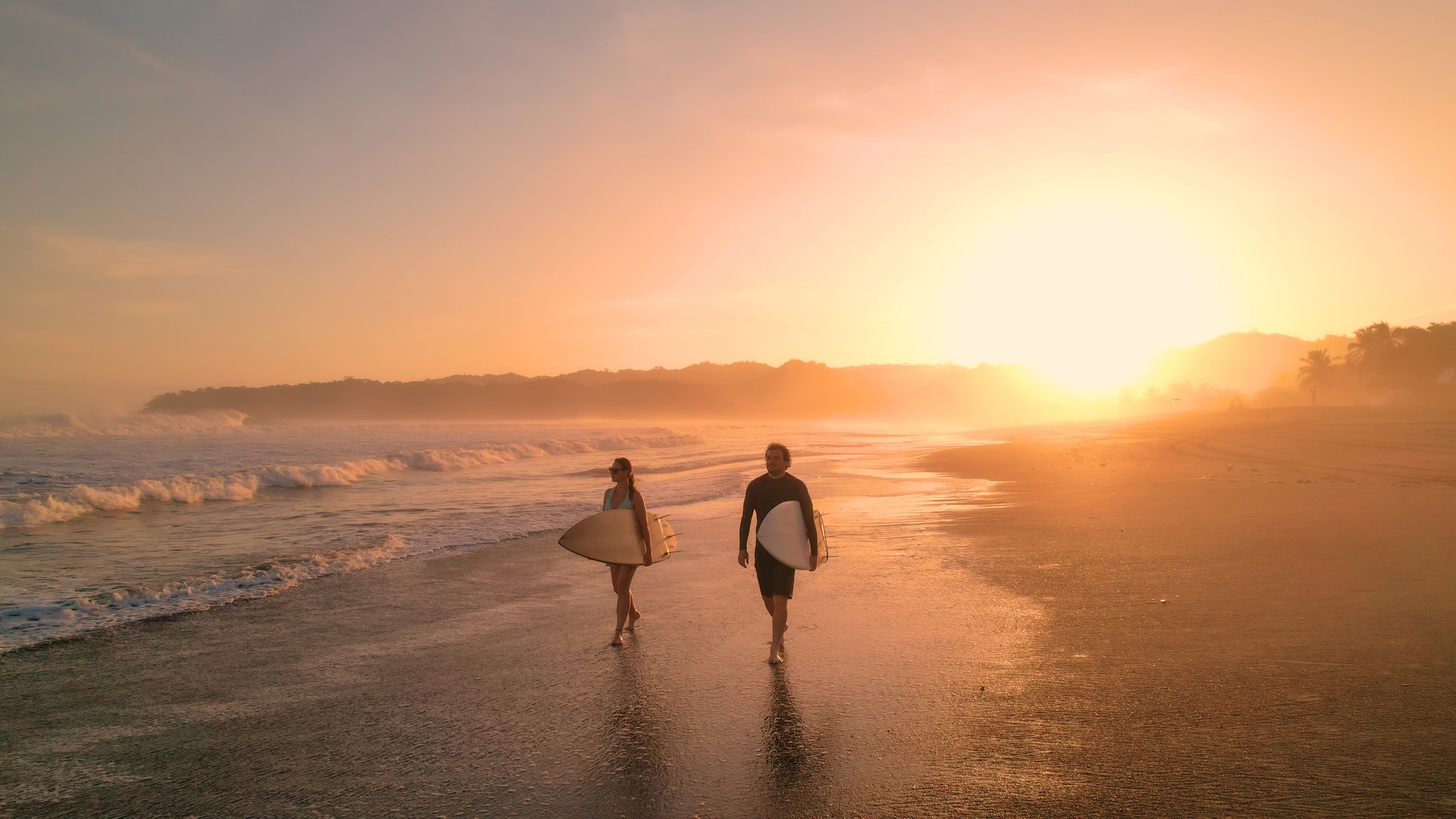
Playa Venao, Panama’s surfing centre, was one of the first places in the country to develop a surf–remote work lifestyle
Living in Panama as a US expat: cost of living, schools, healthcare, transport, and banking
For Americans, moving to Panama is not just about residency. Daily life depends on practical factors such as housing costs, healthcare quality, schools, transport, and access to banking, all of which shape how easy the move feels in practice.
Cost of living in Panama: what Americans should budget
On average, living in New York is about 2 to 4 times more expensive than living in Panama City, with the biggest gap in housing costs. A single person in Panama City would need about $1,800 per month including rent, compared with roughly $4,600 in New York.
Among Panama’s main expat destinations, David is the cheapest. Boquete and Coronado are broadly similar in overall cost, while Panama City is the most expensive, although some categories there may still be cheaper than in other locations[21]Source: Numbeo — Cost of living in Panama City, Boquete, David, Coronado, and New York.
Cost of living comparison: Panama vs. the US
International schools in Panama City
Panama City offers a strong selection of English-language international schools. Annual tuition figures for the 2026 academic year are as follows:
- International School of Panama: $10,200 at PK3 to $19,300 for Grades 9—12, plus a one-time capital donation of $16,000. Offers the IB Diploma Programme and Advanced Placement[22]Source: International School of Panama — Tuition fees.
- King's College Panama: $8,200 at Pre-Nursery to $24,200 for IB Years 12—13. Follows the English National Curriculum, IGCSE, A-levels, and IB Diploma[23]Source: King's College Panama — Tuition fees.
- Balboa Academy: $8,000 at PK3—4 to $14,000 for Grades 6—12, plus a $12,000 admission fee. American bilingual curriculum with 20+ AP courses[24]Source: Balboa Academy — Tuition fees.
- Metropolitan School of Panama: $11,250 at Early Childhood to $18,500 for Grades 9—12, plus a $12,000 one-time admission payment. The only school in Panama and Central America offering the full IB continuum in English[25]Source: Metropolitan School of Panama — Tuition fees.
Families considering Boquete or David will find bilingual private schools that offer sound primary and secondary education in both English and Spanish, though not at the IB or AP certification level of the capital's international schools.
Family safety and neighbourhoods
The US State Department rates Panama at Level 2: Exercise Increased Caution, mainly because of crime and the possibility of civil unrest. Its Level 4: Do Not Travel warning applies only to parts of the Mosquito Gulf and the Darién Region near the Colombian border, not to the areas where most American expats live[26]Source: U.S. Department of State — Panama Travel Advisory.
In Panama City, families often choose neighbourhoods such as Punta Pacifica, Costa del Este, and Clayton, which are well-established residential areas with a stronger sense of security. Many homes and apartment buildings there have controlled access, security staff, and private residential compounds, across both mid-range and high-end price levels.
Examples of real estate in Panama
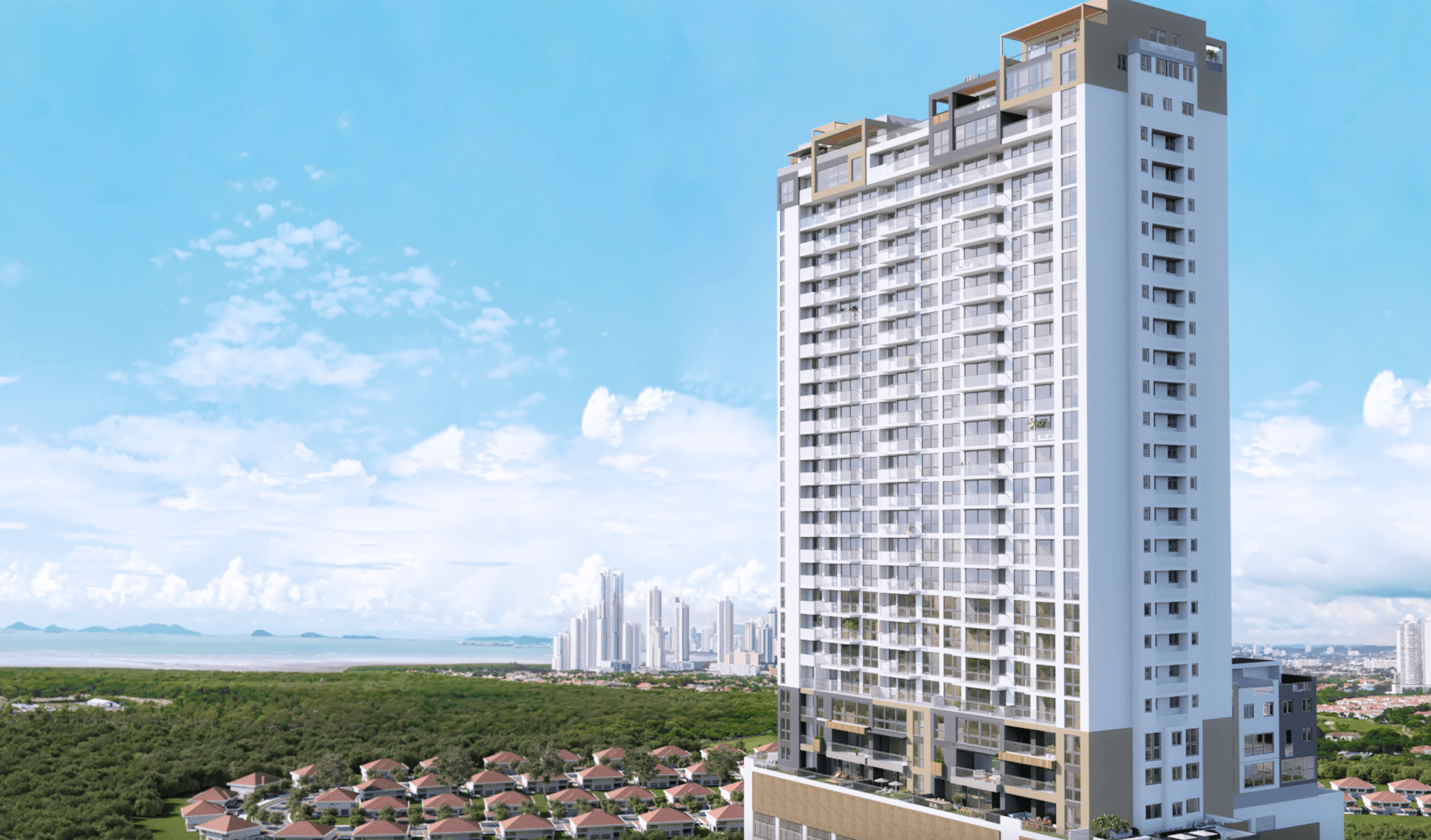

Panama, Panama City
$447,000 — $1,043,000
Luxury apartments and town houses, Panama City
 102 m² — 235 m²
 2—3
2—3  2—3
2—3 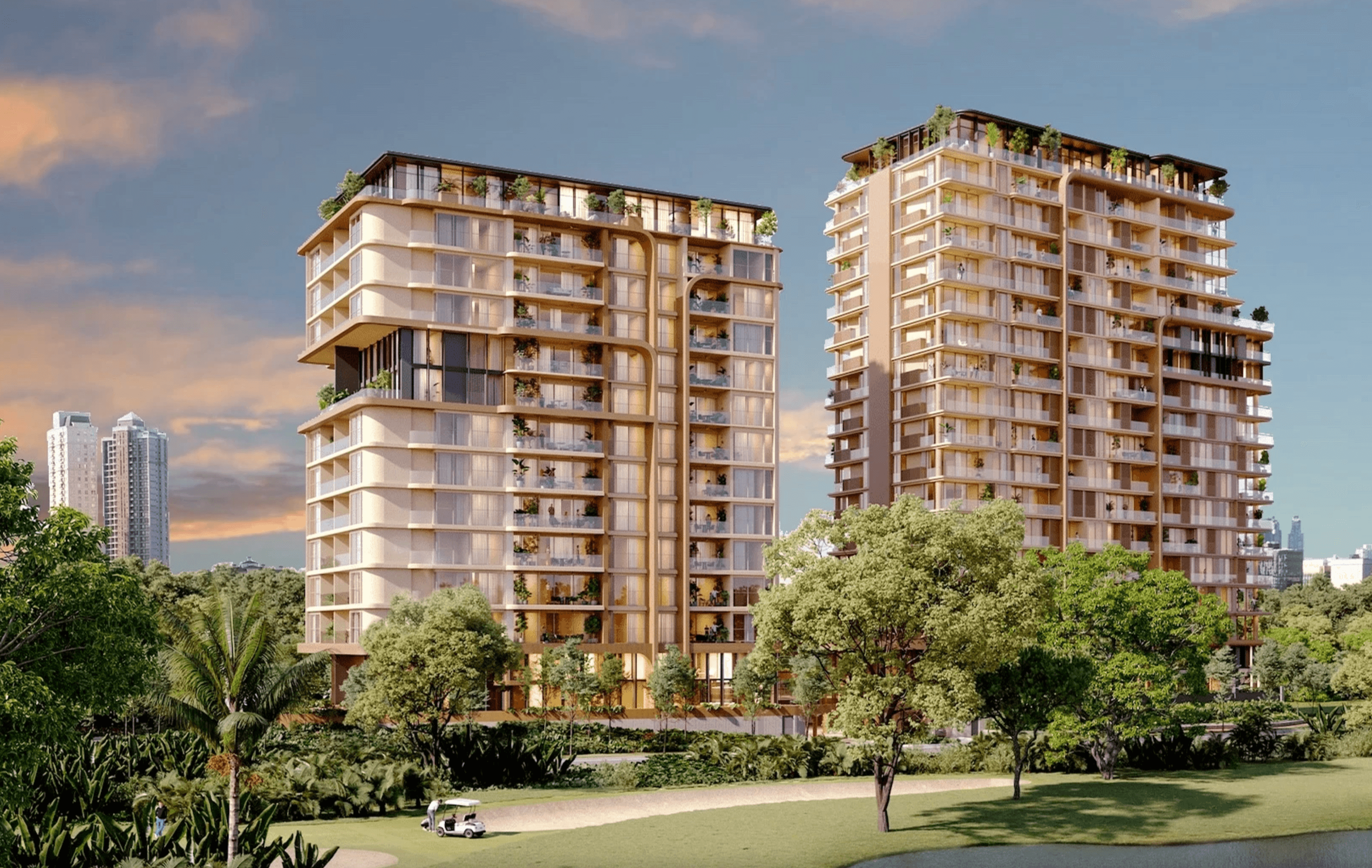
Panama, Panama City
$628,000+
Villas, apartments and houses with private pools, Santa Maria, Panama City
135 m²2—3 2—3 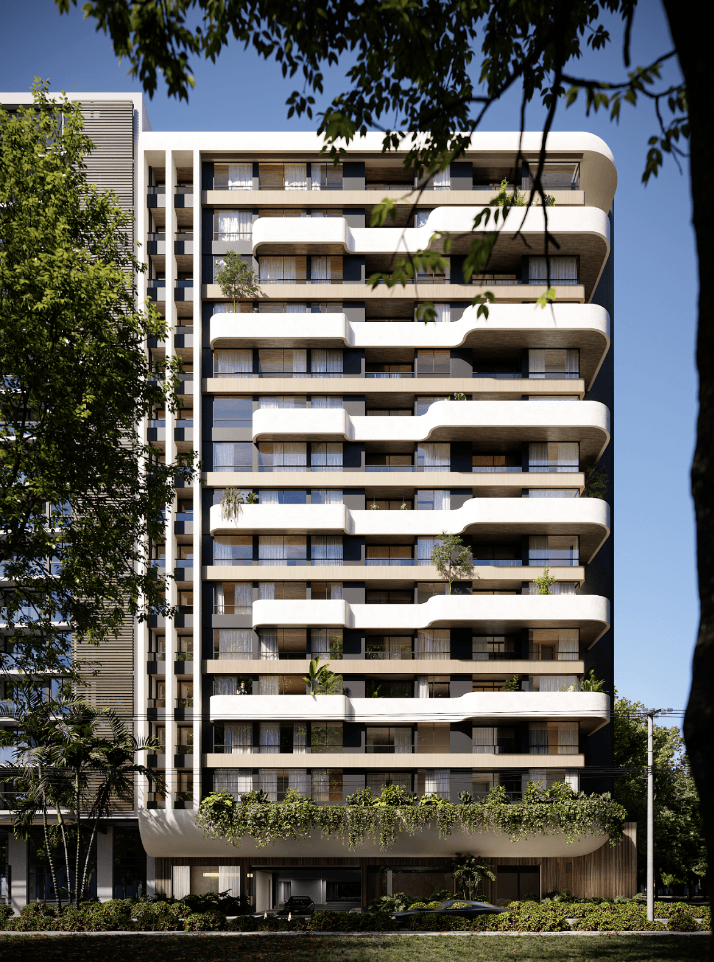
Panama, Distrito de Balboa
$137,000 — $260,000
Elegant apartments, Distrito de Balboa
22 m² — 54 m²1 1 Healthcare in Panama for US citizens
Panama City offers private healthcare that matches, and in some cases exceeds, the standard found in many mid-sized US cities, while costing up to 70% less. Another key strength is the high quality of its leading private hospitals.
Three hospitals in Panama City hold Joint Commission International, JCI, accreditation, the global hospital standard recognised by US insurers:
- Salud Hospital Punta Pacífica has held continuous JCI accreditation since 2011 and has been affiliated with Johns Hopkins Medicine International since 2006.
- Its second campus, Pacífica Salud Hospital Costa del Este, opened in 2022 and is also JCI-accredited.
- Clínica Hospital San Fernando has also held continuous JCI accreditation since 2011, with reaccreditations in 2014, 2017, 2020, and 2023[27]Source: Joint Commission International — Directory of Accredited Healthcare Organizations in Panama.
For US citizens, insurance compatibility is another advantage. Several hospitals in Panama City accept US Medicare Advantage plans and work directly with major US insurers. Hospital Mae Lewis has an alliance with Amexcare that allows it to accept US, Canadian, and European insurance.
Private medical treatment in Panama is also relatively affordable. Local plans for expats range:
- $33—50 per month for individuals aged 35 to 39;
- $105—135 per month for those aged 60 to 64.
International plans usually cost between $2,800 and 5,700 per year, depending on the provider and the level of cover.
Transport and driving in Panama for US citizens
Driving. A valid US driving licence can be used in Panama for up to 90 days after entry. After that, or once residency is issued, drivers need a Panamanian licence. For Americans, this is done by homologating the US licence rather than taking a full local driving test.
The process involves:
- validating the licence through the US Embassy in Panama;
- authenticating the documents through Panama’s Ministry of Foreign Affairs;
- completing the application with Sertracen, Panama’s vehicle and driver registration agency.
A local vision and hearing check is required at the branch, and Sertracen also asks for a blood-type result if the foreign licence does not show it[28]Source: Sertracen Panama — Requirements for Homologation of a Foreign Driver’s License.
Road quality varies by region. In Panama City and along the main highways, roads are in good condition. In Chiriquí, especially on routes serving Boquete and Volcán, roads are more winding and mountainous. These are manageable in normal conditions, but those living outside town centres often prefer a higher-clearance vehicle, while in more rural areas a four-wheel-drive vehicle can be useful.
Public transport and intercity connections. Within Panama City, the metro system serves central and eastern districts and is the only urban rail transport in the country. Outside the capital, public transport becomes more limited and less structured: in places such as Boquete or coastal areas, daily life is largely car-dependent.
Travel between cities is mainly by road or air. Domestic flights connect Panama City with regional centres such as David. Flight time is about 1 hour, making it the fastest option for longer distances. Buses are widely used and form the main intercity transport system: long-distance coaches run between Panama City and cities like David, taking 6—7 hours, with modern, air-conditioned buses.
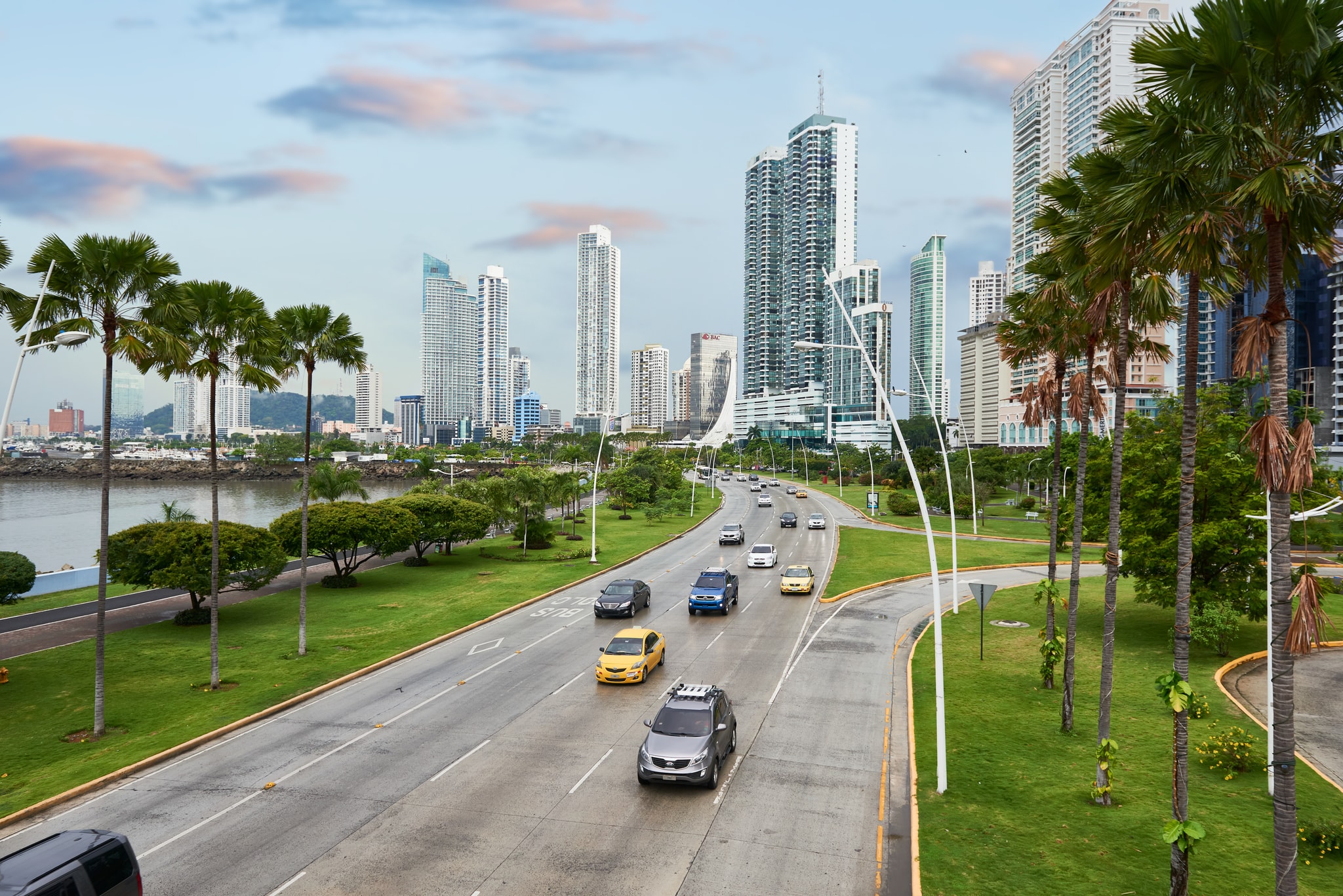
Traffic in Panama City can be severe, so it is best to travel between 9:00 AM and 2:00 PM or later in the evening after 8:00 PM
Opening a bank account in Panama as a US citizen
Opening a bank account in Panama is part of settling. For most US citizens, the practical time to do it is once residency is already in progress or approved, when everyday life starts to require a local account for rent, utilities, salary, school payments, insurance, and routine transfers.
The exact document list varies by bank, so applicants may be asked for:
- valid passport;
- proof of address;
- proof of legal stay or residency;
- documents showing source of income or source of funds;
- purpose-of-account statement;
- 3 to 6 months of recent bank statements;
- 1 or 2 professional or banking references.
US citizens should also expect additional tax compliance questions during onboarding. Because Panama has a FATCA agreement with the US, banks normally ask for a US tax identification number and FATCA self-certification as part of the account opening process.
Panama’s banking system is broad and well regulated, with 40 general-licence banks supervised by the Superintendency of Banks of Panama. Well-known names include Banco General, Banistmo, Global Bank, Multibank, and Banco Nacional de Panamá. For day-to-day use, these banks offer online banking and mobile apps for checking balances, making transfers, and paying bills.
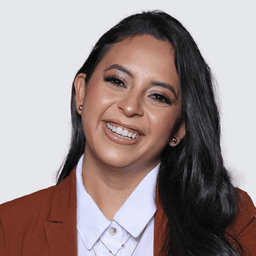
Eymi Castro,
Investment Migration Expert
When opening a bank account for an Investor Qualified Programme application, requirements are stricter than for an ordinary current account. As the account is linked to an immigration investment, banks apply enhanced Due Diligence and review the file more closely.
Early preparation helps avoid delays. It is best to prepare a complete source of funds and source of wealth file in advance, as missing documents can slow the review significantly. It also makes sense to ask about private banking options, since onboarding there is often faster and more responsive than in retail banking.
In addition, for the $750,000 bank deposit route, the investment must be placed with a bank that holds a general licence issued by the Superintendency of Banks of Panama.
Practical logistics: moving household goods and pets from the US to Panama
Relocating to Panama with household goods and pets requires careful planning, as both shipping logistics and import procedures must be arranged in advance to ensure a smooth move.
Shipping household goods
Most household moves from the US to Panama go by sea freight, usually through Miami and into either the Port of Balboa on the Pacific side or the Port of Colón on the Caribbean side. From Miami, ocean transit is often around 10 days or less, although the full move usually takes longer once packing, customs, inland delivery, and port handling are factored in.
For families moving their belongings, there is also a potential customs benefit. People relocating with an approved Panamanian residence permit may qualify for a one-time exemption from import duties on used household goods and personal effects. This can include items such as furniture, kitchenware, clothing, and other everyday belongings already used by the family.
To benefit from the exemption, the request must be filed with Panama’s National Customs Authority, ANA, within the applicable deadline. Because the exact eligibility rules and filing steps can vary by case, it is best to confirm them directly with ANA before shipping[29]Source: Panama National Customs Authority — Official Website.
Relocating pets from the US to Panama
Taking a pet to Panama requires completing both US and Panamanian formalities before travel. In practice, owners need to prepare a USDA-endorsed health certificate, have it legalised for use in Panama, ensure the pet meets rabies requirements, and notify Panama’s Ministry of Health before arrival[30]Source: USDA APHIS — Pet Travel From the US to Panama.
The key requirements include:
- Health certificate signed by a USDA-accredited veterinarian and endorsed by Animal and Plant Health Inspection Service.
- Legalisation of that certificate by a Panamanian diplomatic office in the US, or an apostille from the US Department of State if no consulate is available.
- Valid rabies vaccination given from 3 months of age, with at least 30 days passed since the first shot.
- Minimum entry age of 4 months.
- Home quarantine on arrival, provided all import conditions are satisfied.
The owner must notify Panama's Ministry of Health at least 3 days before arrival by completing a Home Quarantine Request, with a copy of the health certificate and travel details.
Relocating a business to Panama: key considerations for US entrepreneurs
Panama stands out as a regional business hub with strong infrastructure and international connectivity. For US entrepreneurs, relocating a business to Panama may mean either managing an existing US company from abroad or setting up a local entity. The right setup depends on how the business operates and how US tax rules affect the owner.
Why Panama works as a business hub
Panama’s position as a regional business centre rests on three structural advantages:
- The Panama Canal remains one of the world’s most strategic logistics corridors, with 13,404 transits, 489.1 million CP/SUAB tons, and about $5.7 million in revenue in FY2025[31]Source: Panama Canal Authority — Panama Canal Maintains Operational and Financial Strength.
- The Colón Free Trade Zone remains one of the largest free trade platforms globally, with total trade of about $24.9 million in 2024, alongside continued investment activity across Panama’s wider free-zone system[32]Source: Zona Libre de Colón — Colon Free Zone in numbers.
- Tocumen International Airport strengthens Panama’s role as a regional hub not only through connectivity but also scale: in 2025 it served 97 international destinations, handled 20.98 million passengers, and moved 248,500 tonnes of air cargo[33]Source: Tocumen International Airport — News and Updates.
Together, these three pillars make Panama especially attractive for logistics, trade, regional headquarters, and internationally mobile business owners.
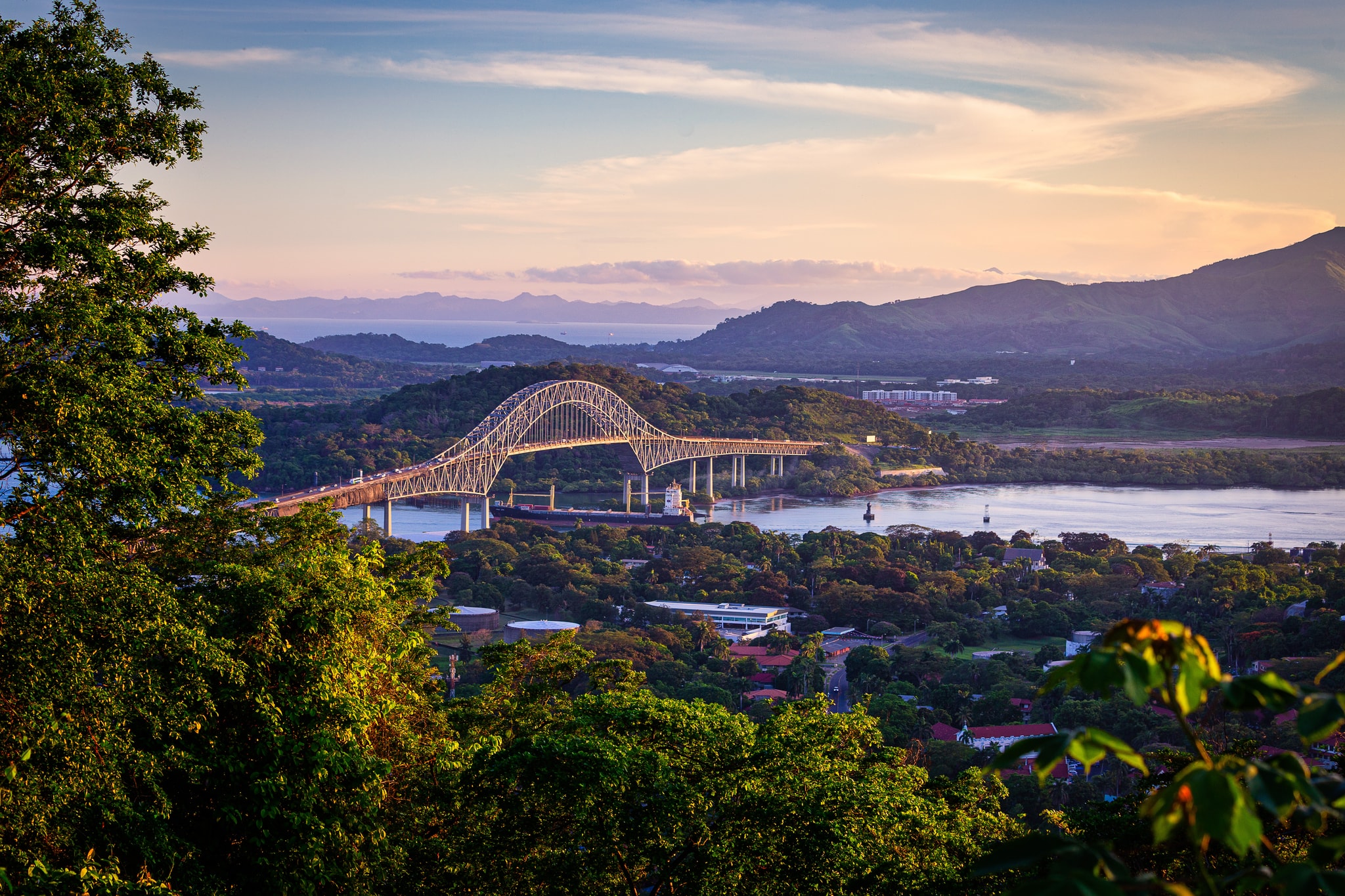
Around 70—75% of all cargo passing through the Panama Canal is either coming from or going to US ports, making it the primary customer by a wide margin[34]Source: Newsroom Panama — The Panama Canal Is Economically Vital for US and Global Trade
3 ways to operate a business from Panama
1. Remote ownership of an existing US company. This is often the most practical model for consulting firms, online businesses, SaaS companies, and other service-based operations with no need for a physical presence in Panama. In this case, the business remains subject to US tax rules, while Panama does not tax foreign-sourced income under its territorial system.
2. Panamanian company for local or regional operations. This may make sense if the business needs local contracts, employees, banking, or a base for serving Latin American clients.
3. Hybrid US-Panama structure. This can offer more flexibility, but it also requires careful planning, especially for US tax purposes. The existing US entity remains in place, while a Panama company is added for specific regional or operational functions.
Setting up a company in Panama
If a US entrepreneur decides to operate through a Panamanian company — either to run a new business or as part of restructuring an existing one — the standard structure is the Sociedad Anónima, SA. This is Panama’s version of a corporation and the main vehicle used for foreign-owned businesses.
The SA has several advantages:
- There is no minimum capital requirement.
- A company can be incorporated remotely through a power of attorney.
- With a local lawyer, formation usually takes 3 to 5 business days, while the operating-notice stage itself can be completed online in just a few minutes.
Panama applies corporate income tax only to Panama-sourced income. The standard rate is 25%. Income earned outside Panama is not taxed there under the country’s territorial tax system[35]Source: PwC — Panama corporate income taxes.
Some companies may also benefit from the Panamá Pacífico Special Economic Zone. This regime is aimed at businesses in logistics, aviation, technology, and manufacturing. It offers tax incentives, customs benefits, and simpler labour and immigration procedures[36]Source: US Department of Commerce — Panama Special Economic Zones Overview.
Employee quotas apply for foreign nationals working for Panamanian employers: up to 10% of the workforce in general roles and up to 15% for technical or specialist positions may be foreign.
US reporting obligations for business owners
Relocating an existing business to Panama or starting a new one locally does not reduce IRS obligations for US owners. US persons who serve as officers or directors of a Panamanian corporation, or own 10% or more of it, must file Form 5471 with the IRS each year[37]Source: IRS — Requirements for Filing Form 5471.
Eymi Castro,
Investment Migration Expert
Moving a business to Panama does not remove it from the US tax system. For a US entrepreneur, this usually means one of two things: either keeping the existing US company while living in Panama or adding a Panamanian company to the structure.
If a Panamanian company is added, Panama may tax income earned there, but the US may still tax the owner. A US citizen who owns or controls a Panamanian company may have to report it to the IRS and, in some cases, pay US tax on part of its profits even if those profits remain in the company.
So a Panamanian company does not replace US tax. It usually adds another tax layer. The outcome depends not so much on where the company is registered as on how the business is structured and where the income is earned.
Taxation for Americans living in Panama: the key rules
For US citizens living in Panama, the main point is simple: Panama residency does not change US tax obligations. The US taxes its citizens on worldwide income, regardless of where they live. This includes income from all sources worldwide.
Permanent residency in Panama through the Qualified Investor Programme does not eliminate, reduce, or defer US federal income tax. Only formal renunciation of US citizenship ends worldwide US taxation.
Panama's territorial tax system
Panama taxes only income sourced in Panama. Foreign-sourced income is not subject to Panamanian income tax. This includes US investment income, US dividends, capital gains on assets outside Panama, and income from work performed outside Panama.
Panama’s personal income tax applies only to Panama-sourced net income and uses a progressive scale:
- up to $11,000 — 0%;
- $11,001—50,000 — 15%;
- above $50,000 — $5,850 + 25% on the excess[38]Source: Dirección General de Ingresos — Income tax rate schedule.
Panama's territorial tax system is a real advantage. A US investor living in Panama and earning returns from a US-based portfolio does not pay Panamanian income tax on that income.
US reporting obligations
Even after moving to Panama, US citizens must continue to meet all relevant US reporting requirements.
One of the main obligations is the FBAR. It must be filed electronically on FinCEN Form 114 if the combined balance of foreign financial accounts exceeds $10,000 at any time during the calendar year. The filing deadline is April 15th of the following year, with an automatic extension until October 15th[39]Source: IRS — Report of Foreign Bank and Financial Accounts.
FATCA reporting is a separate requirement. If specified foreign financial assets exceed the applicable threshold, Form 8938 must be filed with the US federal tax return. The thresholds start at $50,000 for single taxpayers living in the US and go up to $600,000 for married couples living abroad. This form is submitted together with the annual tax return, which is usually due on April 15th for calendar-year taxpayers[40]Source: IRS — Instructions for Form 8938.
Some US tax provisions can help lower the overall tax burden. For the 2026 tax year, eligible taxpayers can exclude up to $132,900 under the Foreign Earned Income Exclusion on earned income, such as salary or self-employment income. To qualify, they must meet either the bona fide residence test or the physical presence test, which requires at least 330 full days abroad during any 12-month period[41]Source: IRS — Figuring the foreign earned income exclusion.
How to move from the US to Panama under the Qualified Investor Programme: step-by-step process
Based on Immigrant Invest’s experience, obtaining permanent residence in Panama under the Qualified Investor Programme takes at least 3 months. The exact timeline depends on the investment route, the speed of document preparation, and bank or brokerage onboarding.
For US citizens, the process may take longer because of additional compliance steps, especially the FBI background check with apostille and FATCA-related banking procedures. Early preparation helps reduce delays and keeps the application on track.
1 day
Preliminary Due Diligence
A preliminary Due Diligence check is conducted to assess eligibility and identify any potential risks before starting the process. This step is confidential and helps avoid refusals at later stages.
For US applicants, this step is particularly important due to additional compliance requirements linked to source of funds and tax reporting.
A preliminary Due Diligence check is conducted to assess eligibility and identify any potential risks before starting the process. This step is confidential and helps avoid refusals at later stages.
For US applicants, this step is particularly important due to additional compliance requirements linked to source of funds and tax reporting.
2+ weeks
Choosing an investment route and preparing documents
With the support of Immigrant Invest’s team, the investor selects the most suitable option based on budget, liquidity, and investment goals. At the same time, document preparation begins and is handled remotely, with an Immigrant Invest lawyer coordinating the file.
For US applicants, the document package usually includes the following:
- valid US passport with at least 6 months of validity;
- FBI Criminal Background Check, apostilled through the US Department of State;
- health certificate issued in Panama after an in-country medical exam;
- birth certificate, if applicable;
- marriage certificate, if applicable;
- proof of the qualifying investment;
- source-of-funds and source-of-wealth documents, such as bank statements, tax returns, or asset sale records;
- passport-size photographs;
- power of attorney authorising a Panama immigration lawyer to act before the National Migration Service.
With the support of Immigrant Invest’s team, the investor selects the most suitable option based on budget, liquidity, and investment goals. At the same time, document preparation begins and is handled remotely, with an Immigrant Invest lawyer coordinating the file.
For US applicants, the document package usually includes the following:
- valid US passport with at least 6 months of validity;
- FBI Criminal Background Check, apostilled through the US Department of State;
- health certificate issued in Panama after an in-country medical exam;
- birth certificate, if applicable;
- marriage certificate, if applicable;
- proof of the qualifying investment;
- source-of-funds and source-of-wealth documents, such as bank statements, tax returns, or asset sale records;
- passport-size photographs;
- power of attorney authorising a Panama immigration lawyer to act before the National Migration Service.
2+ months
Opening a bank or brokerage account and making the investment
A Panamanian bank or brokerage account is opened to complete the investment. US applicants must complete a W-9 form under FATCA and undergo enhanced KYC and AML checks.
Panamanian banks report US account information to the IRS under a FATCA agreement, so onboarding typically takes 4 to 8 weeks. This step should begin in parallel with document preparation.
Once the account is ready, the investor completes the chosen investment:
- purchases real estate through escrow or trust;
- acquires securities via a licensed broker; or
- places a time deposit in a general-licence Panamanian bank.
A Panamanian bank or brokerage account is opened to complete the investment. US applicants must complete a W-9 form under FATCA and undergo enhanced KYC and AML checks.
Panamanian banks report US account information to the IRS under a FATCA agreement, so onboarding typically takes 4 to 8 weeks. This step should begin in parallel with document preparation.
Once the account is ready, the investor completes the chosen investment:
- purchases real estate through escrow or trust;
- acquires securities via a licensed broker; or
- places a time deposit in a general-licence Panamanian bank.
30—90 days
Application submission and approval
The lawyer submits the full application to the National Migration Service, including proof of investment, apostilled documents, source-of-funds file, and power of attorney.
After submission, the application is reviewed, and investors usually receive initial approval and provisional residence within 30 to 90 days.
The lawyer submits the full application to the National Migration Service, including proof of investment, apostilled documents, source-of-funds file, and power of attorney.
After submission, the application is reviewed, and investors usually receive initial approval and provisional residence within 30 to 90 days.
Up to 4 months
Issuance of permanent residence card
After final approval, the US investor receives the E-cédula, Panama’s official foreign resident ID. This confirms permanent residency status and visa-free re-entry to Panama.
After final approval, the US investor receives the E-cédula, Panama’s official foreign resident ID. This confirms permanent residency status and visa-free re-entry to Panama.
Risks and pitfalls of moving to Panama as an American
Moving to Panama offers real advantages, but US citizens should also understand the potential challenges before starting the process or making an investment.
Banking delays for US applicants
Opening a bank account is often the most difficult step. US citizens face stricter checks due to FATCA, including detailed source-of-funds and tax documentation. This is not occasional — it is a standard requirement.
In practice, banking is the main reason applications slow down or fail. Starting the banking process early, ideally at the same time as document preparation, can save several months.
US tax obligations
Living in Panama does not change US tax responsibilities. US citizens must still report worldwide income and comply with FBAR and FATCA requirements.
Panama’s territorial tax system can reduce local tax exposure, but it does not affect US tax liability. Any structure that claims to eliminate US tax without proper planning should be treated with caution.
Extensive source-of-funds requirements
Golden Visa applicants might underestimate how much documentation is needed to prove the origin of their funds. Basic bank statements are not enough.
For investments of $300,000 or more, banks and authorities usually expect a full financial history supported by documents such as tax returns, business records, and investment statements. If documents are incomplete, the review process often restarts, causing delays.
Real estate-specific risks
Real estate is a popular investment route, but it requires careful Due Diligence. Pre-construction and developer-backed projects can offer more options, but they also carry risks related to project completion and timelines.
Using escrow or trust structures helps protect the investment, but it does not remove all risk. Independent legal review and market comparison are important before committing to a purchase.
How Immigrant Invest can help Americans move to Panama
With more than 20 years of experience, over 10,000 clients, 11 offices worldwide, and multiple government licences for investment migration programmes, Immigrant Invest can provide structured end-to-end support throughout the residency process.
We can facilitate relocation from the US to Panama through the Panama Qualified Investor Programme by assisting with the residency application and related procedures, including:
- Pre-application compliance review. Before any documents are filed, in-house compliance officers conduct a review to identify source-of-funds gaps, background risks, and missing documents that could affect the application later.
- Dedicated case management. Each applicant works with a named adviser supported by a team across compliance, legal, and client strategy.
- Support with banking procedures. Immigrant Invest helps applicants navigate bank onboarding in Panama. For US citizens, this stage is often one of the main sources of delay because of additional compliance checks, so professional guidance can help make the process smoother.
- Guidance on programme choice. For Americans comparing Panama with other residency options, Immigrant Invest can provide structured comparisons across programmes in the Americas, the EU, and the Caribbean.
- Post-approval assistance. Support does not end after approval. Immigrant Invest also assists with renewals, cédula extensions, and other follow-up matters that remain relevant after obtaining residency.
With professional support of Immigrant Invest across each stage, US applicants can approach the move to Panama in a more organised way and reduce the risk of delays or costly mistakes.
Key takeaways about moving to Panama from the US
- Panama ranks 1st worldwide for expats and attracts US citizens with its dollarised economy, proximity to the US, favourable tax system, climate, lifestyle, and ease of settling in.
- US citizens can move to Panama through remote work, the Friendly Nations route, employment, the Pensionado visa, study, family reunification, or investment.
- The Qualified Investor Programme offers a fast route to permanent residence, taking at least 3 months, with investment thresholds starting at $300,000 in real estate.
- Panama residency does not change US tax obligations, and Americans remain taxable on worldwide income, while Panama’s territorial tax system means only income earned within Panama is taxed locally.
- Panama City is the main destination for most Americans, with alternatives such as Boquete, David, and Pacific coastal areas.
- The cost of living in Panama is often 2 to 4 times lower than in major US cities.
- Families have access to a wide range of international schools, especially in Panama City.
Immigrant Invest is a licensed agent for citizenship and residence by investment programs in the EU, the Caribbean, Asia, and the Middle East. Take advantage of our global 15-year expertise — schedule a meeting with our investment programs experts.

 Trusted by 10,000+ investors