

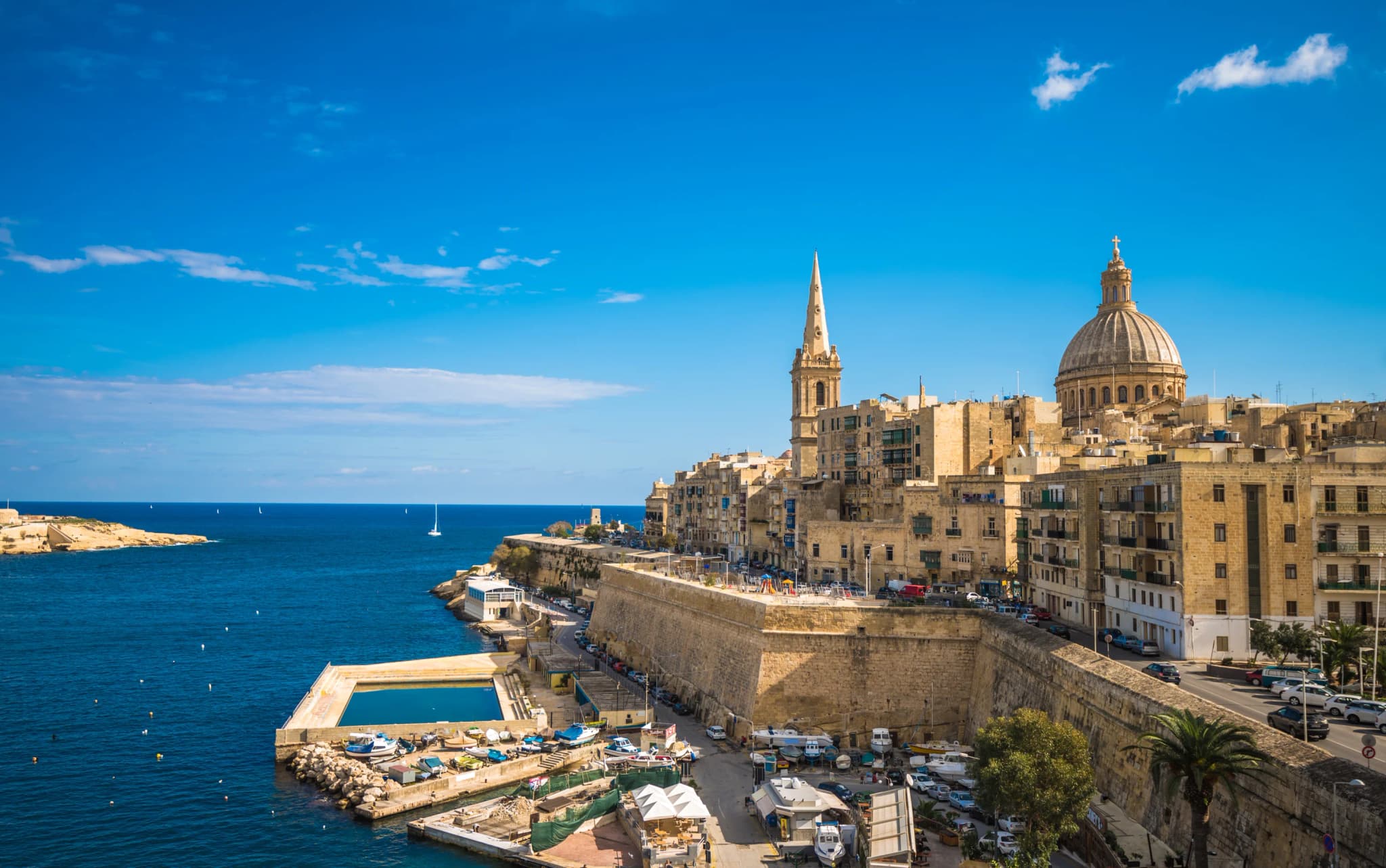

The Individual Tax Programme will change the conditions for obtaining special tax status and a residence permit in Malta.
Robert Outerbridge, Investment Migration Expert at Immigrant Invest, explains the new tax payment rules.
What is known now
The Individual Tax Programme will take effect on January 1st, 2027[1]Source: Legal Notice No. 195 of 2026 — Individual Tax Programme Rules, 2026 on Malta’s legislation website.
The Individual Tax Programme will combine 4 existing tax regimes for foreigners:
- Global resident status — for citizens of countries outside the European Union, the EEA, and Switzerland.
- EU, EEA, Swiss resident status — for citizens of the European Union, the EEA, and Switzerland.
- Retired pensioner status — for pensioners.
- UN pensioner status — for recipients of a UN pension or a payment to the widow or widower of a UN pension fund participant.
The transition period applies to tax status granted by December 31st, 2026, as well as to applications received by that date. Such status or application will be regulated under the old rules until December 31st, 2031.
The law does not specify which conditions exactly will remain in force for such applicants.
The minimum annual tax will increase depending on the status category:
- €35,000 for Global resident status and EU, EEA, Swiss resident status;
- €15,000 for Retired pensioner status;
- €20,000 for UN pensioner status.
The preferential 15% rate on foreign income will remain and will apply to income remitted to Malta.
Comparison of the current regimes with the Individual Tax Programme

Procedure for obtaining and terminating tax status
Foreigners will submit documents for tax status through a registered authorised representative. The application is reviewed by the Commissioner for Tax and Customs[2]Source: Legal Notice No. 195 of 2026 — Individual Tax Programme Rules, 2026 on Malta’s legislation website.
Requirements for the main applicant
General requirements for the applicant:
- real estate in Malta or Gozo;
- stable and regular income sufficient for themselves and their family;
- health insurance for themselves and their family;
- no domicile in Malta and no plans to establish one within 5 years after applying;
- conversational English or Maltese.
Requirements for close relatives
The application can include: spouse or partner; minor children; children under 25 if they are financially dependent on the applicant; children with a serious illness or disability who are financially dependent on the applicant.
Conditions for terminating tax status
The Commissioner for Tax and Customs must be notified of changes that affect the status within 4 weeks.
Failure to meet the deadline is subject to an administrative fine of €5,000.
Special tax status may be terminated if the holder:
- becomes a citizen of Malta;
- no longer owns or rents real estate;
- rents out the real estate;
- obtains a Malta permanent residence permit;
- loses health insurance;
- spends more than 183 days a year in another country;
- does not use the services of an authorised representative in Malta;
- does not pay the minimum tax;
- does not submit mandatory reports.
Other ways to become a resident of Malta
The Malta Permanent Residence Programme allows the whole family to obtain permanent resident status in Malta for life: a spouse or partner, children under 29, parents, grandparents.
Immigrant Invest is a licensed agent whose lawyers help obtain a suitable Malta status for the whole family.
Residents of Malta can live in the country, travel across the Schengen Area visa-free, use medical services, and study at European universities.

 Trusted by 10,000+ investors