Summary
Choosing between residency in Greece, Portugal, or Malta isn’t just about the size of your investment. From tax regimes and citizenship timelines to permit types, lifestyle, and living costs — each Golden Visa programme offers a distinct set of advantages.
This article provides a detailed comparison of the three EU residency options, helping you determine which one best matches your investment strategy, family needs, and long-term lifestyle goals.
Understanding residency by investment programs
Definition of residency by investment
Residency by investment, often referred to as a Golden Visa or Investor Visa, is a government initiative that grants legal residency to foreign nationals in exchange for a qualifying financial contribution. This investment may take the form of real estate purchases, government bonds, business funding, or donations.
Residency can be temporary or permanent, frequently with a pathway to citizenship after a defined period.
Purpose and economic role of residency by investment
The core purpose of residency by investment programmes is to attract foreign capital and stimulate economic growth. By encouraging investors to contribute directly to the host country’s economy, these programs can:
- inject liquidity into real estate, business, and cultural sectors;
- create jobs and expand local supply chains;
- diversify the economy away from over-reliance on specific industries;
- strengthen fiscal stability through direct contributions and tax revenues;
- enhance global competitiveness by attracting talent and fostering international connections;
- address demographic challenges by drawing younger, economically active residents — in some cases.
For investors, they offer the legal right to live, work, and study in the host country, often with the inclusion of family members.
11 common investor motivations to get residency abroad
1. Family safety and stability. Many applicants prioritise secure, politically stable countries with reliable healthcare and education systems, ensuring a safe environment for their families and protection from instability in their home regions.
2. Freedom of travel. Residency in a Schengen country grants visa-free access to 29 European states, simplifying global mobility for both business and leisure.
3. Tax optimisation. Relocating to jurisdictions with favourable tax regimes can reduce liabilities, restructure holdings, and provide access to special resident tax incentives, enabling efficient wealth management.
4. Lifestyle and quality of life. Many programmes offer the chance to live in highly desirable locations with modern infrastructure, excellent healthcare, vibrant cultural life, and opportunities for property ownership or integration into global business networks.
5. Backup plan. Serving as an insurance policy, a second residency provides an alternative place to live in case of political, economic, or environmental crises at home.
6. Political stability. Residency offers protection from risks associated with regime changes, social unrest, or corruption in the country of origin.
7. Asset and currency diversification. Holding assets in different jurisdictions, using reliable banking systems, and diversifying currency exposure helps protect wealth from economic downturns or currency instability in the home country.
8. Business opportunities. Residency can unlock entry to new markets, facilitate participation in international trade, and allow investors to establish companies in politically and economically advanced environments.
9. Children’s education. Securing access to high-quality schools and prestigious universities abroad, which may not be available in the investor’s home country, is a major motivator for many families.
10. World-class healthcare. Access to advanced medical services and internationally recognised healthcare facilities provides peace of mind and long-term health security.
11. Flexibility in life planning. A second residency creates freedom to live, work, or retire in different countries without being tied to a single location.
Why we compare Greek, Portuguese, and Maltese investment programmes
The Greece Golden Visa programme grants a long-term residence permit valid for 5 years, renewable indefinitely.
The Portugal Golden Visa program grants a temporary residence permit valid for 2 years, renewable indefinitely.
The Malta Permanent Residence Programme, or MPRP, grants lifelong residency status.
These three programmes are leaders in the Mediterranean region, each offering unique combinations of lifestyle benefits, investment routes, and legal frameworks. They are compared here because all three:
- offer EU residency with family inclusion and visa-free Schengen travel;
- provide diverse investment routes but differ in cost, timelines, and residency-to-citizenship pathways;
- represent attractive Mediterranean lifestyle destinations with strategic locations.
This comparison reveals how each programme balances investment level, flexibility, and long-term benefits, helping investors match their priorities — whether it’s low entry cost, speed to citizenship, or the security of permanent residency.
Who can apply for the Greece, Portugal, or Malta investment programme?
While Greece, Portugal, and Malta all welcome financially secure non-EU nationals through their residency-by-investment programmes, the fine print of eligibility can significantly influence which programme best suits an investor’s personal and family situation.
Main applicant requirements
Under any of the three programmes, the main applicant must:
- be a non-EU, non-EEA, and non-Swiss national;
- be at least 18 years old;
- hold valid health insurance;
- have a clean criminal record;
- prove the legal source of investment funds.
Malta imposes an additional asset threshold on top of the investment amount: either €500,000 in total assets, with at least €150,000 in liquid form, or €650,000 in total assets, with at least €75,000 liquid. Greece and Portugal have no such net worth requirement.
Eligible spouse or partner
Under all three programmes, a spouse or long-term partner can be included in the application, and same-sex partnerships are recognised.
Key differences:
- Greece requires de facto unions to have a cohabitation agreement registered and signed in Greece;
- Portugal recognises same-sex couples only if they are legally married, and the marriage can be registered in Portugal. Opposite-sex couples may qualify through either legal marriage or a de facto union of at least 2 years;
- Malta accepts common-law partners with proof of cohabitation, regardless of gender.
Eligible children
Every programme allows the inclusion of children under 18, whether biological, adopted, or stepchildren, provided the applicant has legal custody. All three also include children of any age who have a recognised disability and are financially dependent on the applicant.
Key differences:
- Greece extends eligibility to unmarried children up to 21;
- Portugal allows unmarried financially dependent children up to 26 if they are in full-time education;
- Malta offers the broadest scope, including unmarried financially dependent children up to 29.
Eligible parents and grandparents
All three programmes allow the inclusion of both the applicant’s and the spouse’s parents as dependants, provided they meet each programme’s specific criteria.
Key differences:
- Greece imposes no restrictions on age or financial dependency for parents, making it one of the most flexible options;
- Portugal permits parents over 65, or younger if they are financially dependent on the applicant, which can limit eligibility for independent or still-working parents below this age;
- Malta accepts dependent parents of any age and is the only programme that also includes dependent grandparents.
Family members included: comparison
Family member
Official spouse

Greece
Yes, same-sex couples included

Portugal
Yes, same-sex couples included

Malta
Yes, same-sex couples included
Family member
De facto partner
Greece
With a cohabitation agreement registered in Greece
Portugal
In a relationship lasting for 2+ years
Malta
With proof of cohabitation
Family member
Children age limit
Greece
21 years
Portugal
26 years
Malta
29 years
Family member
Parents
Greece
No age or dependency restrictions
Portugal
Over 65, or under 65 if financially dependent
Malta
Any age if principally dependent
Family member
Grandparents
Greece
Not allowed
Portugal
Not allowed
Malta
Included if principally dependent
Family member | Greece | Portugal | Malta |
|---|---|---|---|
Official spouse | Yes, same-sex couples included | Yes, same-sex couples included | Yes, same-sex couples included |
De facto partner | With a cohabitation agreement registered in Greece | In a relationship lasting for 2+ years | With proof of cohabitation |
Children age limit | 21 years | 26 years | 29 years |
Parents | No age or dependency restrictions | Over 65, or under 65 if financially dependent | Any age if principally dependent |
Grandparents | Not allowed | Not allowed | Included if principally dependent |
Portugal vs. Greece vs. Malta: investment options compared
While all three programmes aim to attract foreign capital, they differ significantly in the variety, flexibility, and structure of qualifying options. Greece offers the broadest range, Portugal focuses on fewer but often higher-value routes, and Malta operates with a streamlined model tied closely to property and government contributions.
Variety of qualifying investment options
Each programme offers multiple qualifying routes to suit different investor profiles.
The number of eligible routes:
The most popular route across most residence- and citizenship-by-investment programmes is real estate acquisition. This option remains available under Greece’s and Malta’s programmes, while Portugal removed it in 2023. Both Malta and Greece also allow qualifying investments through long-term property rental.
Another widely chosen route is investment in regulated funds, including venture capital, mutual, or alternative funds. This option is available in Greece and Portugal, both of which also provide opportunities for direct business investment.
Unique options. Greece offers the possibility of placing a deposit in a local bank. Portugal previously had a similar option but abolished it in 2023.
Greece also allows the purchase of corporate or government bonds.
Portugal provides the opportunity to make non-refundable donations to arts, culture, or scientific research projects.
Qualifying investment options by programme
Option
Real estate purchase
Greece
Available
Portugal
Abolished
Malta
Available
Option
Real estate rent
Greece
Available
Portugal
Not available
Malta
Available
Option
Investment fund units purchase
Greece
Available
Portugal
Available
Malta
Not available
Option
Placing a bank deposit
Greece
Available
Portugal
Available
Malta
Not available
Option
Donations to arts, culture & science
Greece
Not available
Portugal
Available
Malta
Not available
Option
Business investment
Greece
Available
Portugal
Available
Malta
Not available
Option
Bonds purchase
Greece
Available
Portugal
Not available
Malta
Not available
Option | Greece | Portugal | Malta |
|---|---|---|---|
Real estate purchase | Available | Abolished | Available |
Real estate rent | Available | Not available | Available |
Investment fund units purchase | Available | Available | Not available |
Placing a bank deposit | Available | Available | Not available |
Donations to arts, culture & science | Not available | Available | Not available |
Business investment | Available | Available | Not available |
Bonds purchase | Available | Not available | Not available |
Real estate option: Greece vs. Malta
The Greece Golden Visa and the Malta Permanent Residence Programme accept property investment as a qualifying route. Portugal withdrew the real estate path in 2023.
Minimum investment. Greece applies tiered thresholds:
- €800,000 in high-demand areas such as Athens, Thessaloniki, Mykonos, Santorini and other major islands;
- €400,000 for properties in less populated regions;
- €250,000 for assets that require full renovation, conversions from commercial to residential, or restoration of listed heritage buildings.
Malta sets a single national threshold of €375,000 for the purchase of residential property on the islands of Malta or Gozo.
Permitted use. Both programmes allow personal use and rentals under specific conditions.
Greece restricts short-term tourist rentals and permits only long-term leases. Malta, by contrast, allows only short-term rental of purchased properties.
Investment fund option: Greece vs. Portugal
Greece and Portugal Golden Visa programmes allow investment in qualifying funds as a route to residency, providing a regulated, professionally managed alternative to direct property ownership. Malta does not offer a fund-based option.
Minimum investment. Greece sets a lower entry point at €350,000 in a qualifying mutual fund or alternative investment fund. Portugal’s threshold is €500,000 in eligible private equity or venture capital funds.
Regulation and requirements. Greece limits qualifying funds to those investing exclusively in Greece. Qualifying funds must have at least €3 million in Net Asset Value, be managed by EU-licensed managers, and use a Greek-based custodian bank; funds may be domiciled anywhere.
In Portugal, funds must be regulated by the Portuguese Securities Market Commission (CMVM), and meet EU AML/KYC compliance standards. Qualifying funds must invest at least 60% of capital in Portuguese companies, and avoid residential real estate in Lisbon, Porto, and other high-density urban areas.
Comparison of eligible fund requirements
Criteria
Asset allocation rules
100% of capital must be invested in Greek assets
≥60% must be invested in Portuguese companies
Criteria
Eligible fund types
Alternative Investment Funds, mutual funds
Private equity funds, venture capital funds
Criteria | ||
|---|---|---|
Minimum investment | €350,000 | €500,000 |
Asset allocation rules | 100% of capital must be invested in Greek assets | ≥60% must be invested in Portuguese companies |
Eligible fund types | Alternative Investment Funds, mutual funds | Private equity funds, venture capital funds |
Holding period | 5+ years | 5+ years |
Expected annual yields | 4—5% | 2—20% |
Fund strategies. Mutual funds focus on Greek-listed stocks, corporate bonds, or government bonds, while alternative investment funds target Greek real estate assets such as residential, commercial, or hospitality projects.
Portugal offers a broader sectoral scope, with funds covering infrastructure, energy, hospitality, technology, data centres, agriculture, and more.
Yields. In Greece, expected yields are 4—5% per year, and in Portugal the range is broader, from 2% to 20%.

How much it costs to obtain residency by investment in Greece, Portugal, or Malta
The entry cost depends on the chosen route, with lower thresholds typically for donations or targeted contributions, and higher ones for property or financial assets.
The minimum investment thresholds are as follows:
- €250,000 in Greece;
- €250,000 in Portugal;
- €169,000 in Malta.
Greece Golden Visa — full cost list
The investment amount ranges from €250,000 to €800,000. A real estate purchase requires at least €250,000, €400,000, or €800,000, depending on the type and location of the property. Purchasing a fund unit requires a minimum investment of €350,000, while placing a deposit in a bank requires at least €500,000.
Associated costs include:
- €2,000 — application fee for the main applicant;
- €150 per person — application fee for each family member over 18;
- €300+ per person — health insurance, required for all applicants;
- 5.5% of the property value — fees and taxes for those who opt to purchase property.
Portugal Golden Visa — full cost list
The investment amount is €250,000 or €500,000 for a non-refundable contribution to arts and culture and for purchasing investment fund units, respectively.
Associated costs include:
- €605 per person — application processing fee;
- €6,045 per person — residence permit card issuance fee;
- €400+ per person — health insurance, required for all applicants.
Malta Permanent Residence Programme — full cost list
The investment amount starts at €169,000 for a single applicant who opts to rent property. If they choose to purchase property, the investment amount starts at €474,000.
The investment under the Malta Permanent Residence Programme is made up of four mandatory parts:
- purchase property for €375,000 or rent for €14,000 per year for at least 5 years;
- €37,000 — government contribution;
- €60,000 — administrative fee, plus €7,500 for each adult dependant except the spouse;
- €2,000 — charitable donation to a Maltese NGO.
Associated costs include:
- €5,000+ — document translation, apostille, notary fees;
- €700+ per person — health insurance, required for all applicants;
- €500 per person — residence card fee for 5 years;
- 6.5% of the property value — fees and taxes for those who opt to purchase property.
Greece vs. Portugal vs. Malta residence permit: application steps and timelines
While the application process for all three programmes follows a similar structure — preliminary checks, investment, submission, and issuance of residence permits — the specific requirements and timelines vary.
The average processing times are:
- 4+ months in Greece;
- 12+ months in Portugal;
- 6+ months in Malta.
Preliminary steps
Сommon. All preliminary steps can be completed remotely, without the applicant needing to visit the country at this stage.
The process begins with internal Due Diligence carried out by Immigrant Invest’s legal team to confirm the applicant’s eligibility and reduce the risk of rejection to as low as 1%. Next, applicants prepare the required documentation and arrange translations and apostilles where necessary.
Differences. Greece and Portugal require applicants to obtain a local tax identification number. In addition, Portugal requires opening a Portuguese bank account and transferring the investment amount into it. Malta has no country-specific requirements.
Сommon. All preliminary steps can be completed remotely, without the applicant needing to visit the country at this stage.
The process begins with internal Due Diligence carried out by Immigrant Invest’s legal team to confirm the applicant’s eligibility and reduce the risk of rejection to as low as 1%. Next, applicants prepare the required documentation and arrange translations and apostilles where necessary.
Differences. Greece and Portugal require applicants to obtain a local tax identification number. In addition, Portugal requires opening a Portuguese bank account and transferring the investment amount into it. Malta has no country-specific requirements.
Making an investment
This stage can be completed remotely as well.
Pre-approval investment. In Greece and Portugal, the qualifying investment must be completed before the application is submitted. In Portugal, the funds must also be transferred from the applicant’s Portuguese bank account.
Post-approval investment. In Malta, the investment is made after the application has been approved in principle. Once the applicant receives the Letter of Approval in Principle, they have 8 months to complete the investment. Before submission, only part of the administrative fee in the amount of €15,000 is paid.
This stage can be completed remotely as well.
Pre-approval investment. In Greece and Portugal, the qualifying investment must be completed before the application is submitted. In Portugal, the funds must also be transferred from the applicant’s Portuguese bank account.
Post-approval investment. In Malta, the investment is made after the application has been approved in principle. Once the applicant receives the Letter of Approval in Principle, they have 8 months to complete the investment. Before submission, only part of the administrative fee in the amount of €15,000 is paid.
Submission and review of applications
All three programmes accept — and in practice require — applications to be submitted online, which means this stage can also be completed remotely:
- in Greece, applications are submitted via the official portal of the Greek migration service;
- in Portugal, electronic copies of the required documents are uploaded to the Agency for Integration, Migration and Asylum for review;
- in Malta, applications are filed through the Residency Malta Agency exclusively by an authorised agent.
Immigrant Invest is an authorised agent licensed to act on behalf of investors under the Malta Permanent Residence Programme. The license number is AKM-IMIN.
All three programmes accept — and in practice require — applications to be submitted online, which means this stage can also be completed remotely:
- in Greece, applications are submitted via the official portal of the Greek migration service;
- in Portugal, electronic copies of the required documents are uploaded to the Agency for Integration, Migration and Asylum for review;
- in Malta, applications are filed through the Residency Malta Agency exclusively by an authorised agent.
Immigrant Invest is an authorised agent licensed to act on behalf of investors under the Malta Permanent Residence Programme. The license number is AKM-IMIN.
Receiving residence permit cards
To receive a residence permit card after the application approval, all applicants and their family members must visit the country to submit biometric data.
In Greece and Portugal, residence permit cards can be collected in person or through a lawyer by proxy. In Malta, residence permit cards are collected by the authorised agent. Investors then receive them by courier or at the Immigrant Invest’s office.
To receive a residence permit card after the application approval, all applicants and their family members must visit the country to submit biometric data.
In Greece and Portugal, residence permit cards can be collected in person or through a lawyer by proxy. In Malta, residence permit cards are collected by the authorised agent. Investors then receive them by courier or at the Immigrant Invest’s office.
Permit validity and stay requirements: Greece vs. Portugal vs. Malta
When evaluating residency-by-investment programmes, the duration of the permit and the obligations to spend time in the country can significantly influence an investor’s choice. Some programmes provide long-term security with minimal presence requirements, while others demand more frequent visits to maintain status or progress towards citizenship.
Residence permit validity
The validity period and renewal conditions of residence permits vary by country:
- in Greece, the residence permit is valid for 5 years and can be renewed indefinitely in 5-year increments;
- in Portugal, the residence permit is issued for 2 years at a time and can be renewed indefinitely in 2-year increments, with eligibility for permanent residence or citizenship after 5 years;
- in Malta, permanent residence is granted for life, although residence cards must be renewed every 5 years.
Minimum stay requirement
Greece and Malta have no minimum stay requirements, allowing full flexibility to reside abroad and making presence in the country optional.
In Portugal, investors must spend at least 7 days per year in the country, or at least 14 days in each 2-year period.
Comparison of permit validity, stay rules, and citizenship timelines
Criteria
Permit type
Greece
Long-term
Portugal
Temporary
Malta
Permanent
Criteria
Status validity
Greece
5 years, renewable indefinitely
Portugal
2 years, renewable indefinitely
Malta
Lifelong
Criteria
Stay requirement
Greece
None
Portugal
7 days per year
Malta
None
Criteria
Time to citizenship
Greece
7+ years
Portugal
5+ years
Malta
5+ years
Criteria | Greece | Portugal | Malta |
|---|---|---|---|
Permit type | Long-term | Temporary | Permanent |
Status validity | 5 years, renewable indefinitely | 2 years, renewable indefinitely | Lifelong |
Stay requirement | None | 7 days per year | None |
Time to citizenship | 7+ years | 5+ years | 5+ years |
How to maintain and renew permits
In Greece, residence permits are renewed every 5 years. Renewal requires two things: maintaining the original qualifying investment and providing updated documentation for approval.
The investment must be kept for the entire period of residency — either until the investor obtains Greek citizenship or chooses not to renew the permit.
In Portugal, residence permits are renewed every 2 years. To qualify for renewal, investors must maintain their original qualifying investment and meet the minimum stay requirement. Missing these thresholds can not only block permit renewal but also compromise eligibility for citizenship.
The renewal fee is €3,023 per person, which is half the initial residence card issuance fee.
In Malta, residence permit cards are renewed every 5 years, even though the status granted is permanent. However, during the first 5 years, investors must meet specific conditions to retain this status, including an annual compliance review.

Albert Ioffe,
Legal and Compliance Officer, certified CAMS specialist
During the first 5 years, the Residency Malta Agency conducts an annual compliance review. Each year, the agency verifies that the investor continues to meet programme requirements — owning or renting residential property in Malta and maintaining the required asset level. This process safeguards the integrity of the programme and confirms the investor’s ongoing eligibility for permanent residence.
After the 5-year mark, compliance reviews are no longer required, and the residence permit card is simply renewed. The investor is no longer obliged to keep ownership of the original investment property or to rent housing at the specified programme price.
However, they must maintain a residential address in Malta, which can be fulfilled by purchasing or renting any residential property, regardless of its value.
Is it possible to recover your investment and make a profit?
Under all three programmes, certain options allow investors to recover their capital.
In Greece, all three popular routes — purchasing property, investing in funds, and placing a bank deposit — offer the potential for full recoupment.
Greek real estate can generate up to 10% annually on long-term rentals, depending on location and property type. Selling the property can also yield notable capital appreciation. Fund investments in Greece typically return 4—5% annually.
In Portugal, only the purchase of investment fund units provides a direct path to recovering the initial outlay. The funds yield between 2% and 20% per year, depending on the sector and risk profile. Most funds also offer annual dividends in the amount of 4—8% of profit.
The minimum holding period is 5 years, but in practice, fund lifecycles are often longer, and capital is usually recouped after 8—10 years.
In Malta, partial capital recovery is possible only if the applicant chooses to purchase property rather than rent. Real estate in Special Designated Areas has seen annual price growth of 8—10% in recent years, offering good resale prospects. However, other components of the investment — rent, government contribution, administrative fees, and charitable donation — are non-refundable.

Tax implications for residents of Greece, Portugal, and Malta
Choosing to live in a country offering a residence by investment programme comes with tax planning opportunities — but also obligations. Investors should understand how tax residency is determined, what standard income tax rates apply, and which incentives can optimise their tax burden.
Tax residency
In all three countries, an individual is generally considered a tax resident if they spend more than 183 days per calendar year within the country.
However, investors are not automatically deemed tax residents. They can choose whether or not to become tax residents depending on how much time they spend in the country, and whether they wish to benefit from local tax incentives or avoid global income taxation.
Standard income tax rates
In Greece, income tax is levied on a progressive scale from 9% to 44% for tax residents. Non-residents are only taxed on income sourced in Greece.
In Portugal, tax residents pay progressive rates from 12.5% to 48% on their worldwide income. Non-residents pay a flat 25% on Portuguese-sourced income only.
In Malta, residents are taxed at progressive rates from 0% to 35%. However, Malta does not tax foreign-sourced income unless it is remitted to Malta, offering significant planning advantages.
Tax incentives
Greece offers special regimes for retirees and high-net-worth-individuals:
- foreign pensioners who transfer their tax residence to Greece can benefit from a flat 7% tax on all foreign-source income;
- investors who contribute at least €500,000 in Greece, can opt to pay a flat €100,000 annual tax on all global income, regardless of the amount earned.
These benefits can last for up to 15 years.
Portugal abolished the original Non-Habitual Resident (NHR) programme in 2024, introducing a more targeted “NHR 2.0” regime. This new framework grants temporary tax benefits to professionals in strategic sectors and, in some cases, foreign pensioners or high-income individuals.
Qualifying residents can pay a flat 20% income tax for up to 10 years.
Malta offers significant flexibility to residents who are not domiciled in the country. Foreign-source income is not taxed unless brought into Malta, and capital gains earned abroad are never taxed, even if remitted. This system allows many investors to benefit from low effective tax rates, especially when structuring their income through international holdings.
Citizenship pathway in Greece, Portugal, and Malta
All three countries permit dual citizenship and provide a legal route from residency to a passport. However, the timelines, residency commitments, and eligibility conditions differ significantly.
Portugal offers the fastest and least burdensome route, Greece requires prolonged physical presence, and Malta applies the strictest residence expectations in practice.
Years to naturalisation and residency requirements
Portugal has the shortest path to citizenship, requiring just 5 years of legal residence. The starting point is not the date of residence permit issuance, as in other countries, but the date of the residence permit application submission.
Physical presence obligations are minimal — 7 days per year, totalling only 35 days across the qualifying period.
Greece demands 7 years of continuous legal residence. Applicants must genuinely live in the country during this time, spending at least 183 days per year in Greece.
Absences are permitted only under strict limits — no more than 6 months consecutively or 10 months in total during any 5-year span — and applicants must demonstrate strong ties such as tax residency and social integration.
Malta sets the most challenging residency bar. Although the legal minimum is 5 years, the process often extends beyond a decade in practice. Applicants must live in Malta for most of the year, with the final year before applying being continuous.
Additional eligibility requirements
In Greece, candidates must pass a B1-level Greek language exam and prove knowledge of Greek history and culture through written and oral tests, which may include an interview.
Portugal’s language requirement is lighter, needing only an A2-level Portuguese language test or an accepted certificate from an accredited course.
Malta requires proof of annual income of at least €20,000, evidence of proficiency in Maltese or English, a letter outlining the reasons for relocation, and recommendations from two local sponsors. Applicants may also need to show social and cultural integration and provide character references.
Residency to citizenship: key requirements side by side
Criteria
Physical presence requirement
183+ days per year; absences of no more than 6 consecutive months or 10 months in 5-year periods
7+ days per year
Presence in Malta for most of the year, with the final year before applying being continuous
Criteria
Language requirement
B1 in Greek
A2 in Portuguese
Proficiency in English or Maltese
Criteria | |||
|---|---|---|---|
Dual citizenship | Allowed | Allowed | Allowed |
Minimum time to naturalisation | 7 years | 5 years | 5 years |
Physical presence requirement | 183+ days per year; absences of no more than 6 consecutive months or 10 months in 5-year periods | 7+ days per year | Presence in Malta for most of the year, with the final year before applying being continuous |
Language requirement | B1 in Greek | A2 in Portuguese | Proficiency in English or Maltese |
Additional requirements | Knowledge of Greek history and culture | None | Proof of €20,000 annual income; recommendations from two local sponsors |
Living costs in Greece vs. Portugal vs. Malta
Greece is generally the most affordable of the three, particularly outside Athens, with lower rents and everyday expenses. It offers a cost of living around 30% lower than in the USA and noticeably cheaper than much of Western Europe.
Housing is significantly more affordable, especially in smaller cities, where residents still benefit from EU-level infrastructure, healthcare, and services.
Portugal has more varied living costs, depending heavily on location. Lisbon, Porto, and popular coastal areas are more expensive, while inland regions remain far more affordable.
Overall, Portugal offers a high quality of life, with healthcare and education that are both affordable and of high standard compared to Western Europe.
Malta has moderate living costs — higher than in Greece but lower than in many Northern and Western European countries. Housing is often the largest expense, especially in desirable areas.
Residents enjoy a warm climate, widespread use of English, free public healthcare, and the option of private insurance for faster access to medical services.
Average cost of living: comparison
Expense Category
Apartment price per m²: city centre / outside
€2,740 / €2,300
€3,470 / €2,610
€3,460 / €2,800
Expense Category
Rent 1-bedroom: city centre / outside
€460 / €380
€920 / €730
€970 / €815
Expense Category
Rent 3-bedroom: city centre / outside
€800 / €650
€1,580 / €1,170
€1,650 / €1,280
Expense Category | |||
|---|---|---|---|
Apartment price per m²: city centre / outside | €2,740 / €2,300 | €3,470 / €2,610 | €3,460 / €2,800 |
Rent 1-bedroom: city centre / outside | €460 / €380 | €920 / €730 | €970 / €815 |
Rent 3-bedroom: city centre / outside | €800 / €650 | €1,580 / €1,170 | €1,650 / €1,280 |
Utilities | €190 | €115 | €90 |
Fitness club, monthly | €43 | €38 | €57 |
Kindergarten, monthly | €390 | €440 | €480 |
International primary school, yearly | €8,300 | €10,650 | €9,300 |
Meal in an inexpensive restaurant | €15 | €11 | €15 |
Domestic beer, 0.5 litre | €5 | €2.50 | €3.60 |
Milk, 1 litre | €1.50 | €0.94 | €1.14 |
Eggs, 12 | €3.94 | €2.74 | €3.25 |
Overall, Greece remains the most affordable option overall, especially outside major cities, while Portugal offers a balanced cost-to-quality-of-life ratio depending on location. Malta is the most expensive, particularly in prime areas, though still less costly than many parts of Northern and Western Europe.
Living in Greece, Portugal, and Malta: comparison
When choosing a European base for relocation or investment, lifestyle quality matters just as much as legal or financial frameworks. Greece, Portugal, and Malta are three of the most popular destinations for affluent expatriates and Golden Visa investors — but each offers a different everyday reality.
Healthcare
Portugal consistently leads the three in healthcare — it ranks 42 places above Greece and 61 places above Malta in the Health Care Index in the mid-2025. Public hospitals in Lisbon and Porto provide digitalized, multilingual services.
Greece ensures broad coverage through its national system, but urban-rural gaps remain significant — for example, average wait times outside Athens are 2–3 times longer.
Malta’s public system mirrors the UK model and is highly accessible, with most doctors fluent in English, though patients requiring complex treatments often seek specialists abroad.
Education
For English-speaking families, Malta offers the smoothest entry, with 30+ English-language schools and a curriculum aligned with the British system. Portugal comes close, especially in Lisbon and Cascais, where top-tier international schools are seeing a significant enrolment increase.
Greece has fewer international options, and for non-Greek speakers, private schooling is essential — though schools like ACS Athens offer globally recognised diplomas.
Daily life
Greece stands out for affordability and cultural immersion — with a cost of living up to 30% lower than in Portugal or Malta, and vibrant street markets and festivals in even the smallest towns.
Portugal blends traditional charm with modern convenience.
Malta prioritises simplicity and accessibility: the island’s compact geography and high urban density allow for a car-lite, efficient daily routine.
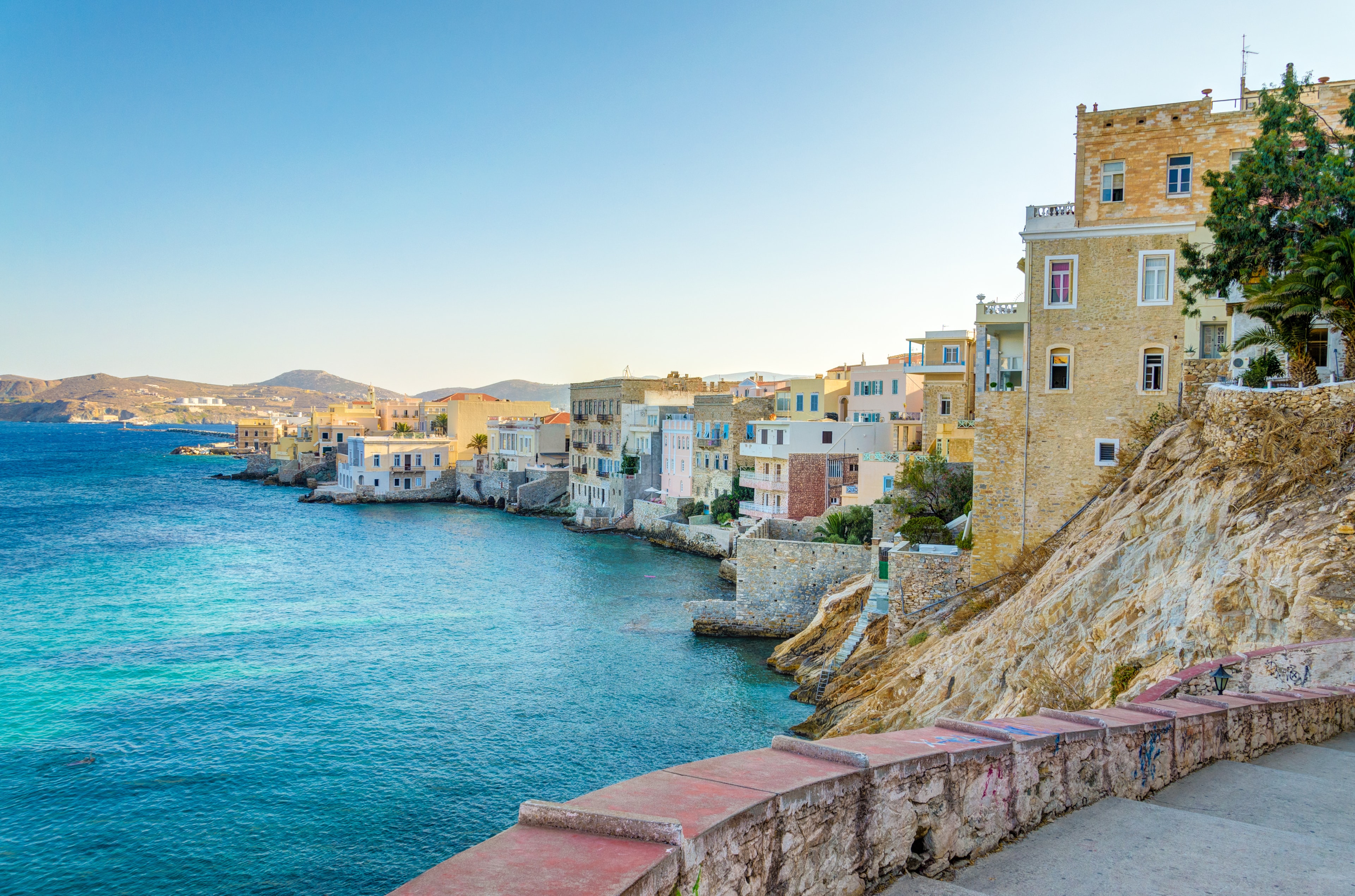
Seaside towns offer a peaceful daily rhythm, with local markets, traditional cafés and a strong sense of community — typical of life across the Greek islands
Traditions
In terms of cultural depth, Greece offers one of the most immersive experiences: although only 12 nationwide public holidays are observed, virtually every town stages its own patron-saint panigyri and weekly street markets, so the calendar is dotted with well over a hundred local festivals that keep community life vibrant year-round.
Portugal offers a dynamic mix of maritime history and contemporary culture, exemplified by UNESCO-listed Fado music and national festivals like São João in Porto.
Malta, though smaller, packs a layered cultural identity — from British colonial heritage to Catholic festivities that dominate its public calendar.
Climate
Malta takes the lead with over 300 sunny days per year, ideal for those who value year-round warmth.
Greece features iconic Mediterranean summers, especially in the south where July highs average +33°C in Athens.
Portugal offers more balance, with milder Atlantic breezes and a more temperate range — summer highs average +25…28°C, making it attractive to those seeking comfort over heat.
Language
Malta is officially bilingual — Maltese and English share constitutional status — and today over 95% of residents say they understand or speak English, making everyday communication with locals virtually seamless.
In Portugal, English is widely understood in cities and tourist zones, though integration requires gradual Portuguese proficiency for dealing with bureaucracy or smaller towns.
Greece demands the most language adaptation — only half the population speaks English, and Greek is essential in public services and daily tasks.
Which Golden Visa suits your goals and lifestyle?
Each of the three Golden Visa programmes — Greece, Portugal and Malta — offers a compelling path to European residency, but they cater to different investor profiles. The best choice depends on your priorities: flexibility, speed to citizenship, investment strategy, tax planning or long-term lifestyle.
Greece: best for flexibility and low-cost entry
Greece is ideal for investors seeking affordable entry, investment diversity, and minimal presence requirements. With a broad range of real estate options starting at €250,000 and additional routes through funds or deposits, it’s the most versatile programme.
The 5-year renewable residence permit requires no time spent in the country, and Greece’s special tax regimes for pensioners and investors add to its appeal. However, the path to citizenship is longer and demands real physical presence.
Choose Greece if you want a low-entry, flexible investment route and don’t intend to live in the country full-time.
Portugal: best for fast-track citizenship with light presence
Portugal’s programme offers the shortest route to citizenship in the EU — just 5 years — with only 7 days of stay per year. While investment thresholds are higher and real estate no longer qualifies, the fund route offers potential for long-term growth. The new NHR 2.0 regime still provides targeted tax relief for specific categories of residents.
Choose Portugal if you aim for a second passport quickly, prefer light presence obligations, and are comfortable with financial investment vehicles.
Malta: best for permanent security and lifestyle convenience
Malta is the only country in this comparison to offer lifelong permanent residence from the outset.
The Malta Permanent Residence Programme provides unmatched stability, broad family inclusion, and low effective tax rates for non-domiciled residents. English fluency, a reliable healthcare system, and a strong expat community make it especially attractive for retirees and English-speaking families.
Choose Malta if you value permanent security, lifestyle convenience, and tax flexibility more than speed to citizenship or investment returns.
Immigrant Invest is a licensed agent for citizenship and residence by investment programs in the EU, the Caribbean, Asia, and the Middle East. Take advantage of our global 15-year expertise — schedule a meeting with our investment programs experts.
Ultimate comparison of Golden Visa programs
-
Master the residency process
-
Get expert tips and documents
-
Estimate costs accurately
 Trusted by 10,000+ investors