







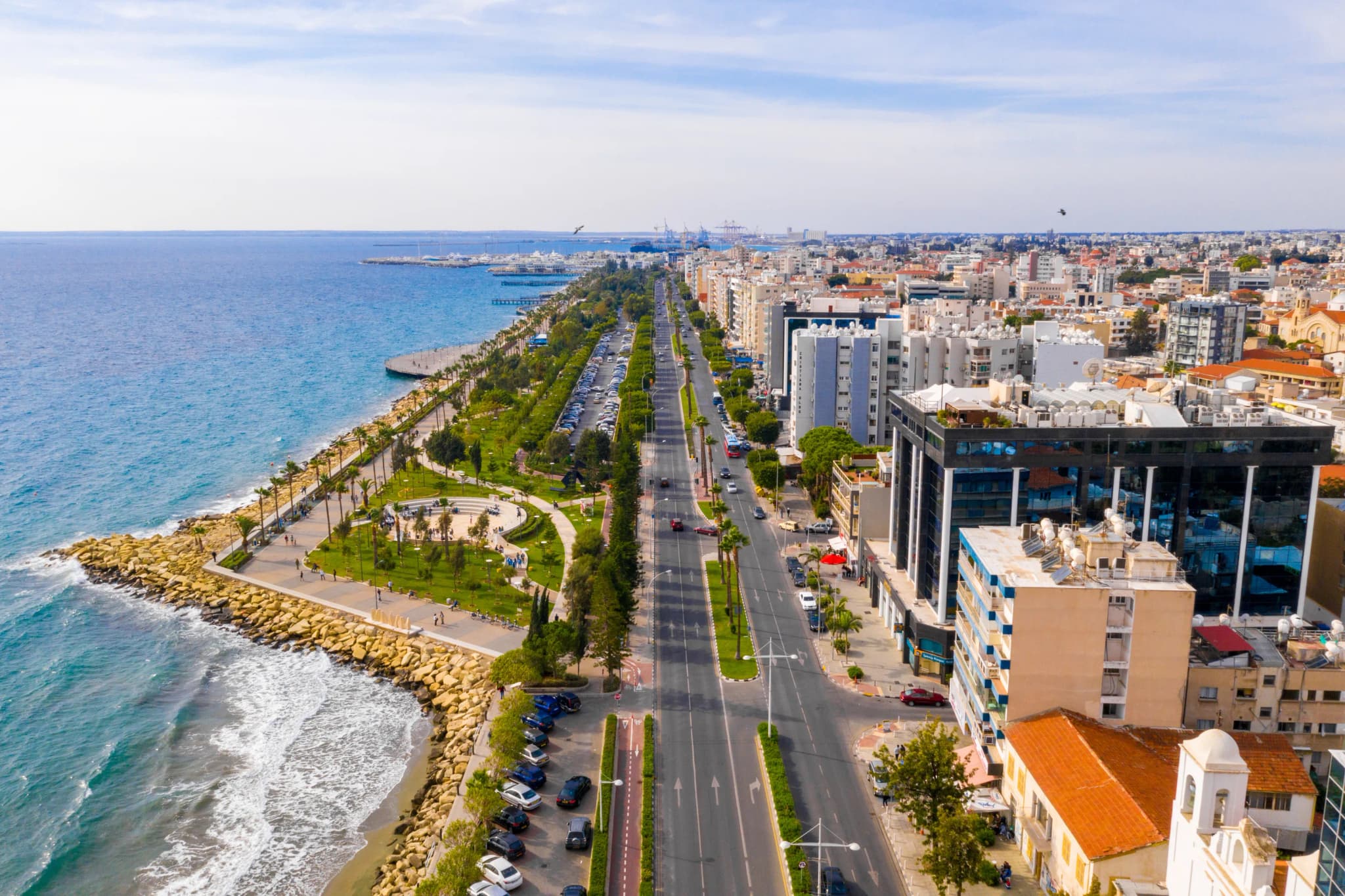

Cyprus offers a Mediterranean lifestyle at a cost that varies widely by city, household, and lifestyle. A single person may spend from €1,400 a month including rent, while a family of four with children attending an international school should budget around €3,500—6,000 or more.
This guide sets out realistic monthly budgets, compares costs across Cyprus’s main cities, and highlights the upfront expenses many estimates leave out. For non-EU nationals, it also explains how a property investment from €300,000 can lead to permanent residence.
How much does it cost to live in Cyprus in 2026?
Cyprus sits roughly in the middle of the EU cost-of-living table. Eurostat puts its consumer price level at 89% of the EU average, so everyday goods and services are around 11% cheaper than across the bloc as a whole[1]Source: Eurostat — Household consumption price levels across the EU in 2025.
A single person needs €1,400—2,400 per month to live comfortably, including rent[2]Source: Numbeo — Cost of living in Cyprus. A family of four should budget €3,500—6,000, depending on the city, type of housing, and schooling. Limassol is the most expensive option, followed by Paphos, while Nicosia and Larnaca are easier on the budget.
Housing is the biggest expense. Apartment prices in Cyprus rose 10.8% year on year in the first quarter of 2026. Rents and mortgage payments are particularly high in Limassol, where strong international demand has pushed prices well above the national average: values there are now 53% above 2010 levels, compared with 27% nationwide[3]Source: Cyprus Business News — Apartment prices up 10.8% in Q1, 2026, compared to last year.
Buying real estate in Cyprus may open the door to a residence permit. Non-EU nationals who purchase new residential property worth at least €300,000 may apply for lifelong residence in the country. If they no longer need the permit, they can sell the property and potentially benefit from capital appreciation.

Trusted by 10,000+ investors
Check your eligibility for Cyprus permanent residence
What are the housing costs in Cyprus?
Housing is usually the largest part of a household budget in Cyprus. Costs vary sharply by location: Limassol is the most expensive market for both renting and buying, while Nicosia, Paphos, Larnaca, and Paralimni offer more affordable options.
Renting a home in Cyprus
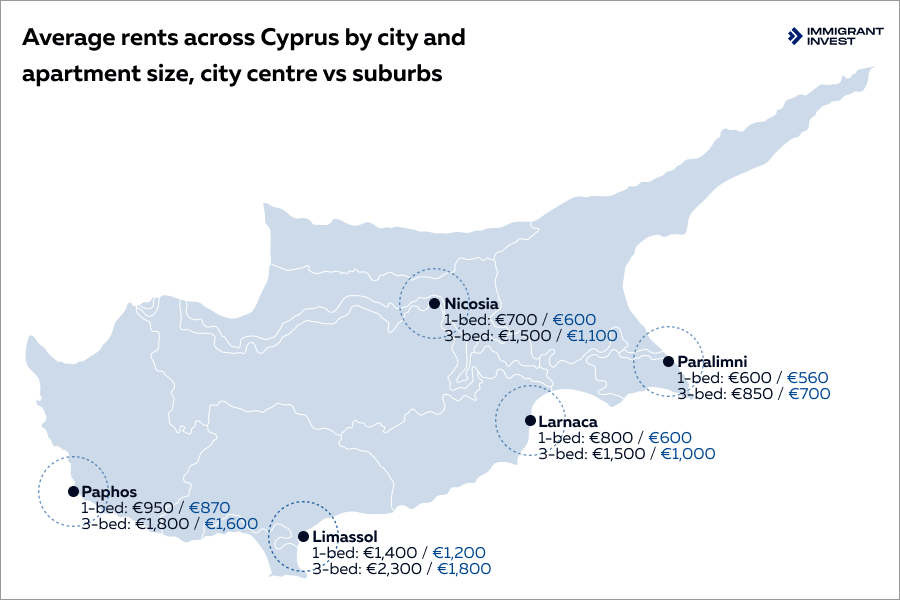
Limassol has the tightest and most expensive rental market. A 1-bedroom apartment outside the city centre costs around €1,200 per month[4]Source: Numbeo — Cost of living in Limassol. Paralimni offers the cheapest rents, with a 1-bedroom apartment averaging about €500—600 per month.
Tenants pay a deposit equal to 2 months’ rent. When an estate agent is involved, the fee is commonly 1 month’s rent plus 19% VAT, although renting directly from a landlord allows avoiding this charge. Furnished apartments cost around 15—25% more than comparable unfurnished properties.
Apartment buildings may also charge communal maintenance fees of approximately €30—150 per month, depending on the size of the complex and its facilities. 1-year leases are standard, while shorter 6-month contracts are less common and often come at a higher monthly rate.
Buying property in Cyprus
Property prices in Cyprus continued to rise in early 2026. In the first quarter, the Residential Property Price Index increased by 7.5% year on year, driven mainly by apartment prices, which climbed 10.8%. House prices rose more moderately, by 3%.
The average property price in Cyprus is €2,500 per square metre. Across the main cities, average prices in city centres and outside central areas are:
- Limassol — €4,600 and €3,400;
- Paphos — €3,900 and €2,200;
- Larnaca — €3,300 and €1,800;
- Paralimni — €2,700 and €3,200;
- Nicosia — €2,700 and €2,000.
Real estate purchasers should budget for taxes and transaction costs. New property is subject to 19% VAT, although buyers purchasing a qualifying primary residence may benefit from the reduced 5% rate[5]Source: Cyprus Tax Department — Immovable Property.
A Land Registry transfer fee is a one-off charge paid by the buyer when ownership of the property is transferred and registered in their name. It applies mainly to resale properties, which are not subject to VAT. The fee is calculated progressively at rates of 3—8%, depending on the property’s value.
Cyprus currently grants a statutory 50% reduction on the transfer fee calculated under these rates, so the buyer pays half of the standard amount. Where VAT is charged on the purchase, no Land Registry transfer fee is payable[6]Source: Cyprus Department of Lands and Surveys — Sale/Exchange fees and charges.
Purchasing property can offer an alternative to long-term renting while providing the potential for capital appreciation. A new property purchase of at least €300,000 may allow non-EU nationals to apply for Cyprus permanent residence.
Examples of real estate in Cyprus


Cyprus, Paphos
€1,607,000 — €2,239,000
Comfortable and stylish villas, Konia, Paphos
 452 m² — 630 m²
 4
4  4
4 
Cyprus, Limassol
€1,300,000 — €2,200,000
Modern apartments with bright elements, Agios Athanasios, Limassol
96 m² — 585 m²1—6 1—6 
Cyprus, Paphos
€435,000 — €575,000
Stylish villas with traditional elements, Pegeia, Paphos
116 m² — 153 m²3—4 3—4 Monthly utility costs in Cyprus: electricity, water, gas, Internet, and mobile plans
Utility bills in Cyprus are fairly modest for much of the year, but summer can change the picture quickly. Electricity is the main variable, especially in homes that rely heavily on air conditioning, while water, cooking gas, broadband, and mobile costs are more predictable.
Electricity
Household electricity prices in Cyprus are close to the EU average. In the second half of 2025, households paid an average of €27.74 per 100 kWh, or about €0.277 per kWh, including taxes and levies. This was slightly below the EU average of €28.96 per 100 kWh[7]Source: Eurostat — EU household electricity prices stable in 2025.
At that rate, electricity consumption alone would cost approximately:
- 250 kWh per month — €70;
- 400 kWh per month — €110;
- 600 kWh per month — €165.
Seasonal use can make a substantial difference. For a 2-bedroom apartment, a household with limited winter heating might spend around €60—100 per month, while intensive air-conditioning use in summer can push bills above €200 and, in less efficient homes, towards €400.
Electricity remains relatively expensive in purchasing-power terms. Although Cyprus is no longer among the EU’s most expensive countries for household electricity in nominal terms, the price reaches 30.37 purchasing power standards per 100 kWh, placing a heavier burden on local household budgets.
Cyprus relies heavily on imported petroleum products for electricity generation, which leaves household costs exposed to changes in international fuel prices. Even so, electricity became noticeably cheaper in 2025: in the second half of the year, Cyprus recorded the largest annual fall in household electricity prices in the EU, at 14.7%[8]Source: Famagusta News — Cyprus to see the largest reduction in electricity prices.
Business users face a different cost structure. Cyprus has the 2nd highest non-household electricity price in the EU, at €24.29 per 100 kWh[9]Source: Eurostat — Non-household electricity prices in 2nd half of 2025: -3.5%. This figure applies to commercial consumers.
Water
Water is a relatively minor household expense in Cyprus. For a 2-bedroom apartment shared by two or three people, a sensible budget is around €15—35 per month. Bills are often issued every 2 or 4 months, so the invoice will cover several months at once. For example, a couple spending around €15 per month may receive a bill of approximately €60 every 4 months.
Local authorities set their own tiered water tariffs, so rates vary by municipality and increase with consumption[10]Water Development Department — Water pricing. In Limassol, for example, household rates start at around €0.90 per cubic metre, with higher usage charged at progressively higher rates[11]Source: Limassol District Local Government Organisation — Water Supply. The system is intended to curb waste in a country with limited water resources.
Cooking gas
In most Cypriot apartments, cooking is electric rather than gas. Newer homes typically have electric ovens and ceramic or induction hobs, while properties with gas appliances usually use bottled LPG because mains gas is not available.
Cooking gas is inexpensive. A 10 kg LPG cylinder costs about €18—25. For a 2-bedroom home with 2 or 3 occupants using gas only for cooking, one cylinder may last 2 to 4 months, equivalent to roughly €5—12 per month.
Broadband Internet and mobile phone plans
The main Internet and mobile providers in Cyprus are Cablenet, Epic, CYTA, and Primetel. Home broadband typically costs €25—50 per month, depending on the speed and package. Introductory discounts are common, and some plans also include TV, cinema, or mobile services[12]Source: Cyprus Internet and mobile providers — Cablenet, Epic, CYTA, and Primetel.
Mobile contracts cost €15—33 per month, with unlimited domestic calls, texts, and data available from several providers. Prepaid packages may start at around €10 per month[13]Source: Cyprus mobile phone plans — Cablenet, Epic, CYTA, and Primetel.
Some providers combine broadband, television, and mobile service in a single package. Premium bundles typically cost around €90—100 per month.

Cyprus ranks 16th for fixed broadband download speed in the EU, ahead of Germany, Italy, Belgium, Austria, and Greece[14]Source: Ookla’s Speedtest Global Index — Median Country Speeds Updated June 2026
What do groceries and dining out cost in Cyprus?
Food shopping in Cyprus is relatively affordable, particularly if you buy locally produced goods. Imported brands and specialty products can increase the cost of a weekly shop, but fresh fruit, vegetables, dairy products, and olive oil are widely available at reasonable prices.
Groceries
In Cyprus, shoppers can expect to pay around:
- milk — €1.75;
- white bread — €2;
- rice — €2.80;
- eggs — €4;
- local cheese, 1kg, — €11.75;
- chicken fillets, 1kg — €9.30;
- beef, 1kg — €15.90;
- apples, 1kg — €2.25;
- bananas, 1kg — €1.80;
- tomatoes, 1kg — €2.60;
- potatoes, 1kg — €1.50;
- onions, 1kg — €1.35.
For two people, a typical weekly grocery shop costs around €60—80 at a discount or mid-range supermarket such as Lidl or Alphamega. This covers everyday staples including bread, dairy, eggs, chicken, fruit, vegetables, and olive oil, assuming mostly local or own-brand products.
At larger full-service chains such as Sklavenitis or Metro, the same basket costs €75—100 a week. Imported, organic, and premium brands can increase the bill by 25—40%, while spending on meat, alcohol, and convenience foods will push costs higher still.
Shopping at local fruit and vegetable markets can reduce grocery bills, particularly when buying seasonal produce. The government's e-Kalathi platform also lets shoppers compare prices across major supermarket chains before they buy[15]Source: Ministry of Energy, Commerce and Industry — e-Kalathi electronic price comparison platform.
Dining out
Eating out is one of the pleasures of living in Cyprus, with options to suit almost every budget. Traditional tavernas and neighbourhood cafés offer the best value.
Typical prices include:
- Mid-range restaurant for two with three courses: €50—80.
- Traditional taverna meal for two with local wine: €35—65.
- Fast-casual lunch: €8—14 per person.
- Cappuccino: around €3.40.
- Dinner for two at a waterfront or high-end restaurant in Limassol: €80—150+.
Residents who dine out regularly will usually spend less than visitors, particularly by choosing neighbourhood restaurants away from the main waterfronts.
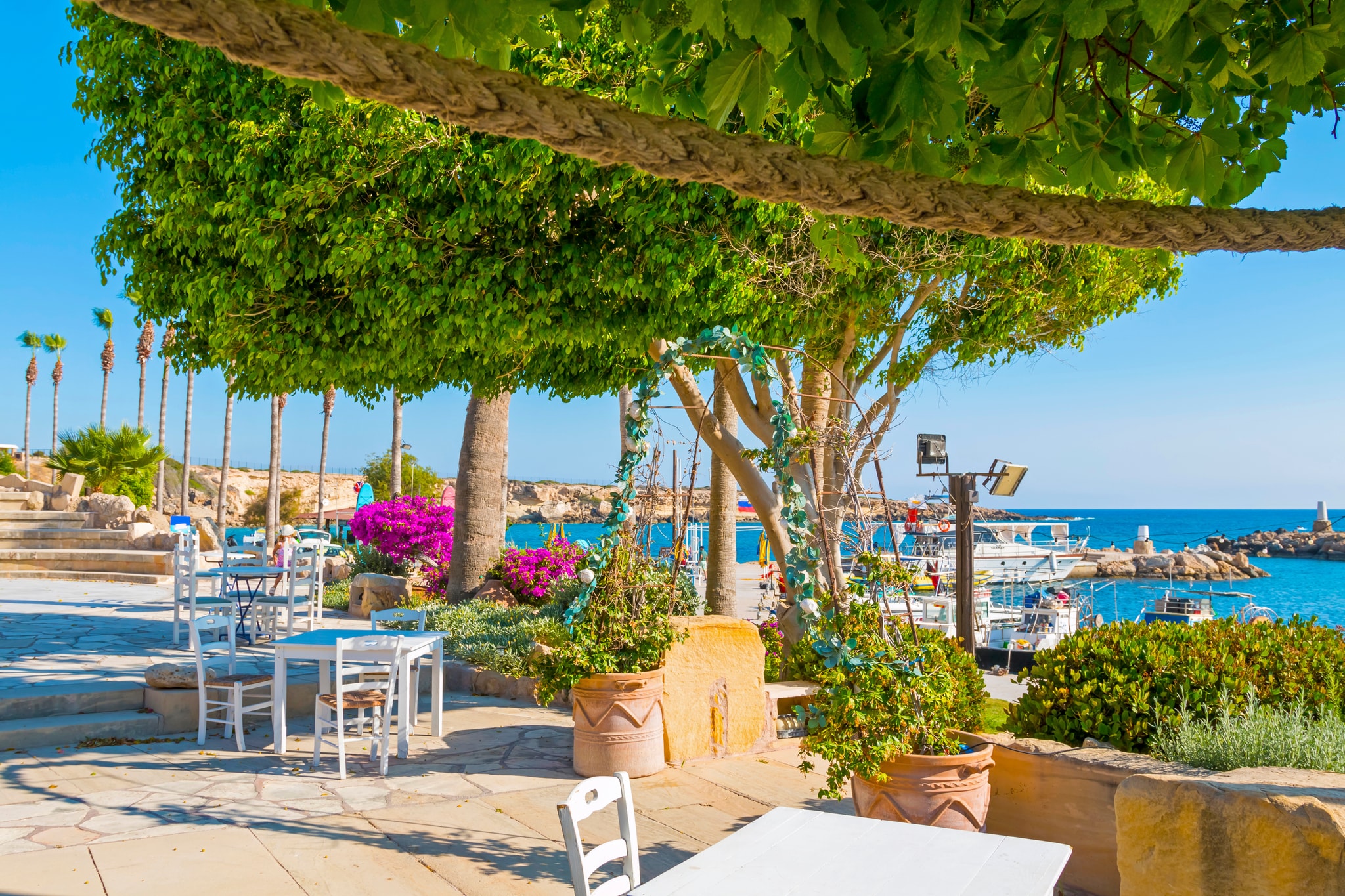
Restaurant prices in popular tourist areas such as Limassol, Paphos, Protaras, and Ayia Napa tend to rise during the peak holiday season from May to October
What does transport cost in Cyprus?
Cyprus is a car-oriented country. Intercity buses run frequently between the main cities during the day, but there is no passenger rail network. Evening and weekend services are less frequent, and many rural villages have only limited connections.
Car ownership costs
Fuel is the largest day-to-day expense. In July 2026, Euro 95 petrol averaged €1.49—1.52 per litre[16]Source: Fuel prices — Cyprus. Depending on mileage and fuel efficiency, a driver might spend roughly €100—180 per month.
Car insurance is priced individually. Comprehensive cover may cost around €400—800 per year, although premiums vary according to the driver's age, claims history, the vehicle, and the level of cover. Drivers over 70 often face noticeably higher premiums — in some cases around €100 more than younger motorists[17]Source: CyprusMail — House committees unite to decry car insurance ageism.
Car owners also pay annual road tax, which is calculated mainly according to the vehicle’s CO₂ emissions. A car emitting 100 g/km pays around €50 per year, while one emitting 150 g/km costs about €150. Higher-emission vehicles are charged progressively more, up to a maximum of €1,500 per year[18]Source: CyLaw — Motor Vehicles and Road Traffic Law of 1972, Law 86/1972.
For cars first registered before January 1st, 2011, a different system applies: road tax is based on engine capacity rather than CO₂ emissions. Annual charges range between €30 and €430, with smaller-engine cars paying less and larger-engine vehicles attracting higher charges.
Routine servicing and maintenance require another €300—500 per year. This is a reasonable allowance for scheduled servicing and minor consumables, but owners should budget separately for tyres, major repairs, and older-car faults.
A usable second-hand car can be found from around €6,000, although €10,000—15,000 provides a wider choice of relatively modern, reliable models. Listings vary sharply according to age, mileage, condition, and whether the vehicle was imported[19]Source: Bazaraki — Cars, Trucks and Vans for Sale in Cyprus.
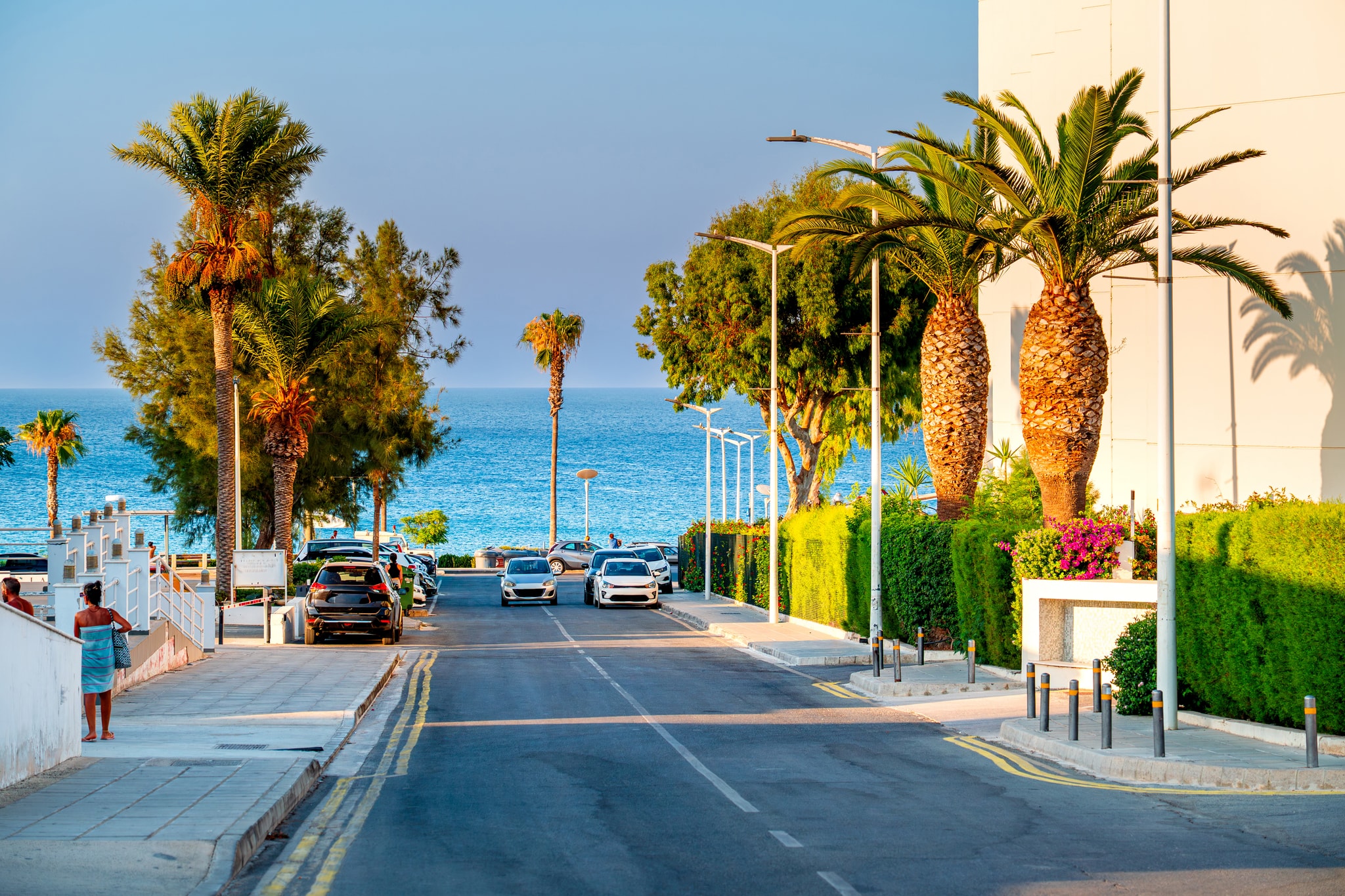
Parking is often free outside busy commercial areas. Charges are more common in central Nicosia and Limassol, municipal car parks, and tourist districts
Public transport
Buses are the only form of public transport in Cyprus. There are no passenger trains or metro system, so buses connect the main cities, airports, and most towns.
A standard urban ticket costs €2.70 if bought on the bus or €2 with a rechargeable Motion Card. A 30-day pass costs €93.60 on an anonymous card or €66.90 on a personalised card, while a 365-day pass is €668.50[20]Source: Cyprus Public Transport — Ticket fares for urban, rural, intercity and school bus services. Intercity and rural routes are also available, with integrated fares for connecting journeys.
Taxis are widely available but much more expensive than buses. They are easy to find in the main cities and tourist areas, while ride-hailing apps such as Bolt operate across much of the country. Fares start at around €5, plus about €1.70 per kilometre[21]Source: Numbeo — Taxi fares in Cyprus. A short city-centre trip will therefore often cost around €10—15.
What are the healthcare costs in Cyprus?
Cyprus has a universal public healthcare system known as General Healthcare System, GeSY[22]Source: Health Insurance Organisation of Cyprus — GeSY beneficiary registration: frequently asked questions. Most affluent expats maintain parallel private health insurance for faster specialist access, broader dental coverage, and international coverage.
Public healthcare
GeSY contributions. GeSY is funded through mandatory income-based payments[23]Source: Health Insurance Organisation of Cyprus — GeSY financing and contribution rates. As of 2026, the contribution rates are:
- Employees: 2.65% of earnings.
- Self-employed: 4% of earnings.
- Recipients of dividend, rental, or interest income: 2.65%.
Contributions are capped at an annual income of €180,000 per person. In other words, anyone earning above this amount pays GeSY contributions only on the first €180,000 of income.
Co-payments and covered services. Most healthcare under GeSY is free or available for a small co-payment. The standard charges are:
- €6 for a specialist visit;
- €1 per laboratory test;
- €1 per prescribed medicine.
The system covers visits to a personal doctor, accident and emergency care, diagnostic tests, hospital treatment, and specialist referrals. Routine dental care for adults is not covered, although some dental services are available for children and specific medical cases.
To protect frequent users, annual co-payments are capped at €150 for most adults and €75 for children under 21, low-income pensioners, and recipients of the Guaranteed Minimum Income.
Private health insurance and out-of-pocket costs
Private health insurance for a single adult costs €500—1,800 per year for local or comprehensive cover, while international policies are usually considerably more expensive. Costs vary by age, medical history, and level of cover.
For those paying privately without insurance, typical costs are:
- GP consultation: from €40;
- specialist appointment: €80—300;
- dental check-up and cleaning: €40—90.
Cyprus permanent residence holders, including investors, should include private health insurance in their budget. Comprehensive inpatient and outpatient cover is required for the initial permanent residence application and must be maintained for renewals.
What do education and childcare cost for expat families in Cyprus?
Education in Cyprus is compulsory for ages from 4 years and 8 months to 15 years[24]Source: Republic of Cyprus — The education system in Cyprus. Costs depend largely on whether children attend public or international schools. Public schools are free for residents but teach primarily in Greek.
Many expatriate families, including those who obtain Cyprus permanent residence through investment, choose private international schools, where tuition fees are charged. Childcare and extracurricular activities are additional costs that families should include in their budget.
International school fees
Limassol and Nicosia offer the widest choice of British-curriculum and International Baccalaureate schools in Cyprus. Tuition rises as children move through the year groups, although fees vary considerably between institutions[25]Source: School fees in Cyprus — The International School of Paphos, The English School, Foley’s School, International School of Nicosia.
Based on published school fee schedules, families can typically expect to pay:
- Primary school: €5,800—10,000 per child per year.
- Secondary school: €8,000—10,000 or more per child per year.
Tuition is only part of the overall cost. At Foley’s School in Limassol, for example, parents should also allow for:
- Registration deposit: €1,800 on first enrolment; refundable subject to the school’s conditions.
- Uniform: approximately €300—450 in total.
- Textbooks and stationery: around €650 per year.
- School transport: approximately €90—160 per month.
Some schools offer sibling reductions. At Foley’s, the discount is 10% for the second child, 15% for the third, and 20% for each additional sibling, provided the children attend the school at the same time.
For two children attending a mid-range international school in Limassol or Nicosia, a realistic annual budget is around €16,000—26,000, including tuition, transport, uniforms, and books. This is equivalent to roughly €1,300—2,200 per month when spread across the year, excluding the initial registration deposit, optional activities, school trips, and external examination fees.
Nursery and childcare
Nursery and early-years fees at international schools range between €3,250 and €7,500 per child per year. Fees are lowest in Paphos and highest in Limassol, while schools in Nicosia and Larnaca tend to fall between these levels. Registration, meals, uniforms, and extended-day care may be included or charged separately.
Government-supported childcare is available for families, but places are limited and nurseries operate primarily in Greek.
Music, sports, and other activities
Children's extracurricular activities are reasonably priced compared with many Western European countries. Typical monthly costs include:
- music, dance, or art classes: €50—100;
- football, swimming, or other sports clubs: €60;
- private tutoring: €20—40 per hour.
Costs vary depending on the provider, lesson length, and whether classes are individual or in groups.
Universities
Tuition-free undergraduate study at public universities is available only to Cypriot and EU citizens enrolled on Greek-language programmes. Non-EU permanent residents should expect to pay around €6,800 per year at a public university.
Private universities are considerably more expensive. Most bachelor's degrees cost €7,000—12,000 per year, while medicine and veterinary programmes range between €21,000 and €25,000 per year[26]Source: University of Nicosia — Tuition and fees for non-EU students.
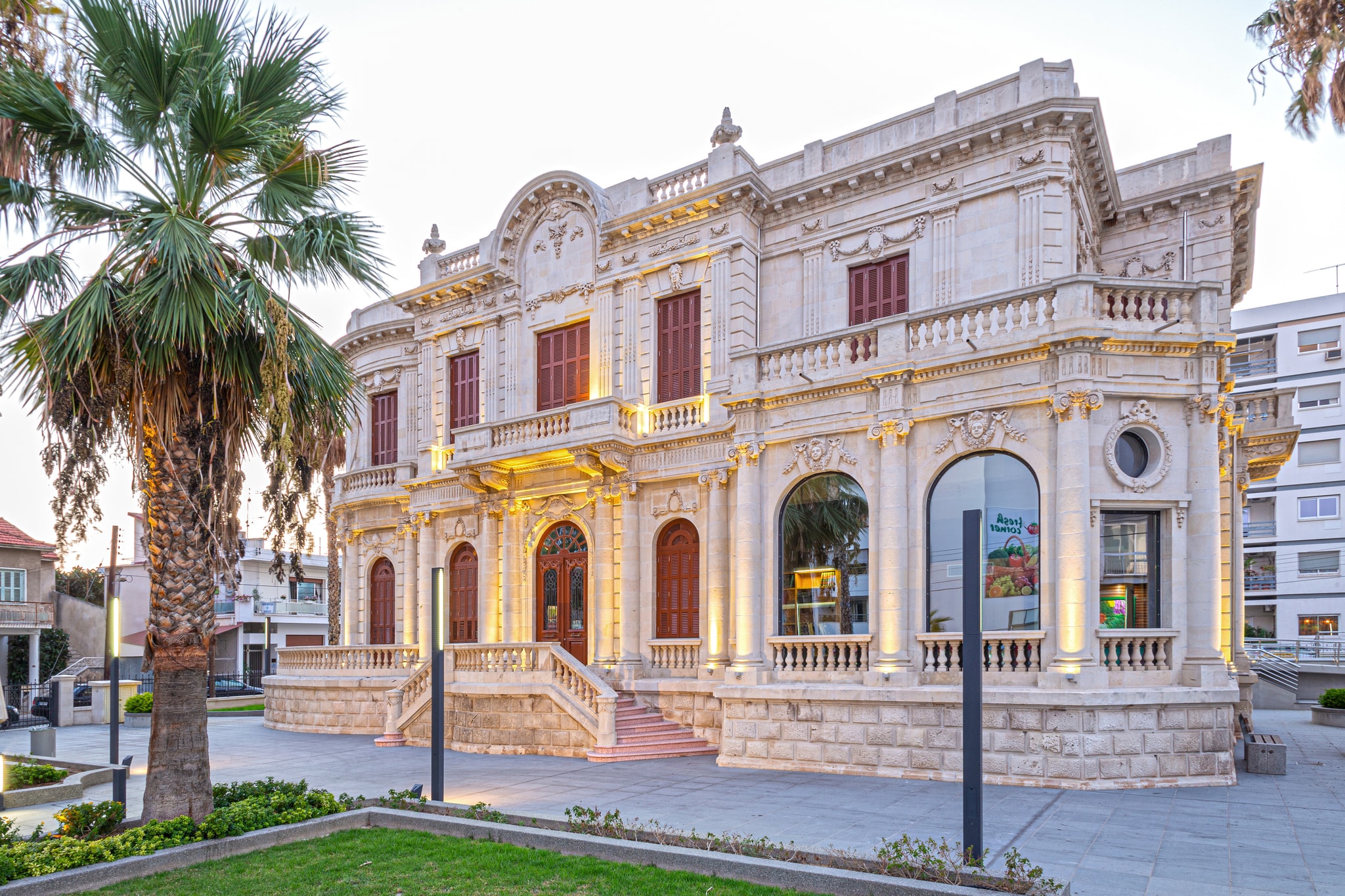
Cypriot residents can use the Limassol Municipal University Library free of charge as a study and reading space
What are the monthly living expenses in Cyprus by city?
Each Cypriot city comes with its own spending pattern, from Limassol’s high-cost international scene to Larnaca’s more compact, practical rhythm. The real difference lies not only in rent, but in how families travel, study, dine, and spend their free time.
Limassol
Limassol is where Cyprus feels most international and where that internationalism is priced in. The city concentrates much of the island’s technology, finance, and professional-services sector, alongside its widest choice of international schools. Living costs are around 20% higher than in Paphos, 25% higher than in Nicosia, and 35% higher than in Larnaca.
For families, the premium rarely stops at rent. School runs, private activities, marina lunches, waterfront dinners, and a packed events calendar can turn convenience into a noticeably larger monthly bill. Limassol offers the broadest choice, but it also makes spending effortless.
Nicosia
Nicosia trades sea views for a more settled, year-round city life. Government, universities, and a broad private sector keep the capital active beyond the tourist season. Established international schools give families more choice than in most other parts of the island. Examples include The English School, The International School of Nicosia, The American International School, and Falcon School.
The spending pattern is different too. Instead of beach clubs and waterfront dining, budgets tend to go towards restaurants, theatre, concerts, museums, tutoring, and after-school activities. Housing is usually easier on the budget than in Limassol, but family schedules can still become expensive.
Larnaca
Larnaca is compact, practical, and easy to navigate. Lower housing costs, direct airport access, and a walkable seafront make it appealing to families who want convenience without the pace or price tag of Limassol.
The city’s cultural life is modest but visible. The Larnaka Festival brings concerts, theatre, and dance to the city each summer, while many everyday outings remain relatively low-cost. Shorter journeys also mean less time and money lost to routine travel.
Paphos
Paphos has a slower rhythm and a stronger holiday-season feel. Its established British community, smaller business market, and coastal setting attract retirees, remote workers, and families whose income does not depend on the local economy.
In Paphos, household spending often shifts towards the car, weekend drives, seaside restaurants, excursions, and seasonal events. International school options are more limited than in Limassol or Nicosia, so families may also need to factor in longer journeys or fewer choices.
Average monthly cost of living in Cyprus by city for a single

How much does it take to live comfortably in Cyprus?
Cyprus can offer a comfortable Mediterranean lifestyle at a relatively manageable cost, but monthly spending is only part of the picture. Newcomers should also budget separately for one-off relocation expenses such as deposits, setup fees, furnishings, and, in many cases, a car.
Typical monthly budget by household
Cyprus remains relatively affordable for the standard of living it offers. A comfortable everyday lifestyle can include better housing, private transport, regular dining out, and room for leisure without drifting into luxury spending.
Costs rise quickly in premium neighbourhoods, larger homes, and more indulgent routines, but day-to-day life can still be managed comfortably on a sensible budget.
Minimum Cyprus living costs by family size
One-off relocation costs when moving to Cyprus
Relocation comes with a cluster of upfront expenses that rarely appear in monthly cost-of-living estimates. Families may need to cover a rental deposit, agency fees, utility connections, SIM cards, school registration, and legal paperwork almost at once.
Housing and transport usually account for the biggest outlay. A suitable furnished home may not be available, leaving newcomers to buy furniture, appliances, and basic household items. A car purchase can add another substantial cost, with smaller expenses often appearing during the first few weeks.
Relocation costs vary with the property, city, and family setup, but the main one-off expenses might include:
- Rental deposit — €1,400+.
- Agency fee — €900—2,800, plus 19% VAT.
- Utility account setup — €100—300.
- Internet installation — €30—80.
- Furnishings for an unfurnished flat — €3,000+.
- Vehicle purchase — €6,000—15,000.
- School registration — €200—2,000 per child.
- Legal work, administration, and translations — €500—1,500.
A family should keep €8,000—20,000 or more aside for the first 90 days, depending on the city, housing choice, and whether a vehicle is needed. This sits outside the normal monthly budget.

Cyprus’s landscapes also make regular travel part of everyday life. Families should allow for higher fuel spending during the first year and beyond
How does the cost of living in Cyprus compare to the UK and the US?
Living costs in Limassol remain substantially lower than in London and New York. Based on the lower end of the monthly estimates, London is around 90% more expensive, while New York costs approximately 150% more[27]Source: Numbeo — Cost of living comparison: Limassol vs London vs New York.
Housing is the biggest dividing line. A 1-bedroom flat in central London costs at least twice as much as in Limassol, while the equivalent in New York is around 170% more expensive. Public transport is another notable gap: a monthly pass costs almost four times as much in London and twice as much in New York.
Everyday spending also adds up. Groceries cost around 25% more in London and 100% more in New York, while dining out is approximately 50% and 100% more expensive, respectively. Petrol is the main exception: it costs about 25% more in London than in Limassol, but roughly 20% less in New York.
Monthly cost comparison: Cyprus vs the UK vs the US
How to settle in Cyprus permanently through the investment programme: key things to know
The Cyprus permanent residence programme offers non-EU investors a route to long-term residence through the investment. Successful applicants receive permanent status from the outset, with approval taking around 9 months.
The residence permit is lifelong, provided the holder continues to meet the programme conditions. Physical presence requirements are limited: applicants need to visit Cyprus at least once every 2 years.
Who can apply
The main applicant must be over 18 and meet a number of personal and financial requirements. These include:
- clean criminal record;
- no ongoing prosecution;
- no entry restrictions or bans affecting EU countries or the UK;
- no sanctions exposure;
- strong personal and business reputation;
- owned or rented accommodation in Cyprus;
- valid medical report;
- medical insurance covering treatment in Cyprus.
Investors must also demonstrate an annual income of at least €50,000. The threshold increases by €15,000 for a dependent spouse and by €10,000 for each dependent minor child.
The family of the investor may be included in the same application. This covers the spouse and children. Children aged 18 to 25 must be unmarried, enrolled as students, and financially dependent on the main applicant. Children with disabilities may be included regardless of age.
Investment options
Applicants for Cyprus permanent residence must invest at least €300,000 in one of the approved categories:
- residential property;
- commercial property;
- shares in a Cyprus-based company;
- units in a Cyprus investment fund.
The investment must be maintained for as long as the applicant relies on the programme for permanent residence.
Permanent residence rights
1. Education for children. State schools are free for permanent residence holders, while private and international schools offering English-language education charge tuition fees.
2. Healthcare for the family. Families are required to rely on private medical care, but can also access Cyprus’s national health system.
3. Business. Permanent residents may acquire stakes in local companies, launch a new venture, or move an existing business to Cyprus.
4. Route to citizenship. After 8 years of legal residence, investors may apply for Cyprus citizenship, subject to the relevant residence, language, and integration criteria.
5. Recovering the investment. Once citizenship or another independent form of permanent status has been secured, the original investment may be released, for example through the sale of the property.

What are the risks and pitfalls when moving to Cyprus?
Careful financial planning before relocating to Cyprus can prevent the most common and costly mistakes. The following risks apply both to general cost-of-living planning and to the Cyprus permanent residence process.
Underestimating the Limassol premium
Limassol is considerably more expensive than the Cyprus average, particularly for housing. Relying on country-wide figures can leave newcomers 25—40% over budget, depending on the neighbourhood, property type, and proximity to the coast.
Apartment prices in Limassol are around 53% above 2010 levels, compared with roughly 27% nationwide, so the budget should always be built around the specific area rather than Cyprus as a whole.
Overlooking summer electricity bills
Air conditioning can transform a manageable winter bill into a major summer expense. A household budgeting €100 per month may face a bill of around €350 in July or August. For a standard apartment, an annual average of €120—180 per month is more realistic, with an additional buffer for the hottest months. Insulation, glazing, and the age of the air-conditioning units can make a significant difference.
Forgetting first-year costs
The first year usually costs far more than the monthly budget suggests. Rental deposits, agency fees, furniture, school registration, a vehicle, insurance, and utility connections can add €8,000—20,000 before regular living expenses begin. These costs should be treated as a separate relocation budget.
Miscalculating tax residence
Holding Cyprus permanent residence does not automatically make someone a Cyprus tax resident. Tax residence usually begins after spending 183 days or more in Cyprus within a calendar year. It may also apply after 60 days, but only when several additional conditions are met.
Once tax residence is established, income from Cyprus and abroad may need to be declared locally. The non-domicile regime can reduce certain taxes, but it does not remove every charge. GeSY contributions of 2.65% may still apply to income such as dividends, interest, and rent.
Poor source-of-funds preparation
Permanent residence applications require clear evidence of income, investment funds, and their origin. Missing statements, inconsistent transfers, or poorly documented transactions can delay the application and lead to additional compliance checks.
Assuming property purchase always saves money
A €300,000 property purchase should not be compared with rent alone. VAT where applicable, legal fees, maintenance, common expenses, insurance, management costs, and the return forgone on invested capital all affect the true cost.
For permanent residence investors, the investment must remain in place while the permit depends on it. Selling too early or allowing the investment to fall below the required level can put the residence status at risk.
How Immigrant Invest can help with Cyprus permanent residence and relocation planning
Immigrant Invest is a licensed investment migration consultancy that has advised clients on residence and citizenship programmes since 2006. For Cyprus permanent residence, the team manages the process from the first eligibility review through to approval and relocation.
Our services include:
- Eligibility assessment. Review of the main applicant, family members, income requirements, and possible application risks.
- Compliance and source-of-funds review. A preliminary check of financial history and supporting documents before the application is prepared.
- Investment and property support. Assistance with selecting an investment and confirming that it meets the programme requirements.
- Document preparation. Coordination of translations, notarisation, certified copies, and the full application file.
- Application filing and follow-up. Submission to the Civil Registry and Migration Department, with ongoing communication during processing.
- Post-approval assistance. Support with residence card collection, renewals, and other practical steps required after approval.
The work does not end with immigration formalities. We also help families settle into everyday life in Cyprus, including healthcare and GeSY registration, housing, banking, exchanging or obtaining a Cyprus driving licence, and other relocation arrangements.
Key takeaways: what to remember about cost of living in Cyprus
- A single person living in Cyprus should budget around €1,400—2,400 per month including rent, while a family of four may need €3,500—6,000, especially if children attend an international school.
- Limassol is the most expensive city, with living costs around 20% higher than in Paphos, 30% higher than in Nicosia, and 35% higher than in Larnaca.
- Summer electricity bills can rise sharply with heavy air-conditioning use, especially in older or less energy-efficient homes.
- Relocation costs should be budgeted separately. Deposits, agency fees, furnishings, a vehicle, and school setup can require €8,000—20,000 in the first 90 days.
- An investment from €300,000 can provide lifelong permanent residence, with the option to include a spouse and children in the application.
Immigrant Invest is a licensed agent for citizenship and residence by investment programs in the EU, the Caribbean, Asia, and the Middle East. Take advantage of our global 15-year expertise — schedule a meeting with our investment programs experts.

 Trusted by 10,000+ investors