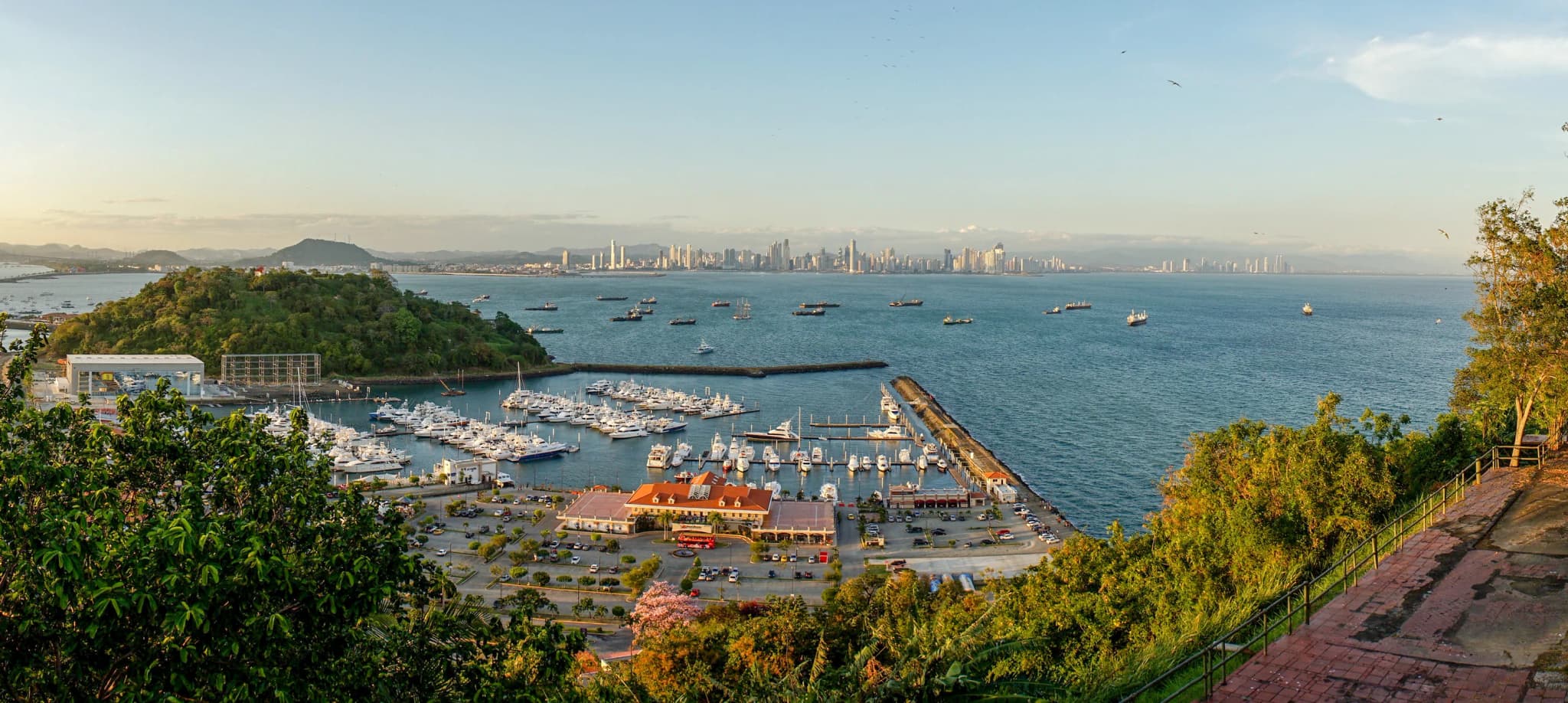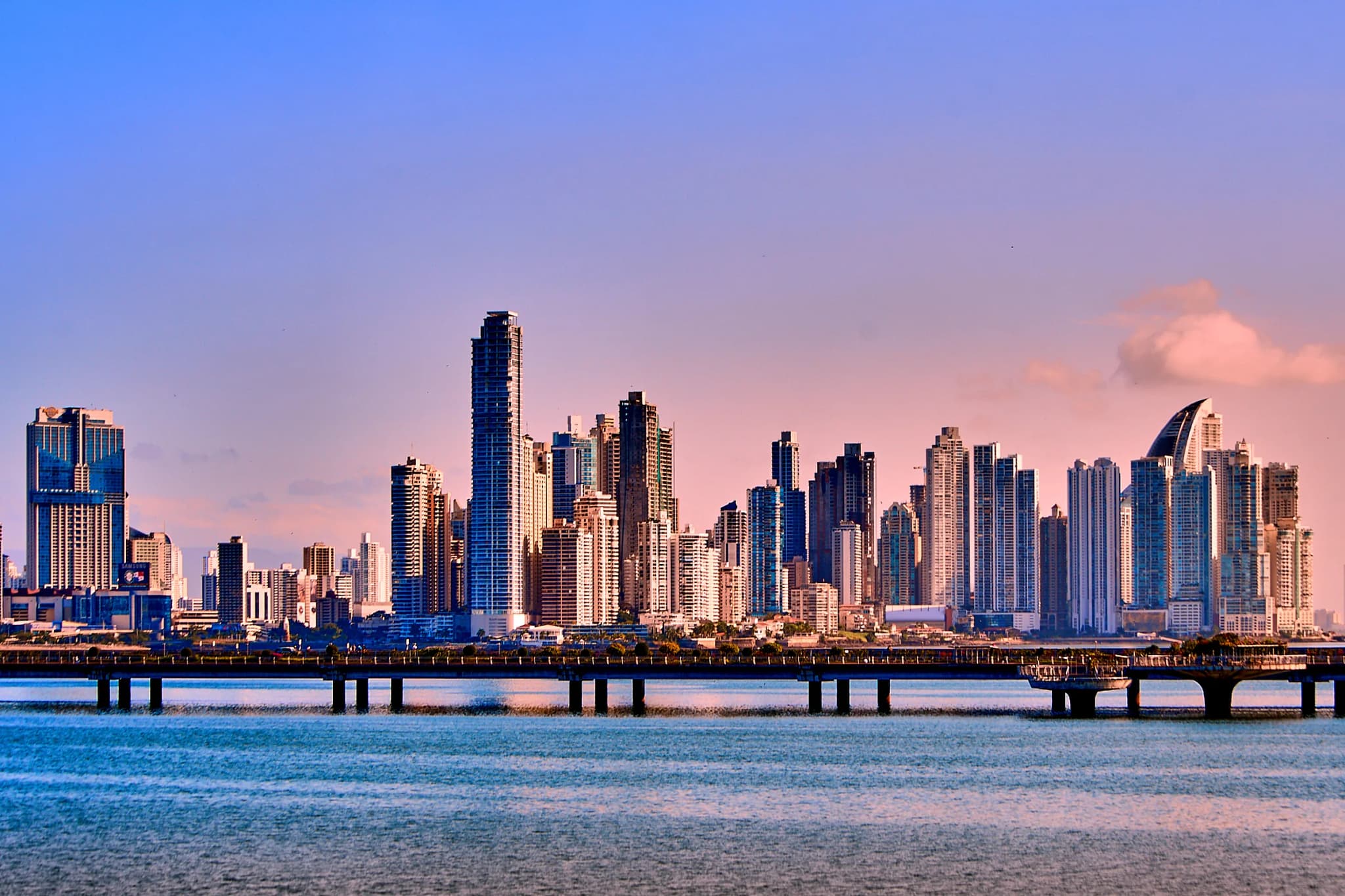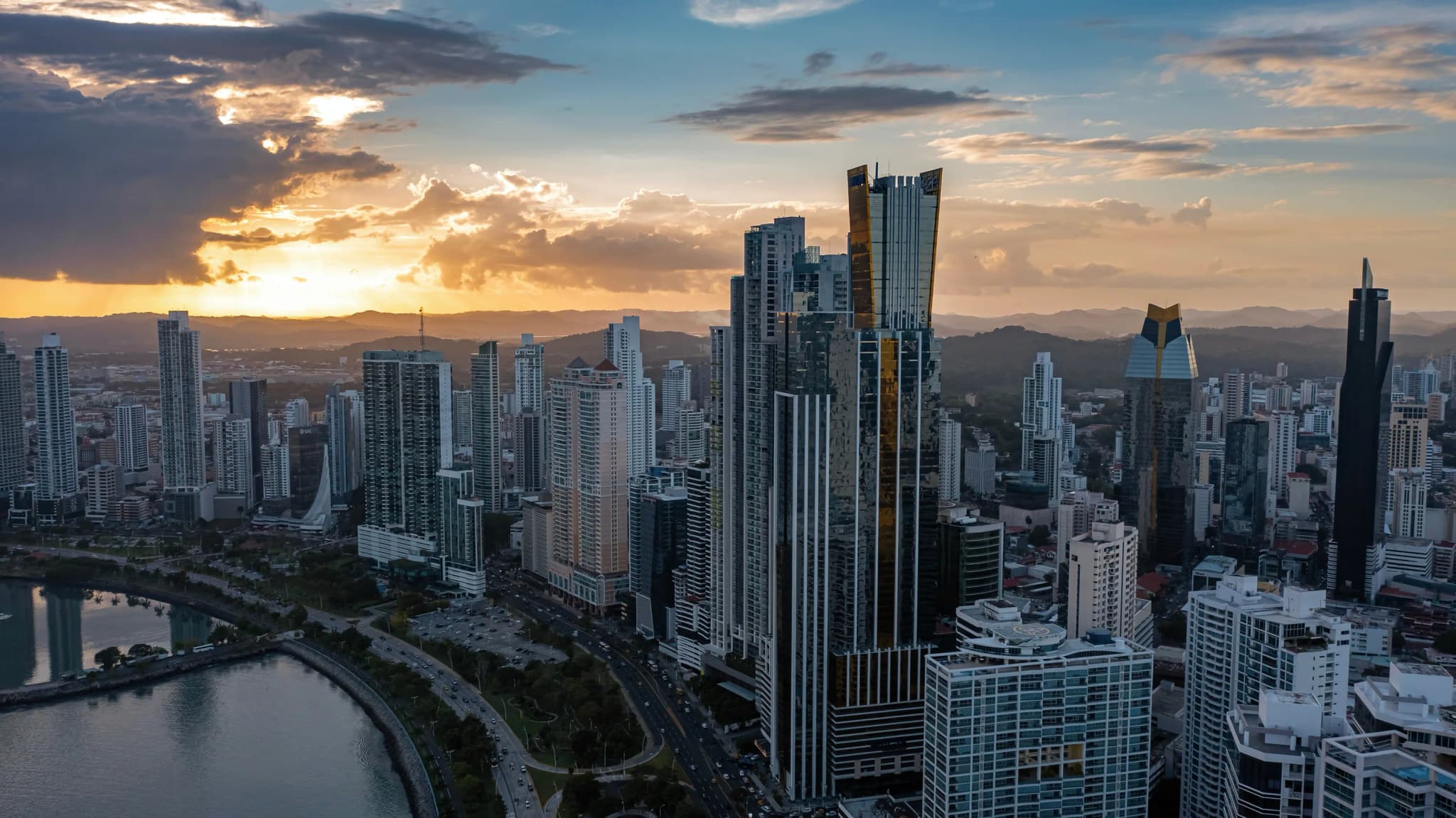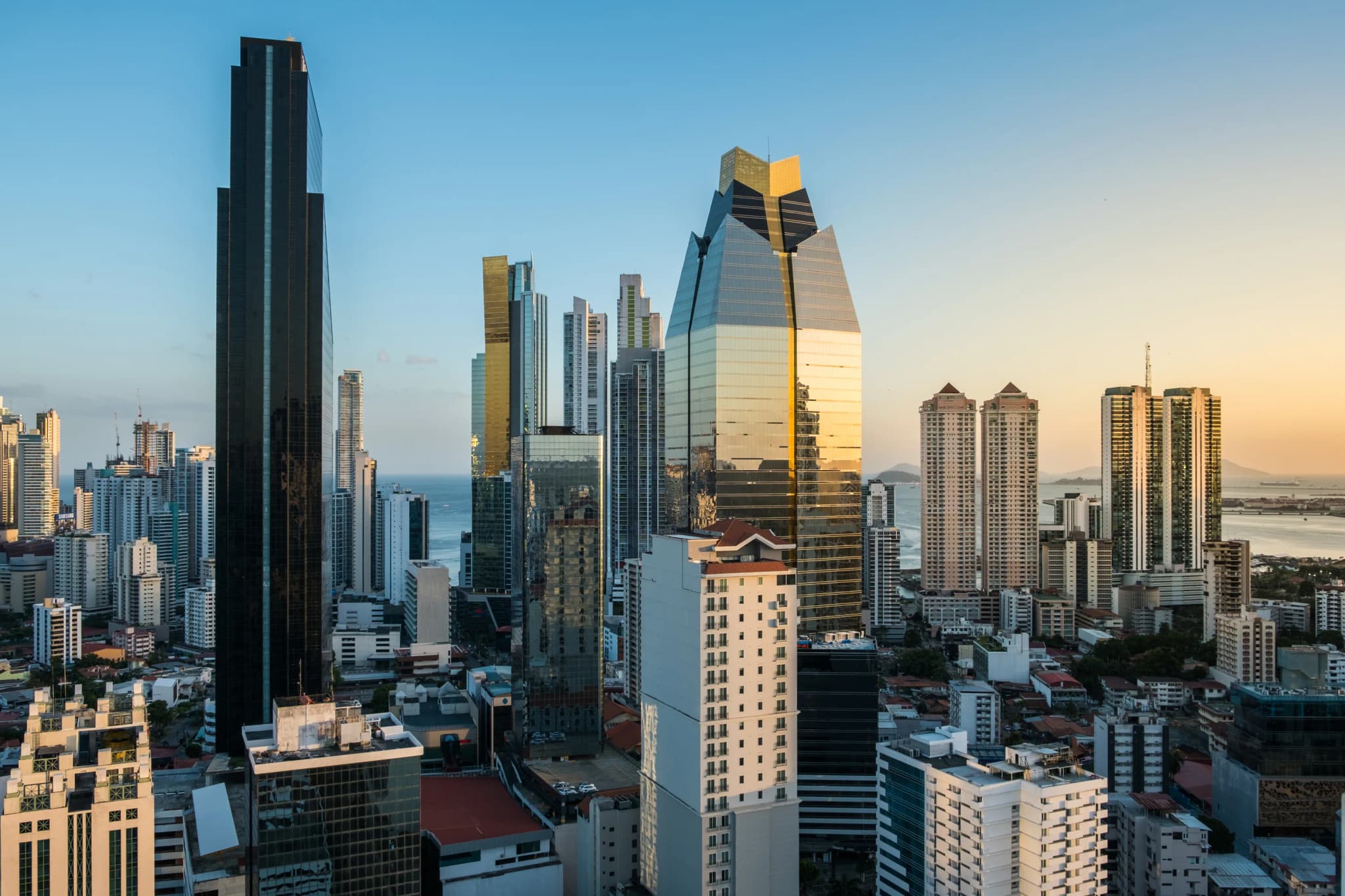









Panama has ranked first in the InterNations Expat Insider survey for 2024 and 2025 with 94% of expats reporting happiness with their life abroad.
This guide explains what living in Panama involves in practice: advantages and limitations, the most suitable locations, realistic cost expectations, and the main residency pathways, including Panama Qualified Investor Programme.
What is Panama as an expat destination?
Panama is a country in Central America located on an isthmus that connects North and South America and separates the Pacific Ocean from the Caribbean Sea. Its economy rests on three pillars: the Panama Canal, a Tocumen-anchored aviation hub, and one of Latin America's largest financial services sectors.
A service-driven economy and strategic location support steady growth. According to Panama’s official statistics office, the country’s GDP rose by 2.7% in 2024[1]Source: 2024 GDP data, INEC. In 2025, GDP growth is projected at 4.5%, recovering from the impact of the Cobre Panamá mine closure[2]Source: Panama country page, IMF. Panama has also used the US dollar as legal currency since 1904, eliminating exchange-rate risk for dollar-denominated households[3]Source: Qualified Investor decree, Panama Official Gazette.
Strong economic fundamentals translate into a high-quality environment for expatriates. In the 2025 Expat Insider ranking, Panama placed first in all five indices: Working Abroad, Expat Essentials, Ease of Settling In, Personal Finance, and Quality of Life, being the only country to achieve this[4]Source: Expat country ranking, InterNations.
Panama offers a range of residence options for various expats, including retirees, digital nomads, and investors. Some routes are designed for temporary stay, while others lead directly to permanent residence.
High-net-worth individuals can get permanent residence in Panama through the Qualified Investor Programme, also known as the Panama Golden Visa, if they meet the relevant investment and compliance requirements.

Trusted by 10,000+ investors
Check your eligibility for the Panama Golden Visa
13 reasons why foreigners choose Panama for relocation
Panama attracts a diverse international community and is increasingly chosen as a relocation destination by high-net-worth and ultra-high-net-worth individuals, retirees, and those earning foreign-source income. The country offers a combination of financial, legal, and lifestyle advantages that support both capital preservation and long-term living.
The reasons below are ordered from those most relevant to capital-ready and income-focused individuals to broader lifestyle considerations.
1. Fully dollarised economy
Panama adopted the US dollar as legal currency in 1904[5]Source: Currency law, InfoJurídica Panamá. The US dollar is an official currency in Panama alongside the Panamanian balboa, and both are used in the country. For North American and European HNW households, budgeting, asset protection, and cross-border transfers are straightforward compared with any peso or local-currency jurisdiction.
2. Territorial tax system
Panama taxes only income generated within the country. Foreign-sourced income is not included in Panama's taxable income for tax residents. There is also no inheritance tax in Panama[6]Source: Panama country profile, UN DESA.
Relocating to Panama may reduce the overall tax burden for individuals with international income. However, some individuals may remain subject to worldwide taxation in their home country regardless of residence.
3. Direct pathway to permanent residence
Panama operates the Qualified Investor Programme, introduced by Decreto Ejecutivo No. 722 of 15 October 2020[7]Source: Qualified Investor decree, Panama Official Gazette, which allows foreigners to obtain permanent residency in exchange for investment. The entry threshold is $300,000 in Panamanian real estate.
Participants in the Qualified Investor Programme are not required to obtain temporary residence first.
4. Panama Canal economic moat
The Canal handles approximately 6% of global seaborne trade and generates revenues that anchor Panama's fiscal stability[8]Source: Panama Canal trade impact, Newsroom Panama. Unlike most small economies, Panama's largest single economic asset cannot be offshored, relocated, or disrupted by any single government policy decision.
5. North American proximity and connectivity
Panama offers close geographic proximity to North America, with Panama City located approximately 3 hours from Miami and 5 hours from New York and served by frequent direct flights[9]Source: Airport expansion project, US Department of Commerce. Tocumen International Airport functions as a major regional hub, providing reliable connections across the Americas and to key European cities.
For US and Canadian residents, this allows for efficient travel between locations, minimal time zone differences, and the ability to maintain business and personal ties without long-haul travel.
6. Affordable cost of living
A budget-conscious single expat outside Panama City can live comfortably on $1,200—1,500 per month. A couple in Panama City in a mid-range neighbourhood budgets $2,500—3,500 per month. The figures above do not include rent.
An HNW household in Punta Pacifica with private schooling, international health insurance, and frequent dining out might spend $5,000—10,000 or more per month. It is still well below equivalent costs in comparable gateway cities.
7. Private healthcare quality
Private healthcare in Panama combines international standards with lower costs.
Hospital Punta Pacífica in Panama City is affiliated with Johns Hopkins Medicine International[10]Source: Hospital partnership profile, Johns Hopkins Medicine, part of a leading US academic medical system. Under this collaboration, Johns Hopkins experts support clinical programme development, staff training, and quality and patient safety improvements.
Private specialist consultations typically cost $50—130, compared to $200—450 or more for equivalent care in the US.
8. Political and institutional stability
Panama has maintained democratic governance with regular peaceful transitions of power. The country's governance profile places it in the high range for Representation according to International IDEA's Global State of Democracy assessment[11]Source: Democracy indices ranking, International IDEA.
9. International schools
Panama City hosts a concentration of international schools offering International Baccalaureate and Advanced Placement curricula, accredited by US and European bodies. Costa del Este and Clayton are the primary school zones for expat families.
10. Retiree visa discounts
Holders of the Retirement Visa, who receive a lifetime pension, are entitled to legally mandated discounts on healthcare services, entertainment, hotel stays, restaurant meals, and domestic flights. These benefits form a structured support system for retirees living in Panama.
11. Established expat community
Panama City hosts established communities of US and Canadian citizens, European professionals, and Latin American business families. Active InterNations chapters, yacht clubs, golf clubs, and English-language networking events make social integration faster than in many comparable destinations.
12. Widespread English in business and services
English is widely used in Panama City’s business, medical, legal, financial, and expat-facing services, allowing foreign residents to handle key aspects of relocation without significant language barriers.
However, Spanish remains the primary language in everyday life, particularly outside Panama City and major expat areas, so conversational Spanish is helpful for local interaction.
13. Biodiversity and natural environment
Panama offers immediate access to rainforest, Pacific beaches, Caribbean coastline, and highland cloud forest, often within a few hours of Panama City. This proximity allows residents to combine urban living with year-round outdoor activities and weekend travel without long distances.
The country is home to around 10,000 plant species and more bird species than the United States and Canada combined, reflecting its role as a major biological corridor. In the InterNations survey, 99% of expats positively rated Panama’s natural environment.
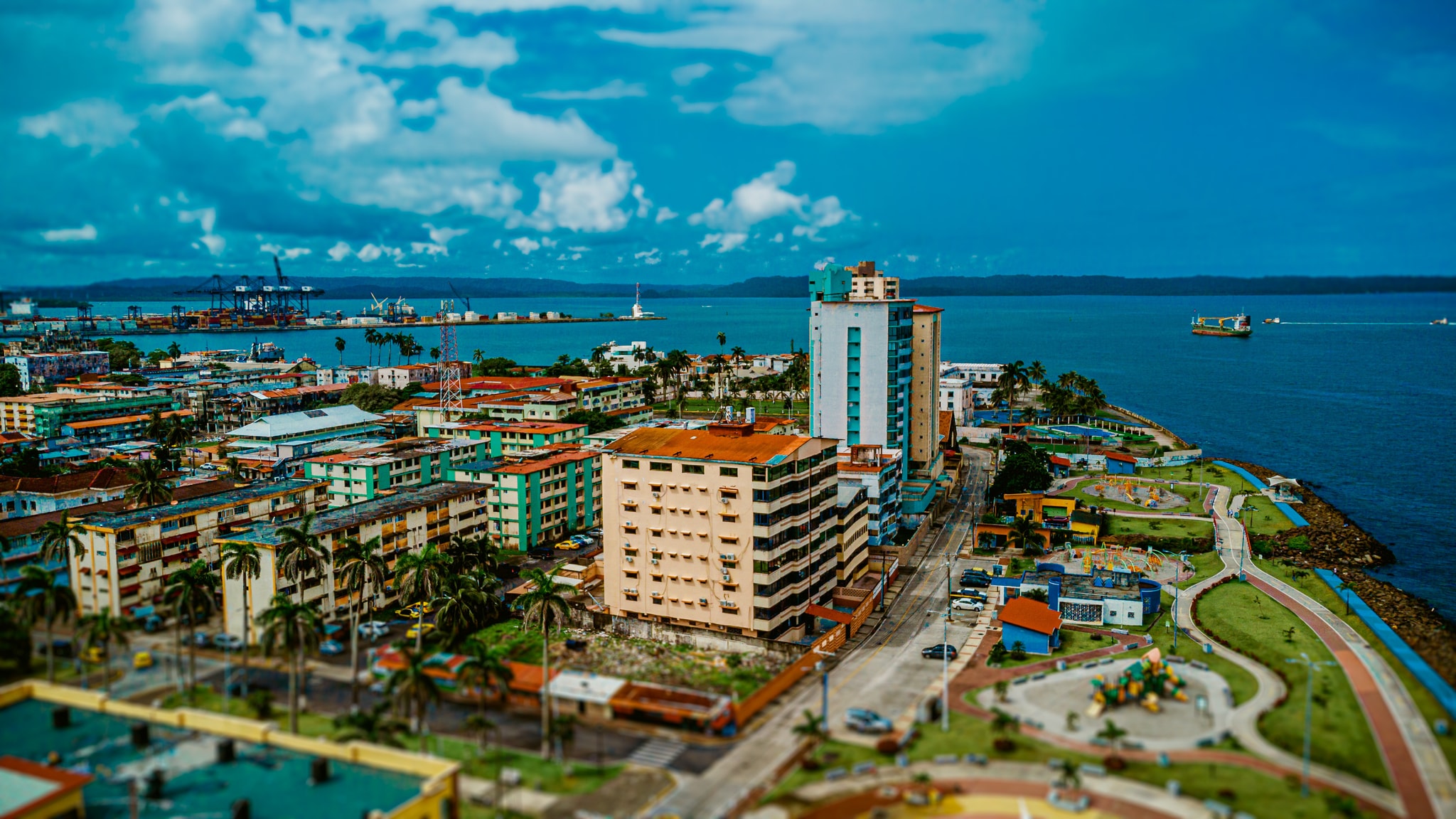
Colón is Panama’s main port city on the Caribbean coast and an important logistics hub linked to maritime trade, the Colón Free Trade Zone, and cargo traffic connected to the Panama Canal
What are the disadvantages of living in Panama?
Living in Panama as an expat offers clear advantages, but also comes with certain challenges. The points below outline the potential drawbacks to consider before relocating or making an investment.
Panama City traffic congestion
Panama City traffic is among the worst in Latin America for a city of its size. Limited ring roads, a growing vehicle fleet, and a metro system that covers only two corridors mean that cross-city commutes can take 60—90 minutes during peak hours. Car ownership outside the metro zones is near-essential.
Bureaucratic slowness
Dealing with Panamanian government institutions, including immigration, property registration, and notarial processes, involves significant wait times. Apostilling documents for immigration applications can take weeks to months, depending on the issuing country. Official processes routinely exceed initial timeline estimates.
Language barrier outside Panama City
Spanish is essential anywhere outside the capital and tourist zones. Expats who do not invest in language learning report material quality-of-life friction in Boquete, Chiriquí, or the Azuero Peninsula.
Everyday tasks such as dealing with public offices, arranging utilities, speaking to maintenance staff, or handling medical and banking matters can become more difficult without at least basic Spanish.
Tropical climate: heavy rainfall, heat, and humidity
Panama City’s sea-level location near the equator keeps temperatures consistently high throughout the year. Average daytime temperatures are generally around 29…32°C, while nights usually stay near 23…25°C.
During the rainy season, the combination of heat and humidity can make outdoor activity uncomfortable for those unaccustomed to tropical conditions. Air conditioning in residential properties is generally considered a necessary expense.
Banking friction for new arrivals
Opening a bank account in Panama as a new resident requires in-person branch attendance, apostilled bank statements, proof of address, and a documented source of funds. Processing can take 2 weeks to 2 months, depending on the complexity of the source-of-funds profile.
US citizens face additional compliance scrutiny because of FATCA obligations.
‘Mañana culture’ and service pace
Panamanian business culture operates on a relationship-first, time-flexible model. Deadlines are treated as approximate, and transactional relationships without personal connection move slowly. Expats accustomed to Northern European or North American service standards may experience some difficulty adapting to the local pace of service and may require an adjustment period.
Tap water quality outside Panama City
Tap water is generally safe to drink in central Panama City, but quality varies in peri-urban areas and is unreliable in coastal and rural zones. Most expats and Panamanians outside the capital use bottled or filtered water as standard practice.
Crime in specific areas
Within Panama City, Costa del Este, Punta Pacifica, El Cangrejo, San Francisco, and Clayton are generally safe for expats with standard urban precautions, while El Chorrillo, Curundu, and parts of Santa Ana are neighbourhoods to avoid. Colón, on the Caribbean coast, has elevated violent crime levels.
Petty theft is the most common crime risk for expats in tourist and commercial areas.
How much does it cost to live in Panama?
Prices in Panama have remained stable in recent years. Inflation has been low: 2.9% in 2022, 1.5% in 2023, and 0.7% in 2024 — and even turned slightly negative in 2025 compared to 2024[12]Source: Panama inflation data, FRED.
For a North American household relocating from a high-cost city, a comfortable Panama City lifestyle typically represents a 40—60% reduction in monthly expenditure, with full US dollar denomination throughout. Senior living in Panama is particularly cost-effective relative to comparable retirement destinations in Florida or Southern Europe.
The following breakdowns use Panama City as the primary reference, with interior figures noted separately.
Cost of living in Panama by lifestyle tier

Where are the best places to live in Panama as an expat?
Panama offers distinctly different lifestyles, from quieter, nature-oriented areas to a capital city with international schools, business infrastructure, and global connectivity. The right location depends on lifestyle priorities, budget, and residency goals.
Panama City neighbourhoods
Panama City, with a metro area population of approximately 1.1 million, is the primary hub for business, healthcare, international schooling, and air connectivity. Within the city, neighbourhoods vary significantly in character and price.
Punta Pacifica is Panama City's primary residential zone for high-net-worth individuals, featuring luxury high-rise towers with Pacific Ocean views and direct proximity to Hospital Punta Pacifica.
Two-bedroom rents range from $3,200—5,000 per month; purchase prices range from $400,000 to 700,000. This is also a primary zone for Qualified Investor Programme real estate purchases, given its established title infrastructure.
Casco Viejo is Panama City's historic colonial quarter and a UNESCO World Heritage Site[13]Source: Panama heritage site listing, UNESCO World Heritage Centre. It attracts younger expats, creatives, and boutique hotel operators drawn to cobblestone streets, restored colonial architecture, and a walkable restaurant scene.
Two-bedroom rents run approximately $2,800—4,500 per month; purchase prices for two- to three-bedroom units range from $350,000—600,000 or more. Parts of the neighbourhood border higher-risk zones and require standard urban awareness.
Costa del Este is a master-planned district built over the past two decades, designed around gated residential towers, parks, and international schools. It is consistently rated as the safest neighbourhood in Panama City and is the preferred zone for expat families.
Two-bedroom rents run $3,000—4,800 per month; purchase prices $350,000—600,000.
El Cangrejo is an established, centrally located neighbourhood popular with retirees and younger expats seeking walkability without luxury pricing. Two-bedroom rents run $2,200—4,700 per month; purchase prices $180,000—300,000.
San Francisco offers a middle ground, more modern than El Cangrejo, less expensive than Punta Pacifica, with a growing restaurant and café scene. Two-bedroom rents run $2,500—2,900 per month; purchase prices $250,000—400,000.
Clayton, the former US Canal Zone, offers suburban green space and proximity to international schools, with rents of $1,400—2,000 per month.
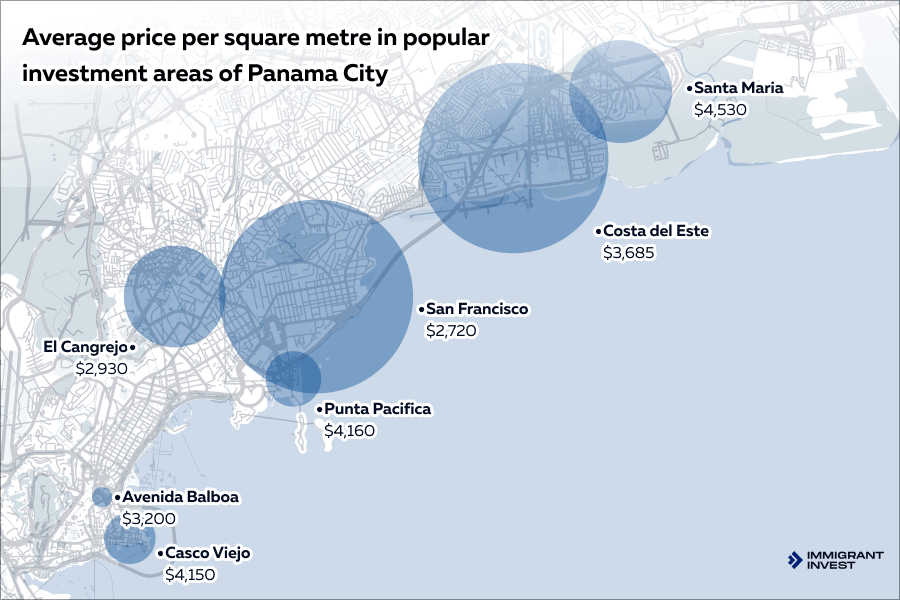
The map shows the average property prices across Panama City to help investors assess entry points by district
Outside Panama City
Boquete, in the Chiriquí highlands at 1,000—1,400 metres elevation, is around a 7-hour drive from Panama City. It is the most established expat community outside Panama City. The expat population makes up a notable share of the town’s residents, with a strong US and Canadian retiree base.
Costs are significantly lower than in Panama City. Long-term rents for apartments and smaller houses are often around $500—1,300 per month, while current asking prices for smaller condos and houses commonly start at about $220,000—240,000 and move above $300,000 in more established communities.
Bocas del Toro, Panama's Caribbean archipelago, offers a distinct island lifestyle with more limited infrastructure — healthcare is constrained, shopping requires boat or ferry travel, and internet connectivity is less reliable than in urban areas. It is better suited to expats who prefer a quieter, nature-oriented way of life than to those who rely on a strong professional infrastructure and connectivity.
Long-term rents for smaller apartments and homes are often around $500—1,000 per month, while smaller homes typically start at about $150,000—200,000 to buy. Waterfront homes usually begin at around $300,000 and can rise well above $1 million.
Coronado and Río Hato on the Pacific coast are approximately one hour from Panama City, providing a gated beach community feel with growing amenity infrastructure — supermarkets, pharmacies, restaurants, and clinics.
Long-term rents in Coronado are often around $800—1,500 per month, while resort-style rentals in Río Hato can be materially higher. Purchase prices in Coronado typically start at about $150,000.
Beachfront and resort properties in Coronado and Río Hato commonly range from roughly $390,000 to more than $1 million, depending on location and specification.
Interior and coastal areas outside Panama City
What is the healthcare system like for expats in Panama?
Panama has a mixed healthcare system: public healthcare is provided mainly through the Ministry of Health and the Social Security Fund, while private hospitals operate alongside it. For expats, private care is usually the preferred option because it tends to offer faster access, more comfort, and broader specialist services than the public system.
Hospitals
Hospital Punta Pacifica in Panama City is the Johns Hopkins Medicine International-affiliated hospital in Latin America. It offers 350 bilingual physicians across specialities, JCI accreditation, and regular operational quality audits under the Johns Hopkins partnership.
Other well-regarded private facilities include:
- Hospital Paitilla in Panama City;
- Hospital Nacional in Panama City;
- Hospital Chiriquí in David.
Treatment cost
Medical procedures cost approximately 70—75% less than equivalent care in the United States. A general practitioner consultation at a private clinic runs $25—70; specialist consultations run $50—130.
Dental and cosmetic procedures are also substantially cheaper than in North America or Europe.
Pharmacies
Pharmacies in Panama City are well-stocked and carry a wide range of international brands. Many medications that require a prescription in the US or EU can be obtained over the counter, although controlled substances remain regulated. Availability is generally more limited in rural or coastal areas.
Health insurance
International health insurance policies covering Panama start at approximately $60—100 per month for younger applicants and rise with age and coverage breadth.
Medicare Advantage is now accepted for direct billing at select Panama private facilities, including the Mae Lewis Hospital group — a meaningful benefit for US retirees.
Opening a bank account in Panama
Major banks serving expat residents in Panama include Banistmo, Banco General, BAC Credomatic, and Multibank. All four operate under the Superintendency of Banks of Panama and apply enhanced KYC standards to new resident applicants.
Standard documents required for opening a bank account include:
- valid passport;
- secondary identification;
- proof of address;
- three to six months of bank statements from the originating foreign bank;
- proof of source of funds, and in some cases, a reference letter from an existing banking relationship.
Physical presence at a branch is required. Processing time ranges from 2 weeks to 2 months, depending on the source-of-funds complexity.
US citizens face additional FATCA-related documentation requirements, and some smaller institutions have declined US citizen account openings. Verifying each bank's current policy with an immigration attorney before arrival is strongly advisable.
Panama's territorial tax system
Taxes are a key part of planning a move to Panama. For expats, it is important to understand how the territorial tax system works in practice and which taxes may apply to personal income, property, business activity, and day-to-day spending.
Taxes on personal income
Panama taxes only income generated within the country[14]Source: Personal income tax rules, PwC Worldwide Tax Summaries. If the underlying economic activity takes place outside Panama, such earnings are not included in the Panamanian tax base. This applies to the following:
- overseas dividends and interest;
- capital gains realised abroad;
- rental income from foreign property;
- professional fees for services rendered outside Panama.
Personal income tax is charged on a progressive scale:
- 0% on taxable income up to $11,000;
- 15% on taxable income from $11,000 to $50,000;
- 25% on taxable income above $50,000.

Eymi Castro,
Investment Migration Expert
Immigration residence and tax residence are separate concepts. Holding a residence permit or permanent residence card does not automatically make a person a Panama tax resident. An individual is generally considered a tax resident if they spend more than 183 days in Panama and generate income in the country.
As tax treatment depends on the source of income and personal circumstances, advice from a cross-border tax specialist is recommended before making any planning decisions.
Payroll taxes for local employees
For expats planning to work locally, payroll charges are an important consideration alongside income tax. Key contributions include:
- social security contributions: 9.75% for employees and 13.25% or more for employers;
- educational insurance: 1.25% for employees and 1.50% for employers.
Taxes linked to real estate
Annual immovable property tax generally ranges from 0 to 1.0%. The applicable rate depends on the value and use of the property.
On the sale of real estate in Panama, the seller pays two separate amounts, both calculated on the higher of the sale price and the cadastral value:
- 2% real estate transfer tax;
- 3% advance payment of income tax.
The 3% payment is not necessarily an additional final tax on top of capital gains tax. After the sale, the seller may either treat the 3% as the final tax or calculate capital gains tax at 10% of the net gain. If the actual capital gains tax amount is lower than the 3% already paid, the excess may be refunded.
Panama does not levy inheritance, estate, and gift taxes.
Taxes for companies and entrepreneurs
For expats planning to run a local business, Panama generally applies a 25% corporate income tax on Panama-source income. Businesses may also face other charges, including:
- operations notice tax on equity, subject to statutory minimums and caps;
- annual franchise tax payable by corporations;
- VAT and consumption taxes.
Panama’s ITBMS is the country’s VAT. The standard rate is 7% on most goods and services. Higher rates apply to certain categories:
- 10% on alcoholic beverages;
- 10% on hotel accommodation;
- 15% on tobacco and tobacco-derived products.
Some categories are exempt, including certain food products, medicines, medical services, and transportation.
US citizens and FATCA
US citizens moving to Panama generally must continue filing US federal tax returns even while living abroad. FATCA may also require certain taxpayers to report foreign financial assets to the IRS. Panamanian residence or citizenship does not remove these obligations.
What is day-to-day life like in Panama for expats?
Expat living in Panama spans a wide range of lifestyles, from urban professionals in Panama City towers to retirees in the Chiriquí highlands. The sections below cover key aspects of daily life, including safety, culture, language, and transport.
Safety
The safest neighbourhoods for expats in Panama City are Costa del Este, Punta Pacifica, El Cangrejo, San Francisco, Marbella, and Clayton. However, standard urban precautions should apply:
- use Uber or InDriver rather than flagging taxis at night;
- avoid displaying expensive jewellery or phones in commercial areas;
- choose residential buildings with 24-hour security.
Within Panama City, El Chorrillo, Curundu, and parts of Santa Ana and Calidonia require heightened awareness. These zones are geographically separable from expat residential and commercial districts.
Colón, Panama's Caribbean port city, has a significantly elevated violent crime level and is not a suitable base for expat residency.
Cultural integration
Panamanian society is genuinely warm and hospitable toward foreign residents. 82% of InterNations survey respondents said locals are generally friendly, and 88% said locals are friendly toward foreign residents specifically.
The concept of personalismo — building personal relationships before transactional ones — governs everything from business dealings to bureaucratic processes. Expats who invest in relationships consistently report smoother experiences.
The Panamanian flexible approach to time and deadlines requires a genuine adjustment for those from Northern European or North American professional contexts. Building buffer time into every process is a practical necessity.
Language and social life
Spanish is the official language and is essential outside Panama City's professional and tourist zones. Within Panama City's business, medical, legal, and expat communities, English is functional and widely used. Learning conversational Spanish significantly improves the quality of life in the interior and for interactions with government authorities.
Social infrastructure for expats is extensive: active InterNations Panama chapters, English-language Facebook groups with tens of thousands of members, yacht clubs, golf clubs, hiking and birding groups, and a vibrant restaurant scene with international cuisines. Panama City has a genuinely cosmopolitan cultural life relative to its size.
Transport
Tocumen International Airport in Panama City is the country’s main hub, with direct flights to 91 cities in 37 countries, including 17 destinations in the United States and 5 in Europe.
Direct flights from Panama City take about:
- 3 hours 15 minutes to Miami;
- 5 hours 15 minutes to New York;
- 9 hours 50 minutes to Madrid;
- 10 hours 15 minutes to Paris;
- 10 hours 25 minutes to Amsterdam.
David’s Enrique Malek Airport is the country’s second most important airport for domestic travel and is a practical entry point for Chiriquí and Boquete.
Smaller airports, Panama Pacífico in West Panama and Scarlett Martínez in Río Hato, handle domestic and some international traffic. The Bocas del Toro’s Isla Colón airport mainly serves domestic and private flights.
Panama City has two metro lines. Line 1 covers 18.1 km with 15 stations and has been operational since 2014; Line 2 covers 24 km with 19 stations and was extended to Tocumen Airport in 2023[15]Source: Mobile plan guide article, Dot-Shopping.
The Metrobus system covers broader urban areas. Uber and InDriver operate throughout Panama City and are the preferred transport modes for expats. A car is recommended for residents outside the metro corridor and is near-essential in the interior.
Water transport is also relevant in some parts of the country. From Panama City, the Taboga Express ferry connects the mainland with Taboga Island in about 30 minutes. In Bocas del Toro, regular ferry services connect Almirante with Isla Colón, with a journey time of about 1 hour and 40 minutes.
Internet availability
Fixed broadband median speeds reached 128.7 Mbps in Q1 2025 according to Panama's public services authority, with Tigo leading at 167.5 Mbps[16]Source: Telecommunications statistics database, ASEP Panama.
Starlink is operational in rural, coastal, and island areas, including Bocas del Toro and parts of Chiriquí. Getting high-speed internet access at home was rated positively by expats, placing Panama third globally in the InterNations Digital Life subcategory.
What are the visa and residency options for moving to Panama?
Panama offers several legal residency pathways. The appropriate route depends on an applicant’s income source, available capital, employment plans, and long-term objectives.
The main options include investment-based, income-based, and employment-based residence permits.
Investment residence
The Qualified Investor Programme is designed for foreigners who are ready to invest in Panama. This route grants permanent residence directly upon approval, without a temporary stage.
The minimum investment starts at $300,000 for real estate under the current threshold. Applicants must maintain the investment for at least 5 years and demonstrate the legal source of funds.
Income-based residence
The Retirement Visa, or Pensionado Visa, is designed for retirees who receive a lifetime pension of at least $1,000 per month[17]Source: Retirement programme overview, Embassy of Panama. This route also grants permanent residence and includes access to a range of statutory discounts. Additional income is required for dependants.
Employment-based residence
Foreign nationals may obtain residence in Panama through employment with a local company. This route requires:
- formal employment contract with a Panamanian entity;
- work permit issued by the Ministry of Labour.
Panamanian law limits the proportion of foreign employees in most companies, which can restrict the availability of this pathway. Residence is typically granted on a temporary basis and may lead to permanent residence, subject to compliance.
Student residence
Foreign nationals enrolled in accredited educational institutions in Panama apply for a student residence permit. This status:
- is temporary;
- does not lead directly to permanent residence;
- does not grant unrestricted work rights.
Student residence permits are primarily for individuals pursuing full-time education rather than long-term relocation.
Other residency options
Friendly Nations Visa. This route requires either a $200,000 investment or an employment contract with a Panamanian company. It grants a two-year temporary residence permit, which can later be converted into permanent residence.
Under Panama's Friendly Nations route, eligibility is not universal. It applies only to nationals of countries included in a specific list defined by Executive Decree No. 226 of July 20th, 2021[18]Source: Friendly Nations eligibility rules, Panama Official Gazette.
The current framework covers 50 eligible countries, including the United States, Canada, the United Kingdom, most EU member states, as well as Israel, Japan, Singapore, and Australia.
Digital Nomad Visa offers a short-term permit for remote workers earning at least $36,000 per year from foreign sources from abroad. It is valid for up to 9 months and does not lead to permanent residence.
Panama’s residency options: overview
Qualified Investor Programme: structure and requirements
The Qualified Investor Programme, also known as the Panama Golden Visa, is a pathway to permanent residence in Panama for investors who meet defined capital and compliance requirements.
Remote processing is possible through a notarised and apostilled power of attorney, with an in-person visit typically required only for biometrics. The programme is structured to grant permanent residence upon approval, subject to verification of the investment and supporting documentation.
Investors must enter Panama at least once every 2 years to maintain the status.
Investment routes
Under the Qualified Investor Programme, applicants have 3 investment options, including:
- $300,000 in Panamanian real estate;
- $500,000 in securities acquired through a licensed Panamanian broker;
- $750,000 in a fixed-term deposit with a Panamanian bank.
An investment must be maintained for the full 5-year period, with annual verification by the immigration authority.
Government fees
In addition to the investment, applicants must pay government fees. They include $5,000 payable to the National Immigration Service and $5,000 to the National Treasury for the main applicant.
For dependants aged 12 or older, a fee of $1,000 is payable to each authority. For dependants under 12, a fee of $1,000 is payable to the National Treasury.

Eligibility criteria
The programme is open to nationals of all countries. Applications are submitted through a licensed Panamanian immigration attorney.
The main applicant must:
- be over 18;
- have no criminal record;
- demonstrate the legal origin of funds;
- meet the investment requirements.
Dependants may be included in the application. Eligible dependants include a spouse and children under 18, dependent adult children in full-time education, and financially dependent parents.
Required documents
The list of required documents depends on the applicant, but generally includes the following:
- valid passport, apostilled copy;
- criminal record certificate issued within 6 months for all adult applicants;
- health certificate;
- passport-sized photographs;
- personal background declaration;
- bank certification and statements confirming the transfer of funds;
- proof of investment;
- marriage or civil union certificate for spouses;
- birth certificates for children.
The required proof of investment varies by option:
- title deed in the applicant’s name, free of encumbrances — for real estate;
- certification from a licensed Panamanian brokerage firm — for securities;
- confirmation of the deposit from a Panamanian bank — for fixed-term deposits.
All foreign documents must be translated into Spanish by a certified translator in Panama.
Step-by-step application process to obtain permanent residency by investment in Panama
Obtaining a Panama Qualified Investor Visa takes around 3 months. The process combines banking compliance, execution of the investment, and immigration review by the competent authorities. While several stages may be completed remotely, certain formalities require the applicant’s presence in Panama.
Below is a step-by-step overview of how the procedure is typically organised.
1 day
Preliminary Due Diligence
Immigrant Invest conducts a preliminary Due Diligence check to verify any circumstances screening the applicant from participation in the Panama Qualified Investor Programme. The process is fully confidential.
Immigrant Invest conducts a preliminary Due Diligence check to verify any circumstances screening the applicant from participation in the Panama Qualified Investor Programme. The process is fully confidential.
2+ weeks
Preparation of documents
The collection of documents is carried out remotely. A lawyer coordinates the preparation to ensure compliance with local requirements.
The collection of documents is carried out remotely. A lawyer coordinates the preparation to ensure compliance with local requirements.
2+ months
Investment
Proof of investment is required before the immigration filing can proceed. Applicants transfer funds to Panama via the chosen route:
- complete the real estate purchase;
- fund the securities account;
- open the fixed-term deposit.
Obtaining official certification or deed, free of encumbrances, is required.
Proof of investment is required before the immigration filing can proceed. Applicants transfer funds to Panama via the chosen route:
- complete the real estate purchase;
- fund the securities account;
- open the fixed-term deposit.
Obtaining official certification or deed, free of encumbrances, is required.
1—3 months
Application submission and approval
With investment proof and legalised civil documents in hand, the lawyer submits the complete application file to the National Immigration Service, accompanied by forms, government filing fees, and the investment certification from the Ministry of Commerce and Industries.
After submission, the application enters official review. Investors typically receive initial approval and a provisional residence status within 30—90 days. The process then proceeds directly towards permanent residence.
With investment proof and legalised civil documents in hand, the lawyer submits the complete application file to the National Immigration Service, accompanied by forms, government filing fees, and the investment certification from the Ministry of Commerce and Industries.
After submission, the application enters official review. Investors typically receive initial approval and a provisional residence status within 30—90 days. The process then proceeds directly towards permanent residence.
Up to 4 months
Issuing a permanent residence card
The applicant must be present in Panama at this stage to complete formalities and obtain resident identification documents, including the E-cédula.
Investors receive the E-cédula, the national foreign resident ID card. The card must be renewed every 10 years.
The applicant must be present in Panama at this stage to complete formalities and obtain resident identification documents, including the E-cédula.
Investors receive the E-cédula, the national foreign resident ID card. The card must be renewed every 10 years.
Risks and pitfalls of moving to Panama under the Qualified Investor Programme
Understanding the risks of residency by investment in Panama is essential before committing. The points below outline the most common sources of difficulty and delay.
Exit liquidity after the 5-year holding period. The investment must be held for 5 years, but the key risk lies at exit. Market conditions, property type, and resale demand may affect liquidity. Selling before the minimum holding period results in loss of residency status. Treating the investment as a standalone asset decision helps align residency goals with liquidity expectations.
Timing sensitivity of the $300,000 threshold. The $300,000 minimum is a temporary threshold valid until October 2026, after which it is scheduled to increase to $500,000. Investors who rely on the current minimum without confirming timing risk a budget gap later in the process.
Other costs beyond the investment amount. Additional costs include $10,000 in government fees for the main applicant, fees for dependants, health insurance, notary and translation services, and property-related taxes. A full cost assessment is recommended before committing.
Misalignment between residence and citizenship expectations. The Qualified Investor Programme grants permanent residence, not citizenship. Panamanian citizenship by naturalisation is governed separately by Article 10 of the Constitution[19]Source: Constitution of the Republic of Panama 1972, National Assembly.
Foreign nationals may apply for naturalisation after 5 consecutive years of residence in Panama, provided they do the following:
- Declare their intention to become Panamanian citizens.
- Expressly renounce their previous nationality or nationalities.
- Provide evidence of 5 consecutive years of real residence in Panama.
- Demonstrate knowledge of Spanish as well as basic knowledge of Panamanian geography, history, and political organisation.
Independent legal advice is recommended for applicants prioritising citizenship.
Confusion between tax and immigration residency. Holding permanent residence does not automatically establish tax residency in Panama or remove obligations in another country. Tax planning requires individual professional advice.
Real estate Due Diligence. Title encumbrances, zoning issues, or pre-sale risks can delay or complicate transactions. Applicants applying for permanent residence by real estate investment should obtain independent legal verification of the selected property.
Source-of-funds scrutiny. Insufficient documentation is a common cause of delays. Complex ownership structures or multi-jurisdictional income require detailed evidence. Early compliance review helps reduce risk.
Banking KYC constraints and timelines. Opening a bank account requires in-person attendance, apostilled documents, and source-of-funds verification. Processing may take 2 weeks to 2 months and should be planned in advance.
How Immigrant Invest can help with obtaining permanent residence in Panama
Immigrant Invest is a consulting company specialising in investment migration, with an in-house compliance department and licensed agent status in multiple jurisdictions. Our team includes certified professionals and CAMS-qualified compliance officers.
The process of applying for the Qualified Investor Programme begins with an initial consultation and an immediate compliance pre-check. Source-of-funds and admissibility concerns are identified before document preparation and property selection begin. For applicants with complex financial profiles, this sequencing reduces the risk of investing time and money into an application that would face avoidable complications later.
Each case is handled by a dedicated adviser, supported by compliance, legal, and client strategy specialists. Clients also receive ongoing support after obtaining permanent residence, including assistance with renewals and related matters.
To receive a confidential eligibility assessment, source-of-funds review, and full cost breakdown for the Qualified Investor Programme or any other Panama residency route, contact our investment programmes experts.
Final thoughts on living in Panama as an expat
- Panama ranked first in the InterNations Expat Insider survey with 94% of expats reporting happiness with their life abroad.
- Panama offers different residence pathways depending on the applicant’s profile, including routes for retirees, remote workers, employees, and investors.
- The Qualified Investor Programme offers direct permanent residence by investment starting at $300,000, with processing taking 3+ months.
- Living costs in Panama are generally lower than in the United States, especially in areas such as private healthcare, dining out, domestic help, and some types of housing.
- Obtaining residence in Panama does not automatically make a person a tax resident. However, foreigners who relocate and spend most of the year in the country will typically be considered tax residents and be subject to taxation in Panama.
- Panama’s lifestyle advantages include strong international connectivity, established expat communities, and a choice between urban living in Panama City and quieter, nature-oriented areas elsewhere in the country.
- The best place to live depends on lifestyle priorities: Panama City suits those who want urban infrastructure, Boquete appeals to retirees and mountain lovers, Coronado and Río Hato offer beach living near the capital, and Bocas del Toro suits a quieter island lifestyle.
Immigrant Invest is a licensed agent for citizenship and residence by investment programs in the EU, the Caribbean, Asia, and the Middle East. Take advantage of our global 15-year expertise — schedule a meeting with our investment programs experts.

 Trusted by 10,000+ investors