

Summary
Following the closure of Spain’s Golden Visa route, demand for alternative residence options has grown steadily. As a result, the Spain Non-Lucrative Visa has become the primary legal pathway for non-EU nationals who wish to live in the country without working or making a local investment. This Visa is available to applicants who can demonstrate passive income of at least €28,880 per year.
This guide outlines how the visa operates under current legislation, who it is best suited to, and the key practical considerations prospective applicants should bear in mind.
What is the Non-Lucrative Visa for Spain?
The Spain Non-Lucrative Visa, officially known as autorización inicial de residencia temporal no lucrativa, is a residence permit that allows non-EU nationals to live in Spain without working or carrying out any professional activity, provided they can demonstrate sufficient passive income or financial means.
Unlike Spain’s closed Golden Visa, the Non-Lucrative Visa does not require any investment.
The legal framework is set out in the following regulations:
- Ley Orgánica 4/2000, Articles 30 bis and 31, governing the rights and freedoms of foreign nationals in Spain[1];
- Royal Decree 1155/2024, Articles 60—63, which define the procedural rules and documentation requirements[2].
Why does the Spain Non-Lucrative Visa appeal to long-term residents?
The Spain Non-Lucrative Visa is best suited to retirees with pension income, individuals supported by rental or investment income, people taking extended sabbaticals, and families seeking a European base without the intention of working. It offers legal residence, predictable renewal rules, and long-term settlement options without the need for business activity or capital investment.
1. Schengen travel rights and EU mobility
Residence in Spain under the Non-Lucrative Visa allows visa-free travel across the Schengen Area for up to 90 days within any 180-day period[3]. Travel is permitted for private purposes, using a valid passport together with a Spanish residence card. The Non-Lucrative Visa does not grant the right to work in other EU countries, but it provides mobility across most of Europe.
Schengen member states include most EU countries, plus Iceland, Liechtenstein, Norway, and Switzerland. Non-Schengen EU countries, including Ireland, Bulgaria and Romania, require separate entry permission for third-country nationals.
However, Spain residence permit holders may travel to Cyprus visa-free[4].
2. Residence for the entire family
The Non-Lucrative Visa allows applicants to include close family members in a single application. Eligible dependants are spouses, minor children, adult children who are financially dependent and unmarried, and dependent parents. Financial requirements increase with each additional family member, but the residence status granted is the same.
3. Access to healthcare in Spain
After 1 year of legal residence, holders may enrol in Spain’s public healthcare system through the Convenio Especial scheme, subject to regional rules and monthly contributions. The scheme is available to legal residents, including non-EU nationals, and does not require Spanish citizenship.
Spain’s healthcare system is widely regarded as both accessible and high quality.
According to the European Observatory on Health Systems and Policies, coverage is almost universal and services are largely free at the point of use[5]. Rates of avoidable hospital admissions and preventable mortality are among the lowest in Europe, while the proportion of people reporting unmet medical needs remains comparatively small.
4. Route to permanent residence
The Non-Lucrative Visa is initially granted for 1 year and can be renewed for successive 2-year periods. After 5 years of continuous living in the country, holders may apply for long-term residence, which provides a more stable status and broader rights within the country.
The long-term residence in Spain is aligned with the EU Long-Term Residence Directive 2003/109/EC and may allow residence in other EU Member States for more than 3 months, with access to employment or self-employment subject to the laws of the host country.
5. Eligibility for Spanish citizenship
Foreign nationals may apply for Spanish citizenship after 10 years of legal residence. This period is reduced to 2 years for nationals of countries with historical or cultural ties to Spain, including Ibero-American states, Andorra, the Philippines, Equatorial Guinea, and Portugal[6]. Nationals of these countries are also not required to renounce their original citizenship upon obtaining Spanish citizenship.
For most other nationalities, including citizens of the United Kingdom, the United States, Canada, Australia, and most Asian and African countries, Spanish law formally requires renunciation of the previous citizenship upon naturalisation.
Citizenship applicants are subject to language, integration, and good character requirements.

Barcelona offers kilometres of urban beaches along its coastline, including Barceloneta promenade, as well as year-round cycling routes, outdoor gyms, and a strong culture of running sports
Spain Non-Lucrative Visa requirements
Spain’s income thresholds for the Non-Lucrative Visa are anchored to the IPREM, Indicador Público de Renta de Efectos Múltiples, the official income reference index used across Spanish social legislation. For 2026, the IPREM is €600 per month and €7,200 per year.
Requirements for the main applicant
Stable income. The main applicant must demonstrate monthly passive income or financial means equivalent to 400% of the monthly IPREM: €2,400 per month or €28,880 per year[7].
Passive income may derive from state or private pensions, rental income from property, dividends from shares or other investments, interest from savings or bonds, annuities, royalties, or trust distributions, subject to clear documentation.
Accommodation in Spain. Applicants may either purchase a property or enter into a long-term rental agreement covering the intended period of stay. The accommodation must be secured before the visa is approved. There is no minimum property value or rental amount required.
Requirements for dependants
The Spain Non-Lucrative Visa permits family reunification. Eligible dependants include:
- spouse or registered partner over 18 years of age;
- children under 18 years of age, or over 18 if unmarried and financially dependent on the main applicant;
- parents who are financially dependent on the main applicant.
Each dependant requires an additional 100% of the monthly IPREM: €600 per month or €7,200 per year.
Dependants may be included in the main applicant’s initial visa application or added later through a family reunification procedure once the main applicant holds a valid residence permit. Family reunification is available after the main applicant has completed 1 year of legal residence.
Income thresholds by family size in 2026
Spain Non-Lucrative Visa restrictions and permitted activities
The Non-Lucrative Visa Spain carries an absolute prohibition on work and professional activity in Spain. Holders may not engage in any employment to keep their status.
Prohibited activities include the following:
- employment;
- self-employment, autónomo status,
- freelance work carried out in Spain;
- opening or operating a business in Spain;
- providing services to Spanish clients or companies.
Non-Lucrative Visa holders are allowed to do the following:
- receive passive income, such as pensions, rental income from property abroad, dividends, interest, annuities, royalties;
- manage personal investments remotely, including portfolio management and stock trading for their own account;
- engage in volunteering activities.
Working in Spain while holding a Non-Lucrative Visa constitutes a serious breach of residence conditions. Penalties may include revocation of the residence permit, deportation, and a ban on re-entering Spain or applying for future Spanish visas. If your income is not purely passive, you should consult an immigration lawyer before applying.
If you intend to work remotely, whether as an employee of a foreign company or as a freelancer serving international clients, you should instead consider the Spain Digital Nomad Visa[8].
The Digital Nomad Visa allows remote work for employers or clients located outside Spain. Holders may earn up to 20% of their income from Spanish companies or clients. Applicants must provide proof of an employment contract or client agreements.

Required documents for the Spain Non-Lucrative Visa
Applications for the Spain Non-Lucrative Visa are submitted through the Spanish consulate with jurisdiction over the applicant’s place of legal residence. In general, the following documents are required:
- Valid passport or travel document. It must be valid for use in Spain, with a minimum validity of one year from the date of application and at least two blank pages.
- Proof of financial means. Bank statements covering the last 12 months, showing the year-end balance.
- Medical certificate. It must confirm that the applicant does not suffer from any serious communicable diseases, such as tuberculosis.
- Private health insurance. It must be issued by an insurance company authorised to operate in Spain.
- Criminal record certificates. The applicant must provide original certificates or officially certified copies from all countries where they have resided for more than 6 months during the last 5 years.
- Evidence of cessation of employment. Applicants who were previously employed must provide documentation confirming that they are no longer working.
- Proof of accommodation in Spain. This may include a rental contract, property deed, or hotel reservation covering the initial period of residence.
- Two recent passport photos in colour, 3 cm × 4 cm, with a white background and neutral expression.
- Proof of consular jurisdiction. This may include a utility bill, residence certificate, or equivalent document showing your current address within the consulate’s jurisdiction.
Dependants must provide the following supporting documents:
- marriage certificate or registered partnership certificate;
- birth certificates;
- proof of financial dependency for adult children or parents, such as bank statements, tax returns, or affidavits;
- criminal record certificates for all dependants over 18 years of age, apostilled and translated;
- private health insurance.
All documents must be submitted as originals together with photocopies. Foreign public documents must be apostilled in accordance with the Hague Convention of 1961 or legalised by the relevant Spanish consulate, and translated into Spanish by a sworn translator, traductor jurado.

Eymi Castro,
Investment Migration Expert
Travel health insurance is not sufficient for a Spain Non-Lucrative Visa application. Policies intended for short stays or limited to emergency cover do not meet the required standard.
Comprehensive private health insurance is mandatory. The policy must be issued by an insurer authorised to operate in Spain and must offer coverage equivalent to that provided by the public healthcare system, the Sistema Nacional de Salud.
The insurance must cover hospitalisation, primary care, specialist treatment, and emergency services. It must not include co-payments, deductibles, or exclusions. The policy must remain valid for at least 1 year from the date of application.
Non-Lucrative Visa costs and fees
In most cases, the total first-year cost ranges from €3,000 to 10,000, depending on family size and whether professional assistance is used. Ongoing costs mainly include annual health insurance renewal, residence permit renewal fees every two years, and optional contributions to Spain’s public healthcare system after the first year.
Below is an overview of the typical costs associated with applying for the Spain Non-Lucrative Visa and covering the first year of residence:
- Consular visa fee: €80—160, non-refundable, depending on nationality and consulate.
- Apostille and legalisation of documents: usually €50—150 per document.
- Sworn translations: €30—80 per page, with total costs commonly ranging from €500 to 1,500 per application.
- Private health insurance: approximately €600—2,500 per year, depending on age and coverage.
- Criminal record certificates: around €20—100 per country of residence.
- Medical certificate: typically €50—150.
- TIE residence card fee: €10.71 per applicant.
- Empadronamiento and NIE registration: generally free or subject to small local fees of up to €20.
- Legal or administrative assistance, optional: €1,500—5,000 for full-service support.
How to apply for a Non-Lucrative Visa in Spain: step-by-step application process
The Spain Non-Lucrative Visa must be applied for from the applicant’s country of legal residence, not from within Spain while on a tourist visa. Applicants who are already in Spain as tourists must return to their home country to submit the application.
From initial document preparation to visa approval and issuance of the residence card, the overall process typically takes at least 4 months, depending on consular availability and administrative timelines.
1 day
Preliminary Due Diligence
Immigrant Invest conducts a preliminary Due Diligence check to identify any circumstances that might lead to the denial of the application. The process is fully confidential.
Upon successful completion of the check, Immigrant Invest prepares a service agreement to provide further support.
Immigrant Invest conducts a preliminary Due Diligence check to identify any circumstances that might lead to the denial of the application. The process is fully confidential.
Upon successful completion of the check, Immigrant Invest prepares a service agreement to provide further support.
Up to 1 month
Preparation of documents
The list of required documents depends on the applicant’s situation. Immigrant Invest lawyers help gather the necessary documents, fill out the application, and complete other government forms.
The list of required documents depends on the applicant’s situation. Immigrant Invest lawyers help gather the necessary documents, fill out the application, and complete other government forms.
Within 3 months
Obtaining a D visa to enter Spain
Documents must be submitted to the Spanish Consulate in the applicant’s country of legal residence. The Consulate will review the application within 3 months. If further information is needed or the applicant is invited for an interview, the processing period may be extended.
If approved, the national D visa is issued.
Documents must be submitted to the Spanish Consulate in the applicant’s country of legal residence. The Consulate will review the application within 3 months. If further information is needed or the applicant is invited for an interview, the processing period may be extended.
If approved, the national D visa is issued.
1—2 months
Purchasing or renting housing in Spain
Immigrant Invest real estate experts help find a suitable property and complete the transaction. Applicants can choose a property online through an Immigrant Invest attorney.
Immigrant Invest real estate experts help find a suitable property and complete the transaction. Applicants can choose a property online through an Immigrant Invest attorney.
1.5+ months
Submission of biometrics and getting a residence permit
The applicant and their dependants must travel to Spain to submit their biometric data and apply for a residence permit card.
When ready, residence permit cards must be collected in person by applicants. They cannot be collected by a representative or by proxy.
The applicant and their dependants must travel to Spain to submit their biometric data and apply for a residence permit card.
When ready, residence permit cards must be collected in person by applicants. They cannot be collected by a representative or by proxy.
Common mistakes and denial reasons: how to avoid rejection
Most refusals result not from ineligibility but from incomplete files, inconsistencies, or failure to meet updated formal requirements. Careful preparation and fully compliant documentation are essential to minimise the risk of rejection.
Insufficient or inconsistent financial documentation
Failure to provide both the December 31st year-end balance and the 12-month average balance is a leading cause of refusal. Financial documents must clearly demonstrate stable and consistent balances above the minimum thresholds throughout the year.
This requirement applies primarily to bank statements but may also extend to other financial documents used to demonstrate sufficient means.
Applicants should ensure that the following documents clearly evidence stable and consistent funds above the minimum threshold throughout the year:
- personal bank statements covering at least the previous 12 months;
- investment or brokerage account statements showing asset values and the year-end balance;
- pension payment confirmations or official benefit statements;
- documentation of recurring rental income, dividends, or annuities;
- relevant tax returns confirming declared income and financial consistency.
All financial documents should be coherent, properly certified where required, and consistent with the applicant’s declared income structure.
Expired medical or criminal record certificates
Medical and criminal record certificates must be issued within 90 days of the application date. Consulates reject applications supported by expired documents. To avoid this, applicants should plan the timing of document collection carefully.
Medical and police certificates should be requested only once other documents are nearly ready, and the apostille and sworn translation should be arranged immediately after issuance.
Incorrect health insurance
Policies containing co-payments, deductibles, coverage gaps, or exclusions are rejected. Travel insurance policies designed for short-term visitors are not accepted. The policy should explicitly state that it provides full coverage equivalent to the Sistema Nacional de Salud, with no patient cost-sharing.
Missing proof of cessation of employment
All applicants must demonstrate that they have ceased employment or self-employment before applying for the Spain Non-Lucrative Visa, as the permit does not allow any professional activity. To avoid complications, employment relationships should be formally terminated before the application is submitted.
For example, UK applicants are generally expected to provide clear documentary evidence of termination. This may include a P45 form, an employer’s termination letter, final payslips, or an accountant’s confirmation that self-employment has formally ended[9].
Without such documentation, consular officers may question whether the applicant intends to continue working, which may lead to delays or refusal.
Late TIE card application
Failure to apply for the TIE card, or Foreigner Identity Card, within 30 days of entry may result in fines, administrative penalties, or, in serious cases, revocation of residence status under the December 2024 enforcement rules.
Applicants should book their TIE appointment as soon as they receive visa approval, ideally before travelling to Spain if appointments can be scheduled online.
It is also advisable to prepare the required documents in advance, including proof of address registration, photographs, and payment of the applicable fee.
What to do after arrival in Spain: first 30 days
Once you enter Spain with your Non-Lucrative Visa, you must complete several important administrative steps within strict deadlines. Failure to meet these deadlines may result in fines, penalties, or even loss of a residence status.
Register your address
Within the first few weeks in Spain, you must register your address at the local town hall, ayuntamiento. This process, known as empadronamiento, is free of charge and provides proof of residence required for the TIE application, healthcare registration, and tax matters.
Obtain or confirm your NIE
The NIE, Número de Identidad de Extranjero, is your foreigner identification number. Many applicants receive it during the visa process. If not, you must apply for it at a police station. The NIE is essential for opening bank accounts, registering for healthcare, and signing rental contracts.
Open a Spanish bank account
A local bank account simplifies the payment of rent, utility bills, and healthcare fees. Some banks require proof of address and your TIE card, while others accept your passport and visa during the initial period.
Activate or register health insurance
To activate or register health insurance in Spain, first ensure that your private policy is already in force from the date of arrival and that the first premium has been paid. Keep your insurance certificate and proof of payment, as these may be requested for your TIE application or other procedures.
After 1 year of continuous legal residence in Spain, holders of the Spain Non-Lucrative Visa may enrol in the Convenio Especial de Prestación de Asistencia Sanitaria, a voluntary public healthcare scheme. The monthly fee is €60 for individuals under 65 years of age and €157 for those aged 65 and over.
Spain Non-Lucrative Visa renewal
The initial residence permit under the Spain Non-Lucrative Visa is issued for 1 year. If the renewal requirements are met, subsequent permits are granted for 2-year periods. After completing 5 years of continuous legal residence, applicants become eligible to apply for long-term residence status.
To renew your Non-Lucrative residency, you must:
- Apply within the renewal window, from 60 days before expiry to 90 days after expiry. Late applications are permitted, and the previous permit remains valid during processing.
- Prove continued passive income by submitting updated bank statements, pension letters, or investment account statements demonstrating that you continue to meet or exceed the IPREM thresholds.
- Maintain private health insurance by providing proof of valid coverage or enrolment in the Convenio Especial public scheme.
- Demonstrate physical presence in Spain by showing that you have spent more than 183 days in the country during the year prior to renewal.
- Submit a clean criminal record certificate from Spain and from any other country of residence during the renewal period.
- Provide proof of address.
Decisions are issued within 3 months. Renewal fee is €21.84 per person.
Permanent residence in Spain after 5 years
After 5 years of continuous legal residence in Spain, you become eligible for long-term residence, residencia de larga duración, which is valid for 10 years and renewable indefinitely.
To qualify, you must not have been absent from Spain for more than six consecutive months or more than 10 months in total during the 5-year period. Absences of up to 18 months may be permitted if they are work-related.
Benefits of long-term residence include the removal of passive income requirements, greater freedom to work or study, and simplified administrative procedures. This status eliminates the need for further temporary renewals and provides a secure basis for permanent settlement in Spain and, where applicable, future eligibility for Spanish citizenship.
Spanish citizenship after 10 years
After 10 years of continuous legal residence, most holders of the Spain Non-Lucrative Visa may apply for Spanish nationality by residence. Nationals of Ibero-American countries, Andorra, the Philippines, Equatorial Guinea, and Portugal, as well as individuals of Sephardic origin, qualify for a reduced 2-year residence requirement rather than the standard 10 years.
Citizenship applications are assessed individually and require proof of integration, Spanish language proficiency, knowledge of Spanish society and culture, good conduct, and continuous legal residence.
Spanish citizenship offers significant advantages, including the right to live and work anywhere in the European Union, full political rights in Spain, and access to one of the world’s most widely accepted passports.
However, Spain generally requires applicants to renounce their previous nationality upon naturalisation, unless they are nationals of the countries listed above, which are exempt from this requirement.
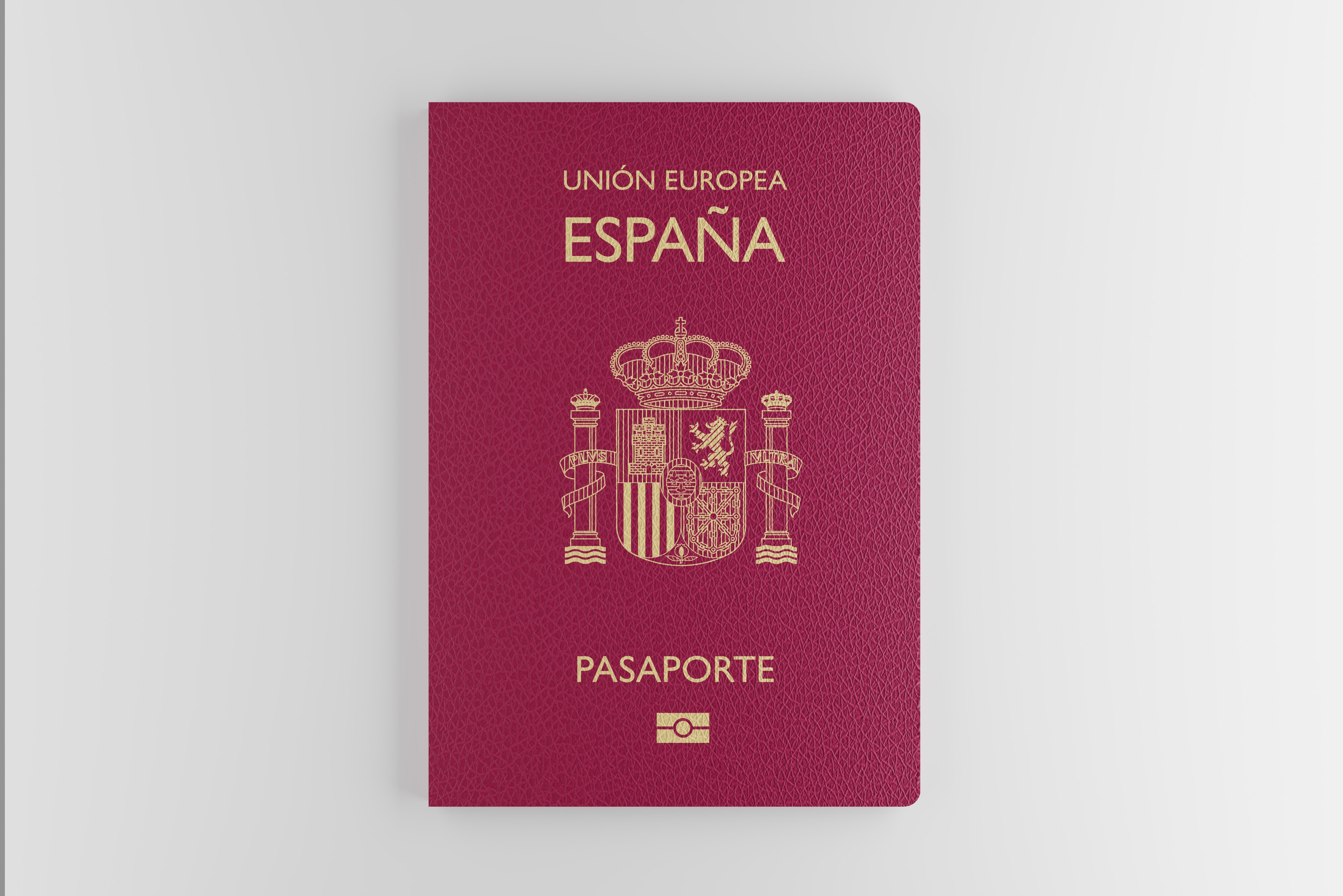
Spanish passport is consistently ranked among the top 10 most powerful passports in the world, providing visa-free or visa-on-arrival access to 170+ countries
Spanish tax residency and the 183-day rule
Foreigners become Spanish tax residents if they spend more than 183 days in Spain during any calendar year[10]. Days are calculated on a calendar-year basis, from January 1st to December 31st. Sporadic absences are counted as days of presence unless the individual can prove tax residence in another country.
Once considered a Spanish tax resident, an individual is required to pay taxes in Spain and declare worldwide income, including dividends, rental income, pensions, and capital gains earned abroad.
Consequences of Spanish tax residency
Income tax. Spanish tax residents are taxed on their worldwide income under Personal Income Tax, Impuesto sobre la Renta de las Personas Físicas, IRPF[11]. Rates are progressive, ranging from 19 to 47%, depending on income brackets and autonomous community supplements.
Wealth tax. Spanish tax residents may also be subject to wealth tax on worldwide net assets exceeding applicable thresholds. The national minimum exemption is €700,000 per individual, with progressive rates generally ranging from approximately 0.2 to 3.5%, depending on asset levels.
However, rules vary by autonomous community, and some regions, such as Madrid, apply 100% relief, effectively eliminating wealth tax in practice.
Inheritance and gift tax. Spanish tax residents, and in some cases non-residents receiving Spanish assets, may be subject to inheritance and gift tax on assets received or transferred. Rates generally range from approximately 7.65 to 34%, depending on the value of the assets and the relationship between the parties.
Transfers between close relatives are not automatically exempt from tax. However, significant allowances and reductions often apply, particularly for spouses and children. The extent of relief varies widely by autonomous community: some regions provide generous tax reductions or near-full relief for immediate family members, while others apply more limited allowances.
Double taxation treaties
Spain has signed double taxation treaties with 99 countries, including the United Kingdom in 2013 and the United States in 1990, as amended in 2013, to prevent taxpayers from being taxed twice on the same income[12].
These treaties allocate taxing rights and allow foreign tax credits, but they do not eliminate tax; they simply determine which country has the primary right to tax specific types of income.
Before applying for the Spain Non-Lucrative Visa, you should model your tax exposure with a cross-border tax adviser. This is particularly important for UK applicants navigating the April 2025 non-dom abolition and for US citizens subject to taxation on global income regardless of residence.
UK nationals: non-dom abolition and tax planning
The UK abolished the non-domicile tax regime on April 6th, 2025, replacing it with a residence-based system[13]. Former non-doms are now taxed on their worldwide income and gains, with a 4-year Foreign Income and Gains, FIG, relief available only to individuals who have not been UK tax resident in the previous 10 years.
If a UK national becomes Spanish tax resident, UK-source income, including rental income from UK property, private pensions, dividends, and capital gains, must generally be declared in Spain. Under the Spain—UK double taxation treaty, certain income may remain taxable in the UK. However, Spanish tax residents must still report that income in Spain and may claim a foreign tax credit to prevent double taxation.
US citizens: FATCA and dual tax filing
United States citizens are subject to citizenship-based taxation, meaning they must file US tax returns and pay tax on their worldwide income regardless of where they live.
US citizens must report all foreign bank accounts with aggregate balances exceeding $10,000 during a year on the Foreign Bank Account Report, FBAR, and disclose foreign financial assets above certain thresholds on IRS Form 8938 under the Foreign Account Tax Compliance Act, FATCA.
If you become a Spanish tax resident, you will be required to file tax returns in both Spain and the United States. You may claim a foreign tax credit using Form 1116 to offset Spanish taxes paid against your US tax liability under the Spain—US tax treaty.
Who is the Spain Non-Lucrative Visa suitable for?
The Spain Non-Lucrative Visa suits financially independent individuals seeking EU residence without investment. It is particularly attractive to UK nationals, North American retirees, and high-net-worth families focused on lifestyle and long-term security.
UK nationals post-Brexit
Government reforms, combined with tighter inheritance tax rules and Brexit’s curtailment of free movement, have driven affluent UK nationals to seek EU residence options.
The Spain Non-Lucrative Visa offers a low-maintenance route: no property investment is required and there is a clear 5-year pathway to long-term residence. The Non-Lucrative Visa also creates a route to Spanish citizenship, which may re-establish EU mobility for future generations.
North American retirees and semi-retirees
Affluent retirees and semi-retirees from the United States and Canada with passive income are increasingly drawn to Spain's relatively low cost of living, warm climate, and high-quality healthcare.
The appeal grew after the 2024 immigration reform allowed D visas to be issued for up to 1 year, aligning them with the initial 1-year residence permit and making relocation planning simpler.
Australian and Asian high-net-worth families
Smaller but growing groups from Australia and Asia view the Spain Non-Lucrative Visa as a hedge for European education and long-term security. High-net-worth families from these regions prioritise children’s education and asset diversification.
However, distance, unfamiliarity with Spanish legal and tax frameworks, and the inability to combine residence with property investment following the closure of the Golden Visa may pose challenges.
Disadvantages and limitations of the Spain Non-Lucrative Visa
The Non-Lucrative Visa imposes strict limitations on professional activity. Holders may not work, conduct business, or provide services in Spain, which makes the visa unsuitable for applicants who require ongoing employment income or operational flexibility.
Physical presence requirements can be restrictive. Maintaining residency requires spending more than 183 days per year in Spain, which may conflict with existing tax strategies, business travel schedules, or residence commitments in other countries.
Housing requirements may create upfront financial exposure. Some consulates require proof of long-term accommodation before visa approval, potentially obliging applicants to commit to rental contracts or property arrangements without certainty of approval.
Processing timelines and logistics can also be inconvenient. Consular appointment backlogs, passport retention during processing, and limited appointment availability may disrupt travel plans and delay relocation.
Best cities to live in Spain on the Non-Lucrative Visa
Choosing the right city is an important part of planning long-term residence in Spain. Climate, healthcare access, international connectivity, cost of living, and community infrastructure can significantly influence quality of life for financially independent residents.
Barcelona
Barcelona combines Mediterranean coastal living with strong international infrastructure. The city offers high-quality private and public healthcare facilities, international schools, and year-round outdoor activities. Although property prices are above the national average, Barcelona remains attractive to residents seeking cultural life, walkability, and global connectivity.
Madrid
As Spain’s capital, Madrid provides excellent transport links, leading hospitals, and a dynamic cultural environment. It does not have a beach, but it offers a broad selection of residential districts suitable for long-term living. Madrid is also known for its 100% regional wealth tax relief, which may be relevant for high-net-worth residents.
Valencia
Valencia offers a balance between coastal lifestyle and affordability. Compared with Madrid and Barcelona, housing costs are generally lower, while infrastructure and healthcare standards remain strong. The city is often chosen by retirees and financially independent residents seeking a slower pace without sacrificing urban amenities.
Málaga
Located on the Costa del Sol, Málaga benefits from more than 300 days of sunshine per year and a well-established international community. It is particularly popular among retirees and Northern European residents. Property options range from city apartments to coastal villas, and private healthcare facilities are widely available.
Alicante
Alicante is known for its moderate cost of living, relaxed atmosphere, and accessibility from major European cities. It has a significant expatriate population and a well-developed healthcare network. For financially independent applicants seeking a quiet environment by the sea, Alicante is often a practical choice.

Valencia is known as Spain’s orange capital and was historically one of the key centres for citrus exports. It is also home to the futuristic City of Arts and Sciences
Non-Lucrative Visa in Spain vs. other residence options for financially independent people
Understanding how the Spain Non-Lucrative Visa compares with other residence routes helps applicants choose the most suitable pathway.
Portugal D7 Visa
The Portugal D7 Visa is a residence route for financially independent individuals, requiring proof of stable income from pensions, rental income, or investments. The minimum threshold is generally linked to Portugal’s minimum wage and is currently €920 per month for the main applicant, with additional amounts required for dependants.
Applicants must also provide proof of accommodation in Portugal, either through a property purchase or a long-term rental agreement secured before or during the application process. No minimum property value is required.

Austria Residence Permit
Austria offers residence to financially independent individuals through the settlement permit without gainful employment. Applicants must demonstrate regular income sufficient to cover living costs without reliance on state support.
The minimum monthly income threshold is approximately €2,620 for a single applicant and €4,130 for a couple, with additional amounts required per child. Comprehensive health insurance and secure accommodation in Austria are mandatory. Applications are also subject to an annual quota, which limits availability.
Switzerland Residence Permit
For non-EU nationals, residence in Switzerland without employment is typically granted through a cantonal arrangement based on lump-sum taxation.
There is no fixed statutory income threshold; instead, applicants negotiate an annual tax base with the canton of residence. In practice, this often translates into an effective annual tax commitment of approximately CHF 450,000, or about €460,000—470,000, depending on the canton and individual circumstances.
Private health insurance and cantonal approval are mandatory, making Switzerland one of the most financially demanding residence options in Europe for non-working applicants.
Residence permits for financially independent people: comparison
Why trust Immigrant Invest in obtaining Spain Non-Lucrative Visa
Immigrant Invest applies a compliance-led approach to the Spain Non-Lucrative Visa, starting with preliminary eligibility and risk screening before accepting a case. The company manages the application process with close attention to document validity, formatting, and timing to meet consulate-specific requirements and minimise the risk of refusals or delays.
Medical certificates, police clearances, financial documents, and translations are coordinated in line with validity windows and procedural rules. With in-house legal and AML compliance teams operating under EU regulatory standards, each application is reviewed to a high compliance standard.
For clients, this means a structured, risk-aware process designed to reduce uncertainty and navigate the Non-Lucrative Visa framework with clarity and control.
Key takeaways: Spain Non-Lucrative Visa
- The Spain Non-Lucrative Visa is the primary non-work residence route for non-EU nationals, following the abolition of Spain's Golden Visa.
- The minimum income for the Spain Non-Lucrative Visa is €28,880 per year for the main applicant and €7,200 per dependant, equivalent to 400% and 100% of the IPREM, respectively.
- No employment or self-employment is permitted in Spain; only passive income sources qualify, such as pensions, rental income, dividends, interest, and annuities.
- Tax residency is triggered after living in Spain for 183 days in any calendar year, resulting in taxation on worldwide income and wealth.
- Professional legal and tax guidance is strongly recommended due to consular documentation complexity, strict compliance deadlines, and cross-border tax implications.
 Trusted by 10,000+ investors