Summary
Living in Spain has become an increasingly attractive option for remote professionals. The country combines a favourable climate, reliable digital infrastructure, and internationally connected cities that support both work and everyday life.
Spain offers the Digital Nomad Visa, allowing foreigners to reside in the country while working remotely for employers or clients abroad. The permit provides a clear legal pathway to 3-year residency, with the option to renew and later apply for permanent residency and citizenship.
This guide explains how the Spain Digital Nomad Visa works, who qualifies, the costs and application process, and what to expect when relocating.
What is a Spain Digital Nomad Visa?
The Spain Digital Nomad Visa is a long-stay category D visa that allows foreign remote workers to enter Spain and then convert their status to a multi-year residence permit after arrival. It is available to employees of foreign companies, self-employed freelancers, and entrepreneurs — internationally mobile professionals who earn their income from companies or clients outside Spain[1].
The visa does not permit employment with Spanish companies. However, self-employed applicants may work with Spanish clients, provided this income does not exceed 20% of their total earnings.
Spain introduced the Digital Nomad Visa through Ley 28/2022, commonly called the Startup Act. Consulates began accepting applications in April 2023 and issued the first approved visas in June 2023[2]. The law simultaneously amended Article 93 of the Personal Income Tax Law to extend a special tax regime to remote workers holding the visa[3].
Why do digital nomads choose Spain?
Living in Spain appeals to many location-independent professionals, combining an accessible immigration pathway with strong digital infrastructure, a significant tax incentive, and a high quality of life.
1. High quality of life
Spain supports a high day-to-day quality of life for remote workers because everyday infrastructure and the lifestyle layer align. Broadband coverage is extensive and major cities have a mature coworking scene, so it is easy to set up a stable working routine.
At the same time, the country offers a Mediterranean climate, a rich cultural heritage, and varied geography — stretching from the Pyrenees in the north to the Atlantic coastline — which keeps weekend travel and outdoor plans genuinely diverse.
Madrid also stands out for how easily culture fits into a walkable routine: the UNESCO-listed Landscape of Light corridor connects the Paseo del Prado’s major museums with Buen Retiro park in a single pedestrian-friendly area.

The overall liveability stack is reflected in perception data as well: Expat Insider 2025 ranked Spain 1st in the Quality of Life Index[4]
2. Schengen travel
Holders of a Spanish residence permit are treated as Schengen Area residents. They may travel freely within other Schengen member states and spend up to 90 days in any 180-day period in those countries as visitors, without requiring additional visas.
For post-Brexit British nationals — now subject to the standard 90/180-day limitation when visiting the Schengen Area — a Spanish residence permit provides a lawful basis for long-term EU residence and removes that restriction entirely.
3. Broad family inclusion
Digital nomads can relocate to Spain together with family members, including a spouse, children, parents, grandparents, and siblings. These dependants receive the same residence rights as the main applicant, with the additional benefit to work full-time in Spain.
4. Tax optimisation
Spain offers a tax planning opportunity for digital nomads through the Beckham Law. It allows eligible newcomers to be taxed as non-residents, applying a 24% flat rate on income up to €600,000. Without the regime, the same income would fall under progressive tax scale, with rates reaching 47%.
5. Wide expat communities
As of early 2026, Spain has 10,004,581 foreign-born residents, representing about 20.2% of the population. The largest expatriate communities originate from Morocco, Colombia, Romania, Venezuela, Italy, the UK, Peru, China, and Brazil[5].
The cultural diversity shapes everyday life in major cities and coastal regions, where international communities are visible in business, food, languages, and cultural events. It also makes it easier for newcomers to settle in and feel comfortable expressing their identity.
6. EU banking access
Spanish residents access the same banking services as Spanish nationals, including mortgages, personal loans, and cross-border EU transfers, and benefit from easier account opening at other EU financial institutions.
7. Access to EU healthcare
Digital nomads can access Spain’s public healthcare system, which is consistently recognised as a strong performer in the EU. OECD data shows 100% of the population is covered for a core set of services, and only 1.7% report unmet healthcare needs, compared with an OECD average of 3.4%[6].
Private health insurance, which is essential for obtaining the Spain Digital Nomad Visa, also gives residents access to private providers. Private clinics account for over half of Spain’s hospital facilities.
8. Access to EU education
A digital nomad can enrol children in local schools: state primary and secondary education is free. Public schools, however, teach mainly in Spanish. To build language skills, residents can take Spanish courses through universities, libraries, and other education centres.
For families who prefer an English-language curriculum, Spain has a large international-school sector, with about 330 schools nationwide. Annual tuition varies widely: a common guide range is roughly €6,000—28,000 per child, depending on the city, age group, and school tier.
9. Prospect of permanent residency and citizenship
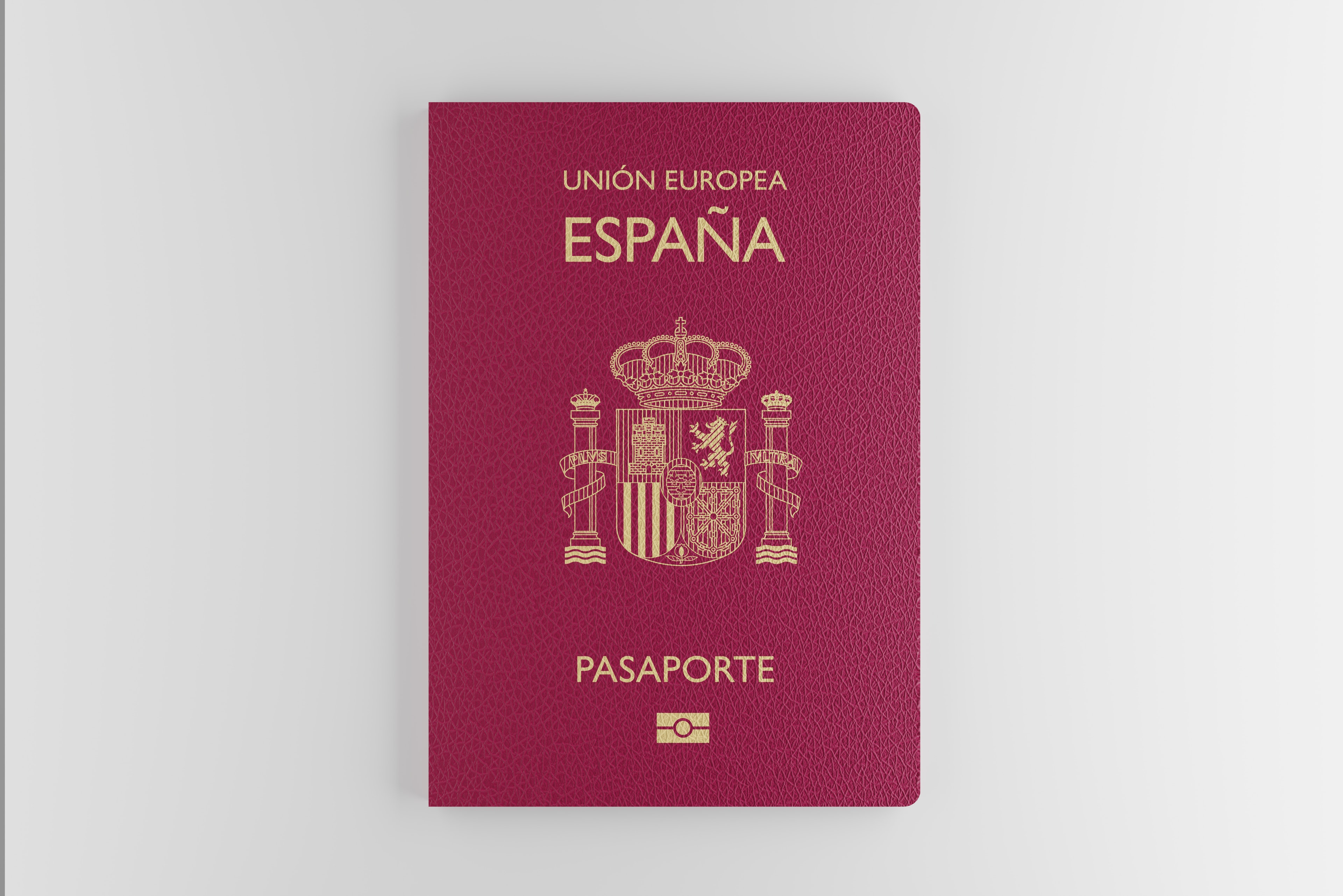
After 5 years in Spain, digital nomads can become permanent residents. After another 5 years, they may be eligible to apply for citizenship. Spanish citizenship also comes with a powerful passport, visa-free access to more than 170 countries, and the right to live and work across the EU.
10. Affordable cost of living
Spain’s cost of living is about 30—50% lower than in the US and the UK. Compared with higher-cost EU countries, Spain is commonly estimated to be around 15% cheaper than France and Germany, 22% cheaper than the Netherlands, and much cheaper than Ireland.
A single person needs around €700 per month in Spain excluding rent. With rent included, a budget of roughly €1,400—1,600 per month is usually sufficient for a comfortable standard of living[7].

Digital nomads can rent a 3-bedroom apartment in Spain for about €1,000, while comparable rents start at around €2,000 in the US and €1,500 in the UK
Who can apply for the Spain Digital Nomad Visa: requirements and eligibility criteria
The Spain Digital Nomad Visa is available to nationals of countries outside the EU and the EEA countries who work remotely and meet all eligibility criteria.
Core eligibility conditions
Digital nomads must meet all of the following conditions:
- be aged 18 or over;
- work remotely for a company or customer located outside Spain using computer and telecommunications means exclusively;
- hold no criminal record in Spain or any country of residence during the past 2 years, and submit a sworn declaration covering the past 5 years;
- hold an undergraduate or postgraduate degree from a recognised university or business school, or demonstrate at least 3 years of professional experience in the current field of activity;
- provide proof of a registered address in Spain — rental agreement or property deed;
- hold health insurance contracted with an insurer authorised to operate in Spain, covering all risks insured by Spain’s public health system;
- meet the minimum income threshold applicable to the application date.
Eligible work arrangements
The Spain Digital Nomad Visa accepts three categories of applicants:
- Employees must provide a certification from the foreign employer confirming the employment relationship has existed for at least 3 months before the visa application date, the employer's explicit consent to remote work from Spain, and the salary amount.
- Self-employed freelancers must show a contract with a foreign client or company in place for at least 3 months.
- Entrepreneurs must demonstrate an active entrepreneurial activity as defined under Article 70 of Law 14/2013.
Employer registration and social security agreement
When the applicant is registered with their home-country social security system, the employer or the self-employed applicant must submit either:
- A1 certificate for EU-based employers, confirming continued home-country contributions;
- or an equivalent certificate under a bilateral social security agreement between Spain and the applicant’s country of registration.
The US maintains a bilateral Totalisation Agreement with Spain, which covers this requirement for US-registered workers.
What is the minimum income requirement for the Spain Digital Nomad Visa in 2026?
Spanish Digital Nomad Visa income requirement is tied directly to Spain’s minimum interprofessional wage, SMI, and is updated automatically each time the SMI changes. Understanding the formula allows applicants to verify their own eligibility before starting the document process.
Single applicant: €2,849 per month
On February 18th, 2026, Spain’s Council of Ministers raised the SMI to €1,221 gross per month in 14 payments, which is 3.1% higher than the 2025 level of €1,184[8].
The Spain Digital Nomad Visa income threshold is set at 200% of the annual SMI, converted into 12 monthly amounts. This produces a minimum monthly income of €2,849 — equal to €34,188 per year — for a single applicant in 2026.
The figure applies to income before Spanish tax deductions. Bank statements, payslips, employment contracts, and service agreements may all be used as proof of income.
Family add-ons
When family members are included in the Digital Nomad Visa application, the required income increases: by €1,069 per adult and €357 per child. The following table sets out the 2026 thresholds by family size.
Spain Digital Nomad Visa income thresholds by family size
Who can move to Spain with the main applicant under the Digital Nomad Visa?
Family reunification is one of the most valued features of the Spain Digital Nomad Visa. Approved family members receive their own residence permits simultaneously with the principal applicant.
The following relatives are eligible to accompany or join the digital nomad:
- spouse or registered civil partner;
- minor children under 18;
- adult children aged 18 or over who are unmarried, enrolled full-time in university or equivalent studies, and financially dependent on the main applicant;
- parents and grandparents — financially dependent on the main applicant;
- siblings — financially dependent on the main applicant.
Marriage and birth certificates — with sworn Spanish translations and apostille where applicable — are required for each dependent listed in the application.

Vladlena Baranova,
Head of Legal & AML Compliance Department, CAMS, IMCM
The law permits the inclusion of parents, grandparents, and siblings who are financially dependent on the main applicant. In practice, immigration authorities apply heightened scrutiny to these extended-family cases, and approvals for non-nuclear-family relatives are uncommon.
Applicants wishing to include parents or siblings should prepare detailed financial evidence demonstrating genuine dependency and seek specialist advice before submitting.
What documents are required for the Spain Digital Nomad Visa?
Spanish Digital Nomad Visa requirements at the document stage are among the most operationally demanding aspects of the process. Every document submitted to the consulate must be either an original or a certified copy. Foreign-language documents require a sworn translation into Spanish.
Standard document checklist
The following documents are required for the digital nomad in Spain:
- original valid passport plus copies of all pages containing biographical data — the passport must be valid for at least 1 year beyond the intended period of stay and must not have been issued more than 10 years ago;
- completed national visa application form;
- one recent passport-size colour photograph;
- paid visa fee receipt;
- certificate of no criminal record, covering the past 2 years, from each country of residence, accompanied by a sworn declaration covering the preceding 5 years;
- employment or service documentation confirming at least 3 months of active work relationship with the foreign employer or client;
- certificate from the foreign company’s official Companies Register — with apostille — confirming the company’s registration date and type of business;
- proof of income: payslips, bank statements for the last 3 months, and the employment contract or service agreement;
- health insurance certificate;
- proof of accommodation in Spain;
- diploma, degree certificate, or documentary proof of 3 years' relevant professional experience;
- social security certificate or a signed declaration of commitment to pay social contributions;
- marriage and birth certificates for any family members included in the application.
Health insurance
The insurance policy must cover all the risks insured by Spain’s public health system, with no deductible and no patient co-payment. The insurer must be authorised to operate in Spain and appear on the register maintained by Spain’s Directorate-General of Insurance and Pension Funds.
Many international health insurance providers sold outside Spain do not meet these criteria: a Spain-specific policy or one from an insurer with DGS authorisation is required. UK digital nomads already covered by a UK S1 form registered with Spain’s national social security system may submit that as an alternative.
Criminal record certificate: nuances for US and UK applicants
US applicants face one additional requirement: they must obtain a federal criminal background check issued by the FBI's Criminal Justice Information Services Division.
The FBI check is not a state-level check and must be accompanied by a Hague Convention Apostille before submission[9]. State-level police checks are not accepted. The certificate must not be older than 6 months at the date of visa application, unless the certificate itself specifies a longer validity period.
UK applicants use an ACRO Criminal Records Office certificate in place of the FBI check.
How much does the Spain Digital Nomad Visa cost?
Spanish Digital Nomad Visa applicants should budget for government fees and any professional support. Total costs may vary depending on whether the applicant needs a consular D visa. Nationals of countries that can enter the Schengen Area visa-free for short stays do not pay this fee, including citizens of the US, the UK, Canada, Australia, and most Latin American countries.
The total cost of obtaining the Spain Digital Nomad Visa starts at €1,219.10 for a single applicant. It includes:
- Consulate visa fees — around €80, charged in local currency and adjusted periodically for exchange-rate movements.
- Notary and translation services — €1,000+.
- Residence card fee — €79.26.
- Fee for obtaining the Foreigner Identity Number, NIE, — €9.84.
- Health insurance — €50+ per month for a single applicant.
In addition, digital nomads in Spain must arrange accommodation for at least 6 months, either by renting or purchasing property. There is no minimum price requirement. On average, a 1-bedroom apartment costs about €880 per month in the city centre and €690 outside the centre, while the average purchase price is around €2,500 per m2[10].
How to apply for the Spain Digital Nomad Visa: step-by-step process
Understanding how to apply for the Spain Digital Nomad Visa correctly from the outset reduces the risk of procedural mistakes. Based on Immigrant Invest’s experience, the overall timeline, starting with document preparation and ending with the residence card, is around 4 months.
Digital nomads outside Spain file through the Spanish consulate responsible for their place of residence. They receive a category D visa valid for 1 year, enter Spain, and then apply for the 3-year residence permit.
Applicants already in Spain on a valid Schengen visa or another legal basis can apply directly for the 3-year residence permit with the immigration service, without the consulate D-visa stage. This in-country route is faster, but the applicant must prove lawful presence in Spain at the time of application.
1 day
Pass a Preliminary Due Diligence
Before signing a Services Agreement with the digital nomad, Immigrant Invest conducts a mandatory preliminary screening. This helps identify potential risks early and increases the likelihood of approval.
The screening is fully confidential and takes 1 business day.
Before signing a Services Agreement with the digital nomad, Immigrant Invest conducts a mandatory preliminary screening. This helps identify potential risks early and increases the likelihood of approval.
The screening is fully confidential and takes 1 business day.
4+ weeks
Prepare documents
The exact document package depends on the applicant’s personal circumstances.
Immigrant Invest lawyers support document collection, complete the visa application, and prepare all required government forms. They also assist with obtaining a Foreigner Identity Number, NIE, which can be requested either at a Spanish consulate or at a police station in the place of residence.
The exact document package depends on the applicant’s personal circumstances.
Immigrant Invest lawyers support document collection, complete the visa application, and prepare all required government forms. They also assist with obtaining a Foreigner Identity Number, NIE, which can be requested either at a Spanish consulate or at a police station in the place of residence.
2+ weeks
Get a Digital Nomad Visa
The full application and supporting documents are filed at a visa centre or a Spanish consulate in the applicant’s country of citizenship or legal residence. Processing can take up to 2 months.
After approval, the visa is placed in the passport. The passport must be collected within 1 month, either personally or via an authorised representative.
If eligible to apply from within Spain, the applicant can skip this step and submit documents directly to the Spanish authorities.
The full application and supporting documents are filed at a visa centre or a Spanish consulate in the applicant’s country of citizenship or legal residence. Processing can take up to 2 months.
After approval, the visa is placed in the passport. The passport must be collected within 1 month, either personally or via an authorised representative.
If eligible to apply from within Spain, the applicant can skip this step and submit documents directly to the Spanish authorities.
3+ weeks
Purchase or rent housing in Spain
Immigrant Invest real estate experts help select a suitable property and handle the transaction. The digital nomad can choose a property and complete the deal remotely through an Immigrant Invest attorney.
3+ weeks
Obtain a residence permit in Spain
After receiving the Digital Nomad Visa, the applicant travels to Spain and applies for a residence permit.
The application can be submitted online with support from Immigrant Invest lawyers, but the digital nomad must be physically present in Spain during this stage.
The standard processing time is 20 business days.
After receiving the Digital Nomad Visa, the applicant travels to Spain and applies for a residence permit.
The application can be submitted online with support from Immigrant Invest lawyers, but the digital nomad must be physically present in Spain during this stage.
The standard processing time is 20 business days.
45+ days
Obtain a resident card
Residence permit applications are reviewed for around 45 days. Once approved, Immigrant Invest lawyers accompany the digital nomad and eligible family members to the police station to collect the residence cards.
After 3 years
Extend the residence permit
The Spanish residence card, TIE, issued upon completion of the Digital Nomad Visa process, is valid for 3 years. It may be renewed once, for a further 2 years, giving a maximum of 5 years under the Digital Nomad Visa framework[11].
The renewal application should be filed before the current card expires. To qualify, the holder must still meet the income requirement and prove effective residence in Spain for at least 183 days per year. Supporting documents may include a certificate of registered address, rental payment records, and bank activity[12].
After 5 years, the holder must apply for a different residence status, such as permanent residency.
The Spanish residence card, TIE, issued upon completion of the Digital Nomad Visa process, is valid for 3 years. It may be renewed once, for a further 2 years, giving a maximum of 5 years under the Digital Nomad Visa framework[11].
The renewal application should be filed before the current card expires. To qualify, the holder must still meet the income requirement and prove effective residence in Spain for at least 183 days per year. Supporting documents may include a certificate of registered address, rental payment records, and bank activity[12].
After 5 years, the holder must apply for a different residence status, such as permanent residency.
What are typical reasons for refusal of the Spain Digital Nomad Visa and how to appeal?
Knowing the most frequent grounds for the Spain Digital Nomad Visa rejection allows applicants to audit their own files before submission. A well-prepared application with complete, correctly apostilled, and translated documents has a significantly higher approval rate.
Common grounds for rejection
Digital nomads in Spain are most commonly refused for the following reasons:
- incomplete documentation: missing sworn translations, unsigned declaration forms, or absent apostilles are the single most frequent cause;
- incorrect or inconsistent information: discrepancies between the employment letter and the bank statement, or between the declared income and the supporting payslips;
- failure to confirm the purpose of the visit: insufficient evidence that the applicant's work is genuinely performed remotely for a foreign employer;
- Schengen Area violations: prior overstays or other immigration breaches in the Schengen Area appear in the consulate's screening and may lead to automatic refusal;
- insufficient income: declared income that falls below the applicable minimum threshold after family members are counted;
- health insurance deficiencies: policies with a deductible, a co-payment clause, or issued by an insurer not authorised to operate in Spain.
How to appeal a refusal
A Spain Digital Nomad Visa applicant who receives a refusal has two formal appeal routes[13]:
- Administrative appeal. It is filed within 30 days of the refusal notification to the Visa Department at the Spanish Consulate that issued the decision. The consulate reviews the case and may overturn the refusal if new evidence is presented.
- Judicial appeal. If the Visa Department upholds the refusal, the applicant may file a judicial appeal with the High Court of Justice of Madrid within 2 months of receiving the consulate's final decision.
Tax obligations for digital nomads in Spain
Understanding the Spain Digital Nomad Visa tax obligations before relocating is essential for financial planning. Two tax routes may apply, depending on how long the applicant stays and whether they opt for the Beckham Law regime.
Tax residency triggers
Spain treats an individual as a tax resident if they spend more than 183 days in Spain in a calendar year. Days spent abroad may still be counted unless tax residence elsewhere is clearly proven. Tax residency may also apply even below 183 days if Spain becomes the centre of economic interests or if a spouse and minor children usually live in Spain[14].
Because the day-count test is key, reliable travel evidence matters: entry and exit dates, boarding passes, accommodation contracts, and bank or card statements showing day-to-day activity.
Personal income tax rates
Tax residents in Spain pay Impuesto sobre la Renta de las Personas Físicas, IRPF, a progressive personal income tax that increases with the level of income:
- up to €12,450 — 19%;
- €12,451—20,200 — 24%;
- €20,201—35,200 — 30%;
- €35,201—60,000 — 37%;
- €60,001—300,000 — 45%;
- over €300,000 — 47%[15].
Regional income tax rates vary by autonomous community: some apply higher top bands, while others, such as Madrid, apply lower ones. Where the top combined rate is high, this creates a strong financial incentive to use the Beckham Law special regime.

Vladlena Baranova,
Head of Legal & AML Compliance Department, CAMS, IMCM
Spain has double taxation agreements with many countries, including the US, the UK, Canada, and Australia. These treaties allow foreign tax paid on certain income to be credited against Spanish tax due, which reduces or eliminates double taxation.
US citizens have an extra complication: under the US–Spain treaty, the US applies a reservation clause, meaning it can still tax US citizens on worldwide income even if they are resident in Spain.
Special tax regime for digital nomads: 24% flat rate
The Beckham Law is a special tax regime for workers, professionals, entrepreneurs, and investors[16]. For eligible Spain Digital Nomad Visa holders, it can reduce the effective income tax burden, which makes this residency route particularly attractive to higher earners.
Main advantage. Under the regime, eligible applicants pay income tax at a flat rate of 24% on Spanish-source income up to €600,000 per year, instead of the standard progressive IRPF scale. Income above €600,000 is taxed at 47%.
Spain taxes only income considered obtained in Spanish territory. During the regime, this includes:
- employment income obtained while the regime applies;
- income from entrepreneurial economic activities carried out in Spain.
For digital nomads, this means that salary for remote work performed while living in Spain is taxed in Spain. By contrast, most foreign-source passive income falls outside the Spanish tax base under the regime. This includes foreign dividends, interest from overseas bank accounts, capital gains on foreign assets, and rental income from property abroad.
The regime applies for the year of arrival and the following 5 tax periods — a maximum of 6 years.
Additional benefits of the special tax regime for digital nomads in Spain may include:
- No Spanish taxation on certain foreign-source income, such as rental income, overseas dividends, and some pensions.
- Wealth tax relief on foreign assets, as wealth tax exposure may be limited to Spanish-situs assets rather than worldwide holdings.
- No Modelo 720 filing. Modelo 720 is Spain’s informational return for declaring overseas assets above reporting thresholds.
- Family inclusion, provided eligible family members move to Spain within the first tax period in which the main taxpayer applies the regime.
To be eligible for the Beckham Law regime, the applicant must not have been a Spanish tax resident in any of the 5 tax periods preceding their move to Spain.
The application is made by filing Form 149 within 6 months of the date of registration with Spanish social security — not from the date of arrival or from the visa grant date. Electing the regime is not automatic: if the applicant does not file Form 149 within the 6-month window, the right to use the special regime for that tax period is forfeited. Form 149 is the same form used to waive or leave the regime.
Social security contributions for self-employed nomads
Self-employed remote workers who stay in Spain beyond the first year of their residence status may be asked by the Spanish Social Security authorities to register as autónomo, which means to enrol in the RETA self-employed regime.
Once registered, monthly social security contributions become mandatory. The general contribution rate is about 31.4% of the contribution base, and monthly payments range from around €200 to 590 depending on income[17].
By contrast, employees can usually avoid enrolling in the Spanish social security system. This is possible if their foreign employer proves that the employee remains covered in another country through a certificate issued under a bilateral social security agreement[18].
Which cities in Spain are best for digital nomads?
Several Spanish cities stand out as attractive destinations for digital nomads thanks to their infrastructure, lifestyle, and international communities. The following 5 locations are among the most popular choices.
Madrid: top destination for career-led nomads
Madrid is a practical base rather than a resort-style destination. It is the most common choice for digital nomads in professional services, finance, and technology. The capital concentrates Spain’s largest cluster of international companies — including Google, Amazon, Netflix, Boeing, and Alibaba — supported by a dense ecosystem of coworking spaces and specialist service providers.
Madrid also benefits from Adolfo Suárez Madrid–Barajas Airport, one of Europe’s best-connected hubs with direct routes to the US, Canada, and the UK. With more than 1,066,000 foreign-born residents, Madrid has a strong English-speaking community and the country’s deepest pool of English-language legal, tax, and relocation advisers[19].
Barcelona: largest global nomad hub with a startup vibe
Compared with Madrid’s business-first feel, Barcelona pairs serious professional infrastructure with a Mediterranean pace of life. Beach access, mild weather, and a strong cultural calendar make it a natural fit for digital nomads who want a city that still feels coastal.
The tech footprint is also substantial, with major names such as Amazon, Meta, Microsoft, and Apple maintaining a presence in the city. That corporate layer sits alongside an active startup scene with companies such as Glovo, Typeform, TravelPerk, and Wallbox, so networking often happens organically through industry events, coworking spaces, and founder communities rather than formal business circles.
Barcelona is one of Spain’s most international cities, with foreign nationals accounting for roughly a quarter of residents[20]. That translates into an established English-speaking ecosystem and founder communities, such as Barcelona Tech City events, Startup Grind meetups, and coworking networks like WeWork and Aticco.

The 22 innovation district in Barcelona is a major technology and startup hub, hosting hundreds of tech companies, research centres, and coworking spaces
Malaga: Mediterranean lifestyle with a fast-growing remote-work market
Malaga combines a Mediterranean lifestyle with a growing technology ecosystem, attracting firms such as Google, Vodafone, Oracle, and Ericsson, many of which operate from Malaga TechPark, one of Spain’s largest technology campuses.
Living costs are noticeably lower than in Madrid or Barcelona, with average rents being roughly 25—35% lower. The city also records about 300 sunny days per year, with beaches within walking distance of the historic centre, supporting water sports, beach training, and running along the seaside promenades. Malaga also has a strong cultural offer for a city of its size, including the Picasso Museum and the Centre Pompidou Malaga.
Transport infrastructure is practical for remote workers who travel frequently. Malaga has an international airport with direct flights to major European hubs and high-speed rail connecting the city to Madrid in about 2.5 hours.
Alicante: expat-friendly coast that works well for families
Alicante sits on the Costa Blanca and is built around a compact, walkable city centre with an urban beach and a seafront promenade. The province is one of Spain’s biggest international-resident clusters: registered foreign residents exceed 500,000 across Alicante province[21].
The region runs Distrito Digital, a Generalitat Valenciana initiative that hosts technology companies and digital-economy projects. The University of Alicante also supports startup activity through the Alicante Science Park, which reports a portfolio of 50 linked companies.
Alicante supports year-round outdoor living, with a large marina, sailing clubs, and coastal cycling routes, plus quick access to nearby hiking areas. For mobility, Alicante–Elche Miguel Hernandez Airport is a major international gateway, and high-speed rail links the city to Madrid in around 2 hours 20 minutes.
Tenerife: year-round warmth in the Canary Islands
Tenerife, the largest island in the Canary Islands, attracts digital nomads looking for stable weather throughout the year. Average temperatures remain above +20°C, which allows outdoor routines in every season, including surfing, diving, sailing, golf, extensive coastal cycling routes, and hiking across volcanic landscapes in Teide National Park, Spain’s largest national park.
The island hosts an active remote-work scene, with coworking spaces in areas such as Santa Cruz de Tenerife and Las Palmas–connected tech networks, as well as regular digital-nomad meetups and startup events.
Living costs are 10—20% lower than in parts of coastal mainland Spain, with rents often around 40% lower. One reason is the Canary Islands’ separate tax system: IGIC is 7%, compared with mainland VAT of 21%.

Tenerife is one of Spain’s most international destinations, with around 25% of its residents born abroad[22]
Can digital nomads get permanent residency and citizenship in Spain?
The Spain Digital Nomad Visa is a pathway to long-term settlement, not merely a temporary arrangement. The residence history accumulated under the permit counts towards both permanent residency and citizenship.
Permanent residency after 5 years
After 5 continuous years of legal residence in Spain, digital nomads may apply for long-term resident status in Spain. The applicants must meet the following conditions:
- reside in Spain for at least 6 consecutive months in the final 12-month period;
- demonstrate tax compliance;
- have no criminal convictions;
- show integration into Spanish social and civic life[23].
Long-term residence status is granted without an expiry date and does not restrict the holder to remote work — it permits any legal economic activity in Spain.
Spanish citizenship after 10 years
After 10 years of legal and continuous residence in Spain, digital nomads may apply for Spanish nationality through the general naturalisation route. Spanish citizenship confers full rights to live and work anywhere in the EU[24].
To qualify, digital nomads must meet residence continuity and good-conduct requirements, as well as demonstrate integration by proving A2-level Spanish and passing the civic and cultural knowledge test.
Children born in Spain to resident parents can benefit from a faster route: they may apply for Spanish citizenship after 1 year of legal residence in the country.

Spain requires new citizens to renounce their previous nationality, except for nationals of Latin American countries, the Philippines, and Equatorial Guinea
How does the Spain Digital Nomad Visa compare to Spanish Non-Lucrative Visa?
The Spain Non-Lucrative Visa is an alternative for applicants with passive income rather than remote work. It suits individuals who do not need to work in Spain and can show sufficient passive income, such as financially independent individuals, those living on dividends, passive investors, or retirees.
The Non-Lucrative Visa allows applicants to include family members, travel visa-free within the Schengen Area, and live in Spain for an initial period of 1 year. It can then be renewed for 2 years at a time and may lead to permanent residency and later citizenship. However, it does not allow holders to work in Spain.
Previously, high-net-worth individuals could also obtain a Spain Golden Visa for investors. It was closed in all routes on April 3rd, 2025 under Organic Law 1/2025 and is no longer available to new applicants.
Spain Digital Nomad Visa vs. Non-Lucrative Visa comparison
Risks and pitfalls when obtaining the Spain Digital Nomad Visa
The process for obtaining a Spanish digital nomad residence permit carries specific risks that may cause delays, rejections, and unexpected costs. The points below describe the most common failure patterns and how they arise.
Income threshold and documentation continuity
Applicants often assume that reaching the headline income threshold is sufficient. Spanish authorities assess stability and continuity of income — not a single snapshot. Bank statements covering 3 to 6 months prior to application are required alongside payslips or invoices.

Vladlena Baranova,
Head of Legal & AML Compliance Department, CAMS, IMCM
Digital nomads whose income fluctuates month-to-month, or who recently increased earnings specifically to meet the threshold, may face additional scrutiny or outright refusal. Documenting a consistent earnings pattern over the qualifying period — rather than relying on projected or recent figures — tends to reduce this exposure.
Employer eligibility and the foreign company age requirement
Spain’s Digital Nomad Visa requires the foreign company or client to have been in operation for at least 1 year. Applicants must also demonstrate a minimum duration of their working relationship with that employer or client.
Cases where the company is recently established, or where the client relationship is new, tend to stall or be rejected. Verifying the company’s establishment date and the documented length of the working relationship before applying avoids last-minute disqualification.
Freelancer continuity
Self-employed applicants face a specific standard: Spanish authorities expect evidence of an established client relationship for at least 3 months prior to application and a reasonable expectation that work will continue for at least 1 year after relocation.
Newly signed contracts, informal arrangements, or project-based work without continuity indicators are treated as insufficient. Freelancers with varied or new client rosters should demonstrate documented, repeat, and ongoing relationships rather than a single new agreement.
Remote work authorisation gaps
A common weak point is the absence of explicit written permission from an employer allowing the employee to work remotely from Spain. A standard employment contract or an offer letter is not sufficient if it does not contain a clause expressly authorising remote work from abroad.
Securing a formally worded employer letter — separate from or appended to the employment contract — that specifically permits remote work from Spain is one of the more critical and frequently overlooked document steps.
Document validity windows and coordination
Police certificates and medical documents all carry validity limits, commonly around 6 months from date of issue. Applicants sourcing documents from multiple countries must coordinate issuance, apostille, sworn translation, and submission within a single valid window.

Vladlena Baranova,
Head of Legal & AML Compliance Department, CAMS, IMCM
A document that expires mid-process forces a full restart of that document chain. Mapping the complete document timeline from the outset — accounting for each stage — allows applicants to sequence steps without documents overlapping their expiry dates.
Apostille and sworn translation failures
Beyond simply obtaining an apostille, there are specific compliance requirements that are easy to miss. The apostille must certify the correct signature on the original document. Documents must not be altered or physically damaged during handling, including damage caused by removing staples.
Translations must be produced by a sworn or certified translator, not a general translation service. Any of these errors may result in document rejection — not a request for correction — requiring full reissuance.
Appointment availability
Consulate appointment slots in certain regions are severely limited and unpredictable. An applicant whose documents are ready may face a waiting period of weeks or months for an in-person submission appointment.
During that wait, validity windows on police certificates or other time-limited documents can expire, requiring fresh issuance. Building appointment availability into timeline planning from the outset is the key adjustment for applicants in jurisdictions with known slot shortages.
Tax residency and the 183-day threshold
Spending more than 183 days per year in Spain triggers Spanish tax residency, with material consequences for worldwide income taxation. Some applicants only discover this after committing to a long-term lease or after the first year in-country. The Beckham Law may partially mitigate this, but it requires active application, has its own conditions, and is not automatic.
Mapping the anticipated days-in-Spain against the 183-day threshold — and making an informed decision about the Beckham Law opt-in — before signing a lease or submitting the application avoids an unintended tax position.
Housing documentation and the short-term rental issue
At the residence card stage, digital nomads in Spain must demonstrate established accommodation in the country, either through property ownership or a long-term rental contract, for at least 6 months. Short-term rentals, tourist accommodation bookings, or Airbnb contracts are generally not accepted as proof of address.
Sequencing the housing commitment appropriately — after receiving an initial eligibility and document assessment, but before the residence card appointment — reduces both the risk of a premature financial commitment and a documentation gap at the critical stage.
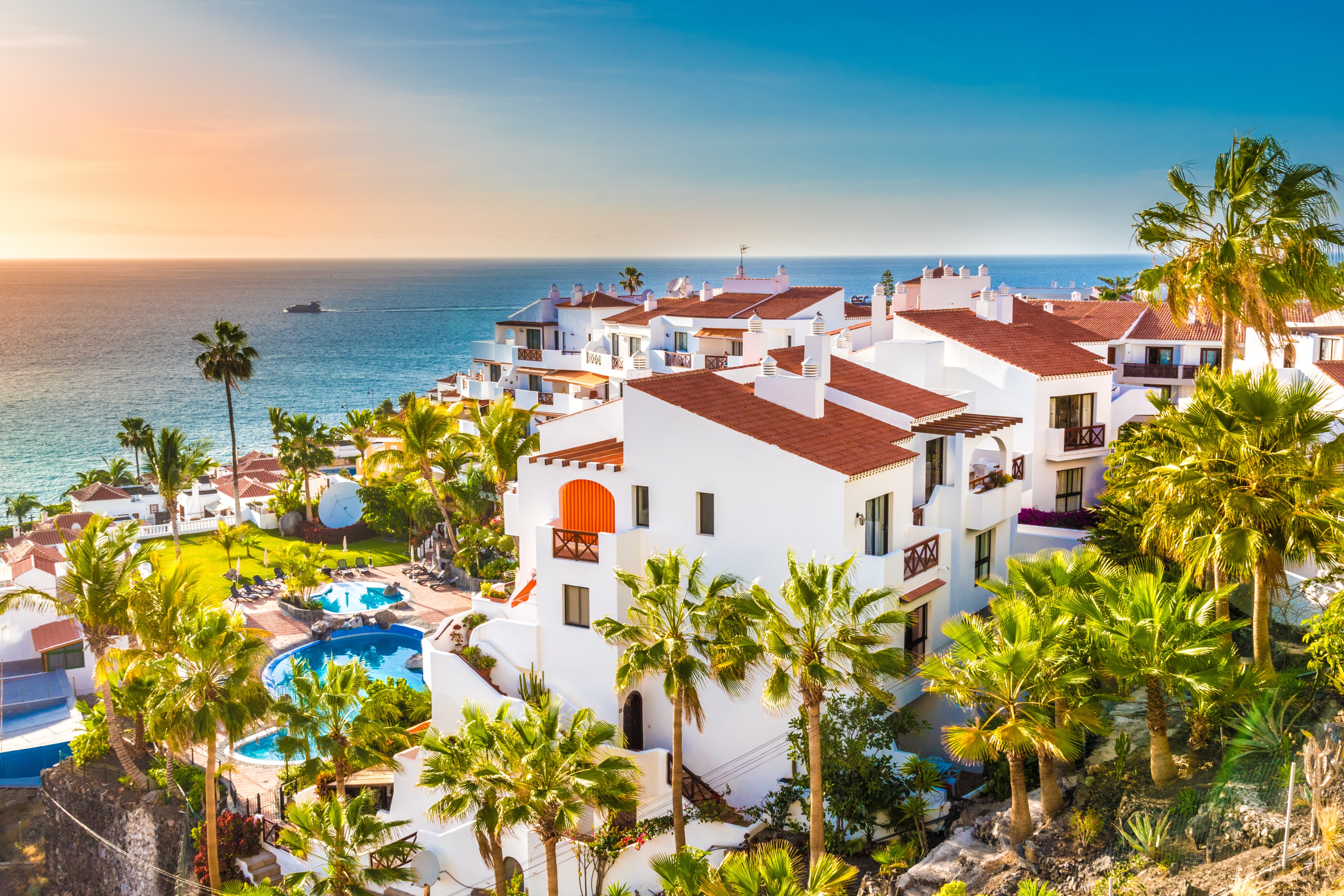
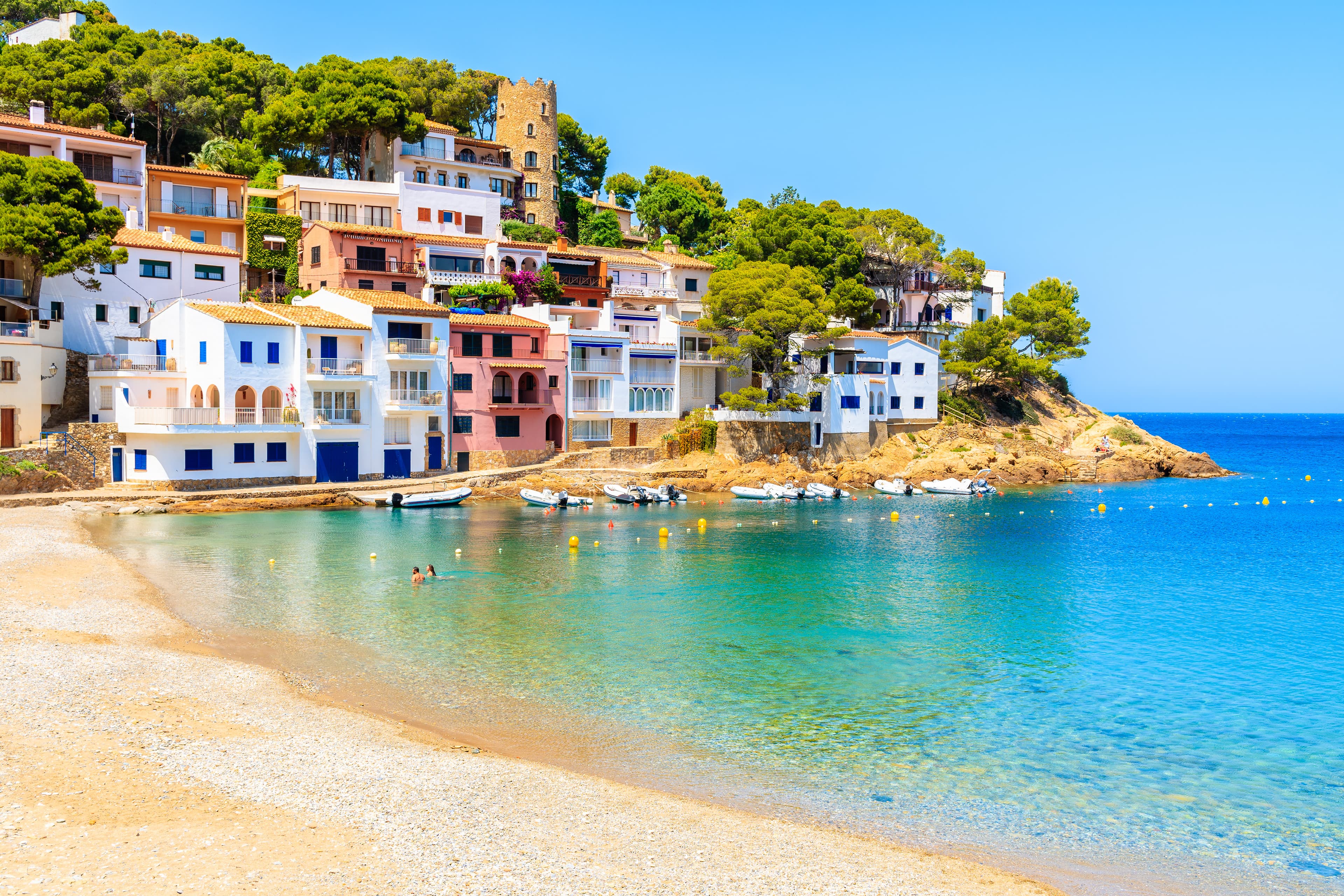
Examples of real estate in Spain
How Immigrant Invest can help with the Spain Digital Nomad Visa
Immigrant Invest has operated since 2006 and for almost 20 years has guided clients through citizenship and residence by investment, as well as residence solutions for financially independent individuals and digital nomads. We have supported over 10,000 clients and their families and maintain offices in 11 countries, which helps us navigate jurisdiction-specific legal nuances efficiently.
For the Spain Digital Nomad Visa, Immigrant Invest supports applicants throughout the process, providing the following assistance:
- Pre-submission Due Diligence and compliance screening to identify refusal risks before documents are prepared and fees are paid.
- Eligibility and document strategy reviewed by lawyers for non-standard cases, including income proof, employer letters, and tax positioning.
- Document sequencing and validity monitoring, including police certificates, civil status documents, apostilles, and translations.
- Operational guidance on in-country versus consular filing, entry-stamp rules, biometrics, and appointment logistics.
- Cost breakdowns that separate government fees, professional fees, and ancillary expenses, with clarity on non-refundable items.
- Risk-managed sequencing recommendations, including when to arrange housing and when to open a Spanish bank account.
- Single point of contact and coordinated case management across timelines, travel, and document readiness.
The structured approach reduces procedural errors and keeps the application moving within required validity windows. It also helps applicants plan for second-year issues such as tax residency exposure and potential social security obligations.
Key takeaways about the Spain Digital Nomad Visa
- Spain is a strong destination for remote workers thanks to its reliable digital infrastructure, favourable climate, and established international communities.
- To qualify for Spain’s Digital Nomad Visa, applicants must show a minimum income of €2,849 per month, rising by €1,069 for each additional adult and €357 per child.
- Eligible digital nomads may benefit from the Beckham Law, which applies a 24% flat income tax rate on employment income up to €600,000 per year for up to 6 years.
- The full process of obtaining a Spain Digital Nomad residence permit takes at least 4 months.
- The permit is valid for 3 years and can be renewed once for 2 additional years, allowing a total of 5 years under the Digital Nomad Visa framework.
- After 5 years of residence, applicants may qualify for permanent residency, and after 10 years, they may apply for Spanish citizenship.
Sources
- Source: Ministry of Industry, Trade and Tourism of Spain — International Teleworkers: Digital Nomads
- Source: Law 28/2022 of December 21st on the promotion of the start-up ecosystem: BOE-A‑2022‑21739
- Source: Special regime for expatriates art. 93 Personal Income Tax Law
- Source: Internations — Expat Insider Survey 2025
- Source: Instituto Nacional de Estadística — Censo Anual de Población. Primeros resultados 2025
- Source: OECD — Health at a glance: Spain
- Source: Numbeo — Cost of living in Spain
- Source: Boletín Oficial del Estado — Spain’s minimum wage 2026
- Source: FBI — Identity History Summary Checks
- Source: Global Property Guide — Spain’s Residential Property Market Analysis
- Source: Boletín Oficial del Estado — Ley 14/2013
- Source: Ministry of Inclusion, Social Security and Migration — International Teleworkers: Unit of Large Companies and Strategic Groups
- Source: Spanish Ministry of Foreign Affairs, European Union and Cooperation — Information on visa refusals and appeals
- Source: Source: PwC — Spain Individual Residence
- Source: PwC — Taxes on personal income in Spain
- Source: Spanish Tax Agency — Beckham Law
- Source: PwC — Spain: social security contributions
- Source: Afiliación: Modelos de solicitudes de trabajadores — Social Security Treasury
- Source: Instituto Nacional de Estadística — Continuous Population Statistics
- Source: Catalan News — Foreign residents in Barcelona exceed 25% for the first time
- Source: The Olive Press — Alicante province’s registered non-Spanish population
- Source: Council of Europe — Tenerife, Spain
- Source: Spanish Ministry of Inclusion, Social Security and Migration — Long-term residence authorisation
- Source: Ministry of Justice of Spain — How nationality is acquired by residence