






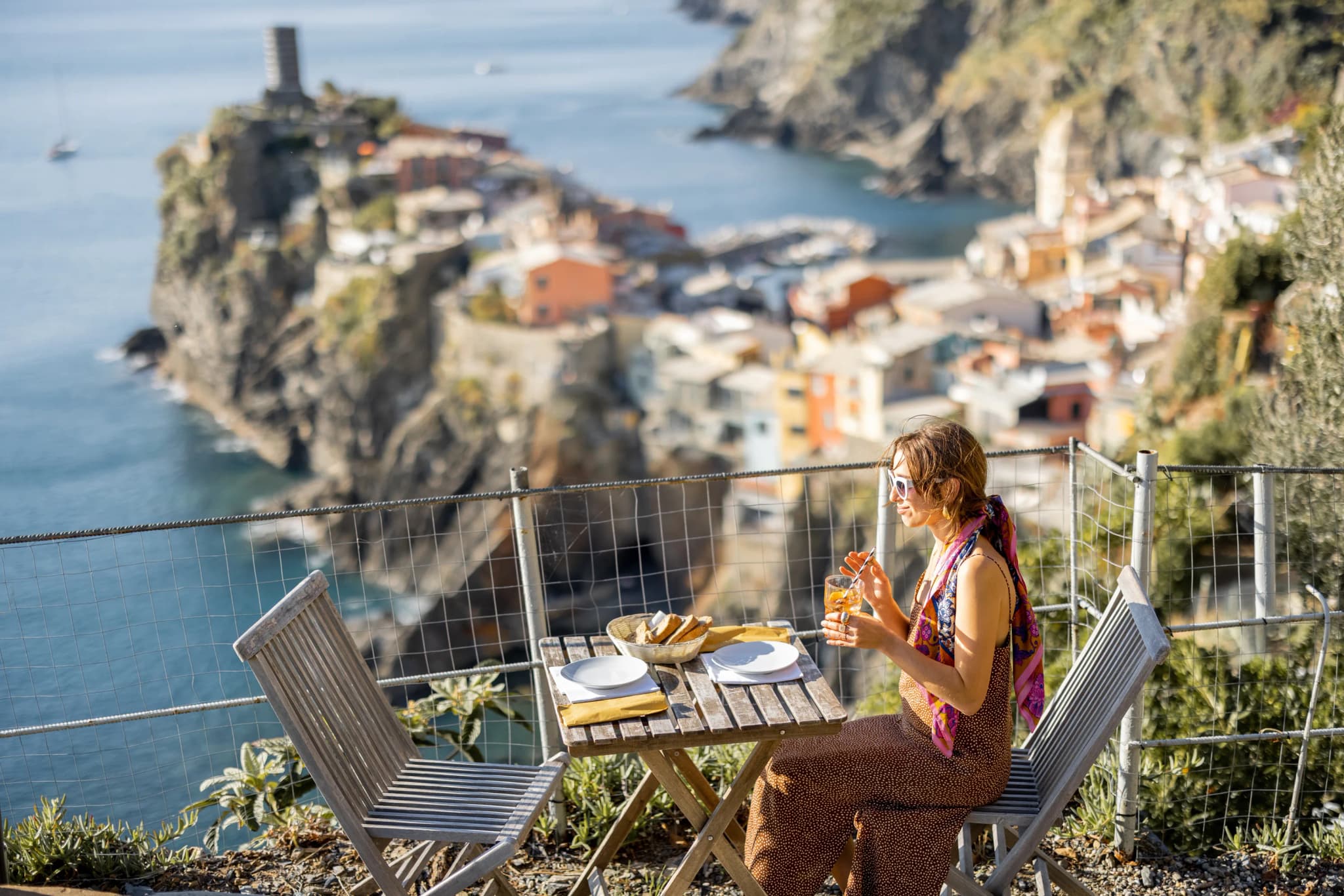

Italy is home to more than 5 million foreign residents, with people moving for very different reasons: some are drawn by the climate, lifestyle, and slower daily rhythm, while others seek business opportunities, family life, or a stronger long-term base in the EU.
This guide breaks down the real pros and cons of living in Italy and the main residency routes available to non-EU nationals.
Is Italy a good place to live?
Italy offers a lifestyle that many people find hard to match. A warm climate, rich culture, and world-famous cuisine make everyday life more enjoyable, while many cities and towns offer a pleasant balance between convenience and atmosphere. Italy can also be a suitable choice for those planning to start a business or launch a startup, especially in sectors linked to tourism, food, design, fashion, and local services.
At the same time, living in Italy comes with practical considerations. Bureaucracy can be slow, job opportunities may be limited in certain regions, and salaries are often lower than in other Western European countries. The overall experience depends heavily on where one chooses to live and their source of income.
For investors, remote workers, retirees, entrepreneurs, and those seeking a slower pace of life, Italy can be an excellent choice. Some of them can also benefit from special tax regimes, which makes the move even more attractive.

Trusted by 10,000+ investors
Check your eligibility for the Italy Golden Visa
What are the 17 pros of living in Italy?
Living in Italy offers a distinctive mix of lifestyle, environment, and practical advantages that continues to attract expats from around the world. These benefits become most visible not in theory, but in the way daily life is shaped across the country.
1. Country for every taste
Italy is one of the few countries that can genuinely appeal to very different lifestyles. It draws fashion, culture, and food lovers, as well as those who want a slower rhythm in coastal towns, the countryside, or the south. At the same time, it offers clear paths for people planning to build a career in Milan or Rome or study at one of the world’s leading universities.
The country is equally attractive to wealthy individuals seeking elegance and privacy, retirees looking for comfort and climate, joyful young people drawn to street life and late evenings, and entrepreneurs looking for a more distinctive setting than a standard business hub.
2. Residency options tailored to different needs
Italy offers a range of residence options designed for different profiles:
- employees and highly skilled professionals;
- entrepreneurs and self-employed individuals;
- students and graduates;
- financially independent individuals;
- family members of residents;
- investors;
- remote workers.
Such flexibility allows each applicant to choose a pathway that fits their income source, lifestyle, and long-term plans.
After 5 years of legal residence in Italy, applicants can apply for permanent residence. After another 5 years, they may become eligible for citizenship, provided they meet the relevant requirements. These include continuous residence, sufficient income, Italian language proficiency of at least B1 level, and a clean criminal record.
3. Attractive tax regimes for new residents
Italy has several tax regimes that can significantly reduce the tax burden for new residents, depending on their profile and income structure.
For high-net-worth individuals. The lump-sum tax regime replaces standard progressive taxation on foreign income with a fixed annual payment of €300,000. Without this option, foreign income would be taxed at rates ranging from 23 to 43%. The regime can be used for up to 15 years. Family members can also join and pay a fixed €50,000 per person per year on their foreign income[1]Source: Agenzia delle Entrate — Neo-residents optional tax regime.
For pensioners. The 7% flat tax applies to foreign retirees who relocate to small municipalities in central and southern Italy with a population of up to 30,000 residents. It allows them to pay a fixed 7% tax on foreign-source income instead of the standard progressive rates. The regime can be applied for up to 10 years[2]Source: Agenzia delle Entrate — Personal income tax rates and relief.
For professionals and employees. The impatriate regime offers a temporary tax benefit for individuals who move their tax residence to Italy: employment and self-employment income earned in Italy is taxed on only 50% of its amount, up to €600,000 per year. The regime applies for 5 years, with a possible extension and enhanced benefit if the individual has minor children[3]Source: Agenzia delle Entrate — Inbound workers tax regime.
4. Freedom of movement across the EU and Schengen Area
A legal residence permit in Italy makes travel across the EU much easier. It allows non-EU citizens to travel to the other 28 Schengen countries without applying for separate short-stay visas each time. They can usually stay there for up to 90 days within any 180-day period.
For everyday life, visa-free travel brings real comfort. Italy is well placed for travel across the continent, and many major EU cities are only a short direct flight away. Paris, Vienna, Berlin, and Athens can usually be reached in 2 hours, Madrid in 2.5 hours, and Lisbon in 3 hours. This makes weekend breaks, family visits, and business trips far more convenient.
Italy also suits those who enjoy travelling at a slower pace. It is easy to drive to neighbouring countries such as France, Switzerland, Austria, and Slovenia. Ferry routes also connect Italy with destinations across the Mediterranean, including Greece, Croatia, Spain, Tunisia, Sicily, Sardinia, and other islands.
5. Mediterranean climate with year-round outdoor living
Much of Italy, especially the centre and south, enjoys a mild Mediterranean climate with long summers and soft winters. Average annual temperatures range between +13…18°C, depending on the region, so spending time outdoors is part of everyday life rather than a short summer luxury.
Italy has a distinct sense of seasonality. Spring brings blossoms and bright green landscapes, summer is made for the sea and long evenings outdoors, autumn adds vineyards, warm colours, and harvest time, while winter remains mild in many parts of the country. In the north, the colder months bring snowy scenery and mountain resorts within easy reach.
The climate shapes the lifestyle in Italy: warmer months are perfect for the beach, sailing, and weekends on the coast, while the Alps and the Dolomites offer skiing, hiking, and mountain escapes.
6. Geographic diversity
Italy brings together the Dolomites, the Alps, the Ligurian Riviera, the Tuscan hills, the Amalfi Coast, Sicilian beaches, and the Adriatic within one relatively compact country.
The country’s geographic diversity creates an unusual range of landscapes and ways of living, where elegant cities, lakeside towns, quiet countryside, islands, spa resorts, and historic villages are all within easy reach, often by high-speed train or a short drive.

Hiking in the Dolomites is unusually flexible: it ranges from very easy, almost leisurely walks to highly technical alpine routes
7. Easy travel across Italy
Italy is relatively comfortable to move around, especially if based in one of the main northern or central cities. The main advantage is the high-speed rail network — Frecciarossa and Italo[4]Source: Italian high-speed rail network — Frecciarossa and Italo. It links the country’s core corridor, including Turin, Milan, Bologna, Florence, Rome, and Naples, and other cities such as Venice. Trains run at up to 300 km/h and arrive directly in city centres within about 1 to 3 hours between major cities.
In addition, from popular expat destinations it is also easy to reach both the sea and the mountains by car:
- Milan → sea and Alps: ~ 1—2 h;
- Rome → sea: ~ 30—60 min; mountains: ~ 1.5—2 h;
- Turin → sea: ~ 2 h; Alps: ~ 1 h;
- Florence → sea and mountains: ~ 1—1.5 h;
- Bologna → sea and mountains: ~ 1—1.5 h.
8. Exceptional food culture and high-quality local produce
Italy’s 20 regions each have their own culinary identity, with local dishes and ingredients that vary by region, province, and even town. Emilian cured meats, Sicilian citrus, Ligurian pesto, Neapolitan pizza, Tuscan olive oil, and Pugliese orecchiette show only part of that richness. Italian cuisine ranks 1st in the latest TasteAtlas list, while 6 Italian cities feature in the world’s top 10 food destinations[5]Source: Taste Atlas — 100 Best Cuisines in the World.
The quality of ingredients adds even more appeal. Seasonal vegetables, local cheeses, fresh seafood, olive oil, fruit, and regional wines are easy to find, and bakeries, small food shops, and open-air markets remain part of daily life. The same rankings also place Italian producers 1st in categories such as chocolate confectioneries and salami.
9. Universal public healthcare system
Italy’s Servizio Sanitario Nazionale provides universal access to healthcare for legal residents. The system is primarily tax-funded and covers general medical care, hospital treatment, and many specialist services. Co-payments vary by region, type of care, and income level, with many categories of residents fully or partially exempt.
Private supplementary insurance is widely used to reduce waiting times and expand access to private clinics, with basic plans starting from €40—120 per month.
10. Favourable business environment
Italy is the EU’s third-largest consumer market and the world’s 8th-largest economy, with strong positions in manufacturing, machinery, fashion, food production, automotive components, and pharmaceuticals. The country recorded 224 foreign direct investment projects in 2024, up 5% year on year, while Europe as a whole saw a 5% decline[6]Source: Ministry of Foreign Affairs and International Cooperation — Italy in international rankings.
For businesses, the appeal lies not only in market access, but also in incentives. Italy offers tax credits for R&D, innovation, and design, while the Patent Box regime provides favourable tax treatment for qualifying intellectual property and related research activity.
11. Unmatched cultural heritage and UNESCO World Heritage sites
Italy holds 61 UNESCO World Heritage Sites, the highest number in the world, including 55 cultural and 6 natural properties[7]Source: UNESCO — Italy. These range from cultural landmarks such as the historic centre of Rome to natural sites like the Dolomites.
Living in Italy means that places such as Florence, Venice, and Pompeii are not occasional travel destinations, but part of the everyday environment — always within reach and naturally woven into day-to-day experience.
12. Walkable cities and compact urban structure
Many Italian cities are built on a compact, human-scale layout, where daily life unfolds within walking distance. Historic centres bring together housing, cafés, shops, and services in dense, pedestrian-friendly areas, reducing the need for a car. This is reflected in recent rankings, where Milan has been named Europe’s most walkable city, as its 5 main attractions can be reached within a short walking radius[8]Source: The Portugal News — Europe’s Most Walkable Cities.
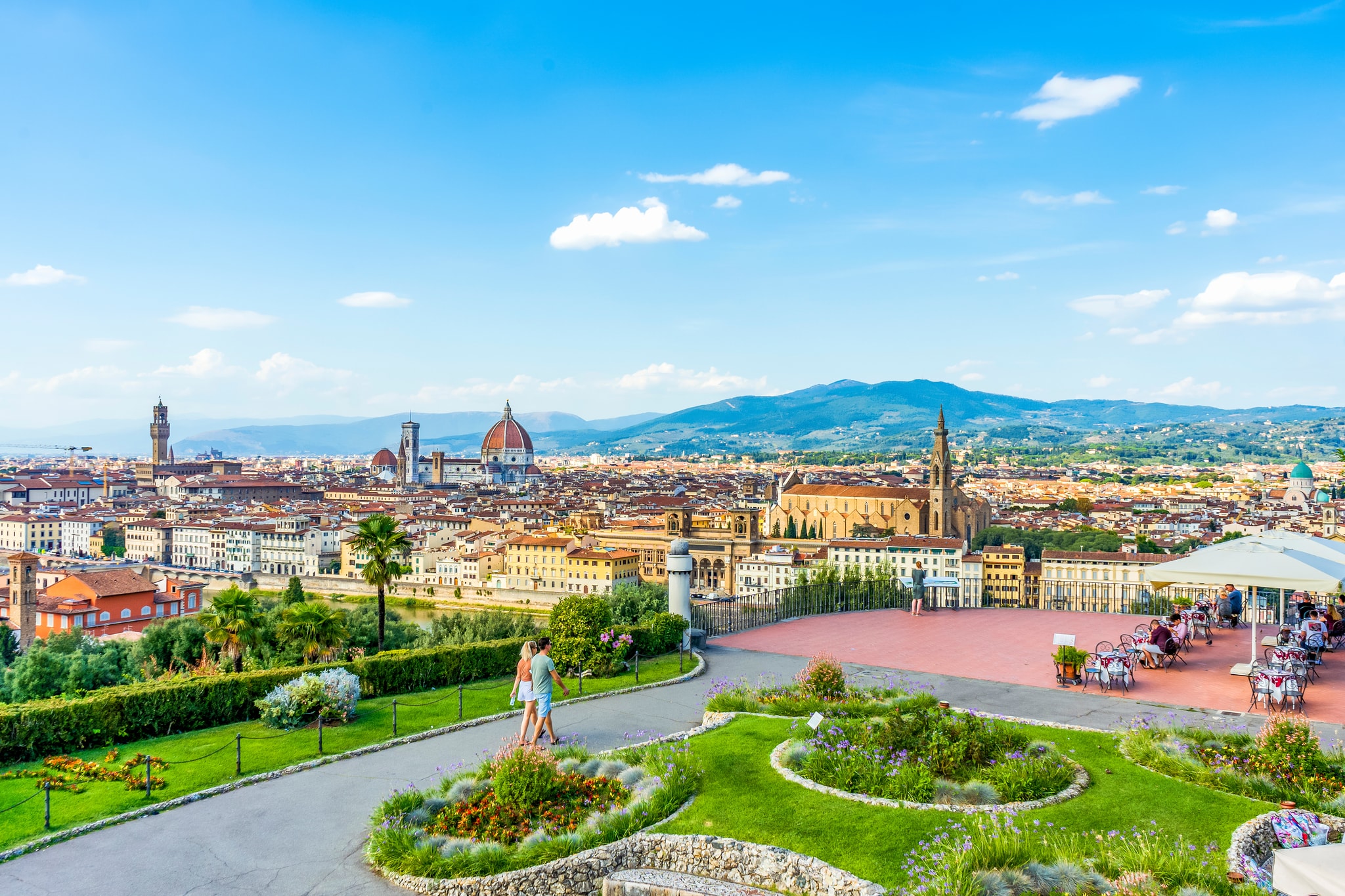
In Florence, key historic points sit within a 10—15 minute reach, and daily needs are embedded at street level, so residents rarely need transport
13. Strong employment protections and work-life balance
Italy combines solid worker protections with a lifestyle that leaves more space for life beyond work. Employees are entitled to at least 4 weeks of paid annual leave and the 13th-month salary remains a familiar part of Italian compensation structures[9]Source: European Employment Services — Labour Market Information: Italy.
OECD data also places Italy above average for work-life balance: only 3% of employees work very long hours, against an OECD average of 10%[10]Source: OECD Better Life Index — Italy.
14. Affordable world-class higher education
Italy offers a rare combination of academic prestige and relatively moderate costs. In the QS World University Rankings 2026, 15 Italian universities are placed among the world’s top 500[11]Source: QS World University Rankings 2026 — Italy.
Public university tuition ranges between €900 and 4,000 per year, while private institutions charge €6,000 to 20,000 or more. Many students benefit from fee reductions, exemptions, and scholarships.
Italy is especially appealing for fields in which Italian universities have a strong academic reputation, such as medicine, biology, natural sciences, physics, pharmacy, mathematics, and computer science.
15. Established expat communities
Italy is home to over 5.5 million foreign residents, representing 9.4% of the population[12]Source: ISTAT — Demographic Indicators. The largest communities come from Romania, Albania, Morocco, and China, with most foreign residents concentrated in the north — in major cities such as Milan, Rome, and Turin, where economic activity is strongest.
High-expat major cities have a well-established English-speaking environment, supported by international schools, social clubs, professional networks, and English-language media.
16. Strong sense of community and social cohesion
Italy is known for its strong social fabric, where family ties and everyday social interaction remain an important part of life. Relationships often extend beyond close family to neighbours, colleagues, and local communities, which helps create a sense of belonging.
According to the OECD Better Life Index, around 89% of people in Italy say they know someone they can rely on in times of need. Civic participation also remains comparatively high: voter turnout in Italy is about 73%, above the OECD average, which points to continued engagement in public and community life[10]Source: OECD Better Life Index — Italy.
17. Slower pace of life and emphasis on quality of living
Life in Italy often follows a more measured rhythm, with greater focus on time, social interaction, and everyday enjoyment. Traditions such as the passeggiata — an evening walk through town — and local sagre, which are community food festivals celebrating regional products, remain part of regular life, especially in smaller towns and southern regions.
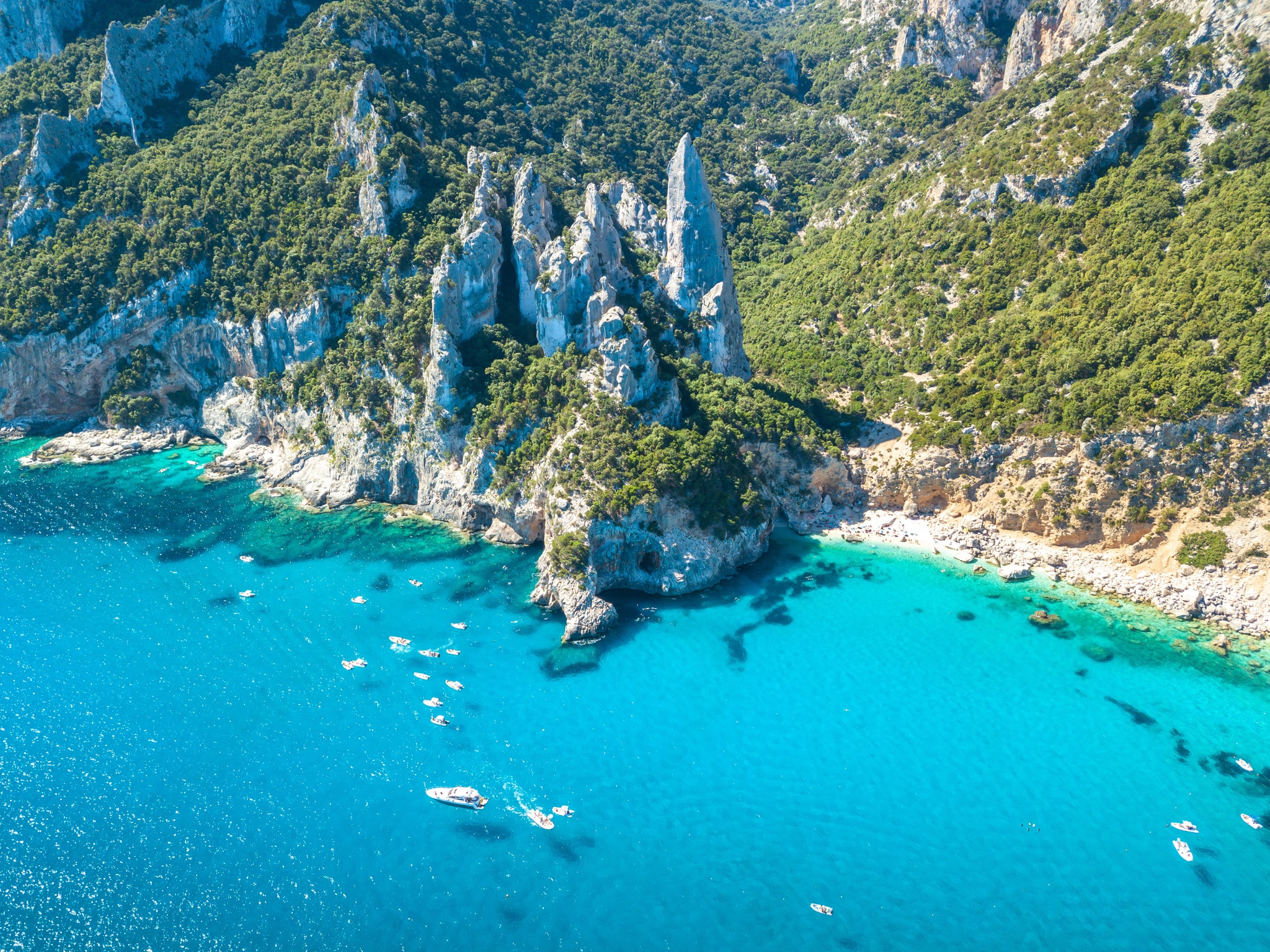
In 2025, Italy ranked 4th globally for Blue Flag beaches, with 487 certified sites that support a slower coastal lifestyle, whether enjoyed on foot or by yacht[13]Source: Agenzia Nova — Italy 487 Blue Flag beaches
What are the cons of living in Italy?
While Italy offers an undeniably appealing lifestyle, understanding the main cons of living in Italy helps set realistic expectations and prepare for the practical challenges of daily life.
Bureaucracy
Italy's administrative system is consistently cited as the primary frustration for expatriates. Obtaining a residence permit, registering for utilities, arranging official document translations, and renewing visas all involve multi-step paper processes, long queues, and government offices with restricted opening hours.
Language barrier
English is commonly spoken in international business settings in Milan and in tourist areas, but real social and administrative integration still requires Italian. Official documents, legal contracts, local government services, public healthcare appointments, and court proceedings are handled in Italian. This is reflected in the English Proficiency Index, where Italy ranks 59th and falls into the moderate proficiency group[14]Source: EF Index — Italy.
Restricted local job market
Italy’s labour market remains challenging by Western European standards. Italy's unemployment rate is 6.5%, above the 4.9% OECD average[15]Source: OECD Employment Outlook 2025 — Italy. Salaries are also relatively low: the latest official data shows average annual pay for private-sector employees at €24,486 in 2024, compared with an EU average of €39,800[16]Source: INPS — Osservatorio lavoratori dipendenti del settore privato. Pay levels are even higher in countries such as Luxembourg, Denmark, and Ireland.
High standard income tax for ordinary residents
One of the main drawbacks of living in Italy is the tax burden, especially for higher earners who become Italian tax residents. Italy applies progressive personal income tax rates as follows:
- up to €28,000 — 23%;
- €28,001 to 50,000 — 35%;
- above €50,000 — 43%.
Without a special tax regime, becoming an Italian tax resident can be expensive[17]Source: Agenzia delle Entrate — Aliquote e calcolo dell’Irpef.

Robert Outerbridge,
Investment Migration Expert
Italy has signed around a hundred double tax treaties to help prevent the same income from being taxed twice. These treaties include agreements with the US, the UK, Germany, France, Switzerland, and many other countries. In practice, they help allocate taxing rights between Italy and the other state and may allow relief or tax credits where the same income could otherwise be taxed twice.
Complex housing market
Rental agreements in Italy are formal legal documents and usually require extensive supporting paperwork. A residential lease must be registered with the Italian Revenue Agency, and the registration certificate is often required when applying for a visa or residence permit.
North-south disparities in infrastructure and services
Public transport is strong along the high-speed rail corridor between Milan, Bologna, Florence, Rome, and Naples, but much weaker in smaller towns and rural areas. Internet access is also less reliable outside major urban centres, especially in parts of southern Italy.
The south also has lower wages, higher unemployment, and less developed public infrastructure than the north and centre, while healthcare quality can vary more in practice between regions.
Public healthcare wait times
Despite the overall high quality of care, waiting times for specialist appointments in the public healthcare system often exceed 3 months in many regions. As a result, private or supplementary insurance is effectively necessary to access specialist care in a reasonable timeframe.
Adjusting to Italy’s slower business rhythm
The Italian business calendar includes a near-complete shutdown during August, when most small businesses, professional offices, and local services close for 2 to 4 weeks. Business culture also places more value on personal trust than on speed and efficiency.
Traffic congestion
Major Italian cities suffer serious vehicle congestion. In historic centres, the so-called ZTL restricted traffic zones complicate daily driving: access is controlled by cameras rather than physical barriers, and non-authorised vehicles are fined automatically.
Climate in northern Italy
Milan and Turin, Italy's two primary expat and business centres, experience cold, grey, and frequently foggy winters alongside hot, humid summers. The iconic sunny warmth is concentrated in Tuscany, Puglia, Sicily, and the south.
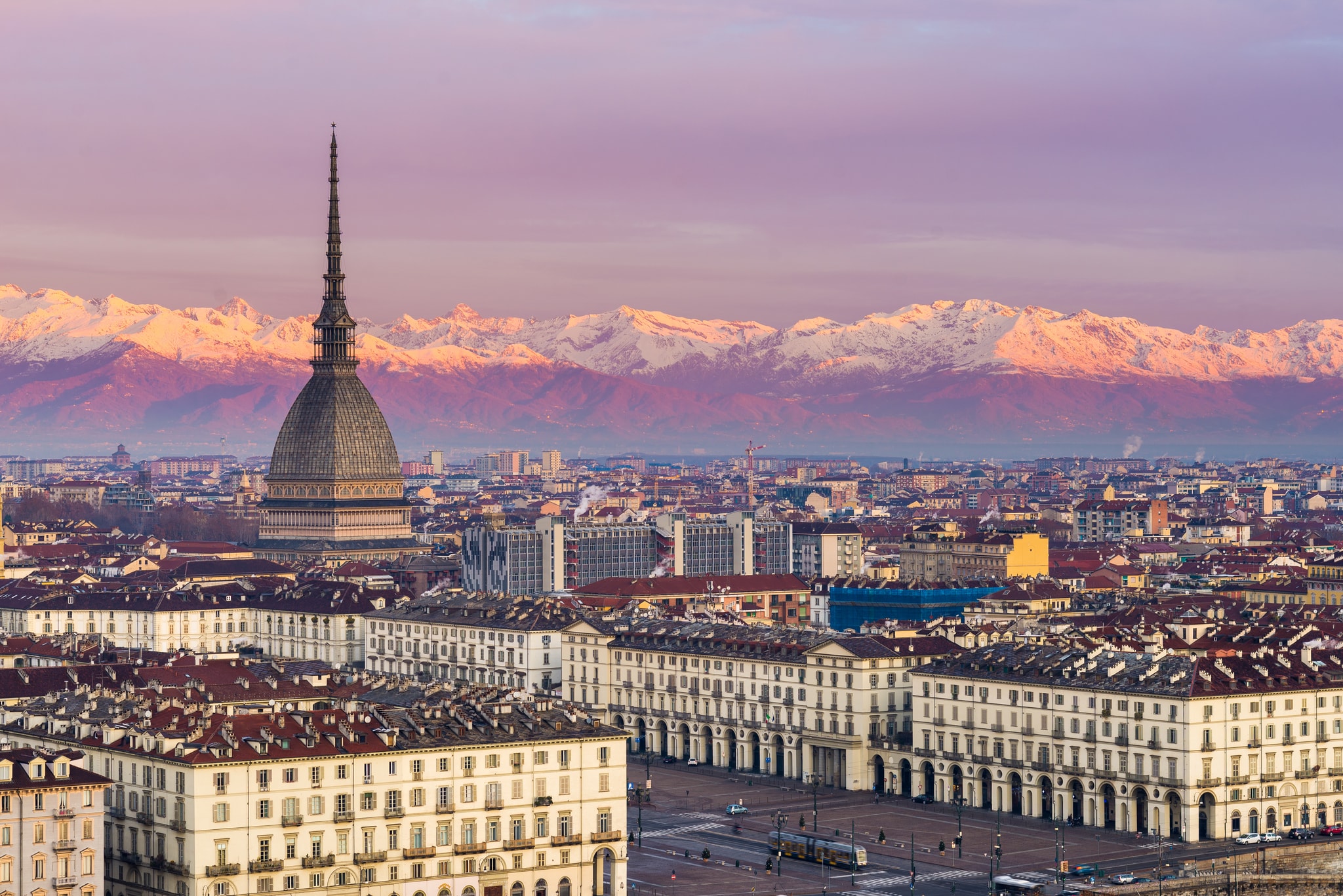
Winters have an upside: for example, Turin is one of the best-positioned major cities in Europe for skiing, with Alpine resorts just a 1—2 hour drive away
Which cities and regions in Italy suit expats best?
Where an expat settles in Italy often shapes the experience more than the move itself, as the country offers not one lifestyle but a wide range of distinct urban and regional realities.
Rome — diplomatic life and neighbourhood living
Rome has the largest expat population in Italy, with 392,090 foreign residents[18]Source: Roma Capitale — Annuario statistico 2025. It offers a highly liveable, neighbourhood-based lifestyle, where each district feels like a small town with its own rhythm, as getting across the city can take 45—60 minutes and daily life tends to stay within one’s local area. Large green spaces and easy access to the sea at Ostia add to the city’s appeal.
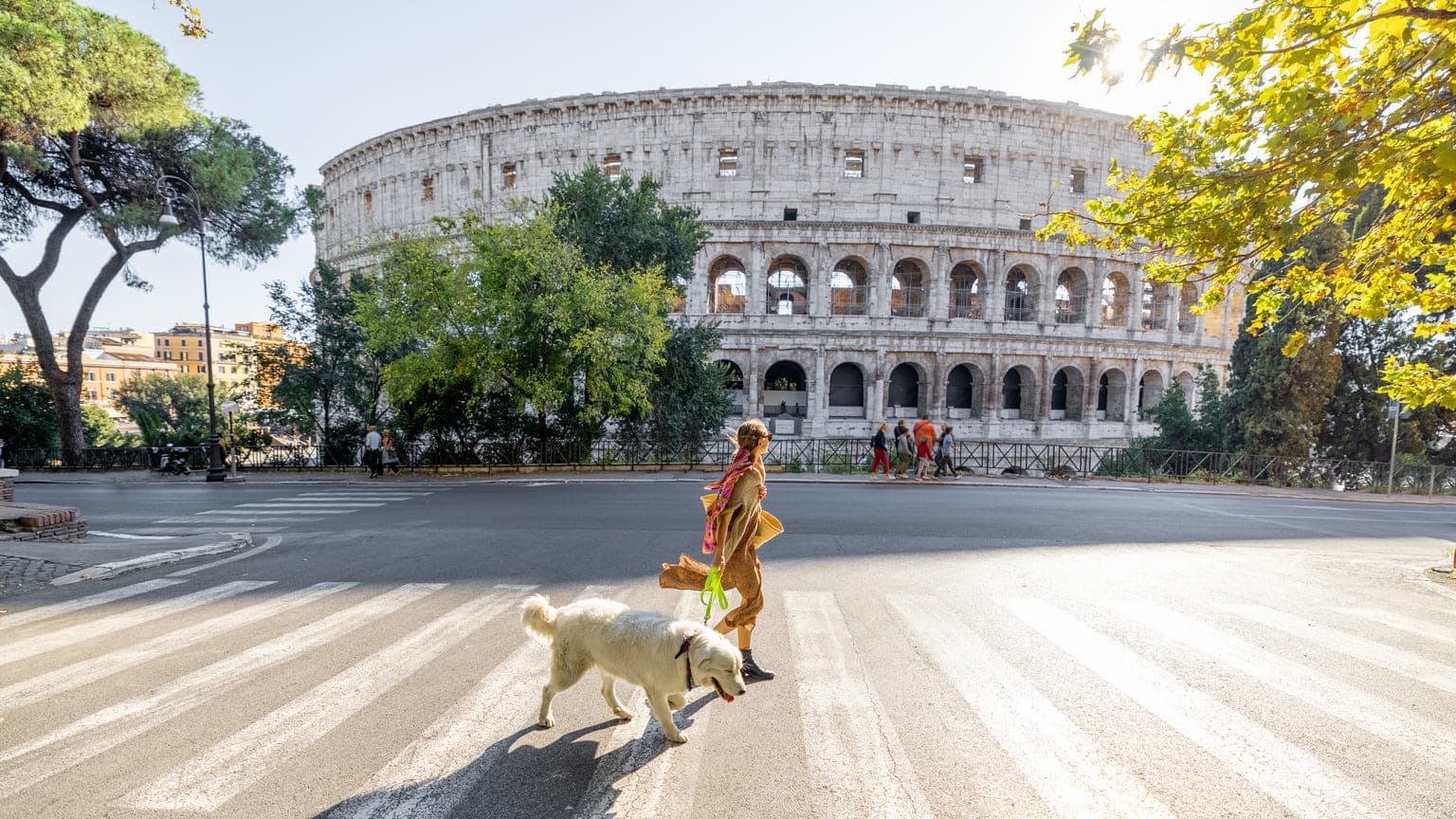
Living in Rome means passing government buildings and ancient ruins on the same day — a mix of bureaucracy and history that defines the city. As Italy’s administrative centre, it is home to embassies and organisations such as the Food and Agriculture Organization of the United Nations.
Areas like Parioli and Prati are known for diplomatic life and international schools, while Trastevere, Testaccio, and Monteverde offer a more local atmosphere shaped by markets, small cafés, and family-run shops. Average rent in Rome ranges between €800 and 2,200, depending on size and location.
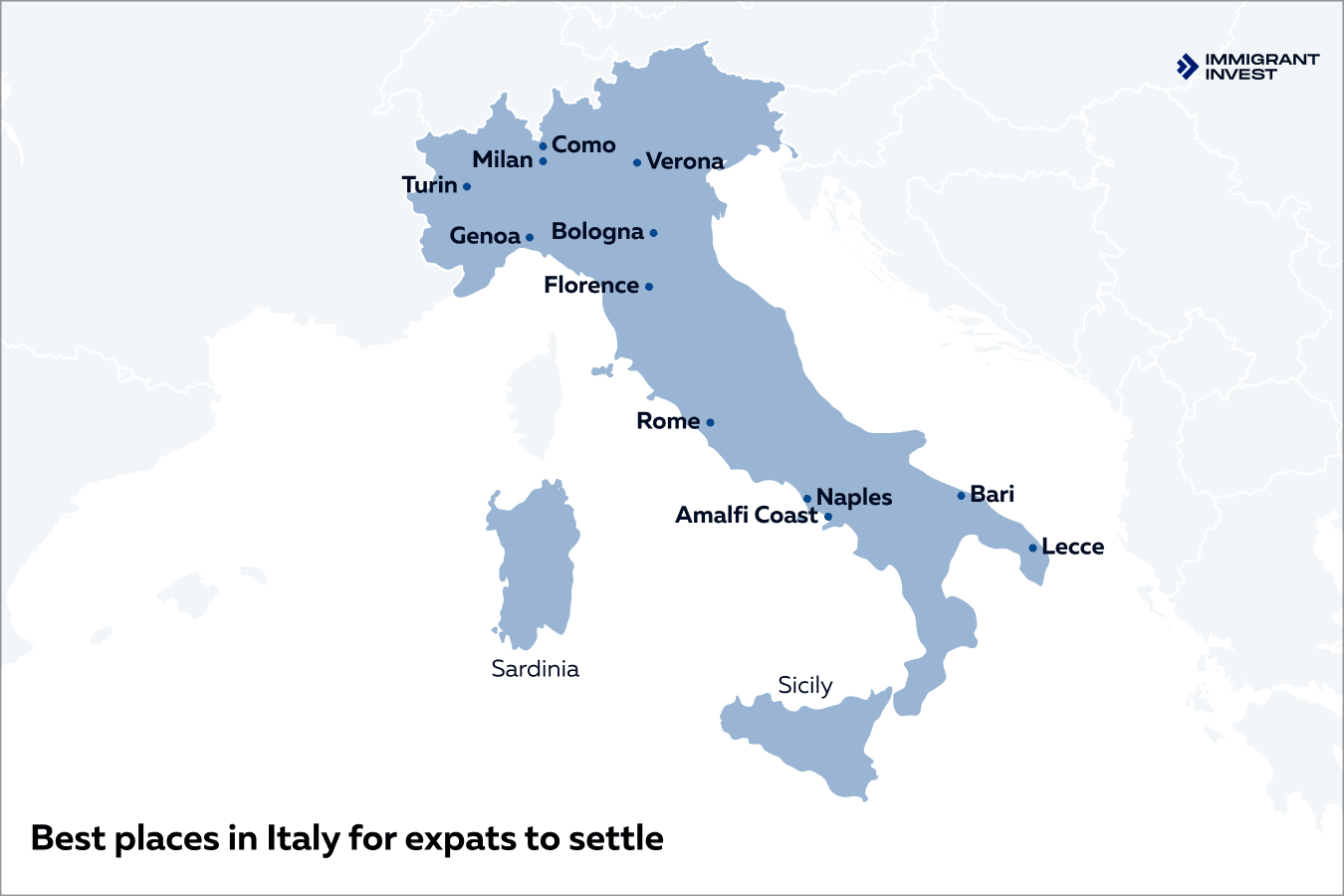
Milan — diversity, money, and modern Italy
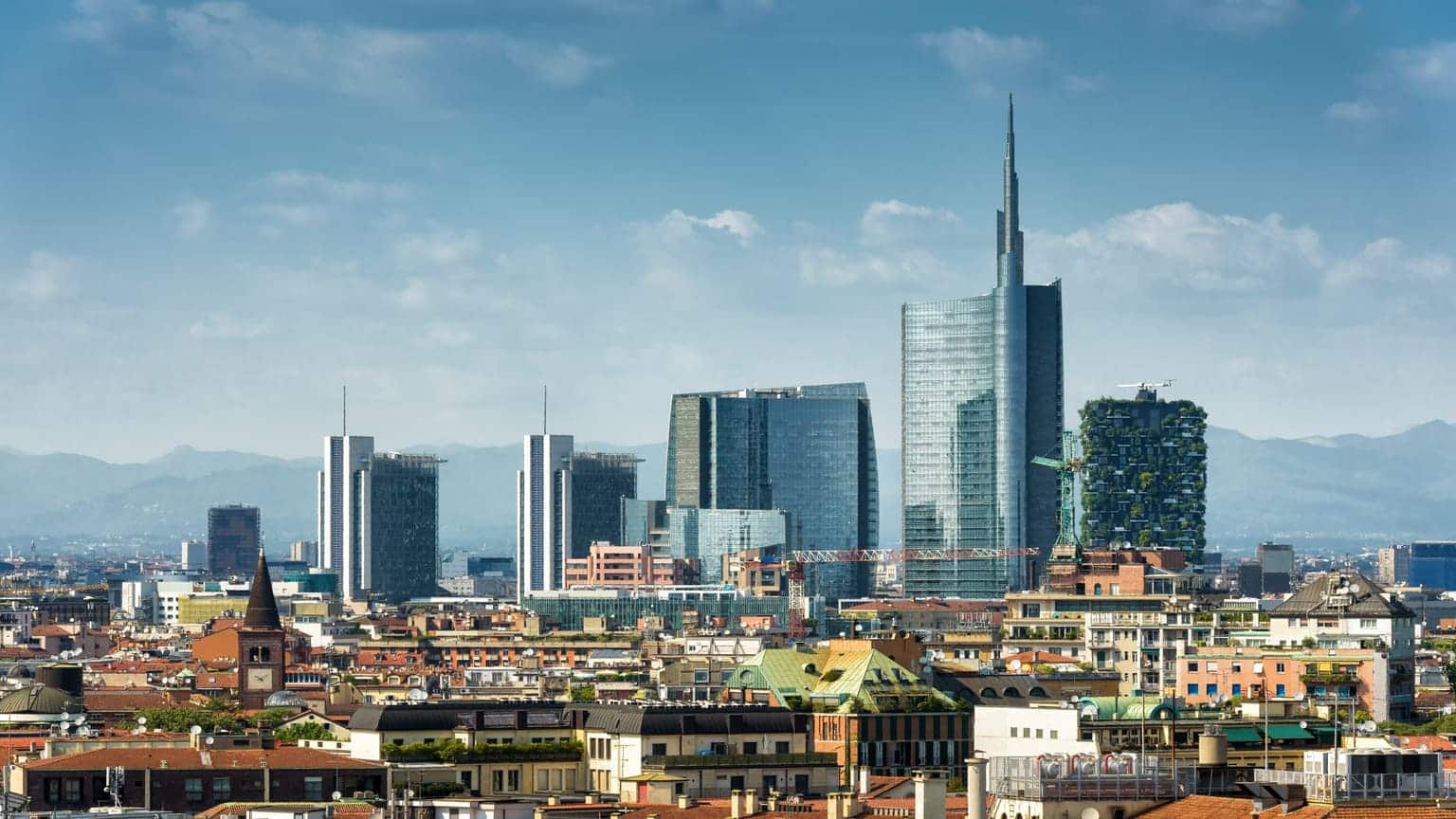
Milan is home to around 298,000 foreign residents, who make up 21.3% of the city’s total population[19]Source: Italianismo — Milan has 1.4 million inhabitants. It stands apart as Italy’s most work-driven urban centre, with a rhythm shaped by early mornings, crowded metro lines by 8:30 am, and short lunch breaks. That pace becomes even more visible during major events such as Fashion Week and Salone del Mobile, which strongly influence the city’s calendar.
In Milan, districts represent very different ways of living in the same city:
- Porta Nuova and Isola define the modern city, with co-working spaces, rooftop bars, startup offices, and the headquarters of UniCredit and Intesa Sanpaolo.
- Navigli is centred on canals, aperitivo culture, waterside bars, vintage shops, and a younger evening crowd.
- Brera feels more refined, with galleries, elegant streets, design showrooms, independent boutiques, and a quieter central atmosphere.
- Sarpi-Chinatown stands out for Asian food shops, dumpling bars, bubble tea spots, and a distinctly international street life.
- Porta Venezia is known for Liberty-style architecture, shopping, lively nightlife, and a broad mix of bars and international restaurants.
Living in Milan means higher income potential, but also a faster, more demanding daily pace and some of the highest rents in Italy, with central apartments often exceeding €1,500—2,500 per month[20]Source: Numbeo — Cost of living in Milan.
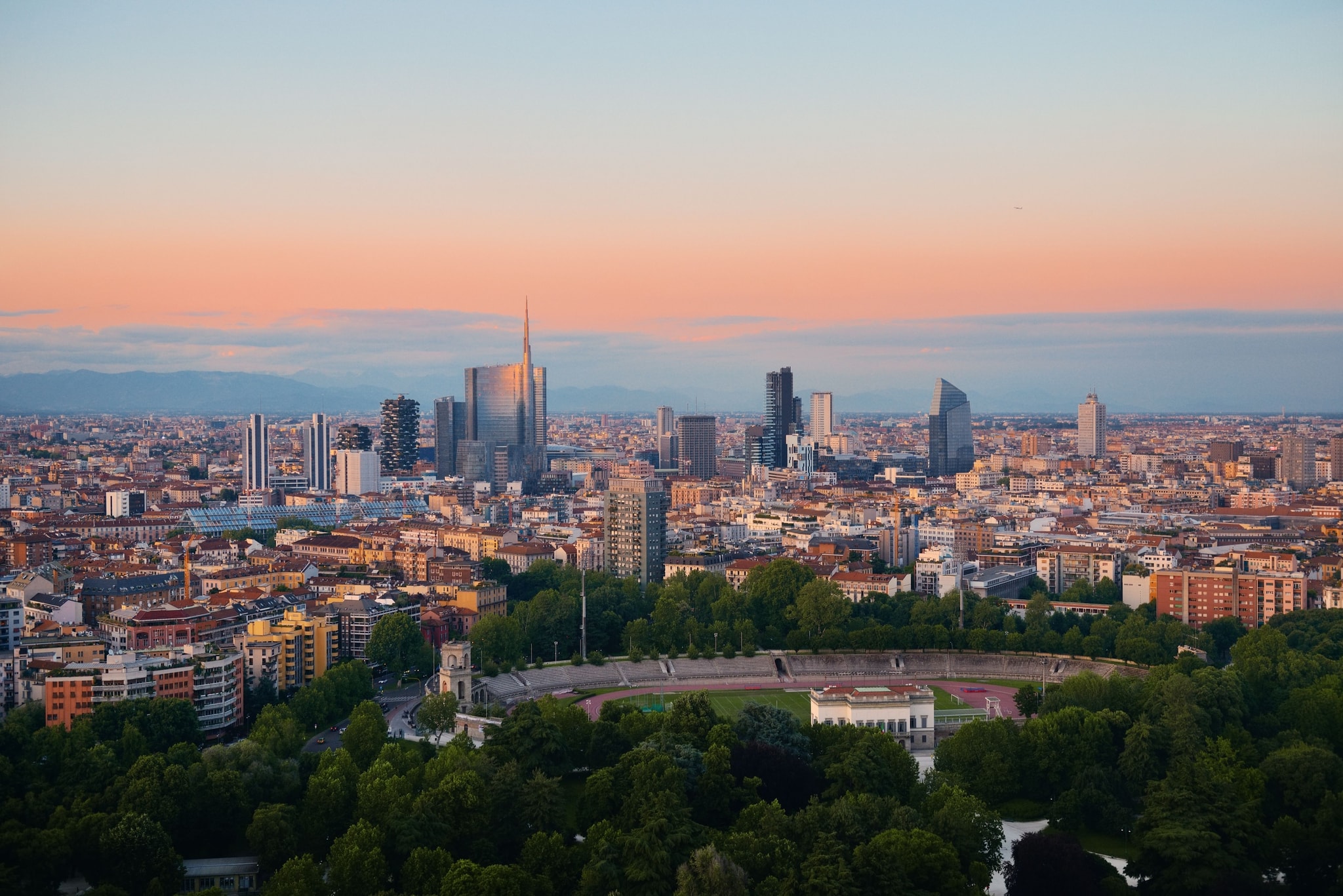
Milan has one of Italy’s most efficient public transport systems, and combined with car restrictions, it makes walking, cycling, and public transit more practical than driving
Turin — lower-cost city life with alpine access
Turin closes the top three expat cities in Italy, with 143,171 foreign residents[21]Source: Ufficio di Statistica — Resident foreign population in Turin. It suits expats who want a major city without Milan’s intensity or Rome’s chaos. The city feels more reserved and orderly, with wide boulevards, long arcades, and a clear street grid that give it a more structured, Central European character.
Turin has long been associated with Fiat, engineering, and aerospace, so its international community is shaped less by diplomacy or tourism and more by professionals, researchers, and students. Crocetta and Cit Turin are known for elegant apartment buildings and quieter streets, while San Salvario is denser and more active, with bars, cafés, and a younger international crowd.
Living in Turin is more affordable, with 1-bedroom apartments starting at around €500 per month[22]Source: Numbeo — Cost of living in Turin. Outdoor access is also easy: Alpine ski resorts are close enough for regular day trips, while the Po riverfront and Valentino Park provide extensive green space within the city.
Bologna — students-oriented and easy to live in
In Bologna, around 60,000 foreign residents live[23]Source: ISTAT — Resident foreigners in Italy. The city is compact and highly functional: covered porticoes stretch for over 60 km, allowing movement in any weather, while markets like Mercato delle Erbe remain part of daily routines. Most of the centre is walkable, and cycling is common.
Bologna stands apart for its balance. Unlike Milan or Florence, it is not driven by image or tourism but by stability: a strong regional economy, one of Europe’s oldest universities founded in 1088, and a large student population that keeps the city active year-round. The surrounding region is also a major food production hub, known for Parmesan and prosciutto.
Living in Bologna means fewer extremes. Rents are 50% lower than in Milan and the pace is steady[24]Source: Numbeo — Cost of living comparison: Bologna vs. Milan. The city is also one of Italy’s key transport hubs, with high-speed rail placing Milan and Florence within about an hour.
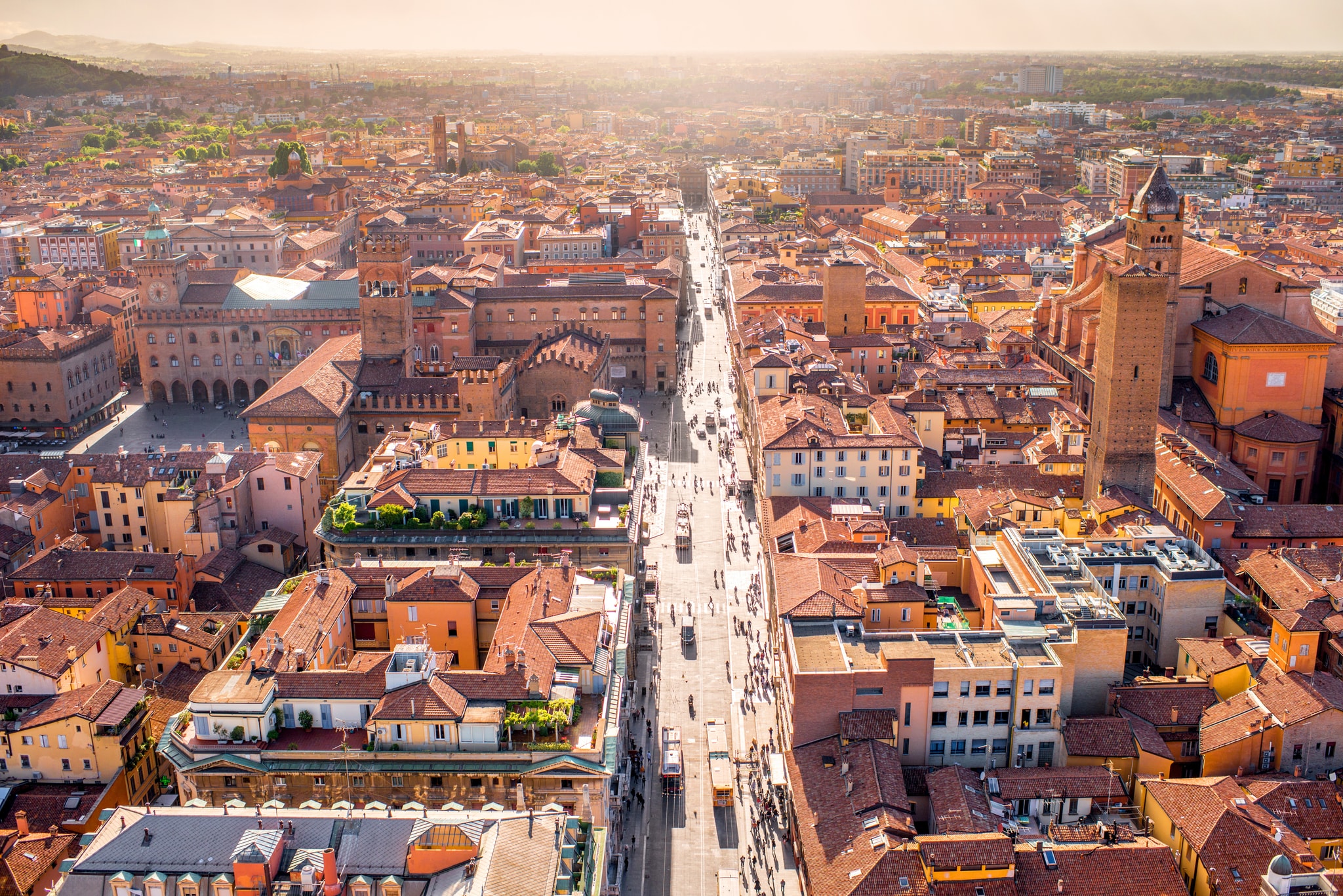
Bologna’s 60 km of porticoes are UNESCO-listed, so they are not just pretty arcades but a real part of how the city functions day to day
Florence — preserved beauty and cultural life
Living in Florence suits movers who value quality of life more than career growth. The city is compact, elegant, and carefully preserved: its historic centre is UNESCO-listed, and modern development in the centre is tightly constrained. Driving is also less practical than in many other Italian cities, because the entire historic centre is a restricted traffic zone.
Daily life is shaped by both locals and a stable international community, including students, artists, and designers, which contributes to the city’s 57,000 foreign residents. Florence offers constant access to institutions such as the Uffizi, Palazzo Strozzi, and the Maggio Musicale Fiorentino, so major exhibitions, opera, and concerts remain part of the city’s regular rhythm.
Tuscany — private countryside within reach of cities
Living in Tuscany offers a countryside lifestyle built around space, privacy, and landscape — from Chianti vineyards to the Val d’Orcia hills. Daily life is slow, often requiring a car, with services, heating systems, and internet quality varying by location. Florence, Siena, and Pisa remain within roughly 30 minutes to 2 hours depending on location, along with their airports.
The region attracts expats seeking restored farmhouses, lower population density, and a more private way of living than in cities. Life here is shaped around small towns, weekly markets, local wineries, and long outdoor seasons, while the Tyrrhenian coast is within 1.5 to 2.5 hours by car.
Northern Italy — luxury lake living with Swiss access
Lake Como and Lake Garda attract ultra-high-net-worth international residents who want a quieter base in northern Italy, within reach of both Milan and Switzerland. Life around the lakes is shaped less by one central city than by a chain of towns, villas, marinas, and ferry routes, with many properties used as second homes, making some areas quieter off-season.
Lake Como is more formal and discreet, with grand villas, steeper terrain, and stronger privacy. Lake Garda feels broader, with sailing conditions, cycling routes, and more family-oriented towns.
Verona offers a different version of northern Italian life: less seasonal and easier to manage day to day, though just 30 minutes from Lake Garda. It suits expats who want a real city, with opera at the Arena, strong logistics connections, a compact centre, and access to wine regions such as Valpolicella.
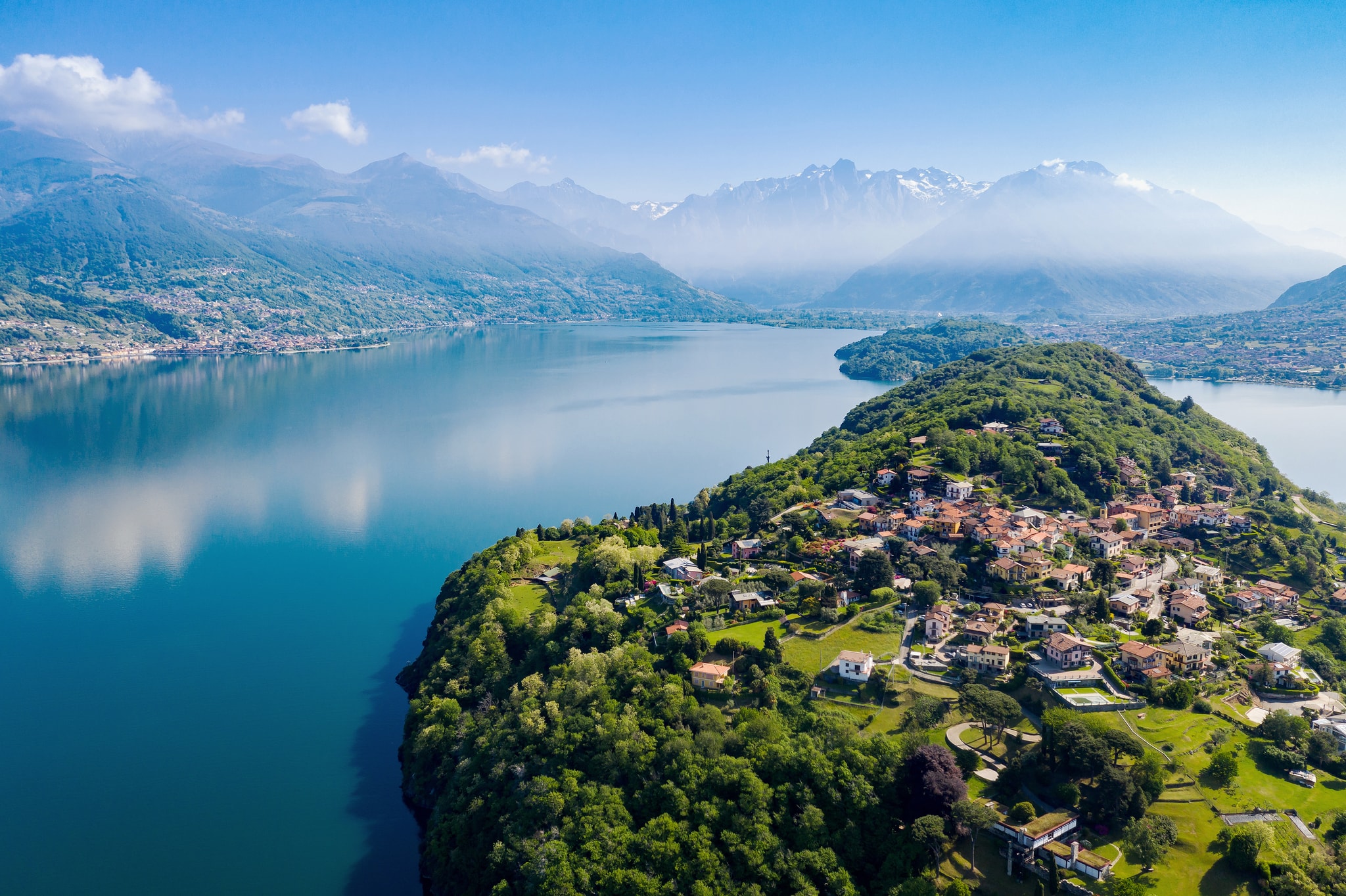
Swimming in Lake Como is a popular summer activity, with clear alpine water and designated spots such as Lido di Bellagio and Lido di Lenno offering safe and scenic access
Naples and the Amalfi Coast — one for daily life, the other for the coast
Life in this part of Italy shifts between a large southern city and a narrow strip of coastal towns. Naples provides the airport, rail links, hospitals, and universities, while the Amalfi Coast offers the sea and village setting with far fewer practical conveniences.
Living in Naples means noise, traffic, informal systems, and crowded streets. Daily life happens at street level, with markets and small shops replacing structured retail. Vesuvius is visible from much of the city, and access to Pompeii, Capri, and Ischia is part of regular life. Housing is around 40% cheaper than in Milan or Rome[25]Source: Numbeo — Cost of living comparison: Naples vs. Milan.
The Amalfi Coast works on a different physical layout. Positano, Amalfi, and Ravello are built into cliffs along a single coastal road, with stairs, terraces, and limited vehicle access. In many cases, homes are reached only on foot. Boat access can be easier than road travel.
Puglia, Sicily, and Sardinia — southern hub for retirees
These regions share several core features: access to the sea, preserved historic towns, a slower daily pace, and eligibility for the 7% flat-tax regime in qualifying municipalities. All have warmer climates and lower population density than northern Italy.
Puglia is the easiest to navigate. Towns such as Lecce, Ostuni, and Bari stay active year-round, with hospitals, supermarkets, and walkable centres. The terrain is flat, distances are short, and beaches are typically 10—30 minutes away.
Sicily stands out for scale and autonomy. It combines large cities like Palermo and Catania with smaller towns and diverse landscapes, including Mount Etna. This allows expats to choose between urban and rural living within one region. At the same time, distances are longer and services less consistent outside major centres.
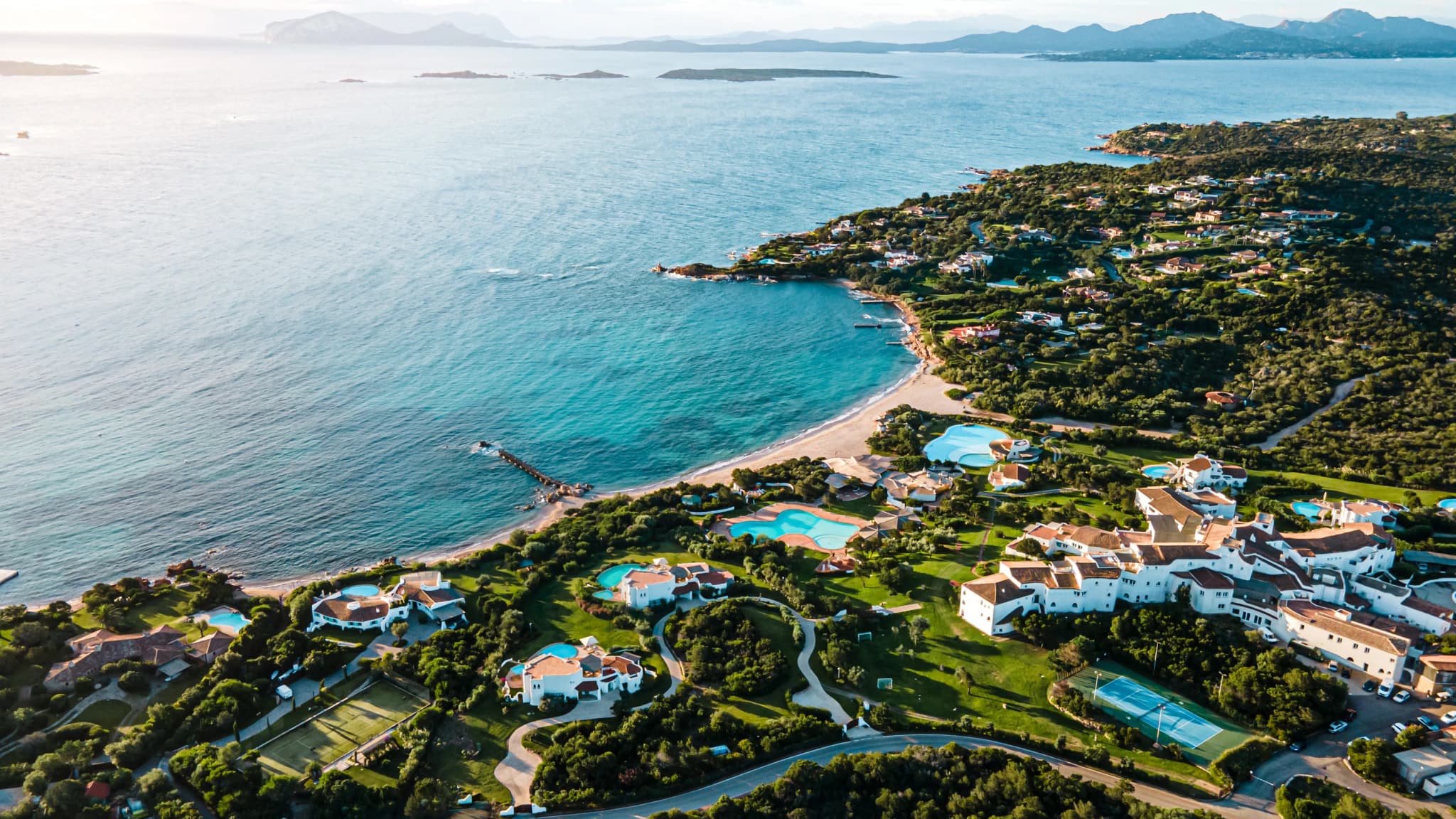
Living in Sardinia is shaped by over 1,800 km of coastline and by distance. Travel depends on flights and overnight ferries, making movement reliable but not spontaneous. The north-east centres on marinas and private villas, while Cagliari in the south provides the most stable base, with universities and infrastructure. Outside these areas, towns are smaller and more isolated.
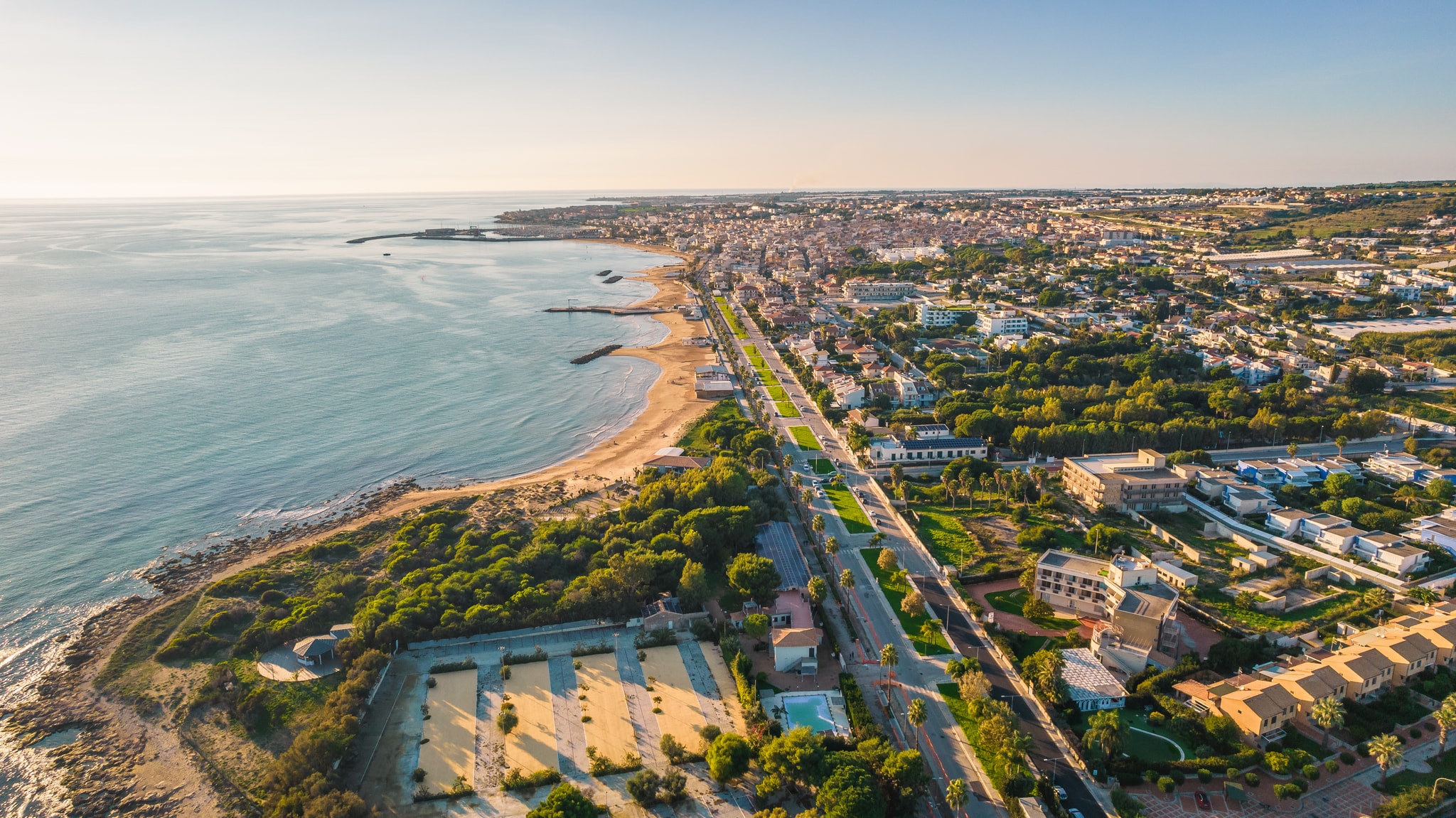
Sardinia is known for exceptional longevity, with an unusually high concentration of people aged 100 and over[26]Source: ISTAT — I centenari in Italia
Genoa — sea access without resort prices
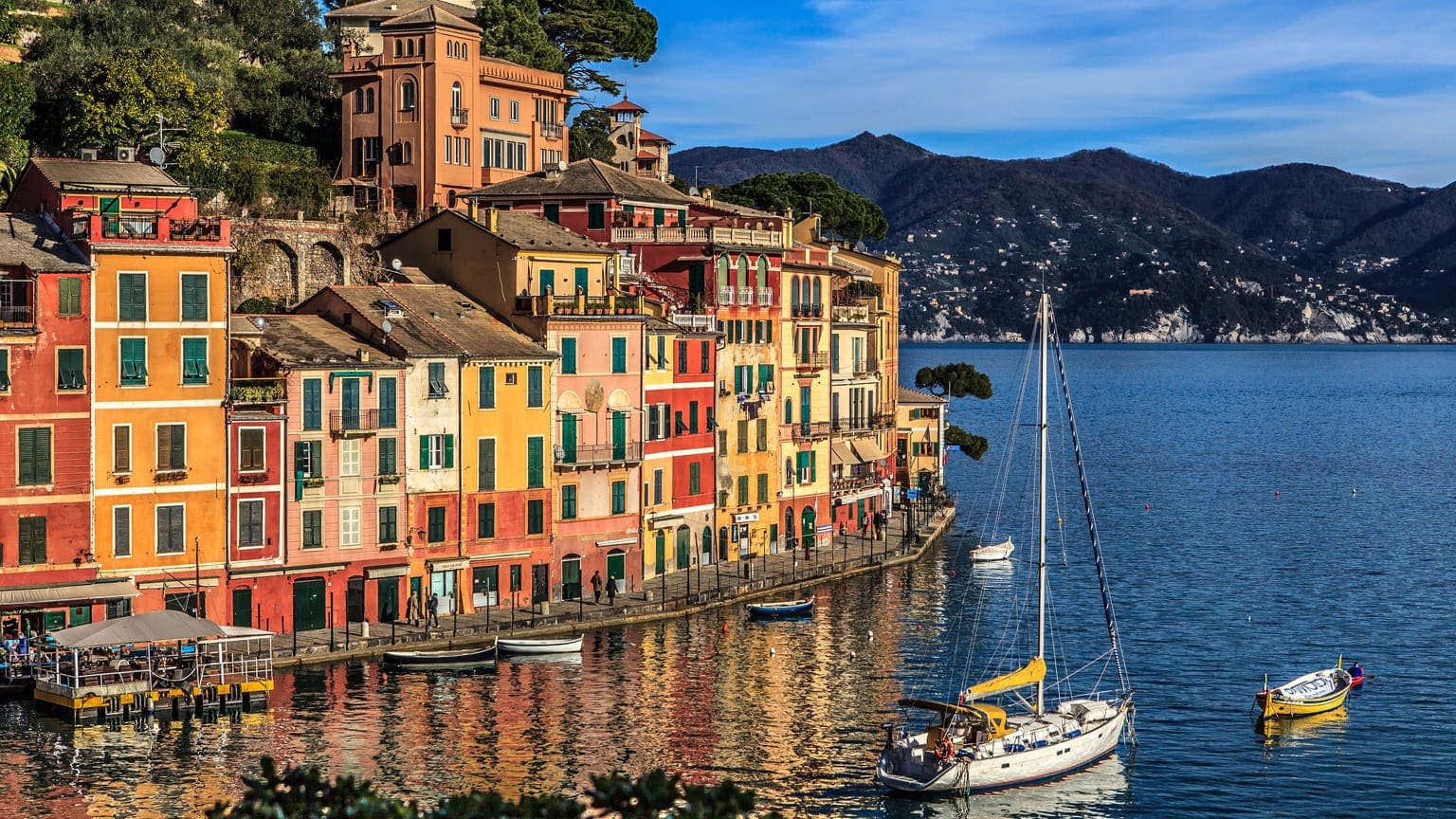
Genoa offers a different version of coastal Italy: a working port city rather than a resort. Expats choose it for access to the sea without the pricing and seasonality of places like the Amalfi Coast or Lake Como. The port remains active, so parts of the city feel industrial, while others open directly onto the waterfront.
The city is built between mountains and the sea. The historic centre is one of the largest in Europe, with narrow and vertical streets. Daily life is local and routine-based. Shops, bakeries, and markets serve neighbourhoods, and the pace is steady. The sea is part of everyday life, but not in a resort sense — more as a backdrop than a central activity.
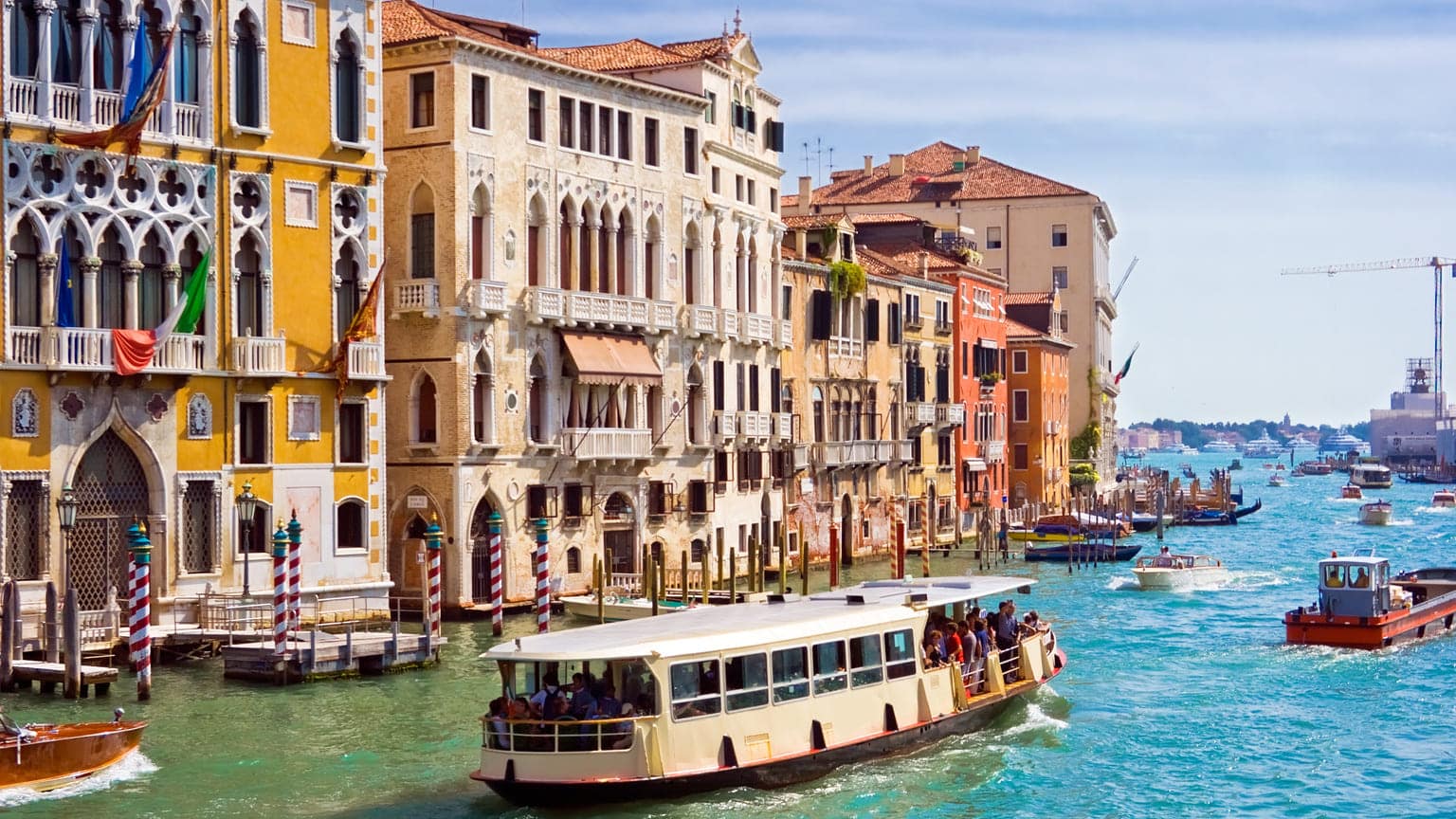
Venice — car-free living in a highly distinctive setting
Living in Venice offers a unique setting, but one where infrastructure follows a completely different logic than mainland cities. It suits lifestyle-driven expats who value culture, atmosphere, and a highly distinctive daily environment more than convenience or routine practicality.
Venice functions without cars: transport relies on boats, and even basic services like deliveries operate through canals. Daily life requires planning — moving furniture, groceries, or even luggage involves coordination. The historic centre has lost a significant share of its permanent population, replaced by short-term rentals.
How do non-EU nationals move to Italy legally: residency routes
Italy offers several residency routes tailored to different categories of applicants. Permit holders are required to spend at least half a year in Italy to maintain their status, with investors being the main exception.
All routes allow applicants to qualify for permanent residency after 5 years, provided the conditions are met, although students must first convert their permit into a work or other eligible category.
Investor Visa
The Italy Investor Visa is designed for high-net-worth individuals and founders who are ready to invest in the country’s economy. It stands out for its flexibility: there is no income requirement and no minimum stay obligation, which makes it suitable for internationally mobile investors.
Applicants can choose between four investment options:
- innovative startup — €250,000+;
- Italian company — €500,000+;
- donation to a public interest project — €1,000,000+;
- Italian government bonds — €2,000,000+.
Family members can be included in the application. Eligible relatives include a spouse, children under 18, adult children with disabilities, and parents. Parents must be financially dependent on the investor and either have no other children in their country of origin or residence, or be over 65, with their other children unable to provide support due to documented serious health conditions.
The residence permit is initially issued for 2 years and can then be renewed for 3 years, provided the investment is maintained[27]Source: Ministry of Economic Development — Investor Visa for Italy.

Digital Nomad Visa
The Italy Digital Nomad Visa is designed for remote workers, allowing them to obtain a residence permit while continuing professional activity for clients or employers outside Italy.
To qualify, applicants must show:
- annual income of at least €32,400 from foreign sources;
- savings of €30,000;
- at least 6 months of remote work experience.
Family members can be included in the application. Eligible relatives include a spouse, children under 18 enrolled in school in Italy, and financially dependent parents. When adding family members, the required savings increase by €10,000 per person.
The residence permit is issued for 1 year and can be renewed if the conditions continue to be met[28]Source: Italian Ministry of Foreign Affairs — Digital nomad and remote worker visa.
Trusted by 10,000+ investors
Check your eligibility for the Italy Digital Nomad Visa
Employment and self-employment
Non-EU nationals usually move to Italy for work through the annual Decreto Flussi, which sets entry quotas for seasonal work, non-seasonal work, and self-employment. For 2026, the quota is 164,850 places, including:
- 88,000 for seasonal work;
- 76,200 for non-seasonal work;
- 650 for self-employment[29]Source: Integrazione Migranti — Quote disponibili, dati e chiarimenti procedurali.
Employment. Foreigners intending to work in Italy need a job offer and an employment contract stating the salary, role, and duration. The employer must also provide supporting corporate documents, including company registration, tax records, and proof of financial capacity to pay the salary.
For employees, a permit linked to a fixed-term contract cannot exceed 1 year, while a permit based on an open-ended contract cannot exceed 2 years[30]Source: Consulate General of Italy in Chicago — Lavoro subordinato: work visa requirements.
Self-employment. Applicants must show that the planned activity is legally permitted in Italy and submit the licences, authorisations, or registrations required for that profession or business. This route is used by entrepreneurs, freelancers, company directors, and certain independent professionals.
Depending on the activity, additional documents may be required:
- for professionals — proof of registration or authorisation from the relevant authority;
- for entrepreneurs — statement from the local Chamber of Commerce confirming the resources needed for the activity, with available funds of at least €14,000;
- for partners or consultants in Italian firms — proof that the company has been registered for at least 3 years.
For self-employed individuals, the permit can be issued for up to 2 years. In both cases, renewal is possible as long as the original conditions continue to be met[31]Source: Consulate General of Italy in Chicago — Lavoro Autonomo: self-employment visa requirements.
EU Blue Card
The EU Blue Card is intended for non-EU nationals taking up highly qualified work in Italy. The applicant must have either a post-secondary qualification based on at least 3 years of higher education, or a recognised higher professional qualification.
The employment contract or binding job offer must state the salary, which has to meet a threshold linked to Italy’s average annual pay. In practice, this puts the required gross annual salary at around €33,000—35,000 in 2026.
The Blue Card is issued for 2 years if the contract is open-ended, or for the duration of a fixed-term contract plus 3 months[32]Source: European Commission — EU Blue Card in Italy.
Visa for financially independent persons
The Elective Residence Visa is for people who want to live in Italy long term without working. It is aimed at retirees and other financially independent applicants who can show stable passive income, such as a pension, investment income, or rent. It cannot be used for employment, self-employment, or remote work.
Applicants must show stable passive income of at least €32,000 per year for one person or €38,000 for a couple, with higher thresholds for dependent family members. The visa can cover a spouse, minor children, and dependent children over 18 who still live with their parents.
The residence permit is issued for 1 year and can be renewed annually, provided the financial and other qualifying conditions continue to be met[33]Source: Elective residence — Consulate General of Italy in London and Johannesburg.
Studies
The study route is for non-EU nationals admitted to a recognised course or programme in Italy for stays exceeding 90 days. After receiving a study visa, the applicant must apply for a residence permit once in the country. This permit also allows limited work alongside studies — up to 20 hours per week and 1,040 hours per year.
The permit is tied to the length of the course. For longer programmes, it is usually issued and renewed year by year. After graduation, it may also be converted into a work permit if the legal requirements are met[34]Source: Italian Ministry of Foreign Affairs — Study in Italy.
Family reunification
Italy allows family reunification for certain relatives of legal residents. The sponsoring person must hold a residence permit valid for at least 1 year, such as for work, self-employment, study, or family reasons.
Eligible family members include:
- spouse;
- unmarried minor children, including the spouse’s children where the required consents are in place;
- dependent adult children who cannot support themselves because of serious health conditions;
- dependent parents who have no other children in the country of origin, or parents over 65 if their other children cannot provide support due to serious documented health reasons.
The residence permit is issued for the same duration as the sponsor’s permit, meaning the family member’s status remains aligned with that of the person they are joining[35]Source: European Commission — Family member in Italy.
How to apply for the Italian residence permit?
Obtaining a residence permit in Italy follows a structured process that is broadly similar across most visa types. A key step is often the Nulla Osta, an official authorisation confirming that there are no legal obstacles to entry and allowing the applicant to move on to the visa stage. However, Elective Residence and Digital Nomad visas do not require it.
The exact steps vary depending on the route. Below is the process using the Investor Visa as an example. Based on Immigrant Invest’s experience, the full procedure for obtaining this type of permit takes at least 4 months to complete.
1 day
Preliminary Due Diligence
Immigrant Invest conducts an internal compliance check before starting the process. It helps identify any risks early and reduce the likelihood of rejection to around 1%.
An agreement with the investor is signed only after the results are confirmed. If any risks are identified, solutions are proposed — for example, selecting a different programme or providing additional documentation.
The check is confidential and requires only a copy of the investor’s passport.
Immigrant Invest conducts an internal compliance check before starting the process. It helps identify any risks early and reduce the likelihood of rejection to around 1%.
An agreement with the investor is signed only after the results are confirmed. If any risks are identified, solutions are proposed — for example, selecting a different programme or providing additional documentation.
The check is confidential and requires only a copy of the investor’s passport.
7+ days
Collecting the documents and applying for Nulla Osta
To obtain the Nulla Osta, the investor prepares documents and submits them through Immigrant Invest. Lawyers:
- arrange translation and certification of documents;
- register the applicant on the official programme platform;
- complete the personal questionnaire;
- upload the required documents.
To obtain the Nulla Osta, the investor prepares documents and submits them through Immigrant Invest. Lawyers:
- arrange translation and certification of documents;
- register the applicant on the official programme platform;
- complete the personal questionnaire;
- upload the required documents.
90 days
Issuance of Nulla Osta
After submission, the application is forwarded through the online system to the relevant Prefettura, based on the intended place of residence in Italy.
The Prefettura reviews the application and has up to 90 days to issue a decision.
After submission, the application is forwarded through the online system to the relevant Prefettura, based on the intended place of residence in Italy.
The Prefettura reviews the application and has up to 90 days to issue a decision.
7+ days
Submission of an application
Once the Nulla Osta is issued, it remains valid for 6 months. During this time, the investor must apply for an Investor Visa at an Italian consulate. Lawyers assist with document preparation, certification, and translation.
Once the Nulla Osta is issued, it remains valid for 6 months. During this time, the investor must apply for an Investor Visa at an Italian consulate. Lawyers assist with document preparation, certification, and translation.
10 to 120 days
Obtaining an investor visa
The consulate reviews the application for both the investor and their family members. The legal maximum processing time is 120 days, although in practice decisions are often issued within 10—20 days. The result is communicated to the applicant by email.
The consulate reviews the application for both the investor and their family members. The legal maximum processing time is 120 days, although in practice decisions are often issued within 10—20 days. The result is communicated to the applicant by email.
Within 8 days
Applying for a residence permit in Italy
The Investor Visa is valid for 2 years. After entering Italy, the investor must apply for a residence permit within 8 days. There, the applicant submits the application in person at the Questura and completes the investment within 3 months.
The Investor Visa is valid for 2 years. After entering Italy, the investor must apply for a residence permit within 8 days. There, the applicant submits the application in person at the Questura and completes the investment within 3 months.
30+ days
Residence permit card issuance
Immigration authorities review the submitted documents. If additional information is required, the applicant is given 30 days to provide it. Once approved, residence permit cards are issued to the investor and family members.
Immigration authorities review the submitted documents. If additional information is required, the applicant is given 30 days to provide it. Once approved, residence permit cards are issued to the investor and family members.
After 2 years
Renewal of the residence permit
The initial permit is valid for 2 years, after which it can be renewed for 3 additional years. Further renewals are possible as long as the investment is maintained.
The renewal application must be submitted within 2 months before expiry. The process mirrors the initial application: documents are collected and submitted, biometrics are provided, and a new residence card is issued.
The initial permit is valid for 2 years, after which it can be renewed for 3 additional years. Further renewals are possible as long as the investment is maintained.
The renewal application must be submitted within 2 months before expiry. The process mirrors the initial application: documents are collected and submitted, biometrics are provided, and a new residence card is issued.
Risks and pitfalls when relocating to Italy
Relocating to Italy involves a number of procedural and compliance risks that apply across most residence routes. These include strict documentation standards, timing constraints, and the need to align immigration, tax, and administrative steps from the outset.
Nulla Osta and other timing constraints
Many employment-based routes — including standard work permits, the EU Blue Card, and certain self-employment categories — require a Nulla Osta, an authorisation issued in Italy before a visa can be granted.
For employment, the Nulla Osta is typically valid for 6 months, while in self-employment cases it must usually be used within 90 to 120 days, depending on the category.
After arriving in Italy, applicants across most visa types must apply for a residence permit within 8 working days, creating an additional timing requirement.
Permit renewal risks
Each residence route has its own validity rules. Work permits are issued for up to 1—2 years, study permits are renewed annually, and investor permits follow a 2 + 3 year structure.
Renewal depends on maintaining the original conditions, and applications for renewal should be submitted at least 60 days before expiry.
Tax residency exposure
Spending 183 days or more per year in Italy results in Italian tax residency, with taxation on worldwide income. This applies regardless of visa type and can be triggered unintentionally, especially by remote workers or frequent travellers. Tax planning must be addressed before relocation, not after.
Banking and source-of-funds scrutiny
Opening a bank account or transferring funds can involve strict anti-money laundering checks, especially for applicants with income or assets across multiple jurisdictions. Delays often arise when documentation is incomplete or inconsistent. This affects not only investors but also individuals relocating with savings or foreign income.
Investment-specific risks
The investor route involves not only capital deployment, but also strict procedural and compliance requirements that must be managed in parallel. For example, the qualifying investment must be completed within 90 days of entry into Italy, which creates a tight operational window. Delays in bank onboarding, international transfers, or AML checks can disrupt this timeline.
In addition, for the €250,000 startup option, the investment must be made into a company officially recognised as an innovative startup. The list of eligible startups is maintained by the Italian Chambers of Commerce and updated regularly, so selecting a company that meets the legal criteria at the time of investment is essential.
How Immigrant Invest can help with relocation to Italy
Immigrant Invest is a government-licensed investment migration consultancy, with 20 years of experience and more than 10,000 clients worldwide. During a 20—30 minute call or an office meeting, we map the client’s goals, family situation, timeline, and constraints, then outlining the most suitable options.
For those considering the Italy Golden Visa or Digital Nomad Visa, Immigrant Invest provides the following services:
- preliminary compliance check before the application starts, so eligibility risks and source-of-funds issues are identified early;
- support from an in-house compliance team working to AML and KYC standards;
- full guidance throughout the application process, including document review, case strategy, and support at each stage;
- assistance with post-approval steps, including renewals, permit replacement, and family member applications where relevant;
- coordination with tax advisers where Italian tax planning requires separate expert input;
- transparent fee structure, with refund conditions explained before the client commits.
Our approach helps applicants move through the Italian process in a structured way, with legal, compliance, and practical issues addressed from the outset.
Key takeaways about pros and cons of living in Italy
- Italy is a highly diverse country that suits very diverse lifestyles and expectations, supported by a wide number of residence options available to expats. Italy offers work and study permits, family reunification visas, permits for financially independent persons and remote workers, as well as investor residence.
- With a residence permit, foreigners get access to visa-free Schengen travel, Italian healthcare, and education.
- Expats choose Italy for its lifestyle: a mild climate, geographic diversity, a comfortable pace of life, rich food culture, easy travel, wide expat communities, and the highest number of UNESCO World Heritage sites in the world.
- Entrepreneurs and ambitious professionals also choose Italy for its business environment and strong higher education system, including many first-class universities.
- Personal income tax in Italy is high, but three special tax regimes can make it more attractive for retirees, workers, and high-net-worth individuals.
- Despite many advantages of living in Italy, expats often face bureaucracy, language barriers, a limited local job market, a complex housing system, noticeable north–south disparities in infrastructure and services, and traffic congestion.
Immigrant Invest is a licensed agent for citizenship and residence by investment programs in the EU, the Caribbean, Asia, and the Middle East. Take advantage of our global 15-year expertise — schedule a meeting with our investment programs experts.