
Summary
6.9 million foreign residents live in Spain in 2025. Seniors from all over the world move to Spain to make the most of their golden years. They indulge in the warm sea and culinary delights, spend days in the sun, and enjoy local amenities.
Explore the ins and outs of retirement in Spain so your relocation goes as smoothly as possible.
7 pros and cons of retiring in Spain
Spain provides a mixture of a pleasant climate, significant cultural sites, a thriving English-speaking community, and efficient infrastructure. All of this comes at an affordable price. To retire by sea, foreigners can obtain a non-lucrative visa.
1. Expat-friendly environment
The Spanish cities Malaga, Alicante, and Valencia were named the top 3 world cities for expats in 2023. Foreigners noted local friendliness and the ease of settling in.
International residents make up around 20% of large cities' population, making it easier for newcomers to adapt, which is one of the many benefits of living in Spain.
2. Services and amenities for retirees
The Spanish retirement community offers plenty of benefits designed for seniors: health and wellness services, including rehabilitation, and amenities such as swimming pools and fitness centres. There are also numerous international clubs and networking groups for pensioners in Spain.
3. Quality healthcare
Spain ranks 7th in the World Health Care Index, surpassing Portugal, Italy, Cyprus, Malta, and Greece in terms of healthcare quality. The country spends 11% of its GDP on the healthcare system, which is higher than in most European countries.
The average life expectancy in Spain is 84 years, while the world average is only 73. Spain also tops the list of 20 healthiest countries.
4. Affordable living costs and property prices
The cost of living in Spain is 34% lower than in the USA. A single person needs at least €700 per month in Spain. In the USA, a single person requires €1,075+ monthly. The minimum living cost in the UK starts at €948 per month.
According to Numbeo, the cost of renting a one-bedroom flat outside the city centre is 90% higher in the USA compared to Spain. A similar flat in the UK costs 46% more than in Spain.
5. Peasant climate
The Mediterranean environment attracts expats who wish to live by the sea and enjoy sunny days the entire year-round. However, the climate in Spain is diverse. It is hot and dry in the south, but humid in the north, with frequent rainfall.
6. Safety
Spain was ranked 25nd out of 163 countries in the Global Peace Index of 2025. It is 5 places higher than the UK and 103 places higher than the USA.
According to crime statistics from the Spanish Ministry of Interior, the safest cities in Spain are Granada, Murcia, and Malaga.
7. Good public transportation system
Public transport in Spain can save money on owning a car. Buses, trains, and metro are available at affordable prices. A single bus or metro ride costs, on average, €1.5, while a monthly pass is €32. Transport fares vary depending on the city.
Seniors over 60 years old are not eligible for discounts. However, they can save up to 40% by buying the Tarjeta Dorada Card. The card is valid for one year and costs €6.

Residents visit Spanish islands by ferry. The country also has ferry links with France, the UK, and Morocco
Cons to consider before retiring in Spain
Choosing Spain for retirement has its cons, too. Here are some disadvantages seniors need to take into account.
Complicated bureaucratic system
Getting necessary information or a document often involves visiting multiple offices and waiting through countless delays. Administrative procedures in Spain can be overwhelming and time-consuming.
Some residents consider it to be the downside of the country’s slow-paced lifestyle.
High taxes
Income and property taxes in Spain are quite costly. Tax residents in Spain pay taxes on both global and local income on a progressive scale of 19 to 47%. The maximum rate is higher than in the USA, Canada, or Malta.
Residents pay a 19% income tax for the first €6,000 of taxable income. A 47% tax rate applies to income over €300,000.
When buying a new property, it is necessary to pay a 10% VAT and a property transfer tax of up to 11%. When buying a commercial property, the VAT rate can be as high as 25%.
Strict citizenship requirements
To apply for a Spanish passport, residents need to spend 10 years in a row in the country, as well as pass cultural and language exams.
Spain does not allow dual citizenship, so candidates have to renounce their first citizenship to get one in Spain.
Culture of siestas
It might be hard for some residents to get accustomed to the unique daily schedule in Spain. Most businesses close for 2—3 hours during the hottest part of the day.
Don’t know where to start?
Download our one-page pathways navigator to compare the options and pick the best one
How to move to Spain for retirement
EU citizens do not need a visa or residence permit to retire in Spain.
To stay longer than 90 days, they only need to register as a resident with the Spanish authorities. This typically involves obtaining a certificate of registration, certificado de registro*, * from the Foreigners Office or the local police station in the area where you plan to reside.
Non-EU citizens can become Spanish residents by getting a non-lucrative visa. It allows seniors to live in Spain freely and travel to other Schengen countries for up to 90 days every half a year.
With a resident status, pensioners are enabled to come to Spain anytime, even when the borders are closed for visitors.
How to obtain a non-lucrative visa
The non-lucrative visa, or visado de residencia, is a residence permit for financially independent non-EU nationals. It allows them to reside in Spain without engaging in any work or professional activity.
The non-lucrative visa is valid for 1 year and can be renewed twice, each time for 2 years. To extend the visa, it is necessary to spend at least 183 days in Spain during a year.
Non-lucrative visa holders are restricted from doing business or working in the country, even remotely. Applicants must prove that they have sufficient financial means to reside in Spain for a year or as a regular source of passive income.
The minimum required amount is 400% of the Public Multiple Effects Income Indicator. As of 2026, the minimum income is €28,800 annually, or €2,400 monthly.
Family members can join the main applicant in Spain. Among them are a spouse or unmarried partner, financially dependent children, and parents. For each additional applicant, the income requirement increases by €600 per month or €7,200 annually.
US citizens can use their 401(k) retirement savings as proof of income to support both themselves and their family.
Non-lucrative visa holders are eligible for a permanent residence permit after 5 years of living in Spain. In 10 years, they have the opportunity to apply for Spain citizenship.
Required documents for Spanish retirement visa
To obtain a non-lucrative visa, foreigners collect the following documents:
- international passports of each applicant;
- two passport-sized photos;
- police clearance certificates for applicants over 18;
- medical insurance for each participant;
- proof of sufficient financial means;
- marriage certificates for spouses;
- birth certificates for children;
- proof of financial dependency on the investor for children and parents.
In addition to the list above, applicants for a non-lucrative visa also need a medical certificate which proves that they do not have any socially dangerous diseases.
Costs of living in Spain
For a comfortable life in Spain, a single person needs at least €700, while a family of four — €2,500 or more, excluding rent. To be eligible for a residence permit, a foreigner must earn €28,800 or more annually.
According to Numbeo’s Cost of Living Index in 2026, life in Spain is much cheaper than in the USA, Australia, Canada, France, the UK, Italy, Cyprus, and Malta.
Here are some average prices in Spain:
- a regular cup of cappuccino is €1.82;
- a three-course meal for two people in a mid-range restaurant is €50;
- a local transport ticket is €1.50;
- a litre of petrol is €1.61;
- basic utilities for an 85 m2 flat is €128;
- the monthly fee for a fitness club is €39.
The monthly rent for a one-bedroom flat in the city centre is around €930. A similar flat outside the centre costs €700 per month.
To buy a flat in the city centre, a person needs €3,330 per square metre.
Taxes in Spain for retirees
Retirees moving to Spain should be aware of how their tax obligations may change depending on how much time they spend in the country. Here is an overview of the key taxes that apply to retirees in Spain.
Income tax
Non-tax residents in Spain pay taxes only on income earned within Spain at a flat rate of 24%.
A foreigner becomes a tax resident if they spend over 183 days per year in the country. In this case, they pay taxes on global income at a progressive rate of 19—47%.
Pensions for tax residents are taxed like regular income. The tax rate for non-tax residents depends on the pension type and the existence of an agreement between the retiree’s home country and Spain.
Inheritance tax
The inheritance tax in Spain varies from 7.65 to 34%. It applies to tax residents and non-residents alike. The rate depends on the assets amount, the country’s region, and the beneficiary’s relation to the deceased.
Capital gains tax
The capital gains tax is paid if a retiree gets profits from selling a property or other investments. The tax rate varies from 19 to 26%.
People over 65 selling their main home are exempt from the tax. The same rule applies to those under 65 who sell their main home in order to buy another one in Spain.
Wealth tax
The wealth tax applies to assets over €700,000. Property owners get an extra allowance of up to €300,000 for a main residence if they occupy it for at least three years. The rate does not exceed 3.5% for assets over €10 million. The exact rate depends on the region a person lives in.
Healthcare in Spain for pensioners
The Spanish healthcare system provides both public and private medical care. Public healthcare is available to legal residents who pay social security contributions, receive state benefits, or who have retired on the state pension. The system is financed 70% by public taxes.
EU citizens can attend public hospitals if they hold a European Health Insurance Card, or EHIC. British nationals have access to necessary medical care through the UK Global Health Insurance Card, or GHIC.
Other foreigners need to purchase private health insurance. It allows using broader and faster medical treatment at private clinics. The private insurance is quite affordable and costs between €50—200 per month. The cost depends on the chosen plan, place of residence, and age.
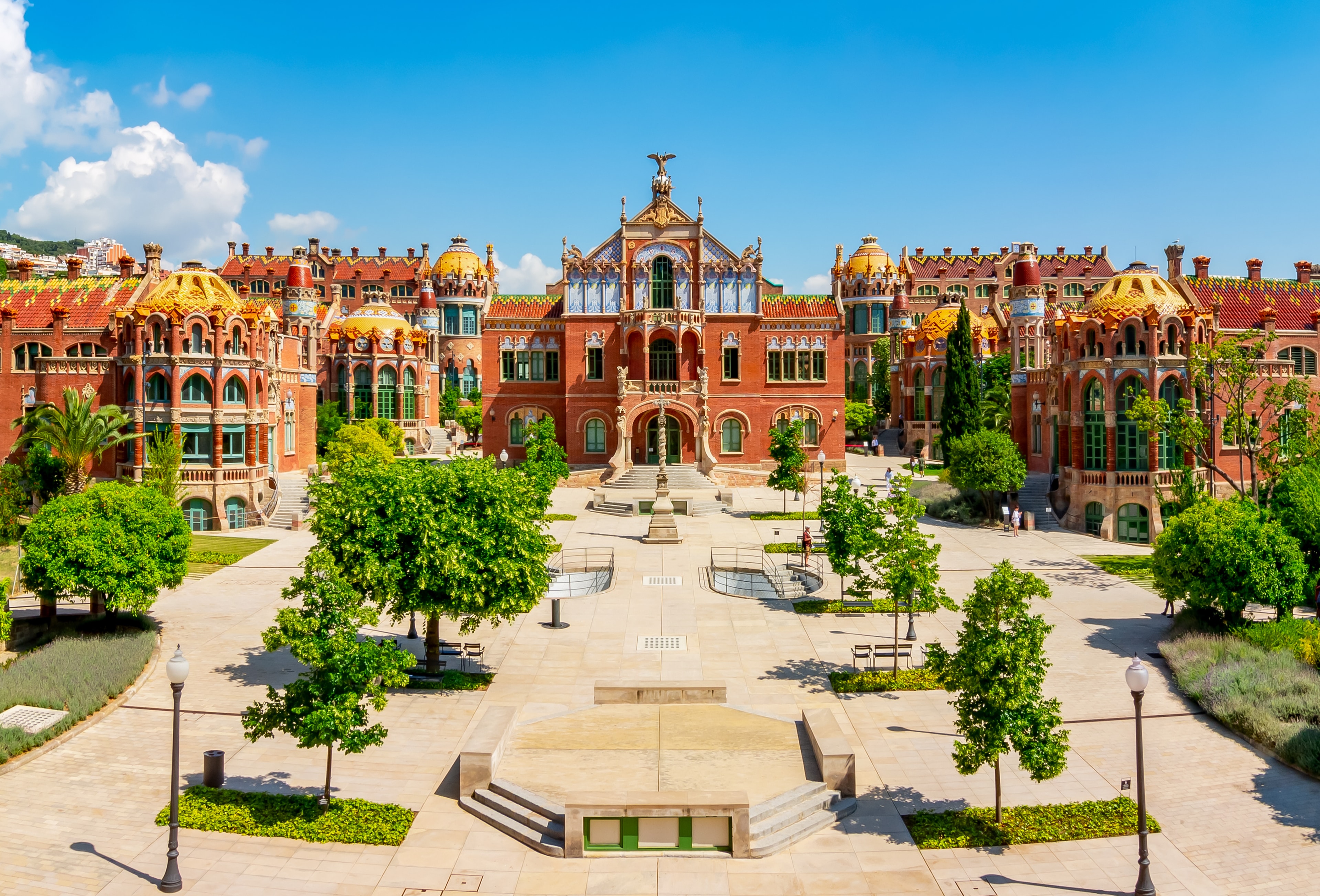
Hospital de Sant Pau in Barcelona is a UNESCO World Heritage Site. It was built more than a century ago but stayed fully functional until 2009
How to transfer an international pension to Spain
Spanish pension is available only to those who have worked and paid social security contributions in Spain for at least 15 years.
EU nationals can qualify for a pension in Spain in accordance with their employment history and social security contributions made in other EU states.
Non-EU retirees transfer pension if their country of origin has signed a bilateral social security agreement with Spain. Among such countries are the USA, Canada, Australia, South Korea, and Japan. The conditions of transferring vary depending on the country.
UK citizens may use the Qualifying Recognised Overseas Pension Scheme, or QROPS. It is an overseas pension scheme that allows transferring private pension earnings without extra fees.
Under the QROPS scheme, retirees choose the currency to keep their pension in. It helps avoid exchange rate fluctuation.
To transfer the UK pension into Spanish QROPS, expats should inform the British International Pension Centre and submit the completed transfer forms to providers in both countries.
Buying or renting a property in Spain
Spain’s property market is open to foreign buyers and renters alike, with no special restrictions on ownership. Here is what to expect when looking for a place to live, whether buying or renting.
Buying real estate
There are no restrictions or special requirements for foreigners when buying a property in Spain. Non-residents are allowed to get a mortgage.
Due to high international demand, Spanish property prices keep increasing. In early 2026, a square metre in Spain cost €2,708. The most expensive regions are Madrid, Canarias, and Andalucía. The most affordable property prices are in Castile-la-Mancha, Castile and León, and Aragon.
The property cost includes 10% VAT on new buildings, property transfer tax of 6—11%, and legal fees of up to 2% of the purchase. Notary fees generally range from $360 to 1,450.
Renting real estate
The cost of renting a property in Spain varies significantly, depending on the location. Living in smaller towns and suburban areas is considerably cheaper compared to residing in major urban centres.
The average rent price for a square metre in Spain is €15.49 in early 2026. The most popular places to rent are Madrid, Barcelona, and Valencia. The monthly cost for a one-bedroom flat in the city centre there will vary from €965 to 1,235. A similar flat outside the centre costs €720—960 per month.
To rent a property, it is necessary to pay a deposit equal to one month’s rent. In addition to the rent, tenants pay for utilities and minor repairs. Monthly utility costs for a two-bedroom flat in Spain typically range from €50 to 150.
Property prices in Spain
Best places to retire in Spain
Pensioners in Spain can find a place to live according to their preferences. It is possible to live by the sea, close to the mountains, or in a lively megapolis. Some may choose an international city full of expats, while others prefer a secluded town with a laid-back lifestyle.
Alicante
Alicante is a port city on the eastern Mediterranean coast. In 2026, it has 380,000 population, with 20% made of expats. More than 13,000 people in Alicante are British nationals.
Alicante is relatively small but has a good infrastructure with many cafés, restaurants, shops, and the local central market, which has fresh products and affordable prices. The city even has an international airport.
In Alicante, it is warm all year round. You can walk along the conveniently located picturesque beaches and swim in the azure waters of the Mediterranean Sea.
Valencia
Valencia is the most popular with American expats and the second most popular area with expats from the UK. It is twice as big in terms of population as Alicante.
The city combines the perks of a metropolis and a beach town. Valencia has 18 hospitals, 10 universities, many art and science museums, concert halls, and the oldest historical centre in Europe. The local beaches received international awards for high environmental quality.
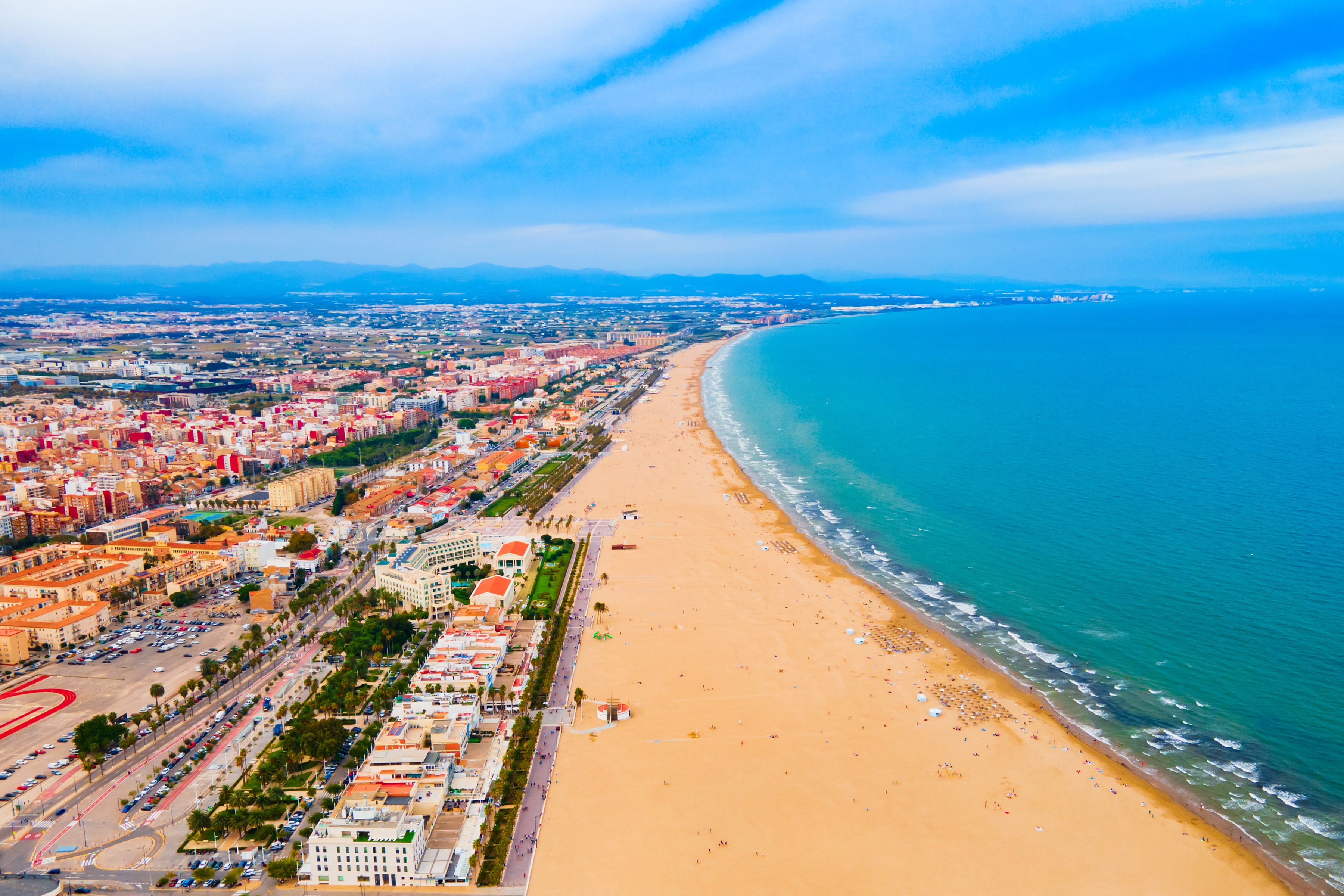
138 Valencia beaches have received the Blue Flag award in 2025 for their high standards of cleanliness, safety, and water quality
Malaga
Malaga is a large coastal city with a population of 594,000, 17% of which are expats. English is less commonly spoken here, compared to Alicante or Valencia. However, Malaga is ranked 1st out of 49 cities worldwide for local friendliness.
The city centre is mostly pedestrian, featuring 18th and 19th-century architecture. Malaga has 40 museums as well as art galleries, festivals, and other cultural spots. Here, you can find the home museum of Pablo Picasso, who was born in Malaga.
Malaga is two hours away from the Sierra Nevada mountain range, where retirees can spend a day skiing or snowboarding.
Barcelona
Barcelona is the second-largest city in Spain and one of the most popular cities for American and British expats. The local community is international and diverse. Foreigners account for 24% of the city’s population and represent 179 nationalities.
Barcelona also combines diverse beaches and proximity to a multi-peaked mountain range. The Montserrat national park is an hour and a half away from the city.
Barcelona is ranked 11th safest city in the world. It has great infrastructure, plenty of opportunities for sports and outdoor activities, and world-famous cultural sites.
Madrid
The capital of Spain has the largest expat communities in Spain. Around 29% of the city’s population is international. English is widely spoken here.
Madrid boasts a convenient location for travelling. Popular destinations in Western and Southern Europe are just 2—3 hours away by plane. Within the city, it is easy to get anywhere with the efficient metro system.
Unlike the cities above, Madrid has no beaches. It is also considered the most expensive city in Spain. However, Madrid combines rich history, cultural spots, beautiful gardens, and a convenient infrastructure.

El Retiro Park is one of the largest parks in Madrid. In 2021, it was named a UNESCO World Heritage Site
Registering a will and inheritance
Foreigners with assets in Spain should understand how local inheritance laws apply to them and what options are available for registering a will.
Inheritance distribution rules
Spanish inheritance laws require leaving most of the person’s assets to their spouse and children.
According to the Law of Obligatory Heirs, a spouse gets 50% of the joint property. The rest is divided into three equal parts. Two-thirds are distributed between children, whether natural or adopted. Only one-third can be disposed of freely in a will.
Foreigners are allowed to dispose of their Spanish assets in accordance with the laws of their home country. To do so, foreign residents write a will, which needs to be translated into Spanish and legalised before a Spanish consul. Without a will, the Spanish inheritance law is applied.
Will types
The most common types of wills in Spain are:
- a holographic will, verified by a judge and authenticated by two witnesses;
- an open will, made before two witnesses and registered by a notary;
- a closed will, made in secret, sealed in an envelope, and then registered by a notary.
A Spanish will is drawn up in Spanish and the testator’s own language. The document must be approved by an official translator.
If there is no will
In case there is no will, a foreigner’s heirs need to apply for a grant of probate within six months after death. EU citizens usually apply for such a grant in their home country.
If nobody claims an inheritance or there are no legal heirs, the estate transfers to the Spanish government.
Retirement in Spain from the USA or UK
Both American and British seniors can stay in Spain for up to 90 days without a visa. To stay longer, a residence permit is required. The most popular permit is a non-lucrative visa.
UK and US nationals can transfer their pension to Spain. The USA has a bilateral social agreement with Spain, which allows them to transfer pension and social benefits to the country.
British nationals moving to Spain can use the QROPS scheme. It consolidates their pension funds from multiple UK pension schemes into a single overseas scheme.
Spain has signed double tax treaties with both the USA and the UK. It means their citizens do not pay taxes twice on the same income. Retirees choose where to pay income tax: in Spain or their home country.
Free state healthcare is available to residents who pay social contributions through employment or self-employment. Non-lucrative visa holders cannot work in Spain. So, most American nationals may opt to purchase private insurance.
British nationals are eligible for free necessary healthcare in Spain due to the Global Health Insurance Card. It covers emergencies, treatment of chronic or existing illnesses, and basic maternity care.
Spain for expats and retirees: important things to know
-
A non-lucrative visa is valid for one year and can be renewed twice, each time for two years. The status prohibits working or doing business in Spain. Applicants prove to have sufficient means €28,800 per year.
-
Retirees in Spain optimise their living costs, enjoy a relaxed pace of life by the sea, and take advantage of local services and amenities. Some downsides to getting used to are a slow bureaucratic system, a unique schedule, and high taxes.
-
Spain provides free healthcare to those who make social contributions or hold EHIC or GHIC. Most foreigners purchase private insurance.
-
Non-EU nationals can transfer their pension only if their home country has signed a bilateral social agreement with Spain. The UK citizens are eligible for the QROPS scheme.
Immigrant Invest is a licensed agent for citizenship and residence by investment programs in the EU, the Caribbean, Asia, and the Middle East. Take advantage of our global 15-year expertise — schedule a meeting with our investment programs experts.
 Trusted by 10,000+ investors