

Summary
Malta remains one of the few Schengen countries where a genuine non-domicile regime is still available for qualifying residents.
For entrepreneurs with international structures, investors with international portfolios, family offices, and remote professionals, Malta’s non-dom framework can offer a practical long-term base.
This guide explains how it works in practice: eligibility, tax mechanics, compliance, how it aligns with residence routes, key pitfalls, and how Malta compares with other jurisdictions.
What is Malta's non-domiciled tax regime?
Malta’s non-dom regime is a remittance-basis system that applies to individuals who are tax resident in Malta but not domiciled there[1]. Under this framework:
- Maltese-source income is taxed at progressive rates of 0 to 35%;
- foreign-source income is taxed only if remitted to Malta;
- foreign capital gains arising outside Malta are not taxable even if remitted.
Eligibility depends on establishing Maltese tax residence. In practice, this often aligns with spending 183 days or more in Malta or maintaining a permanent home there, while the individual’s domicile of origin remains outside Malta.
The non-domiciled regime can suit high-net-worth individuals, entrepreneurs, investors, and remote workers without shifting to full worldwide taxation. Alignment with Malta’s residence permit programmes supports this positioning, including the Malta Permanent Residence Programme.
Malta non-dom regime vs. tax residency and domicile
Malta non-dom status depends on two separate concepts: tax residence and domicile. The key threshold is tax residence. Malta does not set a strict 183-day rule in statute. Instead, an individual is treated as resident when Malta is their settled place of living, and any time spent abroad is short and does not break that pattern.
Tax residency
Establishing Maltese tax residence relies on three factors, and each of them can be decisive:
- Physical presence. 183 days or more in a calendar year is generally treated as establishing tax residence for that year.
- Permanent home and habitual use. A home available in Malta, used habitually, can support residence even with fewer than 183 days, particularly when paired with other ties.
- Centre of vital interests. The strongest personal and economic ties — family, business activity, and property — can outweigh a simple day count. Tax residence may arise through regular presence over several years even without exceeding 183 days in any single year[2].
A Maltese residence permit does not automatically create tax residency. It depends on the person’s actual ties to Malta, not their immigration status. Likewise, a person can become a tax resident even without a residence permit if they meet the tax-residence criteria.
Domicile
Domicile is distinct from tax residence. It reflects a person’s permanent legal home and is more difficult to change than residence. Maltese law recognises two main types of domicile: of origin and choice.
Domicile of origin is acquired at birth and follows the father’s domicile at that time. It continues automatically unless replaced by a domicile of choice.
Domicile of choice arises only where two elements are present: physical presence in the new jurisdiction and clear intention to live there permanently and indefinitely. That intention must be supported by objective evidence, such as:
- long-term property ownership and use as a main home;
- relocation of close family members;
- location of business interests and wealth management;
- wills and estate planning arrangements;
- consistent conduct showing no intention to return to the former domicile.

Albert Ioffe,
Legal and Compliance Officer, certified CAMS specialist
For internationally mobile individuals, changing domicile is difficult in practice. Even long-term residence in Malta may not be enough if strong ties remain elsewhere — such as a main home abroad, an active business, or close family based outside Malta. These factors often suggest an intention to return, making a domicile of choice in Malta unlikely.
As a result, many long-term residents remain non-domiciled for Maltese tax purposes and are therefore more likely to fall within the remittance basis framework.
Why Malta’s non-dom regime is attractive for international taxpayers
Malta’s non-dom regime appeals to globally mobile persons because it allows foreign wealth to remain outside Malta’s tax net, while keeping local taxation predictable. The key advantages are practical and structural, not purely headline rates.
1. No tax on foreign income and gains kept abroad
Malta’s non-dom regime taxes Maltese-source income and foreign-source income only to the extent it is received in Malta. Foreign capital gains arising outside Malta are not subject to Maltese tax, even if remitted to Malta.
2. Foreign-source income sheltered
Foreign income that remains outside Malta and is not remitted there is not subject to Maltese tax. This allows individuals to hold international investment portfolios, companies, and wealth structures without automatically shifting into full worldwide taxation.
In practice, this creates a clear separation between taxable income connected to Malta and assets held abroad, which can materially reduce overall tax exposure compared with high-tax residence systems.
3. Remittance control
Malta remittance basis allows control over what enters the Maltese tax base and when. In practice, this relies on segregated accounts, clear tracing between income and capital, and disciplined cash-flow planning.
The flexibility is useful for founders extracting dividends, investors rebalancing multi-jurisdiction portfolios, and retirees drawing selectively from foreign pensions or brokerage accounts.
4. Interaction with Malta’s treaty network
Malta maintains 74 double tax treaties, covering key jurisdictions including the UK, US, Canada, Australia, Singapore, Switzerland, China, UAE, and most major European economies[3].
Tax treaties provide withholding tax relief, tax credit mechanisms, tie-breaker residence rules based on the OECD Model Convention, and mutual agreement procedures. When combined with non-dom status, this network supports cross-border structuring and mitigates double taxation risk.
5. Integration with succession planning
Malta does not levy a traditional inheritance or estate tax and does not impose a net wealth tax. This can simplify long-term wealth holding and succession planning, particularly where core assets are held abroad[4].
At the same time, assets located in Malta — especially immovable property — may be subject to Maltese stamp duty under local transfer rules. For this reason, Maltese assets are often held separately from foreign holdings to manage exposure to local duties.
6. Alignment with residence routes
Malta’s residence routes are often used in tandem with non-domicile tax planning. For eligible permit holders, this status supports travel across the 29 Schengen countries, beneficial for internationally mobile entrepreneurs, investors, and remote professionals.

With English as an official language used for legal and tax matters, Malta is practical for cross-border planning
What are the taxation rules for non-domiciled residents in Malta?
The taxation of non-domiciled residents in Malta is governed by specific statutory rules determining how Maltese and foreign income is treated.
Maltese-source income: fully taxable
Under the remittance basis of taxation, all income arising in Malta is taxable, regardless of where it is received. Income tax is charged at progressive rates, which vary depending on family composition.
The parent rates apply where an individual has custody of a child or pays maintenance for that child. The child must be under 18 years of age, or aged 18 to 23 and attending full-time education. The child’s employment status does not affect eligibility[5].
Malta progressive income tax rates
Foreign-source income: remittance basis
Under the Malta non-domiciled tax regime, foreign-source income is taxable only to the extent that it is remitted to Malta. If foreign income remains outside Malta and is not brought into the country, it is not subject to Maltese tax[6].
Foreign-source income includes:
- employment income from a foreign employer paid outside Malta;
- dividends from foreign companies;
- interest on foreign bank accounts or bonds;
- rental income from foreign property;
- capital gains on the disposal of foreign assets;
- pensions paid by foreign pension providers.
Income is treated as received in Malta if:
- it is paid to the recipient in Malta;
- or it is paid into a foreign account and subsequently remitted to Malta.
Albert Ioffe,
Legal and Compliance Officer, certified CAMS specialist
Money brought into Malta for day-to-day living is often treated as taxable income unless it can be shown to come from capital. Capital receipts such as an inheritance or proceeds from selling an asset are not taxed simply because they are transferred into Malta, but the source must be clearly evidenced.
Capital gains treatment
Gains arising from the disposal of assets located in Malta — including immovable property, business assets, or Maltese securities — are taxable at the progressive income tax rates.
By contrast, capital gains arising outside Malta are not subject to Maltese tax under the remittance basis, even if the proceeds are received in Malta. This distinction is significant: a non-domiciled individual may realise gains on foreign shares, property, or other investments and transfer the proceeds to Malta without triggering Maltese capital gains tax.
Minimum tax for non-domiciled individuals
The remittance basis is subject to a special minimum tax rule. If foreign income arising outside Malta amounts to at least €35,000 in a year and is not fully received in Malta, a minimum annual tax of €5,000 applies.
The minimum tax is not an alternative tax system and does not replace progressive taxation. Rather, it ensures that individuals benefiting from the remittance basis pay at least a baseline amount of Maltese tax in certain circumstances.
The €5,000 minimum:
- includes any Maltese tax already withheld at source;
- excludes tax payable on transfers of Maltese immovable property;
- is reduced by any double taxation relief due.
The minimum tax does not apply where foreign income is below €35,000 per year. For married couples, the €35,000 threshold refers to their combined foreign income, and the €5,000 minimum applies to the couple as a whole.
An individual may opt to be taxed on a worldwide basis instead of the remittance basis if doing so results in a lower total tax liability than the €5,000 minimum.
What compliance tax obligations and reporting requirements apply in Malta?
Non-domiciled tax residents in Malta are subject to specific filing, record-keeping, and reporting obligations under Maltese tax law and international transparency frameworks.
Annual tax return
Individuals who are chargeable to tax in Malta, or who receive a notice to file, must submit an annual income tax return. The return must declare:
- all Maltese-source income and capital gains;
- all foreign-source income received in Malta during the year;
- any double taxation relief claimed.
The filing deadline is generally set by the Commissioner for Revenue — typically June 30th for paper returns, with later deadlines for electronic submission[7].
Record-keeping obligations
Maltese taxpayers must keep records that support the information reported in their tax return. Documentation must be retained for at least 6 years[8].
Records should support income earned, tax paid, and amounts received in Malta. The legislation does not prescribe a fixed list of documents, but the material kept must be sufficient to justify the declared tax position if reviewed.
Tax Residence Certificate
Individuals who are tax residents in Malta may apply for a Tax Residence Certificate from the Commissioner for Revenue in order to claim treaty benefits or demonstrate Maltese tax residence to foreign institutions.
Residence is determined as a matter of fact and may be established through physical presence or other connecting factors, as described in official guidance. The Commissioner may require documentation supporting the claim of residence and confirmation that tax compliance obligations have been met.
Common Reporting Standard and FATCA
Malta implements the OECD Common Reporting Standard, CRS, and has legislation giving effect to the FATCA agreement with the United States[9]. Under these rules, Maltese financial institutions must:
- obtain self-certifications of tax residence from account holders;
- report account balances and certain income to the Commissioner for Revenue;
- transmit relevant information through automatic exchange mechanisms.
Individuals are not required to file CRS or FATCA reports themselves, but accurate tax-residence information must be provided to banks and other financial intermediaries when requested.
How do I claim and prove non-dom status in Malta?
Non-dom treatment in Malta is a legal consequence of status rather than a permit or special registration. It follows from how Maltese tax law distinguishes between residence and domicile and how the remittance basis applies to individuals who meet those conditions.
Non-dom status is not granted by separate approval. It results from being tax resident in Malta while retaining a non-Maltese domicile.
Set up a lawful basis to live in Malta
A residence permit supports the right to reside and makes it possible to spend time in Malta. The immigration status helps operationally, but it does not by itself create tax residence or non-dom treatment.
A residence permit supports the right to reside and makes it possible to spend time in Malta. The immigration status helps operationally, but it does not by itself create tax residence or non-dom treatment.
Establish Maltese tax residence on the facts
Tax residence is factual. Common ways it is established include:
- presence in Malta for more than 183 days in a year;
- or arrival to establish residence, supported by a home and a settled living pattern.
Typical proof includes accommodation, utility and bank documentation, and travel evidence.
Tax residence is factual. Common ways it is established include:
- presence in Malta for more than 183 days in a year;
- or arrival to establish residence, supported by a home and a settled living pattern.
Typical proof includes accommodation, utility and bank documentation, and travel evidence.
Confirm domicile remains outside Malta
Non-dom treatment depends on being a tax resident while keeping a non-Maltese domicile. Evidence focuses on showing Malta is not treated as the permanent home and that meaningful ties remain elsewhere.
Non-dom treatment depends on being a tax resident while keeping a non-Maltese domicile. Evidence focuses on showing Malta is not treated as the permanent home and that meaningful ties remain elsewhere.
Prepare supporting evidence
There is no statutory non-dom application form. However, the Commissioner for Revenue — the head of the tax authority in Malta — may request evidence supporting both residence and domicile position.
It is therefore prudent to retain documentation such as:
- birth certificate, with place of birth and parents’ domicile, supporting domicile of origin;
- passport and citizenship documents, showing link to the origin jurisdiction;
- declaration of intention stating no intention to settle permanently in Malta and that ties are maintained elsewhere;
- evidence of ongoing ties to the origin country, such as property ownership, business interests, family residence, professional registrations, or similar indicators.
These documents are generally kept on file and produced if requested or when applying for a Tax Residence Certificate.
There is no statutory non-dom application form. However, the Commissioner for Revenue — the head of the tax authority in Malta — may request evidence supporting both residence and domicile position.
It is therefore prudent to retain documentation such as:
- birth certificate, with place of birth and parents’ domicile, supporting domicile of origin;
- passport and citizenship documents, showing link to the origin jurisdiction;
- declaration of intention stating no intention to settle permanently in Malta and that ties are maintained elsewhere;
- evidence of ongoing ties to the origin country, such as property ownership, business interests, family residence, professional registrations, or similar indicators.
These documents are generally kept on file and produced if requested or when applying for a Tax Residence Certificate.
Apply the remittance basis in the annual tax return
Non-dom status operates through the way income is computed and reported in the annual tax return. The remittance basis is applied by calculating taxable income according to the statutory rules.
In practice, this means:
- Maltese-source income is fully declared and taxed at the applicable progressive rates.
- Foreign-source income is included in the tax computation only to the extent that it was remitted to Malta during the year.
- Foreign capital gains are excluded from the Maltese tax computation, even if the proceeds were brought into Malta.
The taxpayer must therefore identify, for each category of income, where it arose and whether it was received in Malta during the year of assessment. The tax computation is then prepared accordingly.
No separate approval is issued for non-dom treatment. The tax position results from the factual residence and domicile status and from applying the remittance rules correctly in the return.
Non-dom status operates through the way income is computed and reported in the annual tax return. The remittance basis is applied by calculating taxable income according to the statutory rules.
In practice, this means:
- Maltese-source income is fully declared and taxed at the applicable progressive rates.
- Foreign-source income is included in the tax computation only to the extent that it was remitted to Malta during the year.
- Foreign capital gains are excluded from the Maltese tax computation, even if the proceeds were brought into Malta.
The taxpayer must therefore identify, for each category of income, where it arose and whether it was received in Malta during the year of assessment. The tax computation is then prepared accordingly.
No separate approval is issued for non-dom treatment. The tax position results from the factual residence and domicile status and from applying the remittance rules correctly in the return.
Maintain the position year-to-year
Maintaining Malta non-dom status is mainly about consistency:
- residence facts continue to support Maltese tax residence;
- and actions along with documentation continue to show no settled intention to make Malta the permanent home.
Maintaining Malta non-dom status is mainly about consistency:
- residence facts continue to support Maltese tax residence;
- and actions along with documentation continue to show no settled intention to make Malta the permanent home.
What residency options exist for individuals looking for tax residency in Malta?
Malta offers several structured residence programmes for non-EU, non-EEA, and non-Swiss nationals over 18 with sufficient wealth. Each has its own eligibility criteria and specific nuances, particularly in how it interacts with non-dom tax treatment.
Malta Permanent Residence Programme
The Malta Permanent Residence Programme, MPRP, targets investors who want permanent residence in Malta and long-term family planning options.
The MPRP’s core requirement is to secure housing in Malta through one of two routes:
- Renting: lease a property for at least 5 years with minimum annual rent of €14,000, totalling €70,000+ over 5 years.
- Buying: purchase property worth €375,000+ and hold it for 5 years, plus acquisition costs of around 7%, or €26,250+.
After the initial 5 years, a residential address in Malta is still required, but the strict minimum rent or purchase thresholds do not apply in the same way.
In addition, the applicant is required to:
- Make a government contribution of €37,000.
- Pay administration fee of €60,000 for themselves, plus €7,500 for each dependant over 18, excluding the spouse.
- Donate €2,000 to a registered Maltese NGO.
- Hold capital of €500,000+, of which €150,000+ in liquid financial assets, or €650,000+, of which €75,000+ in liquid financial assets.
The minimum outlay is roughly €169,000 under the rental route and about €474,000 under the purchase route, excluding personal living costs.
Permanent residence is granted indefinitely. The residence card must be renewed every 5 years.
Family inclusion. The MPRP can include close family members: a spouse, children under 29, and the investor’s parents and grandparents. Children over 18 must be unmarried and principally dependent on the investor or the spouse, and the same dependency rule applies to parents and grandparents.
Non-dom status. MPRP itself is not a tax regime, but it can support non-dom planning. If an MPRP holder becomes Malta tax resident and remains non-domiciled under Maltese law, they can fall under Malta’s non-dom remittance-basis taxation.
Nomad Residence Permit
Malta’s Nomad Residence Permit targets remote workers and digital nomads who earn abroad and want to live in Malta. Minimum gross annual income is set at €42,000.
Eligible profiles include employees of a foreign employer, partners or shareholders in a foreign business, or freelancers serving foreign clients. Work that involves providing services to a Maltese subsidiary is not eligible.
The permit is issued for 1 year and can be renewed up to three times, for a total of up to 4 years, at the discretion of the Residency Malta Agency.
Family inclusion. A spouse and children of any age can be included in the application. Children aged 18 and over must be unmarried and substantially financially dependent on the main applicant.
Accommodation and health insurance. Digital nomads must show accommodation for the duration of the permit, such as a rental or purchase agreement, and hold health insurance covering Malta.
Non-dom status. Digital nomads in Malta fall under a special tax framework for qualifying remote work. For the first 12 months, eligible income may benefit from a tax exemption. Thereafter, income from the approved activity is taxed in Malta at a 10% flat rate[10].
If the individual later becomes Malta tax resident and remains non-domiciled under Maltese law, non-dom remittance rules may also apply to other foreign income that is separate from the qualifying remote-work income.
Malta Global Residence Programme
The Malta Global Residence Programme, GRP, targets investors who want Maltese tax residence on reduced rates under a dedicated tax regime for non-domiciled individuals.
The GRP is built around two practical pillars: securing qualifying accommodation and paying the administrative fee:
- Renting property. Minimum annual rent depends on location: €8,750 in the south of Malta or Gozo and €9,600 in the north or centre.
- Buying property. Minimum purchase value also depends on location: €220,000 in the south of Malta or Gozo and €275,000 in the north or centre.
- Administration standard fee is €6,000, reduced to €5,500 where the qualifying property is in Gozo or the south of Malta.
Total outlay. With translation, insurance, and ancillary fees included, total outlay is commonly presented as €34,150 if opting for rent and €270,200 if choosing a purchase.
Examples of real estate in Malta


Malta, St Julian's
€950,000 — €2,290,000
Elegant apartments, St. Julians, Malta
 98 m² — 193 m²
 1—3
1—3  1—3
1—3 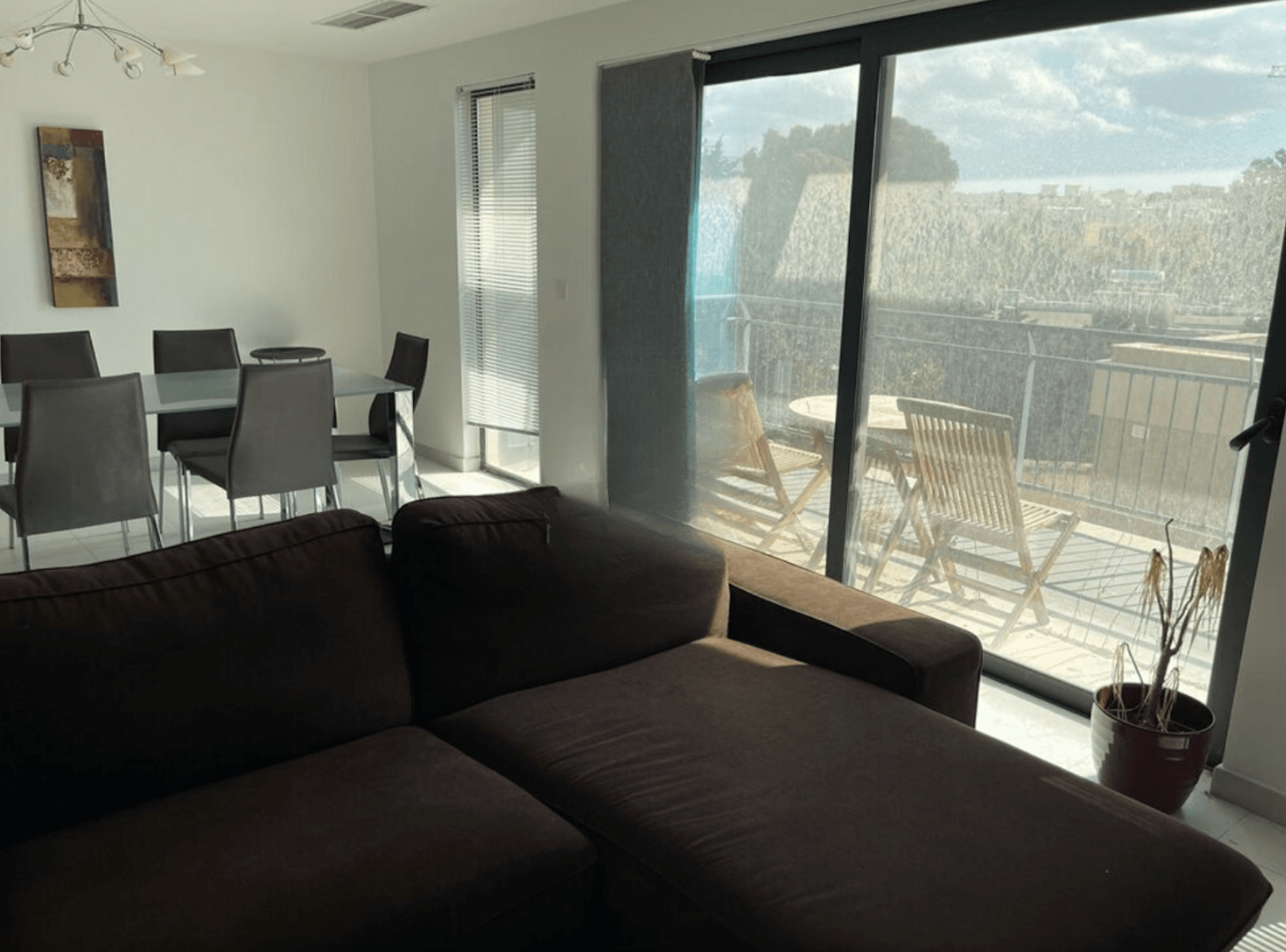
Malta, St Julian's
€750,000+
Apartments in modern style, St. Julians
172 m²3 2 
Malta, Sliema
€1,170,000+
Apartments in modern style, Sliema
116 m²1 1 The residence document is issued initially for 1 year, with renewals commonly issued for 2 years. To maintain the status, the holder must not spend more than 183 days in any other single country in a given year.
Family inclusion. Eligible relatives include the spouse, children, and also parents, grandparents, and siblings where they meet the programme’s dependency criteria.
Non-dom status. The GRP has its own tax regime. It does not rely on ordinary non-dom rules, and it does not apply the standard remittance-basis mechanics in the same way[11].
Under the GRP, the tax outcome depends on where the income arises and whether it is remitted to Malta:
- 15% on foreign-source income remitted to Malta, subject to a €15,000 minimum annual tax;
- no Maltese tax on foreign income that is not remitted to Malta, and no Maltese tax on foreign capital gains;
- 35% on income arising in Malta.
Comparison of Malta residency options
Who should consider Malta's non-dom regime?
Malta’s non-dom regime works best where foreign income is high, Maltese-source income is limited, and remittances can be controlled with strict segregation. It works poorly where worldwide taxation already applies or where most income will arise in Malta.
UK families and business owners seeking a post-Brexit base
Profile. British nationals or long-term UK residents who want a stable residence platform after Brexit and hold UK or international companies with mostly foreign income.
How it works. Obtain residence through MPRP and become Malta tax resident while remaining non-domiciled. Dividends and capital gains can remain in foreign accounts, with only living costs remitted to Malta, for example €50,000 to 100,000 per year, taxed at progressive rates up to 35%.
Why it fits. Works best where Maltese-source income is low and foreign income is significant. The MPRP requires about €169,000 under the rental route, plus €7,500 per dependent over 18.
Not suitable if. Maltese-source income is high, tax residence cannot be supported factually, or a jurisdiction with a dividend exemption regime is a better match.
Founders, executives, and investors
Profile. Nationals with foreign salary, consulting income, or investment portfolios who want a Mediterranean base and international structuring flexibility.
How it works. Use the Global Residence Programme where eligible. Foreign income remitted to Malta is taxed at 15%, subject to a €15,000 annual minimum, while foreign income that remains abroad and is not remitted is not taxed in Malta.
Why it fits. Predictable 15% taxation can be efficient where annual remittances are high, and the €15,000 minimum provides certainty. The structure supports internationally diversified portfolios.
Not suitable if. Worldwide taxation applies regardless of where you live, or the home-country residence rules are likely to continue treating you as a tax resident after the move.
Albert Ioffe,
Legal and Compliance Officer, certified CAMS specialist
GRP is generally preferable where annual remittances are high and predictable. If you expect to remit more than roughly €100,000 per year, a flat 15% rate can be more efficient and more certain than progressive rates up to 35% under ordinary non-dom rules.
By contrast, ordinary non-dom treatment may be more efficient where remittances are low and irregular, because there is no €15,000 fixed minimum under general rules. Only €5,000 may be payable if foreign income exceeds €35,000 and the total Malta tax due would otherwise fall below that amount.
Remote professionals
Profile. Nationals working remotely for foreign employers or clients and earning at least €42,000 per year.
How it works. Apply for the Nomad Residence Permit and work exclusively for non-Maltese clients or employers. Approved remote-work income may be exempt for the first 12 months. After that, it is taxed at a flat 10% under the Nomad tax rules. If Malta tax residence is established while non-domiciled status is retained, foreign investment income outside the remote-work stream may be taxed on a remittance basis.
Why it fits. Low entry cost and no property purchase requirement. The 12-month exemption and the subsequent 10% rate provide predictable treatment for remote-work income, while foreign investment gains can remain outside Malta tax if not remitted.
Not suitable if. Services are provided to Maltese clients, long-term permanent residence beyond the permit limits is required, or day-count conditions cannot be met.
Ultra-wealthy families and family offices
Profile. Families with €10 million or more in assets held abroad, using trusts, holding companies, and multi-jurisdiction structures.
How it works. Establish Malta tax residence through MPRP or GRP while retaining foreign wealth in properly structured overseas entities with real substance. Only selected income is remitted, while most foreign gains remain outside Malta taxation.
Why it fits. No inheritance or estate tax, an extensive treaty network, and no €100,000 or €300,000 annual flat charge as in certain other jurisdictions. The framework can continue indefinitely provided the domicile of origin is preserved.
Not suitable if. Absolute banking secrecy is required, international structures lack genuine economic substance, or reputational exposure creates heightened compliance risk.
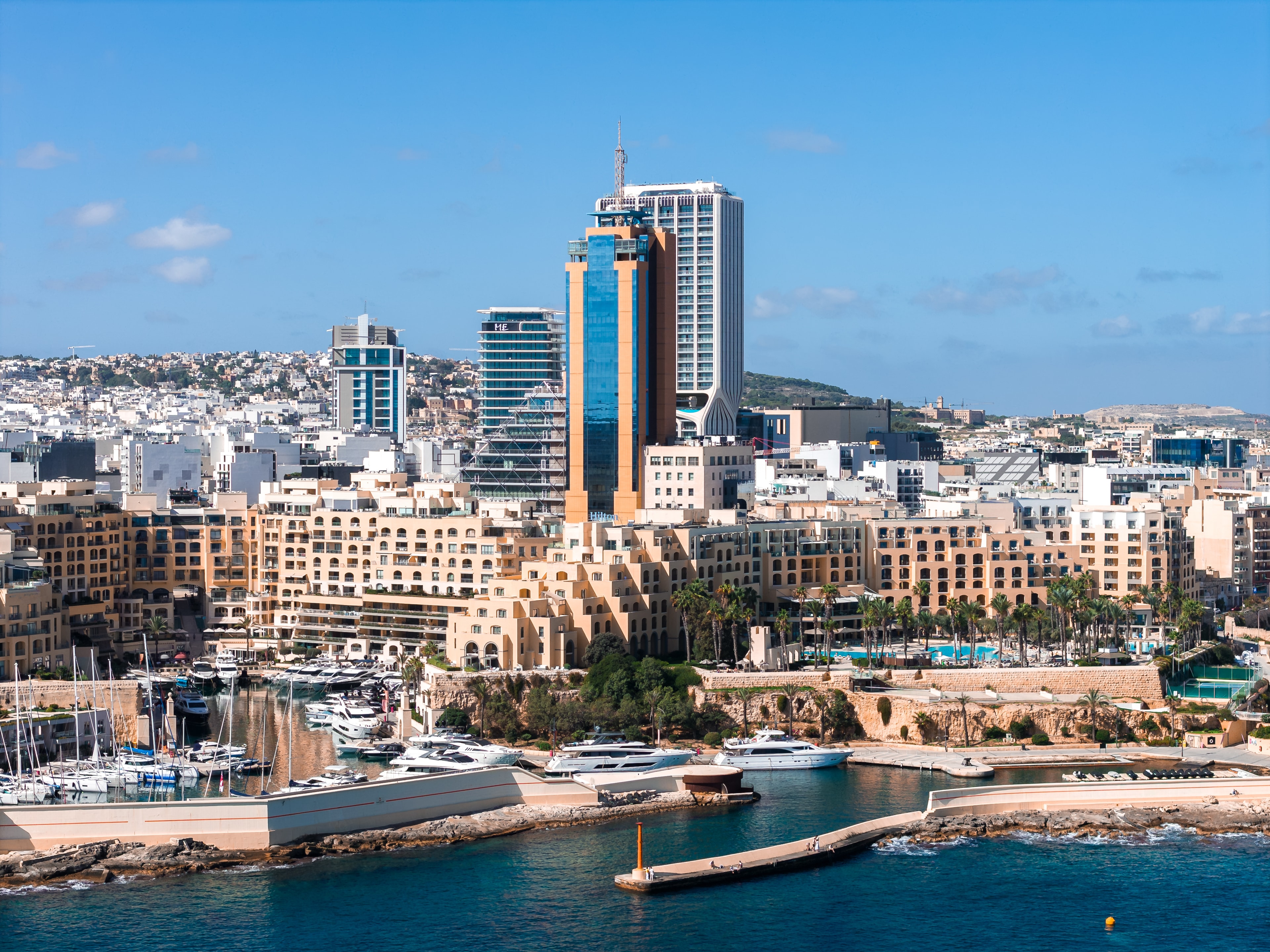
Malta is attractive for business due to its shareholder refund system, which can reduce effective corporate tax on trading profits from 35% to around 5%[12]
How does Malta non-dom compare to other European tax regimes?
European non-dom and newcomer tax regimes vary widely in structure: some offer time-limited foreign income exemptions, others provide SDC relief on passive income, and some replace foreign taxation with a fixed annual charge.
Malta stands out for its remittance basis approach, which can remain available long-term while non-domicile is maintained.
United Kingdom: foreign income exemption
The UK overhauled its historic non-domiciled regime with effect from April 6th, 2025, replacing it with a residence-based Foreign Income and Gains, FIG, regime.
A core feature of the FIG regime is a 4-year exemption for new arrivals. Individuals who become UK tax resident after 10 consecutive tax years of non-UK residence can claim 100% relief on eligible foreign income and gains for their first 4 UK tax years[13].
For individuals who previously used the remittance basis, the UK also introduced transitional measures to ease the move to the new rules, including:
- 50% relief on certain foreign income;
- foreign income and gains remitted at 12% up to 2027, and 15% in 2027—2028.
Compared with Malta, the UK FIG regime is strictly time-limited and the remittance basis no longer applies indefinitely to UK residents. Malta’s non-dom framework, by contrast, continues to operate on a remittance basis for as long as the individual remains non-domiciled.
Cyprus: non-dom with SDC exemption
Cyprus non-dom status is characterised by the following features:
- Exemption from Special Defence Contribution, SDC, on dividends and interest.
- Validity of up to 17 years.
- Deemed domicile status after 17 out of the last 20 years of Cyprus tax residence.
- Loss of the SDC exemption on dividends and interest upon deemed domicile[14].
Compared with Malta, Cyprus non-dom is narrower but can suit dividend- and interest-heavy profiles, such as entrepreneurs taking holding-company dividends or investors living off portfolio income.
Ireland: non-dom with remittance basis
Ireland taxes residents who are not Irish-domiciled on a remittance basis[15]. Its non-dom treatment is defined by:
- Foreign income taxed only if remitted to Ireland.
- No fixed expiry.
- High marginal rates on Irish-source income. The top income tax rate is 40%, and additional charges can push the marginal burden above 50%.
Compared with Malta, the main trade-off is rate level. Malta’s personal rates top out at 35%, and its remittance basis can be easier to use as a long-term planning framework where foreign income can remain outside Malta.
Italy and Greece: flat-tax regimes for new residents
Italy and Greece offer substitute tax regimes for new tax residents based on an annual flat payment. Both regimes can extend to family members and apply to all foreign-source income.
Greece offers a €100,000 flat tax for individuals who transfer tax residence to Greece and were not Greek tax residents for 7 of the previous 8 years[16]. It is defined by the following key features:
- €100,000 per year covers all foreign-source income, regardless of amount;
- family members may opt in for €20,000 per person annually;
- Greek-source income is taxed under standard rules;
- available for up to 15 years.
Italy provides a €300,000 flat tax regime for those who become Italian tax residents and were not them for 9 of the previous 10 years[17]. Its core features are as follows:
- €300,000 per year covers all foreign-source income, regardless of amount;
- family members may opt in for €50,000 per person annually;
- Italian-source income is taxed under standard rules;
- available for up to 15 years.
Compared with Malta, the Italian and Greek flat-tax regimes are more attractive for very wealthy individuals and families with substantial foreign income. For those with moderate foreign income in the €200,000 to 500,000 range, Malta’s non-dom approach is far cheaper.
What are common pitfalls and risks for non-doms in Malta?
Malta’s non-dom regime is attractive, but it is technical and highly fact-sensitive. Small structural or documentation mistakes can materially change the tax outcome.
Domicile of choice risk
The highest-stakes mistake is unintentionally creating a domicile of choice in Malta. If that happens, Malta taxes worldwide income and gains on an arising basis, not only what is remitted.
Albert Ioffe,
Legal and Compliance Officer, certified CAMS specialist
To reduce the risk of acquiring domicile in Malta, ensure your actions and documents do not indicate a settled, lifelong intention to remain. In practice:
- Remove permanent-intent wording from contracts, applications, and estate-planning documents.
- Maintain clear ties elsewhere: property, business interests, professional registrations, close family links.
- Keep property decisions modest; multiple homes can signal permanence.
- Use wills carefully; limit Malta wills to Maltese assets rather than worldwide estates.
- Preserve an exit option and refrain from irreversible long-term commitments.
Remittance traps and income classification risk
Under Malta’s non-dom regime, foreign income is taxable only when it is remitted to Malta, but remittances can also occur indirectly. The main risk is poor tracing: losing the ability to show which funds represent capital and which represent income.
Typical traps include:
- paying Malta expenses with a foreign card that is later repaid using foreign income;
- transferring to Malta loan proceeds backed by foreign assets;
- mixing capital and income in the same account.
Remitting foreign income in the same year it arises is clearly taxable, while prior-year income or capital needs strong evidence. The practical fix is simple: keep separate accounts and move money into Malta only from a clearly documented source, with records for each material transfer.
Double taxation and treaty tie-breaker risk
Non-dom status in Malta does not stop another country from taxing the same income. This is most common where the other country taxes based on citizenship or keeps taxing based on domicile concepts.
Tax treaties can reduce double taxation, but only if Malta is clearly the primary residence under treaty tests. Problems arise where:
- there is a permanent home available elsewhere;
- too little time spent in Malta;
- or key personal and business ties remain outside Malta.
Before moving, the tax position should be modelled, day counts tracked, and a Malta tax residence certificate obtained only when the facts support it, then treaty relief and foreign tax credits claimed correctly.
Controlled Foreign Company exposure
Malta can tax profits of a foreign company even if no dividends are paid. This applies where:
- Malta tax resident controls more than 50% of the company;
- company is taxed at less than 17.5% abroad;
- and it mainly earns passive income without real economic substance.
There are limited exemptions. The rules may not apply where annual profits do not exceed €750,000, where non-trading income does not exceed €75,000, or where profits are 10% or less of operating costs[18].
The practical point is straightforward: low-tax international companies with minimal substance can trigger Malta tax even without remittances. Structures should be reviewed before becoming Malta tax resident.
Banking compliance risk
Foreign income may be taxable in Malta only when remitted, but it still needs to be disclosed. Tax filings, bank onboarding, and automatic information exchange require consistent reporting under the Common Reporting Standard and the Foreign Account Tax Compliance Act.
Maltese banks apply strict know-your-customer and anti-money laundering checks. Onboarding can be slow or fail where overseas structures are complex, a person is politically exposed, or funds come from higher-risk jurisdictions. A complete document pack helps: multi-year tax returns, ownership charts, financial statements, sale agreements or inheritance evidence, and valuations where needed.
Minimum tax and programme misinterpretation risk
Under Malta’s ordinary non-dom regime, a minimum annual tax of €5,000 may apply where a non-domiciled individual has foreign income exceeding €35,000 and claims the remittance basis. This is often mistaken for a universal rule for all non-doms, but it applies only in specific cases.
This minimum tax liability does not apply to individuals who are beneficiaries of any of the following programmes:
- Residence Programme;
- Global Residence Programme;
- Malta Retirement Programme.
For example, under the Global Residence Programme, beneficiaries are subject to the programme’s own minimum: €15,000 per year, regardless of the amount remitted.
Ongoing compliance risk
Non-dom treatment depends on consistent compliance. Annual tax filings must be timely and accurate, residence permits must be renewed on time, and address changes must be updated properly.
Albert Ioffe,
Legal and Compliance Officer, certified CAMS specialist
Domicile intention signals and remittance processes should be reviewed regularly, because small documentation errors can create disproportionate tax exposure. Non-dom planning should be treated as an ongoing compliance position, not a one-time setup.
How Immigrant Invest can help with Malta non-dom tax regime
Immigrant Invest is a licensed investment migration company that works with residence and citizenship programmes and has its own office in Malta. The company is not a tax adviser, but it can support Malta non-dom planning by coordinating the residence pathway with appropriately licensed Maltese tax professionals and, where needed, advisers in the client’s home jurisdiction.
In addition, Immigrant Invest also provides:
- preliminary Due Diligence, including AML and sanctions screening;
- document checklists;
- stage-by-stage case management with clear milestones;
- coordination of biometrics and appointments;
- support with property-related steps;
- communication management with relevant programme stakeholders.
Immigrant Invest also provides post-approval support, including permit renewals, address updates, and the addition of family members.
Key takeaways about Malta non-dom tax regime
- Malta non-dom status applies automatically once Malta tax residence is established and ongoing ties abroad show that the permanent home remains outside Malta.
- Malta’s non-domicile regime taxes Malta-source income at standard rates of up to 35%, while foreign income enters the tax net only when it is remitted to Malta.
- A €5,000 minimum tax can apply where foreign income exceeds €35,000 and the Malta tax otherwise payable would be lower.
- Foreign capital gains are outside Maltese tax under non-dom rules, even when brought into Malta.
- The framework can run long-term, as long as the individual does not acquire a domicile of choice in Malta.
- Malta Permanent Residence Programme holders can opt for a non-dom regime, keeping foreign income abroad and remitting only living costs.
 Trusted by 10,000+ investors