

Summary
In 2024, the number of Americans living in Portugal increased by 36%, reaching over 19,000[1]. For those applying for the Portugal Golden Visa or other residency visas, a Roth IRA can be a powerful funding tool.
If the account holder qualifies, withdrawals are tax-free in the US and not taxed in Portugal either. This unique advantage makes the Roth IRA especially appealing for financing a move.
What are the essentials of a Roth IRA?
A Roth IRA is a US individual retirement account funded with after-tax income[2]. Its main strength is long-term tax efficiency: investments grow without US tax, and qualified withdrawals can be taken out tax-free. This is the key difference from a Traditional IRA, where contributions may be tax-deductible and withdrawals are usually taxed as income.
Unlike employer-sponsored retirement plans, a Roth IRA is fully controlled by the individual. Investment choices depend on the custodian but typically include stocks, bonds, ETFs, mutual funds, and sometimes alternative assets. The account remains a US-based structure regardless of where the account holder lives, which makes it especially useful for Americans planning a move abroad.
A Roth IRA is built around three defining features:
- After-tax contributions. Money is added from income that has already been taxed. It doesn’t reduce your current taxable income.
- Tax-free growth. Interest, dividends, and gains inside the account are not taxed each year.
- Withdrawal rules by money type. Roth withdrawals follow a set order — contributions, then converted amounts, then earnings. Contributions are taken out without US tax. Converted amounts may trigger the 10% penalty if withdrawn too early. Earnings are tax-free only when the withdrawal is qualified: the account holder is 59½+ and the Roth has been open at least 5 tax years[1].
For US citizens considering the Portugal Golden Visa, a Roth IRA often plays two roles: as a long-term retirement tool, and as a potential funding source that can support relocation or investment without triggering additional US tax.

Trusted by 5000+ investors
Will you obtain residence by investment in Portugal?
Contributions, conversions, and withdrawal rules of a Roth IRA
A Roth IRA follows a simple cycle: money is contributed each year within the set IRS limits, depending on eligibility. Over time, the account holder can also build the balance through conversions from other retirement accounts. Later, withdrawals are allowed following a set order — contributions first, then converted amounts, then earnings — and each part has its own tax and penalty rules.
3 key points about Roth IRA contributions
Roth IRA contributions look complicated at first, but they come down to three practical questions:
- How much can go in?
- Does income allow a full Roth contribution, a smaller one, or none at all?
- Do the current year’s earnings qualify to make an IRA contribution?
1. How much can go in. In 2026, the IRA contribution cap — Roth IRA and Traditional IRA combined — is[3]:
- $7,500 per person under 50;
- $8,600 per person over 50.
If someone contributes to a Traditional IRA and a Roth IRA in the same year, the two amounts add up to one cap, not two separate caps.
2. Income limits. Roth IRA contributions depend on Modified Adjusted Gross Income, MAGI — the IRS’s way of measuring income to check eligibility. It is based on the year’s income shown on the tax return, and it can be higher than the actual income because the IRS adds back certain deductions and exclusions, such as the foreign earned income exclusion, student loan interest, and some education-related exclusions.
The easiest way to understand how MAGI works is this[4]:
- MAGI below the range → a full Roth IRA contribution is allowed.
- MAGI inside the range → a contribution is still allowed, but the limit is reduced.
- MAGI above the range → direct Roth IRA contributions aren’t allowed for that year.
For 2026, the IRS phase-out ranges are[5]:
- single or head of household: $153,000—168,000;
- married filing jointly: $242,000—252,000;
- married filing separately: $0—10,000.
How MAGI affects Roth IRA contributions: worked examples
3. Why timing matters. To make a Roth IRA contribution, the individual must have earned income that is taxable in the US for that year. Earnings such as interest, dividends, and capital gains do not count as earned income for IRA contribution purposes.
A move abroad, for example to Portugal through the Golden Visa, can change how income is structured and taxed. It may reduce or eliminate US-taxable earned income and make new Roth contributions impossible in that year.
3 key points about Roth IRA conversions
A Roth conversion matters for one reason: it is a common way to get money into a Roth IRA when direct contributions are not available or not enough[6]. This often applies when income is too high or most savings are in pre-tax accounts like a Traditional IRA or 401(k).
The key points to understand:
- No income limits. Unlike contributions, there’s no income cap for conversions. Anyone can convert.
- Tax is due. The converted amount counts as taxable income in the year of the conversion.
- The money follows Roth rules. Once converted, the money grows tax-free and can be withdrawn later under standard Roth IRA withdrawal rules.
Official IRS explanation of Roth conversions and their tax treatment is set out in Publication 590-A and the instructions for Form 8606[7].

Albert Ioffe,
Legal and Compliance Officer, certified CAMS specialist
In the context of Portugal Golden Visa planning, conversions mainly matter for timing. Many Americans complete conversions before relocation or during years with clearer US tax exposure, so that Roth funds are already in place when long-term residence abroad begins.
Roth IRA withdrawals: 3 money types that matter
A Roth IRA contains three different types of money, and withdrawals follow a set order: first contributions, then conversions, and finally earnings[8]. This order matters because each part is treated differently for tax and penalties.
1. Contributions — the most flexible part. These are the amounts added to the Roth IRA over the years with after-tax dollars. The key features are:
- can usually be withdrawn at any time;
- no US tax;
- no 10% early-withdrawal penalty.
2. Converted amounts — tax-paid and penalty may apply. These are funds moved in through a Roth conversion. The key points are:
- Tax is normally paid in the year of conversion and not again when withdrawn.
- The 10% penalty may apply if both conditions are true: the account holder is under 59½, or the converted amount is withdrawn before its 5-tax-year period has passed.
3. Earnings — tax-free only when qualified. This is the growth inside the account — gains, dividends, interest — the part designed for later-life use.
Withdrawals of earnings are tax-free only if:
- one qualifying trigger applies, such as reaching age 59½, or the withdrawal occurring due to death or disability;
- and at least 5 tax years have passed since the first Roth IRA contribution.
If the account holder is under 59½, withdrawing earnings can trigger a 10% penalty, unless an IRS exception applies. The most common exceptions include qualified higher education expenses, disability, death, or unreimbursed medical expenses.
Roth IRA withdrawal buckets: US tax and penalty rules
Practical example: $250,000 withdrawal for a Portugal Golden Visa
Assume a US investor withdraws $250,000 for a Portugal Golden Visa investment. Their Roth IRA consists of:
- $120,000 in lifetime contributions;
- $200,000 in converted amounts, converted 6 years ago;
- $90,000 in earnings.
Because Roth IRA withdrawals are treated as coming out in order, the $250,000 withdrawal is allocated like this:
- Step 1 — contributions first: the first $120,000 is treated as contributions.
- Step 2 — conversions next: the next $130,000 is treated as converted amounts.
- Step 3 — earnings last: $0 comes from earnings, because contributions plus conversions already cover the full $250,000.
What the 6-year conversion changes. Converted amounts can trigger a 10% early-withdrawal penalty only when they are taken out within the conversion’s own 5-tax-year window for someone who is under 59½. In this example, the conversion is 6 years old, so that conversion 5-year rule is already satisfied.
Result: the $130,000 taken from converted amounts is not subject to the 10% penalty, even if the investor is under 59½, because the conversion is older than 5 tax years.
When earnings would matter. Earnings are touched only if withdrawals exceed contributions plus converted amounts. Here they do not, so earnings are irrelevant to this $250,000 withdrawal.
Albert Ioffe,
Legal and Compliance Officer, certified CAMS specialist
For the Portugal Golden Visa planning, the goal is not to optimise a Roth IRA, but to avoid friction. Most issues arise when conversions are too recent or when withdrawals spill into earnings. Planning the timing early removes both risks.
Turning Roth IRA savings into a Portugal Golden Visa investment
When using Roth IRA funds for a Portugal Golden Visa investment, the key question isn’t whether it’s allowed — it’s how to do it with the least hassle. The real choice is whether to invest directly through the retirement account or to withdraw the funds and invest personally, depending on which path is more efficient and practical.
Estimating the cash need
Most Golden Visa applicants target one of two investment routes:
- €500,000 into regulated Portuguese investment funds;
- €250,000 into restoration of national heritage sites and supporting cultural activities.
The real cash need is higher once mandatory fees are added. Applicants need to cover legal and application fees, banking and fund onboarding, administration charges, and currency movement cushion.
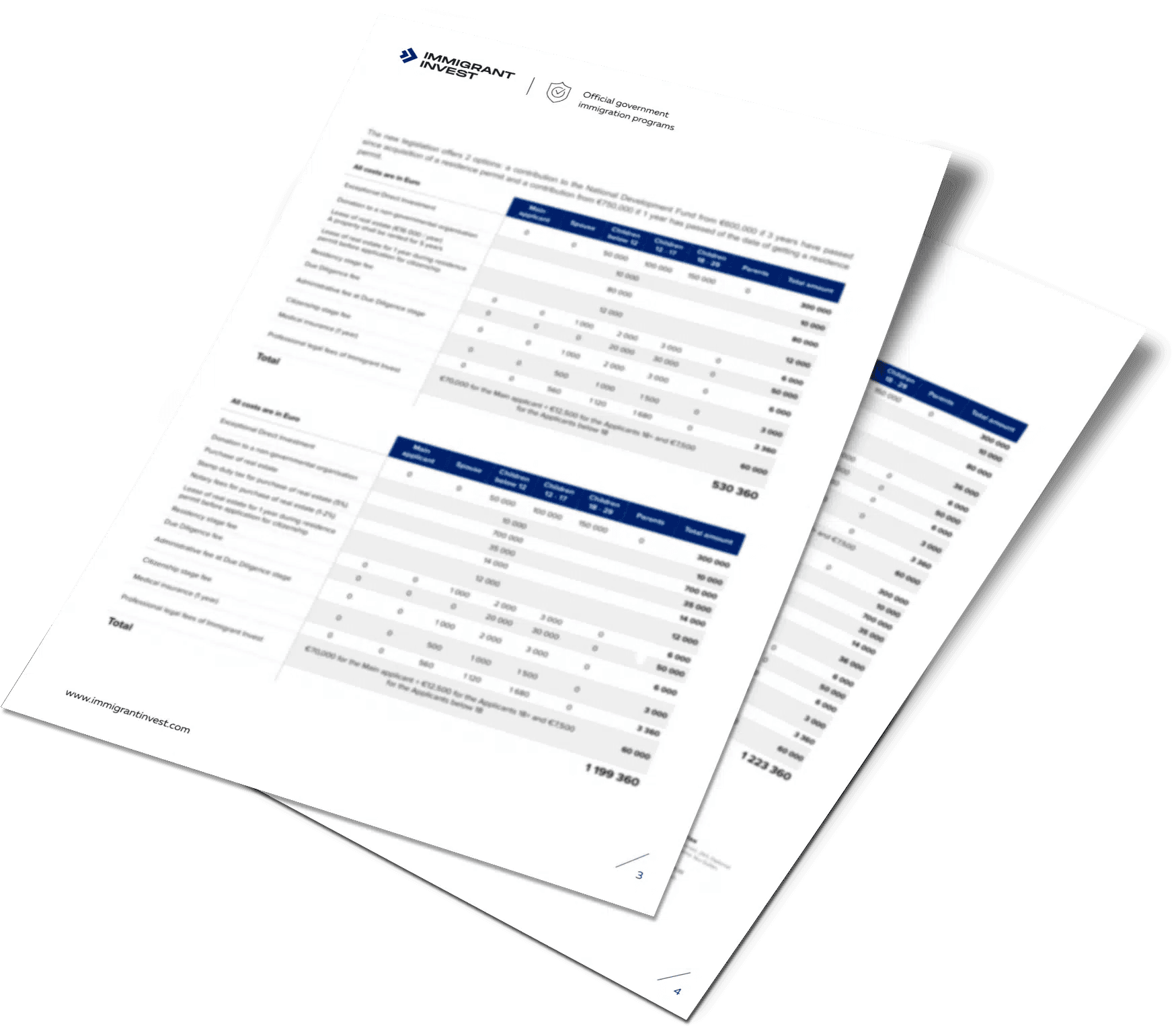
A cost breakdown for one applicant investing €500,000 into a Golden Visa fund looks like this:
- fund units: €500,000;
- subscription fee of 0—7.5%: €0—37,500;
- government and insurance fees: ≈ €7,000.
The minimum amount that must be available ranges from €507,000 to €544,500, not accounting for exchange rate fluctuations.
Choosing the payment route
There are two main ways Roth IRA savings are used for a Portugal Golden Visa[9].
Route 1 — withdraw and invest personally. This is the most common route and follows a straightforward process:
- Sell assets inside the Roth IRA if needed.
- Withdraw the cash.
- Convert it to euros.
- Invest in the fund as a private individual.
Route 2 — invest through a self-directed retirement structure. This is less common and more complex. A self-directed custodian must handle the process, including signing documents and transferring funds to Portugal. That’s why this route involves more steps and stricter rules.
Albert Ioffe,
Legal and Compliance Officer, certified CAMS specialist
The easiest approach is to invest personally and use the Roth IRA only to raise the cash.
Personal subscriptions fit the standard Golden Visa workflow: withdraw, convert to euros, subscribe, and the provider paperwork stays familiar. Using a retirement-account structure is a niche option because it relies on a self-directed custodian that can sign and transfer into a Portuguese fund under strict plan rules, which usually adds extra steps and delays.
Comparing Roth IRA and 401(k) as funding sources
A 401(k) is a US retirement plan offered by employers. Money is added through payroll, often with employer matching, and the plan controls when and how funds can be taken out[10]. A Roth IRA, on the other hand, is a personal retirement account with more flexibility and direct control.
For a Portugal Golden Visa, both accounts can be used to raise the needed funds. The better option often depends on two things: how much US tax the withdrawal will trigger and how predictable that tax outcome is.
Roth IRA. Withdrawals are taken in order — contributions first, then converted amounts, then earnings. It's often the better choice when the cash can come mostly from contributions or older conversions, without triggering tax or penalties.
A 401(k). The result depends mainly on what type of 401(k) it is:
- Traditional 401(k): the withdrawal is generally taxed as income in the year it is received.
- Roth 401(k): the withdrawal can be tax-free only if it meets qualified distribution rules; otherwise, part of it may be taxable.
One more practical difference: 401(k) withdrawals often include automatic tax withholding, so the amount received may be lower than expected unless planned for.
In general, a 401(k) can be a better option when most retirement savings are held there and the investor is prepared for possible tax cost or qualifies for tax-free Roth 401(k) withdrawals.
Roth IRA vs. 401(k) for funding the Portugal Golden Visa
Step-by-step: using a Roth IRA to invest in a Portugal Golden Visa fund
Using Roth IRA savings to finance a Portugal Golden Visa investment requires careful structuring and precise documentation.
Based on Immigrant Invest’s experience, the full process takes at least 12 months. However, there is now a significant backlog of pending applications at AIMA, the agency that processes Golden Visa cases. As a result, the final stage alone can take 18—24 months, and the entire timeline from start to residence permit may now stretch to around 2 years.
The step-by-step procedure below outlines each stage of the process, with a specific focus on how Roth IRA funds can be lawfully and transparently used to invest in an eligible Portugal Golden Visa fund.
1 day
Preliminary Due Diligence
It helps reduce the risk of refusal to around 1%. Immigrant Invest’s certified Anti-Money Laundering officers conduct the check.
Immigrant Invest signs an agreement only after the check is passed and both lawyers and the investor understand the chances and risks.
It helps reduce the risk of refusal to around 1%. Immigrant Invest’s certified Anti-Money Laundering officers conduct the check.
Immigrant Invest signs an agreement only after the check is passed and both lawyers and the investor understand the chances and risks.
1—3 days
Roth IRA strategy and withdrawal planning
A clear funding route is selected and documented before any Portugal steps start.
Route 1 — most common: withdraw Roth IRA funds personally, then invest as a private individual.
Route 2 — less common: invest via a self-directed retirement structure, where a custodian executes the investment.
Lawyers align the plan with the Golden Visa source-of-funds narrative and confirm what evidence must be produced — IRA statements, transaction history, conversion and withdrawal records.
A clear funding route is selected and documented before any Portugal steps start.
Route 1 — most common: withdraw Roth IRA funds personally, then invest as a private individual.
Route 2 — less common: invest via a self-directed retirement structure, where a custodian executes the investment.
Lawyers align the plan with the Golden Visa source-of-funds narrative and confirm what evidence must be produced — IRA statements, transaction history, conversion and withdrawal records.
2+ weeks
Preparation of documents
Immigrant Invest lawyers prepare a personalised list of documents required for the Portugal residence permit application. They also complete government forms and assist with translation and notarisation.
Roth IRA evidence is added to the pack where relevant: account statements, trade confirmations if assets are sold, withdrawal confirmations, and bank transfer records.
Immigrant Invest lawyers prepare a personalised list of documents required for the Portugal residence permit application. They also complete government forms and assist with translation and notarisation.
Roth IRA evidence is added to the pack where relevant: account statements, trade confirmations if assets are sold, withdrawal confirmations, and bank transfer records.
1—2 weeks
Obtainment of a Portuguese tax number
Applicants receive the Portuguese tax number, Número de Identificação Fiscal, NIF, which is essential for opening a bank account, signing contracts, and making investments in Portugal.
Applicants receive the Portuguese tax number, Número de Identificação Fiscal, NIF, which is essential for opening a bank account, signing contracts, and making investments in Portugal.
1—1.5 months
Opening of an account in a Portuguese bank
All Golden Visa investments must be made through a Portuguese bank account. Immigrant Invest assists with opening and activating the account. Once it is ready, the applicant transfers the necessary investment funds.
All Golden Visa investments must be made through a Portuguese bank account. Immigrant Invest assists with opening and activating the account. Once it is ready, the applicant transfers the necessary investment funds.
1+ month
Roth IRA liquidation and cash release
This step depends on the chosen route and the assets held inside the Roth IRA.
Route 1: sell assets inside the Roth IRA if needed, then withdraw cash to the personal bank account, then transfer to the Portuguese bank account.
Route 2: instruct the self-directed custodian to execute the investment and transfer funds directly in line with the custodian’s process and permitted counterparties.
Lawyers collect documents that show a clean trail: sale → cash balance → distribution and transfer → Portuguese bank receipt.
This step depends on the chosen route and the assets held inside the Roth IRA.
Route 1: sell assets inside the Roth IRA if needed, then withdraw cash to the personal bank account, then transfer to the Portuguese bank account.
Route 2: instruct the self-directed custodian to execute the investment and transfer funds directly in line with the custodian’s process and permitted counterparties.
Lawyers collect documents that show a clean trail: sale → cash balance → distribution and transfer → Portuguese bank receipt.
1 week to 1.5 months
Investment in an eligible Golden Visa fund
Lawyers collect supporting documents to confirm the investment, typically including the subscription agreement, proof of transfer, and fund confirmation.
Lawyers collect supporting documents to confirm the investment, typically including the subscription agreement, proof of transfer, and fund confirmation.
5—6 months
Application submission to AIMA
Electronic copies of the full application are submitted to the Agency for Integration, Migration and Asylum, AIMA, for review.
Electronic copies of the full application are submitted to the Agency for Integration, Migration and Asylum, AIMA, for review.
1—2 weeks
Submission of biometrics
The investor and family travel to Portugal to submit original documents and provide fingerprints. Appointments are scheduled in advance via the online system.
The investor and family travel to Portugal to submit original documents and provide fingerprints. Appointments are scheduled in advance via the online system.
18—24 months
Approval and acquisition of residence permit cards
AIMA processes the application after the biometric appointment. Once approved, the investor pays the government fee. Residence cards are then issued and can be collected either in person or by a lawyer with power of attorney.
AIMA processes the application after the biometric appointment. Once approved, the investor pays the government fee. Residence cards are then issued and can be collected either in person or by a lawyer with power of attorney.
Other Portugal residency routes where Roth IRA income is relevant
A Roth IRA is not used only for Golden Visa funding. It can also support non-investment residence routes, where the focus shifts from capital investment to income, financial stability, and self-sufficiency.
Roth IRA to support a D7 application
The D7 visa is Portugal’s residence route for financially independent applicants. It is most common among retirees and others who live on passive income and do not plan to work in Portugal. The emphasis is on steady, predictable income — dividends, royalties, interest, pension income, or rental proceeds.
D7 applicants need to meet the following baseline conditions:
- show monthly income of €920;
- prove a minimum balance of €11,040;
- rent or purchase housing in Portugal.
How a Roth IRA fits. Regular Roth IRA withdrawals can be presented as part of the income stream used to support the application. What matters most is that the funds are real, accessible, and consistent. Periodic withdrawals read more naturally as income than a single large lump-sum transfer.

Trusted by 5000+ investors
Will you obtain the Portugal Passive Income D7 Visa?
Roth IRA for digital nomads
Portugal’s Digital Nomad D8 Visa is designed for people who work remotely for income sourced outside Portugal and receive active earnings such as salary or self-employment income. This route suits employees working remotely for non-Portuguese companies, freelancers, and individual entrepreneurs whose business income comes from abroad.
The core requirements of the Digital Nomad Visa are to:
- show monthly income of €3,680;
- prove a minimum balance of €11,040;
- rent or purchase housing in Portugal.
How a Roth IRA fits. A Roth IRA cannot replace employment income for this visa and should not be positioned as the main qualifying source. Its role is supportive — it can strengthen the overall financial profile and help cover relocation costs and the first months of living expenses in Portugal.

Roth IRA for highly-qualified professionals
The Portugal D3 Global Talent route is a residency pathway for highly qualified professionals and experienced specialists. It tends to suit entrepreneurs, executives and senior managers, researchers, and experts in fields such as engineering, finance, and creative industries, and retired professionals who can demonstrate a strong record of expertise, leadership, or mentorship.
In general terms, eligibility is built around three points:
- bachelor’s degree or higher;
- 3—5 years of relevant professional experience;
- program fee of €170,000.
How a Roth IRA fits. It can help demonstrate that the applicant has accessible funds to support relocation, cover program and settlement costs, and maintain stability during the transition period.

Trusted by 5000+ investors
Will you obtain the Portugal Global Talent Program?
How Portugal taxes Roth IRA withdrawals
Once a person becomes a Portuguese tax resident, Portugal taxes worldwide income. Tax residency usually starts if either condition is met in a calendar year: more than 183 days in Portugal, or having a home in Portugal that is kept and used as a habitual residence, even with fewer days[11].
Portugal doesn’t have a special tax rule for US Roth IRAs. Instead, it looks at what kind of income the withdrawal seems to be, not the account label.
Roth IRA income classification in Portugal
A clear way to understand how Portugal treats Roth IRA withdrawals is to split them into two parts:
- Return of capital. This includes the original contributions. Portugal may treat this as a return of the investor’s own funds, but not always. The Portuguese Tax Authority reviews each case individually, so exemption from tax is not guaranteed.
- Investment growth. This includes earnings and gains. Portugal may treat this part as taxable income, depending on how the withdrawal is reported and documented.
In short, Portugal doesn’t recognise the Roth IRA’s tax-free label from the US. So even if a withdrawal is tax-free in the US, it might still be taxed in Portugal.
Portugal income tax rates
For the taxable Roth IRA portion, tax rates that may apply:
- flat 28%, used for capital and investment-type income[12];
- progressive rates 12.5—48%, used for income treated as pension-like or regular earnings[13].
Portugal’s progressive IRS tax rates are often shown like this:
- up to €8,059: 12.5%;
- €8,059—12,160: 16%;
- €12,160—17,233: 21.5%;
- €17,233—22,306: 25%;
- €22,306—28,400: 26.5%;
- €28,400—41,629: 28.5%;
- €41,629—44,987: 35%;
- €44,987—83,696: 37%;
- above €83,696: 45%;
- top band: 48% applies at higher taxable income levels.
What often influences the classification in practice is the form of the payment and the supporting documents, for example whether it looks like a regular retirement-style stream or a one-off capital event.
US vs. Portugal Roth IRA taxation
Special tax regime in Portugal
The IFICI Portugal regime, also known as NHR 2.0, is the new tax framework that replaced the old NHR. It is built to attract highly qualified professionals, suiting Americans who plan to relocate to Portugal for work in high-skill fields rather than passive living.
The IFICI key benefits are:
- 20% flat tax rate on qualifying income;
- 10-year validity period[14].
Only specific professional categories are admitted, including university professors and researchers, medical specialists, professionals in physical sciences, mathematics, and engineering, ICT and technology specialists, as well as senior executives and company directors of eligible companies, such as startups or recognised investment projects.
To qualify, an applicant must meet the baseline requirements:
- become a Portuguese tax resident after January 1st, 2024;
- not have been a Portuguese tax resident in the previous 5 years;
- not have previously benefited from NHR or another special tax regime[15].
Albert Ioffe,
Legal and Compliance Officer, certified CAMS specialist
The US and Portugal have a double tax treaty that helps prevent the same income from being taxed twice. It does this by dividing taxing rights and allowing relief, like foreign tax credits, when both countries tax the same income.
However, with Roth IRA withdrawals, the treaty doesn’t clearly say they’re tax-exempt in Portugal. Since Portugal may treat Roth withdrawals differently — based on how they classify the payment — a withdrawal can be tax-free in the US but still taxed in Portugal, depending on the situation.
Examples with Portugal tax rates
Below are four illustrative Roth‑withdrawal examples linked to the main Portugal routes. They show how Roth IRA withdrawals may be treated after a person becomes a Portuguese tax resident and is subject to Portuguese taxation. If the withdrawal is made before moving to Portugal, these examples do not apply.
The 20% rate is relevant only under the special regime for highly qualified residents. The 28% rate applies if Portugal treats the taxable portion as capital or investment income. The 12.5—48% apply if Portugal treats Roth IRA withdrawals as pension-type income and taxes it progressively, using the bracket rate minus the bracket’s deduction.
Possible Portugal tax outcomes for Roth IRA withdrawals
Practical ways to use a Roth IRA for Portugal plans
Americans moving to Portugal have several flexible ways to use their Roth IRA. It can be left untouched in the US, used alongside other retirement accounts, tapped gradually to support daily living, or withdrawn in stages to fund a Golden Visa investment.
Leave the Roth IRA invested in the US
For some Americans, the easiest option is to leave the Roth IRA invested in the US and avoid withdrawals. This keeps the account growing under US rules while Portugal plans take shape.
Investing €500,000 in a Golden Visa fund and keeping €500,000 in a US Roth IRA can both make sense, but they serve different goals. One secures a Portugal residence route with a fixed holding period, while the other remains a flexible US‑based investment.
Money kept in Portugal Golden Visa fund vs. in US Roth IRA
Combine Roth IRA with other retirement and taxable accounts
A Roth IRA works best as part of a wider funding mix. Many investors combine:
- taxable brokerage cash for upfront costs and flexibility;
- employer retirement plans for long-term savings;
- Roth IRA for planned, tax-efficient withdrawals.
Using multiple sources spreads the cost and makes it easier to cover Portugal-related expenses at the right time.
Use Roth IRA distributions as income while living in Portugal
For Americans settling in Portugal, Roth withdrawals can help cover living expenses. But timing matters:
- Before the move. Taking money out before becoming a Portuguese tax resident avoids local tax, but stops the tax-free growth on withdrawn funds.
- After the move. Keeping the Roth invested and withdrawing gradually allows the account to keep growing. But Portugal may tax the withdrawals, depending on how they’re classified.
Use partial Roth withdrawals to fund a Portugal investment
If Americans invest in the Portugal Golden Visa funds, the subscription is usually paid as one amount.
Roth IRA flexibility lies in the US side. Investors can prepare in advance by selling assets slowly, keeping a cash reserve, and taking out smaller withdrawals for fees and setup costs. This way, the full investment amount is ready on time without a last-minute sale or one big withdrawal.

Trusted by 5000+ investors
Practical guide to the Portugal Golden Visa and its funds
Roth IRA risks, compliance, and professional help
Using a Roth IRA to fund a Portugal Golden Visa is usually possible, but both the US and Portuguese sides come with important tax and reporting rules. Understanding how to manage these risks can save time, avoid penalties, and ensure the investment is accepted.
Key US-side risks
On the US side, the main risks relate to tax penalties, reporting errors, and account structure:
- Early-withdrawal penalty. If converted amounts are withdrawn before age 59½ or before they’ve been held for 5 tax years, a 10% penalty may apply.
- Incorrect ordering. Roth IRA withdrawals are processed in a set order: contributions, then conversions, then earnings. Mistakes in this order can lead to unexpected tax or penalties.
- Prohibited transactions. Self-directed Roth IRAs must follow IRS rules. Deals with disqualified persons or other violations can result in losing the account’s tax-free status.
- Unsupported custodians. Not all IRA providers allow international transfers or fund subscriptions, which can block or delay the investment.
- Incorrect US tax reporting. Withdrawals and conversions must be properly recorded on IRS forms, including Form 8606. Missing or wrong data can lead to audits or penalties.
Key Portugal-side tax risks
In Portugal, the focus is on clear money trails, proper timing, and documentation that satisfies banks and immigration authorities:
- Weak source-of-funds documentation. Portugal expects a full and traceable flow: Roth account → US withdrawal → Portuguese bank → fund subscription. Missing pieces can cause delays.
- Bank execution problems. Roth IRA funds must pass through a Portuguese bank, and extra documents may be required to explain the US retirement origin.
- Tax timing mismatch. If the investor becomes a Portuguese tax resident before withdrawing funds, part of the withdrawal may be taxed. Timing the move and the transfer matters.
- Investment non-compliance. If the fund or paperwork doesn’t clearly meet Golden Visa rules, or if the investment is not properly maintained, the permit can be rejected or revoked.
Immigrant Invest helps clients manage Roth IRA-based Golden Visa applications by handling all the complex parts — from early Due Diligence to full process coordination. Our legal team prepares clear, audit-ready documentation for banks and Portuguese authorities, reducing delays and ensuring that the Roth IRA route is accepted without issues.
Key points: how Roth IRA works in Portugal
- A Roth IRA is a US retirement account funded with already taxed income, designed for tax-free growth and potentially tax-free withdrawals.
- A Roth IRA can be tax-free in both the US and Portugal.
- US tax is avoided when the withdrawal is qualified: age 59½ or older and the Roth is at least 5 tax years old.
- Portuguese tax is avoided when the withdrawal happens before Portuguese tax residency begins.
- Roth IRA funds can support Portugal plans: Golden Visa, D7, D8, and D3 residence routes.
- The US—Portugal double tax treaty exists and helps reduce double taxation, but it does not clearly exempt Roth IRA withdrawals, so Portuguese classification still matters.
Immigrant Invest is a licensed agent for citizenship and residence by investment programs in the EU, the Caribbean, Asia, and the Middle East. Take advantage of our global 15-year expertise — schedule a meeting with our investment programs experts.
40+ options in different countries by 25 criteria

Sources
- Source: The Portugal News — Number of Americans living in Portugal jumps 36%
- Source: Internal Revenue Service — Roth IRAs
- Source: Internal Revenue Service — IRA limits
- Source: Internal Revenue Service — Determining Reduced Roth IRA Contribution Limit
- Source: Internal Revenue Service — Amounts Relating to Retirement Plans and IRAs
- Source: Internal Revenue Service — Topic no. 309, Roth IRA contributions
- Source: Internal Revenue Service — Publication 590-A and the Form 8606 instructions
- Source: Internal Revenue Service — Publication 590-B: Distributions from Individual Retirement Arrangements
- Source: Internal Revenue Service — Retirement topics: prohibited transactions
- Source: Internal Revenue Service — 401(k) plan overview
- Source: PwC — Portugal Tax Residence
- Source: PwC — Portugal income determination
- Source: PwC — Taxes on personal income in Portugal
- Source: NHR 2.0: Portugal's tax incentive, Idealista
- Source: IFICI Regulation, Government Order No. 352/2024/1