
Summary
Malta has become a sought-after destination for retirees worldwide, offering favourable tax treatment of foreign pension income and visa-free travel within the Schengen Area. Retirees are also drawn to Malta’s warm climate, laid-back lifestyle, and high-quality healthcare.
To access the special tax regime and other benefits, retirees obtain residency through the Malta Retirement Programme.
What is the Malta Retirement Programme?
The Malta Retirement Programme, MRP, offers a special tax status to retirees who take up residency in Malta. The program is designed for individuals whose primary source of income is a pension. It is open to all nationalities, excluding Maltese citizens.
Pension requirement
Applicants must receive a pension that makes up at least 75% of their chargeable income and is fully remitted to Malta. This pension may come from past employment, annuities, retirement schemes, or insurance policies. Lump-sum pension payments do not qualify.
Applicants must also purchase or rent a property in Malta to serve as their primary residence. Minimum property value and rental cost requirements vary by location.
Taxation rules
Qualified retirees pay a flat tax rate of 15% on foreign-sourced income remitted to Malta. The main applicant must pay a minimum annual tax of €7,500, plus €500 for each dependent.
Stay requirement
MRP participants must spend at least 90 days per year in Malta and must not spend more than 183 days in any other jurisdiction within a calendar year. They cannot work in Malta but may hold non-executive board positions in Maltese companies and engage in philanthropic, educational, or research and development activities.
Are you a perfect fit for the Malta Retirement Programme?
Discover your eligibility with our simple quiz!
3 key benefits of the Malta Retirement Programme
1. Travel and mobility
Malta residence permit holders can travel visa-free to Schengen countries for up to 90 days within any 180-day period.
2. Process simplicity
The MRP grants both tax residency and a residence permit, streamlining the application process, which takes between 2 and 4 months.
In other countries, retirees must obtain a visa before applying for a residence permit, leading to longer processing times. For example, in Portugal, obtaining residency for retirees takes at least 6 months.
3. Affordable cost of living
Participants of the Malta Retirement Programme can enjoy lower prices for housing, groceries, and basic services compared to most European countries.
In Malta, a family of four is estimated to spend around €2,800 per month on average to cover all their needs. To maintain the same standard of living, they would need to spend approximately €3,400 per month in Germany and France or nearly €4,000 in the United States.
US citizens can use 401(k)-based income to qualify for the Malta Retirement Programme and draw on their savings for daily expenses.

Favorable tax regime for Malta Retirement Programme participants
The Malta Retirement Programme offers a favourable tax regime designed to attract retirees.
Income tax
Participants pay a flat 15% tax on foreign pension income remitted to Malta. The minimum tax is €7,500 for the main applicant, plus €500 for each dependent.
Worldwide income not remitted to Malta is tax-free; however, under programme rules, it cannot exceed 25% of total chargeable income.
Income generated in Malta, including capital gains, is taxed at a higher rate of 35%.
Double tax relief
Malta has tax treaties with over 70 countries, including the US, UK, Canada, and Australia, ensuring residents do not pay tax on the same income twice.
Real estate tax
Property buyers, including MRP applicants, must pay a 5% stamp duty on purchases. For Maltese and EU residents who have lived in Malta for more than five years, the rate is reduced to 3.5% on the first €150,000.
Malta has no annual property tax. Rental income from residential property is taxed at a flat 15% rate. However, real estate purchased or rented under the MRP cannot be let or sublet.
The tax rate on real estate sales is 0%, 5%, or 8%, depending on how long the property was owned and whether it was a primary or secondary residence.
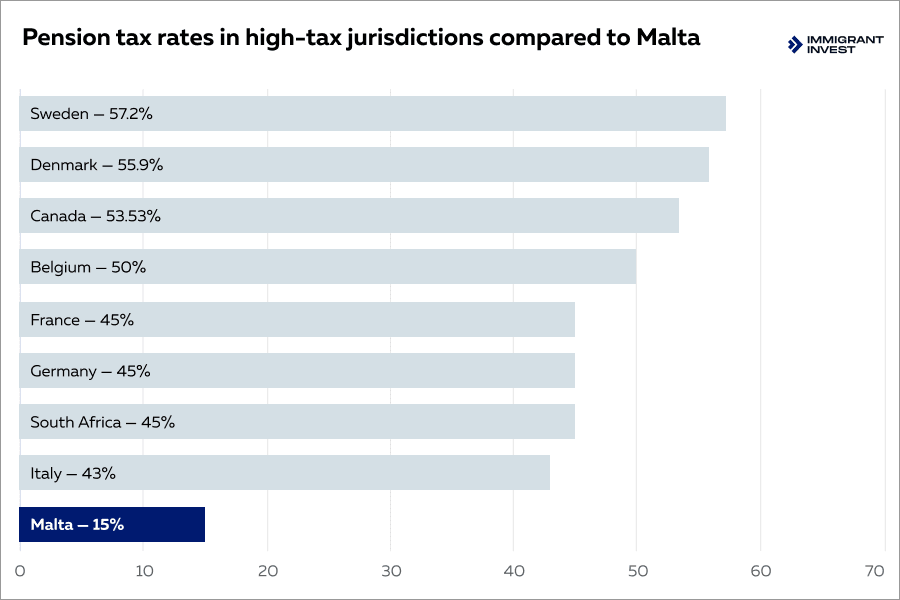
Requirements for Malta Retirement Programme applicants
Eligibility
The main applicant must:
- receive a pension that constitutes at least 75% of their chargeable income;
- not be employed in Malta, except for non-executive positions on company boards;
- own or rent property in Malta;
- have health insurance covering all risks across the EU;
- not be domiciled in Malta and must not intend to establish domicile within five years of applying;
- be able to communicate adequately in one of Malta’s official languages, English or Maltese;
- be a fit and proper person.
MRP participants can include family members in their application, such as a spouse, minor or dependent children, and household staff. To qualify as household staff, an individual must have been employed for at least two years and be required to provide necessary services in the applicant’s residence.

Anna Semenyuk,
Citizenship by Investment Programs Advisor
The Malta Retirement Programme does not set a minimum pension requirement, but in practice, it is most beneficial for those with pensions above €50,000 per year. That is when the 15% flat tax starts offering real advantages over progressive tax systems in other countries.
Retirees with pensions between €80,000 and €200,000 get the biggest tax benefits under the MRP. For those earning less than €50,000, the mandatory €7,500 annual tax can outweigh the savings.
Documents
The list of documents required to submit along with the MRP application typically includes the following:
- copies of the passport;
- passport-size photographs;
- a birth certificate;
- a marriage certificate, if applicable;
- a police clearance certificate;
- a medical certificate;
- proof of pension;
- proof of health insurance;
- a statement of the source of funds;
- a bank reference letter;
- proof of property ownership or rental in Malta.
Costs
The Malta Retirement Programme includes several key financial commitments: application fee — a non-refundable administrative fee required upon submission of the application; minimum annual tax — a flat tax of 15% on pension income remitted to Malta; and property investment — a requirement to purchase or rent residential real estate in Malta.
Minimum expenses for the Malta Retirement Programme
How to obtain residency through the Malta Retirement Programme: a step-by-step guide
According to Immigrant Invest lawyers, the process of obtaining Maltese residency as a retiree typically takes around four months.
1 day
Preliminary Due Diligence
Immigrant Invest lawyers conduct an initial background check using international databases before beginning document preparation for the MRP. This procedure is mandatory and confidential. At this stage, the applicant only needs to provide a passport.
Immigrant Invest lawyers conduct an initial background check using international databases before beginning document preparation for the MRP. This procedure is mandatory and confidential. At this stage, the applicant only needs to provide a passport.
2 weeks
Document preparation
The applicant receives a comprehensive list of required documents. Immigrant Invest lawyers translate the documents, notarise copies, and complete government forms.
The applicant receives a comprehensive list of required documents. Immigrant Invest lawyers translate the documents, notarise copies, and complete government forms.
1 day
Application submission
The completed application and supporting documents are submitted to the International & Corporate Tax Unit. At this stage, a non-refundable application fee of €2,500 must be paid.
The completed application and supporting documents are submitted to the International & Corporate Tax Unit. At this stage, a non-refundable application fee of €2,500 must be paid.
3 months
Application review
The Commissioner for Revenue reviews the application and may request an interview or additional documentation. Upon approval, the Commissioner sends Immigrant Invest a Letter of Intent confirming the applicant’s special tax status and a Notice of Primary Residence.
The Commissioner for Revenue reviews the application and may request an interview or additional documentation. Upon approval, the Commissioner sends Immigrant Invest a Letter of Intent confirming the applicant’s special tax status and a Notice of Primary Residence.
Within 12 months
Fulfilling requirements
The retiree must either purchase or rent real estate and obtain health insurance coverage. They must also register for tax purposes to benefit from the 15% flat tax rate on pension income and fulfill tax payment obligations.
Once all required proofs and the signed Notice of Primary Residence are submitted, the Commissioner for Revenue issues the Letter of Confirmation.
The retiree must either purchase or rent real estate and obtain health insurance coverage. They must also register for tax purposes to benefit from the 15% flat tax rate on pension income and fulfill tax payment obligations.
Once all required proofs and the signed Notice of Primary Residence are submitted, the Commissioner for Revenue issues the Letter of Confirmation.
1 week
Receiving a residence permit
The applicant must visit Malta to submit biometric data and receive their residence permit card.
The applicant must visit Malta to submit biometric data and receive their residence permit card.
After 1 year
Residence permit renewal
The Malta Retirement Programme residence permit is valid for an initial one-year period. It can be renewed for two years an indefinite number of times as long as the beneficiary continues to meet the programme requirements.
The Malta Retirement Programme residence permit is valid for an initial one-year period. It can be renewed for two years an indefinite number of times as long as the beneficiary continues to meet the programme requirements.
Obtaining permanent residency or citizenship after the Malta Retirement Programme
Naturalisation
After maintaining residence status for five years, retirees might start meeting the requirements for naturalisation. To qualify under the general rules, they must have spent the 12 months before applying for citizenship in Malta without interruption and have lived there for at least four out of the six years before that. In total, five years of qualifying residency are needed.
Alternative routes
Foreigners seeking a faster route to permanent residency or citizenship have alternative options.
The Malta Permanent Residence Programme allows foreigners to obtain permanent residency by investment. Applicants must rent a property for at least €14,000 per year for five years or purchase one for a minimum of €375,000. They must also:
- pay an administrative fee of €60,000;
- pay a contribution fee of €37,000;
- make a donation of €2,000;
- demonstrate assets of at least €500,000.
Malta citizenship by naturalisation for exceptional services by direct investment is another option. It allows foreigners to first obtain a residence permit and then apply for citizenship after one or three years. Applicants must meet several mandatory conditions, including:
- contribute at least €600,000 to the state fund;
- purchase real estate for at least €700,000 or rent a property for €16,000 per year for at least five years;
- make a charitable donation of €10,000.
The opportunity to obtain Malta citizenship by naturalisation for exceptional services has been cancelled. Applicants with genuine ties to the country, whose professional, economic, or social contribution serves Malta’s national interest, can obtain Malta citizenship by merit.
Interested in Maltese residency?
Don’t wait, book your online meeting now for expert guidance.

Head of the Maltese office, MBA

Retiring in Malta as an American or British citizen
Retiring as a US citizen
As a visa-exempt country, the US allows its citizens to stay in Malta for up to 90 days within any 180-day period without a visa. For longer stays, they need to apply for a residence permit.
American retirees became eligible for the Malta Retirement Programme following changes in 2020. It is an attractive option for those looking to leave political polarisation behind and optimise their taxes.
US retirees must still file US taxes, but under the US-Malta Double Taxation Agreement, they can claim tax credits.
Retiring as a UK citizen
Malta is a popular retirement destination for UK citizens due to the shared language, strong historical ties, warm climate, and excellent healthcare.
UK retirees can access Malta’s public healthcare if they receive a UK state pension and obtain an S1 form from the NHS.
The UK-Malta Double Taxation Agreement ensures that UK retirees do not pay tax on the same income in both countries.
Trusted by 5000+ investors
Thinking of moving from the UK? Discover your options
Cost of living in Malta for retirees
By European standards, Malta is relatively affordable. A family of four typically spends around €2,800 per month, excluding rent.
The cost of living varies based on lifestyle choices and location within Malta. Living costs are higher in the capital and tourist areas and lower in regions like Gozo and southern Malta.
Average expenses in Malta compared to the USA and the UK
Healthcare system in Malta
The Maltese healthcare system ranks 18th out of 196 countries globally and 10th in Europe in the Health Care Index 2024. It provides high-quality medical care through both public and private facilities.
Public healthcare
Modelled after the British NHS, Malta’s public healthcare system is funded through social security contributions and taxes.
It provides free or low-cost healthcare to all Maltese residents, covering GP visits, hospital care, prescriptions for certain conditions, and specialist services.
Retirees from the EU, EEA, and Switzerland can apply for an S1 form in their home country before moving to Malta to access public healthcare.
Private healthcare
The private sector complements the public system by offering faster appointments and a wider range of specialized services. It is also more affordable than in most EU countries, and most doctors speak fluent English.
Private healthcare accounts for approximately 70% of primary care visits and is funded through private insurance or out-of-pocket payments.
Health insurance requirements
Malta Retirement Programme applicants must obtain comprehensive health insurance covering themselves and their dependents for all risks typically covered for Maltese nationals throughout the European Union.
Annual health insurance costs start at approximately €400 for an individual and €1,600 for a family of four. The exact cost depends on factors such as age, gender, and the chosen level of coverage.
Best places to live in Malta for retirees
Valletta
Valletta, Malta’s capital, is ideal for retirees who appreciate history and culture. As a UNESCO World Heritage Site, it boasts stunning architecture, museums, and cultural events. Despite its small size, Valletta is charming and walkable, with cosy cafés, theatres, and local markets.
Retirees here have access to excellent healthcare, with major hospitals nearby, including Mater Dei Hospital, Malta’s largest public facility.
Sliema
Sliema provides a modern and convenient lifestyle. Situated on the northeastern coast, it features stunning sea views, a waterfront promenade, and a variety of restaurants, shops, and entertainment options.
Retirees who enjoy an active lifestyle will appreciate its accessibility, with excellent public transport and ferry connections to Valletta. Healthcare is easily accessible, with top private clinics and hospitals nearby.
Mellieha
Mellieha is perfect for retirees seeking a peaceful, scenic environment. Located in northern Malta, it is known for its relaxed atmosphere, breathtaking coastal views, and some of the island’s best sandy beaches.
Although farther from bustling towns, it provides all essential amenities, including supermarkets, restaurants, and healthcare. The cost of living is lower than in Sliema or Valletta, making it an attractive choice for those seeking tranquillity.
Gozo
Gozo, Malta’s smaller island, is a haven for retirees seeking a relaxed, nature-focused lifestyle. Life on the island is slower-paced, ideal for those who enjoy rural living and outdoor activities like hiking and swimming.
Property prices are lower than on the main island, and healthcare, including Gozo General Hospital, is easily accessible.
Marsaxlokk
Marsaxlokk, a charming fishing village in southern Malta, is known for its picturesque harbour and fresh seafood restaurants. Retirees looking for an authentic Maltese experience will appreciate its quiet, traditional atmosphere, away from the busy tourist hubs.
Although small, it is well-connected to larger cities like Valletta, ensuring easy access to healthcare and other services. With a lower cost of living than central Malta, Marsaxlokk is an excellent choice for retirees seeking a laid-back, affordable seaside retirement.
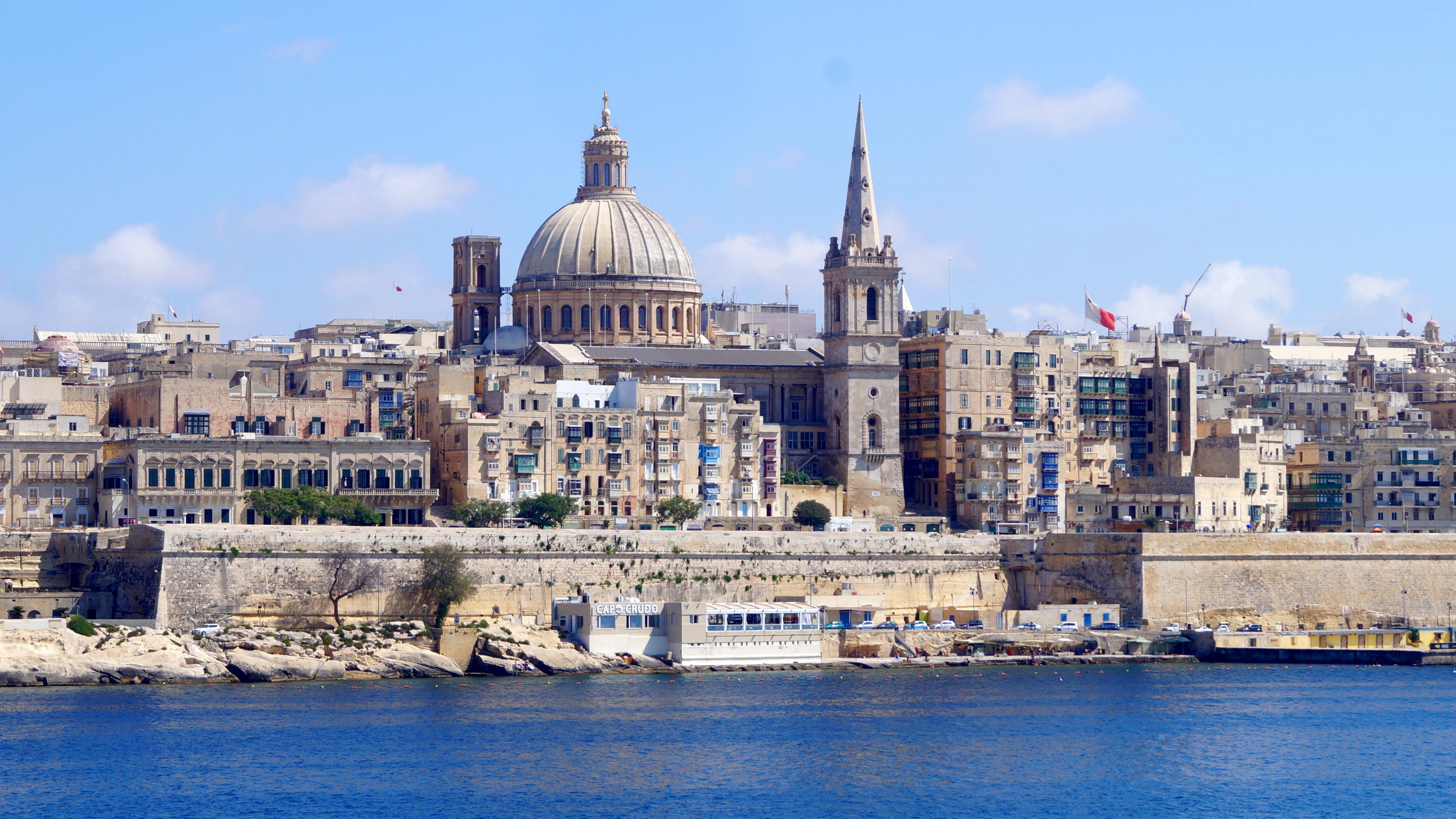
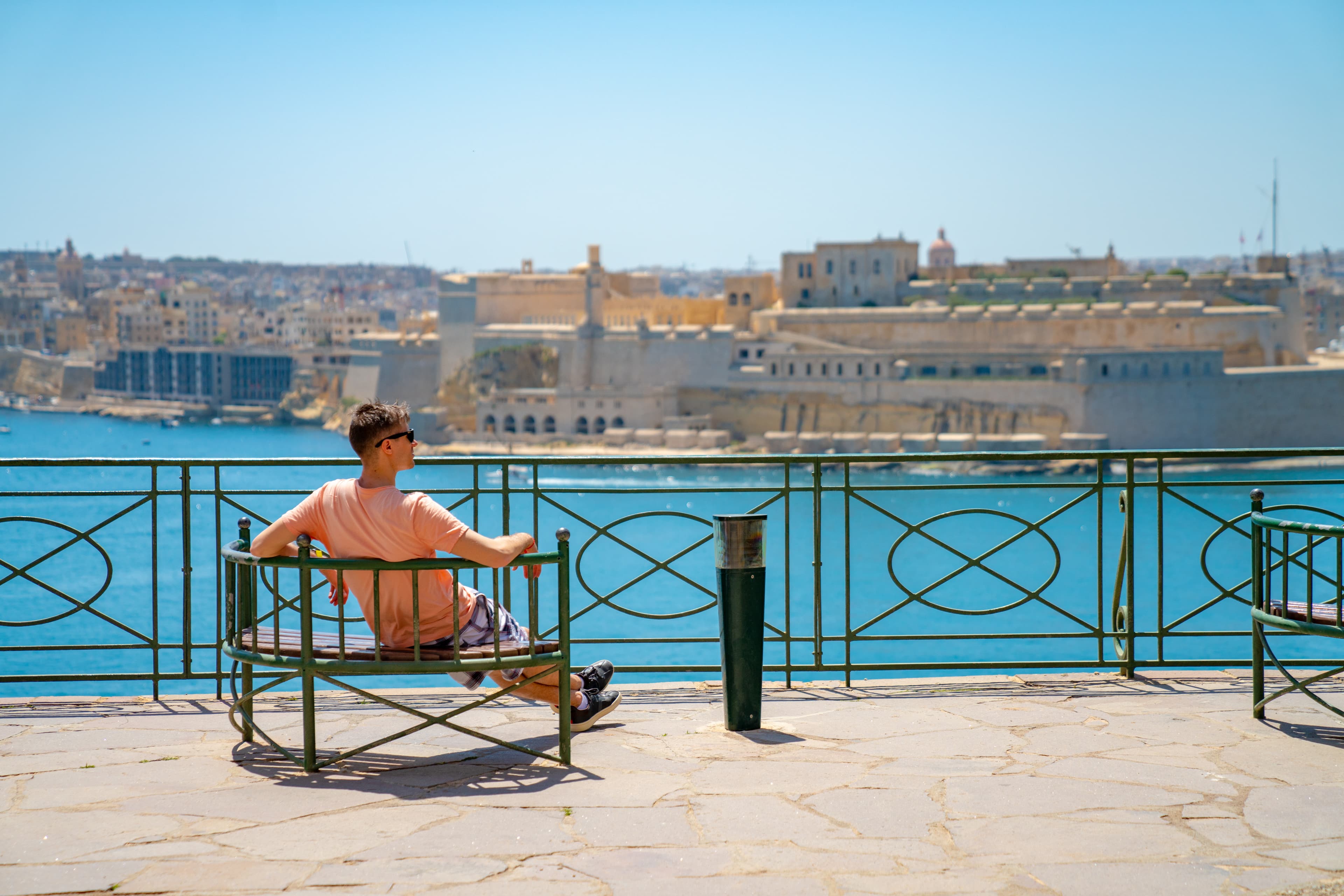
Malta’s capital Valletta is just a five-minute ferry trip away from the town of Sliema which is popular among expats due to modern infrastructure and English-speaking services
5 reasons to move to Malta
1. Climate. Malta enjoys over 300 days of sunshine a year, with mild winters and warm summers. With crystal-clear waters, Malta boasts some of Europe’s best diving and swimming spots.
2. Ease of travel. Malta’s compact size makes getting around effortless. Most destinations are within 40 minutes by bus or 25 minutes by car from Valletta and Sliema.
3. History and culture. Malta is home to UNESCO World Heritage Sites like Valletta, Mdina, and the Ħal Saflieni Hypogeum, along with cultural festivals, traditional Maltese feasts, and a blend of European, Arabic, and British influences.
4. Safety. With one of Europe’s lowest crime rates, Malta is a secure and peaceful place to live. It also boasts a stable economy, a strong banking sector, and a reliable political system.
5. English-speaking community. Alongside Maltese, English is an official language, making it easy for expats to adapt. Road signs, official documents, and most services are in English.
Key points about moving to Malta as retirees
- The Malta Retirement Programme offers a residency option for retirees looking to settle in Malta.
- The MRP provides financial benefits, including a flat 15% tax rate on foreign pension income, with a minimum tax of €7,500 per year plus €500 per dependent.
- To qualify, applicants must receive a pension that makes up at least 75% of their chargeable income. While the programme has no minimum pension requirement, it is most beneficial for those earning over €50,000 per year.
- MRP participants must either purchase property in Malta for at least €220,000 or rent for a minimum of five years at €8,750 per year.
- With a Mediterranean climate, high-quality healthcare, and an English-speaking community, Malta provides a comfortable and enjoyable retirement destination.
Immigrant Invest is a licensed agent for citizenship and residence by investment programs in the EU, the Caribbean, Asia, and the Middle East. Take advantage of our global 15-year expertise — schedule a meeting with our investment programs experts.