
Summary
Golden Visas are often presented as investment vehicles, but for families, they function as long-term lifestyle frameworks. The programme chosen shapes children’s education, healthcare access, work and business rights, travel flexibility, and the route to future citizenship.
This guide compares the most family-oriented options and highlights where each country stands out.
How does a Golden Visa work for families?
A Golden Visa allows foreign investors obtain temporary or permanent residency in the host country in exchange for a significant investment in the economy. Common routes include:
- non-refundable donation;
- purchase of investment fund units;
- business investment;
- bank deposit.
Some countries allow the real estate pathway which serves as the most attractive option, allowing families to combine residency with the purchase of a home in the country where they plan to settle in future.
Golden Visa programmes extend residency rights to the investor’s immediate family. Dependants usually include a spouse or registered partner and dependent children under a set age. Some jurisdictions also allow financially dependent parents. Age limits and dependency criteria vary by country.
Residency rights
A Golden Visa confers legal residence, not nationality. Holders receive a residence permit valid for 2—10 years, renewable indefinitely as long as the investment is maintained. Hungary is an exception: the permit is valid for 10 years and renewable once for another 10.
A Golden Visa provides the following rights:
- legal residence for the main applicant and family members;
- free entry and exit during the permit validity;
- in most cases — the right to work and operate a business;
- access to resident services, such as healthcare and education.
Residency by investment does not automatically lead to citizenship and does not confer preferential treatment in a naturalisation process. The right to apply for citizenship may arise after 5—11 years of lawful residence and typically requires language proficiency, civic knowledge, and a level of physical presence that exceeds the minimal stay requirement of the Golden Visa.
Low-stay requirements
Golden Visas usually impose no physical presence requirements. One common exception is Portugal: 7 days in the first year and 14 days every 2 years thereafter. In practice, programmes still require at least occasional entry to complete biometrics and renew the permit.
What does the Golden Visa give families in 2026?
Golden Visa programmes are often assessed through the lens of investment thresholds, but for many applicants the real value lies in what the status secures for the entire household: a safe haven, everyday mobility, long-term planning, and a change of lifestyle.
1. Legal residence
Golden Visa gives the right to live in the country legally and, in many cases, the ability to work and run a business rather than remain on a purely visitor status. It also makes everyday life functional: families can register for healthcare, and children can access state schools, which are free of tuition.
2. Reliable Plan B
A Golden Visa works as a practical contingency plan. If political, economic, or personal circumstances shift in the home country, an investor residence permit gives the family a ready-made legal foothold elsewhere. There is no need to start from zero with visa applications, consulate appointments, and uncertain processing timelines.
3. Extended mobility
For families, a residence permit may open visa-free access to certain countries. For example, most Golden Visas issued by an EU Member State can allow short-stay travel across the 29-country Schengen Area, as well as Iceland, Liechtenstein, Norway, and Switzerland, without additional visas.
Weekend trips, school holidays, and multi-country itineraries stop revolving around consulate appointments and processing timelines. Travel becomes practical not only by plane but also by car, turning road trips across neighbouring countries into a realistic option for more adventurous itineraries.
4. Succession and intergenerational planning
Families coordinating wealth and residency across multiple jurisdictions use Golden Visas to anchor the next generation’s mobility options. A residence permit can make it easier to spend time in a stable jurisdiction, integrate gradually, and later qualify for citizenship under the host country’s standard rules.
Some countries also offer clear birth- or youth-based routes that families factor into long-term planning:
- Portugal: a child born in Portugal can become a Portuguese citizen if the parents have held legal residence for 1 year;
- Italy: a child born in Italy can apply for citizenship at 18 if they have had uninterrupted legal residence in Italy;
- Panama: a child born in Panama becomes Panamanian at birth.
5. Tax optimisation
A Golden Visa does not by itself make someone a tax resident. In most countries, tax residency is usually triggered after 183 days in a calendar year, meaning worldwide income may become taxable there. Panama is an exception: its territorial system generally applies only to Panama-sourced earnings, not foreign ones.
If a family chooses to relocate, a country with a double tax treaty network can reduce withholding taxes and prevent double taxation. Some destinations also offer favourable tax regimes or rates, which supports more predictable cross-border planning.
6. Change of lifestyle
A Golden Visa residence permit allows a family to adjust climate, pace of life, and social environment without committing to an immediate permanent move. It creates space to test and gradually adopt a different way of living.
A Golden Visa can support lifestyle choices such as:
- Atlantic or Mediterranean coastal living, outdoor lifestyle, and relaxed daily rhythm, if choosing Portugal, Greece, or Italy;
- island setting, sea access year-round, compact geography, and English widely used, if moving to Malta or Cyprus;
- lower living costs, distinct cultural identity, slower pace, four-season climate, if settling in Hungary or Latvia;
- tropical climate, international business hub in Panama City, and geographic access to the US, if relocating to Panama.
7. High quality of life
Families value the broader living conditions that many Golden Visa destinations offer: a stronger sense of day-to-day safety, a more balanced rhythm between school, work, and leisure, high-quality fresh food, genuine cultural depth, and easy access to natural landscapes.
The Golden Visa countries’ quality-of-life profile shows up in health outcomes. OECD data place life expectancy at 82.5 years in Portugal, 81.8 in Greece, and 83.5 in Italy — all above the OECD average of 81.1[1]
What to consider when choosing the best Golden Visa for a family?
When selecting a Golden Visa for a family, the decision should be based on practical, long-term considerations such as:
- Dependent eligibility. Age limits vary by program. For example, Portugal often covers dependent children up to 26, while Latvia limits eligibility to minors. Grandparents are eligible only in Malta, while parents are excluded in Cyprus and Latvia.
- Ease of integration. Adaption depends on the size of the expat community, the availability of English in daily life, and local attitudes toward newcomers.
- Safety and stability. Long-term comfort depends on low crime levels, predictable regulation, independent courts, and overall social cohesion.
- Healthcare access. It is worth confirming what becomes available after residency registration and comparing waiting times, paediatric care, maternity services, and English-speaking availability.
- Education system. The key variables include curriculum, language of instruction, and fees.
- Cost of living. Budgets can look very different across the same shortlist. Hungary and Latvia are the most affordable, while Malta is usually the costliest, with Portugal sitting in the middle.
- Work rights. Programme rules determine whether the main applicant and spouse can work or run a business automatically, or whether additional authorisation is required.
- Tax exposure. Tax regimes differ widely, for example Greece and Italy offer flat tax for eligible new residents, while Hungary and Cyprus are often chosen for their low corporate tax positioning.
- Renewal security. Families should review the validity period of the permit, which may range between 2 and 10 years, as well as the ongoing investment maintenance requirements.
- Citizenship prospects. Timelines differ materially. For example, naturalisation is available after 5 years in Portugal, 7 years in Greece, and 10 years in Latvia.
Top Golden Visas for families
Country

Portugal
Minimum investment
€250,000
Family inclusion
Spouse, children under 26, parents
Stay requirement
7 days per year
Obtainment time
12+ months
Estimated total for family of 4
€278,600+
Country

Greece
Minimum investment
€250,000
Family inclusion
Spouse, children under 21, parents
Stay requirement
None
Obtainment time
4+ months
Estimated total for family of 4
€253,300+
Country

Italy
Minimum investment
€250,000
Family inclusion
Spouse, children, parents
Stay requirement
None
Obtainment time
4+ months
Estimated total for family of 4
€257,239+
Country

Latvia
Minimum investment
€50,000
Family inclusion
Spouse, children under 18
Stay requirement
Visit once a year to renew residence card
Obtainment time
3+ months
Estimated total for family of 4
€51,640+
Country

Hungary
Minimum investment
€250,000
Family inclusion
Spouse, children under 18, parents
Stay requirement
None
Obtainment time
5+ months
Estimated total for family of 4
€274,440+
Country

Malta
Minimum investment
€169,000
Family inclusion
Spouse, children under 29, parents, grandparents
Stay requirement
None
Obtainment time
6+ months
Estimated total for family of 4
€172,400+
Country

Cyprus
Minimum investment
€300,000
Family inclusion
Spouse, children under 25
Stay requirement
None
Obtainment time
9+ months
Estimated total for family of 4
€390,060+
Country

Panama
Minimum investment
$300,000
Family inclusion
Spouse, children, parents
Stay requirement
None
Obtainment time
3+ months
Estimated total for family of 4
$317,000+
Country | Minimum investment | Family inclusion | Stay requirement | Obtainment time | Estimated total for family of 4 |
|---|---|---|---|---|---|
Portugal | €250,000 | Spouse, children under 26, parents | 7 days per year | 12+ months | €278,600+ |
Greece | €250,000 | Spouse, children under 21, parents | None | 4+ months | €253,300+ |
Italy | €250,000 | Spouse, children, parents | None | 4+ months | €257,239+ |
Latvia | €50,000 | Spouse, children under 18 | Visit once a year to renew residence card | 3+ months | €51,640+ |
Hungary | €250,000 | Spouse, children under 18, parents | None | 5+ months | €274,440+ |
Malta | €169,000 | Spouse, children under 29, parents, grandparents | None | 6+ months | €172,400+ |
Cyprus | €300,000 | Spouse, children under 25 | None | 9+ months | €390,060+ |
Panama | $300,000 | Spouse, children, parents | None | 3+ months | $317,000+ |
1. Portugal Golden Visa
The Portugal Golden Visa places families in a country known for Atlantic surf, long coastal walks, and a café culture. It suits those who want Europe with a relaxed tempo and strong global connectivity.
Family eligibility
In addition to the main investor, the following family members may apply under the Portugal Golden Visa:
- Spouse or partner — with no criminal records or prosecutions, same-sex couples included.
- Children under 18.
- Children aged 18 to 26 — financially dependent, living with the investor or studying at a university, unmarried.
- Parents — financially dependent on the investor.
The spouse must be legally married to the investor or in a recognised partnership. If the relationship is not formally registered, it must generally be proven to have existed for at least 2 years.
In Portugal, both the main applicant and their family members have full access to the labour market. They may take up employment or carry out business activities without additional work authorisation.
Investment options
The Portugal Golden Visa includes 5 investment routes:
- support for arts and culture — €250,000+;
- purchase of investment fund units — €500,000+;
- business investment — €500,000+;
- investment in research activities — €500,000+;
- company incorporation with the creation of 10 jobs — no minimum investment amount.
Portuguese investment funds can deliver around 10% annual returns, depending on strategy and underlying assets. Fund units are usually redeemable after 6—10 years, enabling capital recovery.
Validity, renewal, and path to citizenship
The Portugal residence permit is valid for 2 years and is renewed every 2 years. Renewal requires a minimum stay of at least 7 days per year in Portugal.
Citizenship is available after 5 years. It does not add a separate physical-presence requirement beyond these thresholds, but requires Portuguese language proficiency at A2 level[2].
Minor children of an investor may qualify for citizenship if they have held resident status for at least 5 years. Children under 12 are not required to pass a language test. Children over 12 may also be exempt if they are school pupils studying the language at school.

Life in Portugal after obtaining residency
Healthcare. Portugal offers universal public healthcare to registered residents at low cost. Under the Golden Visa programme, private health insurance is mandatory, so families use it for faster access while relying on public care as a baseline. Common expat providers include Hospital da Luz Lisboa, CUF, and Hospital Lusíadas Lisboa.
Preventable mortality in Portugal is at 117 per 100,000, below the OECD average of 145, reflecting strong primary and preventive care[3]. Paediatric and maternity care are solid, though waiting times for specialists and elective procedures can be moderate to long.
Education. Public schools are free but taught in Portuguese. English-language schooling is private, mainly in Lisbon and Porto, with British, American, and IB options at about €8,000—20,000 per year. Popular options include St Julian’s, Carlucci American School of Lisbon, and Oporto British School.
Public universities are not free for Golden Visa residents, but fees are relatively low. Students with Portuguese residence permits may qualify for domestic rates at €700 per year[4].
Expat community. Foreign residents in Portugal make up about 16% of the population. Portugal has become a mainstream relocation hub in the EU, so expat networks feel established rather than niche[5].
Language helps, too: Portugal ranks 6th worldwide in English proficiency, which usually translates into smooth day-to-day communication in services, hospitality, and business[6].
Safety. In the Global Peace Index 2025, Portugal ranks 7th worldwide, which supports the idea of a calm, low-risk environment for everyday life[7]. This matches crime data as well: Portugal’s intentional homicide rate is 0.7 per 100,000, which is low by international standards[8].
Cost of living. Portugal ranks 18th in Eurostat’s comparative price level index, which means everyday goods and services are mid-range by EU standards[9]. The average monthly cost of living for a family of four in Portugal is around €2,400, excluding rent. A 3-bedroom apartment rent costs about €1,200 per month, depending on location[10].
Lisbon remains the most expensive market, while cities such as Braga, Coimbra, and Viseu are 20—30% more affordable. This often brings total monthly family expenses, including rent, to around €2,500.
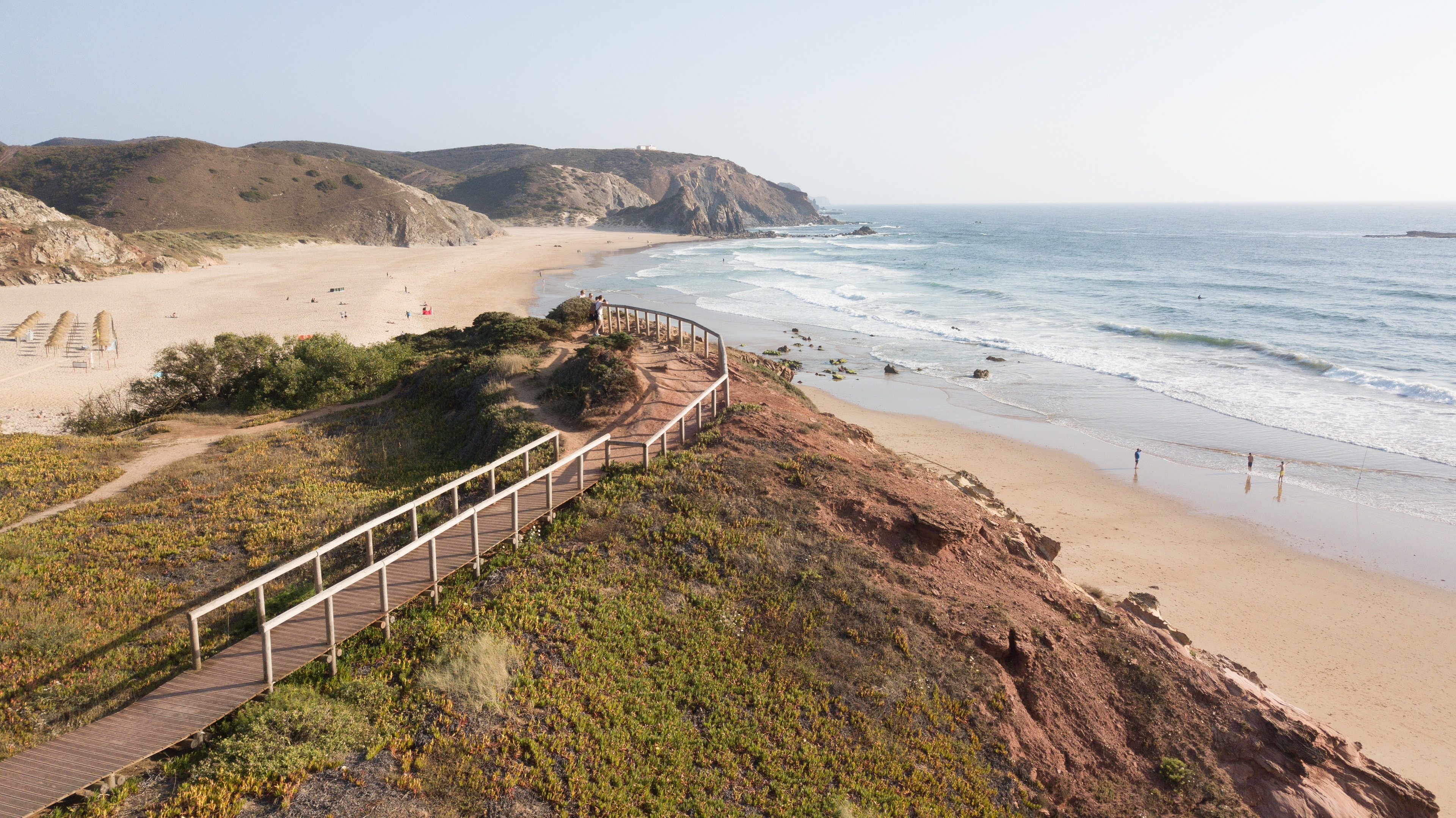
Portugal offers a high quality of life, reflected in its position among the top 10 countries in the Expat Insider Survey[11]
2. Greece Golden Visa
The Greece Golden Visa centres on island horizons, whitewashed villages, and evenings that stretch late into warm nights. It attracts families who value tangible real estate ownership, historical depth, and a Mediterranean lifestyle that feels lived-in rather than resort-like.
Family eligibility
Alongside the main investor, the following family members can apply under the Greece Golden Visa:
- Spouse or partner — same-sex couples included.
- Children under 21 — unmarried.
- Parents — no financial dependency required.
Partners must have a cohabitation agreement registered and signed in Greece.
Neither the main applicant nor their family members are granted the right to work in Greece under the Golden Visa programme. However, passive business ownership is fine: holding shares in a Greek company and receiving dividends or profits is treated differently from taking a job.

Mohamed Zakaria,
Senior Investment Migration Expert
Children who first enter Greece as dependants under the property owner residence permit receive a family reunification residence permit valid until age 21. After turning 21, they may renew their stay until age 24. This 3-year residence permit granted to 21—24 years old children provides them with access to the employment market.
Further renewals may be possible under the relevant immigration rules.
Investment options
Greece provides a broad choice of investment options:
- real estate purchase — €250,000+;
- long-term lease of a tourist residence or furnished apartments — €250,000+;
- timeshare or hotel accommodation agreement — €250,000+;
- units of investment funds — €350,000+;
- bank deposit — €500,000+;
- business — €500,000+;
- purchase of government bonds — €500,000+.
Buying real estate is a common route under the Greece Golden Visa for families who want a home and the option to settle in Greece. The property can also be rented out on a long-term basis and may generate returns of up to 10% per year.
The €250,000 threshold applies to properties purchased for renovation. For newly built properties, the minimum is €400,000 or €800,000, depending on the location.
Validity, renewal, and path to citizenship
Greece Golden Visa permits are valid for 5 years, renewable indefinitely as long as the investment is retained. There is no minimum physical presence requirement.
Greek naturalisation is available after 7 years of uninterrupted and legal residence in Greece. Applicants must also prove Greek language proficiency at least at B1 level[12]. In practice, applicants first qualify for long-term resident status after 5 years of lawful residence, then apply for citizenship once the total 7-year residence requirement is met.
Life in Greece after obtaining residency
Healthcare. Greece provides free or low-cost public healthcare after residency registration, though locals express high unmet needs and low satisfaction — 27% report quality access versus the OECD average of 64%. That’s why expatriate families use private health insurance for faster, higher-quality treatment[13].
In Athens, expats often look to major hospital groups with strong international-facing infrastructure, including Hygeia Hospital, Metropolitan General, and Athens Medical Center.
Education. State schools in Greece do not charge tuition, but teaching is in Greek. English-language schooling is private, concentrated in Athens and Thessaloniki. Indicative annual fees are around €9,000 per year at St Catherine’s and up to €15,700 at ACS Athens.
Public universities are tuition-free at undergraduate level for children of Golden Visa holders, but teaching is also in Greek. English-taught bachelor’s programmes are fee-based and cost €5,000—15,000 per year.
Expat community. Around 11% of residents in Greece are foreign-born. Integration is smooth thanks to Greek society which is open and relationship-oriented, with hospitality embedded in everyday culture — inviting guests into the home remains common. English is widely spoken among younger generations and in business and tourism.
Safety. Greece is generally a safe place to live. Its homicide rate is 1 per 100,000, below the OECD average of 2.6[14]. Most locals say they feel safe walking alone at night[15].
Cost of living. Greece ranks 19th in the price level index, which means day-to-day costs sit in the middle of the pack for Europe. Around €2,700 per month covers a family of four in Greece, excluding rent. Housing remains comparatively affordable: a 3-bedroom apartment averages €700 nationwide, reaching around €1,100 in central Athens, €600 in Thessaloniki, and about €500 in Patras[16].
Examples of real estate in Greece
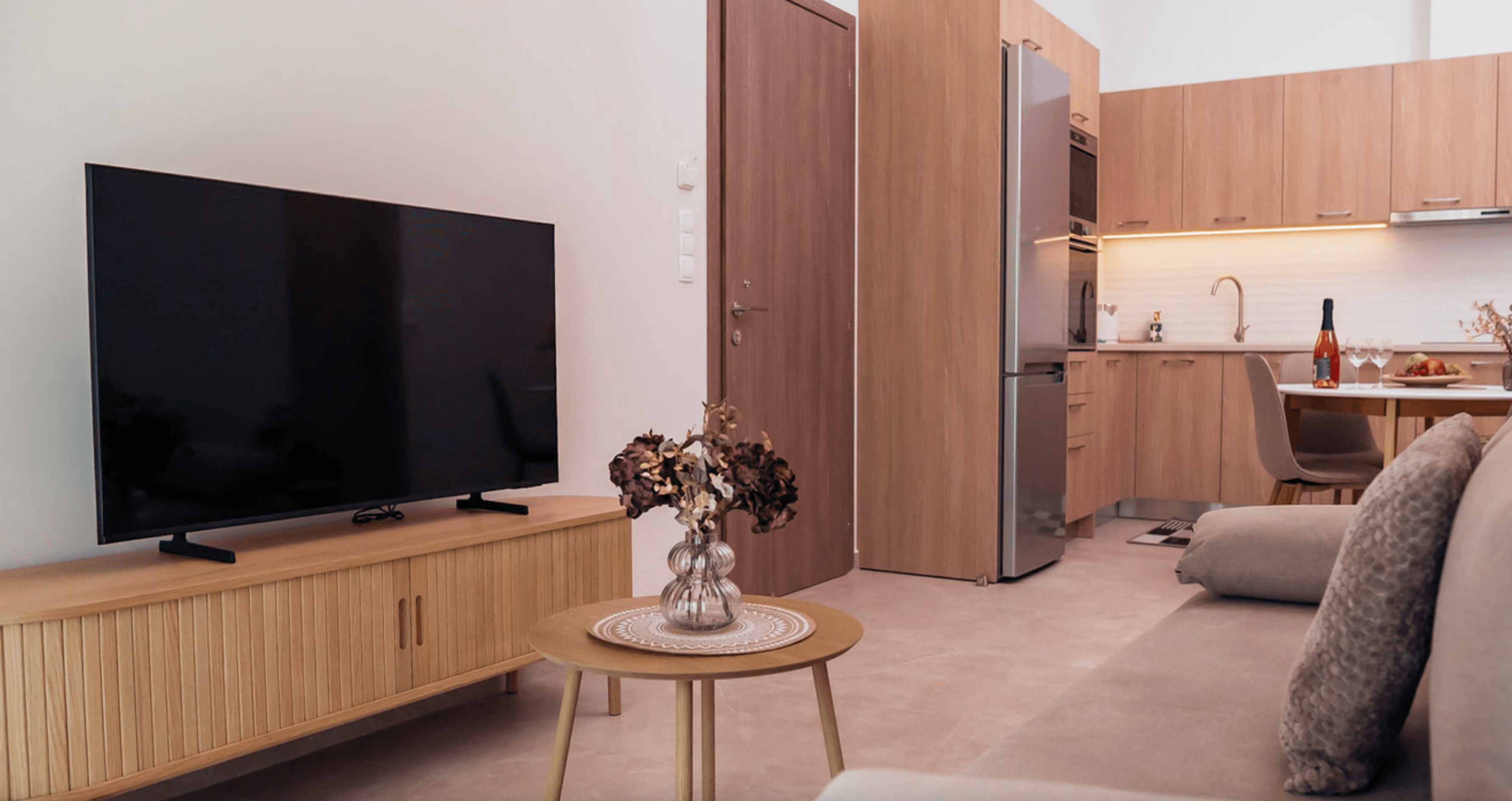

Greece, Chania
€275,000+
Cosy apartments with guaranteed income, Chania, Crete
 40 m²
40 m² 1
1  1
1 
Greece, Athens
€720,000+
Cosy and stylish apartments in modern style, Glyfada, Athens
98 m²2 2 
Greece, Athens
€920,000 — €960,000
Elegant apartments, Elliniko, Athens
109 m² — 163 m²3 3—4 3. Malta Permanent Residence Programme
The Malta Permanent Residence Programme, MPRP, is not a traditional Golden Visa. It grants permanent residence from the outset, on a lifelong basis, rather than a temporary permit that later converts into permanent status.
Malta builds around limestone towns, harbours, and a Mediterranean lifestyle on a compact island where distances are short. It suits families who want an English-speaking environment, strong international schooling options, and easy day-to-day convenience.
Family eligibility
The MPRP can cover close family members, including:
- Spouse — same-sex couples included.
- Children under 18 — of both spouses, as well as a child of either spouse from a previous marriage, provided the other parent consents.
- Children aged 18 to 29 — unmarried, principally dependent on the investor or the spouse.
- Parents and grandparents — principally dependent on the investor or the spouse.
Spouses must be in an officially registered marriage or partnership. Non-registered partners may also qualify if the relationship can be proven with documents.
If the main applicant or dependants want to work in Malta, they can apply for a work permit through the standard procedure. They may also apply to start a business in Malta.
Investment routes
The MPRP’s key requirement is to secure accommodation in Malta via one of two routes:
- Renting real estate for at least 5 years with a minimum annual rent of €14,000, totaling €70,000+ over 5 years.
- Purchasing real estate worth €375,000+ plus 7% in property-related fees — €26,250+.
The property can be sold after 5 years, but a registered residential address in Malta must still be maintained.
In addition, the applicant must:
- Make a government contribution of €37,000.
- Pay administration fee of €60,000 for themselves, plus €7,500 for each dependant over 18, excluding the spouse.
- Donate €2,000 to a registered Maltese NGO.
- Hold capital of €500,000+, of which €150,000+ in liquid financial assets, or €650,000+, of which €75,000+ in liquid financial assets.
Minimum total investment results in €169,000 when renting property and €474,000 when purchasing one.
Validity and renewal
The MPRP grants lifelong residence, however, the ID card needs renewal every 5 years.
During the first 5 years after permanent residence is granted, the Residency Malta Agency verifies that the investor continues to meet the conditions, including holding or renting qualifying residential property in Malta and maintaining the required assets.
Life in Malta after obtaining residency
Healthcare. Malta’s healthcare looks strong on outcomes and core coverage: Malta ranks among the EU leaders in life expectancy, at 83.6 years[17].
Where Malta underperforms is financial protection. Out-of-pocket spending is 30% of total health expenditure, so residents often pay directly for GP visits, outpatient specialists, and medicines more than in most EU countries. For expats, the main reference points are Mater Dei Hospital and Saint James Hospital.
Education. Under MPRP, a minor is not automatically entitled to free education in Malta. However, if the main applicant or spouse obtains a Maltese work permit, their children gain access to free primary and secondary education in public schools. Teaching is bilingual in practice: Maltese and English are both used across the system.
Golden Visa families can choose from a range of international schools offering British, IB, or American curricula. Annual tuition ranges from €8,000 to 20,000.
University is not free for residents. Tuition is about €1,000 per semester for most subjects and €1,360 for science and engineering, or roughly €2,100—2,700 per year.
Expat community. Around 30% of Malta’s population is foreign-born. Combined with a widely English-speaking environment and approachable locals, adaptation tends to run smoothly.
Safety. Malta is considered safe to settle. According to the latest data of 2023, it had the lowest number of intentional homicides in the EU: 2 cases, compared with 338 in Italy and 887 in France[18].
Cost of living. In the price level index, Malta ranks 15th, which makes the country relatively expensive compared to many EU states, though still below the highest-cost markets. A family of four needs around €2,800 per month, plus about €1,500 per month for a 3-bedroom apartment[19].
Examples of real estate in Malta
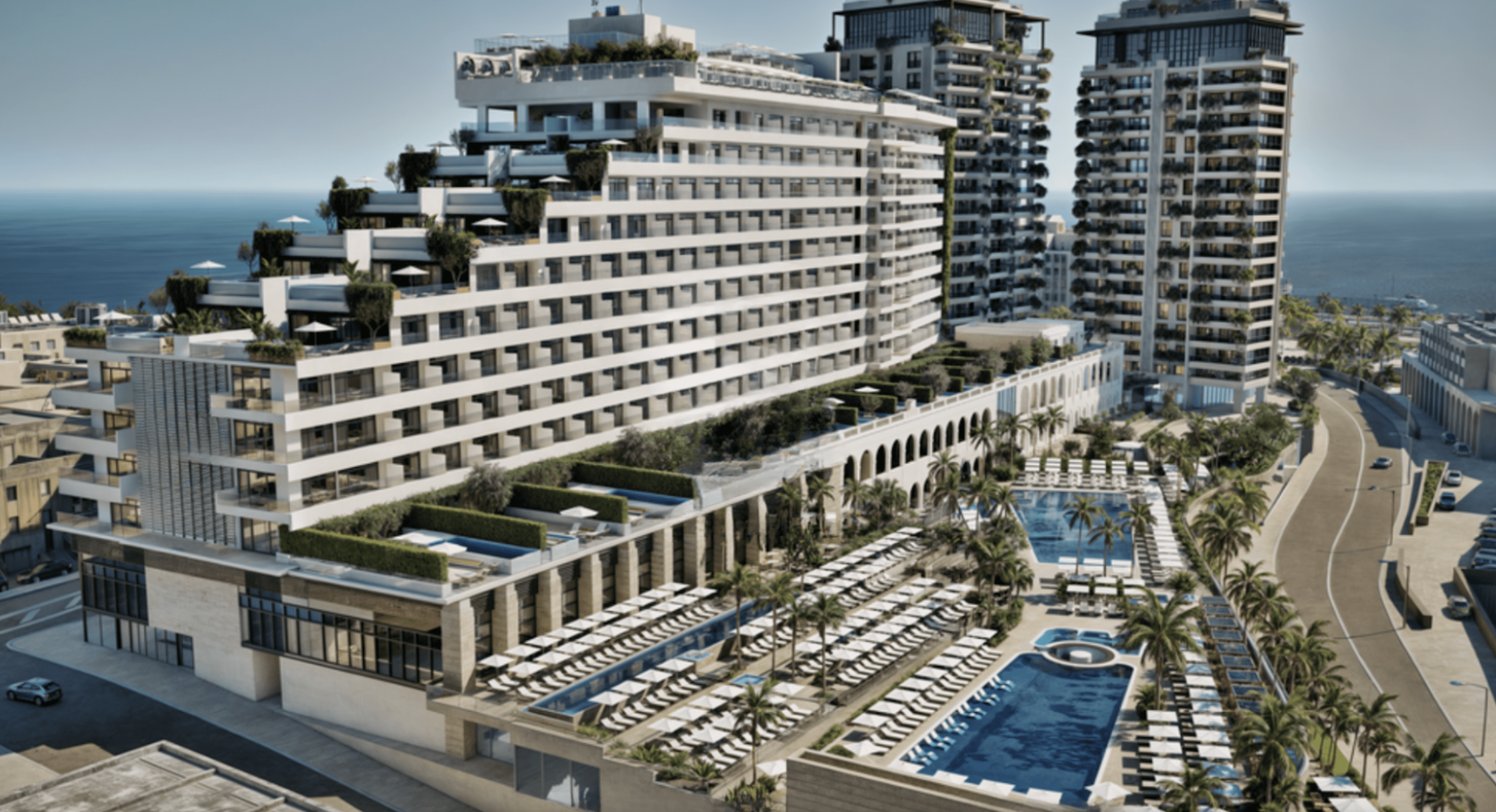
Malta, St Julian's
€950,000 — €2,290,000
Elegant apartments, St. Julians, Malta
98 m² — 193 m²1—3 1—3 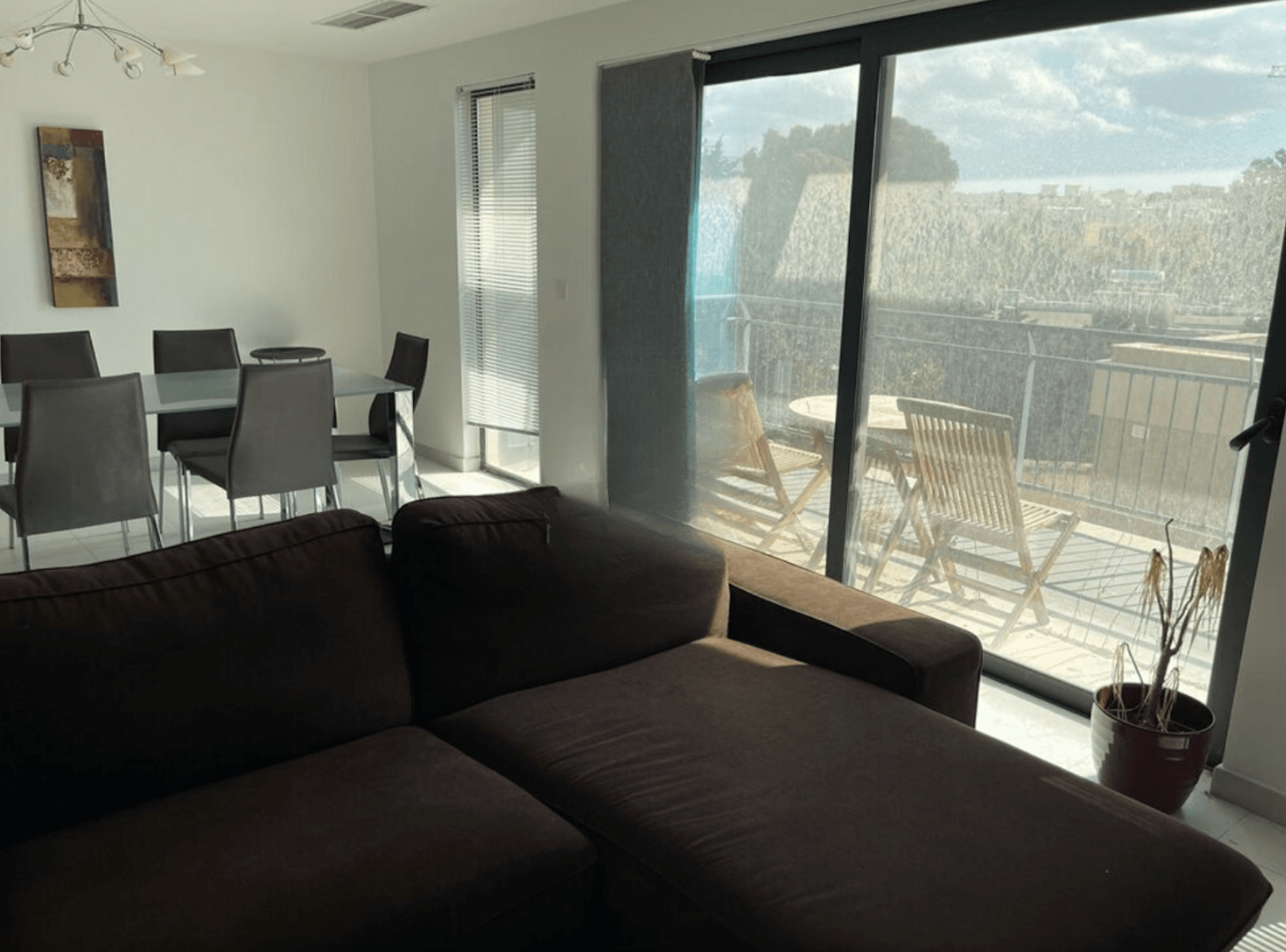
Malta, St Julian's
€750,000+
Apartments in modern style, St. Julians
172 m²3 2 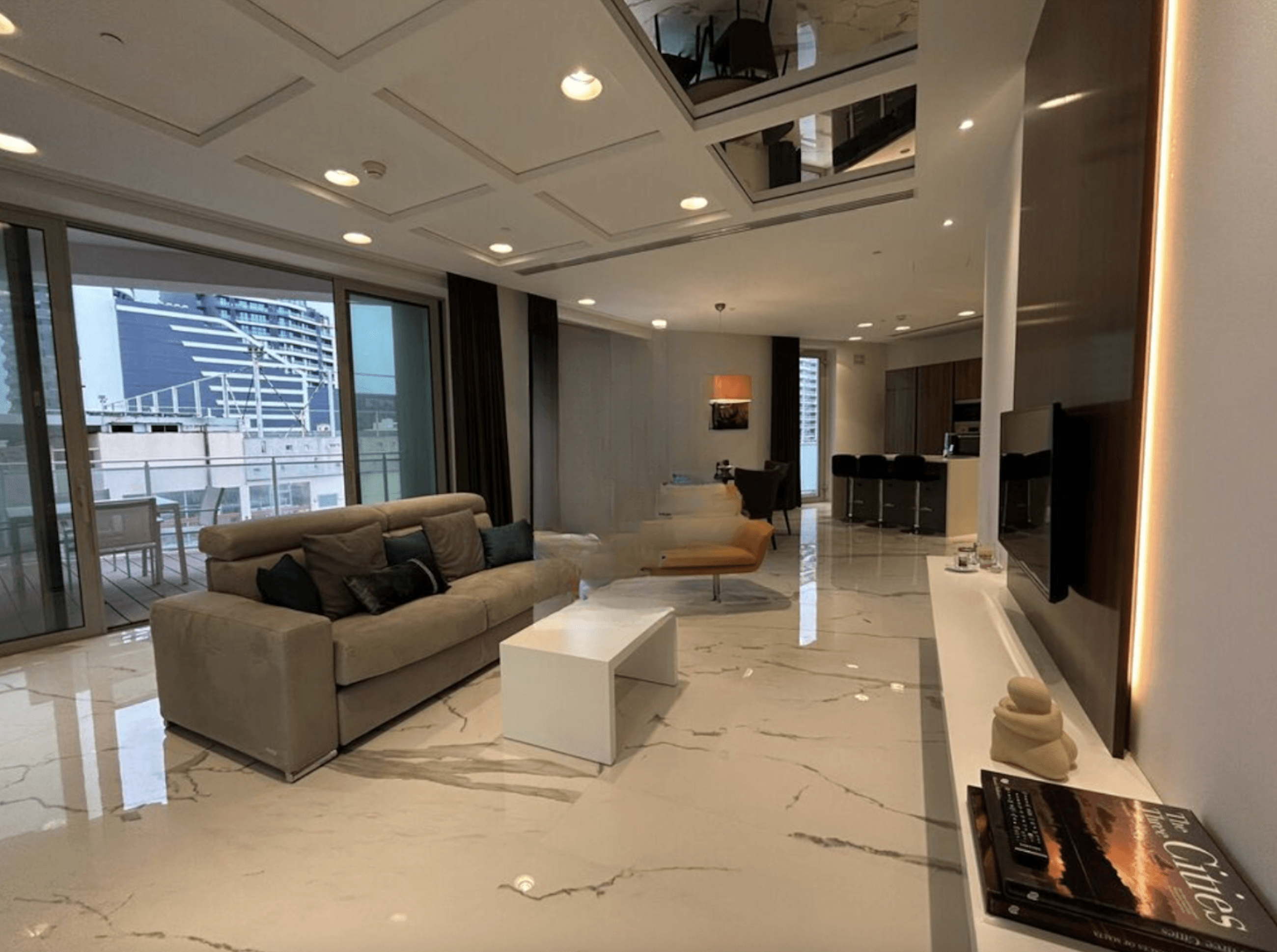
Malta, Sliema
€1,170,000+
Apartments in modern style, Sliema
116 m²1 1 4. Italy Golden Visa
The Italy Golden Visa anchors residence in a country of vineyards, regional cuisines, and cities layered with art and architecture. It appeals to families who prioritise heritage, food culture, and are ready for a bit higher cost of living compared to other Golden Visa countries.
Family eligibility
The Italy Golden Visa covers the following family members of the main investor:
- Spouse — officially married to the investor.
- Children under 18.
- Children over 18 — financially dependent on the investor due to their state of health leading to total disability.
- Parents — financially dependent on the investor and having no other children in their country of origin, or over 65 and their other children are unable to support them for documented, serious health reasons.
Taking up employment and running a business under the Italy Golden Visa is allowed for the whole family.
Investment routes
The Italy Golden Visa offers four investment options:
- innovative startup — €250,000+;
- business — €500,000;
- philanthropic donation — €2 million;
- government bonds — €2 million.
The business must be active and have at least one financial statement available at the time of the visa application.
Validity, renewal, and path to citizenship
The initial Italian residence permit card is issued for 2 years and can then be renewed for an additional 3 years. It can continue to be renewed as long as the investment is maintained, and the programme does not set a physical presence requirement.
Naturalisation is available after 10 years of continuous legal residence. Eligibility also requires at least 12 months of physical presence during that period and B1 Italian[20].
Life in Italy after obtaining residency
Healthcare. Italy provides public healthcare, which is free or low-cost. After registration, residents choose a family doctor and access services through the local health authority. Expats reference Italy’s big IRCCS research hospitals and university hospitals for complex pathways.
Italy’s preventable mortality is 93 per 100,000, below the OECD average of 145, which points to strong primary care and prevention[21].
Education. Italy combines strong public schooling with a well-developed international-school market. Public schools are high quality but teach in Italian, while international schools are concentrated in Milan, Rome, and Florence, with fees around €13,000—20,000 per year.
Public universities are not free for residents: tuition is income-based and commonly falls in the €900—4,000 per year range.
Expat community. Italy’s foreign resident population amounts to 11.3%. Everyday life is still Italian-first: locals tend to be warm once a relationship is built, but initial interactions can feel more formal than in expat-heavy markets.
English is not a default language outside tourism and international business. It works in central districts and tourist corridors, but Italian is often needed for admin, healthcare, and school communication.
Safety. Italy is generally safe. The intentional homicide rate is about 0.57 per 100,000, which is low by international standards, and 76% of people say they feel safe walking alone at night in their area[22].
Cost of living. Italy sits in 12th place on the EU price level index, so everyday spending there tends to land on the pricier side rather than feeling like a budget destination. A realistic baseline for Italy is about €3,100 per month for a family. Rent varies sharply by city, but a 3-bedroom home often lands around the €1,100 mark in many mainstream locations[23].
The costliest markets are Milan and Florence, where family costs are about €3,500—3,700 per month. By contrast, in cheaper cities such as Palermo, family costs are about €2,800, and a 3-bedroom rents for roughly €650 outside the centre.
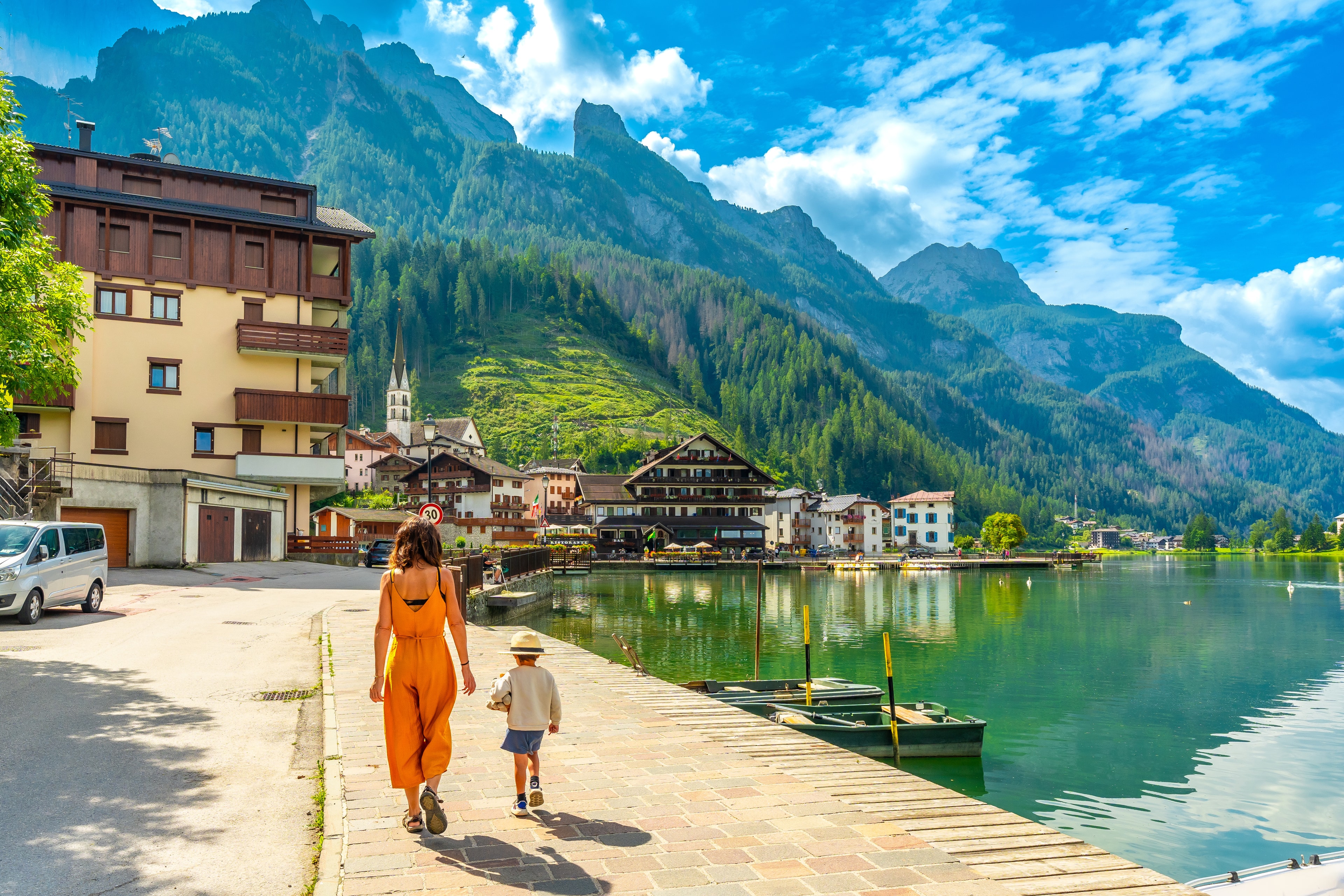
Italy ranks among the world’s leaders in UNESCO World Heritage Sites, offering constant access to natural landmarks, historic centres, and cultural events[24]
5. Panama Golden Visa
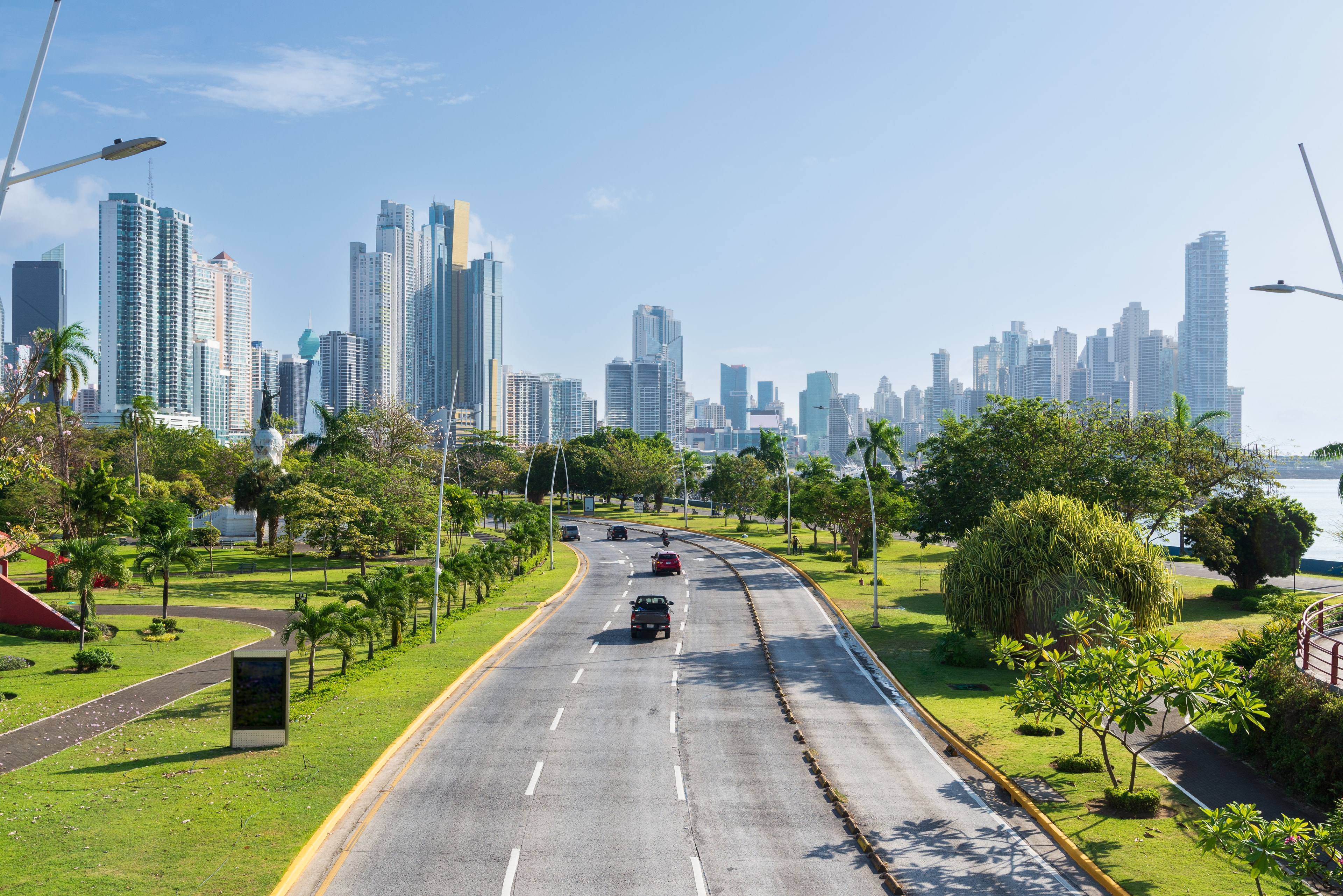
The Panama Golden Visa situates families between tropical rainforest and a skyline of glass towers in Panama City, appealing to those who want access to both North and South America. Panama ranks 1st in Expat Insider Survey 2025: a whopping 94% of expats are happy with their life in Panama[11].
Family eligibility
Under the Panama Golden Visa, the main investor can extend residence rights to the following family members:
- Spouse — in officially registered marriage, same-sex couples included.
- Children under 18.
- Children over 18 — unmarried, financially dependent, and studying at the university.
- Parents — financially dependent.
Neither the investor nor their family members receive automatic access to the Panamanian labour market. However, they may apply for a work permit upon securing a formal employment contract in Panama[25]. Business ownership and operation are permitted.
Investment routes
Investors may select from three investment routes:
- real estate — $300,000+;
- securities — $500,000+;
- bank deposit — $750,000+.
The property may generate rental income and potential capital growth. After 5 years, investors can sell the asset or reinvest it under legal and tax rules.
Validity, renewal, and path to citizenship
The Panama Golden Visa grants permanent residence, which remains valid long term. After 5 years, residents may apply for citizenship.
Applicants for citizenship must pass a Spanish-language test focused on everyday communication, usually described as basic conversational Spanish rather than advanced proficiency[26]. Citizenship also requires 5 years of continuous residence, without a strict 183-day threshold in the law. In practice, authorities expect genuine residence rather than purely paper status.

Life in Panama after obtaining residency
Healthcare. Compared with the EU, Panama’s healthcare is weaker overall. For example, Panama’s out-of-pocket share is 40.46% of total health spending versus about 13% in the EU, which means less financial protection and greater reliance on private payments even for routine care[27].
Golden Visa residents often use private care for faster specialist access. A leading example is Hospital Punta Pacífica, affiliated with Johns Hopkins Medicine International and known for high standards.
Education. Public schooling in Panama is free for residents, with Spanish as the main medium of instruction. Quality and resources vary by location and school, which drives demand for private and international options. Fees range €4,200—12,600 per year, with top-tier schools above €16,800.
Public universities are open to both citizens and residents and generally operate in Spanish. Programmes delivered in English fall into a separate segment and usually cost around €4,000—7,000 per year.
Expat community. Foreign residents make up about 10.6% of Panama’s population. Locals are friendly and welcoming, and daily life is easy to navigate once basic routines are set up.
Spanish is the default language, but English is commonly used in Panama City, the business sector, and expat-heavy areas, especially in services tied to international trade and tourism.
Safety. Many expats describe Panama as a place where day-to-day life feels safe and uncomplicated. They also note a comfortable social climate: it is usually easy to speak openly, and the country’s political stability tends to be viewed as a plus.
Cost of living. A family of four needs around €2,400 per month for everyday expenses in Panama. A 3-bedroom apartment rents for €1,100—1,500 per month, depending on the area and building quality[28].
Examples of real estate in Panama
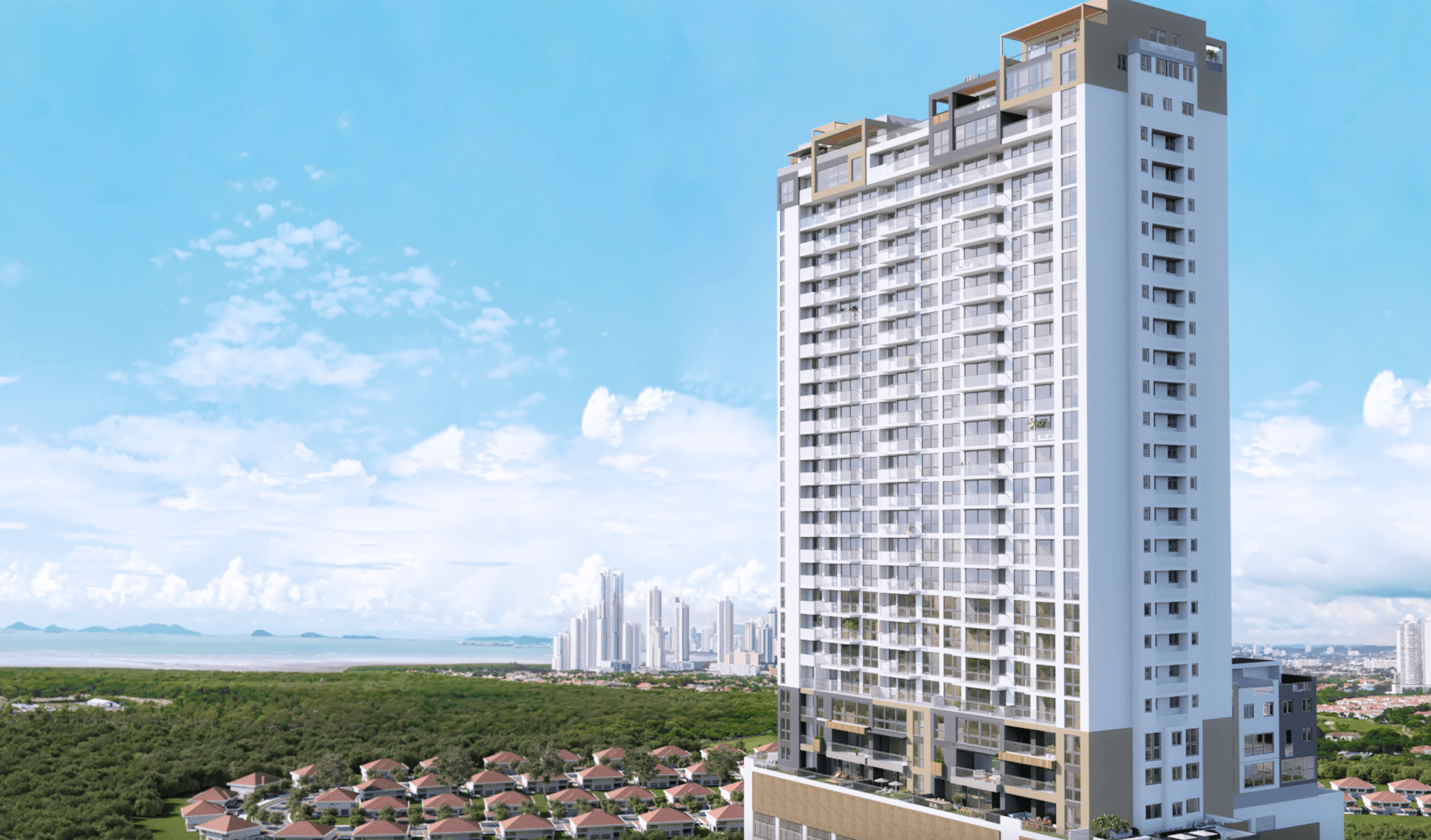
Panama, Panama City
$447,000 — $1,043,000
Luxury apartments and town houses, Panama City
102 m² — 235 m²2—3 2—3 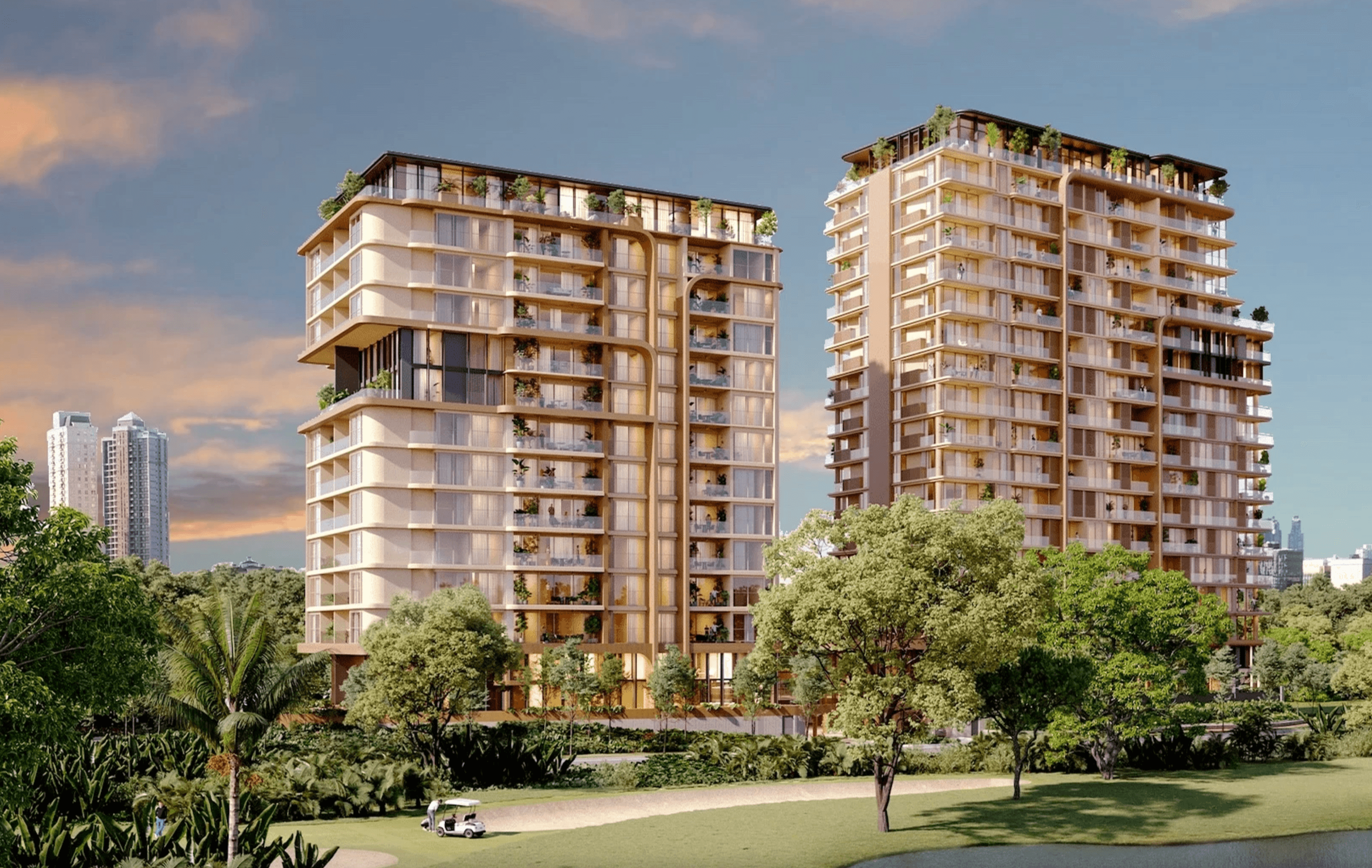
Panama, Panama City
$628,000+
Villas, apartments and houses with private pools, Santa Maria, Panama City
135 m²2—3 2—3 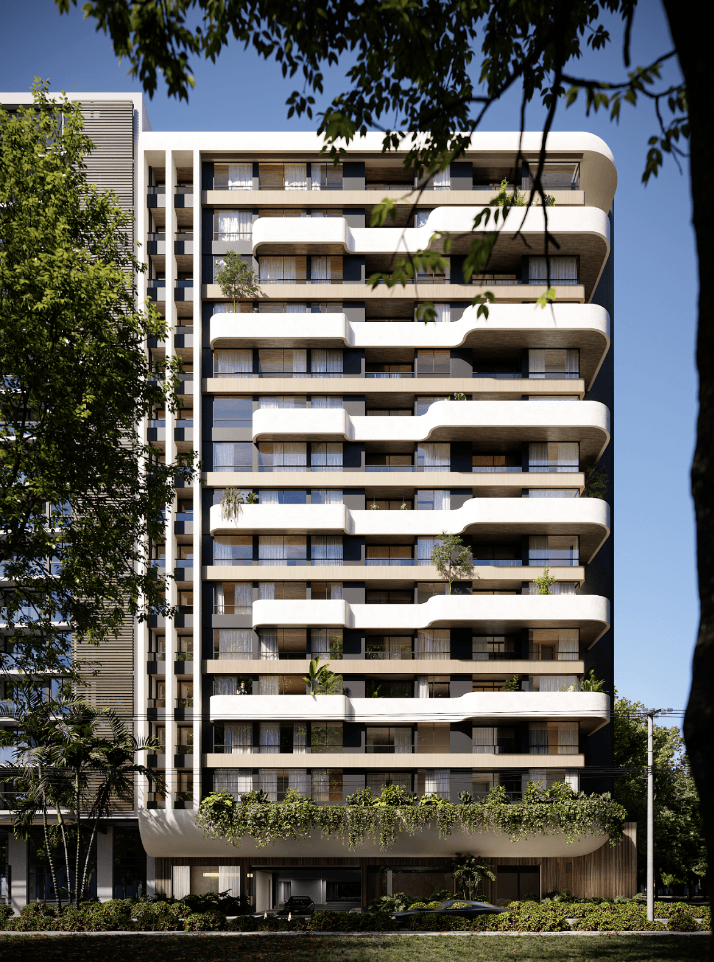
Panama, Distrito de Balboa
$137,000 — $260,000
Elegant apartments, Distrito de Balboa
22 m² — 54 m²1 1 6. Hungary Golden Visa
The Hungary Golden Visa offers a Central European base defined by thermal baths, grand boulevards, classical music, and a strong café scene. It suits families who want long permit validity, a stable environment, and a distinctive old-Europe capital at a lower cost level.
Family eligibility
In the Hungary Golden Visa programme, the main investor may include the following family members in the application:
- Spouse.
- Children under 18.
- Parents — financially dependent on the investor, with pension payments as the only income source.
US citizens require a second passport if they wish to obtain a Hungarian Golden Visa.
The whole family can work and run business in Hungary without additional permits.
Mohamed Zakaria,
Senior Investment Migration Expert
Adult children are not entitled to a Golden Visa residence permit. Instead, they may be granted a basic residence permit card derived from family ties, which can be extended as long as the child remains financially dependent on the investor and is under the age of 26.
Investment routes
Two investment options are available for Hungary Golden Visa applicants:
- purchase of real estate fund units — €250,000+;
- donation to an institution of higher learning — €1,000,000+.
At least 40% of the fund’s assets must be invested in residential real estate located in Hungary. The share certificate must carry a minimum 5-year maturity.
Validity, renewal, and path to citizenship
Hungary offers one of the longest Golden Visa permit terms: it is issued for 10 years and can be renewed once for another 10 years. The programme does not impose a minimum stay requirement.
For citizenship, applicants move in stages: permanent residence after 3 years, then eligibility for citizenship after a further 8 years. The language requirement is relatively modest and is usually framed as basic Hungarian sufficient for understanding[29].

Life in Hungary after obtaining residency
Healthcare. Hungary’s public healthcare system provides basic coverage after registration, but health outcomes are weaker than in many Western European countries. For example, preventable mortality stands at 249 per 100,000, above the OECD average of 145[30].
Expat families often use public healthcare as a baseline and add private cover for faster access and English-speaking doctors. In Budapest, expats rely on Semmelweis University clinics, Liv Duna Medical Center, and Medicover Hospital.
Education. Hungary’s public schools are free but teach in Hungarian, while English-language schooling is mainly private. International school tuition in Budapest is €8,000—20,000 per year.
Public universities are not broadly tuition-free for international students. Annual fees depend on the programme, ranging €3,000—8,000 for fields such as business or engineering and reaching €12,000—18,000 per year in medicine and dentistry.
Expat community. Foreign citizens make up about 7% of Hungary’s population. English is mostly used in Budapest and other international settings, and much less reliable in smaller towns. Locals tend to be polite and reserved at first, with relationships becoming warmer once a connection is established.
Safety. Hungary ranks 17th in the Global Peace Index, and the homicide rate remains low by global standards — 0.8 per 100,000 people, which supports a low-violence profile for everyday life[31].
Cost of living. Hungary sits near the lower end of the EU price level index at 24th place, which points to noticeably lower day-to-day prices than in most other member states. A monthly budget in Hungary is about €2,400 for a family of four, plus roughly €700 for rent, with Budapest consistently the priciest area for both day-to-day costs and housing[32].
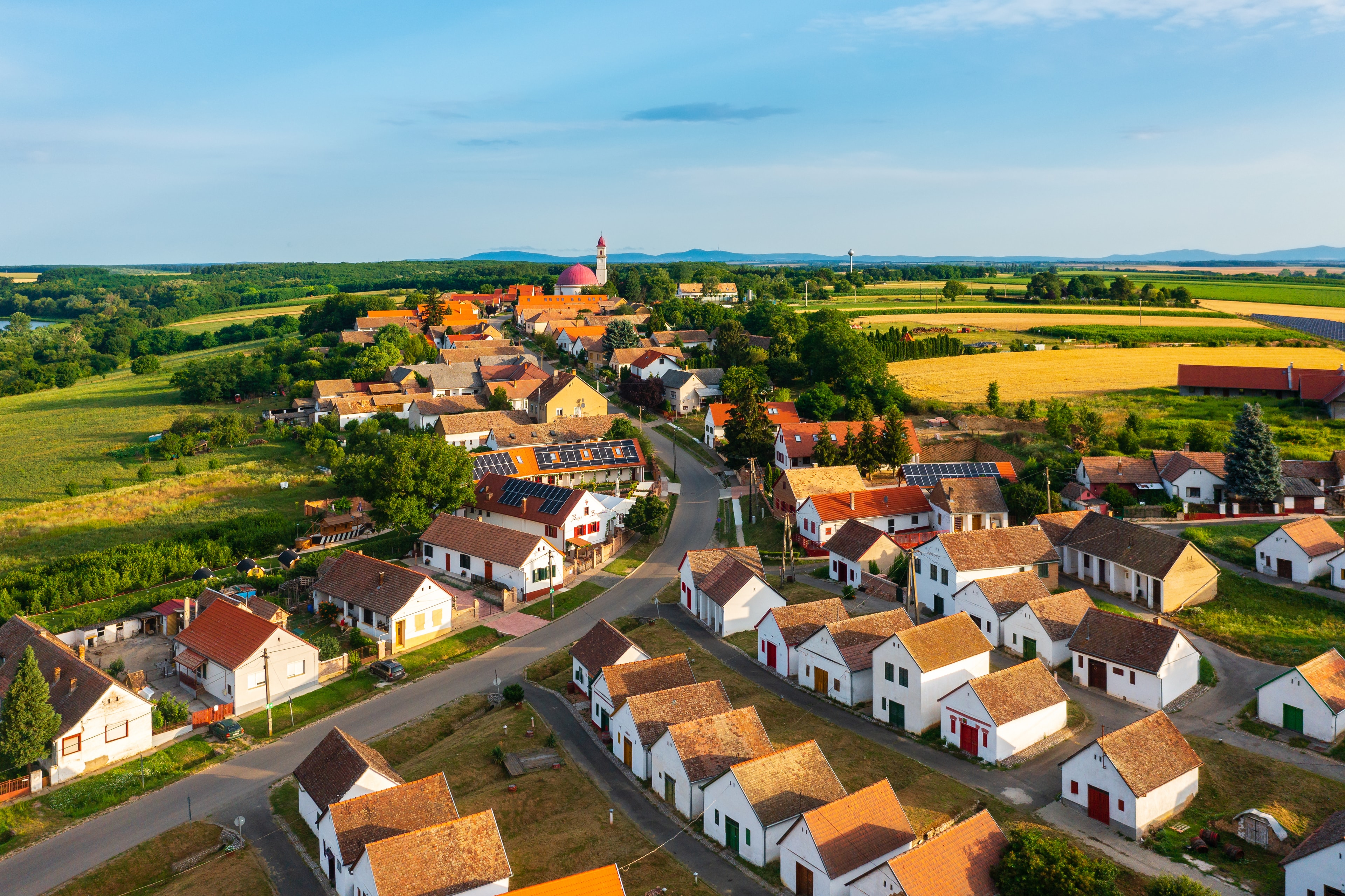
Hungary pairs easy access to nature with Budapest’s central location, which makes weekend trips to neighbouring countries simple and fast
7. Latvia Golden Visa
The Latvia Golden Visa introduces Northern European forests, Baltic coastline, and a quieter, design-led capital in Riga. The lifestyle is seasonal and nature-oriented, suiting families who prefer calm surroundings over Mediterranean intensity.
Family eligibility
The following family members may obtain residence in Latvia under the main investor’s Golden Visa:
- Spouse — legally married.
- Children under 18 — unmarried and financially dependent.
Other dependants may qualify only if they are under the legal custody of the main applicant or the spouse.
Under the Latvia residence by investment programme, the whole family is entitled to work and conduct business activities in the country.
Investment routes
The Latvia Golden Visa offers the lowest investment threshold and its options include:
- business — €50,000+;
- real estate — €250,000+;
- bank deposit — €280,000+.
If opting for the property route, the real estate must be completed and located either in Riga or within 30 kilometres of the city.
Validity, renewal, and path to citizenship
The Latvia Golden Visa is valid for 5 years. Investors must visit Latvia each year to renew their stay and re-take biometrics, as the physical residence permit card is issued for 1 year only.
Citizenship is available after 10 years, with an intermediate step of obtaining permanent residence. Permanent residence requires A2 Latvian, while the citizenship language requirement is described as basic Latvian sufficient for everyday understanding[33].
Life in Latvia after obtaining residency
Healthcare. Latvia’s public system covers a core set of services for registered residents, but outcomes lag behind much of Western Europe. Preventable mortality stands at 258 per 100,000 and treatable mortality at 154 per 100,000, both well above OECD averages[34]. That’s why expatriate families rely on the private system.
In Riga, expats usually orient around the Pauls Stradiņš Clinical University Hospital, Riga East Clinical University Hospital, and ARS.
Education. Latvia’s state schools are tuition-free, but classes are in Latvian. English-language education is private and mainly based in Riga: the International School of Riga charges about €10,500—18,400 per year, depending on grade.
University is usually not free for international students, yet fees are moderate by EU standards. Many bachelor’s programmes cost around €1,600 per year, while dentistry can reach €15,000 per year.
Expat community. Around 12.7% of Latvia’s population was born abroad. Locals may seem reserved at first but polite and straightforward. English proficiency is high, and it is widely used among younger generations and in business, especially in Riga.
Safety. Latvia ranks 22nd globally for safety and security, placing it among the more peaceful countries. In addition, nearly 70% of residents report feeling safe walking alone near their home at night, which reflects a generally secure day-to-day environment.
Cost of living. Latvia comes in 21st on the EU price level index, placing it on the more affordable side of the spectrum for everyday goods and services. A family of four needs around €2,700 per month to cover everyday expenses in Latvia. Housing remains affordable, with rent for a suitable home usually averaging between €560—800 per month[35].
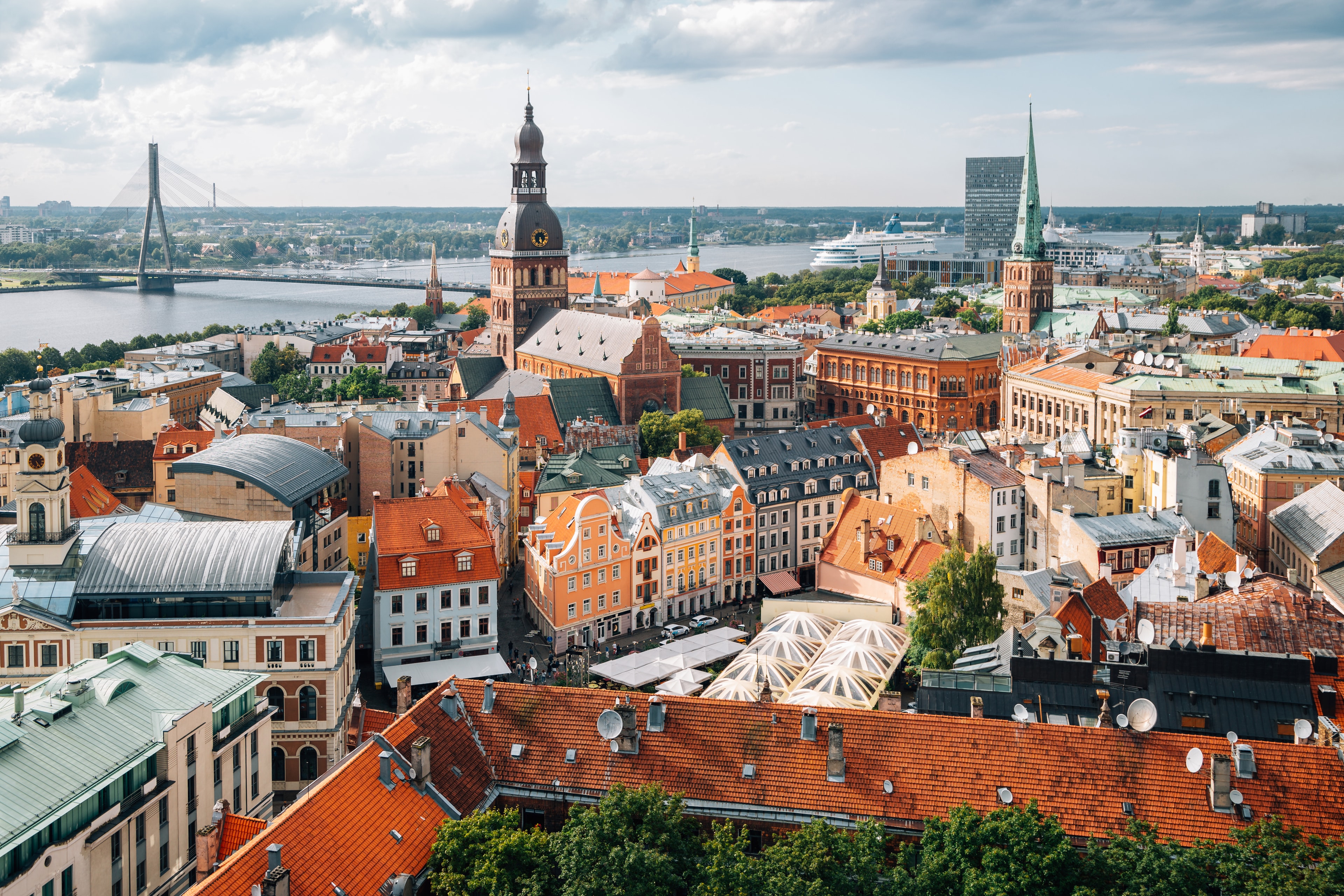
With a population of roughly 600,000, Riga offers capital-city infrastructure without megacity congestion
8. Cyprus Permanent Residence
Cyprus Permanent Residence, like Malta’s, grants lifelong status from the outset. The island works well as a business-oriented Mediterranean base with a strong international community and a clear marina-led lifestyle appeal. In Limassol, international schools and private clinics are part of the everyday landscape.
Family eligibility
Alongside the main investor, the following family members can apply for Cyprus residency:
- Spouse or partner.
- Children under 18.
- Children aged 18 to 25 — unmarried, students, financially dependent.
Children with disabilities are eligible regardless of age.
Work rights are not granted to the whole family, including the investor. However, the permit holder may act as a shareholder and an unpaid director in a Cyprus company.
Investment routes
The investor can choose one of several €300,000 investment routes:
- purchasing residential or commercial real estate;
- buying shares in Cypriot companies;
- acquiring units in local investment funds.
Once ordinary permanent residence is obtained after 5 years, or citizenship after 8 years, the investment can be recovered, for example by selling the property.
The Cyprus permanent residence also requires proof of annual income of at least €50,000 for the main applicant, plus €15,000 for a spouse and €10,000 per child.
Mohamed Zakaria,
Senior Investment Migration Expert
A Permanent Residence Permit may also be granted to children aged over 18 who are financially independent of the principal applicant, provided the minimum investment amount is increased.
The required investment rises by €300,000 for each additional independent child: for example, €600,000 if applying with one child and €900,000 with two children.
Validity, renewal, and path to citizenship
Permanent residence is granted for life, while the ID card is renewed every 10 years. After 8 years, the holder can apply for Cyprus citizenship and obtain full EU citizenship status. The process requires Greek at A2 or B1 level[36].
Life in Cyprus after obtaining residency
Healthcare. In the Expat Insider Survey 2025, Cyprus ranked 4th globally for healthcare, reflecting strong expat satisfaction with affordability, availability, quality, and access. Expats gravitate to well-known private facilities, including Mediterranean Hospital of Cyprus in Limassol and American Medical Center in Nicosia.
Education. Public schooling in Cyprus is free for legal residents and taught in Greek. Private and international schools charge tuition, €4,700—5,000 in early years, €5,800—7,000 in primary, and €8,000—10,000 in secondary.
Residents can apply to universities: non-EU undergraduate tuition is about €6,800 per year, while Master’s programmes at public universities cost €4,000—10,000 per year.

Exapt community. Around 27% of Cyprus’s population is foreign-born, which supports smoother settling. English is widely used in major cities and tourist areas, although proficiency levels vary.
Safety. Same as Malta, Cyprus sat at the bottom of the EU homicide table in 2023: 10 intentional homicides in a year. Nightlife districts and tourist zones can see pickpocketing or alcohol-related incidents, but random violent crime is uncommon.
Cost of living. Cyprus ranks 13th in the EU price level index, so day-to-day spending feels pricier than in many other EU countries. A family of four needs around €3,000 per month, plus about €1,300 for rent[37].
Examples of real estate in Cyprus
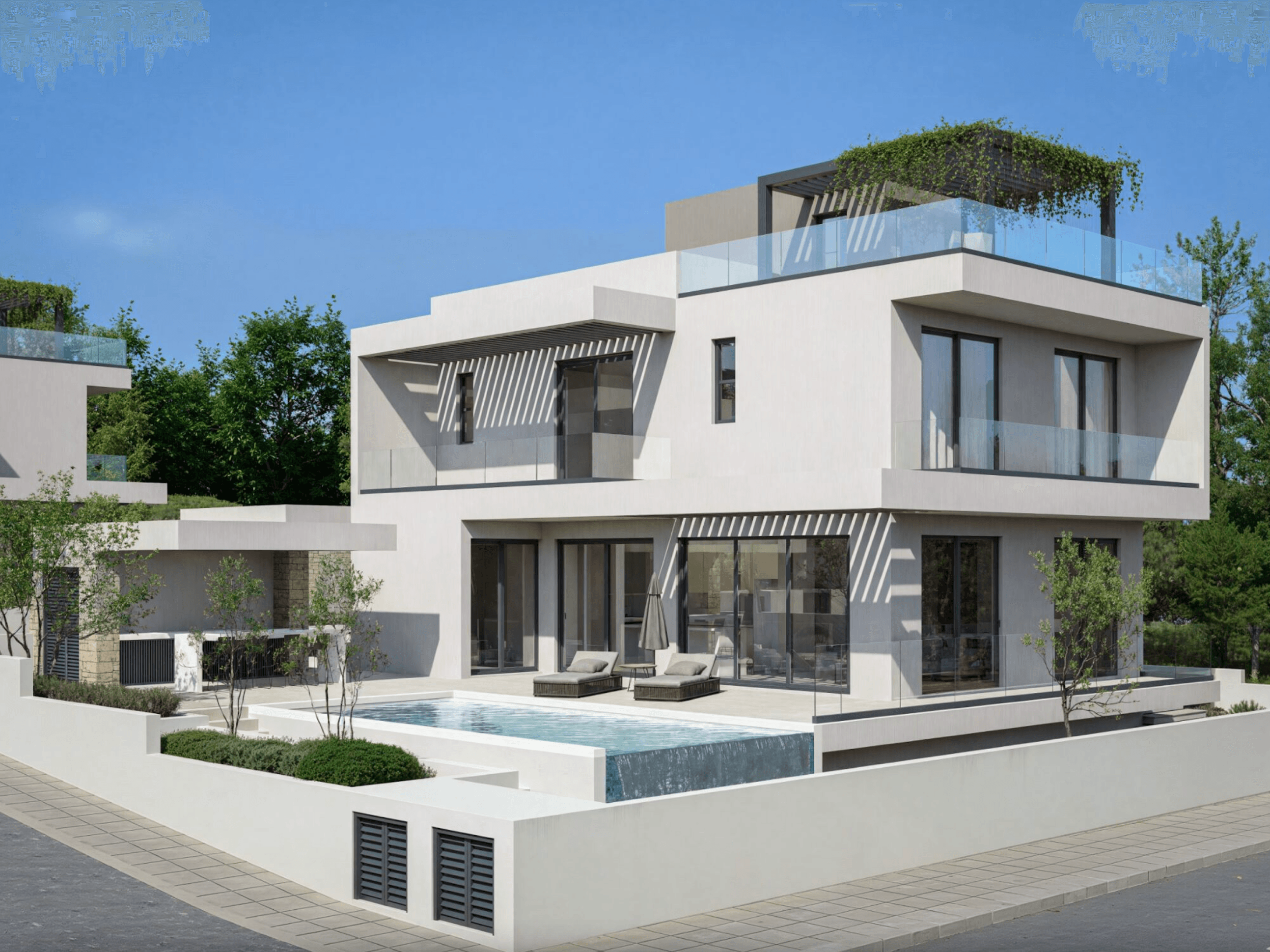
Cyprus, Paphos
€850,000 — €895,000
Elegant villas, Lower Chloraka, Paphos
282,000 m² — 284,000 m²4 4 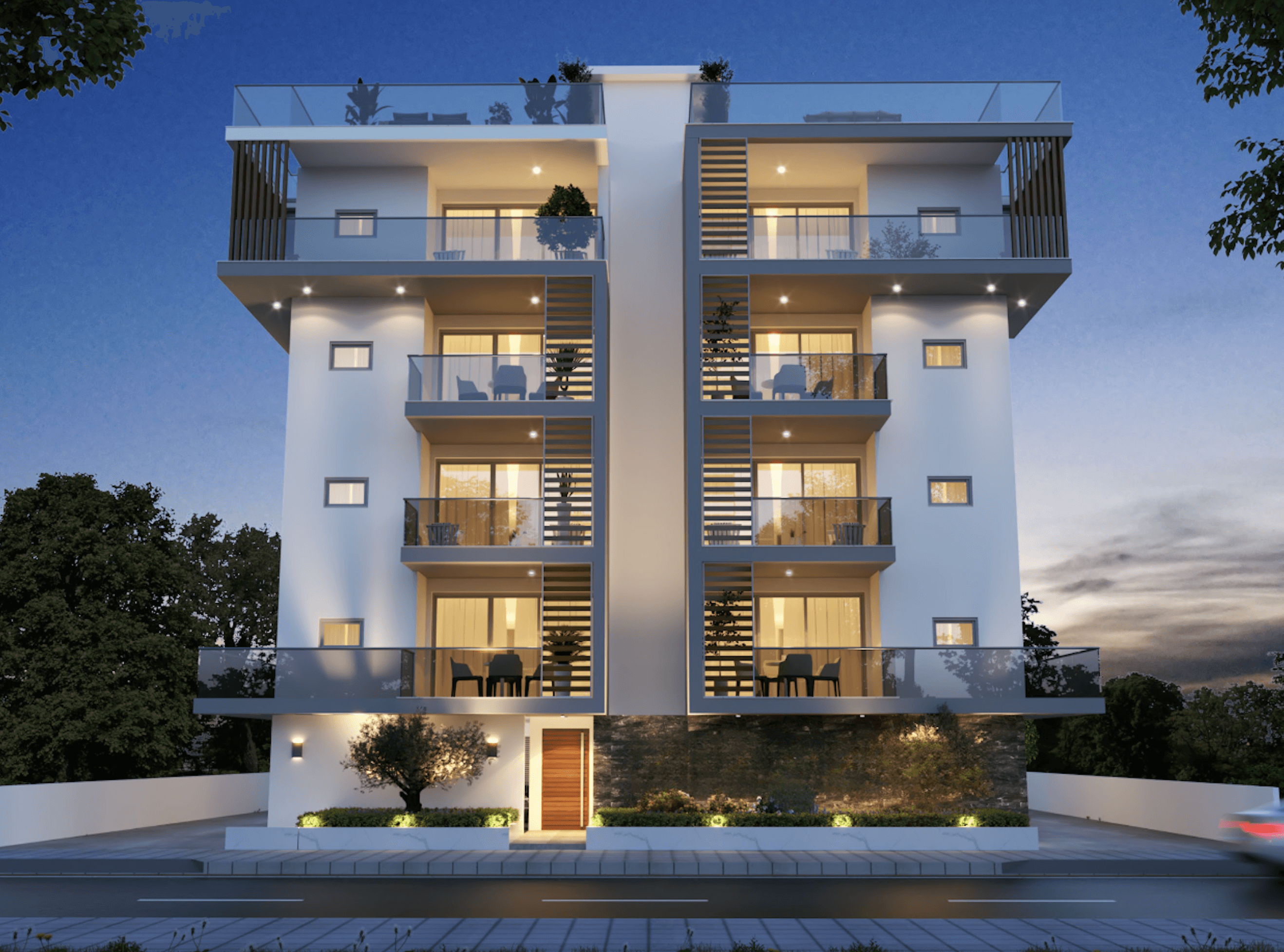
Cyprus, Larnaca
€225,000 — €275,000
Elegant and Stylish Apartments, Agios Nikolaos, Larnaca
82 m²2 3 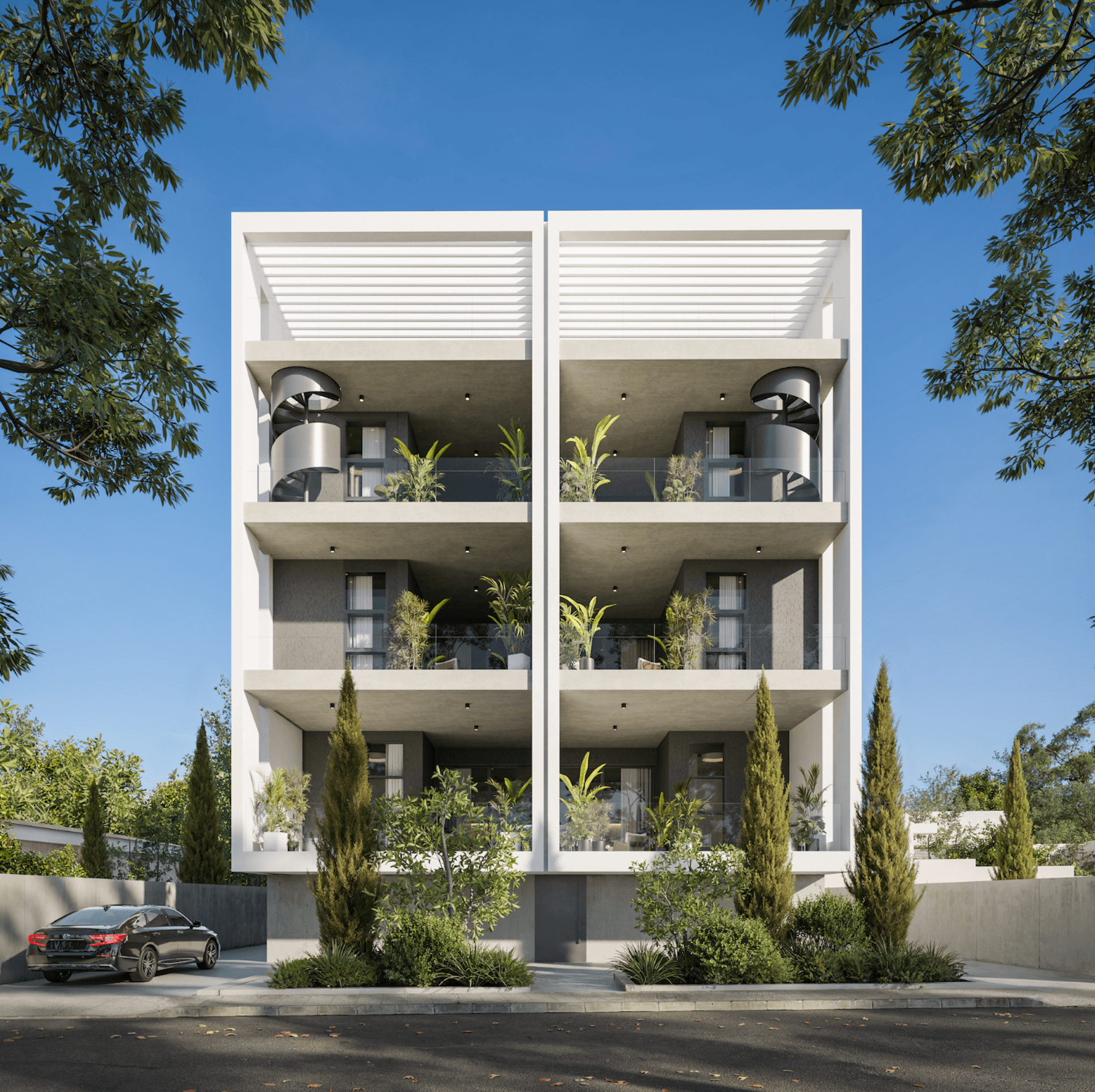
Cyprus, Limassol
€225,000 — €459,000
Comfortable apartments in modern style, Agios Athanasios, Limassol
73 m² — 199 m²1—2 1—2 Expenses and fees beyond investment for Golden Visa families
In addition to the investment amount, Golden Visa applicants should factor in government and administrative fees, as these charges apply per applicant.
Translation, legalisation, and certified document packages usually add $1,000—2,000, depending on the country and family size. Other country-specific formalities may include issuing a power of attorney, obtaining a tax ID, and setting up a digital signature.
Investment-related costs
Golden Visa investors should also budget for investment-related charges that sit outside government filing fees. These vary by country and route, and can materially affect the total cost.
In Cyprus, investors in real estate should account for VAT, which starts at €15,000 for residential property and may exceed €57,000 for commercial property, depending on value and structure.
In Italy, the innovative start-up route involves a subscription-related cost of around €12,200, separate from the qualifying investment amount.
In Latvia, additional investment-related costs depend on the selected route and should be budgeted separately from the core investment amount:
- Bank deposit route: account opening fee €4,000 + state fee €25,000.
- Business investment route: state fee €10,000.
- Real estate route: state and notary fees amounting to 7% of the property value + escrow arrangement €1,000+.
In Hungary, applicants choosing the fund option should consider a brokerage account management fee of around €8,700 covering the 5-year holding period.
In Portugal, fund investors commonly face a subscription fee of up to 7.5%, depending on the fund’s structure and terms.
In Greece, real estate acquisitions trigger transfer taxes and notarial fees of approximately 5.5% of the property value.
Golden Visa minimum total cost for the main applicant, spouse, minor and adult child
Country
Minimum investment
€50,000+
Government and processing fees
€640+
Country-specific additional expenses
€2,200+
Total
€52,840+
Country
Minimum investment
€169,000+
Government and processing fees
€2,400+
Country-specific additional expenses
€2,200+
Total
€173,600+
Country
Minimum investment
€250,000+
Government and processing fees
€6,650+
Country-specific additional expenses
€3,600+
Total
€280,000+
Country
Minimum investment
€250,000+
Government and processing fees
€2,300+
Country-specific additional expenses
€2,200+
Total
€254,500+
Country
Minimum investment
€250,000+
Government and processing fees
€23,440
Country-specific additional expenses
€2,200+
Total
€275,640+
Country
Minimum investment
€250,000+
Government and processing fees
€4,853+
Country-specific additional expenses
€3,586+
Total
€258,439+
Country
Minimum investment
€300,000+
Government and processing fees
€1,560+
Country-specific additional expenses
€4,700+
Total
€391,260+
Country
Minimum investment
$300,000+
Government and processing fees
$16,000+
Country-specific additional expenses
€2,200+
Total
$318,200+
Country | Minimum investment | Government and processing fees | Country-specific additional expenses | Total |
|---|---|---|---|---|
€50,000+ | €640+ | €2,200+ | €52,840+ | |
€169,000+ | €2,400+ | €2,200+ | €173,600+ | |
€250,000+ | €6,650+ | €3,600+ | €280,000+ | |
€250,000+ | €2,300+ | €2,200+ | €254,500+ | |
€250,000+ | €23,440 | €2,200+ | €275,640+ | |
€250,000+ | €4,853+ | €3,586+ | €258,439+ | |
€300,000+ | €1,560+ | €4,700+ | €391,260+ | |
$300,000+ | $16,000+ | €2,200+ | $318,200+ |
Step-by-step process: applying for a Golden Visa as a family
The Golden Visa process follows eight core steps, starting with an eligibility assessment and ending with residence card issuance and renewal. End-to-end timelines usually range from 3 months in Latvia and Panama to 12+ months in Portugal.
Applications that include family members require tighter coordination: collecting documents for several applicants, arranging biometrics for a spouse and children, and factoring in school-year schedules can all add complexity.
Pass preliminary Due Diligence
Immigrant Invest conducts preliminary Due Diligence to confirm eligibility and flag potential risks before the applicant commits to major expenses. The team screens the background and compliance profile and reviews the source of funds based on initial documents. The result is a clear risk assessment and a tailored plan for documents and the most suitable programme route.
Immigrant Invest conducts preliminary Due Diligence to confirm eligibility and flag potential risks before the applicant commits to major expenses. The team screens the background and compliance profile and reviews the source of funds based on initial documents. The result is a clear risk assessment and a tailored plan for documents and the most suitable programme route.
Choose the country and investment option
Investors often use real estate where permitted, while some countries require funds or business investments instead. Immigrant Invest carefully assesses each applicant’s circumstances and helps select the country and route that best match the client’s goals.
When opting for the real estate pathway, our property team helps shortlist options and close the deal.
Investors often use real estate where permitted, while some countries require funds or business investments instead. Immigrant Invest carefully assesses each applicant’s circumstances and helps select the country and route that best match the client’s goals.
When opting for the real estate pathway, our property team helps shortlist options and close the deal.
Collect documents
Lawyers compile a tailored checklist by country and route. Typical items include a passport, criminal record certificate, civil status documents, proof of funds, CV, and health insurance, then translations and notarised copies.
Lawyers compile a tailored checklist by country and route. Typical items include a passport, criminal record certificate, civil status documents, proof of funds, CV, and health insurance, then translations and notarised copies.
Fulfil the investment condition
The applicant completes the required investment in line with the programme rules. This may involve purchasing real estate, subscribing to a fund, or investing in a business. In some programmes, such as Greece, only part of the investment may be paid at this stage, with the balance settled later under the transaction terms.
Some countries, such as Hungary, allow making the investment after the application is approved.
The applicant completes the required investment in line with the programme rules. This may involve purchasing real estate, subscribing to a fund, or investing in a business. In some programmes, such as Greece, only part of the investment may be paid at this stage, with the balance settled later under the transaction terms.
Some countries, such as Hungary, allow making the investment after the application is approved.
Apply for a Golden Visa
The file goes to the migration authority or the programme agency. In some cases an attorney can submit by proxy, but personal attendance may still be required.
The file goes to the migration authority or the programme agency. In some cases an attorney can submit by proxy, but personal attendance may still be required.
Due Diligence
Authorities of the chosen country verify eligibility and source of funds and check for issues such as criminal records, prosecutions, visa refusals, and sanctions. This step often takes several weeks and can determine the outcome.
Authorities of the chosen country verify eligibility and source of funds and check for issues such as criminal records, prosecutions, visa refusals, and sanctions. This step often takes several weeks and can determine the outcome.
Get a residence permit card
After approval, the investor provides biometrics in the country. The card is usually issued within 2—4 weeks and can be collected in person, via proxy, or delivered to the registered address.
After approval, the investor provides biometrics in the country. The card is usually issued within 2—4 weeks and can be collected in person, via proxy, or delivered to the registered address.
Renew the residence permit card
The Golden Visa validity varies by country — from 2 to 10 years. Eligibility for renewal includes keeping the investment, confirming ongoing compliance, re-submitting biometrics, and sometimes proving minimum physical presence.
The Golden Visa validity varies by country — from 2 to 10 years. Eligibility for renewal includes keeping the investment, confirming ongoing compliance, re-submitting biometrics, and sometimes proving minimum physical presence.
Risks and pitfalls of the Golden Visa for families
Golden Visa programmes offer mobility and optionality, but they operate in a shifting legal and political environment. For families, risks are not abstract — they affect schooling plans, tax exposure, ageing parents, and multi-year financial commitments. Below are the key pressure points.
1. Changes in programme conditions
Golden Visa rules can change with little notice. Portugal closed its real estate route in October 2023, and Greece raised minimum thresholds in 2024 to €800,000 in high-demand areas, €400,000 elsewhere, and €250,000 for specific conversions or restorations. These moves reflect housing pressure and political scrutiny. Further increases or closures remain possible.
The main risk is timing. Transitional rules are often unclear at first, so it may take months to confirm who qualifies under the old terms and who must meet the new thresholds.
To reduce exposure, investors are advised to start early, use protective contract terms where allowed, and confirm transitional eligibility in writing with counsel before committing funds.
2. Processing delays
Backlogs can extend timelines well beyond anticipated timeframes. In Portugal, hundreds of thousands of pending cases have pushed effective processing to 12—24 months or more, even where official decision periods are shorter. Families relying on strict timelines for schooling or relocation can face disruption.
3. EU-wide scrutiny
EU institutions continue to criticise monetised residence and citizenship programmes on security and housing-market grounds. While this pressure focuses mainly on citizenship by investment, residence programmes operate in a politically sensitive environment. Families might expect tighter Due Diligence, compliance demands, and potential reform.
4. Family eligibility risks
Dependency requirements are time-sensitive and can change during processing. Parents usually need to prove ongoing financial dependence, and this may be reviewed again at renewal. Longer processing periods increase the risk of a status change that affects eligibility, particularly in programmes with around 12-month timelines.
Mohamed Zakaria,
Senior Investment Migration Expert
The child’s age is assessed at the time the application is submitted. Under all programmes, the child must only remain unmarried and financially dependent throughout the entire application review process.
5. Banking and compliance friction
Opening a bank account in the host country has become a major bottleneck. Enhanced Due Diligence, source-of-funds scrutiny, and shifting risk policies can delay onboarding or block it entirely. Without a bank account, the investment step cannot proceed.
6. Minimum-stay requirements
Golden Visa programmes which impose physical-presence requirements apply them to each family member. Missing the required number of days can jeopardise renewal. Families sometimes underestimate how this affects children and dependants.
7. Document validity and re-issuance cycles
Police certificates, bank statements, and apostilled documents often have short validity windows, commonly around 3 months. If biometric appointments are delayed, documents must be reissued and re-certified. This creates additional time and cost pressure.
8. Investment lock-up and exit liquidity risk
Most programmes require the investment to be maintained for at least 5 years. Real estate can be illiquid, and investment funds may impose redemption restrictions or notice periods. Exit planning should be assessed before entry.
9. Total cost beyond the minimum threshold
The minimum threshold rarely reflects the full financial commitment. Government fees, legal costs, travel, renewals, property taxes, fund-management charges, and document processing can increase the overall cost by 30—50% over the holding period. Accurate budgeting prevents late-stage financial stress.
10. Advisor quality and execution risk
Golden Visa cases involve legal, banking, compliance, and property components across multiple jurisdictions. Weak coordination or missed deadlines can derail timelines and increase costs. Selecting a licensed, compliance-driven advisor reduces operational risk.
11. Tax residency triggered unintentionally by family activity
School attendance, renting property, or shifting family activity may unintentionally establish tax residency under centre of vital interests tests. This can trigger liability on worldwide income even if day-count thresholds are not formally exceeded. Pre-investment tax modelling is essential.
Tax implications for Golden Visa families: critical guardrails
Golden Visa relocation can change how a family gets taxed — sometimes in more than one country at the same time. Below are the main tripwires to watch: when tax residence starts, which rates apply, what special regimes exist, and how cross-border income is treated.
Tax residency triggers
Holding a Golden Visa residence permit does not automatically make a person a tax resident. In most jurisdictions, tax residency arises under the 183-day rule, meaning 183 days or more in the country within a 12-month period.
Tax residency can also be triggered without meeting the day-count threshold if a person maintains a permanent home and establishes a centre of vital interests, such as family, economic, or social ties.
Golden Visa programmes usually require minimal physical presence for immigration purposes, often well below 183 days. However, relocating children for school, renting or buying a home, and spending substantial time in the country can unintentionally shift tax residency.
Worldwide income taxation
Once a person becomes a tax resident, the Golden Visa country taxes worldwide income and gains. This can include salary, business profits, dividends, interest, rental income from overseas property, and capital gains. Each jurisdiction sets its own rules and tax rates.
Panama is the exception: only Panama-sourced income is taxed. Foreign income is exempt, which is highly attractive for globally earning families.
Hungary stands out with a flat personal income tax rate of 15%, while others use progressive systems where the rate increases as income rises[38].
Portugal offers a tax option for married couples. With joint taxation, the combined income is split in half to determine the applicable tax rate. That rate is applied to each half and then recombined, which can lower the overall effective tax burden when one spouse earns significantly more than the other[39].
Personal income tax comparison by country
Flat tax regimes for Golden Visa holders
Several countries offer preferential tax regimes designed to attract affluent individuals. These frameworks allow new residents to optimise their global tax exposure while maintaining a compliant and predictable fiscal position.
Greece — €100,000 flat tax regime. An individual who transfers tax residence to Greece and was not a Greek tax resident for 7 of the previous 8 years can apply for a special tax regime[40]. It is defined by the following key features:
- Foreign-source income is taxed at a flat €100,000 per year, regardless of amount.
- Each additional family member can opt in for €20,000 per year per person.
- Greek-source income is taxed normally under Greek rules.
- The regime lasts up to 15 years.
Italy — €300,000 flat tax regime. An individual who moves tax residence to Italy and was not an Italian tax resident for 9 of the previous 10 years can qualify[41]. Its key feature include:
- Foreign-source income taxed at €300,000 per year.
- Inclusion of family members for €50,000 per year per person.
- Italian-source income taxed under ordinary Italian rules.
- Validity — 15 years.
Mohamed Zakaria,
Senior Investment Migration Expert
In both cases, adding family members is optional and assessed on an individual basis. Each family member must be included through a separate election and meet the relevant conditions, rather than being covered automatically. If a spouse or adult child is not included, they will generally fall under the standard tax rules that apply to their own tax-resident status.
Non-domicile status
Malta and Cyprus offer a non-domicile tax regime designed for individuals who become tax resident in the country but retain their legal domicile elsewhere. In simple terms, tax residence determines where a person lives for tax purposes, while domicile reflects their permanent home in a legal sense. When these two do not coincide, special tax treatment may apply.
In Malta, non-domiciled residents are taxed on Malta-source income and on foreign income only if it is remitted to Malta. Foreign capital gains are not taxed, even if brought into the country. The regime does not have a fixed statutory time limit and continues as long as the individual remains non-domiciled[42].
In Cyprus, the main advantage is exemption from tax on dividends and interest. This treatment can apply for up to 17 years, after which the individual may become deemed domiciled if they have been tax resident for 17 out of 20 years[43].
Corporate taxes
Hungary and Cyprus offer the lowest headline corporate income tax rates among these jurisdictions — 9% and 15% respectively.
Corporate income tax rates in other countries are the following:
- Portugal — 19%;
- Latvia — 20%;
- Greece — 22%;
- Italy — 24%;
- Panama — 25%;
- Malta — 35%[44].
Although Malta’s statutory rate is 35%, its shareholder refund system can significantly reduce the effective tax burden. In many trading-company structures, shareholders may claim a 6/7 refund of the tax paid, reducing the effective rate to around 5%.
US and Canadian citizens: dual taxation and treaty relief
US citizens are taxed by the US on worldwide income wherever they live, and the compliance burden follows them abroad. A move overseas does not, by itself, change US tax liability. Key US points include:
- FATCA and foreign account reporting. Many non-US accounts and assets must be disclosed. If foreign financial accounts exceed $10,000 in total at any point in the year, FBAR FinCEN Form 114 is required, and IRS Form 8938 may also apply[45].
- Dual-status tax filings. If a change in foreign tax residence happens during the year, a dual-status filing may be needed to split income between periods.
Canada taxes residents on worldwide income based on actual residential ties. On leaving Canadian tax residence, many assets are treated as sold at fair market value, potentially creating taxable capital gains, with limited exceptions, including certain pension assets[46].
Mohamed Zakaria,
Senior Investment Migration Expert
With the exception of Panama, the Golden Visa countries listed have double taxation agreements with both the US and Canada. These treaties cover income taxes and include relief mechanisms — such as tax credits or treaty exemptions — to reduce the risk of the same income being taxed in two jurisdictions.
Caribbean citizenship by investment as the alternative for families
Families who do not focus on settling in the EU and prefer to secure citizenship from the outset can consider Caribbean citizenship by investment routes, which consistently rank among the strongest CBI options worldwide.
Caribbean CBI programmes offer broad family eligibility, extended mobility, and the option to apply for a US B-1/B-2 visa. Grenada also stands out with a pathway to the US E-2 investor visa. In addition, these jurisdictions generally do not tax worldwide income, capital gains, inheritance, or wealth.
Caribbean CBI programmes at a glance
Country

Investment
$200,000+
Stay requirement
Not required
Family inclusion
Spouse, children under 30, parents and grandparents over 65
Expenses for a family of four
$271,200+
Country

Investment
$230,000+
Stay requirement
5 days within the first 5 years after obtaining citizenship
Family inclusion
Spouse, children under 30, parents over 55, siblings
Expenses for a family of four
$272,800+
Country

Investment
$235,000+
Stay requirement
Not required
Family inclusion
Spouse, children under 30, parents and grandparents, siblings over 18
Expenses for a family of four
$265,450+
Country

Investment
$240,000+
Stay requirement
Not required
Family inclusion
Spouse, children under 30, parents over 55, siblings under 18
Expenses for a family of four
$266,450+
Country

Investment
$250,000+
Stay requirement
To collect passports
Family inclusion
Spouse, children under 25, parents over 55
Expenses for a family of four
$277,644+
Country | Investment | Stay requirement | Family inclusion | Expenses for a family of four |
|---|---|---|---|---|
$200,000+ | Not required | Spouse, children under 30, parents and grandparents over 65 | $271,200+ | |
$230,000+ | 5 days within the first 5 years after obtaining citizenship | Spouse, children under 30, parents over 55, siblings | $272,800+ | |
$235,000+ | Not required | Spouse, children under 30, parents and grandparents, siblings over 18 | $265,450+ | |
$240,000+ | Not required | Spouse, children under 30, parents over 55, siblings under 18 | $266,450+ | |
$250,000+ | To collect passports | Spouse, children under 25, parents over 55 | $277,644+ |
How Immigrant Invest can help with Golden Visa application
Immigrant Invest is a licensed investment-migration advisor that has worked with residency and citizenship programmes since 2006, with a 99% approval rate and over 10,000 permits and passports delivered. The team runs Golden Visa cases on a continuous basis, with in-house legal and AML compliance built into the process.
Immigrant Invest provides the following services:
- licensed agent representation;
- in-house AML and source-of-funds review;
- KYC and risk screening;
- bank-account and tax-number support where relevant;
- property and investment execution support;
- biometrics and submission coordination;
- renewals and long-term compliance support.
Families get one accountable team that keeps the case compliant at every stage and stays involved through renewals, not just until the first card is issued.
Key takeaways about the best Golden Visas for families
Golden Visa choice depends on several factors, with certain countries standing out for specific advantages:
- Lowest expenses: Latvia.
- Broad family inclusion: Malta and Panama.
- No financial dependency for parents: Greece.
- Automatic work rights: Portugal, Italy, Hungary, and Latvia.
- Work rights with a work permit: Malta and Panama.
- Fast processing: Latvia, Panama, Greece, and Italy.
- Real estate investment option: Greece, Latvia, Malta, Cyprus, and Panama.
- Low cost of living: Latvia, Hungary, and Portugal.
- English widely spoken: Malta and Portugal.
- Compact size, highest expat number, and international schooling: Malta and Cyprus.
- Highest quality of life: Panama and Portugal.