![Italy residence permit types in [!year]: what you need to know](/_next/image/?url=https%3A%2F%2Fa.storyblok.com%2Ff%2F176292%2F1536x864%2Fe982f2fc81%2Fitaly-residence-permit-types-79153331.jpeg&w=3840&q=75)

Summary
In 2024, Italy registered 5.3 million foreigners. To join them and move to the country, an individual needs to obtain a residency permit.
There are two types of permits in Italy: temporary and permanent. A temporary residence permit is granted to foreigners for work, study, family reunification, or an investment of over €250,000 in the country’s economy.
After spending 5 years in Italy, a foreigner can obtain permanent residency. This status allows for indefinite stay and work in the country.
Let’s dive deep into all the Italian residency requirements and conditions for moving to Italy as a foreigner.
Types of residence permits: temporary vs permanent
Foreigners who wish to stay in Italy for more than 90 days must obtain a residence permit — permesso di soggiorno. There are two types of residency permits: temporary and permanent.
Temporary residence
A temporary residence permit is valid for 1 or 2 years, depending on the purpose of stay. For example, students receive a 1-year residency card, while investors and foreign employees of Italian companies receive a 2-year permit.
A non-EU citizen can obtain an Italy temporary residence permit for any of the following reasons:
- investment;
- remote work;
- passive income, such as pension or rental income;
- work or pending employment in Italy;
- study, scientific research, or internship;
- family reunification;
- medical treatment;
- special cases, such as residency for international protection or pending recognition of stateless status.
Permanent residence
The permanent residence permitis granted to foreigners legally and continuously living in Italy for at least 5 years. Those 5 years of residence in the country shouldn’t be interrupted for more than 6 consecutive months or 10 months in total.
To obtain permanent residency, foreigners must demonstrate adequate knowledge of the Italian language and an income above the social allowance, which is €538.68 in 2025.
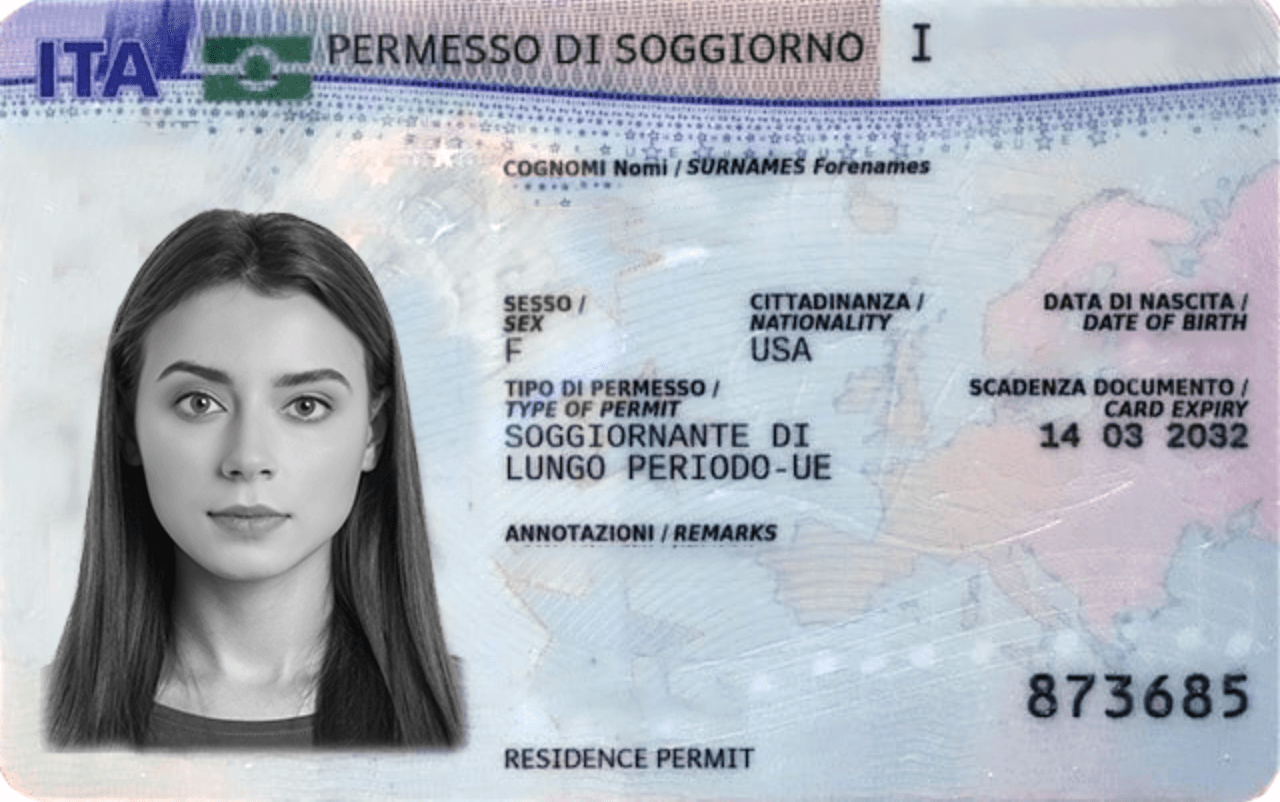
Renewal of the residence permit should be requested at the immigration office at least 60 days before it expires [1]
Source
How to obtain Italy residency as an EU citizen
EU citizens need neither a visa to enter Italy for short-term stays nor a residence permit for long-term residence. However, if their stay exceeds 3 months, they must register with the local registry office, Anagrafe.
To register in Italy, EU citizens must provide the following documents:
-
ID card;
-
evidence of employment, self-employment, other regular income, or sufficient funds in their bank account;
-
evidence of their reasons for staying long-term in Italy, such as an invitation from a university or a job offer.
Italy Golden Visa: requirements and detailed guide for investors
Non-EU citizens who wish to move to Italy but do not have work or study agreements in the country can obtain a temporary residence permit by investment. This option, introduced by the Italian government in 2017, is known as the Golden Visa, or the Investor Visa.
Investment options
Foreigners can choose from the following investment options:
- €250,000 — business investment in an innovative startup approved by the authorities;
- €500,000 — business investment in a company that is incorporated and operates in Italy;
- €1,000,000 — philanthropic investment in a project of public interest in areas such as culture, education, immigration management, scientific research, and preservation of cultural heritage;
- €2,000,000 — purchase of government bonds.
Requirements
In addition to having sufficient funds for the chosen investment option, applicants must meet the general requirements for the program. These include being over 18 years old, proving the legality of their income with relevant documents, having no criminal record or pending prosecutions, and providing proof of health insurance valid in Italy.
Under the same investment, an investor can also request residency for their close family members [2]. This includes:
- spouse;
- children under 18, including those of the spouse;
- unmarried adult children who are fully dependent on the investor and have no children of their own;
- parents who are financially dependent on the investor.
Validity period
The initial residence permit obtained by investment is valid for 2 years. Afterward, it can be renewed for another 3 years. Following this period, the investor is eligible for a permanent residence permit [3].
If investors choose a refundable investment option, they can only withdraw their funds after obtaining permanent residency. If they withdraw before then, they won’t be able to renew the temporary residency permit and will lose their status.

Step-by-step procedure and timeframe for obtaining an Italy Golden Visa
Based on the experience of Immigrant Invest lawyers, the processing time for an Italy residence permit by investment is 4 months or more.
The procedure is not entirely remote, as the investor is required to visit Italy to submit the documents and fulfill the investment condition.
1 day
Preliminary Due Diligence
Immigrant Invest lawyers first conduct a preliminary background check on the applicant to minimise the risk of rejection. Based on the results, a contract is signed with the investor, and the chosen investment program is initiated.
Immigrant Invest lawyers first conduct a preliminary background check on the applicant to minimise the risk of rejection. Based on the results, a contract is signed with the investor, and the chosen investment program is initiated.
7+ days
Collecting documents and applying for Nulla Osta
Immigrant Invest lawyers provide the investor with a list of documents required to obtain a Nulla Osta certificate and apply for the investor visa.
Nulla Osta confirms that there are no obstacles to the applicant becoming a resident in Italy. The lawyers apply for Nulla Osta on behalf of the investor through the Golden Visa website.
Immigrant Invest lawyers provide the investor with a list of documents required to obtain a Nulla Osta certificate and apply for the investor visa.
Nulla Osta confirms that there are no obstacles to the applicant becoming a resident in Italy. The lawyers apply for Nulla Osta on behalf of the investor through the Golden Visa website.
30 days
Issuance of Nulla Osta
Applications for Nulla Osta are processed within 30 days. During that time, the Committee might request additional documents.
Applications for Nulla Osta are processed within 30 days. During that time, the Committee might request additional documents.
7+ days
Application for an Investor Visa
Nulla Osta is valid for 6 months. Within this period, the investor must apply for a visa at the Italian consulate in their country of origin.
Immigrant Invest lawyers guide the investor throughout the application process.
Nulla Osta is valid for 6 months. Within this period, the investor must apply for a visa at the Italian consulate in their country of origin.
Immigrant Invest lawyers guide the investor throughout the application process.
10—120 days
Obtaining an Investor Visa
Visa applications are processed within 120 days. Most often, the decision is made within 10—20 days of document submission.
Visa applications are processed within 120 days. Most often, the decision is made within 10—20 days of document submission.
7+ days
Travel to Italy and application for residency
The investor visa is valid for 2 years. Within that period, the investor must visit Italy and apply for residency. To do so, they need to personally submit their documents to the Migration Service and fulfil the investment condition, which must be met within 3 months of arrival to Italy.
The investor visa is valid for 2 years. Within that period, the investor must visit Italy and apply for residency. To do so, they need to personally submit their documents to the Migration Service and fulfil the investment condition, which must be met within 3 months of arrival to Italy.
30+ days
Obtaining a residence permit card
Applications are reviewed within 30 days. If additional documents are requested, the applicant has one month to submit them.
Applications are reviewed within 30 days. If additional documents are requested, the applicant has one month to submit them.
Italy Digital Nomad Visa: how to apply and live in Italy as a remote worker
Italy issues special Digital Nomad Visas and residence permits to non-EU citizens who wish to work remotely or as freelancers from Italy. The spouse, children under 18, and parents can join the main applicant as dependents.
Income and savings
The applicant must confirm an income of at least €2,700 per month, or €32,400 per year. Besides, they must demonstrate savings of at least €30,000, with each relative adding €10,000 to this amount.
Validity period
A digital nomad gets a residence permit for 1 year, which can be extended.
After 5 years of living in Italy, a digital nomad can obtain permanent residency, and after 5 more years, citizenship.
How to obtain a residence permit for work in Italy
Obtaining a work residence permit in Italy involves navigating a structured process governed by annual quotas, employer authorisation requirements, and visa procedures. Here is what foreign workers and Italian employers need to know.
Quotas
The Italian government sets annual limits on the number of foreign workers who can obtain residence permits for work [4]. In 2025, 165,000 foreign nationals will be eligible for work-related residence permits.
70,720 of the total spots are designated for non-seasonal employees, 730 for the self-employed, and 110,000 for seasonal workers. Foreign workers can be employed in specific sectors such as technology, tourism, food, mechanics, and family and socio-medical assistance [5].
Certain professions are considered "out-of-quotas," meaning they are not included in the general quota and have a different application process. These professions include translators, interpreters, sports professionals, artists, scientists, nurses, and trainees.
Application procedure
To employ a foreign worker, Italian companies must first obtain authorisation from the Immigration Office. The process starts with confirming with the Employment Centre that no suitable candidates are available among current residents. Once confirmation is received, the company can apply to the Immigration Desk for foreign employee authorisation.
Once the Immigration Desk authorises the foreign worker, it will request the Italian embassy in the candidate’s home country to issue an entry visa. The candidate must present a valid passport, medical insurance, and proof of accommodation in Italy to the embassy.
The Immigration Desk will not authorise a foreign worker if they are considered a threat to public order or state security, or if they have a criminal record.
Obtainment timeframe
It takes at least 1.5 months for the employer to get confirmation from the Employment Centre and the Immigration Desk. After that, the visa is processed within 20 days.
In total, the Italy residence permit processing time is around 3 months.
Validity
The validity of the residence permitdepends on the foreign worker’s employment contract. If the contract is permanent, the worker will receive a 2-year residence permit. For fixed-term contracts, the permit is valid for 1 year, and for seasonal workers, the permit is valid for 9 months.
How to keep your Italian residency after losing a job
If a foreigner loses their job in Italy, their residency permit is not automatically cancelled. In fact, they can apply for residency for pending employment, which is valid for at least a year.
Application process
When a foreign resident loses their job in Italy, their employer is required to notify the Immigration Desk and the Employment Centre, which will then register the individual as unemployed.
To maintain residency, the unemployed foreign resident must visit the Employment Centre to request support in their job search. They will need to provide personal data, information about their skills, and details about their last position. They may also sign a Declaration of Immediate Availability to claim social benefits and receive authorised assistance from the Centre in finding a new job.
Documents
To obtain residency for pending employment, the applicant must submit the following documents to the Immigration Desk:
- completed application form;
- copy of passport;
- certificate from the Employment Centre confirming the applicant’s registration as unemployed.
Validity period
As long as they are not seasonal workers, foreign residents can stay in Italy for one year after losing their jobs. This period includes any remaining time from their previous work permit. If they register with the Employment Centre, they can later renew their permit.
Italy student visa: how to get temporary residence
Non-EU citizens wishing to study in Italy must obtain a student visa before arrival and apply for a residence permit shortly after. Here is an overview of who is eligible and how the process works.
Eligibility
Adult non-EU citizens can apply to study in Italian universities as international students. Every academic year, universities reserve a certain number of spots for foreign applicants.
Information about courses available to international students and the total number of spots can be found on the Universitaly platform, powered by the Ministry of Education, University, and Research.
Non-EU citizens under 18 and international students studying in other EU countries can participate in exchange programs at Italian universities [6].
Application and validity period
To study in Italy, a foreign citizen must first obtain a visa to enter the country. To do this, they need to present the following documents to the Italian embassy in their country of residence:
- completed application form;
- confirmation of enrollment or pre-enrollment from an Italian university;
- passport-size photo;
- valid passport for travel;
- documentation of educational history from the country of origin — for instance, high school diploma;
- bank statement proving sufficient funds;
- proof of accommodation in Italy;
- healthcare insurance coverage valid in Italy.
After the visa is issued, the holder must travel to Italy and apply for a residence permit within 8 days of arrival [7].
The applicant submits a similar set of documents to the Immigration Police Headquarters by post.
A student visa is valid for 1 year. If the course continues and the student passes their exams, they can renew their permit for another year.

The University of Bologna is the world's oldest university in continuous operation. In 2025, it was ranked 133rd among 1,500 universities in the QS World University Rankings
How to get Italy residency for family reunification
Close family members of Italian residents and citizens may be eligible to join them in Italy through a family reunification visa. Here is what applicants need to know about eligibility and the application process.
Eligibility
Close family members of citizens and residents in Italy can also obtain residency permits. This applies to:
- the resident’s spouse;
- children under 18;
- adult children who are financially dependent on the resident due to objective reasons, such as disability;
- parents over 65, provided that no other children in their country of origin can support them.
Application process
Applicants for a family reunification visa must apply at an Italian embassy in their country of residence.
Along with the application, family members must submit the following documents:
- passport or other travel document;
- two coloured passport photos;
- Nulla Osta — an authorisation for visa obtainment from the Immigration Desk by the inviting person; this is applicable only if the inviting resident is not an EU citizen;
- copy of the inviting person’s ID card or residence permit;
- civil registry documents proving family relationships;
- signed consent form from the other parent if the visa applicant is a minor;
- proof of sufficient financial means and adequate accommodation in Italy.
After the visa is issued, the holder must travel to Italy and apply for a residency permit. To do so, they need to send a similar set of documents to the Immigration Police Headquarters by post.
Residence permit vs civil residency: key differences
Holding a residence permit in Italy and registering civil residency are two separate processes.
Residence permit
A residence permit, or permesso di soggiorno, is required for non-EU citizens who wish to stay in Italy for more than 90 days. It allows them to legally reside in the country for a specific purpose, such as work, education, or family reunification.
A residence permit does not automatically grant the full set of rights, such as access to healthcare or social services. Its focus is more on legal residence than on integration into the local community.
Civil residency
Civil residency, or residenza anagrafica, involves officially registering an address with the local municipality [8]. This is required for both EU and non-EU citizens who live in Italy long-term.
Registering civil residency is necessary to obtain an Italian ID or apply for a permanent residence permit. Civil residency provides access to public services, including healthcare and social benefits. EU citizens with civil residency gain voting rights in municipal and regional elections.
If a person stays in Italy for more than 183 days and registers civil residency, they are considered tax residents. This means they are subject to Italian taxes on worldwide income.
Investors who obtain residency in Italy through the Golden Visa program are not obligated to register civil residency, as the program does not require them to reside in the country.
How to obtain permanent residency in Italy
After 5 continuous years of temporary residency, foreign nationals in Italy can apply for permanent residency status. Here is an overview of who qualifies and how to navigate the application process.
Eligibility
Anyone residing in Italy with a temporary residence permit for 5 continuous years can apply for permanent residency.
Permanent residents of Italy enjoy almost the same rights as nationals, except for voting rights and visa-free travel to over 170 countries. This status allows indefinite residence and work in Italy, access to social benefits, visa-free travel to any Schengen state, and the ability to enroll in local universities as a regular, not foreign, student.
Application process
Candidates for permanent residency apply at a Post Office, where they submit an “application kit” that will be forwarded to the Police Department. The kit should include the following:
- copy of the passport;
- copy of the applicant’s income tax statement, proving their monthly income is higher than the social allowance, which is €538.68 in 2025 [9];
- criminal record check and information on any pending charges;
- evidence of accommodation in Italy;
- copies of payslips for the current year;
- receipts for paid fees: €27.50 for the electronic residence permit and €14.62 for the electronic revenue stamp;
- proof of knowledge of the Italian language, at least at the A2 level — this could be a university or school diploma or an exam certificate.
5 key advantages of getting Italian residency
Italian residency opens the door to a range of benefits, from the right to live and work in the country long-term to access to Europe-wide travel, quality education, and social services. Here are five key advantages worth knowing about.
1. Right to stay
Residents have the right to stay in Italy for as long as their permit is valid. For permanent residents, this means they can stay in the country indefinitely.
Italy ranks 21st out of 89 countries in the 2024 Quality of Life ranking published by US News and World Report [10]. The country is considered family-friendly with a strong job market, and it is also safe, and economically and politically stable.
Expats from around the world are drawn to Italy for its rich cultural heritage, mild weather, picturesque landscapes, and delicious cuisine.
2. Travel through Europe
Residents of Italy can travel to any other Schengen country visa-free for short stays. They can spend up to 3 months in total within a 180-day period across all Schengen countries.
3. High-quality education
Italian residents can study at local universities at regular tuition fees, without paying the higher fees typically required of international students. Tuition fees for Italian nationals and residents range from €900 to 4,000.
Five Italian universities are ranked in the top 300 world’s best higher education institutions by the QS World University Rankings 2025 [11]:
- Polytechnic University of Milan.
- Sapienza University of Rome.
- University of Bologna.
- University of Padua.
- Polytechnic University of Turin.
4. Social benefits
Foreigners who have registered civil residency in Italy can access the country’s social benefits. For instance, they are entitled to receive medical treatment in public healthcare facilities and can seek assistance from the Employment Centres in case of unemployment.
5. Special tax regime
A high-net-worth individual who resides in Italy for more than 183 days a year becomes a tax resident. New tax residents can apply for a special tax regime, paying a fixed annual tax of €200,000 on income earned outside Italy. Gift and inheritance taxes apply only to Italian assets.
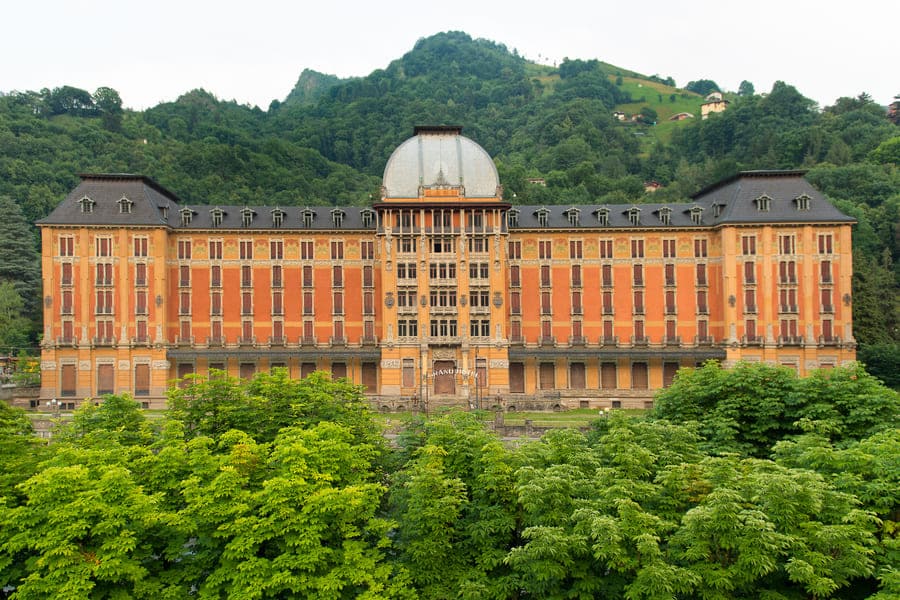
Residents in Italy can explore various famous spots, such as the San Pellegrino spa complex in a former casino building
How to get Italian citizenship after residency
Becoming eligible for citizenship is another benefit of being an Italian resident.
Non-EU residents can obtain Italy citizenship after 10 years of living in the country. During the last 5 years prior to the application, the time spent outside of the country should not exceed 10 months in total.
Applicants for citizenship must prove sufficient legal income: at least €8,264 yearly if the candidate is single, or €11,362 if married [12]. This income is confirmed through annual tax returns.
Proficiency in the Italian language is another requirement for citizenship applicants. They must present a B1 certificate recognised by the Ministry of Foreign Affairs. To obtain this certificate, candidates take tests at one of the following institutions:
- Dante Aligheri Society;
- University of Foreigners in Siena;
- UNiversity of Roma Tre;
- University for Foreigners in Perugia.
Graduates of Italian schools and universities are exempt from taking the test.
Finally, applicants for citizenship must provide proof of having no criminal record in Italy or any other countries of residence.
Italy’s passport is one of the strongest in the world. The country’s citizens can travel visa-free to over 170 states and territories, including the USA, Canada, Australia, and Japan.
Residency in Italy: key facts you should know
-
There are two types of residence permits in Italy: temporary and permanent. The temporary residence permit allows a stay in the country for 1 to 2 years, while the permanent permit entitles the holder to an indefinite stay and work in Italy.
-
A temporary residence permit can be obtained through investment, work, study, pending employment, or family reunification.
-
To be eligible for permanent residency in Italy, one must spend at least 5 years in the country on a temporary permit.
-
Foreigners residing in Italy for 10 years, with sufficient income and proficiency in Italian at the B1 level or higher, can apply for Italian citizenship.
Immigrant Invest is a licensed agent for citizenship and residence by investment programs in the EU, the Caribbean, Asia, and the Middle East. Take advantage of our global 15-year expertise — schedule a meeting with our investment programs experts.
Sources
- Source: Italian Ministry of the Interior — Visa and Residence Permit explains the rules and procedures for maintaining legal stay in Italy.
- Source: Italian Investor Visa Portal details how the Investor Visa program extends residency rights to close family members of applicants.
- Source: Polizia di Stato — EU long-term residence permit outlines the conditions and rights linked to obtaining permanent residency in Italy.
- Source: Integrazione Migranti — Work Quotas explains how the Italian government sets annual quotas for foreign workers’ residence permits.
- Source: Integrazione Migranti — Employment Sectors lists the sectors open to foreign workers under Italy’s annual work quota system.
- Source: Universitaly — Official Portal provides information on study opportunities and exchange programs at Italian universities.
- Source: Italian Ministry of Foreign Affairs — Studying in Italy explains the obligations for students entering Italy, including residence permit applications after arrival.
- Source: Anagrafe Nazionale — Change of Residence explains the official process of registering or updating an address with the local municipality in Italy.
- Source: Melting Pot — Assegno Sociale INPS reports the updated social allowance amount set for 2025 in Italy.
- Source: US News — Quality of Life Ranking presents the global comparison of countries based on quality of life indicators.
- Source: QS World University Rankings 2025 showcases the leading global universities, including several top-ranked institutions in Italy.
- Source: Prefettura — Cittadinanza per Residenza outlines the income and residency requirements for acquiring Italian citizenship.
- Source: Italian Ministry of the Interior — Visa and Residence Permit provides official guidance on residence permit applications and renewals in Italy.
- Source: Polizia di Stato — Long-term Residence Permit explains the conditions for maintaining eligibility for permanent residency in Italy.
- Source: PwC — Italy Personal Income Tax provides an overview of how personal income is taxed for residents in Italy.
 Trusted by 5000+ investors