Summary
Some countries grant citizenship not for money or years of residence but for excellence. Exceptional talent, achievements, and service can open the door to a passport.
This rare path is reserved for those who stand out in science, business, culture, or sport and whose contributions align with national interests. Among the notable figures recognised in this way are Elon Musk and Tom Hanks.
Explore how citizenship by merit works, which countries offer it, and what alternatives exist.
What is citizenship by merit?
Citizenship by merit, also known as citizenship by exception, is a prestigious route to nationality. It is granted not in exchange for time or money but in recognition of exceptional personal value.
This route is reserved for individuals whose achievements or contributions have significantly benefited a country — whether in science, business, culture, or global influence.
Legal framework
In some countries, exceptional citizenship is formally regulated by law, with defined eligibility criteria and clear application procedures.
In others, citizenship by merit is awarded on a discretionary basis as a mark of recognition. For instance, a scientist whose breakthrough gains international acclaim or an athlete who secures a major global title may receive nationality by presidential decree, even without having pursued it deliberately.
Differences from other pathways to citizenship
Unlike standard naturalisation, which is based on years of residence and integration, citizenship by merit is selective and reserved for those whose achievements stand out on a national or global scale.
For those seeking a structured and widely available alternative, citizenship by investment offers a more accessible route through financial contributions to a country’s economy.

Who qualifies for citizenship by exception?
Investors, entrepreneurs, philanthropists, scientists, and other accomplished individuals may qualify for exceptional citizenship. Each case is assessed individually, and strong legal support is essential to demonstrate the scale and impact of the applicant’s contribution.
Investors and entrepreneurs
Foreigners who drive economic growth, create employment, or introduce innovation with national impact may be granted exceptional citizenship.
A prominent example is Elon Musk, naturalised as a US citizen in 2002[1], who reshaped entire industries through Tesla, SpaceX, and other ventures, leaving a lasting economic and technological mark.
Philanthropists and cultural benefactors
Those whose charitable or artistic support strengthens social and cultural development also may be considered for citizenship by merit.
For instance, George Soros, naturalised in the US in 1961[2], went on to establish the Open Society Foundations, a global network supporting education, human rights, and democracy.
Scientists, artists, and athletes of international standing
Individuals whose excellence brings prestige to the country, such as scientists, artists, actors, and athletes can obtain passports by merit.
For example, Tom Hanks and his wife were awarded honorary Greek citizenship in recognition of their support after the 2018 wildfires in Mati[3]. Lorenzo Brown, an American basketball player, was naturalised by Spain in 2022 to reinforce the national team[4]. Kaillie Humphries, a Canadian-born bobsledder, became a US citizen in 2021 and went on to win Olympic gold for Team USA[5].
Individuals who elevate a state’s global reputation
Outstanding figures who demonstrate exceptional achievements in diplomacy or leadership may also be granted exceptional citizenship.
Valdas Adamkus is one such figure: after years as a US citizen, he was re-granted Lithuanian citizenship and later became the country’s President, renowned for his international stature and service[6].
10 benefits of citizenship by merit
1. Right of entry and residence. Citizenship by merit guarantees unrestricted entry and the right to reside permanently in the country. It protects against deportation, loss of residence rights, or border closures, even in times of political or economic instability.
Importantly, exceptional citizenship secures the right to live in the country without creating any obligation to do so.
2. Freedom to work, invest, and run a business. Citizens enjoy full participation in the national economy without the need for additional permits. They can work in any sector, invest in property or enterprises, and establish businesses under the same conditions as native-born citizens.
3. Inheritance of citizenship. Citizenship is passed on to children and, in most cases, to future generations.
4. Global mobility. A respected passport unlocks broad visa-free travel opportunities. For example, a Maltese passport grants access to 171 countries without a visa[7]. Second citizenship also serves as a safeguard in times of crisis, providing alternatives when other nationalities face sudden restrictions.
5. Full access to national insurance, pension, and welfare systems. Citizenship grants the same entitlements as those born in the country, from healthcare and education to retirement benefits.
6. Eligibility for public scholarships or grants. Citizenship provides access to state-funded education, research, and professional development programmes. These opportunities are often reserved exclusively for nationals, supporting long-term growth and advancement.
7. Tax optimisation opportunities. Citizenship can open the door to favourable tax regimes or exemptions available only to nationals. For instance, in the US, the Foreign Earned Income Exclusion is available only to US citizens and certain residents[8].
8. Political rights. Citizens gain the right to vote, run for office, and engage in civic initiatives. This provides a direct channel to influence national policy and take part in shaping the country’s future.
In many states, however, dual nationals are restricted from holding public office — for example, in the UAE, Latvia, and Bulgaria.
9. Consular protection abroad. National embassies and consulates extend assistance in emergencies, offering security in foreign jurisdictions. This protection may include legal aid, evacuation support, and safeguarding of family and assets.
10. Dual nationality. In many cases, citizenship by merit allows retention of an existing passport. This creates strategic flexibility, diversifying risks, and offering access to multiple legal, economic, and social systems.
11 countries that grant citizenship by exception
Across Europe, several countries offer citizenship by exception, typically granted through ministerial or presidential approval. Though rarely publicised or widely used, these routes remain legally available to those who meet the highest standards of merit.
Outside the EU, a few prestigious jurisdictions, such as the UAE and the US, also provide tailored routes for outstanding individuals, often tied to elite visa programmes or government nominations.
In many cases, family members may also qualify for citizenship.
Citizenship by merit: country comparison
Country

Austria
Pathway type
Direct citizenship
Family inclusion
Spouse and children
Dual citizenship
With government permission
Visa-free countries[9]
174
Country

Malta
Pathway type
Direct citizenship
Family inclusion
Spouse and children
Dual citizenship
Yes
Visa-free countries[9]
171
Country

Spain
Pathway type
Direct citizenship
Family inclusion
Not mentioned in the law
Dual citizenship
No
Visa-free countries[9]
175
Country

Serbia
Pathway type
Direct citizenship
Family inclusion
Spouse and children under 18
Dual citizenship
Yes
Visa-free countries[9]
134
Country

Bulgaria
Pathway type
Direct citizenship
Family inclusion
Children
Dual citizenship
Yes
Visa-free countries[9]
170
Country

Croatia
Pathway type
Direct citizenship
Family inclusion
Spouse and children
Dual citizenship
Yes
Visa-free countries[9]
173
Country

Latvia
Pathway type
Direct citizenship
Family inclusion
Not mentioned in the law
Dual citizenship
Yes
Visa-free countries[9]
171
Country

Slovenia
Pathway type
1 year of residence
Family inclusion
Not mentioned in the law
Dual citizenship
With government permission
Visa-free countries[9]
171
Country

France
Pathway type
0—2 years of residence
Family inclusion
Not mentioned in the law
Dual citizenship
Yes
Visa-free countries[9]
174
Country

UAE
Pathway type
Direct citizenship
Family inclusion
Spouse and children
Dual citizenship
With government permission
Visa-free countries[9]
179
Country

USA
Pathway type
5 years of residence
Family inclusion
Spouse and unmarried children under 21
Dual citizenship
Yes
Visa-free countries[9]
168
Country | Pathway type | Family inclusion | Dual citizenship | Visa-free countries[9] |
|---|---|---|---|---|
Austria | Direct citizenship | Spouse and children | With government permission | 174 |
Malta | Direct citizenship | Spouse and children | Yes | 171 |
Spain | Direct citizenship | Not mentioned in the law | No | 175 |
Serbia | Direct citizenship | Spouse and children under 18 | Yes | 134 |
Bulgaria | Direct citizenship | Children | Yes | 170 |
Croatia | Direct citizenship | Spouse and children | Yes | 173 |
Latvia | Direct citizenship | Not mentioned in the law | Yes | 171 |
Slovenia | 1 year of residence | Not mentioned in the law | With government permission | 171 |
France | 0—2 years of residence | Not mentioned in the law | Yes | 174 |
UAE | Direct citizenship | Spouse and children | With government permission | 179 |
USA | 5 years of residence | Spouse and unmarried children under 21 | Yes | 168 |
1. Malta
In 2025, Malta introduced a modernised framework for citizenship by merit, replacing the previous investment-based route[10]. This new path allows the government to grant citizenship to individuals whose contributions to Malta or to humanity are considered exceptional[11].
Eligibility. To qualify, a person must have made — or be expected to make — exceptional contributions to Malta or the wider world. These may be in areas such as:
- science or research,
- technology or innovation,
- culture or the arts,
- sports,
- entrepreneurship,
- philanthropy,
- public service.
Family inclusion. Spouses and children may be considered as part of the process, depending on the circumstances. Each case is reviewed individually.
All applications will be assessed by a special evaluation board, with the final decision made by the Minister responsible for citizenship.
2. Austria
Austria grants citizenship by exception under Section 10(6) of the Austrian Citizenship Act[12]. Each application is assessed individually and must be approved by the Federal Government. In addition to past accomplishments, applicants are expected to demonstrate continued relevance and potential future contributions.
Eligibility is based on extraordinary achievements well above the norm in one or more of the following areas:
- science,
- business or economics,
- sport,
- arts and culture.
Other fields may also be considered if the merit is clearly aligned with Austria’s national interest[13].
Exclusivity and flexibility. There is no requirement for long-term residence, proof of German language skills, or financial self-sufficiency. In select cases, Austria may also permit dual citizenship — a notable exception to its usual single-nationality policy.
Family inclusion. Citizenship may be extended to children and to spouses or registered partners. However, family members must meet the general naturalisation criteria, including proof of German language skills at B1 level, a secure livelihood, civic knowledge, and a clean criminal record.
3. Spain
Spain offers a rare path to citizenship called Carta de Naturaleza[15]. It functions as a merit-based route, granted only in exceptional cases by Royal Decree. Unlike Austria or Malta, it is not a formal citizenship-by-merit programme but rather a discretionary option used sparingly.
Eligibility criteria. To qualify, applicants must demonstrate exceptional circumstances. The law does not provide a strict definition, so each case is assessed individually by the Government.
Those eligible include:
- Adults over 18 or legally emancipated individuals.
- Teenagers over 14, assisted by a legal representative.
- The legal representative of a child under 14.
- Incapacitated person, either personally or through their legal representative, depending on the court ruling.
Family inclusion. In Spain, family members cannot be included, since citizenship by exception is granted only to the individual.

Spain has held 1st place in the Expat Insider Quality of Life Index for 4 consecutive years[16]
4. Serbia
Serbia offers an exceptional route to citizenship for foreign nationals whose admission is deemed to be in the interest of the Republic[17]. This path is granted by decision of the Government of Serbia, following a proposal from the relevant ministry.
Eligibility criteria. The law does not define what constitutes the “interest of the Republic,” leaving the decision to government discretion on a case-by-case basis. No specific fields or types of contribution are listed.
When citizenship is granted under this provision, the government may waive key standard requirements such as release from previous citizenship, obligation to complete 3 years of uninterrupted permanent residence in Serbia, and submission of a written statement declaring Serbia as the applicant’s country of choice.
Family inclusion. The spouse and children under 18 may also be granted Serbian citizenship.
5. Bulgaria
Under Article 16 of the Bulgarian Citizenship Act, foreigners may be granted citizenship even if they do not meet the usual requirements[18]. This applies when their naturalisation is considered to be in the special interest of the Republic.
Eligibility criteria. Citizenship may be granted if a person has made exceptional contributions in fields such as:
- science or technology,
- business and economy,
- culture or the arts,
- sports,
- public life.
Unlike standard naturalisation, this route does not require residence, language skills, or renunciation of the applicant’s current citizenship.
Family inclusion. Children under 14 can be included automatically if both parents are granted citizenship. For older children, or when only one parent applies, separate approval is required.
6. Croatia
Croatia provides a pathway to citizenship for individuals whose naturalisation is deemed to serve the national interest, as regulated by Article 12 of the Croatian Citizenship Act[19].
Eligibility criteria. There is no formal list of qualifying achievements. However, applicants may be granted citizenship even if they do not meet the usual naturalisation requirements, such as being over 18, releasing their previous citizenship, demonstrating language proficiency, and completing an extended period of residence in Croatia.
To apply through this route, the Ministry of the Interior must receive a formal opinion from other relevant ministries confirming that the applicant’s naturalisation is in the national interest.
Family inclusion. Spouses and children may also be eligible for citizenship even if they do not meet the usual criteria. The only requirement is that they live in Croatia with legal residence for at least 1 year. Each case is assessed individually.
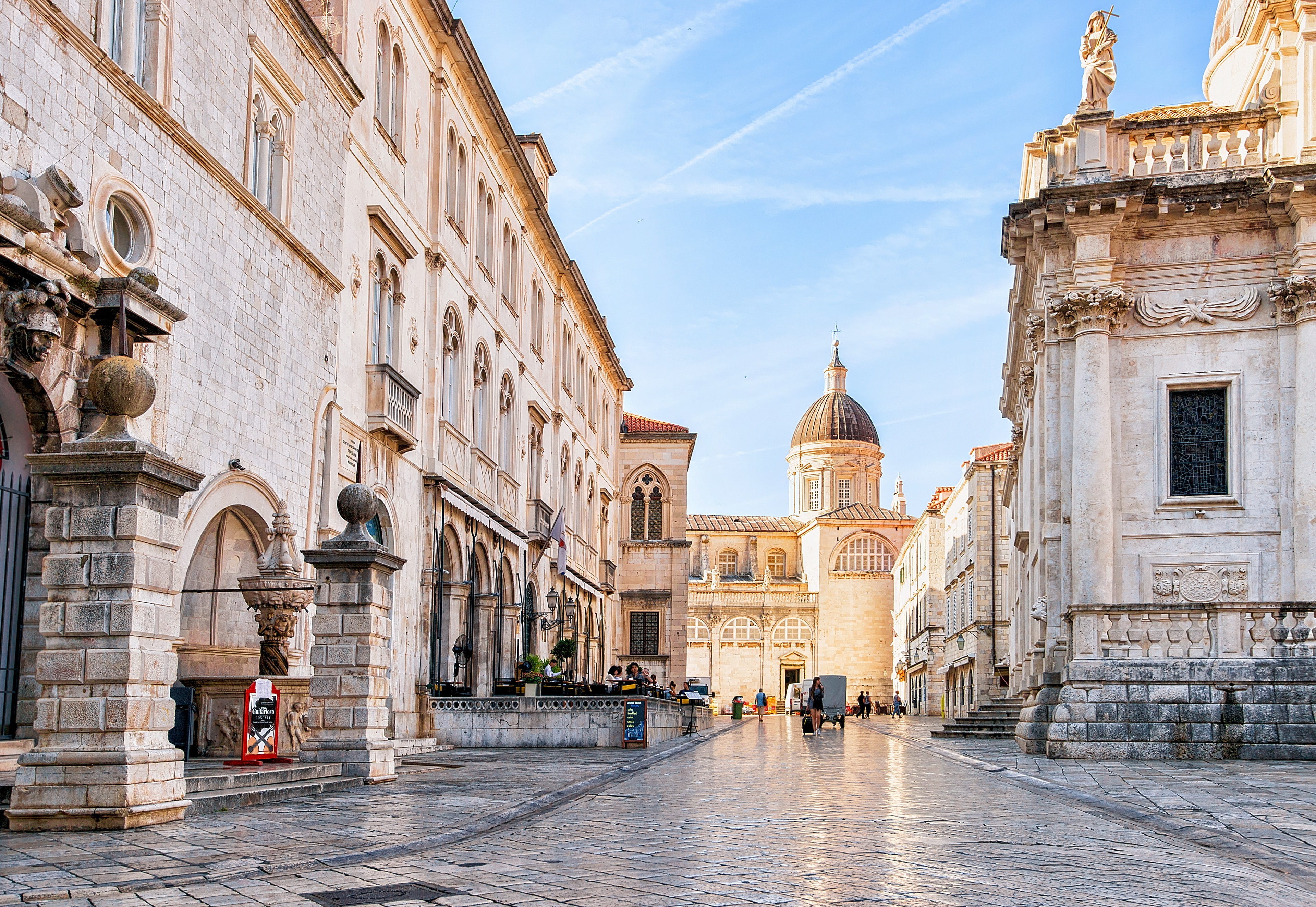
Croatia joined the Eurozone and the Schengen Area in 2023, strengthening its position in Europe
7. Latvia
Latvia may grant citizenship to a foreign national for special merit in the interest of the Republic, as regulated under Article 13 of the Latvian Citizenship Law[20].
Eligibility criteria. The law does not define what constitutes “special merit” or specify required fields. Each case is assessed individually by Parliament, which also makes the final decision.
Family inclusion. The law does not clarify whether spouses or children of recipients may qualify under the same provision.
8. Slovenia
Slovenia offers a special path to citizenship for individuals whose work or achievements are considered important to the national interest[21]. This process, known as extraordinary naturalisation, enables the government to waive certain standard requirements.
Eligibility criteria. To qualify for extraordinary naturalisation in Slovenia, an applicant must:
- have lived in Slovenia for at least 1 year before applying;
- provide evidence of national interest, whether in science, the economy, the arts, or similar sectors.
Unlike regular naturalisation, this route does not require 10 years of residency or full proof of integration, provided that national interest is demonstrated.
Family inclusion. Slovenian legislation does not provide for family inclusion under extraordinary naturalisation.
9. France
France does not offer direct citizenship by merit. However, it provides a discretionary path to naturalisation for individuals who have rendered, or are expected to render, exceptional services to the country[22].
Eligibility criteria. This provision applies to foreigners who:
- have made extraordinary contributions in areas such as science, culture, sport, or the economy;
- are likely to continue contributing to France’s international standing or national interests;
- meet the standard naturalisation requirements, including proof of French proficiency at B1 level, integration, and good character.
There is no exhaustive list of accepted achievements, and each case is evaluated individually by decree. Applicants may also be required to demonstrate active participation in French life and adherence to French values.
Qualifying individuals may be naturalised as French citizens with a reduced residence requirement — from 5 years down to 2, or even less in rare cases[23].
Family inclusion. French law does not mention family inclusion in cases of exceptional naturalisation.

With its rich cultural heritage, world-class research institutions, and thriving arts scene, France is a natural destination for exceptional individuals
10. The UAE
In 2021, the UAE introduced a groundbreaking reform to its nationality law, allowing select foreigners to be granted Emirati citizenship for exceptional merit[24]. This pathway is not open to the general public: individuals must be nominated by federal entities and approved by the Rulers’ or Crown Princes’ Courts, Executive Councils, or the Cabinet.
Eligibility criteria. Nomination is possible for those who bring outstanding value to the country, including:
- investors, such as individuals who own property in the UAE;
- doctors, specialists, scientists, and inventors with recognised expertise in their fields;
- intellectuals and creatives, particularly those with international acclaim or prestigious awards.
To qualify, nominees must take an oath of allegiance, comply with UAE laws, and notify the authorities if they gain or lose another citizenship.
Family inclusion. The law allows spouses and children of the main applicant to also receive citizenship, ensuring that the entire family can benefit from this status.
11. The USA
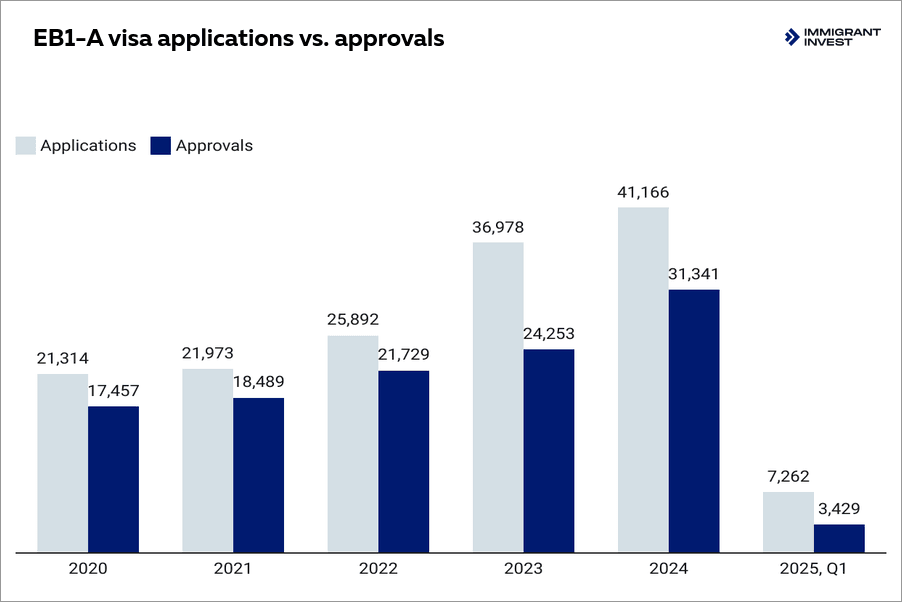
The United States does not grant citizenship by merit directly. However, the EB‑1A visa serves as a merit-based pathway to citizenship[25]. It is reserved for individuals at the very top of their field in science, the arts, education, business, or athletics.
Eligibility criteria. Applicants must demonstrate either a one-time major achievement — such as a Nobel Prize or Olympic medal — or meet at least 3 of 10 recognised standards, including:
- Awards: national or international prizes for excellence.
- Memberships in associations requiring outstanding achievements.
- Media coverage: published material about the applicant’s work in major outlets.
- Judging: service as a judge of others’ work in the field.
- Contributions: original work of major significance.
- Publications: authorship of scholarly articles.
- Exhibitions: artistic work displayed in recognised showcases.
- Leading roles: critical positions in reputable organisations.
- High income: salary or remuneration significantly above peers.
- Commercial success: proven success in the performing arts.
If approved, the EB‑1A leads directly to permanent residence and issuing a Green Card. After holding a Green Card for 5 years, an individual may apply for US citizenship by naturalisation.
Family inclusion. Spouses and unmarried children under 21 may also obtain Green Cards alongside the main applicant.
Documents required for citizenship by exception
Applying for citizenship by exception is highly individual, but certain documents are typically requested to establish both eligibility and merit:
- Valid passport and proof of identity.
- Birth and civil status certificates, including marriage or divorce certificates, and children’s birth certificates if family members are included.
- Proof of residence.
- Police clearance certificates from the country of origin and countries of residence.
- Evidence of merit, such as scientific publications, awards, patents, business records, philanthropic contributions, or letters of recognition.
- Letters of recommendation from recognised institutions, government bodies, or industry leaders attesting to the applicant’s contribution to the state.
- Financial documents, such as bank statements, tax compliance certificates, and proof of stable resources, if required.
- Medical certificate confirming good health and the absence of contagious diseases.
Because this path is selective and discretionary, applicants are often required to provide tailored documentation to prove their exceptional benefit to the state. Strong legal guidance is essential to compile and present the evidence effectively.
Step-by-step procedure of obtaining citizenship by merit
Obtaining citizenship by merit is a selective and often lengthy process. While it offers a unique path for highly accomplished individuals, it typically involves extensive documentation, government reviews, and long waiting periods before a final decision is made.
1—2 months
Initial eligibility check
The competent ministry or agency examines whether the applicant’s achievements qualify as exceptional services in the interest of the state.
The competent ministry or agency examines whether the applicant’s achievements qualify as exceptional services in the interest of the state.
Around 2 months
Preparing evidence and filing the application
The applicant gathers proof of awards, publications, business achievements, cultural or scientific contributions, and letters of recommendation. Supporting documents must be translated and legalised if required.
The complete application is then submitted to the competent authority, such as the Ministry of the Interior, the President’s Office, or a dedicated citizenship agency.
The applicant gathers proof of awards, publications, business achievements, cultural or scientific contributions, and letters of recommendation. Supporting documents must be translated and legalised if required.
The complete application is then submitted to the competent authority, such as the Ministry of the Interior, the President’s Office, or a dedicated citizenship agency.
6+ months
Government review
Authorities examine whether the applicant’s contribution aligns with the state’s interest. This stage usually involves background checks, validation of evidence, and, in some cases, consultation with expert ministries.
Authorities examine whether the applicant’s contribution aligns with the state’s interest. This stage usually involves background checks, validation of evidence, and, in some cases, consultation with expert ministries.
Up to 2 years
Decision and approval
The final decision is taken by high-level state bodies such as the President, Cabinet, or Parliament. Approval is rare and highly selective.
The final decision is taken by high-level state bodies such as the President, Cabinet, or Parliament. Approval is rare and highly selective.
1—2 months
Oath and issuance
If approved, the applicant swears allegiance to the state, pays issuance fees, and receives a citizenship certificate. A passport may be requested afterwards.
If approved, the applicant swears allegiance to the state, pays issuance fees, and receives a citizenship certificate. A passport may be requested afterwards.
Alternatives to citizenship by exception
Merit-based citizenship is the rarest path of all. Unlike other routes, it rewards exceptional achievement rather than years of residence, financial investment, or family connections. Alongside it, several other recognised ways to acquire citizenship include naturalisation, marriage, descent, and investment.
Naturalisation is the most common route. It requires long-term residence, language proficiency, and cultural integration. Some countries — including Portugal, Greece, Malta, Cyprus, Hungary, Latvia, Italy, and the UAE — offer residence by investment, granting residence permits in exchange for economic contribution.
While not citizenship itself, these programmes often serve as a stepping stone, enabling investors to obtain passports after several years of legal residence.
Marriage allows a foreign spouse to apply for citizenship, usually after a reduced residence period and proof of a genuine relationship.
Descent provides citizenship through ancestry, often with fewer requirements, though eligibility depends entirely on each country’s laws.
Investment is available in countries with formal citizenship by investment, or CBI, programmes. This option offers a fast-track route in return for significant financial contributions to the local economy.
Which countries issue citizenship by investment?
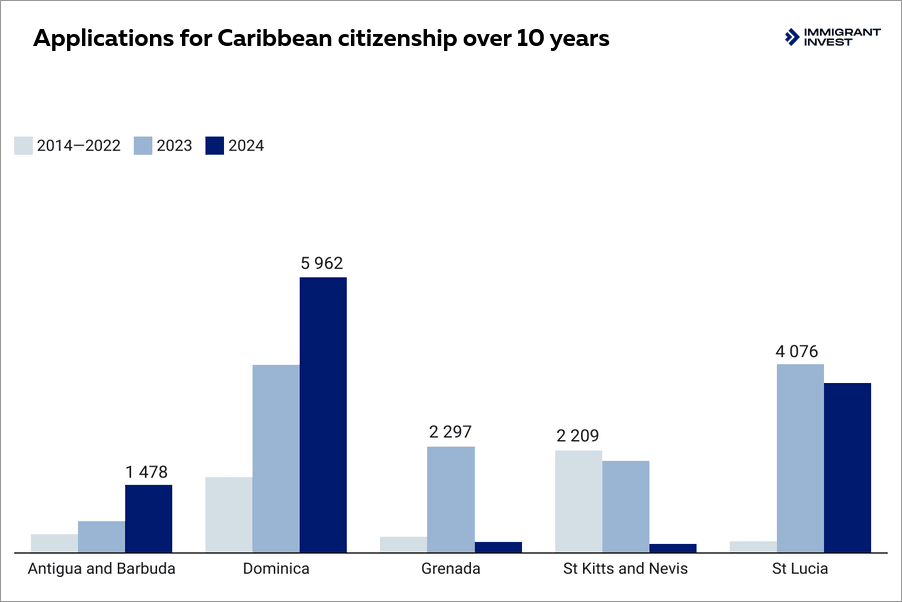
Several countries consistently rank among the top CBI programmes, including Vanuatu, Turkey, and the five leading Caribbean nations: St Kitts and Nevis, Antigua and Barbuda, Dominica, Grenada, and St Lucia.
Vanuatu
Vanuatu offers the fastest citizenship-by-investment route, with passports issued within 2 to 4 months and no language or history tests required.
Two investment options are available:
- Non-refundable contribution — $130,000+. This supports economic development and disaster recovery efforts, such as rebuilding after Cyclone Harold. It does not generate income.
- CNO Future Fund Option — $157,000+. This promotes renewable energy through coconut oil production, while also supporting cocoa farming. The investment is held for 5 years and offers an estimated return of up to 5% annually, amounting to around $50,000.
Spouses, children under 25, and parents over 50 can be included in the application.
The Caribbean
Investment options. All Caribbean CBI programmes provide at least two main pathways to citizenship:
- non-refundable contribution to a government fund;
- investment in government-approved real estate.
Government funds are channelled into essential areas such as education, healthcare, renewable energy, agriculture, and tourism.
Real estate investments typically include luxury villas, hotels, apartments, resorts, and infrastructure projects like marinas. Investors may earn annual rental returns of 2—5% and can resell the property after the required holding period.
Depending on the country, additional options may include investing in a business or purchasing government bonds.
Minimum investment amounts vary by country:
- Dominica — $200,000.
- Antigua and Barbuda — $230,000.
- Grenada — $235,000.
- St Lucia — $240,000.
- St Kitts and Nevis — $250,000.
Family inclusion. All Caribbean CBI countries allow the inclusion of spouses, children, and parents, though age limits vary. Some programmes also extend eligibility to grandparents and siblings.
Global mobility. Caribbean CBI passports provide visa-free or visa-on-arrival access to numerous destinations, including the Schengen Area and Singapore. Holders can also apply for a 10-year US B-1/B-2 visa, which permits multiple stays of up to 6 months for tourism, business, or visiting family.
Unique advantages. Grenada and Dominica are the only Caribbean countries offering visa-free access to China. Grenada also stands out for providing access to the US E-2 Investor Visa, which enables citizens to live in the US, start a business, and reside there without needing a job offer or proof of high net worth.
Türkiye
The Turkish citizenship programme offers 5 investment options:
- Purchase of real estate — $400,000+.
- Business investments — $500,000+.
- Bank deposit — $500,000+.
- Purchase of government bonds — $500,000+.
- Purchase of units in an investment fund — $500,000+.
Around 95% of applicants choose real estate, as property values in Turkey grow by 15—25% annually. After 3 years, the property may be sold. However, there is a restriction: the new buyer cannot qualify for citizenship by investment with the same property.
Family inclusion. Spouses and children under 18 are eligible for Turkish citizenship alongside the main investor.
Key takeaways on citizenship by merit
- Citizenship by merit is a special route to nationality granted to individuals whose achievements bring exceptional value to a country.
- Exceptional citizenship is awarded for outstanding contributions in areas such as science, culture, sports, business, or public service, and is usually approved directly by high-level state authorities.
- Several countries grant passports by merit without requiring residence, including Austria, Spain, Malta, Croatia, Latvia, Serbia, Bulgaria, and the UAE.
- In others, such as France, Slovenia, and the US, a short stay of 1 to 5 years is still required.
- Citizenship by investment is a popular alternative to citizenship by merit, particularly among wealthy foreigners. It is available in countries such as Vanuatu, Turkey, and five Caribbean nations.
Immigrant Invest is a licensed agent for citizenship and residence by investment programs in the EU, the Caribbean, Asia, and the Middle East. Take advantage of our global 15-year expertise — schedule a meeting with our investment programs experts.
40+ options in different countries by 25 criteria