
Summary
Panama offers the Qualified Investor Visa, a residence by investment programme with a minimum threshold starting at $300,000. By completing an investment, foreigners obtain permanent residence in the country.
The programme is often considered by internationally mobile entrepreneurs and families who want geographic diversification while keeping their primary residence elsewhere.
This guide explains the key requirements, and outlines the realistic pathway to citizenship for investors.
What is the Panama Golden Visa and how does it work?
The Panama Qualified Investor Visa is a permanent residence programme established under Executive Decree 722 and later amended by Decree 193[1]. It grants indefinite residence in Panama to foreigners who complete an investment and maintain it for at least five years. The available options are:
- $300,000 in real estate in Panama;
- $500,000 in securities purchased through a licensed Panamanian broker;
- $750,000 in a fixed-term deposit with a Panamanian bank.
Applications are processed within 3 months, depending on the completeness of documents and the workload of the authorities. A key stage is banking compliance, which includes anti-money laundering checks and verification of the lawful source of funds. Applicants must provide detailed financial documentation, and approval depends on successful completion of these reviews.
Successful applicants receive permanent residence with no minimum annual stay requirement. After 5 years of continuous residence, they may apply for citizenship by naturalisation. This process requires passing the Spanish language and civics exams.

Investment routes under the Panama Qualified Investor Visa programme
The Panama Qualified Investor Visa provides three investment options. In all cases, funds must originate from abroad and the investment must be maintained for at least five years[2].
1. Real estate investment route — $300,000+
An investor may qualify by purchasing residential or commercial real estate in Panama with a minimum value of $300,000. If the property price exceeds the required minimum, the surplus value may be financed through a local mortgage.
Key conditions of this investment option are:
- property must be registered with the Public Registry of Panama;
- title must be free of liens and encumbrances for the investment amount;
- funds must be transferred from abroad through the banking system;
The programme allows the investment to be held personally or through a legal entity, provided the applicant is the ultimate beneficial owner. It also recognises a promise-to-purchase structure via a trust, subject to compliance with programme requirements.
The property must be held for 5 years. If the investor sells or otherwise disposes of the asset during this period without prior approval and a replacement investment, the authorities may cancel permanent residence.
2. Securities investment route — $500,000+
Investors may qualify by investing at least $500,000 in securities through a Panamanian brokerage firm licensed and supervised by the Superintendence of the Securities Market.
Key conditions of this investment option are:
- portfolio must remain under the custody of the licensed broker;
- annual confirmation of compliance is required;
- funds must originate from abroad and be transferred through authorised financial channels with documented proof of lawful source.
This route is typically chosen by investors who prefer financial instruments over direct property ownership.
3. Fixed-term bank deposit route — $750,000+
Applicants may place at least $750,000 in a fixed-term deposit with a bank licensed by the Superintendence of Banks of Panama.
Key conditions are:
- funds must remain unencumbered for the full holding period;
- bank issues certificates confirming the deposit amount, term and compliance with programme requirements.
Early withdrawal or encumbrance of the deposit during the five-year period may affect residence status.
Whether the investor chooses real estate, securities or a fixed-term bank deposit, the investment must be maintained for a minimum of 5 years. The capital must remain compliant with programme conditions throughout this period.
Eligibility requirements for Qualified Investor Visa Panama
To qualify for permanent residence under the Panama Qualified Investor Programme, applicants must meet a set of legal, financial and compliance requirements[3]. These criteria apply to the main investor and, where relevant, to included family members. The programme combines investment thresholds with banking Due Diligence and immigration checks.
Requirements for the main investor
The programme is open to applicants of any nationality. The principal investor must:
- be at least 18 years old;
- complete one of the investments under the programme;
- demonstrate lawful origin of the invested funds;
- have no criminal record;
- obtain valid health insurance accepted in Panama;
- demonstrate financial solvency in accordance with the programme rules.
Requirements for family members
The following dependants may be included in the application:
- spouse in a legally recognised marriage, including same-sex couples;
- children under 18;
- unmarried children aged 18+ who are financially dependent and enrolled in full-time education;
- financially dependent parents.
Banking pre-screening and source-of-funds requirements
Before filing the application, the investor must open an account with a Panamanian bank and successfully pass an anti-money laundering screening.
Banks typically request documentation confirming the lawful origin of funds. This may include tax returns, bank statements, corporate records, contracts for the sale of assets, dividend documentation, inheritance records or investment account statements covering several years.
Only after successful banking compliance and completion of the investment can the residence application proceed.
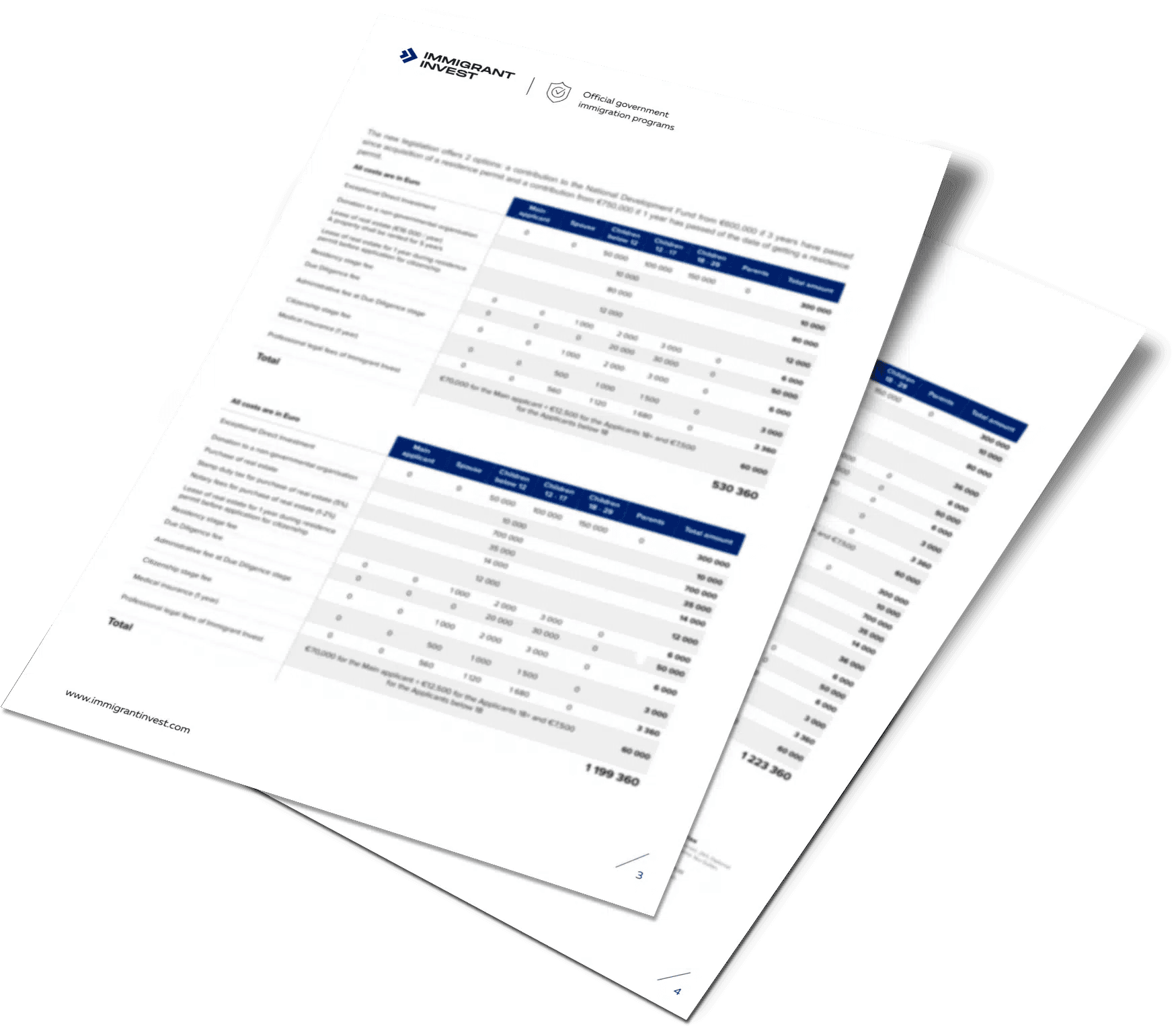
Total expenses under the Panama Qualified Investor Visa
List of required documents to obtain Panama Golden Visa
Applicants must prepare a set of personal, financial and investment-related documents. All foreign documents must be duly apostilled or legalised and, where required, translated into Spanish by an authorised translator in Panama.
Each dependant must submit individual documentation and pay the applicable government fees. Adult dependants must provide proof of family relationship, evidence of financial dependency where required, valid health insurance, and clean criminal record certificates.
The standard document package includes:
- valid passports for the investor and all dependants;
- police clearance certificates from the country of residence and from any country where the applicant has lived for more than one year during the past 5 years;
- medical certificate issued in Panama;
- proof of health insurance valid in Panama;
- proof of financial solvency;
- documentation confirming the lawful origin of funds;
- evidence of the investment, such as a registered property title, brokerage certificate or bank deposit certificate;
- marriage certificate for a spouse, if applicable;
- birth certificates for children;
- proof of financial dependency and enrolment in full-time education for adult dependent children, where relevant.
Additional documents may be requested depending on the applicant’s profile, family composition and chosen investment route.
Step-by-step application process to obtain Panama Golden Visa
Obtaining permanent residence under the Panama Qualified Investor Visa takes around three months. The process combines banking compliance, execution of the investment, and immigration review by the competent authorities.
While several stages may be completed remotely, certain formalities require the applicant’s presence in Panama. Below is a step-by-step overview of how the procedure is typically organised, from preliminary assessment to issuance of the residence card.
1 day
Preliminary Due Diligence
Immigrant Invest conducts a preliminary Due Diligence check to verify any circumstances screening the applicant from participation in the Panama Qualified Investor Programme. The process is fully confidential.
Upon successful completion of the check, Immigrant Invest prepares a service agreement to provide further support.
Immigrant Invest conducts a preliminary Due Diligence check to verify any circumstances screening the applicant from participation in the Panama Qualified Investor Programme. The process is fully confidential.
Upon successful completion of the check, Immigrant Invest prepares a service agreement to provide further support.
2+ weeks
Preparation of documents
The collection of documents is carried out remotely. A lawyer coordinates the preparation to ensure compliance with local requirements.
The collection of documents is carried out remotely. A lawyer coordinates the preparation to ensure compliance with local requirements.
10+ days
Opening bank account and passing anti-money laundering screening
The bank’s compliance team reviews the file, conducts background checks, and may request additional clarifications or supporting documents. Upon successful compliance approval, the bank opens the account, issues confirmation, and the applicant is authorised to proceed with investment execution.
The bank’s compliance team reviews the file, conducts background checks, and may request additional clarifications or supporting documents. Upon successful compliance approval, the bank opens the account, issues confirmation, and the applicant is authorised to proceed with investment execution.
2+ months
Investment
Proof of investment is required before the immigration filing can proceed. The investment procedure differs depending on the selected route.
Real estate investment:
- Purchase agreement is signed for qualifying residential or commercial property.
- Money is transferred from abroad via international wire to the seller’s account or an authorised trust account.
- The title is registered with the Public Registry of Panama, ensuring that the amount is free of liens and encumbrances.
Securities investment:
- Investment funds are transferred from abroad to the custody account of a licensed Panamanian brokerage firm.
- Investment mandate is executed in accordance with programme requirements.
- Portfolio is structured to meet the minimum threshold and 5-year holding obligation.
Fixed-term bank deposit:
- Funds are transferred from abroad to a licensed Panamanian bank.
- Deposit is structured as a 5-year fixed-term certificate or equivalent instrument.
- Bank issues documentation confirming the amount, term and compliance with programme conditions.
Proof of investment is required before the immigration filing can proceed. The investment procedure differs depending on the selected route.
Real estate investment:
- Purchase agreement is signed for qualifying residential or commercial property.
- Money is transferred from abroad via international wire to the seller’s account or an authorised trust account.
- The title is registered with the Public Registry of Panama, ensuring that the amount is free of liens and encumbrances.
Securities investment:
- Investment funds are transferred from abroad to the custody account of a licensed Panamanian brokerage firm.
- Investment mandate is executed in accordance with programme requirements.
- Portfolio is structured to meet the minimum threshold and 5-year holding obligation.
Fixed-term bank deposit:
- Funds are transferred from abroad to a licensed Panamanian bank.
- Deposit is structured as a 5-year fixed-term certificate or equivalent instrument.
- Bank issues documentation confirming the amount, term and compliance with programme conditions.
30—90 days
Application submission and approval
With investment proof and legalised civil documents in hand, the lawyer submits the complete application file to the National Immigration Service, accompanied by forms, government filing fees, and the investment certification from the Ministry of Commerce and Industries.
After submission, the application enters official review. Investors typically receive initial approval and a provisional residence status within 30—90 days. The process then proceeds directly towards permanent residence.
With investment proof and legalised civil documents in hand, the lawyer submits the complete application file to the National Immigration Service, accompanied by forms, government filing fees, and the investment certification from the Ministry of Commerce and Industries.
After submission, the application enters official review. Investors typically receive initial approval and a provisional residence status within 30—90 days. The process then proceeds directly towards permanent residence.
Up to 4 months
Issuing a permanent residence card
The applicant must be present in Panama at this stage to complete formalities and obtain resident identification documents, including the E-cédula.
Investors receive the E-cédula, the national foreign resident ID card. The card has no expiry date and does not require periodic renewal.
The applicant must be present in Panama at this stage to complete formalities and obtain resident identification documents, including the E-cédula.
Investors receive the E-cédula, the national foreign resident ID card. The card has no expiry date and does not require periodic renewal.
Tax implications: permanent residence vs tax residency in Panama
Holding a Panamanian permanent residence card does not automatically make an individual a tax resident of Panama, nor does it release them from tax obligations in their country of origin[4]. Immigration status and tax status are determined under different legal frameworks.
Panama tax system
Panama applies a territorial tax system[5]. In general, only income sourced within Panama is subject to income tax. Foreign-source income is not taxed in Panama, regardless of whether the individual holds residence status.
For individuals, Panamanian-source income is taxed at progressive rates:
- 0% on annual income up to $11,000;
- 15% on income from $11,000 to $50,000;
- 25% on income above $50,000.
Tax residents and non-residents are both taxed on Panamanian-source income. Non-residents are generally subject to withholding at source on certain categories of income derived in Panama.
Tax residency in Panama is typically linked to physical presence of 183+ days or the establishment of a permanent home in the country. In practice, individuals who spend a substantial portion of the year in Panama and centre their personal and economic interests there may be treated as tax resident.
Implications for United States citizens
United States citizens and green card holders are taxed on worldwide income based on citizenship or residence status, regardless of where they live. Obtaining permanent residence in Panama does not alter US federal tax obligations.
US nationals must continue filing annual tax returns and may be subject to reporting requirements for foreign financial accounts under FATCA.
Panamanian financial institutions report relevant account information under the intergovernmental agreement between Panama and the United States[6]. It means that Panamanian banks report information about accounts held by US citizens and green card holders to the Panamanian tax authorities, which then exchange this data with the US Internal Revenue Service under the FATCA agreement.
Panama taxes only Panama-source income under its territorial tax system. If a US citizen earns income from Panamanian sources, that income may be taxed in Panama at local progressive rates.
The United States and Panama do not have a comprehensive double tax treaty covering personal income tax. As a result, the same income may be reportable in both countries. In practice, US taxpayers may rely on foreign tax credits or other mechanisms under US tax law to mitigate double taxation, such as Foreign earned income exclusion, or FEIE.
Implications for United Kingdom applicants
Individuals who are tax resident in the United Kingdom are generally taxed on worldwide income and gains. UK tax residence is determined under the Statutory Residence Test, which considers:
- number of days spent in the UK;
- automatic residence and non-residence tests;
- extent of UK ties, such as family, accommodation, and work.
Simply obtaining Panamanian permanent residence does not automatically end UK tax residence. To cease being a UK tax resident, an individual typically must reduce days spent in the UK and limit sufficient ties under the Statutory Residence Test. Professional advice is essential before changing residence patterns.
Implications for European Union applicants
Each EU member state applies its own tax residence criteria, commonly based on:
- spending more than 183 days per year in the country;
- maintaining a habitual abode;
- having the centre of vital or economic interests in that state.
Acquiring residence in Panama without relocating personal and economic life may not terminate tax residence in an EU country. In some jurisdictions, exit tax rules may apply when individuals transfer tax residence abroad, particularly in relation to significant shareholdings or business assets.
Given the complexity of cross-border taxation, investors should seek coordinated advice in both Panama and their home jurisdiction before applying for permanent residence.
7 benefits of permanent residence in Panama
Obtaining permanent residence in Panama under the Qualified Investor Visa provides a combination of legal status and practical flexibility. The programme is designed to grant long-term residence rights while allowing investors to structure their international presence according to their personal and business needs.
1. Indefinite residence status
Permanent residence is granted without a fixed expiry date. Once approved, the status does not require periodic renewal, provided the investor complies with programme rules and does not formally renounce or lose the status under applicable immigration provisions.
2. Flexible physical presence expectations
There is no formally published minimum annual stay requirement to maintain permanent residence in Panama. This allows investors to retain primary residence elsewhere while holding Panama as a strategic alternative base. Such a structure may be useful for internationally mobile entrepreneurs who need a stable jurisdiction in the Americas or investors who want an additional residence option without committing to immediate relocation.
3. Access to local banking and financial services
Permanent residents generally have broader access to Panamanian banking services, including personal and corporate accounts, credit facilities and investment services, subject to standard compliance procedures.
In the case of real estate investment, if the purchase price exceeds the required minimum, part of the amount above the threshold may be financed through a local mortgage, provided that the qualifying portion remains unencumbered.
4. Unrestricted real estate ownership
Foreign nationals may own property in Panama on the same basis as citizens. Holding permanent residence can simplify certain administrative procedures and facilitate interaction with local financial institutions when purchasing or financing property.
5. Inclusion of family members
Spouses and eligible children may obtain the same permanent residence status. This allows family members to reside in Panama, enrol in schools or universities, and access local services without applying for separate residence categories.
6. Eligibility for citizenship after 5 years
After five years of continuous permanent residence, an individual may become eligible to apply for Panamanian citizenship by naturalisation. Approval is subject to statutory requirements, including language and civics examinations, as well as government discretion.
7. Dollarised economic environment
Panama operates a dollarised economy, using the US dollar in everyday transactions and financial operations. For investors whose assets or income are denominated in US dollars, this can reduce currency exposure and simplify financial planning.
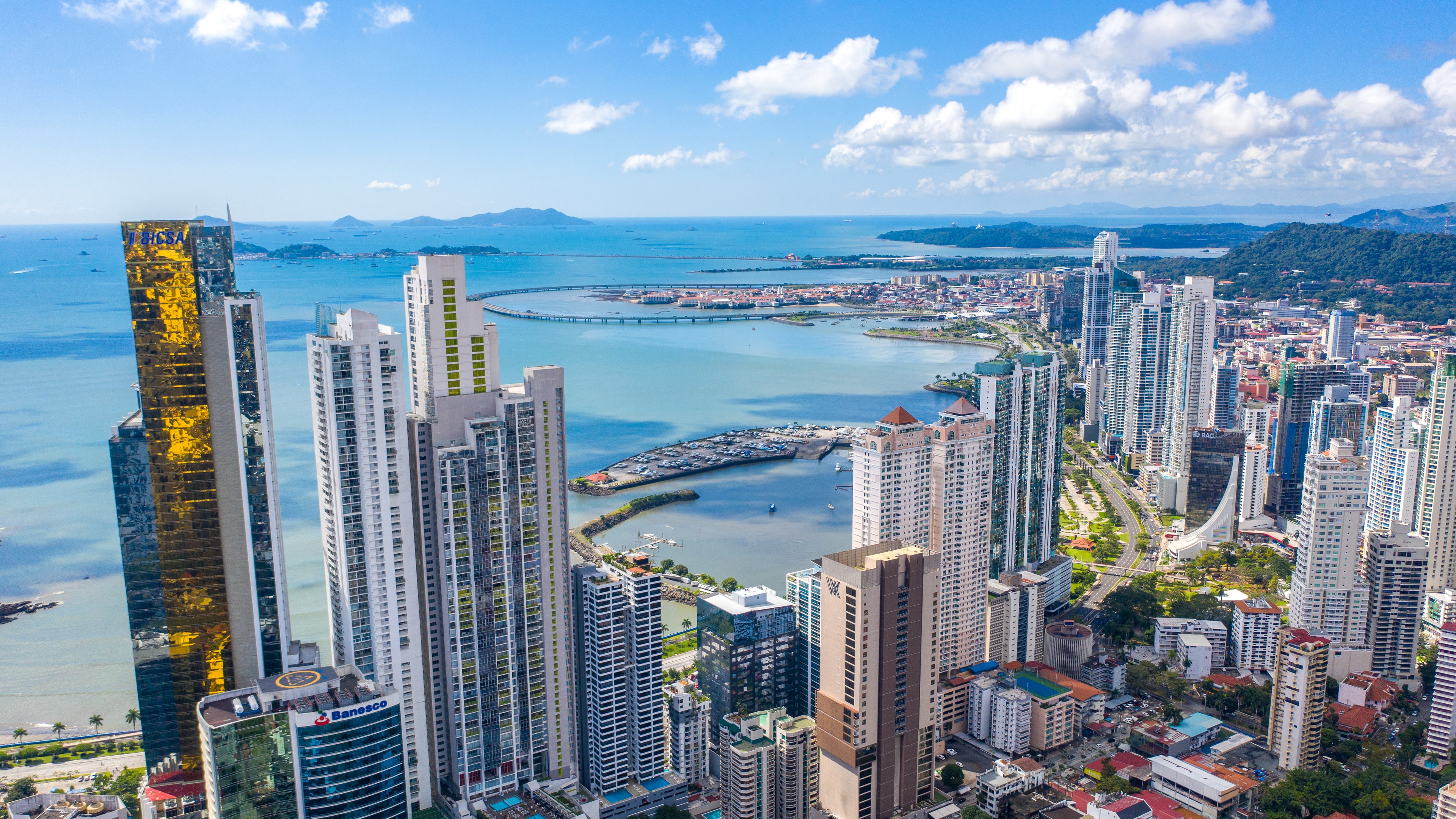
Residential rental yields in Panama City range around 6—8% gross, indicating the potential level of annual rental income before taxes and expenses[7]
Common risks and disadvantages of the Panama Qualified Investor Visa
The Panama Qualified Investor Visa is a regulated residence programme with defined legal and financial requirements. However, as with any long-term immigration and investment decision, applicants should carefully assess both the risks involved in the process and the structural limitations of the programme itself.
Rejection risks when applying for Panama Golden Visa
Banking and source-of-funds rejection. All applicants must pass anti-money laundering and know-your-customer checks with a Panamanian bank. Incomplete documentation, inconsistencies in financial records or unclear explanations of wealth origin may lead to refusal at the banking stage, preventing the application from proceeding.
Non-compliant investment structure. Real estate must be properly registered and free of liens for the investment amount. Securities must be held through a licensed intermediary, and deposits must remain unencumbered. Errors in structuring or using unapproved brokers can jeopardise residence status.
Failure to maintain the investment. The investment must be held for five years. Early sale, withdrawal or encumbrance without proper approval may result in cancellation of permanent residence.
Disadvantages of the Panama Qualified Investor Visa Programme
Investment must be completed before filing the application. The investment must be executed in full prior to submitting the residence application. This means capital is committed before immigration approval is granted, which increases upfront financial exposure.
Capital lock-in for 5 years. All three investment routes require the capital to remain in place for a minimum of five years. Early sale, withdrawal or encumbrance may affect residence status and limits liquidity during the holding period.
Risk of double taxation. An investor may remain a tax resident in their home country while also triggering tax obligations elsewhere. Cross-border tax advice is essential to assess reporting duties, treaty protection and potential exposure to overlapping taxation.
Additional costs beyond the minimum investment. Government fees, legal services, document legalisation, health insurance and transactional expenses increase the overall budget. These costs should be evaluated in advance to avoid underestimating the total outlay.

Eymi Castro,
Investment Migration Expert
Some investors may find that the Panama Qualified Investor Visa is not aligned with their objectives or circumstances. In such cases, engaging in the process may not be appropriate to work with Panama Golden Visa lawyers.
Those whose primary objective is to obtain a passport within a short timeframe may need to consider alternative programmes designed specifically for citizenship.
Banking compliance is a central part of the process. Applicants who cannot provide consistent and verifiable documentation of wealth accumulation over several years are unlikely to pass financial Due Diligence.
Alternative residence by investment programmes to consider
Several jurisdictions offer residence by investment programmes with different capital thresholds and options. The structure of the investment varies by country and should be reviewed in advance.
Greece. The minimum investment threshold starts at €250,000, depending on the region and property category. Eligible options include real estate acquisition, bank deposits, and investment funds under the current framework.
Hungary. The minimum investment threshold starts at €250,000. Qualifying routes include the purchase of units in approved investment funds or a contribution to a recognised higher education institution.
Portugal. The minimum investment threshold starts at €250,000 under selected routes. Current eligible options include investment funds and contributions supporting arts and cultural projects.
Malta offers applicants permanent residence for at least €169,000. Under the Malta Permanent Residence Programme, investors must meet several financial commitments to qualify for permanent status:
- Property requirement: either purchase residential property worth at least €375,000; or rent residential property with an annual rent of at least €14,000 for a minimum 5-year period.
- Government contribution fee: around €37,000.
- Administration fee: around €60,000.
- Charitable donation: €2,000 to a registered Maltese NGO.
- Asset requirement: to demonstrate ownership of minimum assets of €500,000+, including €150,000 in liquid assets, or €650,000+ in total assets including €75,000 in liquid assets.
United Arab Emirates. The minimum investment required for long-term residence starts at AED 2,000,000, or approximately €462,000. The qualifying route is primarily based on real estate ownership. The UAE does not levy personal income tax on individuals.
Choosing between programmes depends on individual priorities: location, capital structure, liquidity, tax planning, family strategy and long-term citizenship goals. The comparison table below outlines the key structural differences between selected residences by investment options.
Golden Visas comparison
How Immigrant Invest can support your Panama Qualified Investor Visa application
The Panama Qualified Investor Visa involves immigration process that must be coordinated carefully. Immigrant Invest organises the process as a structured sequence of stages:
- preliminary Due Diligence;
- preparation of source-of-funds documentation;
- investment review;
- banking onboarding;
- submission to the immigration authorities.
Immigrant Invest has an in-house team specialising in anti-money laundering review, which conducts an internal assessment of documents before they are submitted to Panamanian banks or authorities. Particular attention is given to the source-of-funds narrative and supporting financial records, as banking approval is a prerequisite for the residence application.
The company holds government-issued licences to operate in the investment migration field and is a member of the Investment Migration Council, an international association of citizenship and residence by investment professionals. These affiliations confirm our adherence to professional and compliance standards.
Immigrant Invest assists with maintaining compliance during the 5-year holding period, including reminders regarding investment confirmations and other procedural requirements.
Key facts about the Panama Qualified Investor Visa and permanent residence
- Panama Qualified Investor Visa grants permanent residence through one of three routes: at least $300,000 in real estate, $500,000 in securities, or $750,000 in a fixed-term bank deposit.
- To maintain the status, Golden Visa holders must keep the investment for at least 5 years. Early sale, withdrawal or encumbrance of the investment without proper approval may result in cancellation of residence.
- Banking compliance is a central stage of the process. Applicants must pass anti-money laundering checks and provide clear documentation confirming the lawful origin of funds, typically covering several years.
- After 5 years of continuous permanent residence an investor obtains the right to apply for citizenship by naturalisation.
- There is no formally published minimum annual stay requirement to maintain permanent residence. However, prolonged absence may affect eligibility for future naturalisation.
 Trusted by 10,000+ investors