Citizenship by merit
Foreign nationals may obtain citizenship by merit in European countries and other states if they make an exceptional contribution to a specific nation.
Individuals who obtain citizenship by merit enjoy the right to live permanently in the country, access public healthcare and education, participate in political life, and travel visa-free to the destinations covered by the country’s passport.

What is citizenship by merit?
Citizenship by merit is a discretionary pathway under which a country grants citizenship to a foreign national in recognition of exceptional contributions or outstanding value to the state. Unlike standard naturalisation, it is not based on residence, family ties, or marriage. It also differs from investment migration, as there is no fixed investment threshold and no guaranteed outcome.
In practice, citizenship by merit is reserved for individuals with exceptional achievements or influence in areas such as science and innovation, culture, sport, business, or humanitarian work, as well as for those whose activities significantly advance national interests or international reputation.
Decisions are usually taken at the highest level of government, for example by a president, monarch, or parliament. The process is highly selective, criteria are not fully formalised, and citizenship is granted as a privilege rather than a legal entitlement.
 Malta
Malta
Malta’s citizenship by merit is designed for foreign nationals whose achievements deliver exceptional value to Malta or humanity.
Merit may arise from fields such as science, innovation, business, culture, sport, or philanthropy. Applicants must demonstrate a genuine connection to Malta and a clear, positive impact.
7 benefits of citizenship by merit
1
Right of entry and residence
Citizenship by merit grants an unconditional right to enter, live in, and remain in the chosen country.
There is no need to renew residence permits and no risk of losing status due to absence, changes in employment, or personal circumstances.
Citizenship by merit grants an unconditional right to enter, live in, and remain in the chosen country.
There is no need to renew residence permits and no risk of losing status due to absence, changes in employment, or personal circumstances.
2
Freedom to work, invest, and run a business
Individuals enjoy full access to the local labour market and business environment. This includes the ability to take up employment without restrictions, establish and manage companies, and invest in any permitted sector.
Individuals enjoy full access to the local labour market and business environment. This includes the ability to take up employment without restrictions, establish and manage companies, and invest in any permitted sector.
3
Increased global mobility
A second citizenship often provides broader international mobility. For example, European countries such as Austria and Spain offer visa-free travel to over 170 destinations.
Increased global mobility simplifies international travel and reduces reliance on visas.
A second citizenship often provides broader international mobility. For example, European countries such as Austria and Spain offer visa-free travel to over 170 destinations.
Increased global mobility simplifies international travel and reduces reliance on visas.
4
Access to healthcare and education
Citizenship also grants access to national healthcare systems and public education, including subsidised medical services and public schools. In some cases, this may extend to preferential access to universities and scholarship programmes.
Citizenship also grants access to national healthcare systems and public education, including subsidised medical services and public schools. In some cases, this may extend to preferential access to universities and scholarship programmes.
5
Tax optimisation opportunities
Depending on the country and the individual’s tax residency status, citizenship by merit may open opportunities for more efficient tax planning.
Some jurisdictions offer favourable tax regimes, territorial taxation, or exemptions on foreign-sourced income. For example, the UAE does not levy personal income tax, and Malta does not impose an annual property tax.
Depending on the country and the individual’s tax residency status, citizenship by merit may open opportunities for more efficient tax planning.
Some jurisdictions offer favourable tax regimes, territorial taxation, or exemptions on foreign-sourced income. For example, the UAE does not levy personal income tax, and Malta does not impose an annual property tax.
6
Political rights
Citizens enjoy full political rights, including the ability to vote, stand for public office, and participate in civic life. This allows them to take an active role in the country’s political and social development.
Citizens enjoy full political rights, including the ability to vote, stand for public office, and participate in civic life. This allows them to take an active role in the country’s political and social development.
7
Dual nationality
Many countries that grant citizenship by merit allow dual or multiple nationality. This means individuals are not required to renounce their original citizenship while benefiting from the rights and protections of an additional one.
Countries that permit dual nationality include, for example, Malta, France, and the United States.
Many countries that grant citizenship by merit allow dual or multiple nationality. This means individuals are not required to renounce their original citizenship while benefiting from the rights and protections of an additional one.
Countries that permit dual nationality include, for example, Malta, France, and the United States.
Who is citizenship by merit for?
Citizenship by merit is reserved for individuals whose professional or social contributions are considered exceptional. The following categories illustrate, but are not limited to, the types of applicants who may qualify under this pathway.
Entrepreneurs
Entrepreneurs may obtain citizenship by merit if they contribute to economic growth through business development, job creation, or innovation.
Philanthropists
Philanthropists who support social, educational, cultural, or humanitarian initiatives may qualify for citizenship by merit. This route recognises contributions that improve public welfare and strengthen local communities through sustained and transparent charitable activity.
Scientists and researchers
Scientists and researchers with significant academic or technological achievements may be eligible where their work advances national priorities such as innovation, healthcare, sustainability, or digital transformation.
Artists, athletes, and cultural figures
Artists, athletes, and recognised cultural figures may qualify where their achievements enhance the country’s international reputation or cultural life, particularly when applicants maintain ongoing engagement with national institutions or audiences.
Schedule a meeting
Let's discuss the details
Schedule a meeting at one of the offices or online. A lawyer will analyze the situation, calculate the cost and help you find a solution based on your goals.
Prefer messengers?


15 countries that offer citizenship by merit
In Europe, countries granting citizenship by merit include Malta, Austria, Bulgaria, Croatia, France, Latvia, Slovenia, Serbia, and Spain. Outside Europe, prominent examples are the USA, the UAE, and Canada.
Requirements vary widely by country, and this route is always discretionary.
The table below compares jurisdictions where the citizenship by merit route is recognised in law or official practice.
Overview of countries granting citizenship by merit
Country
RP holding period
8+ months
Family inclusion
Spouse, minor or dependent children, dependent parents
Right to apply directly
Yes
Dual citizenship
Allowed
Country

Austria
RP holding period
None
Family inclusion
Minor children
Right to apply directly
Yes
Dual citizenship
Restricted, exceptions apply
Country

Bulgaria
RP holding period
None
Family inclusion
Minor children
Right to apply directly
No
Dual citizenship
Restricted, exceptions apply
Country

Canada
RP holding period
None
Family inclusion
Not allowed
Right to apply directly
Yes
Dual citizenship
Allowed
Country

Croatia
RP holding period
None
Family inclusion
Minor children
Right to apply directly
Yes
Dual citizenship
Allowed
Country

France
RP holding period
2 years, may be waived
Family inclusion
Minor children
Right to apply directly
Yes
Dual citizenship
Allowed
Country

Latvia
RP holding period
None
Family inclusion
Not allowed
Right to apply directly
Yes
Dual citizenship
Restricted, exceptions apply
Country

Qatar
RP holding period
None
Family inclusion
Minor children
Right to apply directly
No
Dual citizenship
Restricted, exceptions apply
Country

Saudi Arabia
RP holding period
None
Family inclusion
Spouse and minor children
Right to apply directly
No
Dual citizenship
Restricted, exceptions apply
Country

Slovenia
RP holding period
1 year
Family inclusion
Minor children
Right to apply directly
Yes
Dual citizenship
Restricted, exceptions apply
Country

Serbia
RP holding period
None
Family inclusion
Minor children
Right to apply directly
Yes
Dual citizenship
Allowed
Country

Spain
RP holding period
None
Family inclusion
Not allowed
Right to apply directly
Yes
Dual citizenship
Restricted, exceptions apply
Country

Türkiye
RP holding period
Residence permit required, no minimum period stated
Family inclusion
Spouse, minor or dependent children
Right to apply directly
Yes
Dual citizenship
Allowed
Country

UAE
RP holding period
None
Family inclusion
Spouse and children
Right to apply directly
No
Dual citizenship
Allowed
Country

USA
RP holding period
None
Family inclusion
Not allowed
Right to apply directly
Yes
Dual citizenship
Allowed
Country | RP holding period | Family inclusion | Right to apply directly | Dual citizenship |
|---|---|---|---|---|
8+ months | Spouse, minor or dependent children, dependent parents | Yes | Allowed | |
Austria | None | Minor children | Yes | Restricted, exceptions apply |
Bulgaria | None | Minor children | No | Restricted, exceptions apply |
Canada | None | Not allowed | Yes | Allowed |
Croatia | None | Minor children | Yes | Allowed |
France | 2 years, may be waived | Minor children | Yes | Allowed |
Latvia | None | Not allowed | Yes | Restricted, exceptions apply |
Qatar | None | Minor children | No | Restricted, exceptions apply |
Saudi Arabia | None | Spouse and minor children | No | Restricted, exceptions apply |
Slovenia | 1 year | Minor children | Yes | Restricted, exceptions apply |
Serbia | None | Minor children | Yes | Allowed |
Spain | None | Not allowed | Yes | Restricted, exceptions apply |
Türkiye | Residence permit required, no minimum period stated | Spouse, minor or dependent children | Yes | Allowed |
UAE | None | Spouse and children | No | Allowed |
USA | None | Not allowed | Yes | Allowed |
Documents required for obtaining citizenship by merit
There is usually no standardised checklist, and documentation is assessed on a case-by-case basis. The exact list varies by country, but applicants are usually expected to provide the following core documents:
- Valid passport and proof of identity.
- Detailed curriculum vitae outlining professional background and key achievements.
- Documentary evidence of merit or contribution, such as awards, patents, publications, business results, investment records, competition results, or proof of humanitarian or cultural impact.
- Letters of recommendation or nomination from recognised institutions, government bodies, industry organisations, or international organisations.
- Motivation or explanatory statement describing the nature of the contribution and its relevance to national interests.
- Clean criminal record certificate from the country or countries of residence.
- Proof of lawful source of funds, where financial activity, investment, or philanthropy is involved.
- Civil status documents, such as birth or marriage certificates, if required.
Authorities may request additional documents, interviews, or expert opinions during the review.
How to obtain citizenship by merit
Citizenship by exception does not follow a standardised procedure, and the sequence of steps may vary by country.
In practice the process usually consists of the following 6 steps.
Preliminary Due Diligence

Before any formal steps are taken, the applicant’s profile is usually assessed for feasibility. This can be done independently or with the support of professional advisers experienced in citizenship cases, such as Immigrant Invest.
The aim is to determine whether the applicant’s achievements could reasonably meet the threshold for exceptional merit and to identify any reputational, legal, sanctions, or security risks.
This Due Diligence is not a government procedure and does not replace official screening. State authorities will carry out their own due diligence and security checks at later stages.
Establishment or confirmation of a connection with the state
Many countries require or strongly prefer a tangible link between the applicant and the state before considering exceptional naturalisation. Depending on the jurisdiction, this may involve residence, professional or institutional ties, business or investment presence, or recognised cultural, scientific, sporting, or philanthropic engagement.
Preparation of a national-interest submission
The applicant prepares a structured national-interest submission explaining why granting citizenship benefits the state. In some jurisdictions, such as Malta, this takes the form of a formal Proposal Letter.
The submission outlines the applicant’s exceptional merit, the public benefit to the country, any contributions already made or formally committed, and, where required, endorsements from recognised institutions. The focus remains on national interest rather than personal circumstances.
The applicant gathers supporting documents, including police clearance certificates, background records, and evidence of current or planned engagement with the country, and submits the complete file to the relevant authorities.
Review by the competent authority
The submission is reviewed by the authority designated under national law. The review focuses on whether the case meets the threshold for an exceptional grant of citizenship.
During this stage, authorities may request additional information or clarification and may conduct internal consultations. In some jurisdictions, a preliminary endorsement or recommendation may be issued, but such intermediate steps are not universal and do not constitute a legal right to citizenship.
Sovereign discretionary decision
The final decision is taken by the authority empowered to grant citizenship in exceptional cases. This is typically a ministerial, cabinet-level, or head-of-state decision.
The decision is discretionary in nature. There are generally no statutory timelines, no entitlement to approval, and often no obligation on the state to provide reasons for refusal.
Completion of naturalisation formalities
If citizenship is granted, the individual completes the required legal formalities, such as registering the decision, taking an oath where required, and complying with rules on retaining or renouncing prior nationality.
Once the formalities are completed, the individual is recognised as a citizen and may apply for identity documents and a passport.
Trust your reliable agent
Immigrant Invest is a consulting company that has worked in the field of migration since 2006, assisting with the acquisition of residency and citizenship, including citizenship by merit.
Our lawyers are well-versed in Maltese law and operate strictly within the legal framework, including the Maltese Citizenship Act Cap. 188.
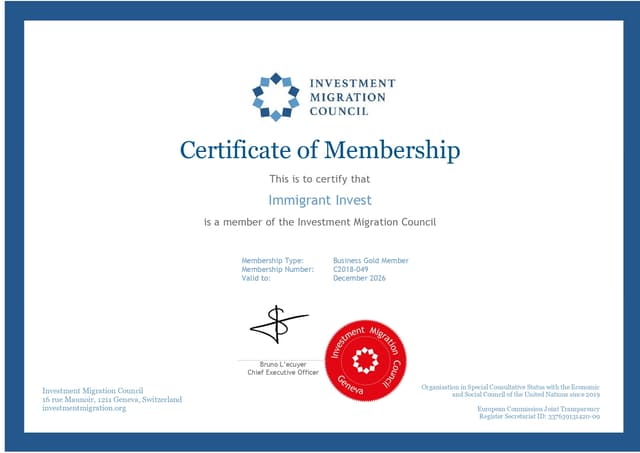
Immigrant Invest is also a member of the Investment Migration Council, IMC, the leading association for investment migration.


Elena Ruda,
Chief Development Officer at Immigrant Invest
Citizenship for exceptional merit is not an immigration programme but a discretionary decision of the state, where the decisive factor is how convincingly the applicant demonstrates the national interest.
At Immigrant Invest, we focus on analysing the client’s profile, assessing the feasibility of the case, substantiating exceptional merit through proper documentation, and supporting the preparation and submission of materials in line with local legal requirements and established practice.
Your citizenship team
Our team of 70 professionals includes IMC-member lawyers and certified Anti-Money Laundering Officers, ensuring high standards of compliance. With some experts based in Malta, we provide strong local insight and compliance with the latest requirements.