
Migration remains one of the most transformative forces in the European Union, influencing everything from labour markets and public services to social cohesion and policy agendas.
While media coverage often focuses on asylum seekers and labour migration, a quieter, more strategic form of mobility is also on the rise — driven by global investors, entrepreneurs, and mobile families seeking security, diversification, and access to EU benefits.
At Immigrant Invest, we analysed EU-wide statistics, national migration reports, and programme data to provide a structured overview of how and why people move to Europe today.
This report brings together verified figures, expert commentary, and comparative insights to help readers understand the current migration landscape, from general trends to the specific role of residency-by-investment.
Summary
Migration remains a major demographic and economic driver in the EU, with 3.7 million first residence permits issued to non-EU citizens in 2023. Most arrivals came for work, family, or education, while investment and lifestyle migration gained momentum among wealthy individuals.
Foreign residents account for 14% of the EU population, one of the world’s highest shares. Germany, Spain, France, and Italy host nearly 70% of all foreigners, while Malta, Estonia, and Cyprus lead by proportion of non-EU citizens.
The EU attracts migrants from both advanced and emerging economies. India, China, Türkiye, the UK, and Colombia are now key sources, reflecting motives from work and study to security and lifestyle.
Golden Visas were reformed across Europe: Portugal, Greece, and Malta remain active but stricter, focusing on fund- and business-based investments. Spain and the UK have closed their residency-by-investment programmes.
EU countries are making migration programmes stricter and more transparent to prevent misuse, while still trying to keep the economic benefits of foreign investment.
Overview of migration trends in the EU in the 2020s
In the 2020s, the European Union remains one of the world’s most attractive regions for relocation. From labour migration and education to digital nomadism and investment-based residency, the EU offers a wide spectrum of legal pathways that reflect broader global shifts in how and why people move.
How the EU fits into global migration patterns
Migration is an everlasting trend of the 21st century, with about 3—4%[1] of the world population living in countries they were not born in. In 2005, there were about 200 million[2] immigrants worldwide.
Today, that figure has grown to over 300 million[3], driven by economic opportunity, political instability, climate pressures, and a growing global class of mobile professionals and investors.
The EU is among the most internationally integrated regions. By the end of 2023, 29 million foreign citizens had resident status in EU countries, an increase of 2.2 million compared to the previous year. Foreign-born residents and citizens account for 14% of the EU population, comparable to North America and far ahead of Asia or Africa[4].
Population and immigrants by region in per cent
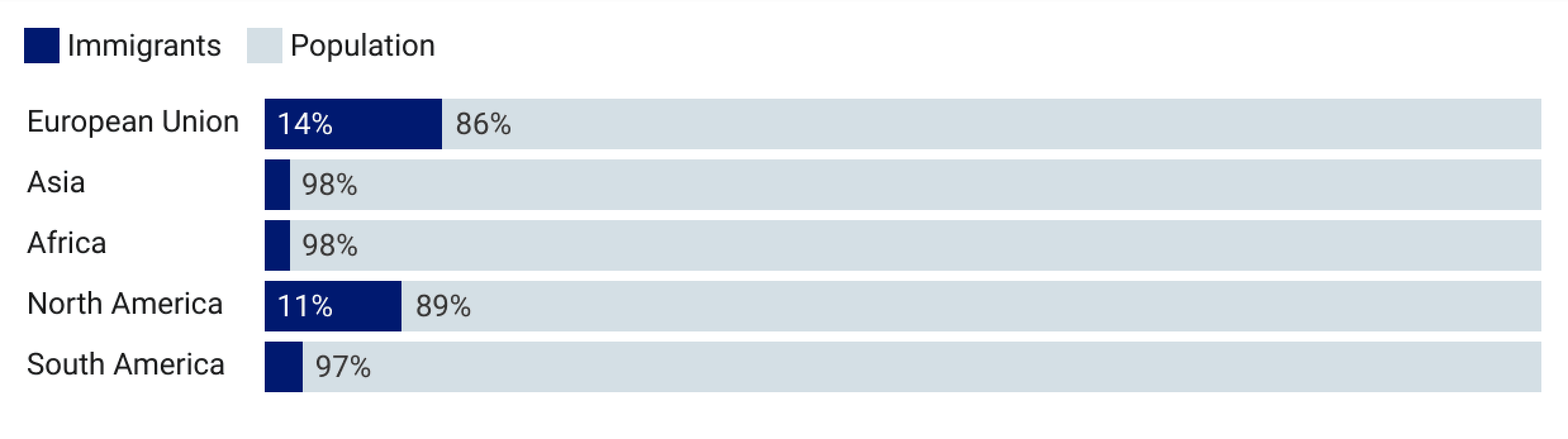
The share of immigrants in the EU is the highest in the world, 14%. Foreigners in North America account for 11%; in South America, it’s 3%; in Asia and Africa, it’s 2% [5]
Which EU countries do foreign nationals settle in?
Number of foreigners. Based on data collected and verified by Immigrant Invest, foreigners mostly choose four countries:
- Germany, with 12 million immigrants, including citizens of other EU member states;
- Spain, with 6.5 million;
- France, with 6 million;
- Italy, with 5.3 million[6].
About 70% of all non-EU citizens in the EU live in those four countries. The next country with the most foreigners is Switzerland, hosting around 0.9 million non-EU and non-EEA citizens.

Elena Ruda,
Chief Development Officer at Immigrant Invest
Foreign nationals predominantly settle in Germany, Spain, France, and Italy due to their strong economies, employment prospects, established diaspora networks, and high quality of life.
Spain and Italy serve as gateways to North Africa and the Middle East via the Mediterranean, while Germany and France, centrally located, offer seamless connections across Europe.
Historic ties and shared languages further shape these flows: Spain draws Latin Americans, France attracts French-speaking Africans, and Italy maintains links with the Balkans and North Africa. Such factors lower integration barriers, foster familiarity, and facilitate access to housing, employment, and community support.
Share of foreigners. However, in terms of the ratio between locals and expats, other countries are more prominent.
Three EU countries host the biggest share of foreigners:
- Malta — 23.6% of its population is non-EU citizens;
- Estonia — 16.3%;
- Cyprus — 13.8% [7].
Common legal grounds for moving to the EU
As per Eurostat, the European Union issues residence permits primarily for these reasons:
- employment, for both high- and low-skilled roles, especially in sectors facing labour shortages;
- family reunification, allowing spouses, children, or other relatives to join legal residents or EU citizens;
- education, mostly international students enrolled in EU-based universities[9].
The fourth category, other reasons, includes many of the strategic and lifestyle-based pathways preferred by globally mobile individuals and high-net-worth families.
For instance, in 2023, 1.2 million people obtained EU residence permits through employment, half a million through education, and around a million each for family and other reasons.
Basis for granting residence permits to foreigners in 2023, %
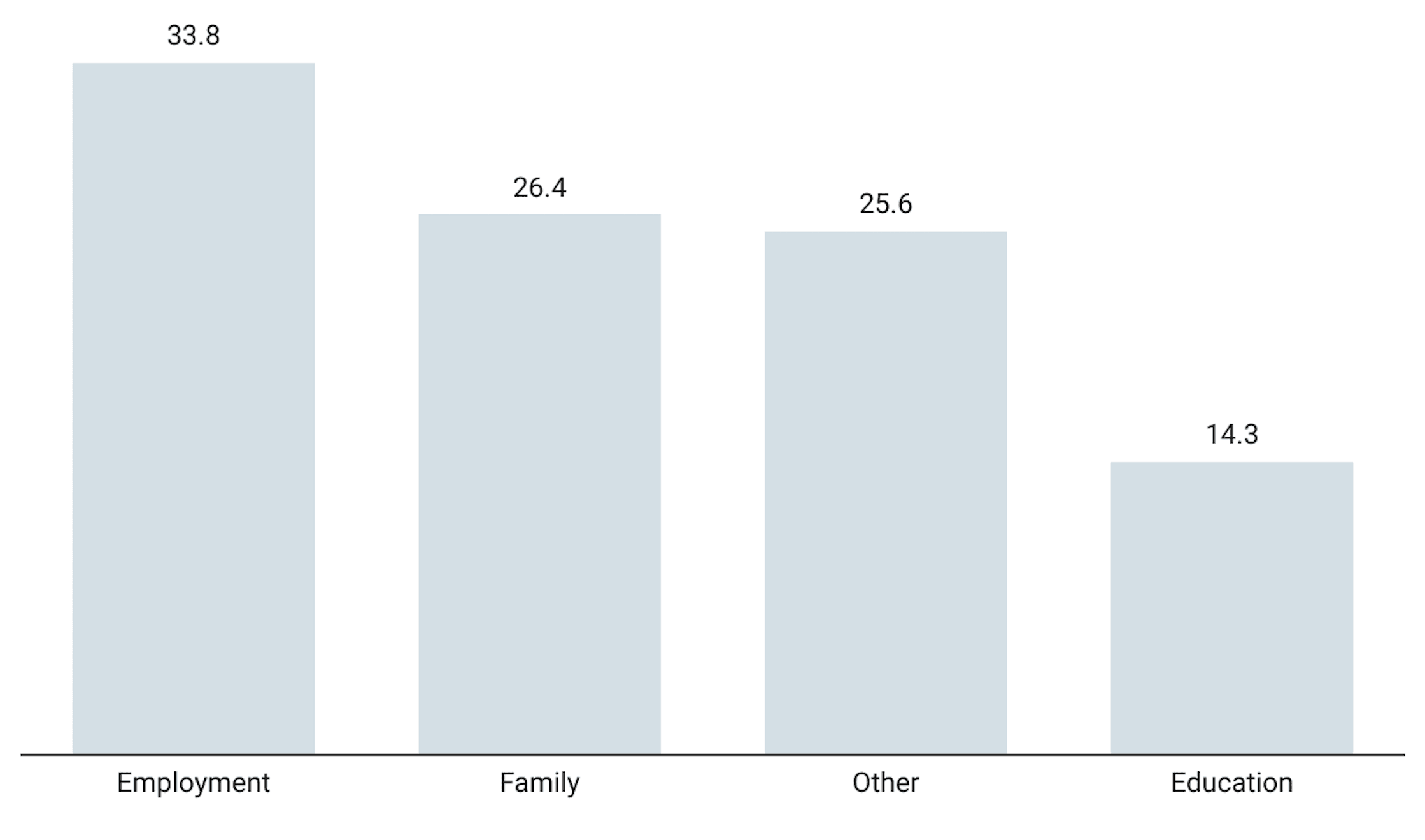
In 2023, slightly more than a third of foreign residents obtained their permits through employment. Approximately a quarter were granted for family reunification and other purposes each. The remaining 14.3% of permits were issued to students and scholars[10]
The “other” category includes a diverse set of legal residence routes that reflect new forms of mobility in the global economy. Many of them have emerged in response to changing work patterns, ageing populations, and increased international investment flows. Here they are:
- digital nomad visas are designed for remote professionals and entrepreneurs seeking lifestyle flexibility while contributing to local economies;
- financially independent persons permits cater to retirees or individuals with stable passive income who bring capital without entering the labour market;
- Golden Visas, or residency by investment programs, link migration policy with national development strategies, granting residence in exchange for real estate purchases, capital investments, or contributions to state funds.
Elena Ruda,
Chief Development Officer at Immigrant Invest
Migration in Europe is no longer just about work or study. We are seeing rising interest in strategic relocation pathways, such as residency-by-investment, reshaping investor mobility in the region.
While “other” permit types remain a relatively small share of total residence permits across the EU, they are a notable feature in some countries.
Malta regularly publishes detailed residence statistics, making it a useful example: in 2024, investment- and lifestyle-based routes such as the Malta Permanent Residence Programme, the Global Residency Programme, and the Nomad Residence Permit together made up 12% of first-time permits issued.
Types of residence permit in Malta issued in 2024
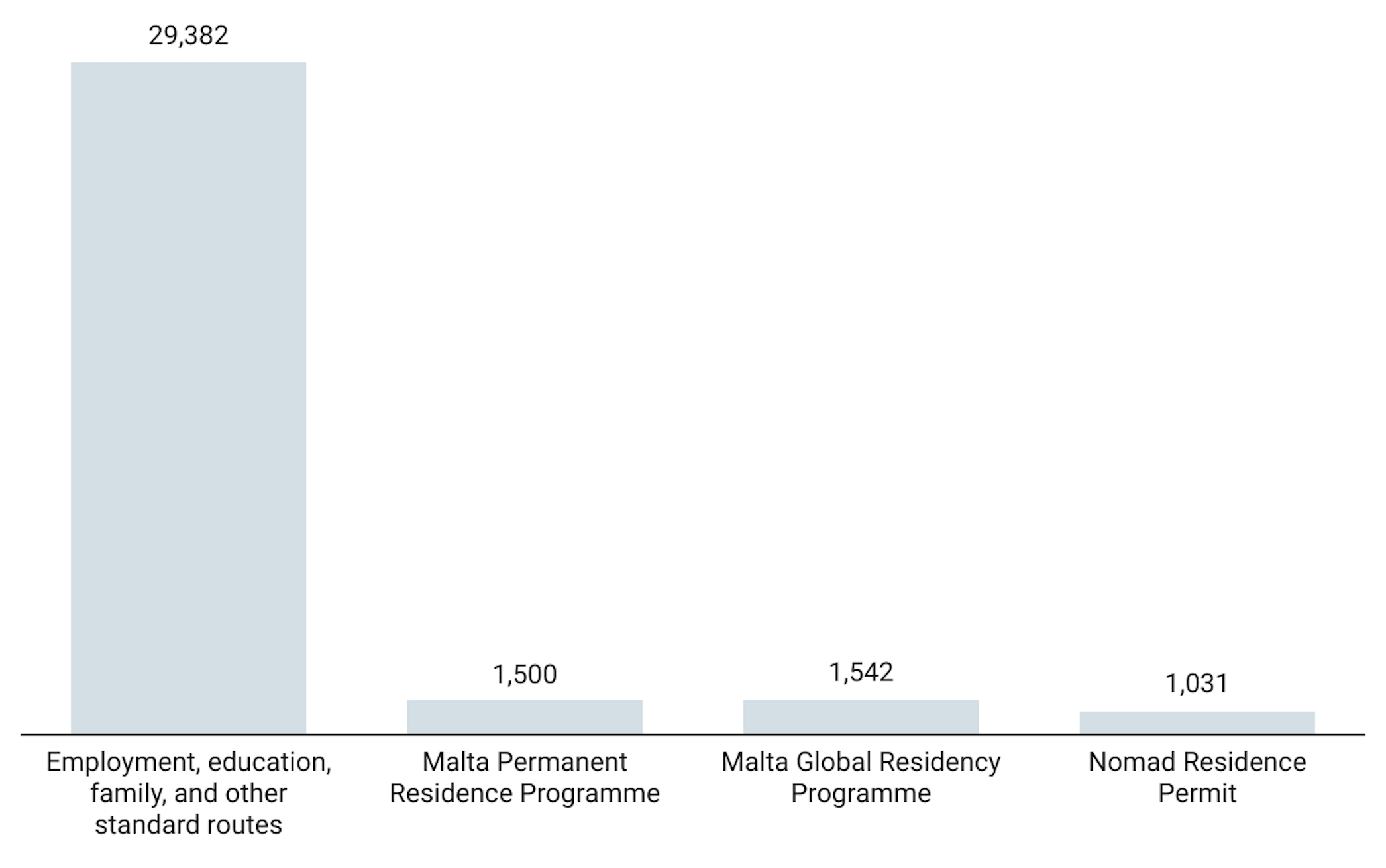
In total, 33,455 residence permits were issued by Malta in 2024. Of them, 29,382 were issued on the grounds of employment, education, family reunification, or other standard routes. Around 4,000 were issued to participants in the Malta Permanent Residence and Global Residency Programmes, as well as to holders of the Nomad Residence Permit[11]
Why foreigners choose to move to the European Union
People relocate to the European Union for a wide range of reasons — from career and education to lifestyle and family. The key motives, however, can be grouped around quality of life, security, and opportunity, which we explore in more detail below.
1. Better quality of life
Many European countries offer a good work-life balance, strong social support systems, clean environments, and excellent public transport, making daily living easier and often less stressful compared to many other regions.
Elena Ruda,
Chief Development Officer at Immigrant Invest
The EU ensures stable legal frameworks, individual rights protections, and access to European courts, making it a reliable base for long-term residents.
2. Advanced healthcare
Access to universal or affordable healthcare remains one of the strongest incentives for relocation to the EU. According to OECD data, over 97% of EU residents are covered by public or statutory health insurance, and healthcare spending averages about 10% of GDP, which among the highest globally[12].
The EU’s life expectancy at birth reached 81.4 years in 2023[13], compared to the world average of 73.2[14] or the US life expectancy of 78.4[15].
Combined with initiatives like the European Health Insurance Card, which enables emergency treatment across member states, these factors demonstrate why healthcare is a decisive factor for many foreign residents.
3. Economic and career opportunities
The EU stands as one of the world’s largest and most integrated economic regions, with a GDP of approximately €17 trillion and a population of roughly 450 million consumers[16]. For foreign investors and entrepreneurs, this offers both scale and diversity: the region’s Single Market allows the free flow of goods, services, capital and persons.
Moreover, the EU actively supports innovation and business growth via dedicated funding streams. For example, the European Innovation Council allocates up to €30 million to high-potential startups[17].
This strong economic foundation, coupled with harmonised regulation and strategic access to European and global trade links, makes the EU a compelling destination for those seeking career advancement, investment diversification and entrepreneurial opportunity.
4. Safety
One of the strongest draws to the EU is its high level of public safety and political stability. According to the Global Peace Index 2025, many EU-member states rank among the world’s safest nations — for example, Portugal is ranked 7th globally, Denmark 8th and Slovenia 9th[18].
These rankings reflect not just low levels of violent crime but also strong governance, trust in institutions and minimal exposure to armed conflict.
Meanwhile, firearms ownership in the EU is subject to far stricter regulation than in many other jurisdictions, especially the US. This means licensing requirements, comprehensive background checks and limitations on civilian weapon types all contribute to calmer social environments.
For families, retirees or high-net-worth individuals considering relocation, such institutional stability and social safety present a compelling case for the EU as a destination of choice.
5. Travel experience
An individual holding a residence permit or passport from a European Union country can travel to the Schengen Area without a visa. This lets newcomers experience multiple cultures, languages, and cuisines with minimal barriers.
6. Education
Many EU countries offer affordable or even free higher education to residents and, in some cases, international students. For example, university tuition in Germany and the Nordic states can be very low or waived entirely.
Europe is also home to some of the world’s top universities. According to QS Europe 2025, ETH Zürich is ranked the best university in Europe, followed by Imperial College London, University of Oxford and University of Cambridge. Several Dutch and German institutions, like Delft University of Technology and the University of Amsterdam, also rank in the top 20[19].
A degree from such a university in the EU can open doors to international careers, academic pursuits and strong local employment networks — contributing to the appeal of relocating for education.
7. Tax and investment benefits
Some EU countries provide favourable tax regimes for foreign residents, investors, and retirees, attracting those looking for financial efficiency.
Several EU countries continue to offer attractive tax frameworks designed to encourage foreign investment and residency. For example, Malta provides one of the most appealing systems, with no inheritance or wealth tax and competitive personal tax rates.
Cyprus maintains a favourable corporate tax regime at 12.5%, which is one of the lowest in the EU. In Italy and Greece, investors can opt for an annual flat tax regime to reduce their tax burden.
8. Escape from challenges at home
For many, moving represents a chance to leave behind instability and uncertainty in their home countries. Political unrest, weak rule of law, and limited protection of individual rights are common push factors in parts of the Middle East, Africa, Asia and Latin America.
Global conflict levels are at their highest in decades: according to the Global Peace Index, there were 59 active state-based conflicts in 2024. More than 100 countries have registered a decline in peacefulness[20].
On the contrary, many EU countries offer strong protections for personal safety, stable governance, minimal violent-crime rates, and low levels of militarisation. 7 out of 10 nations at the top of the Global Peace Index 2025 are European: Iceland, Ireland, Austria, Switzerland, Portugal, Denmark, and Slovenia[21].
By choosing an EU country, newcomers are not just relocating for economic or lifestyle reasons, but often for enhanced societal safety, political stability and peace of mind.
9. Family reunification
Many EU countries have clear legal frameworks that enable migrants to bring close family members to join them, often with quicker or subsidised processing and access to language and integration courses. For example, Germany and Sweden offer state-funded language classes and social orientation programmes that ease integration into schools, employment, and local society.
European residency-by-investment programmes, like those in Hungary, Portugal, or Italy, allow foreigners to add their family members to the application.
Golden Visas: trends, critique, and reforms
Over the past decade, so-called Golden Visa or residency-by-investment programmes have become one of the most discussed migration tools in Europe. Initially designed to attract foreign capital after the 2008 financial crisis, they have since evolved into complex, highly regulated systems.
In this section, we look at how Golden Visas work, why they gained popularity, and what reforms and criticisms have shaped them across the European Union.
What is a “Golden Visa”?
The concept of the Golden Visa emerged in the early 2000s as part of a global trend toward investment migration, a policy tool allowing countries to attract foreign capital and talent in exchange for residence rights. In Europe, the idea gained momentum after the 2008 financial crisis, when several governments sought new sources of economic growth and international investment.
A Golden Visa is a residence permit granted to individuals who make a substantial financial contribution to a country’s economy. Such programmes are designed to attract investors, entrepreneurs, and their families by granting the right to live and often work or study in the host country.
In many cases, a Golden Visa can also serve as a pathway to permanent residency or citizenship, depending on the national legal framework.

Lyle Julien,
Investment programmes expert
Golden Visa programs give opportunities to access a favourable jurisdiction within a short time or visit it occasionally — it is up to the Golden Visa holder’s wish. Residency in a foreign state guarantees legal rights, including the right to live, work, study, and receive healthcare there.
Key features of a Golden Visa
Investment requirement. Applicants must invest in real estate, securities or national funds. The threshold varies by country.
Residence rights in the country. A golden visa holder gets access to public services, education, and healthcare. The residence permit is typically limited and is valid for 3—5 years.
Reduced stay requirement. Investors are not obligated to live in the country full-time, unlike residents with other types of permits.
Path to permanent residency or citizenship. After a few years, golden visa holders may get another status, given they have met specific criteria.
Rise of Golden Visas in Europe
European Golden Visa programmes emerged after the 2008—2009 financial crisis to attract foreign capital. The most popular ones were established between 2012 and 2017.
By 2019, they were operating in 17 member states, including the UK[22], which exited the EU, and Bulgaria with Romania, which joined the integration later.
Each of the programmes attracted billions of euros from investors all over the world. For example, Portugal alone raised over €7 billion in investment in 2012—2022[23].
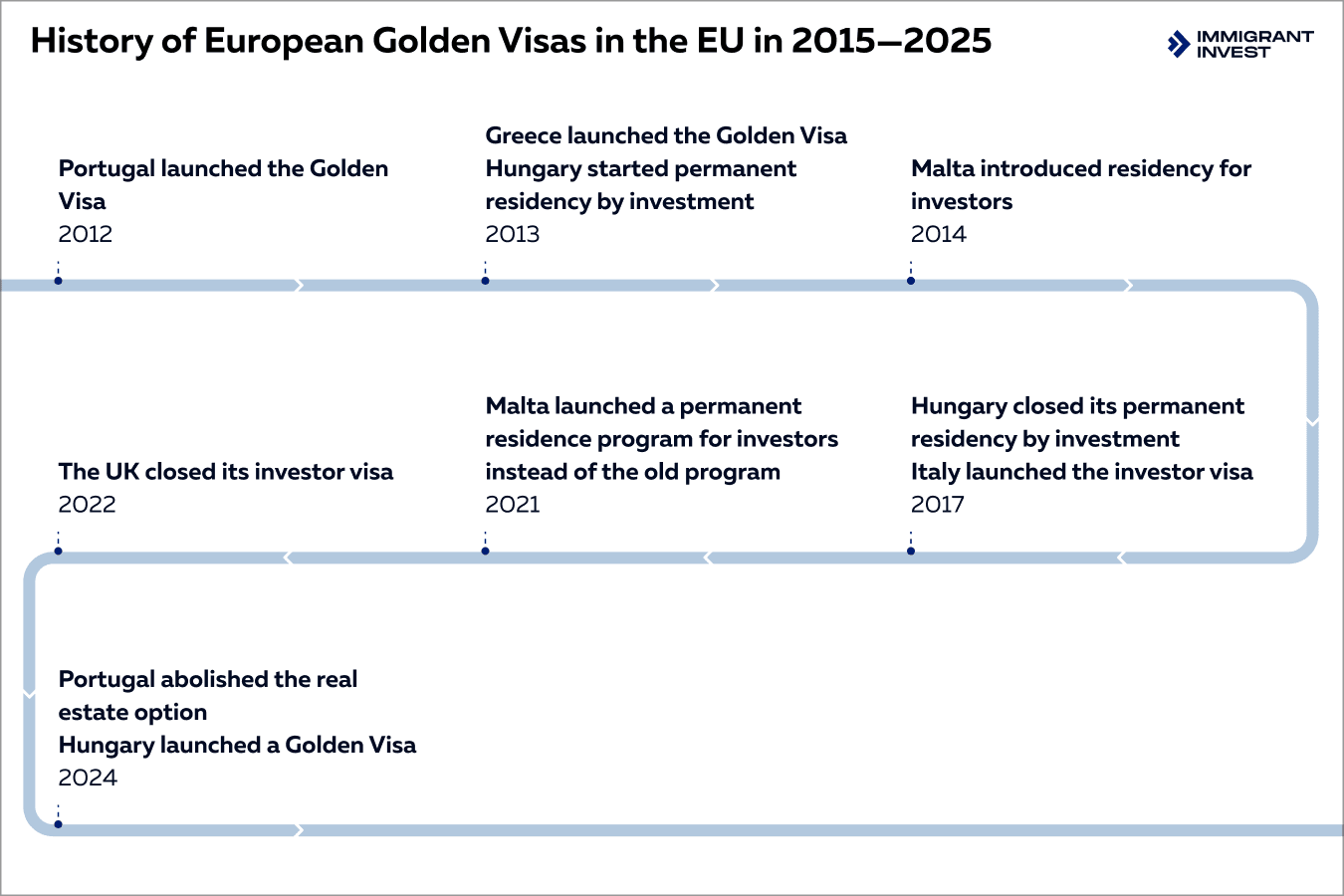
The timeline highlights the rapid expansion of such initiatives in the early 2010s, followed by a period of regulatory adjustments and closures in the 2020s. Several EU countries, including Portugal, Greece, and Malta, revised investment thresholds or eligibility criteria, while others, such as the UK and Spain, terminated their programs entirely — reflecting a broader shift toward stricter oversight and alignment with EU policy standards
Critique from the European Commission
The European Commission is strongly opposed to residency-by-investment, or RBI, and citizenship-by-investment, or CBI, programs. For the latter, the spokesperson stated: “European citizenship is not for sale”[24].
For both RBI and CBI, concerns emerged about money laundering and transparency. EU officials warned that, without strict checks, investment visas could be used to funnel illicit funds. For example, in 2014, the former Syrian dictator Bashar Assad’s moneyman managed to get a Hungarian Golden Visa in 10 days, even after being sanctioned by the US[25].
Elena Ruda,
Chief Development Officer at Immigrant Invest
The European Commission has raised concerns about residency- and citizenship-by-investment programmes, mainly around transparency and security. Past cases, such as Hungary’s visa scandal in 2014, highlight the risks when due diligence is weak.
However, today’s reputable programmes in the EU, such as Malta and Greece, operate very differently. They use multi-layered background checks, often stricter than regular visa processes, to ensure compliance with anti-money laundering and security standards.
For investors, this means that well-regulated residency options remain a secure and legitimate pathway, provided they are pursued through trusted programmes and with expert guidance.
Negative effect of Golden Visas on real estate prices
A side effect of Golden Visas is a surge of housing prices in cities targeted by investors.
In Portugal, for example, home prices rose 42% between 2012 and 2018, more than double the EU average. Studies found a clear “Golden Visa premium, ” with buyers often paying tens of thousands of euros above market value to meet the minimum investment threshold[26].
Similar patterns appeared in Spain, where around 90% of Golden Visa property purchases were concentrated in already high-demand areas like Barcelona, Madrid, and coastal resorts[27].
Elena Ruda,
Chief Development Officer at Immigrant Invest
Golden Visas did affect property prices in some popular areas, but many countries have since adjusted their policies to keep markets healthy. By expanding investment options beyond real estate, for example, into business or job creation, governments are ensuring that these programmes benefit both local communities and international investors.
Reforms of the EU Golden Visas
In recent years, national governments addressed the high housing prices and potential corruption issues by reforming residency-by-investment programmes. Here are some examples:
- Hungary closed its Golden Visa in 2017 and relaunched it in 2024 with a completely new legislation;
- the UK, Ireland, and Spain closed those programmes indefinitely;
- Portugal abolished the real estate option;
- Greece and Malta raised the real estate investment threshold;
- Cyprus no longer offers a direct route to citizenship to investors.
Drawing on our program monitoring, by now, many of Europe’s Golden Visas have evolved into a more selective, compliance-driven framework. Real estate was the cornerstone of many programs in the 2010s, but is no longer the default path in most countries.
The remaining programs made financial barriers higher, stricter vetting, and shifted investment priorities toward funds, business, or donations rather than personal property.

Paul Lauber,
Consultant, Compliance Anti Money Laundering Officer, certified CAMS
Across the EU, we observe a consistent trend: minimum investment amounts are increasing, and conditions are becoming more complex each year. This shift contrasts with the broader global trend of growing mobility, as more countries open digital nomad or remote work pathways.
For investors, however, access to European residency is becoming increasingly selective.
For example, under Portugal’s Golden Visa, an investor could obtain residency in 2019 by purchasing property worth €350,000. As of 2024, the real estate option has been abolished, and the lowest entry point is now €500,000.
Current state of EU residency-by-investment at a glance
At Immigrant Invest, we see the following key trends in EU investment migration:
- Malta’s citizenship by naturalisation for exceptional services by direct investment was suspended in July 2025. Residency by investment programmes remain, but are under greater EU scrutiny.
- Real estate investment routes are being phased out: Spain closed its Golden Visa in April 2025; Portugal and Hungary now do not allow purchasing real estate; Greece has doubled property thresholds.
- Fewer countries, higher costs: active programmes include Greece, Malta, Cyprus, Hungary, and Italy, each with stricter vetting and higher asset requirements.
- Programmes are shifting from “buy a house, get a visa” to strategic, compliance-driven investments aligned with national priorities.
EU countries that issue Golden Visas
Golden Visas and residency-by-investment programmes gained momentum after the 2008—2009 financial crisis in an attempt to attract foreign investment and revive their economies.
According to the Immigrant Invest legal team, nowadays more than 40 countries offer Golden Visas, with the most popular region being the EU.
Why Americans move to the EU and where exactly
The United States has long been one of the world’s main destinations for immigrants — yet, in recent years, growing numbers of Americans themselves have chosen to move abroad. Whether for lifestyle, safety, or financial reasons, Europe has become one of their preferred choices.
In this chapter, we look at where Americans settle in the EU and what drives this steady outward trend.
Top destinations for expats from the US
According to the Association of American Resident Overseas, approximately 5.5 million US citizens lived abroad in 2023[28]. Based on different sources, today this number may reach 9 million[29].
The most popular destination among Americans is Mexico, with roughly 800,000 American expats living there. Other countries of attraction are Canada, counting at least 270,000 US residents, and the United Kingdom, with 170,000 people[30].
In the European Union and the European Economic Area, Americans usually choose the most economically advanced countries or southern states.
Number of Americans living in EU and EEA countries
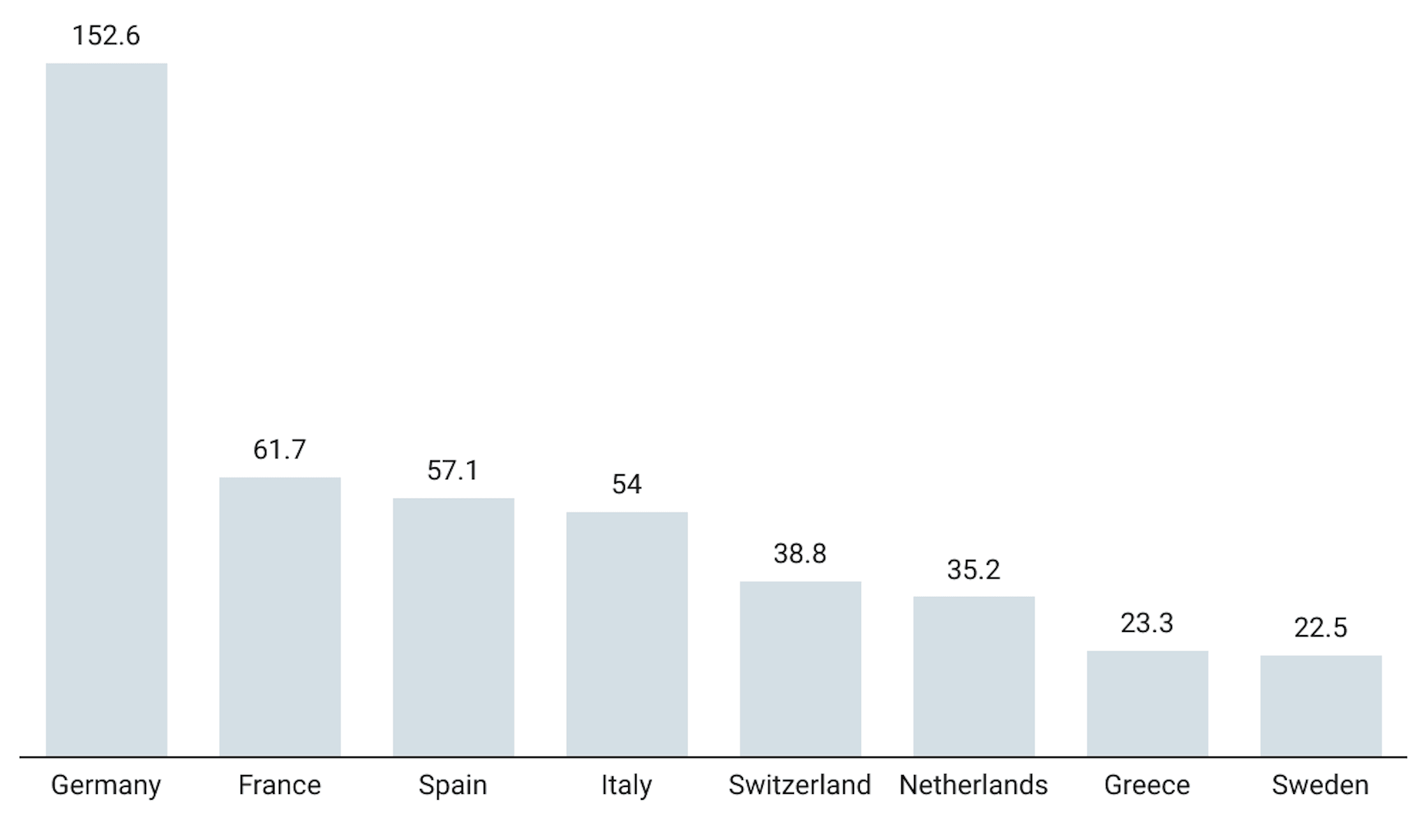
The largest American diaspora in the EU and EEA lives in Germany, home to about 1.5 million US citizens. Three other countries — France, Spain, and Italy — each host over half a million Americans. Other popular destinations include Switzerland, the Netherlands, Greece, and Sweden. The figures on the graph are given in thousands[31]
Why Americans move abroad
The estimated demographics are retirees, digital professionals, families, and students. There is a high interest from Black American families, citing safety and mental health concerns.
The demographics’ key motivations:
- Lower cost of living and stronger dollar. Many retirees and mobile professionals relocate to countries offering a better lifestyle for their money, like Mexico or Portugal.
- Quality of life and family reasons. Concerns about safety, education, or stress in the USA prompt relocation.
- Work, career and tax planning. Remote work visas, lower taxation abroad, or business pursuits push Americans overseas.
These motivations are reflected in the growing number of Americans applying for residency and citizenship by investment programmes. Over the past decade, interest from the US has shifted from a niche trend to a significant part of the global investor migration market.
Applications for investment visas from the US citizens
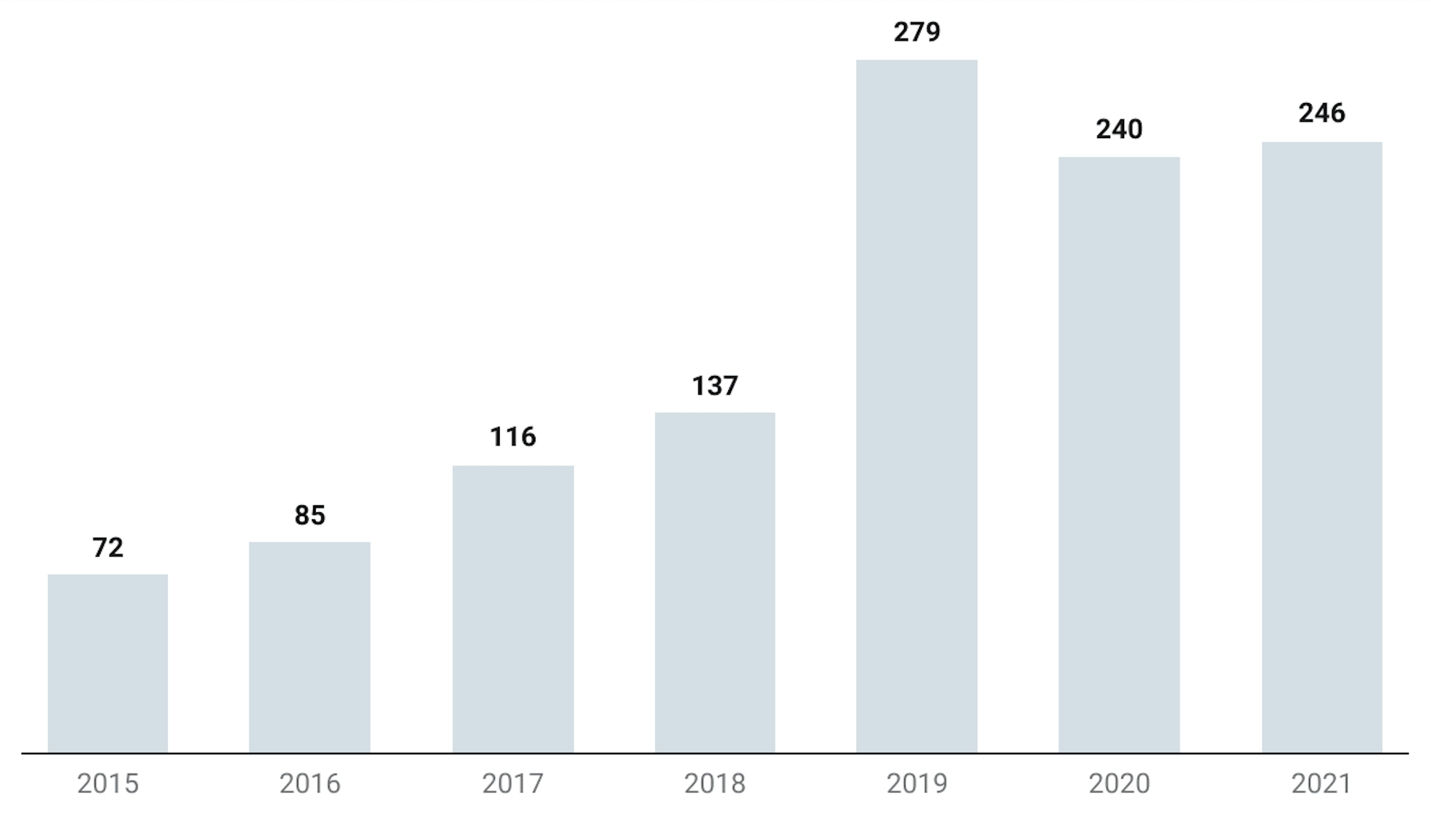
Programs considered in the graph: Antigua and Barbuda, St Lucia, and Vanuatu citizenship by investment; Portugal, Greece, and Latvia Golden Visas; Australia, South Korea, and the UK visas for investors. While in 2015—2016 the number of applications for investment visas from US citizens was less than 100, by 2019 it spiked to over 250[32]
Elena Ruda,
Chief Development Officer at Immigrant Invest
We have seen a steady increase in clients from the United States since the 2024 presidential election, and this trend shows no signs of slowing.
Many are motivated by the same factors we see across our American client base — cost-of-living advantages, better work–life balance, and the desire for greater personal safety and stability for their families.
Why and where in the EU Britons, Chinese, Indians, Turks, and Latin Americans move
In this chapter, we explore how citizens from five key countries or regions, which are the UK, China, India, Türkiye, and Latin America choose to relocate to the EU. While their motivations and routes differ, all are drawn by Europe’s stability, quality of life, and diverse investment and residency opportunities.
The following sections highlight recent migration trends, preferred destinations, and the main reasons behind each group’s move.
The United Kingdom’s key migration facts
The UK has one of the world’s largest diasporas. UN estimates suggest 5+ million UK-born people live overseas[33]. OECD flows show the top destinations for new UK emigrants are Spain, Australia and the United States[34].
Since Brexit, migration to the EU remains strong. For example, in 2023 alone, over 42,000 Britons moved to EU countries, led by Spain, France and Germany[35].
The main reasons for migration are:
- quality of life and climate;
- disapproval of Brexit and the need for free movement;
- tax policy changes.
The most attractive choice for British investors is European Golden Visas, such as Portugal, Malta, or Cyprus.
Chinese patterns of migration
China has one of the world’s largest diasporas by ancestry, yet a relatively modest share of its population is living abroad by place of birth. UN-linked compilations indicate roughly 10.5 million people born in mainland China were living overseas in 2023, which is less than 1%[36].
As for destinations, typically, citizens of China choose the US, Canada, and Australia. The EU became a more desirable region after the COVID‑19 pandemic. For example, in 2023, about 100,000 people from China obtained their first residence permit in the EU. About 38% of them moved to Europe for education, around a quarter did it for family, and another quarter for employment[37].
Various cases of Immigrant Invest show that high-net-worth individuals from China get status by investment for children’s education, cleaner environment, food safety, healthcare access and asset diversification.
The most popular choices in the EU among Chinese investors are Greece, Portugal, and Malta. Also, Spain was popular prior to its closure. For example, 43% of all Portugal Golden Visa recipients by the end of September 2023 were from China. Outside the EU, Chinese investors choose citizenship-by-investment in Antigua and Barbuda, St Lucia, and Grenada.
Distribution of applicants and recipients from China in the Golden Visa and Golden Passport programs[38]
Country

Antigua and Barbuda
Share of Chinese
12%
Indicator
Applicants
Period
First half of 2024
Country

Grenada
Share of Chinese
23%
Indicator
Applicants
Period
2024
Country

St Lucia
Share of Chinese
30%
Indicator
Approved applicants
Period
Financial year of 2022—2023
Country

Portugal
Share of Chinese
43%
Indicator
Recipients
Period
2023
Country

Greece
Share of Chinese
55%
Indicator
Applicants
Period
Cumulative
Country

Malta
Share of Chinese
87%
Indicator
Applicants
Period
Cumulative
Country | Share of Chinese | Indicator | Period |
|---|---|---|---|
Antigua and Barbuda | 12% | Applicants | First half of 2024 |
Grenada | 23% | Applicants | 2024 |
St Lucia | 30% | Approved applicants | Financial year of 2022—2023 |
Portugal | 43% | Recipients | 2023 |
Greece | 55% | Applicants | Cumulative |
Malta | 87% | Applicants | Cumulative |
Indian diaspora worldwide
There are over 18.5 million Indian emigrants, accounting for 6% of the total number of emigrants in the world.
Countries with the biggest Indian diaspora include:
- UAE — 3.3 million;
- US — 3.2 million;
- Saudi Arabia — 2 million;
- Kuwait — 1.2 million;
- the UK — 1 million[39].
The European Union does not host a significant number of Indians compared to other regions, slightly over 200,000. However, in 2023, 5.6% of new residence permits issued in the EU went to Indian citizens, which is the third rank after Ukraine and Belarus. The most popular country is Germany[40].
As for grounds for permits in the EU for Indians, 45% obtained their status by employment, 26% for family reunification, 22% for education. The remaining 7% is obtained for other reasons. This includes an investment pathway that continues to attract steady demand, judging by the applications received by Immigrant Invest.
Turkish citizens moving abroad
A Turkish agency “Citizens abroad” estimates that approximately 7 million Turks live abroad today. The vast majority of them reside in Continental Europe[41].
According to the OECD, about half of Turkish emigrants in 2022 chose Germany, 11% moved to the Netherlands, and 6% came to the US. Other popular destinations include France, the UK, Austria, Belgium, Switzerland, Canada, and Sweden, each of which hosts 2 to 5% of Turkish emigrants[42].
Emigration from Latin America
Latin America continues to experience significant outward migration, driven by economic instability, political tensions, and limited job opportunities in several countries. Venezuela, Colombia, and Peru remain among the main sources of migrants seeking safety, better employment, education, and family reunification abroad.
While the majority of Latin American emigrants still head to North America, Europe, particularly the EU, has become an increasingly attractive destination. Shared language and cultural ties make Spain the natural gateway to Europe for Spanish-speaking migrants.
Colombia ranks among the top 10 non-EU countries whose citizens received first residence permits in the EU. According to Eurostat:
- 2022 — 69,372;
- 2023 — 87,849;
- 2024 — 96,186[43].
As of 2022, over 1.3 million Latin Americans were residing in Spain, making it one of the largest immigrant groups in the country. The main nationalities included:
- Colombia — 314,679;
- Venezuela — 212,064;
- Ecuador — 134,125;
- Honduras — 121,963;
- Peru — 120,255;
- Argentina — 97,257;
- Brazil — 91, 045;
- Paraguay — 83,965;
- Bolivia — 79,233;
- Cuba — 63,618;
- Nicaragua — 60,681[44].
According to the World Migration Report, Spain, Italy, and Portugal together host the vast majority of Latin Americans in Europe. Spain accounts for roughly two-thirds of them, thanks to favourable visa policies, work opportunities in services and care sectors, and easier naturalisation for citizens of Ibero-American countries[45].
Final thoughts on European migration trends
- The EU is one of the world’s most internationally integrated regions, with foreign-born residents accounting for 14% of its total population. The majority of foreign nationals are concentrated in Germany, Spain, France, and Italy.
- Mainly, residence permits are for employment, family reunification, and education purposes. There is a category of other reasons that include digital nomad visas, financially independent persons permits, and Golden Visas. Those grounds are growing in popularity.
- Among countries that issue residency-by-investment in the EU are Portugal, Greece, Hungary, Malta, Italy, and Cyprus.
- The EU attracts international migrants due to its comprehensive social support systems, universal healthcare access, political stability, economic opportunities, and enhanced personal safety.
- High-net-worth individuals choose the EU for the Schengen Area’s freedom of movement, prestigious education for children, favourable tax regimes, and as a business asset. Some of them immigrate because of political or other types of instability in their home countries.
Sources
[1] Source: The proportion is calculated based on the World Bank data and UN statistics through Our World in Data
[2] Source: The details are represented in the UN statistics provided by Our World in Data
[3] Source: The details are represented in the UN statistics provided by Our World in Data
[4] Source: EU population diversity by citizenship and country of birth by Eurostat
[5] Source: The graph is based on the World Bank data and UN statistics through Our World in Data
[6] Source: EU population diversity by citizenship and country of birth by Eurostat
[7] Source: EU population diversity by citizenship and country of birth by Eurostat
[8] Source: The graph is based on Eurostat data
[9] Source: The graph is based on Eurostat data
[10] Source: Data of Eurostat
[11] Source: Statistics of Malta’s Home Affairs Minister Byron Camilleri, cited by Schengen.news
[12] Source: The OECD report Health at a Glance: Europe 2024
[13] Source: The latest data provided by Eurostat
[14] Source: Estimated by the data centre Our World in Data
[15] Source: Data of the US National Center for Health Statistics
[16] Source: GDP and population provided by the EU official website
[17] Source: Information on the website of the European Innovation Council
[18] Source: Global Peace Index 2025 by the Institute for Economics & Peace
[19] Source: QS Europe University Ranking 2025, topuniversities.com
[20] Source: Global Peace Index 2025 by the Institute for Economics & Peace
[21] Source: Global Peace Index 2025 by the Institute for Economics & Peace
[22] Source: Investor Citizenship and Residence Schemes in the European Union report by the European Commission
[23] Source: Report “All That Glitters? Golden Visas and Real Estate” by J. P. dos Santos and K. Strohmaier, IZA Institute of Labor Economics
[24] Source: Reuters statement citing the European Commission spokesperson
[25] Source: Investigation by the Hungarian project Direkt36
[26] Source: Report “All That Glitters? Golden Visas and Real Estate” by J. P. dos Santos and K. Strohmaier, IZA Institute of Labor Economics
[27] Source: Statement by Spanish Prime Minister Pedro Sánchez, cited by Turkish Anadolu Agency
[28] Source: Data of the Association of American Resident Overseas
[29] Source: Estimates by SavvyNomad
[30] Source: Statistics provided by World Population Review
[31] Source: Statistics provided by World Population Review
[32] Source: Calculations by IMI Daily based on 10 popular investment programmes worldwide
[33] Source: UN Department of Economic and Social Affairs, Population Division, International Migration Statistics database
[34] Source: OECD, International Migration Outlook 2024, United Kingdom country chapter
[35] Source: The Local, “Thousands of Britons still moving to EU countries despite Brexit”, 20 September 2024
[36] Source: The Economist, “Living outside China has become more like living inside China”, 26 February 2024
[37] Source: Eurostat migration statistics
[38] Source: Statistics of the IMI Daily Data Center
[39] Source: “International migration from India”, by Nileena Suresh, Data For India
[40] Source: Eurostat migration statistics
[41] Source: Data of the Turkish agency Citizens Abroad
[42] Source: OECD, International Migration Outlook 2024, Türkiye country chapter
[43] Source: Eurostat migration statistics
[44] Source: National Institute of Statistics of Spain, Foreign population by nationality, communities, sex and year
[45] Source: IOM, World Migration Report 2024
Request Expert Commentary or Custom Research
After sending the inquiry, we will call you back to agree on the cooperation terms and answer all your questions about the investment programs. If you are ready to refer the first client to us, we will offer possible solutions to the client’s tasks with details and cost calculations.
Material prepared by Elena Ruda, Chief Development Officer at Immigrant Invest
About the authors

Fact checked by Alevtina Kalmuk
Author and editor of articles about investment citizenship and residency