
Summary
Eurostat has published new data on citizenship granted to foreigners in 2024.
Vladlena Baranova, head of Legal & AML Compliance Department, CAMS, IMCM, explains which countries grant citizenship most often and to whom.
Trends by country and applicants
In 2024, European Union countries granted citizenship to 1,177,232 applicants who were legally residing in the EU on a permanent basis. This is 11.6% more than a year earlier.
The number of passports issued has increased by 54.5% over the past 10 years.
Where citizenship was granted most often
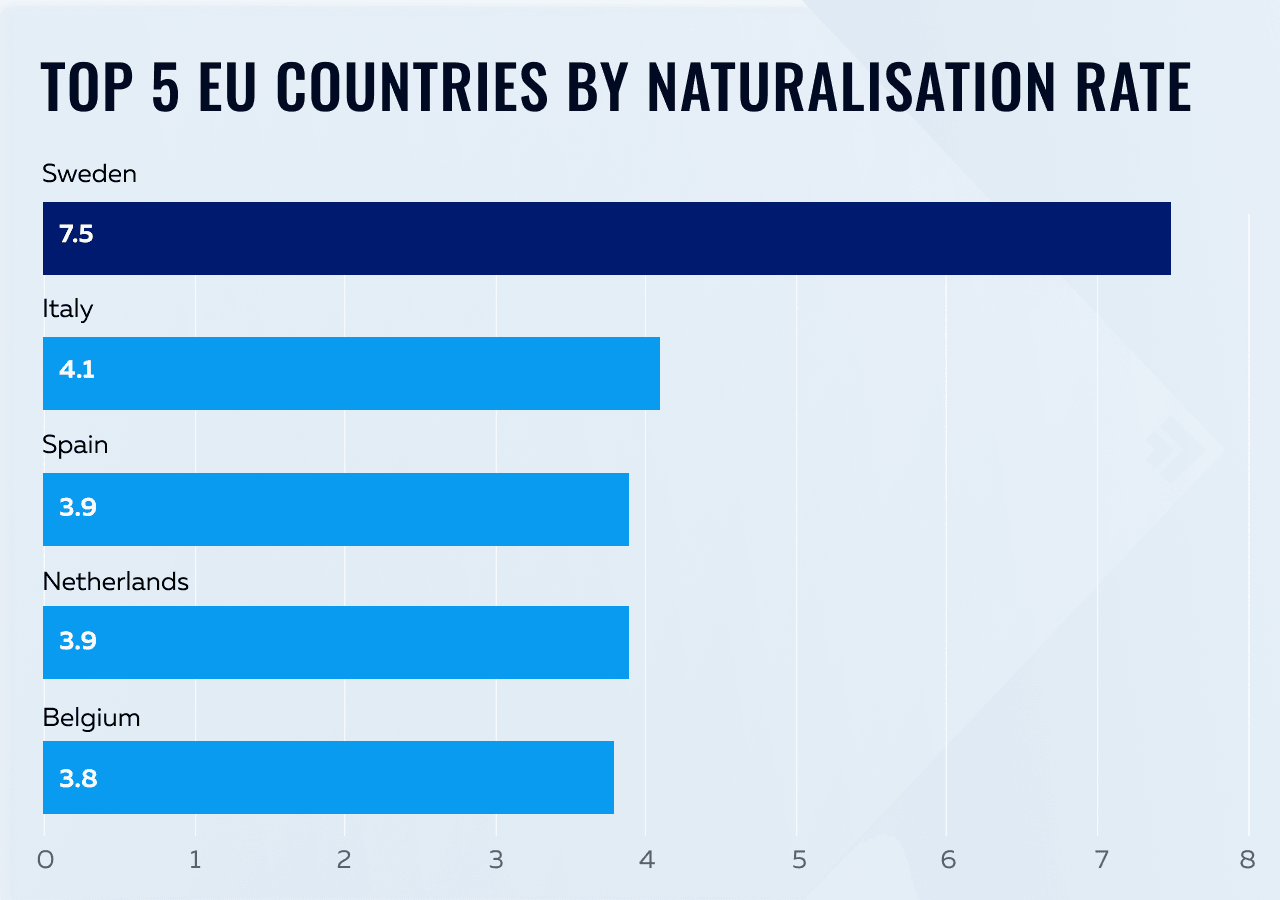
Sweden ranked first in terms of the naturalisation rate in 2024. According to Eurostat, the country granted 7.5 citizenships per 100 non-citizen residents.
It was followed by Italy with 4.1, as well as Spain and the Netherlands with 3.9 each. The EU average reached 2.7.
In absolute numbers, the leaders were:
- Germany — 288,700 people;
- Spain — 252,500 people;
- Italy — 217,400 people.
In relative terms, the fastest growth was recorded in Denmark, Slovakia, Germany, and Malta, while Romania, Estonia, and Hungary saw a decline.
Who obtained EU citizenship most often
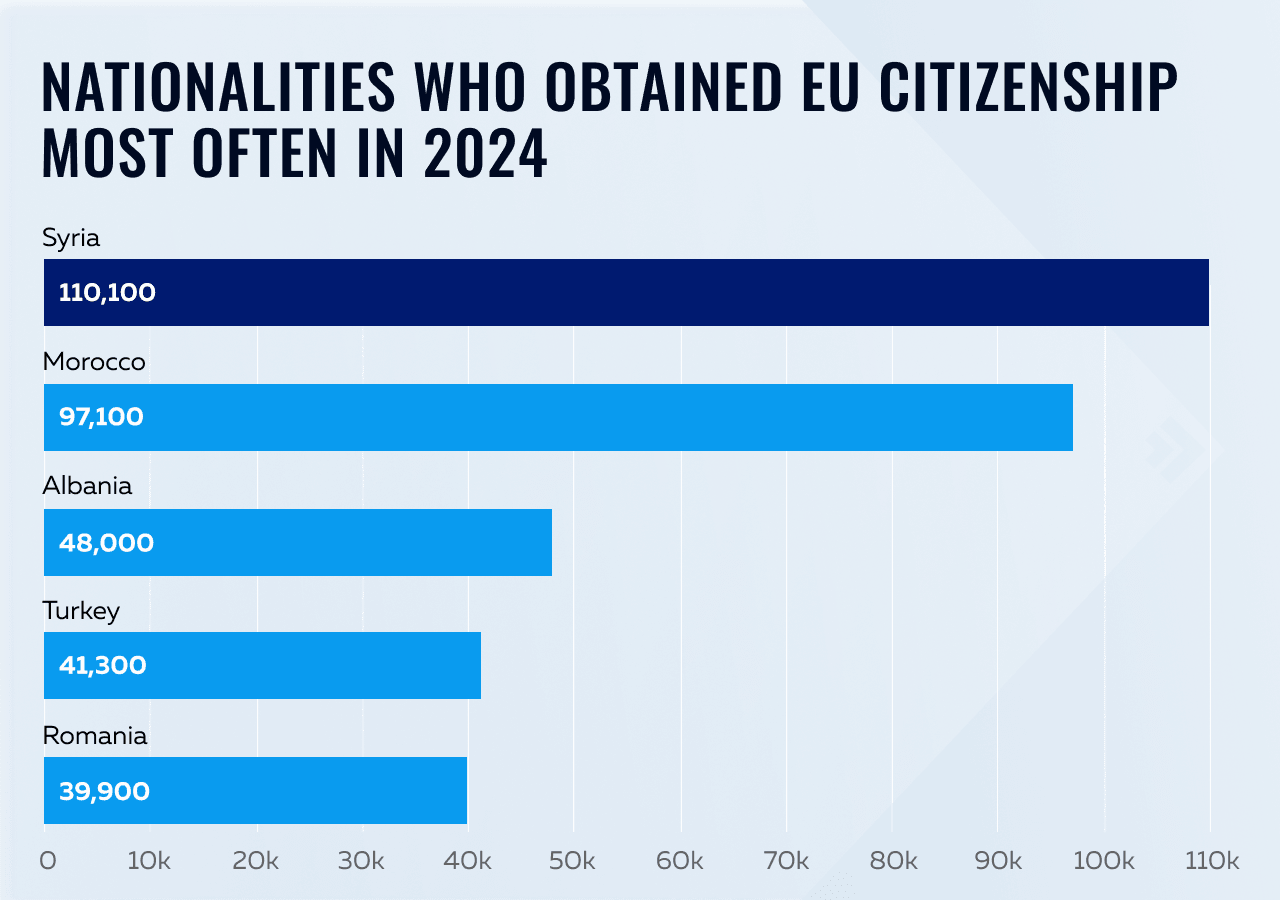
88% of new citizens did not hold citizenship of other EU countries. The leading nationalities among applicants were Syrians, Moroccans, and Albanians.
Eurostat does not specify the grounds for obtaining citizenship. The statistics include all possible routes, such as naturalisation, descent, and marriage.
Is it possible to obtain EU citizenship by investment?
It is not possible to obtain EU citizenship directly by investment. First, foreigners obtain a residence permit through an investment programme and, after several years, may apply for citizenship by naturalisation.
Residence permit holders can travel across the Schengen Area without visas, educate their children in European schools and universities, diversify assets, and eventually obtain EU citizenship by naturalisation.

Vladlena Baranova,
Head of Legal & AML Compliance Department, CAMS, IMCM
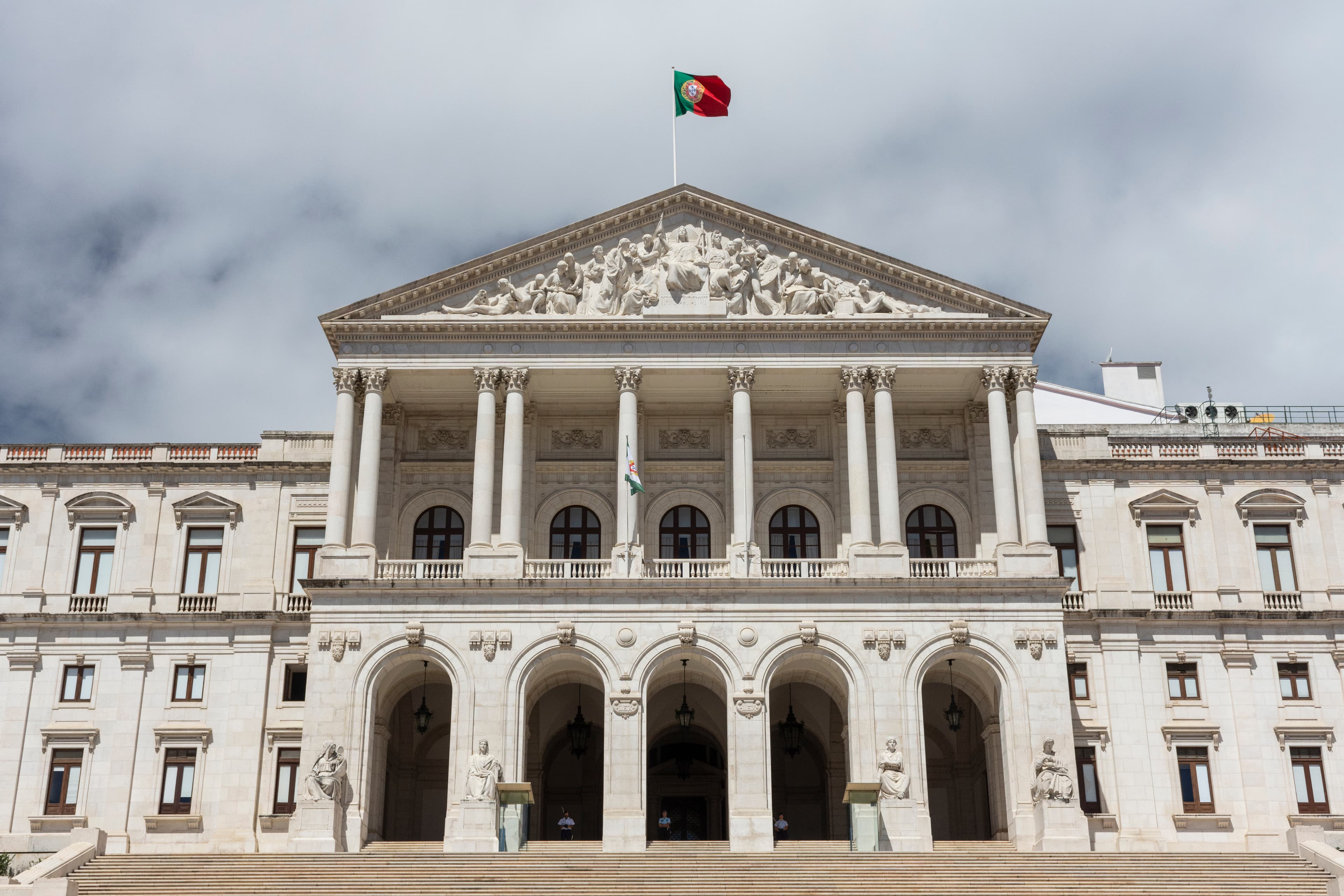
Investors obtain citizenship by naturalisation in Portugal the fastest. On April 1st, 2026, the country’s parliament approved a law that increases the naturalisation period from 5 to 10 years. The law now requires the president’s signature; for the time being, the previous rules remain in force.
Currently, Latvia and Greece offer the shortest naturalisation periods — 5 and 7 years respectively. In addition to meeting the residence requirement, applicants must:
- pass exams on the language, history, and culture of the country;
- have no criminal record;
- demonstrate genuine ties to the country.
Greece and Cyprus offer residence permits through real estate investment, Portugal through funds and cultural projects. Latvia provides several investment options, including real estate, business, and bank deposits.
Countries where foreigners can obtain residence by investment


The Immigrant Invest team helps select the most suitable programme, prepare the required documents, and obtain residence status in line with a family’s and business’s goals. Owing to our in-house Compliance Department, the company reduces the risk of refusal to just 1%.
 Trusted by 10,000+ investors