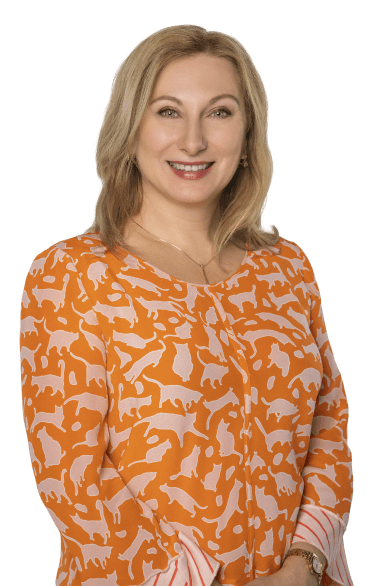

I was born and raised in Armenia. I studied hard and worked, rarely leaving the country. Now I can afford to move to a European country, so here we are. The second passport will make it much easier for us to travel and ensure a good life for the children.

Aram, 44 years old
An investor from Armenia
Clients’ names and photos have been changed
Aram is a programmer and owner of an IT company in Armenia. In 2021, he completely switched his business to remote work and thought about moving to a European country with his family.
The businessman got Montenegro citizenship by investment. Learn from Aram’s story:
the procedure that investors go through to become Montenegro citizens;
whether it’s possible for a couple to get second passports together if the marriage is not registered officially;
the easiest path for the investor’s children to obtain citizenship.
Reasons why Aram turned to Immigrant Invest
Aram wanted to achieve three goals:
-
Move to a European country with the whole family and live there without time limits.
-
Travel to the Schengen Area without visas.
-
Obtain European citizenship immediately or after several years of residence in the country.
The family needed a legal basis to move to Europe, for example, a residence permit or citizenship. Aram found out that the easiest, fastest and most reliable way to get the status is to participate in the state investment program.
The businessman planned to get a residency or citizenship with Mariam, a partner the investor lived with but did not enter into an official marriage. In May 2021, they expected the birth of twins and wanted the newborns to become residents or citizens of another country.
Aram decided that his son from a previous marriage, Samvel, would also need a residence permit or a second passport. The young man was in his third year of undergraduate studies at the California Institute of Technology. After graduation, he wanted to stay in the USA or move to his family in Europe.
On February 26th, 2021, the businessman turned to Immigrant Invest for advice. He needed help in choosing a European residence permit or citizenship program.
Choosing an investment program
Investment program experts analysed the situation and Aram’s tasks. They calculated the costs of obtaining status for the investor’s family and compared the opportunities a resident card or a second passport would give.
Conditions and opportunities of a residence permit and citizenship in Europe
Country and status | Expenses for a family of five | Visa-free Schengen Area | Term of obtaining citizenship | Living in the country to get a passport |
|---|---|---|---|---|
With renting real estate | €165,350 | In 5 years | For the first four years — from 183 days a year, then 12 full months before applying for citizenship | |
With buying real estate | €278,800 | In 7 years for investor | At least 183 days a year | |
With buying real estate | €32,850 | In 5 years | Full 12 months before applying for citizenship | |
With buying real estate | €410,090 | In 5 years | 7 days a year | |
With buying real estate | €456,500 | From 6 months | ||
With renting real estate | €995,500 | In 1 or 3 years after the residence permit |


The Montenegro citizenship program was the only one that met Aram’s tasks and goals.
Expenses. The family expected to spend no more than €700,000 to obtain citizenship or a residence permit for five people: Aram, Mariam, two newborn children and an adult son of 23 years old.
Malta citizenship would allow the family to live in any EU country and travel freely to more than 180 states, including the Schengen Area.
However, Aram needed to invest at least a million euros to get a Maltese passport, provided that he would apply for citizenship in three years. The option did not fit into the investor’s budget, and Aram rejected it.
Visa-free travel within the Schengen Area. Montenegro citizens and residents of Malta, Portugal and Greece have the right to freely travel within the Schengen countries. Staying in any of the 26 states of the region without a visa is allowed for up to 90 days in half a year.
Permanent residents of Cyprus have to get a visa even for short trips to the Schengen Area.
Mandatory residing in the country to obtain citizenship. The investor is not obliged to live in Montenegro before or after getting a passport. But Aram also decided to compare the conditions under which a family could apply for citizenship in the EU member states.
Residents of Malta and Greece must spend at least 183 days a year in the country to obtain a passport.
The restriction did not suit Aram. He wanted to travel around the Schengen countries freely and, if necessary, return to Armenia for several months. Samvel studied full-time in the USA, so he would not be able to move and live permanently in Europe in the next two years.
The Portugal Golden Visa program suited the family in terms of mandatory residence. The investor needs to stay in the country only 7 days a year to maintain their residency and qualify for citizenship in the European Union.
Terms and conditions for applying for citizenship. It is allowed to apply for Portugal citizenship five years after the residence permit. But there is a caveat: the investor’s adult relatives need to depend on him financially for the entire residence period.
Samvel would graduate from the university in 2022. He did not plan to enter the master’s program and continue his studies. He wanted to get a job or start a business. Thus, he would no longer be financially dependent on his father.
Aram supported his son's plans, so he signed an agreement with Immigrant Invest to participate in the Montenegro citizenship by investment program.
4 reasons why Aram chose Montenegro citizenship
Country and status | Costs fitted into the budget | Visa-free entry to the Schengen Area | Citizenship without living in the country | Citizenship for the whole family |
|---|---|---|---|---|
Lyle Julien,
Investment programmes expert
One can obtain Montenegro citizenship by real estate investment within six months. There is no requirement for mandatory residing for investors and their family members before or after obtaining citizenship. They need to go to the country once to submit fingerprints.
The Montenegrin passport provides the freedom to travel to 123 countries, including the Schengen Area, the UAE, Singapore and Hong Kong. Montenegro is also one of the first candidates for EU membership in 2025. If the country is accepted, the citizens will gain the right to live, work, do business and study in any state of the region.
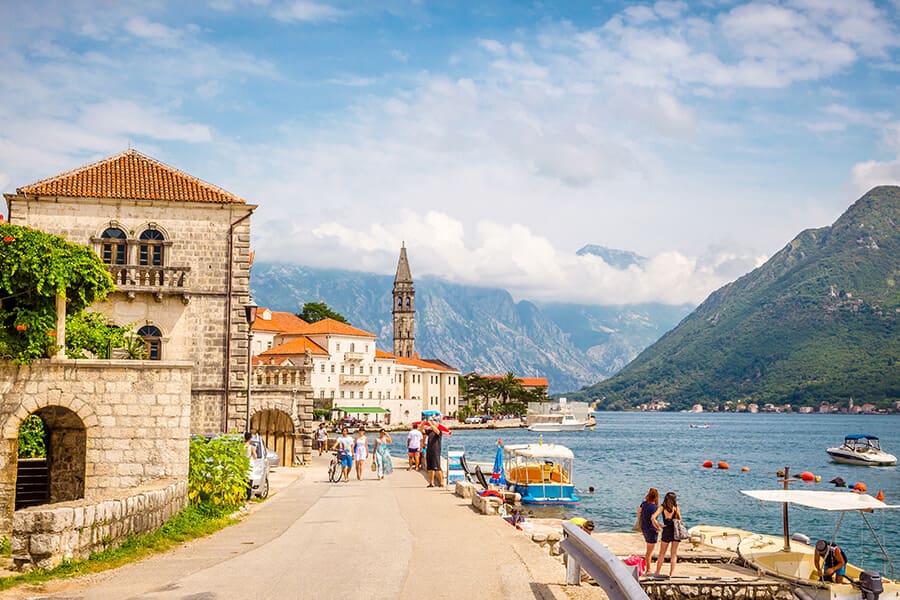
Montenegro is in the top 50 world’s most prosperous countries, according to the Legatum Institute Foundation. At the same time, the cost of living in Montenegro is lower than in Poland, Greece or Spain
Why did Aram and Mariam register their marriage before applying for citizenship?
Aram and Mariam lived together for three years but did not register their marriage officially. When Mariam found out that she was expecting a baby, the partners decided to get married. But at the time of applying to Immigrant Invest, they remained unmarried.
Lawyers recommended that partners register their marriage before applying for Montenegro in citizenship. It was the only way Aram and Mariam could get second passports together.

Vladlena Baranova,
Head of Legal & AML Compliance Department, CAMS, IMCM
Montenegro citizenship by investment is granted only to spouses with a marriage registration certificate. If there is no certificate, partners can participate in the program separately as independent investors.
Another option is if one of the partners moves to Montenegro and gets citizenship by naturalisation. But it is a long and complicated process: you need to live in the country for at least 10 years and pass a Montenegrin language proficiency test.
Another disadvantage of naturalisation is that Montenegro does not allow its citizens to have several passports. An exception is made only for participants in the investment program: they may not renounce their first citizenship.
Aram and Mariam decided they would apply for Montenegro citizenship by real estate investment after marriage registration and their children’s birth.
After receiving a passport, an investor cannot add relatives to the Montenegro program. Citizenship is not inheritable.
If the investor applies for citizenship before the children’s birth, the child will be able to become a Montenegro citizen only by naturalisation. A Montenegrin passport will be issued to him at 18, provided that the child renounces Armenia citizenship.
Aram and Mariam applied to the registry office immediately: they had two months before the expected date of the children’s birth. They registered their relationship on April 19th, 2021 and got a marriage certificate.
Real estate purchase in Montenegro
Investors fulfil two investment conditions to obtain a Montenegrin passport: they make a non-refundable contribution to the state fund and buy real estate.
Buying shares or apartments are allowed only in projects approved by the government. These are hotels and residential complexes in popular Montenegrin resorts.
Most of the approved real estate projects are located in the north of Montenegro, close to the ski resorts. The investment amount for properties in the country’s north is €250,000 — almost two times less than if you invest in real estate in the south.
However, Aram did not want to buy property in the northern mountainous region. The family preferred a beach holiday and dreamed of an apartment with a sea view.
Immigrant Invest real estate experts offered Aram to consider a project of a residential complex in Budva, the resort capital of Montenegro. The investor could buy an apartment in the complex to live in with his family after the completion of construction or rent it out.
Real estate investment in the south or the capital Podgorica requires at least €450,000 to qualify for citizenship. The amount fitted into Aram’s budget, so he agreed to consider buying an apartment in Budva.
Immigrant Invest arranged a video meeting with a developer’s representative for the spouses. He came to the construction site to show the area and the development progress on the spot.
Aram decided to buy a studio apartment for €450,000 and not to go over budget. Lawyers checked the terms of the agreement, and the investor signed a contract with the developer.
The procedure for obtaining Montenegro citizenship
To become a citizen of Montenegro, Aram had to go through several stages: from preparing documents to fingerprinting.
Preparation of documents, including waiting for Aram’s children to be born
Opening accounts in a Montenegrin bank
Paying fees and applying
Preliminary approval from the CBI unit
Fulfilment of investment conditions
Final approval from the CBI unit
Fingerprinting and getting passports
1. Preparation of documents. Aram provided lawyers with:
-
copies of family members’ passports;
-
marriage certificates;
-
applicants’ birth certificates;
-
police clearance certificates for the investor, his spouse and eldest son;
-
military ID cards of the investor and his son;
-
medical insurance for the whole family.
When the twins Leila and Zara were born, the couple provided their birth certificates and passports. They received documents for the children in three weeks.
Lawyers translated and apostilled documents and filled out government questionnaires and forms. To pass Due Diligence, the lawyers compiled a history of the investor’s wealth: indicated all sources of income and assets in possession, and documented their legality.
To confirm the financial dependence of his son, Aram provided bank statements and receipts for Samvel’s studies at an American university.
The lawyers also drew up an affidavit explaining why Aram and Mariam have different last names. Mariam did not change her surname upon marriage to avoid wasting time replacing passports.
2. Accounts in a Montenegrin bank are needed to transfer payments under the program investment options. Two escrow accounts were opened: from one, the investor transfers money to the developer under a real estate purchase and sale agreement, from the other, he pays a non-refundable contribution to the state fund.
Aram did not have to go to Montenegro: a lawyer acted on his behalf by proxy. The lawyer submitted documents to the bank for opening escrow accounts in the investor’s name. In the agreement with the bank, he indicated the amounts and purposes of payments planned to be made on the account.
When the bank approved the opening of accounts, Aram transferred €700,000 to them, which he would spend on buying real estate and participating in the citizenship program. At the same time, the bank froze the amount set for the purchase of real estate and payment of contributions to the state fund.
3. The investor pays fees before applying to the CBI unit. Costs for a family of five include:
-
€95,000 — administrative fee
-
€11,500 — Due Diligence fee
Lawyers attached the payment receipts to the rest of the documents. They submitted an investor application for participation in the Montenegro citizenship program on May 17th, 2021.
4. The investor receives preliminary approval from the CBI unit based on Due Diligence results. It lasted six months and was successfully completed without further requests from the CBI unit.
5. Fulfilment of investment conditions. Lawyers notified the bank that the CBI unit had approved Aram's application. Without approval, the bank had no right to transfer investments to the accounts specified in the agreement. If the investor had been refused, the bank would have unfrozen and returned the money to the account holder.
To fulfil the conditions of the citizenship program, the bank transferred on Aram’s behalf:
-
€450,000 went to the developer’s escrow account for the purchase of an apartment in the approved real estate project;
-
€100,000 went to the escrow account of a special state fund as a non-refundable contribution.
Aram’s expenses for obtaining citizenship for the family amounted to €656,500. The investor did not go beyond the budget, even considering the purchase of real estate for €450,000 instead of the minimum €250,000.
6. Aram received the final approval a week after the investment conditions were met. The CBI unit received confirmation of payments from the bank and opened an appointment for the investor's family to submit fingerprints.
Fingerprinting and obtaining passports in Montenegro
Lawyers signed up the family for fingerprinting Montenegro at a convenient date and time: a month after the final approval.
As citizens of Armenia, the family needed a visa to travel to Montenegro. At check-in and passport control, they provided visas and vaccination certificates against coronavirus.
On December 17th, 2021, the spouses with children arrived in the capital Podgorica. They were accompanied to the migration service by the Immigrant Invest lawyer.
After being fingerprinted, the family stayed in Podgorica for another day to personally collect their passports. They were ready a day later.
Preparation of documents and participation in the citizenship program took 10 months from the moment Aram applied to Immigrant Invest. The term considers 2.5 months that have passed in anticipation of children’s birth and documents for them.
Vladlena Baranova,
Head of Legal & AML Compliance Department, CAMS, IMCM
Preparation of documents, on average, takes about a month. And the whole procedure for obtaining Montenegro citizenship by investment takes six to eight months.
The family’s future with Montenegro passports
After receiving passports, the family returned to Armenia to celebrate the New Year with relatives and friends. The couple decided not to rush the move but to plan everything calmly so that the process would be as comfortable as possible for themselves and their little daughters.
The couple spent February in Montenegro, in Budva. They wanted to try living in the city to see if it was a suitable place to live permanently in the future. While the residential complex with their apartment was being built, Aram and Mariam rented a house on the Adriatic coast.
After graduation, Samvel thought about opening a 3D modelling startup in the USA.
Immigrant Invest is a licensed agent for government programs in the European Union and the Caribbean.