Summary
If you have a stable passive income, sufficient savings, and are ready to rent or buy property in the EU, you may qualify for a financially independent person visa.
This type of a residence permit is designed for living, not working. Since the income must come from abroad, it cannot be used to build a local career.
In this guide, we’ll explore who qualifies for financially independent residency, how to apply, and how to choose the most suitable country for long-term relocation.
What is a visa for financially independent persons?
Not everyone can apply for a financially independent persons visa. These residence permits are tailored to people who already have a secure source of passive income outside the EU and who genuinely plan to make Europe their home.
Definition of the FIP visa
A financially independent person visa, or FIP visa, is for non-EU citizens who can support themselves entirely on foreign income without needing to work in Europe. Think of it as a residence permit for those who have already secured their financial future through pensions, investments, rental income, or other passive sources.
This visa is a great fit if you are a:
- retiree with a stable pension;
- investor living off dividends or other investment returns.

Albert Ioffe,
Legal and Compliance Officer, certified CAMS specialist
Remote workers and entrepreneurs earning from outside the EU may apply for a financially independent person visa only in rare cases — typically when no dedicated remote work visa exists. In general, FIP visas do not permit income from active work.
Sole proprietors and remote employees are better suited to digital nomad visas, which are specifically designed for active income earned abroad.
Key requirements and restrictions for FIP visa applicants
The core principle is simple: you live in Europe, but your money comes from abroad. All visas require you to:
- prove stable passive income;
- have health insurance;
- secure accommodation;
- spend more than 183 days a year in the country — for certain nations.
Crucially, you are not allowed to take up local employment. While you can own a company in the EU, you cannot manage it day to day. The one major exception is Portugal’s D7 visa, which allows residents to work or run a business locally[1].
The passive income visa is designed for genuine relocation. It is not a tool for short-term stays or for those who want to maintain their primary residence elsewhere.

Practical Guide
Find your best-suited EU residency for financially independent people
12 benefits you gain with an EU FIP visa
A financially independent person visa is more than just a permit to live in Europe. It grants a unique combination of personal freedom, financial flexibility, and long-term security.
Freedom and stability
1. Secure environment. Financially independent persons gain the right to live in some of Europe’s most stable and well-governed countries. These destinations offer predictable rule of law, reliable healthcare, efficient emergency services, clean public spaces, and strong consumer protections.
If you need to return to your home country, your European residence remains a solid Plan B. With an established address, it serves as a practical safety net in case circumstances change.
2. Family reunification. Financially independent persons can relocate to the EU together with their families. Residency typically extends to a spouse, children up to a certain age, and, in some cases, parents.
Family members receive residence permits with the same validity period and enjoy the same rights as the main applicant.
3. Healthcare access. With residency, passive income visa holders can use local healthcare services, including public providers. To qualify for the visa, they must obtain comprehensive private insurance for themselves and their family members — ensuring access to both public and private healthcare sectors.
4. Education access. Children have the right — and in most cases the obligation — to attend school, with the option of enrolling in state, private, or international institutions. Higher education is also available, though tuition fees may apply even at public universities.
5. Driving licence exchange. Most EU countries allow financially independent persons from outside the EU to drive with a foreign licence for 6 to 12 months after obtaining residency. After this period, the licence can be exchanged if the applicant’s home country has a bilateral agreement.
If no agreement exists, the resident must pass the local theory and practical driving exams. The deadline to exchange or convert a licence ranges from 185 days in Portugal[2] to 12 months in France[3], Switzerland[4], and Italy[5].
6. Visa-free Schengen travel. Financially independent persons with an EU residence permit can travel freely within the Schengen Area for up to 90 days in any 180-day period. Weekend trips, extended stays, or spontaneous cross-border travel become simple and legal.

Thanks to open borders, traveling across the Schengen Area is convenient by car, train, plane, bus, and motorcycle
EU permanent residency and citizenship
7. Permanent residency. After 5 years of continuous legal residence, you can typically apply for permanent residency. This status is indefinite and often grants the right to work.
8. EU citizenship. Depending on the country, you can apply for citizenship after 5 to 10 years of residency. EU citizenship gives you the right to live, work, and study anywhere in the European Union.
Financial advantages
9. Bank accounts. Opening a personal or corporate bank account becomes simpler with a residence permit, especially in jurisdictions with strict KYC and AML checks such as Austria and Switzerland.
US citizens who hold 401(k) accounts can use these savings as part of their proof of income for financially independent visas.
10. Business ownership. Foreigners on an independent means visa cannot take up employment. However, they may start or acquire a company and receive passive income, such as dividends. They are not allowed to act as directors or managers or to perform day-to-day business activities.
Portugal is an exception: under the residence permit that follows the D7 visa, residents may run a business, either as managers or as self-employed.
11. Tax incentives. While financially independent persons are generally taxed as residents once they move to the EU or Switzerland, several countries offer favorable regimes or exemptions that significantly reduce their tax burden.
Countries with notable tax advantages for FIPs include:
- Italy: flat tax of €200,000 per year on foreign income; no tax on foreign assets, gifts, or inheritance[6];
- Greece: 7% flat tax for foreign pensioners for up to 15 years[7];
- Austria: no wealth, inheritance, or gift taxes[8];
- France: wealth tax applies only to real estate, if the net worth is over €1,300,000[9];
- Switzerland: lump-sum tax replaces ordinary income and wealth tax[10].
12. Real estate access. Residency makes it easier for financially independent persons to both rent and purchase property in the EU. Renting is often a requirement for the residence permit itself, and having legal residency and a local bank account simplifies long-term leases.
In Austria and Switzerland, residency removes or eases restrictions that apply to non-resident buyers. In Portugal, Spain, France, and Greece, foreigners can buy property without residency, but being a resident streamlines banking and paperwork. In Italy, non-EU nationals may purchase property only if a reciprocity agreement exists between Italy and their country of citizenship.
Real estate for purchase in Portugal


Portugal, Funchal
€1,230,000 — €1,500,000
Elegant House with sea view, Funchal
 273 m² — 313 m²
 3
3  3
3 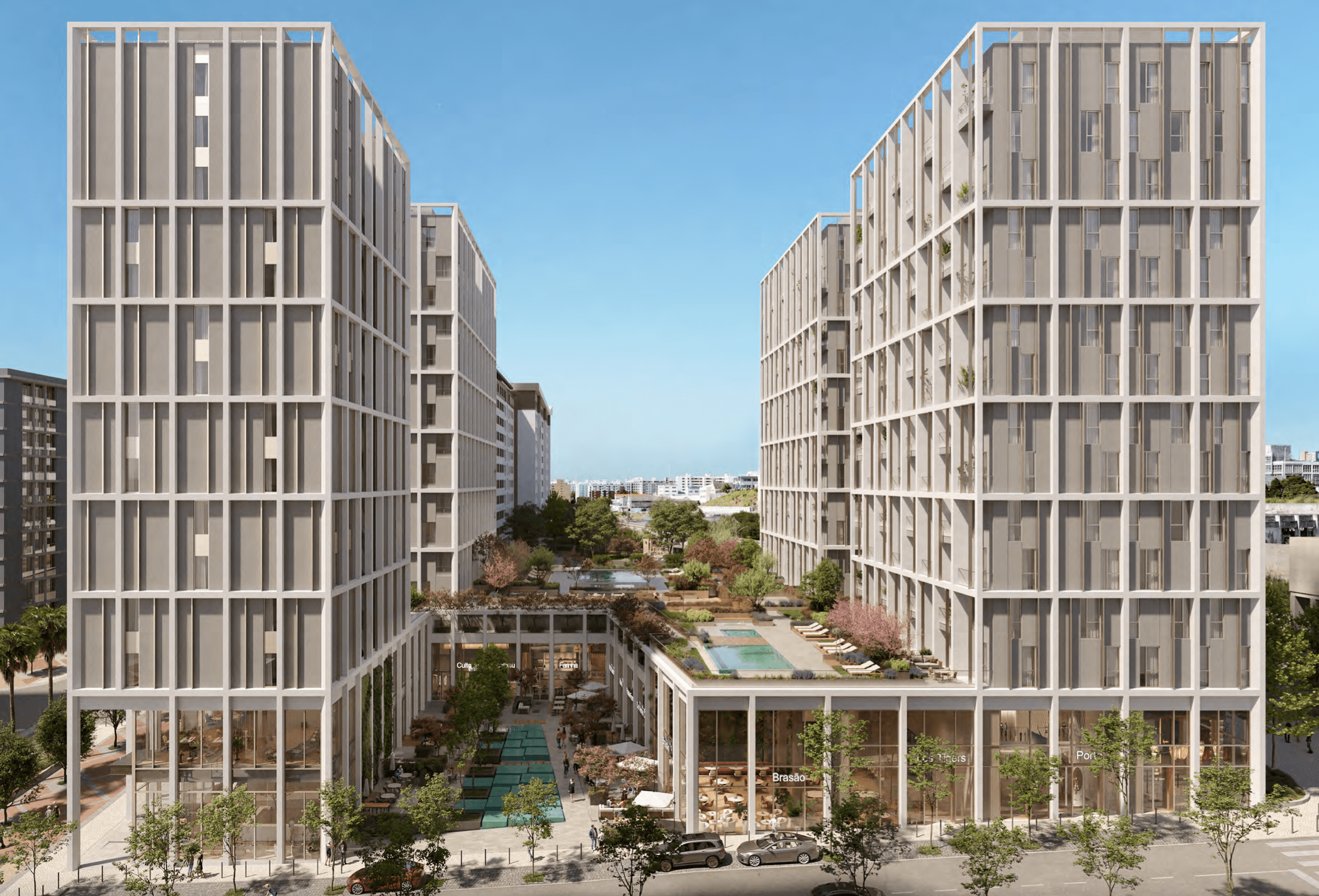
Portugal, Lisbon
€405,000 — €645,000
Serviced apartments, Park of the Nations, Lisbon
40 m² — 76 m²1—2 1—2 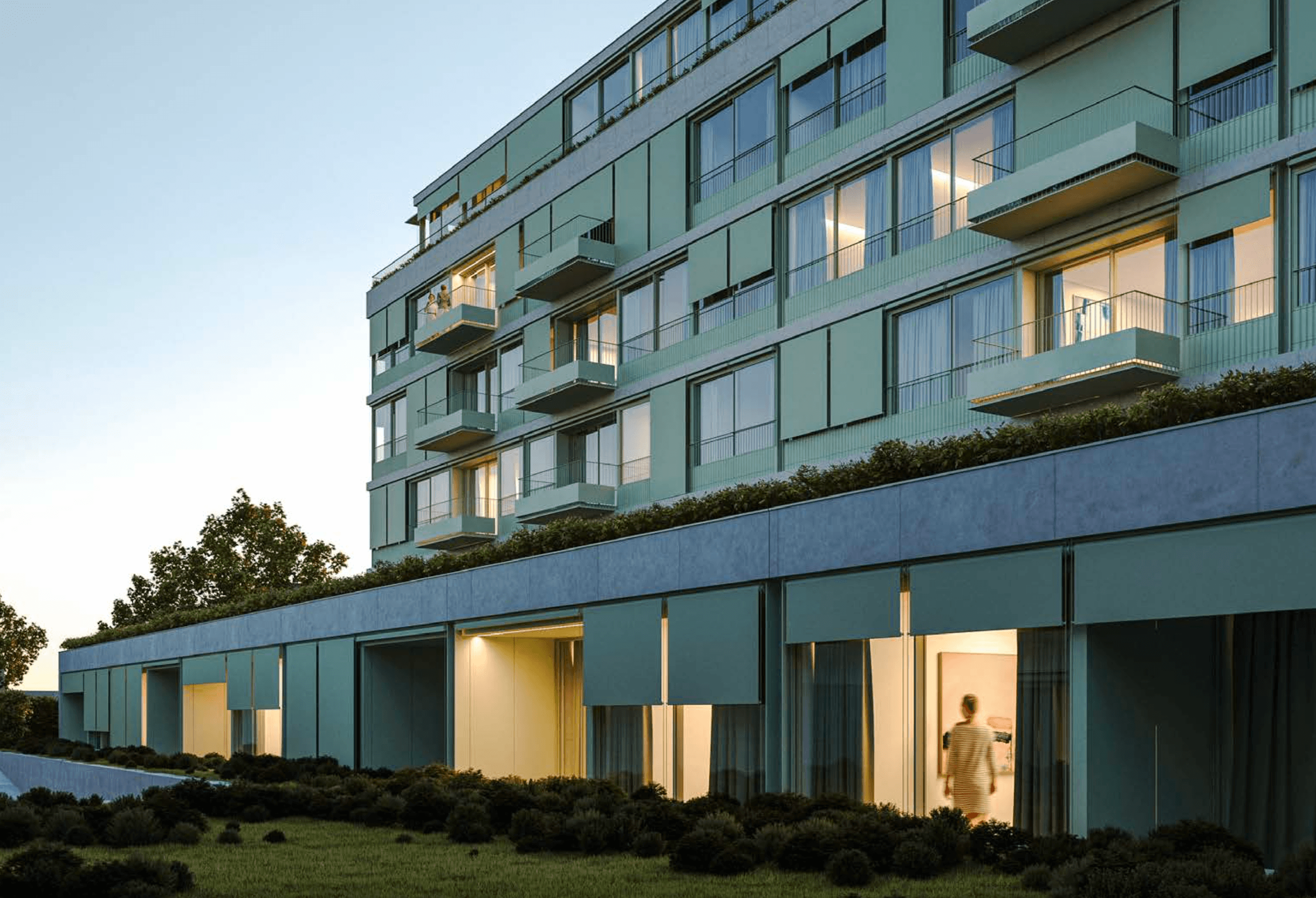
Portugal, Porto
€400,000 — €1,215,000
Apartments in modern style, central district, Porto
59 m² — 223 m²1—2 1—2 Which countries offer the financially independent person visa?
Several countries in the EU and the Schengen Area offer residence permits for financially independent persons. Countries with passive income visas include Austria, France, Italy, Spain, Portugal, Greece, Switzerland, Malta, Belgium, Cyprus, and — in more limited or specific forms — Latvia and Bulgaria.
Each visa has its own conditions, income thresholds, and long-term benefits. In this article, we focus on seven of the most well-established and accessible routes: Portugal, Spain, Italy, France, Greece, Austria, and Switzerland.
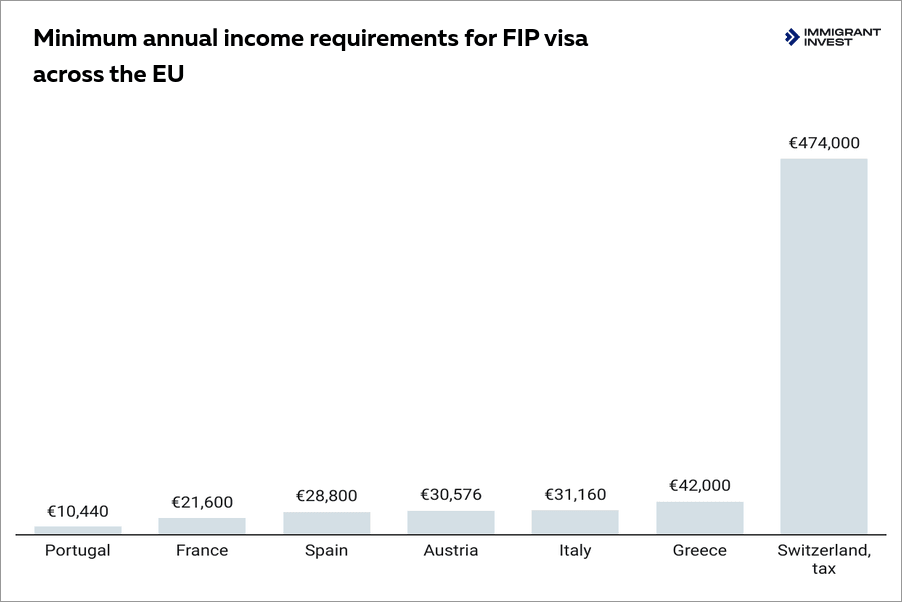
Comparison of EU visas for financially independent persons
Country

Portugal
Annual income
€11,040+
Processing time
6+ months
First permit validity
2 years
Stay per year
8+ months
Pathway to citizenship
5 years
Country

Spain
Annual income
€28,880+
Processing time
4+ months
First permit validity
1 year
Stay per year
183 days
Pathway to citizenship
10 years
Country

Austria
Annual income
€30,576+
Processing time
3+ months
First permit validity
1 year
Stay per year
183 days
Pathway to citizenship
10 years
Country

Italy
Annual income
€31,160+
Processing time
4+ months
First permit validity
1 year
Stay per year
183 days
Pathway to citizenship
10 years
Country

France
Annual income
€21,600+
Processing time
5+ months
First permit validity
1 year
Stay per year
183 days
Pathway to citizenship
5 years
Country

Greece
Annual income
€42,000+
Processing time
3+ months
First permit validity
2 years
Stay per year
None
Pathway to citizenship
7 years
Country

Switzerland
Annual income
Paying tax of €470,000+
Processing time
3+ months
First permit validity
1 year
Stay per year
183 days
Pathway to citizenship
20 years
Country | Annual income | Processing time | First permit validity | Stay per year | Pathway to citizenship |
|---|---|---|---|---|---|
Portugal | €11,040+ | 6+ months | 2 years | 8+ months | 5 years |
Spain | €28,880+ | 4+ months | 1 year | 183 days | 10 years |
Austria | €30,576+ | 3+ months | 1 year | 183 days | 10 years |
Italy | €31,160+ | 4+ months | 1 year | 183 days | 10 years |
France | €21,600+ | 5+ months | 1 year | 183 days | 5 years |
Greece | €42,000+ | 3+ months | 2 years | None | 7 years |
Switzerland | Paying tax of €470,000+ | 3+ months | 1 year | 183 days | 20 years |
Portugal D7 Visa — €11,040+ per year
Portugal’s D7 Visa is one of the most popular and flexible passive income routes in Europe. It stands out for two key reasons: its low income requirement and the unique right for residents to work or run a business — an option unavailable in most other countries[11].
Eligibility criteria for Portugal’s D7 visa
Monthly income: €920. This amount increases with family size: by 50%, or €460, for a spouse or dependent parent and by 30%, or €276, for each child.
Savings: €11,040. The applicant must open an account and deposit this amount in a Portuguese bank to cover one year of living expenses. The threshold also rises by 50%, or €5,520, per adult and by 30%, or €3,312, per child.
Housing. A rental contract or property deed is required as proof of accommodation in Portugal.
Family inclusion. The main applicant can include:
- spouse or long-term partner;
- children under 18;
- unmarried children aged 18—21 who are financially dependent;
- children with disabilities, with no age limit;
- dependent parents.
D7 visa income and savings by family size
Processing, validity, and stay requirement
For Portugal’s D7 visa, applicants should keep in mind the following:
- processing time: 6+ months;
- validity: 2 years, renewable for 3 years;
- minimum stay: absences may not exceed 6 consecutive months or 8 months total during the residence permit validity period.
Tax scenarios for financially independent persons in Portugal
Foreigners with a passive income visa in Portugal become tax residents, as they spend more than 183 days per year in the country.
General income, such as pensions or salaries, is taxed progressively[12]:
- up to €7,703 — 12.5%;
- €7,703 to 11,623 — 16%;
- €11,623 to 16,472 — 21.5%;
- €16,472 to 21,321 — 24.4%;
- €21,321 to 27,146 — 31.4%;
- €27,146 to 39,791 — 34.9%;
- €39,791 to 51,997 — 43.1%;
- €51,997 to 81,199 — 44.6%;
- over €81,199 — 48%.
Dividends, interest, and capital gains are taxed at a flat rate of 28%[13].
Portugal also has a wide network of double taxation treaties — over 70 agreements with countries in Europe, the US, Asia, Africa, and Oceania[14].
Permanent residency and citizenship in Portugal
Both permanent residency[15] and citizenship[16] are available after 5 years of living in Portugal.
Applicants must demonstrate Portuguese language skills at A2 level, be fully compliant with tax, social security, and residency stay requirements.
Citizenship candidates must also pass tests on Portuguese culture, rights, and duties, and make a declaration of allegiance to democratic principles.
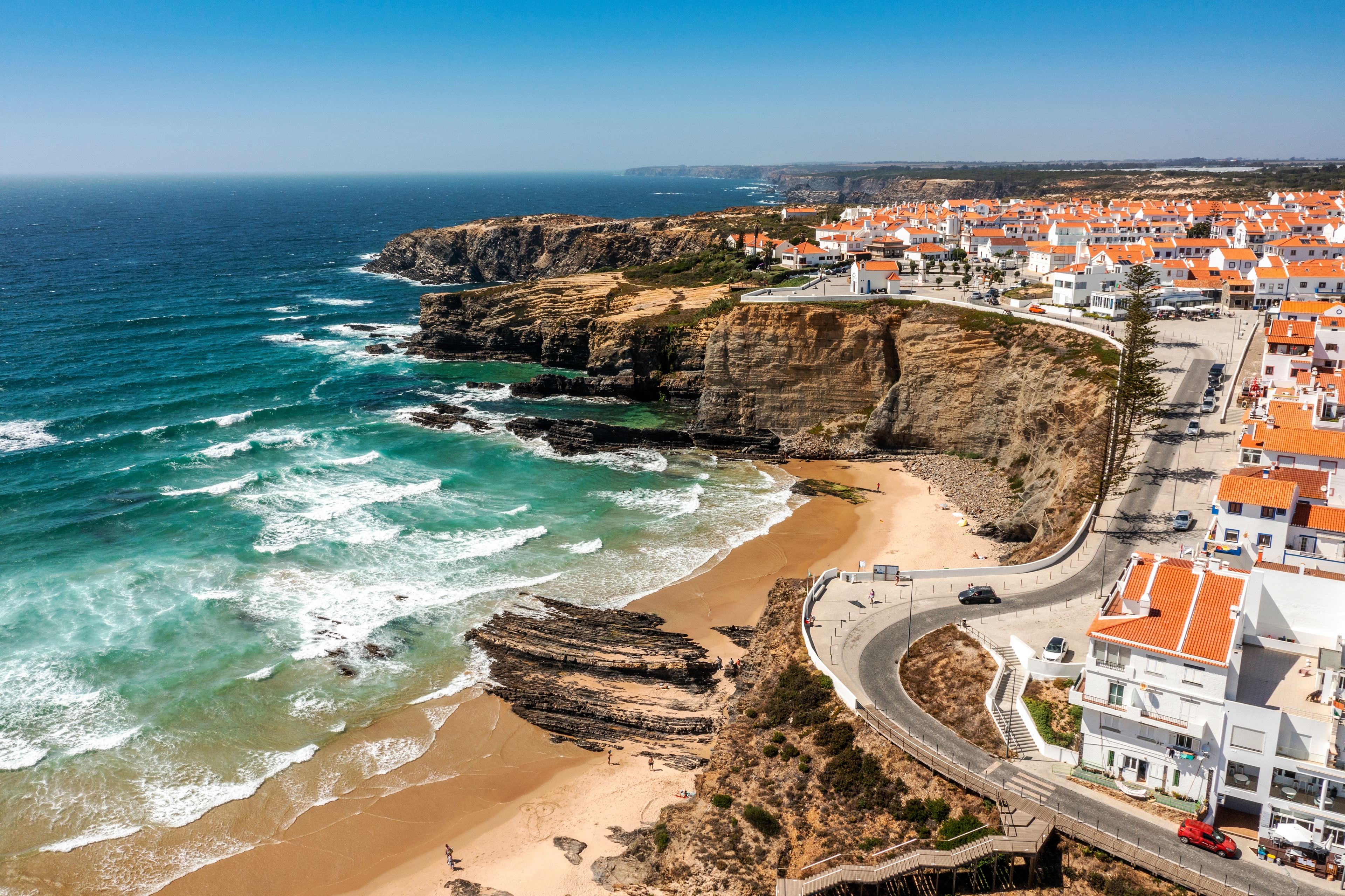
Portugal is a universal favourite — equally chosen by young surfers chasing waves and retirees seeking a calmer, more relaxed lifestyle
Spain Non-Lucrative Visa — €28,880+ per year
Spanish residency for financially independent persons is known as the Spain Non-Lucrative Visa[17]. Its main attractions are the ability to include adult dependent children and parents in the application, and the absence of a mandatory savings deposit.
Eligibility criteria for Spain Non-Lucrative Visa
Monthly income: €2,400. A minimum of €2,400 per month is required for the main applicant, plus €600 per month for each additional family member.
Depending on family size, the main applicant must prove a monthly income of:
- €3,000 for a couple;
- €3,600 for a family of three;
- €4,200 for a family of four.
Housing. Applicants must rent or purchase real estate in Spain to provide a registered address.
Family inclusion. Spouses and parents can be included in the application. Unmarried children of any age may be included, provided they are financially dependent on the main applicant and do not have an independent household.
Processing, validity, and stay requirement
For the Spain Non-Lucrative Visa, the residence conditions are as follows:
- processing time: 4+ months;
- validity: 1 year initially, then renewable with 2-year residence cards;
- minimum stay: 183 days per year.
Tax scenarios for financially independent persons in Spain
To maintain residency, financially independent persons must spend more than 183 days a year in Spain, and thus they become tax residents.
Income tax — pensions, rentals, and other earned income — is taxed at progressive rates[18]:
- €0 to 12,450 — 19%;
- €12,451 to 20,200 — 24%;
- €20,201 to 35,200 — 30%;
- €35,201 to 60,000 — 37%;
- €60,001 to 300,000 — 45%;
- over €300,000 — 47%.
Dividends, interest, and capital gains are taxed separately on a national savings scale[19]:
- €0 to 6,000 — 19%;
- €6,001 to 50,000 — 21%;
- €50,001 to 200,000 — 23%;
- €200,001 to 300,000 — 27%;
- over €300,000 — 30%.
Spain has treaties to prevent double taxation. Foreign taxes may be credited, or income may be exempt with progression[20].
Permanent residency and citizenship in Spain
Permanent residency in Spain is available after 5 years of continuous legal stay. During this period, applicants must not be absent from Spain for more than 6 consecutive months or 10 months in total. No integration or language test is required for permanent residence[21].
Spanish citizenship can be granted after another 5 years. Eligibility criteria include the DELE A2 Spanish language exam and the CCSE civics and constitutional test[22].
Spain does not allow dual nationality, so applicants are required to renounce their original citizenship.

Spain is ranked 6th among best countries to settle for retirees, according to the Global Retirement Index 2025[23]
Austria financially independent person visa — €30,500+ per year
Austria’s residence permit for financially independent individuals is one of the most prestigious in Europe, offering access to an exceptionally high quality of life[24]. However, it is also one of the most demanding options, defined by two key hurdles: a strict annual quota — around 450 spots for all applicants and families — and a mandatory German language requirement from day one.
Eligibility criteria for Austria FIP visa
Monthly income: €2,548. A minimum of €2,548 per month is required for a single applicant, rising to €4,020 for a couple, plus €394 for each child.
Savings: €30,000. Immigrant Invest lawyers recommend depositing around €80,000 in a bank account to improve the chances of approval.
Housing. A financially independent person can either buy or rent property. If renting, the apartment must meet minimum space requirements based on family size:
- around 35 m² for one person;
- at least 60 m² for a family of three;
- 70—80 m² for a couple with two children.
Language requirement. Applicants over 14 must demonstrate German language proficiency at the A1 level. The certificate must be issued by one of the following institutions:
- Goethe-Institut;
- TELC GmbH;
- Austrian Integration Fund.
Family inclusion. A spouse and children under 18 can obtain Austrian residency with the main applicant.
Processing, validity, and stay requirement
For Austria’s residence permit for financially independent persons, the main conditions include:
- processing time: 3+ months;
- validity: 1 year, renewable;
- minimum stay: 183 days per year.
To renew a residence permit in Austria, financially independent persons must complete Module 1 of the integration agreement[25]. This involves attending a German integration course and passing the ÖIF exam at the A2 level.
The government covers 50% of the course cost — up to €750, provided the applicant:
- attends at least 75% of classes;
- passes the exam within 18 months of starting the course.
Alternatively, Module 1 can be fulfilled by presenting a secondary school diploma.
Tax scenarios for financially independent persons in Austria
Financially independent persons become tax residents in Austria, as they must spend more than 183 days per year in the country. They are subject to taxation on their worldwide income, which includes foreign pensions, dividends, interest, capital gains, and rental income.
Personal income tax, including pensions and rentals, is progressive[26]:
- up to €13,308 — 0%;
- €13,308 to 21,617 — 20%;
- €21,617 to 35,836 — 30%;
- €35,836 to 69,166 — 40%;
- €69,166 to 103,072 — 48%;
- €103,072 to 1,000,000 — 50%;
- over €1,000,000 — 55%.
Dividends, interest and capital gains are taxed at a flat rate of 27.5%[27].
Austria has an extensive network of double taxation treaties with over 90 countries, helping residents avoid being taxed twice on the same income[28].
Permanent residency and citizenship in Austria
Permanent residency is granted after 5 years of uninterrupted stay in Austria[29]. During this time, applicants must not be absent for more than 6 consecutive months or more than 10 months in total. Permanent residence is indefinite, but the residence card must be renewed every 5 years.
Applicants must confirm their income and place of residence in Austria and complete Module 2 of the integration agreement. This can be done by:
- passing a German language exam administered by the ÖIF, B1 level;
- providing an Austrian school certificate with a passing grade in German;
- showing 5 years of schooling in Austria;
- presenting a vocational education diploma;
- confirming university studies conducted in German.
Austrian citizenship for financially independent persons is available after another 5 years[30]. Applicants must pass a test proving B2-level German and demonstrate knowledge of Austria’s democratic system and history.
Dual citizenship is not permitted in Austria, so applicants must renounce their previous citizenship before acquiring Austrian nationality.

Vienna was ranked the world’s most liveable city 5 times between 2018 and 2024, according to the Global Liveability Index[31]
Italy Elective Residence Visa — €31,160+ per year
The Italy Elective Residence Visa[32] is the premier choice for high-net-worth individuals who want to pair a culturally rich lifestyle with powerful tax optimisation. Its main draw is a unique flat-tax regime that is unmatched by other popular EU residency options.
Eligibility criteria for Italy Elective Residence Visa
Monthly income: €2,580. You must demonstrate a minimum annual income of €31,160. This amount increases by 100% for each family member.
Housing. Applicants must confirm accommodation in Italy by one of the following documents:
- property purchase contract for the address where they intend to live;
- tenancy agreement of at least 1 year registered with the Italian tax authority;
- Declaration of Hospitality signed by an Italian resident who owns or rents the dwelling.
Family inclusion. A spouse and children of any age can obtain Italian residency with the main applicant. Children over 18 must be unmarried and enrolled in higher education. Disabled children of any age may also qualify.
Processing, validity, and stay requirement
For Italy’s Elective Residence Visa, the key features are:
- processing time: 4+ months;
- validity: 1 year, renewable;
- minimum stay: 183 days per year.
Tax scenarios for financially independent persons in Italy
Special tax regime. Applicants who have not been tax residents in Italy for the last 10 years can apply for a special 15-year regime. It is subject to a fixed tax of €200,000[33].
Without special tax regime, foreign employment income and pensions are taxed under Italy’s progressive income tax scale:
- up to €28,000 — 23%;
- €28,001 to 50,000 — 35%;
- over €50,000 — 43%.
Dividends, interest, capital gains are taxed at 26%[34].
Permanent residency and citizenship in Italy
Permanent residence is available after 5 years of living in Italy[35]. Applicants must demonstrate at least A2-level Italian, as well as knowledge of Italian culture, law, and civic life.
Italian citizenship can be granted after another 5 years[36]. A minimum B1-level Italian certificate from an authorised institution is required.
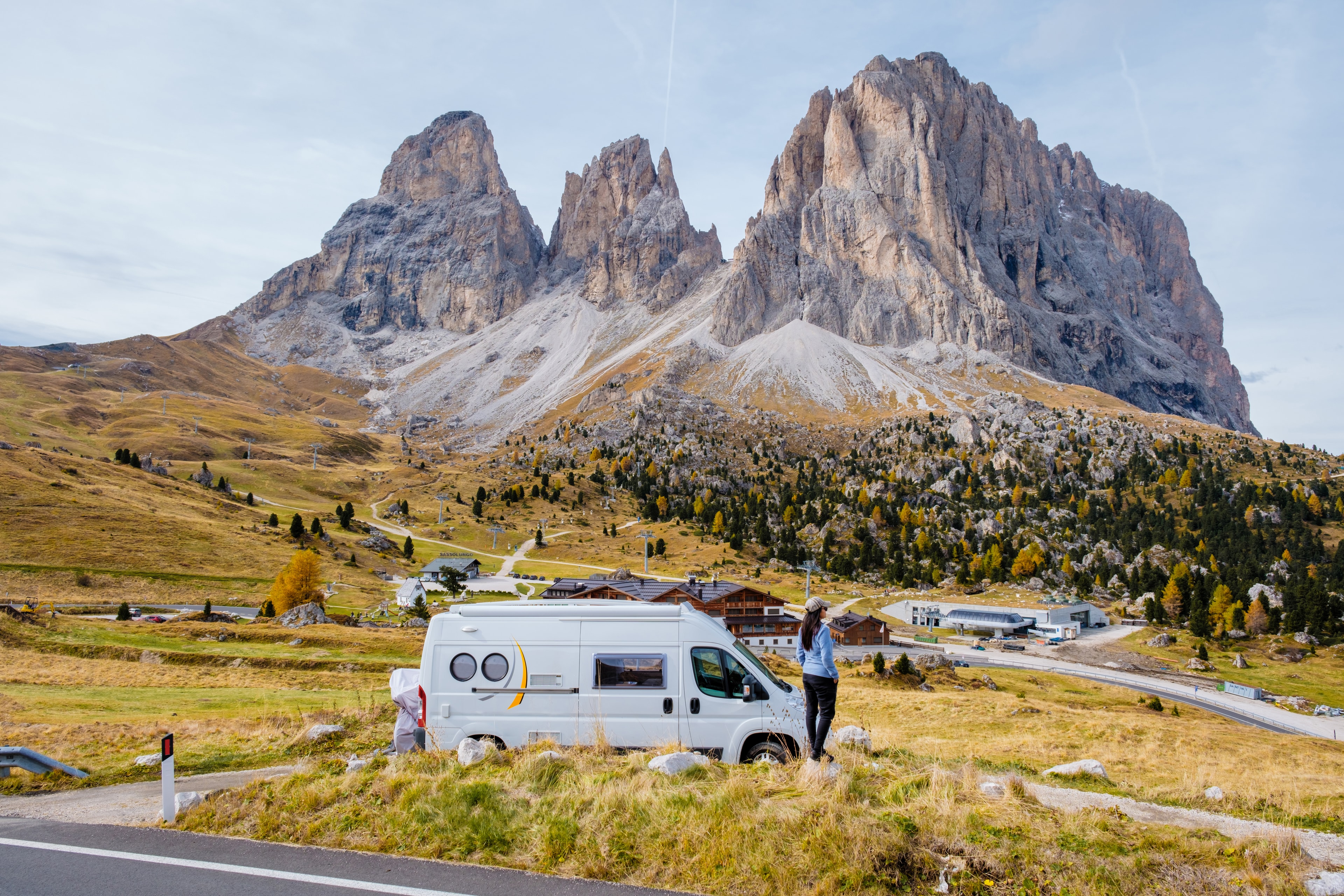
Passive income and minivan rentals starting at €60 per day open the door to exploring Italy’s 61 UNESCO World Heritage sites at your own pace[37]
France Visiteur Visa — €21,600+ per year
The France FIP Visa, known as the Visiteur Visa[38], is a type of long-term residence permit. Its notable advantage is that no language test is required, unlike other long-term residence permits in France which require A2-level proficiency.
Eligibility criteria for France Visiteur Fisa
Monthly income: €1,800. The official minimum is tied to the French minimum wage — €1,800 per month[39]. This amount doubles for each family member.
Albert Ioffe,
Legal and Compliance Officer, certified CAMS specialist
To improve approval chances, applicants are advised to show a monthly income of about €3,500 per person.
While the official savings requirement is €30,000, Immigrant Invest recommends maintaining at least €40,000 in a bank account.
Housing. Applicants for the France FIP Visa are required to register a residential address in France. They may:
- rent property under a lease of at least 12 months;
- purchase real estate;
- stay with relatives or friends.
There is no minimum required value for purchased property, but the living space must be at least 9 m².
Family inclusion. Along with the main applicant, a France financially independent person visa can also be granted to their spouse and children up to the age of 17. Children must be enrolled in a French school before the application. Disabled children of any age also qualify.
Processing, validity, and stay requirement
For France Visiteur Visa, the key features are:
- processing time: 5+ months;
- validity: 1 year, renewable;
- minimum stay: 183 days per year.
Tax scenarios for financially independent persons in France
Financially independent persons who reside in France for more than 183 days a year become French tax residents. As such, they are taxed on their worldwide income.
Foreign income and pensions are taxed under a progressive scale[40]:
- up to €11,497 — 0%;
- €11,498 to 29,315 — 11%;
- €29,316 to 83,823 — 30%;
- €83,824 to 180,294 — 41%;
- above €180,294 — 45%.
Dividends, interest, and capital gains are taxed at a flat rate of 30%[41].
France also has tax treaties that may offer partial or full relief to avoid double taxation[42].
Permanent residency and citizenship in France
After 5 years of residence in France, applicants may apply for permanent residency or citizenship through naturalisation.
The permanent resident card is valid for 10 years and can be renewed indefinitely. To qualify, applicants must demonstrate French at CEFR A2 level or higher[43].
To be eligible for citizenship, applicants must demonstrate B1-level French proficiency and knowledge of French history, culture, and society[44].

France is home to 54 UNESCO sites — ideal for residents with passive income to explore at their own pace, without the rush of tourism[45]
Greece Retirement Visa — €42,000+ per year
Greece offers one of the most appealing financially independent residence options in Europe: no formal stay requirement and a generous initial 2-year permit[46]. The trade-off is a notably high income threshold.
Eligibility criteria for Greece Retirement Visa
Monthly income: €3,500. For accompanying family members, the amount increases by 50% for a spouse or parent and 30% for each child.
The required minimum income depending on family size is:
- €3,500 per month — single applicant;
- €4,200 per month — married couple;
- €4,725 per month — family of three.
Housing. A residential address in Greece must be declared by presenting a rental agreement, property deed, or hosting declaration.
Family inclusion. A spouse and children under 18 can be included in the application.
Processing, validity, and stay requirement
For the Greece Retirement Visa, applicants should keep in mind the following:
- processing time: 3+ months;
- validity: 2 years, renewable.
There is no minimum stay requirement in the law, but authorities expect genuine residence for renewals.
Tax scenarios for financially independent persons in Greece
Greek tax residency begins after spending more than 183 days per year in the country. Non-residents are only taxed on income earned from Greek sources.
Foreign income, pensions, and rentals are taxed progressively[47]:
- €0 to 10,000 — 9%;
- €10,001 to 20,000 — 22%;
- €20,001 to 30,000 — 28%;
- €30,001 to 40,000 — 36%;
- over €40,000 — 44%.
Special tax regime. Retirees can opt for a 7% flat tax on their foreign pension income for up to 15 years[48].
Foreign dividends are taxed at 5%. Interest and capital gains are taxed at 15%[49].
Double taxation treaties may exempt or reduce Greek tax depending on the source country and type of income[50].
Permanent residency and citizenship in Greece
Permanent residency. After 5 years, financially independent persons and their family members can qualify for long-term resident status, which grants the right to work. A2-level Greek is required[51].
Greek citizenship. After another 2 years, applicants may apply for citizenship if they meet integration requirements, including B1-level Greek[52].
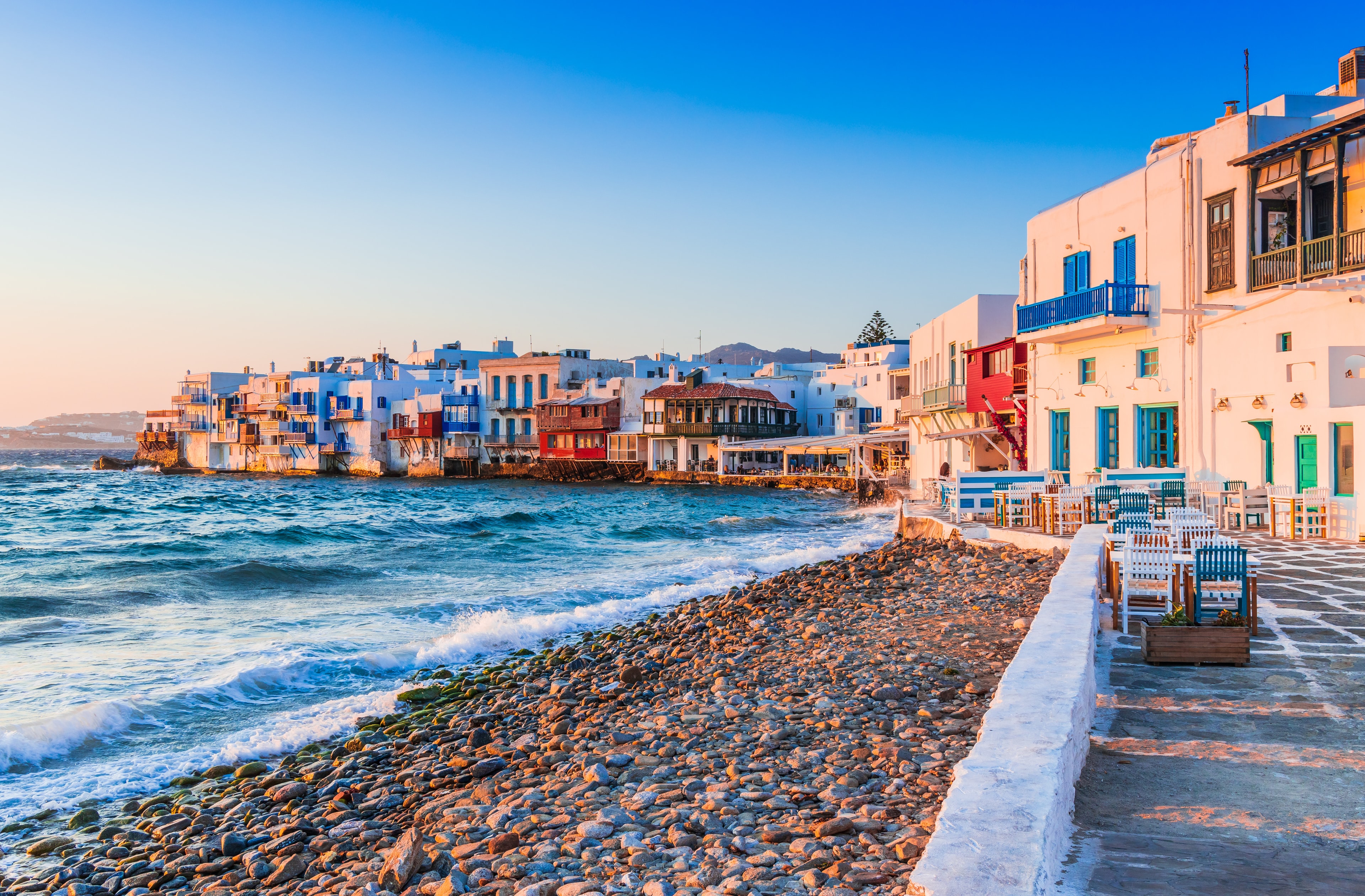
Greece ranks 8th among the world’s top 10 retirement destinations in the 2025 Global Retirement Index[53]
Switzerland residency for financially independent persons — €470,000+ per year
Switzerland offers a unique residence route for financially independent individuals. Instead of taxing global income item by item, applicants agree to pay a fixed annual tax, making this path ideal for those with significant wealth.
This type of residence is available in nearly all cantons, except Zürich, Appenzell, Ausserrhoden, Basel-Stadt, Basel-Landschaft, and Schaffhausen.
Eligibility criteria for Switzerland residency for FIPs
Lump-sum taxation[54]. The permit is granted to applicants who enter into a tax agreement with a Swiss canton. The lump-sum tax ranges from CHF 450,000 to 1,000,000 — around €470,000 to 1,050,000. Technically, the taxable base is calculated as seven times the annual rental value of the Swiss residence or the applicant’s worldwide living expenses, whichever is higher, and then applied subject to a cantonal minimum floor.
Financial requirement. In addition to the annual tax, each adult resident pays non-employed contributions on a scale linked to assets and investment income. From January 1st, 2025, the statutory minimum is CHF 530 and the maximum is CHF 26,500 per year, payable until statutory retirement age[55].
Family inclusion. Spouses and children under 18 can qualify with the main applicant.
Processing, validity, and stay requirement
In Switzerland, financially independent persons can obtain residence through a structured approval process. It begins with the cantonal tax authority and is followed by federal confirmation. The procedure typically takes 2 to 5 months.
Once approved, the residence permit is granted with the following conditions:
- validity: 1 year, renewable annually;
- minimum stay: 183 days per year.
Permanent residency and citizenship in Switzerland
Permanent residency[56]. Financially independent persons reside in Switzerland on an annually renewed B permit. After 10 years of continuous legal residence, they become eligible to apply for the C settlement permit.
Integration requirements include:
- A2-level speaking and A1-level writing in a national language;
- participation in economic life or education, or efforts to do so.
In some cantons, early access to the C permit may be possible after 5 years if the applicant is well integrated. Requirements for early C include stronger language skills — B1 speaking and A1 writing — stricter integration checks, and active participation in local life.
Citizenship[57]. Ordinary naturalisation becomes available after 10 years of residence in Switzerland, but only after obtaining a C permit. There is no additional federal waiting period after the C. However, cantons and communes may impose their own minimum residence requirements, often requiring at least 2—5 years of residence in that locality.
Integration requirements for citizenship include:
- Language: B1 speaking, A2 writing in a national language[58].
- Social integration: familiarity with Swiss customs, civic duties, and participation in community life.
- Local requirements: interviews, local language tests, and civic knowledge exams may apply.

Switzerland is ranked the world’s best country to live in, according to U.S. News & World Report[59]
How is the minimum passive income calculated and proven?
In all countries, officials total your passive inflows such as rent, dividends, coupons, interest and pensions over 6 to 12 months, then check that the monthly average meets the country threshold and that the money trail is clear from bank and broker statements.
Family uplifts apply and some countries also expect a local savings balance. Where income fluctuates, a quarterly rollup and a stronger on-balance cash buffer usually resolves concerns.
In this section, we will look at the approach in practice using Portugal, Spain, and Austria.
For the Portugal D7 Visa
Threshold and what counts. Minimum monthly passive income is €920 for a single applicant. Add €460 for a spouse or dependent parent and €276 per child. Portugal also expects a local bank balance from €11,040 that rises by 50% per adult and 30% per child.
Accepted sources include dividends, rental income, coupons, interest and pensions.
How to calculate and average. Consulates typically review six to twelve months of inflows and assess stability. If income varies, average monthly inflows across the reviewed period. For seasonal rents, quarterly averaging with a short explanation is acceptable.
**Evidence to provide.**The key is to show the same income story in two layers:
- Bank statements that show the money arriving.
- Source documents that explain why it arrives.
In practice this means bank statements for the relevant period with incoming payments highlighted, brokerage statements confirming dividends and coupon payments, and lease agreements that match the rental inflows.
You also provide proof of accommodation in Portugal such as a rental contract or property deed, plus a Portuguese bank statement proving the required savings deposit.
How to reach the threshold. You can combine several passive streams as long as you document them clearly and the average meets the minimum.
- rent plus dividends — one or more rental properties cover the core monthly amount and a dividend portfolio tops up the gap;
- rent plus bond coupons — stable rent combined with coupon paying bonds helps smooth months when dividends are not paid;
- rent plus deposit interest — when dividends are lumpy, monthly interest from a term deposit can stabilise the average;
- multiple rentals — two smaller leases may be easier to document than one high rent, especially if payments are seasonal.
Example for a couple: monthly target is €1,380. If rent is €900 per month, bond coupons are €1,200 paid twice a year which equals €200 per month, and dividends are €840 paid quarterly which equals €280 per month, then the monthly average is €1,380.
Calculation: €900 + €200 + €280 = €1,380.
Handling fluctuations. If a few months dip below the target, the usual fix is to widen the evidence window to 12 months, add a quarterly or annual summary from your broker or property manager, and show a higher cash buffer in the Portuguese account above the minimum savings level.
Common mistakes and fixes are the following:
- No Portuguese account funded to the required savings level: open the account early and deposit the full amount before applying.
- Income looks irregular because dividends are paid quarterly: add a simple averaging note and attach broker statements for the full period.
- Rental income is claimed but the lease is unclear or not supported by statements: provide the lease and match each payment to the bank statement line.
- Missing Portugal accommodation proof: add a Portuguese rental contract or property deed.
For the Spain Non-Lucrative Visa
Threshold and what counts. Spain’s route for financially independent applicants is the Non-Lucrative Visa with an income benchmark of €28,880 per year. The practical rule used in applications is €2,400 per month for the main applicant plus €600 per month for each additional family member, so a couple targets €3,000 per month, a family of three €3,600, and a family of four €4,200.
A key difference from Portugal’s D7 is that Spain highlights family inclusion including adult dependent children and parents, and it does not require a mandatory savings deposit in the way Portugal does.
How to calculate and average. Officials normally want to see that passive income is stable and sufficient, so you take inflows over the last 6 to 12 months and show the monthly average meeting the target.
If income is uneven, for example dividends paid quarterly, present a simple averaging note that converts quarterly amounts into a monthly equivalent, and make sure the bank statement inflows match the brokerage report totals.
Example: if rent is €2,100 per month and dividends are €2,700 paid quarterly, the dividend monthly equivalent is €900, so the combined monthly average is €3,000, which meets the couple threshold.
Evidence to provide. Use the same two layer logic as in Portugal. Show money arriving and show why it arrives. In practice this means bank statements with incoming payments, brokerage statements confirming dividends and interest, and lease agreements that match rental inflows.
Spain also requires housing in Spain with a registered address, so you typically provide a Spanish rental contract or a purchase deed linked to the address.
How to reach the threshold. You can combine several passive streams as long as the documentation is consistent and the monthly average meets the minimum.
- rent plus dividends, where a rental contract covers most of the target and a dividend portfolio tops up the gap;
- rent plus bond coupons, where coupon payments stabilise months when dividends are not paid;
- rent plus deposit interest, where monthly interest helps keep the average above the line;
- multiple rentals, where two smaller leases reduce dependence on one tenant and may smooth seasonality.
Example for a family of three: monthly target is €3,600. If rent averages €2,700, bond coupons equal €450 per month when averaged, and dividends equal €450 per month when averaged, the total monthly average is €3,600.
Handling fluctuations. If a few months fall below the target, the usual solution is to show a longer history, add a quarterly rollup from your broker or property manager, and demonstrate a stronger cash buffer so the caseworker sees that the household can still sustain itself.
Common mistakes and fixes. The most frequent issue is misunderstanding the family uplift and proving only €2,400 while applying as a couple or family, so the fix is to recalculate and show the correct totals for each dependent.
For Austria residency
Threshold and what counts. Austria’s residence permit for financially independent individuals is one of the most selective options in Europe. The minimum passive income is €2,548 per month for a single applicant, €4,020 per month for a couple, plus €394 per month for each child.
Savings and the approval logic. The baseline savings benchmark is €30,000, but in practice a larger buffer can strengthen the application. Immigrant Invest lawyers often recommend depositing around €80,000 to improve approval chances.
How to calculate and average. The same logic as in Portugal applies, but Austria is less forgiving with inconsistency: you should demonstrate stable inflows, usually by averaging monthly income across the review period and showing that the average comfortably exceeds the minimum.
If dividends or coupons are paid quarterly or semi annually, convert them into a monthly equivalent and explain the averaging in a short cover note.
Example for a couple: target is €4,020 per month. If rent is €2,800 per month, bond coupons total €3,600 twice a year which equals €600 per month, and dividends total €1,860 paid quarterly which equals €620 per month, then the monthly average is €4,020.
Evidence to provide. Austria expects a complete paper trail proving both the inflow and the legal basis for it, plus compliance items that are specific to this route. You typically show:
- bank statements with incoming payments;
- brokerage statements confirming dividends;
- interest and coupons.
How to reach the threshold. You can combine passive streams, but Austria benefits from a conservative mix that looks stable on monthly statements:
- rent plus dividends to cover the core target while keeping a diversified income base;
- rent plus bond coupons to create predictable top ups in months without dividend payments;
- rent plus deposit interest when you want steadier monthly inflows rather than lumpy payouts;
- larger cash buffer on account to reduce the risk of borderline months and strengthen the overall profile.
Common mistakes and fixes. The most common issues are being too close to the minimum, having lumpy income without an averaging note, and submitting housing that does not meet the minimum space expectations.
The usual fix is to strengthen the buffer, present clear monthly equivalents for dividends and coupons, and align every claimed rental payment with both the lease and the bank statement line.
Documents required for financially independent persons
Here’s a concise list of documents typically required for financially independent person visas in most countries:
- Valid passport.
- Recent passport-sized photos.
- Police clearance certificate.
- Private health insurance.
- Proof of accommodation — rental or ownership.
- Proof of passive income, such as bank, pension, dividend, interest, or royalty statements, rental contracts, or tax declarations.
- Trust or annuity payment records.
- Marriage and birth certificates for dependents.
- Language certificate — where required.
- No-employment declaration.
- Medical certificate.
Migration authorities may request additional documents, such as a personal cover letter explaining the reason for relocation or proof of children’s enrollment in school.
All documents must be translated into the official language of the country and certified, either by a notary, through an apostille, or legalised at a consulate.
How to apply for a financially independent person visa and obtain residency in the EU
The procedure for obtaining a residence permit as a financially independent person is broadly similar across Europe. However, each country may introduce its own specific steps. For example, Portugal requires applicants to obtain a local tax number before opening a bank account, while Austria limits applications through an annual quota system.
1 day
Preliminary check
The applicant confirms they meet the visa’s main requirements: stable passive income, sufficient savings, valid health insurance, and a clean criminal record.
The applicant confirms they meet the visa’s main requirements: stable passive income, sufficient savings, valid health insurance, and a clean criminal record.
3—6 weeks
Document preparation
The applicant collects financial, civil, and legal documents, has them translated into the local language, and obtains notarisation or an apostille as required.
The applicant collects financial, civil, and legal documents, has them translated into the local language, and obtains notarisation or an apostille as required.
2 weeks
Opening a local bank account
This step is required in Portugal, Austria, and Switzerland:
- in Portugal, applicants must open a Portuguese bank account and obtain a local tax number first;
- in Austria, applicants must show proof of sufficient funds deposited in an Austrian bank account;
- in Switzerland, a Swiss account is opened to demonstrate the ability to cover living costs and pay the lump-sum tax.
This step is required in Portugal, Austria, and Switzerland:
- in Portugal, applicants must open a Portuguese bank account and obtain a local tax number first;
- in Austria, applicants must show proof of sufficient funds deposited in an Austrian bank account;
- in Switzerland, a Swiss account is opened to demonstrate the ability to cover living costs and pay the lump-sum tax.
1—3 weeks
Selection of real estate for purchase or rent
The applicant secures accommodation in the chosen country, either through a long-term rental contract or property purchase, to provide a registered address.
The applicant secures accommodation in the chosen country, either through a long-term rental contract or property purchase, to provide a registered address.
2—6 months
Obtaining a D visa for entry
A D visa is required in all countries except France. Applicants submit the application at the consulate, pay the fee, and wait for approval. The D visa is valid for 3—6 months and allows entry for the purpose of applying for residence.
A D visa is required in all countries except France. Applicants submit the application at the consulate, pay the fee, and wait for approval. The D visa is valid for 3—6 months and allows entry for the purpose of applying for residence.
1—4 weeks
Travelling to the country to apply for a residence permit
The applicant enters on the D visa, registers their address with the local migration office, attends biometrics, and files the residence permit application.
The applicant enters on the D visa, registers their address with the local migration office, attends biometrics, and files the residence permit application.
6—12 weeks
Issuance of the residence permit card
The immigration service processes the application and, once approved, issues a residence card valid for 1—2 years, depending on the country’s rules.
The immigration service processes the application and, once approved, issues a residence card valid for 1—2 years, depending on the country’s rules.
Alternative path: residency by investment
Residence permits for financially independent persons are designed for individuals who plan to make a new country their home, which is why most require you to spend more than 183 days a year in that country. But what if you’re a global citizen who wants the security of a European residence permit but can’t commit to living there full time?
Residency-by-investment programs, often known as Golden Visas, are a far more suitable option for this profile. Instead of demonstrating passive income, you make a significant financial contribution to the country's economy.
In return, you receive residency with very minimal physical presence requirements. This makes it an ideal “Plan B” for frequent travelers, international business owners, or those with family commitments spread across the globe.
Comparison of the EU's leading Golden Visa programs
Country
Stay requirement
7 days per year
Minimum investment
€250,000
First residency validity
2 years
Eligible family members
Spouse, children under 26, parents
Country
Stay requirement
None
Minimum investment
€250,000
First residency validity
5 years
Eligible family members
Spouse, children under 21, parents
Country
Stay requirement
None
Minimum investment
€250,000
First residency validity
2 years
Eligible family members
Spouse, children of any age, parents
Country
Stay requirement
None
Minimum investment
€250,000
First residency validity
10 years
Eligible family members
Spouse, children under 18, parents
Country

Stay requirement
None
Minimum investment
€50,000
First residency validity
5 years
Eligible family members
Spouse, children under 18
Country
Stay requirement
None
Minimum investment
€169,000
First residency validity
Lifelong
Eligible family members
Spouse, children under 29, parents, grandparents
Country
Stay requirement
Visit once every 2 years
Minimum investment
€300,000
First residency validity
Lifelong
Eligible family members
Spouse, children under 25
Country | Stay requirement | Minimum investment | First residency validity | Eligible family members |
|---|---|---|---|---|
7 days per year | €250,000 | 2 years | Spouse, children under 26, parents | |
None | €250,000 | 5 years | Spouse, children under 21, parents | |
None | €250,000 | 2 years | Spouse, children of any age, parents | |
None | €250,000 | 10 years | Spouse, children under 18, parents | |
None | €50,000 | 5 years | Spouse, children under 18 | |
None | €169,000 | Lifelong | Spouse, children under 29, parents, grandparents | |
Visit once every 2 years | €300,000 | Lifelong | Spouse, children under 25 |
Summary: which visa suits your lifestyle and goals best?
Here’s a quick guide to help you decide based on your priorities:
- For maximum flexibility: Portugal. The D7 visa has the lowest income requirement of €920 per month and allows you to work or run a business.
- For simplicity and family inclusion: Spain. This visa allows easy inclusion of adult children and parents, with no savings deposit required.
- For a fast track to citizenship: Portugal or France. Both countries offer citizenship after just 5 years of legal residence.
- For ultimate freedom: Greece. This is the only country with no minimum stay requirement, offering a secure EU base without tying you down.
- For favourable taxes: Italy or Greece. Italy offers a €200,000 flat tax for high-net-worth individuals, while Greece provides a 7% flat tax for foreign pensioners.
- For exclusivity and prestige: Austria or Switzerland. Austria grants limited quotas and a high standard of living, while Switzerland offers lump-sum taxation and residence for the wealthy.
Immigrant Invest is a licensed agent for citizenship and residence by investment programs in the EU, the Caribbean, Asia, and the Middle East. Take advantage of our global 15-year expertise — schedule a meeting with our investment programs experts.
 Trusted by 10,000+ investors