
Summary
Panama operates one of the most investor-friendly tax systems in the Americas. Under its territorial model, income earned outside the country is not taxed in Panama, whether or not the recipient holds tax residency.
For a Qualified Investor Golden Visa holder, the tax result is straightforward: Panama does not tax foreign-source investment income, regardless of where the holder lives, as long as the income is genuinely sourced outside Panama.
This guide explains Panama income tax, capital gains, property taxes, VAT, the tax treatment of each Qualified Investor route, key US, EU, and UK implications, and the main compliance rules.
What makes Panama's tax system unique: key things to know
Panama taxes only income that is sourced within Panama. Foreign-sourced income, regardless of its nature or amount, is fully exempt for both tax residents and non-residents alike.
Key points and legal basis
Panama establishes the territorial principle as a core rule of the country’s tax system, rather than a temporary incentive or treaty benefit. This is what makes taxation in Panama fundamentally different from worldwide tax systems. The legal basis for the tax system is Panama’s Fiscal Code, called the Código Fiscal de la República de Panamá[1].
In most countries, tax liability is based on tax residence. Once a person becomes a tax resident, they are taxed on their worldwide income, not only on income earned locally. This is the approach used across the EU and in the UK, where residence status determines whether foreign income falls within the tax net.
The US is an exception, using citizenship-based taxation: its citizens are taxed on worldwide income even if they live abroad.
Foreign income remains outside Panama’s tax scope. This means that a US national with Qualified Investor residency may still owe US tax on global income, but Panama does not tax that foreign income.
Panama is not a zero-tax jurisdiction. Income sourced within Panama, including employment income, business profits, and rental income from Panamanian real estate, is subject to personal income tax at progressive rates of up to 25%.
Panama tax compliance
Tax year and deadline. Panama taxes on a calendar-year basis: January 1st to December 31st. Individual income tax returns are due by March 15th of the following year[2].
Who must file. Filing is required if a person has Panama-sourced income from self-employment or multiple income streams. Employees with a single Panamanian employer are usually covered through withholding, although benefits in kind or representation allowances can still trigger a return[3].
Taxpayer number. Where filing is required, the taxpayer must:
- obtain a RUC, the national taxpayer identification number issued by the Dirección General de Ingresos;
- and submit returns through eTax 2.0, the online tax filing platform used by the Panamanian tax authority[4].
Benefits and considerations for investors
Panama’s Qualified Investor programme, or the Panama Golden Visa, offers a route to permanent residence through an approved investment. For successful applicants, dividends, capital gains, rental income, pension payments, and interest from assets held outside the country are not taxed in Panama, regardless of where the investor lives.
If the person also has no Panama-sourced income and spends fewer than 183 days a year in the country, they have no Panamanian income tax filing obligation.
Investors may also benefit from Panama’s network of double tax treaties. It can help reduce the risk of the same income being taxed in two countries. Panama currently has 17 double tax agreements in force, including treaties with Spain, Portugal, Italy, France, the Netherlands, and the UK.

Panama tax residency vs. permanent residence and key points about tax residency certificate
The most common planning error made by incoming Qualified Investor investors is treating the permanent residence card as a tax document. These are two entirely separate legal statuses, and conflating them creates material planning risk.
Immigration residency: based on the investment and visa compliance
Panama distinguishes clearly between immigration and fiscal residency. Immigration residency is established by making an investment and completing the application under Executive Decree No. 722 of 2020 as amended by Executive Decree No. 193 of 2024[5].
The permanent residency status is maintained by keeping the investment in place for a minimum of 5 years. No minimum stay requirement applies, allowing residents to live in Panama or abroad while retaining their status.
Fiscal residency: based on presence or vital interests
Fiscal residency, by contrast, is determined by one of two criteria under Article 762-N of the Fiscal Code:
- more than 183 days, consecutive or non-consecutive, of physical presence in Panama within a calendar year;
- or establishment of a centre of vital interests — family or economic ties — in Panama[6].
The practical consequence is direct: Qualified Investor Golden Visa holders do not become Panamanian tax residents unless they deliberately relocate their primary life to Panama and spend 183 or more days per year in-country.
Tax residency certificate: what it is and who issues it
The Certificado de Residencia Fiscal is issued by the Dirección General de Ingresos and is the official document establishing Panamanian tax residency[7]. Documents required to obtain the certificate include:
- copy of the electronic national identity card, E-Cédula, or residency card;
- notarised passport copies;
- proof of a Panama address;
- evidence of economic activity generating income in Panama;
- evidence of residency status.
The tax certificate is issued on a per-year basis and must be renewed annually.
EU and UK nationals should obtain the certificate if they need to confirm that their tax residence has moved to Panama for treaty purposes or to demonstrate to their home-country tax authority that their fiscal domicile has changed.
Qualified Investor holders using Panama purely as a backup residence with no intent to relocate should not obtain the certificate, as doing so without advance home-country planning can trigger exit-tax discussions, particularly for US, UK, and German nationals.
Side-by-side comparison: Qualified Investor vs. tax residency in Panama
Panama personal income tax and other individual tax liabilities
Panama taxes individuals only on net taxable income sourced within the country. For investors, this means it is important to consider not only personal income tax on employment or business income, but also the tax treatment of capital gains, dividends, interest, and mandatory payroll-related contributions.
Personal income tax rate
The Panamanian tax base is assessed in Panamanian balboas; in US dollar terms, the amount is broadly the same, although it may differ slightly depending on exchange-rate movements.
The progressive personal income tax scale in Panama is structured in three brackets:
- up to $11,000 — 0%;
- $11,001—50,000 — 15%;
- above $50,000 — $5,850 + 25% on the excess.
The brackets apply only to Panama-sourced income[8]. Foreign income is not included in the taxable base under Panama’s territorial tax system. This includes dividends, capital gains, interest, rental income, or pensions earned outside Panama.
A simple example illustrates how this works. Suppose an investor earns $500,000 in dividends and capital gains from foreign investments but has no income sourced in Panama. Even if the investor holds a Qualified Investor permanent residence card, none of that $500,000 is considered taxable in Panama. As a result, the investor’s Panamanian personal income tax liability is $0.
If the same investor also earned $40,000 from a business activity in Panama, only that $40,000 would enter the tax calculation under the progressive rates.
Social security contributions
Social security contributions apply only to employment income earned in Panama[9]. Employees contribute a total of 11% of their salary, including:
- 9.75% to social security;
- 1.25% to educational insurance.
Employers contribute 13.25%, with scheduled increases to 14.25% in 2027 and 15.25% in 2029.
In addition, educational insurance tax is paid at a rate of 1.25% by employees and 1.50% by employers on salaries and wages paid.
Capital gains
Panama applies a flat 10% capital gains tax rate to gains from Panama-sourced assets[9]. Foreign assets, including equities, overseas real estate, and offshore funds, fall outside the Panamanian tax net.
The transfer of securities is subject to a 5% withholding tax applied by the buyer at the time of the transaction[10].
The seller may treat this 5% as definitive or compute the actual 10% capital gains tax on the net gain and credit the 5% withheld. Where the withholding exceeds the actual liability, the excess is refundable.
Investment income
Interest earned on savings accounts and time deposits held with Panamanian banks is explicitly exempt from Panama income tax. This is directly relevant to the $750,000 time deposit Qualified Investor route.
Dividends are withheld at source by the distributing company:
- 10% on registered shares distributing Panama-sourced profits;
- 20% on bearer shares;
- 5% on profits derived from exempt or foreign-source income[11].
The individual recipient does not owe a separate personal-level dividend tax beyond the amounts withheld.
Taxes on Panama property
Holding real estate in Panama may trigger several taxes, both during ownership and at the time of sale. These include annual property tax, taxes and withholding on disposal, and, in some cases, exemptions that can reduce the tax burden on new construction.
Property tax rates
Panamanian real estate is subject to annual immovable property tax, known as impuesto de inmuebles, which is calculated on the property’s cadastral value as registered with Panama’s National Land Administration Authority — Autoridad Nacional de Administración de Tierras, ANATI.
Primary residence property in Panama is taxed as follows:
- up to $120,000 — 0%;
- $120,001—700,000 — 0.5%;
- above $700,000 — 0.7%.
Non-primary, investment, and commercial property is taxed under the following rates:
- up to $30,000 — 0%;
- $30,001—250,000 — 0.6%;
- $250,001—500,000 — 0.8%;
- above $500,000 — 1%[12].
Capital gains tax
On the sale of Panamanian property, the seller faces two charges:
- real estate transfer tax, Alcabala — 2%;
- income tax withholding, advance payment — 3%[13].
Both amounts are calculated on the higher of the sale price stated in the transaction, or the property’s cadastral value recorded with ANATI.
After the 3% withholding is paid, the seller has two options:
- Treat the 3% as final tax. No further income tax filing is required for the sale.
- Recalculate based on the actual gain. The seller may instead file a separate calculation and pay 10% on the net gain, using the 3% already withheld as a credit.
If the 3% withholding exceeds 10% of the actual net gain, the seller may claim a refund.
Examples of real estate in Panama


Panama, Panama City
$447,000 — $1,043,000
Luxury apartments and town houses, Panama City
 102 m² — 235 m²
 2—3
2—3  2—3
2—3 
Panama, Panama City
$628,000+
Villas, apartments and houses with private pools, Santa Maria, Panama City
135 m²2—3 2—3 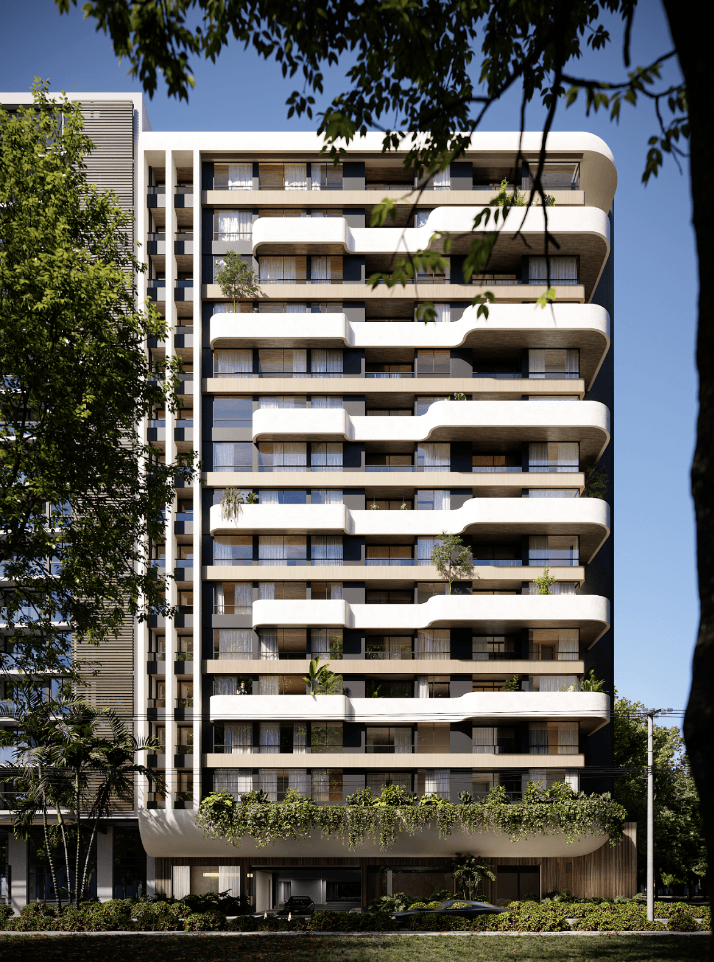
Panama, Distrito de Balboa
$137,000 — $260,000
Elegant apartments, Distrito de Balboa
22 m² — 54 m²1 1 Property tax exemptions in Panama
Panama has several immovable property tax exemptions, and they do not all work the same way. The main categories are:
- Improvement Exemption;
- Special Exemptions;
- Patrimonio Familiar Tributario and Vivienda Principal.
Before applying for any exemption, the owner must update the property values and permits, including construction and occupancy permits, with ANATI.
Improvement exemption
What the exemption covers. In Panama, some newly built properties may qualify for an exemption from annual immovable property tax on the value of the improvements only, not on the land. Improvements means the built part of the property, such as a house, apartment, or other permanent construction works duly registered in the Public Registry[14].
Who can benefit and for how long. The current automatic exemption applies for 20 years from the date the dwelling was built and covers the Propiedad Horizontal, PH, properties and residences. PH broadly means condominium-style property, such as an individual unit within a larger development.
For PH property, the exemption does not cover the land value, which remains taxable. A PH property holder with an improvement exemption pays 1% annually on the land value.
When the exemption begins and how long it lasts. For properties with construction permits issued on or after January 1st, 2012, the exemption begins on whichever occurs first: the date the improvements are registered in the Public Registry or the date the occupancy permit is issued. The length of the exemption then depends on the declared value of the improvements, not the total property value.
For residential improvements, the exemption lasts:
- up to $120,000 — 20 years;
- $120,001—300,000 — 10 years;
- over $300,001 — 5 years.
For non-residential improvements including commercial, industrial, agro-industrial, and similar improvements, the exemption lasts 10 years, regardless of value.
Rule for older properties. Improvements with construction permits issued before July 1st, 2009 benefit from a 20-year exemption.
Special Exemptions
Special Exemptions are not the standard new-construction relief and depend on the specific legal regime and use of the property, such as agricultural, reforestation activities, or tourism activities, free zones, non-profit associations, cooperatives, properties without documents, and others.
For example, agricultural-property exemptions last 5 years. Once that period ends, the owner may request one more 5-year extension[15].
Patrimonio Familiar Tributario and Vivienda Principal
Panama also offers relief for owner-occupied residential property. To obtain the relief, the property must fall under one of these two categories:
- Patrimonio Familiar Tributario — applies to property used permanently by the owner and the owner’s family for residential purposes.
- Vivienda Principal — applies to a residential property used permanently by an individual owner as their main home, where the property does not constitute family patrimony.
Under the regime, properties with a cadastral value of up to $120,000 are exempt from immovable property tax. To receive the benefit, the owner must file a request, and the exemption applies from the date that request is submitted[15].
Taxes for companies in Panama
Panamanian companies pay corporate income tax at a flat 25% on net taxable Panama-sourced income[16]. This income is subject to taxation whether it is earned by a resident or non-resident company.
Alternative minimum tax: CAIR
Panama applies an alternative minimum tax called Cálculo Alternativo del Impuesto sobre la Renta, or CAIR[16]. It applies to companies with taxable income above $1.5 million.
Under the CAIR rule, tax is calculated in two ways:
- 25% of net taxable income;
- 4.67% of gross taxable income.
The taxpayer then pays whichever amount is higher. For example, if 25% of net taxable income equals $8,000 but 4.67% of gross taxable income equals $10,000, the company pays $10,000 under CAIR. If 25% of net taxable income equals $12,000 and the CAIR calculation equals $9,000, the company pays $12,000 under the standard corporate income tax rules.
If applying CAIR would produce a loss for the tax year, the company may apply to the General Directorate of Revenue to be excluded from the regime.
Franchise tax
Panama’s standard holding vehicle is a Panamanian corporation, commonly set up as a Sociedad Anónima. Even with no trading activity, each entity is subject to an annual franchise tax called tasa unica. It amounts to $300 per year and is payable to the Public Registry according to the company’s incorporation date[17].
Non-profit organisations, cooperatives, and civil partnerships are exempt from the franchise tax.
VAT
Panama’s VAT is called the Tax on the Transfer of Movable Goods and the Provision of Services — Impuesto de Transferencia de Bienes Muebles y Prestación de Servicios, ITBMS. The standard rate is 7%[17].
Higher rates apply to specific categories:
- alcoholic beverages and hotel accommodation — 10%;
- tobacco and tobacco-derived products — 15%.
Common exemptions include exports, basic foodstuffs, medicines, and certain services such as medical care and transportation.
Passive investors who receive investment returns rather than selling goods or services will fall outside the scope of ITBMS.
Special Economic Areas
Panama offers several special economic areas which allow businesses to optimise their tax burden.
1. The Colón Free Zone is Panama’s largest and most established special economic zone and one of the biggest free-trade zones in the world. It is created for companies that run international trading, logistics, and distribution operations through Panama, especially for re-export into Latin America and the Caribbean[18].
The Colón Free Zone’s regime can offer the following advantages for commercial activities:
- duty-free import and re-export of goods;
- relief from sales and production taxes on transactions within the zone;
- no corporate income tax on qualifying operations;
- property tax and transfer tax relief;
- no complementary tax on dividends;
- favourable treatment for share transfers and related foreign capital gains;
- reduced annual Operation Notice Tax of 0.5% of capital instead of the standard 2%.
In practice, these incentives matter mainly for operating businesses using Panama as a regional hub, rather than for passive investors.
2. Panama Pacifico is a large special economic area on the Pacific side of the Panama Canal, designed for companies involved in logistics, trade, manufacturing, aviation, and regional services.
The main tax advantages of the area include:
- corporate income tax relief or a reduced 5% rate, depending on the activity;
- dividend and complementary tax relief;
- no withholding tax on royalties, commissions, and technical services;
- reduced commercial or industrial licence rate for eligible entities;
- real estate tax and real estate transfer tax relief on land and commercial or industrial improvements until December 2029.
3. City of Knowledge is a research, education, and innovation zone next to the Panama Canal, created to host universities, international organisations, NGOs, and technology-based businesses. It functions as a campus-style hub for science, technology, human development, and culture.
The zone’s main advantages include import and VAT relief on project-related goods, income tax relief for certain high-technology activities, exemption from the Operation Notice Tax, special visas for foreign staff, and access to research, education, and digital infrastructure within the campus.
4. Aguadulce Special Economic Area is a multimodal investment zone in Coclé designed for agro-industry, logistics, trade, port activity, real estate, tourism, and services. The regime offers broad relief on imports, exports, re-exports, products brought into the area, and charges related to the movement or storage of fuel, hydrocarbons, and their byproducts. It also provides a special visa for investors committing at least $500,000 in the area, valid for 5 years with multiple entries and exits.
5. Barú Special Economic Area is a special regime in the District of Barú, created to promote the free movement of goods, services, and capital, attract investment, and generate employment, with a particular focus on agro-industry and petroleum refining.
The area’s main benefits include:
- exemption from the Operation Notice Tax;
- relief from stamp duty and VAT;
- real estate tax and real estate transfer tax relief on land and commercial or industrial improvements;
- no tax or similar charge on certain payments to foreign creditors, including interest, commissions, royalties, and other financial charges linked to financing or refinancing for companies in the area;
- 5% dividend tax rate.
The regime also offers an immigration benefit: investors who put at least $300,000 into the risk capital of a company established in the area may apply for a Permanent Residency Permit as an Investor of the Barú Special Economic Area, valid for 2 years.
6. Tourist and Multimodal Logistics Support Zone is a special regime aimed at tourism, logistics, and related business activity in Barú. It offers relief on imports, transfers of goods and services within the zone, and certain real-estate taxes.
7. Free Trade Zones are a broader special regime that allows authorised zones across Panama to host businesses under a preferential tax, customs, immigration, and labour framework. This is not one single location but a legal regime under which investors can either establish their own zone, subject to approval, or operate within an existing one.
The main benefits include:
- relief from import duties on goods brought into the zone;
- income tax, sales tax, export tax, and selective consumption tax benefits for qualifying export and re-export operations;
- VAT relief on merchandise and other goods introduced into the zone;
- special immigration options, including permanent residence for foreigners investing at least $250,000 and temporary permits for key foreign personnel;
- special labour regime that allows more flexibility in arranging vacation and rest days based on operational needs.
Examples of active free trade zones in Panama include Panapark, Albrook, Panexport, and Las Américas Free Zones.

Panama currently has 18 active free zones, operating as integrated hubs connecting regional and global markets[19]
Other taxes relevant to foreign residents in Panama
Panama applies no inheritance, gift, or wealth tax. This supports family office structuring and intergenerational transfers, since globally held wealth can pass without a Panamanian transfer levy[20].
Stamp duty applies at $0.10 per $100 on certain notarised commercial contracts[21].
Municipal taxes apply to local commercial and business activities and are calculated on gross income. The amount also depends on the type of activity carried out by the corporation. In most cases, the tax is capped at $2,000 per month per activity[22].
Passive investors earning only qualifying investment returns are outside scope, so municipal taxes are usually not relevant for Qualified Investor holders.
Tax consideration for US citizens residing in Panama
US citizens are subject to IRS taxation on worldwide income regardless of where they reside or what tax they owe. There is no US-Panama income tax treaty and no Social Security Totalisation Agreement between the two countries.
Foreign Earned Income Exclusion
The Foreign Earned Income Exclusion, FEIE, allows US citizens and resident aliens working abroad to exclude part of their foreign earned income from US federal income tax. For the 2026 tax year, the maximum exclusion is $132,900 per qualifying individual, adjusted annually for inflation[23].
To qualify, the taxpayer must have a tax home outside the US and meet:
- either the Physical Presence Test by spending 330 full days abroad within any 12-month period;
- or the Bona Fide Residence Test, which requires genuine residence in a foreign country for a full tax year.
Even when the exclusion applies, the US taxpayer must still report the income and claim the exclusion when filing a US tax return.

Albert Ioffe,
Legal and Compliance Officer, certified CAMS specialist
Critically, the exclusion applies only to foreign earned income, such as wages, salaries, and self-employment income. It does not apply to passive investment income, including dividends, capital gains, or interest.
As a result, most Qualified Investor investors receiving returns from investments will not be able to use the FEIE to exclude that income from US taxation.
Foreign tax credit
US investors may claim a dollar-for-dollar credit on Panamanian taxes actually paid[24]. This is primarily relevant when the investor earns Panama-sourced income that Panama taxes — for example, rental income from a Panamanian property or a gain on a Panamanian real estate sale.
FBAR reporting
US taxpayers with foreign bank or financial accounts may have an annual reporting obligation under the US foreign account reporting rules, including:
- FBAR filing requirement. A US person with a financial interest in, or signature authority over, foreign accounts must file an FBAR.
- Form used. The filing is made on FinCEN Form 114.
- Trigger threshold. The obligation applies if the aggregate maximum value of all foreign accounts exceeds $10,000 at any time during the calendar year[25].
For a Qualified Investor, this threshold is exceeded as soon as funds are placed in Panama. Wiring $300,000 to 750,000 to a Panamanian bank account will trigger an FBAR filing obligation for that and any subsequent year in which foreign accounts exceed the threshold.
FATCA reporting
US taxpayers living abroad must report specified foreign financial assets on Form 8938 if:
- for single filers, the total value exceeds $200,000 at year-end or $300,000 at any point during the year;
- for joint filers, the total value exceeds $400,000 at year-end or $600,000 at any point during the year[26].
A Qualified Investor investment transfer will, in virtually all cases, trigger these thresholds.
US filing deadlines
Americans residing abroad receive an automatic 2-month extension to file, moving the standard deadline to June 15th instead of April 15th. A further extension to October 15th is available by filing Form 4868[27].
Any tax not paid by April 15th still accrues interest from that date, even if the return is filed later under an extension.
Panama tax treaties and cross-border relief for foreign residents
Tax treaties can reduce or eliminate double taxation on the same income and may also lower withholding tax on certain Panama-sourced payments. Access depends on Panamanian tax residency, not simply on holding a Qualified Investor permanent residence card.
Panama’s treaty network
Panama currently has tax treaties with 17 countries, including the UK, Spain, France, Ireland, the Netherlands, Luxembourg, Portugal, Mexico, Korea, Singapore, Israel, Italy, Qatar, the UAE, Vietnam, Czech Republic, and Barbados[28].
Using tax reliefs requires establishing tax residency in Panama by:
- meeting Panama’s 183-day presence test or otherwise establishing tax residence in the country;
- obtaining a Certificado de Residencia Fiscal;
- providing that certificate to the Panamanian payer, withholding agent, or relevant tax authority when claiming treaty relief;
- ensuring the position is consistent with the home country’s tax rules, so that the investor is either recognised as no longer tax-resident there or can rely on the treaty’s residence tie-breaker rules if both countries claim tax residence.
Some countries, however, have no income tax treaty with Panama. This means investors from jurisdictions such as Australia, New Zealand, and Germany cannot rely on treaty relief to reduce withholding on Panama-sourced payments.
Albert Ioffe,
Legal and Compliance Officer, certified CAMS specialist
For Qualified Investor holders, this matters mainly if they receive Panama-sourced income, such as dividends or business income. If Panama has no treaty with the investor’s home country, withholding tax relief may not be available.
UK dual compliance requirements
For a UK national, the Panama–UK tax treaty becomes relevant only if the investor is treated as tax-resident in Panama, not merely as a permanent resident under the Qualified Investor programme. In practice, this usually requires meeting Panama’s 183-day test and obtaining a Certificado de Residencia Fiscal.
The investor must also cease UK tax residence under UK rules. For Qualified Investors, this means treaty relief and a shift in fiscal residence depend on aligning both sides correctly: establishing tax residence in Panama and ending it in the UK.
Risks and pitfalls when managing taxes and obtaining permanent residence in Panama
The following risks and pitfalls recur most frequently in practice and deserve explicit attention before completing a Qualified Investor application.
Confusion between residence and tax status
A common misunderstanding is treating a Qualified Investor residence permit as proof of Panama tax residency. These are two separate legal statuses governed by different rules.
Permanent residence grants the right to live in Panama. Tax residency requires meeting the 183-day presence rule or demonstrating that Panama is the centre of economic life.
Confusing the two can create problems in the investor’s home country. Some jurisdictions recognise the end of tax residency only if a new tax residence is established elsewhere. Investors should determine their intended tax status before restructuring assets or relocating income streams.
No tax treaty with the home country
The absence of a tax treaty can limit cross-border tax relief and increase compliance complexity for foreign investors. The US is a clear example. Panama does not have an income tax treaty with the US, so US citizens living in Panama remain fully subject to US worldwide taxation.
Albert Ioffe,
Legal and Compliance Officer, certified CAMS specialist
Without a treaty, mechanisms such as residence tie-breaker rules and reduced withholding on certain cross-border income do not apply. US persons considering Panama residency should obtain guidance from a licensed US tax professional or CPA before relying on Panama’s tax framework alone.
Tax exposure from services performed in Panama
Non-residents performing services physically in Panama may face withholding tax on their Panama-source income. This situation commonly arises with consultants, contractors, or advisors working temporarily in the country for fewer than 180 days.
The territorial tax system does not exempt income generated through activities carried out inside Panama. Investors should review each income stream carefully and determine whether any work will be performed within the country.
Late filing and payment penalties
Investors who generate Panama-sourced income may underestimate the administrative steps required to remain compliant. Typical requirements include:
- registration for a Panama’s taxpayer number;
- access to the online filing system;
- engagement of a local certified public accountant;
- submission of annual filings within statutory deadlines.
Panama tax payments are due at the time of filing. Late payments trigger penalties and interest. Establishing compliance procedures early helps prevent last-minute filing failures.
Exit-tax exposure in the home country
Leaving a country’s tax system can sometimes trigger tax before any asset is actually sold. In Germany, for example, ending tax residency may lead to exit tax on certain shareholdings, as if the shares had already been sold.
Albert Ioffe,
Legal and Compliance Officer, certified CAMS specialist
For Qualified Investors, this creates a practical risk: obtaining a Panamanian tax residency certificate without proper planning may trigger unexpected tax consequences in the home country. UK investors should also review carefully whether ending UK tax residence could lead to similar issues.
Risk of losing tax deductions
Panama allows certain personal and business deductions, but some are available only to tax residents. Non-residents earning Panama-source income are often taxed through withholding regimes on gross income rather than net-income calculations that allow deductions.
Investors should confirm whether they fall under the resident or non-resident tax regime before estimating after-tax returns.
Investment holding-period lock-up
The Qualified Investor programme requires maintaining the qualifying investment for 5 years. Real estate purchased for eligibility cannot be sold, transferred, or restructured below the qualifying threshold during this period without risking the residence permit.
Investors should therefore evaluate potential resale timelines, legal title risks, and market liquidity before selecting an asset.
Property valuation
Only the net purchase value of the property counts toward the investment threshold under the Qualified Investor programme. Additional costs such as transfer taxes, notary fees, agent commissions, and legal expenses do not count toward the qualifying amount.
Albert Ioffe,
Legal and Compliance Officer, certified CAMS specialist
Investors who budget only for the minimum threshold may discover that their property value falls slightly below the requirement or that the total cost of acquisition is higher than expected. Preparing a full cost projection before selecting a property reduces this risk.
Programme rule changes
The Qualified Investor programme has evolved over time. For example, Executive Decree No. 193 of October 2024 amended key aspects of the framework, including:
- making the $300,000 real estate threshold permanent;
- allowing residence applications based on certain property purchase agreements, even before the final title transfer, if the full price has already been paid to the seller or developer;
- accepting co-ownership in some cases for spouses and dependants.
Investment thresholds, eligible asset categories, and holding-period rules may change again in future. Investors should verify programme conditions at the time of application, rather than relying on older information.
Naturalisation expectations
The Qualified Investor programme allows investors to apply for citizenship after 5 years of residency, but eligibility does not guarantee approval. Naturalisation in Panama is a discretionary presidential decision. Approval is not automatic even when residency requirements are met.
Becoming a Panama tax resident as an investor
Panama’s Qualified Investor programme offers permanent residence through investment with no minimum stay requirement to maintain that status. Residents may live in Panama or abroad while keeping their residence permit.
Investors are not required to become Panamanian tax residents. Those who keep their main life abroad can maintain residence without shifting their tax base, while those who become tax residents in Panama may benefit from no tax on foreign-source income and, where relevant, access to treaty relief.
Main applicant eligibility
To qualify as the main applicant for a Panama Golden Visa, an investor must meet the following conditions:
- be over 18;
- have no criminal records;
- be in good health and provide a medical certificate;
- demonstrate sufficient financial means: $5,000 for the main applicant, $2,000 per dependant.
Investment routes
1. Real estate purchase — $300,000+. Investors can qualify by purchasing residential or commercial property in Panama and holding the investment for at least 5 years. The property can generate rental income: as of early 2026, the average gross rental yield for residential property in Panama stands at around 7.6% per year[29].
After the 5-year period, the investor may sell the asset or reinvest it, subject to the applicable legal and tax rules.
2. Securities — $500,000+. Investors may participate in the programme by investing in securities through a licensed Panamanian brokerage firm. This investment must be maintained for at least 5 years.
Compliance with the requirement is confirmed through official documents showing that the investment remained in place throughout the full period.
3. Bank deposit — $750,000+. Another option is to place funds in a fixed-term deposit with a Panamanian bank for 5 years. The bank must confirm the deposit amount, its term, and the foreign origin of the funds. Withdrawing the money before the end of the term may result in the loss of residency status.
Family eligibility
Panama’s Qualified Investor programme extends to the following family members:
- Spouse — in officially registered marriage, same-sex couples included.
- Children under 18.
- Children over 18 — unmarried, financially dependent, and studying at the university.
- Parents — financially dependent.
Validity and path to citizenship
The programme grants permanent residence, which can remain valid long term. After 5 years, residents may apply for citizenship.
Citizenship is not automatic. Applicants are expected to show 5 years of continuous residence and pass a Spanish-language test based on everyday communication. Although the law does not impose a strict 183-day physical presence rule for naturalisation, the authorities may expect genuine residence rather than purely formal status.

Panama offers investors a high quality of life, reflected in its 1st place in the Expat Insider 2025 survey as the best destination for settling abroad[30]
Comparing tax outcomes across Panama’s Qualified Investor options
Each Qualified Investor route creates a different Panama tax profile during the mandatory 5-year holding period and at exit. The differences come down to Panama-sourced income, disposal taxes, and any ongoing local charges.
1. The time deposit route produces the simplest profile. Interest on qualifying bank deposits is exempt, no capital gain arises when the deposit is repaid at maturity, and there is no property tax exposure.
2. The securities route also remains relatively clean. The main consideration is withholding tax on Panama-sourced dividends, with a separate capital gains treatment on disposal depending on how the exit is structured.
3. The real estate route involves the widest range of tax touchpoints. It can include transfer-related taxes, annual property tax during the hold, and a capital gains mechanism at exit. At the same time, the minimum real estate investment threshold is materially lower than the time deposit route, while providing exposure to a tangible asset with potential appreciation.
Comparison of tax profiles by investment route
How Panama’s tax system compares with tax regimes in other residence by investment programmes
For ultra-high-net-worth investors comparing residence by investment options, the most relevant jurisdictions include Malta, Cyprus, Greece, Italy, Portugal, and the UAE. Each of them offers its own tax regime.
Malta and Cyprus non-dom regime
Like Panama, Malta and Cyprus offer permanent residence for life to investors. The minimum investment threshold starts at:
Both countries run non-dom tax regimes for people who become tax residents there without shifting their legal domicile. In practice, tax residence shows where a person is treated as resident for tax purposes, while domicile refers to their long-term legal home. When these are in different countries, the tax burden may be reduced.
Under the Maltese regime, tax applies to income sourced in Malta and to foreign income only when it is brought into Malta. Foreign capital gains stay outside the tax base, even after remittance. This status is not limited to a set number of years and remains available for as long as the person keeps non-domiciled status[31].
In Cyprus, the main relief covers dividend and interest income, which can remain exempt for up to 17 years. Once that period is over, deemed domicile rules may apply if the person has been a Cyprus tax resident for 17 out of 20 years[32].
Albert Ioffe,
Legal and Compliance Officer, certified CAMS specialist
Malta and Cyprus suit investors who plan to become tax residents and structure their income under non-dom regimes, particularly those earning significant dividends, interest, or other passive income. Panama, by contrast, is better suited to investors with foreign-source business or globally earned income, as its territorial tax system generally does not tax income generated outside the country.
Greece and Italy Golden Visa flat tax
Greece and Italy offer Golden Visa programmes that grant residence permits and may, in time, open a path to EU citizenship. In both jurisdictions, the minimum investment starts at €250,000:
Both countries offer flat-tax regimes on foreign income, which can reduce exposure compared with their higher progressive domestic tax rates. Income earned locally remains taxable under standard rules.
In Greece, the regime applies a €100,000 annual flat tax on foreign income. Family members may join for an extra €20,000 per person per year. The regime lasts up to 15 years.
Eligibility requires transferring tax residence to Greece and having not been a Greek tax resident for 7 of the previous 8 years[33].
In Italy, the regime applies a €300,000 annual flat tax on foreign income. Family members can be included for an additional €50,000 per person per year. The regime also lasts up to 15 years.
Applicants must move their tax residence to Italy and must not have been Italian tax residents for 9 of the previous 10 years[34].
Albert Ioffe,
Legal and Compliance Officer, certified CAMS specialist
For an investor with moderate foreign income volumes, Panama is more cost-efficient. For investors with very high foreign income exceeding $1—3 million per year, the Greek and Italian flat-tax regimes may provide greater predictability at a comparable or lower overall tax cost.
Portugal regime for highly qualified persons
Portugal offers a Golden Visa route to residence through investment, with minimum thresholds starting at €250,000. Like Greece and Italy, this route may also lead to EU citizenship in the future.
Portugal’s IFICI tax regime is designed for highly qualified professionals and individuals engaged in eligible research, innovation, and other qualifying activities. Under this regime, eligible Portuguese employment and self-employment income is taxed at a reduced 20% rate for 10 years[35].
Albert Ioffe,
Legal and Compliance Officer, certified CAMS specialist
Panama works differently. The treatment of foreign income is not limited to a fixed period and does not depend on professional eligibility, which makes Panama simpler for long-term planning.
UAE 0% income tax
The UAE offers a Golden Visa residence programme for investors, available through real estate investment of AED 2 million, about $545,000, or other qualifying routes. The residence permit is issued for 10 years and is renewable.
The UAE applies no personal income tax on salaries, investment income, or personal capital gains. It also does not levy inheritance or gift tax[36].
Albert Ioffe,
Legal and Compliance Officer, certified CAMS specialist
The UAE is more advantageous for individuals earning active income, such as salaries or business profits. Panama, by contrast, tends to be more attractive for investors whose income comes from foreign investments.
How Immigrant Invest can help with Panama Golden Visa
Immigrant Invest is an investment migration consultancy that has worked with residence and citizenship by investment programmes for almost 20 years. Since 2006, we have helped more than 10,000 clients obtain new status abroad.
For Panama Golden Visa applicants, Immigrant Invest provides support at every key stage, including:
- Pre-submission Due Diligence. The in-house compliance team reviews the case before submission to identify potential risks early and reduce the chance of refusal.
- Source-of-funds and document preparation. Specialists help applicants collect, structure, and present the required documents, including evidence on the lawful origin of funds.
- Application strategy for families. The team assesses family eligibility at the start, including dependants, so the application is built on the correct criteria from the outset.
- AML-focused compliance support. The legal and compliance team includes certified AML specialists who understand what may attract closer attention during government checks.
- Multi-jurisdiction planning. If needed, consultants compare Panama with other residency by investment options to help investors choose the most suitable route.
- Step-by-step case management. Applicants receive a clear procedure, practical timeline estimates, and support throughout the full process.
Where tax questions arise, Immigrant Invest coordinates with legal and tax advisers so the residence process fits into the client’s broader strategy.
Key takeaways about taxes in Panama
- Panama taxes only Panama-sourced income. Foreign dividends, capital gains, rental income, pensions, and interest are exempt for both residents and non-residents.
- Panama tax residency requires 183 or more days of physical presence in a calendar year. Qualified Investor permit holders are not required to meet this threshold and often do not become tax-resident.
- To obtain a Panama Golden Visa, investors must invest $300,000 in real estate, $500,000 in securities, or $750,000 in a bank deposit.
- US investors remain subject to IRS filing, FBAR, and FATCA reporting. The investment amounts required for the Golden Visa exceed both FBAR and FATCA thresholds, so they must be reported to the US authorities. No US–Panama income tax treaty exists.
- The time deposit route, with a minimum investment of $750,000, has the cleanest tax profile during the holding period: deposit interest is exempt, and no capital gains event arises at maturity.
- Individuals in Panama are subject to personal income tax, capital gains tax, real estate transfer tax, property tax, stamp duty, and VAT when they carry out taxable business or professional activities.
- Panamanian tax law exempts foreign-source income, capital gains on foreign assets, inheritances, estates, gifts, wealth, and dividends derived from foreign-source profits.
Immigrant Invest is a licensed agent for citizenship and residence by investment programs in the EU, the Caribbean, Asia, and the Middle East. Take advantage of our global 15-year expertise — schedule a meeting with our investment programs experts.
Sources
- Source: Dirección General de Ingresos — General rules for income tax
- Source: Dirección General de Ingresos — Income Tax Declaration
- PwC — Panama: individual tax administration
- Source: Dirección General de Ingresos — Registro Único de Contribuyentes
- Source: Republic of Panama Ministry of Public Security — Qualified Investor programme
- Source: Dirección General de Ingresos — Article 762-N of the Fiscal Code
- Source: Dirección General de Ingresos — FAQ on Certificado de Residencia Fiscal
- Source: Dirección General de Ingresos — Income tax rate schedule
- Source: PwC — Panama: individual other taxes
- Source: Dirección General de Ingresos — Formulario 108
- Source: Dirección General de Ingresos — Formulario 07
- Source: Gaceta Oficial Digital — Ley 66 de 17 de octubre de 2017
- Source: PwC — Panama: individual other taxes
- Gaceta Oficial Digital — Ley 28 de martes 8 de mayo de 2012
- Source: Dirección General de Ingresos — FAQ explaining property-tax exemptions in Panama
- Source: PwC — Panama corporate income taxes
- Source: PwC — Panama: corporate other taxes
- Source: The American Chamber of Commerce and Industry of Panama — Doing business in Panama
- Source: World Free Zones Organization — 12th World FZO World Congress
- Source: PwC — Panama: individual other taxes
- Source: Dirección General de Ingresos — Formulario 415
- Source: PwC — Panama corporate income taxes
- Source: IRS — Figuring the foreign earned income exclusion
- Source: IRS — Foreign Tax Credit for Individuals
- Source: Financial Crimes Enforcement Network — Report of Foreign Bank and Financial Accounts
- Source: IRS — Summary of FATCA reporting for U.S taxpayers
- Source: IRS — U.S. citizens and resident aliens abroad
- Source: OECD — Agreements Covered by the Convention
- Source: The Late Investor — What rental yield can you expect in Panama?
- Source: Internations — Expat Insider Survey 2025
- Source: MTCA — The Remittance Basis of Taxation for Individuals under the Income Tax Act
- Source: KPMG — Cyprus Tax Residency and Non-Dom rules
- Source: Greek Independent Authority for Public Revenue — Tax incentives in order to attract new tax residents
- Source: Agenzia Entrate — Neo residenti: Regime opzionale
- Source: Autoridade Tributária e Aduaneira — IFICI
- Source: The Official Platform of the UAE Government — Taxation
 Trusted by 10,000+ investors